Gavreto
59984249-e3ff-4f97-8d7a-c1a905d604a8
34391-3
HUMAN PRESCRIPTION DRUG LABEL
Drug Facts
Composition & Product
Identifiers & Packaging
Indications and Usage
GAVRETO is a kinase inhibitor indicated for treatment of: Adult patients with metastatic rearranged during transfection (RET ) fusion-positive non-small cell lung cancer as detected by an FDA approved test (NSCLC). ( 1.1 ) Adult and pediatric patients 12 years of age and older with advanced or metastatic RET fusion-positive thyroid cancer who require systemic therapy and who are radioactive iodine-refractory (if radioactive iodine is appropriate). This indication is approved under accelerated approval based on overall response rate and duration of response. Continued approval for this indication may be contingent upon verification and description of clinical benefit in confirmatory trial(s). ( 1.2 )
Dosage and Administration
Select patients for treatment with GAVRETO based on the presence of a RET gene fusion. ( 2.1 , 14 ) The recommended dosage in adults and pediatric patients 12 years and older is 400 mg orally once daily on an empty stomach (no food intake for at least 2 hours before and at least 1 hour after taking GAVRETO). ( 2.2 )
Contraindications
None.
Warnings and Precautions
Interstitial Lung Disease (ILD)/Pneumonitis : Withhold GAVRETO for Grade 1 or 2 reactions until resolution and then resume at a reduced dose. Permanently discontinue for recurrent ILD/pneumonitis. Permanently discontinue for Grade 3 or 4 reactions. ( 2.3 , 5.1 ) Hypertension : Do not initiate GAVRETO in patients with uncontrolled hypertension. Optimize blood pressure (BP) prior to initiating GAVRETO. Monitor BP after 1 week, at least monthly thereafter and as clinically indicated. Withhold, reduce dose, or permanently discontinue GAVRETO based on severity. ( 2.3 , 5.2 ) Hepatotoxicity : Monitor ALT and AST prior to initiating GAVRETO, every 2 weeks during the first 3 months, then monthly thereafter and as clinically indicated. Withhold, reduce dose, or permanently discontinue GAVRETO based on severity. ( 2.3 , 5.3 ) Hemorrhagic Events : Permanently discontinue GAVRETO in patients with severe or life-threatening hemorrhage. ( 2.3 , 5.4 ) Tumor Lysis Syndrome: Closely monitor patients at risk and treat as clinically indicated. ( 2.3 , 5.5 ) Risk of Impaired Wound Healing: Withhold GAVRETO for at least 5 days prior to elective surgery. Do not administer for at least 2 weeks following major surgery and until adequate wound healing. The safety of resumption of GAVRETO after resolution of wound healing complications has not been established. ( 5.6 ) Embryo-Fetal Toxicity : Can cause fetal harm. Advise females of reproductive potential of the potential risk to a fetus and to use effective non-hormonal contraception. ( 5.7 , 8.1 , 8.3 )
Adverse Reactions
The following clinically significant adverse reactions are described elsewhere in the labeling: Interstitial Lung Disease/Pneumonitis [see Warnings and Precautions (5.1) ] Hypertension [see Warnings and Precautions (5.2) ] Hepatotoxicity [see Warnings and Precautions (5.3) ] Hemorrhagic Events [see Warnings and Precautions (5.4) ] Tumor Lysis Syndrome [see Warnings and Precautions (5.5) ] Risk of Impaired Wound Healing [see Warnings and Precautions (5.6) ] Embryo-Fetal Toxicity [see Warnings and Precautions (5.7) ]
Drug Interactions
Strong or moderate CYP3A inhibitors and/or P-gp inhibitors : Avoid coadministration. If coadministration cannot be avoided, reduce the dose of GAVRETO. ( 2.4 , 7.1 , 12.3 ) Strong or moderate CYP3A inducers : Avoid coadministration. If coadministration cannot be avoided, increase the dose of GAVRETO. ( 2.5 , 7.1 , 12.3 )
How Supplied
GAVRETO (pralsetinib) 100 mg, light blue, opaque, immediate release, hydroxypropyl methylcellulose (HPMC) hard capsule printed with "BLU-667" on the capsule shell body and "100 mg" on the capsule shell cap are supplied as follows: Bottles of 60 capsules (NDC 50242-210-60). Bottles of 90 capsules (NDC 50242-210-90). Bottles of 120 capsules (NDC 50242-210-12).
Storage and Handling
GAVRETO (pralsetinib) 100 mg, light blue, opaque, immediate release, hydroxypropyl methylcellulose (HPMC) hard capsule printed with "BLU-667" on the capsule shell body and "100 mg" on the capsule shell cap are supplied as follows: Bottles of 60 capsules (NDC 50242-210-60). Bottles of 90 capsules (NDC 50242-210-90). Bottles of 120 capsules (NDC 50242-210-12).
Description
Indications and Usage, Metastatic RET Fusion-Positive Non-Small Cell Lung Cancer – Accelerated Approval text removed (1.1) (8/2023) Indications and Usage, RET -Mutant Medullary Thyroid Cancer –Indication Removed (1.2) (7/2023) Dosage and Administration ( 2.1 ) (7/2023) Dosage and Administration, Dose Modification for Use with CYP3A and/or P-glycoprotein (P-gp) Inhibitors ( 2.4 ) (6/2023) Dosage and Administration, Dose Modification for Use with CYP3A Inducers ( 2.5 ) (6/2023)
Medication Information
Warnings and Precautions
Interstitial Lung Disease (ILD)/Pneumonitis : Withhold GAVRETO for Grade 1 or 2 reactions until resolution and then resume at a reduced dose. Permanently discontinue for recurrent ILD/pneumonitis. Permanently discontinue for Grade 3 or 4 reactions. ( 2.3 , 5.1 ) Hypertension : Do not initiate GAVRETO in patients with uncontrolled hypertension. Optimize blood pressure (BP) prior to initiating GAVRETO. Monitor BP after 1 week, at least monthly thereafter and as clinically indicated. Withhold, reduce dose, or permanently discontinue GAVRETO based on severity. ( 2.3 , 5.2 ) Hepatotoxicity : Monitor ALT and AST prior to initiating GAVRETO, every 2 weeks during the first 3 months, then monthly thereafter and as clinically indicated. Withhold, reduce dose, or permanently discontinue GAVRETO based on severity. ( 2.3 , 5.3 ) Hemorrhagic Events : Permanently discontinue GAVRETO in patients with severe or life-threatening hemorrhage. ( 2.3 , 5.4 ) Tumor Lysis Syndrome: Closely monitor patients at risk and treat as clinically indicated. ( 2.3 , 5.5 ) Risk of Impaired Wound Healing: Withhold GAVRETO for at least 5 days prior to elective surgery. Do not administer for at least 2 weeks following major surgery and until adequate wound healing. The safety of resumption of GAVRETO after resolution of wound healing complications has not been established. ( 5.6 ) Embryo-Fetal Toxicity : Can cause fetal harm. Advise females of reproductive potential of the potential risk to a fetus and to use effective non-hormonal contraception. ( 5.7 , 8.1 , 8.3 )
Indications and Usage
GAVRETO is a kinase inhibitor indicated for treatment of: Adult patients with metastatic rearranged during transfection (RET ) fusion-positive non-small cell lung cancer as detected by an FDA approved test (NSCLC). ( 1.1 ) Adult and pediatric patients 12 years of age and older with advanced or metastatic RET fusion-positive thyroid cancer who require systemic therapy and who are radioactive iodine-refractory (if radioactive iodine is appropriate). This indication is approved under accelerated approval based on overall response rate and duration of response. Continued approval for this indication may be contingent upon verification and description of clinical benefit in confirmatory trial(s). ( 1.2 )
Dosage and Administration
Select patients for treatment with GAVRETO based on the presence of a RET gene fusion. ( 2.1 , 14 ) The recommended dosage in adults and pediatric patients 12 years and older is 400 mg orally once daily on an empty stomach (no food intake for at least 2 hours before and at least 1 hour after taking GAVRETO). ( 2.2 )
Contraindications
None.
Adverse Reactions
The following clinically significant adverse reactions are described elsewhere in the labeling: Interstitial Lung Disease/Pneumonitis [see Warnings and Precautions (5.1) ] Hypertension [see Warnings and Precautions (5.2) ] Hepatotoxicity [see Warnings and Precautions (5.3) ] Hemorrhagic Events [see Warnings and Precautions (5.4) ] Tumor Lysis Syndrome [see Warnings and Precautions (5.5) ] Risk of Impaired Wound Healing [see Warnings and Precautions (5.6) ] Embryo-Fetal Toxicity [see Warnings and Precautions (5.7) ]
Drug Interactions
Strong or moderate CYP3A inhibitors and/or P-gp inhibitors : Avoid coadministration. If coadministration cannot be avoided, reduce the dose of GAVRETO. ( 2.4 , 7.1 , 12.3 ) Strong or moderate CYP3A inducers : Avoid coadministration. If coadministration cannot be avoided, increase the dose of GAVRETO. ( 2.5 , 7.1 , 12.3 )
Storage and Handling
GAVRETO (pralsetinib) 100 mg, light blue, opaque, immediate release, hydroxypropyl methylcellulose (HPMC) hard capsule printed with "BLU-667" on the capsule shell body and "100 mg" on the capsule shell cap are supplied as follows: Bottles of 60 capsules (NDC 50242-210-60). Bottles of 90 capsules (NDC 50242-210-90). Bottles of 120 capsules (NDC 50242-210-12).
How Supplied
GAVRETO (pralsetinib) 100 mg, light blue, opaque, immediate release, hydroxypropyl methylcellulose (HPMC) hard capsule printed with "BLU-667" on the capsule shell body and "100 mg" on the capsule shell cap are supplied as follows: Bottles of 60 capsules (NDC 50242-210-60). Bottles of 90 capsules (NDC 50242-210-90). Bottles of 120 capsules (NDC 50242-210-12).
Description
Indications and Usage, Metastatic RET Fusion-Positive Non-Small Cell Lung Cancer – Accelerated Approval text removed (1.1) (8/2023) Indications and Usage, RET -Mutant Medullary Thyroid Cancer –Indication Removed (1.2) (7/2023) Dosage and Administration ( 2.1 ) (7/2023) Dosage and Administration, Dose Modification for Use with CYP3A and/or P-glycoprotein (P-gp) Inhibitors ( 2.4 ) (6/2023) Dosage and Administration, Dose Modification for Use with CYP3A Inducers ( 2.5 ) (6/2023)
1.2 Ret
GAVRETO is indicated for the treatment of adult and pediatric patients 12 years of age and older with advanced or metastatic RET fusion-positive thyroid cancer who require systemic therapy and who are radioactive iodine-refractory (if radioactive iodine is appropriate).
This indication is approved under accelerated approval based on overall response rate and duration of response [see Clinical Studies (14.2)]. Continued approval for this indication may be contingent upon verification and description of clinical benefit in confirmatory trial(s).
Section 42229-5
RET Fusion-Positive Non-Small Cell Lung Cancer
The safety of GAVRETO was evaluated as a single agent at 400 mg orally once daily in 281 patients with metastatic rearranged during transfection (RET fusion-positive) non-small cell lung cancer (NSCLC) in ARROW [see Clinical Studies (14.1)]. Among the 281 patients who received GAVRETO, 72% were exposed for 6 months or longer and 56% were exposed for ≥1 year.
The median age was 60 years (range: 26 to 87 years); 54% were female, 46% were White, 46% were Asian, and 4% were Hispanic/Latino.
Serious adverse reactions occurred in 65% of patients who received GAVRETO. The most frequent serious adverse reactions (in ≥ 2% of patients) were pneumonia, anemia, pneumonitis, pyrexia, sepsis, urinary tract infection, coronavirus infection, pleural effusion, dyspnea, musculoskeletal pain, pulmonary embolism, and seizure. Fatal adverse reactions occurred in 7% of patients; fatal adverse reactions which occurred in > 1 patient included pneumonia (n=8), sepsis (n=3) and COVID (n=3).
Permanent discontinuation due to an adverse reaction occurred in 20% of patients who received GAVRETO. Adverse reactions resulting in permanent discontinuation which occurred in ≥ 2% of patients included pneumonitis (3.2%), and pneumonia (2.8%).
Dosage interruptions due to an adverse reaction occurred in 73% of patients who received GAVRETO. Adverse reactions requiring dosage interruption in ≥ 2% of patients included anemia, pneumonia, pneumonitis, neutropenia, hypertension, increased blood creatine phosphokinase, fatigue, pyrexia, increased aspartate aminotransferase (AST), increased alanine aminotransferase (ALT), coronavirus infection, diarrhea, hypophosphatemia, musculoskeletal pain, thrombocytopenia, dyspnea, hemorrhage, leukopenia, lymphopenia, edema, sepsis, and vomiting.
Dose reductions due to adverse reactions occurred in 51% of patients who received GAVRETO. Adverse reactions requiring dosage reductions in ≥ 2% of patients included anemia, neutropenia, pneumonitis, increased blood creatine phosphokinase, leukopenia, hypertension, fatigue, pneumonia, and lymphopenia.
Table 5 summarizes the adverse reactions in patients with NSCLC in ARROW.
| Adverse reaction | GAVRETO N = 281 |
|
|---|---|---|
| Grades 1 - 4 (%) |
Grades 3 or 4 (%) |
|
| Gastrointestinal disorders | ||
| Constipation | 45 | 0.7 |
| Diarrhea | 30 | 2.5 |
| Nausea | 19 | 0 |
| Dry mouth | 17 | 0 |
| General Disorders and Administration Site Conditions | ||
| Edema Includes the preferred terms: Edema, Swelling face, Peripheral swelling, Generalized oedema, Edema peripheral, Face edema, Periorbital edema, Eyelid edema, Swelling, Localized edema
|
44 | 0 |
| Fatigue Includes the preferred terms: Fatigue, Asthenia
|
42 | 2.5 |
| Pyrexia | 29 | 0.7 |
| Musculoskeletal and Connective Tissue Disorders | ||
| Musculoskeletal pain Includes the preferred terms: Myalgia, Arthralgia, Pain in extremity, Neck pain, Musculoskeletal pain, Back pain, Musculoskeletal chest pain, Bone pain, Musculoskeletal stiffness
|
44 | 2.5 |
| Increased Blood Creatine Phosphokinase | 19 | 9 |
| Vascular | ||
| Hypertension Includes the preferred terms: hypertension, blood pressure increased
|
38 | 18 |
| Respiratory, thoracic and mediastinal disorders | ||
| Cough Includes the preferred terms: Cough, Productive Cough, upper-airway cough syndrome
|
36 | 0.4 |
| Dyspnea | 21 | 2.1 |
| Infection and Infestations | ||
| Pneumonia Includes the preferred terms: Pneumonia, Pneumocystis jirovecii pneumonia, Pneumonia cytomegaloviral, Atypical pneumonia, Lung infection, Pneumonia bacterial, Pneumonia haemophilus, Pneumonia influenzal, Pneumonia streptococcal, Pneumonia viral, Pneumonia pseudomonal
|
24 | 13 |
| Urinary tract infection | 16 | 3.6 |
| Metabolism and Nutrition Disorders | ||
| Decreased appetite | 18 | 1.1 |
| Nervous system disorders | ||
| Taste disorder Includes the preferred terms: Dysgeusia, Ageusia
|
17 | 0 |
| Headache Includes the preferred terms: Headache, Tension Headache
|
15 | 1.1 |
| Skin and subcutaneous tissue disorders | ||
| Rash Includes the preferred terms: Rash, Rash maculo-papular, Dermatitis acneiform, Erythema, Rash generalized, Rash papular, Rash macular, Rash erythematous
|
17 | 0 |
Clinically relevant adverse reactions occurring in < 15% of patients included pneumonitis (14%), vomiting (14%), abdominal pain (14%), and stomatitis (6%).
Table 6 summarizes the laboratory abnormalities in ARROW.
| Laboratory Abnormality | GAVRETO N=281 |
|
|---|---|---|
| Grades 1-4 (%) |
Grades 3-4 (%) |
|
| Chemistry | ||
| Increased AST | 80 | 3.2 |
| Increased ALT | 58 | 3.9 |
| Decreased albumin | 52 | 0 |
| Decreased calcium (corrected) | 50 | 1.8 |
| Decreased phosphate | 50 | 17 |
| Increased creatinine | 45 | 1.4 |
| Increased alkaline phosphatase | 43 | 2.5 |
| Decreased sodium | 42 | 10 |
| Decreased Potassium | 27 | 4.6 |
| Increased Potassium | 27 | 1.8 |
| Decreased Magnesium | 25 | 0 |
| Increased Bilirubin | 20 | 1.8 |
| Hematology | ||
| Decreased leukocytes | 79 | 11 |
| Decreased hemoglobin | 78 | 18 |
| Decreased lymphocytes | 73 | 32 |
| Decreased neutrophils | 70 | 21 |
| Decreased platelets | 33 | 5 |
Clinically relevant laboratory abnormalities occurring in < 20% of patients who received GAVRETO included increased magnesium (14%).
Section 42230-3
| This Patient Information has been approved by the U.S. Food and Drug Administration. | Revised: 08/2023 | ||
|
PATIENT INFORMATION
GAVRETO® (gav-REH-toh) (pralsetinib) capsules |
|||
| What is GAVRETO? | |||
GAVRETO is a prescription medicine used to treat certain cancers caused by abnormal rearranged during transfection (RET) genes in:
|
|||
| Your healthcare provider will perform a test to make sure that GAVRETO is right for you. | |||
It is not known if GAVRETO is safe and effective when used to treat cancers caused by abnormal RET genes:
|
|||
Before taking GAVRETO, tell your healthcare provider about all of your medical conditions, including if you:
|
|||
| Tell your healthcare provider about all the medicines you take, including prescription and over-the-counter medicines, vitamins, and herbal supplements. Taking GAVRETO with other medicines may affect how GAVRETO works. | |||
How should I take GAVRETO?
|
|||
| What are the possible side effects of GAVRETO? | |||
GAVRETO may cause serious side effects, including:
|
|||
|
|
|
|
|
|||
|
|
||
|
|||
|
|
||
|
|||
|
|
||
|
|||
|
|
||
|
|||
| The most common side effects of GAVRETO include: | |||
|
|
||
The most common severe abnormal blood test results with GAVRETO include:
|
|||
| These are not all the possible side effects of GAVRETO. | |||
| Call your doctor for medical advice about side effects. You may report side effects to FDA at 1-800-FDA-1088. | |||
How should I store GAVRETO?
|
|||
| Keep GAVRETO and all medicines out of the reach of children. | |||
| General information about the safe and effective use of GAVRETO. | |||
| Medicines are sometimes prescribed for purposes other than those listed in a Patient Information leaflet. Do not use GAVRETO for a condition for which it was not prescribed. Do not give GAVRETO to other people, even if they have the same symptoms that you have. It may harm them. You can ask your pharmacist or healthcare provider for information about GAVRETO that is written for health professionals. | |||
| What are the ingredients in GAVRETO? | |||
| Active ingredient: pralsetinib | |||
| Inactive ingredients: citric acid, hydroxypropyl methylcellulose (HPMC), magnesium stearate, microcrystalline cellulose (MCC), pregelatinized starch and sodium bicarbonate. | |||
| Capsule shell: FD&C Blue #1 (Brilliant Blue FCF), hypromellose and titanium dioxide. | |||
| White printing ink: butyl alcohol, dehydrated alcohol, isopropyl alcohol, potassium hydroxide, propylene glycol, purified water, shellac, strong ammonia solution and titanium dioxide. | |||
| Manufactured for: Genentech, Inc., A Member of the Roche Group, 1 DNA Way, South San Francisco, CA 94080-4990 | |||
| Jointly marketed by: Genentech USA, Inc. and Blueprint Medicines Corporation | |||
| GAVRETO® is a registered trademark of Blueprint Medicines Corporation. | |||
| © 2023 Genentech, Inc. | |||
| © 2023 Blueprint Medicines Corporation. | |||
| For more information, go to www.GAVRETO.com or call 1-888-835-2555. |
Section 43683-2
| Indications and Usage, Metastatic RET Fusion-Positive Non-Small Cell Lung Cancer – Accelerated Approval text removed (1.1) | (8/2023) |
| Indications and Usage, RET-Mutant Medullary Thyroid Cancer –Indication Removed (1.2) | (7/2023) |
| Dosage and Administration (2.1) | (7/2023) |
| Dosage and Administration, Dose Modification for Use with CYP3A and/or P-glycoprotein (P-gp) Inhibitors (2.4) | (6/2023) |
| Dosage and Administration, Dose Modification for Use with CYP3A Inducers (2.5) | (6/2023) |
Section 44425-7
Store at 20°C to 25°C (68°F to 77°F); excursions are permitted from 15°C to 30°C (59°F to 86°F) [see USP Controlled Room Temperature]. Protect from moisture.
14.2 Ret
The efficacy of GAVRETO was evaluated in RET fusion-positive metastatic thyroid cancer patients in a multicenter, open-label, multi-cohort clinical trial (ARROW, NCT03037385). All patients with RET fusion-positive thyroid cancer were required to have disease progression following standard therapy, measurable disease by RECIST version 1.1, and have RET fusion status as detected by local testing (89% NGS tumor samples and 11% using FISH).
The median age was 61 years (range: 46 to 74); 67% were male, 78% were White, 22% were Asian, 11% were Hispanic/Latino. All patients (100%) had papillary thyroid cancer. ECOG performance status was 0-1 (100%), all patients (100%) had metastatic disease, and 56% had a history of CNS metastases. Patients had received a median of 2 prior therapies (range 1-8). Prior systemic treatments included prior radioactive iodine (100%) and prior sorafenib and/or lenvatinib (56%).
Efficacy results are summarized in Table 12.
| Efficacy Parameters | GAVRETO N=9 |
|---|---|
| NR = Not Reached; NE = Not Estimable | |
|
Overall Response Rate (ORR)
Confirmed overall response rate assessed by BICR (95% CI) |
89 (52, 100) |
| Complete Response, % | 0 |
| Partial Response, % | 89 |
| Duration of Response (DOR) | N=8 |
| Median in months (95% CI) | NR (NE, NE) |
| Patients with DOR ≥ 6 months Based on observed duration of response , % |
100 |
11 Description
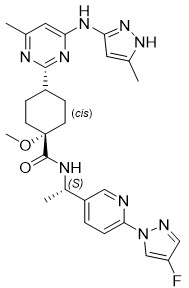
Pralsetinib is an oral receptor tyrosine kinase inhibitor. The chemical name for pralsetinib is (cis)-N-((S)-1-(6-(4-fluoro-1H-pyrazol-1-yl)pyridin-3-yl)ethyl)-1-methoxy-4-(4-methyl-6-(5-methyl-1H-pyrazol-3-ylamino)pyrimidin-2-yl)cyclohexanecarboxamide. The molecular formula for pralsetinib is C27H32FN9O2, and the molecular weight is 533.61 g/mol. Pralsetinib has the following structure:
The solubility of pralsetinib in aqueous media decreases over the range pH 1.99 to pH 7.64 from 0.880 mg/mL to < 0.001 mg/mL, indicating a decrease in solubility with increasing pH.
GAVRETO (pralsetinib) is supplied for oral use as immediate release hydroxypropyl methylcellulose (HPMC) hard capsules containing 100 mg pralsetinib. The capsules also contain inactive ingredients:
citric acid, hydroxypropyl methylcellulose (HPMC), magnesium stearate, microcrystalline cellulose (MCC), pregelatinized starch and sodium bicarbonate. The capsule shell consists of FD&C Blue #1 (Brilliant Blue FCF), hypromellose and titanium dioxide. The white printing ink contains butyl alcohol, dehydrated alcohol, isopropyl alcohol, potassium hydroxide, propylene glycol, purified water, shellac, strong ammonia solution and titanium dioxide.
5.2 Hypertension
Hypertension occurred in 35% of patients, including Grade 3 hypertension in 18% of patients [see Adverse Reactions (6.1)]. Overall, 8% had their dose interrupted and 4.8% had their dose reduced for hypertension. Treatment-emergent hypertension was most commonly managed with anti-hypertension medications.
Do not initiate GAVRETO in patients with uncontrolled hypertension. Optimize blood pressure prior to initiating GAVRETO. Monitor blood pressure after 1 week, at least monthly thereafter and as clinically indicated. Initiate or adjust anti-hypertensive therapy as appropriate. Withhold, reduce dose, or permanently discontinue GAVRETO based on the severity [see Dosage and Administration (2.3)].
5.3 Hepatoxicity
Serious hepatic adverse reactions occurred in 1.5% of patients treated with GAVRETO. Increased AST occurred in 49% of patients, including Grade 3 or 4 in 7% and increased ALT occurred in 37% of patients, including Grade 3 or 4 in 4.8% [see Adverse Reactions (6.1)]. The median time to first onset for increased AST was 15 days (range: 5 days to 2.5 years) and for increased ALT was 24 days (range: 7 days to 3.7 years).
Monitor AST and ALT prior to initiating GAVRETO, every 2 weeks during the first 3 months, then monthly thereafter and as clinically indicated. Withhold, reduce dose or permanently discontinue GAVRETO based on severity [see Dosage and Administration (2.3)].
8.4 Pediatric Use
The safety and effectiveness of GAVRETO have been established in pediatric patients aged 12 years and older for RET fusion-positive thyroid cancer. Use of GAVRETO in this age group is supported by evidence from an adequate and well-controlled study of GAVRETO in adults with additional population pharmacokinetic data demonstrating that age and body weight had no clinically meaningful effect on the pharmacokinetics of pralsetinib, that the exposure of pralsetinib is expected to be similar between adults and pediatric patients age 12 years and older, and that the course of RET fusion-positive thyroid cancer is sufficiently similar in adults and pediatric patients to allow extrapolation of data in adults to pediatric patients[see Adverse Reactions (6.1), Clinical Pharmacology (12.3), and Clinical Studies (14.2)].
The safety and effectiveness of GAVRETO have not been established in pediatric patients with RET fusion-positive NSCLC or in pediatric patients younger than 12 years old with RET fusion-positive thyroid cancer.
8.5 Geriatric Use
Of the 540 patients in ARROW who received the recommended dose of GAVRETO at 400 mg once daily, 31% were 65 years or and over, while 7% were 75 years and over.
No overall differences in pharmacokinetics (PK), safety or effectiveness were observed between patients aged 65 years or older and younger patients.
1.1 Metastatic Ret
GAVRETO is indicated for the treatment of adult patients with metastatic RET fusion-positive non-small cell lung cancer (NSCLC) as detected by an FDA approved test.
14.1 Metastatic Ret
The efficacy of GAVRETO was evaluated in patients with RET fusion-positive metastatic NSCLC in a multicenter, non-randomized, open-label, multi-cohort clinical trial (ARROW, NCT03037385). The study enrolled, in separate cohorts, patients with metastatic RET fusion-positive NSCLC who had progressed on platinum-based chemotherapy and treatment-naïve patients with metastatic NSCLC. Identification of a RET gene fusion was determined by local laboratories using next generation sequencing (NGS), fluorescence in situ hybridization (FISH), and other tests. Among the 237 patients in the efficacy population(s) described in this section, samples from 40% of patients were retrospectively tested with the Life Technologies Corporation Oncomine Dx Target Test (ODxTT). Patients with asymptomatic central nervous system (CNS) metastases, including patients with stable or decreasing steroid use within 2 weeks prior to study entry, were enrolled. Patients received GAVRETO 400 mg orally once daily until disease progression or unacceptable toxicity.
The major efficacy outcome measures were overall response rate (ORR) and duration of response (DOR), as assessed by a blinded independent central review (BICR) according to RECIST v1.1.
4 Contraindications
None.
6 Adverse Reactions
The following clinically significant adverse reactions are described elsewhere in the labeling:
- Interstitial Lung Disease/Pneumonitis [see Warnings and Precautions (5.1)]
- Hypertension [see Warnings and Precautions (5.2)]
- Hepatotoxicity [see Warnings and Precautions (5.3)]
- Hemorrhagic Events [see Warnings and Precautions (5.4)]
- Tumor Lysis Syndrome [see Warnings and Precautions (5.5)]
- Risk of Impaired Wound Healing [see Warnings and Precautions (5.6)]
- Embryo-Fetal Toxicity [see Warnings and Precautions (5.7)]
7 Drug Interactions
- Strong or moderate CYP3A inhibitors and/or P-gp inhibitors: Avoid coadministration. If coadministration cannot be avoided, reduce the dose of GAVRETO. (2.4, 7.1, 12.3)
- Strong or moderate CYP3A inducers: Avoid coadministration. If coadministration cannot be avoided, increase the dose of GAVRETO. (2.5, 7.1, 12.3)
12.2 Pharmacodynamics
Pralsetinib exposure-response relationships and the time course of pharmacodynamics response have not been fully characterized.
12.3 Pharmacokinetics
At 400 mg GAVRETO once daily under fasting conditions, the steady state geometric mean [% coefficient of variation (CV%)] of maximum observed plasma concentration (Cmax) and area under the concentration-time curve (AUC0-24h) of pralsetinib was 2470 (55.1%) ng/mL and 36700 (66.3%) h∙ng/mL, respectively. Pralsetinib Cmax and AUC increased inconsistently over the dose range of 60 mg to 600 mg once daily (0.15 to 1.5 times the recommended dose). Pralsetinib plasma concentrations reached steady state by 3 to 5 days. The mean accumulation ratio was approximately 2-fold after once-daily repeated oral administration.
2.1 Patient Selection
Select patients for treatment with GAVRETO based on the presence of a RET gene fusion (NSCLC or thyroid cancer) [see Clinical Studies (14)].
Information on FDA-approved tests for RET gene fusion (NSCLC) is available at http://www.fda.gov/CompanionDiagnostics.
An FDA-approved test for the detection of RET gene fusion (thyroid cancer) is not currently available.
2.2 Recommended Dosage
The recommended dosage of GAVRETO is 400 mg orally once daily on an empty stomach (no food intake for at least 2 hours before and at least 1 hour after taking GAVRETO) [see Clinical Pharmacology (12.3)]. Continue treatment until disease progression or until unacceptable toxicity.
If a dose of GAVRETO is missed, it can be taken as soon as possible on the same day. Resume the regular daily dose schedule for GAVRETO the next day.
Do not take an additional dose if vomiting occurs after GAVRETO but continue with the next dose as scheduled.
5.4 Hemorrhagic Events
Serious, including fatal, hemorrhagic events can occur with GAVRETO. Grade ≥ 3 hemorrhagic events occurred in 4.1% of patients treated with GAVRETO including one patient with a fatal hemorrhagic event.
Permanently discontinue GAVRETO in patients with severe or life-threatening hemorrhage [see Dosage and Administration (2.3)].
8.6 Hepatic Impairment
No dose adjustment is required for patients with mild (total bilirubin ≤ ULN and AST > ULN or total bilirubin > 1 to 1.5 × ULN and any AST), moderate (total bilirubin > 1.5 to 3 × ULN and any AST) or severe hepatic impairment (total bilirubin > 3 × ULN and any AST) [see Clinical Pharmacology (12.3)].
1 Indications and Usage
GAVRETO is a kinase inhibitor indicated for treatment of:
- Adult patients with metastatic rearranged during transfection (RET) fusion-positive non-small cell lung cancer as detected by an FDA approved test (NSCLC). (1.1)
- Adult and pediatric patients 12 years of age and older with advanced or metastatic RET fusion-positive thyroid cancer who require systemic therapy and who are radioactive iodine-refractory (if radioactive iodine is appropriate).
This indication is approved under accelerated approval based on overall response rate and duration of response. Continued approval for this indication may be contingent upon verification and description of clinical benefit in confirmatory trial(s). (1.2)
12.1 Mechanism of Action
Pralsetinib is a kinase inhibitor of wild-type RET and oncogenic RET fusions (CCDC6-RET) and mutations (RET V804L, RET V804M and RET M918T) with half maximal inhibitory concentrations (IC50s) less than 0.5 nM. In purified enzyme assays, pralsetinib inhibited DDR1, TRKC, FLT3, JAK1-2, TRKA, VEGFR2, PDGFRB, and FGFR1 at higher concentrations that were still clinically achievable at Cmax. In cellular assays, pralsetinib inhibited RET at approximately 14-, 40-, and 12-fold lower concentrations than VEGFR2, FGFR2, and JAK2, respectively.
Certain RET fusion proteins and activating point mutations can drive tumorigenic potential through hyperactivation of downstream signaling pathways leading to uncontrolled cell proliferation. Pralsetinib exhibited anti-tumor activity in cultured cells and animal tumor implantation models harboring oncogenic RET fusions or mutations including KIF5B-RET, CCDC6-RET, RET M918T, RET C634W, RET V804E, RET V804L and RET V804M. In addition, pralsetinib prolonged survival in mice implanted intracranially with tumor models expressing KIF5B-RET or CCDC6-RET.
5.5 Tumor Lysis Syndrome
Cases of tumor lysis syndrome (TLS) have been reported in patients with medullary thyroid carcinoma receiving GAVRETO [see Adverse Reactions (6.1)]. Patients may be at risk of TLS if they have rapidly growing tumors, a high tumor burden, renal dysfunction, or dehydration. Closely monitor patients at risk, consider appropriate prophylaxis including hydration, and treat as clinically indicated.
5.7 Embryo Fetal Toxicity
Based on findings from animal studies and its mechanism of action, GAVRETO can cause fetal harm when administered to a pregnant woman. Oral administration of pralsetinib to pregnant rats during the period of organogenesis resulted in malformations and embryolethality at maternal exposures below the human exposure at the clinical dose of 400 mg once daily.
Advise pregnant women of the potential risk to a fetus. Advise females of reproductive potential to use effective non-hormonal contraception during treatment with GAVRETO and for 2 weeks after the last dose. Advise males with female partners of reproductive potential to use effective contraception during treatment with GAVRETO and for 1 week after the last dose [see Use in Specific Populations (8.1, 8.3)].
5 Warnings and Precautions
- Interstitial Lung Disease (ILD)/Pneumonitis: Withhold GAVRETO for Grade 1 or 2 reactions until resolution and then resume at a reduced dose. Permanently discontinue for recurrent ILD/pneumonitis. Permanently discontinue for Grade 3 or 4 reactions. (2.3, 5.1)
- Hypertension: Do not initiate GAVRETO in patients with uncontrolled hypertension. Optimize blood pressure (BP) prior to initiating GAVRETO. Monitor BP after 1 week, at least monthly thereafter and as clinically indicated. Withhold, reduce dose, or permanently discontinue GAVRETO based on severity. (2.3, 5.2)
- Hepatotoxicity: Monitor ALT and AST prior to initiating GAVRETO, every 2 weeks during the first 3 months, then monthly thereafter and as clinically indicated. Withhold, reduce dose, or permanently discontinue GAVRETO based on severity. (2.3, 5.3)
- Hemorrhagic Events: Permanently discontinue GAVRETO in patients with severe or life-threatening hemorrhage. (2.3, 5.4)
- Tumor Lysis Syndrome: Closely monitor patients at risk and treat as clinically indicated. (2.3, 5.5)
- Risk of Impaired Wound Healing: Withhold GAVRETO for at least 5 days prior to elective surgery. Do not administer for at least 2 weeks following major surgery and until adequate wound healing. The safety of resumption of GAVRETO after resolution of wound healing complications has not been established. (5.6)
- Embryo-Fetal Toxicity: Can cause fetal harm. Advise females of reproductive potential of the potential risk to a fetus and to use effective non-hormonal contraception. (5.7, 8.1, 8.3)
2 Dosage and Administration
Select patients for treatment with GAVRETO based on the presence of a RET gene fusion. (2.1, 14)
The recommended dosage in adults and pediatric patients 12 years and older is 400 mg orally once daily on an empty stomach (no food intake for at least 2 hours before and at least 1 hour after taking GAVRETO). (2.2)
3 Dosage Forms and Strengths
Capsules: 100 mg, light blue, opaque, hard hydroxypropyl methylcellulose (HPMC) capsule printed with "BLU-667" on the capsule shell body and "100 mg" on the capsule shell cap.
8 Use in Specific Populations
6.1 Clinical Trials Experience
Because clinical trials are conducted under widely varying conditions, adverse reaction rates observed in the clinical trials of a drug cannot be directly compared to rates in the clinical trials of another drug and may not reflect the rates observed in practice.
The pooled safety population in the WARNINGS AND PRECAUTIONS reflect exposure to GAVRETO as a single agent at 400 mg orally once daily in 540 patients in ARROW [see Clinical Studies (14)]. Among 540 patients who received GAVRETO, 71% were exposed for 6 months or longer and 57% were exposed for greater than one year. The most common adverse reactions (≥ 25%) were musculoskeletal pain, constipation, hypertension, diarrhea, fatigue, edema, pyrexia, and cough. The most common Grade 3-4 laboratory abnormalities (≥ 2%) were decreased lymphocytes, decreased neutrophils, decreased hemoglobin, decreased phosphate, decreased leukocytes, decreased sodium, increased aspartate aminotransferase (AST), increased alanine aminotransferase (ALT), decreased calcium (corrected), decreased platelets, increased alkaline phosphatase, increased potassium, decreased potassium and increased bilirubin.
17 Patient Counseling Information
Advise the patient to read the FDA-approved patient labeling (Patient Information).
5.6 Risk of Impaired Wound Healing
Impaired wound healing can occur in patients who receive drugs that inhibit the vascular endothelial growth factor (VEGF) signaling pathway. Therefore, GAVRETO has the potential to adversely affect wound healing.
Withhold GAVRETO for at least 5 days prior to elective surgery. Do not administer for at least 2 weeks following major surgery and until adequate wound healing. The safety of resumption of GAVRETO after resolution of wound healing complications has not been established.
16 How Supplied/storage and Handling
GAVRETO (pralsetinib) 100 mg, light blue, opaque, immediate release, hydroxypropyl methylcellulose (HPMC) hard capsule printed with "BLU-667" on the capsule shell body and "100 mg" on the capsule shell cap are supplied as follows:
- Bottles of 60 capsules (NDC 50242-210-60).
- Bottles of 90 capsules (NDC 50242-210-90).
- Bottles of 120 capsules (NDC 50242-210-12).
5.1 Interstitial Lung Disease/pneumonitis
Severe, life-threatening, and fatal interstitial lung disease (ILD) / pneumonitis can occur in patients treated with GAVRETO. Pneumonitis occurred in 12% of patients who received GAVRETO, including 3.3% with Grade 3-4, and 0.2% with fatal reactions.
Monitor for pulmonary symptoms indicative of ILD/pneumonitis. Withhold GAVRETO and promptly investigate for ILD in any patient who presents with acute or worsening of respiratory symptoms which may be indicative of ILD (e.g., dyspnea, cough, and fever). Withhold, reduce dose or permanently discontinue GAVRETO based on severity of confirmed ILD [see Dosage and Administration (2.3)].
13.2 Animal Toxicology And/or Pharmacology
In 28-day rat and monkey toxicology studies, once daily oral administration of pralsetinib resulted in histologic necrosis and hemorrhage in the heart of preterm decedents at exposures ≥ 1.3 times and ≥ 3.1 times, respectively, the human exposure based on AUC at the clinical dose of 400 mg. Pralsetinib induced hyperphosphatemia (rats) and multi-organ mineralization (rats and monkeys) in 13-week toxicology studies at exposures approximately 2.8 times and ≥ 0.13 times, respectively, the human exposure based on AUC at the clinical dose of 400 mg.
2.3 Dosage Modifications for Adverse Reactions
The recommended dose reductions and dosage modifications for adverse reactions are provided in Table 1 and Table 2.
| Dose Reduction | Recommended Dosage |
|---|---|
| First | 300 mg once daily |
| Second | 200 mg once daily |
| Third | 100 mg once daily |
Permanently discontinue GAVRETO in patients who are unable to tolerate 100 mg taken orally once daily.
The recommended dosage modifications for adverse reactions are provided in Table 2.
| Adverse Reaction | Severity Adverse reactions graded by the National Cancer Institute Common Terminology Criteria for Adverse Events (NCI-CTCAE) version 4.03
|
Dosage Modification |
|---|---|---|
|
ILD/Pneumonitis
[see Warnings and Precautions (5.1)] |
Grade 1 or 2 | Withhold GAVRETO until resolution. Resume by reducing the dose as shown in Table 1. |
| Permanently discontinue GAVRETO for recurrent ILD/pneumonitis. | ||
| Grade 3 or 4 | Permanently discontinue for confirmed ILD/pneumonitis. | |
|
Hypertension
[see Warnings and Precautions (5.2)] |
Grade 3 | Withhold GAVRETO for Grade 3 hypertension that persists despite optimal antihypertensive therapy. Resume at a reduced dose when hypertension is controlled. |
| Grade 4 | Discontinue GAVRETO. | |
|
Hepatotoxicity
[see Warnings and Precautions (5.3)] |
Grade 3 or 4 | Withhold GAVRETO and monitor AST/ALT once weekly until resolution to Grade 1 or baseline. |
| Resume at reduced dose (Table 1). | ||
| For recurrent events at Grade 3 or higher, discontinue GAVRETO. | ||
|
Hemorrhagic Events
[see Warnings and Precautions (5.4)] |
Grade 3 or 4 | Withhold GAVRETO until recovery to baseline or Grade 0 or 1. |
| Discontinue GAVRETO for severe or life-threatening hemorrhagic events. | ||
|
Other Adverse Reactions
[see Adverse Reactions (6.1)] |
Grade 3 or 4 | Withhold GAVRETO until improvement to ≤ Grade 2. Resume at reduced dose (Table 1). |
| Permanently discontinue for recurrent Grade 4 adverse reactions. |
8.3 Females and Males of Reproductive Potential
Based on animal data, GAVRETO can cause embryolethality and malformations at doses resulting in exposures below the human exposure at the clinical dose of 400 mg daily [see Use in Specific Populations (8.1)].
2.5 Dose Modification for Use With Cyp3a Inducers
Avoid coadministration of GAVRETO with any of the following:
- Strong CYP3A inducers
- Moderate CYP3A inducers
If coadministration with any of the above inducers cannot be avoided, increase the starting dose of GAVRETO as recommended in Table 4 starting on Day 7 of coadministration of GAVRETO with the inducer. After the inducer has been discontinued for at least 14 days, resume GAVRETO at the dose taken prior to initiating the inducer [see Drug Interactions (7.1), Clinical Pharmacology (12.3)].
| Current GAVRETO Dosage | Recommended GAVRETO Dosage when Coadministered with: | |
|---|---|---|
| Strong CYP3A Inducers | Moderate CYP3A Inducers | |
| 400 mg orally once daily | 800 mg orally once daily | 600 mg orally once daily |
| 300 mg orally once daily | 600 mg orally once daily | 500 mg orally once daily |
| 200 mg orally once daily | 400 mg orally once daily | 300 mg orally once daily |
Principal Display Panel 100 Mg Capsule Bottle Label
NDC 50242-210-60
Gavreto®
(pralsetinib)
capsules
100 mg
For Oral Use
Rx only
60 Capsules
Genentech
blueprint™
MEDICINES
10242131
13.1 Carcinogenesis, Mutagenesis, Impairment of Fertility
Carcinogenicity studies with pralsetinib have not been conducted. Pralsetinib was not mutagenic in an in vitro bacterial reverse mutation (Ames) assay with or without metabolic activation and was not clastogenic in either an in vitro micronucleus assay in TK6 cells or an in vivo bone marrow micronucleus assay in rats.
In a dedicated fertility and early embryonic development study conducted in treated male rats mated to treated female rats, although pralsetinib did not have clear effects on male or female mating performance or ability to become pregnant, at the 20 mg/kg dose level (approximately 2.9 times the human exposure (AUC) at the clinical dose of 400 mg based on toxicokinetic data from the 13-week rat toxicology study) 82% of female rats had totally resorbed litters, with 92% post-implantation loss (early resorptions); post-implantation loss occurred at doses as low as 5 mg/kg (approximately 0.35 times the human exposure (AUC) at the clinical dose of 400 mg based on toxicokinetic data from the 13-week rat toxicology study). In a separate fertility and early embryonic development study in which male rats administered 20 mg/kg pralsetinib were mated to untreated female rats, there were no clear pralsetinib-related effects on intrauterine survival of embryos or on male reproductive performance at a dose approximately 1.7 times the human exposure (AUC) at the clinical dose of 400 mg. In a 13-week repeat-dose toxicology study, male rats exhibited histopathological evidence of tubular degeneration/atrophy in the testis with secondary cellular debris and reduced sperm in the lumen of the epididymis, which correlated with lower mean testis and epididymis weights and gross observations of soft and small testis. Female rats exhibited degeneration of the corpus luteum in the ovary. For both sexes, these effects were observed at pralsetinib doses ≥ 10 mg/kg/day, approximately 1 times the human exposure based on AUC at the clinical dose of 400 mg.
2.4 Dose Modification for Use With Cyp3a And/or P Glycoprotein (p Gp) Inhibitors
Avoid coadministration of GAVRETO with any of the following:
- Strong CYP3A inhibitors
- Moderate CYP3A inhibitors
- P-gp inhibitors
- Combined P-gp and strong CYP3A inhibitors
- Combined P-gp and moderate CYP3A inhibitors
If coadministration with any of the above inhibitors cannot be avoided, reduce the current dose of GAVRETO as recommended in Table 3. After the inhibitor has been discontinued for 3 to 5 elimination half-lives, resume GAVRETO at the dose taken prior to initiating the inhibitor [see Drug Interactions (7.1), Clinical Pharmacology (12.3)].
| Current GAVRETO Dosage | Recommended GAVRETO Dosage when Coadministered with: | |
|---|---|---|
| Combined P-gp and Strong CYP3A Inhibitors |
|
|
| 400 mg orally once daily | 200 mg orally once daily | 300 mg orally once daily |
| 300 mg orally once daily | 200 mg orally once daily | 200 mg orally once daily |
| 200 mg orally once daily | 100 mg orally once daily | 100 mg orally once daily |
Structured Label Content
1.2 Ret (1.2 RET)
GAVRETO is indicated for the treatment of adult and pediatric patients 12 years of age and older with advanced or metastatic RET fusion-positive thyroid cancer who require systemic therapy and who are radioactive iodine-refractory (if radioactive iodine is appropriate).
This indication is approved under accelerated approval based on overall response rate and duration of response [see Clinical Studies (14.2)]. Continued approval for this indication may be contingent upon verification and description of clinical benefit in confirmatory trial(s).
Section 42229-5 (42229-5)
RET Fusion-Positive Non-Small Cell Lung Cancer
The safety of GAVRETO was evaluated as a single agent at 400 mg orally once daily in 281 patients with metastatic rearranged during transfection (RET fusion-positive) non-small cell lung cancer (NSCLC) in ARROW [see Clinical Studies (14.1)]. Among the 281 patients who received GAVRETO, 72% were exposed for 6 months or longer and 56% were exposed for ≥1 year.
The median age was 60 years (range: 26 to 87 years); 54% were female, 46% were White, 46% were Asian, and 4% were Hispanic/Latino.
Serious adverse reactions occurred in 65% of patients who received GAVRETO. The most frequent serious adverse reactions (in ≥ 2% of patients) were pneumonia, anemia, pneumonitis, pyrexia, sepsis, urinary tract infection, coronavirus infection, pleural effusion, dyspnea, musculoskeletal pain, pulmonary embolism, and seizure. Fatal adverse reactions occurred in 7% of patients; fatal adverse reactions which occurred in > 1 patient included pneumonia (n=8), sepsis (n=3) and COVID (n=3).
Permanent discontinuation due to an adverse reaction occurred in 20% of patients who received GAVRETO. Adverse reactions resulting in permanent discontinuation which occurred in ≥ 2% of patients included pneumonitis (3.2%), and pneumonia (2.8%).
Dosage interruptions due to an adverse reaction occurred in 73% of patients who received GAVRETO. Adverse reactions requiring dosage interruption in ≥ 2% of patients included anemia, pneumonia, pneumonitis, neutropenia, hypertension, increased blood creatine phosphokinase, fatigue, pyrexia, increased aspartate aminotransferase (AST), increased alanine aminotransferase (ALT), coronavirus infection, diarrhea, hypophosphatemia, musculoskeletal pain, thrombocytopenia, dyspnea, hemorrhage, leukopenia, lymphopenia, edema, sepsis, and vomiting.
Dose reductions due to adverse reactions occurred in 51% of patients who received GAVRETO. Adverse reactions requiring dosage reductions in ≥ 2% of patients included anemia, neutropenia, pneumonitis, increased blood creatine phosphokinase, leukopenia, hypertension, fatigue, pneumonia, and lymphopenia.
Table 5 summarizes the adverse reactions in patients with NSCLC in ARROW.
| Adverse reaction | GAVRETO N = 281 |
|
|---|---|---|
| Grades 1 - 4 (%) |
Grades 3 or 4 (%) |
|
| Gastrointestinal disorders | ||
| Constipation | 45 | 0.7 |
| Diarrhea | 30 | 2.5 |
| Nausea | 19 | 0 |
| Dry mouth | 17 | 0 |
| General Disorders and Administration Site Conditions | ||
| Edema Includes the preferred terms: Edema, Swelling face, Peripheral swelling, Generalized oedema, Edema peripheral, Face edema, Periorbital edema, Eyelid edema, Swelling, Localized edema
|
44 | 0 |
| Fatigue Includes the preferred terms: Fatigue, Asthenia
|
42 | 2.5 |
| Pyrexia | 29 | 0.7 |
| Musculoskeletal and Connective Tissue Disorders | ||
| Musculoskeletal pain Includes the preferred terms: Myalgia, Arthralgia, Pain in extremity, Neck pain, Musculoskeletal pain, Back pain, Musculoskeletal chest pain, Bone pain, Musculoskeletal stiffness
|
44 | 2.5 |
| Increased Blood Creatine Phosphokinase | 19 | 9 |
| Vascular | ||
| Hypertension Includes the preferred terms: hypertension, blood pressure increased
|
38 | 18 |
| Respiratory, thoracic and mediastinal disorders | ||
| Cough Includes the preferred terms: Cough, Productive Cough, upper-airway cough syndrome
|
36 | 0.4 |
| Dyspnea | 21 | 2.1 |
| Infection and Infestations | ||
| Pneumonia Includes the preferred terms: Pneumonia, Pneumocystis jirovecii pneumonia, Pneumonia cytomegaloviral, Atypical pneumonia, Lung infection, Pneumonia bacterial, Pneumonia haemophilus, Pneumonia influenzal, Pneumonia streptococcal, Pneumonia viral, Pneumonia pseudomonal
|
24 | 13 |
| Urinary tract infection | 16 | 3.6 |
| Metabolism and Nutrition Disorders | ||
| Decreased appetite | 18 | 1.1 |
| Nervous system disorders | ||
| Taste disorder Includes the preferred terms: Dysgeusia, Ageusia
|
17 | 0 |
| Headache Includes the preferred terms: Headache, Tension Headache
|
15 | 1.1 |
| Skin and subcutaneous tissue disorders | ||
| Rash Includes the preferred terms: Rash, Rash maculo-papular, Dermatitis acneiform, Erythema, Rash generalized, Rash papular, Rash macular, Rash erythematous
|
17 | 0 |
Clinically relevant adverse reactions occurring in < 15% of patients included pneumonitis (14%), vomiting (14%), abdominal pain (14%), and stomatitis (6%).
Table 6 summarizes the laboratory abnormalities in ARROW.
| Laboratory Abnormality | GAVRETO N=281 |
|
|---|---|---|
| Grades 1-4 (%) |
Grades 3-4 (%) |
|
| Chemistry | ||
| Increased AST | 80 | 3.2 |
| Increased ALT | 58 | 3.9 |
| Decreased albumin | 52 | 0 |
| Decreased calcium (corrected) | 50 | 1.8 |
| Decreased phosphate | 50 | 17 |
| Increased creatinine | 45 | 1.4 |
| Increased alkaline phosphatase | 43 | 2.5 |
| Decreased sodium | 42 | 10 |
| Decreased Potassium | 27 | 4.6 |
| Increased Potassium | 27 | 1.8 |
| Decreased Magnesium | 25 | 0 |
| Increased Bilirubin | 20 | 1.8 |
| Hematology | ||
| Decreased leukocytes | 79 | 11 |
| Decreased hemoglobin | 78 | 18 |
| Decreased lymphocytes | 73 | 32 |
| Decreased neutrophils | 70 | 21 |
| Decreased platelets | 33 | 5 |
Clinically relevant laboratory abnormalities occurring in < 20% of patients who received GAVRETO included increased magnesium (14%).
Section 42230-3 (42230-3)
| This Patient Information has been approved by the U.S. Food and Drug Administration. | Revised: 08/2023 | ||
|
PATIENT INFORMATION
GAVRETO® (gav-REH-toh) (pralsetinib) capsules |
|||
| What is GAVRETO? | |||
GAVRETO is a prescription medicine used to treat certain cancers caused by abnormal rearranged during transfection (RET) genes in:
|
|||
| Your healthcare provider will perform a test to make sure that GAVRETO is right for you. | |||
It is not known if GAVRETO is safe and effective when used to treat cancers caused by abnormal RET genes:
|
|||
Before taking GAVRETO, tell your healthcare provider about all of your medical conditions, including if you:
|
|||
| Tell your healthcare provider about all the medicines you take, including prescription and over-the-counter medicines, vitamins, and herbal supplements. Taking GAVRETO with other medicines may affect how GAVRETO works. | |||
How should I take GAVRETO?
|
|||
| What are the possible side effects of GAVRETO? | |||
GAVRETO may cause serious side effects, including:
|
|||
|
|
|
|
|
|||
|
|
||
|
|||
|
|
||
|
|||
|
|
||
|
|||
|
|
||
|
|||
| The most common side effects of GAVRETO include: | |||
|
|
||
The most common severe abnormal blood test results with GAVRETO include:
|
|||
| These are not all the possible side effects of GAVRETO. | |||
| Call your doctor for medical advice about side effects. You may report side effects to FDA at 1-800-FDA-1088. | |||
How should I store GAVRETO?
|
|||
| Keep GAVRETO and all medicines out of the reach of children. | |||
| General information about the safe and effective use of GAVRETO. | |||
| Medicines are sometimes prescribed for purposes other than those listed in a Patient Information leaflet. Do not use GAVRETO for a condition for which it was not prescribed. Do not give GAVRETO to other people, even if they have the same symptoms that you have. It may harm them. You can ask your pharmacist or healthcare provider for information about GAVRETO that is written for health professionals. | |||
| What are the ingredients in GAVRETO? | |||
| Active ingredient: pralsetinib | |||
| Inactive ingredients: citric acid, hydroxypropyl methylcellulose (HPMC), magnesium stearate, microcrystalline cellulose (MCC), pregelatinized starch and sodium bicarbonate. | |||
| Capsule shell: FD&C Blue #1 (Brilliant Blue FCF), hypromellose and titanium dioxide. | |||
| White printing ink: butyl alcohol, dehydrated alcohol, isopropyl alcohol, potassium hydroxide, propylene glycol, purified water, shellac, strong ammonia solution and titanium dioxide. | |||
| Manufactured for: Genentech, Inc., A Member of the Roche Group, 1 DNA Way, South San Francisco, CA 94080-4990 | |||
| Jointly marketed by: Genentech USA, Inc. and Blueprint Medicines Corporation | |||
| GAVRETO® is a registered trademark of Blueprint Medicines Corporation. | |||
| © 2023 Genentech, Inc. | |||
| © 2023 Blueprint Medicines Corporation. | |||
| For more information, go to www.GAVRETO.com or call 1-888-835-2555. |
Section 43683-2 (43683-2)
| Indications and Usage, Metastatic RET Fusion-Positive Non-Small Cell Lung Cancer – Accelerated Approval text removed (1.1) | (8/2023) |
| Indications and Usage, RET-Mutant Medullary Thyroid Cancer –Indication Removed (1.2) | (7/2023) |
| Dosage and Administration (2.1) | (7/2023) |
| Dosage and Administration, Dose Modification for Use with CYP3A and/or P-glycoprotein (P-gp) Inhibitors (2.4) | (6/2023) |
| Dosage and Administration, Dose Modification for Use with CYP3A Inducers (2.5) | (6/2023) |
Section 44425-7 (44425-7)
Store at 20°C to 25°C (68°F to 77°F); excursions are permitted from 15°C to 30°C (59°F to 86°F) [see USP Controlled Room Temperature]. Protect from moisture.
14.2 Ret (14.2 RET)
The efficacy of GAVRETO was evaluated in RET fusion-positive metastatic thyroid cancer patients in a multicenter, open-label, multi-cohort clinical trial (ARROW, NCT03037385). All patients with RET fusion-positive thyroid cancer were required to have disease progression following standard therapy, measurable disease by RECIST version 1.1, and have RET fusion status as detected by local testing (89% NGS tumor samples and 11% using FISH).
The median age was 61 years (range: 46 to 74); 67% were male, 78% were White, 22% were Asian, 11% were Hispanic/Latino. All patients (100%) had papillary thyroid cancer. ECOG performance status was 0-1 (100%), all patients (100%) had metastatic disease, and 56% had a history of CNS metastases. Patients had received a median of 2 prior therapies (range 1-8). Prior systemic treatments included prior radioactive iodine (100%) and prior sorafenib and/or lenvatinib (56%).
Efficacy results are summarized in Table 12.
| Efficacy Parameters | GAVRETO N=9 |
|---|---|
| NR = Not Reached; NE = Not Estimable | |
|
Overall Response Rate (ORR)
Confirmed overall response rate assessed by BICR (95% CI) |
89 (52, 100) |
| Complete Response, % | 0 |
| Partial Response, % | 89 |
| Duration of Response (DOR) | N=8 |
| Median in months (95% CI) | NR (NE, NE) |
| Patients with DOR ≥ 6 months Based on observed duration of response , % |
100 |
11 Description (11 DESCRIPTION)
Pralsetinib is an oral receptor tyrosine kinase inhibitor. The chemical name for pralsetinib is (cis)-N-((S)-1-(6-(4-fluoro-1H-pyrazol-1-yl)pyridin-3-yl)ethyl)-1-methoxy-4-(4-methyl-6-(5-methyl-1H-pyrazol-3-ylamino)pyrimidin-2-yl)cyclohexanecarboxamide. The molecular formula for pralsetinib is C27H32FN9O2, and the molecular weight is 533.61 g/mol. Pralsetinib has the following structure:
The solubility of pralsetinib in aqueous media decreases over the range pH 1.99 to pH 7.64 from 0.880 mg/mL to < 0.001 mg/mL, indicating a decrease in solubility with increasing pH.
GAVRETO (pralsetinib) is supplied for oral use as immediate release hydroxypropyl methylcellulose (HPMC) hard capsules containing 100 mg pralsetinib. The capsules also contain inactive ingredients:
citric acid, hydroxypropyl methylcellulose (HPMC), magnesium stearate, microcrystalline cellulose (MCC), pregelatinized starch and sodium bicarbonate. The capsule shell consists of FD&C Blue #1 (Brilliant Blue FCF), hypromellose and titanium dioxide. The white printing ink contains butyl alcohol, dehydrated alcohol, isopropyl alcohol, potassium hydroxide, propylene glycol, purified water, shellac, strong ammonia solution and titanium dioxide.
5.2 Hypertension
Hypertension occurred in 35% of patients, including Grade 3 hypertension in 18% of patients [see Adverse Reactions (6.1)]. Overall, 8% had their dose interrupted and 4.8% had their dose reduced for hypertension. Treatment-emergent hypertension was most commonly managed with anti-hypertension medications.
Do not initiate GAVRETO in patients with uncontrolled hypertension. Optimize blood pressure prior to initiating GAVRETO. Monitor blood pressure after 1 week, at least monthly thereafter and as clinically indicated. Initiate or adjust anti-hypertensive therapy as appropriate. Withhold, reduce dose, or permanently discontinue GAVRETO based on the severity [see Dosage and Administration (2.3)].
5.3 Hepatoxicity
Serious hepatic adverse reactions occurred in 1.5% of patients treated with GAVRETO. Increased AST occurred in 49% of patients, including Grade 3 or 4 in 7% and increased ALT occurred in 37% of patients, including Grade 3 or 4 in 4.8% [see Adverse Reactions (6.1)]. The median time to first onset for increased AST was 15 days (range: 5 days to 2.5 years) and for increased ALT was 24 days (range: 7 days to 3.7 years).
Monitor AST and ALT prior to initiating GAVRETO, every 2 weeks during the first 3 months, then monthly thereafter and as clinically indicated. Withhold, reduce dose or permanently discontinue GAVRETO based on severity [see Dosage and Administration (2.3)].
8.4 Pediatric Use
The safety and effectiveness of GAVRETO have been established in pediatric patients aged 12 years and older for RET fusion-positive thyroid cancer. Use of GAVRETO in this age group is supported by evidence from an adequate and well-controlled study of GAVRETO in adults with additional population pharmacokinetic data demonstrating that age and body weight had no clinically meaningful effect on the pharmacokinetics of pralsetinib, that the exposure of pralsetinib is expected to be similar between adults and pediatric patients age 12 years and older, and that the course of RET fusion-positive thyroid cancer is sufficiently similar in adults and pediatric patients to allow extrapolation of data in adults to pediatric patients[see Adverse Reactions (6.1), Clinical Pharmacology (12.3), and Clinical Studies (14.2)].
The safety and effectiveness of GAVRETO have not been established in pediatric patients with RET fusion-positive NSCLC or in pediatric patients younger than 12 years old with RET fusion-positive thyroid cancer.
8.5 Geriatric Use
Of the 540 patients in ARROW who received the recommended dose of GAVRETO at 400 mg once daily, 31% were 65 years or and over, while 7% were 75 years and over.
No overall differences in pharmacokinetics (PK), safety or effectiveness were observed between patients aged 65 years or older and younger patients.
1.1 Metastatic Ret (1.1 Metastatic RET)
GAVRETO is indicated for the treatment of adult patients with metastatic RET fusion-positive non-small cell lung cancer (NSCLC) as detected by an FDA approved test.
14.1 Metastatic Ret (14.1 Metastatic RET)
The efficacy of GAVRETO was evaluated in patients with RET fusion-positive metastatic NSCLC in a multicenter, non-randomized, open-label, multi-cohort clinical trial (ARROW, NCT03037385). The study enrolled, in separate cohorts, patients with metastatic RET fusion-positive NSCLC who had progressed on platinum-based chemotherapy and treatment-naïve patients with metastatic NSCLC. Identification of a RET gene fusion was determined by local laboratories using next generation sequencing (NGS), fluorescence in situ hybridization (FISH), and other tests. Among the 237 patients in the efficacy population(s) described in this section, samples from 40% of patients were retrospectively tested with the Life Technologies Corporation Oncomine Dx Target Test (ODxTT). Patients with asymptomatic central nervous system (CNS) metastases, including patients with stable or decreasing steroid use within 2 weeks prior to study entry, were enrolled. Patients received GAVRETO 400 mg orally once daily until disease progression or unacceptable toxicity.
The major efficacy outcome measures were overall response rate (ORR) and duration of response (DOR), as assessed by a blinded independent central review (BICR) according to RECIST v1.1.
4 Contraindications (4 CONTRAINDICATIONS)
None.
6 Adverse Reactions (6 ADVERSE REACTIONS)
The following clinically significant adverse reactions are described elsewhere in the labeling:
- Interstitial Lung Disease/Pneumonitis [see Warnings and Precautions (5.1)]
- Hypertension [see Warnings and Precautions (5.2)]
- Hepatotoxicity [see Warnings and Precautions (5.3)]
- Hemorrhagic Events [see Warnings and Precautions (5.4)]
- Tumor Lysis Syndrome [see Warnings and Precautions (5.5)]
- Risk of Impaired Wound Healing [see Warnings and Precautions (5.6)]
- Embryo-Fetal Toxicity [see Warnings and Precautions (5.7)]
7 Drug Interactions (7 DRUG INTERACTIONS)
- Strong or moderate CYP3A inhibitors and/or P-gp inhibitors: Avoid coadministration. If coadministration cannot be avoided, reduce the dose of GAVRETO. (2.4, 7.1, 12.3)
- Strong or moderate CYP3A inducers: Avoid coadministration. If coadministration cannot be avoided, increase the dose of GAVRETO. (2.5, 7.1, 12.3)
12.2 Pharmacodynamics
Pralsetinib exposure-response relationships and the time course of pharmacodynamics response have not been fully characterized.
12.3 Pharmacokinetics
At 400 mg GAVRETO once daily under fasting conditions, the steady state geometric mean [% coefficient of variation (CV%)] of maximum observed plasma concentration (Cmax) and area under the concentration-time curve (AUC0-24h) of pralsetinib was 2470 (55.1%) ng/mL and 36700 (66.3%) h∙ng/mL, respectively. Pralsetinib Cmax and AUC increased inconsistently over the dose range of 60 mg to 600 mg once daily (0.15 to 1.5 times the recommended dose). Pralsetinib plasma concentrations reached steady state by 3 to 5 days. The mean accumulation ratio was approximately 2-fold after once-daily repeated oral administration.
2.1 Patient Selection
Select patients for treatment with GAVRETO based on the presence of a RET gene fusion (NSCLC or thyroid cancer) [see Clinical Studies (14)].
Information on FDA-approved tests for RET gene fusion (NSCLC) is available at http://www.fda.gov/CompanionDiagnostics.
An FDA-approved test for the detection of RET gene fusion (thyroid cancer) is not currently available.
2.2 Recommended Dosage
The recommended dosage of GAVRETO is 400 mg orally once daily on an empty stomach (no food intake for at least 2 hours before and at least 1 hour after taking GAVRETO) [see Clinical Pharmacology (12.3)]. Continue treatment until disease progression or until unacceptable toxicity.
If a dose of GAVRETO is missed, it can be taken as soon as possible on the same day. Resume the regular daily dose schedule for GAVRETO the next day.
Do not take an additional dose if vomiting occurs after GAVRETO but continue with the next dose as scheduled.
5.4 Hemorrhagic Events
Serious, including fatal, hemorrhagic events can occur with GAVRETO. Grade ≥ 3 hemorrhagic events occurred in 4.1% of patients treated with GAVRETO including one patient with a fatal hemorrhagic event.
Permanently discontinue GAVRETO in patients with severe or life-threatening hemorrhage [see Dosage and Administration (2.3)].
8.6 Hepatic Impairment
No dose adjustment is required for patients with mild (total bilirubin ≤ ULN and AST > ULN or total bilirubin > 1 to 1.5 × ULN and any AST), moderate (total bilirubin > 1.5 to 3 × ULN and any AST) or severe hepatic impairment (total bilirubin > 3 × ULN and any AST) [see Clinical Pharmacology (12.3)].
1 Indications and Usage (1 INDICATIONS AND USAGE)
GAVRETO is a kinase inhibitor indicated for treatment of:
- Adult patients with metastatic rearranged during transfection (RET) fusion-positive non-small cell lung cancer as detected by an FDA approved test (NSCLC). (1.1)
- Adult and pediatric patients 12 years of age and older with advanced or metastatic RET fusion-positive thyroid cancer who require systemic therapy and who are radioactive iodine-refractory (if radioactive iodine is appropriate).
This indication is approved under accelerated approval based on overall response rate and duration of response. Continued approval for this indication may be contingent upon verification and description of clinical benefit in confirmatory trial(s). (1.2)
12.1 Mechanism of Action
Pralsetinib is a kinase inhibitor of wild-type RET and oncogenic RET fusions (CCDC6-RET) and mutations (RET V804L, RET V804M and RET M918T) with half maximal inhibitory concentrations (IC50s) less than 0.5 nM. In purified enzyme assays, pralsetinib inhibited DDR1, TRKC, FLT3, JAK1-2, TRKA, VEGFR2, PDGFRB, and FGFR1 at higher concentrations that were still clinically achievable at Cmax. In cellular assays, pralsetinib inhibited RET at approximately 14-, 40-, and 12-fold lower concentrations than VEGFR2, FGFR2, and JAK2, respectively.
Certain RET fusion proteins and activating point mutations can drive tumorigenic potential through hyperactivation of downstream signaling pathways leading to uncontrolled cell proliferation. Pralsetinib exhibited anti-tumor activity in cultured cells and animal tumor implantation models harboring oncogenic RET fusions or mutations including KIF5B-RET, CCDC6-RET, RET M918T, RET C634W, RET V804E, RET V804L and RET V804M. In addition, pralsetinib prolonged survival in mice implanted intracranially with tumor models expressing KIF5B-RET or CCDC6-RET.
5.5 Tumor Lysis Syndrome
Cases of tumor lysis syndrome (TLS) have been reported in patients with medullary thyroid carcinoma receiving GAVRETO [see Adverse Reactions (6.1)]. Patients may be at risk of TLS if they have rapidly growing tumors, a high tumor burden, renal dysfunction, or dehydration. Closely monitor patients at risk, consider appropriate prophylaxis including hydration, and treat as clinically indicated.
5.7 Embryo Fetal Toxicity (5.7 Embryo-Fetal Toxicity)
Based on findings from animal studies and its mechanism of action, GAVRETO can cause fetal harm when administered to a pregnant woman. Oral administration of pralsetinib to pregnant rats during the period of organogenesis resulted in malformations and embryolethality at maternal exposures below the human exposure at the clinical dose of 400 mg once daily.
Advise pregnant women of the potential risk to a fetus. Advise females of reproductive potential to use effective non-hormonal contraception during treatment with GAVRETO and for 2 weeks after the last dose. Advise males with female partners of reproductive potential to use effective contraception during treatment with GAVRETO and for 1 week after the last dose [see Use in Specific Populations (8.1, 8.3)].
5 Warnings and Precautions (5 WARNINGS AND PRECAUTIONS)
- Interstitial Lung Disease (ILD)/Pneumonitis: Withhold GAVRETO for Grade 1 or 2 reactions until resolution and then resume at a reduced dose. Permanently discontinue for recurrent ILD/pneumonitis. Permanently discontinue for Grade 3 or 4 reactions. (2.3, 5.1)
- Hypertension: Do not initiate GAVRETO in patients with uncontrolled hypertension. Optimize blood pressure (BP) prior to initiating GAVRETO. Monitor BP after 1 week, at least monthly thereafter and as clinically indicated. Withhold, reduce dose, or permanently discontinue GAVRETO based on severity. (2.3, 5.2)
- Hepatotoxicity: Monitor ALT and AST prior to initiating GAVRETO, every 2 weeks during the first 3 months, then monthly thereafter and as clinically indicated. Withhold, reduce dose, or permanently discontinue GAVRETO based on severity. (2.3, 5.3)
- Hemorrhagic Events: Permanently discontinue GAVRETO in patients with severe or life-threatening hemorrhage. (2.3, 5.4)
- Tumor Lysis Syndrome: Closely monitor patients at risk and treat as clinically indicated. (2.3, 5.5)
- Risk of Impaired Wound Healing: Withhold GAVRETO for at least 5 days prior to elective surgery. Do not administer for at least 2 weeks following major surgery and until adequate wound healing. The safety of resumption of GAVRETO after resolution of wound healing complications has not been established. (5.6)
- Embryo-Fetal Toxicity: Can cause fetal harm. Advise females of reproductive potential of the potential risk to a fetus and to use effective non-hormonal contraception. (5.7, 8.1, 8.3)
2 Dosage and Administration (2 DOSAGE AND ADMINISTRATION)
Select patients for treatment with GAVRETO based on the presence of a RET gene fusion. (2.1, 14)
The recommended dosage in adults and pediatric patients 12 years and older is 400 mg orally once daily on an empty stomach (no food intake for at least 2 hours before and at least 1 hour after taking GAVRETO). (2.2)
3 Dosage Forms and Strengths (3 DOSAGE FORMS AND STRENGTHS)
Capsules: 100 mg, light blue, opaque, hard hydroxypropyl methylcellulose (HPMC) capsule printed with "BLU-667" on the capsule shell body and "100 mg" on the capsule shell cap.
8 Use in Specific Populations (8 USE IN SPECIFIC POPULATIONS)
6.1 Clinical Trials Experience
Because clinical trials are conducted under widely varying conditions, adverse reaction rates observed in the clinical trials of a drug cannot be directly compared to rates in the clinical trials of another drug and may not reflect the rates observed in practice.
The pooled safety population in the WARNINGS AND PRECAUTIONS reflect exposure to GAVRETO as a single agent at 400 mg orally once daily in 540 patients in ARROW [see Clinical Studies (14)]. Among 540 patients who received GAVRETO, 71% were exposed for 6 months or longer and 57% were exposed for greater than one year. The most common adverse reactions (≥ 25%) were musculoskeletal pain, constipation, hypertension, diarrhea, fatigue, edema, pyrexia, and cough. The most common Grade 3-4 laboratory abnormalities (≥ 2%) were decreased lymphocytes, decreased neutrophils, decreased hemoglobin, decreased phosphate, decreased leukocytes, decreased sodium, increased aspartate aminotransferase (AST), increased alanine aminotransferase (ALT), decreased calcium (corrected), decreased platelets, increased alkaline phosphatase, increased potassium, decreased potassium and increased bilirubin.
17 Patient Counseling Information (17 PATIENT COUNSELING INFORMATION)
Advise the patient to read the FDA-approved patient labeling (Patient Information).
5.6 Risk of Impaired Wound Healing
Impaired wound healing can occur in patients who receive drugs that inhibit the vascular endothelial growth factor (VEGF) signaling pathway. Therefore, GAVRETO has the potential to adversely affect wound healing.
Withhold GAVRETO for at least 5 days prior to elective surgery. Do not administer for at least 2 weeks following major surgery and until adequate wound healing. The safety of resumption of GAVRETO after resolution of wound healing complications has not been established.
16 How Supplied/storage and Handling (16 HOW SUPPLIED/STORAGE AND HANDLING)
GAVRETO (pralsetinib) 100 mg, light blue, opaque, immediate release, hydroxypropyl methylcellulose (HPMC) hard capsule printed with "BLU-667" on the capsule shell body and "100 mg" on the capsule shell cap are supplied as follows:
- Bottles of 60 capsules (NDC 50242-210-60).
- Bottles of 90 capsules (NDC 50242-210-90).
- Bottles of 120 capsules (NDC 50242-210-12).
5.1 Interstitial Lung Disease/pneumonitis (5.1 Interstitial Lung Disease/Pneumonitis)
Severe, life-threatening, and fatal interstitial lung disease (ILD) / pneumonitis can occur in patients treated with GAVRETO. Pneumonitis occurred in 12% of patients who received GAVRETO, including 3.3% with Grade 3-4, and 0.2% with fatal reactions.
Monitor for pulmonary symptoms indicative of ILD/pneumonitis. Withhold GAVRETO and promptly investigate for ILD in any patient who presents with acute or worsening of respiratory symptoms which may be indicative of ILD (e.g., dyspnea, cough, and fever). Withhold, reduce dose or permanently discontinue GAVRETO based on severity of confirmed ILD [see Dosage and Administration (2.3)].
13.2 Animal Toxicology And/or Pharmacology (13.2 Animal Toxicology and/or Pharmacology)
In 28-day rat and monkey toxicology studies, once daily oral administration of pralsetinib resulted in histologic necrosis and hemorrhage in the heart of preterm decedents at exposures ≥ 1.3 times and ≥ 3.1 times, respectively, the human exposure based on AUC at the clinical dose of 400 mg. Pralsetinib induced hyperphosphatemia (rats) and multi-organ mineralization (rats and monkeys) in 13-week toxicology studies at exposures approximately 2.8 times and ≥ 0.13 times, respectively, the human exposure based on AUC at the clinical dose of 400 mg.
2.3 Dosage Modifications for Adverse Reactions
The recommended dose reductions and dosage modifications for adverse reactions are provided in Table 1 and Table 2.
| Dose Reduction | Recommended Dosage |
|---|---|
| First | 300 mg once daily |
| Second | 200 mg once daily |
| Third | 100 mg once daily |
Permanently discontinue GAVRETO in patients who are unable to tolerate 100 mg taken orally once daily.
The recommended dosage modifications for adverse reactions are provided in Table 2.
| Adverse Reaction | Severity Adverse reactions graded by the National Cancer Institute Common Terminology Criteria for Adverse Events (NCI-CTCAE) version 4.03
|
Dosage Modification |
|---|---|---|
|
ILD/Pneumonitis
[see Warnings and Precautions (5.1)] |
Grade 1 or 2 | Withhold GAVRETO until resolution. Resume by reducing the dose as shown in Table 1. |
| Permanently discontinue GAVRETO for recurrent ILD/pneumonitis. | ||
| Grade 3 or 4 | Permanently discontinue for confirmed ILD/pneumonitis. | |
|
Hypertension
[see Warnings and Precautions (5.2)] |
Grade 3 | Withhold GAVRETO for Grade 3 hypertension that persists despite optimal antihypertensive therapy. Resume at a reduced dose when hypertension is controlled. |
| Grade 4 | Discontinue GAVRETO. | |
|
Hepatotoxicity
[see Warnings and Precautions (5.3)] |
Grade 3 or 4 | Withhold GAVRETO and monitor AST/ALT once weekly until resolution to Grade 1 or baseline. |
| Resume at reduced dose (Table 1). | ||
| For recurrent events at Grade 3 or higher, discontinue GAVRETO. | ||
|
Hemorrhagic Events
[see Warnings and Precautions (5.4)] |
Grade 3 or 4 | Withhold GAVRETO until recovery to baseline or Grade 0 or 1. |
| Discontinue GAVRETO for severe or life-threatening hemorrhagic events. | ||
|
Other Adverse Reactions
[see Adverse Reactions (6.1)] |
Grade 3 or 4 | Withhold GAVRETO until improvement to ≤ Grade 2. Resume at reduced dose (Table 1). |
| Permanently discontinue for recurrent Grade 4 adverse reactions. |
8.3 Females and Males of Reproductive Potential
Based on animal data, GAVRETO can cause embryolethality and malformations at doses resulting in exposures below the human exposure at the clinical dose of 400 mg daily [see Use in Specific Populations (8.1)].
2.5 Dose Modification for Use With Cyp3a Inducers (2.5 Dose Modification for Use with CYP3A Inducers)
Avoid coadministration of GAVRETO with any of the following:
- Strong CYP3A inducers
- Moderate CYP3A inducers
If coadministration with any of the above inducers cannot be avoided, increase the starting dose of GAVRETO as recommended in Table 4 starting on Day 7 of coadministration of GAVRETO with the inducer. After the inducer has been discontinued for at least 14 days, resume GAVRETO at the dose taken prior to initiating the inducer [see Drug Interactions (7.1), Clinical Pharmacology (12.3)].
| Current GAVRETO Dosage | Recommended GAVRETO Dosage when Coadministered with: | |
|---|---|---|
| Strong CYP3A Inducers | Moderate CYP3A Inducers | |
| 400 mg orally once daily | 800 mg orally once daily | 600 mg orally once daily |
| 300 mg orally once daily | 600 mg orally once daily | 500 mg orally once daily |
| 200 mg orally once daily | 400 mg orally once daily | 300 mg orally once daily |
Principal Display Panel 100 Mg Capsule Bottle Label (PRINCIPAL DISPLAY PANEL - 100 mg Capsule Bottle Label)
NDC 50242-210-60
Gavreto®
(pralsetinib)
capsules
100 mg
For Oral Use
Rx only
60 Capsules
Genentech
blueprint™
MEDICINES
10242131
13.1 Carcinogenesis, Mutagenesis, Impairment of Fertility
Carcinogenicity studies with pralsetinib have not been conducted. Pralsetinib was not mutagenic in an in vitro bacterial reverse mutation (Ames) assay with or without metabolic activation and was not clastogenic in either an in vitro micronucleus assay in TK6 cells or an in vivo bone marrow micronucleus assay in rats.
In a dedicated fertility and early embryonic development study conducted in treated male rats mated to treated female rats, although pralsetinib did not have clear effects on male or female mating performance or ability to become pregnant, at the 20 mg/kg dose level (approximately 2.9 times the human exposure (AUC) at the clinical dose of 400 mg based on toxicokinetic data from the 13-week rat toxicology study) 82% of female rats had totally resorbed litters, with 92% post-implantation loss (early resorptions); post-implantation loss occurred at doses as low as 5 mg/kg (approximately 0.35 times the human exposure (AUC) at the clinical dose of 400 mg based on toxicokinetic data from the 13-week rat toxicology study). In a separate fertility and early embryonic development study in which male rats administered 20 mg/kg pralsetinib were mated to untreated female rats, there were no clear pralsetinib-related effects on intrauterine survival of embryos or on male reproductive performance at a dose approximately 1.7 times the human exposure (AUC) at the clinical dose of 400 mg. In a 13-week repeat-dose toxicology study, male rats exhibited histopathological evidence of tubular degeneration/atrophy in the testis with secondary cellular debris and reduced sperm in the lumen of the epididymis, which correlated with lower mean testis and epididymis weights and gross observations of soft and small testis. Female rats exhibited degeneration of the corpus luteum in the ovary. For both sexes, these effects were observed at pralsetinib doses ≥ 10 mg/kg/day, approximately 1 times the human exposure based on AUC at the clinical dose of 400 mg.
2.4 Dose Modification for Use With Cyp3a And/or P Glycoprotein (p Gp) Inhibitors (2.4 Dose Modification for Use with CYP3A and/or P-glycoprotein (P-gp) Inhibitors)
Avoid coadministration of GAVRETO with any of the following:
- Strong CYP3A inhibitors
- Moderate CYP3A inhibitors
- P-gp inhibitors
- Combined P-gp and strong CYP3A inhibitors
- Combined P-gp and moderate CYP3A inhibitors
If coadministration with any of the above inhibitors cannot be avoided, reduce the current dose of GAVRETO as recommended in Table 3. After the inhibitor has been discontinued for 3 to 5 elimination half-lives, resume GAVRETO at the dose taken prior to initiating the inhibitor [see Drug Interactions (7.1), Clinical Pharmacology (12.3)].
| Current GAVRETO Dosage | Recommended GAVRETO Dosage when Coadministered with: | |
|---|---|---|
| Combined P-gp and Strong CYP3A Inhibitors |
|
|
| 400 mg orally once daily | 200 mg orally once daily | 300 mg orally once daily |
| 300 mg orally once daily | 200 mg orally once daily | 200 mg orally once daily |
| 200 mg orally once daily | 100 mg orally once daily | 100 mg orally once daily |
Advanced Ingredient Data
Raw Label Data
All Sections (JSON)
Additional Information
Back to search View SPL set listing Open on DailyMed ↗
Source: dailymed · Ingested: 2026-02-15T11:51:12.127221 · Updated: 2026-03-14T22:39:36.817935