Sirolimus
5908cd1a-fc5a-462f-99ed-1d8983e253c9
34391-3
HUMAN PRESCRIPTION DRUG LABEL
Drug Facts
Composition & Product
Identifiers & Packaging
Indications and Usage
Sirolimus is an mTOR inhibitor immunosuppressant indicated for the prophylaxis of organ rejection in patients aged ≥13 years receiving renal transplants: - Patients at low- to moderate-immunologic risk: Use initially with cyclosporine (CsA) and corticosteroids. CsA withdrawal is recommended 2–4 months after transplantation ( 1.1 ). - Patients at high-immunologic risk: Use in combination with CsA and corticosteroids for the first 12 months following transplantation ( 1.1 ). Safety and efficacy of CsA withdrawal has not been established in high risk patients ( 1.1 , 1.2 , 14.3 ). Sirolimus is an mTOR inhibitor indicated for the treatment of patients with lymphangioleiomyomatosis ( 1.3 ).
Dosage and Administration
Sirolimus is to be administered orally once daily, consistently with or without food [ see Dosage and Administration (2.5) , Clinical Pharmacology (12.3) ]. Tablets should not be crushed, chewed or split. Patients unable to take the tablets should be prescribed the solution and instructed in its use.
Contraindications
Sirolimus is contraindicated in patients with a hypersensitivity to sirolimus [ see Warnings and Precautions (5.4) ].
Warnings and Precautions
• Hypersensitivity Reactions ( 5.4 ) • Angioedema ( 5.5 ) • Fluid Accumulation and Impairment of Wound Healing ( 5.6 ) • Hyperlipidemia ( 5.7 ) • Decline in Renal Function ( 5.8 ) • Proteinuria ( 5.9 ) • Latent Viral Infections ( 5.10 ) • Interstitial Lung Disease/Non-Infectious Pneumonitis ( 5.11 ) • De Novo Use Without Cyclosporine ( 5.12 ) • Increased Risk of Calcineurin Inhibitor-Induced Hemolytic Uremic Syndrome/ Thrombotic Thrombocytopenic Purpura/ Thrombotic Microangiopathy ( 5.13 ) • Embryo-Fetal Toxicity: Can cause fetal harm. Use of highly effective contraception is recommended for females of reproductive potential during treatment and for 12 weeks after final dose of sirolimus ( 5.15 , 8.1 ) • Male Infertility: Azoospermia or oligospermia may occur ( 5.16 , 13.1 ) • Immunizations: Avoid live vaccines ( 5.19 )
Adverse Reactions
The following adverse reactions are discussed in greater detail in other sections of the label. • Increased susceptibility to infection, lymphoma, and malignancy [ see Boxed Warning , Warnings and Precautions (5.1) ] • Excess mortality, graft loss, and hepatic artery thrombosis in liver transplant patients [ see Boxed Warning , Warnings and Precautions (5.2) ] • Bronchial anastomotic dehiscence in lung transplant patients [ see Boxed Warning , Warnings and Precautions (5.3) ] • Hypersensitivity reactions [ see Warnings and Precautions (5.4) ] • Exfoliative dermatitis [ see Warnings and Precautions (5.4) ] • Angioedema [ see Warnings and Precautions (5.5) ] • Fluid accumulation and impairment of wound healing [ see Warnings and Precautions (5.6) ] • Hypertriglyceridemia, hypercholesterolemia [ see Warnings and Precautions (5.7) ] • Decline in renal function in long-term combination of cyclosporine with sirolimus [ see Warnings and Precautions (5.8) ] • Proteinuria [ see Warnings and Precautions (5.9) ] • Interstitial lung disease [ see Warnings and Precautions (5.11) ] • Increased risk of calcineurin inhibitor-induced HUS/TTP/TMA [ see Warnings and Precautions (5.13) ] • Embryo-fetal toxicity [ see Warnings and Precautions (5.15) ] • Male infertility [ see Warnings and Precautions (5.16) ] The most common (≥30%) adverse reactions observed with sirolimus in clinical studies for organ rejection prophylaxis in recipients of renal transplantation are: peripheral edema, hypertriglyceridemia, hypertension, hypercholesterolemia, creatinine increased, constipation, abdominal pain, diarrhea, headache, fever, urinary tract infection, anemia, nausea, arthralgia, pain, and thrombocytopenia. The most common (≥20%) adverse reactions observed with sirolimus in the clinical study for the treatment of LAM are: stomatitis, diarrhea, abdominal pain, nausea, nasopharyngitis, acne, chest pain, peripheral edema, upper respiratory tract infection, headache, dizziness, myalgia, and hypercholesterolemia. The following adverse reactions resulted in a rate of discontinuation of >5% in clinical trials for renal transplant rejection prophylaxis: creatinine increased, hypertriglyceridemia, and TTP. In patients with LAM, 11% of subjects discontinued due to adverse reactions, with no single adverse reaction leading to discontinuation in more than one patient being treated with sirolimus.
Drug Interactions
Sirolimus is known to be a substrate for both cytochrome P-450 3A4 (CYP3A4) and p-glycoprotein (P-gp). Inducers of CYP3A4 and P-gp may decrease sirolimus concentrations whereas inhibitors of CYP3A4 and P-gp may increase sirolimus concentrations.
How Supplied
Since sirolimus is not absorbed through the skin, there are no special precautions. Do not use sirolimus after the expiration date. The expiration date refers to the last day of that month.
Storage and Handling
Since sirolimus is not absorbed through the skin, there are no special precautions. Do not use sirolimus after the expiration date. The expiration date refers to the last day of that month.
Description
• Increased susceptibility to infection and the possible development of lymphoma and other malignancies may result from immunosuppression Increased susceptibility to infection and the possible development of lymphoma may result from immunosuppression. Only physicians experienced in immunosuppressive therapy and management of renal transplant patients should use sirolimus for prophylaxis of organ rejection in patients receiving renal transplants. Patients receiving the drug should be managed in facilities equipped and staffed with adequate laboratory and supportive medical resources. The physician responsible for maintenance therapy should have complete information requisite for the follow-up of the patient [ see Warnings and Precautions (5.1) ] . • The safety and efficacy of sirolimus as immunosuppressive therapy have not been established in liver or lung transplant patients, and therefore, such use is not recommended [ see Warnings and Precautions (5.2 , 5.3) ] . • Liver Transplantation – Excess Mortality, Graft Loss, and Hepatic Artery Thrombosis (HAT) The use of sirolimus in combination with tacrolimus was associated with excess mortality and graft loss in a study in de novo liver transplant patients. Many of these patients had evidence of infection at or near the time of death. In this and another study in de novo liver transplant patients, the use of sirolimus in combination with cyclosporine or tacrolimus was associated with an increase in HAT; most cases of HAT occurred within 30 days post-transplantation and most led to graft loss or death [ see Warnings and Precautions (5.2) ]. • Lung Transplantation – Bronchial Anastomotic Dehiscence Cases of bronchial anastomotic dehiscence, most fatal, have been reported in de novo lung transplant patients when sirolimus has been used as part of an immunosuppressive regimen [ see Warnings and Precautions (5.3) ].
Medication Information
Warnings and Precautions
• Hypersensitivity Reactions ( 5.4 ) • Angioedema ( 5.5 ) • Fluid Accumulation and Impairment of Wound Healing ( 5.6 ) • Hyperlipidemia ( 5.7 ) • Decline in Renal Function ( 5.8 ) • Proteinuria ( 5.9 ) • Latent Viral Infections ( 5.10 ) • Interstitial Lung Disease/Non-Infectious Pneumonitis ( 5.11 ) • De Novo Use Without Cyclosporine ( 5.12 ) • Increased Risk of Calcineurin Inhibitor-Induced Hemolytic Uremic Syndrome/ Thrombotic Thrombocytopenic Purpura/ Thrombotic Microangiopathy ( 5.13 ) • Embryo-Fetal Toxicity: Can cause fetal harm. Use of highly effective contraception is recommended for females of reproductive potential during treatment and for 12 weeks after final dose of sirolimus ( 5.15 , 8.1 ) • Male Infertility: Azoospermia or oligospermia may occur ( 5.16 , 13.1 ) • Immunizations: Avoid live vaccines ( 5.19 )
Indications and Usage
Sirolimus is an mTOR inhibitor immunosuppressant indicated for the prophylaxis of organ rejection in patients aged ≥13 years receiving renal transplants: - Patients at low- to moderate-immunologic risk: Use initially with cyclosporine (CsA) and corticosteroids. CsA withdrawal is recommended 2–4 months after transplantation ( 1.1 ). - Patients at high-immunologic risk: Use in combination with CsA and corticosteroids for the first 12 months following transplantation ( 1.1 ). Safety and efficacy of CsA withdrawal has not been established in high risk patients ( 1.1 , 1.2 , 14.3 ). Sirolimus is an mTOR inhibitor indicated for the treatment of patients with lymphangioleiomyomatosis ( 1.3 ).
Dosage and Administration
Sirolimus is to be administered orally once daily, consistently with or without food [ see Dosage and Administration (2.5) , Clinical Pharmacology (12.3) ]. Tablets should not be crushed, chewed or split. Patients unable to take the tablets should be prescribed the solution and instructed in its use.
Contraindications
Sirolimus is contraindicated in patients with a hypersensitivity to sirolimus [ see Warnings and Precautions (5.4) ].
Adverse Reactions
The following adverse reactions are discussed in greater detail in other sections of the label. • Increased susceptibility to infection, lymphoma, and malignancy [ see Boxed Warning , Warnings and Precautions (5.1) ] • Excess mortality, graft loss, and hepatic artery thrombosis in liver transplant patients [ see Boxed Warning , Warnings and Precautions (5.2) ] • Bronchial anastomotic dehiscence in lung transplant patients [ see Boxed Warning , Warnings and Precautions (5.3) ] • Hypersensitivity reactions [ see Warnings and Precautions (5.4) ] • Exfoliative dermatitis [ see Warnings and Precautions (5.4) ] • Angioedema [ see Warnings and Precautions (5.5) ] • Fluid accumulation and impairment of wound healing [ see Warnings and Precautions (5.6) ] • Hypertriglyceridemia, hypercholesterolemia [ see Warnings and Precautions (5.7) ] • Decline in renal function in long-term combination of cyclosporine with sirolimus [ see Warnings and Precautions (5.8) ] • Proteinuria [ see Warnings and Precautions (5.9) ] • Interstitial lung disease [ see Warnings and Precautions (5.11) ] • Increased risk of calcineurin inhibitor-induced HUS/TTP/TMA [ see Warnings and Precautions (5.13) ] • Embryo-fetal toxicity [ see Warnings and Precautions (5.15) ] • Male infertility [ see Warnings and Precautions (5.16) ] The most common (≥30%) adverse reactions observed with sirolimus in clinical studies for organ rejection prophylaxis in recipients of renal transplantation are: peripheral edema, hypertriglyceridemia, hypertension, hypercholesterolemia, creatinine increased, constipation, abdominal pain, diarrhea, headache, fever, urinary tract infection, anemia, nausea, arthralgia, pain, and thrombocytopenia. The most common (≥20%) adverse reactions observed with sirolimus in the clinical study for the treatment of LAM are: stomatitis, diarrhea, abdominal pain, nausea, nasopharyngitis, acne, chest pain, peripheral edema, upper respiratory tract infection, headache, dizziness, myalgia, and hypercholesterolemia. The following adverse reactions resulted in a rate of discontinuation of >5% in clinical trials for renal transplant rejection prophylaxis: creatinine increased, hypertriglyceridemia, and TTP. In patients with LAM, 11% of subjects discontinued due to adverse reactions, with no single adverse reaction leading to discontinuation in more than one patient being treated with sirolimus.
Drug Interactions
Sirolimus is known to be a substrate for both cytochrome P-450 3A4 (CYP3A4) and p-glycoprotein (P-gp). Inducers of CYP3A4 and P-gp may decrease sirolimus concentrations whereas inhibitors of CYP3A4 and P-gp may increase sirolimus concentrations.
Storage and Handling
Since sirolimus is not absorbed through the skin, there are no special precautions. Do not use sirolimus after the expiration date. The expiration date refers to the last day of that month.
How Supplied
Since sirolimus is not absorbed through the skin, there are no special precautions. Do not use sirolimus after the expiration date. The expiration date refers to the last day of that month.
Description
• Increased susceptibility to infection and the possible development of lymphoma and other malignancies may result from immunosuppression Increased susceptibility to infection and the possible development of lymphoma may result from immunosuppression. Only physicians experienced in immunosuppressive therapy and management of renal transplant patients should use sirolimus for prophylaxis of organ rejection in patients receiving renal transplants. Patients receiving the drug should be managed in facilities equipped and staffed with adequate laboratory and supportive medical resources. The physician responsible for maintenance therapy should have complete information requisite for the follow-up of the patient [ see Warnings and Precautions (5.1) ] . • The safety and efficacy of sirolimus as immunosuppressive therapy have not been established in liver or lung transplant patients, and therefore, such use is not recommended [ see Warnings and Precautions (5.2 , 5.3) ] . • Liver Transplantation – Excess Mortality, Graft Loss, and Hepatic Artery Thrombosis (HAT) The use of sirolimus in combination with tacrolimus was associated with excess mortality and graft loss in a study in de novo liver transplant patients. Many of these patients had evidence of infection at or near the time of death. In this and another study in de novo liver transplant patients, the use of sirolimus in combination with cyclosporine or tacrolimus was associated with an increase in HAT; most cases of HAT occurred within 30 days post-transplantation and most led to graft loss or death [ see Warnings and Precautions (5.2) ]. • Lung Transplantation – Bronchial Anastomotic Dehiscence Cases of bronchial anastomotic dehiscence, most fatal, have been reported in de novo lung transplant patients when sirolimus has been used as part of an immunosuppressive regimen [ see Warnings and Precautions (5.3) ].
Section 42229-5
Sirolimus and Cyclosporine Combination Therapy
For de novo renal transplant patients, it is recommended that sirolimus tablets be used initially in a regimen with cyclosporine and corticosteroids. A loading dose of sirolimus equivalent to 3 times the maintenance dose should be given, i.e. a daily maintenance dose of 2 mg should be preceded with a loading dose of 6 mg. Therapeutic drug monitoring should be used to maintain sirolimus drug concentrations within the target-range [see Dosage and Administration (2.5) ].
Section 42231-1
| This Medication Guide has been approved by the U.S. Food and Drug Administration. Revised Nov 2024 | ||
|
MEDICATION GUIDE
|
||
|
What is the most important information I should know about sirolimus? Sirolimus can cause serious side effects, including: 1. Increased risk of getting infections. Serious infections can happen including infections caused by viruses, bacteria, and fungi (yeast). Your doctor may put you on medicine to help prevent some of these infections. Call your doctor right away if you have symptoms of infection including fever or chills while taking sirolimus. 2. Increased risk of getting certain cancers. People who take sirolimus have a higher risk of getting lymphoma, and other cancers, especially skin cancer. Talk with your doctor about your risk for cancer. Sirolimus has not been shown to be safe and effective in people who have had liver or lung transplants. Serious complications and death may happen in people who take sirolimus after a liver or lung transplant. You should not take sirolimus if you have had a liver or lung transplant without talking with your doctor. See the section "What are the possible side effects of sirolimus?" for information about other side effects of sirolimus. |
||
|
What is sirolimus? Sirolimus is a prescription medicine used to prevent rejection (anti-rejection medicine) in people 13 years of age and older who have received a kidney transplant. Rejection is when your body's immune system recognizes the new organ as a "foreign" threat and attacks it. Sirolimus is used with other medicines called cyclosporine (Gengraf, Neoral, Sandimmune), and corticosteroids. Your doctor will decide:
It is not known if sirolimus is safe and effective in children under 13 years of age. Sirolimus is a prescription medicine also used to treat lymphangioleiomyomatosis (LAM). LAM is a rare progressive lung disease that affects predominantly women of childbearing age. |
||
|
Who should not take sirolimus? Do not take sirolimus if you are allergic to sirolimus or any of the other ingredients in sirolimus. See the end of this leaflet for a complete list of ingredients in sirolimus. |
||
|
What should I tell my doctor before taking sirolimus?
Tell your doctor about all the medicines you take, including prescription and over-the-counter medicines, vitamins and herbal supplements. Using sirolimus with certain medicines may affect each other causing serious side effects. Sirolimus may affect the way other medicines work, and other medicines may affect how sirolimus works. Especially tell your doctor if you take:
|
||
|
How should I take sirolimus?
|
||
|
What should I avoid while taking sirolimus?
|
||
|
What are the possible side effects of sirolimus? Sirolimus may cause serious side effects, including:
|
||
|
|
|
The most common side effects of sirolimus in people with renal transplant include: |
||
|
|
|
|
The most common side effects of sirolimus in people with LAM include: |
||
|
|
|
|
Other side effects that may occur with sirolimus:
|
||
|
Tell your doctor if you have any side effect that bothers you or that does not go away. These are not all of the possible side effects of sirolimus. For more information ask your doctor or pharmacist. Call your doctor for medical advice about side effects. You may report side effects to FDA at 1-800-FDA-1088. |
||
|
How should I store sirolimus? Sirolimus tablets:
Do not use sirolimus after the expiration date. The expiration date refers to the last day of that month. Safely throw away medicine that is out of date or no longer needed. Keep sirolimus and all medicines out of the reach of children. |
||
|
General information about the safe and effective use of sirolimus. Medicines are sometimes prescribed for purposes other than those listed in a Medication Guide. Do not use sirolimus for a condition for which it was not prescribed. Do not give sirolimus to other people even if they have the same symptoms that you have. It may harm them. This Medication Guide summarizes the most important information about sirolimus. If you would like more information talk to your doctor. You can ask your pharmacist or doctor for information about sirolimus that is written for health professionals. For more information about sirolimus call 1-877-446-3679. |
||
|
What are the ingredients in sirolimus? Active ingredients: sirolimus Inactive ingredients: sirolimus tablets: sucrose, lactose, polyethylene glycol 8000, calcium sulfate, microcrystalline cellulose, pharmaceutical glaze, talc, titanium dioxide, magnesium stearate, povidone, poloxamer 188, polyethylene glycol 20,000, glyceryl monooleate, carnauba wax, dl-alpha tocopherol, and other ingredients. The 0.5 mg and 2 mg dosage strengths also contain yellow iron (ferric) oxide and brown iron (ferric) oxide. For sirolimus oral tablets: LAB-0621-8.0 |
Section 44425-7
Sirolimus Tablets should be stored at 20°C to 25°C [USP Controlled Room Temperature] (68°F to 77°F). Dispense in a tight, light-resistant container as defined in the USP.
17.1 Dosage
Patients should be given complete dosage instructions [see FDA-Approved Medication Guide ].
5.12 De Novo
The safety and efficacy of de novo use of sirolimus without cyclosporine is not established in renal transplant patients. In a multicenter clinical study, de novo renal transplant patients treated with sirolimus, mycophenolate mofetil (MMF), steroids, and an IL-2 receptor antagonist had significantly higher acute rejection rates and numerically higher death rates compared to patients treated with cyclosporine, MMF, steroids, and IL-2 receptor antagonist. A benefit, in terms of better renal function, was not apparent in the treatment arm with de novo use of sirolimus without cyclosporine. These findings were also observed in a similar treatment group of another clinical trial.
10 Overdosage
Reports of overdose with sirolimus have been received; however, experience has been limited. In general, the adverse effects of overdose are consistent with those listed in the adverse reactions section [see Adverse Reactions (6) ].
General supportive measures should be followed in all cases of overdose. Based on the low aqueous solubility and high erythrocyte and plasma protein binding of sirolimus, it is anticipated that sirolimus is not dialyzable to any significant extent. In mice and rats, the acute oral LD50 was greater than 800 mg/kg.
15 References
Clinical Therapeutics, Volume 22, Supplement B, April 2000 [see Dosage and Administration (2.5) ].
11 Description
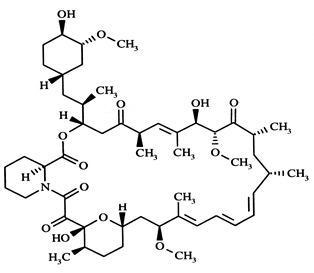
Sirolimus is an mTOR inhibitor immunosuppressive agent. Sirolimus is a macrocyclic lactone produced by Streptomyces hygroscopicus. The chemical name of sirolimus (also known as rapamycin) is (3S,6R,7E,9R,10R,12R,14S,15E,17E,19E,21S,23S,26R,27R,34aS)-9,10,12,13,14,21,22,23,24,25,26,27,32,33,34, 34a-hexadecahydro-9,27-dihydroxy-3-[(1R)-2-[(1S,3R,4R)-4-hydroxy-3-methoxycyclohexyl]-1-methylethyl]-10,21-dimethoxy-6,8,12,14,20,26-hexamethyl-23,27-epoxy-3H-pyrido[2,1-c][1,4] oxaazacyclohentriacontine-1,5,11,28,29 (4H,6H,31H)-pentone. Its molecular formula is C51H79NO13 and its molecular weight is 914.2. The structural formula of sirolimus is illustrated as follows.
Sirolimus is a white to off-white powder and is insoluble in water, but freely soluble in benzyl alcohol, chloroform, acetone, and acetonitrile.
Sirolimus is available as a tan, triangular-shaped tablet containing 0.5 mg sirolimus, as a white, triangular-shaped tablet containing 1 mg sirolimus, and as a yellow-to-beige triangular-shaped tablet containing 2 mg sirolimus.
The inactive ingredients in sirolimus tablets include sucrose, lactose, polyethylene glycol 8000, calcium sulfate, microcrystalline cellulose, pharmaceutical glaze, talc, titanium dioxide, magnesium stearate, povidone, poloxamer 188, polyethylene glycol 20,000, glyceryl monooleate, carnauba wax, dl-alpha tocopherol, and other ingredients. The 0.5 mg and 2 mg dosage strengths also contain yellow iron (ferric) oxide and brown iron (ferric) oxide.
5.5 Angioedema
Sirolimus has been associated with the development of angioedema. The concomitant use of sirolimus with other drugs known to cause angioedema, such as angiotensin converting enzyme (ACE) inhibitors, may increase the risk of developing angioedema. Elevated sirolimus levels (with/without concomitant ACE inhibitors) may also potentiate angioedema [see Drug Interactions (7.2) ]. In some cases, the angioedema has resolved upon discontinuation or dose reduction of sirolimus.
5.9 Proteinuria
Periodic quantitative monitoring of urinary protein excretion is recommended. In a study evaluating conversion from calcineurin inhibitors (CNI) to sirolimus in maintenance renal transplant patients 6–120 months post-transplant, increased urinary protein excretion was commonly observed from 6 through 24 months after conversion to sirolimus compared with CNI continuation [see Clinical Studies (14.4), Adverse Reactions (6.4) ]. Patients with the greatest amount of urinary protein excretion prior to sirolimus conversion were those whose protein excretion increased the most after conversion. New onset nephrosis (nephrotic syndrome) was also reported as a treatment-emergent adverse reaction in 2.2% of the sirolimus conversion group patients in comparison to 0.4% in the CNI continuation group of patients. Nephrotic range proteinuria (defined as urinary protein to creatinine ratio >3.5) was also reported in 9.2% in the sirolimus conversion group of patients in comparison to 3.7% in the CNI continuation group of patients. In some patients, reduction in the degree of urinary protein excretion was observed for individual patients following discontinuation of sirolimus. The safety and efficacy of conversion from calcineurin inhibitors to sirolimus in maintenance renal transplant patients have not been established.
7.5 Cannabidiol
The blood levels of sirolimus may increase upon concomitant use with cannabidiol. When cannabidiol and sirolimus are co-administered, closely monitor for an increase in sirolimus blood levels and for adverse reactions suggestive of sirolimus toxicity. A dose reduction of sirolimus should be considered as needed when sirolimus is co-administered with cannabidiol [see Dosage and Administration (2.5), Warnings and Precautions (5.21) ].
17.4 Infertility
Inform male and female patients that sirolimus may impair fertility [see Warnings and Precautions (5.16), Adverse Reactions (6.7), Use in Specific Populations (8.1, 8.3), Nonclinical Toxicology (13.1) ].
8.5 Geriatric Use
Clinical studies of sirolimus oral solution or tablets did not include sufficient numbers of patients ≥65 years to determine whether they respond differently from younger patients. Data pertaining to sirolimus trough concentrations suggest that dose adjustments based upon age in geriatric renal patients are not necessary. Differences in responses between the elderly and younger patients have not been identified. In general, dose selection for an elderly patient should be cautious, usually starting at the low end of the dosing range, reflecting the greater frequency of decreased hepatic, or cardiac function, and of concomitant disease or other drug therapy.
5.19 Immunizations
The use of live vaccines should be avoided during treatment with sirolimus; live vaccines may include, but are not limited to, the following: measles, mumps, rubella, oral polio, BCG, yellow fever, varicella, and TY21a typhoid. Immunosuppressants may affect response to vaccination. Therefore, during treatment with sirolimus, vaccination may be less effective.
5.7 Hyperlipidemia
Increased serum cholesterol and triglycerides requiring treatment occurred more frequently in patients treated with sirolimus compared with azathioprine or placebo controls in Studies 1 and 2 [see Adverse Reactions (6.1) ]. There were increased incidences of hypercholesterolemia (43–46%) and/or hypertriglyceridemia (45–57%) in patients receiving sirolimus compared with placebo controls (each 23%). The risk/benefit should be carefully considered in patients with established hyperlipidemia before initiating an immunosuppressive regimen including sirolimus.
Any patient who is administered sirolimus should be monitored for hyperlipidemia. If detected, interventions such as diet, exercise, and lipid-lowering agents should be initiated as outlined by the National Cholesterol Education Program guidelines.
In clinical trials of patients receiving sirolimus plus cyclosporine or sirolimus after cyclosporine withdrawal, up to 90% of patients required treatment for hyperlipidemia and hypercholesterolemia with anti-lipid therapy (e.g., statins, fibrates). Despite anti-lipid management, up to 50% of patients had fasting serum cholesterol levels >240 mg/dL and triglycerides above recommended target levels. The concomitant administration of sirolimus and HMG-CoA reductase inhibitors resulted in adverse reactions such as CPK elevations (3%), myalgia (6.7%) and rhabdomyolysis (<1%). In these trials, the number of patients was too small and duration of follow-up too short to evaluate the long-term impact of sirolimus on cardiovascular mortality.
During sirolimus therapy with or without cyclosporine, patients should be monitored for elevated lipids, and patients administered an HMG-CoA reductase inhibitor and/or fibrate should be monitored for the possible development of rhabdomyolysis and other adverse effects, as described in the respective labeling for these agents.
4 Contraindications
Sirolimus is contraindicated in patients with a hypersensitivity to sirolimus [see Warnings and Precautions (5.4) ].
6 Adverse Reactions
The following adverse reactions are discussed in greater detail in other sections of the label.
-
•Increased susceptibility to infection, lymphoma, and malignancy [see Boxed Warning , Warnings and Precautions (5.1) ]
-
•Excess mortality, graft loss, and hepatic artery thrombosis in liver transplant patients [see Boxed Warning , Warnings and Precautions (5.2) ]
-
•Bronchial anastomotic dehiscence in lung transplant patients [see Boxed Warning , Warnings and Precautions (5.3) ]
-
•Hypersensitivity reactions [see Warnings and Precautions (5.4) ]
-
•Exfoliative dermatitis [see Warnings and Precautions (5.4) ]
-
•Angioedema [see Warnings and Precautions (5.5) ]
-
•Fluid accumulation and impairment of wound healing [see Warnings and Precautions (5.6) ]
-
•Hypertriglyceridemia, hypercholesterolemia [see Warnings and Precautions (5.7) ]
-
•Decline in renal function in long-term combination of cyclosporine with sirolimus [see Warnings and Precautions (5.8) ]
-
•Proteinuria [see Warnings and Precautions (5.9) ]
-
•Interstitial lung disease [see Warnings and Precautions (5.11) ]
-
•Increased risk of calcineurin inhibitor-induced HUS/TTP/TMA [see Warnings and Precautions (5.13) ]
-
•Embryo-fetal toxicity [see Warnings and Precautions (5.15) ]
-
•Male infertility [see Warnings and Precautions (5.16) ]
The most common (≥30%) adverse reactions observed with sirolimus in clinical studies for organ rejection prophylaxis in recipients of renal transplantation are: peripheral edema, hypertriglyceridemia, hypertension, hypercholesterolemia, creatinine increased, constipation, abdominal pain, diarrhea, headache, fever, urinary tract infection, anemia, nausea, arthralgia, pain, and thrombocytopenia.
The most common (≥20%) adverse reactions observed with sirolimus in the clinical study for the treatment of LAM are: stomatitis, diarrhea, abdominal pain, nausea, nasopharyngitis, acne, chest pain, peripheral edema, upper respiratory tract infection, headache, dizziness, myalgia, and hypercholesterolemia.
The following adverse reactions resulted in a rate of discontinuation of >5% in clinical trials for renal transplant rejection prophylaxis: creatinine increased, hypertriglyceridemia, and TTP. In patients with LAM, 11% of subjects discontinued due to adverse reactions, with no single adverse reaction leading to discontinuation in more than one patient being treated with sirolimus.
7 Drug Interactions
Sirolimus is known to be a substrate for both cytochrome P-450 3A4 (CYP3A4) and p-glycoprotein (P-gp). Inducers of CYP3A4 and P-gp may decrease sirolimus concentrations whereas inhibitors of CYP3A4 and P-gp may increase sirolimus concentrations.
7.3 Grapefruit Juice
Because grapefruit juice inhibits the CYP3A4-mediated metabolism of sirolimus, it must not be taken with sirolimus [see Clinical Pharmacology (12.3) ].
12.2 Pharmacodynamics
Orally-administered sirolimus, at doses of 2 mg/day and 5 mg/day, significantly reduced the incidence of organ rejection in low-to moderate-immunologic risk renal transplant patients at 6 months following transplantation compared with either azathioprine or placebo [see Clinical Studies (14.1) ]. There was no demonstrable efficacy advantage of a daily maintenance dose of 5 mg with a loading dose of 15 mg over a daily maintenance dose of 2 mg with a loading dose of 6 mg. Therapeutic drug monitoring should be used to maintain sirolimus drug levels within the target-range [see Dosage and Administration (2.5) ].
12.3 Pharmacokinetics
Sirolimus pharmacokinetics activity have been determined following oral administration in healthy subjects, pediatric patients, hepatically impaired patients, and renal transplant patients.
The pharmacokinetic parameters of sirolimus in low- to moderate-immunologic risk adult renal transplant patients following multiple dosing with sirolimus 2 mg daily, in combination with cyclosporine and corticosteroids, is summarized in Table 4.
|
Multiple Dose (daily dose) |
||
|
Solution |
Tablets |
|
|
Cmax (ng/mL) |
14.4 ± 5.3 |
15.0 ± 4.9 |
|
tmax (hr) |
2.1 ± 0.8 |
3.5 ± 2.4 |
|
AUC (ng∙h/mL) |
194 ± 78 |
230 ± 67 |
|
Cmin (ng/mL) Average Cmin over 6 months.
|
7.1 ± 3.5 |
7.6 ± 3.1 |
|
CL/F (mL/h/kg) |
173 ± 50 |
139 ± 63 |
Whole blood trough sirolimus concentrations, as measured by LC/MS/MS in renal transplant patients, were significantly correlated with AUCτ,ss. Upon repeated, twice-daily administration without an initial loading dose in a multiple-dose study, the average trough concentration of sirolimus increases approximately 2- to 3-fold over the initial 6 days of therapy, at which time steady-state is reached. A loading dose of 3 times the maintenance dose will provide near steady-state concentrations within 1 day in most patients [see Dosage and Administration (2.3, 2.5), Warning and Precautions (5.17) ].
3.1 Sirolimus Tablets
-
•0.5 mg, tan, triangular-shaped tablets marked "RAPAMUNE 0.5 mg" on one side.
-
•1 mg, white, triangular-shaped tablets marked "RAPAMUNE 1 mg" on one side.
-
•2 mg, yellow-to-beige triangular-shaped tablets marked "RAPAMUNE 2 mg" on one side.
5.16 Male Infertility
Azoospermia or oligospermia may be observed [see Adverse Reactions (6.7), Nonclinical Toxicology (13.1) ]. Sirolimus is an anti-proliferative drug and affects rapidly dividing cells like the germ cells.
16.1 Sirolimus Tablets
Sirolimus Tablets are available as follows:
-
•NDC 59762-1001-1, 0.5 mg, tan, triangular-shaped tablets marked "RAPAMUNE 0.5 mg" on one side; bottle containing 100 tablets.
-
•NDC 59762-1002-1, 1 mg, white, triangular-shaped tablets marked "RAPAMUNE 1 mg" on one side; bottle containing 100 tablets.
-
•NDC 59762-1003-1, 2 mg, yellow-to-beige triangular-shaped tablets marked "RAPAMUNE 2 mg" on one side; bottle containing 100 tablets.
1 Indications and Usage
Sirolimus is an mTOR inhibitor immunosuppressant indicated for the prophylaxis of organ rejection in patients aged ≥13 years receiving renal transplants:
-
-Patients at low- to moderate-immunologic risk: Use initially with cyclosporine (CsA) and corticosteroids. CsA withdrawal is recommended 2–4 months after transplantation (1.1).
-
-Patients at high-immunologic risk: Use in combination with CsA and corticosteroids for the first 12 months following transplantation (1.1). Safety and efficacy of CsA withdrawal has not been established in high risk patients (1.1, 1.2, 14.3).
Sirolimus is an mTOR inhibitor indicated for the treatment of patients with lymphangioleiomyomatosis (1.3).
17.2 Skin Cancer Events
Advise patients that exposure to sunlight and ultraviolet (UV) light should be limited by wearing protective clothing and using a broad spectrum sunscreen with a high protection factor because of the increased risk for skin cancer [see Warnings and Precautions (5.18) ].
5.18 Skin Cancer Events
Patients on immunosuppressive therapy are at increased risk for skin cancer. Exposure to sunlight and ultraviolet (UV) light should be limited by wearing protective clothing and using a broad spectrum sunscreen with a high protection factor [see Adverse Reactions (6.1, 6.2, 6.7) ].
12.1 Mechanism of Action
Sirolimus inhibits T-lymphocyte activation and proliferation that occurs in response to antigenic and cytokine (Interleukin [IL]-2, IL-4, and IL-15) stimulation by a mechanism that is distinct from that of other immunosuppressants. Sirolimus also inhibits antibody production. In cells, sirolimus binds to the immunophilin, FK Binding Protein-12 (FKBP-12), to generate an immunosuppressive complex. The sirolimus:FKBP-12 complex has no effect on calcineurin activity. This complex binds to and inhibits the activation of the mammalian target of rapamycin (mTOR), a key regulatory kinase. This inhibition suppresses cytokine-driven T-cell proliferation, inhibiting the progression from the G1 to the S phase of the cell cycle.
Mammalian target of rapamycin (mTOR) inhibitors such as sirolimus have been shown in vitro to inhibit production of certain growth factors that may affect angiogenesis, fibroblast proliferation, and vascular permeability.
Studies in experimental models show that sirolimus prolongs allograft (kidney, heart, skin, islet, small bowel, pancreatico-duodenal, and bone marrow) survival in mice, rats, pigs, and/or primates. Sirolimus reverses acute rejection of heart and kidney allografts in rats and prolongs the graft survival in presensitized rats. In some studies, the immunosuppressive effect of sirolimus lasts up to 6 months after discontinuation of therapy. This tolerization effect is alloantigen-specific.
In rodent models of autoimmune disease, sirolimus suppresses immune-mediated events associated with systemic lupus erythematosus, collagen-induced arthritis, autoimmune type I diabetes, autoimmune myocarditis, experimental allergic encephalomyelitis, graft-versus-host disease, and autoimmune uveoretinitis.
Lymphangioleiomyomatosis involves lung tissue infiltration with smooth muscle-like cells that harbor inactivating mutations of the tuberous sclerosis complex (TSC) gene (LAM cells). Loss of TSC gene function activates the mTOR signaling pathway, resulting in cellular proliferation and release of lymphangiogenic growth factors. Sirolimus inhibits the activated mTOR pathway and thus the proliferation of LAM cells.
7.1 Use With Cyclosporine
Cyclosporine, a substrate and inhibitor of CYP3A4 and P-gp, was demonstrated to increase sirolimus concentrations when co-administered with sirolimus. In order to diminish the effect of this interaction with cyclosporine, it is recommended that sirolimus be taken 4 hours after administration of cyclosporine oral solution (MODIFIED) and/or cyclosporine capsules (MODIFIED). If cyclosporine is withdrawn from combination therapy with sirolimus, higher doses of sirolimus are needed to maintain the recommended sirolimus trough concentration ranges [see Dosage and Administration (2.2), Clinical Pharmacology (12.3) ].
5 Warnings and Precautions
-
•Hypersensitivity Reactions (5.4)
-
•Angioedema (5.5)
-
•Fluid Accumulation and Impairment of Wound Healing (5.6)
-
•Hyperlipidemia (5.7)
-
•Decline in Renal Function (5.8)
-
•Proteinuria (5.9)
-
•Latent Viral Infections (5.10)
-
•Interstitial Lung Disease/Non-Infectious Pneumonitis (5.11)
-
•De Novo Use Without Cyclosporine (5.12)
-
•Increased Risk of Calcineurin Inhibitor-Induced Hemolytic Uremic Syndrome/ Thrombotic Thrombocytopenic Purpura/ Thrombotic Microangiopathy (5.13)
-
•Embryo-Fetal Toxicity: Can cause fetal harm. Use of highly effective contraception is recommended for females of reproductive potential during treatment and for 12 weeks after final dose of sirolimus (5.15, 8.1)
-
•Male Infertility: Azoospermia or oligospermia may occur (5.16, 13.1)
-
•Immunizations: Avoid live vaccines (5.19)
5.15 Embryo Fetal Toxicity
Based on animal studies and the mechanism of action [see Clinical Pharmacology (12.1) ], sirolimus can cause fetal harm when administered to a pregnant woman. In animal studies, sirolimus caused embryo-fetal toxicity when administered during the period of organogenesis at maternal exposures that were equal to or less than human exposures at the recommended lowest starting dose. Advise pregnant women of the potential risk to a fetus. Advise female patients of reproductive potential to avoid becoming pregnant and to use highly effective contraception while using sirolimus and for 12 weeks after ending treatment [see Use in Specific Populations (8.1) ].
2 Dosage and Administration
Sirolimus is to be administered orally once daily, consistently with or without food [see Dosage and Administration (2.5), Clinical Pharmacology (12.3) ].
Tablets should not be crushed, chewed or split. Patients unable to take the tablets should be prescribed the solution and instructed in its use.
17.3 Pregnancy and Lactation
Advise female patients of reproductive potential to avoid becoming pregnant throughout treatment and for 12 weeks after sirolimus therapy has stopped. Sirolimus can cause fetal harm if taken during pregnancy. Advise a pregnant woman of the potential risk to her fetus. Before making a decision to breastfeed, inform the patient that the effects of breastfeeding in infants while taking this drug are unknown, but there is potential for serious adverse effects [see Warnings and Precautions (5.15), Use in Specific Populations (8.1, 8.2, 8.3) ].
3 Dosage Forms and Strengths
-
•Tablets: 0.5 mg, 1 mg, 2 mg (3.1).
5.10 Latent Viral Infections
Immunosuppressed patients are at increased risk for opportunistic infections, including activation of latent viral infections. These include BK virus-associated nephropathy, which has been observed in renal transplant patients receiving immunosuppressants, including sirolimus. This infection may be associated with serious outcomes, including deteriorating renal function and renal graft loss [see Adverse Reactions (6.7) ]. Patient monitoring may help detect patients at risk for BK virus-associated nephropathy. Reduction in immunosuppression should be considered for patients who develop evidence of BK virus-associated nephropathy.
Cases of progressive multifocal leukoencephalopathy (PML), sometimes fatal have been reported in patients treated with immunosuppressants, including sirolimus. PML commonly presents with hemiparesis, apathy, confusion, cognitive deficiencies and ataxia. Risk factors for PML include treatment with immunosuppressant therapies and impairment of immune function. In immunosuppressed patients, physicians should consider PML in the differential diagnosis in patients reporting neurological symptoms and consultation with a neurologist should be considered as clinically indicated. Consideration should be given to reducing the amount of immunosuppression in patients who develop PML. In transplant patients, physicians should also consider the risk that reduced immunosuppression represents to the graft.
6.7 Postmarketing Experience
The following adverse reactions have been identified during post-approval use of sirolimus in transplant patients. Because these reactions are reported voluntarily from a population of uncertain size, it is not always possible to reliably estimate their frequency or establish a causal relationship to drug exposure.
-
•Body as a Whole – Lymphedema.
-
•Cardiovascular – Pericardial effusion (including hemodynamically significant effusions and tamponade requiring intervention in children and adults) and fluid accumulation.
-
•Digestive System – Ascites.
-
•Hematological/Lymphatic – Pancytopenia, neutropenia.
-
•Hepatobiliary Disorders – Hepatotoxicity, including fatal hepatic necrosis, with elevated sirolimus trough concentrations.
-
•Immune System – Hypersensitivity reactions, including anaphylactic/anaphylactoid reactions, angioedema, and hypersensitivity vasculitis [see Warnings and Precautions (5.4) ].
-
•Infections – Tuberculosis. BK virus associated nephropathy has been observed in patients receiving immunosuppressants, including sirolimus. This infection may be associated with serious outcomes, including deteriorating renal function and renal graft loss. Cases of progressive multifocal leukoencephalopathy (PML), sometimes fatal, have been reported in patients treated with immunosuppressants, including sirolimus [see Warnings and Precautions (5.10) ]. Clostridium difficile enterocolitis.
-
•Metabolic/Nutritional – Liver function test abnormal, AST/SGOT increased, ALT/SGPT increased, hypophosphatemia, hyperglycemia, diabetes mellitus.
-
•Nervous System - Posterior reversible encephalopathy syndrome.
-
•Respiratory – Cases of interstitial lung disease (including pneumonitis, bronchiolitis obliterans organizing pneumonia [BOOP], and pulmonary fibrosis), some fatal, with no identified infectious etiology have occurred in patients receiving immunosuppressive regimens including sirolimus. In some cases, the interstitial lung disease has resolved upon discontinuation or dose reduction of sirolimus. The risk may be increased as the sirolimus trough concentration increases [see Warnings and Precautions (5.11) ]; pulmonary hemorrhage; pleural effusion; alveolar proteinosis.
-
•Skin – Neuroendocrine carcinoma of the skin (Merkel cell carcinoma) [see Warnings and Precautions (5.18) ], exfoliative dermatitis [see Warnings and Precautions (5.4) ].
-
•Urogenital – Nephrotic syndrome, proteinuria, focal segmental glomerulosclerosis, ovarian cysts, menstrual disorders (including amenorrhea and menorrhagia). Azoospermia has been reported with the use of sirolimus and has been reversible upon discontinuation of sirolimus in most cases.
5.8 Decline in Renal Function
Renal function should be closely monitored during the co-administration of sirolimus with cyclosporine, because long-term administration of the combination has been associated with deterioration of renal function. Patients treated with cyclosporine and sirolimus were noted to have higher serum creatinine levels and lower glomerular filtration rates compared with patients treated with cyclosporine and placebo or azathioprine controls (Studies 1 and 2). The rate of decline in renal function in these studies was greater in patients receiving sirolimus and cyclosporine compared with control therapies.
Appropriate adjustment of the immunosuppressive regimen, including discontinuation of sirolimus and/or cyclosporine, should be considered in patients with elevated or increasing serum creatinine levels. In patients at low- to moderate-immunologic risk, continuation of combination therapy with cyclosporine beyond 4 months following transplantation should only be considered when the benefits outweigh the risks of this combination for the individual patients. Caution should be exercised when using agents (e.g., aminoglycosides and amphotericin B) that are known to have a deleterious effect on renal function.
In patients with delayed graft function, sirolimus may delay recovery of renal function.
8 Use in Specific Populations
5.14 Antimicrobial Prophylaxis
Cases of Pneumocystis carinii pneumonia have been reported in transplant patients not receiving antimicrobial prophylaxis. Therefore, antimicrobial prophylaxis for Pneumocystis carinii pneumonia should be administered for 1 year following transplantation.
Cytomegalovirus (CMV) prophylaxis is recommended for 3 months after transplantation, particularly for patients at increased risk for CMV disease.
5.4 Hypersensitivity Reactions
Hypersensitivity reactions, including anaphylactic/anaphylactoid reactions, angioedema, exfoliative dermatitis and hypersensitivity vasculitis, have been associated with the administration of sirolimus [see Adverse Reactions (6.7) ].
2.5 Therapeutic Drug Monitoring
Monitoring of sirolimus trough concentrations is recommended for all patients, especially in those patients likely to have altered drug metabolism, in patients ≥13 years who weigh less than 40 kg, in patients with hepatic impairment, when a change in the sirolimus dosage form is made, and during concurrent administration of strong CYP3A4 inducers and inhibitors [see Warnings and Precautions (5.20, 5.21), Drug Interactions (7) ].
Therapeutic drug monitoring should not be the sole basis for adjusting sirolimus therapy. Careful attention should be made to clinical signs/symptoms, tissue biopsy findings, and laboratory parameters.
When used in combination with cyclosporine, sirolimus trough concentrations should be maintained within the target-range [see Clinical Studies (14), Clinical Pharmacology (12.3) ]. Following cyclosporine withdrawal in transplant patients at low- to moderate-immunologic risk, the target sirolimus trough concentrations should be 16 to 24 ng/mL for the first year following transplantation. Thereafter, the target sirolimus concentrations should be 12 to 20 ng/mL.
The above recommended 24-hour trough concentration ranges for sirolimus are based on chromatographic methods. Currently in clinical practice, sirolimus whole blood concentrations are being measured by both chromatographic and immunoassay methodologies. Because the measured sirolimus whole blood concentrations depend on the type of assay used, the concentrations obtained by these different methodologies are not interchangeable [see Warnings and Precautions (5.17) , Clinical Pharmacology (12.3) ]. Adjustments to the targeted range should be made according to the assay utilized to determine sirolimus trough concentrations. Since results are assay and laboratory dependent, and the results may change over time, adjustments to the targeted therapeutic range must be made with a detailed knowledge of the site-specific assay used. Therefore, communication should be maintained with the laboratory performing the assay. A discussion of different assay methods is contained in Clinical Therapeutics, Volume 22, Supplement B, April 2000 [see References (15) ].
17 Patient Counseling Information
Advise patients, their families, and their caregivers to read the Medication Guide and assist them in understanding its contents. The complete text of the Medication Guide is reprinted at the end of the document.
2.6 Patients With Low Body Weight
The initial dosage in patients ≥13 years who weigh less than 40 kg should be adjusted, based on body surface area, to 1 mg/m2/day. The loading dose should be 3 mg/m2.
2.8 Patients With Renal Impairment
Dosage adjustment is not needed in patients with impaired renal function [see Use in Specific Populations (8.7) ].
5.21 Cannabidiol Drug Interactions
When cannabidiol and sirolimus are co-administered, closely monitor for an increase in sirolimus blood levels and for adverse reactions suggestive of sirolimus toxicity. A dose reduction of sirolimus should be considered as needed when sirolimus is co-administered with cannabidiol [see Dosage and Administration (2.5), Drug Interactions (7.5) ].
8.7 Patients With Renal Impairment
Dosage adjustment is not required in patients with renal impairment [see Dosage and Administration (2.8), Clinical Pharmacology (12.3) ].
16 How Supplied/storage and Handling
Since sirolimus is not absorbed through the skin, there are no special precautions.
Do not use sirolimus after the expiration date. The expiration date refers to the last day of that month.
2.7 Patients With Hepatic Impairment
It is recommended that the maintenance dose of sirolimus be reduced by approximately one third in patients with mild or moderate hepatic impairment and by approximately one half in patients with severe hepatic impairment. It is not necessary to modify the sirolimus loading dose [see Use in Specific Populations (8.6), Clinical Pharmacology (12.3) ].
8.6 Patients With Hepatic Impairment
The maintenance dose of sirolimus should be reduced in patients with hepatic impairment [see Dosage and Administration (2.7), Clinical Pharmacology (12.3) ].
14.7 Lymphangioleiomyomatosis Patients
The safety and efficacy of sirolimus for treatment of lymphangioleiomyomatosis (LAM) were assessed in a randomized, double-blind, multicenter, controlled trial. This study compared sirolimus (dose-adjusted to maintain blood trough concentrations between 5–15 ng/mL) with placebo for a 12-month treatment period, followed by a 12-month observation period. Eighty-nine (89) patients were enrolled; 43 patients were randomized to receive placebo and 46 patients to receive sirolimus. The primary endpoint was the difference between the groups in the rate of change (slope) per month in forced expiratory volume in 1 second (FEV1). During the treatment period, the FEV1 slope was -12±2 mL per month in the placebo group and 1±2 mL per month in the sirolimus group (treatment difference = 13 mL (95% CI: 7, 18). The absolute between-group difference in the mean change in FEV1 during the 12-month treatment period was 153 mL, or approximately 11% of the mean FEV1 at enrollment. Similar improvements were seen for forced vital capacity (FVC). After discontinuation of sirolimus, the decline in lung function resumed in the sirolimus group and paralleled that in the placebo group (see Figure 1).
|
FIGURE 1: CHANGE IN FORCED EXPIRATORY VOLUME IN 1 SECOND (FEV1) DURING THE TREATMENT AND OBSERVATION PHASES OF THE STUDY IN LAM PATIENTS |
The rate of change over 12 months of vascular endothelial growth factor-D (VEGF-D), a lymphangiogenic growth factor which has been shown to be elevated in patients with LAM, was significantly different in the sirolimus-treated group (-88.0 ± 16.6 pg/mL/month) compared to placebo (-2.42 ± 17.2 pg/mL/month) with a treatment difference of -86 pg/mL/month (95% CI: -133, -39). The absolute between-group difference in the mean change in VEGF-D during the 12-month treatment period was -1017.2, or approximately 50% of the mean VEGF-D at enrollment.
6.5 Pediatric Renal Transplant Patients
Safety was assessed in a controlled clinical trial in pediatric (<18 years of age) renal transplant patients considered at high-immunologic risk, defined as a history of one or more acute allograft rejection episodes and/or the presence of chronic allograft nephropathy on a renal biopsy [see Clinical Studies (14.6) ]. The use of sirolimus in combination with calcineurin inhibitors and corticosteroids was associated with a higher incidence of deterioration of renal function (creatinine increased) compared to calcineurin inhibitor-based therapy, serum lipid abnormalities (including, but not limited to, increased serum triglycerides and cholesterol), and urinary tract infections.
14.6 Pediatric Renal Transplant Patients
Sirolimus was evaluated in a 36-month, open-label, randomized, controlled clinical trial at 14 North American centers in pediatric (aged 3 to <18 years) renal transplant patients considered to be at high-immunologic risk for developing chronic allograft nephropathy, defined as a history of one or more acute allograft rejection episodes and/or the presence of chronic allograft nephropathy on a renal biopsy. Seventy-eight (78) subjects were randomized in a 2:1 ratio to sirolimus (sirolimus target concentrations of 5 to 15 ng/mL, by chromatographic assay, n = 53) in combination with a calcineurin inhibitor and corticosteroids or to continue calcineurin-inhibitor-based immunosuppressive therapy (n = 25). The primary endpoint of the study was efficacy failure as defined by the first occurrence of biopsy-confirmed acute rejection, graft loss, or death, and the trial was designed to show superiority of sirolimus added to a calcineurin-inhibitor-based immunosuppressive regimen compared to a calcineurin-inhibitor-based regimen. The cumulative incidence of efficacy failure up to 36 months was 45.3% in the sirolimus group compared to 44.0% in the control group, and did not demonstrate superiority. There was one death in each group. The use of sirolimus in combination with calcineurin inhibitors and corticosteroids was associated with an increased risk of deterioration of renal function, serum lipid abnormalities (including, but not limited to, increased serum triglycerides and cholesterol), and urinary tract infections [see Warnings and Precautions (5.8) ]. This study does not support the addition of sirolimus to calcineurin-inhibitor-based immunosuppressive therapy in this subpopulation of pediatric renal transplant patients.
6.6 Patients With Lymphangioleiomyomatosis
Safety was assessed in a controlled trial involving 89 patients with lymphangioleiomyomatosis, 46 of whom were treated with sirolimus [see Clinical Studies (14.7) ]. The adverse drug reactions observed in this trial were consistent with the known safety profile for renal transplant patients receiving sirolimus, with the addition of weight decreased which was reported at a greater incidence with sirolimus when compared to placebo. Adverse reactions occurring at a frequency of ≥20% in the sirolimus treatment group and greater than placebo include stomatitis, diarrhea, abdominal pain, nausea, nasopharyngitis, acne, chest pain, peripheral edema, upper respiratory tract infection, headache, dizziness, myalgia, and hypercholesterolemia.
1.2 Limitations of Use in Renal Transplantation
Cyclosporine withdrawal has not been studied in patients with Banff Grade 3 acute rejection or vascular rejection prior to cyclosporine withdrawal, those who are dialysis-dependent, those with serum creatinine >4.5 mg/dL, Black patients, patients of multi-organ transplants, secondary transplants, or those with high levels of panel-reactive antibodies [see Clinical Studies (14.2) ].
In patients at high-immunologic risk, the safety and efficacy of sirolimus used in combination with cyclosporine and corticosteroids has not been studied beyond one year; therefore after the first 12 months following transplantation, any adjustments to the immunosuppressive regimen should be considered on the basis of the clinical status of the patient [see Clinical Studies (14.3) ].
In pediatric patients, the safety and efficacy of sirolimus have not been established in patients <13 years old, or in pediatric (<18 years) renal transplant patients considered at high-immunologic risk [see Adverse Reactions (6.5), Clinical Studies (14.6) ].
The safety and efficacy of de novo use of sirolimus without cyclosporine have not been established in renal transplant patients [see Warnings and Precautions (5.12) ].
The safety and efficacy of conversion from calcineurin inhibitors to sirolimus in maintenance renal transplant patients have not been established [see Clinical Studies (14.4) ].
6.2 Sirolimus Following Cyclosporine Withdrawal
The incidence of adverse reactions was determined through 36 months in a randomized, multicenter, controlled trial (Study 3) in which 215 renal transplant patients received sirolimus as a maintenance regimen following cyclosporine withdrawal, and 215 patients received sirolimus with cyclosporine therapy [see Clinical Studies (14.2) ]. All patients were treated with corticosteroids. The safety profile prior to randomization (start of cyclosporine withdrawal) was similar to that of the 2 mg sirolimus groups in Studies 1 and 2.
Following randomization (at 3 months), patients who had cyclosporine eliminated from their therapy experienced higher incidences of the following adverse reactions: abnormal liver function tests (including increased AST/SGOT and increased ALT/SGPT), hypokalemia, thrombocytopenia, and abnormal healing. Conversely, the incidence of the following adverse events was higher in patients who remained on cyclosporine than those who had cyclosporine withdrawn from therapy: hypertension, cyclosporine toxicity, increased creatinine, abnormal kidney function, toxic nephropathy, edema, hyperkalemia, hyperuricemia, and gum hyperplasia. Mean systolic and diastolic blood pressure improved significantly following cyclosporine withdrawal.
Principal Display Panel 1 Mg Tablet Bottle Label
ALWAYS DISPENSE WITH
MEDICATION GUIDE
NDC 59762-1002-1
100 Tablets
GREENSTONE® BRAND
sirolimus
tablets
1 mg
For oral use only
Rx only
Principal Display Panel 2 Mg Tablet Bottle Label
ALWAYS DISPENSE WITH
MEDICATION GUIDE
NDC 59762-1003-1
100 Tablets
GREENSTONE® BRAND
sirolimus
tablets
2 mg
For oral use only
Rx only
6.3 High Immunologic Risk Renal Transplant Patients
Safety was assessed in 224 patients who received at least one dose of sirolimus with cyclosporine [see Clinical Studies (14.3) ]. Overall, the incidence and nature of adverse reactions was similar to those seen in previous combination studies with sirolimus. The incidence of malignancy was 1.3% at 12 months.
14.3 High Immunologic Risk Renal Transplant Patients
Sirolimus was studied in a one-year, clinical trial in high risk patients (Study 4) who were defined as Black transplant recipients and/or repeat renal transplant recipients who lost a previous allograft for immunologic reasons and/or patients with high panel-reactive antibodies (PRA; peak PRA level >80%). Patients received concentration-controlled sirolimus and cyclosporine (MODIFIED), and corticosteroids per local practice. The sirolimus dose was adjusted to achieve target whole blood trough sirolimus concentrations of 10–15 ng/mL (chromatographic method) throughout the 12-month study period. The cyclosporine dose was adjusted to achieve target whole blood trough concentrations of 200–300 ng/mL through week 2, 150–200 ng/mL from week 2 to week 26, and 100–150 ng/mL from week 26 to week 52 [see Clinical Pharmacology (12.3) ] for the observed trough concentrations ranges. Antibody induction was allowed per protocol as prospectively defined at each transplant center, and was used in 88.4% of patients. The study was conducted at 35 centers in the United States. A total of 224 patients received a transplant and at least one dose of sirolimus and cyclosporine and was comprised of 77.2% Black patients, 24.1% repeat renal transplant recipients, and 13.5% patients with high PRA. Efficacy was assessed with the following endpoints, measured at 12 months: efficacy failure (defined as the first occurrence of biopsy-confirmed acute rejection, graft loss, or death), first occurrence of graft loss or death, and renal function as measured by the calculated GFR using the Nankivell formula. The table below summarizes the result of these endpoints.
|
Parameter |
Sirolimus with Cyclosporine, Corticosteroids |
|
Efficacy Failure (%) |
23.2 |
|
Graft Loss or Death (%) |
9.8 |
|
Renal Function (mean ± SEM) Calculated glomerular filtration rate by Nankivell equation.
,
Patients who had graft loss were included in this analysis with GFR set to 0.
|
52.6 ± 1.6 |
Patient survival at 12 months was 94.6%. The incidence of biopsy-confirmed acute rejection was 17.4% and the majority of the episodes of acute rejection were mild in severity.
2.4 Dosing in Patients With Lymphangioleiomyomatosis
For patients with lymphangioleiomyomatosis, the initial Sirolimus dose should be 2 mg/day. Sirolimus whole blood trough concentrations should be measured in 10–20 days, with dosage adjustment to maintain concentrations between 5–15 ng/mL [see Dosage and Administration (2.5) ].
In most patients, dose adjustments can be based on simple proportion: new Sirolimus dose = current dose × (target concentration/current concentration). Frequent Sirolimus dose adjustments based on non-steady-state sirolimus concentrations can lead to overdosing or under dosing because sirolimus has a long half-life. Once Sirolimus maintenance dose is adjusted, patients should continue on the new maintenance dose for at least 7 to 14 days before further dosage adjustment with concentration monitoring. Once a stable dose is achieved, therapeutic drug monitoring should be performed at least every three months.
Principal Display Panel 0.5 Mg Tablet Bottle Label
ALWAYS DISPENSE WITH
MEDICATION GUIDE
NDC 59762-1001-1
100 Tablets
GREENSTONE® BRAND
sirolimus
tablets
0.5 mg
For oral use only
Rx only
2.3 Renal Transplant Patients At High Immunologic Risk
In patients with high-immunologic risk, it is recommended that sirolimus be used in combination with cyclosporine and corticosteroids for the first 12 months following transplantation [see Clinical Studies (14.3) ]. The safety and efficacy of this combination in high-immunologic risk patients has not been studied beyond the first 12 months. Therefore, after the first 12 months following transplantation, any adjustments to the immunosuppressive regimen should be considered on the basis of the clinical status of the patient.
For patients receiving sirolimus with cyclosporine, sirolimus therapy should be initiated with a loading dose of up to 15 mg on day 1 post-transplantation. Beginning on day 2, an initial maintenance dose of 5 mg/day should be given. A trough level should be obtained between days 5 and 7, and the daily dose of sirolimus should thereafter be adjusted [see Dosage and Administration (2.5) ].
The starting dose of cyclosporine should be up to 7 mg/kg/day in divided doses and the dose should subsequently be adjusted to achieve target whole blood trough concentrations [see Dosage and Administration (2.5) ]. Prednisone should be administered at a minimum of 5 mg/day.
Antibody induction therapy may be used.
5.6 Fluid Accumulation and Impairment of Wound Healing
There have been reports of impaired or delayed wound healing in patients receiving sirolimus, including lymphocele and wound dehiscence [see Adverse Reactions (6.1) ]. Mammalian target of rapamycin (mTOR) inhibitors such as sirolimus have been shown in vitro to inhibit production of certain growth factors that may affect angiogenesis, fibroblast proliferation, and vascular permeability. Lymphocele, a known surgical complication of renal transplantation, occurred significantly more often in a dose-related fashion in patients treated with sirolimus [see Adverse Reactions (6.1) ]. Appropriate measures should be considered to minimize such complications. Patients with a body mass index (BMI) greater than 30 kg/m2 may be at increased risk of abnormal wound healing based on data from the medical literature.
There have also been reports of fluid accumulation, including peripheral edema, lymphedema, pleural effusion, ascites, and pericardial effusions (including hemodynamically significant effusions and tamponade requiring intervention in children and adults), in patients receiving sirolimus.
1.3 Treatment of Patients With Lymphangioleiomyomatosis
Sirolimus is indicated for the treatment of patients with lymphangioleiomyomatosis (LAM).
13.1 Carcinogenesis, Mutagenesis, Impairment of Fertility
Carcinogenicity studies were conducted in mice and rats. In an 86-week female mouse study at sirolimus doses 30 to 120 times higher than the 2 mg daily clinical dose (adjusted for body surface area), there was a statistically significant increase in malignant lymphoma at all dose levels compared with controls. In a second mouse study at dosages that were approximately 3 to 16 times the clinical dose (adjusted for body surface area), hepatocellular adenoma and carcinoma in males were considered sirolimus-related. In the 104-week rat study at dosages equal to or lower than the clinical dose of 2 mg daily (adjusted for body surface area), there were no significant findings.
Sirolimus was not genotoxic in the in vitro bacterial reverse mutation assay, the Chinese hamster ovary cell chromosomal aberration assay, the mouse lymphoma cell forward mutation assay, or the in vivo mouse micronucleus assay.
When female rats were treated by oral gavage with sirolimus and mated to untreated males, female fertility was decreased at 0.5 mg/kg (2.5-fold the clinical dose of 2 mg, on a body surface area basis) due to decreased implantation. In addition, reduced ovary and uterus weight were observed. The NOAEL for female rat fertility was 0.1 mg/kg (0.5-fold the clinical dose of 2 mg).
When male rats were treated by oral gavage with sirolimus and mated to untreated females, male fertility was decreased at 2 mg/kg (9.7-fold the clinical dose of 2 mg, on a body surface area basis). Atrophy of testes, epididymides, prostate, seminiferous tubules, and reduced sperm counts were observed. The NOAEL for male rat fertility was 0.5 mg/kg (2.5-fold the clinical dose of 2 mg).
Testicular tubular degeneration was also seen in a 4-week intravenous study of sirolimus in monkeys at 0.1 mg/kg (1-fold the clinical dose of 2 mg, on a body surface area basis).
2.1 General Dosing Guidance for Renal Transplant Patients
The initial dose of sirolimus should be administered as soon as possible after transplantation. It is recommended that sirolimus be taken 4 hours after administration of cyclosporine oral solution (MODIFIED) and or/cyclosporine capsules (MODIFIED) [see Drug Interactions (7.2) ].
Frequent sirolimus dose adjustments based on non-steady-state sirolimus concentrations can lead to overdosing or underdosing because sirolimus has a long half-life. Once sirolimus maintenance dose is adjusted, patients should continue on the new maintenance dose for at least 7 to 14 days before further dosage adjustment with concentration monitoring. In most patients, dose adjustments can be based on simple proportion: new sirolimus dose = current dose × (target concentration/current concentration). A loading dose should be considered in addition to a new maintenance dose when it is necessary to increase sirolimus trough concentrations: sirolimus loading dose = 3 × (new maintenance dose - current maintenance dose). The maximum sirolimus dose administered on any day should not exceed 40 mg. If an estimated daily dose exceeds 40 mg due to the addition of a loading dose, the loading dose should be administered over 2 days. Sirolimus trough concentrations should be monitored at least 3 to 4 days after a loading dose(s).
Two milligrams (2 mg) of sirolimus oral solution have been demonstrated to be clinically equivalent to 2 mg sirolimus tablets; hence, at this dose these two formulations are interchangeable. However, it is not known if higher doses of sirolimus oral solution are clinically equivalent to higher doses of sirolimus tablets on a mg-to-mg basis [see Clinical Pharmacology (12.3) ].
5.11 Interstitial Lung Disease/non Infectious Pneumonitis
Cases of interstitial lung disease [ILD] (including pneumonitis, bronchiolitis obliterans organizing pneumonia [BOOP], and pulmonary fibrosis), some fatal, with no identified infectious etiology have occurred in patients receiving immunosuppressive regimens including sirolimus. In some cases, the ILD was reported with pulmonary hypertension (including pulmonary arterial hypertension [PAH]) as a secondary event. In some cases, the ILD has resolved upon discontinuation or dose reduction of sirolimus. The risk may be increased as the trough sirolimus concentration increases [see Adverse Reactions (6.7) ].
1.1 Prophylaxis of Organ Rejection in Renal Transplantation
Sirolimus is indicated for the prophylaxis of organ rejection in patients aged 13 years or older receiving renal transplants.
In patients at low- to moderate-immunologic risk, it is recommended that sirolimus be used initially in a regimen with cyclosporine and corticosteroids; cyclosporine should be withdrawn 2 to 4 months after transplantation [see Dosage and Administration (2.2) ].
In patients at high-immunologic risk (defined as Black recipients and/or repeat renal transplant recipients who lost a previous allograft for immunologic reason and/or patients with high panel-reactive antibodies [PRA; peak PRA level >80%]), it is recommended that sirolimus be used in combination with cyclosporine and corticosteroids for the first year following transplantation [see Dosage and Administration (2.3) , Clinical Studies (14.3) ].
7.2 Strong Inducers and Strong Inhibitors of Cyp3a4 and P Gp
Avoid concomitant use of sirolimus with strong inducers (e.g., rifampin, rifabutin) and strong inhibitors (e.g., ketoconazole, voriconazole, itraconazole, erythromycin, telithromycin, clarithromycin) of CYP3A4 and P-gp. Alternative agents with lesser interaction potential with sirolimus should be considered [see Warnings and Precautions (5.20), Clinical Pharmacology (12.3) ].
5.3 Lung Transplantation – Bronchial Anastomotic Dehiscence
Cases of bronchial anastomotic dehiscence, most fatal, have been reported in de novo lung transplant patients when sirolimus has been used as part of an immunosuppressive regimen.
The safety and efficacy of sirolimus as immunosuppressive therapy have not been established in lung transplant patients; therefore, such use is not recommended.
14.2 Cyclosporine Withdrawal Study in Renal Transplant Patients
The safety and efficacy of sirolimus as a maintenance regimen were assessed following cyclosporine withdrawal at 3 to 4 months after renal transplantation. Study 3 was a randomized, multicenter, controlled trial conducted at 57 centers in Australia, Canada, and Europe. Five hundred twenty-five (525) patients were enrolled. All patients in this study received the tablet formulation. This study compared patients who were administered sirolimus, cyclosporine, and corticosteroids continuously with patients who received this same standardized therapy for the first 3 months after transplantation (pre-randomization period) followed by the withdrawal of cyclosporine. During cyclosporine withdrawal, the sirolimus dosages were adjusted to achieve targeted sirolimus whole blood trough concentration ranges (16 to 24 ng/mL until month 12, then 12 to 20 ng/mL thereafter, expressed as chromatographic assay values). At 3 months, 430 patients were equally randomized to either continue sirolimus with cyclosporine therapy or to receive sirolimus as a maintenance regimen following cyclosporine withdrawal.
Eligibility for randomization included no Banff Grade 3 acute rejection or vascular rejection episode in the 4 weeks before random assignment, serum creatinine ≤4.5 mg/dL, and adequate renal function to support cyclosporine withdrawal (in the opinion of the investigator). The primary efficacy endpoint was graft survival at 12 months after transplantation. Secondary efficacy endpoints were the rate of biopsy-confirmed acute rejection, patient survival, incidence of efficacy failure (defined as the first occurrence of either biopsy-proven acute rejection, graft loss, or death), and treatment failure (defined as the first occurrence of either discontinuation, acute rejection, graft loss, or death).
The following table summarizes the resulting graft and patient survival at 12, 24, and 36 months for this trial. At 12, 24, and 36 months, graft and patient survival were similar for both groups.
|
Parameter |
Sirolimus with Cyclosporine Therapy |
Sirolimus Following Cyclosporine Withdrawal |
|
Graft Survival |
||
|
Month 12 Primary efficacy endpoint.
|
95.3 Survival including loss to follow-up as an event.
|
97.2 |
|
Month 24 |
91.6 |
94.0 |
|
Month 36 Initial planned duration of the study.
|
87.0 |
91.6 |
|
Patient Survival |
||
|
Month 12 |
97.2 |
98.1 |
|
Month 24 |
94.4 |
95.8 |
|
Month 36 |
91.6 |
94.0 |
The following table summarizes the results of first biopsy-proven acute rejection at 12 and 36 months. There was a significant difference in first biopsy-proven rejection rates between the two groups after randomization and through 12 months. Most of the post-randomization acute rejections occurred in the first 3 months following randomization.
|
Period |
Sirolimus with Cyclosporine Therapy |
Sirolimus Following Cyclosporine Withdrawal |
|
Pre-randomization Randomization occurred at 3 months ± 2 weeks.
|
9.3 |
10.2 |
|
Post-randomization through 12 months |
4.2 |
9.8 |
|
Post-randomization from 12 to 36 months |
1.4 |
0.5 |
|
Post-randomization through 36 months |
5.6 |
10.2 |
|
Total at 36 months |
14.9 |
20.5 |
Patients receiving renal allografts with ≥4 HLA mismatches experienced significantly higher rates of acute rejection following randomization to the cyclosporine withdrawal group, compared with patients who continued cyclosporine (15.3% versus 3.0%). Patients receiving renal allografts with ≤3 HLA mismatches demonstrated similar rates of acute rejection between treatment groups (6.8% versus 7.7%) following randomization.
The following table summarizes the mean calculated GFR in Study 3 (cyclosporine withdrawal study).
|
Parameter |
Sirolimus with Cyclosporine Therapy |
Sirolimus Following Cyclosporine Withdrawal |
|
Month 12 |
||
|
Mean ± SEM |
53.2 ± 1.5 |
59.3 ± 1.5 |
|
Month 24 |
||
|
Mean ± SEM |
48.4 ± 1.7 |
58.4 ± 1.6 |
|
Month 36 |
||
|
Mean ± SEM |
47.0 ± 1.8 |
58.5 ± 1.9 |
The mean GFR at 12, 24, and 36 months, calculated by the Nankivell equation, was significantly higher for patients receiving sirolimus as a maintenance regimen following cyclosporine withdrawal than for those in the sirolimus with cyclosporine therapy group. Patients who had an acute rejection prior to randomization had a significantly higher GFR following cyclosporine withdrawal compared to those in the sirolimus with cyclosporine group. There was no significant difference in GFR between groups for patients who experienced acute rejection post-randomization.
Although the initial protocol was designed for 36 months, there was a subsequent amendment to extend this study. The results for the cyclosporine withdrawal group at months 48 and 60 were consistent with the results at month 36. Fifty-two percent (112/215) of the patients in the sirolimus with cyclosporine withdrawal group remained on therapy to month 60 and showed sustained GFR.
7.4 Weak and Moderate Inducers Or Inhibitors of Cyp3a4 and P Gp
Exercise caution when using sirolimus with drugs or agents that are modulators of CYP3A4 and P-gp. The dosage of sirolimus and/or the co-administered drug may need to be adjusted [see Clinical Pharmacology (12.3) ].
-
•Drugs that could increase sirolimus blood concentrations:
Bromocriptine, cimetidine, cisapride, clotrimazole, danazol, diltiazem, fluconazole, letermovir, protease inhibitors (e.g., HIV and hepatitis C that include drugs such as ritonavir, indinavir, boceprevir, and telaprevir), metoclopramide, nicardipine, troleandomycin, verapamil -
•Drugs and other agents that could decrease sirolimus concentrations:
Carbamazepine, phenobarbital, phenytoin, rifapentine, St. John's Wort (Hypericum perforatum) -
•Drugs with concentrations that could increase when given with sirolimus:
Verapamil
5.20 Interaction With Strong Inhibitors and Inducers of Cyp3a4 And/or P Gp
Avoid concomitant use of sirolimus with strong inhibitors of CYP3A4 and/or P-gp (such as ketoconazole, voriconazole, itraconazole, erythromycin, telithromycin, or clarithromycin) or strong inducers of CYP3A4 and/or P-gp (such as rifampin or rifabutin) [see Drug Interactions (7.2) ].
5.1 Increased Susceptibility to Infection and the Possible Development of Lymphoma
Increased susceptibility to infection and the possible development of lymphoma and other malignancies, particularly of the skin, may result from immunosuppression. The rates of lymphoma/lymphoproliferative disease observed in Studies 1 and 2 were 0.7–3.2% (for sirolimus -treated patients) versus 0.6–0.8% (azathioprine and placebo control) [see Adverse Reactions (6.1) and (6.2) ]. Oversuppression of the immune system can also increase susceptibility to infection, including opportunistic infections such as tuberculosis, fatal infections, and sepsis. Only physicians experienced in immunosuppressive therapy and management of organ transplant patients should use sirolimus for prophylaxis of organ rejection in patients receiving renal transplants. Patients receiving the drug should be managed in facilities equipped and staffed with adequate laboratory and supportive medical resources. The physician responsible for maintenance therapy should have complete information requisite for the follow-up of the patient.
Warning: Immunosuppression, Use Is Not Recommended in Liver Or Lung Transplant Patients
-
•Increased susceptibility to infection and the possible development of lymphoma and other malignancies may result from immunosuppression
Increased susceptibility to infection and the possible development of lymphoma may result from immunosuppression. Only physicians experienced in immunosuppressive therapy and management of renal transplant patients should use sirolimus for prophylaxis of organ rejection in patients receiving renal transplants. Patients receiving the drug should be managed in facilities equipped and staffed with adequate laboratory and supportive medical resources. The physician responsible for maintenance therapy should have complete information requisite for the follow-up of the patient [see Warnings and Precautions (5.1) ].
-
•The safety and efficacy of sirolimus as immunosuppressive therapy have not been established in liver or lung transplant patients, and therefore, such use is not recommended [see Warnings and Precautions (5.2, 5.3) ].
-
•Liver Transplantation – Excess Mortality, Graft Loss, and Hepatic Artery Thrombosis (HAT)
The use of sirolimus in combination with tacrolimus was associated with excess mortality and graft loss in a study in de novo liver transplant patients. Many of these patients had evidence of infection at or near the time of death.
In this and another study in de novo liver transplant patients, the use of sirolimus in combination with cyclosporine or tacrolimus was associated with an increase in HAT; most cases of HAT occurred within 30 days post-transplantation and most led to graft loss or death [see Warnings and Precautions (5.2) ].
-
•Lung Transplantation – Bronchial Anastomotic Dehiscence
Cases of bronchial anastomotic dehiscence, most fatal, have been reported in de novo lung transplant patients when sirolimus has been used as part of an immunosuppressive regimen [see Warnings and Precautions (5.3) ].
5.2 Liver Transplantation – Excess Mortality, Graft Loss, and Hepatic Artery Thrombosis
The safety and efficacy of sirolimus as immunosuppressive therapy have not been established in liver transplant patients; therefore, such use is not recommended. The use of sirolimus has been associated with adverse outcomes in patients following liver transplantation, including excess mortality, graft loss and hepatic artery thrombosis (HAT).
In a study in de novo liver transplant patients, the use of sirolimus in combination with tacrolimus was associated with excess mortality and graft loss (22% in combination versus 9% on tacrolimus alone). Many of these patients had evidence of infection at or near the time of death.
In this and another study in de novo liver transplant patients, the use of sirolimus in combination with cyclosporine or tacrolimus was associated with an increase in HAT (7% in combination versus 2% in the control arm); most cases of HAT occurred within 30 days post-transplantation, and most led to graft loss or death.
In a clinical study in stable liver transplant patients 6–144 months post-liver transplantation and receiving a CNI-based regimen, an increased number of deaths was observed in the group converted to a sirolimus-based regimen compared to the group who was continued on a CNI-based regimen, although the difference was not statistically significant (3.8% versus 1.4%) [see Clinical Studies (14.5) ].
14.4 Conversion From Calcineurin Inhibitors to Sirolimus in Maintenance Renal Transplant Patients
Conversion from calcineurin inhibitors (CNI) to sirolimus was assessed in maintenance renal transplant patients 6 months to 10 years post-transplant (Study 5). This study was a randomized, multicenter, controlled trial conducted at 111 centers globally, including US and Europe, and was intended to show that renal function was improved by conversion from CNI to sirolimus. Eight hundred thirty (830) patients were enrolled and stratified by baseline calculated glomerular filtration rate (GFR, 20–40 mL/min versus greater than 40 mL/min). In this trial there was no benefit associated with conversion with regard to improvement in renal function and a greater incidence of proteinuria in the sirolimus conversion arm. In addition, enrollment of patients with baseline calculated GFR less than 40 mL/min was discontinued due to a higher rate of serious adverse events, including pneumonia, acute rejection, graft loss and death [see Adverse Reactions (6.4) ].
This study compared renal transplant patients (6–120 months after transplantation) who were converted from calcineurin inhibitors to sirolimus, with patients who continued to receive calcineurin inhibitors. Concomitant immunosuppressive medications included mycophenolate mofetil (MMF), azathioprine (AZA), and corticosteroids. sirolimus was initiated with a single loading dose of 12–20 mg, after which dosing was adjusted to achieve a target sirolimus whole blood trough concentration of 8–20 ng/mL (chromatographic method). The efficacy endpoint was calculated GFR at 12 months post-randomization. Additional endpoints included biopsy-confirmed acute rejection, graft loss, and death. Findings in the patient stratum with baseline calculated GFR greater than 40 mL/min (sirolimus conversion, n = 497; CNI continuation, n = 246) are summarized below. There was no clinically or statistically significant improvement in Nankivell GFR compared to baseline.
|
Parameter |
Sirolimus Conversion |
CNI Continuation |
Difference (95% CI) |
|
GFR mL/min (Nankivell) at 1 year |
59.0 |
57.7 |
1.3 (-1.1, 3.7) |
|
GFR mL/min (Nankivell) at 2 year |
53.7 |
52.1 |
1.6 (-1.4, 4.6) |
The rates of acute rejection, graft loss, and death were similar at 1 and 2 years. Treatment-emergent adverse events occurred more frequently during the first 6 months after sirolimus conversion. The rates of pneumonia were significantly higher for the sirolimus conversion group.
While the mean and median values for urinary protein to creatinine ratio were similar between treatment groups at baseline, significantly higher mean and median levels of urinary protein excretion were seen in the sirolimus conversion arm at 1 year and at 2 years, as shown in the table below [see Warnings and Precautions (5.9) ]. In addition, when compared to patients who continued to receive calcineurin inhibitors, a higher percentage of patients had urinary protein to creatinine ratios >1 at 1 and 2 years after sirolimus conversion. This difference was seen in both patients who had a urinary protein to creatinine ratio ≤1 and those who had a protein to creatinine ratio >1 at baseline. More patients in the sirolimus conversion group developed nephrotic range proteinuria, as defined by a urinary protein to creatinine ratio >3.5 (46/482 [9.5%] versus 9/239 [3.8%]), even when the patients with baseline nephrotic range proteinuria were excluded. The rate of nephrotic range proteinuria was significantly higher in the sirolimus conversion group compared to the calcineurin inhibitor continuation group with baseline urinary protein to creatinine ratio >1 (13/29 versus 1/14), excluding patients with baseline nephrotic range proteinuria.
|
Study period |
Sirolimus Conversion |
CNI Continuation |
|||||
|
N |
Mean ± SD |
Median |
N |
Mean ± SD |
Median |
p-value |
|
|
Baseline |
410 |
0.35 ± 0.76 |
0.13 |
207 |
0.28 ± 0.61 |
0.11 |
0.381 |
|
1 year |
423 |
0.88 ± 1.61 |
0.31 |
203 |
0.37 ± 0.88 |
0.14 |
<0.001 |
|
2 years |
373 |
0.86 ± 1.48 |
0.32 |
190 |
0.47 ± 0.98 |
0.13 |
<0.001 |
The above information should be taken into account when considering conversion from calcineurin inhibitors to sirolimus in stable renal transplant patients due to the lack of evidence showing that renal function improves following conversion, and the finding of a greater increment in urinary protein excretion, and an increased incidence of treatment-emergent nephrotic range proteinuria following conversion to sirolimus. This was particularly true among patients with existing abnormal urinary protein excretion prior to conversion.
In an open-label, randomized, comparative, multicenter study where kidney transplant patients were either converted from tacrolimus to sirolimus 3 to 5 months post-transplant (sirolimus group) or remained on tacrolimus, there was no significant difference in renal function at 2 years post-transplant. Overall, 44/131 (33.6%) discontinued treatment in the sirolimus group versus 12/123 (9.8%) in the tacrolimus group. More patients reported adverse events 130/131 (99.2%) versus 112/123 (91.1%) and more patients reported discontinuations from the treatment due to adverse events 28/131 (21.4%) versus 4/123 (3.3%) in the sirolimus group compared to the tacrolimus group.
The incidence of biopsy-confirmed acute rejection was higher for patients in the sirolimus group 11/131 (8.4%) compared to the tacrolimus group 2/123 (1.6%) through 2 years post-transplant. The rate of new-onset diabetes mellitus post-randomization, defined as 30 days or longer of continuous or at least 25 days non-stop (without gap) use of any diabetic treatment after randomization, a fasting glucose ≥126 mg/dL or a non-fasting glucose ≥200 mg/dL, was higher in the sirolimus group 15/82 (18.3%) compared to the tacrolimus group 4/72 (5.6%). A greater incidence of proteinuria, was seen in the sirolimus group 19/131 (14.5%) versus 2/123 (1.6%) in the tacrolimus group.
6.1 Clinical Studies Experience in Prophylaxis of Organ Rejection Following Renal Transplantation
The safety and efficacy of sirolimus oral solution for the prevention of organ rejection following renal transplantation were assessed in two randomized, double-blind, multicenter, controlled trials [see Clinical Studies (14.1) ]. The safety profiles in the two studies were similar.
The incidence of adverse reactions in the randomized, double-blind, multicenter, placebo-controlled trial (Study 2) in which 219 renal transplant patients received sirolimus oral solution 2 mg/day, 208 received sirolimus oral solution 5 mg/day, and 124 received placebo is presented in Table 1 below. The study population had a mean age of 46 years (range 15 to 71 years), the distribution was 67% male, and the composition by race was: White (78%), Black (11%), Asian (3%), Hispanic (2%), and Other (5%). All patients were treated with cyclosporine and corticosteroids. Data (≥ 12 months post-transplant) presented in the following table show the adverse reactions that occurred in at least one of the sirolimus treatment groups with an incidence of ≥20%.
The safety profile of the tablet did not differ from that of the oral solution formulation [see Clinical Studies (14.1) ].
In general, adverse reactions related to the administration of sirolimus were dependent on dose/concentration. Although a daily maintenance dose of 5 mg, with a loading dose of 15 mg, was shown to be safe and effective, no efficacy advantage over the 2 mg dose could be established for renal transplant patients. Patients receiving 2 mg of sirolimus oral solution per day demonstrated an overall better safety profile than did patients receiving 5 mg of sirolimus oral solution per day.
Because clinical trials are conducted under widely varying conditions, adverse reaction rates observed in one clinical trial of a drug cannot be directly compared with rates in the clinical trials of the same or another drug and may not reflect the rates observed in practice.
|
––– Sirolimus Oral Solution––– |
|||
|
2 mg/day |
5 mg/day |
Placebo |
|
|
Adverse Reaction |
(n = 218) |
(n = 208) |
(n = 124) |
|
Peripheral edema |
54 |
58 |
48 |
|
Hypertriglyceridemia |
45 |
57 |
23 |
|
Hypertension |
45 |
49 |
48 |
|
Hypercholesterolemia |
43 |
46 |
23 |
|
Creatinine increased |
39 |
40 |
38 |
|
Constipation |
36 |
38 |
31 |
|
Abdominal pain |
29 |
36 |
30 |
|
Diarrhea |
25 |
35 |
27 |
|
Headache |
34 |
34 |
31 |
|
Fever |
23 |
34 |
35 |
|
Urinary tract infection |
26 |
33 |
26 |
|
Anemia |
23 |
33 |
21 |
|
Nausea |
25 |
31 |
29 |
|
Arthralgia |
25 |
31 |
18 |
|
Thrombocytopenia |
14 |
30 |
9 |
|
Pain |
33 |
29 |
25 |
|
Acne |
22 |
22 |
19 |
|
Rash |
10 |
20 |
6 |
|
Edema |
20 |
18 |
15 |
The following adverse reactions were reported less frequently (≥3%, but <20%)
-
•Body as a Whole – Sepsis, lymphocele, herpes zoster, herpes simplex.
-
•Cardiovascular – Venous thromboembolism (including pulmonary embolism, deep venous thrombosis), tachycardia.
-
•Digestive System – Stomatitis.
-
•Hematologic and Lymphatic System – Thrombotic thrombocytopenic purpura/hemolytic uremic syndrome (TTP/HUS), leukopenia.
-
•Metabolic/Nutritional – Abnormal healing, increased lactic dehydrogenase (LDH), hypokalemia, diabetes mellitus.
-
•Musculoskeletal System – Bone necrosis.
-
•Respiratory System – Pneumonia, epistaxis.
-
•Skin – Melanoma, squamous cell carcinoma, basal cell carcinoma.
-
•Urogenital System – Pyelonephritis, decline in renal function (creatinine increased) in long-term combination of cyclosporine with sirolimus [see Warnings and Precautions (5.8) ], ovarian cysts, menstrual disorders (including amenorrhea and menorrhagia).
Less frequently (<3%) occurring adverse reactions included: lymphoma/post-transplant lymphoproliferative disorder, mycobacterial infections (including M. tuberculosis), pancreatitis, cytomegalovirus (CMV), and Epstein-Barr virus.
14.5 Conversion From A Cni Based Regimen to A Sirolimus Based Regimen in Liver Transplant Patients
Conversion from a CNI-based regimen to a sirolimus-based regimen was assessed in stable liver transplant patients 6–144 months post-transplant. The clinical study was a 2:1 randomized, multi-center, controlled trial conducted at 82 centers globally, including the US and Europe, and was intended to show that renal function was improved by conversion from a CNI to sirolimus without adversely impacting efficacy or safety. A total of 607 patients were enrolled.
The study failed to demonstrate superiority of conversion to a sirolimus-based regimen compared to continuation of a CNI-based regimen in baseline-adjusted GFR, as estimated by Cockcroft-Gault, at 12 months (62 mL/min in the sirolimus conversion group and 63 mL/min in the CNI continuation group). The study also failed to demonstrate non-inferiority, with respect to the composite endpoint consisting of graft loss and death (including patients with missing survival data) in the sirolimus conversion group compared to the CNI continuation group (6.6% versus 5.6%). The number of deaths in the sirolimus conversion group (15/393, 3.8%) was higher than in the CNI continuation group (3/214, 1.4%), although the difference was not statistically significant. The rates of premature study discontinuation (primarily due to adverse events or lack of efficacy), adverse events overall (infections, specifically), and biopsy-proven acute liver graft rejection at 12 months were all significantly greater in the sirolimus conversion group compared to the CNI continuation group.
6.4 Conversion From Calcineurin Inhibitors to Sirolimus in Maintenance Renal Transplant Population
The safety and efficacy of conversion from calcineurin inhibitors to sirolimus in maintenance renal transplant population have not been established [see Clinical Studies (14.4) ]. In a study evaluating the safety and efficacy of conversion from calcineurin inhibitors to sirolimus (initial target sirolimus concentrations of 12–20 ng/mL, and then 8–20 ng/mL, by chromatographic assay) in maintenance renal transplant patients, enrollment was stopped in the subset of patients (n = 87) with a baseline glomerular filtration rate of less than 40 mL/min. There was a higher rate of serious adverse events, including pneumonia, acute rejection, graft loss and death, in this stratum of the sirolimus treatment arm.
The subset of patients with a baseline glomerular filtration rate of less than 40 mL/min had 2 years of follow-up after randomization. In this population, the rate of pneumonia was 25.9% (15/58) versus 13.8% (4/29), graft loss (excluding death with functioning graft loss) was 22.4% (13/58) versus 31.0% (9/29), and death was 15.5% (9/58) versus 3.4% (1/29) in the sirolimus conversion group and CNI continuation group, respectively.
In the subset of patients with a baseline glomerular filtration rate of greater than 40 mL/min, there was no benefit associated with conversion with regard to improvement in renal function and a greater incidence of proteinuria in the sirolimus conversion arm.
Overall in this study, a 5-fold increase in the reports of tuberculosis among sirolimus 2.0% (11/551) and comparator 0.4% (1/273) treatment groups was observed with 2:1 randomization scheme.
In a second study evaluating the safety and efficacy of conversion from tacrolimus to sirolimus 3 to 5 months post-kidney transplant, a higher rate of adverse events, discontinuations due to adverse events, acute rejection, and new onset diabetes mellitus was observed following conversion to sirolimus. There was also no benefit with respect to renal function and a greater incidence of proteinuria was observed after conversion to sirolimus [(see Clinical Studies (14.4)].
5.17 Different Sirolimus Trough Concentration Reported Between Chromatographic and Immunoassay Methodologies
Currently in clinical practice, sirolimus whole blood concentrations are being measured by various chromatographic and immunoassay methodologies. Patient sample concentration values from different assays may not be interchangeable [see Dosage and Administration (2.5) ].
5.13 Increased Risk of Calcineurin Inhibitor Induced Hemolytic Uremic Syndrome/thrombotic Thrombocytopenic Purpura/thrombotic Microangiopathy
The concomitant use of sirolimus with a calcineurin inhibitor may increase the risk of calcineurin inhibitor-induced hemolytic uremic syndrome/thrombotic thrombocytopenic purpura/thrombotic microangiopathy (HUS/TTP/TMA) [see Adverse Reactions (6.7) ].
Structured Label Content
Section 42229-5 (42229-5)
Sirolimus and Cyclosporine Combination Therapy
For de novo renal transplant patients, it is recommended that sirolimus tablets be used initially in a regimen with cyclosporine and corticosteroids. A loading dose of sirolimus equivalent to 3 times the maintenance dose should be given, i.e. a daily maintenance dose of 2 mg should be preceded with a loading dose of 6 mg. Therapeutic drug monitoring should be used to maintain sirolimus drug concentrations within the target-range [see Dosage and Administration (2.5) ].
Section 42231-1 (42231-1)
| This Medication Guide has been approved by the U.S. Food and Drug Administration. Revised Nov 2024 | ||
|
MEDICATION GUIDE
|
||
|
What is the most important information I should know about sirolimus? Sirolimus can cause serious side effects, including: 1. Increased risk of getting infections. Serious infections can happen including infections caused by viruses, bacteria, and fungi (yeast). Your doctor may put you on medicine to help prevent some of these infections. Call your doctor right away if you have symptoms of infection including fever or chills while taking sirolimus. 2. Increased risk of getting certain cancers. People who take sirolimus have a higher risk of getting lymphoma, and other cancers, especially skin cancer. Talk with your doctor about your risk for cancer. Sirolimus has not been shown to be safe and effective in people who have had liver or lung transplants. Serious complications and death may happen in people who take sirolimus after a liver or lung transplant. You should not take sirolimus if you have had a liver or lung transplant without talking with your doctor. See the section "What are the possible side effects of sirolimus?" for information about other side effects of sirolimus. |
||
|
What is sirolimus? Sirolimus is a prescription medicine used to prevent rejection (anti-rejection medicine) in people 13 years of age and older who have received a kidney transplant. Rejection is when your body's immune system recognizes the new organ as a "foreign" threat and attacks it. Sirolimus is used with other medicines called cyclosporine (Gengraf, Neoral, Sandimmune), and corticosteroids. Your doctor will decide:
It is not known if sirolimus is safe and effective in children under 13 years of age. Sirolimus is a prescription medicine also used to treat lymphangioleiomyomatosis (LAM). LAM is a rare progressive lung disease that affects predominantly women of childbearing age. |
||
|
Who should not take sirolimus? Do not take sirolimus if you are allergic to sirolimus or any of the other ingredients in sirolimus. See the end of this leaflet for a complete list of ingredients in sirolimus. |
||
|
What should I tell my doctor before taking sirolimus?
Tell your doctor about all the medicines you take, including prescription and over-the-counter medicines, vitamins and herbal supplements. Using sirolimus with certain medicines may affect each other causing serious side effects. Sirolimus may affect the way other medicines work, and other medicines may affect how sirolimus works. Especially tell your doctor if you take:
|
||
|
How should I take sirolimus?
|
||
|
What should I avoid while taking sirolimus?
|
||
|
What are the possible side effects of sirolimus? Sirolimus may cause serious side effects, including:
|
||
|
|
|
The most common side effects of sirolimus in people with renal transplant include: |
||
|
|
|
|
The most common side effects of sirolimus in people with LAM include: |
||
|
|
|
|
Other side effects that may occur with sirolimus:
|
||
|
Tell your doctor if you have any side effect that bothers you or that does not go away. These are not all of the possible side effects of sirolimus. For more information ask your doctor or pharmacist. Call your doctor for medical advice about side effects. You may report side effects to FDA at 1-800-FDA-1088. |
||
|
How should I store sirolimus? Sirolimus tablets:
Do not use sirolimus after the expiration date. The expiration date refers to the last day of that month. Safely throw away medicine that is out of date or no longer needed. Keep sirolimus and all medicines out of the reach of children. |
||
|
General information about the safe and effective use of sirolimus. Medicines are sometimes prescribed for purposes other than those listed in a Medication Guide. Do not use sirolimus for a condition for which it was not prescribed. Do not give sirolimus to other people even if they have the same symptoms that you have. It may harm them. This Medication Guide summarizes the most important information about sirolimus. If you would like more information talk to your doctor. You can ask your pharmacist or doctor for information about sirolimus that is written for health professionals. For more information about sirolimus call 1-877-446-3679. |
||
|
What are the ingredients in sirolimus? Active ingredients: sirolimus Inactive ingredients: sirolimus tablets: sucrose, lactose, polyethylene glycol 8000, calcium sulfate, microcrystalline cellulose, pharmaceutical glaze, talc, titanium dioxide, magnesium stearate, povidone, poloxamer 188, polyethylene glycol 20,000, glyceryl monooleate, carnauba wax, dl-alpha tocopherol, and other ingredients. The 0.5 mg and 2 mg dosage strengths also contain yellow iron (ferric) oxide and brown iron (ferric) oxide. For sirolimus oral tablets: LAB-0621-8.0 |
Section 44425-7 (44425-7)
Sirolimus Tablets should be stored at 20°C to 25°C [USP Controlled Room Temperature] (68°F to 77°F). Dispense in a tight, light-resistant container as defined in the USP.
17.1 Dosage
Patients should be given complete dosage instructions [see FDA-Approved Medication Guide ].
5.12 De Novo
The safety and efficacy of de novo use of sirolimus without cyclosporine is not established in renal transplant patients. In a multicenter clinical study, de novo renal transplant patients treated with sirolimus, mycophenolate mofetil (MMF), steroids, and an IL-2 receptor antagonist had significantly higher acute rejection rates and numerically higher death rates compared to patients treated with cyclosporine, MMF, steroids, and IL-2 receptor antagonist. A benefit, in terms of better renal function, was not apparent in the treatment arm with de novo use of sirolimus without cyclosporine. These findings were also observed in a similar treatment group of another clinical trial.
10 Overdosage (10 OVERDOSAGE)
Reports of overdose with sirolimus have been received; however, experience has been limited. In general, the adverse effects of overdose are consistent with those listed in the adverse reactions section [see Adverse Reactions (6) ].
General supportive measures should be followed in all cases of overdose. Based on the low aqueous solubility and high erythrocyte and plasma protein binding of sirolimus, it is anticipated that sirolimus is not dialyzable to any significant extent. In mice and rats, the acute oral LD50 was greater than 800 mg/kg.
15 References (15 REFERENCES)
Clinical Therapeutics, Volume 22, Supplement B, April 2000 [see Dosage and Administration (2.5) ].
11 Description (11 DESCRIPTION)
Sirolimus is an mTOR inhibitor immunosuppressive agent. Sirolimus is a macrocyclic lactone produced by Streptomyces hygroscopicus. The chemical name of sirolimus (also known as rapamycin) is (3S,6R,7E,9R,10R,12R,14S,15E,17E,19E,21S,23S,26R,27R,34aS)-9,10,12,13,14,21,22,23,24,25,26,27,32,33,34, 34a-hexadecahydro-9,27-dihydroxy-3-[(1R)-2-[(1S,3R,4R)-4-hydroxy-3-methoxycyclohexyl]-1-methylethyl]-10,21-dimethoxy-6,8,12,14,20,26-hexamethyl-23,27-epoxy-3H-pyrido[2,1-c][1,4] oxaazacyclohentriacontine-1,5,11,28,29 (4H,6H,31H)-pentone. Its molecular formula is C51H79NO13 and its molecular weight is 914.2. The structural formula of sirolimus is illustrated as follows.
Sirolimus is a white to off-white powder and is insoluble in water, but freely soluble in benzyl alcohol, chloroform, acetone, and acetonitrile.
Sirolimus is available as a tan, triangular-shaped tablet containing 0.5 mg sirolimus, as a white, triangular-shaped tablet containing 1 mg sirolimus, and as a yellow-to-beige triangular-shaped tablet containing 2 mg sirolimus.
The inactive ingredients in sirolimus tablets include sucrose, lactose, polyethylene glycol 8000, calcium sulfate, microcrystalline cellulose, pharmaceutical glaze, talc, titanium dioxide, magnesium stearate, povidone, poloxamer 188, polyethylene glycol 20,000, glyceryl monooleate, carnauba wax, dl-alpha tocopherol, and other ingredients. The 0.5 mg and 2 mg dosage strengths also contain yellow iron (ferric) oxide and brown iron (ferric) oxide.
5.5 Angioedema
Sirolimus has been associated with the development of angioedema. The concomitant use of sirolimus with other drugs known to cause angioedema, such as angiotensin converting enzyme (ACE) inhibitors, may increase the risk of developing angioedema. Elevated sirolimus levels (with/without concomitant ACE inhibitors) may also potentiate angioedema [see Drug Interactions (7.2) ]. In some cases, the angioedema has resolved upon discontinuation or dose reduction of sirolimus.
5.9 Proteinuria
Periodic quantitative monitoring of urinary protein excretion is recommended. In a study evaluating conversion from calcineurin inhibitors (CNI) to sirolimus in maintenance renal transplant patients 6–120 months post-transplant, increased urinary protein excretion was commonly observed from 6 through 24 months after conversion to sirolimus compared with CNI continuation [see Clinical Studies (14.4), Adverse Reactions (6.4) ]. Patients with the greatest amount of urinary protein excretion prior to sirolimus conversion were those whose protein excretion increased the most after conversion. New onset nephrosis (nephrotic syndrome) was also reported as a treatment-emergent adverse reaction in 2.2% of the sirolimus conversion group patients in comparison to 0.4% in the CNI continuation group of patients. Nephrotic range proteinuria (defined as urinary protein to creatinine ratio >3.5) was also reported in 9.2% in the sirolimus conversion group of patients in comparison to 3.7% in the CNI continuation group of patients. In some patients, reduction in the degree of urinary protein excretion was observed for individual patients following discontinuation of sirolimus. The safety and efficacy of conversion from calcineurin inhibitors to sirolimus in maintenance renal transplant patients have not been established.
7.5 Cannabidiol
The blood levels of sirolimus may increase upon concomitant use with cannabidiol. When cannabidiol and sirolimus are co-administered, closely monitor for an increase in sirolimus blood levels and for adverse reactions suggestive of sirolimus toxicity. A dose reduction of sirolimus should be considered as needed when sirolimus is co-administered with cannabidiol [see Dosage and Administration (2.5), Warnings and Precautions (5.21) ].
17.4 Infertility
Inform male and female patients that sirolimus may impair fertility [see Warnings and Precautions (5.16), Adverse Reactions (6.7), Use in Specific Populations (8.1, 8.3), Nonclinical Toxicology (13.1) ].
8.5 Geriatric Use
Clinical studies of sirolimus oral solution or tablets did not include sufficient numbers of patients ≥65 years to determine whether they respond differently from younger patients. Data pertaining to sirolimus trough concentrations suggest that dose adjustments based upon age in geriatric renal patients are not necessary. Differences in responses between the elderly and younger patients have not been identified. In general, dose selection for an elderly patient should be cautious, usually starting at the low end of the dosing range, reflecting the greater frequency of decreased hepatic, or cardiac function, and of concomitant disease or other drug therapy.
5.19 Immunizations
The use of live vaccines should be avoided during treatment with sirolimus; live vaccines may include, but are not limited to, the following: measles, mumps, rubella, oral polio, BCG, yellow fever, varicella, and TY21a typhoid. Immunosuppressants may affect response to vaccination. Therefore, during treatment with sirolimus, vaccination may be less effective.
5.7 Hyperlipidemia
Increased serum cholesterol and triglycerides requiring treatment occurred more frequently in patients treated with sirolimus compared with azathioprine or placebo controls in Studies 1 and 2 [see Adverse Reactions (6.1) ]. There were increased incidences of hypercholesterolemia (43–46%) and/or hypertriglyceridemia (45–57%) in patients receiving sirolimus compared with placebo controls (each 23%). The risk/benefit should be carefully considered in patients with established hyperlipidemia before initiating an immunosuppressive regimen including sirolimus.
Any patient who is administered sirolimus should be monitored for hyperlipidemia. If detected, interventions such as diet, exercise, and lipid-lowering agents should be initiated as outlined by the National Cholesterol Education Program guidelines.
In clinical trials of patients receiving sirolimus plus cyclosporine or sirolimus after cyclosporine withdrawal, up to 90% of patients required treatment for hyperlipidemia and hypercholesterolemia with anti-lipid therapy (e.g., statins, fibrates). Despite anti-lipid management, up to 50% of patients had fasting serum cholesterol levels >240 mg/dL and triglycerides above recommended target levels. The concomitant administration of sirolimus and HMG-CoA reductase inhibitors resulted in adverse reactions such as CPK elevations (3%), myalgia (6.7%) and rhabdomyolysis (<1%). In these trials, the number of patients was too small and duration of follow-up too short to evaluate the long-term impact of sirolimus on cardiovascular mortality.
During sirolimus therapy with or without cyclosporine, patients should be monitored for elevated lipids, and patients administered an HMG-CoA reductase inhibitor and/or fibrate should be monitored for the possible development of rhabdomyolysis and other adverse effects, as described in the respective labeling for these agents.
4 Contraindications (4 CONTRAINDICATIONS)
Sirolimus is contraindicated in patients with a hypersensitivity to sirolimus [see Warnings and Precautions (5.4) ].
6 Adverse Reactions (6 ADVERSE REACTIONS)
The following adverse reactions are discussed in greater detail in other sections of the label.
-
•Increased susceptibility to infection, lymphoma, and malignancy [see Boxed Warning , Warnings and Precautions (5.1) ]
-
•Excess mortality, graft loss, and hepatic artery thrombosis in liver transplant patients [see Boxed Warning , Warnings and Precautions (5.2) ]
-
•Bronchial anastomotic dehiscence in lung transplant patients [see Boxed Warning , Warnings and Precautions (5.3) ]
-
•Hypersensitivity reactions [see Warnings and Precautions (5.4) ]
-
•Exfoliative dermatitis [see Warnings and Precautions (5.4) ]
-
•Angioedema [see Warnings and Precautions (5.5) ]
-
•Fluid accumulation and impairment of wound healing [see Warnings and Precautions (5.6) ]
-
•Hypertriglyceridemia, hypercholesterolemia [see Warnings and Precautions (5.7) ]
-
•Decline in renal function in long-term combination of cyclosporine with sirolimus [see Warnings and Precautions (5.8) ]
-
•Proteinuria [see Warnings and Precautions (5.9) ]
-
•Interstitial lung disease [see Warnings and Precautions (5.11) ]
-
•Increased risk of calcineurin inhibitor-induced HUS/TTP/TMA [see Warnings and Precautions (5.13) ]
-
•Embryo-fetal toxicity [see Warnings and Precautions (5.15) ]
-
•Male infertility [see Warnings and Precautions (5.16) ]
The most common (≥30%) adverse reactions observed with sirolimus in clinical studies for organ rejection prophylaxis in recipients of renal transplantation are: peripheral edema, hypertriglyceridemia, hypertension, hypercholesterolemia, creatinine increased, constipation, abdominal pain, diarrhea, headache, fever, urinary tract infection, anemia, nausea, arthralgia, pain, and thrombocytopenia.
The most common (≥20%) adverse reactions observed with sirolimus in the clinical study for the treatment of LAM are: stomatitis, diarrhea, abdominal pain, nausea, nasopharyngitis, acne, chest pain, peripheral edema, upper respiratory tract infection, headache, dizziness, myalgia, and hypercholesterolemia.
The following adverse reactions resulted in a rate of discontinuation of >5% in clinical trials for renal transplant rejection prophylaxis: creatinine increased, hypertriglyceridemia, and TTP. In patients with LAM, 11% of subjects discontinued due to adverse reactions, with no single adverse reaction leading to discontinuation in more than one patient being treated with sirolimus.
7 Drug Interactions (7 DRUG INTERACTIONS)
Sirolimus is known to be a substrate for both cytochrome P-450 3A4 (CYP3A4) and p-glycoprotein (P-gp). Inducers of CYP3A4 and P-gp may decrease sirolimus concentrations whereas inhibitors of CYP3A4 and P-gp may increase sirolimus concentrations.
7.3 Grapefruit Juice
Because grapefruit juice inhibits the CYP3A4-mediated metabolism of sirolimus, it must not be taken with sirolimus [see Clinical Pharmacology (12.3) ].
12.2 Pharmacodynamics
Orally-administered sirolimus, at doses of 2 mg/day and 5 mg/day, significantly reduced the incidence of organ rejection in low-to moderate-immunologic risk renal transplant patients at 6 months following transplantation compared with either azathioprine or placebo [see Clinical Studies (14.1) ]. There was no demonstrable efficacy advantage of a daily maintenance dose of 5 mg with a loading dose of 15 mg over a daily maintenance dose of 2 mg with a loading dose of 6 mg. Therapeutic drug monitoring should be used to maintain sirolimus drug levels within the target-range [see Dosage and Administration (2.5) ].
12.3 Pharmacokinetics
Sirolimus pharmacokinetics activity have been determined following oral administration in healthy subjects, pediatric patients, hepatically impaired patients, and renal transplant patients.
The pharmacokinetic parameters of sirolimus in low- to moderate-immunologic risk adult renal transplant patients following multiple dosing with sirolimus 2 mg daily, in combination with cyclosporine and corticosteroids, is summarized in Table 4.
|
Multiple Dose (daily dose) |
||
|
Solution |
Tablets |
|
|
Cmax (ng/mL) |
14.4 ± 5.3 |
15.0 ± 4.9 |
|
tmax (hr) |
2.1 ± 0.8 |
3.5 ± 2.4 |
|
AUC (ng∙h/mL) |
194 ± 78 |
230 ± 67 |
|
Cmin (ng/mL) Average Cmin over 6 months.
|
7.1 ± 3.5 |
7.6 ± 3.1 |
|
CL/F (mL/h/kg) |
173 ± 50 |
139 ± 63 |
Whole blood trough sirolimus concentrations, as measured by LC/MS/MS in renal transplant patients, were significantly correlated with AUCτ,ss. Upon repeated, twice-daily administration without an initial loading dose in a multiple-dose study, the average trough concentration of sirolimus increases approximately 2- to 3-fold over the initial 6 days of therapy, at which time steady-state is reached. A loading dose of 3 times the maintenance dose will provide near steady-state concentrations within 1 day in most patients [see Dosage and Administration (2.3, 2.5), Warning and Precautions (5.17) ].
3.1 Sirolimus Tablets
-
•0.5 mg, tan, triangular-shaped tablets marked "RAPAMUNE 0.5 mg" on one side.
-
•1 mg, white, triangular-shaped tablets marked "RAPAMUNE 1 mg" on one side.
-
•2 mg, yellow-to-beige triangular-shaped tablets marked "RAPAMUNE 2 mg" on one side.
5.16 Male Infertility
Azoospermia or oligospermia may be observed [see Adverse Reactions (6.7), Nonclinical Toxicology (13.1) ]. Sirolimus is an anti-proliferative drug and affects rapidly dividing cells like the germ cells.
16.1 Sirolimus Tablets
Sirolimus Tablets are available as follows:
-
•NDC 59762-1001-1, 0.5 mg, tan, triangular-shaped tablets marked "RAPAMUNE 0.5 mg" on one side; bottle containing 100 tablets.
-
•NDC 59762-1002-1, 1 mg, white, triangular-shaped tablets marked "RAPAMUNE 1 mg" on one side; bottle containing 100 tablets.
-
•NDC 59762-1003-1, 2 mg, yellow-to-beige triangular-shaped tablets marked "RAPAMUNE 2 mg" on one side; bottle containing 100 tablets.
1 Indications and Usage (1 INDICATIONS AND USAGE)
Sirolimus is an mTOR inhibitor immunosuppressant indicated for the prophylaxis of organ rejection in patients aged ≥13 years receiving renal transplants:
-
-Patients at low- to moderate-immunologic risk: Use initially with cyclosporine (CsA) and corticosteroids. CsA withdrawal is recommended 2–4 months after transplantation (1.1).
-
-Patients at high-immunologic risk: Use in combination with CsA and corticosteroids for the first 12 months following transplantation (1.1). Safety and efficacy of CsA withdrawal has not been established in high risk patients (1.1, 1.2, 14.3).
Sirolimus is an mTOR inhibitor indicated for the treatment of patients with lymphangioleiomyomatosis (1.3).
17.2 Skin Cancer Events
Advise patients that exposure to sunlight and ultraviolet (UV) light should be limited by wearing protective clothing and using a broad spectrum sunscreen with a high protection factor because of the increased risk for skin cancer [see Warnings and Precautions (5.18) ].
5.18 Skin Cancer Events
Patients on immunosuppressive therapy are at increased risk for skin cancer. Exposure to sunlight and ultraviolet (UV) light should be limited by wearing protective clothing and using a broad spectrum sunscreen with a high protection factor [see Adverse Reactions (6.1, 6.2, 6.7) ].
12.1 Mechanism of Action
Sirolimus inhibits T-lymphocyte activation and proliferation that occurs in response to antigenic and cytokine (Interleukin [IL]-2, IL-4, and IL-15) stimulation by a mechanism that is distinct from that of other immunosuppressants. Sirolimus also inhibits antibody production. In cells, sirolimus binds to the immunophilin, FK Binding Protein-12 (FKBP-12), to generate an immunosuppressive complex. The sirolimus:FKBP-12 complex has no effect on calcineurin activity. This complex binds to and inhibits the activation of the mammalian target of rapamycin (mTOR), a key regulatory kinase. This inhibition suppresses cytokine-driven T-cell proliferation, inhibiting the progression from the G1 to the S phase of the cell cycle.
Mammalian target of rapamycin (mTOR) inhibitors such as sirolimus have been shown in vitro to inhibit production of certain growth factors that may affect angiogenesis, fibroblast proliferation, and vascular permeability.
Studies in experimental models show that sirolimus prolongs allograft (kidney, heart, skin, islet, small bowel, pancreatico-duodenal, and bone marrow) survival in mice, rats, pigs, and/or primates. Sirolimus reverses acute rejection of heart and kidney allografts in rats and prolongs the graft survival in presensitized rats. In some studies, the immunosuppressive effect of sirolimus lasts up to 6 months after discontinuation of therapy. This tolerization effect is alloantigen-specific.
In rodent models of autoimmune disease, sirolimus suppresses immune-mediated events associated with systemic lupus erythematosus, collagen-induced arthritis, autoimmune type I diabetes, autoimmune myocarditis, experimental allergic encephalomyelitis, graft-versus-host disease, and autoimmune uveoretinitis.
Lymphangioleiomyomatosis involves lung tissue infiltration with smooth muscle-like cells that harbor inactivating mutations of the tuberous sclerosis complex (TSC) gene (LAM cells). Loss of TSC gene function activates the mTOR signaling pathway, resulting in cellular proliferation and release of lymphangiogenic growth factors. Sirolimus inhibits the activated mTOR pathway and thus the proliferation of LAM cells.
7.1 Use With Cyclosporine (7.1 Use with Cyclosporine)
Cyclosporine, a substrate and inhibitor of CYP3A4 and P-gp, was demonstrated to increase sirolimus concentrations when co-administered with sirolimus. In order to diminish the effect of this interaction with cyclosporine, it is recommended that sirolimus be taken 4 hours after administration of cyclosporine oral solution (MODIFIED) and/or cyclosporine capsules (MODIFIED). If cyclosporine is withdrawn from combination therapy with sirolimus, higher doses of sirolimus are needed to maintain the recommended sirolimus trough concentration ranges [see Dosage and Administration (2.2), Clinical Pharmacology (12.3) ].
5 Warnings and Precautions (5 WARNINGS AND PRECAUTIONS)
-
•Hypersensitivity Reactions (5.4)
-
•Angioedema (5.5)
-
•Fluid Accumulation and Impairment of Wound Healing (5.6)
-
•Hyperlipidemia (5.7)
-
•Decline in Renal Function (5.8)
-
•Proteinuria (5.9)
-
•Latent Viral Infections (5.10)
-
•Interstitial Lung Disease/Non-Infectious Pneumonitis (5.11)
-
•De Novo Use Without Cyclosporine (5.12)
-
•Increased Risk of Calcineurin Inhibitor-Induced Hemolytic Uremic Syndrome/ Thrombotic Thrombocytopenic Purpura/ Thrombotic Microangiopathy (5.13)
-
•Embryo-Fetal Toxicity: Can cause fetal harm. Use of highly effective contraception is recommended for females of reproductive potential during treatment and for 12 weeks after final dose of sirolimus (5.15, 8.1)
-
•Male Infertility: Azoospermia or oligospermia may occur (5.16, 13.1)
-
•Immunizations: Avoid live vaccines (5.19)
5.15 Embryo Fetal Toxicity (5.15 Embryo-Fetal Toxicity)
Based on animal studies and the mechanism of action [see Clinical Pharmacology (12.1) ], sirolimus can cause fetal harm when administered to a pregnant woman. In animal studies, sirolimus caused embryo-fetal toxicity when administered during the period of organogenesis at maternal exposures that were equal to or less than human exposures at the recommended lowest starting dose. Advise pregnant women of the potential risk to a fetus. Advise female patients of reproductive potential to avoid becoming pregnant and to use highly effective contraception while using sirolimus and for 12 weeks after ending treatment [see Use in Specific Populations (8.1) ].
2 Dosage and Administration (2 DOSAGE AND ADMINISTRATION)
Sirolimus is to be administered orally once daily, consistently with or without food [see Dosage and Administration (2.5), Clinical Pharmacology (12.3) ].
Tablets should not be crushed, chewed or split. Patients unable to take the tablets should be prescribed the solution and instructed in its use.
17.3 Pregnancy and Lactation
Advise female patients of reproductive potential to avoid becoming pregnant throughout treatment and for 12 weeks after sirolimus therapy has stopped. Sirolimus can cause fetal harm if taken during pregnancy. Advise a pregnant woman of the potential risk to her fetus. Before making a decision to breastfeed, inform the patient that the effects of breastfeeding in infants while taking this drug are unknown, but there is potential for serious adverse effects [see Warnings and Precautions (5.15), Use in Specific Populations (8.1, 8.2, 8.3) ].
3 Dosage Forms and Strengths (3 DOSAGE FORMS AND STRENGTHS)
-
•Tablets: 0.5 mg, 1 mg, 2 mg (3.1).
5.10 Latent Viral Infections
Immunosuppressed patients are at increased risk for opportunistic infections, including activation of latent viral infections. These include BK virus-associated nephropathy, which has been observed in renal transplant patients receiving immunosuppressants, including sirolimus. This infection may be associated with serious outcomes, including deteriorating renal function and renal graft loss [see Adverse Reactions (6.7) ]. Patient monitoring may help detect patients at risk for BK virus-associated nephropathy. Reduction in immunosuppression should be considered for patients who develop evidence of BK virus-associated nephropathy.
Cases of progressive multifocal leukoencephalopathy (PML), sometimes fatal have been reported in patients treated with immunosuppressants, including sirolimus. PML commonly presents with hemiparesis, apathy, confusion, cognitive deficiencies and ataxia. Risk factors for PML include treatment with immunosuppressant therapies and impairment of immune function. In immunosuppressed patients, physicians should consider PML in the differential diagnosis in patients reporting neurological symptoms and consultation with a neurologist should be considered as clinically indicated. Consideration should be given to reducing the amount of immunosuppression in patients who develop PML. In transplant patients, physicians should also consider the risk that reduced immunosuppression represents to the graft.
6.7 Postmarketing Experience
The following adverse reactions have been identified during post-approval use of sirolimus in transplant patients. Because these reactions are reported voluntarily from a population of uncertain size, it is not always possible to reliably estimate their frequency or establish a causal relationship to drug exposure.
-
•Body as a Whole – Lymphedema.
-
•Cardiovascular – Pericardial effusion (including hemodynamically significant effusions and tamponade requiring intervention in children and adults) and fluid accumulation.
-
•Digestive System – Ascites.
-
•Hematological/Lymphatic – Pancytopenia, neutropenia.
-
•Hepatobiliary Disorders – Hepatotoxicity, including fatal hepatic necrosis, with elevated sirolimus trough concentrations.
-
•Immune System – Hypersensitivity reactions, including anaphylactic/anaphylactoid reactions, angioedema, and hypersensitivity vasculitis [see Warnings and Precautions (5.4) ].
-
•Infections – Tuberculosis. BK virus associated nephropathy has been observed in patients receiving immunosuppressants, including sirolimus. This infection may be associated with serious outcomes, including deteriorating renal function and renal graft loss. Cases of progressive multifocal leukoencephalopathy (PML), sometimes fatal, have been reported in patients treated with immunosuppressants, including sirolimus [see Warnings and Precautions (5.10) ]. Clostridium difficile enterocolitis.
-
•Metabolic/Nutritional – Liver function test abnormal, AST/SGOT increased, ALT/SGPT increased, hypophosphatemia, hyperglycemia, diabetes mellitus.
-
•Nervous System - Posterior reversible encephalopathy syndrome.
-
•Respiratory – Cases of interstitial lung disease (including pneumonitis, bronchiolitis obliterans organizing pneumonia [BOOP], and pulmonary fibrosis), some fatal, with no identified infectious etiology have occurred in patients receiving immunosuppressive regimens including sirolimus. In some cases, the interstitial lung disease has resolved upon discontinuation or dose reduction of sirolimus. The risk may be increased as the sirolimus trough concentration increases [see Warnings and Precautions (5.11) ]; pulmonary hemorrhage; pleural effusion; alveolar proteinosis.
-
•Skin – Neuroendocrine carcinoma of the skin (Merkel cell carcinoma) [see Warnings and Precautions (5.18) ], exfoliative dermatitis [see Warnings and Precautions (5.4) ].
-
•Urogenital – Nephrotic syndrome, proteinuria, focal segmental glomerulosclerosis, ovarian cysts, menstrual disorders (including amenorrhea and menorrhagia). Azoospermia has been reported with the use of sirolimus and has been reversible upon discontinuation of sirolimus in most cases.
5.8 Decline in Renal Function
Renal function should be closely monitored during the co-administration of sirolimus with cyclosporine, because long-term administration of the combination has been associated with deterioration of renal function. Patients treated with cyclosporine and sirolimus were noted to have higher serum creatinine levels and lower glomerular filtration rates compared with patients treated with cyclosporine and placebo or azathioprine controls (Studies 1 and 2). The rate of decline in renal function in these studies was greater in patients receiving sirolimus and cyclosporine compared with control therapies.
Appropriate adjustment of the immunosuppressive regimen, including discontinuation of sirolimus and/or cyclosporine, should be considered in patients with elevated or increasing serum creatinine levels. In patients at low- to moderate-immunologic risk, continuation of combination therapy with cyclosporine beyond 4 months following transplantation should only be considered when the benefits outweigh the risks of this combination for the individual patients. Caution should be exercised when using agents (e.g., aminoglycosides and amphotericin B) that are known to have a deleterious effect on renal function.
In patients with delayed graft function, sirolimus may delay recovery of renal function.
8 Use in Specific Populations (8 USE IN SPECIFIC POPULATIONS)
5.14 Antimicrobial Prophylaxis
Cases of Pneumocystis carinii pneumonia have been reported in transplant patients not receiving antimicrobial prophylaxis. Therefore, antimicrobial prophylaxis for Pneumocystis carinii pneumonia should be administered for 1 year following transplantation.
Cytomegalovirus (CMV) prophylaxis is recommended for 3 months after transplantation, particularly for patients at increased risk for CMV disease.
5.4 Hypersensitivity Reactions
Hypersensitivity reactions, including anaphylactic/anaphylactoid reactions, angioedema, exfoliative dermatitis and hypersensitivity vasculitis, have been associated with the administration of sirolimus [see Adverse Reactions (6.7) ].
2.5 Therapeutic Drug Monitoring
Monitoring of sirolimus trough concentrations is recommended for all patients, especially in those patients likely to have altered drug metabolism, in patients ≥13 years who weigh less than 40 kg, in patients with hepatic impairment, when a change in the sirolimus dosage form is made, and during concurrent administration of strong CYP3A4 inducers and inhibitors [see Warnings and Precautions (5.20, 5.21), Drug Interactions (7) ].
Therapeutic drug monitoring should not be the sole basis for adjusting sirolimus therapy. Careful attention should be made to clinical signs/symptoms, tissue biopsy findings, and laboratory parameters.
When used in combination with cyclosporine, sirolimus trough concentrations should be maintained within the target-range [see Clinical Studies (14), Clinical Pharmacology (12.3) ]. Following cyclosporine withdrawal in transplant patients at low- to moderate-immunologic risk, the target sirolimus trough concentrations should be 16 to 24 ng/mL for the first year following transplantation. Thereafter, the target sirolimus concentrations should be 12 to 20 ng/mL.
The above recommended 24-hour trough concentration ranges for sirolimus are based on chromatographic methods. Currently in clinical practice, sirolimus whole blood concentrations are being measured by both chromatographic and immunoassay methodologies. Because the measured sirolimus whole blood concentrations depend on the type of assay used, the concentrations obtained by these different methodologies are not interchangeable [see Warnings and Precautions (5.17) , Clinical Pharmacology (12.3) ]. Adjustments to the targeted range should be made according to the assay utilized to determine sirolimus trough concentrations. Since results are assay and laboratory dependent, and the results may change over time, adjustments to the targeted therapeutic range must be made with a detailed knowledge of the site-specific assay used. Therefore, communication should be maintained with the laboratory performing the assay. A discussion of different assay methods is contained in Clinical Therapeutics, Volume 22, Supplement B, April 2000 [see References (15) ].
17 Patient Counseling Information (17 PATIENT COUNSELING INFORMATION)
Advise patients, their families, and their caregivers to read the Medication Guide and assist them in understanding its contents. The complete text of the Medication Guide is reprinted at the end of the document.
2.6 Patients With Low Body Weight (2.6 Patients with Low Body Weight)
The initial dosage in patients ≥13 years who weigh less than 40 kg should be adjusted, based on body surface area, to 1 mg/m2/day. The loading dose should be 3 mg/m2.
2.8 Patients With Renal Impairment (2.8 Patients with Renal Impairment)
Dosage adjustment is not needed in patients with impaired renal function [see Use in Specific Populations (8.7) ].
5.21 Cannabidiol Drug Interactions
When cannabidiol and sirolimus are co-administered, closely monitor for an increase in sirolimus blood levels and for adverse reactions suggestive of sirolimus toxicity. A dose reduction of sirolimus should be considered as needed when sirolimus is co-administered with cannabidiol [see Dosage and Administration (2.5), Drug Interactions (7.5) ].
8.7 Patients With Renal Impairment (8.7 Patients with Renal Impairment)
Dosage adjustment is not required in patients with renal impairment [see Dosage and Administration (2.8), Clinical Pharmacology (12.3) ].
16 How Supplied/storage and Handling (16 HOW SUPPLIED/STORAGE AND HANDLING)
Since sirolimus is not absorbed through the skin, there are no special precautions.
Do not use sirolimus after the expiration date. The expiration date refers to the last day of that month.
2.7 Patients With Hepatic Impairment (2.7 Patients with Hepatic Impairment)
It is recommended that the maintenance dose of sirolimus be reduced by approximately one third in patients with mild or moderate hepatic impairment and by approximately one half in patients with severe hepatic impairment. It is not necessary to modify the sirolimus loading dose [see Use in Specific Populations (8.6), Clinical Pharmacology (12.3) ].
8.6 Patients With Hepatic Impairment (8.6 Patients with Hepatic Impairment)
The maintenance dose of sirolimus should be reduced in patients with hepatic impairment [see Dosage and Administration (2.7), Clinical Pharmacology (12.3) ].
14.7 Lymphangioleiomyomatosis Patients
The safety and efficacy of sirolimus for treatment of lymphangioleiomyomatosis (LAM) were assessed in a randomized, double-blind, multicenter, controlled trial. This study compared sirolimus (dose-adjusted to maintain blood trough concentrations between 5–15 ng/mL) with placebo for a 12-month treatment period, followed by a 12-month observation period. Eighty-nine (89) patients were enrolled; 43 patients were randomized to receive placebo and 46 patients to receive sirolimus. The primary endpoint was the difference between the groups in the rate of change (slope) per month in forced expiratory volume in 1 second (FEV1). During the treatment period, the FEV1 slope was -12±2 mL per month in the placebo group and 1±2 mL per month in the sirolimus group (treatment difference = 13 mL (95% CI: 7, 18). The absolute between-group difference in the mean change in FEV1 during the 12-month treatment period was 153 mL, or approximately 11% of the mean FEV1 at enrollment. Similar improvements were seen for forced vital capacity (FVC). After discontinuation of sirolimus, the decline in lung function resumed in the sirolimus group and paralleled that in the placebo group (see Figure 1).
|
FIGURE 1: CHANGE IN FORCED EXPIRATORY VOLUME IN 1 SECOND (FEV1) DURING THE TREATMENT AND OBSERVATION PHASES OF THE STUDY IN LAM PATIENTS |
The rate of change over 12 months of vascular endothelial growth factor-D (VEGF-D), a lymphangiogenic growth factor which has been shown to be elevated in patients with LAM, was significantly different in the sirolimus-treated group (-88.0 ± 16.6 pg/mL/month) compared to placebo (-2.42 ± 17.2 pg/mL/month) with a treatment difference of -86 pg/mL/month (95% CI: -133, -39). The absolute between-group difference in the mean change in VEGF-D during the 12-month treatment period was -1017.2, or approximately 50% of the mean VEGF-D at enrollment.
6.5 Pediatric Renal Transplant Patients
Safety was assessed in a controlled clinical trial in pediatric (<18 years of age) renal transplant patients considered at high-immunologic risk, defined as a history of one or more acute allograft rejection episodes and/or the presence of chronic allograft nephropathy on a renal biopsy [see Clinical Studies (14.6) ]. The use of sirolimus in combination with calcineurin inhibitors and corticosteroids was associated with a higher incidence of deterioration of renal function (creatinine increased) compared to calcineurin inhibitor-based therapy, serum lipid abnormalities (including, but not limited to, increased serum triglycerides and cholesterol), and urinary tract infections.
14.6 Pediatric Renal Transplant Patients
Sirolimus was evaluated in a 36-month, open-label, randomized, controlled clinical trial at 14 North American centers in pediatric (aged 3 to <18 years) renal transplant patients considered to be at high-immunologic risk for developing chronic allograft nephropathy, defined as a history of one or more acute allograft rejection episodes and/or the presence of chronic allograft nephropathy on a renal biopsy. Seventy-eight (78) subjects were randomized in a 2:1 ratio to sirolimus (sirolimus target concentrations of 5 to 15 ng/mL, by chromatographic assay, n = 53) in combination with a calcineurin inhibitor and corticosteroids or to continue calcineurin-inhibitor-based immunosuppressive therapy (n = 25). The primary endpoint of the study was efficacy failure as defined by the first occurrence of biopsy-confirmed acute rejection, graft loss, or death, and the trial was designed to show superiority of sirolimus added to a calcineurin-inhibitor-based immunosuppressive regimen compared to a calcineurin-inhibitor-based regimen. The cumulative incidence of efficacy failure up to 36 months was 45.3% in the sirolimus group compared to 44.0% in the control group, and did not demonstrate superiority. There was one death in each group. The use of sirolimus in combination with calcineurin inhibitors and corticosteroids was associated with an increased risk of deterioration of renal function, serum lipid abnormalities (including, but not limited to, increased serum triglycerides and cholesterol), and urinary tract infections [see Warnings and Precautions (5.8) ]. This study does not support the addition of sirolimus to calcineurin-inhibitor-based immunosuppressive therapy in this subpopulation of pediatric renal transplant patients.
6.6 Patients With Lymphangioleiomyomatosis (6.6 Patients with Lymphangioleiomyomatosis)
Safety was assessed in a controlled trial involving 89 patients with lymphangioleiomyomatosis, 46 of whom were treated with sirolimus [see Clinical Studies (14.7) ]. The adverse drug reactions observed in this trial were consistent with the known safety profile for renal transplant patients receiving sirolimus, with the addition of weight decreased which was reported at a greater incidence with sirolimus when compared to placebo. Adverse reactions occurring at a frequency of ≥20% in the sirolimus treatment group and greater than placebo include stomatitis, diarrhea, abdominal pain, nausea, nasopharyngitis, acne, chest pain, peripheral edema, upper respiratory tract infection, headache, dizziness, myalgia, and hypercholesterolemia.
1.2 Limitations of Use in Renal Transplantation
Cyclosporine withdrawal has not been studied in patients with Banff Grade 3 acute rejection or vascular rejection prior to cyclosporine withdrawal, those who are dialysis-dependent, those with serum creatinine >4.5 mg/dL, Black patients, patients of multi-organ transplants, secondary transplants, or those with high levels of panel-reactive antibodies [see Clinical Studies (14.2) ].
In patients at high-immunologic risk, the safety and efficacy of sirolimus used in combination with cyclosporine and corticosteroids has not been studied beyond one year; therefore after the first 12 months following transplantation, any adjustments to the immunosuppressive regimen should be considered on the basis of the clinical status of the patient [see Clinical Studies (14.3) ].
In pediatric patients, the safety and efficacy of sirolimus have not been established in patients <13 years old, or in pediatric (<18 years) renal transplant patients considered at high-immunologic risk [see Adverse Reactions (6.5), Clinical Studies (14.6) ].
The safety and efficacy of de novo use of sirolimus without cyclosporine have not been established in renal transplant patients [see Warnings and Precautions (5.12) ].
The safety and efficacy of conversion from calcineurin inhibitors to sirolimus in maintenance renal transplant patients have not been established [see Clinical Studies (14.4) ].
6.2 Sirolimus Following Cyclosporine Withdrawal
The incidence of adverse reactions was determined through 36 months in a randomized, multicenter, controlled trial (Study 3) in which 215 renal transplant patients received sirolimus as a maintenance regimen following cyclosporine withdrawal, and 215 patients received sirolimus with cyclosporine therapy [see Clinical Studies (14.2) ]. All patients were treated with corticosteroids. The safety profile prior to randomization (start of cyclosporine withdrawal) was similar to that of the 2 mg sirolimus groups in Studies 1 and 2.
Following randomization (at 3 months), patients who had cyclosporine eliminated from their therapy experienced higher incidences of the following adverse reactions: abnormal liver function tests (including increased AST/SGOT and increased ALT/SGPT), hypokalemia, thrombocytopenia, and abnormal healing. Conversely, the incidence of the following adverse events was higher in patients who remained on cyclosporine than those who had cyclosporine withdrawn from therapy: hypertension, cyclosporine toxicity, increased creatinine, abnormal kidney function, toxic nephropathy, edema, hyperkalemia, hyperuricemia, and gum hyperplasia. Mean systolic and diastolic blood pressure improved significantly following cyclosporine withdrawal.
Principal Display Panel 1 Mg Tablet Bottle Label (PRINCIPAL DISPLAY PANEL - 1 mg Tablet Bottle Label)
ALWAYS DISPENSE WITH
MEDICATION GUIDE
NDC 59762-1002-1
100 Tablets
GREENSTONE® BRAND
sirolimus
tablets
1 mg
For oral use only
Rx only
Principal Display Panel 2 Mg Tablet Bottle Label (PRINCIPAL DISPLAY PANEL - 2 mg Tablet Bottle Label)
ALWAYS DISPENSE WITH
MEDICATION GUIDE
NDC 59762-1003-1
100 Tablets
GREENSTONE® BRAND
sirolimus
tablets
2 mg
For oral use only
Rx only
6.3 High Immunologic Risk Renal Transplant Patients (6.3 High-Immunologic Risk Renal Transplant Patients)
Safety was assessed in 224 patients who received at least one dose of sirolimus with cyclosporine [see Clinical Studies (14.3) ]. Overall, the incidence and nature of adverse reactions was similar to those seen in previous combination studies with sirolimus. The incidence of malignancy was 1.3% at 12 months.
14.3 High Immunologic Risk Renal Transplant Patients (14.3 High-Immunologic Risk Renal Transplant Patients)
Sirolimus was studied in a one-year, clinical trial in high risk patients (Study 4) who were defined as Black transplant recipients and/or repeat renal transplant recipients who lost a previous allograft for immunologic reasons and/or patients with high panel-reactive antibodies (PRA; peak PRA level >80%). Patients received concentration-controlled sirolimus and cyclosporine (MODIFIED), and corticosteroids per local practice. The sirolimus dose was adjusted to achieve target whole blood trough sirolimus concentrations of 10–15 ng/mL (chromatographic method) throughout the 12-month study period. The cyclosporine dose was adjusted to achieve target whole blood trough concentrations of 200–300 ng/mL through week 2, 150–200 ng/mL from week 2 to week 26, and 100–150 ng/mL from week 26 to week 52 [see Clinical Pharmacology (12.3) ] for the observed trough concentrations ranges. Antibody induction was allowed per protocol as prospectively defined at each transplant center, and was used in 88.4% of patients. The study was conducted at 35 centers in the United States. A total of 224 patients received a transplant and at least one dose of sirolimus and cyclosporine and was comprised of 77.2% Black patients, 24.1% repeat renal transplant recipients, and 13.5% patients with high PRA. Efficacy was assessed with the following endpoints, measured at 12 months: efficacy failure (defined as the first occurrence of biopsy-confirmed acute rejection, graft loss, or death), first occurrence of graft loss or death, and renal function as measured by the calculated GFR using the Nankivell formula. The table below summarizes the result of these endpoints.
|
Parameter |
Sirolimus with Cyclosporine, Corticosteroids |
|
Efficacy Failure (%) |
23.2 |
|
Graft Loss or Death (%) |
9.8 |
|
Renal Function (mean ± SEM) Calculated glomerular filtration rate by Nankivell equation.
,
Patients who had graft loss were included in this analysis with GFR set to 0.
|
52.6 ± 1.6 |
Patient survival at 12 months was 94.6%. The incidence of biopsy-confirmed acute rejection was 17.4% and the majority of the episodes of acute rejection were mild in severity.
2.4 Dosing in Patients With Lymphangioleiomyomatosis (2.4 Dosing in Patients with Lymphangioleiomyomatosis)
For patients with lymphangioleiomyomatosis, the initial Sirolimus dose should be 2 mg/day. Sirolimus whole blood trough concentrations should be measured in 10–20 days, with dosage adjustment to maintain concentrations between 5–15 ng/mL [see Dosage and Administration (2.5) ].
In most patients, dose adjustments can be based on simple proportion: new Sirolimus dose = current dose × (target concentration/current concentration). Frequent Sirolimus dose adjustments based on non-steady-state sirolimus concentrations can lead to overdosing or under dosing because sirolimus has a long half-life. Once Sirolimus maintenance dose is adjusted, patients should continue on the new maintenance dose for at least 7 to 14 days before further dosage adjustment with concentration monitoring. Once a stable dose is achieved, therapeutic drug monitoring should be performed at least every three months.
Principal Display Panel 0.5 Mg Tablet Bottle Label (PRINCIPAL DISPLAY PANEL - 0.5 mg Tablet Bottle Label)
ALWAYS DISPENSE WITH
MEDICATION GUIDE
NDC 59762-1001-1
100 Tablets
GREENSTONE® BRAND
sirolimus
tablets
0.5 mg
For oral use only
Rx only
2.3 Renal Transplant Patients At High Immunologic Risk (2.3 Renal Transplant Patients at High-Immunologic Risk)
In patients with high-immunologic risk, it is recommended that sirolimus be used in combination with cyclosporine and corticosteroids for the first 12 months following transplantation [see Clinical Studies (14.3) ]. The safety and efficacy of this combination in high-immunologic risk patients has not been studied beyond the first 12 months. Therefore, after the first 12 months following transplantation, any adjustments to the immunosuppressive regimen should be considered on the basis of the clinical status of the patient.
For patients receiving sirolimus with cyclosporine, sirolimus therapy should be initiated with a loading dose of up to 15 mg on day 1 post-transplantation. Beginning on day 2, an initial maintenance dose of 5 mg/day should be given. A trough level should be obtained between days 5 and 7, and the daily dose of sirolimus should thereafter be adjusted [see Dosage and Administration (2.5) ].
The starting dose of cyclosporine should be up to 7 mg/kg/day in divided doses and the dose should subsequently be adjusted to achieve target whole blood trough concentrations [see Dosage and Administration (2.5) ]. Prednisone should be administered at a minimum of 5 mg/day.
Antibody induction therapy may be used.
5.6 Fluid Accumulation and Impairment of Wound Healing
There have been reports of impaired or delayed wound healing in patients receiving sirolimus, including lymphocele and wound dehiscence [see Adverse Reactions (6.1) ]. Mammalian target of rapamycin (mTOR) inhibitors such as sirolimus have been shown in vitro to inhibit production of certain growth factors that may affect angiogenesis, fibroblast proliferation, and vascular permeability. Lymphocele, a known surgical complication of renal transplantation, occurred significantly more often in a dose-related fashion in patients treated with sirolimus [see Adverse Reactions (6.1) ]. Appropriate measures should be considered to minimize such complications. Patients with a body mass index (BMI) greater than 30 kg/m2 may be at increased risk of abnormal wound healing based on data from the medical literature.
There have also been reports of fluid accumulation, including peripheral edema, lymphedema, pleural effusion, ascites, and pericardial effusions (including hemodynamically significant effusions and tamponade requiring intervention in children and adults), in patients receiving sirolimus.
1.3 Treatment of Patients With Lymphangioleiomyomatosis (1.3 Treatment of Patients with Lymphangioleiomyomatosis)
Sirolimus is indicated for the treatment of patients with lymphangioleiomyomatosis (LAM).
13.1 Carcinogenesis, Mutagenesis, Impairment of Fertility
Carcinogenicity studies were conducted in mice and rats. In an 86-week female mouse study at sirolimus doses 30 to 120 times higher than the 2 mg daily clinical dose (adjusted for body surface area), there was a statistically significant increase in malignant lymphoma at all dose levels compared with controls. In a second mouse study at dosages that were approximately 3 to 16 times the clinical dose (adjusted for body surface area), hepatocellular adenoma and carcinoma in males were considered sirolimus-related. In the 104-week rat study at dosages equal to or lower than the clinical dose of 2 mg daily (adjusted for body surface area), there were no significant findings.
Sirolimus was not genotoxic in the in vitro bacterial reverse mutation assay, the Chinese hamster ovary cell chromosomal aberration assay, the mouse lymphoma cell forward mutation assay, or the in vivo mouse micronucleus assay.
When female rats were treated by oral gavage with sirolimus and mated to untreated males, female fertility was decreased at 0.5 mg/kg (2.5-fold the clinical dose of 2 mg, on a body surface area basis) due to decreased implantation. In addition, reduced ovary and uterus weight were observed. The NOAEL for female rat fertility was 0.1 mg/kg (0.5-fold the clinical dose of 2 mg).
When male rats were treated by oral gavage with sirolimus and mated to untreated females, male fertility was decreased at 2 mg/kg (9.7-fold the clinical dose of 2 mg, on a body surface area basis). Atrophy of testes, epididymides, prostate, seminiferous tubules, and reduced sperm counts were observed. The NOAEL for male rat fertility was 0.5 mg/kg (2.5-fold the clinical dose of 2 mg).
Testicular tubular degeneration was also seen in a 4-week intravenous study of sirolimus in monkeys at 0.1 mg/kg (1-fold the clinical dose of 2 mg, on a body surface area basis).
2.1 General Dosing Guidance for Renal Transplant Patients
The initial dose of sirolimus should be administered as soon as possible after transplantation. It is recommended that sirolimus be taken 4 hours after administration of cyclosporine oral solution (MODIFIED) and or/cyclosporine capsules (MODIFIED) [see Drug Interactions (7.2) ].
Frequent sirolimus dose adjustments based on non-steady-state sirolimus concentrations can lead to overdosing or underdosing because sirolimus has a long half-life. Once sirolimus maintenance dose is adjusted, patients should continue on the new maintenance dose for at least 7 to 14 days before further dosage adjustment with concentration monitoring. In most patients, dose adjustments can be based on simple proportion: new sirolimus dose = current dose × (target concentration/current concentration). A loading dose should be considered in addition to a new maintenance dose when it is necessary to increase sirolimus trough concentrations: sirolimus loading dose = 3 × (new maintenance dose - current maintenance dose). The maximum sirolimus dose administered on any day should not exceed 40 mg. If an estimated daily dose exceeds 40 mg due to the addition of a loading dose, the loading dose should be administered over 2 days. Sirolimus trough concentrations should be monitored at least 3 to 4 days after a loading dose(s).
Two milligrams (2 mg) of sirolimus oral solution have been demonstrated to be clinically equivalent to 2 mg sirolimus tablets; hence, at this dose these two formulations are interchangeable. However, it is not known if higher doses of sirolimus oral solution are clinically equivalent to higher doses of sirolimus tablets on a mg-to-mg basis [see Clinical Pharmacology (12.3) ].
5.11 Interstitial Lung Disease/non Infectious Pneumonitis (5.11 Interstitial Lung Disease/Non-Infectious Pneumonitis)
Cases of interstitial lung disease [ILD] (including pneumonitis, bronchiolitis obliterans organizing pneumonia [BOOP], and pulmonary fibrosis), some fatal, with no identified infectious etiology have occurred in patients receiving immunosuppressive regimens including sirolimus. In some cases, the ILD was reported with pulmonary hypertension (including pulmonary arterial hypertension [PAH]) as a secondary event. In some cases, the ILD has resolved upon discontinuation or dose reduction of sirolimus. The risk may be increased as the trough sirolimus concentration increases [see Adverse Reactions (6.7) ].
1.1 Prophylaxis of Organ Rejection in Renal Transplantation
Sirolimus is indicated for the prophylaxis of organ rejection in patients aged 13 years or older receiving renal transplants.
In patients at low- to moderate-immunologic risk, it is recommended that sirolimus be used initially in a regimen with cyclosporine and corticosteroids; cyclosporine should be withdrawn 2 to 4 months after transplantation [see Dosage and Administration (2.2) ].
In patients at high-immunologic risk (defined as Black recipients and/or repeat renal transplant recipients who lost a previous allograft for immunologic reason and/or patients with high panel-reactive antibodies [PRA; peak PRA level >80%]), it is recommended that sirolimus be used in combination with cyclosporine and corticosteroids for the first year following transplantation [see Dosage and Administration (2.3) , Clinical Studies (14.3) ].
7.2 Strong Inducers and Strong Inhibitors of Cyp3a4 and P Gp (7.2 Strong Inducers and Strong Inhibitors of CYP3A4 and P-gp)
Avoid concomitant use of sirolimus with strong inducers (e.g., rifampin, rifabutin) and strong inhibitors (e.g., ketoconazole, voriconazole, itraconazole, erythromycin, telithromycin, clarithromycin) of CYP3A4 and P-gp. Alternative agents with lesser interaction potential with sirolimus should be considered [see Warnings and Precautions (5.20), Clinical Pharmacology (12.3) ].
5.3 Lung Transplantation – Bronchial Anastomotic Dehiscence
Cases of bronchial anastomotic dehiscence, most fatal, have been reported in de novo lung transplant patients when sirolimus has been used as part of an immunosuppressive regimen.
The safety and efficacy of sirolimus as immunosuppressive therapy have not been established in lung transplant patients; therefore, such use is not recommended.
14.2 Cyclosporine Withdrawal Study in Renal Transplant Patients
The safety and efficacy of sirolimus as a maintenance regimen were assessed following cyclosporine withdrawal at 3 to 4 months after renal transplantation. Study 3 was a randomized, multicenter, controlled trial conducted at 57 centers in Australia, Canada, and Europe. Five hundred twenty-five (525) patients were enrolled. All patients in this study received the tablet formulation. This study compared patients who were administered sirolimus, cyclosporine, and corticosteroids continuously with patients who received this same standardized therapy for the first 3 months after transplantation (pre-randomization period) followed by the withdrawal of cyclosporine. During cyclosporine withdrawal, the sirolimus dosages were adjusted to achieve targeted sirolimus whole blood trough concentration ranges (16 to 24 ng/mL until month 12, then 12 to 20 ng/mL thereafter, expressed as chromatographic assay values). At 3 months, 430 patients were equally randomized to either continue sirolimus with cyclosporine therapy or to receive sirolimus as a maintenance regimen following cyclosporine withdrawal.
Eligibility for randomization included no Banff Grade 3 acute rejection or vascular rejection episode in the 4 weeks before random assignment, serum creatinine ≤4.5 mg/dL, and adequate renal function to support cyclosporine withdrawal (in the opinion of the investigator). The primary efficacy endpoint was graft survival at 12 months after transplantation. Secondary efficacy endpoints were the rate of biopsy-confirmed acute rejection, patient survival, incidence of efficacy failure (defined as the first occurrence of either biopsy-proven acute rejection, graft loss, or death), and treatment failure (defined as the first occurrence of either discontinuation, acute rejection, graft loss, or death).
The following table summarizes the resulting graft and patient survival at 12, 24, and 36 months for this trial. At 12, 24, and 36 months, graft and patient survival were similar for both groups.
|
Parameter |
Sirolimus with Cyclosporine Therapy |
Sirolimus Following Cyclosporine Withdrawal |
|
Graft Survival |
||
|
Month 12 Primary efficacy endpoint.
|
95.3 Survival including loss to follow-up as an event.
|
97.2 |
|
Month 24 |
91.6 |
94.0 |
|
Month 36 Initial planned duration of the study.
|
87.0 |
91.6 |
|
Patient Survival |
||
|
Month 12 |
97.2 |
98.1 |
|
Month 24 |
94.4 |
95.8 |
|
Month 36 |
91.6 |
94.0 |
The following table summarizes the results of first biopsy-proven acute rejection at 12 and 36 months. There was a significant difference in first biopsy-proven rejection rates between the two groups after randomization and through 12 months. Most of the post-randomization acute rejections occurred in the first 3 months following randomization.
|
Period |
Sirolimus with Cyclosporine Therapy |
Sirolimus Following Cyclosporine Withdrawal |
|
Pre-randomization Randomization occurred at 3 months ± 2 weeks.
|
9.3 |
10.2 |
|
Post-randomization through 12 months |
4.2 |
9.8 |
|
Post-randomization from 12 to 36 months |
1.4 |
0.5 |
|
Post-randomization through 36 months |
5.6 |
10.2 |
|
Total at 36 months |
14.9 |
20.5 |
Patients receiving renal allografts with ≥4 HLA mismatches experienced significantly higher rates of acute rejection following randomization to the cyclosporine withdrawal group, compared with patients who continued cyclosporine (15.3% versus 3.0%). Patients receiving renal allografts with ≤3 HLA mismatches demonstrated similar rates of acute rejection between treatment groups (6.8% versus 7.7%) following randomization.
The following table summarizes the mean calculated GFR in Study 3 (cyclosporine withdrawal study).
|
Parameter |
Sirolimus with Cyclosporine Therapy |
Sirolimus Following Cyclosporine Withdrawal |
|
Month 12 |
||
|
Mean ± SEM |
53.2 ± 1.5 |
59.3 ± 1.5 |
|
Month 24 |
||
|
Mean ± SEM |
48.4 ± 1.7 |
58.4 ± 1.6 |
|
Month 36 |
||
|
Mean ± SEM |
47.0 ± 1.8 |
58.5 ± 1.9 |
The mean GFR at 12, 24, and 36 months, calculated by the Nankivell equation, was significantly higher for patients receiving sirolimus as a maintenance regimen following cyclosporine withdrawal than for those in the sirolimus with cyclosporine therapy group. Patients who had an acute rejection prior to randomization had a significantly higher GFR following cyclosporine withdrawal compared to those in the sirolimus with cyclosporine group. There was no significant difference in GFR between groups for patients who experienced acute rejection post-randomization.
Although the initial protocol was designed for 36 months, there was a subsequent amendment to extend this study. The results for the cyclosporine withdrawal group at months 48 and 60 were consistent with the results at month 36. Fifty-two percent (112/215) of the patients in the sirolimus with cyclosporine withdrawal group remained on therapy to month 60 and showed sustained GFR.
7.4 Weak and Moderate Inducers Or Inhibitors of Cyp3a4 and P Gp (7.4 Weak and Moderate Inducers or Inhibitors of CYP3A4 and P-gp)
Exercise caution when using sirolimus with drugs or agents that are modulators of CYP3A4 and P-gp. The dosage of sirolimus and/or the co-administered drug may need to be adjusted [see Clinical Pharmacology (12.3) ].
-
•Drugs that could increase sirolimus blood concentrations:
Bromocriptine, cimetidine, cisapride, clotrimazole, danazol, diltiazem, fluconazole, letermovir, protease inhibitors (e.g., HIV and hepatitis C that include drugs such as ritonavir, indinavir, boceprevir, and telaprevir), metoclopramide, nicardipine, troleandomycin, verapamil -
•Drugs and other agents that could decrease sirolimus concentrations:
Carbamazepine, phenobarbital, phenytoin, rifapentine, St. John's Wort (Hypericum perforatum) -
•Drugs with concentrations that could increase when given with sirolimus:
Verapamil
5.20 Interaction With Strong Inhibitors and Inducers of Cyp3a4 And/or P Gp (5.20 Interaction with Strong Inhibitors and Inducers of CYP3A4 and/or P-gp)
Avoid concomitant use of sirolimus with strong inhibitors of CYP3A4 and/or P-gp (such as ketoconazole, voriconazole, itraconazole, erythromycin, telithromycin, or clarithromycin) or strong inducers of CYP3A4 and/or P-gp (such as rifampin or rifabutin) [see Drug Interactions (7.2) ].
5.1 Increased Susceptibility to Infection and the Possible Development of Lymphoma
Increased susceptibility to infection and the possible development of lymphoma and other malignancies, particularly of the skin, may result from immunosuppression. The rates of lymphoma/lymphoproliferative disease observed in Studies 1 and 2 were 0.7–3.2% (for sirolimus -treated patients) versus 0.6–0.8% (azathioprine and placebo control) [see Adverse Reactions (6.1) and (6.2) ]. Oversuppression of the immune system can also increase susceptibility to infection, including opportunistic infections such as tuberculosis, fatal infections, and sepsis. Only physicians experienced in immunosuppressive therapy and management of organ transplant patients should use sirolimus for prophylaxis of organ rejection in patients receiving renal transplants. Patients receiving the drug should be managed in facilities equipped and staffed with adequate laboratory and supportive medical resources. The physician responsible for maintenance therapy should have complete information requisite for the follow-up of the patient.
Warning: Immunosuppression, Use Is Not Recommended in Liver Or Lung Transplant Patients (WARNING: IMMUNOSUPPRESSION, USE IS NOT RECOMMENDED IN LIVER OR LUNG TRANSPLANT PATIENTS)
-
•Increased susceptibility to infection and the possible development of lymphoma and other malignancies may result from immunosuppression
Increased susceptibility to infection and the possible development of lymphoma may result from immunosuppression. Only physicians experienced in immunosuppressive therapy and management of renal transplant patients should use sirolimus for prophylaxis of organ rejection in patients receiving renal transplants. Patients receiving the drug should be managed in facilities equipped and staffed with adequate laboratory and supportive medical resources. The physician responsible for maintenance therapy should have complete information requisite for the follow-up of the patient [see Warnings and Precautions (5.1) ].
-
•The safety and efficacy of sirolimus as immunosuppressive therapy have not been established in liver or lung transplant patients, and therefore, such use is not recommended [see Warnings and Precautions (5.2, 5.3) ].
-
•Liver Transplantation – Excess Mortality, Graft Loss, and Hepatic Artery Thrombosis (HAT)
The use of sirolimus in combination with tacrolimus was associated with excess mortality and graft loss in a study in de novo liver transplant patients. Many of these patients had evidence of infection at or near the time of death.
In this and another study in de novo liver transplant patients, the use of sirolimus in combination with cyclosporine or tacrolimus was associated with an increase in HAT; most cases of HAT occurred within 30 days post-transplantation and most led to graft loss or death [see Warnings and Precautions (5.2) ].
-
•Lung Transplantation – Bronchial Anastomotic Dehiscence
Cases of bronchial anastomotic dehiscence, most fatal, have been reported in de novo lung transplant patients when sirolimus has been used as part of an immunosuppressive regimen [see Warnings and Precautions (5.3) ].
5.2 Liver Transplantation – Excess Mortality, Graft Loss, and Hepatic Artery Thrombosis
The safety and efficacy of sirolimus as immunosuppressive therapy have not been established in liver transplant patients; therefore, such use is not recommended. The use of sirolimus has been associated with adverse outcomes in patients following liver transplantation, including excess mortality, graft loss and hepatic artery thrombosis (HAT).
In a study in de novo liver transplant patients, the use of sirolimus in combination with tacrolimus was associated with excess mortality and graft loss (22% in combination versus 9% on tacrolimus alone). Many of these patients had evidence of infection at or near the time of death.
In this and another study in de novo liver transplant patients, the use of sirolimus in combination with cyclosporine or tacrolimus was associated with an increase in HAT (7% in combination versus 2% in the control arm); most cases of HAT occurred within 30 days post-transplantation, and most led to graft loss or death.
In a clinical study in stable liver transplant patients 6–144 months post-liver transplantation and receiving a CNI-based regimen, an increased number of deaths was observed in the group converted to a sirolimus-based regimen compared to the group who was continued on a CNI-based regimen, although the difference was not statistically significant (3.8% versus 1.4%) [see Clinical Studies (14.5) ].
14.4 Conversion From Calcineurin Inhibitors to Sirolimus in Maintenance Renal Transplant Patients (14.4 Conversion from Calcineurin Inhibitors to Sirolimus in Maintenance Renal Transplant Patients)
Conversion from calcineurin inhibitors (CNI) to sirolimus was assessed in maintenance renal transplant patients 6 months to 10 years post-transplant (Study 5). This study was a randomized, multicenter, controlled trial conducted at 111 centers globally, including US and Europe, and was intended to show that renal function was improved by conversion from CNI to sirolimus. Eight hundred thirty (830) patients were enrolled and stratified by baseline calculated glomerular filtration rate (GFR, 20–40 mL/min versus greater than 40 mL/min). In this trial there was no benefit associated with conversion with regard to improvement in renal function and a greater incidence of proteinuria in the sirolimus conversion arm. In addition, enrollment of patients with baseline calculated GFR less than 40 mL/min was discontinued due to a higher rate of serious adverse events, including pneumonia, acute rejection, graft loss and death [see Adverse Reactions (6.4) ].
This study compared renal transplant patients (6–120 months after transplantation) who were converted from calcineurin inhibitors to sirolimus, with patients who continued to receive calcineurin inhibitors. Concomitant immunosuppressive medications included mycophenolate mofetil (MMF), azathioprine (AZA), and corticosteroids. sirolimus was initiated with a single loading dose of 12–20 mg, after which dosing was adjusted to achieve a target sirolimus whole blood trough concentration of 8–20 ng/mL (chromatographic method). The efficacy endpoint was calculated GFR at 12 months post-randomization. Additional endpoints included biopsy-confirmed acute rejection, graft loss, and death. Findings in the patient stratum with baseline calculated GFR greater than 40 mL/min (sirolimus conversion, n = 497; CNI continuation, n = 246) are summarized below. There was no clinically or statistically significant improvement in Nankivell GFR compared to baseline.
|
Parameter |
Sirolimus Conversion |
CNI Continuation |
Difference (95% CI) |
|
GFR mL/min (Nankivell) at 1 year |
59.0 |
57.7 |
1.3 (-1.1, 3.7) |
|
GFR mL/min (Nankivell) at 2 year |
53.7 |
52.1 |
1.6 (-1.4, 4.6) |
The rates of acute rejection, graft loss, and death were similar at 1 and 2 years. Treatment-emergent adverse events occurred more frequently during the first 6 months after sirolimus conversion. The rates of pneumonia were significantly higher for the sirolimus conversion group.
While the mean and median values for urinary protein to creatinine ratio were similar between treatment groups at baseline, significantly higher mean and median levels of urinary protein excretion were seen in the sirolimus conversion arm at 1 year and at 2 years, as shown in the table below [see Warnings and Precautions (5.9) ]. In addition, when compared to patients who continued to receive calcineurin inhibitors, a higher percentage of patients had urinary protein to creatinine ratios >1 at 1 and 2 years after sirolimus conversion. This difference was seen in both patients who had a urinary protein to creatinine ratio ≤1 and those who had a protein to creatinine ratio >1 at baseline. More patients in the sirolimus conversion group developed nephrotic range proteinuria, as defined by a urinary protein to creatinine ratio >3.5 (46/482 [9.5%] versus 9/239 [3.8%]), even when the patients with baseline nephrotic range proteinuria were excluded. The rate of nephrotic range proteinuria was significantly higher in the sirolimus conversion group compared to the calcineurin inhibitor continuation group with baseline urinary protein to creatinine ratio >1 (13/29 versus 1/14), excluding patients with baseline nephrotic range proteinuria.
|
Study period |
Sirolimus Conversion |
CNI Continuation |
|||||
|
N |
Mean ± SD |
Median |
N |
Mean ± SD |
Median |
p-value |
|
|
Baseline |
410 |
0.35 ± 0.76 |
0.13 |
207 |
0.28 ± 0.61 |
0.11 |
0.381 |
|
1 year |
423 |
0.88 ± 1.61 |
0.31 |
203 |
0.37 ± 0.88 |
0.14 |
<0.001 |
|
2 years |
373 |
0.86 ± 1.48 |
0.32 |
190 |
0.47 ± 0.98 |
0.13 |
<0.001 |
The above information should be taken into account when considering conversion from calcineurin inhibitors to sirolimus in stable renal transplant patients due to the lack of evidence showing that renal function improves following conversion, and the finding of a greater increment in urinary protein excretion, and an increased incidence of treatment-emergent nephrotic range proteinuria following conversion to sirolimus. This was particularly true among patients with existing abnormal urinary protein excretion prior to conversion.
In an open-label, randomized, comparative, multicenter study where kidney transplant patients were either converted from tacrolimus to sirolimus 3 to 5 months post-transplant (sirolimus group) or remained on tacrolimus, there was no significant difference in renal function at 2 years post-transplant. Overall, 44/131 (33.6%) discontinued treatment in the sirolimus group versus 12/123 (9.8%) in the tacrolimus group. More patients reported adverse events 130/131 (99.2%) versus 112/123 (91.1%) and more patients reported discontinuations from the treatment due to adverse events 28/131 (21.4%) versus 4/123 (3.3%) in the sirolimus group compared to the tacrolimus group.
The incidence of biopsy-confirmed acute rejection was higher for patients in the sirolimus group 11/131 (8.4%) compared to the tacrolimus group 2/123 (1.6%) through 2 years post-transplant. The rate of new-onset diabetes mellitus post-randomization, defined as 30 days or longer of continuous or at least 25 days non-stop (without gap) use of any diabetic treatment after randomization, a fasting glucose ≥126 mg/dL or a non-fasting glucose ≥200 mg/dL, was higher in the sirolimus group 15/82 (18.3%) compared to the tacrolimus group 4/72 (5.6%). A greater incidence of proteinuria, was seen in the sirolimus group 19/131 (14.5%) versus 2/123 (1.6%) in the tacrolimus group.
6.1 Clinical Studies Experience in Prophylaxis of Organ Rejection Following Renal Transplantation
The safety and efficacy of sirolimus oral solution for the prevention of organ rejection following renal transplantation were assessed in two randomized, double-blind, multicenter, controlled trials [see Clinical Studies (14.1) ]. The safety profiles in the two studies were similar.
The incidence of adverse reactions in the randomized, double-blind, multicenter, placebo-controlled trial (Study 2) in which 219 renal transplant patients received sirolimus oral solution 2 mg/day, 208 received sirolimus oral solution 5 mg/day, and 124 received placebo is presented in Table 1 below. The study population had a mean age of 46 years (range 15 to 71 years), the distribution was 67% male, and the composition by race was: White (78%), Black (11%), Asian (3%), Hispanic (2%), and Other (5%). All patients were treated with cyclosporine and corticosteroids. Data (≥ 12 months post-transplant) presented in the following table show the adverse reactions that occurred in at least one of the sirolimus treatment groups with an incidence of ≥20%.
The safety profile of the tablet did not differ from that of the oral solution formulation [see Clinical Studies (14.1) ].
In general, adverse reactions related to the administration of sirolimus were dependent on dose/concentration. Although a daily maintenance dose of 5 mg, with a loading dose of 15 mg, was shown to be safe and effective, no efficacy advantage over the 2 mg dose could be established for renal transplant patients. Patients receiving 2 mg of sirolimus oral solution per day demonstrated an overall better safety profile than did patients receiving 5 mg of sirolimus oral solution per day.
Because clinical trials are conducted under widely varying conditions, adverse reaction rates observed in one clinical trial of a drug cannot be directly compared with rates in the clinical trials of the same or another drug and may not reflect the rates observed in practice.
|
––– Sirolimus Oral Solution––– |
|||
|
2 mg/day |
5 mg/day |
Placebo |
|
|
Adverse Reaction |
(n = 218) |
(n = 208) |
(n = 124) |
|
Peripheral edema |
54 |
58 |
48 |
|
Hypertriglyceridemia |
45 |
57 |
23 |
|
Hypertension |
45 |
49 |
48 |
|
Hypercholesterolemia |
43 |
46 |
23 |
|
Creatinine increased |
39 |
40 |
38 |
|
Constipation |
36 |
38 |
31 |
|
Abdominal pain |
29 |
36 |
30 |
|
Diarrhea |
25 |
35 |
27 |
|
Headache |
34 |
34 |
31 |
|
Fever |
23 |
34 |
35 |
|
Urinary tract infection |
26 |
33 |
26 |
|
Anemia |
23 |
33 |
21 |
|
Nausea |
25 |
31 |
29 |
|
Arthralgia |
25 |
31 |
18 |
|
Thrombocytopenia |
14 |
30 |
9 |
|
Pain |
33 |
29 |
25 |
|
Acne |
22 |
22 |
19 |
|
Rash |
10 |
20 |
6 |
|
Edema |
20 |
18 |
15 |
The following adverse reactions were reported less frequently (≥3%, but <20%)
-
•Body as a Whole – Sepsis, lymphocele, herpes zoster, herpes simplex.
-
•Cardiovascular – Venous thromboembolism (including pulmonary embolism, deep venous thrombosis), tachycardia.
-
•Digestive System – Stomatitis.
-
•Hematologic and Lymphatic System – Thrombotic thrombocytopenic purpura/hemolytic uremic syndrome (TTP/HUS), leukopenia.
-
•Metabolic/Nutritional – Abnormal healing, increased lactic dehydrogenase (LDH), hypokalemia, diabetes mellitus.
-
•Musculoskeletal System – Bone necrosis.
-
•Respiratory System – Pneumonia, epistaxis.
-
•Skin – Melanoma, squamous cell carcinoma, basal cell carcinoma.
-
•Urogenital System – Pyelonephritis, decline in renal function (creatinine increased) in long-term combination of cyclosporine with sirolimus [see Warnings and Precautions (5.8) ], ovarian cysts, menstrual disorders (including amenorrhea and menorrhagia).
Less frequently (<3%) occurring adverse reactions included: lymphoma/post-transplant lymphoproliferative disorder, mycobacterial infections (including M. tuberculosis), pancreatitis, cytomegalovirus (CMV), and Epstein-Barr virus.
14.5 Conversion From A Cni Based Regimen to A Sirolimus Based Regimen in Liver Transplant Patients (14.5 Conversion from a CNI-based Regimen to a Sirolimus-based Regimen in Liver Transplant Patients)
Conversion from a CNI-based regimen to a sirolimus-based regimen was assessed in stable liver transplant patients 6–144 months post-transplant. The clinical study was a 2:1 randomized, multi-center, controlled trial conducted at 82 centers globally, including the US and Europe, and was intended to show that renal function was improved by conversion from a CNI to sirolimus without adversely impacting efficacy or safety. A total of 607 patients were enrolled.
The study failed to demonstrate superiority of conversion to a sirolimus-based regimen compared to continuation of a CNI-based regimen in baseline-adjusted GFR, as estimated by Cockcroft-Gault, at 12 months (62 mL/min in the sirolimus conversion group and 63 mL/min in the CNI continuation group). The study also failed to demonstrate non-inferiority, with respect to the composite endpoint consisting of graft loss and death (including patients with missing survival data) in the sirolimus conversion group compared to the CNI continuation group (6.6% versus 5.6%). The number of deaths in the sirolimus conversion group (15/393, 3.8%) was higher than in the CNI continuation group (3/214, 1.4%), although the difference was not statistically significant. The rates of premature study discontinuation (primarily due to adverse events or lack of efficacy), adverse events overall (infections, specifically), and biopsy-proven acute liver graft rejection at 12 months were all significantly greater in the sirolimus conversion group compared to the CNI continuation group.
6.4 Conversion From Calcineurin Inhibitors to Sirolimus in Maintenance Renal Transplant Population (6.4 Conversion from Calcineurin Inhibitors to Sirolimus in Maintenance Renal Transplant Population)
The safety and efficacy of conversion from calcineurin inhibitors to sirolimus in maintenance renal transplant population have not been established [see Clinical Studies (14.4) ]. In a study evaluating the safety and efficacy of conversion from calcineurin inhibitors to sirolimus (initial target sirolimus concentrations of 12–20 ng/mL, and then 8–20 ng/mL, by chromatographic assay) in maintenance renal transplant patients, enrollment was stopped in the subset of patients (n = 87) with a baseline glomerular filtration rate of less than 40 mL/min. There was a higher rate of serious adverse events, including pneumonia, acute rejection, graft loss and death, in this stratum of the sirolimus treatment arm.
The subset of patients with a baseline glomerular filtration rate of less than 40 mL/min had 2 years of follow-up after randomization. In this population, the rate of pneumonia was 25.9% (15/58) versus 13.8% (4/29), graft loss (excluding death with functioning graft loss) was 22.4% (13/58) versus 31.0% (9/29), and death was 15.5% (9/58) versus 3.4% (1/29) in the sirolimus conversion group and CNI continuation group, respectively.
In the subset of patients with a baseline glomerular filtration rate of greater than 40 mL/min, there was no benefit associated with conversion with regard to improvement in renal function and a greater incidence of proteinuria in the sirolimus conversion arm.
Overall in this study, a 5-fold increase in the reports of tuberculosis among sirolimus 2.0% (11/551) and comparator 0.4% (1/273) treatment groups was observed with 2:1 randomization scheme.
In a second study evaluating the safety and efficacy of conversion from tacrolimus to sirolimus 3 to 5 months post-kidney transplant, a higher rate of adverse events, discontinuations due to adverse events, acute rejection, and new onset diabetes mellitus was observed following conversion to sirolimus. There was also no benefit with respect to renal function and a greater incidence of proteinuria was observed after conversion to sirolimus [(see Clinical Studies (14.4)].
5.17 Different Sirolimus Trough Concentration Reported Between Chromatographic and Immunoassay Methodologies (5.17 Different Sirolimus Trough Concentration Reported between Chromatographic and Immunoassay Methodologies)
Currently in clinical practice, sirolimus whole blood concentrations are being measured by various chromatographic and immunoassay methodologies. Patient sample concentration values from different assays may not be interchangeable [see Dosage and Administration (2.5) ].
5.13 Increased Risk of Calcineurin Inhibitor Induced Hemolytic Uremic Syndrome/thrombotic Thrombocytopenic Purpura/thrombotic Microangiopathy (5.13 Increased Risk of Calcineurin Inhibitor-Induced Hemolytic Uremic Syndrome/Thrombotic Thrombocytopenic Purpura/Thrombotic Microangiopathy)
The concomitant use of sirolimus with a calcineurin inhibitor may increase the risk of calcineurin inhibitor-induced hemolytic uremic syndrome/thrombotic thrombocytopenic purpura/thrombotic microangiopathy (HUS/TTP/TMA) [see Adverse Reactions (6.7) ].
Advanced Ingredient Data
Raw Label Data
All Sections (JSON)
Additional Information
Back to search View SPL set listing Open on DailyMed ↗
Source: dailymed · Ingested: 2026-02-15T11:49:43.597688 · Updated: 2026-03-14T22:34:21.968394