Effexor Xr
53c3e7ac-1852-4d70-d2b6-4fca819acf26
34391-3
HUMAN PRESCRIPTION DRUG LABEL
Drug Facts
Composition & Product
Identifiers & Packaging
Indications and Usage
Effexor XR is indicated in adults for the treatment of: • Major Depressive Disorder (MDD) [see Clinical Studies (14.1) ] • Generalized Anxiety Disorder (GAD) [see Clinical Studies (14.2) ] • Social Anxiety Disorder (SAD) [see Clinical Studies (14.3) ] • Panic Disorder (PD) [see Clinical Studies (14.4) ]
Dosage and Administration
Indication Starting Dose Target Dose Maximum Dose MDD ( 2.2 ) 37.5 –75 mg/day 75 mg/day 225 mg/day GAD ( 2.3 ) 37.5 –75 mg/day 75 mg/day 225 mg/day SAD ( 2.4 ) 75 mg/day 75 mg/day 75 mg/day PD ( 2.5 ) 37.5 mg/day 75 mg/day 225 mg/day • Take once daily with food. Capsules should be taken whole; do not divide, crush, chew, or dissolve ( 2.1 ). • When discontinuing treatment, reduce the dose gradually ( 2.10 , 5.7 ). • Renal impairment: reduce the total daily dose by 25% to 50% in patients with renal impairment. Reduce the total daily dose by 50% or more in patients undergoing dialysis or with severe renal impairment ( 2.9 ). • Hepatic impairment: reduce the daily dose by 50% in patients with mild to moderate hepatic impairment. In patients with severe hepatic impairment or hepatic cirrhosis, it may be necessary to reduce the dose by more than 50% ( 2.8 ).
Contraindications
Effexor XR is contraindicated in patients: • with known hypersensitivity to venlafaxine hydrochloride, desvenlafaxine succinate or to any excipients in the formulation [see Adverse Reactions (6.2) ] . • taking, or within 14 days of stopping, MAOIs (including the MAOIs linezolid and intravenous methylene blue) because of the risk of serotonin syndrome [see Dosage and Administration (2.11) , Warnings and Precautions (5.2) , and Drug Interactions (7.1) ] .
Warnings and Precautions
• Serotonin Syndrome : Increased risk when co-administered with other serotonergic agents (e.g., SSRIs, SNRIs, triptans), but also when taken alone. If it occurs, discontinue Effexor XR and initiate supportive treatment ( 4 , 5.2 , 7.1 ). • Elevated Blood Pressure : Control hypertension before initiating treatment. Monitor blood pressure regularly during treatment ( 5.3 ). • Increased Risk of Bleeding : Concomitant use of aspirin, NSAIDs, other antiplatelet drugs, warfarin, and other anticoagulants may increase risk ( 5.4 ). • Angle-Closure Glaucoma : Angle-closure glaucoma has occurred in patients with untreated anatomically narrow angles, treated with antidepressants ( 5.5 ). • Activation of Mania or Hypomania : Screen patients for bipolar disorder ( 5.6 ). • Discontinuation Syndrome : Taper dose and monitor for discontinuation symptoms ( 5.7 ). • Seizures : Can occur. Use cautiously in patients with seizure disorder ( 5.8 ). • Hyponatremia : Can occur in association with SIADH ( 5.9 ). • Interstitial Lung Disease and Eosinophilic Pneumonia : Can occur ( 5.12 ). • Sexual Dysfunction : Effexor XR may cause symptoms of sexual dysfunction ( 5.13 ).
Adverse Reactions
The following adverse reactions are discussed in more detail in other sections of the labeling: • Hypersensitivity [see Contraindications (4) ] • Suicidal Thoughts and Behaviors in Adolescents and Young Adults [see Warnings and Precautions (5.1) ] • Serotonin Syndrome [see Warnings and Precautions (5.2) ] • Elevated Blood Pressure [see Warnings and Precautions (5.3) ] • Increased Risk of Bleeding [see Warnings and Precautions (5.4) ] • Angle-Closure Glaucoma [see Warnings and Precautions (5.5) ] • Activation of Mania/Hypomania [see Warnings and Precautions (5.6) ] • Discontinuation Syndrome [see Warnings and Precautions (5.7) ] • Seizure [see Warnings and Precautions (5.8) ] • Hyponatremia [see Warnings and Precautions (5.9) ] • Weight and Height changes in Pediatric Patients [see Warnings and Precautions (5.10) ] • Appetite Changes in Pediatric Patients [see Warnings and Precautions (5.11) ] • Interstitial Lung Disease and Eosinophilic Pneumonia [see Warnings and Precautions (5.12) ] • Sexual Dysfunction [see Warnings and Precautions (5.13) ]
How Supplied
Effexor XR ® is available as: • 37.5 mg, grey cap/peach body with "W" and "Effexor XR" on the cap and "37.5" on the body. NDC 0008-0837-20, bottle of 15 capsules in unit-of-use package. NDC 0008-0837-21, bottle of 30 capsules in unit-of-use package. NDC 0008-0837-22, bottle of 90 capsules in unit-of-use package. NDC 0008-0837-03, carton of 10 Redipak ® blister strips of 10 capsules each. • 75 mg, peach cap and body with "W" and "Effexor XR" on the cap and "75" on the body. NDC 0008-0833-20, bottle of 15 capsules in unit-of-use package. NDC 0008-0833-21, bottle of 30 capsules in unit-of-use package. NDC 0008-0833-22, bottle of 90 capsules in unit-of-use package. NDC 0008-0833-03, carton of 10 Redipak ® blister strips of 10 capsules each. • 150 mg, dark orange cap and body with "W" and "Effexor XR" on the cap and "150" on the body. NDC 0008-0836-20, bottle of 15 capsules in unit-of-use package. NDC 0008-0836-21, bottle of 30 capsules in unit-of-use package. NDC 0008-0836-22, bottle of 90 capsules in unit-of-use package. NDC 0008-0836-03, carton of 10 Redipak ® blister strips of 10 capsules each.
Storage and Handling
Effexor XR ® is available as: • 37.5 mg, grey cap/peach body with "W" and "Effexor XR" on the cap and "37.5" on the body. NDC 0008-0837-20, bottle of 15 capsules in unit-of-use package. NDC 0008-0837-21, bottle of 30 capsules in unit-of-use package. NDC 0008-0837-22, bottle of 90 capsules in unit-of-use package. NDC 0008-0837-03, carton of 10 Redipak ® blister strips of 10 capsules each. • 75 mg, peach cap and body with "W" and "Effexor XR" on the cap and "75" on the body. NDC 0008-0833-20, bottle of 15 capsules in unit-of-use package. NDC 0008-0833-21, bottle of 30 capsules in unit-of-use package. NDC 0008-0833-22, bottle of 90 capsules in unit-of-use package. NDC 0008-0833-03, carton of 10 Redipak ® blister strips of 10 capsules each. • 150 mg, dark orange cap and body with "W" and "Effexor XR" on the cap and "150" on the body. NDC 0008-0836-20, bottle of 15 capsules in unit-of-use package. NDC 0008-0836-21, bottle of 30 capsules in unit-of-use package. NDC 0008-0836-22, bottle of 90 capsules in unit-of-use package. NDC 0008-0836-03, carton of 10 Redipak ® blister strips of 10 capsules each.
Description
Antidepressants increased the risk of suicidal thoughts and behavior in pediatric and young adult patients in short-term studies. Closely monitor all antidepressant-treated patients for clinical worsening, and emergence of suicidal thoughts and behaviors [see Warnings and Precautions (5.1) ]. Effexor XR is not approved for use in pediatric patients [see Use in Specific Populations (8.4) ].
Medication Information
Warnings and Precautions
• Serotonin Syndrome : Increased risk when co-administered with other serotonergic agents (e.g., SSRIs, SNRIs, triptans), but also when taken alone. If it occurs, discontinue Effexor XR and initiate supportive treatment ( 4 , 5.2 , 7.1 ). • Elevated Blood Pressure : Control hypertension before initiating treatment. Monitor blood pressure regularly during treatment ( 5.3 ). • Increased Risk of Bleeding : Concomitant use of aspirin, NSAIDs, other antiplatelet drugs, warfarin, and other anticoagulants may increase risk ( 5.4 ). • Angle-Closure Glaucoma : Angle-closure glaucoma has occurred in patients with untreated anatomically narrow angles, treated with antidepressants ( 5.5 ). • Activation of Mania or Hypomania : Screen patients for bipolar disorder ( 5.6 ). • Discontinuation Syndrome : Taper dose and monitor for discontinuation symptoms ( 5.7 ). • Seizures : Can occur. Use cautiously in patients with seizure disorder ( 5.8 ). • Hyponatremia : Can occur in association with SIADH ( 5.9 ). • Interstitial Lung Disease and Eosinophilic Pneumonia : Can occur ( 5.12 ). • Sexual Dysfunction : Effexor XR may cause symptoms of sexual dysfunction ( 5.13 ).
Indications and Usage
Effexor XR is indicated in adults for the treatment of: • Major Depressive Disorder (MDD) [see Clinical Studies (14.1) ] • Generalized Anxiety Disorder (GAD) [see Clinical Studies (14.2) ] • Social Anxiety Disorder (SAD) [see Clinical Studies (14.3) ] • Panic Disorder (PD) [see Clinical Studies (14.4) ]
Dosage and Administration
Indication Starting Dose Target Dose Maximum Dose MDD ( 2.2 ) 37.5 –75 mg/day 75 mg/day 225 mg/day GAD ( 2.3 ) 37.5 –75 mg/day 75 mg/day 225 mg/day SAD ( 2.4 ) 75 mg/day 75 mg/day 75 mg/day PD ( 2.5 ) 37.5 mg/day 75 mg/day 225 mg/day • Take once daily with food. Capsules should be taken whole; do not divide, crush, chew, or dissolve ( 2.1 ). • When discontinuing treatment, reduce the dose gradually ( 2.10 , 5.7 ). • Renal impairment: reduce the total daily dose by 25% to 50% in patients with renal impairment. Reduce the total daily dose by 50% or more in patients undergoing dialysis or with severe renal impairment ( 2.9 ). • Hepatic impairment: reduce the daily dose by 50% in patients with mild to moderate hepatic impairment. In patients with severe hepatic impairment or hepatic cirrhosis, it may be necessary to reduce the dose by more than 50% ( 2.8 ).
Contraindications
Effexor XR is contraindicated in patients: • with known hypersensitivity to venlafaxine hydrochloride, desvenlafaxine succinate or to any excipients in the formulation [see Adverse Reactions (6.2) ] . • taking, or within 14 days of stopping, MAOIs (including the MAOIs linezolid and intravenous methylene blue) because of the risk of serotonin syndrome [see Dosage and Administration (2.11) , Warnings and Precautions (5.2) , and Drug Interactions (7.1) ] .
Adverse Reactions
The following adverse reactions are discussed in more detail in other sections of the labeling: • Hypersensitivity [see Contraindications (4) ] • Suicidal Thoughts and Behaviors in Adolescents and Young Adults [see Warnings and Precautions (5.1) ] • Serotonin Syndrome [see Warnings and Precautions (5.2) ] • Elevated Blood Pressure [see Warnings and Precautions (5.3) ] • Increased Risk of Bleeding [see Warnings and Precautions (5.4) ] • Angle-Closure Glaucoma [see Warnings and Precautions (5.5) ] • Activation of Mania/Hypomania [see Warnings and Precautions (5.6) ] • Discontinuation Syndrome [see Warnings and Precautions (5.7) ] • Seizure [see Warnings and Precautions (5.8) ] • Hyponatremia [see Warnings and Precautions (5.9) ] • Weight and Height changes in Pediatric Patients [see Warnings and Precautions (5.10) ] • Appetite Changes in Pediatric Patients [see Warnings and Precautions (5.11) ] • Interstitial Lung Disease and Eosinophilic Pneumonia [see Warnings and Precautions (5.12) ] • Sexual Dysfunction [see Warnings and Precautions (5.13) ]
Storage and Handling
Effexor XR ® is available as: • 37.5 mg, grey cap/peach body with "W" and "Effexor XR" on the cap and "37.5" on the body. NDC 0008-0837-20, bottle of 15 capsules in unit-of-use package. NDC 0008-0837-21, bottle of 30 capsules in unit-of-use package. NDC 0008-0837-22, bottle of 90 capsules in unit-of-use package. NDC 0008-0837-03, carton of 10 Redipak ® blister strips of 10 capsules each. • 75 mg, peach cap and body with "W" and "Effexor XR" on the cap and "75" on the body. NDC 0008-0833-20, bottle of 15 capsules in unit-of-use package. NDC 0008-0833-21, bottle of 30 capsules in unit-of-use package. NDC 0008-0833-22, bottle of 90 capsules in unit-of-use package. NDC 0008-0833-03, carton of 10 Redipak ® blister strips of 10 capsules each. • 150 mg, dark orange cap and body with "W" and "Effexor XR" on the cap and "150" on the body. NDC 0008-0836-20, bottle of 15 capsules in unit-of-use package. NDC 0008-0836-21, bottle of 30 capsules in unit-of-use package. NDC 0008-0836-22, bottle of 90 capsules in unit-of-use package. NDC 0008-0836-03, carton of 10 Redipak ® blister strips of 10 capsules each.
How Supplied
Effexor XR ® is available as: • 37.5 mg, grey cap/peach body with "W" and "Effexor XR" on the cap and "37.5" on the body. NDC 0008-0837-20, bottle of 15 capsules in unit-of-use package. NDC 0008-0837-21, bottle of 30 capsules in unit-of-use package. NDC 0008-0837-22, bottle of 90 capsules in unit-of-use package. NDC 0008-0837-03, carton of 10 Redipak ® blister strips of 10 capsules each. • 75 mg, peach cap and body with "W" and "Effexor XR" on the cap and "75" on the body. NDC 0008-0833-20, bottle of 15 capsules in unit-of-use package. NDC 0008-0833-21, bottle of 30 capsules in unit-of-use package. NDC 0008-0833-22, bottle of 90 capsules in unit-of-use package. NDC 0008-0833-03, carton of 10 Redipak ® blister strips of 10 capsules each. • 150 mg, dark orange cap and body with "W" and "Effexor XR" on the cap and "150" on the body. NDC 0008-0836-20, bottle of 15 capsules in unit-of-use package. NDC 0008-0836-21, bottle of 30 capsules in unit-of-use package. NDC 0008-0836-22, bottle of 90 capsules in unit-of-use package. NDC 0008-0836-03, carton of 10 Redipak ® blister strips of 10 capsules each.
Description
Antidepressants increased the risk of suicidal thoughts and behavior in pediatric and young adult patients in short-term studies. Closely monitor all antidepressant-treated patients for clinical worsening, and emergence of suicidal thoughts and behaviors [see Warnings and Precautions (5.1) ]. Effexor XR is not approved for use in pediatric patients [see Use in Specific Populations (8.4) ].
Section 42229-5
Weight Changes
The average change in body weight and incidence of weight loss (percentage of patients who lost 3.5% or more) in the placebo-controlled pediatric studies in MDD, GAD, and SAD are shown in Tables 3 and 4.
|
Indication
(Duration) |
Effexor XR | Placebo |
|---|---|---|
|
MDD and GAD |
-0.45 (n = 333) |
+0.77 (n = 333) |
|
SAD |
-0.75 (n = 137) |
+0.76 (n = 148) |
|
Indication
(Duration) |
Effexor XR | Placebo |
|---|---|---|
|
MDD and GAD |
18 p <0.001 versus placebo (n = 333)
|
3.6 (n = 333) |
|
SAD |
47 (n = 137) |
14 (n = 148) |
Weight loss was not limited to patients with anorexia [see Warnings and Precautions (5.11)].
The risks associated with longer term Effexor XR use were assessed in an open-label MDD study of children and adolescents who received Effexor XR for up to six months. The children and adolescents in the study had increases in weight that were less than expected, based on data from age- and sex-matched peers. The difference between observed weight gain and expected weight gain was larger for children (<12 years old) than for adolescents (≥12 years old).
Effexor XR is not approved for use in pediatric patients [Use in Specific Populations (8.4)].
Section 42231-1
| This Medication was approved by the U.S. Food and Drug Administration. | ||||
| Revised: 8/2022 | ||||
|
MEDICATION GUIDE
|
||||
|
What is the most important information I should know about EFFEXOR XR?
|
||||
|
|
|||
|
What is EFFEXOR XR?
It is not known if EFFEXOR XR is safe and effective for use in children. |
||||
|
Do not take EFFEXOR XR if you:
Ask your healthcare provider or pharmacist if you are not sure if you take an MAOI, including MAOIs such as linezolid or intravenous methylene blue. |
||||
|
Before taking EFFEXOR XR tell your healthcare provider about all your medical conditions, including if you:
Tell your healthcare provider about all the medicines you take, including prescription and over-the-counter medicines, vitamins, and herbal supplements.
Ask your healthcare provider if you are not sure if you are taking any of these medicines. Your healthcare provider can tell you if it is safe to take EFFEXOR XR with your other medicines. |
||||
|
How should I take EFFEXOR XR?
|
||||
|
What should I avoid while taking EFFEXOR XR?
|
||||
|
What are the possible side effects of EFFEXOR XR?
|
||||
|
|
|||
|
||||
|
|
|||
|
||||
|
|
|
||
|
||||
|
Your healthcare provider may tell you to stop taking EFFEXOR XR if you develop serious side effects during treatment with EFFEXOR XR. |
||||
|
The most common side effects of EFFEXOR XR include: |
||||
|
|
|||
|
These are not all the possible side effects of EFFEXOR XR. |
||||
|
How should I store EFFEXOR XR?
Keep EFFEXOR XR and all medicines out of the reach of children. |
||||
|
General Information about the safe and effective use of EFFEXOR XR.
|
||||
|
What are the ingredients in EFFEXOR XR?
LAB-0542-11.0 |
Section 43683-2
Section 44425-7
Store at controlled room temperature, 20° to 25°C (68° to 77°F).
9.2 Abuse
Abuse is the intentional, non-therapeutic use of a drug, even once, for its desirable psychological or physiological effects.
While venlafaxine has not been systematically studied in clinical studies for its potential for abuse, there was no indication of drug-seeking behavior in the clinical studies. However, it is not possible to predict on the basis of premarketing experience the extent to which a CNS-active drug will be misused, diverted, and/or abused once marketed. Consequently, providers should carefully evaluate patients for history of drug abuse and follow such patients closely, observing them for signs of misuse or abuse of venlafaxine (e.g., development of tolerance, incrementation of dose, drug-seeking behavior).
5.8 Seizures
Cases of seizure have been reported with venlafaxine therapy. Effexor XR has not been systematically evaluated in patients with seizure disorder. Effexor XR should be prescribed with caution in patients with a seizure disorder.
11 Description
Effexor XR is an extended-release capsule for once-a-day oral administration that contains venlafaxine hydrochloride, a serotonin and norepinephrine reuptake inhibitor (SNRI).
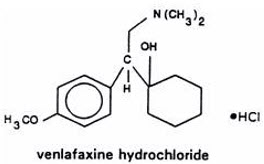
Venlafaxine is designated (R/S)-1-[2-(dimethylamino)-1-(4-methoxyphenyl)ethyl] cyclohexanol hydrochloride or (±)-1-[α- [(dimethylamino)methyl]-p-methoxybenzyl] cyclohexanol hydrochloride and has the empirical formula of C17H27NO2 HCl. Its molecular weight is 313.86. The structural formula is shown as follows:
Venlafaxine hydrochloride is a white to off-white crystalline solid, with a solubility of 572 mg/mL in water (adjusted to ionic strength of 0.2 M with sodium chloride). Its octanol:water (0.2 M sodium chloride) partition coefficient is 0.43.
Drug release is controlled by diffusion through the coating membrane on the spheroids and is not pH-dependent. Capsules contain venlafaxine hydrochloride equivalent to 37.5 mg, 75 mg, or 150 mg venlafaxine. Inactive ingredients consist of cellulose, ethylcellulose, gelatin, hypromellose, iron oxide, and titanium dioxide.
9.3 Dependence
Physical dependence is a state that develops as a result of physiological adaptation in response to repeated drug use, manifested by withdrawal signs and symptoms after abrupt discontinuation or a significant dose reduction of a drug.
In vitro studies revealed that venlafaxine has virtually no affinity for opiate, benzodiazepine, phencyclidine (PCP), or N-methyl-D-aspartic acid (NMDA) receptors.
Venlafaxine was not found to have any significant CNS stimulant activity in rodents. In primate drug discrimination studies, venlafaxine showed no significant stimulant or depressant abuse liability.
Discontinuation effects have been reported in patients receiving venlafaxine [see Dosage and Administration (2.10) and Warnings and Precautions (5.7)].
5.9 Hyponatremia
Hyponatremia can occur as a result of treatment with SNRIs, including Effexor XR. In many cases, the hyponatremia appears to be the result of the Syndrome of Inappropriate Antidiuretic Hormone (SIADH) secretion. Cases with serum sodium lower than 110 mmol/L have been reported. Elderly patients may be at greater risk of developing hyponatremia with SNRIs. Also, patients taking diuretics, or those who are otherwise volume-depleted, may be at greater risk [see Use in Specific Populations (8.5) and Clinical Pharmacology (12.3)]. Consider discontinuation of Effexor XR in patients with symptomatic hyponatremia, and institute appropriate medical intervention.
Signs and symptoms of hyponatremia include headache, difficulty concentrating, memory impairment, confusion, weakness, and unsteadiness, which may lead to falls. Signs and symptoms associated with more severe and/or acute cases have included hallucination, syncope, seizure, coma, respiratory arrest, and death.
8.4 Pediatric Use
Safety and effectiveness of Effexor XR in pediatric patients have not been established.
Two placebo-controlled trials in 766 pediatric patients with MDD and two placebo-controlled trials in 793 pediatric patients with GAD have been conducted with Effexor XR, and the data were not sufficient to support use in pediatric patients.
In the studies conducted in pediatric patients ages 6 to17 years, the occurrence of blood pressure and cholesterol increases was considered to be clinically relevant in pediatric patients and was similar to that observed in adult patients [see Warnings and Precautions (5.3), Adverse Reactions (6.1)]. The following adverse reactions were also observed in pediatric patients: abdominal pain, agitation, dyspepsia, ecchymosis, epistaxis, and myalgia.
Although no studies have been designed to primarily assess Effexor XR's impact on the growth, development, and maturation of children and adolescents, the studies that have been done suggest that Effexor XR may adversely affect weight and height [see Warnings and Precautions (5.10, 5.11)]. Decreased appetite and weight loss were observed in placebo-controlled studies of pediatric patients 6 to 17 years.
In pediatric clinical studies, the adverse reaction, suicidal ideation, was observed. Antidepressants increased the risk of suicidal thoughts and behaviors in pediatric patients [see Boxed Warning, Warnings and Precautions (5.1)].
8.5 Geriatric Use
The percentage of patients in clinical studies for Effexor XR for MDD, GAD, SAD, and PD who were 65 years of age or older are shown in Table 16.
| Indication | Effexor XR |
|---|---|
|
MDD |
4 (14/357) |
|
GAD |
6 (77/1,381) |
|
SAD |
1 (10/819) |
|
PD |
2 (16/1,001) |
No overall differences in effectiveness or safety were observed between geriatric patients and younger patients, and other reported clinical experience generally has not identified differences in response between the elderly and younger patients. However, greater sensitivity of some older individuals cannot be ruled out. SSRIs and SNRIs, including Effexor XR, have been associated with cases of clinically significant hyponatremia in elderly patients, who may be at greater risk for this adverse event [see Warnings and Precautions (5.9)].
The pharmacokinetics of venlafaxine and ODV are not substantially altered in the elderly [see Clinical Pharmacology (12.3)] (see Figure 1). No dose adjustment is recommended for the elderly on the basis of age alone, although other clinical circumstances, some of which may be more common in the elderly, such as renal or hepatic impairment, may warrant a dose reduction [see Dosage and Administration (2.8, 2.9)].
2.5 Panic Disorder
The recommended starting dose is 37.5 mg per day of Effexor XR for 7 days. Patients not responding to 75 mg per day may benefit from dose increases to a maximum of approximately 225 mg per day. Dose increases should be in increments of up to 75 mg per day, as needed, and should be made at intervals of not less than 7 days.
14.4 Panic Disorder
The efficacy of Effexor XR as a treatment for Panic Disorder (PD) was established in two double-blind, 12-week, multicenter, placebo-controlled studies in adult outpatients meeting DSM-IV criteria for PD, with or without agoraphobia. Patients received fixed doses of 75 or 150 mg per day in one study (study 1) and 75 or 225 mg per day in the other study (study 2).
Efficacy was assessed on the basis of outcomes in three variables: (1) percentage of patients free of full-symptom panic attacks on the Panic and Anticipatory Anxiety Scale (PAAS); (2) mean change from baseline to endpoint on the Panic Disorder Severity Scale (PDSS) total score; and (3) percentage of patients rated as responders (much improved or very much improved) on the Clinical Global Impressions (CGI) Improvement scale. In these two studies, Effexor XR was statistically significantly more effective than placebo (for each fixed dose) on all three endpoints, but a dose-response relationship was not clearly established.
Examination of subsets of the population studied did not reveal any differential responsiveness on the basis of gender. There was insufficient information to determine the effect of age or race on outcome in these studies.
In a longer term study (study 3), adult outpatients meeting DSM-IV criteria for PD who had responded during a 12-week open phase with Effexor XR (75 to 225 mg per day) were randomly assigned to continue the same Effexor XR dose (75, 150, or 225 mg) or switch to placebo for observation for relapse under double-blind conditions. Response during the open phase was defined as ≤ 1 full-symptom panic attack per week during the last 2 weeks of the open phase and a CGI Improvement score of 1 (very much improved) or 2 (much improved). Relapse during the double-blind phase was defined as having 2 or more full-symptom panic attacks per week for 2 consecutive weeks or having discontinued due to loss of effectiveness as determined by the investigators during the study. Randomized patients were in response status for a mean time of 34 days prior to being randomized. In the randomized phase following the 12-week open-label period, patients receiving continued Effexor XR experienced a statistically significantly longer time to relapse.
| Study Treatment Group Number | Primary Efficacy Measure: Whether Free of Full-symptom Panic Attacks | |||
|---|---|---|---|---|
| Percent of patients Free of Full symptom panic attack |
Adjusted Odds Ratio
Odds ratio (drug to placebo) in terms of probability of free of full-symptom panic attacks based on logistic regression model.
to placebo
|
Adjusted Odds Ratio 95% Confidence Interval | ||
| 95% CI: 95% confidence interval without adjusting for multiple dose arms. | ||||
|
Study 1 |
Ven XR 75 mg Doses statistically significantly superior to placebo.
|
54.1% (85/157) |
2. 268 |
(1.43, 3.59) |
|
Ven XR 150 mg |
61.4% (97/158) |
3.035 |
(1.91, 4.82) |
|
|
Placebo |
34.4% (53/154) |
-- |
-- |
|
|
Study 2 |
Ven XR 75 mg |
64.1% (100/156) |
2.350 |
(1.46, 3.78) |
|
Ven XR 225 mg |
70.0% (112/160) |
2.890 |
(1.80, 4.64) |
|
|
Placebo |
46.5% (73/157) |
-- |
-- |
4 Contraindications
Effexor XR is contraindicated in patients:
-
•with known hypersensitivity to venlafaxine hydrochloride, desvenlafaxine succinate or to any excipients in the formulation [see Adverse Reactions (6.2)].
-
•taking, or within 14 days of stopping, MAOIs (including the MAOIs linezolid and intravenous methylene blue) because of the risk of serotonin syndrome [see Dosage and Administration (2.11), Warnings and Precautions (5.2), and Drug Interactions (7.1)].
6 Adverse Reactions
The following adverse reactions are discussed in more detail in other sections of the labeling:
-
•Hypersensitivity [see Contraindications (4)]
-
•Suicidal Thoughts and Behaviors in Adolescents and Young Adults [see Warnings and Precautions (5.1)]
-
•Serotonin Syndrome [see Warnings and Precautions (5.2)]
-
•Elevated Blood Pressure [see Warnings and Precautions (5.3)]
-
•Increased Risk of Bleeding [see Warnings and Precautions (5.4)]
-
•Angle-Closure Glaucoma [see Warnings and Precautions (5.5)]
-
•Activation of Mania/Hypomania [see Warnings and Precautions (5.6)]
-
•Discontinuation Syndrome [see Warnings and Precautions (5.7)]
-
•Seizure [see Warnings and Precautions (5.8)]
-
•Hyponatremia [see Warnings and Precautions (5.9)]
-
•Weight and Height changes in Pediatric Patients [see Warnings and Precautions (5.10)]
-
•Appetite Changes in Pediatric Patients [see Warnings and Precautions (5.11)]
-
•Interstitial Lung Disease and Eosinophilic Pneumonia [see Warnings and Precautions (5.12)]
-
•Sexual Dysfunction [see Warnings and Precautions (5.13)]
8.7 Renal Impairment
Dosage adjustment is recommended in patients with mild (CLcr= 60–89 mL/min), moderate (CLcr= 30–59 mL/min), or severe (CLcr <30 mL/min) renal impairment, and in patients undergoing hemodialysis [see Dosage and Administration (2.9) and Clinical Pharmacology (12.3)].
12.2 Pharmacodynamics
In-vitro studies have demonstrated that venlafaxine and its active metabolite, O-desmethylvenlafaxine (ODV), are potent and selective inhibitors of neuronal serotonin and norepinephrine reuptake and weak inhibitors of dopamine reuptake. Venlafaxine and ODV have no significant affinity for muscarinic-cholinergic, H1-histaminergic, or α1-adrenergic receptors in vitro. Pharmacologic activity at these receptors is hypothesized to be associated with the various anticholinergic, sedative, and cardiovascular effects seen with other psychotropic drugs. Venlafaxine and ODV do not possess monoamine oxidase (MAO) inhibitory activity.
12.3 Pharmacokinetics
Venlafaxine and ODV steady-state concentrations are reached within 3 days. Venlafaxine and ODV exhibited linear kinetics over the dosage range of 75 to 450 mg per day (0.33 to 2 times the maximum recommended dosage). Time of administration (AM versus PM) did not affect the pharmacokinetics of venlafaxine and ODV from the 75 mg Effexor XR capsule.
5.2 Serotonin Syndrome
Serotonin-norepinephrine reuptake inhibitors (SNRIs), including Effexor XR, can precipitate serotonin syndrome, a potentially life-threatening condition. The risk is increased with concomitant use of other serotonergic drugs (including triptans, tricyclic antidepressants, fentanyl, lithium, tramadol, tryptophan, buspirone, amphetamines, and St. John's Wort) and with drugs that impair metabolism of serotonin, i.e., MAOIs [see Contraindications (4) , Drug Interactions (7.1) ] . Serotonin syndrome can also occur when these drugs are used alone.
Serotonin syndrome signs and symptoms may include mental status changes (e.g., agitation, hallucinations, delirium, coma), autonomic instability (e.g., tachycardia, labile blood pressure, dizziness, diaphoresis, flushing, hyperthermia), neuromuscular symptoms (e.g., tremor, rigidity, myoclonus, hyperreflexia, incoordination), seizures, and gastrointestinal symptoms (e.g., nausea, vomiting, diarrhea).
The concomitant use of Effexor XR with MAOIs is contraindicated. In addition, do not initiate Effexor XR in a patient being treated with MAOIs such as linezolid or intravenous methylene blue. No reports involved the administration of methylene blue by other routes (such as oral tablets or local tissue injection). If it is necessary to initiate treatment with an MAOI such as linezolid or intravenous methylene blue in a patient taking Effexor XR, discontinue Effexor XR before initiating treatment with the MAOI [see Contraindications (4) , Drug Interactions (7.1) ] .
Monitor all patients taking Effexor XR for the emergence of serotonin syndrome. Discontinue treatment with Effexor XR and any concomitant serotonergic agents immediately if the above symptoms occur, and initiate supportive symptomatic treatment. If concomitant use of Effexor XR with other serotonergic drugs is clinically warranted, inform patients of the increased risk for serotonin syndrome and monitor for symptoms.
8.6 Hepatic Impairment
Dosage adjustment is recommended in patients with mild (Child-Pugh Class A), moderate (Child-Pugh Class B), or severe (Child-Pugh Class C) hepatic impairment or hepatic cirrhosis [see Dosage and Administration (2.8) and Clinical Pharmacology (12.3)].
1 Indications and Usage
Effexor XR is indicated in adults for the treatment of:
-
•Major Depressive Disorder (MDD) [see Clinical Studies (14.1)]
-
•Generalized Anxiety Disorder (GAD) [see Clinical Studies (14.2)]
-
•Social Anxiety Disorder (SAD) [see Clinical Studies (14.3)]
-
•Panic Disorder (PD) [see Clinical Studies (14.4)]
5.13 Sexual Dysfunction
Use of SNRIs, including Effexor XR, may cause symptoms of sexual dysfunction [see Adverse Reactions (6.1) ] . In male patients, SNRI use may result in ejaculatory delay or failure, decreased libido, and erectile dysfunction. In female patients, SNRI use may result in decreased libido and delayed or absent orgasm. It is important for prescribers to inquire about sexual function prior to initiation of Effexor XR and to inquire specifically about changes in sexual function during treatment, because sexual function may not be spontaneously reported. When evaluating changes in sexual function, obtaining a detailed history (including timing of symptom onset) is important because sexual symptoms may have other causes, including the underlying psychiatric disorder. Discuss potential management strategies to support patients in making informed decisions about treatment.
12.1 Mechanism of Action
The mechanism of action of venlafaxine in the treatment of MDD, GAD, SAD, and PD is unclear, but is thought to be related to the potentiation of serotonin and norepinephrine in the central nervous system, through inhibition of their reuptake.
9.1 Controlled Substance
Effexor XR contains venlafaxine which is not a controlled substance.
5 Warnings and Precautions
-
• Serotonin Syndrome : Increased risk when co-administered with other serotonergic agents (e.g., SSRIs, SNRIs, triptans), but also when taken alone. If it occurs, discontinue Effexor XR and initiate supportive treatment (4, 5.2, 7.1).
-
•Elevated Blood Pressure: Control hypertension before initiating treatment. Monitor blood pressure regularly during treatment (5.3).
-
•Increased Risk of Bleeding: Concomitant use of aspirin, NSAIDs, other antiplatelet drugs, warfarin, and other anticoagulants may increase risk (5.4).
-
•Angle-Closure Glaucoma: Angle-closure glaucoma has occurred in patients with untreated anatomically narrow angles, treated with antidepressants (5.5).
-
•Activation of Mania or Hypomania: Screen patients for bipolar disorder (5.6).
-
•Discontinuation Syndrome: Taper dose and monitor for discontinuation symptoms (5.7).
-
• Seizures: Can occur. Use cautiously in patients with seizure disorder (5.8).
-
•Hyponatremia: Can occur in association with SIADH (5.9).
-
•Interstitial Lung Disease and Eosinophilic Pneumonia: Can occur (5.12).
-
•Sexual Dysfunction: Effexor XR may cause symptoms of sexual dysfunction (5.13).
5.5 Angle Closure Glaucoma
The pupillary dilation that occurs following use of many antidepressant drugs including Effexor XR may trigger an angle-closure attack in a patient with anatomically narrow angles who does not have a patent iridectomy. Avoid use of antidepressants, including Effexor XR, in patients with untreated anatomically narrow angles.
2 Dosage and Administration
| Indication | Starting Dose | Target Dose | Maximum Dose |
|---|---|---|---|
|
MDD (2.2) |
37.5 –75 mg/day |
75 mg/day |
225 mg/day |
|
GAD (2.3) |
37.5 –75 mg/day |
75 mg/day |
225 mg/day |
|
SAD (2.4) |
75 mg/day |
75 mg/day |
75 mg/day |
|
PD (2.5) |
37.5 mg/day |
75 mg/day |
225 mg/day |
-
•Take once daily with food. Capsules should be taken whole; do not divide, crush, chew, or dissolve (2.1).
-
•When discontinuing treatment, reduce the dose gradually (2.10, 5.7).
-
•Renal impairment: reduce the total daily dose by 25% to 50% in patients with renal impairment. Reduce the total daily dose by 50% or more in patients undergoing dialysis or with severe renal impairment (2.9).
-
•Hepatic impairment: reduce the daily dose by 50% in patients with mild to moderate hepatic impairment. In patients with severe hepatic impairment or hepatic cirrhosis, it may be necessary to reduce the dose by more than 50% (2.8).
5.3 Elevated Blood Pressure
In controlled trials, there were dose-related increases in systolic and diastolic blood pressure, as well as cases of sustained hypertension [see Adverse Reactions (6.1)].
Monitor blood pressure before initiating treatment with Effexor XR and regularly during treatment. Control pre-existing hypertension before initiating treatment with Effexor XR. Use caution in treating patients with pre-existing hypertension or cardiovascular or cerebrovascular conditions that might be compromised by increases in blood pressure. Sustained blood pressure elevation can lead to adverse outcomes. Cases of elevated blood pressure requiring immediate treatment have been reported with Effexor XR. Consider dose reduction or discontinuation of treatment for patients who experience a sustained increase in blood pressure.
Across all clinical studies with Effexor, 1.4% of patients in the Effexor XR treated groups experienced a ≥15 mm Hg increase in supine diastolic blood pressure (SDBP) ≥105 mm Hg, compared to 0.9% of patients in the placebo groups. Similarly, 1% of patients in the Effexor XR treated groups experienced a ≥20 mm Hg increase in supine systolic blood pressure (SSBP) with blood pressure ≥180 mm Hg, compared to 0.3% of patients in the placebo groups [see Adverse Reactions (6.1)]. Treatment with Effexor XR was associated with sustained hypertension defined as SDBP ≥90 mm Hg and ≥10 mm Hg above baseline for three consecutive on-therapy visits [see Adverse Reactions (6.1)]. An insufficient number of patients received mean doses of Effexor XR over 300 mg per day in clinical studies to fully evaluate the incidence of sustained increases in blood pressure at these higher doses.
3 Dosage Forms and Strengths
Effexor XR® is available in the following strengths:
-
•37.5 mg extended-release capsule: grey cap and peach body with "W" and "Effexor XR" on the cap and "37.5" on the body
-
•75 mg extended-release capsule: peach cap and body with "W" and "Effexor XR" on the cap and "75" on the body
-
•150 mg extended-release capsule: dark orange cap and body with "W" and "Effexor XR" on the cap and "150" on the body
5.7 Discontinuation Syndrome
Discontinuation symptoms have been systematically evaluated in patients taking venlafaxine, including prospective analyses of clinical studies in GAD and retrospective surveys of studies in MDD and SAD. Abrupt discontinuation or dose reduction of venlafaxine at various doses has been found to be associated with the appearance of new symptoms, the frequency of which increased with increased dose level and with longer duration of treatment. Reported symptoms include agitation, anorexia, anxiety, confusion, impaired coordination and balance, diarrhea, dizziness, dry mouth, dysphoric mood, fasciculation, fatigue, flu-like symptoms, headaches, hypomania, insomnia, nausea, nervousness, nightmares, sensory disturbances (including shock-like electrical sensations), somnolence, sweating, tremor, vertigo, and vomiting.
There have been postmarketing reports of serious discontinuation symptoms which can be protracted and severe. Completed suicide, suicidal thoughts, aggression and violent behavior have been observed in patients during reduction in Effexor XR dosage, including during discontinuation. Other postmarketing reports describe visual changes (such as blurred vision or trouble focusing) and increased blood pressure after stopping or reducing the dose of Effexor XR.
During marketing of Effexor XR, other SNRIs, and SSRIs, there have been reports of adverse events occurring upon discontinuation of these drugs, particularly when abrupt, including the following: irritability, lethargy, emotional lability, tinnitus, and seizures.
Patients should be monitored for these symptoms when discontinuing treatment with Effexor XR. A gradual reduction in the dose, rather than abrupt cessation, is recommended. If intolerable symptoms occur following a decrease in the dose or upon discontinuation of treatment, then resuming the previously prescribed dose may be considered. Subsequently, the healthcare provider may continue decreasing the dose, but at a more gradual rate. In some patients, discontinuation may need to occur over a period of several months [see Dosage and Administration (2.10)].
6.2 Postmarketing Experience
The following adverse reactions have been identified during post-approval use of Effexor XR. Because these reactions are reported voluntarily from a population of uncertain size, it is not always possible to reliably estimate their frequency or establish a causal relationship to drug exposure.
Body as a whole – Anaphylaxis, angioedema
Cardiovascular system – QT prolongation, ventricular fibrillation, ventricular tachycardia (including torsade de pointes), takotsubo cardiomyopathy
Digestive system – Pancreatitis
Hemic/Lymphatic system – Mucous membrane bleeding [see Warnings and Precautions (5.4)], blood dyscrasias (including agranulocytosis, aplastic anemia, neutropenia and pancytopenia), prolonged bleeding time, thrombocytopenia
Metabolic/Nutritional – Hyponatremia [see Warnings and Precautions (5.9)], Syndrome of Inappropriate Antidiuretic Hormone (SIADH) secretion [see Warnings and Precautions (5.9)], abnormal liver function tests, hepatitis, prolactin increased
Musculoskeletal – Rhabdomyolysis
Nervous system – Neuroleptic Malignant Syndrome (NMS) [see Warnings and Precautions (5.2)], serotonergic syndrome [see Warnings and Precautions (5.2)], delirium, extrapyramidal reactions (including dystonia and dyskinesia), impaired coordination and balance, tardive dyskinesia
Respiratory system – Dyspnea, interstitial lung disease, pulmonary eosinophilia [see Warnings and Precautions (5.12)]
Skin and appendages – Stevens-Johnson syndrome, toxic epidermal necrolysis, erythema multiforme
Special senses – Angle-closure glaucoma [see Warnings and Precautions (5.5)]
2.2 Major Depressive Disorder
For most patients, the recommended starting dose for Effexor XR is 75 mg per day, administered in a single dose. For some patients, it may be desirable to start at 37.5 mg per day for 4 to 7 days to allow new patients to adjust to the medication before increasing to 75 mg per day. Patients not responding to the initial 75 mg per day dose may benefit from dose increases to a maximum of 225 mg per day. Dose increases should be in increments of up to 75 mg per day, as needed, and should be made at intervals of not less than 4 days. In the clinical studies establishing efficacy, upward titration was permitted at intervals of 2 weeks or more.
8 Use in Specific Populations
Pregnancy: Third trimester use may increase risk for symptoms of poor neonatal adaptation (respiratory distress, temperature instability, feeding difficulty, hypotonia, tremor, irritability) in the neonate (8.1).
14.1 Major Depressive Disorder
The efficacy of Effexor XR (venlafaxine hydrochloride) extended-release capsules as a treatment for Major Depressive Disorder (MDD) was established in two placebo-controlled, short-term (8 weeks for study 1; 12 weeks for study 2), flexible-dose studies, with doses starting at 75 mg per day and ranging to 225 mg per day in adult outpatients meeting DSM-III-R or DSM-IV criteria for MDD. In moderately depressed outpatients, the initial dose of venlafaxine was 75 mg per day. In both studies, Effexor XR demonstrated superiority over placebo on the primary efficacy measure defined as change from baseline in the HAM-D-21 total score to the endpoint visit, Effexor XR also demonstrated superiority over placebo on the key secondary efficacy endpoint, the Clinical Global Impressions (CGI) Severity of Illness scale. Examination of gender subsets of the population studied did not reveal any differential responsiveness on the basis of gender.
A 4-week study of inpatients meeting DSM-III-R criteria for MDD with melancholia utilizing Effexor in a range of 150 to 375 mg per day (divided in a three-times-a-day schedule) demonstrated superiority of Effexor over placebo based on the HAM-D-21 total score. The mean dose in completers was 350 mg per day (study 3).
In a longer-term study, adult outpatients with MDD who had responded during an 8-week open-label study on Effexor XR (75, 150, or 225 mg, once daily every morning) were randomized to continuation of their same Effexor XR dose or to placebo, for up to 26 weeks of observation for relapse. Response during the open-label phase was defined as a CGI Severity of Illness item score of ≤3 and a HAM-D-21 total score of ≤10 at the day 56 evaluation. Relapse during the double-blind phase was defined as follows: (1) a reappearance of major depressive disorder as defined by DSM-IV criteria and a CGI Severity of Illness item score of ≥4 (moderately ill), (2) 2 consecutive CGI Severity of Illness item scores of ≥4, or (3) a final CGI Severity of Illness item score of ≥4 for any patient who withdrew from the study for any reason. Patients receiving continued Effexor XR treatment experienced statistically significantly lower relapse rates over the subsequent 26 weeks compared with those receiving placebo (study 4).
In a second longer term trial, adult outpatients with MDD, recurrent type, who had responded (HAM-D-21 total score ≤12 at the day 56 evaluation) and continued to be improved [defined as the following criteria being met for days 56 through 180: (1) no HAM-D-21 total score ≥20; (2) no more than 2 HAM-D-21 total scores >10, and (3) no single CGI Severity of Illness item score ≥4 (moderately ill)] during an initial 26 weeks of treatment on Effexor [100 to 200 mg per day, on a twice daily schedule] were randomized to continuation of their same Effexor dose or to placebo. The follow-up period to observe patients for relapse, defined as a CGI Severity of Illness item score ≥4, was for up to 52 weeks. Patients receiving continued Effexor treatment experienced statistically significantly lower relapse rates over the subsequent 52 weeks compared with those receiving placebo (study 5).
| Study Number | Treatment Group | Primary Efficacy Measure: HAM-D Score | ||
|---|---|---|---|---|
| Mean Baseline Score (SD) | LS Mean Change from Baseline |
Placebo Subtracted Difference
Difference (drug minus placebo) in least-squares mean change from baseline.
(95%CI) |
||
| SD=standard deviation; LS Mean=least-squares mean; CI=confidence interval. | ||||
|
Study 1 |
Effexor(XR 75–225 mg/day) Doses statistically significantly superior to placebo.
|
24.5 |
-11.7 |
-4.45(-6.66,-2.25) |
|
Placebo |
23.6 |
-7.24 |
- |
|
|
Study 2 |
Effexor(XR 75–225 mg/day) |
24.5 |
-15.11 |
-6.40(-8.45,-4.34) |
|
Placebo |
24.9 |
-8.71 |
||
|
Study 3 |
Effexor(IR 150–375 mg/day) |
28.2 (0.5) |
-14.9 |
-10.2 (-14.4,-6.0) |
|
Placebo |
28.6 (0.6) |
-4.7 |
- |
5.4 Increased Risk of Bleeding
Drugs that interfere with serotonin reuptake inhibition, including Effexor XR, may increase the risk of bleeding events, ranging from ecchymoses, hematomas, epistaxis, petechiae, and gastrointestinal hemorrhage to life-threatening hemorrhage. Concomitant use of aspirin, Nonsteroidal Anti-Inflammatory Drugs (NSAIDs), warfarin, and other anti-coagulants or other drugs known to affect platelet function may add to this risk. Case reports and epidemiological studies (case-control and cohort design) have demonstrated an association between use of drugs that interfere with serotonin reuptake and the occurrence of gastrointestinal bleeding.
Inform patients about the risk of bleeding associated with the concomitant use of Effexor XR and nonsteroidal anti-inflammatory drugs (NSAIDs), aspirin, or other drugs that affect coagulation. For patients taking warfarin, carefully monitor coagulation indices when initiating, titrating, or discontinuing Effexor XR.
6.1 Clinical Studies Experience
Because clinical trials are conducted under widely varying conditions, adverse reaction rates observed in the clinical trials of a drug cannot be directly compared to rates in the clinical studies of another drug and may not reflect the rates observed in clinical practice.
2.3 Generalized Anxiety Disorder
For most patients, the recommended starting dose for Effexor XR is 75 mg per day, administered in a single dose. For some patients, it may be desirable to start at 37.5 mg per day for 4 to 7 days to allow new patients to adjust to the medication before increasing to 75 mg per day. Patients not responding to the initial 75 mg per day dose may benefit from dose increases to a maximum of 225 mg per day. Dose increases should be in increments of up to 75 mg per day, as needed, and should be made at intervals of not less than 4 days.
14.2 Generalized Anxiety Disorder
The efficacy of Effexor XR as a treatment for Generalized Anxiety Disorder (GAD) was established in two 8-week, placebo-controlled, fixed-dose studies (75 to 225 mg per day), one 6-month, placebo-controlled, flexible-dose study (75 to 225 mg per day), and one 6-month, placebo-controlled, fixed-dose study (37.5, 75, and 150 mg per day) in adult outpatients meeting DSM-IV criteria for GAD.
In one 8-week study, Effexor XR demonstrated superiority over placebo for the 75, 150, and 225 mg per day doses as measured by the Hamilton Rating Scale for Anxiety (HAM-A) total score, both the HAM-A anxiety and tension items, and the Clinical Global Impressions (CGI) scale. However, the 75 and 150 mg per day doses were not as consistently effective as the highest dose (study 1). A second 8-week study evaluating doses of 75 and 150 mg per day and placebo showed that both doses were more effective than placebo on some of these same outcomes; however, the 75 mg per day dose was more consistently effective than the 150 mg per day dose (study 2). A dose-response relationship for effectiveness in GAD was not clearly established in the 75 to 225 mg per day dose range studied.
Two 6-month studies, one evaluating Effexor XR doses of 37.5, 75, and 150 mg per day (study 3) and the other evaluating Effexor XR doses of 75 to 225 mg per day (study 4), showed that daily doses of 75 mg or higher were more effective than placebo on the HAM-A total, both the HAM-A anxiety and tension items, and the CGI scale during 6 months of treatment. While there was also evidence for superiority over placebo for the 37.5 mg per day dose, this dose was not as consistently effective as the higher doses.
Examination of gender subsets of the population studied did not reveal any differential responsiveness on the basis of gender.
| Study Number | Treatment Group | Primary Efficacy Measure: HAM-A Score | ||
|---|---|---|---|---|
| Mean Baseline Score (SD) |
LS Mean Change from Baseline (SE)
Doses statistically significantly superior to placebo.
|
Placebo Subtracted Difference
Difference (drug minus placebo) in least-squares mean change from baseline.
(95% CI)
|
||
| SD=standard deviation; SE=standard error; LS Mean=least-squares mean; CI=confidence interval. | ||||
|
Study 1 |
Ven XR 75 mg |
24.7 |
-11.1 (0.95) |
-1.5 (-3.8, 0.8) |
|
Ven XR 150 mg |
24.5 |
-11.7 (0.87) |
-2.2 (-4.5, 0.1) |
|
|
Eff XR 225 mg |
23.6 |
-12.1 (0.81) |
-2.6 (-4.9, -0.3) |
|
|
Placebo |
24.1 |
-9.5 (0.85) |
||
|
Study 2 |
Ven XR 75 mg |
23.7 |
-10.6 (0.82) |
-2.6 (-4.6, -0.5) |
|
Ven XR 150 mg |
23.0 |
-9.8 (0.86) |
-1.7 (-3.8, 0.3) |
|
|
Placebo |
23.7 |
-8.0 (0.73) |
||
|
Study 3 |
Ven XR 37.5 mg |
26.6 (0.4) |
-13.8 |
-2.8 (-5.1, -0.6) |
|
Ven XR 75 mg |
26.3 (0.4) |
-15.5 |
-4.6 (-6.9, -2.3) |
|
|
Ven XR150 mg |
26.3 (0.4) |
-16.4 |
-5.5 (-7.8, -3.1) |
|
|
Placebo |
26.7 (0.5) |
-11.0 |
||
|
Study 4 |
Ven XR 75–225 mg |
25.0 |
-13.4 (0.79) |
- 4.7 (-6.6, -2.9) |
|
Placebo |
24.9 |
-8.7 (0.70) |
17 Patient Counseling Information
Advise the patient to read the FDA-approved patient labeling (Medication Guide).
16 How Supplied/storage and Handling
Effexor XR® is available as:
-
•37.5 mg, grey cap/peach body with "W" and "Effexor XR" on the cap and "37.5" on the body.
NDC 0008-0837-20, bottle of 15 capsules in unit-of-use package.
NDC 0008-0837-21, bottle of 30 capsules in unit-of-use package.
NDC 0008-0837-22, bottle of 90 capsules in unit-of-use package.
NDC 0008-0837-03, carton of 10 Redipak® blister strips of 10 capsules each. -
•75 mg, peach cap and body with "W" and "Effexor XR" on the cap and "75" on the body.
NDC 0008-0833-20, bottle of 15 capsules in unit-of-use package.
NDC 0008-0833-21, bottle of 30 capsules in unit-of-use package.
NDC 0008-0833-22, bottle of 90 capsules in unit-of-use package.
NDC 0008-0833-03, carton of 10 Redipak® blister strips of 10 capsules each. -
•150 mg, dark orange cap and body with "W" and "Effexor XR" on the cap and "150" on the body.
NDC 0008-0836-20, bottle of 15 capsules in unit-of-use package.
NDC 0008-0836-21, bottle of 30 capsules in unit-of-use package.
NDC 0008-0836-22, bottle of 90 capsules in unit-of-use package.
NDC 0008-0836-03, carton of 10 Redipak® blister strips of 10 capsules each.
5.6 Activation of Mania Or Hypomania
In patients with bipolar disorder, treating a depressive episode with Effexor XR or another antidepressant may precipitate a mixed/manic episode. Mania or hypomania was reported in Effexor XR treated patients in the premarketing studies in MDD, SAD, and PD (see Table 2 ). Prior to initiating treatment with Effexor XR, screen for any personal or family history of bipolar disorder, mania, or hypomania.
| Indication | Effexor XR | Placebo |
|---|---|---|
|
MDD |
0.3 |
0.0 |
|
GAD |
0.0 |
0.2 |
|
SAD |
0.2 |
0.0 |
|
PD |
0.1 |
0.0 |
2.1 General Administration Information
Administer Effexor XR as a single dose with food, either in the morning or in the evening at approximately the same time each day [see Clinical Pharmacology (12.3)]. Swallow capsules whole with fluid. Do not divide, crush, chew, or place in water.
The capsule may also be administered by carefully opening the capsule and sprinkling the entire contents on a spoonful of applesauce. This drug/food mixture should be swallowed immediately without chewing and followed with a glass of water to ensure complete swallowing of the pellets (spheroids).
Warning: Suicidal Thoughts and Behaviors
Antidepressants increased the risk of suicidal thoughts and behavior in pediatric and young adult patients in short-term studies. Closely monitor all antidepressant-treated patients for clinical worsening, and emergence of suicidal thoughts and behaviors [see Warnings and Precautions (5.1) ]. Effexor XR is not approved for use in pediatric patients [see Use in Specific Populations (8.4) ].
2.4 Social Anxiety Disorder (social Phobia)
The recommended dose is 75 mg per day, administered in a single dose. There was no evidence that higher doses confer any additional benefit.
2.7 Switching Patients From Effexor Tablets
Patients with depression who are currently being treated with Effexor may be switched to Effexor XR at the nearest equivalent dose (mg per day), e.g., 37.5 mg venlafaxine twice a day to 75 mg Effexor XR once daily. However, individual dosage adjustments may be necessary.
5.11 Appetite Changes in Pediatric Patients
Decreased appetite (reported as anorexia) was more commonly observed in Effexor XR treated patients versus placebo-treated patients in the premarketing evaluation of Effexor XR for MDD, GAD, and SAD (see Table 6).
Effexor XR is not approved for use in pediatric patients [see Use in Specific Populations (8.4)].
|
Indication
(Duration) |
Effexor XR Incidence | Discontinuation | Placebo Incidence | Discontinuation |
|---|---|---|---|---|
|
MDD and GAD |
10 |
0.0 |
3 |
– |
|
SAD |
22 |
0.7 |
3 |
0.0 |
2.10 Discontinuing Treatment With Effexor Xr
A gradual reduction in the dose, rather than abrupt cessation, is recommended when discontinuing therapy with Effexor XR. In clinical studies with Effexor XR, tapering was achieved by reducing the daily dose by 75 mg at one-week intervals. Individualization of tapering may be necessary. In some patients, discontinuation may need to occur over a period of several months [see Warnings and Precautions (5.7) ] .
Principal Display Panel 75 Mg Capsule Blister Pack
Effexor XR®
(venlafaxine HCl)
Extended-Release Capsules
75 mg
Wyeth® Phila. PA 19101
Principal Display Panel 75 Mg Capsule Bottle Label
ALWAYS DISPENSE WITH MEDICATION GUIDE
NDC 0008-0833-21
Pfizer
Effexor XR®
(venlafaxine HCl)
Extended-Release Capsules
75 mg*
30 Capsules
Rx only
Principal Display Panel 150 Mg Capsule Blister Pack
Effexor XR®
(venlafaxine HCl)
Extended-Release Capsules
150 mg
Wyeth® Phila. PA 19101
Principal Display Panel 150 Mg Capsule Bottle Label
ALWAYS DISPENSE WITH MEDICATION GUIDE
NDC 0008-0836-21
Pfizer
Effexor XR®
(venlafaxine HCl)
Extended-Release Capsules
150 mg*
30 Capsules
Rx only
Principal Display Panel 37.5 Mg Capsule Blister Pack
Effexor XR®
(venlafaxine HCl)
Extended-Release Capsules
37.5 mg
Wyeth® Phila. PA 19101
Principal Display Panel 37.5 Mg Capsule Bottle Label
ALWAYS DISPENSE WITH MEDICATION GUIDE
Pfizer
NDC 0008-0837-21
Effexor XR®
(venlafaxine HCl)
Extended-Release Capsules
37.5 mg*
30 Capsules
Rx only
5.12 Interstitial Lung Disease and Eosinophilic Pneumonia
Interstitial lung disease and eosinophilic pneumonia associated with venlafaxine therapy have been rarely reported. The possibility of these events should be considered in Effexor XR-treated patients who present with progressive dyspnea, cough or chest discomfort. Such patients should undergo a prompt medical evaluation, and discontinuation of Effexor XR should be considered.
14.3 Social Anxiety Disorder (also Known As Social Phobia)
The efficacy of Effexor XR as a treatment for Social Anxiety Disorder (SAD) was established in four double-blind, parallel-group, 12-week, multicenter, placebo-controlled, flexible-dose studies (studies 1–4) and one double-blind, parallel-group, 6-month, placebo-controlled, fixed/flexible-dose study, which included doses in a range of 75 to 225 mg per day in adult outpatients meeting DSM-IV criteria for SAD (study 5).
In these five studies, Effexor XR was statistically significantly more effective than placebo on change from baseline to endpoint on the Liebowitz Social Anxiety Scale (LSAS) total score. There was no evidence for any greater effectiveness of the 150 to 225 mg per day group compared to the 75 mg per day group in the 6-month study.
Examination of subsets of the population studied did not reveal any differential responsiveness on the basis of gender. There was insufficient information to determine the effect of age or race on outcome in these studies.
| Study Number | Treatment Group | Primary Efficacy Measure: LSAS Score | ||
|---|---|---|---|---|
| Mean Baseline Score (SD) | LS Mean Change from Baseline (SE) |
Placebo Subtracted Difference
Difference (drug minus placebo) in least-squares mean change from baseline
(95% CI)
|
||
| SD: standard deviation; SE: standard error; LS Mean: least-squares mean; CI: confidence interval. | ||||
|
Study 1 |
Ven XR (75–225 mg) Doses statistically significantly superior to placebo.
|
91.1 |
-31.0(2.22) |
11.2 (-5.3, -17.1) |
|
Placebo |
86.7 |
-19.9 (2.22) |
- |
|
|
Study 2 |
Ven XR (75–225 MG) |
90.8 |
-32.8 (2.69) |
-10.7 (-3.7,-17.6) |
|
Placebo |
87.4 |
-22.1 (2.66) |
- |
|
|
Study 3 |
Ven XR (75–225 MG) |
83.2 |
-36.0 (2.35) |
-16.9(-22.6, -11.2) |
|
Placebo |
83.6 |
-19.1 (2.40) |
-12.7 (-6.5, -19.0) |
|
|
Study 4 |
Ven XR (75–225 mg) |
86.2 |
-35.0 (2.64) |
-14.6 (-21.8, -7.4) |
|
Placebo |
86.1 |
-22.2 (2.47) |
||
|
Study 5 |
Ven XR 75 mg |
91.8 |
-38.1 (3.16) |
-14.6 (-21.8, -7.4) |
|
Ven XR (150–225 mg) |
86.2 |
-37.6 (3.05) |
-14.1 (-21.3, -6.9) |
|
|
Placebo |
89.3 |
-23.5 (3.08) |
Principal Display Panel 75 Mg Capsule Blister Pack Carton
ALWAYS DISPENSE WITH MEDICATION GUIDE
NDC 0008-0833-03
Pfizer
Effexor XR
®
(venlafaxine HCl)
Extended-Release Capsules
75 mg*
10 Redipak® Blister
Strips of 10 Capsules
100 Capsules
Rx only
2.6 Screen for Bipolar Disorder Prior to Starting Effexor Xr
Prior to initiating treatment with Effexor XR, screen patients for a personal or family history of bipolar disorder, mania, or hypomania [see Warnings and Precautions (5.6) ].
Principal Display Panel 150 Mg Capsule Blister Pack Carton
ALWAYS DISPENSE WITH MEDICATION GUIDE
NDC 0008-0836-03
Pfizer
Effexor XR®
(venlafaxine HCl)
Extended-Release Capsules
150 mg*
10 Redipak® Blister
Strips of 10 Capsules
100 Capsules
Rx only
2.9 Dosage Recommendations for Patients With Renal Impairment
Reduce the Effexor XR total daily dose by 25% to 50% in patients with mild (CLcr 60–89 mL/min) or moderate (CLcr 30–59 mL/min) renal impairment. Reduce the total daily dose by 50% or more in patients undergoing hemodialysis or with severe renal impairment (CLcr <30 mL/min). Because there was much individual variability in clearance between patients with renal impairment, individualization of dosage is recommended in some patients [see Use in Specific Populations (8.7) ] .
Principal Display Panel 37.5 Mg Capsule Blister Pack Carton
ALWAYS DISPENSE WITH MEDICATION GUIDE
NDC 0008-0837-03
Pfizer
Effexor XR
®
(venlafaxine HCl)
Extended-Release Capsules
37.5 mg*
10 Redipak® Blister
Strips of 10 Capsules
100 Capsules
Rx only
2.8 Dosage Recommendations for Patients With Hepatic Impairment
Reduce the Effexor XR total daily dose by 50% in patients with mild (Child-Pugh Class A) to moderate (Child-Pugh Class B) hepatic impairment. Reduce the total daily dose by 50% or more in patients with severe hepatic impairment (Child-Pugh Class C) or hepatic cirrhosis [see Use in Specific Populations (8.6) ] .
7.1 Drugs Having Clinically Important Interactions With Effexor Xr
|
Monoamine Oxidase Inhibitors (MAOI) |
|
|
Clinical Impact |
The concomitant use of SNRIs, including Effexor XR, with MAOIs increases the risk of serotonin syndrome. |
|
Intervention |
Concomitant use of Effexor XR is contraindicated in patients taking MAOIs, including MAOIs such as linezolid or intravenous methylene blue [see Dosage and Administration (2.11), Contraindications (4) and Warnings and Precautions (5.2)]. |
|
Other Serotonergic Drugs |
|
|
Clinical Impact |
Concomitant use of Effexor XR with other serotonergic drugs increases the risk of serotonin syndrome. |
|
Intervention |
Monitor for symptoms of serotonin syndrome when Effexor XR is used concomitantly with other drugs that may affect the serotonergic neurotransmitter systems. If serotonin syndrome occurs, consider discontinuation of Effexor XR and/or concomitant serotonergic drugs [see Dosage and Administration (2.11) and Warnings and Precautions (5.2)]. |
|
Drugs that Interfere with Hemostasis |
|
|
Clinical Impact |
Concomitant use of Effexor XR with an antiplatelet or anticoagulant drug may potentiate the risk of bleeding. This may be due to the effect of Effexor XR on the release of serotonin by platelets. |
|
Intervention |
Closely monitor for bleeding for patients receiving an antiplatelet or anticoagulant drug when Effexor XR is initiated or discontinued [see Warnings and Precautions (5.4)]. |
|
Effect of CYP3A Inhibitors |
|
|
Clinical Impact |
Concomitant use of a CYP3A inhibitor increases the Cmax and AUC of venlafaxine and O-desmethylvenlafaxine (ODV) [see Clinical Pharmacology (12.3)], which may increase the risk of toxicity of Effexor XR. |
|
Intervention |
Consider reducing the dose of Effexor XR. |
|
CYP2D6 Substrates |
|
|
Clinical Impact |
Concomitant use of Effexor XR increases Cmax and AUC of a CYP2D6 substrate, which may increase the risk of toxicity of the CYP2D6 substrate [see Clinical Pharmacology (12.3)]. |
|
Intervention |
Consider reduction in dose of concomitant CYP2D6 substrates. |
5.1 Suicidal Thoughts and Behaviors in Adolescents and Young Adults
In pooled analyses of placebo-controlled trials of antidepressant drugs (SSRIs and other antidepressant classes) that included approximately 77,000 adult patients and 4,500 pediatric patients, the incidence of suicidal thoughts and behaviors in antidepressant-treated patients age 24 years and younger was greater than in placebo-treated patients. There was considerable variation in risk of suicidal thoughts and behaviors among drugs, but there was an increased risk identified in young patients for most drugs studied. There were differences in absolute risk of suicidal thoughts and behaviors across the different indications, with the highest incidence in patients with MDD. The drug-placebo differences in the number of cases of suicidal thoughts and behaviors per 1,000 patients treated are provided in Table 1.
| Age Range | Drug-Placebo Difference in Number of Patients of Suicidal Thoughts and Behaviors per 1,000 Patients Treated |
|---|---|
|
Increases Compared to Placebo |
|
|
<18 years old |
14 additional patients |
|
18–24 years old |
5 additional patients |
|
Decreases Compared to Placebo |
|
|
25–64 years old |
1 fewer patient |
|
≥65 years old |
6 fewer patients |
It is unknown whether the risk of suicidal thoughts and behaviors in children, adolescents, and young adults extends to longer-term use, i.e., beyond four months. However, there is substantial evidence from placebo-controlled maintenance trials in adults with MDD that antidepressants delay the recurrence of depression and that depression itself is a risk factor for suicidal thoughts and behaviors.
Monitor all antidepressant-treated patients for any indication for clinical worsening and emergence of suicidal thoughts and behaviors, especially during the initial few months of drug therapy, and at times of dosage changes. Counsel family members or caregivers of patients to monitor for changes in behavior and to alert the healthcare provider. Consider changing the therapeutic regimen, including possibly discontinuing Effexor XR, in patients whose depression is persistently worse, or who are experiencing emergent suicidal thoughts or behaviors.
2.11 Switching Patients to Or From A Monoamine Oxidase Inhibitor (maoi) Antidepressant
At least 14 days must elapse between discontinuation of an MAOI antidepressant and initiation of Effexor XR. In addition, at least 7 days must elapse after stopping Effexor XR before starting an MAOI antidepressant [see Contraindications (4) , Warnings and Precautions (5.2) , and Drug Interactions (7.1) ] .
Structured Label Content
Section 42229-5 (42229-5)
Weight Changes
The average change in body weight and incidence of weight loss (percentage of patients who lost 3.5% or more) in the placebo-controlled pediatric studies in MDD, GAD, and SAD are shown in Tables 3 and 4.
|
Indication
(Duration) |
Effexor XR | Placebo |
|---|---|---|
|
MDD and GAD |
-0.45 (n = 333) |
+0.77 (n = 333) |
|
SAD |
-0.75 (n = 137) |
+0.76 (n = 148) |
|
Indication
(Duration) |
Effexor XR | Placebo |
|---|---|---|
|
MDD and GAD |
18 p <0.001 versus placebo (n = 333)
|
3.6 (n = 333) |
|
SAD |
47 (n = 137) |
14 (n = 148) |
Weight loss was not limited to patients with anorexia [see Warnings and Precautions (5.11)].
The risks associated with longer term Effexor XR use were assessed in an open-label MDD study of children and adolescents who received Effexor XR for up to six months. The children and adolescents in the study had increases in weight that were less than expected, based on data from age- and sex-matched peers. The difference between observed weight gain and expected weight gain was larger for children (<12 years old) than for adolescents (≥12 years old).
Effexor XR is not approved for use in pediatric patients [Use in Specific Populations (8.4)].
Section 42231-1 (42231-1)
| This Medication was approved by the U.S. Food and Drug Administration. | ||||
| Revised: 8/2022 | ||||
|
MEDICATION GUIDE
|
||||
|
What is the most important information I should know about EFFEXOR XR?
|
||||
|
|
|||
|
What is EFFEXOR XR?
It is not known if EFFEXOR XR is safe and effective for use in children. |
||||
|
Do not take EFFEXOR XR if you:
Ask your healthcare provider or pharmacist if you are not sure if you take an MAOI, including MAOIs such as linezolid or intravenous methylene blue. |
||||
|
Before taking EFFEXOR XR tell your healthcare provider about all your medical conditions, including if you:
Tell your healthcare provider about all the medicines you take, including prescription and over-the-counter medicines, vitamins, and herbal supplements.
Ask your healthcare provider if you are not sure if you are taking any of these medicines. Your healthcare provider can tell you if it is safe to take EFFEXOR XR with your other medicines. |
||||
|
How should I take EFFEXOR XR?
|
||||
|
What should I avoid while taking EFFEXOR XR?
|
||||
|
What are the possible side effects of EFFEXOR XR?
|
||||
|
|
|||
|
||||
|
|
|||
|
||||
|
|
|
||
|
||||
|
Your healthcare provider may tell you to stop taking EFFEXOR XR if you develop serious side effects during treatment with EFFEXOR XR. |
||||
|
The most common side effects of EFFEXOR XR include: |
||||
|
|
|||
|
These are not all the possible side effects of EFFEXOR XR. |
||||
|
How should I store EFFEXOR XR?
Keep EFFEXOR XR and all medicines out of the reach of children. |
||||
|
General Information about the safe and effective use of EFFEXOR XR.
|
||||
|
What are the ingredients in EFFEXOR XR?
LAB-0542-11.0 |
Section 43683-2 (43683-2)
Section 44425-7 (44425-7)
Store at controlled room temperature, 20° to 25°C (68° to 77°F).
9.2 Abuse
Abuse is the intentional, non-therapeutic use of a drug, even once, for its desirable psychological or physiological effects.
While venlafaxine has not been systematically studied in clinical studies for its potential for abuse, there was no indication of drug-seeking behavior in the clinical studies. However, it is not possible to predict on the basis of premarketing experience the extent to which a CNS-active drug will be misused, diverted, and/or abused once marketed. Consequently, providers should carefully evaluate patients for history of drug abuse and follow such patients closely, observing them for signs of misuse or abuse of venlafaxine (e.g., development of tolerance, incrementation of dose, drug-seeking behavior).
5.8 Seizures
Cases of seizure have been reported with venlafaxine therapy. Effexor XR has not been systematically evaluated in patients with seizure disorder. Effexor XR should be prescribed with caution in patients with a seizure disorder.
11 Description (11 DESCRIPTION)
Effexor XR is an extended-release capsule for once-a-day oral administration that contains venlafaxine hydrochloride, a serotonin and norepinephrine reuptake inhibitor (SNRI).
Venlafaxine is designated (R/S)-1-[2-(dimethylamino)-1-(4-methoxyphenyl)ethyl] cyclohexanol hydrochloride or (±)-1-[α- [(dimethylamino)methyl]-p-methoxybenzyl] cyclohexanol hydrochloride and has the empirical formula of C17H27NO2 HCl. Its molecular weight is 313.86. The structural formula is shown as follows:
Venlafaxine hydrochloride is a white to off-white crystalline solid, with a solubility of 572 mg/mL in water (adjusted to ionic strength of 0.2 M with sodium chloride). Its octanol:water (0.2 M sodium chloride) partition coefficient is 0.43.
Drug release is controlled by diffusion through the coating membrane on the spheroids and is not pH-dependent. Capsules contain venlafaxine hydrochloride equivalent to 37.5 mg, 75 mg, or 150 mg venlafaxine. Inactive ingredients consist of cellulose, ethylcellulose, gelatin, hypromellose, iron oxide, and titanium dioxide.
9.3 Dependence
Physical dependence is a state that develops as a result of physiological adaptation in response to repeated drug use, manifested by withdrawal signs and symptoms after abrupt discontinuation or a significant dose reduction of a drug.
In vitro studies revealed that venlafaxine has virtually no affinity for opiate, benzodiazepine, phencyclidine (PCP), or N-methyl-D-aspartic acid (NMDA) receptors.
Venlafaxine was not found to have any significant CNS stimulant activity in rodents. In primate drug discrimination studies, venlafaxine showed no significant stimulant or depressant abuse liability.
Discontinuation effects have been reported in patients receiving venlafaxine [see Dosage and Administration (2.10) and Warnings and Precautions (5.7)].
5.9 Hyponatremia
Hyponatremia can occur as a result of treatment with SNRIs, including Effexor XR. In many cases, the hyponatremia appears to be the result of the Syndrome of Inappropriate Antidiuretic Hormone (SIADH) secretion. Cases with serum sodium lower than 110 mmol/L have been reported. Elderly patients may be at greater risk of developing hyponatremia with SNRIs. Also, patients taking diuretics, or those who are otherwise volume-depleted, may be at greater risk [see Use in Specific Populations (8.5) and Clinical Pharmacology (12.3)]. Consider discontinuation of Effexor XR in patients with symptomatic hyponatremia, and institute appropriate medical intervention.
Signs and symptoms of hyponatremia include headache, difficulty concentrating, memory impairment, confusion, weakness, and unsteadiness, which may lead to falls. Signs and symptoms associated with more severe and/or acute cases have included hallucination, syncope, seizure, coma, respiratory arrest, and death.
8.4 Pediatric Use
Safety and effectiveness of Effexor XR in pediatric patients have not been established.
Two placebo-controlled trials in 766 pediatric patients with MDD and two placebo-controlled trials in 793 pediatric patients with GAD have been conducted with Effexor XR, and the data were not sufficient to support use in pediatric patients.
In the studies conducted in pediatric patients ages 6 to17 years, the occurrence of blood pressure and cholesterol increases was considered to be clinically relevant in pediatric patients and was similar to that observed in adult patients [see Warnings and Precautions (5.3), Adverse Reactions (6.1)]. The following adverse reactions were also observed in pediatric patients: abdominal pain, agitation, dyspepsia, ecchymosis, epistaxis, and myalgia.
Although no studies have been designed to primarily assess Effexor XR's impact on the growth, development, and maturation of children and adolescents, the studies that have been done suggest that Effexor XR may adversely affect weight and height [see Warnings and Precautions (5.10, 5.11)]. Decreased appetite and weight loss were observed in placebo-controlled studies of pediatric patients 6 to 17 years.
In pediatric clinical studies, the adverse reaction, suicidal ideation, was observed. Antidepressants increased the risk of suicidal thoughts and behaviors in pediatric patients [see Boxed Warning, Warnings and Precautions (5.1)].
8.5 Geriatric Use
The percentage of patients in clinical studies for Effexor XR for MDD, GAD, SAD, and PD who were 65 years of age or older are shown in Table 16.
| Indication | Effexor XR |
|---|---|
|
MDD |
4 (14/357) |
|
GAD |
6 (77/1,381) |
|
SAD |
1 (10/819) |
|
PD |
2 (16/1,001) |
No overall differences in effectiveness or safety were observed between geriatric patients and younger patients, and other reported clinical experience generally has not identified differences in response between the elderly and younger patients. However, greater sensitivity of some older individuals cannot be ruled out. SSRIs and SNRIs, including Effexor XR, have been associated with cases of clinically significant hyponatremia in elderly patients, who may be at greater risk for this adverse event [see Warnings and Precautions (5.9)].
The pharmacokinetics of venlafaxine and ODV are not substantially altered in the elderly [see Clinical Pharmacology (12.3)] (see Figure 1). No dose adjustment is recommended for the elderly on the basis of age alone, although other clinical circumstances, some of which may be more common in the elderly, such as renal or hepatic impairment, may warrant a dose reduction [see Dosage and Administration (2.8, 2.9)].
2.5 Panic Disorder
The recommended starting dose is 37.5 mg per day of Effexor XR for 7 days. Patients not responding to 75 mg per day may benefit from dose increases to a maximum of approximately 225 mg per day. Dose increases should be in increments of up to 75 mg per day, as needed, and should be made at intervals of not less than 7 days.
14.4 Panic Disorder
The efficacy of Effexor XR as a treatment for Panic Disorder (PD) was established in two double-blind, 12-week, multicenter, placebo-controlled studies in adult outpatients meeting DSM-IV criteria for PD, with or without agoraphobia. Patients received fixed doses of 75 or 150 mg per day in one study (study 1) and 75 or 225 mg per day in the other study (study 2).
Efficacy was assessed on the basis of outcomes in three variables: (1) percentage of patients free of full-symptom panic attacks on the Panic and Anticipatory Anxiety Scale (PAAS); (2) mean change from baseline to endpoint on the Panic Disorder Severity Scale (PDSS) total score; and (3) percentage of patients rated as responders (much improved or very much improved) on the Clinical Global Impressions (CGI) Improvement scale. In these two studies, Effexor XR was statistically significantly more effective than placebo (for each fixed dose) on all three endpoints, but a dose-response relationship was not clearly established.
Examination of subsets of the population studied did not reveal any differential responsiveness on the basis of gender. There was insufficient information to determine the effect of age or race on outcome in these studies.
In a longer term study (study 3), adult outpatients meeting DSM-IV criteria for PD who had responded during a 12-week open phase with Effexor XR (75 to 225 mg per day) were randomly assigned to continue the same Effexor XR dose (75, 150, or 225 mg) or switch to placebo for observation for relapse under double-blind conditions. Response during the open phase was defined as ≤ 1 full-symptom panic attack per week during the last 2 weeks of the open phase and a CGI Improvement score of 1 (very much improved) or 2 (much improved). Relapse during the double-blind phase was defined as having 2 or more full-symptom panic attacks per week for 2 consecutive weeks or having discontinued due to loss of effectiveness as determined by the investigators during the study. Randomized patients were in response status for a mean time of 34 days prior to being randomized. In the randomized phase following the 12-week open-label period, patients receiving continued Effexor XR experienced a statistically significantly longer time to relapse.
| Study Treatment Group Number | Primary Efficacy Measure: Whether Free of Full-symptom Panic Attacks | |||
|---|---|---|---|---|
| Percent of patients Free of Full symptom panic attack |
Adjusted Odds Ratio
Odds ratio (drug to placebo) in terms of probability of free of full-symptom panic attacks based on logistic regression model.
to placebo
|
Adjusted Odds Ratio 95% Confidence Interval | ||
| 95% CI: 95% confidence interval without adjusting for multiple dose arms. | ||||
|
Study 1 |
Ven XR 75 mg Doses statistically significantly superior to placebo.
|
54.1% (85/157) |
2. 268 |
(1.43, 3.59) |
|
Ven XR 150 mg |
61.4% (97/158) |
3.035 |
(1.91, 4.82) |
|
|
Placebo |
34.4% (53/154) |
-- |
-- |
|
|
Study 2 |
Ven XR 75 mg |
64.1% (100/156) |
2.350 |
(1.46, 3.78) |
|
Ven XR 225 mg |
70.0% (112/160) |
2.890 |
(1.80, 4.64) |
|
|
Placebo |
46.5% (73/157) |
-- |
-- |
4 Contraindications (4 CONTRAINDICATIONS)
Effexor XR is contraindicated in patients:
-
•with known hypersensitivity to venlafaxine hydrochloride, desvenlafaxine succinate or to any excipients in the formulation [see Adverse Reactions (6.2)].
-
•taking, or within 14 days of stopping, MAOIs (including the MAOIs linezolid and intravenous methylene blue) because of the risk of serotonin syndrome [see Dosage and Administration (2.11), Warnings and Precautions (5.2), and Drug Interactions (7.1)].
6 Adverse Reactions (6 ADVERSE REACTIONS)
The following adverse reactions are discussed in more detail in other sections of the labeling:
-
•Hypersensitivity [see Contraindications (4)]
-
•Suicidal Thoughts and Behaviors in Adolescents and Young Adults [see Warnings and Precautions (5.1)]
-
•Serotonin Syndrome [see Warnings and Precautions (5.2)]
-
•Elevated Blood Pressure [see Warnings and Precautions (5.3)]
-
•Increased Risk of Bleeding [see Warnings and Precautions (5.4)]
-
•Angle-Closure Glaucoma [see Warnings and Precautions (5.5)]
-
•Activation of Mania/Hypomania [see Warnings and Precautions (5.6)]
-
•Discontinuation Syndrome [see Warnings and Precautions (5.7)]
-
•Seizure [see Warnings and Precautions (5.8)]
-
•Hyponatremia [see Warnings and Precautions (5.9)]
-
•Weight and Height changes in Pediatric Patients [see Warnings and Precautions (5.10)]
-
•Appetite Changes in Pediatric Patients [see Warnings and Precautions (5.11)]
-
•Interstitial Lung Disease and Eosinophilic Pneumonia [see Warnings and Precautions (5.12)]
-
•Sexual Dysfunction [see Warnings and Precautions (5.13)]
8.7 Renal Impairment
Dosage adjustment is recommended in patients with mild (CLcr= 60–89 mL/min), moderate (CLcr= 30–59 mL/min), or severe (CLcr <30 mL/min) renal impairment, and in patients undergoing hemodialysis [see Dosage and Administration (2.9) and Clinical Pharmacology (12.3)].
12.2 Pharmacodynamics
In-vitro studies have demonstrated that venlafaxine and its active metabolite, O-desmethylvenlafaxine (ODV), are potent and selective inhibitors of neuronal serotonin and norepinephrine reuptake and weak inhibitors of dopamine reuptake. Venlafaxine and ODV have no significant affinity for muscarinic-cholinergic, H1-histaminergic, or α1-adrenergic receptors in vitro. Pharmacologic activity at these receptors is hypothesized to be associated with the various anticholinergic, sedative, and cardiovascular effects seen with other psychotropic drugs. Venlafaxine and ODV do not possess monoamine oxidase (MAO) inhibitory activity.
12.3 Pharmacokinetics
Venlafaxine and ODV steady-state concentrations are reached within 3 days. Venlafaxine and ODV exhibited linear kinetics over the dosage range of 75 to 450 mg per day (0.33 to 2 times the maximum recommended dosage). Time of administration (AM versus PM) did not affect the pharmacokinetics of venlafaxine and ODV from the 75 mg Effexor XR capsule.
5.2 Serotonin Syndrome
Serotonin-norepinephrine reuptake inhibitors (SNRIs), including Effexor XR, can precipitate serotonin syndrome, a potentially life-threatening condition. The risk is increased with concomitant use of other serotonergic drugs (including triptans, tricyclic antidepressants, fentanyl, lithium, tramadol, tryptophan, buspirone, amphetamines, and St. John's Wort) and with drugs that impair metabolism of serotonin, i.e., MAOIs [see Contraindications (4) , Drug Interactions (7.1) ] . Serotonin syndrome can also occur when these drugs are used alone.
Serotonin syndrome signs and symptoms may include mental status changes (e.g., agitation, hallucinations, delirium, coma), autonomic instability (e.g., tachycardia, labile blood pressure, dizziness, diaphoresis, flushing, hyperthermia), neuromuscular symptoms (e.g., tremor, rigidity, myoclonus, hyperreflexia, incoordination), seizures, and gastrointestinal symptoms (e.g., nausea, vomiting, diarrhea).
The concomitant use of Effexor XR with MAOIs is contraindicated. In addition, do not initiate Effexor XR in a patient being treated with MAOIs such as linezolid or intravenous methylene blue. No reports involved the administration of methylene blue by other routes (such as oral tablets or local tissue injection). If it is necessary to initiate treatment with an MAOI such as linezolid or intravenous methylene blue in a patient taking Effexor XR, discontinue Effexor XR before initiating treatment with the MAOI [see Contraindications (4) , Drug Interactions (7.1) ] .
Monitor all patients taking Effexor XR for the emergence of serotonin syndrome. Discontinue treatment with Effexor XR and any concomitant serotonergic agents immediately if the above symptoms occur, and initiate supportive symptomatic treatment. If concomitant use of Effexor XR with other serotonergic drugs is clinically warranted, inform patients of the increased risk for serotonin syndrome and monitor for symptoms.
8.6 Hepatic Impairment
Dosage adjustment is recommended in patients with mild (Child-Pugh Class A), moderate (Child-Pugh Class B), or severe (Child-Pugh Class C) hepatic impairment or hepatic cirrhosis [see Dosage and Administration (2.8) and Clinical Pharmacology (12.3)].
1 Indications and Usage (1 INDICATIONS AND USAGE)
Effexor XR is indicated in adults for the treatment of:
-
•Major Depressive Disorder (MDD) [see Clinical Studies (14.1)]
-
•Generalized Anxiety Disorder (GAD) [see Clinical Studies (14.2)]
-
•Social Anxiety Disorder (SAD) [see Clinical Studies (14.3)]
-
•Panic Disorder (PD) [see Clinical Studies (14.4)]
5.13 Sexual Dysfunction
Use of SNRIs, including Effexor XR, may cause symptoms of sexual dysfunction [see Adverse Reactions (6.1) ] . In male patients, SNRI use may result in ejaculatory delay or failure, decreased libido, and erectile dysfunction. In female patients, SNRI use may result in decreased libido and delayed or absent orgasm. It is important for prescribers to inquire about sexual function prior to initiation of Effexor XR and to inquire specifically about changes in sexual function during treatment, because sexual function may not be spontaneously reported. When evaluating changes in sexual function, obtaining a detailed history (including timing of symptom onset) is important because sexual symptoms may have other causes, including the underlying psychiatric disorder. Discuss potential management strategies to support patients in making informed decisions about treatment.
12.1 Mechanism of Action
The mechanism of action of venlafaxine in the treatment of MDD, GAD, SAD, and PD is unclear, but is thought to be related to the potentiation of serotonin and norepinephrine in the central nervous system, through inhibition of their reuptake.
9.1 Controlled Substance
Effexor XR contains venlafaxine which is not a controlled substance.
5 Warnings and Precautions (5 WARNINGS AND PRECAUTIONS)
-
• Serotonin Syndrome : Increased risk when co-administered with other serotonergic agents (e.g., SSRIs, SNRIs, triptans), but also when taken alone. If it occurs, discontinue Effexor XR and initiate supportive treatment (4, 5.2, 7.1).
-
•Elevated Blood Pressure: Control hypertension before initiating treatment. Monitor blood pressure regularly during treatment (5.3).
-
•Increased Risk of Bleeding: Concomitant use of aspirin, NSAIDs, other antiplatelet drugs, warfarin, and other anticoagulants may increase risk (5.4).
-
•Angle-Closure Glaucoma: Angle-closure glaucoma has occurred in patients with untreated anatomically narrow angles, treated with antidepressants (5.5).
-
•Activation of Mania or Hypomania: Screen patients for bipolar disorder (5.6).
-
•Discontinuation Syndrome: Taper dose and monitor for discontinuation symptoms (5.7).
-
• Seizures: Can occur. Use cautiously in patients with seizure disorder (5.8).
-
•Hyponatremia: Can occur in association with SIADH (5.9).
-
•Interstitial Lung Disease and Eosinophilic Pneumonia: Can occur (5.12).
-
•Sexual Dysfunction: Effexor XR may cause symptoms of sexual dysfunction (5.13).
5.5 Angle Closure Glaucoma (5.5 Angle-Closure Glaucoma)
The pupillary dilation that occurs following use of many antidepressant drugs including Effexor XR may trigger an angle-closure attack in a patient with anatomically narrow angles who does not have a patent iridectomy. Avoid use of antidepressants, including Effexor XR, in patients with untreated anatomically narrow angles.
2 Dosage and Administration (2 DOSAGE AND ADMINISTRATION)
| Indication | Starting Dose | Target Dose | Maximum Dose |
|---|---|---|---|
|
MDD (2.2) |
37.5 –75 mg/day |
75 mg/day |
225 mg/day |
|
GAD (2.3) |
37.5 –75 mg/day |
75 mg/day |
225 mg/day |
|
SAD (2.4) |
75 mg/day |
75 mg/day |
75 mg/day |
|
PD (2.5) |
37.5 mg/day |
75 mg/day |
225 mg/day |
-
•Take once daily with food. Capsules should be taken whole; do not divide, crush, chew, or dissolve (2.1).
-
•When discontinuing treatment, reduce the dose gradually (2.10, 5.7).
-
•Renal impairment: reduce the total daily dose by 25% to 50% in patients with renal impairment. Reduce the total daily dose by 50% or more in patients undergoing dialysis or with severe renal impairment (2.9).
-
•Hepatic impairment: reduce the daily dose by 50% in patients with mild to moderate hepatic impairment. In patients with severe hepatic impairment or hepatic cirrhosis, it may be necessary to reduce the dose by more than 50% (2.8).
5.3 Elevated Blood Pressure
In controlled trials, there were dose-related increases in systolic and diastolic blood pressure, as well as cases of sustained hypertension [see Adverse Reactions (6.1)].
Monitor blood pressure before initiating treatment with Effexor XR and regularly during treatment. Control pre-existing hypertension before initiating treatment with Effexor XR. Use caution in treating patients with pre-existing hypertension or cardiovascular or cerebrovascular conditions that might be compromised by increases in blood pressure. Sustained blood pressure elevation can lead to adverse outcomes. Cases of elevated blood pressure requiring immediate treatment have been reported with Effexor XR. Consider dose reduction or discontinuation of treatment for patients who experience a sustained increase in blood pressure.
Across all clinical studies with Effexor, 1.4% of patients in the Effexor XR treated groups experienced a ≥15 mm Hg increase in supine diastolic blood pressure (SDBP) ≥105 mm Hg, compared to 0.9% of patients in the placebo groups. Similarly, 1% of patients in the Effexor XR treated groups experienced a ≥20 mm Hg increase in supine systolic blood pressure (SSBP) with blood pressure ≥180 mm Hg, compared to 0.3% of patients in the placebo groups [see Adverse Reactions (6.1)]. Treatment with Effexor XR was associated with sustained hypertension defined as SDBP ≥90 mm Hg and ≥10 mm Hg above baseline for three consecutive on-therapy visits [see Adverse Reactions (6.1)]. An insufficient number of patients received mean doses of Effexor XR over 300 mg per day in clinical studies to fully evaluate the incidence of sustained increases in blood pressure at these higher doses.
3 Dosage Forms and Strengths (3 DOSAGE FORMS AND STRENGTHS)
Effexor XR® is available in the following strengths:
-
•37.5 mg extended-release capsule: grey cap and peach body with "W" and "Effexor XR" on the cap and "37.5" on the body
-
•75 mg extended-release capsule: peach cap and body with "W" and "Effexor XR" on the cap and "75" on the body
-
•150 mg extended-release capsule: dark orange cap and body with "W" and "Effexor XR" on the cap and "150" on the body
5.7 Discontinuation Syndrome
Discontinuation symptoms have been systematically evaluated in patients taking venlafaxine, including prospective analyses of clinical studies in GAD and retrospective surveys of studies in MDD and SAD. Abrupt discontinuation or dose reduction of venlafaxine at various doses has been found to be associated with the appearance of new symptoms, the frequency of which increased with increased dose level and with longer duration of treatment. Reported symptoms include agitation, anorexia, anxiety, confusion, impaired coordination and balance, diarrhea, dizziness, dry mouth, dysphoric mood, fasciculation, fatigue, flu-like symptoms, headaches, hypomania, insomnia, nausea, nervousness, nightmares, sensory disturbances (including shock-like electrical sensations), somnolence, sweating, tremor, vertigo, and vomiting.
There have been postmarketing reports of serious discontinuation symptoms which can be protracted and severe. Completed suicide, suicidal thoughts, aggression and violent behavior have been observed in patients during reduction in Effexor XR dosage, including during discontinuation. Other postmarketing reports describe visual changes (such as blurred vision or trouble focusing) and increased blood pressure after stopping or reducing the dose of Effexor XR.
During marketing of Effexor XR, other SNRIs, and SSRIs, there have been reports of adverse events occurring upon discontinuation of these drugs, particularly when abrupt, including the following: irritability, lethargy, emotional lability, tinnitus, and seizures.
Patients should be monitored for these symptoms when discontinuing treatment with Effexor XR. A gradual reduction in the dose, rather than abrupt cessation, is recommended. If intolerable symptoms occur following a decrease in the dose or upon discontinuation of treatment, then resuming the previously prescribed dose may be considered. Subsequently, the healthcare provider may continue decreasing the dose, but at a more gradual rate. In some patients, discontinuation may need to occur over a period of several months [see Dosage and Administration (2.10)].
6.2 Postmarketing Experience
The following adverse reactions have been identified during post-approval use of Effexor XR. Because these reactions are reported voluntarily from a population of uncertain size, it is not always possible to reliably estimate their frequency or establish a causal relationship to drug exposure.
Body as a whole – Anaphylaxis, angioedema
Cardiovascular system – QT prolongation, ventricular fibrillation, ventricular tachycardia (including torsade de pointes), takotsubo cardiomyopathy
Digestive system – Pancreatitis
Hemic/Lymphatic system – Mucous membrane bleeding [see Warnings and Precautions (5.4)], blood dyscrasias (including agranulocytosis, aplastic anemia, neutropenia and pancytopenia), prolonged bleeding time, thrombocytopenia
Metabolic/Nutritional – Hyponatremia [see Warnings and Precautions (5.9)], Syndrome of Inappropriate Antidiuretic Hormone (SIADH) secretion [see Warnings and Precautions (5.9)], abnormal liver function tests, hepatitis, prolactin increased
Musculoskeletal – Rhabdomyolysis
Nervous system – Neuroleptic Malignant Syndrome (NMS) [see Warnings and Precautions (5.2)], serotonergic syndrome [see Warnings and Precautions (5.2)], delirium, extrapyramidal reactions (including dystonia and dyskinesia), impaired coordination and balance, tardive dyskinesia
Respiratory system – Dyspnea, interstitial lung disease, pulmonary eosinophilia [see Warnings and Precautions (5.12)]
Skin and appendages – Stevens-Johnson syndrome, toxic epidermal necrolysis, erythema multiforme
Special senses – Angle-closure glaucoma [see Warnings and Precautions (5.5)]
2.2 Major Depressive Disorder
For most patients, the recommended starting dose for Effexor XR is 75 mg per day, administered in a single dose. For some patients, it may be desirable to start at 37.5 mg per day for 4 to 7 days to allow new patients to adjust to the medication before increasing to 75 mg per day. Patients not responding to the initial 75 mg per day dose may benefit from dose increases to a maximum of 225 mg per day. Dose increases should be in increments of up to 75 mg per day, as needed, and should be made at intervals of not less than 4 days. In the clinical studies establishing efficacy, upward titration was permitted at intervals of 2 weeks or more.
8 Use in Specific Populations (8 USE IN SPECIFIC POPULATIONS)
Pregnancy: Third trimester use may increase risk for symptoms of poor neonatal adaptation (respiratory distress, temperature instability, feeding difficulty, hypotonia, tremor, irritability) in the neonate (8.1).
14.1 Major Depressive Disorder
The efficacy of Effexor XR (venlafaxine hydrochloride) extended-release capsules as a treatment for Major Depressive Disorder (MDD) was established in two placebo-controlled, short-term (8 weeks for study 1; 12 weeks for study 2), flexible-dose studies, with doses starting at 75 mg per day and ranging to 225 mg per day in adult outpatients meeting DSM-III-R or DSM-IV criteria for MDD. In moderately depressed outpatients, the initial dose of venlafaxine was 75 mg per day. In both studies, Effexor XR demonstrated superiority over placebo on the primary efficacy measure defined as change from baseline in the HAM-D-21 total score to the endpoint visit, Effexor XR also demonstrated superiority over placebo on the key secondary efficacy endpoint, the Clinical Global Impressions (CGI) Severity of Illness scale. Examination of gender subsets of the population studied did not reveal any differential responsiveness on the basis of gender.
A 4-week study of inpatients meeting DSM-III-R criteria for MDD with melancholia utilizing Effexor in a range of 150 to 375 mg per day (divided in a three-times-a-day schedule) demonstrated superiority of Effexor over placebo based on the HAM-D-21 total score. The mean dose in completers was 350 mg per day (study 3).
In a longer-term study, adult outpatients with MDD who had responded during an 8-week open-label study on Effexor XR (75, 150, or 225 mg, once daily every morning) were randomized to continuation of their same Effexor XR dose or to placebo, for up to 26 weeks of observation for relapse. Response during the open-label phase was defined as a CGI Severity of Illness item score of ≤3 and a HAM-D-21 total score of ≤10 at the day 56 evaluation. Relapse during the double-blind phase was defined as follows: (1) a reappearance of major depressive disorder as defined by DSM-IV criteria and a CGI Severity of Illness item score of ≥4 (moderately ill), (2) 2 consecutive CGI Severity of Illness item scores of ≥4, or (3) a final CGI Severity of Illness item score of ≥4 for any patient who withdrew from the study for any reason. Patients receiving continued Effexor XR treatment experienced statistically significantly lower relapse rates over the subsequent 26 weeks compared with those receiving placebo (study 4).
In a second longer term trial, adult outpatients with MDD, recurrent type, who had responded (HAM-D-21 total score ≤12 at the day 56 evaluation) and continued to be improved [defined as the following criteria being met for days 56 through 180: (1) no HAM-D-21 total score ≥20; (2) no more than 2 HAM-D-21 total scores >10, and (3) no single CGI Severity of Illness item score ≥4 (moderately ill)] during an initial 26 weeks of treatment on Effexor [100 to 200 mg per day, on a twice daily schedule] were randomized to continuation of their same Effexor dose or to placebo. The follow-up period to observe patients for relapse, defined as a CGI Severity of Illness item score ≥4, was for up to 52 weeks. Patients receiving continued Effexor treatment experienced statistically significantly lower relapse rates over the subsequent 52 weeks compared with those receiving placebo (study 5).
| Study Number | Treatment Group | Primary Efficacy Measure: HAM-D Score | ||
|---|---|---|---|---|
| Mean Baseline Score (SD) | LS Mean Change from Baseline |
Placebo Subtracted Difference
Difference (drug minus placebo) in least-squares mean change from baseline.
(95%CI) |
||
| SD=standard deviation; LS Mean=least-squares mean; CI=confidence interval. | ||||
|
Study 1 |
Effexor(XR 75–225 mg/day) Doses statistically significantly superior to placebo.
|
24.5 |
-11.7 |
-4.45(-6.66,-2.25) |
|
Placebo |
23.6 |
-7.24 |
- |
|
|
Study 2 |
Effexor(XR 75–225 mg/day) |
24.5 |
-15.11 |
-6.40(-8.45,-4.34) |
|
Placebo |
24.9 |
-8.71 |
||
|
Study 3 |
Effexor(IR 150–375 mg/day) |
28.2 (0.5) |
-14.9 |
-10.2 (-14.4,-6.0) |
|
Placebo |
28.6 (0.6) |
-4.7 |
- |
5.4 Increased Risk of Bleeding
Drugs that interfere with serotonin reuptake inhibition, including Effexor XR, may increase the risk of bleeding events, ranging from ecchymoses, hematomas, epistaxis, petechiae, and gastrointestinal hemorrhage to life-threatening hemorrhage. Concomitant use of aspirin, Nonsteroidal Anti-Inflammatory Drugs (NSAIDs), warfarin, and other anti-coagulants or other drugs known to affect platelet function may add to this risk. Case reports and epidemiological studies (case-control and cohort design) have demonstrated an association between use of drugs that interfere with serotonin reuptake and the occurrence of gastrointestinal bleeding.
Inform patients about the risk of bleeding associated with the concomitant use of Effexor XR and nonsteroidal anti-inflammatory drugs (NSAIDs), aspirin, or other drugs that affect coagulation. For patients taking warfarin, carefully monitor coagulation indices when initiating, titrating, or discontinuing Effexor XR.
6.1 Clinical Studies Experience
Because clinical trials are conducted under widely varying conditions, adverse reaction rates observed in the clinical trials of a drug cannot be directly compared to rates in the clinical studies of another drug and may not reflect the rates observed in clinical practice.
2.3 Generalized Anxiety Disorder
For most patients, the recommended starting dose for Effexor XR is 75 mg per day, administered in a single dose. For some patients, it may be desirable to start at 37.5 mg per day for 4 to 7 days to allow new patients to adjust to the medication before increasing to 75 mg per day. Patients not responding to the initial 75 mg per day dose may benefit from dose increases to a maximum of 225 mg per day. Dose increases should be in increments of up to 75 mg per day, as needed, and should be made at intervals of not less than 4 days.
14.2 Generalized Anxiety Disorder
The efficacy of Effexor XR as a treatment for Generalized Anxiety Disorder (GAD) was established in two 8-week, placebo-controlled, fixed-dose studies (75 to 225 mg per day), one 6-month, placebo-controlled, flexible-dose study (75 to 225 mg per day), and one 6-month, placebo-controlled, fixed-dose study (37.5, 75, and 150 mg per day) in adult outpatients meeting DSM-IV criteria for GAD.
In one 8-week study, Effexor XR demonstrated superiority over placebo for the 75, 150, and 225 mg per day doses as measured by the Hamilton Rating Scale for Anxiety (HAM-A) total score, both the HAM-A anxiety and tension items, and the Clinical Global Impressions (CGI) scale. However, the 75 and 150 mg per day doses were not as consistently effective as the highest dose (study 1). A second 8-week study evaluating doses of 75 and 150 mg per day and placebo showed that both doses were more effective than placebo on some of these same outcomes; however, the 75 mg per day dose was more consistently effective than the 150 mg per day dose (study 2). A dose-response relationship for effectiveness in GAD was not clearly established in the 75 to 225 mg per day dose range studied.
Two 6-month studies, one evaluating Effexor XR doses of 37.5, 75, and 150 mg per day (study 3) and the other evaluating Effexor XR doses of 75 to 225 mg per day (study 4), showed that daily doses of 75 mg or higher were more effective than placebo on the HAM-A total, both the HAM-A anxiety and tension items, and the CGI scale during 6 months of treatment. While there was also evidence for superiority over placebo for the 37.5 mg per day dose, this dose was not as consistently effective as the higher doses.
Examination of gender subsets of the population studied did not reveal any differential responsiveness on the basis of gender.
| Study Number | Treatment Group | Primary Efficacy Measure: HAM-A Score | ||
|---|---|---|---|---|
| Mean Baseline Score (SD) |
LS Mean Change from Baseline (SE)
Doses statistically significantly superior to placebo.
|
Placebo Subtracted Difference
Difference (drug minus placebo) in least-squares mean change from baseline.
(95% CI)
|
||
| SD=standard deviation; SE=standard error; LS Mean=least-squares mean; CI=confidence interval. | ||||
|
Study 1 |
Ven XR 75 mg |
24.7 |
-11.1 (0.95) |
-1.5 (-3.8, 0.8) |
|
Ven XR 150 mg |
24.5 |
-11.7 (0.87) |
-2.2 (-4.5, 0.1) |
|
|
Eff XR 225 mg |
23.6 |
-12.1 (0.81) |
-2.6 (-4.9, -0.3) |
|
|
Placebo |
24.1 |
-9.5 (0.85) |
||
|
Study 2 |
Ven XR 75 mg |
23.7 |
-10.6 (0.82) |
-2.6 (-4.6, -0.5) |
|
Ven XR 150 mg |
23.0 |
-9.8 (0.86) |
-1.7 (-3.8, 0.3) |
|
|
Placebo |
23.7 |
-8.0 (0.73) |
||
|
Study 3 |
Ven XR 37.5 mg |
26.6 (0.4) |
-13.8 |
-2.8 (-5.1, -0.6) |
|
Ven XR 75 mg |
26.3 (0.4) |
-15.5 |
-4.6 (-6.9, -2.3) |
|
|
Ven XR150 mg |
26.3 (0.4) |
-16.4 |
-5.5 (-7.8, -3.1) |
|
|
Placebo |
26.7 (0.5) |
-11.0 |
||
|
Study 4 |
Ven XR 75–225 mg |
25.0 |
-13.4 (0.79) |
- 4.7 (-6.6, -2.9) |
|
Placebo |
24.9 |
-8.7 (0.70) |
17 Patient Counseling Information (17 PATIENT COUNSELING INFORMATION)
Advise the patient to read the FDA-approved patient labeling (Medication Guide).
16 How Supplied/storage and Handling (16 HOW SUPPLIED/STORAGE AND HANDLING)
Effexor XR® is available as:
-
•37.5 mg, grey cap/peach body with "W" and "Effexor XR" on the cap and "37.5" on the body.
NDC 0008-0837-20, bottle of 15 capsules in unit-of-use package.
NDC 0008-0837-21, bottle of 30 capsules in unit-of-use package.
NDC 0008-0837-22, bottle of 90 capsules in unit-of-use package.
NDC 0008-0837-03, carton of 10 Redipak® blister strips of 10 capsules each. -
•75 mg, peach cap and body with "W" and "Effexor XR" on the cap and "75" on the body.
NDC 0008-0833-20, bottle of 15 capsules in unit-of-use package.
NDC 0008-0833-21, bottle of 30 capsules in unit-of-use package.
NDC 0008-0833-22, bottle of 90 capsules in unit-of-use package.
NDC 0008-0833-03, carton of 10 Redipak® blister strips of 10 capsules each. -
•150 mg, dark orange cap and body with "W" and "Effexor XR" on the cap and "150" on the body.
NDC 0008-0836-20, bottle of 15 capsules in unit-of-use package.
NDC 0008-0836-21, bottle of 30 capsules in unit-of-use package.
NDC 0008-0836-22, bottle of 90 capsules in unit-of-use package.
NDC 0008-0836-03, carton of 10 Redipak® blister strips of 10 capsules each.
5.6 Activation of Mania Or Hypomania (5.6 Activation of Mania or Hypomania)
In patients with bipolar disorder, treating a depressive episode with Effexor XR or another antidepressant may precipitate a mixed/manic episode. Mania or hypomania was reported in Effexor XR treated patients in the premarketing studies in MDD, SAD, and PD (see Table 2 ). Prior to initiating treatment with Effexor XR, screen for any personal or family history of bipolar disorder, mania, or hypomania.
| Indication | Effexor XR | Placebo |
|---|---|---|
|
MDD |
0.3 |
0.0 |
|
GAD |
0.0 |
0.2 |
|
SAD |
0.2 |
0.0 |
|
PD |
0.1 |
0.0 |
2.1 General Administration Information
Administer Effexor XR as a single dose with food, either in the morning or in the evening at approximately the same time each day [see Clinical Pharmacology (12.3)]. Swallow capsules whole with fluid. Do not divide, crush, chew, or place in water.
The capsule may also be administered by carefully opening the capsule and sprinkling the entire contents on a spoonful of applesauce. This drug/food mixture should be swallowed immediately without chewing and followed with a glass of water to ensure complete swallowing of the pellets (spheroids).
Warning: Suicidal Thoughts and Behaviors (WARNING: SUICIDAL THOUGHTS AND BEHAVIORS)
Antidepressants increased the risk of suicidal thoughts and behavior in pediatric and young adult patients in short-term studies. Closely monitor all antidepressant-treated patients for clinical worsening, and emergence of suicidal thoughts and behaviors [see Warnings and Precautions (5.1) ]. Effexor XR is not approved for use in pediatric patients [see Use in Specific Populations (8.4) ].
2.4 Social Anxiety Disorder (social Phobia) (2.4 Social Anxiety Disorder (Social Phobia))
The recommended dose is 75 mg per day, administered in a single dose. There was no evidence that higher doses confer any additional benefit.
2.7 Switching Patients From Effexor Tablets (2.7 Switching Patients from Effexor Tablets)
Patients with depression who are currently being treated with Effexor may be switched to Effexor XR at the nearest equivalent dose (mg per day), e.g., 37.5 mg venlafaxine twice a day to 75 mg Effexor XR once daily. However, individual dosage adjustments may be necessary.
5.11 Appetite Changes in Pediatric Patients
Decreased appetite (reported as anorexia) was more commonly observed in Effexor XR treated patients versus placebo-treated patients in the premarketing evaluation of Effexor XR for MDD, GAD, and SAD (see Table 6).
Effexor XR is not approved for use in pediatric patients [see Use in Specific Populations (8.4)].
|
Indication
(Duration) |
Effexor XR Incidence | Discontinuation | Placebo Incidence | Discontinuation |
|---|---|---|---|---|
|
MDD and GAD |
10 |
0.0 |
3 |
– |
|
SAD |
22 |
0.7 |
3 |
0.0 |
2.10 Discontinuing Treatment With Effexor Xr (2.10 Discontinuing Treatment with Effexor XR)
A gradual reduction in the dose, rather than abrupt cessation, is recommended when discontinuing therapy with Effexor XR. In clinical studies with Effexor XR, tapering was achieved by reducing the daily dose by 75 mg at one-week intervals. Individualization of tapering may be necessary. In some patients, discontinuation may need to occur over a period of several months [see Warnings and Precautions (5.7) ] .
Principal Display Panel 75 Mg Capsule Blister Pack (PRINCIPAL DISPLAY PANEL - 75 mg Capsule Blister Pack)
Effexor XR®
(venlafaxine HCl)
Extended-Release Capsules
75 mg
Wyeth® Phila. PA 19101
Principal Display Panel 75 Mg Capsule Bottle Label (PRINCIPAL DISPLAY PANEL - 75 mg Capsule Bottle Label)
ALWAYS DISPENSE WITH MEDICATION GUIDE
NDC 0008-0833-21
Pfizer
Effexor XR®
(venlafaxine HCl)
Extended-Release Capsules
75 mg*
30 Capsules
Rx only
Principal Display Panel 150 Mg Capsule Blister Pack (PRINCIPAL DISPLAY PANEL - 150 mg Capsule Blister Pack)
Effexor XR®
(venlafaxine HCl)
Extended-Release Capsules
150 mg
Wyeth® Phila. PA 19101
Principal Display Panel 150 Mg Capsule Bottle Label (PRINCIPAL DISPLAY PANEL - 150 mg Capsule Bottle Label)
ALWAYS DISPENSE WITH MEDICATION GUIDE
NDC 0008-0836-21
Pfizer
Effexor XR®
(venlafaxine HCl)
Extended-Release Capsules
150 mg*
30 Capsules
Rx only
Principal Display Panel 37.5 Mg Capsule Blister Pack (PRINCIPAL DISPLAY PANEL - 37.5 mg Capsule Blister Pack)
Effexor XR®
(venlafaxine HCl)
Extended-Release Capsules
37.5 mg
Wyeth® Phila. PA 19101
Principal Display Panel 37.5 Mg Capsule Bottle Label (PRINCIPAL DISPLAY PANEL - 37.5 mg Capsule Bottle Label)
ALWAYS DISPENSE WITH MEDICATION GUIDE
Pfizer
NDC 0008-0837-21
Effexor XR®
(venlafaxine HCl)
Extended-Release Capsules
37.5 mg*
30 Capsules
Rx only
5.12 Interstitial Lung Disease and Eosinophilic Pneumonia
Interstitial lung disease and eosinophilic pneumonia associated with venlafaxine therapy have been rarely reported. The possibility of these events should be considered in Effexor XR-treated patients who present with progressive dyspnea, cough or chest discomfort. Such patients should undergo a prompt medical evaluation, and discontinuation of Effexor XR should be considered.
14.3 Social Anxiety Disorder (also Known As Social Phobia) (14.3 Social Anxiety Disorder (also known as Social Phobia))
The efficacy of Effexor XR as a treatment for Social Anxiety Disorder (SAD) was established in four double-blind, parallel-group, 12-week, multicenter, placebo-controlled, flexible-dose studies (studies 1–4) and one double-blind, parallel-group, 6-month, placebo-controlled, fixed/flexible-dose study, which included doses in a range of 75 to 225 mg per day in adult outpatients meeting DSM-IV criteria for SAD (study 5).
In these five studies, Effexor XR was statistically significantly more effective than placebo on change from baseline to endpoint on the Liebowitz Social Anxiety Scale (LSAS) total score. There was no evidence for any greater effectiveness of the 150 to 225 mg per day group compared to the 75 mg per day group in the 6-month study.
Examination of subsets of the population studied did not reveal any differential responsiveness on the basis of gender. There was insufficient information to determine the effect of age or race on outcome in these studies.
| Study Number | Treatment Group | Primary Efficacy Measure: LSAS Score | ||
|---|---|---|---|---|
| Mean Baseline Score (SD) | LS Mean Change from Baseline (SE) |
Placebo Subtracted Difference
Difference (drug minus placebo) in least-squares mean change from baseline
(95% CI)
|
||
| SD: standard deviation; SE: standard error; LS Mean: least-squares mean; CI: confidence interval. | ||||
|
Study 1 |
Ven XR (75–225 mg) Doses statistically significantly superior to placebo.
|
91.1 |
-31.0(2.22) |
11.2 (-5.3, -17.1) |
|
Placebo |
86.7 |
-19.9 (2.22) |
- |
|
|
Study 2 |
Ven XR (75–225 MG) |
90.8 |
-32.8 (2.69) |
-10.7 (-3.7,-17.6) |
|
Placebo |
87.4 |
-22.1 (2.66) |
- |
|
|
Study 3 |
Ven XR (75–225 MG) |
83.2 |
-36.0 (2.35) |
-16.9(-22.6, -11.2) |
|
Placebo |
83.6 |
-19.1 (2.40) |
-12.7 (-6.5, -19.0) |
|
|
Study 4 |
Ven XR (75–225 mg) |
86.2 |
-35.0 (2.64) |
-14.6 (-21.8, -7.4) |
|
Placebo |
86.1 |
-22.2 (2.47) |
||
|
Study 5 |
Ven XR 75 mg |
91.8 |
-38.1 (3.16) |
-14.6 (-21.8, -7.4) |
|
Ven XR (150–225 mg) |
86.2 |
-37.6 (3.05) |
-14.1 (-21.3, -6.9) |
|
|
Placebo |
89.3 |
-23.5 (3.08) |
Principal Display Panel 75 Mg Capsule Blister Pack Carton (PRINCIPAL DISPLAY PANEL - 75 mg Capsule Blister Pack Carton)
ALWAYS DISPENSE WITH MEDICATION GUIDE
NDC 0008-0833-03
Pfizer
Effexor XR
®
(venlafaxine HCl)
Extended-Release Capsules
75 mg*
10 Redipak® Blister
Strips of 10 Capsules
100 Capsules
Rx only
2.6 Screen for Bipolar Disorder Prior to Starting Effexor Xr (2.6 Screen for Bipolar Disorder Prior to Starting Effexor XR)
Prior to initiating treatment with Effexor XR, screen patients for a personal or family history of bipolar disorder, mania, or hypomania [see Warnings and Precautions (5.6) ].
Principal Display Panel 150 Mg Capsule Blister Pack Carton (PRINCIPAL DISPLAY PANEL - 150 mg Capsule Blister Pack Carton)
ALWAYS DISPENSE WITH MEDICATION GUIDE
NDC 0008-0836-03
Pfizer
Effexor XR®
(venlafaxine HCl)
Extended-Release Capsules
150 mg*
10 Redipak® Blister
Strips of 10 Capsules
100 Capsules
Rx only
2.9 Dosage Recommendations for Patients With Renal Impairment (2.9 Dosage Recommendations for Patients with Renal Impairment)
Reduce the Effexor XR total daily dose by 25% to 50% in patients with mild (CLcr 60–89 mL/min) or moderate (CLcr 30–59 mL/min) renal impairment. Reduce the total daily dose by 50% or more in patients undergoing hemodialysis or with severe renal impairment (CLcr <30 mL/min). Because there was much individual variability in clearance between patients with renal impairment, individualization of dosage is recommended in some patients [see Use in Specific Populations (8.7) ] .
Principal Display Panel 37.5 Mg Capsule Blister Pack Carton (PRINCIPAL DISPLAY PANEL - 37.5 mg Capsule Blister Pack Carton)
ALWAYS DISPENSE WITH MEDICATION GUIDE
NDC 0008-0837-03
Pfizer
Effexor XR
®
(venlafaxine HCl)
Extended-Release Capsules
37.5 mg*
10 Redipak® Blister
Strips of 10 Capsules
100 Capsules
Rx only
2.8 Dosage Recommendations for Patients With Hepatic Impairment (2.8 Dosage Recommendations for Patients with Hepatic Impairment)
Reduce the Effexor XR total daily dose by 50% in patients with mild (Child-Pugh Class A) to moderate (Child-Pugh Class B) hepatic impairment. Reduce the total daily dose by 50% or more in patients with severe hepatic impairment (Child-Pugh Class C) or hepatic cirrhosis [see Use in Specific Populations (8.6) ] .
7.1 Drugs Having Clinically Important Interactions With Effexor Xr (7.1 Drugs Having Clinically Important Interactions with Effexor XR)
|
Monoamine Oxidase Inhibitors (MAOI) |
|
|
Clinical Impact |
The concomitant use of SNRIs, including Effexor XR, with MAOIs increases the risk of serotonin syndrome. |
|
Intervention |
Concomitant use of Effexor XR is contraindicated in patients taking MAOIs, including MAOIs such as linezolid or intravenous methylene blue [see Dosage and Administration (2.11), Contraindications (4) and Warnings and Precautions (5.2)]. |
|
Other Serotonergic Drugs |
|
|
Clinical Impact |
Concomitant use of Effexor XR with other serotonergic drugs increases the risk of serotonin syndrome. |
|
Intervention |
Monitor for symptoms of serotonin syndrome when Effexor XR is used concomitantly with other drugs that may affect the serotonergic neurotransmitter systems. If serotonin syndrome occurs, consider discontinuation of Effexor XR and/or concomitant serotonergic drugs [see Dosage and Administration (2.11) and Warnings and Precautions (5.2)]. |
|
Drugs that Interfere with Hemostasis |
|
|
Clinical Impact |
Concomitant use of Effexor XR with an antiplatelet or anticoagulant drug may potentiate the risk of bleeding. This may be due to the effect of Effexor XR on the release of serotonin by platelets. |
|
Intervention |
Closely monitor for bleeding for patients receiving an antiplatelet or anticoagulant drug when Effexor XR is initiated or discontinued [see Warnings and Precautions (5.4)]. |
|
Effect of CYP3A Inhibitors |
|
|
Clinical Impact |
Concomitant use of a CYP3A inhibitor increases the Cmax and AUC of venlafaxine and O-desmethylvenlafaxine (ODV) [see Clinical Pharmacology (12.3)], which may increase the risk of toxicity of Effexor XR. |
|
Intervention |
Consider reducing the dose of Effexor XR. |
|
CYP2D6 Substrates |
|
|
Clinical Impact |
Concomitant use of Effexor XR increases Cmax and AUC of a CYP2D6 substrate, which may increase the risk of toxicity of the CYP2D6 substrate [see Clinical Pharmacology (12.3)]. |
|
Intervention |
Consider reduction in dose of concomitant CYP2D6 substrates. |
5.1 Suicidal Thoughts and Behaviors in Adolescents and Young Adults
In pooled analyses of placebo-controlled trials of antidepressant drugs (SSRIs and other antidepressant classes) that included approximately 77,000 adult patients and 4,500 pediatric patients, the incidence of suicidal thoughts and behaviors in antidepressant-treated patients age 24 years and younger was greater than in placebo-treated patients. There was considerable variation in risk of suicidal thoughts and behaviors among drugs, but there was an increased risk identified in young patients for most drugs studied. There were differences in absolute risk of suicidal thoughts and behaviors across the different indications, with the highest incidence in patients with MDD. The drug-placebo differences in the number of cases of suicidal thoughts and behaviors per 1,000 patients treated are provided in Table 1.
| Age Range | Drug-Placebo Difference in Number of Patients of Suicidal Thoughts and Behaviors per 1,000 Patients Treated |
|---|---|
|
Increases Compared to Placebo |
|
|
<18 years old |
14 additional patients |
|
18–24 years old |
5 additional patients |
|
Decreases Compared to Placebo |
|
|
25–64 years old |
1 fewer patient |
|
≥65 years old |
6 fewer patients |
It is unknown whether the risk of suicidal thoughts and behaviors in children, adolescents, and young adults extends to longer-term use, i.e., beyond four months. However, there is substantial evidence from placebo-controlled maintenance trials in adults with MDD that antidepressants delay the recurrence of depression and that depression itself is a risk factor for suicidal thoughts and behaviors.
Monitor all antidepressant-treated patients for any indication for clinical worsening and emergence of suicidal thoughts and behaviors, especially during the initial few months of drug therapy, and at times of dosage changes. Counsel family members or caregivers of patients to monitor for changes in behavior and to alert the healthcare provider. Consider changing the therapeutic regimen, including possibly discontinuing Effexor XR, in patients whose depression is persistently worse, or who are experiencing emergent suicidal thoughts or behaviors.
2.11 Switching Patients to Or From A Monoamine Oxidase Inhibitor (maoi) Antidepressant (2.11 Switching Patients to or from a Monoamine Oxidase Inhibitor (MAOI) Antidepressant)
At least 14 days must elapse between discontinuation of an MAOI antidepressant and initiation of Effexor XR. In addition, at least 7 days must elapse after stopping Effexor XR before starting an MAOI antidepressant [see Contraindications (4) , Warnings and Precautions (5.2) , and Drug Interactions (7.1) ] .
Advanced Ingredient Data
Raw Label Data
All Sections (JSON)
Additional Information
Back to search View SPL set listing Open on DailyMed ↗
Source: dailymed · Ingested: 2026-02-15T11:48:00.624767 · Updated: 2026-03-14T22:28:47.714661