Omeprazole Delayed-release Capsules
4b188d97-f1b3-468d-9818-b8333bf24b5a
34391-3
HUMAN PRESCRIPTION DRUG LABEL
Drug Facts
Composition & Product
Identifiers & Packaging
Indications and Usage
Omeprazole Delayed-Release Capsules is a proton pump inhibitor indicated for: Treatment in adults of duodenal ulcer ( 1.1 ) and gastric ulcer ( 1.2 ). Treatment in adults and children of gastroesophageal reflux disease (GERD) ( 1.3 ) and maintenance of healing of erosive esophagitis ( 1.4 ). The safety and effectiveness of Omeprazole Delayed-Release Capsules in pediatric patients < 1 year of age have not been established ( 8.4 ).
Dosage and Administration
Omeprazole Delayed-Release Capsules should be taken before eating. In the clinical trials, antacids were used concomitantly with Omeprazole Delayed-Release Capsules. Patients should be informed that the Omeprazole Delayed-Release Capsule should be swallowed whole. For patients unable to swallow an intact capsule, alternative administration options are available [ see Dosage and Administration (2.8) ].
Contraindications
Omeprazole Delayed-Release Capsules is contraindicated in patients with known hypersensitivity to substituted benzimidazoles or to any component of the formulation. Hypersensitivity reactions may include anaphylaxis, anaphylactic shock, angioedema, bronchospasm, interstitial nephritis, and urticaria [ see Adverse Reactions (6) ]. For information about contraindications of antibacterial agents (clarithromycin and amoxicillin) indicated in combination with Omeprazole Delayed-Release Capsules, refer to the CONTRAINDICATIONS section of their package inserts.
Warnings and Precautions
Symptomatic response does not preclude the presence of gastric malignancy ( 5.1 ). Atrophic Gastritis: has been noted with long-term therapy ( 5.2 ). PPI therapy may be associated with increased risk of Clostridium difficile associated diarrhea ( 5.3 ). Avoid concomitant use of Omeprazole Delayed-Release Capsules with clopidogrel ( 5.4 ). Bone Fracture: Long-term and multiple daily dose PPI therapy may be associated with an increased risk for osteoporosis-related fractures of the hip, wrist or spine ( 5.5 ). Hypomagnesemia has been reported rarely with prolonged treatment with PPIs ( 5.6 ). Avoid concomitant use of Omeprazole Delayed-Release Capsules with St. John's Wort or rifampin due to the potential reduction in omeprazole concentrations ( 5.7 , 7.3 ). Interactions with diagnostic investigations for Neuroendocrine Tumors: Increases in intragastric pH may result in hypergastrinemia and enterochromaffin-like cell hyperplasia and increased Chromogranin A levels which may interfere with diagnostic investigations for neuroendocrine tumors ( 5.8 , 12.2 ).
Adverse Reactions
Adults: Most common adverse reactions in adults (incidence ≥2%) are Headache, abdominal pain, nausea, diarrhea, vomiting, and flatulence ( 6 ) Pediatric patients (2 to 16 years of age): Safety profile similar to that in adults, except that respiratory system events and fever were the most frequently reported reactions in pediatric studies ( 8.4 ). To report SUSPECTED ADVERSE REACTIONS, contact UCB, Inc. at 1-866-822-0068 or FDA at 1-800-FDA-1088 or www.fda.gov/medwatch .
Drug Interactions
Atazanavir and nelfinavir: Omeprazole Delayed-Release Capsules reduces plasma levels of atazanavir and nelfinavir. Concomitant use is not recommended ( 7.1 ). Saquinavir: Omeprazole Delayed-Release Capsules increases plasma levels of saquinavir. Monitor for toxicity and consider dose reduction of saquinavir ( 7.1 ). May interfere with drugs for which gastric pH affects bioavailability (e.g., ketoconazole, iron salts, erlotinib, ampicillin esters, and digoxin). Patients treated with Omeprazole Delayed-Release Capsules and digoxin may need to be monitored for increases in digoxin toxicity ( 7.2 ). Clopidogrel: Omeprazole Delayed-Release Capsules decreases exposure to the active metabolite of clopidogrel ( 7.3 , 12.3 ). Cilostazol: Omeprazole Delayed-Release Capsules increases systemic exposure of cilostazol and one of its active metabolites. Consider dose reduction of cilostazol ( 7.3 ). Drugs metabolized by cytochrome P450 (e.g., diazepam, warfarin, phenytoin, cyclosporine, disulfiram, benzodiazepines): Omeprazole Delayed-Release Capsules can prolong their elimination. Monitor and determine need for dose adjustments ( 7.3 ). Patients treated with proton pump inhibitors and warfarin may need to be monitored for increases in INR and prothrombin time ( 7.3 ). Combined inhibitor of CYP 2C19 and 3A4 (e.g., voriconazole) may raise omeprazole levels ( 7.3 ). Tacrolimus: Omeprazole Delayed-Release Capsules may increase serum levels of tacrolimus ( 7.4 ). Methotrexate: Omeprazole Delayed-Release Capsules may increase serum levels of methotrexate ( 7.7 )
How Supplied
Repackaged by Aphena Pharma Solutions - TN. See Repackaging Information for available configurations. Omeprazole Delayed-Release Capsules, 10 mg, are opaque white cap and opaque white body capsules imprinted with "KU" and "114" in black ink. They are supplied as follows: Bottles of 30 NDC 62175-114-32 Bottles of 90 NDC 62175-114-46 Bottles of 100 NDC 62175-114-37 Omeprazole Delayed-Release Capsules, 20 mg, are opaque white cap and opaque gold body capsules imprinted with "KU" and "118" in black ink. They are supplied as follows: Bottles of 30 NDC 62175-118-32 Bottles of 90 NDC 62175-118-46 Bottles of 100 NDC 62175-118-37 Bottles of 1000 NDC 62175-118-43 Omeprazole Delayed-Release Capsules, 40 mg, are opaque gold cap and opaque gold body capsules imprinted with "KU" and "136" in black ink. They are supplied as follows: Bottles of 30 NDC 62175-136-32 Bottles of 90 NDC 62175-136-46 Bottles of 100 NDC 62175-136-37 Bottles of 1000 NDC 62175-136-43
Storage and Handling
Repackaged by Aphena Pharma Solutions - TN. See Repackaging Information for available configurations. Omeprazole Delayed-Release Capsules, 10 mg, are opaque white cap and opaque white body capsules imprinted with "KU" and "114" in black ink. They are supplied as follows: Bottles of 30 NDC 62175-114-32 Bottles of 90 NDC 62175-114-46 Bottles of 100 NDC 62175-114-37 Omeprazole Delayed-Release Capsules, 20 mg, are opaque white cap and opaque gold body capsules imprinted with "KU" and "118" in black ink. They are supplied as follows: Bottles of 30 NDC 62175-118-32 Bottles of 90 NDC 62175-118-46 Bottles of 100 NDC 62175-118-37 Bottles of 1000 NDC 62175-118-43 Omeprazole Delayed-Release Capsules, 40 mg, are opaque gold cap and opaque gold body capsules imprinted with "KU" and "136" in black ink. They are supplied as follows: Bottles of 30 NDC 62175-136-32 Bottles of 90 NDC 62175-136-46 Bottles of 100 NDC 62175-136-37 Bottles of 1000 NDC 62175-136-43
Description
Omeprazole Delayed-Release Capsules is a proton pump inhibitor indicated for: Treatment in adults of duodenal ulcer ( 1.1 ) and gastric ulcer ( 1.2 ). Treatment in adults and children of gastroesophageal reflux disease (GERD) ( 1.3 ) and maintenance of healing of erosive esophagitis ( 1.4 ). The safety and effectiveness of Omeprazole Delayed-Release Capsules in pediatric patients < 1 year of age have not been established ( 8.4 ).
Medication Information
Warnings and Precautions
Symptomatic response does not preclude the presence of gastric malignancy ( 5.1 ). Atrophic Gastritis: has been noted with long-term therapy ( 5.2 ). PPI therapy may be associated with increased risk of Clostridium difficile associated diarrhea ( 5.3 ). Avoid concomitant use of Omeprazole Delayed-Release Capsules with clopidogrel ( 5.4 ). Bone Fracture: Long-term and multiple daily dose PPI therapy may be associated with an increased risk for osteoporosis-related fractures of the hip, wrist or spine ( 5.5 ). Hypomagnesemia has been reported rarely with prolonged treatment with PPIs ( 5.6 ). Avoid concomitant use of Omeprazole Delayed-Release Capsules with St. John's Wort or rifampin due to the potential reduction in omeprazole concentrations ( 5.7 , 7.3 ). Interactions with diagnostic investigations for Neuroendocrine Tumors: Increases in intragastric pH may result in hypergastrinemia and enterochromaffin-like cell hyperplasia and increased Chromogranin A levels which may interfere with diagnostic investigations for neuroendocrine tumors ( 5.8 , 12.2 ).
Indications and Usage
Omeprazole Delayed-Release Capsules is a proton pump inhibitor indicated for: Treatment in adults of duodenal ulcer ( 1.1 ) and gastric ulcer ( 1.2 ). Treatment in adults and children of gastroesophageal reflux disease (GERD) ( 1.3 ) and maintenance of healing of erosive esophagitis ( 1.4 ). The safety and effectiveness of Omeprazole Delayed-Release Capsules in pediatric patients < 1 year of age have not been established ( 8.4 ).
Dosage and Administration
Omeprazole Delayed-Release Capsules should be taken before eating. In the clinical trials, antacids were used concomitantly with Omeprazole Delayed-Release Capsules. Patients should be informed that the Omeprazole Delayed-Release Capsule should be swallowed whole. For patients unable to swallow an intact capsule, alternative administration options are available [ see Dosage and Administration (2.8) ].
Contraindications
Omeprazole Delayed-Release Capsules is contraindicated in patients with known hypersensitivity to substituted benzimidazoles or to any component of the formulation. Hypersensitivity reactions may include anaphylaxis, anaphylactic shock, angioedema, bronchospasm, interstitial nephritis, and urticaria [ see Adverse Reactions (6) ]. For information about contraindications of antibacterial agents (clarithromycin and amoxicillin) indicated in combination with Omeprazole Delayed-Release Capsules, refer to the CONTRAINDICATIONS section of their package inserts.
Adverse Reactions
Adults: Most common adverse reactions in adults (incidence ≥2%) are Headache, abdominal pain, nausea, diarrhea, vomiting, and flatulence ( 6 ) Pediatric patients (2 to 16 years of age): Safety profile similar to that in adults, except that respiratory system events and fever were the most frequently reported reactions in pediatric studies ( 8.4 ). To report SUSPECTED ADVERSE REACTIONS, contact UCB, Inc. at 1-866-822-0068 or FDA at 1-800-FDA-1088 or www.fda.gov/medwatch .
Drug Interactions
Atazanavir and nelfinavir: Omeprazole Delayed-Release Capsules reduces plasma levels of atazanavir and nelfinavir. Concomitant use is not recommended ( 7.1 ). Saquinavir: Omeprazole Delayed-Release Capsules increases plasma levels of saquinavir. Monitor for toxicity and consider dose reduction of saquinavir ( 7.1 ). May interfere with drugs for which gastric pH affects bioavailability (e.g., ketoconazole, iron salts, erlotinib, ampicillin esters, and digoxin). Patients treated with Omeprazole Delayed-Release Capsules and digoxin may need to be monitored for increases in digoxin toxicity ( 7.2 ). Clopidogrel: Omeprazole Delayed-Release Capsules decreases exposure to the active metabolite of clopidogrel ( 7.3 , 12.3 ). Cilostazol: Omeprazole Delayed-Release Capsules increases systemic exposure of cilostazol and one of its active metabolites. Consider dose reduction of cilostazol ( 7.3 ). Drugs metabolized by cytochrome P450 (e.g., diazepam, warfarin, phenytoin, cyclosporine, disulfiram, benzodiazepines): Omeprazole Delayed-Release Capsules can prolong their elimination. Monitor and determine need for dose adjustments ( 7.3 ). Patients treated with proton pump inhibitors and warfarin may need to be monitored for increases in INR and prothrombin time ( 7.3 ). Combined inhibitor of CYP 2C19 and 3A4 (e.g., voriconazole) may raise omeprazole levels ( 7.3 ). Tacrolimus: Omeprazole Delayed-Release Capsules may increase serum levels of tacrolimus ( 7.4 ). Methotrexate: Omeprazole Delayed-Release Capsules may increase serum levels of methotrexate ( 7.7 )
Storage and Handling
Repackaged by Aphena Pharma Solutions - TN. See Repackaging Information for available configurations. Omeprazole Delayed-Release Capsules, 10 mg, are opaque white cap and opaque white body capsules imprinted with "KU" and "114" in black ink. They are supplied as follows: Bottles of 30 NDC 62175-114-32 Bottles of 90 NDC 62175-114-46 Bottles of 100 NDC 62175-114-37 Omeprazole Delayed-Release Capsules, 20 mg, are opaque white cap and opaque gold body capsules imprinted with "KU" and "118" in black ink. They are supplied as follows: Bottles of 30 NDC 62175-118-32 Bottles of 90 NDC 62175-118-46 Bottles of 100 NDC 62175-118-37 Bottles of 1000 NDC 62175-118-43 Omeprazole Delayed-Release Capsules, 40 mg, are opaque gold cap and opaque gold body capsules imprinted with "KU" and "136" in black ink. They are supplied as follows: Bottles of 30 NDC 62175-136-32 Bottles of 90 NDC 62175-136-46 Bottles of 100 NDC 62175-136-37 Bottles of 1000 NDC 62175-136-43
How Supplied
Repackaged by Aphena Pharma Solutions - TN. See Repackaging Information for available configurations. Omeprazole Delayed-Release Capsules, 10 mg, are opaque white cap and opaque white body capsules imprinted with "KU" and "114" in black ink. They are supplied as follows: Bottles of 30 NDC 62175-114-32 Bottles of 90 NDC 62175-114-46 Bottles of 100 NDC 62175-114-37 Omeprazole Delayed-Release Capsules, 20 mg, are opaque white cap and opaque gold body capsules imprinted with "KU" and "118" in black ink. They are supplied as follows: Bottles of 30 NDC 62175-118-32 Bottles of 90 NDC 62175-118-46 Bottles of 100 NDC 62175-118-37 Bottles of 1000 NDC 62175-118-43 Omeprazole Delayed-Release Capsules, 40 mg, are opaque gold cap and opaque gold body capsules imprinted with "KU" and "136" in black ink. They are supplied as follows: Bottles of 30 NDC 62175-136-32 Bottles of 90 NDC 62175-136-46 Bottles of 100 NDC 62175-136-37 Bottles of 1000 NDC 62175-136-43
Description
Omeprazole Delayed-Release Capsules is a proton pump inhibitor indicated for: Treatment in adults of duodenal ulcer ( 1.1 ) and gastric ulcer ( 1.2 ). Treatment in adults and children of gastroesophageal reflux disease (GERD) ( 1.3 ) and maintenance of healing of erosive esophagitis ( 1.4 ). The safety and effectiveness of Omeprazole Delayed-Release Capsules in pediatric patients < 1 year of age have not been established ( 8.4 ).
Section 42229-5
Symptomatic GERD
Omeprazole Delayed-Release Capsules is indicated for the treatment of heartburn and other symptoms associated with GERD in pediatric patients and adults.
Section 42231-1
MEDICATION GUIDE
Omeprazole Delayed-Release Capsules, USP
CIA77775D
Rev. 4E 03/2014
Read this Medication Guide before you start taking Omeprazole Delayed-Release Capsules and each time you get a refill. There may be new information. This information does not take the place of talking with your doctor about your medical condition or your treatment.
What is the most important information I should know about Omeprazole Delayed-Release Capsules?
Omeprazole Delayed-Release Capsules may help your acid-related symptoms, but you could still have serious stomach problems. Talk with your doctor.
Omeprazole Delayed-Release Capsules can cause serious side effects, including:
-
Diarrhea. Omeprazole Delayed-Release Capsules may increase your risk of getting severe diarrhea. This diarrhea may be caused by an infection (Clostridium difficile) in your intestines.
Call your doctor right away if you have watery stool, stomach pain, and fever that does not go away.
- Bone fractures. People who take multiple daily doses of proton pump inhibitor medicines for a long period of time (a year or longer) may have an increased risk of fractures of the hip, wrist, or spine. You should take Omeprazole Delayed-Release Capsules exactly as prescribed, at the lowest dose possible for your treatment and for the shortest time needed. Talk to your doctor about your risk of bone fracture if you take Omeprazole Delayed-Release Capsules.
Omeprazole Delayed-Release Capsules can have other serious side effects. See "What are the possible side effects of Omeprazole Delayed-Release Capsules?"
What is Omeprazole Delayed-Release Capsules?
Omeprazole Delayed-Release Capsules is a prescription medicine called a proton pump inhibitor (PPI). Omeprazole Delayed-Release Capsules reduces the amount of acid in your stomach.
Omeprazole Delayed-Release Capsules is used in adults:
- for up to 8 weeks for the healing of duodenal ulcers. The duodenal area is the area where food passes when it leaves the stomach.
- with certain antibiotics to treat an infection caused by bacteria called H. pylori. Sometimes H. pylori bacteria can cause duodenal ulcers. The infection needs to be treated to prevent the ulcers from coming back.
- for up to 8 weeks for healing stomach ulcers.
- for up to 4 weeks to treat heartburn and other symptoms that happen with gastroesophageal reflux disease (GERD).
GERD happens when acid in your stomach backs up into the tube (esophagus) that connects your mouth to your stomach. This may cause a burning feeling in your chest or throat, sour taste, or burping. - for up to 8 weeks to heal acid-related damage to the lining of the esophagus (called erosive esophagitis or EE). If needed, your doctor may decide to prescribe another 4 weeks of Omeprazole Delayed-Release Capsules.
- to maintain healing of the esophagus. It is not known if Omeprazole Delayed-Release Capsules is safe and effective when used for longer than 12 months (1 year) for this purpose.
- for the long-term treatment of conditions where your stomach makes too much acid. This includes a rare condition called Zollinger-Ellison Syndrome.
For children 2 to 16 years of age, Omeprazole Delayed-Release Capsules is used:
- for up to 4 weeks to treat heartburn and other symptoms that happen with gastroesophageal reflux disease (GERD).
- for up to 8 weeks to heal acid-related damage to the lining of the esophagus (called erosive esophagitis or EE).
- to maintain healing of the esophagus. It is not known if Omeprazole Delayed-Release Capsules is safe and effective when used longer than 12 months (1 year) for this purpose.
It is not known if Omeprazole Delayed-Release Capsules is safe and effective for the treatment of gastroesophageal reflux disease (GERD) in children under 2 years of age.
Who should not take Omeprazole Delayed-Release Capsules?
Do not take Omeprazole Delayed-Release Capsules if you:
- are allergic to omeprazole or any of the ingredients in Omeprazole Delayed-Release Capsules. See the end of this Medication Guide for a complete list of ingredients in Omeprazole Delayed-Release Capsules.
- are allergic to any other Proton Pump Inhibitor (PPI) medicine.
What should I tell my doctor before taking Omeprazole Delayed-Release Capsules?
Before you take Omeprazole Delayed-Release Capsules, tell your doctor if you:
- have been told that you have low magnesium levels in your blood
- have liver problems
- have any other medical conditions
- are pregnant or plan to become pregnant. It is not known if Omeprazole Delayed-Release Capsules will harm your unborn baby.
- are breastfeeding or plan to breastfeed. Omeprazole Delayed-Release Capsules can pass into your breast milk and may harm your baby. You and your doctor should decide if you will take Omeprazole Delayed-Release Capsules or breastfeed. You should not do both. Talk to your doctor about the best way to feed your baby if you breastfeed.
Tell your doctor about all of the medicines you take including prescription and non-prescription drugs, anticancer drugs, vitamins and herbal supplements. Omeprazole Delayed-Release Capsules may affect how other medicines work, and other medicines may affect how Omeprazole Delayed-Release Capsules work.
Especially tell your doctor if you take:
- atazanavir (Reyataz)
- nelfinavir (Viracept)
- saquinavir (Fortovase)
- cilostazol (Pletal)
- ketoconazole (Nizoral)
- voriconazole (Vfend)
- an antibiotic that contains ampicillin, amoxicillin or clarithromycin
- products that contain iron
- warfarin (Coumadin, Jantoven)
- digoxin (Lanoxin)
- tacrolimus (Prograf)
- diazepam (Valium)
- phenytoin (Dilantin)
- disulfiram (Antabuse)
- clopidogrel (Plavix)
- St. John's Wort (Hypericum perforatum)
- rifampin (Rimactane, Rifater, Rifamate)
- erlotinib (Tarceva)
- methotrexate
Ask your doctor or pharmacist for a list of these medicines if you are not sure.
Know the medicines that you take. Keep a list of them to show your doctor and pharmacist when you get a new medicine.
How should I take Omeprazole Delayed-Release Capsules?
Take Omeprazole Delayed-Release Capsules exactly as prescribed by your doctor.
- Do not change your dose or stop Omeprazole Delayed-Release Capsules without talking to your doctor.
- Take Omeprazole Delayed-Release Capsules at least 1 hour before a meal.
- Swallow Omeprazole Delayed-Release Capsules whole. Do not chew or crush Omeprazole Delayed-Release Capsules.
- If you have trouble swallowing Omeprazole Delayed-Release Capsules, you may take as follows:
- Place 1 tablespoon of applesauce into a clean bowl.
- Carefully open the capsule and empty the contents (microtablets) onto the applesauce. Mix the microtablets with the applesauce.
- Swallow the applesauce and microtablet mixture right away with a glass of cool water. Do not chew or crush the microtablets. Do not store the applesauce and microtablet mixture for later use.
- If you forget to take a dose of Omeprazole Delayed-Release Capsules, take it as soon as you remember. If it is almost time for your next dose, do not take the missed dose. Take the next dose on time. Do not take a double dose to make up for a missed dose.
- If you take too much Omeprazole Delayed-Release Capsules, tell your doctor right away.
What are the possible side effects of Omeprazole Delayed-Release Capsules?
Omeprazole Delayed-Release Capsules can cause serious side effects, including:
- See "What is the most important information I should know about Omeprazole Delayed-Release Capsules?"
- Chronic (lasting a long time) inflammation of the stomach lining (Atrophic Gastritis). Using Omeprazole Delayed-Release Capsules for a long period of time may increase the risk of inflammation to your stomach lining. You may or may not have symptoms. Tell your doctor if you have stomach pain, nausea, vomiting, or weight loss.
-
Low magnesium levels in your body. This problem can be serious. Low magnesium can happen in some people who take a proton pump inhibitor medicine for at least 3 months. If low magnesium levels happen, it is usually after a year of treatment. You may or may not have symptoms of low magnesium.
Tell your doctor right away if you develop any of these symptoms:
- seizures
- dizziness
- abnormal or fast heart beat
- jitteriness
- jerking movements or shaking (tremors)
- muscle weakness
- spasms of the hands and feet
- cramps or muscle aches
- spasm of the voice box
Your doctor may check the level of magnesium in your body before you start taking Omeprazole Delayed-Release Capsules or during treatment if you will be taking Omeprazole Delayed-Release Capsules for a long period of time.
The most common side effects with Omeprazole Delayed-Release Capsules in adults and children include:
- headache
- stomach pain
- nausea
- diarrhea
- vomiting
- gas
In addition to the side effects listed above, the most common side effects in children 2 to 16 years of age include:
- respiratory system events
- fever
Other side effects:
Serious allergic reactions. Tell your doctor if you get any of the following symptoms with Omeprazole Delayed-Release Capsules:
- rash
- face swelling
- throat tightness
- difficulty breathing
Your doctor may stop Omeprazole Delayed-Release Capsules if these symptoms happen.
Tell your doctor if you have any side effect that bothers you or that do not go away. These are not all the possible side effects with Omeprazole Delayed-Release Capsules.
Call your doctor for medical advice about side effects. You may report side effects to FDA at 1-800-FDA-1088.
How should I store Omeprazole Delayed-Release Capsules?
- Store Omeprazole Delayed-Release Capsules at controlled room temperature 68°F to 77°F (20°C to 25°C) (See USP Controlled Room Temperature).
- Keep the container of Omeprazole Delayed-Release Capsules closed tightly.
- Keep the container of Omeprazole Delayed-Release Capsules dry and away from light.
Keep Omeprazole Delayed-Release Capsules and all medicines out of the reach of children.
General information about Omeprazole Delayed-Release Capsules
Medicines are sometimes prescribed for purposes other than those listed in a Medication Guide. Do not use Omeprazole Delayed-Release Capsules for a condition for which it was not prescribed. Do not give Omeprazole Delayed-Release Capsules to other people, even if they have the same symptoms you have. It may harm them.
This Medication Guide summarizes the most important information about Omeprazole Delayed-Release Capsules. For more information, ask your doctor. You can ask your doctor or pharmacist for information that is written for healthcare professionals.
For more information, go to www.kremersurban.com or call 1-866-822-0068.
Instructions for Use
For instructions on taking Delayed-Release Capsules, please see "How should I take Omeprazole Delayed-Release Capsules?"
What are the ingredients in Omeprazole Delayed-Release Capsules?
Active ingredient in Omeprazole Delayed-Release Capsules: omeprazole
Inactive ingredients in Omeprazole Delayed-Release Capsules: (including the capsule shells): crospovidone, glyceryl behenate, hypromellose, lactose monohydrate, methacrylic acid copolymer dispersion, silicon dioxide, talc, titanium dioxide and triethyl citrate. The capsule shells also contain gelatin and may contain sodium lauryl sulfate. In addition, the 20 mg and 40 mg capsule shells also contain yellow iron oxide. The imprinting ink also contains ammonium hydroxide, butyl alcohol, black iron oxide, isopropyl alcohol, propylene glycol and shellac glaze. The ink may also contain dehydrated alcohol.
This Medication Guide and Instructions for Use has been approved by the U.S. Food and Drug Administration.
Section 44425-7
Storage
Store Omeprazole Delayed-Release Capsules in a tight container protected from light and moisture. Store at 20° - 25°C (68° - 77°F) (See USP Controlled Room Temperature). Dispense in a tight and light-resistant container.
10 Overdosage
Reports have been received of overdosage with omeprazole in humans. Doses ranged up to 2400 mg (120 times the usual recommended clinical dose). Manifestations were variable, but included confusion, drowsiness, blurred vision, tachycardia, nausea, vomiting, diaphoresis, flushing, headache, dry mouth, and other adverse reactions similar to those seen in normal clinical experience [see Adverse Reactions (6) ]. Symptoms were transient, and no serious clinical outcome has been reported when Omeprazole Delayed-Release Capsules was taken alone. No specific antidote for omeprazole overdosage is known. Omeprazole is extensively protein bound and is, therefore, not readily dialyzable. In the event of overdosage, treatment should be symptomatic and supportive.
As with the management of any overdose, the possibility of multiple drug ingestion should be considered. For current information on treatment of any drug overdose, contact a Poison Control Center at 1-800-222-1222.
Single oral doses of omeprazole at 1350, 1339, and 1200 mg/kg were lethal to mice, rats, and dogs, respectively. Animals given these doses showed sedation, ptosis, tremors, convulsions, and decreased activity, body temperature, and respiratory rate and increased depth of respiration.
15 References
1. National Committee for Clinical Laboratory Standards. Methods for Dilution Antimicrobial Susceptibility Tests for Bacteria That Grow Aerobically—Fifth Edition. Approved Standard NCCLS Document M7-A5, Vol, 20, No. 2, NCCLS, Wayne, PA, January 2000.
11 Description
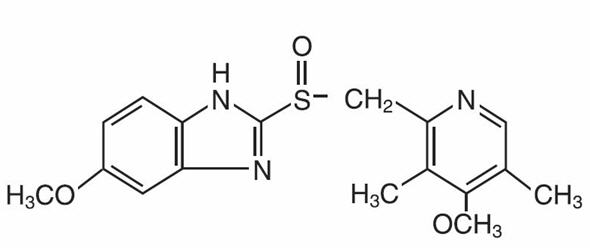
The active ingredient in Omeprazole Delayed-Release Capsules is a substituted benzimidazole, 5-methoxy-2-[[(4-methoxy-3, 5-dimethyl-2-pyridinyl) methyl] sulfinyl]-1H-benzimidazole, a compound that inhibits gastric acid secretion. Its empirical formula is C17H19N3O3S, with a molecular weight of 345.42. The structural formula is:
Omeprazole is a white to off-white crystalline powder that melts with decomposition at about 155°C. It is a weak base, freely soluble in ethanol and methanol, and slightly soluble in acetone and isopropanol and very slightly soluble in water. The stability of omeprazole is a function of pH; it is rapidly degraded in acid media, but has acceptable stability under alkaline conditions.
Omeprazole Delayed-Release Capsules meet USP Dissolution Test 2.
Omeprazole Delayed-Release Capsules is supplied as delayed-release capsules for oral administration. Each delayed-release capsule contains either 10 mg, 20 mg, or 40 mg of omeprazole in the form of enteric-coated microtablets with the following inactive ingredients: crospovidone, glyceryl behenate, hypromellose, lactose monohydrate, methacrylic acid copolymer dispersion, silicon dioxide, talc, titanium dioxide and triethyl citrate. In addition, the capsule shells contain gelatin and may contain sodium lauryl sulfate. In addition, the 20 mg and 40 mg capsule shells also contain yellow iron oxide. The imprinting ink also contains ammonium hydroxide, butyl alcohol, black iron oxide, isopropyl alcohol, propylene glycol and shellac glaze. The ink may also contain dehydrated alcohol.
7.4 Tacrolimus
Concomitant administration of omeprazole and tacrolimus may increase the serum levels of tacrolimus.
7.7 Methotrexate
Case reports, published population pharmacokinetic studies, and retrospective analyses suggest that concomitant administration of PPIs and methotrexate (primarily at high dose; see methotrexate prescribing information) may elevate and prolong serum levels of methotrexate and/or its metabolite hydroxymethotrexate. However, no formal drug interaction studies of methotrexate with PPIs have been conducted [see Warnings and Precautions (5.9) ].
12.4 Microbiology
Omeprazole and clarithromycin dual therapy and omeprazole, clarithromycin and amoxicillin triple therapy have been shown to be active against most strains of Helicobacter pylori in vitro and in clinical infections as described in the Indications and Usage section (1.1).
2.3 Gastric Ulcer
The recommended adult oral dose is 40 mg once daily for 4-8 weeks.
5.5 Bone Fracture
Several published observational studies suggest that proton pump inhibitor (PPI) therapy may be associated with an increased risk for osteoporosis-related fractures of the hip, wrist, or spine. The risk of fracture was increased in patients who received high-dose, defined as multiple daily doses, and long-term PPI therapy (a year or longer). Patients should use the lowest dose and shortest duration of PPI therapy appropriate to the condition being treated. Patients at risk for osteoporosis-related fractures should be managed according to established treatment guidelines [see Dosage and Administration (2) and Adverse Reactions (6.3) ].
8.4 Pediatric Use
Use of Omeprazole Delayed-Release Capsules in pediatric and adolescent patients 2 to 16 years of age for the treatment of GERD is supported by a) extrapolation of results, already included in the currently approved labeling, from adequate and well-controlled studies that supported the approval of Omeprazole Delayed-Release Capsules for adults, and b) safety and pharmacokinetic studies performed in pediatric and adolescent patients. [see Clinical Pharmacology , Pharmacokinetics, Pediatric for pharmacokinetic information (12.3) and Dosage and Administration (2),Adverse Reactions (6.1) and Clinical Studies , (14.6)]. The safety and effectiveness of Omeprazole Delayed-Release Capsules for the treatment of GERD in patients < 1 year of age have not been established. The safety and effectiveness of Omeprazole Delayed-Release Capsules for other pediatric uses have not been established.
Juvenile Animal Data
In a juvenile rat toxicity study, esomeprazole was administered with both magnesium and strontium salts at oral doses about 34 to 57 times a daily human dose of 40 mg based on body surface area. Increases in death were seen at the high dose, and at all doses of esomeprazole, there were decreases in body weight, body weight gain, femur weight and femur length, and decreases in overall growth [see Nonclinical Toxicology (13.2)].
8.5 Geriatric Use
Omeprazole was administered to over 2000 elderly individuals (≥ 65 years of age) in clinical trials in the U.S. and Europe. There were no differences in safety and effectiveness between the elderly and younger subjects. Other reported clinical experience has not identified differences in response between the elderly and younger subjects, but greater sensitivity of some older individuals cannot be ruled out.
Pharmacokinetic studies have shown the elimination rate was somewhat decreased in the elderly and bioavailability was increased. The plasma clearance of omeprazole was 250 mL/min (about half that of young volunteers) and its plasma half-life averaged one hour, about twice that of young healthy volunteers. However, no dosage adjustment is necessary in the elderly [see Clinical Pharmacology (12.3) ].
14.2 Gastric Ulcer
In a U.S. multicenter, double-blind, study of omeprazole 40 mg once daily, 20 mg once daily, and placebo in 520 patients with endoscopically diagnosed gastric ulcer, the following results were obtained.
| Omeprazole Delayed-Release Capsules 20 mg once daily (n=202) |
Omeprazole Delayed-Release Capsules 40 mg once daily (n=214) |
Placebo (n=104) |
|
|---|---|---|---|
| Week 4 | 47.5 (p < 0.01) Omeprazole Delayed-Release Capsules 40 mg or 20 mg versus placebo
|
55.6 | 30.8 |
| Week 8 | 74.8 | 82.7
,
(p < 0.05) Omeprazole Delayed-Release Capsules 40 mg versus 20 mg
|
48.1 |
For the stratified groups of patients with ulcer size less than or equal to 1 cm, no difference in healing rates between 40 mg and 20 mg was detected at either 4 or 8 weeks. For patients with ulcer size greater than 1 cm, 40 mg was significantly more effective than 20 mg at 8 weeks.
In a foreign, multinational, double-blind study of 602 patients with endoscopically diagnosed gastric ulcer, omeprazole 40 mg once daily, 20 mg once daily, and ranitidine 150 mg twice a day were evaluated.
| Omeprazole Delayed-Release Capsules 20 mg once daily(n=200) |
Omeprazole Delayed-Release Capsules 40 mg once daily(n=187) |
Ranitidine 150 mg twice daily (n=199) |
|
|---|---|---|---|
| Week 4 | 63.5 | 78.1 (p < 0.01) Omeprazole Delayed-Release Capsules 40 mg versus ranitidine
,
(p < 0.01) Omeprazole Delayed-Release Capsules 40 mg versus 20 mg
|
56.3 |
| Week 8 | 81.5 | 91.4 , | 78.4 |
5.6 Hypomagnesemia
Hypomagnesemia, symptomatic and asymptomatic, has been reported rarely in patients treated with PPIs for at least three months, in most cases after a year of therapy. Serious adverse events include tetany, arrhythmias, and seizures. In most patients, treatment of hypomagnesemia required magnesium replacement and discontinuation of the PPI.
For patients expected to be on prolonged treatment or who take PPIs with medications such as digoxin or drugs that may cause hypomagnesemia (e.g., diuretics), health care professionals may consider monitoring magnesium levels prior to initiation of PPI treatment and periodically [see Adverse Reactions (6.3) ].
4 Contraindications
Omeprazole Delayed-Release Capsules is contraindicated in patients with known hypersensitivity to substituted benzimidazoles or to any component of the formulation. Hypersensitivity reactions may include anaphylaxis, anaphylactic shock, angioedema, bronchospasm, interstitial nephritis, and urticaria [see Adverse Reactions (6) ].
For information about contraindications of antibacterial agents (clarithromycin and amoxicillin) indicated in combination with Omeprazole Delayed-Release Capsules, refer to the CONTRAINDICATIONS section of their package inserts.
6 Adverse Reactions
Adults: Most common adverse reactions in adults (incidence ≥2%) are
- Headache, abdominal pain, nausea, diarrhea, vomiting, and flatulence (6)
Pediatric patients (2 to 16 years of age):
Safety profile similar to that in adults, except that respiratory system events and fever were the most frequently reported reactions in pediatric studies (8.4).
To report SUSPECTED ADVERSE REACTIONS, contact UCB, Inc. at 1-866-822-0068 or FDA at 1-800-FDA-1088 or www.fda.gov/medwatch.
7 Drug Interactions
- Atazanavir and nelfinavir: Omeprazole Delayed-Release Capsules reduces plasma levels of atazanavir and nelfinavir. Concomitant use is not recommended (7.1).
- Saquinavir: Omeprazole Delayed-Release Capsules increases plasma levels of saquinavir. Monitor for toxicity and consider dose reduction of saquinavir (7.1).
- May interfere with drugs for which gastric pH affects bioavailability (e.g., ketoconazole, iron salts, erlotinib, ampicillin esters, and digoxin). Patients treated with Omeprazole Delayed-Release Capsules and digoxin may need to be monitored for increases in digoxin toxicity (7.2).
- Clopidogrel: Omeprazole Delayed-Release Capsules decreases exposure to the active metabolite of clopidogrel (7.3 , 12.3).
- Cilostazol: Omeprazole Delayed-Release Capsules increases systemic exposure of cilostazol and one of its active metabolites. Consider dose reduction of cilostazol (7.3).
- Drugs metabolized by cytochrome P450 (e.g., diazepam, warfarin, phenytoin, cyclosporine, disulfiram, benzodiazepines): Omeprazole Delayed-Release Capsules can prolong their elimination. Monitor and determine need for dose adjustments (7.3).
- Patients treated with proton pump inhibitors and warfarin may need to be monitored for increases in INR and prothrombin time (7.3).
- Combined inhibitor of CYP 2C19 and 3A4 (e.g., voriconazole) may raise omeprazole levels (7.3).
- Tacrolimus: Omeprazole Delayed-Release Capsules may increase serum levels of tacrolimus (7.4).
- Methotrexate: Omeprazole Delayed-Release Capsules may increase serum levels of methotrexate (7.7)
8.3 Nursing Mothers
Omeprazole is present in human milk. Omeprazole concentrations were measured in breast milk of a woman following oral administration of 20 mg. The peak concentration of omeprazole in breast milk was less than 7% of the peak serum concentration. This concentration would correspond to 0.004 mg of omeprazole in 200 mL of milk. Caution should be exercised when Omeprazole Delayed-Release Capsules is administered to a nursing woman.
8.7 Renal Impairment
No dosage reduction is necessary [see Clinical Pharmacology (12.3) ].
8.8 Asian Population
Consider dose reduction, particularly for maintenance of healing of erosive esophagitis [see Clinical Pharmacology (12.3) ].
2.7 Pediatric Patients
For the treatment of GERD and maintenance of healing of erosive esophagitis, the recommended daily dose for pediatric patients 2 to 16 years of age is as follows:
| Patient Weight | Omeprazole Daily Dose |
|---|---|
| 10 < 20 kg | 10 mg |
| ≥ 20 kg | 20 mg |
On a per kg basis, the doses of omeprazole required to heal erosive esophagitis in pediatric patients are greater than those for adults.
Alternative administrative options can be used for pediatric patients unable to swallow an intact capsule [see Dosage and Administration (2.8) ].
5.2 Atrophic Gastritis
Atrophic gastritis has been noted occasionally in gastric corpus biopsies from patients treated long-term with omeprazole.
8.6 Hepatic Impairment
Consider dose reduction, particularly for maintenance of healing of erosive esophagitis [see Clinical Pharmacology (12.3) ].
1 Indications and Usage
Omeprazole Delayed-Release Capsules is a proton pump inhibitor indicated for:
- Treatment in adults of duodenal ulcer (1.1) and gastric ulcer (1.2).
- Treatment in adults and children of gastroesophageal reflux disease (GERD) (1.3) and maintenance of healing of erosive esophagitis (1.4).
The safety and effectiveness of Omeprazole Delayed-Release Capsules in pediatric patients < 1 year of age have not been established (8.4).
Repackaging Information
Please reference the How Supplied section listed above for a description of individual tablets or capsules. This drug product has been received by Aphena Pharma - TN in a manufacturer or distributor packaged configuration and repackaged in full compliance with all applicable cGMP regulations. The package configurations available from Aphena are listed below:
| Count | 40mg |
| 90 | 43353-829-60 |
| 180 | 43353-829-80 |
Store between 20°-25°C (68°-77°F). See USP Controlled Room Temperature. Dispense in a tight light-resistant container as defined by USP. Keep this and all drugs out of the reach of children.
Repackaged by:
Cookeville, TN 38506
20140501SC
12.1 Mechanism of Action
Omeprazole belongs to a class of antisecretory compounds, the substituted benzimidazoles, that suppress gastric acid secretion by specific inhibition of the H+/K+ ATPase enzyme system at the secretory surface of the gastric parietal cell. Because this enzyme system is regarded as the acid (proton) pump within the gastric mucosa, omeprazole has been characterized as a gastric acid-pump inhibitor, in that it blocks the final step of acid production. This effect is dose-related and leads to inhibition of both basal and stimulated acid secretion irrespective of the stimulus. Animal studies indicate that after rapid disappearance from plasma, omeprazole can be found within the gastric mucosa for a day or more.
14.4 Erosive Esophagitis
In a U.S. multicenter double-blind placebo controlled study of 20 mg or 40 mg of Omeprazole Delayed-Release Capsules in patients with symptoms of GERD and endoscopically diagnosed erosive esophagitis of grade 2 or above, the percentage healing rates (per protocol) were as follows:
| Week | 20 mg Omeprazole Delayed-Release Capsules (n=83) |
40 mg Omeprazole Delayed-Release Capsules (n=87) |
Placebo (n=43) |
|---|---|---|---|
| 4 | 39 (p < 0.01) Omeprazole Delayed-Release Capsules versus placebo.
|
45 | 7 |
| 8 | 74 | 75 | 14 |
In this study, the 40 mg dose was not superior to the 20 mg dose of Omeprazole Delayed-Release Capsules in the percentage healing rate. Other controlled clinical trials have also shown that Omeprazole Delayed-Release Capsules is effective in severe GERD. In comparisons with histamine H2-receptor antagonists in patients with erosive esophagitis, grade 2 or above, Omeprazole Delayed-Release Capsules in a dose of 20 mg was significantly more effective than the active controls. Complete daytime and nighttime heartburn relief occurred significantly faster (p < 0.01) in patients treated with Omeprazole Delayed-Release Capsules than in those taking placebo or histamine H2- receptor antagonists.
In this and five other controlled GERD studies, significantly more patients taking 20 mg omeprazole (84%) reported complete relief of GERD symptoms than patients receiving placebo (12%).
5.3 Clostridium Difficile
Published observation studies suggest that PPI therapy like Omeprazole Delayed-Release Capsules may be associated with an increased risk of Clostridium difficile associated diarrhea, especially in hospitalized patients. This diagnosis should be considered for diarrhea that does not improve [see Adverse Reactions (6.2) ].
Patients should use the lowest dose and shortest duration of PPI therapy appropriate to the condition being treated.
Clostridium difficile associated diarrhea (CDAD) has been reported with use of nearly all antibacterial agents. For more information specific to antibacterial agents (clarithromycin and amoxicillin) indicated for use in combination with Omeprazole Delayed-Release Capsules, refer to WARNINGS and PRECAUTIONS sections of those package inserts.
1.2 Gastric Ulcer (adults)
Omeprazole Delayed-Release Capsules is indicated for short-term treatment (4-8 weeks) of active benign gastric ulcer in adults [see Clinical Studies (14.2) ].
5 Warnings and Precautions
- Symptomatic response does not preclude the presence of gastric malignancy (5.1).
- Atrophic Gastritis: has been noted with long-term therapy (5.2).
- PPI therapy may be associated with increased risk of Clostridium difficile associated diarrhea (5.3).
- Avoid concomitant use of Omeprazole Delayed-Release Capsules with clopidogrel (5.4).
- Bone Fracture: Long-term and multiple daily dose PPI therapy may be associated with an increased risk for osteoporosis-related fractures of the hip, wrist or spine (5.5).
- Hypomagnesemia has been reported rarely with prolonged treatment with PPIs (5.6).
- Avoid concomitant use of Omeprazole Delayed-Release Capsules with St. John's Wort or rifampin due to the potential reduction in omeprazole concentrations (5.7, 7.3).
- Interactions with diagnostic investigations for Neuroendocrine Tumors: Increases in intragastric pH may result in hypergastrinemia and enterochromaffin-like cell hyperplasia and increased Chromogranin A levels which may interfere with diagnostic investigations for neuroendocrine tumors (5.8, 12.2).
1.1 Duodenal Ulcer (adults)
Omeprazole Delayed-Release Capsules is indicated for short-term treatment of active duodenal ulcer in adults. Most patients heal within four weeks. Some patients may require an additional four weeks of therapy.
Omeprazole Delayed-Release Capsules in combination with clarithromycin and amoxicillin, is indicated for treatment of patients with H. pylori infection and duodenal ulcer disease (active or up to 1-year history) to eradicate H. pylori in adults.
Omeprazole Delayed-Release Capsules in combination with clarithromycin is indicated for treatment of patients with H. pylori infection and duodenal ulcer disease to eradicate H. pylori in adults.
Eradication of H. pylori has been shown to reduce the risk of duodenal ulcer recurrence [see Clinical Studies (14.1) and Dosage and Administration (2) ].
Among patients who fail therapy, Omeprazole Delayed-Release Capsules with clarithromycin is more likely to be associated with the development of clarithromycin resistance as compared with triple therapy. In patients who fail therapy, susceptibility testing should be done. If resistance to clarithromycin is demonstrated or susceptibility testing is not possible, alternative antimicrobial therapy should be instituted. [See Microbiology section (12.4) ], and the clarithromycin package insert, Microbiology section.
2 Dosage and Administration
Omeprazole Delayed-Release Capsules should be taken before eating. In the clinical trials, antacids were used concomitantly with Omeprazole Delayed-Release Capsules.
Patients should be informed that the Omeprazole Delayed-Release Capsule should be swallowed whole.
For patients unable to swallow an intact capsule, alternative administration options are available [see Dosage and Administration (2.8) ].
3 Dosage Forms and Strengths
Omeprazole Delayed-Release Capsules, 10 mg, are opaque white cap and opaque white body capsules imprinted with "KU" and "114" in black ink.
Omeprazole Delayed-Release Capsules, 20 mg, are opaque white cap and opaque gold body capsules imprinted with "KU" and "118" in black ink.
Omeprazole Delayed-Release Capsules, 40 mg, are opaque gold cap and opaque gold body capsules imprinted with "KU" and "136" in black ink.
6.3 Post Marketing Experience
The following adverse reactions have been identified during post-approval use of Omeprazole Delayed-Release Capsules. Because these reactions are voluntarily reported from a population of uncertain size, it is not always possible to reliably estimate their actual frequency or establish a causal relationship to drug exposure.
Body As a Whole: Hypersensitivity reactions including anaphylaxis, anaphylactic shock, angioedema, bronchospasm, interstitial nephritis, urticaria, (see also Skin below); fever; pain; fatigue; malaise;
Cardiovascular: Chest pain or angina, tachycardia, bradycardia, palpitations, elevated blood pressure, peripheral edema
Endocrine: Gynecomastia
Gastrointestinal: Pancreatitis (some fatal), anorexia, irritable colon, fecal discoloration, esophageal candidiasis, mucosal atrophy of the tongue, stomatitis, abdominal swelling, dry mouth, microscopic colitis. During treatment with omeprazole, gastric fundic gland polyps have been noted rarely. These polyps are benign and appear to be reversible when treatment is discontinued. Gastroduodenal carcinoids have been reported in patients with ZE syndrome on long-term treatment with Omeprazole Delayed-Release Capsules. This finding is believed to be a manifestation of the underlying condition, which is known to be associated with such tumors.
Hepatic: Liver disease including hepatic failure (some fatal), liver necrosis (some fatal), hepatic encephalopathy hepatocellular disease, cholestatic disease, mixed hepatitis, jaundice, and elevations of liver function tests [ALT, AST, GGT, alkaline phosphatase, and bilirubin]
Infections and Infestations : Clostridium difficile associated diarrhea
Metabolism and Nutritional disorders: Hypoglycemia, hypomagnesemia, hyponatremia, weight gain
Musculoskeletal: Muscle weakness, myalgia, muscle cramps, joint pain, leg pain, bone fracture
Nervous System/Psychiatric: Psychiatric and sleep disturbances including depression, agitation, aggression, hallucinations, confusion, insomnia, nervousness, apathy, somnolence, anxiety, and dream abnormalities; tremors, paresthesia; vertigo
Respiratory: Epistaxis, pharyngeal pain
Skin: Severe generalized skin reactions including toxic epidermal necrolysis (some fatal), Stevens-Johnson syndrome, and erythema multiforme; photosensitivity; urticaria; rash; skin inflammation; pruritus; petechiae; purpura; alopecia; dry skin; hyperhidrosis
Special Senses: Tinnitus, taste perversion
Ocular: Optic atrophy, anterior ischemic optic neuropathy, optic neuritis, dry eye syndrome, ocular irritation, blurred vision, double vision
Urogenital: Interstitial nephritis, hematuria, proteinuria, elevated serum creatinine, microscopic pyuria, urinary tract infection, glycosuria, urinary frequency, testicular pain
Hematologic: Agranulocytosis (some fatal), hemolytic anemia, pancytopenia, neutropenia, anemia, thrombocytopenia, leukopenia, leucocytosis
8 Use in Specific Populations
Pregnancy:
- Based on animal datea may cause fetal harm (8.1).
Patients with hepatic impairment:
- Consider dose reduction, particularly for maintenance of healing of erosive esophagitis (12.3).
Principal Display Panel 40mg
NDC 43353-829 - Omeprazole DR 40mg - Rx Only
5.4 Interaction With Clopidogrel
Avoid concomitant use of Omeprazole Delayed-Release Capsules with clopidogrel. Clopidogrel is a prodrug. Inhibition of platelet aggregation by clopidogrel is entirely due to an active metabolite. The metabolism of clopidogrel to its active metabolite can be impaired by use with concomitant medications, such as omeprazole, that inhibit CYP2C19 activity. Concomitant use of clopidogrel with 80 mg omeprazole reduces the pharmacological activity of clopidogrel, even when administered 12 hours apart. When using Omeprazole Delayed-Release Capsules, consider alternative anti-platelet therapy [see Drug Interactions (7.3) and Pharmacokinetics (12.3) ].
17 Patient Counseling Information
"See FDA-Approved Medication Guide"
Omeprazole Delayed-Release Capsules should be taken before eating. Patients should be informed that the Omeprazole Delayed-Release Capsule should be swallowed whole.
For patients who have difficulty swallowing capsules, the contents of an Omeprazole Delayed-Release Capsule can be added to applesauce. One tablespoon of applesauce should be added to an empty bowl and the capsule should be opened. All of the microtablets inside the capsule should be carefully emptied on the applesauce. The microtablets should be mixed with the applesauce and then swallowed immediately with a glass of cool water to ensure complete swallowing of the microtablets. The applesauce used should not be hot and should be soft enough to be swallowed without chewing. The microtablets should not be chewed or crushed. The microtablets/applesauce mixture should not be stored for future use.
Advise patients to immediately report and seek care for diarrhea that does not improve. This may be a sign of Clostridium difficile associated diarrhea [see Warnings and Precautions (5.3) ].
Advise patients to immediately report and seek care for any cardiovascular or neurological symptoms including palpitations, dizziness, seizures, and tetany as these may be signs of hypomagnesemia [see Warnings and Precautions (5.6) ].
5.1 Concomitant Gastric Malignancy
Symptomatic response to therapy with omeprazole does not preclude the presence of gastric malignancy.
16 How Supplied/storage and Handling
|
Repackaged by Aphena Pharma Solutions - TN. |
| Omeprazole Delayed-Release Capsules, 10 mg, are opaque white cap and opaque white body capsules imprinted with "KU" and "114" in black ink. They are supplied as follows: | |
| Bottles of 30 | NDC 62175-114-32 |
| Bottles of 90 | NDC 62175-114-46 |
| Bottles of 100 | NDC 62175-114-37 |
| Omeprazole Delayed-Release Capsules, 20 mg, are opaque white cap and opaque gold body capsules imprinted with "KU" and "118" in black ink. They are supplied as follows: | |
| Bottles of 30 | NDC 62175-118-32 |
| Bottles of 90 | NDC 62175-118-46 |
| Bottles of 100 | NDC 62175-118-37 |
| Bottles of 1000 | NDC 62175-118-43 |
| Omeprazole Delayed-Release Capsules, 40 mg, are opaque gold cap and opaque gold body capsules imprinted with "KU" and "136" in black ink. They are supplied as follows: | |
| Bottles of 30 | NDC 62175-136-32 |
| Bottles of 90 | NDC 62175-136-46 |
| Bottles of 100 | NDC 62175-136-37 |
| Bottles of 1000 | NDC 62175-136-43 |
2.8 Alternative Administration Options
Omeprazole Delayed-Release Capsule is available as a delayed-release capsule.
For patients who have difficulty swallowing capsules, the contents of an Omeprazole Delayed-Release Capsule can be added to applesauce. One tablespoon of applesauce should be added to an empty bowl and the capsule should be opened. All of the microtablets inside the capsule should be carefully emptied on the applesauce. The microtablets should be mixed with the applesauce and then swallowed immediately with a glass of cool water to ensure complete swallowing of the microtablets. The applesauce used should not be hot and should be soft enough to be swallowed without chewing. The microtablets should not be chewed or crushed. The microtablets/applesauce mixture should not be stored for future use.
13.2 Animal Toxicology And/or Pharmacology
Reproduction Studies
Reproduction studies have been performed in rats at oral doses up to 280 mg/kg/day (about 57 times an oral human dose of 40 mg on a body surface area basis) and in rabbits at oral doses up to 86 mg/kg/day (about 35 times an oral human dose of 40 mg on a body surface area basis) and have revealed no evidence of impaired fertility or harm to the fetus due to esomeprazole [see Pregnancy, Animal Data (8.1)].
Juvenile Animal Study
A 28-day toxicity study with a 14-day recovery phase was conducted in juvenile rats with esomeprazole magnesium at doses of 70 to 280 mg/kg/day (about 17 to 57 times a daily oral human dose of 40 mg on a body surface area basis). An increase in the number of deaths at the high dose of 280 mg/kg/day was observed when juvenile rats were administered esomeprazole magnesium from postnatal day 7 through postnatal day 35. In addition, doses equal to or greater than 140 mg/kg/day (about 34 times a daily oral human dose of 40 mg on a body surface area basis), produced treatment-related decreases in body weight (approximately 14%) and body weight gain, decreases in femur weight and femur length, and affected overall growth. Comparable findings described above have also been observed in this study with another esomeprazole salt, esomeprazole strontium, at equimolar doses of esomeprazole.
2.4 Gastroesophageal Reflux Disease (gerd)
The recommended adult oral dose for the treatment of patients with symptomatic GERD and no esophageal lesions is 20 mg daily for up to 4 weeks. The recommended adult oral dose for the treatment of patients with erosive esophagitis and accompanying symptoms due to GERD is 20 mg daily for 4 to 8 weeks.
2.6 Pathological Hypersecretory Conditions
The dosage of Omeprazole Delayed-Release Capsules in patients with pathological hypersecretory conditions varies with the individual patient. The recommended adult oral starting dose is 60 mg once daily. Doses should be adjusted to individual patient needs and should continue for as long as clinically indicated. Doses up to 120 mg three times daily have been administered. Daily dosages of greater than 80 mg should be administered in divided doses. Some patients with Zollinger-Ellison syndrome have been treated continuously with Omeprazole Delayed-Release Capsules for more than 5 years.
14.5 Pathological Hypersecretory Conditions
In open studies of 136 patients with pathological hypersecretory conditions, such as Zollinger-Ellison (ZE) syndrome with or without multiple endocrine adenomas, Omeprazole Delayed-Release Capsules significantly inhibited gastric acid secretion and controlled associated symptoms of diarrhea, anorexia, and pain. Doses ranging from 20 mg every other day to 360 mg per day maintained basal acid secretion below 10 mEq/hr in patients without prior gastric surgery, and below 5 mEq/hr in patients with prior gastric surgery.
Initial doses were titrated to the individual patient need, and adjustments were necessary with time in some patients [see Dosage and Administration (2) ]. Omeprazole Delayed-Release Capsules was well tolerated at these high dose levels for prolonged periods (> 5 years in some patients). In most ZE patients, serum gastrin levels were not modified by Omeprazole Delayed-Release Capsules. However, in some patients serum gastrin increased to levels greater than those present prior to initiation of omeprazole therapy. At least 11 patients with ZE syndrome on long-term treatment with Omeprazole Delayed-Release Capsules developed gastric carcinoids. These findings are believed to be a manifestation of the underlying condition, which is known to be associated with such tumors, rather than the result of the administration of Omeprazole Delayed-Release Capsules [see Adverse Reactions (6) ].
7.6 Combination Therapy With Clarithromycin
Concomitant administration of clarithromycin with other drugs can lead to serious adverse reactions due to drug interactions [see Warnings and Precautions in prescribing information for clarithromycin]. Because of these drug interactions, clarithromycin is contraindicated for co-administration with certain drugs [see Contraindications in prescribing information for clarithromycin].
7.1 Interference With Antiretroviral Therapy
Concomitant use of atazanavir and nelfinavir with proton pump inhibitors is not recommended. Co-administration of atazanavir with proton pump inhibitors is expected to substantially decrease atazanavir plasma concentrations and may result in a loss of therapeutic effect and the development of drug resistance. Coadministration of saquinavir with proton pump inhibitors is expected to increase saquinavir concentrations, which may increase toxicity and require dose reduction.
Omeprazole has been reported to interact with some antiretroviral drugs. The clinical importance and the mechanisms behind these interactions are not always known. Increased gastric pH during omeprazole treatment may change the absorption of the antiretroviral drug. Other possible interaction mechanisms are via CYP 2C19.
2.1 Short Term Treatment of Active Duodenal Ulcer
The recommended adult oral dose of Omeprazole Delayed-Release Capsules is 20 mg once daily. Most patients heal within four weeks. Some patients may require an additional four weeks of therapy.
2.5 Maintenance of Healing of Erosive Esophagitis
The recommended adult oral dose is 20 mg daily [see Clinical Studies (14.4) ].
1.5 Pathological Hypersecretory Conditions (adults)
Omeprazole Delayed-Release Capsules is indicated for the long-term treatment of pathological hypersecretory conditions (e.g., Zollinger-Ellison syndrome, multiple endocrine adenomas and systemic mastocytosis) in adults.
13.1 Carcinogenesis, Mutagenesis, Impairment of Fertility
In two 24-month carcinogenicity studies in rats, omeprazole at daily doses of 1.7, 3.4, 13.8, 44.0 and 140.8 mg/kg/day (about 0.7 to 57 times a human dose of 20 mg/day, as expressed on a body surface area basis) produced gastric ECL cell carcinoids in a dose-related manner in both male and female rats; the incidence of this effect was markedly higher in female rats, which had higher blood levels of omeprazole. Gastric carcinoids seldom occur in the untreated rat. In addition, ECL cell hyperplasia was present in all treated groups of both sexes. In one of these studies, female rats were treated with 13.8 mg omeprazole/kg/day (about 6 times a human dose of 20 mg/day, based on body surface area) for one year, and then followed for an additional year without the drug. No carcinoids were seen in these rats. An increased incidence of treatment-related ECL cell hyperplasia was observed at the end of one year (94% treated vs 10% controls). By the second year the difference between treated and control rats was much smaller (46% vs 26%) but still showed more hyperplasia in the treated group. Gastric adenocarcinoma was seen in one rat (2%). No similar tumor was seen in male or female rats treated for two years. For this strain of rat no similar tumor has been noted historically, but a finding involving only one tumor is difficult to interpret. In a 52-week toxicity study in Sprague-Dawley rats, brain astrocytomas were found in a small number of males that received omeprazole at dose levels of 0.4, 2, and 16 mg/kg/day (about 0.2 to 6.5 times the human dose on a body surface area basis). No astrocytomas were observed in female rats in this study. In a 2-year carcinogenicity study in Sprague-Dawley rats, no astrocytomas were found in males or females at the high dose of 140.8 mg/kg/day (about 57 times the human dose on a body surface area basis). A 78-week mouse carcinogenicity study of omeprazole did not show increased tumor occurrence, but the study was not conclusive. A 26-week p53 (+/-) transgenic mouse carcinogenicity study was not positive.
Omeprazole was positive for clastogenic effects in an in vitro human lymphocyte chromosomal aberration assay, in one of two in vivo mouse micronucleus tests, and in an in vivo bone marrow cell chromosomal aberration assay. Omeprazole was negative in the in vitro Ames test, an in vitro mouse lymphoma cell forward mutation assay, and an in vivo rat liver DNA damage assay.
Omeprazole at oral doses up to 138 mg/kg/day in rats (about 56 times the human dose on a body surface area basis) was found to have no effect on fertility and reproductive performance.
In 24-month carcinogenicity studies in rats, a dose-related significant increase in gastric carcinoid tumors and ECL cell hyperplasia was observed in both male and female animals [see Warnings and Precautions (5) ]. Carcinoid tumors have also been observed in rats subjected to fundectomy or long-term treatment with other proton pump inhibitors or high doses of H2-receptor antagonists.
7.2 Drugs for Which Gastric Ph Can Affect Bioavailability
Because of its profound and long lasting inhibition of gastric acid secretion, it is theoretically possible that omeprazole may interfere with absorption of drugs where gastric pH is an important determinant of their bioavailability. Like with other drugs that decrease the intragastric acidity, the absorption of drugs such as ketoconazole, ampicillin esters, iron salts and erlotinib can decrease, while the absorption of drugs such as digoxin can increase during treatment with omeprazole. Concomitant treatment with omeprazole (20 mg daily) and digoxin in healthy subjects increased the bioavailability of digoxin by 10% (30% in two subjects). Therefore, patients may need to be monitored when digoxin is taken concomitantly with omeprazole. In the clinical trials, antacids were used concomitantly with the administration of Omeprazole Delayed-Release Capsules.
7.3 Effects On Hepatic Metabolism/cytochrome P 450 Pathways
Omeprazole can prolong the elimination of diazepam, warfarin and phenytoin, drugs that are metabolized by oxidation in the liver. There have been reports of increased INR and prothrombin time in patients receiving proton pump inhibitors, including omeprazole, and warfarin concomitantly. Increases in INR and prothrombin time may lead to abnormal bleeding and even death. Patients treated with proton pump inhibitors and warfarin may need to be monitored for increases in INR and prothrombin time.
Although in normal subjects no interaction with theophylline or propranolol was found, there have been clinical reports of interaction with other drugs metabolized via the cytochrome P450 system (e.g., cyclosporine, disulfiram, benzodiazepines). Patients should be monitored to determine if it is necessary to adjust the dosage of these drugs when taken concomitantly with Omeprazole Delayed-Release Capsules.
Concomitant administration of omeprazole and voriconazole (a combined inhibitor of CYP2C19 and CYP3A4) resulted in more than doubling of the omeprazole exposure. Dose adjustment of omeprazole is not normally required. However, in patients with Zollinger-Ellison syndrome, who may require higher doses up to 240 mg/day, dose adjustment may be considered. When voriconazole (400 mg Q12h × 1 day, then 200 mg × 6 days) was given with omeprazole (40 mg once daily × 7 days) to healthy subjects, it significantly increased the steady-state Cmax and AUC0-24 of omeprazole, an average of 2 times (90% CI: 1.8, 2.6) and 4 times (90% CI: 3.3, 4.4) respectively as compared to when omeprazole was given without voriconazole.
Omeprazole acts as an inhibitor of CYP 2C19. Omeprazole, given in doses of 40 mg daily for one week to 20 healthy subjects in crossover study, increased Cmax and AUC of cilostazol by 18% and 26% respectively. Cmax and AUC of one of its active metabolites, 3,4-dihydro-cilostazol, which has 4-7 times the activity of cilostazol, were increased by 29% and 69% respectively. Co-administration of cilostazol with omeprazole is expected to increase concentrations of cilostazol and its above mentioned active metabolite. Therefore a dose reduction of cilostazol from 100 mg b.i.d. to 50 mg b.i.d. should be considered.
Drugs known to induce CYP2C19 or CYP3A4 (such as rifampin) may lead to decreased omeprazole serum levels. In a cross-over study in 12 healthy male subjects, St. John's wort (300 mg three times daily for 14 days), an inducer of CYP3A4, decreased the systemic exposure of omeprazole in CYP2C19 poor metabolisers (Cmax and AUC decreased by 37.5% and 37.9%, respectively) and extensive metabolisers (Cmax and AUC decreased by 49.6% and 43.9%, respectively). Avoid concomitant use of St. John's Wort or rifampin with omeprazole.
7.5 Interactions With Investigations of Neuroendocrine Tumors
Drug-induced decrease in gastric acidity results in enterochromaffin-like cell hyperplasia and increased Chromogranin A levels which may interfere with investigations for neuroendocrine tumors [see Warnings and Precautions (5.8) and Clinical Pharmacology (12) ].
5.8 Interactions With Diagnostic Investigations for Neuroendocrine Tumors
Serum chromogranin A (CgA) levels increase secondary to drug-induced decreases in gastric acidity. The increased CgA level may cause false positive results in diagnostic investigations for neuroendocrine tumors. Providers should temporarily stop omeprazole treatment before assessing CgA levels and consider repeating the test if initial CgA levels are high. If serial tests are performed (e.g. for monitoring), the same commercial laboratory should be used for testing, as reference ranges between tests may vary.
5.9 Concomitant Use of Omeprazole Delayed Release Capsules With Methotrexate
Literature suggests that concomitant use of PPIs with methotrexate (primarily at high dose; see methotrexate prescribing information) may elevate and prolong serum levels of methotrexate and/or its metabolite, possibly leading to methotrexate toxicities. In high-dose methotrexate administration a temporary withdrawal of the PPI may be considered in some patients [see Drug Interactions (7.7) ].
1.4 Maintenance of Healing of Erosive Esophagitis (adults and Pediatric Patients)
Omeprazole Delayed-Release Capsules is indicated to maintain healing of erosive esophagitis in pediatric patients and adults.
Controlled studies do not extend beyond 12 months [see Clinical Studies (14.4) ].
6.1 Clinical Trials Experience With Omeprazole Delayed Release Capsules Monotherapy
Because clinical trials are conducted under widely varying conditions, adverse reaction rates observed in the clinical trials of a drug cannot be directly compared to rates in the clinical trials of another drug and may not reflect the rates observed in practice.
The safety data described below reflects exposure to Omeprazole Delayed-Release Capsules in 3096 patients from worldwide clinical trials (465 patients from US studies and 2,631 patients from international studies). Indications clinically studied in US trials included duodenal ulcer, resistant ulcer, and Zollinger-Ellison syndrome. The international clinical trials were double blind and open-label in design. The most common adverse reactions reported (i.e., with an incidence rate ≥ 2%) from Omeprazole Delayed-Release Capsules-treated patients enrolled in these studies included headache (6.9%), abdominal pain (5.2%), nausea (4.0%), diarrhea (3.7%), vomiting (3.2%), and flatulence (2.7%).
Additional adverse reactions that were reported with an incidence ≥ 1% included acid regurgitation (1.9%), upper respiratory infection (1.9%), constipation (1.5%), dizziness (1.5%), rash (1.5%), asthenia (1.3%), back pain (1.1%), and cough (1.1%).
The clinical trial safety profile in patients greater than 65 years of age was similar to that in patients 65 years of age or less.
The clinical trial safety profile in pediatric patients who received Omeprazole Delayed-Release Capsules was similar to that in adult patients. Unique to the pediatric population, however, adverse reactions of the respiratory system were most frequently reported in the 2 to 16 year age group (18.5%). Similarly, accidental injuries were reported frequently in the 2 to 16 year age group (3.8%) [see Use in Specific Populations (8.4) ].
5.7 Concomitant Use of Omeprazole Delayed Release Capsules With St. John's Wort Or Rifampin
Drugs which induce CYP2C19 or CYP3A4 (such as St. John's Wort or rifampin) can substantially decrease omeprazole concentrations [see Drug Interactions (7.3) ]. Avoid concomitant use of Omeprazole Delayed-Release Capsules with St. John's Wort or rifampin.
6.2 Clinical Trials Experience With Omeprazole Delayed Release Capsules in Combination Therapy for H. Pylori
In clinical trials using either dual therapy with Omeprazole Delayed-Release Capsules and clarithromycin, or triple therapy with Omeprazole Delayed-Release Capsules, clarithromycin, and amoxicillin, no adverse reactions unique to these drug combinations were observed. Adverse reactions observed were limited to those previously reported with omeprazole, clarithromycin, or amoxicillin alone.
Structured Label Content
Section 42229-5 (42229-5)
Symptomatic GERD
Omeprazole Delayed-Release Capsules is indicated for the treatment of heartburn and other symptoms associated with GERD in pediatric patients and adults.
Section 42231-1 (42231-1)
MEDICATION GUIDE
Omeprazole Delayed-Release Capsules, USP
CIA77775D
Rev. 4E 03/2014
Read this Medication Guide before you start taking Omeprazole Delayed-Release Capsules and each time you get a refill. There may be new information. This information does not take the place of talking with your doctor about your medical condition or your treatment.
What is the most important information I should know about Omeprazole Delayed-Release Capsules?
Omeprazole Delayed-Release Capsules may help your acid-related symptoms, but you could still have serious stomach problems. Talk with your doctor.
Omeprazole Delayed-Release Capsules can cause serious side effects, including:
-
Diarrhea. Omeprazole Delayed-Release Capsules may increase your risk of getting severe diarrhea. This diarrhea may be caused by an infection (Clostridium difficile) in your intestines.
Call your doctor right away if you have watery stool, stomach pain, and fever that does not go away.
- Bone fractures. People who take multiple daily doses of proton pump inhibitor medicines for a long period of time (a year or longer) may have an increased risk of fractures of the hip, wrist, or spine. You should take Omeprazole Delayed-Release Capsules exactly as prescribed, at the lowest dose possible for your treatment and for the shortest time needed. Talk to your doctor about your risk of bone fracture if you take Omeprazole Delayed-Release Capsules.
Omeprazole Delayed-Release Capsules can have other serious side effects. See "What are the possible side effects of Omeprazole Delayed-Release Capsules?"
What is Omeprazole Delayed-Release Capsules?
Omeprazole Delayed-Release Capsules is a prescription medicine called a proton pump inhibitor (PPI). Omeprazole Delayed-Release Capsules reduces the amount of acid in your stomach.
Omeprazole Delayed-Release Capsules is used in adults:
- for up to 8 weeks for the healing of duodenal ulcers. The duodenal area is the area where food passes when it leaves the stomach.
- with certain antibiotics to treat an infection caused by bacteria called H. pylori. Sometimes H. pylori bacteria can cause duodenal ulcers. The infection needs to be treated to prevent the ulcers from coming back.
- for up to 8 weeks for healing stomach ulcers.
- for up to 4 weeks to treat heartburn and other symptoms that happen with gastroesophageal reflux disease (GERD).
GERD happens when acid in your stomach backs up into the tube (esophagus) that connects your mouth to your stomach. This may cause a burning feeling in your chest or throat, sour taste, or burping. - for up to 8 weeks to heal acid-related damage to the lining of the esophagus (called erosive esophagitis or EE). If needed, your doctor may decide to prescribe another 4 weeks of Omeprazole Delayed-Release Capsules.
- to maintain healing of the esophagus. It is not known if Omeprazole Delayed-Release Capsules is safe and effective when used for longer than 12 months (1 year) for this purpose.
- for the long-term treatment of conditions where your stomach makes too much acid. This includes a rare condition called Zollinger-Ellison Syndrome.
For children 2 to 16 years of age, Omeprazole Delayed-Release Capsules is used:
- for up to 4 weeks to treat heartburn and other symptoms that happen with gastroesophageal reflux disease (GERD).
- for up to 8 weeks to heal acid-related damage to the lining of the esophagus (called erosive esophagitis or EE).
- to maintain healing of the esophagus. It is not known if Omeprazole Delayed-Release Capsules is safe and effective when used longer than 12 months (1 year) for this purpose.
It is not known if Omeprazole Delayed-Release Capsules is safe and effective for the treatment of gastroesophageal reflux disease (GERD) in children under 2 years of age.
Who should not take Omeprazole Delayed-Release Capsules?
Do not take Omeprazole Delayed-Release Capsules if you:
- are allergic to omeprazole or any of the ingredients in Omeprazole Delayed-Release Capsules. See the end of this Medication Guide for a complete list of ingredients in Omeprazole Delayed-Release Capsules.
- are allergic to any other Proton Pump Inhibitor (PPI) medicine.
What should I tell my doctor before taking Omeprazole Delayed-Release Capsules?
Before you take Omeprazole Delayed-Release Capsules, tell your doctor if you:
- have been told that you have low magnesium levels in your blood
- have liver problems
- have any other medical conditions
- are pregnant or plan to become pregnant. It is not known if Omeprazole Delayed-Release Capsules will harm your unborn baby.
- are breastfeeding or plan to breastfeed. Omeprazole Delayed-Release Capsules can pass into your breast milk and may harm your baby. You and your doctor should decide if you will take Omeprazole Delayed-Release Capsules or breastfeed. You should not do both. Talk to your doctor about the best way to feed your baby if you breastfeed.
Tell your doctor about all of the medicines you take including prescription and non-prescription drugs, anticancer drugs, vitamins and herbal supplements. Omeprazole Delayed-Release Capsules may affect how other medicines work, and other medicines may affect how Omeprazole Delayed-Release Capsules work.
Especially tell your doctor if you take:
- atazanavir (Reyataz)
- nelfinavir (Viracept)
- saquinavir (Fortovase)
- cilostazol (Pletal)
- ketoconazole (Nizoral)
- voriconazole (Vfend)
- an antibiotic that contains ampicillin, amoxicillin or clarithromycin
- products that contain iron
- warfarin (Coumadin, Jantoven)
- digoxin (Lanoxin)
- tacrolimus (Prograf)
- diazepam (Valium)
- phenytoin (Dilantin)
- disulfiram (Antabuse)
- clopidogrel (Plavix)
- St. John's Wort (Hypericum perforatum)
- rifampin (Rimactane, Rifater, Rifamate)
- erlotinib (Tarceva)
- methotrexate
Ask your doctor or pharmacist for a list of these medicines if you are not sure.
Know the medicines that you take. Keep a list of them to show your doctor and pharmacist when you get a new medicine.
How should I take Omeprazole Delayed-Release Capsules?
Take Omeprazole Delayed-Release Capsules exactly as prescribed by your doctor.
- Do not change your dose or stop Omeprazole Delayed-Release Capsules without talking to your doctor.
- Take Omeprazole Delayed-Release Capsules at least 1 hour before a meal.
- Swallow Omeprazole Delayed-Release Capsules whole. Do not chew or crush Omeprazole Delayed-Release Capsules.
- If you have trouble swallowing Omeprazole Delayed-Release Capsules, you may take as follows:
- Place 1 tablespoon of applesauce into a clean bowl.
- Carefully open the capsule and empty the contents (microtablets) onto the applesauce. Mix the microtablets with the applesauce.
- Swallow the applesauce and microtablet mixture right away with a glass of cool water. Do not chew or crush the microtablets. Do not store the applesauce and microtablet mixture for later use.
- If you forget to take a dose of Omeprazole Delayed-Release Capsules, take it as soon as you remember. If it is almost time for your next dose, do not take the missed dose. Take the next dose on time. Do not take a double dose to make up for a missed dose.
- If you take too much Omeprazole Delayed-Release Capsules, tell your doctor right away.
What are the possible side effects of Omeprazole Delayed-Release Capsules?
Omeprazole Delayed-Release Capsules can cause serious side effects, including:
- See "What is the most important information I should know about Omeprazole Delayed-Release Capsules?"
- Chronic (lasting a long time) inflammation of the stomach lining (Atrophic Gastritis). Using Omeprazole Delayed-Release Capsules for a long period of time may increase the risk of inflammation to your stomach lining. You may or may not have symptoms. Tell your doctor if you have stomach pain, nausea, vomiting, or weight loss.
-
Low magnesium levels in your body. This problem can be serious. Low magnesium can happen in some people who take a proton pump inhibitor medicine for at least 3 months. If low magnesium levels happen, it is usually after a year of treatment. You may or may not have symptoms of low magnesium.
Tell your doctor right away if you develop any of these symptoms:
- seizures
- dizziness
- abnormal or fast heart beat
- jitteriness
- jerking movements or shaking (tremors)
- muscle weakness
- spasms of the hands and feet
- cramps or muscle aches
- spasm of the voice box
Your doctor may check the level of magnesium in your body before you start taking Omeprazole Delayed-Release Capsules or during treatment if you will be taking Omeprazole Delayed-Release Capsules for a long period of time.
The most common side effects with Omeprazole Delayed-Release Capsules in adults and children include:
- headache
- stomach pain
- nausea
- diarrhea
- vomiting
- gas
In addition to the side effects listed above, the most common side effects in children 2 to 16 years of age include:
- respiratory system events
- fever
Other side effects:
Serious allergic reactions. Tell your doctor if you get any of the following symptoms with Omeprazole Delayed-Release Capsules:
- rash
- face swelling
- throat tightness
- difficulty breathing
Your doctor may stop Omeprazole Delayed-Release Capsules if these symptoms happen.
Tell your doctor if you have any side effect that bothers you or that do not go away. These are not all the possible side effects with Omeprazole Delayed-Release Capsules.
Call your doctor for medical advice about side effects. You may report side effects to FDA at 1-800-FDA-1088.
How should I store Omeprazole Delayed-Release Capsules?
- Store Omeprazole Delayed-Release Capsules at controlled room temperature 68°F to 77°F (20°C to 25°C) (See USP Controlled Room Temperature).
- Keep the container of Omeprazole Delayed-Release Capsules closed tightly.
- Keep the container of Omeprazole Delayed-Release Capsules dry and away from light.
Keep Omeprazole Delayed-Release Capsules and all medicines out of the reach of children.
General information about Omeprazole Delayed-Release Capsules
Medicines are sometimes prescribed for purposes other than those listed in a Medication Guide. Do not use Omeprazole Delayed-Release Capsules for a condition for which it was not prescribed. Do not give Omeprazole Delayed-Release Capsules to other people, even if they have the same symptoms you have. It may harm them.
This Medication Guide summarizes the most important information about Omeprazole Delayed-Release Capsules. For more information, ask your doctor. You can ask your doctor or pharmacist for information that is written for healthcare professionals.
For more information, go to www.kremersurban.com or call 1-866-822-0068.
Instructions for Use
For instructions on taking Delayed-Release Capsules, please see "How should I take Omeprazole Delayed-Release Capsules?"
What are the ingredients in Omeprazole Delayed-Release Capsules?
Active ingredient in Omeprazole Delayed-Release Capsules: omeprazole
Inactive ingredients in Omeprazole Delayed-Release Capsules: (including the capsule shells): crospovidone, glyceryl behenate, hypromellose, lactose monohydrate, methacrylic acid copolymer dispersion, silicon dioxide, talc, titanium dioxide and triethyl citrate. The capsule shells also contain gelatin and may contain sodium lauryl sulfate. In addition, the 20 mg and 40 mg capsule shells also contain yellow iron oxide. The imprinting ink also contains ammonium hydroxide, butyl alcohol, black iron oxide, isopropyl alcohol, propylene glycol and shellac glaze. The ink may also contain dehydrated alcohol.
This Medication Guide and Instructions for Use has been approved by the U.S. Food and Drug Administration.
Section 44425-7 (44425-7)
Storage
Store Omeprazole Delayed-Release Capsules in a tight container protected from light and moisture. Store at 20° - 25°C (68° - 77°F) (See USP Controlled Room Temperature). Dispense in a tight and light-resistant container.
10 Overdosage (10 OVERDOSAGE)
Reports have been received of overdosage with omeprazole in humans. Doses ranged up to 2400 mg (120 times the usual recommended clinical dose). Manifestations were variable, but included confusion, drowsiness, blurred vision, tachycardia, nausea, vomiting, diaphoresis, flushing, headache, dry mouth, and other adverse reactions similar to those seen in normal clinical experience [see Adverse Reactions (6) ]. Symptoms were transient, and no serious clinical outcome has been reported when Omeprazole Delayed-Release Capsules was taken alone. No specific antidote for omeprazole overdosage is known. Omeprazole is extensively protein bound and is, therefore, not readily dialyzable. In the event of overdosage, treatment should be symptomatic and supportive.
As with the management of any overdose, the possibility of multiple drug ingestion should be considered. For current information on treatment of any drug overdose, contact a Poison Control Center at 1-800-222-1222.
Single oral doses of omeprazole at 1350, 1339, and 1200 mg/kg were lethal to mice, rats, and dogs, respectively. Animals given these doses showed sedation, ptosis, tremors, convulsions, and decreased activity, body temperature, and respiratory rate and increased depth of respiration.
15 References (15 REFERENCES)
1. National Committee for Clinical Laboratory Standards. Methods for Dilution Antimicrobial Susceptibility Tests for Bacteria That Grow Aerobically—Fifth Edition. Approved Standard NCCLS Document M7-A5, Vol, 20, No. 2, NCCLS, Wayne, PA, January 2000.
11 Description (11 DESCRIPTION)
The active ingredient in Omeprazole Delayed-Release Capsules is a substituted benzimidazole, 5-methoxy-2-[[(4-methoxy-3, 5-dimethyl-2-pyridinyl) methyl] sulfinyl]-1H-benzimidazole, a compound that inhibits gastric acid secretion. Its empirical formula is C17H19N3O3S, with a molecular weight of 345.42. The structural formula is:
Omeprazole is a white to off-white crystalline powder that melts with decomposition at about 155°C. It is a weak base, freely soluble in ethanol and methanol, and slightly soluble in acetone and isopropanol and very slightly soluble in water. The stability of omeprazole is a function of pH; it is rapidly degraded in acid media, but has acceptable stability under alkaline conditions.
Omeprazole Delayed-Release Capsules meet USP Dissolution Test 2.
Omeprazole Delayed-Release Capsules is supplied as delayed-release capsules for oral administration. Each delayed-release capsule contains either 10 mg, 20 mg, or 40 mg of omeprazole in the form of enteric-coated microtablets with the following inactive ingredients: crospovidone, glyceryl behenate, hypromellose, lactose monohydrate, methacrylic acid copolymer dispersion, silicon dioxide, talc, titanium dioxide and triethyl citrate. In addition, the capsule shells contain gelatin and may contain sodium lauryl sulfate. In addition, the 20 mg and 40 mg capsule shells also contain yellow iron oxide. The imprinting ink also contains ammonium hydroxide, butyl alcohol, black iron oxide, isopropyl alcohol, propylene glycol and shellac glaze. The ink may also contain dehydrated alcohol.
7.4 Tacrolimus
Concomitant administration of omeprazole and tacrolimus may increase the serum levels of tacrolimus.
7.7 Methotrexate
Case reports, published population pharmacokinetic studies, and retrospective analyses suggest that concomitant administration of PPIs and methotrexate (primarily at high dose; see methotrexate prescribing information) may elevate and prolong serum levels of methotrexate and/or its metabolite hydroxymethotrexate. However, no formal drug interaction studies of methotrexate with PPIs have been conducted [see Warnings and Precautions (5.9) ].
12.4 Microbiology
Omeprazole and clarithromycin dual therapy and omeprazole, clarithromycin and amoxicillin triple therapy have been shown to be active against most strains of Helicobacter pylori in vitro and in clinical infections as described in the Indications and Usage section (1.1).
2.3 Gastric Ulcer
The recommended adult oral dose is 40 mg once daily for 4-8 weeks.
5.5 Bone Fracture
Several published observational studies suggest that proton pump inhibitor (PPI) therapy may be associated with an increased risk for osteoporosis-related fractures of the hip, wrist, or spine. The risk of fracture was increased in patients who received high-dose, defined as multiple daily doses, and long-term PPI therapy (a year or longer). Patients should use the lowest dose and shortest duration of PPI therapy appropriate to the condition being treated. Patients at risk for osteoporosis-related fractures should be managed according to established treatment guidelines [see Dosage and Administration (2) and Adverse Reactions (6.3) ].
8.4 Pediatric Use
Use of Omeprazole Delayed-Release Capsules in pediatric and adolescent patients 2 to 16 years of age for the treatment of GERD is supported by a) extrapolation of results, already included in the currently approved labeling, from adequate and well-controlled studies that supported the approval of Omeprazole Delayed-Release Capsules for adults, and b) safety and pharmacokinetic studies performed in pediatric and adolescent patients. [see Clinical Pharmacology , Pharmacokinetics, Pediatric for pharmacokinetic information (12.3) and Dosage and Administration (2),Adverse Reactions (6.1) and Clinical Studies , (14.6)]. The safety and effectiveness of Omeprazole Delayed-Release Capsules for the treatment of GERD in patients < 1 year of age have not been established. The safety and effectiveness of Omeprazole Delayed-Release Capsules for other pediatric uses have not been established.
Juvenile Animal Data
In a juvenile rat toxicity study, esomeprazole was administered with both magnesium and strontium salts at oral doses about 34 to 57 times a daily human dose of 40 mg based on body surface area. Increases in death were seen at the high dose, and at all doses of esomeprazole, there were decreases in body weight, body weight gain, femur weight and femur length, and decreases in overall growth [see Nonclinical Toxicology (13.2)].
8.5 Geriatric Use
Omeprazole was administered to over 2000 elderly individuals (≥ 65 years of age) in clinical trials in the U.S. and Europe. There were no differences in safety and effectiveness between the elderly and younger subjects. Other reported clinical experience has not identified differences in response between the elderly and younger subjects, but greater sensitivity of some older individuals cannot be ruled out.
Pharmacokinetic studies have shown the elimination rate was somewhat decreased in the elderly and bioavailability was increased. The plasma clearance of omeprazole was 250 mL/min (about half that of young volunteers) and its plasma half-life averaged one hour, about twice that of young healthy volunteers. However, no dosage adjustment is necessary in the elderly [see Clinical Pharmacology (12.3) ].
14.2 Gastric Ulcer
In a U.S. multicenter, double-blind, study of omeprazole 40 mg once daily, 20 mg once daily, and placebo in 520 patients with endoscopically diagnosed gastric ulcer, the following results were obtained.
| Omeprazole Delayed-Release Capsules 20 mg once daily (n=202) |
Omeprazole Delayed-Release Capsules 40 mg once daily (n=214) |
Placebo (n=104) |
|
|---|---|---|---|
| Week 4 | 47.5 (p < 0.01) Omeprazole Delayed-Release Capsules 40 mg or 20 mg versus placebo
|
55.6 | 30.8 |
| Week 8 | 74.8 | 82.7
,
(p < 0.05) Omeprazole Delayed-Release Capsules 40 mg versus 20 mg
|
48.1 |
For the stratified groups of patients with ulcer size less than or equal to 1 cm, no difference in healing rates between 40 mg and 20 mg was detected at either 4 or 8 weeks. For patients with ulcer size greater than 1 cm, 40 mg was significantly more effective than 20 mg at 8 weeks.
In a foreign, multinational, double-blind study of 602 patients with endoscopically diagnosed gastric ulcer, omeprazole 40 mg once daily, 20 mg once daily, and ranitidine 150 mg twice a day were evaluated.
| Omeprazole Delayed-Release Capsules 20 mg once daily(n=200) |
Omeprazole Delayed-Release Capsules 40 mg once daily(n=187) |
Ranitidine 150 mg twice daily (n=199) |
|
|---|---|---|---|
| Week 4 | 63.5 | 78.1 (p < 0.01) Omeprazole Delayed-Release Capsules 40 mg versus ranitidine
,
(p < 0.01) Omeprazole Delayed-Release Capsules 40 mg versus 20 mg
|
56.3 |
| Week 8 | 81.5 | 91.4 , | 78.4 |
5.6 Hypomagnesemia
Hypomagnesemia, symptomatic and asymptomatic, has been reported rarely in patients treated with PPIs for at least three months, in most cases after a year of therapy. Serious adverse events include tetany, arrhythmias, and seizures. In most patients, treatment of hypomagnesemia required magnesium replacement and discontinuation of the PPI.
For patients expected to be on prolonged treatment or who take PPIs with medications such as digoxin or drugs that may cause hypomagnesemia (e.g., diuretics), health care professionals may consider monitoring magnesium levels prior to initiation of PPI treatment and periodically [see Adverse Reactions (6.3) ].
4 Contraindications (4 CONTRAINDICATIONS)
Omeprazole Delayed-Release Capsules is contraindicated in patients with known hypersensitivity to substituted benzimidazoles or to any component of the formulation. Hypersensitivity reactions may include anaphylaxis, anaphylactic shock, angioedema, bronchospasm, interstitial nephritis, and urticaria [see Adverse Reactions (6) ].
For information about contraindications of antibacterial agents (clarithromycin and amoxicillin) indicated in combination with Omeprazole Delayed-Release Capsules, refer to the CONTRAINDICATIONS section of their package inserts.
6 Adverse Reactions (6 ADVERSE REACTIONS)
Adults: Most common adverse reactions in adults (incidence ≥2%) are
- Headache, abdominal pain, nausea, diarrhea, vomiting, and flatulence (6)
Pediatric patients (2 to 16 years of age):
Safety profile similar to that in adults, except that respiratory system events and fever were the most frequently reported reactions in pediatric studies (8.4).
To report SUSPECTED ADVERSE REACTIONS, contact UCB, Inc. at 1-866-822-0068 or FDA at 1-800-FDA-1088 or www.fda.gov/medwatch.
7 Drug Interactions (7 DRUG INTERACTIONS)
- Atazanavir and nelfinavir: Omeprazole Delayed-Release Capsules reduces plasma levels of atazanavir and nelfinavir. Concomitant use is not recommended (7.1).
- Saquinavir: Omeprazole Delayed-Release Capsules increases plasma levels of saquinavir. Monitor for toxicity and consider dose reduction of saquinavir (7.1).
- May interfere with drugs for which gastric pH affects bioavailability (e.g., ketoconazole, iron salts, erlotinib, ampicillin esters, and digoxin). Patients treated with Omeprazole Delayed-Release Capsules and digoxin may need to be monitored for increases in digoxin toxicity (7.2).
- Clopidogrel: Omeprazole Delayed-Release Capsules decreases exposure to the active metabolite of clopidogrel (7.3 , 12.3).
- Cilostazol: Omeprazole Delayed-Release Capsules increases systemic exposure of cilostazol and one of its active metabolites. Consider dose reduction of cilostazol (7.3).
- Drugs metabolized by cytochrome P450 (e.g., diazepam, warfarin, phenytoin, cyclosporine, disulfiram, benzodiazepines): Omeprazole Delayed-Release Capsules can prolong their elimination. Monitor and determine need for dose adjustments (7.3).
- Patients treated with proton pump inhibitors and warfarin may need to be monitored for increases in INR and prothrombin time (7.3).
- Combined inhibitor of CYP 2C19 and 3A4 (e.g., voriconazole) may raise omeprazole levels (7.3).
- Tacrolimus: Omeprazole Delayed-Release Capsules may increase serum levels of tacrolimus (7.4).
- Methotrexate: Omeprazole Delayed-Release Capsules may increase serum levels of methotrexate (7.7)
8.3 Nursing Mothers
Omeprazole is present in human milk. Omeprazole concentrations were measured in breast milk of a woman following oral administration of 20 mg. The peak concentration of omeprazole in breast milk was less than 7% of the peak serum concentration. This concentration would correspond to 0.004 mg of omeprazole in 200 mL of milk. Caution should be exercised when Omeprazole Delayed-Release Capsules is administered to a nursing woman.
8.7 Renal Impairment
No dosage reduction is necessary [see Clinical Pharmacology (12.3) ].
8.8 Asian Population
Consider dose reduction, particularly for maintenance of healing of erosive esophagitis [see Clinical Pharmacology (12.3) ].
2.7 Pediatric Patients
For the treatment of GERD and maintenance of healing of erosive esophagitis, the recommended daily dose for pediatric patients 2 to 16 years of age is as follows:
| Patient Weight | Omeprazole Daily Dose |
|---|---|
| 10 < 20 kg | 10 mg |
| ≥ 20 kg | 20 mg |
On a per kg basis, the doses of omeprazole required to heal erosive esophagitis in pediatric patients are greater than those for adults.
Alternative administrative options can be used for pediatric patients unable to swallow an intact capsule [see Dosage and Administration (2.8) ].
5.2 Atrophic Gastritis
Atrophic gastritis has been noted occasionally in gastric corpus biopsies from patients treated long-term with omeprazole.
8.6 Hepatic Impairment
Consider dose reduction, particularly for maintenance of healing of erosive esophagitis [see Clinical Pharmacology (12.3) ].
1 Indications and Usage (1 INDICATIONS AND USAGE)
Omeprazole Delayed-Release Capsules is a proton pump inhibitor indicated for:
- Treatment in adults of duodenal ulcer (1.1) and gastric ulcer (1.2).
- Treatment in adults and children of gastroesophageal reflux disease (GERD) (1.3) and maintenance of healing of erosive esophagitis (1.4).
The safety and effectiveness of Omeprazole Delayed-Release Capsules in pediatric patients < 1 year of age have not been established (8.4).
Repackaging Information
Please reference the How Supplied section listed above for a description of individual tablets or capsules. This drug product has been received by Aphena Pharma - TN in a manufacturer or distributor packaged configuration and repackaged in full compliance with all applicable cGMP regulations. The package configurations available from Aphena are listed below:
| Count | 40mg |
| 90 | 43353-829-60 |
| 180 | 43353-829-80 |
Store between 20°-25°C (68°-77°F). See USP Controlled Room Temperature. Dispense in a tight light-resistant container as defined by USP. Keep this and all drugs out of the reach of children.
Repackaged by:
Cookeville, TN 38506
20140501SC
12.1 Mechanism of Action
Omeprazole belongs to a class of antisecretory compounds, the substituted benzimidazoles, that suppress gastric acid secretion by specific inhibition of the H+/K+ ATPase enzyme system at the secretory surface of the gastric parietal cell. Because this enzyme system is regarded as the acid (proton) pump within the gastric mucosa, omeprazole has been characterized as a gastric acid-pump inhibitor, in that it blocks the final step of acid production. This effect is dose-related and leads to inhibition of both basal and stimulated acid secretion irrespective of the stimulus. Animal studies indicate that after rapid disappearance from plasma, omeprazole can be found within the gastric mucosa for a day or more.
14.4 Erosive Esophagitis
In a U.S. multicenter double-blind placebo controlled study of 20 mg or 40 mg of Omeprazole Delayed-Release Capsules in patients with symptoms of GERD and endoscopically diagnosed erosive esophagitis of grade 2 or above, the percentage healing rates (per protocol) were as follows:
| Week | 20 mg Omeprazole Delayed-Release Capsules (n=83) |
40 mg Omeprazole Delayed-Release Capsules (n=87) |
Placebo (n=43) |
|---|---|---|---|
| 4 | 39 (p < 0.01) Omeprazole Delayed-Release Capsules versus placebo.
|
45 | 7 |
| 8 | 74 | 75 | 14 |
In this study, the 40 mg dose was not superior to the 20 mg dose of Omeprazole Delayed-Release Capsules in the percentage healing rate. Other controlled clinical trials have also shown that Omeprazole Delayed-Release Capsules is effective in severe GERD. In comparisons with histamine H2-receptor antagonists in patients with erosive esophagitis, grade 2 or above, Omeprazole Delayed-Release Capsules in a dose of 20 mg was significantly more effective than the active controls. Complete daytime and nighttime heartburn relief occurred significantly faster (p < 0.01) in patients treated with Omeprazole Delayed-Release Capsules than in those taking placebo or histamine H2- receptor antagonists.
In this and five other controlled GERD studies, significantly more patients taking 20 mg omeprazole (84%) reported complete relief of GERD symptoms than patients receiving placebo (12%).
5.3 Clostridium Difficile (5.3 Clostridium difficile)
Published observation studies suggest that PPI therapy like Omeprazole Delayed-Release Capsules may be associated with an increased risk of Clostridium difficile associated diarrhea, especially in hospitalized patients. This diagnosis should be considered for diarrhea that does not improve [see Adverse Reactions (6.2) ].
Patients should use the lowest dose and shortest duration of PPI therapy appropriate to the condition being treated.
Clostridium difficile associated diarrhea (CDAD) has been reported with use of nearly all antibacterial agents. For more information specific to antibacterial agents (clarithromycin and amoxicillin) indicated for use in combination with Omeprazole Delayed-Release Capsules, refer to WARNINGS and PRECAUTIONS sections of those package inserts.
1.2 Gastric Ulcer (adults)
Omeprazole Delayed-Release Capsules is indicated for short-term treatment (4-8 weeks) of active benign gastric ulcer in adults [see Clinical Studies (14.2) ].
5 Warnings and Precautions (5 WARNINGS AND PRECAUTIONS)
- Symptomatic response does not preclude the presence of gastric malignancy (5.1).
- Atrophic Gastritis: has been noted with long-term therapy (5.2).
- PPI therapy may be associated with increased risk of Clostridium difficile associated diarrhea (5.3).
- Avoid concomitant use of Omeprazole Delayed-Release Capsules with clopidogrel (5.4).
- Bone Fracture: Long-term and multiple daily dose PPI therapy may be associated with an increased risk for osteoporosis-related fractures of the hip, wrist or spine (5.5).
- Hypomagnesemia has been reported rarely with prolonged treatment with PPIs (5.6).
- Avoid concomitant use of Omeprazole Delayed-Release Capsules with St. John's Wort or rifampin due to the potential reduction in omeprazole concentrations (5.7, 7.3).
- Interactions with diagnostic investigations for Neuroendocrine Tumors: Increases in intragastric pH may result in hypergastrinemia and enterochromaffin-like cell hyperplasia and increased Chromogranin A levels which may interfere with diagnostic investigations for neuroendocrine tumors (5.8, 12.2).
1.1 Duodenal Ulcer (adults)
Omeprazole Delayed-Release Capsules is indicated for short-term treatment of active duodenal ulcer in adults. Most patients heal within four weeks. Some patients may require an additional four weeks of therapy.
Omeprazole Delayed-Release Capsules in combination with clarithromycin and amoxicillin, is indicated for treatment of patients with H. pylori infection and duodenal ulcer disease (active or up to 1-year history) to eradicate H. pylori in adults.
Omeprazole Delayed-Release Capsules in combination with clarithromycin is indicated for treatment of patients with H. pylori infection and duodenal ulcer disease to eradicate H. pylori in adults.
Eradication of H. pylori has been shown to reduce the risk of duodenal ulcer recurrence [see Clinical Studies (14.1) and Dosage and Administration (2) ].
Among patients who fail therapy, Omeprazole Delayed-Release Capsules with clarithromycin is more likely to be associated with the development of clarithromycin resistance as compared with triple therapy. In patients who fail therapy, susceptibility testing should be done. If resistance to clarithromycin is demonstrated or susceptibility testing is not possible, alternative antimicrobial therapy should be instituted. [See Microbiology section (12.4) ], and the clarithromycin package insert, Microbiology section.
2 Dosage and Administration (2 DOSAGE AND ADMINISTRATION)
Omeprazole Delayed-Release Capsules should be taken before eating. In the clinical trials, antacids were used concomitantly with Omeprazole Delayed-Release Capsules.
Patients should be informed that the Omeprazole Delayed-Release Capsule should be swallowed whole.
For patients unable to swallow an intact capsule, alternative administration options are available [see Dosage and Administration (2.8) ].
3 Dosage Forms and Strengths (3 DOSAGE FORMS AND STRENGTHS)
Omeprazole Delayed-Release Capsules, 10 mg, are opaque white cap and opaque white body capsules imprinted with "KU" and "114" in black ink.
Omeprazole Delayed-Release Capsules, 20 mg, are opaque white cap and opaque gold body capsules imprinted with "KU" and "118" in black ink.
Omeprazole Delayed-Release Capsules, 40 mg, are opaque gold cap and opaque gold body capsules imprinted with "KU" and "136" in black ink.
6.3 Post Marketing Experience (6.3 Post-marketing Experience)
The following adverse reactions have been identified during post-approval use of Omeprazole Delayed-Release Capsules. Because these reactions are voluntarily reported from a population of uncertain size, it is not always possible to reliably estimate their actual frequency or establish a causal relationship to drug exposure.
Body As a Whole: Hypersensitivity reactions including anaphylaxis, anaphylactic shock, angioedema, bronchospasm, interstitial nephritis, urticaria, (see also Skin below); fever; pain; fatigue; malaise;
Cardiovascular: Chest pain or angina, tachycardia, bradycardia, palpitations, elevated blood pressure, peripheral edema
Endocrine: Gynecomastia
Gastrointestinal: Pancreatitis (some fatal), anorexia, irritable colon, fecal discoloration, esophageal candidiasis, mucosal atrophy of the tongue, stomatitis, abdominal swelling, dry mouth, microscopic colitis. During treatment with omeprazole, gastric fundic gland polyps have been noted rarely. These polyps are benign and appear to be reversible when treatment is discontinued. Gastroduodenal carcinoids have been reported in patients with ZE syndrome on long-term treatment with Omeprazole Delayed-Release Capsules. This finding is believed to be a manifestation of the underlying condition, which is known to be associated with such tumors.
Hepatic: Liver disease including hepatic failure (some fatal), liver necrosis (some fatal), hepatic encephalopathy hepatocellular disease, cholestatic disease, mixed hepatitis, jaundice, and elevations of liver function tests [ALT, AST, GGT, alkaline phosphatase, and bilirubin]
Infections and Infestations : Clostridium difficile associated diarrhea
Metabolism and Nutritional disorders: Hypoglycemia, hypomagnesemia, hyponatremia, weight gain
Musculoskeletal: Muscle weakness, myalgia, muscle cramps, joint pain, leg pain, bone fracture
Nervous System/Psychiatric: Psychiatric and sleep disturbances including depression, agitation, aggression, hallucinations, confusion, insomnia, nervousness, apathy, somnolence, anxiety, and dream abnormalities; tremors, paresthesia; vertigo
Respiratory: Epistaxis, pharyngeal pain
Skin: Severe generalized skin reactions including toxic epidermal necrolysis (some fatal), Stevens-Johnson syndrome, and erythema multiforme; photosensitivity; urticaria; rash; skin inflammation; pruritus; petechiae; purpura; alopecia; dry skin; hyperhidrosis
Special Senses: Tinnitus, taste perversion
Ocular: Optic atrophy, anterior ischemic optic neuropathy, optic neuritis, dry eye syndrome, ocular irritation, blurred vision, double vision
Urogenital: Interstitial nephritis, hematuria, proteinuria, elevated serum creatinine, microscopic pyuria, urinary tract infection, glycosuria, urinary frequency, testicular pain
Hematologic: Agranulocytosis (some fatal), hemolytic anemia, pancytopenia, neutropenia, anemia, thrombocytopenia, leukopenia, leucocytosis
8 Use in Specific Populations (8 USE IN SPECIFIC POPULATIONS)
Pregnancy:
- Based on animal datea may cause fetal harm (8.1).
Patients with hepatic impairment:
- Consider dose reduction, particularly for maintenance of healing of erosive esophagitis (12.3).
Principal Display Panel 40mg (PRINCIPAL DISPLAY PANEL - 40mg)
NDC 43353-829 - Omeprazole DR 40mg - Rx Only
5.4 Interaction With Clopidogrel (5.4 Interaction with Clopidogrel)
Avoid concomitant use of Omeprazole Delayed-Release Capsules with clopidogrel. Clopidogrel is a prodrug. Inhibition of platelet aggregation by clopidogrel is entirely due to an active metabolite. The metabolism of clopidogrel to its active metabolite can be impaired by use with concomitant medications, such as omeprazole, that inhibit CYP2C19 activity. Concomitant use of clopidogrel with 80 mg omeprazole reduces the pharmacological activity of clopidogrel, even when administered 12 hours apart. When using Omeprazole Delayed-Release Capsules, consider alternative anti-platelet therapy [see Drug Interactions (7.3) and Pharmacokinetics (12.3) ].
17 Patient Counseling Information (17 PATIENT COUNSELING INFORMATION)
"See FDA-Approved Medication Guide"
Omeprazole Delayed-Release Capsules should be taken before eating. Patients should be informed that the Omeprazole Delayed-Release Capsule should be swallowed whole.
For patients who have difficulty swallowing capsules, the contents of an Omeprazole Delayed-Release Capsule can be added to applesauce. One tablespoon of applesauce should be added to an empty bowl and the capsule should be opened. All of the microtablets inside the capsule should be carefully emptied on the applesauce. The microtablets should be mixed with the applesauce and then swallowed immediately with a glass of cool water to ensure complete swallowing of the microtablets. The applesauce used should not be hot and should be soft enough to be swallowed without chewing. The microtablets should not be chewed or crushed. The microtablets/applesauce mixture should not be stored for future use.
Advise patients to immediately report and seek care for diarrhea that does not improve. This may be a sign of Clostridium difficile associated diarrhea [see Warnings and Precautions (5.3) ].
Advise patients to immediately report and seek care for any cardiovascular or neurological symptoms including palpitations, dizziness, seizures, and tetany as these may be signs of hypomagnesemia [see Warnings and Precautions (5.6) ].
5.1 Concomitant Gastric Malignancy
Symptomatic response to therapy with omeprazole does not preclude the presence of gastric malignancy.
16 How Supplied/storage and Handling (16 HOW SUPPLIED/STORAGE AND HANDLING)
|
Repackaged by Aphena Pharma Solutions - TN. |
| Omeprazole Delayed-Release Capsules, 10 mg, are opaque white cap and opaque white body capsules imprinted with "KU" and "114" in black ink. They are supplied as follows: | |
| Bottles of 30 | NDC 62175-114-32 |
| Bottles of 90 | NDC 62175-114-46 |
| Bottles of 100 | NDC 62175-114-37 |
| Omeprazole Delayed-Release Capsules, 20 mg, are opaque white cap and opaque gold body capsules imprinted with "KU" and "118" in black ink. They are supplied as follows: | |
| Bottles of 30 | NDC 62175-118-32 |
| Bottles of 90 | NDC 62175-118-46 |
| Bottles of 100 | NDC 62175-118-37 |
| Bottles of 1000 | NDC 62175-118-43 |
| Omeprazole Delayed-Release Capsules, 40 mg, are opaque gold cap and opaque gold body capsules imprinted with "KU" and "136" in black ink. They are supplied as follows: | |
| Bottles of 30 | NDC 62175-136-32 |
| Bottles of 90 | NDC 62175-136-46 |
| Bottles of 100 | NDC 62175-136-37 |
| Bottles of 1000 | NDC 62175-136-43 |
2.8 Alternative Administration Options
Omeprazole Delayed-Release Capsule is available as a delayed-release capsule.
For patients who have difficulty swallowing capsules, the contents of an Omeprazole Delayed-Release Capsule can be added to applesauce. One tablespoon of applesauce should be added to an empty bowl and the capsule should be opened. All of the microtablets inside the capsule should be carefully emptied on the applesauce. The microtablets should be mixed with the applesauce and then swallowed immediately with a glass of cool water to ensure complete swallowing of the microtablets. The applesauce used should not be hot and should be soft enough to be swallowed without chewing. The microtablets should not be chewed or crushed. The microtablets/applesauce mixture should not be stored for future use.
13.2 Animal Toxicology And/or Pharmacology (13.2 Animal Toxicology and/or Pharmacology)
Reproduction Studies
Reproduction studies have been performed in rats at oral doses up to 280 mg/kg/day (about 57 times an oral human dose of 40 mg on a body surface area basis) and in rabbits at oral doses up to 86 mg/kg/day (about 35 times an oral human dose of 40 mg on a body surface area basis) and have revealed no evidence of impaired fertility or harm to the fetus due to esomeprazole [see Pregnancy, Animal Data (8.1)].
Juvenile Animal Study
A 28-day toxicity study with a 14-day recovery phase was conducted in juvenile rats with esomeprazole magnesium at doses of 70 to 280 mg/kg/day (about 17 to 57 times a daily oral human dose of 40 mg on a body surface area basis). An increase in the number of deaths at the high dose of 280 mg/kg/day was observed when juvenile rats were administered esomeprazole magnesium from postnatal day 7 through postnatal day 35. In addition, doses equal to or greater than 140 mg/kg/day (about 34 times a daily oral human dose of 40 mg on a body surface area basis), produced treatment-related decreases in body weight (approximately 14%) and body weight gain, decreases in femur weight and femur length, and affected overall growth. Comparable findings described above have also been observed in this study with another esomeprazole salt, esomeprazole strontium, at equimolar doses of esomeprazole.
2.4 Gastroesophageal Reflux Disease (gerd) (2.4 Gastroesophageal Reflux Disease (GERD))
The recommended adult oral dose for the treatment of patients with symptomatic GERD and no esophageal lesions is 20 mg daily for up to 4 weeks. The recommended adult oral dose for the treatment of patients with erosive esophagitis and accompanying symptoms due to GERD is 20 mg daily for 4 to 8 weeks.
2.6 Pathological Hypersecretory Conditions
The dosage of Omeprazole Delayed-Release Capsules in patients with pathological hypersecretory conditions varies with the individual patient. The recommended adult oral starting dose is 60 mg once daily. Doses should be adjusted to individual patient needs and should continue for as long as clinically indicated. Doses up to 120 mg three times daily have been administered. Daily dosages of greater than 80 mg should be administered in divided doses. Some patients with Zollinger-Ellison syndrome have been treated continuously with Omeprazole Delayed-Release Capsules for more than 5 years.
14.5 Pathological Hypersecretory Conditions
In open studies of 136 patients with pathological hypersecretory conditions, such as Zollinger-Ellison (ZE) syndrome with or without multiple endocrine adenomas, Omeprazole Delayed-Release Capsules significantly inhibited gastric acid secretion and controlled associated symptoms of diarrhea, anorexia, and pain. Doses ranging from 20 mg every other day to 360 mg per day maintained basal acid secretion below 10 mEq/hr in patients without prior gastric surgery, and below 5 mEq/hr in patients with prior gastric surgery.
Initial doses were titrated to the individual patient need, and adjustments were necessary with time in some patients [see Dosage and Administration (2) ]. Omeprazole Delayed-Release Capsules was well tolerated at these high dose levels for prolonged periods (> 5 years in some patients). In most ZE patients, serum gastrin levels were not modified by Omeprazole Delayed-Release Capsules. However, in some patients serum gastrin increased to levels greater than those present prior to initiation of omeprazole therapy. At least 11 patients with ZE syndrome on long-term treatment with Omeprazole Delayed-Release Capsules developed gastric carcinoids. These findings are believed to be a manifestation of the underlying condition, which is known to be associated with such tumors, rather than the result of the administration of Omeprazole Delayed-Release Capsules [see Adverse Reactions (6) ].
7.6 Combination Therapy With Clarithromycin (7.6 Combination Therapy with Clarithromycin)
Concomitant administration of clarithromycin with other drugs can lead to serious adverse reactions due to drug interactions [see Warnings and Precautions in prescribing information for clarithromycin]. Because of these drug interactions, clarithromycin is contraindicated for co-administration with certain drugs [see Contraindications in prescribing information for clarithromycin].
7.1 Interference With Antiretroviral Therapy (7.1 Interference with Antiretroviral Therapy)
Concomitant use of atazanavir and nelfinavir with proton pump inhibitors is not recommended. Co-administration of atazanavir with proton pump inhibitors is expected to substantially decrease atazanavir plasma concentrations and may result in a loss of therapeutic effect and the development of drug resistance. Coadministration of saquinavir with proton pump inhibitors is expected to increase saquinavir concentrations, which may increase toxicity and require dose reduction.
Omeprazole has been reported to interact with some antiretroviral drugs. The clinical importance and the mechanisms behind these interactions are not always known. Increased gastric pH during omeprazole treatment may change the absorption of the antiretroviral drug. Other possible interaction mechanisms are via CYP 2C19.
2.1 Short Term Treatment of Active Duodenal Ulcer (2.1 Short-Term Treatment of Active Duodenal Ulcer)
The recommended adult oral dose of Omeprazole Delayed-Release Capsules is 20 mg once daily. Most patients heal within four weeks. Some patients may require an additional four weeks of therapy.
2.5 Maintenance of Healing of Erosive Esophagitis
The recommended adult oral dose is 20 mg daily [see Clinical Studies (14.4) ].
1.5 Pathological Hypersecretory Conditions (adults)
Omeprazole Delayed-Release Capsules is indicated for the long-term treatment of pathological hypersecretory conditions (e.g., Zollinger-Ellison syndrome, multiple endocrine adenomas and systemic mastocytosis) in adults.
13.1 Carcinogenesis, Mutagenesis, Impairment of Fertility
In two 24-month carcinogenicity studies in rats, omeprazole at daily doses of 1.7, 3.4, 13.8, 44.0 and 140.8 mg/kg/day (about 0.7 to 57 times a human dose of 20 mg/day, as expressed on a body surface area basis) produced gastric ECL cell carcinoids in a dose-related manner in both male and female rats; the incidence of this effect was markedly higher in female rats, which had higher blood levels of omeprazole. Gastric carcinoids seldom occur in the untreated rat. In addition, ECL cell hyperplasia was present in all treated groups of both sexes. In one of these studies, female rats were treated with 13.8 mg omeprazole/kg/day (about 6 times a human dose of 20 mg/day, based on body surface area) for one year, and then followed for an additional year without the drug. No carcinoids were seen in these rats. An increased incidence of treatment-related ECL cell hyperplasia was observed at the end of one year (94% treated vs 10% controls). By the second year the difference between treated and control rats was much smaller (46% vs 26%) but still showed more hyperplasia in the treated group. Gastric adenocarcinoma was seen in one rat (2%). No similar tumor was seen in male or female rats treated for two years. For this strain of rat no similar tumor has been noted historically, but a finding involving only one tumor is difficult to interpret. In a 52-week toxicity study in Sprague-Dawley rats, brain astrocytomas were found in a small number of males that received omeprazole at dose levels of 0.4, 2, and 16 mg/kg/day (about 0.2 to 6.5 times the human dose on a body surface area basis). No astrocytomas were observed in female rats in this study. In a 2-year carcinogenicity study in Sprague-Dawley rats, no astrocytomas were found in males or females at the high dose of 140.8 mg/kg/day (about 57 times the human dose on a body surface area basis). A 78-week mouse carcinogenicity study of omeprazole did not show increased tumor occurrence, but the study was not conclusive. A 26-week p53 (+/-) transgenic mouse carcinogenicity study was not positive.
Omeprazole was positive for clastogenic effects in an in vitro human lymphocyte chromosomal aberration assay, in one of two in vivo mouse micronucleus tests, and in an in vivo bone marrow cell chromosomal aberration assay. Omeprazole was negative in the in vitro Ames test, an in vitro mouse lymphoma cell forward mutation assay, and an in vivo rat liver DNA damage assay.
Omeprazole at oral doses up to 138 mg/kg/day in rats (about 56 times the human dose on a body surface area basis) was found to have no effect on fertility and reproductive performance.
In 24-month carcinogenicity studies in rats, a dose-related significant increase in gastric carcinoid tumors and ECL cell hyperplasia was observed in both male and female animals [see Warnings and Precautions (5) ]. Carcinoid tumors have also been observed in rats subjected to fundectomy or long-term treatment with other proton pump inhibitors or high doses of H2-receptor antagonists.
7.2 Drugs for Which Gastric Ph Can Affect Bioavailability (7.2 Drugs for Which Gastric pH Can Affect Bioavailability)
Because of its profound and long lasting inhibition of gastric acid secretion, it is theoretically possible that omeprazole may interfere with absorption of drugs where gastric pH is an important determinant of their bioavailability. Like with other drugs that decrease the intragastric acidity, the absorption of drugs such as ketoconazole, ampicillin esters, iron salts and erlotinib can decrease, while the absorption of drugs such as digoxin can increase during treatment with omeprazole. Concomitant treatment with omeprazole (20 mg daily) and digoxin in healthy subjects increased the bioavailability of digoxin by 10% (30% in two subjects). Therefore, patients may need to be monitored when digoxin is taken concomitantly with omeprazole. In the clinical trials, antacids were used concomitantly with the administration of Omeprazole Delayed-Release Capsules.
7.3 Effects On Hepatic Metabolism/cytochrome P 450 Pathways (7.3 Effects on Hepatic Metabolism/Cytochrome P-450 Pathways)
Omeprazole can prolong the elimination of diazepam, warfarin and phenytoin, drugs that are metabolized by oxidation in the liver. There have been reports of increased INR and prothrombin time in patients receiving proton pump inhibitors, including omeprazole, and warfarin concomitantly. Increases in INR and prothrombin time may lead to abnormal bleeding and even death. Patients treated with proton pump inhibitors and warfarin may need to be monitored for increases in INR and prothrombin time.
Although in normal subjects no interaction with theophylline or propranolol was found, there have been clinical reports of interaction with other drugs metabolized via the cytochrome P450 system (e.g., cyclosporine, disulfiram, benzodiazepines). Patients should be monitored to determine if it is necessary to adjust the dosage of these drugs when taken concomitantly with Omeprazole Delayed-Release Capsules.
Concomitant administration of omeprazole and voriconazole (a combined inhibitor of CYP2C19 and CYP3A4) resulted in more than doubling of the omeprazole exposure. Dose adjustment of omeprazole is not normally required. However, in patients with Zollinger-Ellison syndrome, who may require higher doses up to 240 mg/day, dose adjustment may be considered. When voriconazole (400 mg Q12h × 1 day, then 200 mg × 6 days) was given with omeprazole (40 mg once daily × 7 days) to healthy subjects, it significantly increased the steady-state Cmax and AUC0-24 of omeprazole, an average of 2 times (90% CI: 1.8, 2.6) and 4 times (90% CI: 3.3, 4.4) respectively as compared to when omeprazole was given without voriconazole.
Omeprazole acts as an inhibitor of CYP 2C19. Omeprazole, given in doses of 40 mg daily for one week to 20 healthy subjects in crossover study, increased Cmax and AUC of cilostazol by 18% and 26% respectively. Cmax and AUC of one of its active metabolites, 3,4-dihydro-cilostazol, which has 4-7 times the activity of cilostazol, were increased by 29% and 69% respectively. Co-administration of cilostazol with omeprazole is expected to increase concentrations of cilostazol and its above mentioned active metabolite. Therefore a dose reduction of cilostazol from 100 mg b.i.d. to 50 mg b.i.d. should be considered.
Drugs known to induce CYP2C19 or CYP3A4 (such as rifampin) may lead to decreased omeprazole serum levels. In a cross-over study in 12 healthy male subjects, St. John's wort (300 mg three times daily for 14 days), an inducer of CYP3A4, decreased the systemic exposure of omeprazole in CYP2C19 poor metabolisers (Cmax and AUC decreased by 37.5% and 37.9%, respectively) and extensive metabolisers (Cmax and AUC decreased by 49.6% and 43.9%, respectively). Avoid concomitant use of St. John's Wort or rifampin with omeprazole.
7.5 Interactions With Investigations of Neuroendocrine Tumors (7.5 Interactions with Investigations of Neuroendocrine Tumors)
Drug-induced decrease in gastric acidity results in enterochromaffin-like cell hyperplasia and increased Chromogranin A levels which may interfere with investigations for neuroendocrine tumors [see Warnings and Precautions (5.8) and Clinical Pharmacology (12) ].
5.8 Interactions With Diagnostic Investigations for Neuroendocrine Tumors (5.8 Interactions with Diagnostic Investigations for Neuroendocrine Tumors)
Serum chromogranin A (CgA) levels increase secondary to drug-induced decreases in gastric acidity. The increased CgA level may cause false positive results in diagnostic investigations for neuroendocrine tumors. Providers should temporarily stop omeprazole treatment before assessing CgA levels and consider repeating the test if initial CgA levels are high. If serial tests are performed (e.g. for monitoring), the same commercial laboratory should be used for testing, as reference ranges between tests may vary.
5.9 Concomitant Use of Omeprazole Delayed Release Capsules With Methotrexate (5.9 Concomitant use of Omeprazole Delayed-Release Capsules with Methotrexate)
Literature suggests that concomitant use of PPIs with methotrexate (primarily at high dose; see methotrexate prescribing information) may elevate and prolong serum levels of methotrexate and/or its metabolite, possibly leading to methotrexate toxicities. In high-dose methotrexate administration a temporary withdrawal of the PPI may be considered in some patients [see Drug Interactions (7.7) ].
1.4 Maintenance of Healing of Erosive Esophagitis (adults and Pediatric Patients) (1.4 Maintenance of Healing of Erosive Esophagitis (adults and pediatric patients))
Omeprazole Delayed-Release Capsules is indicated to maintain healing of erosive esophagitis in pediatric patients and adults.
Controlled studies do not extend beyond 12 months [see Clinical Studies (14.4) ].
6.1 Clinical Trials Experience With Omeprazole Delayed Release Capsules Monotherapy (6.1 Clinical Trials Experience with Omeprazole Delayed-Release Capsules Monotherapy)
Because clinical trials are conducted under widely varying conditions, adverse reaction rates observed in the clinical trials of a drug cannot be directly compared to rates in the clinical trials of another drug and may not reflect the rates observed in practice.
The safety data described below reflects exposure to Omeprazole Delayed-Release Capsules in 3096 patients from worldwide clinical trials (465 patients from US studies and 2,631 patients from international studies). Indications clinically studied in US trials included duodenal ulcer, resistant ulcer, and Zollinger-Ellison syndrome. The international clinical trials were double blind and open-label in design. The most common adverse reactions reported (i.e., with an incidence rate ≥ 2%) from Omeprazole Delayed-Release Capsules-treated patients enrolled in these studies included headache (6.9%), abdominal pain (5.2%), nausea (4.0%), diarrhea (3.7%), vomiting (3.2%), and flatulence (2.7%).
Additional adverse reactions that were reported with an incidence ≥ 1% included acid regurgitation (1.9%), upper respiratory infection (1.9%), constipation (1.5%), dizziness (1.5%), rash (1.5%), asthenia (1.3%), back pain (1.1%), and cough (1.1%).
The clinical trial safety profile in patients greater than 65 years of age was similar to that in patients 65 years of age or less.
The clinical trial safety profile in pediatric patients who received Omeprazole Delayed-Release Capsules was similar to that in adult patients. Unique to the pediatric population, however, adverse reactions of the respiratory system were most frequently reported in the 2 to 16 year age group (18.5%). Similarly, accidental injuries were reported frequently in the 2 to 16 year age group (3.8%) [see Use in Specific Populations (8.4) ].
5.7 Concomitant Use of Omeprazole Delayed Release Capsules With St. John's Wort Or Rifampin (5.7 Concomitant Use of Omeprazole Delayed-Release Capsules with St. John's Wort or rifampin)
Drugs which induce CYP2C19 or CYP3A4 (such as St. John's Wort or rifampin) can substantially decrease omeprazole concentrations [see Drug Interactions (7.3) ]. Avoid concomitant use of Omeprazole Delayed-Release Capsules with St. John's Wort or rifampin.
6.2 Clinical Trials Experience With Omeprazole Delayed Release Capsules in Combination Therapy for H. Pylori (6.2 Clinical Trials Experience with Omeprazole Delayed-Release Capsules in Combination Therapy for H. pylori)
In clinical trials using either dual therapy with Omeprazole Delayed-Release Capsules and clarithromycin, or triple therapy with Omeprazole Delayed-Release Capsules, clarithromycin, and amoxicillin, no adverse reactions unique to these drug combinations were observed. Adverse reactions observed were limited to those previously reported with omeprazole, clarithromycin, or amoxicillin alone.
Advanced Ingredient Data
Raw Label Data
All Sections (JSON)
Additional Information
Back to search View SPL set listing Open on DailyMed ↗
Source: dailymed · Ingested: 2026-02-15T11:35:39.656701 · Updated: 2026-03-14T21:44:05.617922