metronidazole
4a233572-2471-4e99-a45e-2de978abcf16
34391-3
HUMAN PRESCRIPTION DRUG LABEL
Drug Facts
Composition & Product
Identifiers & Packaging
Indications and Usage
Metronidazole gel is indicated for topical application in the treatment of inflammatory papules and pustules of rosacea.
Dosage and Administration
Apply and rub in a thin film of metronidazole gel twice daily, morning and evening, to entire affected areas after washing. Areas to be treated should be cleansed before application of metronidazole gel. Patients may use cosmetics after application of metronidazole gel.
Contraindications
Metronidazole gel is contraindicated in individuals with a history of hypersensitivity to metronidazole, parabens, or other ingredients of the formulation.
Adverse Reactions
The following adverse experiences have been reported with the topical use of metronidazole: burning, skin irritation, dryness, transient redness, metallic taste, tingling or numbness of extremities and nausea.
Drug Interactions
Oral metronidazole has been reported to potentiate the anticoagulant effect of coumarin and warfarin resulting in a prolongation of prothrombin time. The effect of topical metronidazole on prothrombin time is not known.
How Supplied
Metronidazole Gel USP, 0.75% is supplied in aluminum tubes containing: 5 g NDC 51672-4116-5 (physician sample, tube only) 30 g NDC 51672-4116-2 45 g NDC 51672-4116-6
Description
Rx Only FOR TOPICAL USE ONLY NOT FOR OPHTHALMIC USE
Medication Information
Indications and Usage
Metronidazole gel is indicated for topical application in the treatment of inflammatory papules and pustules of rosacea.
Dosage and Administration
Apply and rub in a thin film of metronidazole gel twice daily, morning and evening, to entire affected areas after washing.
Areas to be treated should be cleansed before application of metronidazole gel. Patients may use cosmetics after application of metronidazole gel.
Contraindications
Metronidazole gel is contraindicated in individuals with a history of hypersensitivity to metronidazole, parabens, or other ingredients of the formulation.
Adverse Reactions
The following adverse experiences have been reported with the topical use of metronidazole: burning, skin irritation, dryness, transient redness, metallic taste, tingling or numbness of extremities and nausea.
Drug Interactions
Oral metronidazole has been reported to potentiate the anticoagulant effect of coumarin and warfarin resulting in a prolongation of prothrombin time. The effect of topical metronidazole on prothrombin time is not known.
How Supplied
Metronidazole Gel USP, 0.75% is supplied in aluminum tubes containing:
5 g NDC 51672-4116-5 (physician sample, tube only)
30 g NDC 51672-4116-2
45 g NDC 51672-4116-6
Description
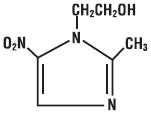
Metronidazole gel contains metronidazole, USP, at a concentration of 7.5 mg per gram (0.75%) in a gel consisting of carbomer 940, edetate disodium, methylparaben, propylene glycol, propylparaben, purified water, and sodium hydroxide. Metronidazole is classified therapeutically as an antiprotozoal and antibacterial agent. Chemically, metronidazole is named 2-methyl-5-nitro-1H-imidazole-1-ethanol and has the following structure:
Section 42229-5
Rx Only
FOR TOPICAL USE ONLY
NOT FOR OPHTHALMIC USE
Section 44425-7
Store at 20°-25°C (68°-77°F) [see USP Controlled Room Temperature].
General
Metronidazole gel has been reported to cause tearing of the eyes. Therefore, contact with the eyes should be avoided. If a reaction suggesting local irritation occurs, patients should be directed to use the medication less frequently or discontinue use.
Metronidazole is a nitroimidazole and should be used with care in patients with evidence of, or history of blood dyscrasia.
Pediatric Use
Safety and effectiveness in pediatric patients have not been established.
Nursing Mothers
After oral administration, metronidazole is secreted in breast milk in concentrations similar to those found in the plasma. Even though metronidazole gel blood levels are significantly lower than those achieved after oral metronidazole, a decision should be made whether to discontinue nursing or to discontinue the drug, taking into account the importance of the drug to the mother.
Pregnancy Category B
There has been no experience to date with the use of metronidazole gel in pregnant patients. Metronidazole crosses the placental barrier and enters the fetal circulation rapidly. No fetotoxicity was observed after oral metronidazole in rats or mice. However, because animal reproduction studies are not always predictive of human response and since oral metronidazole has been shown to be a carcinogen in some rodents, this drug should be used during pregnancy only if clearly needed.
Clinical Pharmacology
Bioavailability studies on the topical administration of 1 gram of metronidazole gel (7.5 mg of metronidazole) to the face of 10 rosacea patients showed a maximum serum concentration of 66 nanograms per milliliter in one patient. This concentration is approximately 100 times less than concentrations afforded by a single 250 mg oral tablet. The serum metronidazole concentrations were below the detectable limits of the assay at the majority of time points in all patients. Three of the patients had no detectable serum concentrations of metronidazole at any time point. The mean dose of gel applied during clinical studies was 600 mg which represents 4.5 mg of metronidazole per application. Therefore, under normal usage levels, the formulation affords minimal serum concentrations of metronidazole. The mechanisms by which metronidazole gel acts in the treatment of rosacea are unknown, but appear to include an anti-inflammatory effect.
Information for Patients
This medication is to be used as directed by the physician. It is for external use only. Avoid contact with the eyes.
Principal Display Panel 30 G Tube Carton
NDC 51672-4116-2
Metronidazole
Gel USP, 0.75%
FOR TOPICAL USE ONLY.
NOT FOR OPHTHALMIC USE.
Keep this and all medications out of the reach of children.
30 g
Rx only
TARO
Carcinogenesis, Mutagenesis, Impairment of Fertility
Metronidazole has shown evidence of carcinogenic activity in a number of studies involving chronic, oral administration in mice and rats but not in studies involving hamsters.
Metronidazole has shown evidence of mutagenic activity in several in vitro bacterial assay systems. In addition, a dose-response increase in the frequency of micronuclei was observed in mice after intraperitoneal injections and an increase in chromosome aberrations have been reported in patients with Crohn's disease who were treated with 200-1200 mg/day of metronidazole for 1 to 24 months. However, no excess chromosomal aberrations in circulating human lymphocytes have been observed in patients treated for 8 months.
Structured Label Content
Indications and Usage (INDICATIONS AND USAGE)
Metronidazole gel is indicated for topical application in the treatment of inflammatory papules and pustules of rosacea.
Dosage and Administration (DOSAGE AND ADMINISTRATION)
Apply and rub in a thin film of metronidazole gel twice daily, morning and evening, to entire affected areas after washing.
Areas to be treated should be cleansed before application of metronidazole gel. Patients may use cosmetics after application of metronidazole gel.
Contraindications (CONTRAINDICATIONS)
Metronidazole gel is contraindicated in individuals with a history of hypersensitivity to metronidazole, parabens, or other ingredients of the formulation.
Adverse Reactions (ADVERSE REACTIONS)
The following adverse experiences have been reported with the topical use of metronidazole: burning, skin irritation, dryness, transient redness, metallic taste, tingling or numbness of extremities and nausea.
Drug Interactions (Drug interactions)
Oral metronidazole has been reported to potentiate the anticoagulant effect of coumarin and warfarin resulting in a prolongation of prothrombin time. The effect of topical metronidazole on prothrombin time is not known.
How Supplied (HOW SUPPLIED)
Metronidazole Gel USP, 0.75% is supplied in aluminum tubes containing:
5 g NDC 51672-4116-5 (physician sample, tube only)
30 g NDC 51672-4116-2
45 g NDC 51672-4116-6
Description (DESCRIPTION)
Metronidazole gel contains metronidazole, USP, at a concentration of 7.5 mg per gram (0.75%) in a gel consisting of carbomer 940, edetate disodium, methylparaben, propylene glycol, propylparaben, purified water, and sodium hydroxide. Metronidazole is classified therapeutically as an antiprotozoal and antibacterial agent. Chemically, metronidazole is named 2-methyl-5-nitro-1H-imidazole-1-ethanol and has the following structure:
Section 42229-5 (42229-5)
Rx Only
FOR TOPICAL USE ONLY
NOT FOR OPHTHALMIC USE
Section 44425-7 (44425-7)
Store at 20°-25°C (68°-77°F) [see USP Controlled Room Temperature].
General
Metronidazole gel has been reported to cause tearing of the eyes. Therefore, contact with the eyes should be avoided. If a reaction suggesting local irritation occurs, patients should be directed to use the medication less frequently or discontinue use.
Metronidazole is a nitroimidazole and should be used with care in patients with evidence of, or history of blood dyscrasia.
Pediatric Use (Pediatric use)
Safety and effectiveness in pediatric patients have not been established.
Nursing Mothers (Nursing mothers)
After oral administration, metronidazole is secreted in breast milk in concentrations similar to those found in the plasma. Even though metronidazole gel blood levels are significantly lower than those achieved after oral metronidazole, a decision should be made whether to discontinue nursing or to discontinue the drug, taking into account the importance of the drug to the mother.
Pregnancy Category B (Pregnancy category B)
There has been no experience to date with the use of metronidazole gel in pregnant patients. Metronidazole crosses the placental barrier and enters the fetal circulation rapidly. No fetotoxicity was observed after oral metronidazole in rats or mice. However, because animal reproduction studies are not always predictive of human response and since oral metronidazole has been shown to be a carcinogen in some rodents, this drug should be used during pregnancy only if clearly needed.
Clinical Pharmacology (CLINICAL PHARMACOLOGY)
Bioavailability studies on the topical administration of 1 gram of metronidazole gel (7.5 mg of metronidazole) to the face of 10 rosacea patients showed a maximum serum concentration of 66 nanograms per milliliter in one patient. This concentration is approximately 100 times less than concentrations afforded by a single 250 mg oral tablet. The serum metronidazole concentrations were below the detectable limits of the assay at the majority of time points in all patients. Three of the patients had no detectable serum concentrations of metronidazole at any time point. The mean dose of gel applied during clinical studies was 600 mg which represents 4.5 mg of metronidazole per application. Therefore, under normal usage levels, the formulation affords minimal serum concentrations of metronidazole. The mechanisms by which metronidazole gel acts in the treatment of rosacea are unknown, but appear to include an anti-inflammatory effect.
Information for Patients (Information for patients)
This medication is to be used as directed by the physician. It is for external use only. Avoid contact with the eyes.
Principal Display Panel 30 G Tube Carton (PRINCIPAL DISPLAY PANEL - 30 g Tube Carton)
NDC 51672-4116-2
Metronidazole
Gel USP, 0.75%
FOR TOPICAL USE ONLY.
NOT FOR OPHTHALMIC USE.
Keep this and all medications out of the reach of children.
30 g
Rx only
TARO
Carcinogenesis, Mutagenesis, Impairment of Fertility (Carcinogenesis, mutagenesis, impairment of fertility)
Metronidazole has shown evidence of carcinogenic activity in a number of studies involving chronic, oral administration in mice and rats but not in studies involving hamsters.
Metronidazole has shown evidence of mutagenic activity in several in vitro bacterial assay systems. In addition, a dose-response increase in the frequency of micronuclei was observed in mice after intraperitoneal injections and an increase in chromosome aberrations have been reported in patients with Crohn's disease who were treated with 200-1200 mg/day of metronidazole for 1 to 24 months. However, no excess chromosomal aberrations in circulating human lymphocytes have been observed in patients treated for 8 months.
Advanced Ingredient Data
Raw Label Data
All Sections (JSON)
Additional Information
Back to search View SPL set listing Open on DailyMed ↗
Source: dailymed · Ingested: 2026-02-15T11:33:57.362218 · Updated: 2026-03-14T21:39:05.741581