fluocinolone acetonide ointment, usp, 0.025%
49552e29-7813-4726-b15d-63bd975b6588
34391-3
HUMAN PRESCRIPTION DRUG LABEL
Drug Facts
Composition & Product
Identifiers & Packaging
Indications and Usage
Fluocinolone Acetonide ointment is indicated for the relief of the inflammatory and pruritic manifestations of corticosteroid-responsive dermatoses.
Dosage and Administration
Fluocinolone Acetonide ointment is generally applied to the affected area as a thin film three or four times daily depending on the severity of the condition. In the hairy sites, the hair should be parted to allow direct contact with the lesion. Occlusive dressings may be used for the management of psoriasis or recalcitrant conditions. Some plastic films may be flammable and due care should be exercised in their use. Similarly, caution should be employed when such films are used on children or left in their proximity, to avoid the possibility of accidental suffocation. If an infection develops, the use of occlusive dressings should be discontinued and appropriate antimicrobial therapy instituted.
Contraindications
Topical corticosteroids are contraindicated in those patients with a history of hypersensitivity to any of the components of the preparation.
Adverse Reactions
The following local adverse reactions are reported infrequently with topical corticosteroids, but may occur more frequently with the use of occlusive dressings. These reactions are listed in an approximate decreasing order of occurrence: burning, itching, irritation, dryness, folliculitis, hypertrichosis, acneiform eruptions, hypopigmentation, perioral dermatitis, allergic contact dermatitis, maceration of the skin, secondary infection, skin atrophy, striae, and miliaria.
How Supplied
Fluocinolone Acetonide Ointment USP, 0.025% 15 gram tubes, NDC 0168-0064-15 60 gram tubes, NDC 0168-0064-60 Store at controlled room temperature 15°-30°C (59°-86°F). Avoid excessive heat. Protect from freezing. E. FOUGERA & CO. A division of Fougera Pharmaceuticals Inc. Melville, New York 11747 I26415G R11/12 #296
Description
For Topical Use Only. Not for Ophthalmic Use. Rx only
Medication Information
Indications and Usage
Fluocinolone Acetonide ointment is indicated for the relief of the inflammatory and pruritic manifestations of corticosteroid-responsive dermatoses.
Dosage and Administration
Fluocinolone Acetonide ointment is generally applied to the affected area as a thin film three or four times daily depending on the severity of the condition. In the hairy sites, the hair should be parted to allow direct contact with the lesion. Occlusive dressings may be used for the management of psoriasis or recalcitrant conditions. Some plastic films may be flammable and due care should be exercised in their use. Similarly, caution should be employed when such films are used on children or left in their proximity, to avoid the possibility of accidental suffocation. If an infection develops, the use of occlusive dressings should be discontinued and appropriate antimicrobial therapy instituted.
Contraindications
Topical corticosteroids are contraindicated in those patients with a history of hypersensitivity to any of the components of the preparation.
Adverse Reactions
The following local adverse reactions are reported infrequently with topical corticosteroids, but may occur more frequently with the use of occlusive dressings. These reactions are listed in an approximate decreasing order of occurrence: burning, itching, irritation, dryness, folliculitis, hypertrichosis, acneiform eruptions, hypopigmentation, perioral dermatitis, allergic contact dermatitis, maceration of the skin, secondary infection, skin atrophy, striae, and miliaria.
How Supplied
Fluocinolone Acetonide Ointment USP, 0.025% 15 gram tubes, NDC 0168-0064-15 60 gram tubes, NDC 0168-0064-60 Store at controlled room temperature 15°-30°C (59°-86°F). Avoid excessive heat. Protect from freezing. E. FOUGERA & CO. A division of Fougera Pharmaceuticals Inc. Melville, New York 11747 I26415G R11/12 #296
Description
For Topical Use Only. Not for Ophthalmic Use. Rx only
Section 34072-9
General: Systemic absorption of topical corticosteroids has produced reversible hypothalamic-pituitary-adrenal (HPA) axis suppression, manifestations of Cushing’s syndrome, hyperglycemia, and glucosuria in some patients. Conditions which augment systemic absorption include the application of the more potent steroids, use over large surface areas, prolonged use, and the addition of occlusive dressings. Therefore, patients receiving a large dose of a potent topical steroid applied to a large surface area or under an occlusive dressing should be evaluated periodically for evidence of HPA axis suppression by using the urinary free cortisol test and ACTH stimulation tests. If HPA axis suppression is noted, an attempt should be made to withdraw the drug, to reduce the frequency of application, or to substitute a less potent steroid. Recovery of HPA axis function is generally prompt and complete upon discontinuation of the drug. Infrequently, signs and symptoms of steroid withdrawal may occur, requiring supplemental systemic corticosteroids. Children may absorb proportionally larger amounts of topical corticosteroids and thus be more susceptible to systemic toxicity (See PRECAUTIONS-Pediatric Use ). If irritation develops, topical corticosteroids should be discontinued and appropriate therapy instituted. As with any topical corticosteroid product, prolonged use may produce atrophy of the skin and subcutaneous tissues. When used on intertriginous or flexor areas, or on the face, this may occur even with short-term use. In the presence of dermatological infections, the use of an appropriate antifungal or antibacterial agent should be instituted. If a favorable response does not occur promptly, the corticosteroid should be discontinued until the infection has been adequately controlled.
Section 34075-2
Laboratory Tests: The following tests may be helpful in evaluating the HPA axis suppression: Urinary free cortisol test; ACTH stimulation test.
Section 34076-0
Information for the Patient: Patients using topical corticosteroids should receive the following information and instructions:
-
1.This medication is to be used as directed by the physician. It is for external use only. Avoid contact with the eyes.
-
2.Patients should be advised not to use this medication for any disorder other than for which it was prescribed.
-
3.The treated skin area should not be bandaged or otherwise covered or wrapped as to be occlusive unless directed by the physician.
-
4.Patients should report any signs of local adverse reactions especially under occlusive dressing.
-
5.Parents of pediatric patients should be advised not to use tight fitting diapers or plastic pants on a child being treated in the diaper area, as these garments may constitute occlusive dressings.
Section 34080-2
Nursing Mothers: It is not known whether topical administration of corticosteroids could result in sufficient systemic absorption to produce detectable quantities in breast milk. Systemically administered corticosteroids are secreted into breast milk in quantities not likely to have a deleterious effect on the infant. Nevertheless, caution should be exercised when topical corticosteroids are administered to a nursing woman.
Section 34081-0
Pediatric Use: Pediatric patients may demonstrate greater susceptibility to topical corticosteroid-induced HPA axis suppression and Cushing's syndrome than mature patients because of a larger skin surface area to body weight ratio. Hypothalamic-pituitary-adrenal (HPA) axis suppression, Cushing's syndrome, and intracranial hypertension have been reported in children receiving topical corticosteroids. Manifestations of adrenal suppression in children include linear growth retardation, delayed weight gain, low plasma cortisol levels, and the absence of response to ACTH stimulation. Manifestations of intracranial hypertension include bulging fontanelles, headaches, and bilateral papilledema. Administration of topical corticosteroids to children should be limited to the least amount compatible with an effective therapeutic regimen. Chronic corticosteroid therapy may interfere with the growth and development of children.
Section 34083-6
Carcinogenesis, Mutagenesis, and Impairment of Fertility: Long-term animal studies have not been performed to evaluate the carcinogenic potential or the effect on fertility of topical corticosteroids. Studies to determine mutagenicity with prednisolone and hydrocortisone have revealed negative results.
Section 42229-5
For Topical Use Only. Not for Ophthalmic Use.
Rx only
Section 43682-4
Pharmacokinetics: The extent of percutaneous absorption of topical corticosteroids is determined by many factors including the vehicle, the integrity of the epidermal barrier, and the use of occlusive dressings. Topical corticosteroids can be absorbed from normal intact skin. Inflammation and/or other disease processes in the skin increase percutaneous absorption. Occlusive dressings substantially increase the percutaneous absorption of topical corticosteroids. Thus, occlusive dressings may be a valuable therapeutic adjunct for treatment of resistant dermatoses. (See DOSAGE AND ADMINISTRATION ). Once absorbed through the skin, topical corticosteroids are handled through pharmacokinetic pathways similar to systemically administered corticosteroids. Corticosteroids are bound to plasma proteins in varying degrees. Corticosteroids are metabolized primarily in the liver and are then excreted by the kidneys. Some of the topical corticosteroids and their metabolites are also excreted into the bile.
Overdosage:
Topically applied corticosteroids can be absorbed in sufficient amounts to produce systemic effects (See PRECAUTIONS ).
Description:
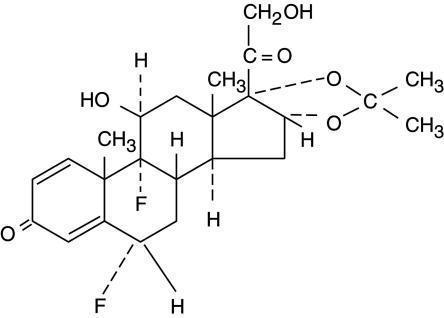
Fluocinolone Acetonide Ointment 0.025% is intended for topical administration. The active component is the corticosteroid Fluocinolone Acetonide USP (Pregna-1,4-diene-3,20-dione, 6,9-difluoro-11,21-dihydroxy-16,17-[(1-methylethylidene)bis(oxy)]-, (6α,11β,16α)-. It has an empirical formula of
C24H30F2O6 and a molecular weight of 452.49 (CAS Registry Number 67-73-2).
Each gram of the ointment contains 0.25 mg Fluocinolone Acetonide in a base containing White Petrolatum.
How Supplied:
Fluocinolone Acetonide Ointment USP, 0.025%
15 gram tubes, NDC 0168-0064-15
60 gram tubes, NDC 0168-0064-60
Store at controlled room temperature 15°-30°C (59°-86°F).
Avoid excessive heat.
Protect from freezing.
E. FOUGERA & CO.
A division of Fougera Pharmaceuticals Inc.
Melville, New York 11747
I26415G
R11/12
#296
Adverse Reactions:
The following local adverse reactions are reported infrequently with topical corticosteroids, but may occur more frequently with the use of occlusive dressings. These reactions are listed in an approximate decreasing order of occurrence: burning, itching, irritation, dryness, folliculitis, hypertrichosis, acneiform eruptions, hypopigmentation, perioral dermatitis, allergic contact dermatitis, maceration of the skin, secondary infection, skin atrophy, striae, and miliaria.
Contraindications:
Topical corticosteroids are contraindicated in those patients with a history of hypersensitivity to any of the components of the preparation.
Clinical Pharmacology:
Topical corticosteroids share anti-inflammatory, antipruritic and vasoconstrictive actions. The mechanism of anti-inflammatory activity of the topical corticosteroids is unclear. Various laboratory methods, including vasoconstrictor assays, are used to compare and predict potencies and/or clinical efficacies of the topical corticosteroids. There is some evidence to suggest that a recognizable correlation exists between vasoconstrictor potency and therapeutic efficacy in man.
Indications and Usage:
Fluocinolone Acetonide ointment is indicated for the relief of the inflammatory and pruritic manifestations of corticosteroid-responsive dermatoses.
Dosage and Administration:
Fluocinolone Acetonide ointment is generally applied to the affected area as a thin film three or four times daily depending on the severity of the condition. In the hairy sites, the hair should be parted to allow direct contact with the lesion. Occlusive dressings may be used for the management of psoriasis or recalcitrant conditions. Some plastic films may be flammable and due care should be exercised in their use. Similarly, caution should be employed when such films are used on children or left in their proximity, to avoid the possibility of accidental suffocation. If an infection develops, the use of occlusive dressings should be discontinued and appropriate antimicrobial therapy instituted.
Package Label – Principal Display Panel – 15 G Carton
NDC 0168-0064-15
Fougera ® Rx only
FLUOCINOLONE ACETONIDE
OINTMENT USP, 0.025%
FOR TOPICAL USE ONLY.
NOT FOR OPHTHALMIC USE.
WARNING: Keep out of reach
of children.
NET WT 15 grams
Package Label – Principal Display Panel – 15 G Container
NDC 0168-0064-15
Fougera ®
FLUOCINOLONE
ACETONIDE OINTMENT
USP, 0.025%
Rx only
FOR TOPICAL USE ONLY.
NOT FOR OPHTHALMIC USE.
NET WT 15 grams
Structured Label Content
Section 34072-9 (34072-9)
General: Systemic absorption of topical corticosteroids has produced reversible hypothalamic-pituitary-adrenal (HPA) axis suppression, manifestations of Cushing’s syndrome, hyperglycemia, and glucosuria in some patients. Conditions which augment systemic absorption include the application of the more potent steroids, use over large surface areas, prolonged use, and the addition of occlusive dressings. Therefore, patients receiving a large dose of a potent topical steroid applied to a large surface area or under an occlusive dressing should be evaluated periodically for evidence of HPA axis suppression by using the urinary free cortisol test and ACTH stimulation tests. If HPA axis suppression is noted, an attempt should be made to withdraw the drug, to reduce the frequency of application, or to substitute a less potent steroid. Recovery of HPA axis function is generally prompt and complete upon discontinuation of the drug. Infrequently, signs and symptoms of steroid withdrawal may occur, requiring supplemental systemic corticosteroids. Children may absorb proportionally larger amounts of topical corticosteroids and thus be more susceptible to systemic toxicity (See PRECAUTIONS-Pediatric Use ). If irritation develops, topical corticosteroids should be discontinued and appropriate therapy instituted. As with any topical corticosteroid product, prolonged use may produce atrophy of the skin and subcutaneous tissues. When used on intertriginous or flexor areas, or on the face, this may occur even with short-term use. In the presence of dermatological infections, the use of an appropriate antifungal or antibacterial agent should be instituted. If a favorable response does not occur promptly, the corticosteroid should be discontinued until the infection has been adequately controlled.
Section 34075-2 (34075-2)
Laboratory Tests: The following tests may be helpful in evaluating the HPA axis suppression: Urinary free cortisol test; ACTH stimulation test.
Section 34076-0 (34076-0)
Information for the Patient: Patients using topical corticosteroids should receive the following information and instructions:
-
1.This medication is to be used as directed by the physician. It is for external use only. Avoid contact with the eyes.
-
2.Patients should be advised not to use this medication for any disorder other than for which it was prescribed.
-
3.The treated skin area should not be bandaged or otherwise covered or wrapped as to be occlusive unless directed by the physician.
-
4.Patients should report any signs of local adverse reactions especially under occlusive dressing.
-
5.Parents of pediatric patients should be advised not to use tight fitting diapers or plastic pants on a child being treated in the diaper area, as these garments may constitute occlusive dressings.
Section 34080-2 (34080-2)
Nursing Mothers: It is not known whether topical administration of corticosteroids could result in sufficient systemic absorption to produce detectable quantities in breast milk. Systemically administered corticosteroids are secreted into breast milk in quantities not likely to have a deleterious effect on the infant. Nevertheless, caution should be exercised when topical corticosteroids are administered to a nursing woman.
Section 34081-0 (34081-0)
Pediatric Use: Pediatric patients may demonstrate greater susceptibility to topical corticosteroid-induced HPA axis suppression and Cushing's syndrome than mature patients because of a larger skin surface area to body weight ratio. Hypothalamic-pituitary-adrenal (HPA) axis suppression, Cushing's syndrome, and intracranial hypertension have been reported in children receiving topical corticosteroids. Manifestations of adrenal suppression in children include linear growth retardation, delayed weight gain, low plasma cortisol levels, and the absence of response to ACTH stimulation. Manifestations of intracranial hypertension include bulging fontanelles, headaches, and bilateral papilledema. Administration of topical corticosteroids to children should be limited to the least amount compatible with an effective therapeutic regimen. Chronic corticosteroid therapy may interfere with the growth and development of children.
Section 34083-6 (34083-6)
Carcinogenesis, Mutagenesis, and Impairment of Fertility: Long-term animal studies have not been performed to evaluate the carcinogenic potential or the effect on fertility of topical corticosteroids. Studies to determine mutagenicity with prednisolone and hydrocortisone have revealed negative results.
Section 42229-5 (42229-5)
For Topical Use Only. Not for Ophthalmic Use.
Rx only
Section 43682-4 (43682-4)
Pharmacokinetics: The extent of percutaneous absorption of topical corticosteroids is determined by many factors including the vehicle, the integrity of the epidermal barrier, and the use of occlusive dressings. Topical corticosteroids can be absorbed from normal intact skin. Inflammation and/or other disease processes in the skin increase percutaneous absorption. Occlusive dressings substantially increase the percutaneous absorption of topical corticosteroids. Thus, occlusive dressings may be a valuable therapeutic adjunct for treatment of resistant dermatoses. (See DOSAGE AND ADMINISTRATION ). Once absorbed through the skin, topical corticosteroids are handled through pharmacokinetic pathways similar to systemically administered corticosteroids. Corticosteroids are bound to plasma proteins in varying degrees. Corticosteroids are metabolized primarily in the liver and are then excreted by the kidneys. Some of the topical corticosteroids and their metabolites are also excreted into the bile.
Overdosage: (OVERDOSAGE:)
Topically applied corticosteroids can be absorbed in sufficient amounts to produce systemic effects (See PRECAUTIONS ).
Description: (DESCRIPTION:)
Fluocinolone Acetonide Ointment 0.025% is intended for topical administration. The active component is the corticosteroid Fluocinolone Acetonide USP (Pregna-1,4-diene-3,20-dione, 6,9-difluoro-11,21-dihydroxy-16,17-[(1-methylethylidene)bis(oxy)]-, (6α,11β,16α)-. It has an empirical formula of
C24H30F2O6 and a molecular weight of 452.49 (CAS Registry Number 67-73-2).
Each gram of the ointment contains 0.25 mg Fluocinolone Acetonide in a base containing White Petrolatum.
How Supplied: (HOW SUPPLIED:)
Fluocinolone Acetonide Ointment USP, 0.025%
15 gram tubes, NDC 0168-0064-15
60 gram tubes, NDC 0168-0064-60
Store at controlled room temperature 15°-30°C (59°-86°F).
Avoid excessive heat.
Protect from freezing.
E. FOUGERA & CO.
A division of Fougera Pharmaceuticals Inc.
Melville, New York 11747
I26415G
R11/12
#296
Adverse Reactions: (ADVERSE REACTIONS:)
The following local adverse reactions are reported infrequently with topical corticosteroids, but may occur more frequently with the use of occlusive dressings. These reactions are listed in an approximate decreasing order of occurrence: burning, itching, irritation, dryness, folliculitis, hypertrichosis, acneiform eruptions, hypopigmentation, perioral dermatitis, allergic contact dermatitis, maceration of the skin, secondary infection, skin atrophy, striae, and miliaria.
Contraindications: (CONTRAINDICATIONS:)
Topical corticosteroids are contraindicated in those patients with a history of hypersensitivity to any of the components of the preparation.
Clinical Pharmacology: (CLINICAL PHARMACOLOGY:)
Topical corticosteroids share anti-inflammatory, antipruritic and vasoconstrictive actions. The mechanism of anti-inflammatory activity of the topical corticosteroids is unclear. Various laboratory methods, including vasoconstrictor assays, are used to compare and predict potencies and/or clinical efficacies of the topical corticosteroids. There is some evidence to suggest that a recognizable correlation exists between vasoconstrictor potency and therapeutic efficacy in man.
Indications and Usage: (INDICATIONS AND USAGE:)
Fluocinolone Acetonide ointment is indicated for the relief of the inflammatory and pruritic manifestations of corticosteroid-responsive dermatoses.
Dosage and Administration: (DOSAGE AND ADMINISTRATION:)
Fluocinolone Acetonide ointment is generally applied to the affected area as a thin film three or four times daily depending on the severity of the condition. In the hairy sites, the hair should be parted to allow direct contact with the lesion. Occlusive dressings may be used for the management of psoriasis or recalcitrant conditions. Some plastic films may be flammable and due care should be exercised in their use. Similarly, caution should be employed when such films are used on children or left in their proximity, to avoid the possibility of accidental suffocation. If an infection develops, the use of occlusive dressings should be discontinued and appropriate antimicrobial therapy instituted.
Package Label – Principal Display Panel – 15 G Carton (PACKAGE LABEL – PRINCIPAL DISPLAY PANEL – 15 G CARTON)
NDC 0168-0064-15
Fougera ® Rx only
FLUOCINOLONE ACETONIDE
OINTMENT USP, 0.025%
FOR TOPICAL USE ONLY.
NOT FOR OPHTHALMIC USE.
WARNING: Keep out of reach
of children.
NET WT 15 grams
Package Label – Principal Display Panel – 15 G Container (PACKAGE LABEL – PRINCIPAL DISPLAY PANEL – 15 G CONTAINER)
NDC 0168-0064-15
Fougera ®
FLUOCINOLONE
ACETONIDE OINTMENT
USP, 0.025%
Rx only
FOR TOPICAL USE ONLY.
NOT FOR OPHTHALMIC USE.
NET WT 15 grams
Advanced Ingredient Data
Raw Label Data
All Sections (JSON)
Additional Information
Back to search View SPL set listing Open on DailyMed ↗
Source: dailymed · Ingested: 2026-02-15T11:48:46.964734 · Updated: 2026-03-14T22:50:26.086884