hydro-q®
486781be-498a-49b4-9a80-2dfd02f5e358
34391-3
HUMAN PRESCRIPTION DRUG LABEL
Drug Facts
Composition & Product
Identifiers & Packaging
Indications and Usage
HYDRO-Q ® is indicated for the gradual bleaching of hyperpigmented skin conditions such as chlosma, melasma, freckles, senile lentigines and areas of melanin hyperpigmentation.
Contraindications
HYDRO-Q ® is contraindicated in any patient that has a prior history of sensitivity or allergic reaction to hydroquinone or any of the other ingredients. The safety of topical hydroquinone use during pregnancy or in children (12 years and under) has not been established.
Adverse Reactions
No systemic reactions have been reported. Occasional cutaneous hypersensitivity (localized contact dermatitis) may occur, in which case the medication should be discontinued and the physician notified immediately
How Supplied
HYDRO-Q ® (Hydroquinone 4%) Gel is supplied in a 30 g tube. NDC: 30815-0040-1
Description
RX Only FOR EXTERNAL USE ONLY
Medication Information
Warnings
- CAUTION: Hydroquinone is a depigmenting agent that may produce unwanted cosmetic effects if not used as directed. The physician should be familiar with the contents of this insert before prescribing or dispensing this medication.
- Test for skin sensitivity before using HYDRO-Q® by applying a small amount of the gel to an unbroken patch of skin and check within 24 hours. Minor redness is not a contraindication but where there is itching and vesicle formation or excessive inflammatory response further treatment is not advised. Close patient supervision is recommended. Contact with the eyes should be avoided. If no lightening effect is noted after 2 months of treatment the use of HYDRO-Q® should be discontinued. HYDRO-Q® is formulated for the treatment of dyschromia and should not be used for the prevention of sunburn.
- Sunscreen use is an essential aspect of hydroquinone therapy because even minimal sunlight sustains melanocytic activity. To prevent repigmentation during treatment and maintenance therapy, sun exposure on treated skin should be avoided by application of a broad spectrum sunscreen SPF 15 or greater) or by use of protective clothing
- Keep this and all medications out of reach of children. In case of accidental ingestion, contact a physician or a poison control center immediately.
- WARNING: Contains sodium metabisulfite, a sulfite that may cause serious allergic reactions (e.g., hives, itching, wheezing, anaphylaxis, severe asthma attack) in certain susceptible persons
- On rare occasions, a gradual blue-black darkening of the skin may occur, in which case, use of HYDRO-Q® should be discontinued and a physician contacted immediately
Indications and Usage
HYDRO-Q® is indicated for the gradual bleaching of hyperpigmented skin conditions such as chlosma, melasma, freckles, senile lentigines and areas of melanin hyperpigmentation.
Contraindications
HYDRO-Q® is contraindicated in any patient that has a prior history of sensitivity or allergic reaction to hydroquinone or any of the other ingredients. The safety of topical hydroquinone use during pregnancy or in children (12 years and under) has not been established.
Adverse Reactions
No systemic reactions have been reported. Occasional cutaneous hypersensitivity (localized contact dermatitis) may occur, in which case the medication should be discontinued and the physician notified immediately
How Supplied
HYDRO-Q® (Hydroquinone 4%) Gel is supplied in a 30 g tube.
NDC: 30815-0040-1
Description
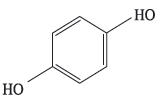
HYDRO-Q® contains hydroquinone USP 4%. Hydroquinone is 1, 4-Benzenediol {CAS 123-31-91}. Hydroquinone is structurally related to monobenzone. Hydroquinone occurs as fine white needles. The drug is freely soluble in water and in alcohol and has a pKa of 9.96. Chemically, hydroquinone is designated as p-dihydroxybenzene; the empirical formula is C6H6O2; The molecular weight is 110.1. The structural formula is:
Section 42229-5
RX Only
FOR EXTERNAL USE ONLY
Section 44425-7
Store at controlled room temperature, between 15° and 30°C (59°and 86°F).
Overdosage
There have been no systemic reactions reported from the use of topical hydroquinone. However, treatment should be limited to relatively small areas of the body at one time, since some patients experience a skin reddening and a mild burning sensation that does not preclude treatment
References
- Denton C, Fitzpatrick TB, Lerner AB. Inhibition of melanin formation by chemical agents. J Invest Dermatology. 1952; 18: 119-135.
- Fitzpatrick TB, Jimbow K, Obata M, Panthak M. Mechanism of depigmentation by hydroquinone. J Invest Dermatology. 1974; 62: 436-449.
- Anderson RR, Parrish JA, Pitts D, Urbach F. UVA, Biological Effects of Ultraviolet Radiation With Emphasis on Human Responses to Longwave Ultraviolet. New York and London: Plenum Press; 1978: 151.
Precautions
See Warnings
Active Ingredient
Hydroquinone USP 4%
OTHER INGREDIENTS: Purified water, Carbomer 940, Sodium Metabisulfite, Sodium Hydroxide, Methylparaben, Edetate Disodium.
B. Nursing Mothers
It is not known whether topical hydroquinone is absorbed or excreted in human milk. Caution is advised when used by a nursing mother.
C. Pediatric Usage
Safety and effectiveness in pediatric patients below the age of 12 years have not been established.
Clinical Pharmacology
Topical application of hydroquinone produces a reversible depigmentation of the skin by inhibition of the enzymatic hydroquinone. oxidation of tyrosine to 3, 4-dihydroxyphenylalanine (dopa) 1 and suppression of other melanocyte metabolic processes. Exposure to sunlight or ultraviolet light will cause regimentation of the bleached areas.
A. Pregnancy Category C
Animal reproduction studies have not been conducted with topical hydroquinone. It is also not known whether hydroquinone can cause fetal harm when used topically on a pregnant woman, or can affect reproductive capacity.
Dosage and Adminstration
HYDRO-Q® should be applied to the affected areas twice daily, morning and before bedtime or as directed by a physician.
During and after the use of HYDRO-Q®, sun exposure should be limited and a sunscreen agent or protective clothing should be used to cover up the treated areas to prevent regimentation. If no lightening effect is noted after two months of treatment, use of HYDRO-Q® should be discontinued. There is no recommended dosage for children under the age of 12 years of age except under the advice and supervision of a physician.
Principal Display Panel 30 G Tube Box
NDC 30815-0040-1
Rx Only
HYDRO-Q 4% GEL®
(Hydroquinone 4%) Gel®
SKIN BLEACHING GEL
DermAvance®
Advanced Skin Care
www.DermAvance.com
30 g
Structured Label Content
Warnings (WARNINGS)
- CAUTION: Hydroquinone is a depigmenting agent that may produce unwanted cosmetic effects if not used as directed. The physician should be familiar with the contents of this insert before prescribing or dispensing this medication.
- Test for skin sensitivity before using HYDRO-Q® by applying a small amount of the gel to an unbroken patch of skin and check within 24 hours. Minor redness is not a contraindication but where there is itching and vesicle formation or excessive inflammatory response further treatment is not advised. Close patient supervision is recommended. Contact with the eyes should be avoided. If no lightening effect is noted after 2 months of treatment the use of HYDRO-Q® should be discontinued. HYDRO-Q® is formulated for the treatment of dyschromia and should not be used for the prevention of sunburn.
- Sunscreen use is an essential aspect of hydroquinone therapy because even minimal sunlight sustains melanocytic activity. To prevent repigmentation during treatment and maintenance therapy, sun exposure on treated skin should be avoided by application of a broad spectrum sunscreen SPF 15 or greater) or by use of protective clothing
- Keep this and all medications out of reach of children. In case of accidental ingestion, contact a physician or a poison control center immediately.
- WARNING: Contains sodium metabisulfite, a sulfite that may cause serious allergic reactions (e.g., hives, itching, wheezing, anaphylaxis, severe asthma attack) in certain susceptible persons
- On rare occasions, a gradual blue-black darkening of the skin may occur, in which case, use of HYDRO-Q® should be discontinued and a physician contacted immediately
Indications and Usage (INDICATIONS AND USAGE)
HYDRO-Q® is indicated for the gradual bleaching of hyperpigmented skin conditions such as chlosma, melasma, freckles, senile lentigines and areas of melanin hyperpigmentation.
Contraindications (CONTRAINDICATIONS)
HYDRO-Q® is contraindicated in any patient that has a prior history of sensitivity or allergic reaction to hydroquinone or any of the other ingredients. The safety of topical hydroquinone use during pregnancy or in children (12 years and under) has not been established.
Adverse Reactions (ADVERSE REACTIONS)
No systemic reactions have been reported. Occasional cutaneous hypersensitivity (localized contact dermatitis) may occur, in which case the medication should be discontinued and the physician notified immediately
How Supplied (HOW SUPPLIED)
HYDRO-Q® (Hydroquinone 4%) Gel is supplied in a 30 g tube.
NDC: 30815-0040-1
Description (34089-3)
HYDRO-Q® contains hydroquinone USP 4%. Hydroquinone is 1, 4-Benzenediol {CAS 123-31-91}. Hydroquinone is structurally related to monobenzone. Hydroquinone occurs as fine white needles. The drug is freely soluble in water and in alcohol and has a pKa of 9.96. Chemically, hydroquinone is designated as p-dihydroxybenzene; the empirical formula is C6H6O2; The molecular weight is 110.1. The structural formula is:
Section 42229-5 (42229-5)
RX Only
FOR EXTERNAL USE ONLY
Section 44425-7 (44425-7)
Store at controlled room temperature, between 15° and 30°C (59°and 86°F).
Overdosage (OVERDOSAGE)
There have been no systemic reactions reported from the use of topical hydroquinone. However, treatment should be limited to relatively small areas of the body at one time, since some patients experience a skin reddening and a mild burning sensation that does not preclude treatment
References (REFERENCES)
- Denton C, Fitzpatrick TB, Lerner AB. Inhibition of melanin formation by chemical agents. J Invest Dermatology. 1952; 18: 119-135.
- Fitzpatrick TB, Jimbow K, Obata M, Panthak M. Mechanism of depigmentation by hydroquinone. J Invest Dermatology. 1974; 62: 436-449.
- Anderson RR, Parrish JA, Pitts D, Urbach F. UVA, Biological Effects of Ultraviolet Radiation With Emphasis on Human Responses to Longwave Ultraviolet. New York and London: Plenum Press; 1978: 151.
Precautions (PRECAUTIONS)
See Warnings
Active Ingredient (ACTIVE INGREDIENT)
Hydroquinone USP 4%
OTHER INGREDIENTS: Purified water, Carbomer 940, Sodium Metabisulfite, Sodium Hydroxide, Methylparaben, Edetate Disodium.
B. Nursing Mothers (B. Nursing mothers)
It is not known whether topical hydroquinone is absorbed or excreted in human milk. Caution is advised when used by a nursing mother.
C. Pediatric Usage (C. Pediatric usage)
Safety and effectiveness in pediatric patients below the age of 12 years have not been established.
Clinical Pharmacology (CLINICAL PHARMACOLOGY)
Topical application of hydroquinone produces a reversible depigmentation of the skin by inhibition of the enzymatic hydroquinone. oxidation of tyrosine to 3, 4-dihydroxyphenylalanine (dopa) 1 and suppression of other melanocyte metabolic processes. Exposure to sunlight or ultraviolet light will cause regimentation of the bleached areas.
A. Pregnancy Category C
Animal reproduction studies have not been conducted with topical hydroquinone. It is also not known whether hydroquinone can cause fetal harm when used topically on a pregnant woman, or can affect reproductive capacity.
Dosage and Adminstration (DOSAGE AND ADMINSTRATION)
HYDRO-Q® should be applied to the affected areas twice daily, morning and before bedtime or as directed by a physician.
During and after the use of HYDRO-Q®, sun exposure should be limited and a sunscreen agent or protective clothing should be used to cover up the treated areas to prevent regimentation. If no lightening effect is noted after two months of treatment, use of HYDRO-Q® should be discontinued. There is no recommended dosage for children under the age of 12 years of age except under the advice and supervision of a physician.
Principal Display Panel 30 G Tube Box (PRINCIPAL DISPLAY PANEL - 30 g Tube Box)
NDC 30815-0040-1
Rx Only
HYDRO-Q 4% GEL®
(Hydroquinone 4%) Gel®
SKIN BLEACHING GEL
DermAvance®
Advanced Skin Care
www.DermAvance.com
30 g
Advanced Ingredient Data
Raw Label Data
All Sections (JSON)
Additional Information
Back to search View SPL set listing Open on DailyMed ↗
Source: dailymed · Ingested: 2026-02-15T11:37:41.075528 · Updated: 2026-03-14T21:51:22.507674