Omvoh
472cbe04-263e-433d-9a0f-58c1b50b715a
34391-3
HUMAN PRESCRIPTION DRUG LABEL
Drug Facts
Composition & Product
Identifiers & Packaging
Indications and Usage
OMVOH is indicated for the treatment of: moderately to severely active ulcerative colitis in adults. moderately to severely active Crohn's disease in adults.
Dosage and Administration
Prior to Treatment Initiation Evaluate patients for tuberculosis (TB) infection. ( 2.1 , 5.3 ) Obtain liver enzymes and bilirubin levels. ( 2.1 , 5.4 ) Complete all age-appropriate vaccinations according to current immunization guidelines. ( 2.1 , 5.5 ) Recommended Dosage for Ulcerative Colitis Induction Dosage : Week 0, Week 4, and Week 8: Infuse 300 mg intravenously over at least 30 minutes. ( 2.2 ) Maintenance Dosage : Week 12 and every 4 weeks thereafter: Inject 200 mg subcutaneously (given as either one injection of 200 mg or as two consecutive injections of 100 mg each). ( 2.2 ) Recommended Dosage for Crohn's Disease Induction Dosage : Week 0, Week 4, and Week 8: Infuse 900 mg intravenously over at least 90 minutes. ( 2.3 ) Maintenance Dosage : Week 12 and every 4 weeks thereafter: Inject 300 mg subcutaneously (given as two consecutive injections of 100 mg and 200 mg in any order). ( 2.3 ) Preparation and Administration Instructions See the full prescribing information for preparation, administration and storage information for intravenous infusion and subcutaneous injection. ( 2.2 , 2.3 , 2.4 , 2.5 )
Contraindications
OMVOH is contraindicated in patients with a history of serious hypersensitivity reaction to mirikizumab-mrkz or any of the excipients [see Warnings and Precautions ( 5.1 )] .
Warnings and Precautions
Hypersensitivity Reactions : Serious hypersensitivity reactions, including anaphylaxis and infusion-related reactions, have been reported. If a severe hypersensitivity reaction occurs, discontinue and initiate appropriate treatment. ( 5.1 ) Infections : OMVOH may increase the risk of infection. Do not initiate treatment with OMVOH in patients with a clinically important active infection until the infection resolves or is adequately treated. If a serious infection develops, do not administer OMVOH until the infection resolves. ( 5.2 ) Tuberculosis : Do not administer OMVOH to patients with active TB infection. Monitor patients receiving OMVOH for signs and symptoms of active TB during and after treatment. ( 5.3 ) Hepatotoxicity : Drug-induced liver injury has been reported. Monitor liver enzymes and bilirubin levels at baseline and for at least 24 weeks of treatment and thereafter according to routine patient management. Interrupt treatment if drug-induced liver injury is suspected, until this diagnosis is excluded. ( 5.4 ) Immunizations : Avoid use of live vaccines. ( 5.5 )
Adverse Reactions
The following topics are also discussed in detail in the Warnings and Precautions section: Hypersensitivity Reactions [see Warnings and Precautions ( 5.1 )] Infections [see Warnings and Precautions ( 5.2 )] Tuberculosis [see Warnings and Precautions ( 5.3 )] Hepatotoxicity [see Warnings and Precautions ( 5.4 )]
How Supplied
OMVOH (mirikizumab-mrkz) injection is a sterile, preservative-free, clear to opalescent, colorless to slightly yellow to slightly brown solution for intravenous infusion or subcutaneous injection. OMVOH is supplied in indication specific packaging as: Table 10: Packaging Information for OMVOH Presentation Indication Package Size NDC Code Single-dose Vial 300 mg/15 mL (20 mg/mL) Ulcerative colitis and Crohn's disease Carton of 1 0002-7575-01 Single-dose Prefilled Pen 100 mg/mL + 100 mg/mL Ulcerative colitis Carton of 2 0002-8011-27 200 mg/2 mL Ulcerative colitis Carton of 1 0002-3116-11 200 mg/2 mL + 100 mg/mL Crohn's disease Carton of 2 (1 of each) 0002-7717-11 Single-dose Prefilled Syringe 100 mg/mL + 100 mg/mL Ulcerative colitis Carton of 2 0002-8870-27 200 mg/2 mL (100 mg/mL) Ulcerative colitis Carton of 1 0002-1442-11 200 mg/2 mL (100 mg/mL) + 100 mg/mL Crohn's disease Carton of 2 (1 of each) 0002-7722-11 Note to Pharmacist: The entire carton of 2 prefilled pen or 2 prefilled syringes are to be dispensed as a unit. Each 100 mg/mL single-dose prefilled pen or prefilled syringe consists of a 1 mL glass syringe with a fixed 27-gauge ½ inch needle. Each 200 mg/2 mL single-dose prefilled pen or 200 mg/2 mL (100 mg/mL) prefilled syringe consists of a 2 mL glass syringe with a fixed 27-gauge 8 mm needle.
Storage and Handling
OMVOH (mirikizumab-mrkz) injection is a sterile, preservative-free, clear to opalescent, colorless to slightly yellow to slightly brown solution for intravenous infusion or subcutaneous injection. OMVOH is supplied in indication specific packaging as: Table 10: Packaging Information for OMVOH Presentation Indication Package Size NDC Code Single-dose Vial 300 mg/15 mL (20 mg/mL) Ulcerative colitis and Crohn's disease Carton of 1 0002-7575-01 Single-dose Prefilled Pen 100 mg/mL + 100 mg/mL Ulcerative colitis Carton of 2 0002-8011-27 200 mg/2 mL Ulcerative colitis Carton of 1 0002-3116-11 200 mg/2 mL + 100 mg/mL Crohn's disease Carton of 2 (1 of each) 0002-7717-11 Single-dose Prefilled Syringe 100 mg/mL + 100 mg/mL Ulcerative colitis Carton of 2 0002-8870-27 200 mg/2 mL (100 mg/mL) Ulcerative colitis Carton of 1 0002-1442-11 200 mg/2 mL (100 mg/mL) + 100 mg/mL Crohn's disease Carton of 2 (1 of each) 0002-7722-11 Note to Pharmacist: The entire carton of 2 prefilled pen or 2 prefilled syringes are to be dispensed as a unit. Each 100 mg/mL single-dose prefilled pen or prefilled syringe consists of a 1 mL glass syringe with a fixed 27-gauge ½ inch needle. Each 200 mg/2 mL single-dose prefilled pen or 200 mg/2 mL (100 mg/mL) prefilled syringe consists of a 2 mL glass syringe with a fixed 27-gauge 8 mm needle.
Description
Indications and Usage ( 1 ) 1/2025 Dosage and Administration Recommended Dosage for Ulcerative Colitis ( 2.2 ) 10/2025 Recommended Dosage for Crohn's Disease ( 2.3 ) 1/2025 Preparation and Administration Instructions for Intravenous Infusion ( 2.4 ) 1/2025 Preparation and Administration Instructions for Subcutaneous Injection( 2.5 ) 10/2025
Medication Information
Warnings and Precautions
Hypersensitivity Reactions : Serious hypersensitivity reactions, including anaphylaxis and infusion-related reactions, have been reported. If a severe hypersensitivity reaction occurs, discontinue and initiate appropriate treatment. ( 5.1 ) Infections : OMVOH may increase the risk of infection. Do not initiate treatment with OMVOH in patients with a clinically important active infection until the infection resolves or is adequately treated. If a serious infection develops, do not administer OMVOH until the infection resolves. ( 5.2 ) Tuberculosis : Do not administer OMVOH to patients with active TB infection. Monitor patients receiving OMVOH for signs and symptoms of active TB during and after treatment. ( 5.3 ) Hepatotoxicity : Drug-induced liver injury has been reported. Monitor liver enzymes and bilirubin levels at baseline and for at least 24 weeks of treatment and thereafter according to routine patient management. Interrupt treatment if drug-induced liver injury is suspected, until this diagnosis is excluded. ( 5.4 ) Immunizations : Avoid use of live vaccines. ( 5.5 )
Indications and Usage
OMVOH is indicated for the treatment of: moderately to severely active ulcerative colitis in adults. moderately to severely active Crohn's disease in adults.
Dosage and Administration
Prior to Treatment Initiation Evaluate patients for tuberculosis (TB) infection. ( 2.1 , 5.3 ) Obtain liver enzymes and bilirubin levels. ( 2.1 , 5.4 ) Complete all age-appropriate vaccinations according to current immunization guidelines. ( 2.1 , 5.5 ) Recommended Dosage for Ulcerative Colitis Induction Dosage : Week 0, Week 4, and Week 8: Infuse 300 mg intravenously over at least 30 minutes. ( 2.2 ) Maintenance Dosage : Week 12 and every 4 weeks thereafter: Inject 200 mg subcutaneously (given as either one injection of 200 mg or as two consecutive injections of 100 mg each). ( 2.2 ) Recommended Dosage for Crohn's Disease Induction Dosage : Week 0, Week 4, and Week 8: Infuse 900 mg intravenously over at least 90 minutes. ( 2.3 ) Maintenance Dosage : Week 12 and every 4 weeks thereafter: Inject 300 mg subcutaneously (given as two consecutive injections of 100 mg and 200 mg in any order). ( 2.3 ) Preparation and Administration Instructions See the full prescribing information for preparation, administration and storage information for intravenous infusion and subcutaneous injection. ( 2.2 , 2.3 , 2.4 , 2.5 )
Contraindications
OMVOH is contraindicated in patients with a history of serious hypersensitivity reaction to mirikizumab-mrkz or any of the excipients [see Warnings and Precautions ( 5.1 )] .
Adverse Reactions
The following topics are also discussed in detail in the Warnings and Precautions section: Hypersensitivity Reactions [see Warnings and Precautions ( 5.1 )] Infections [see Warnings and Precautions ( 5.2 )] Tuberculosis [see Warnings and Precautions ( 5.3 )] Hepatotoxicity [see Warnings and Precautions ( 5.4 )]
Storage and Handling
OMVOH (mirikizumab-mrkz) injection is a sterile, preservative-free, clear to opalescent, colorless to slightly yellow to slightly brown solution for intravenous infusion or subcutaneous injection. OMVOH is supplied in indication specific packaging as: Table 10: Packaging Information for OMVOH Presentation Indication Package Size NDC Code Single-dose Vial 300 mg/15 mL (20 mg/mL) Ulcerative colitis and Crohn's disease Carton of 1 0002-7575-01 Single-dose Prefilled Pen 100 mg/mL + 100 mg/mL Ulcerative colitis Carton of 2 0002-8011-27 200 mg/2 mL Ulcerative colitis Carton of 1 0002-3116-11 200 mg/2 mL + 100 mg/mL Crohn's disease Carton of 2 (1 of each) 0002-7717-11 Single-dose Prefilled Syringe 100 mg/mL + 100 mg/mL Ulcerative colitis Carton of 2 0002-8870-27 200 mg/2 mL (100 mg/mL) Ulcerative colitis Carton of 1 0002-1442-11 200 mg/2 mL (100 mg/mL) + 100 mg/mL Crohn's disease Carton of 2 (1 of each) 0002-7722-11 Note to Pharmacist: The entire carton of 2 prefilled pen or 2 prefilled syringes are to be dispensed as a unit. Each 100 mg/mL single-dose prefilled pen or prefilled syringe consists of a 1 mL glass syringe with a fixed 27-gauge ½ inch needle. Each 200 mg/2 mL single-dose prefilled pen or 200 mg/2 mL (100 mg/mL) prefilled syringe consists of a 2 mL glass syringe with a fixed 27-gauge 8 mm needle.
How Supplied
OMVOH (mirikizumab-mrkz) injection is a sterile, preservative-free, clear to opalescent, colorless to slightly yellow to slightly brown solution for intravenous infusion or subcutaneous injection. OMVOH is supplied in indication specific packaging as: Table 10: Packaging Information for OMVOH Presentation Indication Package Size NDC Code Single-dose Vial 300 mg/15 mL (20 mg/mL) Ulcerative colitis and Crohn's disease Carton of 1 0002-7575-01 Single-dose Prefilled Pen 100 mg/mL + 100 mg/mL Ulcerative colitis Carton of 2 0002-8011-27 200 mg/2 mL Ulcerative colitis Carton of 1 0002-3116-11 200 mg/2 mL + 100 mg/mL Crohn's disease Carton of 2 (1 of each) 0002-7717-11 Single-dose Prefilled Syringe 100 mg/mL + 100 mg/mL Ulcerative colitis Carton of 2 0002-8870-27 200 mg/2 mL (100 mg/mL) Ulcerative colitis Carton of 1 0002-1442-11 200 mg/2 mL (100 mg/mL) + 100 mg/mL Crohn's disease Carton of 2 (1 of each) 0002-7722-11 Note to Pharmacist: The entire carton of 2 prefilled pen or 2 prefilled syringes are to be dispensed as a unit. Each 100 mg/mL single-dose prefilled pen or prefilled syringe consists of a 1 mL glass syringe with a fixed 27-gauge ½ inch needle. Each 200 mg/2 mL single-dose prefilled pen or 200 mg/2 mL (100 mg/mL) prefilled syringe consists of a 2 mL glass syringe with a fixed 27-gauge 8 mm needle.
Description
Indications and Usage ( 1 ) 1/2025 Dosage and Administration Recommended Dosage for Ulcerative Colitis ( 2.2 ) 10/2025 Recommended Dosage for Crohn's Disease ( 2.3 ) 1/2025 Preparation and Administration Instructions for Intravenous Infusion ( 2.4 ) 1/2025 Preparation and Administration Instructions for Subcutaneous Injection( 2.5 ) 10/2025
Section 42229-5
Induction Dosage
Section 42231-1
|
This Medication Guide has been approved by the U.S. Food and Drug Administration. |
Revised: 10/2025 |
|||||||
|
Medication Guide
OMVOHTM (ahm-VOH) (mirikizumab-mrkz) injection, for intravenous or subcutaneous use |
||||||||
|
What is the most important information I should know about OMVOH?
|
||||||||
|
What is OMVOH?
OMVOH is a prescription medicine used to treat:
|
||||||||
| It is not known if OMVOH is safe and effective in children. | ||||||||
Do not use OMVOH if you:
|
||||||||
Before you use OMVOH, tell your healthcare provider about all your medical conditions, including if you:
|
||||||||
| Tell your healthcare provider about all the medicines you take, including prescription and over-the-counter medicines, vitamins, and herbal supplements. | ||||||||
How should I use OMVOH?
|
||||||||
|
What are the possible side effects of OMVOH?
OMVOH can cause serious side effects, including: |
||||||||
| The most common side effects of OMVOH in people treated for ulcerative colitis include: | ||||||||
|
|
|
||||||
|
The most common side effects of OMVOH in people treated for Crohn's disease include:
|
||||||||
|
|
|
||||||
| Tell your healthcare provider if you have any side effect that bothers you or that does not go away. These are not all the possible side effects of OMVOH. For more information, ask your healthcare provider or pharmacist. Call your doctor for medical advice about side effects. You may report side effects to FDA at 1-800-FDA-1088. |
||||||||
How should I store OMVOH?
|
||||||||
| Keep OMVOH and all medicines out of the reach of children. | ||||||||
|
General information about the safe and effective use of OMVOH.
Medicines are sometimes prescribed for purposes other than those listed in a Medication Guide. Do not use OMVOH for a condition for which it was not prescribed. Do not give OMVOH to other people, even if they have the same symptoms that you have. It may harm them. You can ask your pharmacist or healthcare provider for information about OMVOH that is written for health professionals. |
||||||||
|
What are the ingredients in OMVOH?
Active ingredient: mirikizumab-mrkz. Inactive ingredients:
|
||||||||
| OMVOH prefilled pens and prefilled syringes are not made with dry natural rubber latex. OMVOHTM is a trademark of Eli Lilly and Company. Eli Lilly and Company, Indianapolis, IN 46285, USA US License No. 1891 Copyright © 2023, 2025, Eli Lilly and Company. All rights reserved. For more information, go to www.OMVOH.com or call 1-800-545-5979. |
OMV-0005-MG-20251027
Section 43683-2
| Indications and Usage (1) | 1/2025 | |
| Dosage and Administration | ||
| Recommended Dosage for Ulcerative Colitis (2.2) | 10/2025 | |
| Recommended Dosage for Crohn's Disease (2.3) | 1/2025 | |
| Preparation and Administration Instructions for Intravenous Infusion (2.4) | 1/2025 | |
| Preparation and Administration Instructions for Subcutaneous Injection(2.5) | 10/2025 |
Section 44425-7
Storage and Handling
- Store refrigerated at 2°C to 8°C (36°F to 46°F).
- Do not freeze. Do not use OMVOH if it has been frozen.
- Do not shake.
- Keep OMVOH in the original carton to protect from light until the time of use.
- OMVOH is sterile and preservative-free. Discard any unused portion.
- If needed, the prefilled pen or prefilled syringe may be stored at room temperature up to 30°C (86°F) for up to 2 weeks in the original carton to protect from light. Once OMVOH has been stored at room temperature, do not return to the refrigerator. If these conditions are exceeded, OMVOH must be discarded.
- The vial, prefilled pen, and prefilled syringe are not made with dry natural rubber latex.
Section 51945-4
PACKAGE LABEL – Omvoh 300 mg Vial Cartons
There are two formulations for this product
NDC 0002-7575-01
15 mL
omvohTM
(mirikizumab-mrkz)
injection
300 mg/15 mL
(20 mg/mL)
For Intravenous Infusion After Dilution
Single-Dose Vial - Discard Unused Portion
Dispense enclosed Medication Guide to each patient.
Rx only
omvoh.com
Lilly
Classic Formulation contains the following inactive ingredients:anhydrous citric acid, polysorbate 80, sodium chloride, sodium citrate, and Water for Injection.
Alternate Formulation contains the following inactive ingredients: anhydrous citric acid, histidine, L-histidine hydrochloride monohydrate, mannitol, polysorbate 80, sodium chloride, sodium citrate, and Water for Injection.
11 Description
Mirikizumab-mrkz is a humanized immunoglobulin G4 (IgG4) variant monoclonal antibody that is directed against the p19 subunit of IL-23 and does not bind IL-12. Mirikizumab-mrkz is produced in Chinese Hamster Ovary (CHO) cells by recombinant DNA technology and it is composed of two identical light chain polypeptides and two identical heavy chain polypeptides with an overall molecular weight of approximately 147 kDa.
5.2 Infections
OMVOH may increase the risk of infection [see Adverse Reactions (6.1)].
Do not initiate treatment with OMVOH in patients with a clinically important active infection until the infection resolves or is adequately treated.
In patients with a chronic infection or a history of recurrent infection, consider the risks and benefits prior to prescribing OMVOH. Instruct patients to seek medical advice if signs or symptoms of clinically important acute or chronic infection occur. If a serious infection develops or an infection is not responding to standard therapy, monitor the patient closely and do not administer OMVOH until the infection resolves.
5.3 Tuberculosis
Evaluate patients for tuberculosis (TB) infection prior to initiating treatment with OMVOH.
Do not administer OMVOH to patients with active TB infection. Initiate treatment of latent TB prior to administering OMVOH. Consider anti-TB therapy prior to initiation of OMVOH in patients with a past history of latent or active TB in whom an adequate course of treatment cannot be confirmed. Monitor patients for signs and symptoms of active TB during and after OMVOH treatment.
In clinical trials, subjects were excluded if they had evidence of active TB, a past history of active TB, or were diagnosed with latent TB at screening.
5.5 Immunizations
Avoid use of live vaccines in patients treated with OMVOH. Medications that interact with the immune system may increase the risk of infection following administration of live vaccines. Prior to initiating therapy with OMVOH, complete all age-appropriate vaccinations according to current immunization guidelines. No data are available on the response to live or non-live vaccines in patients treated with OMVOH.
8.4 Pediatric Use
The safety and effectiveness of OMVOH have not been established in pediatric patients.
8.5 Geriatric Use
Of the 795 OMVOH-treated subjects in the two ulcerative colitis clinical studies, 64 subjects (8%) were 65 years of age and older, while 10 subjects (1%) were 75 years of age and older. Of the 715 OMVOH-treated subjects in the Crohn's disease clinical study, 22 subjects (3%) were 65 years of age and older, while 6 subjects (1%) were 75 years of age and older). These clinical studies did not include sufficient numbers of subjects aged 65 and over to determine whether they respond differently from younger adult subjects. Other reported clinical experience has not identified differences in responses between the elderly and younger subjects. No clinically meaningful differences in the pharmacokinetics of mirikizumab-mrkz were observed in subjects 65 years of age and older compared to younger adult subjects [see Clinical Pharmacology (12.3)].
5.4 Hepatotoxicity
A case of drug-induced liver injury (alanine aminotransferase [ALT] 18x the upper limit of normal (ULN), aspartate aminotransferase [AST] 10x ULN, and total bilirubin 2.4x ULN) in conjunction with pruritus was reported in a clinical trial subject following a longer than recommended induction regimen. OMVOH was discontinued. Liver test abnormalities eventually returned to baseline.
Evaluate liver enzymes and bilirubin at baseline and for at least 24 weeks of treatment. Monitor thereafter according to routine patient management.
Consider other treatment options in patients with evidence of liver cirrhosis. Prompt investigation of the cause of liver enzyme elevation is recommended to identify potential cases of drug-induced liver injury. Interrupt treatment if drug-induced liver injury is suspected, until this diagnosis is excluded. Instruct patients to seek immediate medical attention if they experience symptoms suggestive of hepatic dysfunction.
12.6 Immunogenicity
The observed incidence of anti-drug antibodies is highly dependent on the sensitivity and specificity of the assay. Differences in assay methods preclude meaningful comparisons of the incidence of anti-drug antibodies in the studies described below with the incidence of anti-drug antibodies in other studies, including those of mirikizumab-mrkz or of other mirikizumab products.
During the 52-week treatment period in studies UC-1 and UC-2, 23% (88/378) of OMVOH-treated subjects at the recommended dosage and evaluable for assessment, developed anti-mirikizumab-mrkz antibodies (referred to as anti-drug antibodies (ADA)). Of those who developed ADA, 33/88 (38%) developed titers ≥1:160. Of these 33 OMVOH-treated subjects, 10 had reduced serum trough concentrations of mirikizumab-mrkz compared to subjects who did not develop anti-mirikizumab-mrkz antibodies, and 5 of these 10 subjects did not achieve clinical response at Week 52. There is insufficient data to assess whether the observed ADA-associated pharmacokinetic changes reduced effectiveness. There is no identified clinically significant effect of ADA on the safety of OMVOH over the treatment duration of 52-weeks.
During the 52-week treatment period in study CD-1, 13% (79/622) of OMVOH-treated subjects at the recommended dosage and evaluable for assessment developed ADA. There is no identified clinically significant effect of ADA on the pharmacokinetics, effectiveness, or safety of OMVOH over the treatment duration of 52-weeks.
4 Contraindications
OMVOH is contraindicated in patients with a history of serious hypersensitivity reaction to mirikizumab-mrkz or any of the excipients [see Warnings and Precautions (5.1)].
6 Adverse Reactions
The following topics are also discussed in detail in the Warnings and Precautions section:
14.2 Crohn's Disease
The safety and efficacy of OMVOH was evaluated in a randomized, double-blind, placebo-controlled study [CD-1 (NCT03926130)] in adult subjects with moderately to severely active Crohn's disease who had an inadequate response, loss of response, or intolerance to corticosteroids, immunomodulators (azathioprine, 6-mercaptopurine, and methotrexate), and/or biologics (TNF blockers, integrin receptor antagonists).
In CD-1, the efficacy population consisted of 679 subjects who were randomized 3:1 at Week 0 to receive OMVOH 900 mg by intravenous infusion at Week 0, Week 4, and Week 8 followed by a dosage of 300 mg by subcutaneous injection at Week 12 and then every 4 weeks for 40 weeks, or placebo. Subjects had a mean age of 36 years (range 18 to 74 years); 42% were female; and 71% identified as White, 25% as Asian, <1% as American Indian or Alaska Native, 1% as Black or African American, and 2% as another racial group or did not report their racial group. Subjects were permitted to use stable doses of oral corticosteroids (prednisone ≤30 mg/day or equivalent, extended-release budesonide 9 mg/day), immunomodulators (6-mercatopurine, azathioprine, or methotrexate) and/or aminosalicylates. At baseline, 31% of subjects were receiving oral corticosteroids, 26% were receiving immunomodulators, and 44% were receiving aminosalicylates.
At baseline, 47% had a loss of response, inadequate response, or intolerance to one or more biologic therapy.
Disease activity at baseline was assessed by the Crohn's Disease Activity Index (CDAI) and the Simple Endoscopic Score for Crohn's disease (SES-CD). Moderately to severely active CD was defined by a CDAI of ≥220 and an SES-CD ≥7 (centrally read) for subjects with ileal-colonic disease or ≥4 for subjects with isolated ileal disease. At baseline, subjects had a median CDAI of 329 and SES-CD of 12.
The coprimary endpoints of clinical remission by CDAI and endoscopic response by SES-CD were assessed at Week 52. Secondary efficacy endpoints included endoscopic response at Week 12 and endoscopic remission and corticosteroid-free clinical remission at Week 52 (see Table 9).
|
CI = confidence interval |
|||
|
a The placebo group includes all 168 subjects randomized to placebo at baseline. Of those, 67 (40%) subjects who did not achieve clinical response by patient-reported outcome at Week 12 were switched to treatment with OMVOH and their efficacy data are included here with the remaining subjects randomized to placebo who did not receive OMVOH. |
|||
|
b Following OMVOH 900 mg as an intravenous infusion at Week 0, Week 4, and Week 8, subjects received OMVOH 300 mg as a subcutaneous injection at Week 12 and every 4 weeks thereafter for up to an additional 40 weeks. |
|||
|
c Adjusted treatment difference was based on Cochran-Mantel-Haenszel method adjusted for randomization stratification factors. |
|||
|
d Clinical remission is defined as CDAI <150. |
|||
|
e p-value <0.001. |
|||
|
f Prior biologic failure includes loss of response, inadequate response, or intolerance to one or more biologic therapy (TNF blockers, and integrin receptor antagonists). |
|||
|
g Endoscopic response is defined as >50% reduction from baseline in SES-CD total score, based on central reading. |
|||
|
h Endoscopic remission is defined as SES-CD total score ≤4 and at least a 2-point reduction from baseline, with no segment subscore >1, based on central reading. |
|||
|
i Corticosteroid-free clinical remission is defined as subjects who were corticosteroid-free from Week 40 to Week 52, and had a CDAI <150 at Week 52. |
|||
| Placebo a | OMVOH b |
Treatment Difference
c
(95% CI) |
|
| Coprimary Endpoints | |||
| Clinical remissiond at Week 52 | |||
| Total population | N = 168 36% |
N = 511 53% |
17%e
(9%, 25%) |
| Without prior biologic failure | N = 89 45% |
N = 268 56% |
|
| Prior biologic failuref | N = 79 25% |
N = 243 49% |
|
| Endoscopic responseg at Week 52 | |||
| Total population | N = 168 23% |
N = 511 46% |
23%e
(15%, 30%) |
| Without prior biologic failure | N = 89 27% |
N = 268 49% |
|
| Prior biologic failuref | N = 79 18% |
N = 243 43% |
|
| Additional Endpoints | |||
| Endoscopic responseg at Week 12 | |||
| Total population | N = 168 11% |
N = 511 32% |
22%e
(16%, 28%) |
| Without prior biologic failure | N = 89 12% |
N = 268 37% |
|
| Prior biologic failuref | N = 79 9% |
N = 243 28% |
|
| Corticosteroid-free clinical remissioni at Week 52 | |||
| Total population | N = 168 35% |
N = 511 50% |
16% e
(7%, 24%) |
| Without prior biologic failure | N = 89 43% |
N = 268 54% |
|
| Prior biologic failuref | N = 79 25% |
N = 243 46% |
|
| Endoscopic remissionh at Week 52 | |||
| Total population | N = 168 8% |
N = 511 19% |
11% e
(6%, 16%) |
| Without prior biologic failure | N = 89 10% |
N = 268 22% |
|
| Prior biologic failuref | N = 79 5% |
N = 243 16% |
12.2 Pharmacodynamics
In both study UC-1 (induction) and study UC-2 (maintenance), a positive relationship was observed between Mirikizumab-mrkz average concentration and rates of clinical remission and clinical response [see Clinical Studies (14.1)].
Mirikizumab exposure response relationships have not been fully characterized in subjects with Crohn's disease.
12.3 Pharmacokinetics
Mirikizumab-mrkz exhibited linear pharmacokinetics with dose-proportional increase in exposure over a dose range of 60 to 2400 mg given as an intravenous injection or over a dose range of 200 to 400 mg given as a subcutaneous injection, in healthy volunteers. There was no apparent accumulation of mirikizumab-mrkz concentrations in serum over time when administered as a subcutaneous injection every 4 weeks to subjects with ulcerative colitis or Crohn's disease. The estimated exposure parameters of mirikizumab-mrkz at steady state are summarized in Tables 5 for ulcerative colitis and 6 for Crohn's disease.
|
a OMVOH 300 mg as an intravenous infusion over at least 30 minutes at Weeks 0, 4, and 8. |
||
|
b OMVOH 200 mg as 2 subcutaneous injections (100 mg/mL each) at Week 12 and every 4 weeks thereafter for up to an additional 40 weeks. |
||
|
c AUCtau, ss = area under the concentration-versus-time curve over one dosing interval at steady state; Cmax, ss = maximum concentration at steady state; Ctrough, ss = concentration at the end of the dosing interval at steady state; CV = geometric coefficient of variation. |
||
|
OMVOH
300 mg Intravenous Infusion a Geometric mean (CV%) |
OMVOH
200 mg Subcutaneous Injection b Geometric mean (CV%) |
|
| Cmax, ss (μg/mL)c | 99.7 (22.7%) | 10.1 (52.1%) |
| AUCtau, ss (μg*day/mL)c | 538 (34.4%) | 160 (57.6%) |
| Ctrough, ss (μg/mL)c | 2.75 (101%) | 1.70 (83.3%) |
|
a OMVOH 900 mg as an intravenous infusion over at least 90 minutes at Weeks 0, 4, and 8. |
||
|
b OMVOH 300 mg as 2 subcutaneous injections (100 mg/mL and 200 mg/2 mL) at Week 12 and every 4 weeks thereafter up to Week 52. |
||
|
c AUCtau, ss = area under the concentration-versus-time curve over one dosing interval at steady state; Cmax, ss = maximum concentration at steady state; Ctrough, ss = concentration at the end of the dosing interval at steady state; CV = geometric coefficient of variation. |
||
|
OMVOH
900 mg Intravenous Infusion a Geometric mean (CV%) |
OMVOH
300 mg Subcutaneous Injection b Geometric mean (CV%) |
|
| Cmax, ss (μg/mL)c | 332 (21%) | 13.6 (48%) |
| AUCtau, ss (μg*day/mL)c | 1820 (38%) | 220 (56%) |
| Ctrough, ss (μg/mL)c | 10.4 (108%) | 2.52 (88%) |
7.1 Cyp450 Substrates
Increased concentrations of cytokines (e.g., IL-1, IL-6, IL-10, TNFα, IFN) during chronic inflammation associated with certain diseases including Crohn's disease may suppress the formation of CYP450 enzymes. Therapeutic proteins, including mirikizumab-mrkz, that decrease the concentrations of these pro-inflammatory cytokines may increase the formation of CYP450 enzymes resulting in decreased CYP450 substrate exposure. Upon initiation or discontinuation of OMVOH in patients treated with concomitant CYP450 substrates, monitor drug concentrations or other therapeutic parameters, and adjust the dosage of the CYP450 substrate as needed. See the prescribing information of specific CYP450 substrates.
1 Indications and Usage
OMVOH is indicated for the treatment of:
- moderately to severely active ulcerative colitis in adults.
- moderately to severely active Crohn's disease in adults.
14.1 Ulcerative Colitis
The safety and efficacy of OMVOH was evaluated in two randomized, double-blind, placebo-controlled clinical studies, one induction study [UC-1 (NCT03518086)] and one maintenance study [UC-2 (NCT03524092)], in adult subjects with moderately to severely active ulcerative colitis who had inadequate response, loss of response, or failed to tolerate any of the following: corticosteroids, 6-mercaptopurine, azathioprine, biologic therapy (TNF blocker, vedolizumab), or tofacitinib. The 12-week intravenous induction study (UC-1) was followed by the 40-week subcutaneous randomized withdrawal maintenance study (UC-2).
12.1 Mechanism of Action
Mirikizumab-mrkz is a humanized IgG4 monoclonal antibody that selectively binds to the p19 subunit of human IL-23 cytokine and inhibits its interaction with the IL-23 receptor.
IL-23 is involved in mucosal inflammation and affects the differentiation, expansion, and survival of T cell subsets, and innate immune cell subsets, which represent sources of pro-inflammatory cytokines. Research in animal models has shown that pharmacologic inhibition of IL-23p19 can ameliorate intestinal inflammation.
Mirikizumab-mrkz inhibits the release of pro-inflammatory cytokines and chemokines.
5 Warnings and Precautions
- Hypersensitivity Reactions: Serious hypersensitivity reactions, including anaphylaxis and infusion-related reactions, have been reported. If a severe hypersensitivity reaction occurs, discontinue and initiate appropriate treatment. (5.1)
- Infections: OMVOH may increase the risk of infection. Do not initiate treatment with OMVOH in patients with a clinically important active infection until the infection resolves or is adequately treated. If a serious infection develops, do not administer OMVOH until the infection resolves. (5.2)
- Tuberculosis: Do not administer OMVOH to patients with active TB infection. Monitor patients receiving OMVOH for signs and symptoms of active TB during and after treatment. (5.3)
- Hepatotoxicity: Drug-induced liver injury has been reported. Monitor liver enzymes and bilirubin levels at baseline and for at least 24 weeks of treatment and thereafter according to routine patient management. Interrupt treatment if drug-induced liver injury is suspected, until this diagnosis is excluded. (5.4)
- Immunizations: Avoid use of live vaccines. (5.5)
2 Dosage and Administration
Prior to Treatment Initiation
- Evaluate patients for tuberculosis (TB) infection. (2.1, 5.3)
- Obtain liver enzymes and bilirubin levels. (2.1, 5.4)
- Complete all age-appropriate vaccinations according to current immunization guidelines. (2.1, 5.5)
Recommended Dosage for Ulcerative Colitis
- Induction Dosage: Week 0, Week 4, and Week 8: Infuse 300 mg intravenously over at least 30 minutes. (2.2)
- Maintenance Dosage: Week 12 and every 4 weeks thereafter: Inject 200 mg subcutaneously (given as either one injection of 200 mg or as two consecutive injections of 100 mg each). (2.2)
Recommended Dosage for Crohn's Disease
- Induction Dosage: Week 0, Week 4, and Week 8: Infuse 900 mg intravenously over at least 90 minutes. (2.3)
- Maintenance Dosage: Week 12 and every 4 weeks thereafter: Inject 300 mg subcutaneously (given as two consecutive injections of 100 mg and 200 mg in any order). (2.3)
Preparation and Administration Instructions
3 Dosage Forms and Strengths
OMVOH is a clear to opalescent, colorless to slightly yellow to slightly brown solution available as:
- Intravenous Infusion:
Injection: 300 mg/15 mL (20 mg/mL) solution in a single-dose vial - Subcutaneous Use:
Injection: 100 mg/mL solution in a single-dose prefilled pen
Injection: 100 mg/mL solution in a single-dose prefilled syringe
Injection: 200 mg/2 mL solution in a single-dose prefilled pen
Injection: 200 mg/2 mL (100 mg/mL) solution in a single-dose prefilled syringe
5.1 Hypersensitivity Reactions
Serious hypersensitivity reactions, including anaphylaxis during intravenous infusion, have been reported with OMVOH administration. Infusion-related hypersensitivity reactions, including mucocutaneous erythema and pruritus, were reported during induction [see Adverse Reactions (6.1)]. If a severe hypersensitivity reaction occurs, discontinue OMVOH immediately and initiate appropriate treatment.
6.1 Clinical Trials Experience
Because clinical trials are conducted under widely varying conditions, adverse reaction rates observed in the clinical trials of a drug cannot be directly compared to rates in the clinical trials of another drug and may not reflect the rates observed in practice.
17 Patient Counseling Information
Advise the patient and/or caregiver to read the FDA-approved patient labeling (Medication Guide and Instructions for Use).
16 How Supplied/storage and Handling
OMVOH (mirikizumab-mrkz) injection is a sterile, preservative-free, clear to opalescent, colorless to slightly yellow to slightly brown solution for intravenous infusion or subcutaneous injection.
OMVOH is supplied in indication specific packaging as:
| Presentation | Indication | Package Size | NDC Code |
| Single-dose Vial | |||
| 300 mg/15 mL (20 mg/mL) | Ulcerative colitis and Crohn's disease |
Carton of 1 | 0002-7575-01 |
| Single-dose Prefilled Pen | |||
| 100 mg/mL + 100 mg/mL | Ulcerative colitis | Carton of 2 | 0002-8011-27 |
| 200 mg/2 mL | Ulcerative colitis | Carton of 1 | 0002-3116-11 |
| 200 mg/2 mL + 100 mg/mL | Crohn's disease |
Carton of 2 (1 of each) |
0002-7717-11 |
| Single-dose Prefilled Syringe | |||
| 100 mg/mL + 100 mg/mL | Ulcerative colitis | Carton of 2 | 0002-8870-27 |
| 200 mg/2 mL (100 mg/mL) | Ulcerative colitis | Carton of 1 | 0002-1442-11 |
| 200 mg/2 mL (100 mg/mL) + 100 mg/mL | Crohn's disease | Carton of 2 (1 of each) |
0002-7722-11 |
Note to Pharmacist: The entire carton of 2 prefilled pen or 2 prefilled syringes are to be dispensed as a unit.
Each 100 mg/mL single-dose prefilled pen or prefilled syringe consists of a 1 mL glass syringe with a fixed 27-gauge ½ inch needle.
Each 200 mg/2 mL single-dose prefilled pen or 200 mg/2 mL (100 mg/mL) prefilled syringe consists of a 2 mL glass syringe with a fixed 27-gauge 8 mm needle.
100 Mg Prefilled Pen Instructions for Use
| INSTRUCTIONS FOR USE |
| OMVOH TM (ahm-VOH) |
| (mirikizumab-mrkz) |
| injection, for subcutaneous use |
| 100 mg/mL prefilled Pens |
|
This Instructions for Use contains information on how to inject OMVOH. |
|
|
| Before you use the OMVOH prefilled Pens, read and carefully follow all the step-by-step instructions. Two injections are required for a full dose. |
| Important information you need to know before injecting OMVOH: |
|
| INSTRUCTIONS FOR USE |
| Before you use the OMVOH prefilled Pens, read and carefully follow all the step-by-step instructions. |
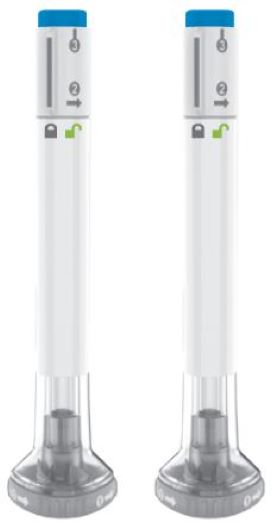
| Parts of the OMVOH prefilled Pen |
Important:
|
| 2 injections are required for a full dose. Inject one prefilled Pen immediately followed by the other prefilled Pen. | |
| Preparing to inject OMVOH | |
| Take the prefilled Pens from the refrigerator | Take 2 OMVOH prefilled Pens from the refrigerator. |
| Leave the gray base caps on until you are ready to inject. | |
| Leave the prefilled Pens at room temperature for 45 minutes before injecting. | |
| Do not microwave the prefilled Pens, or run hot water over them, or leave them in direct sunlight. | |
| Do not shake the prefilled Pens. | |
| Gather supplies | Supplies:
|
|
Inspect the prefilled Pens and the medicine
Expiration date |
Make sure you have the right medicine. The medicine inside should be clear. It may be colorless to slightly yellow to slightly brown. Do not use the prefilled Pens and throw away (dispose of) as directed by your healthcare provider or pharmacist if:
|
| Prepare for injection | Wash your hands with soap and water before you inject OMVOH. |
| Choose your injection site | Your healthcare provider can help you choose the injection site that is best for you. |
|
| Injecting OMVOH | ||
| 1 | Uncap the prefilled Pen |
|
|
|
Make sure the prefilled Pen is locked. Leave the gray base cap on until you are ready to inject. |
|
|
||
| 2 | Place and unlock |
|
|
||
|
|
Keep the clear base on the skin, then turn the lock ring to the unlock position. | |
| 3 | Press and hold for up to 10 seconds |
|
|
||
| 4 |
Inject the second prefilled Pen
|
|
|
Throwing away (disposing of) OMVOH Prefilled Pens |
|
| Throw away the used prefilled Pens | |
|
|
|
|
| Commonly asked questions | |||
| Q. | What if I let my prefilled Pen warm up for longer than 45 minutes before injecting? | ||
| A. | Your prefilled Pen can stay at room temperature up to 86°F (30°C) for up to 2 weeks. | ||
| Q. | What if I see air bubbles in the prefilled Pen? | ||
| A. | It is normal to have air bubbles in the prefilled Pen. They will not harm you or affect your dose. | ||
| Q. | What if there is a drop of liquid on the tip of the needle when I remove the gray base cap? | ||
| A. | It is okay to see a drop of liquid on the tip of the needle. This will not harm you or affect your dose. | ||
| Q. | What if I unlocked the prefilled Pen and pressed the blue injection button before I twisted off the gray base cap? | ||
| A. | Do not remove the gray base cap. Throw away (dispose of) the prefilled Pen and get a new one. | ||
| Q. | Do I need to hold the blue injection button down until the injection is complete? | ||
| A. | You do not need to hold the blue injection button down, but it may help you keep the prefilled Pen steady and firm against your skin. | ||
| Q. | What if the needle did not retract after my injection? | ||
| A. | Do not touch the needle or replace the gray base cap. Store the prefilled Pen in a safe place to avoid an accidental needlestick and contact 1-800-Lilly-Rx (1-800-545-5979) for instructions on how to return the prefilled Pen. | ||
| Q. | What if there is a drop of liquid or blood on my skin after my injection? | ||
| A. | This is normal. Press a cotton ball or gauze over the injection site. Do not rub the injection site. | ||
| Q. | What if I heard more than 2 clicks during my injection – 2 loud clicks and a soft one. Did I get my complete injection? | ||
| A. | Some patients may hear a soft click right before the second loud click. That is the normal operation of the prefilled Pen. Do not remove the prefilled Pen from your skin until you hear the second loud click. | ||
| Q. | How can I tell if my injection is complete? | ||
| A. | After you press the blue injection button, you will hear 2 loud clicks. The second loud click tells you that your injection is complete. You will also see the gray plunger at the top of the clear base. | ||
| If you have more questions about how to use the OMVOH prefilled Pen: | |||
|
Scan this code to launch www.OMVOH.com | ||
| Storing OMVOH Prefilled Pens |
| Refrigeration |
|
|
|
Room temperature |
|
|
|
|
|
Do not use the prefilled Pens and throw away (see Throwing away (disposing of) OMVOH Prefilled Pens) if they have been: |
|
|
|
|
| Read the Medication Guide for OMVOH inside this box to learn more about your medicine. |
This Instructions for Use has been approved by the U.S. Food and Drug Administration.
Manufactured by:
Eli Lilly and Company
Indianapolis, IN 46285, USA
US License Number 1891
OMVOH™ is a trademark of Eli Lilly and Company.
Copyright © 2023, 2025, Eli Lilly and Company. All rights reserved.
Revised: October 2025
The OMVOH prefilled Pen meets the current dose accuracy and functional requirements of ISO 11608-1 and 11608-5.
OMV-0005-IFU-PEN-20251023
200 Mg Prefilled Pen Instructions for Use
| INSTRUCTIONS FOR USE |
| OMVOH™ (ahm-voh) |
| (mirikizumab-mrkz) |
| injection, for subcutaneous use |
| 200 mg/2 mL prefilled Pen |
|
|
| This Instructions for Use contains information on how to inject OMVOH. |
| Before you use the OMVOH prefilled Pen, read and carefully follow all the step-by-step instructions. |
Important information you need to know before injecting OMVOH
|
| INSTRUCTIONS FOR USE |
| Before you use the OMVOH prefilled Pen, read and carefully follow all the step-by-step instructions. |
| Parts of the OMVOH prefilled Pen |
|
|
| Preparing to inject OMVOH | ||
| Gather supplies |
|
|
|
Inspect the prefilled Pen and the medicine
|
Make sure you have the right medicine. The medicine inside should be clear. It may be colorless to slightly yellow to slightly brown. Do not use the prefilled Pen (see Throwing away (disposing of) OMVOH prefilled Pen) if the:
|
|
| Wait 45 minutes |
With the gray base cap on, allow the prefilled Pen to warm up to room temperature for 45 minutes before injecting.
|
|
| Prepare for injection | Wash your hands with soap and water before you inject OMVOH. | |
|
Choose and clean your injection site
|
Your healthcare provider can help you choose the injection site that is best for you.
|
|
|
Injecting OMVOH |
||
| 1 | Uncap the prefilled Pen |
|
|
|
Make sure the prefilled Pen is locked. |
|
| When you are ready to inject, twist off the gray base cap and throw the cap away in your household trash. |
|
|
| Do not put the gray base cap back on. This could damage the needle. | ||
| Do not touch the needle inside the clear base. | ||
| 2 | Place and unlock |
|
|
Place and hold the clear base flat and firmly against the skin. |
||
|
|
Keep the clear base on the skin, then turn the lock ring to the unlock position. |
| 3 | Press and Hold for 15 Seconds |
|
Press and hold the blue injection button and listen for 2 loud clicks:
|
||
| The injection may take up to 15 seconds. | ||
| You will know the injection is complete when the gray plunger is visible. Remove the prefilled Pen from the skin. If you have bleeding at the injection site, press a cotton ball or gauze over the injection site. Do not rub the injection site, as this may cause bruising. |
|
|
Throwing away (disposing of) OMVOH prefilled Pen
|
Throw away the used prefilled Pen
Put the used OMVOH prefilled Pen in an FDA-cleared sharps disposal container right away after use. Do not throw away (dispose of) the OMVOH prefilled Pen in the household trash. For more information, see Used OMVOH prefilled Pen disposal. |
|
| Storing OMVOH |
Refrigeration
|
Room Temperature
|
Do not use the prefilled Pen and throw away (see Throwing away (disposing of) OMVOH prefilled Pen) if it has been:
|
| Commonly Asked Questions | |||
| Q. | What if I see bubbles in the prefilled Pen? | ||
| A. | Air bubbles are normal. They will not harm you or affect your dose. | ||
| Q. | What if I unlock the prefilled Pen and press the blue injection button before twisting off the gray base cap? | ||
| A. | Do not remove the gray base cap. Throw away (dispose of) the prefilled Pen and use a new one. | ||
| Q. | Do I need to hold the blue injection button down until the injection is complete? | ||
| A. | You do not need to hold the blue injection button down, but it may help you keep the prefilled Pen steady and firm against your skin. | ||
| Q. | What if the needle did not retract after my injection? | ||
| A. | Do not touch the needle or replace the gray base cap. Store the prefilled Pen in a safe place to avoid an accidental needlestick and contact 1-800-Lilly Rx (1-800-545-5979) for instructions on how to return the prefilled Pen. | ||
| Q. | What if there is a drop of liquid or blood on my skin after my injection? | ||
| A. | This is normal. Press a cotton ball or gauze over the injection site. Do not rub the injection site. | ||
| Q. | How can I tell if my injection is complete? | ||
| A. | After you press the blue injection button, you will hear 2 loud clicks. The second loud click tells you that your injection is complete. You will also see the gray plunger at the top of the clear base. The injection may take up to 15 seconds. | ||
| Q. | What if I remove the prefilled Pen before the second loud click or before the gray plunger stops moving? | ||
| A. | You may not have received your full dose. Do not give another injection. Call your healthcare provider for help. | ||
| Q. | What if I hear more than 2 clicks during my injection – 2 loud clicks and 1 soft one. Did I get my complete injection? | ||
| A. | Some people may hear a soft click right before the second loud click. That is the normal operation of the prefilled Pen. Do not remove the prefilled Pen from your skin until you hear the second loud click. | ||
| Q. | How many prefilled Pens do I need to inject in order to get my full dose? | ||
| A. | For this medicine, one 2 mL prefilled Pen equals a full dose. If your prescription previously required more injections and you would like to confirm your dose, or you have any questions about your dose, contact your healthcare provider. | ||
|
Additional Information: If you have more questions about how to use the OMVOH prefilled Pen: |
|||
|
|
Scan this code to launch www.OMVOH.com | |
| Used OMVOH prefilled Pen disposal | |||
| Put the used OMVOH prefilled Pen in an FDA-cleared sharps disposal container right away after use. Do not throw away (dispose of) the OMVOH prefilled Pen in the household trash. If you do not have an FDA-cleared sharps disposal container, you may use a household container that is:
When your sharps disposal container is almost full, you will need to follow your community guidelines for the right way to dispose of your sharps disposal container. There may be state or local laws about how you should throw away needles and syringes. For more information about safe sharps disposal, and for specific information about sharps disposal in the state you live in, go to the FDA's website at http://www.fda.gov/safesharpsdisposal. Do not recycle your used sharps disposal container. |
|||
| Read the Medication Guide for OMVOH inside this box to learn more about your medicine. |
Manufactured by:
Eli Lilly and Company
Indianapolis, IN 46285, USA
US License Number 1891
OMVOH™ is a trademark of Eli Lilly and Company.
Copyright © 2025, Eli Lilly and Company. All rights reserved.
This Instructions for Use has been approved by the U.S. Food and Drug Administration.
Approved: October 2025
The OMVOH prefilled Pen meets the current dose accuracy and functional requirements of ISO 11608-1 and 11608-5.
OMV-0001-200MG-PEN-IFU-20251023
100 Mg Prefilled Syringe Instructions for Use
| INSTRUCTIONS FOR USE |
| OMVOH TM (ahm-VOH) |
| (mirikizumab-mrkz) |
| injection, for subcutaneous use |
| 100 mg/mL prefilled syringe |
| This Instructions for Use contains information on how to inject OMVOH. |
| Before you use the OMVOH prefilled syringes, read and carefully follow all the step-by-step instructions. Two injections are required for a full dose. |
Important information you need to know before injecting OMVOH:
|
| INSTRUCTIONS FOR USE |
| Before you use OMVOH prefilled syringes, read and carefully follow all the step-by-step instructions. |
| Parts of the OMVOH prefilled syringe |
| Top |
Important:
|
| 2 injections are required for a full dose. Inject one prefilled syringe immediately followed by the other prefilled syringe. |
| Preparing to inject OMVOH | |
| Take the prefilled syringes from the refrigerator | Take 2 OMVOH prefilled syringes from the refrigerator. |
| Leave the needle caps on until you are ready to inject. | |
| Leave the prefilled syringes at room temperature for 45 minutes before injecting. | |
| Do not microwave the prefilled syringes, or run hot water over them, or leave them in direct sunlight. | |
| Do not shake the prefilled syringes. | |
| Gather supplies | Supplies:
|
|
Inspect the prefilled syringes and the medicine
Expiration date |
Make sure you have the right medicine. The medicine inside should be clear. It may be colorless to slightly yellow to slightly brown. |
Do not use the prefilled syringes and throw away (dispose of) as directed by your healthcare provider or pharmacist if:
|
|
| Prepare for injection | Wash your hands with soap and water before you inject OMVOH. |
| Choose your injection site | Your healthcare provider can help you choose the injection site that is best for you.
|
|
|
|
| Clean the injection sites with an alcohol wipe. Let the injection sites dry before you inject the medicine. |
| Injecting OMVOH | ||
| 1 | Uncap the prefilled syringe | |
| Leave the needle cap on until you are ready to inject. | ||
|
||
| 2 | Insert | |
|
||
| 3 | Inject | |
|
||
|
Blue plunger rod
Gray syringe plunger |
| 4 |
Inject the second prefilled syringe
|
| Throwing away (disposing of) OMVOH prefilled syringes | |
| Throw away the used prefilled syringes |
|
|
|
|
| Commonly asked questions | |||
| Q. | What if I let my OMVOH prefilled syringe warm up for longer than 45 minutes before injecting? | ||
| A. | Your prefilled syringe can stay at room temperature up to 86°F (30°C) for up to 2 weeks. | ||
| Q. | What if I see air bubbles in the OMVOH prefilled syringe? | ||
| A. | It is normal to have air bubbles in the prefilled syringe. They will not harm you or affect your dose. | ||
| Q. | What if there is a drop of liquid on the tip of the needle when I remove the needle cap? | ||
| A. | It is okay to see a drop of liquid on the tip of the needle. This will not harm you or affect your dose. | ||
| Q. | What if I cannot push in the plunger? | ||
| A. | If the plunger is stuck or damaged: | ||
|
|||
| Q. | What if there is a drop of liquid or blood on my skin after my injection? | ||
| A. | This is normal. Press a cotton ball or gauze over the injection site. Do not rub the injection site. | ||
| Q. | How can I tell if my injection is complete? | ||
| A. | When your injection is complete: | ||
|
|||
| If you have more questions about how to use the OMVOH prefilled syringe: | |||
|
Scan this code to launch www.OMVOH.com | ||
| Storing OMVOH prefilled syringes |
|
| Read the Medication Guide for OMVOH inside this box to learn more about your medicine. |
This Instructions for Use has been approved by the U.S. Food and Drug Administration.
Manufactured by:
Eli Lilly and Company
Indianapolis, IN 46285, USA
US License Number 1891
OMVOHTM is a trademark of Eli Lilly and Company.
Copyright © 2024, 2025, Eli Lilly and Company. All rights reserved.
Revised: October 2025
OMV-0003-IFU-PFS-20251023
200 Mg Prefilled Syringe Instructions for Use
| INSTRUCTIONS FOR USE |
| OMVOH™ (ahm-voh) |
| (mirikizumab-mrkz) |
| injection, for subcutaneous use |
| 200 mg/2 mL (100 mg/mL) prefilled Syringe |
|
|
| This Instructions for Use contains information on how to inject OMVOH. |
| Before you use the OMVOH prefilled Syringe, read and carefully follow all the step-by-step instructions. |
| Important information you need to know before injecting OMVOH |
|
| INSTRUCTIONS FOR USE |
| Before you use the OMVOH prefilled Syringe, read and carefully follow all the step-by-step instructions. |
| Parts of the OMVOH prefilled Syringe |
|
|
| Preparing to inject OMVOH | |
| Gather supplies |
|
|
Inspect the prefilled Syringe and the medicine
|
Remove prefilled Syringe from the carton. Make sure you have the right medicine. The medicine inside should be clear. It may be colorless to slightly yellow to slightly brown. |
|
Do not use the prefilled Syringe (see Throwing away (disposing of) OMVOH prefilled Syringe) if the:
|
|
| Wait 45 minutes |
Do not warm up the prefilled Syringe with a microwave, hot water, or direct sunlight. With the needle cap on, allow the prefilled Syringe to warm up to room temperature for 45 minutes before injecting. |
| Prepare for injection | Wash your hands with soap and water before you inject OMVOH. |
|
Choose and clean your injection site
|
Your healthcare provider can help you choose the injection site that is best for you.
|
| Injecting OMVOH | ||
| 1 | Uncap the prefilled Syringe |
|
|
||
|
||
|
|
||
| 2 | Pinch the injection site and insert the needle |
|
|
||
| 3 | Inject the medicine |
|
|
||
|
|
| Throwing away (disposing of) OMVOH prefilled Syringe | |
|
Throw away the used prefilled Syringe
Put the used OMVOH prefilled Syringe in an FDA-cleared sharps disposal container right away after use. Do not throw away (dispose of) the OMVOH prefilled Syringe in the household trash. For more information, see Used OMVOH prefilled Syringe disposal. |
|
|
Storing OMVOH
Refrigeration
Do not use the prefilled Syringe and throw away (see Throwing away (disposing of) OMVOH prefilled Syringe) if it has been:
Keep your prefilled Syringe and all medicines out of the sight and reach of children. |
|||
| Commonly Asked Questions | |||
| Q. | What if I see air bubbles in the OMVOH prefilled Syringe? | ||
| A. | It is normal to have air bubbles in the prefilled Syringe. They will not harm you or affect your dose. | ||
| Q. | What if there is a drop of liquid on the tip of the needle when I remove the needle cap? | ||
| A. | It is okay to see a drop of liquid on the tip of the needle. This will not harm you or affect your dose. | ||
| Q. | What if I cannot push in the plunger? | ||
| A. | If the plunger is stuck or damaged: | ||
|
|||
| Q. | What if there is a drop of liquid or blood on my skin after my injection? | ||
| A. | This is normal. Press a cotton ball or gauze over the injection site. Do not rub the injection site. | ||
| Q. | How can I tell if my injection is complete? | ||
| A. | When your injection is complete: | ||
|
|||
| Q. | How many prefilled Syringes do I need to inject in order to get my full dose? | ||
| A. | For this medicine, one 2 mL prefilled Syringe equals a full dose. If your prescription previously required more injections and you would like to confirm your dose, or you have any questions about your dose, contact your healthcare provider. | ||
|
Additional Information:
If you have more questions about how to use the OMVOH prefilled Syringe: |
|||
|
|
Scan this code to launch www.OMVOH.com | |
|
Used OMVOH prefilled Syringe disposal
Put the used OMVOH prefilled Syringe in an FDA-cleared sharps disposal container right away after use. Do not throw away (dispose of) the OMVOH prefilled Syringe in the household trash. If you do not have an FDA-cleared sharps disposal container, you may use a household container that is:
There may be state or local laws about how you should throw away needles and syringes. For more information about safe sharps disposal, and for specific information about sharps disposal in the state you live in, go to the FDA's website at: http://www.fda.gov/safesharpsdisposal. Do not recycle your used sharps disposal container. |
|||
| Read the Medication Guide for OMVOH inside this box to learn more about your medicine. |
Manufactured by:
Eli Lilly and Company
Indianapolis, IN 46285, USA
US License Number 1891
OMVOH is a trademark of Eli Lilly and Company.
Copyright © 2025, Eli Lilly and Company. All rights reserved.
This Instructions for Use has been approved by the U.S. Food and Drug Administration.
Approved: October 2025
OMV-0001-200MG-PFS-IFU-20251023
100 Mg + 200 Mg Prefilled Pen Instructions for Use
INSTRUCTIONS FOR USE
OMVOH TM (ahm-voh)
(mirikizumab-mrkz)
injection, for subcutaneous use
Prefilled Pens
One 200 mg/2 mL Prefilled Pen and one 100 mg/mL Prefilled Pen for a full dose of 300 mg
This Instructions for Use contains information on how to inject OMVOH.
Before you use the OMVOH prefilled Pens, read and carefully follow all the step-by-step instructions.
Important information you need to know before injecting OMVOH
|
- Your healthcare provider should show you how to prepare and inject OMVOH using the prefilled Pens. Do not inject yourself or someone else until you have been shown how to inject OMVOH.
- Keep this Instructions for Use and read it as needed.
- Each OMVOH prefilled Pen is for one-time use only.
- The OMVOH prefilled Pen contains glass parts. Handle it carefully. If you drop it on a hard surface, do not use it. Use a new OMVOH prefilled Pen for your injection.
- Your healthcare provider can help you decide where on your body to inject your dose. Read the Choose and clean your injection sites section of these instructions to help you choose which area can work best for you.
- If you have vision or hearing problems, do not use OMVOH prefilled Pens without help from a caregiver.
- See Storing OMVOH Prefilled Pens for important storage information.
INSTRUCTIONS FOR USE
Before you use the OMVOH prefilled Pens, read and carefully follow all the step-by-step instructions.
2 Prefilled Pens = full 300 mg dose
After your first injection, choose a new injection site at least 2 inches (5 centimeters) away and clean it.
With your second prefilled Pen, repeat steps 1 to 3 right away after your first injection.
You must inject 2 prefilled Pens to complete your full 300 mg dose.
Parts of the OMVOH Prefilled Pens
Inject both prefilled Pens in any order for a full 300 mg dose.
The 200 mg/2 mL prefilled Pen is larger than the 100 mg/mL prefilled Pen.
Preparing to inject OMVOH
Gather supplies
|
|
Inspect the prefilled Pens and the medicine
Remove both prefilled Pens from the carton.
Make sure you have the right medicine.
The medicine inside should be clear. It may be colorless to slightly yellow to slightly brown.
Do not use the prefilled Pens (see Throwing away (disposing of) OMVOH Prefilled Pens) if:
|
Wait 45 minutes
Do not warm up the prefilled Pens with a microwave, hot water, or direct sunlight.
With the gray base cap on, allow the prefilled Pens to warm up to room temperature for 45 minutes before injecting.
Choose and clean your injection sites
Your healthcare provider can help you choose the injection sites that are best for you. Clean the injection sites with an alcohol wipe and let them dry.
|
|
You or another person may inject into these areas. |
Do not inject into areas where the skin is tender, bruised, red, or hard.
|
|
|
Another person should inject into this area. |
|
Injecting OMVOH
1. Uncap the first prefilled Pen (the prefilled Pens may be used in any order)
|
|
|
Make sure the prefilled Pen is locked. |
|
|
Twist off the gray base cap and throw the cap away in the trash when you are ready to inject. Do not put the gray base cap back on – this could damage the needle. Do not touch the needle inside the clear base. |
2. Place and unlock
|
Clear base
|
|
Place and hold the clear base flat against the skin. Keep the clear base on the skin, then turn the lock ring to the unlock position. |
3. Press and hold for 15 seconds
|
|
Press and Hold the blue injection button and listen for 2 loud clicks:
|
| You will know the injection is complete when the gray plunger is visible. | |
| Remove the prefilled Pen from the skin. If you have bleeding at the injection site, press a cotton ball over the injection site. Do not rub the injection site. |
4. Inject the second prefilled Pen
Choose a new injection site at least 2 inches away and clean it.
With your second prefilled Pen, repeat steps 1 to 3 right away after your first injection.
You must inject 2 prefilled Pens to complete your full 300 mg dose.
Throwing away (disposing of) OMVOH Prefilled Pens
Throw away both used prefilled Pens
|
|
Put the used OMVOH prefilled Pens in an FDA-cleared sharps disposal container right away after use. Do not throw away (dispose of) the OMVOH prefilled Pens in your household trash. Do not recycle your sharps disposal container. |
|
For more information, see Used OMVOH prefilled Pen disposal. |
Storing OMVOH Prefilled Pens
Refrigeration
- In the original carton, store your prefilled pens in the refrigerator between 36°F to 46°F (2°C to 8°C) until the expiration date.
- Do not freeze. Do not use OMVOH if it has been frozen.
Room Temperature
- If needed, your prefilled Pens may be stored at room temperature for up to 2 weeks in the original carton. Do not store above 86°F (30°C).
- When OMVOH has been stored at room temperature, do not return it to the refrigerator.
- Throw away (dispose of) OMVOH if not used within 2 weeks at room temperature.
- Protect your prefilled Pens from light until use.
Do not use the prefilled Pens and throw away (see Throwing away (disposing of) OMVOH Prefilled Pens) if they have been:
|
|
Keep OMVOH and all medicines out of the reach of children.
Commonly asked questions
| Q. | The prefilled Pens are different sizes. Should I take one before the other? |
| A. | You can inject the prefilled Pens in any order. Inject both prefilled Pens for a full 300 mg dose. |
| Q. | What if I see air bubbles in the prefilled Pens? |
| A. | Air bubbles are normal. They will not harm you or affect your dose. |
| Q. | What if there is a drop of liquid on the tip of the needle when I remove the gray base cap? |
| A. | A drop of liquid on the tip of the needle is normal. This will not harm you or affect your dose. Do not touch the needle. |
| Q. | What if I unlock the prefilled Pen and press the blue injection button before twisting off the gray base cap? |
| A. | Do not remove the gray base cap. Throw away (dispose of) the prefilled Pen and get a new one. |
| Q. | Do I need to hold the blue injection button down until the injection is complete? |
| A. | You do not need to hold the blue injection button down, but it may help you keep the prefilled Pen steady against your skin. |
| Q. | What if the needle did not retract after my injection? |
| A. | Do not touch the needle or replace the gray base cap. Store the prefilled Pen in a safe place to avoid an accidental needlestick and contact 1-800-Lilly-Rx (1-800-545-5979) for instructions on how to return the prefilled Pen. |
| Q. | What if there is a drop of liquid or blood on my skin after my injection? |
| A. | This is normal. Press a cotton ball over the injection site. Do not rub the injection site. |
| Q. | How can I tell if my injection is complete? |
| A. | After you press the blue injection button, you will hear 2 loud clicks. The second loud click tells you that your injection is complete. You will also see the gray plunger at the top of the clear base. The injection may take up to 15 seconds. |
| Q. | What if I remove the prefilled Pen before the second loud click or before the gray plunger stops moving? |
| A. | You may not have received your full dose. Do not give another injection. Call your healthcare provider for help. |
| Q. | What if I heard more than 2 clicks during my injection – 2 loud clicks and 1 soft one. Did I get my complete injection? |
| A. | Some people may hear a soft click right before the second loud click. That is the normal operation of the prefilled Pen. Do not remove the prefilled Pen from your skin until you hear the second loud click. |
Additional Information:
If you have more questions about how to use the OMVOH prefilled Pens:
|
|
Scan this code to launch www.OMVOH.COM |
Used OMVOH Prefilled Pen disposal
Put the used OMVOH prefilled Pens in an FDA-cleared sharps disposal container right away after use. Do not throw away (dispose of) the OMVOH prefilled Pens in your household trash.
If you do not have an FDA-cleared sharps disposal container, you may use a household container that is:
- made of a heavy-duty plastic,
- can be closed with a tight-fitting, puncture-resistant lid, without sharps being able to come out,
- upright and stable during use,
- leak-resistant, and
- properly labeled to warn of hazardous waste inside the container.
When your sharps disposal container is almost full, you will need to follow your community guidelines for the right way to dispose of your sharps disposal container.
There may be state or local laws about how you should throw away needles and syringes.
For more information about safe sharps disposal, and for specific information about sharps disposal in the state you live in, go to the FDA's website at: http://www.fda.gov/safesharpsdisposal.
Do not recycle your used sharps disposal container.
Read the Medication Guide for OMVOH inside this box to learn more about your medicine.
Manufactured by:
Eli Lilly and Company
Indianapolis, IN 46285, USA
US License Number 1891
OMVOHTM is a trademark of Eli Lilly and Company.
Copyright © 2025, Eli Lilly and Company. All rights reserved.
This Instructions for Use has been approved by the U.S. Food and Drug Administration. Approved: January 2025
The OMVOH prefilled Pen meets the current dose accuracy and functional requirements of ISO 11608-1 and 11608-5.
OMV-0001-300MG-PEN-IFU-20250115
100 Mg + 200 Mg Prefilled Syringe Instructions for Use
INSTRUCTIONS FOR USE
OMVOH TM (ahm-voh)
(mirikizumab-mrkz)
injection, for subcutaneous use
Prefilled Syringes
One 200 mg/2 mL (100 mg/mL) Prefilled Syringe and One 100 mg/mL Prefilled Syringe for a Full Dose of 300 mg.
This Instructions for Use contains information on how to inject OMVOH.
Before you use the OMVOH prefilled Syringes, read and carefully follow all the step-by-step instructions.
Important information you need to know before injecting OMVOH
|
- Your healthcare provider should show you how to prepare and inject OMVOH using the prefilled Syringes. Do not inject yourself or someone else until you have been shown how to inject OMVOH.
- Keep this Instructions for Use and read it as needed.
- Each OMVOH prefilled Syringe is for one-time use only.
- Your healthcare provider can help you decide where on your body to inject your dose. Read the Choose and clean your injection sites section of these instructions to help you choose which area can work best for you.
- If you have vision problems, do not use OMVOH prefilled Syringes without help from a caregiver.
- See Storing OMVOH prefilled Syringes for important storage information.
INSTRUCTIONS FOR USE
Before you use the OMVOH prefilled Syringes, read and carefully follow all the step-by-step instructions.
2 Prefilled Syringes = full 300 mg dose
After your first injection, choose a new injection site at least 2 inches away and clean it.
With your second prefilled Syringe, repeat steps 1 to 3 right away after your first injection.
You must inject 2 prefilled Syringes to complete your full 300 mg dose.
Parts of the OMVOH prefilled Syringes
Inject both prefilled Syringes in any order for a full 300 mg dose.
The 200 mg/2 mL (100 mg/mL) prefilled Syringe is larger than the 100 mg/mL prefilled Syringe.
|
|
Preparing to inject OMVOH
Gather supplies
|
|
Inspect the prefilled Syringes and the medicine
Remove both prefilled Syringes from the carton.
Make sure you have the right medicine.
The medicine inside should be clear. It may be colorless to slightly yellow to slightly brown.
|
|
Do not use the prefilled Syringes (see Throwing away (disposing of) OMVOH Prefilled Syringes) if:
|
Wait 45 minutes
Do not warm up the prefilled Syringes with a microwave, hot water, or direct sunlight.
With the needle cap on, allow the prefilled Syringes to warm up to room temperature for 45 minutes before injecting.
Choose and clean your injection sites
Your healthcare provider can help you choose the injection sites that are best for you. Clean the injection sites with an alcohol wipe and let them dry.
|
|
You or another person may inject into these areas. |
Do not inject into areas where the skin is tender, bruised, red, or hard.
|
|
|
Another person should inject into this area. |
|
Injecting OMVOH
1. Uncap the first prefilled Syringe (the prefilled Syringes may be used in any order)
|
|
Hold the prefilled syringe body and pull off the needle cap when you are ready to inject. Throw away the needle cap in the trash. Do not put the needle cap back on — this could damage the needle. Do not touch the needle. |
2. Pinch the injection site and insert the needle
|
|
Gently pinch and hold a fold of skin where you will inject. Insert the needle at a 45-degree angle. Gently let go of the skin while keeping the needle in place. |
3. Inject the medicine
|
|
Slowly push on the thumb pad to push the blue plunger rod all the way in until all the medicine is injected. The gray syringe plunger should be pushed all the way to the needle end of the prefilled Syringe. |
|
|
|
You should see the blue plunger rod show through the prefilled Syringe body when the injection is complete as shown. Remove the needle from your skin. Do not put the needle cap back on the prefilled Syringe. |
|
| If you have bleeding at the injection site, press a cotton ball over the injection site. Do not rub the injection site. |
4. Inject the second prefilled Syringe
Choose a new injection site at least 2 inches away and clean it.
With your second prefilled Syringe, repeat steps 1 to 3 right away after your first injection.
You must inject 2 prefilled Syringes to complete your full 300 mg dose.
Throwing away (disposing of) OMVOH Prefilled Syringes
Throw away both used prefilled Syringes
|
|
Put the used OMVOH prefilled Syringes in an FDA-cleared sharps disposal container right away after use. Do not throw away (dispose of) the OMVOH prefilled Syringes in your household trash. Do not recycle your used sharps disposal container. |
| For more information, see Used OMVOH prefilled Syringe disposal. |
Storing OMVOH Prefilled Syringes
Refrigeration
- In the original carton, store your prefilled Syringes in the refrigerator between 36°F to 46°F (2°C to 8°C) until the expiration date.
- Do not freeze. Do not use OMVOH if it has been frozen.
Room Temperature
- If needed, your prefilled Syringes may be stored at room temperature for up to 2 weeks in the original carton. Do not store above 86°F (30°C).
- When OMVOH has been stored at room temperature, do not return it to the refrigerator.
- Throw away (dispose of) OMVOH if not used within 2 weeks at room temperature.
- Protect your prefilled Syringes from light until use.
Do not use the prefilled Syringes and throw away (see Throwing away (disposing of) OMVOH Prefilled Syringes) if they have been:
|
|
Keep OMVOH and all medicines out of the reach of children.
Commonly asked questions
| Q. | The prefilled Syringes are different sizes. Should I take one before the other? |
| A. | You can inject the prefilled Syringes in any order. Inject both prefilled Syringes for a full 300 mg dose. |
| Q. | What if I see air bubbles in the prefilled Syringes? |
| A. | Air bubbles are normal. They will not harm you or affect your dose. |
| Q. | What if there is a drop of liquid on the tip of the needle when I remove the needle cap? |
| A. | A drop of liquid on the tip of the needle is normal. This will not harm you or affect your dose. Do not touch the needle. |
| Q. | What if I cannot push in the plunger? |
| A. | If the plunger is stuck or damaged: • Do not continue to use the prefilled Syringe
|
| Q. | What if there is a drop of liquid or blood on my skin after my injection? |
| A. | This is normal. Press a cotton ball over the injection site. Do not rub the injection site. |
| Q. | How can I tell if my injection is complete? |
| A. | When your injection is complete:
|
Additional Information:
If you have more questions about how to use the OMVOH prefilled Syringes:
|
|
Scan this code to launch www.OMVOH.COM |
Used OMVOH Prefilled Syringe disposal
Put the used OMVOH prefilled Syringes in an FDA-cleared sharps disposal container right away after use. Do not throw away (dispose of) the OMVOH prefilled Syringes in your household trash.
If you do not have an FDA-cleared sharps disposal container, you may use a household container that is:
- made of a heavy-duty plastic,
- can be closed with a tight-fitting, puncture-resistant lid, without sharps being able to come out,
- upright and stable during use,
- leak-resistant, and
- properly labeled to warn of hazardous waste inside the container.
When your sharps disposal container is almost full, you will need to follow your community guidelines for the right way to dispose of your sharps disposal container.
There may be state or local laws about how you should throw away needles and syringes.
For more information about safe sharps disposal, and for specific information about sharps disposal in the state you live in, go to the FDA's website at: http://www.fda.gov/safesharpsdisposal.
Do not recycle your used sharps disposal container.
Read the Medication Guide for OMVOH inside this box to learn more about your medicine.
Manufactured by:
Eli Lilly and Company
Indianapolis, IN 46285, USA
US License Number 1891
OMVOHTM is a trademark of Eli Lilly and Company.
Copyright © 2025, Eli Lilly and Company. All rights reserved.
This Instructions for Use has been approved by the U.S. Food and Drug Administration.
Approved: January 2025
OMV-0001-300MG-PFS-IFU-20250115
13.1 Carcinogenesis, Mutagenesis, Impairment of Fertility
Animal studies have not been conducted to evaluate the carcinogenic or mutagenic potential of mirikizumab-mrkz.
No organ weight or histopathology effects were observed in the male or female reproductive tract in sexually mature cynomolgus monkeys that received subcutaneous mirikizumab-mrkz once weekly for 26 weeks, at a dose of 100 mg/kg (at least 2 times the MRHD of mirikizumab-mrkz, based on exposure comparisons).
2.4 Preparation and Administration Instructions for Intravenous Infusion
- OMVOH for intravenous use is intended for administration by a healthcare provider using aseptic technique.
- Parenteral drug products should be inspected visually for particulate matter and discoloration prior to administration, whenever solution and container permit. The solution should be a clear to opalescent, colorless to slightly yellow to slightly brown solution, and free of visible particles. Do not use OMVOH if it is cloudy or there are visible particles.
-
Prior to intravenous administration, determine the dose needed based on the patient's indication (see Table 1 below). For Crohn's disease, discard 45 mL of the infusion bag prior to adding vial contents. Withdraw the required amount of solution from the vial(s) using a 18 gauge to 21 gauge needle and transfer to an infusion bag containing 0.9% Sodium Chloride Injection or 5% Dextrose Injection (see Table 1 below). Do not mix with other drugs. Do not dilute or infuse through the same intravenous line with other solutions.Table 1: Intravenous Induction Dose and Volume of Diluent Required
Indication Intravenous Induction Dose Number of OMVOH 300mg/15mL vials needed Volume of
0.9% Sodium Chloride or
5% Dextrose InjectionUlcerative colitis 300 mg 1 50 mL, 100 mL, or 250 mL Crohn's disease 900 mg 3 100 mL or 250 mL - Gently invert the infusion bag to mix the contents. Do not shake the prepared infusion bag.
- Connect the intravenous administration set (infusion line) to the prepared infusion bag and prime the line.
- Infuse the diluted solution intravenously over a period of at least 30 minutes for the 300 mg dose; at least 90 minutes for the 900 mg dose. If stored refrigerated, allow the diluted solution in the infusion bag to warm to room temperature prior to the start of the intravenous infusion.
- At the end of the infusion, flush the line with 0.9% Sodium Chloride Injection or 5% Dextrose Injection.
- Administer the flush at the same infusion rate as used for OMVOH administration.
- The time required to flush OMVOH solution from the infusion line is in addition to the minimum 30-minute infusion time.
2.5 Preparation and Administration Instructions for Subcutaneous Injection
- OMVOH is intended for use under the guidance and supervision of a healthcare professional. Patients may self-inject OMVOH after training in subcutaneous injection technique. Provide proper training to patients and/or caregivers on the subcutaneous injection technique of OMVOH according to the “Instructions for Use”, included with the packaged product.
- Before injection, remove OMVOH prefilled pens or OMVOH prefilled syringes from the refrigerator, and leave at room temperature for 45 minutes.
- Do not shake the prefilled pens or prefilled syringes.
- Parenteral drug products should be inspected visually for particulate matter and discoloration prior to administration, whenever solution and container permit. The solution should be a clear to opalescent, colorless to slightly yellow to slightly brown solution, and free of visible particles. Do not use OMVOH if it is cloudy, discolored, or there are visible particles.
- Sites for injection include the abdomen, thigh, and back of the upper arm. Instruct patients to inject in a different location (such as upper arms, thighs or any quadrant of abdomen) than the previous injection. Administration of OMVOH in the back of upper arm may only be performed by another person.
- Do not inject into areas where the skin is tender, bruised, erythematous, or indurated.
- OMVOH does not contain preservatives; therefore, discard any unused product. Do not reuse.
- If a dose is missed, administer the dose as soon as possible. Thereafter, resume dosing every 4 weeks.
2.1 Recommended Evaluations and Immunizations Prior to Treatment Initiation
- Evaluate patients for tuberculosis (TB) infection prior to initiating treatment with OMVOH [see Warnings and Precautions (5.3)].
- Obtain liver enzymes and bilirubin levels prior to initiating treatment with OMVOH [see Warnings and Precautions (5.4)].
- Complete all age-appropriate vaccinations according to current immunization guidelines [see Warnings and Precautions (5.5)].
Structured Label Content
Section 42229-5 (42229-5)
Induction Dosage
Section 42231-1 (42231-1)
|
This Medication Guide has been approved by the U.S. Food and Drug Administration. |
Revised: 10/2025 |
|||||||
|
Medication Guide
OMVOHTM (ahm-VOH) (mirikizumab-mrkz) injection, for intravenous or subcutaneous use |
||||||||
|
What is the most important information I should know about OMVOH?
|
||||||||
|
What is OMVOH?
OMVOH is a prescription medicine used to treat:
|
||||||||
| It is not known if OMVOH is safe and effective in children. | ||||||||
Do not use OMVOH if you:
|
||||||||
Before you use OMVOH, tell your healthcare provider about all your medical conditions, including if you:
|
||||||||
| Tell your healthcare provider about all the medicines you take, including prescription and over-the-counter medicines, vitamins, and herbal supplements. | ||||||||
How should I use OMVOH?
|
||||||||
|
What are the possible side effects of OMVOH?
OMVOH can cause serious side effects, including: |
||||||||
| The most common side effects of OMVOH in people treated for ulcerative colitis include: | ||||||||
|
|
|
||||||
|
The most common side effects of OMVOH in people treated for Crohn's disease include:
|
||||||||
|
|
|
||||||
| Tell your healthcare provider if you have any side effect that bothers you or that does not go away. These are not all the possible side effects of OMVOH. For more information, ask your healthcare provider or pharmacist. Call your doctor for medical advice about side effects. You may report side effects to FDA at 1-800-FDA-1088. |
||||||||
How should I store OMVOH?
|
||||||||
| Keep OMVOH and all medicines out of the reach of children. | ||||||||
|
General information about the safe and effective use of OMVOH.
Medicines are sometimes prescribed for purposes other than those listed in a Medication Guide. Do not use OMVOH for a condition for which it was not prescribed. Do not give OMVOH to other people, even if they have the same symptoms that you have. It may harm them. You can ask your pharmacist or healthcare provider for information about OMVOH that is written for health professionals. |
||||||||
|
What are the ingredients in OMVOH?
Active ingredient: mirikizumab-mrkz. Inactive ingredients:
|
||||||||
| OMVOH prefilled pens and prefilled syringes are not made with dry natural rubber latex. OMVOHTM is a trademark of Eli Lilly and Company. Eli Lilly and Company, Indianapolis, IN 46285, USA US License No. 1891 Copyright © 2023, 2025, Eli Lilly and Company. All rights reserved. For more information, go to www.OMVOH.com or call 1-800-545-5979. |
OMV-0005-MG-20251027
Section 43683-2 (43683-2)
| Indications and Usage (1) | 1/2025 | |
| Dosage and Administration | ||
| Recommended Dosage for Ulcerative Colitis (2.2) | 10/2025 | |
| Recommended Dosage for Crohn's Disease (2.3) | 1/2025 | |
| Preparation and Administration Instructions for Intravenous Infusion (2.4) | 1/2025 | |
| Preparation and Administration Instructions for Subcutaneous Injection(2.5) | 10/2025 |
Section 44425-7 (44425-7)
Storage and Handling
- Store refrigerated at 2°C to 8°C (36°F to 46°F).
- Do not freeze. Do not use OMVOH if it has been frozen.
- Do not shake.
- Keep OMVOH in the original carton to protect from light until the time of use.
- OMVOH is sterile and preservative-free. Discard any unused portion.
- If needed, the prefilled pen or prefilled syringe may be stored at room temperature up to 30°C (86°F) for up to 2 weeks in the original carton to protect from light. Once OMVOH has been stored at room temperature, do not return to the refrigerator. If these conditions are exceeded, OMVOH must be discarded.
- The vial, prefilled pen, and prefilled syringe are not made with dry natural rubber latex.
Section 51945-4 (51945-4)
PACKAGE LABEL – Omvoh 300 mg Vial Cartons
There are two formulations for this product
NDC 0002-7575-01
15 mL
omvohTM
(mirikizumab-mrkz)
injection
300 mg/15 mL
(20 mg/mL)
For Intravenous Infusion After Dilution
Single-Dose Vial - Discard Unused Portion
Dispense enclosed Medication Guide to each patient.
Rx only
omvoh.com
Lilly
Classic Formulation contains the following inactive ingredients:anhydrous citric acid, polysorbate 80, sodium chloride, sodium citrate, and Water for Injection.
Alternate Formulation contains the following inactive ingredients: anhydrous citric acid, histidine, L-histidine hydrochloride monohydrate, mannitol, polysorbate 80, sodium chloride, sodium citrate, and Water for Injection.
11 Description (11 DESCRIPTION)
Mirikizumab-mrkz is a humanized immunoglobulin G4 (IgG4) variant monoclonal antibody that is directed against the p19 subunit of IL-23 and does not bind IL-12. Mirikizumab-mrkz is produced in Chinese Hamster Ovary (CHO) cells by recombinant DNA technology and it is composed of two identical light chain polypeptides and two identical heavy chain polypeptides with an overall molecular weight of approximately 147 kDa.
5.2 Infections
OMVOH may increase the risk of infection [see Adverse Reactions (6.1)].
Do not initiate treatment with OMVOH in patients with a clinically important active infection until the infection resolves or is adequately treated.
In patients with a chronic infection or a history of recurrent infection, consider the risks and benefits prior to prescribing OMVOH. Instruct patients to seek medical advice if signs or symptoms of clinically important acute or chronic infection occur. If a serious infection develops or an infection is not responding to standard therapy, monitor the patient closely and do not administer OMVOH until the infection resolves.
5.3 Tuberculosis
Evaluate patients for tuberculosis (TB) infection prior to initiating treatment with OMVOH.
Do not administer OMVOH to patients with active TB infection. Initiate treatment of latent TB prior to administering OMVOH. Consider anti-TB therapy prior to initiation of OMVOH in patients with a past history of latent or active TB in whom an adequate course of treatment cannot be confirmed. Monitor patients for signs and symptoms of active TB during and after OMVOH treatment.
In clinical trials, subjects were excluded if they had evidence of active TB, a past history of active TB, or were diagnosed with latent TB at screening.
5.5 Immunizations
Avoid use of live vaccines in patients treated with OMVOH. Medications that interact with the immune system may increase the risk of infection following administration of live vaccines. Prior to initiating therapy with OMVOH, complete all age-appropriate vaccinations according to current immunization guidelines. No data are available on the response to live or non-live vaccines in patients treated with OMVOH.
8.4 Pediatric Use
The safety and effectiveness of OMVOH have not been established in pediatric patients.
8.5 Geriatric Use
Of the 795 OMVOH-treated subjects in the two ulcerative colitis clinical studies, 64 subjects (8%) were 65 years of age and older, while 10 subjects (1%) were 75 years of age and older. Of the 715 OMVOH-treated subjects in the Crohn's disease clinical study, 22 subjects (3%) were 65 years of age and older, while 6 subjects (1%) were 75 years of age and older). These clinical studies did not include sufficient numbers of subjects aged 65 and over to determine whether they respond differently from younger adult subjects. Other reported clinical experience has not identified differences in responses between the elderly and younger subjects. No clinically meaningful differences in the pharmacokinetics of mirikizumab-mrkz were observed in subjects 65 years of age and older compared to younger adult subjects [see Clinical Pharmacology (12.3)].
5.4 Hepatotoxicity
A case of drug-induced liver injury (alanine aminotransferase [ALT] 18x the upper limit of normal (ULN), aspartate aminotransferase [AST] 10x ULN, and total bilirubin 2.4x ULN) in conjunction with pruritus was reported in a clinical trial subject following a longer than recommended induction regimen. OMVOH was discontinued. Liver test abnormalities eventually returned to baseline.
Evaluate liver enzymes and bilirubin at baseline and for at least 24 weeks of treatment. Monitor thereafter according to routine patient management.
Consider other treatment options in patients with evidence of liver cirrhosis. Prompt investigation of the cause of liver enzyme elevation is recommended to identify potential cases of drug-induced liver injury. Interrupt treatment if drug-induced liver injury is suspected, until this diagnosis is excluded. Instruct patients to seek immediate medical attention if they experience symptoms suggestive of hepatic dysfunction.
12.6 Immunogenicity
The observed incidence of anti-drug antibodies is highly dependent on the sensitivity and specificity of the assay. Differences in assay methods preclude meaningful comparisons of the incidence of anti-drug antibodies in the studies described below with the incidence of anti-drug antibodies in other studies, including those of mirikizumab-mrkz or of other mirikizumab products.
During the 52-week treatment period in studies UC-1 and UC-2, 23% (88/378) of OMVOH-treated subjects at the recommended dosage and evaluable for assessment, developed anti-mirikizumab-mrkz antibodies (referred to as anti-drug antibodies (ADA)). Of those who developed ADA, 33/88 (38%) developed titers ≥1:160. Of these 33 OMVOH-treated subjects, 10 had reduced serum trough concentrations of mirikizumab-mrkz compared to subjects who did not develop anti-mirikizumab-mrkz antibodies, and 5 of these 10 subjects did not achieve clinical response at Week 52. There is insufficient data to assess whether the observed ADA-associated pharmacokinetic changes reduced effectiveness. There is no identified clinically significant effect of ADA on the safety of OMVOH over the treatment duration of 52-weeks.
During the 52-week treatment period in study CD-1, 13% (79/622) of OMVOH-treated subjects at the recommended dosage and evaluable for assessment developed ADA. There is no identified clinically significant effect of ADA on the pharmacokinetics, effectiveness, or safety of OMVOH over the treatment duration of 52-weeks.
4 Contraindications (4 CONTRAINDICATIONS)
OMVOH is contraindicated in patients with a history of serious hypersensitivity reaction to mirikizumab-mrkz or any of the excipients [see Warnings and Precautions (5.1)].
6 Adverse Reactions (6 ADVERSE REACTIONS)
The following topics are also discussed in detail in the Warnings and Precautions section:
14.2 Crohn's Disease
The safety and efficacy of OMVOH was evaluated in a randomized, double-blind, placebo-controlled study [CD-1 (NCT03926130)] in adult subjects with moderately to severely active Crohn's disease who had an inadequate response, loss of response, or intolerance to corticosteroids, immunomodulators (azathioprine, 6-mercaptopurine, and methotrexate), and/or biologics (TNF blockers, integrin receptor antagonists).
In CD-1, the efficacy population consisted of 679 subjects who were randomized 3:1 at Week 0 to receive OMVOH 900 mg by intravenous infusion at Week 0, Week 4, and Week 8 followed by a dosage of 300 mg by subcutaneous injection at Week 12 and then every 4 weeks for 40 weeks, or placebo. Subjects had a mean age of 36 years (range 18 to 74 years); 42% were female; and 71% identified as White, 25% as Asian, <1% as American Indian or Alaska Native, 1% as Black or African American, and 2% as another racial group or did not report their racial group. Subjects were permitted to use stable doses of oral corticosteroids (prednisone ≤30 mg/day or equivalent, extended-release budesonide 9 mg/day), immunomodulators (6-mercatopurine, azathioprine, or methotrexate) and/or aminosalicylates. At baseline, 31% of subjects were receiving oral corticosteroids, 26% were receiving immunomodulators, and 44% were receiving aminosalicylates.
At baseline, 47% had a loss of response, inadequate response, or intolerance to one or more biologic therapy.
Disease activity at baseline was assessed by the Crohn's Disease Activity Index (CDAI) and the Simple Endoscopic Score for Crohn's disease (SES-CD). Moderately to severely active CD was defined by a CDAI of ≥220 and an SES-CD ≥7 (centrally read) for subjects with ileal-colonic disease or ≥4 for subjects with isolated ileal disease. At baseline, subjects had a median CDAI of 329 and SES-CD of 12.
The coprimary endpoints of clinical remission by CDAI and endoscopic response by SES-CD were assessed at Week 52. Secondary efficacy endpoints included endoscopic response at Week 12 and endoscopic remission and corticosteroid-free clinical remission at Week 52 (see Table 9).
|
CI = confidence interval |
|||
|
a The placebo group includes all 168 subjects randomized to placebo at baseline. Of those, 67 (40%) subjects who did not achieve clinical response by patient-reported outcome at Week 12 were switched to treatment with OMVOH and their efficacy data are included here with the remaining subjects randomized to placebo who did not receive OMVOH. |
|||
|
b Following OMVOH 900 mg as an intravenous infusion at Week 0, Week 4, and Week 8, subjects received OMVOH 300 mg as a subcutaneous injection at Week 12 and every 4 weeks thereafter for up to an additional 40 weeks. |
|||
|
c Adjusted treatment difference was based on Cochran-Mantel-Haenszel method adjusted for randomization stratification factors. |
|||
|
d Clinical remission is defined as CDAI <150. |
|||
|
e p-value <0.001. |
|||
|
f Prior biologic failure includes loss of response, inadequate response, or intolerance to one or more biologic therapy (TNF blockers, and integrin receptor antagonists). |
|||
|
g Endoscopic response is defined as >50% reduction from baseline in SES-CD total score, based on central reading. |
|||
|
h Endoscopic remission is defined as SES-CD total score ≤4 and at least a 2-point reduction from baseline, with no segment subscore >1, based on central reading. |
|||
|
i Corticosteroid-free clinical remission is defined as subjects who were corticosteroid-free from Week 40 to Week 52, and had a CDAI <150 at Week 52. |
|||
| Placebo a | OMVOH b |
Treatment Difference
c
(95% CI) |
|
| Coprimary Endpoints | |||
| Clinical remissiond at Week 52 | |||
| Total population | N = 168 36% |
N = 511 53% |
17%e
(9%, 25%) |
| Without prior biologic failure | N = 89 45% |
N = 268 56% |
|
| Prior biologic failuref | N = 79 25% |
N = 243 49% |
|
| Endoscopic responseg at Week 52 | |||
| Total population | N = 168 23% |
N = 511 46% |
23%e
(15%, 30%) |
| Without prior biologic failure | N = 89 27% |
N = 268 49% |
|
| Prior biologic failuref | N = 79 18% |
N = 243 43% |
|
| Additional Endpoints | |||
| Endoscopic responseg at Week 12 | |||
| Total population | N = 168 11% |
N = 511 32% |
22%e
(16%, 28%) |
| Without prior biologic failure | N = 89 12% |
N = 268 37% |
|
| Prior biologic failuref | N = 79 9% |
N = 243 28% |
|
| Corticosteroid-free clinical remissioni at Week 52 | |||
| Total population | N = 168 35% |
N = 511 50% |
16% e
(7%, 24%) |
| Without prior biologic failure | N = 89 43% |
N = 268 54% |
|
| Prior biologic failuref | N = 79 25% |
N = 243 46% |
|
| Endoscopic remissionh at Week 52 | |||
| Total population | N = 168 8% |
N = 511 19% |
11% e
(6%, 16%) |
| Without prior biologic failure | N = 89 10% |
N = 268 22% |
|
| Prior biologic failuref | N = 79 5% |
N = 243 16% |
12.2 Pharmacodynamics
In both study UC-1 (induction) and study UC-2 (maintenance), a positive relationship was observed between Mirikizumab-mrkz average concentration and rates of clinical remission and clinical response [see Clinical Studies (14.1)].
Mirikizumab exposure response relationships have not been fully characterized in subjects with Crohn's disease.
12.3 Pharmacokinetics
Mirikizumab-mrkz exhibited linear pharmacokinetics with dose-proportional increase in exposure over a dose range of 60 to 2400 mg given as an intravenous injection or over a dose range of 200 to 400 mg given as a subcutaneous injection, in healthy volunteers. There was no apparent accumulation of mirikizumab-mrkz concentrations in serum over time when administered as a subcutaneous injection every 4 weeks to subjects with ulcerative colitis or Crohn's disease. The estimated exposure parameters of mirikizumab-mrkz at steady state are summarized in Tables 5 for ulcerative colitis and 6 for Crohn's disease.
|
a OMVOH 300 mg as an intravenous infusion over at least 30 minutes at Weeks 0, 4, and 8. |
||
|
b OMVOH 200 mg as 2 subcutaneous injections (100 mg/mL each) at Week 12 and every 4 weeks thereafter for up to an additional 40 weeks. |
||
|
c AUCtau, ss = area under the concentration-versus-time curve over one dosing interval at steady state; Cmax, ss = maximum concentration at steady state; Ctrough, ss = concentration at the end of the dosing interval at steady state; CV = geometric coefficient of variation. |
||
|
OMVOH
300 mg Intravenous Infusion a Geometric mean (CV%) |
OMVOH
200 mg Subcutaneous Injection b Geometric mean (CV%) |
|
| Cmax, ss (μg/mL)c | 99.7 (22.7%) | 10.1 (52.1%) |
| AUCtau, ss (μg*day/mL)c | 538 (34.4%) | 160 (57.6%) |
| Ctrough, ss (μg/mL)c | 2.75 (101%) | 1.70 (83.3%) |
|
a OMVOH 900 mg as an intravenous infusion over at least 90 minutes at Weeks 0, 4, and 8. |
||
|
b OMVOH 300 mg as 2 subcutaneous injections (100 mg/mL and 200 mg/2 mL) at Week 12 and every 4 weeks thereafter up to Week 52. |
||
|
c AUCtau, ss = area under the concentration-versus-time curve over one dosing interval at steady state; Cmax, ss = maximum concentration at steady state; Ctrough, ss = concentration at the end of the dosing interval at steady state; CV = geometric coefficient of variation. |
||
|
OMVOH
900 mg Intravenous Infusion a Geometric mean (CV%) |
OMVOH
300 mg Subcutaneous Injection b Geometric mean (CV%) |
|
| Cmax, ss (μg/mL)c | 332 (21%) | 13.6 (48%) |
| AUCtau, ss (μg*day/mL)c | 1820 (38%) | 220 (56%) |
| Ctrough, ss (μg/mL)c | 10.4 (108%) | 2.52 (88%) |
7.1 Cyp450 Substrates (7.1 CYP450 Substrates)
Increased concentrations of cytokines (e.g., IL-1, IL-6, IL-10, TNFα, IFN) during chronic inflammation associated with certain diseases including Crohn's disease may suppress the formation of CYP450 enzymes. Therapeutic proteins, including mirikizumab-mrkz, that decrease the concentrations of these pro-inflammatory cytokines may increase the formation of CYP450 enzymes resulting in decreased CYP450 substrate exposure. Upon initiation or discontinuation of OMVOH in patients treated with concomitant CYP450 substrates, monitor drug concentrations or other therapeutic parameters, and adjust the dosage of the CYP450 substrate as needed. See the prescribing information of specific CYP450 substrates.
1 Indications and Usage (1 INDICATIONS AND USAGE)
OMVOH is indicated for the treatment of:
- moderately to severely active ulcerative colitis in adults.
- moderately to severely active Crohn's disease in adults.
14.1 Ulcerative Colitis
The safety and efficacy of OMVOH was evaluated in two randomized, double-blind, placebo-controlled clinical studies, one induction study [UC-1 (NCT03518086)] and one maintenance study [UC-2 (NCT03524092)], in adult subjects with moderately to severely active ulcerative colitis who had inadequate response, loss of response, or failed to tolerate any of the following: corticosteroids, 6-mercaptopurine, azathioprine, biologic therapy (TNF blocker, vedolizumab), or tofacitinib. The 12-week intravenous induction study (UC-1) was followed by the 40-week subcutaneous randomized withdrawal maintenance study (UC-2).
12.1 Mechanism of Action
Mirikizumab-mrkz is a humanized IgG4 monoclonal antibody that selectively binds to the p19 subunit of human IL-23 cytokine and inhibits its interaction with the IL-23 receptor.
IL-23 is involved in mucosal inflammation and affects the differentiation, expansion, and survival of T cell subsets, and innate immune cell subsets, which represent sources of pro-inflammatory cytokines. Research in animal models has shown that pharmacologic inhibition of IL-23p19 can ameliorate intestinal inflammation.
Mirikizumab-mrkz inhibits the release of pro-inflammatory cytokines and chemokines.
5 Warnings and Precautions (5 WARNINGS AND PRECAUTIONS)
- Hypersensitivity Reactions: Serious hypersensitivity reactions, including anaphylaxis and infusion-related reactions, have been reported. If a severe hypersensitivity reaction occurs, discontinue and initiate appropriate treatment. (5.1)
- Infections: OMVOH may increase the risk of infection. Do not initiate treatment with OMVOH in patients with a clinically important active infection until the infection resolves or is adequately treated. If a serious infection develops, do not administer OMVOH until the infection resolves. (5.2)
- Tuberculosis: Do not administer OMVOH to patients with active TB infection. Monitor patients receiving OMVOH for signs and symptoms of active TB during and after treatment. (5.3)
- Hepatotoxicity: Drug-induced liver injury has been reported. Monitor liver enzymes and bilirubin levels at baseline and for at least 24 weeks of treatment and thereafter according to routine patient management. Interrupt treatment if drug-induced liver injury is suspected, until this diagnosis is excluded. (5.4)
- Immunizations: Avoid use of live vaccines. (5.5)
2 Dosage and Administration (2 DOSAGE AND ADMINISTRATION)
Prior to Treatment Initiation
- Evaluate patients for tuberculosis (TB) infection. (2.1, 5.3)
- Obtain liver enzymes and bilirubin levels. (2.1, 5.4)
- Complete all age-appropriate vaccinations according to current immunization guidelines. (2.1, 5.5)
Recommended Dosage for Ulcerative Colitis
- Induction Dosage: Week 0, Week 4, and Week 8: Infuse 300 mg intravenously over at least 30 minutes. (2.2)
- Maintenance Dosage: Week 12 and every 4 weeks thereafter: Inject 200 mg subcutaneously (given as either one injection of 200 mg or as two consecutive injections of 100 mg each). (2.2)
Recommended Dosage for Crohn's Disease
- Induction Dosage: Week 0, Week 4, and Week 8: Infuse 900 mg intravenously over at least 90 minutes. (2.3)
- Maintenance Dosage: Week 12 and every 4 weeks thereafter: Inject 300 mg subcutaneously (given as two consecutive injections of 100 mg and 200 mg in any order). (2.3)
Preparation and Administration Instructions
3 Dosage Forms and Strengths (3 DOSAGE FORMS AND STRENGTHS)
OMVOH is a clear to opalescent, colorless to slightly yellow to slightly brown solution available as:
- Intravenous Infusion:
Injection: 300 mg/15 mL (20 mg/mL) solution in a single-dose vial - Subcutaneous Use:
Injection: 100 mg/mL solution in a single-dose prefilled pen
Injection: 100 mg/mL solution in a single-dose prefilled syringe
Injection: 200 mg/2 mL solution in a single-dose prefilled pen
Injection: 200 mg/2 mL (100 mg/mL) solution in a single-dose prefilled syringe
5.1 Hypersensitivity Reactions
Serious hypersensitivity reactions, including anaphylaxis during intravenous infusion, have been reported with OMVOH administration. Infusion-related hypersensitivity reactions, including mucocutaneous erythema and pruritus, were reported during induction [see Adverse Reactions (6.1)]. If a severe hypersensitivity reaction occurs, discontinue OMVOH immediately and initiate appropriate treatment.
6.1 Clinical Trials Experience
Because clinical trials are conducted under widely varying conditions, adverse reaction rates observed in the clinical trials of a drug cannot be directly compared to rates in the clinical trials of another drug and may not reflect the rates observed in practice.
17 Patient Counseling Information (17 PATIENT COUNSELING INFORMATION)
Advise the patient and/or caregiver to read the FDA-approved patient labeling (Medication Guide and Instructions for Use).
16 How Supplied/storage and Handling (16 HOW SUPPLIED/STORAGE AND HANDLING)
OMVOH (mirikizumab-mrkz) injection is a sterile, preservative-free, clear to opalescent, colorless to slightly yellow to slightly brown solution for intravenous infusion or subcutaneous injection.
OMVOH is supplied in indication specific packaging as:
| Presentation | Indication | Package Size | NDC Code |
| Single-dose Vial | |||
| 300 mg/15 mL (20 mg/mL) | Ulcerative colitis and Crohn's disease |
Carton of 1 | 0002-7575-01 |
| Single-dose Prefilled Pen | |||
| 100 mg/mL + 100 mg/mL | Ulcerative colitis | Carton of 2 | 0002-8011-27 |
| 200 mg/2 mL | Ulcerative colitis | Carton of 1 | 0002-3116-11 |
| 200 mg/2 mL + 100 mg/mL | Crohn's disease |
Carton of 2 (1 of each) |
0002-7717-11 |
| Single-dose Prefilled Syringe | |||
| 100 mg/mL + 100 mg/mL | Ulcerative colitis | Carton of 2 | 0002-8870-27 |
| 200 mg/2 mL (100 mg/mL) | Ulcerative colitis | Carton of 1 | 0002-1442-11 |
| 200 mg/2 mL (100 mg/mL) + 100 mg/mL | Crohn's disease | Carton of 2 (1 of each) |
0002-7722-11 |
Note to Pharmacist: The entire carton of 2 prefilled pen or 2 prefilled syringes are to be dispensed as a unit.
Each 100 mg/mL single-dose prefilled pen or prefilled syringe consists of a 1 mL glass syringe with a fixed 27-gauge ½ inch needle.
Each 200 mg/2 mL single-dose prefilled pen or 200 mg/2 mL (100 mg/mL) prefilled syringe consists of a 2 mL glass syringe with a fixed 27-gauge 8 mm needle.
100 Mg Prefilled Pen Instructions for Use (100 MG PREFILLED PEN INSTRUCTIONS FOR USE)
| INSTRUCTIONS FOR USE |
| OMVOH TM (ahm-VOH) |
| (mirikizumab-mrkz) |
| injection, for subcutaneous use |
| 100 mg/mL prefilled Pens |
|
This Instructions for Use contains information on how to inject OMVOH. |
|
|
| Before you use the OMVOH prefilled Pens, read and carefully follow all the step-by-step instructions. Two injections are required for a full dose. |
| Important information you need to know before injecting OMVOH: |
|
| INSTRUCTIONS FOR USE |
| Before you use the OMVOH prefilled Pens, read and carefully follow all the step-by-step instructions. |
| Parts of the OMVOH prefilled Pen |
Important:
|
| 2 injections are required for a full dose. Inject one prefilled Pen immediately followed by the other prefilled Pen. | |
| Preparing to inject OMVOH | |
| Take the prefilled Pens from the refrigerator | Take 2 OMVOH prefilled Pens from the refrigerator. |
| Leave the gray base caps on until you are ready to inject. | |
| Leave the prefilled Pens at room temperature for 45 minutes before injecting. | |
| Do not microwave the prefilled Pens, or run hot water over them, or leave them in direct sunlight. | |
| Do not shake the prefilled Pens. | |
| Gather supplies | Supplies:
|
|
Inspect the prefilled Pens and the medicine
Expiration date |
Make sure you have the right medicine. The medicine inside should be clear. It may be colorless to slightly yellow to slightly brown. Do not use the prefilled Pens and throw away (dispose of) as directed by your healthcare provider or pharmacist if:
|
| Prepare for injection | Wash your hands with soap and water before you inject OMVOH. |
| Choose your injection site | Your healthcare provider can help you choose the injection site that is best for you. |
|
| Injecting OMVOH | ||
| 1 | Uncap the prefilled Pen |
|
|
|
Make sure the prefilled Pen is locked. Leave the gray base cap on until you are ready to inject. |
|
|
||
| 2 | Place and unlock |
|
|
||
|
|
Keep the clear base on the skin, then turn the lock ring to the unlock position. | |
| 3 | Press and hold for up to 10 seconds |
|
|
||
| 4 |
Inject the second prefilled Pen
|
|
|
Throwing away (disposing of) OMVOH Prefilled Pens |
|
| Throw away the used prefilled Pens | |
|
|
|
|
| Commonly asked questions | |||
| Q. | What if I let my prefilled Pen warm up for longer than 45 minutes before injecting? | ||
| A. | Your prefilled Pen can stay at room temperature up to 86°F (30°C) for up to 2 weeks. | ||
| Q. | What if I see air bubbles in the prefilled Pen? | ||
| A. | It is normal to have air bubbles in the prefilled Pen. They will not harm you or affect your dose. | ||
| Q. | What if there is a drop of liquid on the tip of the needle when I remove the gray base cap? | ||
| A. | It is okay to see a drop of liquid on the tip of the needle. This will not harm you or affect your dose. | ||
| Q. | What if I unlocked the prefilled Pen and pressed the blue injection button before I twisted off the gray base cap? | ||
| A. | Do not remove the gray base cap. Throw away (dispose of) the prefilled Pen and get a new one. | ||
| Q. | Do I need to hold the blue injection button down until the injection is complete? | ||
| A. | You do not need to hold the blue injection button down, but it may help you keep the prefilled Pen steady and firm against your skin. | ||
| Q. | What if the needle did not retract after my injection? | ||
| A. | Do not touch the needle or replace the gray base cap. Store the prefilled Pen in a safe place to avoid an accidental needlestick and contact 1-800-Lilly-Rx (1-800-545-5979) for instructions on how to return the prefilled Pen. | ||
| Q. | What if there is a drop of liquid or blood on my skin after my injection? | ||
| A. | This is normal. Press a cotton ball or gauze over the injection site. Do not rub the injection site. | ||
| Q. | What if I heard more than 2 clicks during my injection – 2 loud clicks and a soft one. Did I get my complete injection? | ||
| A. | Some patients may hear a soft click right before the second loud click. That is the normal operation of the prefilled Pen. Do not remove the prefilled Pen from your skin until you hear the second loud click. | ||
| Q. | How can I tell if my injection is complete? | ||
| A. | After you press the blue injection button, you will hear 2 loud clicks. The second loud click tells you that your injection is complete. You will also see the gray plunger at the top of the clear base. | ||
| If you have more questions about how to use the OMVOH prefilled Pen: | |||
|
Scan this code to launch www.OMVOH.com | ||
| Storing OMVOH Prefilled Pens |
| Refrigeration |
|
|
|
Room temperature |
|
|
|
|
|
Do not use the prefilled Pens and throw away (see Throwing away (disposing of) OMVOH Prefilled Pens) if they have been: |
|
|
|
|
| Read the Medication Guide for OMVOH inside this box to learn more about your medicine. |
This Instructions for Use has been approved by the U.S. Food and Drug Administration.
Manufactured by:
Eli Lilly and Company
Indianapolis, IN 46285, USA
US License Number 1891
OMVOH™ is a trademark of Eli Lilly and Company.
Copyright © 2023, 2025, Eli Lilly and Company. All rights reserved.
Revised: October 2025
The OMVOH prefilled Pen meets the current dose accuracy and functional requirements of ISO 11608-1 and 11608-5.
OMV-0005-IFU-PEN-20251023
200 Mg Prefilled Pen Instructions for Use (200 MG PREFILLED PEN INSTRUCTIONS FOR USE)
| INSTRUCTIONS FOR USE |
| OMVOH™ (ahm-voh) |
| (mirikizumab-mrkz) |
| injection, for subcutaneous use |
| 200 mg/2 mL prefilled Pen |
|
|
| This Instructions for Use contains information on how to inject OMVOH. |
| Before you use the OMVOH prefilled Pen, read and carefully follow all the step-by-step instructions. |
Important information you need to know before injecting OMVOH
|
| INSTRUCTIONS FOR USE |
| Before you use the OMVOH prefilled Pen, read and carefully follow all the step-by-step instructions. |
| Parts of the OMVOH prefilled Pen |
|
|
| Preparing to inject OMVOH | ||
| Gather supplies |
|
|
|
Inspect the prefilled Pen and the medicine
|
Make sure you have the right medicine. The medicine inside should be clear. It may be colorless to slightly yellow to slightly brown. Do not use the prefilled Pen (see Throwing away (disposing of) OMVOH prefilled Pen) if the:
|
|
| Wait 45 minutes |
With the gray base cap on, allow the prefilled Pen to warm up to room temperature for 45 minutes before injecting.
|
|
| Prepare for injection | Wash your hands with soap and water before you inject OMVOH. | |
|
Choose and clean your injection site
|
Your healthcare provider can help you choose the injection site that is best for you.
|
|
|
Injecting OMVOH |
||
| 1 | Uncap the prefilled Pen |
|
|
|
Make sure the prefilled Pen is locked. |
|
| When you are ready to inject, twist off the gray base cap and throw the cap away in your household trash. |
|
|
| Do not put the gray base cap back on. This could damage the needle. | ||
| Do not touch the needle inside the clear base. | ||
| 2 | Place and unlock |
|
|
Place and hold the clear base flat and firmly against the skin. |
||
|
|
Keep the clear base on the skin, then turn the lock ring to the unlock position. |
| 3 | Press and Hold for 15 Seconds |
|
Press and hold the blue injection button and listen for 2 loud clicks:
|
||
| The injection may take up to 15 seconds. | ||
| You will know the injection is complete when the gray plunger is visible. Remove the prefilled Pen from the skin. If you have bleeding at the injection site, press a cotton ball or gauze over the injection site. Do not rub the injection site, as this may cause bruising. |
|
|
Throwing away (disposing of) OMVOH prefilled Pen
|
Throw away the used prefilled Pen
Put the used OMVOH prefilled Pen in an FDA-cleared sharps disposal container right away after use. Do not throw away (dispose of) the OMVOH prefilled Pen in the household trash. For more information, see Used OMVOH prefilled Pen disposal. |
|
| Storing OMVOH |
Refrigeration
|
Room Temperature
|
Do not use the prefilled Pen and throw away (see Throwing away (disposing of) OMVOH prefilled Pen) if it has been:
|
| Commonly Asked Questions | |||
| Q. | What if I see bubbles in the prefilled Pen? | ||
| A. | Air bubbles are normal. They will not harm you or affect your dose. | ||
| Q. | What if I unlock the prefilled Pen and press the blue injection button before twisting off the gray base cap? | ||
| A. | Do not remove the gray base cap. Throw away (dispose of) the prefilled Pen and use a new one. | ||
| Q. | Do I need to hold the blue injection button down until the injection is complete? | ||
| A. | You do not need to hold the blue injection button down, but it may help you keep the prefilled Pen steady and firm against your skin. | ||
| Q. | What if the needle did not retract after my injection? | ||
| A. | Do not touch the needle or replace the gray base cap. Store the prefilled Pen in a safe place to avoid an accidental needlestick and contact 1-800-Lilly Rx (1-800-545-5979) for instructions on how to return the prefilled Pen. | ||
| Q. | What if there is a drop of liquid or blood on my skin after my injection? | ||
| A. | This is normal. Press a cotton ball or gauze over the injection site. Do not rub the injection site. | ||
| Q. | How can I tell if my injection is complete? | ||
| A. | After you press the blue injection button, you will hear 2 loud clicks. The second loud click tells you that your injection is complete. You will also see the gray plunger at the top of the clear base. The injection may take up to 15 seconds. | ||
| Q. | What if I remove the prefilled Pen before the second loud click or before the gray plunger stops moving? | ||
| A. | You may not have received your full dose. Do not give another injection. Call your healthcare provider for help. | ||
| Q. | What if I hear more than 2 clicks during my injection – 2 loud clicks and 1 soft one. Did I get my complete injection? | ||
| A. | Some people may hear a soft click right before the second loud click. That is the normal operation of the prefilled Pen. Do not remove the prefilled Pen from your skin until you hear the second loud click. | ||
| Q. | How many prefilled Pens do I need to inject in order to get my full dose? | ||
| A. | For this medicine, one 2 mL prefilled Pen equals a full dose. If your prescription previously required more injections and you would like to confirm your dose, or you have any questions about your dose, contact your healthcare provider. | ||
|
Additional Information: If you have more questions about how to use the OMVOH prefilled Pen: |
|||
|
|
Scan this code to launch www.OMVOH.com | |
| Used OMVOH prefilled Pen disposal | |||
| Put the used OMVOH prefilled Pen in an FDA-cleared sharps disposal container right away after use. Do not throw away (dispose of) the OMVOH prefilled Pen in the household trash. If you do not have an FDA-cleared sharps disposal container, you may use a household container that is:
When your sharps disposal container is almost full, you will need to follow your community guidelines for the right way to dispose of your sharps disposal container. There may be state or local laws about how you should throw away needles and syringes. For more information about safe sharps disposal, and for specific information about sharps disposal in the state you live in, go to the FDA's website at http://www.fda.gov/safesharpsdisposal. Do not recycle your used sharps disposal container. |
|||
| Read the Medication Guide for OMVOH inside this box to learn more about your medicine. |
Manufactured by:
Eli Lilly and Company
Indianapolis, IN 46285, USA
US License Number 1891
OMVOH™ is a trademark of Eli Lilly and Company.
Copyright © 2025, Eli Lilly and Company. All rights reserved.
This Instructions for Use has been approved by the U.S. Food and Drug Administration.
Approved: October 2025
The OMVOH prefilled Pen meets the current dose accuracy and functional requirements of ISO 11608-1 and 11608-5.
OMV-0001-200MG-PEN-IFU-20251023
100 Mg Prefilled Syringe Instructions for Use (100 MG PREFILLED SYRINGE INSTRUCTIONS FOR USE)
| INSTRUCTIONS FOR USE |
| OMVOH TM (ahm-VOH) |
| (mirikizumab-mrkz) |
| injection, for subcutaneous use |
| 100 mg/mL prefilled syringe |
| This Instructions for Use contains information on how to inject OMVOH. |
| Before you use the OMVOH prefilled syringes, read and carefully follow all the step-by-step instructions. Two injections are required for a full dose. |
Important information you need to know before injecting OMVOH:
|
| INSTRUCTIONS FOR USE |
| Before you use OMVOH prefilled syringes, read and carefully follow all the step-by-step instructions. |
| Parts of the OMVOH prefilled syringe |
| Top |
Important:
|
| 2 injections are required for a full dose. Inject one prefilled syringe immediately followed by the other prefilled syringe. |
| Preparing to inject OMVOH | |
| Take the prefilled syringes from the refrigerator | Take 2 OMVOH prefilled syringes from the refrigerator. |
| Leave the needle caps on until you are ready to inject. | |
| Leave the prefilled syringes at room temperature for 45 minutes before injecting. | |
| Do not microwave the prefilled syringes, or run hot water over them, or leave them in direct sunlight. | |
| Do not shake the prefilled syringes. | |
| Gather supplies | Supplies:
|
|
Inspect the prefilled syringes and the medicine
Expiration date |
Make sure you have the right medicine. The medicine inside should be clear. It may be colorless to slightly yellow to slightly brown. |
Do not use the prefilled syringes and throw away (dispose of) as directed by your healthcare provider or pharmacist if:
|
|
| Prepare for injection | Wash your hands with soap and water before you inject OMVOH. |
| Choose your injection site | Your healthcare provider can help you choose the injection site that is best for you.
|
|
|
|
| Clean the injection sites with an alcohol wipe. Let the injection sites dry before you inject the medicine. |
| Injecting OMVOH | ||
| 1 | Uncap the prefilled syringe | |
| Leave the needle cap on until you are ready to inject. | ||
|
||
| 2 | Insert | |
|
||
| 3 | Inject | |
|
||
|
Blue plunger rod
Gray syringe plunger |
| 4 |
Inject the second prefilled syringe
|
| Throwing away (disposing of) OMVOH prefilled syringes | |
| Throw away the used prefilled syringes |
|
|
|
|
| Commonly asked questions | |||
| Q. | What if I let my OMVOH prefilled syringe warm up for longer than 45 minutes before injecting? | ||
| A. | Your prefilled syringe can stay at room temperature up to 86°F (30°C) for up to 2 weeks. | ||
| Q. | What if I see air bubbles in the OMVOH prefilled syringe? | ||
| A. | It is normal to have air bubbles in the prefilled syringe. They will not harm you or affect your dose. | ||
| Q. | What if there is a drop of liquid on the tip of the needle when I remove the needle cap? | ||
| A. | It is okay to see a drop of liquid on the tip of the needle. This will not harm you or affect your dose. | ||
| Q. | What if I cannot push in the plunger? | ||
| A. | If the plunger is stuck or damaged: | ||
|
|||
| Q. | What if there is a drop of liquid or blood on my skin after my injection? | ||
| A. | This is normal. Press a cotton ball or gauze over the injection site. Do not rub the injection site. | ||
| Q. | How can I tell if my injection is complete? | ||
| A. | When your injection is complete: | ||
|
|||
| If you have more questions about how to use the OMVOH prefilled syringe: | |||
|
Scan this code to launch www.OMVOH.com | ||
| Storing OMVOH prefilled syringes |
|
| Read the Medication Guide for OMVOH inside this box to learn more about your medicine. |
This Instructions for Use has been approved by the U.S. Food and Drug Administration.
Manufactured by:
Eli Lilly and Company
Indianapolis, IN 46285, USA
US License Number 1891
OMVOHTM is a trademark of Eli Lilly and Company.
Copyright © 2024, 2025, Eli Lilly and Company. All rights reserved.
Revised: October 2025
OMV-0003-IFU-PFS-20251023
200 Mg Prefilled Syringe Instructions for Use (200 MG PREFILLED SYRINGE INSTRUCTIONS FOR USE)
| INSTRUCTIONS FOR USE |
| OMVOH™ (ahm-voh) |
| (mirikizumab-mrkz) |
| injection, for subcutaneous use |
| 200 mg/2 mL (100 mg/mL) prefilled Syringe |
|
|
| This Instructions for Use contains information on how to inject OMVOH. |
| Before you use the OMVOH prefilled Syringe, read and carefully follow all the step-by-step instructions. |
| Important information you need to know before injecting OMVOH |
|
| INSTRUCTIONS FOR USE |
| Before you use the OMVOH prefilled Syringe, read and carefully follow all the step-by-step instructions. |
| Parts of the OMVOH prefilled Syringe |
|
|
| Preparing to inject OMVOH | |
| Gather supplies |
|
|
Inspect the prefilled Syringe and the medicine
|
Remove prefilled Syringe from the carton. Make sure you have the right medicine. The medicine inside should be clear. It may be colorless to slightly yellow to slightly brown. |
|
Do not use the prefilled Syringe (see Throwing away (disposing of) OMVOH prefilled Syringe) if the:
|
|
| Wait 45 minutes |
Do not warm up the prefilled Syringe with a microwave, hot water, or direct sunlight. With the needle cap on, allow the prefilled Syringe to warm up to room temperature for 45 minutes before injecting. |
| Prepare for injection | Wash your hands with soap and water before you inject OMVOH. |
|
Choose and clean your injection site
|
Your healthcare provider can help you choose the injection site that is best for you.
|
| Injecting OMVOH | ||
| 1 | Uncap the prefilled Syringe |
|
|
||
|
||
|
|
||
| 2 | Pinch the injection site and insert the needle |
|
|
||
| 3 | Inject the medicine |
|
|
||
|
|
| Throwing away (disposing of) OMVOH prefilled Syringe | |
|
Throw away the used prefilled Syringe
Put the used OMVOH prefilled Syringe in an FDA-cleared sharps disposal container right away after use. Do not throw away (dispose of) the OMVOH prefilled Syringe in the household trash. For more information, see Used OMVOH prefilled Syringe disposal. |
|
|
Storing OMVOH
Refrigeration
Do not use the prefilled Syringe and throw away (see Throwing away (disposing of) OMVOH prefilled Syringe) if it has been:
Keep your prefilled Syringe and all medicines out of the sight and reach of children. |
|||
| Commonly Asked Questions | |||
| Q. | What if I see air bubbles in the OMVOH prefilled Syringe? | ||
| A. | It is normal to have air bubbles in the prefilled Syringe. They will not harm you or affect your dose. | ||
| Q. | What if there is a drop of liquid on the tip of the needle when I remove the needle cap? | ||
| A. | It is okay to see a drop of liquid on the tip of the needle. This will not harm you or affect your dose. | ||
| Q. | What if I cannot push in the plunger? | ||
| A. | If the plunger is stuck or damaged: | ||
|
|||
| Q. | What if there is a drop of liquid or blood on my skin after my injection? | ||
| A. | This is normal. Press a cotton ball or gauze over the injection site. Do not rub the injection site. | ||
| Q. | How can I tell if my injection is complete? | ||
| A. | When your injection is complete: | ||
|
|||
| Q. | How many prefilled Syringes do I need to inject in order to get my full dose? | ||
| A. | For this medicine, one 2 mL prefilled Syringe equals a full dose. If your prescription previously required more injections and you would like to confirm your dose, or you have any questions about your dose, contact your healthcare provider. | ||
|
Additional Information:
If you have more questions about how to use the OMVOH prefilled Syringe: |
|||
|
|
Scan this code to launch www.OMVOH.com | |
|
Used OMVOH prefilled Syringe disposal
Put the used OMVOH prefilled Syringe in an FDA-cleared sharps disposal container right away after use. Do not throw away (dispose of) the OMVOH prefilled Syringe in the household trash. If you do not have an FDA-cleared sharps disposal container, you may use a household container that is:
There may be state or local laws about how you should throw away needles and syringes. For more information about safe sharps disposal, and for specific information about sharps disposal in the state you live in, go to the FDA's website at: http://www.fda.gov/safesharpsdisposal. Do not recycle your used sharps disposal container. |
|||
| Read the Medication Guide for OMVOH inside this box to learn more about your medicine. |
Manufactured by:
Eli Lilly and Company
Indianapolis, IN 46285, USA
US License Number 1891
OMVOH is a trademark of Eli Lilly and Company.
Copyright © 2025, Eli Lilly and Company. All rights reserved.
This Instructions for Use has been approved by the U.S. Food and Drug Administration.
Approved: October 2025
OMV-0001-200MG-PFS-IFU-20251023
100 Mg + 200 Mg Prefilled Pen Instructions for Use (100 MG + 200 MG PREFILLED PEN INSTRUCTIONS FOR USE)
INSTRUCTIONS FOR USE
OMVOH TM (ahm-voh)
(mirikizumab-mrkz)
injection, for subcutaneous use
Prefilled Pens
One 200 mg/2 mL Prefilled Pen and one 100 mg/mL Prefilled Pen for a full dose of 300 mg
This Instructions for Use contains information on how to inject OMVOH.
Before you use the OMVOH prefilled Pens, read and carefully follow all the step-by-step instructions.
Important information you need to know before injecting OMVOH
|
- Your healthcare provider should show you how to prepare and inject OMVOH using the prefilled Pens. Do not inject yourself or someone else until you have been shown how to inject OMVOH.
- Keep this Instructions for Use and read it as needed.
- Each OMVOH prefilled Pen is for one-time use only.
- The OMVOH prefilled Pen contains glass parts. Handle it carefully. If you drop it on a hard surface, do not use it. Use a new OMVOH prefilled Pen for your injection.
- Your healthcare provider can help you decide where on your body to inject your dose. Read the Choose and clean your injection sites section of these instructions to help you choose which area can work best for you.
- If you have vision or hearing problems, do not use OMVOH prefilled Pens without help from a caregiver.
- See Storing OMVOH Prefilled Pens for important storage information.
INSTRUCTIONS FOR USE
Before you use the OMVOH prefilled Pens, read and carefully follow all the step-by-step instructions.
2 Prefilled Pens = full 300 mg dose
After your first injection, choose a new injection site at least 2 inches (5 centimeters) away and clean it.
With your second prefilled Pen, repeat steps 1 to 3 right away after your first injection.
You must inject 2 prefilled Pens to complete your full 300 mg dose.
Parts of the OMVOH Prefilled Pens
Inject both prefilled Pens in any order for a full 300 mg dose.
The 200 mg/2 mL prefilled Pen is larger than the 100 mg/mL prefilled Pen.
Preparing to inject OMVOH
Gather supplies
|
|
Inspect the prefilled Pens and the medicine
Remove both prefilled Pens from the carton.
Make sure you have the right medicine.
The medicine inside should be clear. It may be colorless to slightly yellow to slightly brown.
Do not use the prefilled Pens (see Throwing away (disposing of) OMVOH Prefilled Pens) if:
|
Wait 45 minutes
Do not warm up the prefilled Pens with a microwave, hot water, or direct sunlight.
With the gray base cap on, allow the prefilled Pens to warm up to room temperature for 45 minutes before injecting.
Choose and clean your injection sites
Your healthcare provider can help you choose the injection sites that are best for you. Clean the injection sites with an alcohol wipe and let them dry.
|
|
You or another person may inject into these areas. |
Do not inject into areas where the skin is tender, bruised, red, or hard.
|
|
|
Another person should inject into this area. |
|
Injecting OMVOH
1. Uncap the first prefilled Pen (the prefilled Pens may be used in any order)
|
|
|
Make sure the prefilled Pen is locked. |
|
|
Twist off the gray base cap and throw the cap away in the trash when you are ready to inject. Do not put the gray base cap back on – this could damage the needle. Do not touch the needle inside the clear base. |
2. Place and unlock
|
Clear base
|
|
Place and hold the clear base flat against the skin. Keep the clear base on the skin, then turn the lock ring to the unlock position. |
3. Press and hold for 15 seconds
|
|
Press and Hold the blue injection button and listen for 2 loud clicks:
|
| You will know the injection is complete when the gray plunger is visible. | |
| Remove the prefilled Pen from the skin. If you have bleeding at the injection site, press a cotton ball over the injection site. Do not rub the injection site. |
4. Inject the second prefilled Pen
Choose a new injection site at least 2 inches away and clean it.
With your second prefilled Pen, repeat steps 1 to 3 right away after your first injection.
You must inject 2 prefilled Pens to complete your full 300 mg dose.
Throwing away (disposing of) OMVOH Prefilled Pens
Throw away both used prefilled Pens
|
|
Put the used OMVOH prefilled Pens in an FDA-cleared sharps disposal container right away after use. Do not throw away (dispose of) the OMVOH prefilled Pens in your household trash. Do not recycle your sharps disposal container. |
|
For more information, see Used OMVOH prefilled Pen disposal. |
Storing OMVOH Prefilled Pens
Refrigeration
- In the original carton, store your prefilled pens in the refrigerator between 36°F to 46°F (2°C to 8°C) until the expiration date.
- Do not freeze. Do not use OMVOH if it has been frozen.
Room Temperature
- If needed, your prefilled Pens may be stored at room temperature for up to 2 weeks in the original carton. Do not store above 86°F (30°C).
- When OMVOH has been stored at room temperature, do not return it to the refrigerator.
- Throw away (dispose of) OMVOH if not used within 2 weeks at room temperature.
- Protect your prefilled Pens from light until use.
Do not use the prefilled Pens and throw away (see Throwing away (disposing of) OMVOH Prefilled Pens) if they have been:
|
|
Keep OMVOH and all medicines out of the reach of children.
Commonly asked questions
| Q. | The prefilled Pens are different sizes. Should I take one before the other? |
| A. | You can inject the prefilled Pens in any order. Inject both prefilled Pens for a full 300 mg dose. |
| Q. | What if I see air bubbles in the prefilled Pens? |
| A. | Air bubbles are normal. They will not harm you or affect your dose. |
| Q. | What if there is a drop of liquid on the tip of the needle when I remove the gray base cap? |
| A. | A drop of liquid on the tip of the needle is normal. This will not harm you or affect your dose. Do not touch the needle. |
| Q. | What if I unlock the prefilled Pen and press the blue injection button before twisting off the gray base cap? |
| A. | Do not remove the gray base cap. Throw away (dispose of) the prefilled Pen and get a new one. |
| Q. | Do I need to hold the blue injection button down until the injection is complete? |
| A. | You do not need to hold the blue injection button down, but it may help you keep the prefilled Pen steady against your skin. |
| Q. | What if the needle did not retract after my injection? |
| A. | Do not touch the needle or replace the gray base cap. Store the prefilled Pen in a safe place to avoid an accidental needlestick and contact 1-800-Lilly-Rx (1-800-545-5979) for instructions on how to return the prefilled Pen. |
| Q. | What if there is a drop of liquid or blood on my skin after my injection? |
| A. | This is normal. Press a cotton ball over the injection site. Do not rub the injection site. |
| Q. | How can I tell if my injection is complete? |
| A. | After you press the blue injection button, you will hear 2 loud clicks. The second loud click tells you that your injection is complete. You will also see the gray plunger at the top of the clear base. The injection may take up to 15 seconds. |
| Q. | What if I remove the prefilled Pen before the second loud click or before the gray plunger stops moving? |
| A. | You may not have received your full dose. Do not give another injection. Call your healthcare provider for help. |
| Q. | What if I heard more than 2 clicks during my injection – 2 loud clicks and 1 soft one. Did I get my complete injection? |
| A. | Some people may hear a soft click right before the second loud click. That is the normal operation of the prefilled Pen. Do not remove the prefilled Pen from your skin until you hear the second loud click. |
Additional Information:
If you have more questions about how to use the OMVOH prefilled Pens:
|
|
Scan this code to launch www.OMVOH.COM |
Used OMVOH Prefilled Pen disposal
Put the used OMVOH prefilled Pens in an FDA-cleared sharps disposal container right away after use. Do not throw away (dispose of) the OMVOH prefilled Pens in your household trash.
If you do not have an FDA-cleared sharps disposal container, you may use a household container that is:
- made of a heavy-duty plastic,
- can be closed with a tight-fitting, puncture-resistant lid, without sharps being able to come out,
- upright and stable during use,
- leak-resistant, and
- properly labeled to warn of hazardous waste inside the container.
When your sharps disposal container is almost full, you will need to follow your community guidelines for the right way to dispose of your sharps disposal container.
There may be state or local laws about how you should throw away needles and syringes.
For more information about safe sharps disposal, and for specific information about sharps disposal in the state you live in, go to the FDA's website at: http://www.fda.gov/safesharpsdisposal.
Do not recycle your used sharps disposal container.
Read the Medication Guide for OMVOH inside this box to learn more about your medicine.
Manufactured by:
Eli Lilly and Company
Indianapolis, IN 46285, USA
US License Number 1891
OMVOHTM is a trademark of Eli Lilly and Company.
Copyright © 2025, Eli Lilly and Company. All rights reserved.
This Instructions for Use has been approved by the U.S. Food and Drug Administration. Approved: January 2025
The OMVOH prefilled Pen meets the current dose accuracy and functional requirements of ISO 11608-1 and 11608-5.
OMV-0001-300MG-PEN-IFU-20250115
100 Mg + 200 Mg Prefilled Syringe Instructions for Use (100 MG + 200 MG PREFILLED SYRINGE INSTRUCTIONS FOR USE)
INSTRUCTIONS FOR USE
OMVOH TM (ahm-voh)
(mirikizumab-mrkz)
injection, for subcutaneous use
Prefilled Syringes
One 200 mg/2 mL (100 mg/mL) Prefilled Syringe and One 100 mg/mL Prefilled Syringe for a Full Dose of 300 mg.
This Instructions for Use contains information on how to inject OMVOH.
Before you use the OMVOH prefilled Syringes, read and carefully follow all the step-by-step instructions.
Important information you need to know before injecting OMVOH
|
- Your healthcare provider should show you how to prepare and inject OMVOH using the prefilled Syringes. Do not inject yourself or someone else until you have been shown how to inject OMVOH.
- Keep this Instructions for Use and read it as needed.
- Each OMVOH prefilled Syringe is for one-time use only.
- Your healthcare provider can help you decide where on your body to inject your dose. Read the Choose and clean your injection sites section of these instructions to help you choose which area can work best for you.
- If you have vision problems, do not use OMVOH prefilled Syringes without help from a caregiver.
- See Storing OMVOH prefilled Syringes for important storage information.
INSTRUCTIONS FOR USE
Before you use the OMVOH prefilled Syringes, read and carefully follow all the step-by-step instructions.
2 Prefilled Syringes = full 300 mg dose
After your first injection, choose a new injection site at least 2 inches away and clean it.
With your second prefilled Syringe, repeat steps 1 to 3 right away after your first injection.
You must inject 2 prefilled Syringes to complete your full 300 mg dose.
Parts of the OMVOH prefilled Syringes
Inject both prefilled Syringes in any order for a full 300 mg dose.
The 200 mg/2 mL (100 mg/mL) prefilled Syringe is larger than the 100 mg/mL prefilled Syringe.
|
|
Preparing to inject OMVOH
Gather supplies
|
|
Inspect the prefilled Syringes and the medicine
Remove both prefilled Syringes from the carton.
Make sure you have the right medicine.
The medicine inside should be clear. It may be colorless to slightly yellow to slightly brown.
|
|
Do not use the prefilled Syringes (see Throwing away (disposing of) OMVOH Prefilled Syringes) if:
|
Wait 45 minutes
Do not warm up the prefilled Syringes with a microwave, hot water, or direct sunlight.
With the needle cap on, allow the prefilled Syringes to warm up to room temperature for 45 minutes before injecting.
Choose and clean your injection sites
Your healthcare provider can help you choose the injection sites that are best for you. Clean the injection sites with an alcohol wipe and let them dry.
|
|
You or another person may inject into these areas. |
Do not inject into areas where the skin is tender, bruised, red, or hard.
|
|
|
Another person should inject into this area. |
|
Injecting OMVOH
1. Uncap the first prefilled Syringe (the prefilled Syringes may be used in any order)
|
|
Hold the prefilled syringe body and pull off the needle cap when you are ready to inject. Throw away the needle cap in the trash. Do not put the needle cap back on — this could damage the needle. Do not touch the needle. |
2. Pinch the injection site and insert the needle
|
|
Gently pinch and hold a fold of skin where you will inject. Insert the needle at a 45-degree angle. Gently let go of the skin while keeping the needle in place. |
3. Inject the medicine
|
|
Slowly push on the thumb pad to push the blue plunger rod all the way in until all the medicine is injected. The gray syringe plunger should be pushed all the way to the needle end of the prefilled Syringe. |
|
|
|
You should see the blue plunger rod show through the prefilled Syringe body when the injection is complete as shown. Remove the needle from your skin. Do not put the needle cap back on the prefilled Syringe. |
|
| If you have bleeding at the injection site, press a cotton ball over the injection site. Do not rub the injection site. |
4. Inject the second prefilled Syringe
Choose a new injection site at least 2 inches away and clean it.
With your second prefilled Syringe, repeat steps 1 to 3 right away after your first injection.
You must inject 2 prefilled Syringes to complete your full 300 mg dose.
Throwing away (disposing of) OMVOH Prefilled Syringes
Throw away both used prefilled Syringes
|
|
Put the used OMVOH prefilled Syringes in an FDA-cleared sharps disposal container right away after use. Do not throw away (dispose of) the OMVOH prefilled Syringes in your household trash. Do not recycle your used sharps disposal container. |
| For more information, see Used OMVOH prefilled Syringe disposal. |
Storing OMVOH Prefilled Syringes
Refrigeration
- In the original carton, store your prefilled Syringes in the refrigerator between 36°F to 46°F (2°C to 8°C) until the expiration date.
- Do not freeze. Do not use OMVOH if it has been frozen.
Room Temperature
- If needed, your prefilled Syringes may be stored at room temperature for up to 2 weeks in the original carton. Do not store above 86°F (30°C).
- When OMVOH has been stored at room temperature, do not return it to the refrigerator.
- Throw away (dispose of) OMVOH if not used within 2 weeks at room temperature.
- Protect your prefilled Syringes from light until use.
Do not use the prefilled Syringes and throw away (see Throwing away (disposing of) OMVOH Prefilled Syringes) if they have been:
|
|
Keep OMVOH and all medicines out of the reach of children.
Commonly asked questions
| Q. | The prefilled Syringes are different sizes. Should I take one before the other? |
| A. | You can inject the prefilled Syringes in any order. Inject both prefilled Syringes for a full 300 mg dose. |
| Q. | What if I see air bubbles in the prefilled Syringes? |
| A. | Air bubbles are normal. They will not harm you or affect your dose. |
| Q. | What if there is a drop of liquid on the tip of the needle when I remove the needle cap? |
| A. | A drop of liquid on the tip of the needle is normal. This will not harm you or affect your dose. Do not touch the needle. |
| Q. | What if I cannot push in the plunger? |
| A. | If the plunger is stuck or damaged: • Do not continue to use the prefilled Syringe
|
| Q. | What if there is a drop of liquid or blood on my skin after my injection? |
| A. | This is normal. Press a cotton ball over the injection site. Do not rub the injection site. |
| Q. | How can I tell if my injection is complete? |
| A. | When your injection is complete:
|
Additional Information:
If you have more questions about how to use the OMVOH prefilled Syringes:
|
|
Scan this code to launch www.OMVOH.COM |
Used OMVOH Prefilled Syringe disposal
Put the used OMVOH prefilled Syringes in an FDA-cleared sharps disposal container right away after use. Do not throw away (dispose of) the OMVOH prefilled Syringes in your household trash.
If you do not have an FDA-cleared sharps disposal container, you may use a household container that is:
- made of a heavy-duty plastic,
- can be closed with a tight-fitting, puncture-resistant lid, without sharps being able to come out,
- upright and stable during use,
- leak-resistant, and
- properly labeled to warn of hazardous waste inside the container.
When your sharps disposal container is almost full, you will need to follow your community guidelines for the right way to dispose of your sharps disposal container.
There may be state or local laws about how you should throw away needles and syringes.
For more information about safe sharps disposal, and for specific information about sharps disposal in the state you live in, go to the FDA's website at: http://www.fda.gov/safesharpsdisposal.
Do not recycle your used sharps disposal container.
Read the Medication Guide for OMVOH inside this box to learn more about your medicine.
Manufactured by:
Eli Lilly and Company
Indianapolis, IN 46285, USA
US License Number 1891
OMVOHTM is a trademark of Eli Lilly and Company.
Copyright © 2025, Eli Lilly and Company. All rights reserved.
This Instructions for Use has been approved by the U.S. Food and Drug Administration.
Approved: January 2025
OMV-0001-300MG-PFS-IFU-20250115
13.1 Carcinogenesis, Mutagenesis, Impairment of Fertility
Animal studies have not been conducted to evaluate the carcinogenic or mutagenic potential of mirikizumab-mrkz.
No organ weight or histopathology effects were observed in the male or female reproductive tract in sexually mature cynomolgus monkeys that received subcutaneous mirikizumab-mrkz once weekly for 26 weeks, at a dose of 100 mg/kg (at least 2 times the MRHD of mirikizumab-mrkz, based on exposure comparisons).
2.4 Preparation and Administration Instructions for Intravenous Infusion
- OMVOH for intravenous use is intended for administration by a healthcare provider using aseptic technique.
- Parenteral drug products should be inspected visually for particulate matter and discoloration prior to administration, whenever solution and container permit. The solution should be a clear to opalescent, colorless to slightly yellow to slightly brown solution, and free of visible particles. Do not use OMVOH if it is cloudy or there are visible particles.
-
Prior to intravenous administration, determine the dose needed based on the patient's indication (see Table 1 below). For Crohn's disease, discard 45 mL of the infusion bag prior to adding vial contents. Withdraw the required amount of solution from the vial(s) using a 18 gauge to 21 gauge needle and transfer to an infusion bag containing 0.9% Sodium Chloride Injection or 5% Dextrose Injection (see Table 1 below). Do not mix with other drugs. Do not dilute or infuse through the same intravenous line with other solutions.Table 1: Intravenous Induction Dose and Volume of Diluent Required
Indication Intravenous Induction Dose Number of OMVOH 300mg/15mL vials needed Volume of
0.9% Sodium Chloride or
5% Dextrose InjectionUlcerative colitis 300 mg 1 50 mL, 100 mL, or 250 mL Crohn's disease 900 mg 3 100 mL or 250 mL - Gently invert the infusion bag to mix the contents. Do not shake the prepared infusion bag.
- Connect the intravenous administration set (infusion line) to the prepared infusion bag and prime the line.
- Infuse the diluted solution intravenously over a period of at least 30 minutes for the 300 mg dose; at least 90 minutes for the 900 mg dose. If stored refrigerated, allow the diluted solution in the infusion bag to warm to room temperature prior to the start of the intravenous infusion.
- At the end of the infusion, flush the line with 0.9% Sodium Chloride Injection or 5% Dextrose Injection.
- Administer the flush at the same infusion rate as used for OMVOH administration.
- The time required to flush OMVOH solution from the infusion line is in addition to the minimum 30-minute infusion time.
2.5 Preparation and Administration Instructions for Subcutaneous Injection
- OMVOH is intended for use under the guidance and supervision of a healthcare professional. Patients may self-inject OMVOH after training in subcutaneous injection technique. Provide proper training to patients and/or caregivers on the subcutaneous injection technique of OMVOH according to the “Instructions for Use”, included with the packaged product.
- Before injection, remove OMVOH prefilled pens or OMVOH prefilled syringes from the refrigerator, and leave at room temperature for 45 minutes.
- Do not shake the prefilled pens or prefilled syringes.
- Parenteral drug products should be inspected visually for particulate matter and discoloration prior to administration, whenever solution and container permit. The solution should be a clear to opalescent, colorless to slightly yellow to slightly brown solution, and free of visible particles. Do not use OMVOH if it is cloudy, discolored, or there are visible particles.
- Sites for injection include the abdomen, thigh, and back of the upper arm. Instruct patients to inject in a different location (such as upper arms, thighs or any quadrant of abdomen) than the previous injection. Administration of OMVOH in the back of upper arm may only be performed by another person.
- Do not inject into areas where the skin is tender, bruised, erythematous, or indurated.
- OMVOH does not contain preservatives; therefore, discard any unused product. Do not reuse.
- If a dose is missed, administer the dose as soon as possible. Thereafter, resume dosing every 4 weeks.
2.1 Recommended Evaluations and Immunizations Prior to Treatment Initiation
- Evaluate patients for tuberculosis (TB) infection prior to initiating treatment with OMVOH [see Warnings and Precautions (5.3)].
- Obtain liver enzymes and bilirubin levels prior to initiating treatment with OMVOH [see Warnings and Precautions (5.4)].
- Complete all age-appropriate vaccinations according to current immunization guidelines [see Warnings and Precautions (5.5)].
Advanced Ingredient Data
Raw Label Data
All Sections (JSON)
Additional Information
Back to search View SPL set listing Open on DailyMed ↗
Source: dailymed · Ingested: 2026-02-15T11:46:29.217927 · Updated: 2026-03-14T22:40:03.259578