ethynodiol diacetate and ethinyl estradiol tablets usp, 1 mg/35 mcg
47263647-a9ac-40e4-83c0-d6500fa458cd
34391-3
HUMAN PRESCRIPTION DRUG LABEL
Drug Facts
Composition & Product
Identifiers & Packaging
Indications and Usage
Ethynodiol diacetate and ethinyl estradiol tablets USP, 1 mg/35 mcg are indicated for the prevention of pregnancy in women who elect to use oral contraceptives as a method of contraception. Oral contraceptives are highly effective. Table 1 lists the typical accidental pregnancy rates for users of combination oral contraceptives and other methods of contraception. The efficacy of these contraceptive methods, except sterilization and progestogen implants and injections, depends upon the reliability with which they are used. Correct and consistent use of methods can result in lower failure rates. Table 1. Percentage of women experiencing an unintended pregnancy during the first year of typical use and the first year of perfect use of contraception and the percentage continuing use at the end of the first year. United States. Emergency Contraceptive Pills : Treatment initiated within 72 hours after unprotected intercourse reduces the risk of pregnancy by at least 75%. The treatment schedule is one dose within 72 hours after unprotected intercourse and a second dose 12 hours after the first dose. The Food and Drug Administration has declared the following brands of oral contraceptives to be safe and effective for emergency contraception: Ovral (1 dose is 2 white pills), Alesse (1 dose is 5 pink pills), Nordette or Levlen (1 dose is 2 light-orange pills), Lo/Ovral (1 dose is 4 white pills), Triphasil or Tri-Levlen (1 dose is 4 yellow pills). Lactational Amenorrhea Method : LAM is a highly effective, temporary method of contraception. However, to maintain effective protection against pregnancy, another method of contraception must be used as soon as menstruation resumes, the frequency or duration of breastfeeds is reduced, bottle feeds are introduced, or the baby reaches six months of age. Source: Trussell J, Contraceptive efficacy. In Hatcher RA, Trussell J, Stewart F, Cates W, Stewart GK, Kowal D, Guest F, Contraceptive Technology: Seventeenth Revised Edition. New York NY: Irvington Publishers, 1998, in press. 1 % of women experiencing an unintended pregnancy within the first year of use % of women continuing use at one year Among couples attempting to avoid pregnancy, the percentage who continue to use a method for one year. Method (1) Typical use Among typical couples who initiate use of a method (not necessarily for the first time), the percentage who experience an accidental pregnancy during the first year if they do not stop use for any other reason. (2) Perfect use Among couples who initiate use of a method (not necessarily for the first time) and who use it perfectly (both consistently and correctly), the percentage who experience an accidental pregnancy during the first year if they do not stop use for any other reason. (3) (4) Chance The percents becoming pregnant in columns (2) and (3) are based on data from populations where contraception is not used and from women who cease using contraception in order to become pregnant. Among such populations, about 89% become pregnant within one year. This estimate was lowered slightly (to 85%) to represent the percent who would become pregnant within one year among women now relying on reversible methods of contraception if they abandoned contraception altogether. 85 85 Spermicides Foams, creams, gels, vaginal suppositories, and vaginal film. 26 6 40 Periodic abstinence 25 63 Calendar 9 Ovulation method 3 Sympto-thermal Cervical mucus (ovulation) method supplemented by calendar in the pre-ovulatory and basal body temperature in the post-ovulatory phases. 2 Post-ovulation 1 Withdrawal 19 4 Cap With spermicidal cream or jelly. Parous women 40 26 42 Nulliparous women 20 9 56 Sponge Parous women 40 20 42 Nulliparous women 20 9 56 Diaphragm 20 6 56 Condom Without spermicides. Female (Reality ® ) 21 5 56 Male 14 3 61 Pill 5 71 Progestin only 0.5 Combined 0.1 IUD Progesterone T 2 1.5 81 Copper T 380A 0.8 0.6 78 LNg 20 0.1 0.1 81 Injection (Depo-Provera) 0.3 0.3 70 Implant (Norplant and Norplant-2) 0.05 0.05 88 Female sterilization 0.5 0.5 100 Male sterilization 0.15 0.1 100
Dosage and Administration
To achieve maximum contraceptive effectiveness, oral contraceptives must be taken exactly as directed and at intervals of 24 hours. IMPORTANT: If the Sunday start schedule is selected, the patient should be instructed to use an additional method of protection until after the first week of administration in the initial cycle. The possibility of ovulation and conception prior to initiation of use should be considered. Dosage Schedules Each ethynodiol diacetate and ethinyl estradiol tablet dispenser contains 21 light orange colored active tablets arranged in three numbered rows of 7 tablets each, followed by a fourth row of 7 green placebo tablets. Days of the week are printed above the tablets, starting with Sunday on the left. 28-Day Schedule: For a DAY 1 START, count the first day of menstrual flow as Day 1 and the first tablet (light orange) is then taken on Day 1. For a SUNDAY START when menstrual flow begins on or before Sunday, the first tablet (light orange) is taken on that day. With either a DAY 1 START or SUNDAY START, 1 tablet (light orange) is taken each day at the same time for 21 days. Then the green tablets are taken for 7 days, whether bleeding has stopped or not. After all 28 tablets have been taken, whether bleeding has stopped or not, the same dosage schedule is repeated beginning on the following day. Special notes Spotting, breakthrough bleeding, or nausea. If spotting (bleeding insufficient to require a pad), breakthrough bleeding (heavier bleeding similar to a menstrual flow), or nausea occurs the patient should continue taking her tablets as directed. The incidence of spotting, breakthrough bleeding or nausea is minimal, most frequently occurring in the first cycle. Ordinarily spotting or breakthrough bleeding will stop within a week. Usually the patient will begin to cycle regularly within two or three courses of tablet-taking. In the event of spotting or breakthrough bleeding organic causes should be borne in mind. (See WARNING No. 11 .) Missed menstrual periods. Withdrawal flow will normally occur 2 or 3 days after the last active tablet is taken. Failure of withdrawal bleeding ordinarily does not mean that the patient is pregnant, providing the dosage schedule has been correctly followed. (See WARNING No. 6 .) If the patient has not adhered to the prescribed dosage regimen, the possibility of pregnancy should be considered after the first missed period, and oral contraceptives should be withheld until pregnancy has been ruled out. If the patient has adhered to the prescribed regimen and misses two consecutive periods, pregnancy should be ruled out before continuing the contraceptive regimen. The first intermenstrual interval after discontinuing the tablets is usually prolonged; consequently, a patient for whom a 28-day cycle is usual might not begin to menstruate for 35 days or longer. Ovulation in such prolonged cycles will occur correspondingly later in the cycle. Post-treatment cycles after the first one, however, are usually typical for the individual woman prior to taking tablets. (See WARNING No. 11 .) Missed tablets. If a woman misses taking one active tablet, the missed tablet should be taken as soon as it is remembered. In addition, the next tablet should be taken at the usual time. If two consecutive active tablets are missed in week 1 or week 2 of the dispenser, the dosage should be doubled for the next 2 days. The regular schedule should then be resumed, but an additional method of protection must be used as backup for the next 7 days if she has sex during that time or she may become pregnant. If two consecutive active tablets are missed in week 3 of the dispenser or three consecutive active tablets are missed during any of the first 3 weeks of the dispenser, direct the patient to do one of the following: Day 1 Starters should discard the rest of the dispenser and begin a new dispenser that same day; Sunday Starters should continue to take 1 tablet daily until Sunday, discard the rest of the dispenser and begin a new dispenser that same day. The patient may not have a period this month; however, if she has missed two consecutive periods, pregnancy should be ruled out. An additional method of protection must be used as a backup for the next 7 days after the tablets are missed if she has sex during that time or she may become pregnant. While there is little likelihood of ovulation if only one active tablet is missed, the possibility of spotting or breakthrough bleeding is increased and should be expected if two or more successive active tablets are missed. However, the possibility of ovulation increases with each successive day that scheduled active tablets are missed. If one or more placebo tablets of ethynodiol diacetate and ethinyl estradiol tablets are missed, the ethynodiol diacetate and ethinyl estradiol tablets schedule should be resumed on the eighth day after the last light orange tablet was taken. Omission of placebo tablets in the 28-tablet courses does not increase the possibility of conception provided that this schedule is followed.
Contraindications
Ethynodiol diacetate and ethinyl estradiol tablets are contraindicated in females who are known to have or develop the following conditions: • Thrombophlebitis or thromboembolic disorders • A past history of deep vein thrombophlebitis or thromboembolic disorders • Cerebral vascular disease, myocardial infarction, or coronary artery disease, or a past history of these conditions • Current diagnosis of, or history of, breast cancer, which may be hormone-sensitive • Known or suspected carcinoma of the female reproductive organs or suspected estrogen-dependent neoplasia, or a history of these conditions • Undiagnosed abnormal genital bleeding • History of cholestatic jaundice of pregnancy or jaundice with prior oral contraceptive use • Past or present, benign or malignant liver tumors • Known or suspected pregnancy • Are receiving Hepatitis C drug combinations containing ombitasvir/paritaprevir/ritonavir, with or without dasabuvir, due to the potential for ALT elevations (see Warnings , RISK OF LIVER ENZYME ELEVATIONS WITH CONCOMITANT HEPATITIS C TREATMENT).
Adverse Reactions
An increased risk of the following serious adverse reactions has been associated with the use of oral contraceptives (see WARNINGS ): • Thrombophlebitis and thrombosis • Arterial thromboembolism • Pulmonary embolism • Myocardial infarction and coronary thrombosis • Cerebral hemorrhage • Cerebral thrombosis • Hypertension • Gallbladder disease • Benign and malignant liver tumors, and other hepatic lesions There is evidence of an association between the following conditions and the use of oral contraceptives, although additional confirmatory studies are needed: • Mesenteric thrombosis • Neuro-ocular lesions (e.g., retinal thrombosis and optic neuritis) The following adverse reactions have been reported in patients receiving oral contraceptives and are believed to be drug-related: • Nausea • Vomiting • Gastrointestinal symptoms (such as abdominal cramps and bloating) • Breakthrough bleeding • Spotting • Change in menstrual flow • Amenorrhea during or after use • Temporary infertility after discontinuation of use • Edema • Chloasma or melasma, which may persist • Breast changes: tenderness, enlargement, secretion • Change in weight (increase or decrease) • Change in cervical erosion or secretion • Diminution in lactation when given immediately postpartum • Cholestatic jaundice • Migraine • Rash (allergic) • Mental depression • Reduced tolerance to carbohydrates • Vaginal candidiasis • Change in corneal curvature (steepening) • Intolerance to contact lenses The following adverse reactions or conditions have been reported in users of oral contraceptives and the association has been neither confirmed nor refuted: • Premenstrual syndrome • Cataracts • Changes in appetite • Cystitis-like syndrome • Headache • Nervousness • Dizziness • Hirsutism • Loss of scalp hair • Erythema multiforme • Erythema nodosum • Hemorrhagic eruption • Vaginitis • Porphyria • Impaired renal function • Hemolytic uremic syndrome • Acne • Changes in libido • Colitis • Budd-Chiari syndrome • Endocervical hyperplasia or ectropion Post Marketing Experience Five studies that compared breast cancer risk between ever-users (current or past use) of COCs and never-users of COCs reported no association between ever use of COCs and breast cancer risk, with effect estimates ranging from 0.90 - 1.12 (Figure 2). Three studies compared breast cancer risk between current or recent COC users (<6 months since last use) and never users of COCs (Figure 2). One of these studies reported no association between breast cancer risk and COC use. The other two studies found an increased relative risk of 1.19 - 1.33 with current or recent use. Both of these studies found an increased risk of breast cancer with current use of longer duration, with relative risks ranging from 1.03 with less than one year of COC use to approximately 1.4 with more than 8-10 years of COC use. Figure 2. Risk of Breast Cancer with Combined Oral Contraceptive Use RR = relative risk; OR = odds ratio; HR = hazard ratio. “ever COC” are females with current or past COC use; “never COC use” are females that never used COCs.
How Supplied
Each light orange ethynodiol diacetate and ethinyl estradiol tablet USP, 1 mg/35 mcg is round in shape, unscored and debossed with 245 on one side and plain on the other side and contains 1 mg of ethynodiol diacetate and 35 mcg of ethinyl estradiol. Ethynodiol diacetate and ethinyl estradiol tablets USP, 1 mg/35 mcg are packaged in cartons of three (NDC 0378-7307-53) tablet dispensers. Each dispenser contains 21 light orange tablets and 7 green placebo tablets. (Placebo tablets are debossed with 302 on one side and plain on the other side.) Store at 20° to 25°C (68° to 77°F). [See USP Controlled Room Temperature.]
Description
Rx only Ethynodiol Diacetate and Ethinyl Estradiol Tablets USP, 1 mg/35 mcg Patients should be counseled that this product does not protect against HIV infection (AIDS) and other sexually transmitted diseases.
Medication Information
Recent Major Changes
Cigarette smoking increases the risk of serious cardiovascular side effects from oral contraceptive use. This risk increases with age and with heavy smoking (15 or more cigarettes per day) and is quite marked in women over 35 years of age. Women who use oral contraceptives should be strongly advised not to smoke.
Indications and Usage
Ethynodiol diacetate and ethinyl estradiol tablets USP, 1 mg/35 mcg are indicated for the prevention of pregnancy in women who elect to use oral contraceptives as a method of contraception.
Oral contraceptives are highly effective. Table 1 lists the typical accidental pregnancy rates for users of combination oral contraceptives and other methods of contraception. The efficacy of these contraceptive methods, except sterilization and progestogen implants and injections, depends upon the reliability with which they are used. Correct and consistent use of methods can result in lower failure rates.
|
Emergency Contraceptive Pills: Treatment initiated within 72 hours after unprotected intercourse reduces the risk of pregnancy by at least 75%. The treatment schedule is one dose within 72 hours after unprotected intercourse and a second dose 12 hours after the first dose. The Food and Drug Administration has declared the following brands of oral contraceptives to be safe and effective for emergency contraception: Ovral (1 dose is 2 white pills), Alesse (1 dose is 5 pink pills), Nordette or Levlen (1 dose is 2 light-orange pills), Lo/Ovral (1 dose is 4 white pills), Triphasil or Tri-Levlen (1 dose is 4 yellow pills).
|
|||
|
Lactational Amenorrhea Method: LAM is a highly effective, temporary method of contraception. However, to maintain effective protection against pregnancy, another method of contraception must be used as soon as menstruation resumes, the frequency or duration of breastfeeds is reduced, bottle feeds are introduced, or the baby reaches six months of age.
|
|||
| Source: Trussell J, Contraceptive efficacy. In Hatcher RA, Trussell J, Stewart F, Cates W, Stewart GK, Kowal D, Guest F, Contraceptive Technology: Seventeenth Revised Edition. New York NY: Irvington Publishers, 1998, in press.1
|
|||
|
% of women experiencing an
|
% of women
Among couples attempting to avoid pregnancy, the percentage who continue to use a method for one year.
|
||
|
Method
|
Typical use Among typical couples who initiate use of a method (not necessarily for the first time), the percentage who experience an accidental pregnancy during the first year if they do not stop use for any other reason.
(2) |
Perfect use Among couples who initiate use of a method (not necessarily for the first time) and who use it perfectly (both consistently and correctly), the percentage who experience an accidental pregnancy during the first year if they do not stop use for any other reason.
(3) |
|
|
Chance The percents becoming pregnant in columns (2) and (3) are based on data from populations where contraception is not used and from women who cease using contraception in order to become pregnant. Among such populations, about 89% become pregnant within one year. This estimate was lowered slightly (to 85%) to represent the percent who would become pregnant within one year among women now relying on reversible methods of contraception if they abandoned contraception altogether.
|
85 |
85 |
|
|
Spermicides Foams, creams, gels, vaginal suppositories, and vaginal film.
|
26 |
6 |
40 |
|
Periodic abstinence |
25 |
63 |
|
|
Calendar |
9 |
||
|
Ovulation method |
3 |
||
|
Sympto-thermal Cervical mucus (ovulation) method supplemented by calendar in the pre-ovulatory and basal body temperature in the post-ovulatory phases.
|
2 |
||
|
Post-ovulation |
1 |
||
|
Withdrawal |
19 |
4 |
|
|
Cap With spermicidal cream or jelly.
|
|||
|
Parous women |
40 |
26 |
42 |
|
Nulliparous women |
20 |
9 |
56 |
|
Sponge |
|||
|
Parous women |
40 |
20 |
42 |
|
Nulliparous women |
20 |
9 |
56 |
|
Diaphragm |
20 |
6 |
56 |
|
Condom Without spermicides.
|
|||
|
Female (Reality®) |
21 |
5 |
56 |
|
Male |
14 |
3 |
61 |
|
Pill |
5 |
71 |
|
|
Progestin only |
0.5 |
||
|
Combined |
0.1 |
||
|
IUD |
|||
|
Progesterone T |
2 |
1.5 |
81 |
|
Copper T 380A |
0.8 |
0.6 |
78 |
|
LNg 20 |
0.1 |
0.1 |
81 |
|
Injection (Depo-Provera) |
0.3 |
0.3 |
70 |
|
Implant (Norplant and Norplant-2)
|
0.05 |
0.05 |
88 |
|
Female sterilization |
0.5 |
0.5 |
100 |
|
Male sterilization |
0.15 |
0.1 |
100 |
Dosage and Administration
To achieve maximum contraceptive effectiveness, oral contraceptives must be taken exactly as directed and at intervals of 24 hours.
IMPORTANT: If the Sunday start schedule is selected, the patient should be instructed to use an additional method of protection until after the first week of administration in the initial cycle. The possibility of ovulation and conception prior to initiation of use should be considered.
Dosage Schedules
Each ethynodiol diacetate and ethinyl estradiol tablet dispenser contains 21 light orange colored active tablets arranged in three numbered rows of 7 tablets each, followed by a fourth row of 7 green placebo tablets.
Days of the week are printed above the tablets, starting with Sunday on the left.
28-Day Schedule: For a DAY 1 START, count the first day of menstrual flow as Day 1 and the first tablet (light orange) is then taken on Day 1. For a SUNDAY START when menstrual flow begins on or before Sunday, the first tablet (light orange) is taken on that day. With either a DAY 1 START or SUNDAY START, 1 tablet (light orange) is taken each day at the same time for 21 days. Then the green tablets are taken for 7 days, whether bleeding has stopped or not. After all 28 tablets have been taken, whether bleeding has stopped or not, the same dosage schedule is repeated beginning on the following day.
Special notes
Spotting, breakthrough bleeding, or nausea. If spotting (bleeding insufficient to require a pad), breakthrough bleeding (heavier bleeding similar to a menstrual flow), or nausea occurs the patient should continue taking her tablets as directed. The incidence of spotting, breakthrough bleeding or nausea is minimal, most frequently occurring in the first cycle. Ordinarily spotting or breakthrough bleeding will stop within a week. Usually the patient will begin to cycle regularly within two or three courses of tablet-taking. In the event of spotting or breakthrough bleeding organic causes should be borne in mind. (See WARNING No. 11.)
Missed menstrual periods. Withdrawal flow will normally occur 2 or 3 days after the last active tablet is taken. Failure of withdrawal bleeding ordinarily does not mean that the patient is pregnant, providing the dosage schedule has been correctly followed. (See WARNING No. 6.)
If the patient has not adhered to the prescribed dosage regimen, the possibility of pregnancy should be considered after the first missed period, and oral contraceptives should be withheld until pregnancy has been ruled out.
If the patient has adhered to the prescribed regimen and misses two consecutive periods, pregnancy should be ruled out before continuing the contraceptive regimen.
The first intermenstrual interval after discontinuing the tablets is usually prolonged; consequently, a patient for whom a 28-day cycle is usual might not begin to menstruate for 35 days or longer. Ovulation in such prolonged cycles will occur correspondingly later in the cycle. Post-treatment cycles after the first one, however, are usually typical for the individual woman prior to taking tablets. (See WARNING No. 11.)
Missed tablets. If a woman misses taking one active tablet, the missed tablet should be taken as soon as it is remembered. In addition, the next tablet should be taken at the usual time. If two consecutive active tablets are missed in week 1 or week 2 of the dispenser, the dosage should be doubled for the next 2 days. The regular schedule should then be resumed, but an additional method of protection must be used as backup for the next 7 days if she has sex during that time or she may become pregnant.
If two consecutive active tablets are missed in week 3 of the dispenser or three consecutive active tablets are missed during any of the first 3 weeks of the dispenser, direct the patient to do one of the following: Day 1 Starters should discard the rest of the dispenser and begin a new dispenser that same day; Sunday Starters should continue to take 1 tablet daily until Sunday, discard the rest of the dispenser and begin a new dispenser that same day. The patient may not have a period this month; however, if she has missed two consecutive periods, pregnancy should be ruled out. An additional method of protection must be used as a backup for the next 7 days after the tablets are missed if she has sex during that time or she may become pregnant.
While there is little likelihood of ovulation if only one active tablet is missed, the possibility of spotting or breakthrough bleeding is increased and should be expected if two or more successive active tablets are missed. However, the possibility of ovulation increases with each successive day that scheduled active tablets are missed.
If one or more placebo tablets of ethynodiol diacetate and ethinyl estradiol tablets are missed, the ethynodiol diacetate and ethinyl estradiol tablets schedule should be resumed on the eighth day after the last light orange tablet was taken. Omission of placebo tablets in the 28-tablet courses does not increase the possibility of conception provided that this schedule is followed.
Contraindications
Ethynodiol diacetate and ethinyl estradiol tablets are contraindicated in females who are known to have or develop the following conditions:
-
•Thrombophlebitis or thromboembolic disorders
-
•A past history of deep vein thrombophlebitis or thromboembolic disorders
-
•Cerebral vascular disease, myocardial infarction, or coronary artery disease, or a past history of these conditions
-
•Current diagnosis of, or history of, breast cancer, which may be hormone-sensitive
-
•Known or suspected carcinoma of the female reproductive organs or suspected estrogen-dependent neoplasia, or a history of these conditions
-
•Undiagnosed abnormal genital bleeding
-
•History of cholestatic jaundice of pregnancy or jaundice with prior oral contraceptive use
-
•Past or present, benign or malignant liver tumors
-
•Known or suspected pregnancy
-
•Are receiving Hepatitis C drug combinations containing ombitasvir/paritaprevir/ritonavir, with or without dasabuvir, due to the potential for ALT elevations (see Warnings, RISK OF LIVER ENZYME ELEVATIONS WITH CONCOMITANT HEPATITIS C TREATMENT).
Adverse Reactions
An increased risk of the following serious adverse reactions has been associated with the use of oral contraceptives (see WARNINGS ):
-
•Thrombophlebitis and thrombosis
-
•Arterial thromboembolism
-
•Pulmonary embolism
-
•Myocardial infarction and coronary thrombosis
-
•Cerebral hemorrhage
-
•Cerebral thrombosis
-
•Hypertension
-
•Gallbladder disease
-
•Benign and malignant liver tumors, and other hepatic lesions
There is evidence of an association between the following conditions and the use of oral contraceptives, although additional confirmatory studies are needed:
-
•Mesenteric thrombosis
-
•Neuro-ocular lesions (e.g., retinal thrombosis and optic neuritis)
The following adverse reactions have been reported in patients receiving oral contraceptives and are believed to be drug-related:
-
•Nausea
-
•Vomiting
-
•Gastrointestinal symptoms (such as abdominal cramps and bloating)
-
•Breakthrough bleeding
-
•Spotting
-
•Change in menstrual flow
-
•Amenorrhea during or after use
-
•Temporary infertility after discontinuation of use
-
•Edema
-
•Chloasma or melasma, which may persist
-
•Breast changes: tenderness, enlargement, secretion
-
•Change in weight (increase or decrease)
-
•Change in cervical erosion or secretion
-
•Diminution in lactation when given immediately postpartum
-
•Cholestatic jaundice
-
•Migraine
-
•Rash (allergic)
-
•Mental depression
-
•Reduced tolerance to carbohydrates
-
•Vaginal candidiasis
-
•Change in corneal curvature (steepening)
-
•Intolerance to contact lenses
The following adverse reactions or conditions have been reported in users of oral contraceptives and the association has been neither confirmed nor refuted:
-
•Premenstrual syndrome
-
•Cataracts
-
•Changes in appetite
-
•Cystitis-like syndrome
-
•Headache
-
•Nervousness
-
•Dizziness
-
•Hirsutism
-
•Loss of scalp hair
-
•Erythema multiforme
-
•Erythema nodosum
-
•Hemorrhagic eruption
-
•Vaginitis
-
•Porphyria
-
•Impaired renal function
-
•Hemolytic uremic syndrome
-
•Acne
-
•Changes in libido
-
•Colitis
-
•Budd-Chiari syndrome
-
•Endocervical hyperplasia or ectropion
Post Marketing Experience
Five studies that compared breast cancer risk between ever-users (current or past use) of COCs and never-users of COCs reported no association between ever use of COCs and breast cancer risk, with effect estimates ranging from 0.90 - 1.12 (Figure 2).
Three studies compared breast cancer risk between current or recent COC users (<6 months since last use) and never users of COCs (Figure 2). One of these studies reported no association between breast cancer risk and COC use. The other two studies found an increased relative risk of 1.19 - 1.33 with current or recent use. Both of these studies found an increased risk of breast cancer with current use of longer duration, with relative risks ranging from 1.03 with less than one year of COC use to approximately 1.4 with more than 8-10 years of COC use.
Figure 2. Risk of Breast Cancer with Combined Oral Contraceptive Use
RR = relative risk; OR = odds ratio; HR = hazard ratio. “ever COC” are females with current or past COC use; “never COC use” are females that never used COCs.
How Supplied
Each light orange ethynodiol diacetate and ethinyl estradiol tablet USP, 1 mg/35 mcg is round in shape, unscored and debossed with 245 on one side and plain on the other side and contains 1 mg of ethynodiol diacetate and 35 mcg of ethinyl estradiol.
Ethynodiol diacetate and ethinyl estradiol tablets USP, 1 mg/35 mcg are packaged in cartons of three (NDC 0378-7307-53) tablet dispensers. Each dispenser contains 21 light orange tablets and 7 green placebo tablets. (Placebo tablets are debossed with 302 on one side and plain on the other side.)
Store at 20° to 25°C (68° to 77°F). [See USP Controlled Room Temperature.]
Description
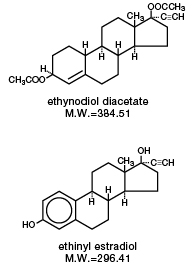
Ethynodiol diacetate and ethinyl estradiol tablets USP, 1 mg/35 mcg. Each light orange tablet contains 1 mg of ethynodiol diacetate and 35 mcg of ethinyl estradiol, and the inactive ingredients include lactose monohydrate, povidone K-25, microcrystalline cellulose, polacrilin potassium, magnesium stearate. In addition, the coloring agent is FD&C Yellow No. 6 Aluminum Lake. Each green tablet in the ethynodiol diacetate and ethinyl estradiol tablets USP, 1 mg/35 mcg package is a placebo containing no active ingredients, and the inactive ingredients include lactose monohydrate, polacrilin potassium, magnesium stearate, yellow iron oxide and FD&C Blue No. 1 Aluminum Lake.
The chemical name for ethynodiol diacetate is 19-Nor-17α-pregn-4-en-20-yne-3β, 17-diol diacetate, and for ethinyl estradiol it is 19-Nor- 17α-pregna-1,3,5(10)-trien-20-yne-3, 17-diol.
The structural formulas are as follows:
Therapeutic class: Oral contraceptive.
Section 42229-5
Rx only
Ethynodiol Diacetate and Ethinyl Estradiol Tablets USP, 1 mg/35 mcg
Patients should be counseled that this product does not protect against HIV infection (AIDS) and other sexually transmitted diseases.
Section 42230-3
BRIEF SUMMARY OF PATIENT WARNINGS
This product (like all oral contraceptives) is intended to prevent pregnancy. It does not protect against HIV infection (AIDS) and other sexually transmitted diseases.
Overdosage
Serious ill effects have not been reported following acute ingestion
n of large doses of oral contraceptives by young children.180, 181 Overdosage may cause nausea, and withdrawal bleeding may occur in females.
NON-CONTRACEPTIVE HEALTH BENEFITS
The following non-contraceptive health benefits related to the use of oral contraceptives are supported by epidemiological studies that largely utilized oral contraceptive formulations containing estrogen doses exceeding 35 mcg of ethinyl estradiol or 50 mcg of mestranol.148,149
Effects on menses:
-
•Increased menstrual cycle regularity
-
•Decreased blood loss and decreased risk of iron-deficiency anemia
-
•Decreased frequency of dysmenorrhea
Effects related to inhibition of ovulation:
-
•Decreased risk of functional ovarian cysts
-
•Decreased risk of ectopic pregnancies
Effects from long-term use:
-
•Decreased risk of fibroadenomas and fibrocystic disease of the breast
-
•Decreased risk of acute pelvic inflammatory disease
-
•Decreased risk of endometrial cancer
-
•Decreased risk of ovarian cancer
-
•Decreased risk of uterine fibroids
References
1. Hatcher RA, et al. Contraceptive Technology: Seventeenth Revised Edition. New York, NY, 1998. 1a. Physicians' Desk Reference. 47th ed. Oradell, NJ: Medical Economics Co Inc; 1993;2598-2601. 2. Mann JI, et al. Br Med J. 1975; 2 (May 3):241. 3. Mann JI, et al. Br Med J. 1975;3(Sept 13):631. 4. Mann JI, et al. Br Med J. 1975;2(May 3):245. 5. Mann JI, et al. Br Med J. 1976;2(Aug 21):445. 6. Arthes FG, et al. Chest. 1976;70 (Nov):574. 7. Jain AK, Am J Obstet Gynecol. 1976;301(Oct 1):126 and Stud Fam Plann. 1977;8(March):50. 8. Ory HW. JAMA. 1977;237(June 13):2619. 9. Jick H, et al. JAMA. 1978;239(April 3):1403, 1407. 10. Jick H, et al. JAMA. 1978;240(Dec 1):2548. 11. Shapiro S, et al. Lancet. 1979;1(April 7):743. 12. Rosenberg L, et al. Am J Epidemiol. 1980;111(Jan):59. 13. Krueger DE, et al. Am J Epidemiol. 1980;111 (June):655. 14. Layde P, et al. Lancet. 1981;1(March 7):541. 15. Adam SA, et al. Br J Obstet Gynaecol. 1981;88(Aug):838. 16. Slone D, et al. N Engl J Med. 1981;305 (Aug 20):420. 17. Ramcharan S, et al. The Walnut Creek Contraceptive Drug Study. Vol 3. US Govt Ptg Off. 1981; and J Reprod Med. 1980;25(Dec):346. 18. Layde PM, et al. J R Coll Gen Pract. 1983;33(Feb):75. 19. Rosenberg L, et al. JAMA. 1985;253(May 24/31):2965. 20. Mant D, et al. J Epidemiol Community Health. 1987;41 (Sept):215. 21. Croft P, et al. Br Med J. 1989;298 (Jan 21):165. 22. Goldbaum GM, et al. JAMA. 1987;258(Sept 11):1339. 23. Bradley DD, et al. N Engl J Med. 1978;299(July 6):17. 24. Tikkanen MJ. J Reprod Med. 1986;31(Sept suppl):898. 25. Lipson A, et al. Contraception. 1986;34(Aug):121. 26. Burkman RT, et al. Obstet Gynecol. 1988; 71(Jan):33. 27. Knopp RH, J Reprod Med. 1986;31(Sept Suppl):913. 28. Krauss RM, et al. Am J Obstet Gynecol. 1983;145(Feb 15):446. 29. Wahl P, et al. N Engl J Med. 1983;308(April 14):862. 30. Wynn V, et al. Am J Obstet Gynecol. 1982;142(March 15):766. 31. LaRosa JC. J Reprod Med. 1986;31(Sept suppl):906. 32. Wynn V, et al. J Reprod Med. 1986;31(Sept Suppl):892. 33. Royal College of General Practitioners. J R Coll Gen Pract. 1967;13(May):267. 34. Inman WHW, et al. Br Med J. 1968;2(April 27):193. 35. Vessey MP, et al. Br Med J. 1968;2(April 27):199. 36. Vessey MP, et al. Br Med J. 1969;2(June 14):651. 37. Sartwell PE, et al. Am J Epidemiol. 1969;90(Nov):365. 38. Vessey MP, et al. Br Med J. 1970;3(July 18):123. 39. Greene GR, et al. Am J Public Health. 1972;62(May):680. 40. Boston Collaborative Drug Surveillance Programme. Lancet. 1973;1(June 23):1399. 41. Stolley PD, et al. Am J Epidemiol. 1975;102(Sept):197. 42. Vessey MP, et al. J Biosoc Sci. 1976;8(Oct):373. 43. Kay CR, J R Coll Gen Pract. 1978;28(July):393. 44. Petitti DB, et al. Am J Epidemiol. 1978;108 (Dec):480. 45. Maquire MG, et al. Am J Epidemiol. 1979;110(Aug):188. 46. Petitti DB, et al. JAMA. 1979;242(Sept 14):1150. 47. Porter JB, et al. Obstet Gynecol. 1982;59(March):299. 48. Porter JB, et al. Obstet Gynecol. 1985;66(July):1. 49. Vessey MP, et al. Br Med J. 1986;292(Feb 22):526. 50. Hoover R, et al. Am J Public Health. 1978;68(April):335. 51. Vessey MP, Br J Fam Plann. 1980;6(Oct suppl):1. 52. Collaborative Group for the Study of Stroke in Young Women. N Engl J Med. 1973;288(April 26):871. 53. Royal College of General Practitioners. Oral Contraceptives and Health. New York, NY: Pitman Publ Corp; May 1974. 54. Collaborative Group for the Study of Stroke in Young Women. JAMA. 1975;231(Feb 17):718. 55. Beral V. Lancet. 1976;2(Nov 13):1047. 56. Vessey MP, et al. Lancet. 1977;2(Oct 8):731; and 1981;1(March 7):549. 57. Petitti DB, et al. Lancet. 1978;2(July 29):234. 58. Inman WHW. Br Med J. 1979;2(Dec 8):1468. 59. Vessey MP, et al. Br Med J. 1984; 289(Sept 1):530. 60. Inman WHW, et al. Br Med J. 1970;2(April 25):203. 61. Meade TW, et al. Br Med J. 1980;280(May 10):1157. 62. Bottiger LE, et al. Lancet. 1980;1(May 24):1097. 63. Kay CR. Am J Obstet Gynecol. 1982;142(March 15):762. 64. Vessey MP, et al. Br Med J. 1986;292(Feb 22):526. 65. Gordon T, et al. Am J Med. 1977;62(May):707. 66. Beral V, et al. Lancet. 1977;2(Oct 8):727. 67. Ory H. Fam Plann Perspect. 1983;15(March-April):57. 68. Arthes FG, et al. Cancer. 1971;28 (Dec):1391. 69. Vessey MP, et al. Br Med J. 1972;3(Sept 23):719. 70. Boston Collaborative Drug Surveillance Program. N Engl J Med. 1974;290(Jan 3):15. 71. Vessey MP, et al. Lancet. 1975;1(April 26):941. 72. Casagrande J, et al. J Natl Cancer Inst. 1976;56(April):839. 73. Kelsey, JL, et al. Am J Epidemiol. 1978;107(March):236. 74. Kay CR, Br Med J. 1981;282(June 27):2089. 75. Vessey MP, et al. Br Med J. 1981;282(June 27):2093. 76. The Cancer and Steroid Hormone Study of the Centers for Disease Control and the National Institute of Child Health and Human Development. Oral contraceptive use and the risk of breast cancer. N Engl J Med. 1986;315(Aug 14):405. 77. Paul C, et al. Br Med J. 1986; 293 (Sept 20):723. 78. Miller DR, et al. Obstet Gynecol. 1986;68(Dec):863. 79. Pike MC, et al. Lancet. 1983;2(Oct 22):926. 80. McPherson K, et al. Br J Cancer. 1987;56(Nov):653. 81. Hoover R, et al. N Engl J Med. 1976;295(Aug 19):401. 82. Lees AW, et al. Int J Cancer. 1978;22(Dec):700. 83. Brinton LA, et al. J Natl Cancer Inst. 1979;62(Jan):37. 84. Black MM. Pathol Res Pract. 1980;166:491; and Cancer. 1980;46(Dec):2747; and Cancer. 1983;51(June):2147. 85. Thomas DB. JNCI. 1993;85 (March 3):359. 86. Brinton LA, et al. Int J Epidemiol. 1982;11(Dec):316. 87. Harris NV, et al. Am J Epidemiol. 1982;116(Oct):643. 88. Jick H, et al. Am J Epidemiol. 1980;112(Nov):577. 89. McPherson K, et al. Lancet. 1983;2(Dec 17):1414. 90. Hoover R, et al. J Natl Cancer Inst. 1981; 67(Oct):815. 91. Jick H, et al. Am J Epidemiol. 1980; 112(Nov):586. 92. Meirik O, et al. Lancet. 1986;2 (Sept 20):650. 93. Fasal E, et al. J Natl Cancer Inst. 1975;55(Oct):767. 94. Paffenbarger RS, et al. Cancer. 1977;39(April suppl):1887. 95. Stadel BV, et al. Contraception. 1988;38(Sept):287. 96. Miller DR, et al. Am J Epidemiol. 1989;129(Feb):269. 97. Kay CR, et al. Br J Cancer. 1988;58(Nov):675. 98. Miller DR, et al. Obstet Gynecol. 1986;68(Dec):863. 99. Hulka BS, et al. Cancer. 1994;74(August 1 suppl):1111. 100. Chilver CED, et al. Br J Cancer. 1994;67(May):922. 101. Huggins GR, et al. Fertil Steril. 1987;47(May):733. 102. Pike MC, et al. Br J Cancer. 1981;43(Jan):72. 103. Ory H, et al. Am J Obstet Gynecol. 1976;124(March 15):573. 104. Stern E, et al. Science. 1977;196(June 24):1460. 105. Pertiz E, et al. Am J Epidemiol. 1977;106(Dec):462. 106. Ory HW, et al. In: Garattini S, Berendes H, eds. Pharmacology of Steroid Contraceptive Drugs. New York, NY: Raven Press; 1977:211-224. 107. Meisels A, et al. Cancer. 1977;40(Dec):3076. 108. Goldacre MJ, et al. Br Med J. 1978;1(March 25):748. 109. Swan SH, et al. Am J Obstet Gynecol. 1981;139(Jan 1):52. 110. Vessey MP, et al. Lancet. 1983;2(Oct 22):930. 111. Dallenbach-Hellweg G. Pathol Res Pract. 1984;179:38. 112. Thomas DB, et al. Br Med J. 1985;290(March 30):961. 113. Brinton LA, et al. Int J Cancer. 1986;38(Sept):339. 114. Ebeling K, et al. Int J Cancer. 1987;39(April):427. 115. Beral V, et al. Lancet. 1988;2(Dec 10):1331. 116. Baum JK, et al. Lancet. 1973;2(Oct 27):926. 117. Edmondson HA, et al. N Engl J Med. 1976;294(Feb 26):470. 118. Bein NN, et al. Br J Surg. 1977;64(June):433. 119. Klatskin G. Gastroenterology. 1977;73(Aug):386. 120. Rooks JB, et al. JAMA. 1979;242(Aug 17):644. 121. Sturtevant FM. In: Moghissi K, ed. Controversies in Contraception, Baltimore, MD; Williams and Wilkins; 1979:93-150. 122. Henderson BE, et al. Br J Cancer. 1983;48(July):437. 123. Neuberger J, et al. Br Med J. 1986;292(May 24):1355. 124. Forman D, et al. Br Med J. 1986;292(May 24):1357. 125. La Vecchia C, et al. Br J Cancer. 1989;59(March):460. 126. Savolainen E, et al. Am J Obstet Gynecol 1981;140(July 1):521. 127. Ferencz C, et al. Teratology. 1980;21(April):225. 128. Rothman KJ, et al. Am J Epidemiol. 1979;109(April):433. 129. Harlap S, et al. Obstet Gynecol. 1980;55(April):447.130. Layde PM, et al. J Epidemiol Community Health. 1982;36(Dec):274. 131. Rome Group for the Epidemiology and Prevention of Cholelithiasis (GREPCO). Am J Epidemiol. 1984;119(May):796. 132. Strom BL, et al. Clin Pharmacol Ther. 1986;39(March):335. 133. Wynn V. In: Bardin CE, et al, eds. Progesterone and Progestins. New York, NY: Raven Press; 1983:395-410. 134. Perlman JA, et al. J Chron Dis. 1985;38(Oct):857. 135. Powell MG, et al. Obstet Gynecol. 1984;63(June):764. 136. Wynn V, et al. Lancet. 1966;2(Oct 1):720. 137. Fisch IR, et al. JAMA. 1977;237(June 6):2499. 138. Kay CR. Lancet. 1977;1(March 19):624. 139. Laragh JH. Am J Obstet Gynecol. 1976;126(Sept 1):141. 140. Ramcharan S. In: Garattini S, Berendes HW, eds. Pharmacology of Steroid Contraceptive Drugs. New York, NY: Raven Press; 1977:277-288. 141. Laumas KR, et al. Am J Obstet Gynecol. 1967;98(June 1):411. 142. Saxena BN, et al. Contraception. 1977;16(Dec):605. 143. Nilsson S, et al. Contraception. 1978;17(Feb):131. 144. Washington AE, et al. JAMA. 1985;253(April 19):2246. 145. Louv WC, et al. Am J Obstet Gynecol. 1989;160(Feb):396. 146. Francis WG, et al. Can Med Assoc J. 1965;92(Jan 23):191. 147. Verhulst HL, et al. J Clin Pharmacol. 1967:7(Jan-Feb):9. 148. Ory HW, Fam Plann Perspect. 1982;14(July-Aug):182. 149. Ory HW, et al. Making Choices: Evaluating the Health Risks and Benefits of Birth Control Methods. New York, NY: The Alan Guttmacher Institute; 1983. 150. Palmer JR, et al. Am J Epidemiol. 1989;130(Nov):878. 151. Romieu I, et al. J Natl Cancer Inst. 1989;81(Sept):1313. 152. Porter JB, et al. Obstet Gynecol. 1987;70(July):29. 153. Olsson H, et al. Cancer Detect Prev. 1991;15:265. 154. Delgado-Rodriguez M, et al. Rev Epidem Sante Publ. 1991;39:165. 155. Clavel F, et al. Int J Epidemiol. 1991;20(March):32. 156. Brinton LA, et al. JNCI. 1995;87(June 7):827. 157. Thomas DB, et al. Br J Cancer. 1992;65(January):108. 158. Thomas DB, et al. Cancer Causes Cont. 1991;2(Nov):389. 159. Weinstein AL, et al. Epidemiology. 1991;2(Sept):353. 160. Ranstam J, et al. Anticancer Res. 1991;11(Nov-Dec):2043. 161. Ursin G. et al. Epidemiology. 1992;3(Sept):414. 162. White E, et al. JNCI. 1994;86(April 6):505. 163. Mann R, et al. Oral contraceptives and Breast Cancer. Park Ridge, NJ: The Parthenon Publishing Group Inc.; 1990. 164. Institute of Medicine. Committee on the Relationship Between Oral Contraceptives and Breast Cancer. Oral Contraceptives and Breast Cancer. Washington, DC: National Academy Press; 1991. 165. Harlap S. J Reprod Med. 1991;36(May):374. 166. Rushton L, et al. Br J Obstet Gynaecol. 1992;99(March):239. 167. Colditz G. Cancer. 1993;71(Feb 15 suppl):1480.
Precautions
1. Physical examination and follow-up
It is good medical practice for all women to have annual history and physical examinations, including women using oral contraceptives. The physical examination, however, may be deferred until after initiation of oral contraceptives if requested by the woman and judged appropriate by the clinician. The physical examination should include special reference to blood pressure, breasts, abdomen, and pelvic organs, including cervical cytology, and relevant laboratory tests. In case of undiagnosed, persistent, or recurrent abnormal vaginal bleeding, appropriate measures should be conducted to rule out malignancy. Women with a strong family history of breast cancer or who have breast nodules should be monitored with particular care.
2. Lipid disorders
Women who are being treated for hyperlipidemias should be followed closely if they elect to use oral contraceptives. Some progestogens may elevate LDL levels and may render the control of hyperlipidemias more difficult.
3. Liver function
If jaundice develops in any woman receiving oral contraceptives, they should be discontinued. Steroids may be poorly metabolized in patients with impaired liver function and should be administered with caution in such patients. Cholestatic jaundice has been reported after combined treatment with oral contraceptives and troleandomycin. Hepatotoxicity following a combination of oral contraceptives and cyclosporine has also been reported.
4. Fluid retention
Oral contraceptives may cause some degree of fluid retention. They should be prescribed with caution, and only with careful monitoring, in patients with conditions that might be aggravated by fluid retention, such as convulsive disorders, migraine syndrome, asthma, or cardiac, hepatic, or renal dysfunction.
5. Emotional disorders
Women with a history of depression should be carefully observed and the drug discontinued if depression recurs to a serious degree.
6. Contact lenses
Contact lens wearers who develop visual changes or changes in lens tolerance should be assessed by an ophthalmologist.
7. Drug interactions
Reduced efficacy and increased incidence of breakthrough bleeding and menstrual irregularities have been associated with concomitant use of rifampin. A similar association, though less marked, has been suggested for barbiturates, phenylbutazone, phenytoin sodium, and possibly with griseofulvin, ampicillin, and tetracyclines. Administration of troglitazone concomitantly with a combination oral contraceptive (estrogen and progestin) reduced the plasma concentrations of both hormones by approximately 30%. This could result in loss of contraceptive efficacy.
Concomitant Use with HCV Combination Therapy – Liver Enzyme Elevation
Do not co-administer ethynodiol diacetate and ethinyl estradiol with HCV drug combinations containing ombitasvir/paritaprevir/ritonavir, with or without dasabuvir, due to potential for ALT elevations (see Warnings, RISK OF LIVER ENZYME ELEVATIONS WITH CONCOMITANT HEPATITIS C TREATMENT).
8. Laboratory test interactions
Certain endocrine and liver function tests and blood components may be affected by oral contraceptives:
a. Increased prothrombin and factors VII, VIII, IX and X; decreased antithrombin III; increased platelet aggregability.
b. Increased thyroid binding globulin (TBG), leading to increased circulating total thyroid hormone as measured by protein-bound iodine (PBI), T4 by column or by radioimmunoassay. Free T3 resin uptake is decreased, reflecting the elevated TBG; free T4 concentration is unaltered.
c. Other binding proteins may be elevated in the serum.
d. Sex-steroid binding globulins are increased and result in elevated levels of total circulating sex steroids and corticoids; however, free or biologically active levels remain unchanged.
e. Triglycerides and phospholipids may be increased.
f. Glucose tolerance may be decreased.
g. Serum folate levels may be depressed. This may be of clinical significance if a woman becomes pregnant shortly after discontinuing oral contraceptives.
h. Increased sulfobromophthalein and other abnormalities in liver function tests may occur.
i. Plasma levels of trace minerals may be altered.
j. Response to the metyrapone test may be reduced.
9. Carcinogenesis (See WARNINGS .)
10. Pregnancy.
Pregnancy Category X. (See CONTRAINDICATIONS and WARNINGS .)
11. Nursing mothers
Small amounts of oral contraceptive steroids have been identified in the milk of nursing mothers141-143 and a few adverse effects on the child have been reported, including jaundice and breast enlargement. In addition, oral contraceptives given in the postpartum period may interfere with lactation by decreasing the quantity and quality of breast milk. If possible, the nursing mother should be advised not to use oral contraceptives, but to use other forms of contraception until she has completely weaned her child.
12. Pediatric use
Safety and efficacy of Ethynodiol Diacetate and Ethinyl Estradiol Tablets have been established in women of reproductive age. Safety and efficacy are expected to be the same for postpubertal adolescents under the age of 16 and for users 16 years and older. Use of this product before menarche is not indicated.
13. Venereal diseases
Oral contraceptives are of no value in the prevention or treatment of venereal disease. The prevalence of cervical Chlamydia trachomatis and Neisseria gonorrhoeae in oral contraceptive users is increased several-fold.144, 145 It should not be assumed that oral contraceptives afford protection against pelvic inflammatory disease from chlamydia.144 Patients should be counseled that this product does not protect against HIV infection (AIDS) and other sexually transmitted diseases.
14. General
a. The pathologist should be advised of oral contraceptive therapy when relevant specimens are submitted.
b. Treatment with oral contraceptives may mask the onset of the climacteric. (See WARNINGS regarding risks in this age group.)
10. Headache
The onset or exacerbation of migraine or the development of headache of a new pattern that is recurrent, persistent, or severe requires discontinuation of oral contraceptives and evaluation of the cause.
5. Ocular Lesions
There have been reports of retinal thrombosis and other ocular lesions associated with the use of oral contraceptives. Oral contraceptives should be discontinued if there is unexplained, gradual or sudden, partial or complete loss of vision; onset of proptosis or diplopia; papilledema; or any evidence of retinal vascular lesions. Appropriate diagnostic and therapeutic measures should be undertaken immediately.
B. Thromboembolism
An increased risk of thromboembolic and thrombotic disease associated with the use of oral contraceptives is well established.17, 33-51 Case-control studies have estimated the relative risk to be 3 for the first episode of superficial venous thrombosis, 4 to 11 for deep vein thrombosis or pulmonary embolism, and 1.5 to 6 for women with predisposing conditions for venous thromboembolic disease.34-37, 45, 46 Cohort studies have shown the relative risk to be somewhat lower, about 3 for new cases (subjects with no past history of venous thrombosis or varicose veins) and about 4.5 for new cases requiring hospitalization.42, 47, 48 The risk of venous thromboembolic disease associated with oral contraceptives is not related to duration of use.
A two- to seven-fold increase in relative risk of postoperative thromboembolic complications has been reported with the use of oral contraceptives.38, 39 The relative risk of venous thrombosis in women who have predisposing conditions is about twice that of women without such medical conditions.43 If feasible, oral contraceptives should be discontinued at least 4 weeks prior to and for 2 weeks after elective surgery of a type associated with an increased risk of thromboembolism, and also during and following prolonged immobilization. Since the immediate postpartum period is also associated with an increased risk of thromboembolism, oral contraceptives should be started no earlier than 4 to 6 weeks after delivery in women who elect not to breast feed.
4. Hepatic Neoplasia
Benign hepatic adenomas and other hepatic lesions have been associated with oral contraceptive use,116-121 although the incidence of such benign tumors is rare in the United States. Indirect calculations have estimated the attributable risk to be in the range of 3.3 cases per 100,000 for users, a risk that increases after 4 or more years of use.120 Rupture of benign, hepatic adenomas or other lesions may cause death through intraabdominal hemorrhage. Therefore, such lesions should be considered in women presenting with abdominal pain and tenderness, abdominal mass, or shock. About one quarter of the cases presented because of abdominal masses; up to one half had signs and symptoms of acute intraperitoneal hemorrhage.121 Diagnosis may prove difficult.
Studies from the U.S.,122, 150 Great Britain,123, 124 and Italy125 have shown an increased risk of hepatocellular carcinoma in long-term (greater than 8 years; relative risk of 7 to 20) oral contraceptive users. However, these cancers are rare in the United States, and the attributable risk (the excess incidence) of liver cancers in oral contraceptive users approaches less than 1 per 1,000,000 users.
RISK OF LIVER ENZYME ELEVATIONS WITH CONCOMITANT HEPATITIS C TREATMENT
During clinical trials with the Hepatitis C combination drug regimen that contains ombitasvir/paritaprevir/ritonavir, with or without dasabuvir, ALT elevations greater than 5 times the upper limit of normal (ULN), including some cases greater than 20 times the ULN, were significantly more frequent in women using ethinyl estradiol-containing medications such as CHCs. Discontinue ethynodiol diacetate and ethinyl estradiol prior to starting therapy with the combination drug regimen ombitasvir/paritaprevir/ritonavir, with or without dasabuvir [see Contraindications (4)]. Ethynodiol diacetate and ethinyl estradiol can be restarted approximately 2 weeks following completion of treatment with the combination drug regimen.
Clinical Pharmacology
Combination oral contraceptives act primarily by suppression of gonadotropins. Although the primary mechanism of this action is inhibition of ovulation, other alterations in the genital tract, including changes in the cervical mucus (which increase the difficulty of sperm entry into the uterus) and the endometrium (which may reduce the likelihood of implantation) may also contribute to contraceptive effectiveness.
3. Malignant Neoplasms
Breast Cancer
Ethynodiol diacetate and ethinyl estradiol tablets are contraindicated in females who currently have or have had breast cancer because breast cancer may be hormonally sensitive (see Contraindications (4) ).
Epidemiology studies have not found a consistent association between use of combined oral contraceptives (COCs) and breast cancer risk. Studies do not show an association between ever (current or past) use of COCs and risk of breast cancer. However, some studies report a small increase in the risk of breast cancer among current or recent users (<6 months since last use) and current users with longer duration of COC use (see Post Marketing Experience).
Cervical Cancer
Some studies suggested that oral contraceptive use was associated with an increase in the risk of cervical intraepithelial neoplasia, dysplasia, erosion, carcinoma, or micro-glandular dysplasia in some populations of women.17, 50, 103-115 However, there continues to be controversy about the extent to which such findings may be due to differences in sexual behavior and other factors.
In spite of many studies of the relationship between oral contraceptive use and breast and cervical cancers, a cause and effect relationship has not been established.
7. Gallbladder Disease
Earlier studies reported an increased lifetime relative risk of gallbladder surgery in users of oral contraceptives and estrogens.40, 42, 53, 70 More recent studies, however, have shown that the relative risk of developing gallbladder disease among oral contraceptive users may be minimal.130-132 The recent findings of minimal risk may be related to the use of oral contraceptive formulations containing lower doses of estrogens and progestogens.
A. Myocardial Infarction
An increased risk of myocardial infarction has been associated with oral contraceptive use.2-21 This increased risk is primarily in smokers or in women with other underlying risk factors for coronary artery disease such as hypertension, obesity, diabetes, and hypercholesterolemia. The relative risk for myocardial infarction in current oral contraceptive users has been estimated to be 2 to 6. The risk is very low under the age of 30. However, there is the possibility of a risk of cardiovascular disease even in very young women who take oral contraceptives.
Smoking in combination with oral contraceptive use has been reported to contribute substantially to the risk of myocardial infarction in women in their mid-thirties or older, with smoking accounting for the majority of excess cases.22 Mortality rates associated with circulatory disease have been shown to increase substantially in smokers, especially in those 35 years of age and older among women who use oral contraceptives (see Figure 1, Table 2).
Figure 1. Circulatory disease mortality rates per 100,000 woman-years by age, smoking status, and oral contraceptive use.14
Adapted from Layde and Beral.14
Oral contraceptives may compound the effects of well-known cardiovascular risk factors such as hypertension, diabetes, hyperlipidemias, hypercholesterolemia, age, cigarette smoking, and obesity. In particular, some progestogens decrease HDL cholesterol23-31 and cause glucose intolerance, while estrogens may create a state of hyperinsulinism.32 Oral contraceptives have been shown to increase blood pressure among some users (see WARNING No. 9). Similar effects on risk factors have been associated with an increased risk of heart disease.
9. Elevated Blood Pressure
An increase in blood pressure has been reported in women taking oral contraceptives50, 53, 137-139 and this increase is more likely in older oral contraceptive users137 and with extended duration of use.53 Data from the Royal College of General Practitioners138 and subsequent randomized trials have shown that the incidence of hypertension increases with increasing concentrations of progestogens.
Women with a history of hypertension or hypertension-related disease, or renal disease139 should be encouraged to use another method of contraception. If such women elect to use oral contraceptives, they should be monitored closely and if significant elevation of blood pressure occurs, oral contraceptives should be discontinued. For most women, elevated blood pressure will return to normal after stopping oral contraceptives,137 and there is no difference in the occurrence of hypertension among ever and never-users.140
11. Bleeding Irregularities
Breakthrough bleeding and spotting are sometimes encountered in patients on oral contraceptives, especially during the first three months of use. Nonhormonal causes should be considered and adequate diagnostic measures taken to rule out malignancy or pregnancy in the event of breakthrough bleeding, as in the case of any abnormal vaginal bleeding. If a pathologic basis has been excluded, time alone or a change to another formulation may solve the problem. In the event of amenorrhea, pregnancy should be ruled out. Some women may encounter post-pill amenorrhea or oligomenorrhea, especially when such a condition was pre-existent.
Information for the Patient
See patient labeling printed below.
C. Cerebrovascular Diseases
Both the relative and attributable risks of cerebrovascular events (thrombotic and hemorrhagic strokes) have been reported to be increased with oral contraceptive use,14, 17, 18, 34, 42, 46, 52-59 although, in general, the risk was greatest among older (over 35 years), hypertensive women who also smoked. Hypertension was reported to be a risk factor for both users and nonusers, for both types of strokes, while smoking increased the risk for hemorrhagic strokes.
In one large study,52 the relative risk for thrombotic stroke was reported as 9.5 times greater in users than in nonusers. It ranged from 3 for normotensive users to 14 for users with severe hypertension.54 The relative risk for hemorrhagic stroke was reported to be 1.2 for nonsmokers who used oral contraceptives, 1.9 to 2.6 for smokers who did not use oral contraceptives, 6.1 to 7.6 for smokers who used oral contraceptives, 1.8 for normotensive users, and 25.7 for users with severe hypertension. The risk is also greater in older women and among smokers.
Package Label.principal Display Panel
NDC 0378-7307-53
Rx only
Ethynodiol Diacetate
and Ethinyl Estradiol
Tablets, USP
1 mg/35 mcg
This product (like all oral contraceptives) is intended to prevent pregnancy. It does not protect against HIV infection (AIDS) and other sexually transmitted diseases.
3 pouches, each pouch contains one blister pack of 28 tablets
E. Persistence of Risk of Vascular Disease
There are three studies that have shown persistence of risk of vascular disease for users of oral contraceptives. In a study in the United States, the risk of developing myocardial infarction after discontinuing oral contraceptives persisted for at least 9 years for women 40 to 49 years old who had used oral contraceptives for 5 or more years, but this increased risk was not demonstrated in other age groups.16 Another American study reported former use of oral contraceptives was significantly associated with increased risk of subarachnoid hemorrhage.57 In another study, in Great Britain, the risk of developing nonrheumatic heart disease plus hypertension, subarachnoid hemorrhage, cerebral thrombosis, and transient ischemic attacks persisted for at least 6 years after discontinuation of oral contraceptives, although the excess risk was small.14, 18, 66 It should be noted that these studies were performed with oral contraceptive formulations containing 50 mcg or more of estrogens.
8. Carbohydrate and Lipid Metabolic Effects
Oral contraceptives have been shown to cause a decrease in glucose tolerance in a significant percentage of users.32 This effect has been shown to be directly related to estrogen dose.133 Progestogens increase insulin secretion and create insulin resistance, the effect varying with different progestational agents.32, 134 However, in the nondiabetic woman, oral contraceptives appear to have no effect on fasting blood glucose. Because of these demonstrated effects, prediabetic and diabetic women should be carefully observed while taking oral contraceptives.
Some women may have persistent hypertriglyceridemia while on the pill. As discussed earlier (see WARNINGS 1a and 1d), changes in serum triglycerides and lipoprotein levels have been reported in oral contraceptive users.23-31, 135, 136
2. Estimates of Mortality From Contraceptive Use
One study67 gathered data from a variety of sources that have estimated the mortality rates associated with different methods of contraception at different ages (Table 2). These estimates include the combined risk of death associated with contraceptive methods plus the risk attributable to pregnancy in the event of method failure. Each method of contraception has its specific benefits and risks. The study concluded that, with the exception of oral contraceptive users 35 and older who smoke and 40 or older who do not smoke, mortality associated with all methods of birth control is low and below that associated with childbirth. The observation of a possible increase in risk of mortality with age for oral contraceptive users is based on data gathered in the 1970's, but not reported until 1983.67 However, current clinical practice involves the use of lower estrogen dose formulations combined with careful restriction of oral contraceptive use to women who do not have the various risk factors listed in this labeling.
Because of these changes in practice and, also, because of some limited new data that suggest that the risk of cardiovascular disease with the use of oral contraceptives may now be less than previously observed,48, 152 the Fertility and Maternal Health Drugs Advisory Committee was asked to review the topic in 1989. The Committee concluded that, although cardiovascular disease risks may be increased with oral contraceptive use after age 40 in healthy nonsmoking women (even with the newer low-dose formulations), there are greater potential health risks associated with pregnancy in older women and with the alternative surgical and medical procedures that may be necessary if such women do not have access to effective and acceptable means of contraception.
Therefore, the Committee recommended that the benefits of oral contraceptive use by healthy nonsmoking women over 40 may outweigh the possible risks. Of course, older women, as all women who take oral contraceptives, should take the lowest possible dose formulation that is effective.
|
Age
|
||||||
|
Method of control
|
15 to 19
|
20 to 24
|
25 to 29
|
30 to 34
|
35 to 39
|
40 to 44
|
|
No fertility control methods Deaths are birth-related
|
7 |
7.4 |
9.1 |
14.8 |
25.7 |
28.2 |
|
Oral contraceptives |
||||||
|
nonsmoker Deaths are method-related
|
0.3 |
0.5 |
0.9 |
1.9 |
13.8 |
31.6 |
|
smoker |
2.2 |
3.4 |
6.6 |
13.5 |
51.1 |
117.2 |
|
IUD |
0.8 |
0.8 |
1 |
1 |
1.4 |
1.4 |
|
Condom |
1.1 |
1.6 |
0.7 |
0.2 |
0.3 |
0.4 |
|
Diaphragm/Spermicide |
1.9 |
1.2 |
1.2 |
1.3 |
2.2 |
2.8 |
|
Periodic abstinence |
2.5 |
1.6 |
1.6 |
1.7 |
2.9 |
3.6 |
Adapted from Ory. 67
6. Oral Contraceptive Use Before Or During Pregnancy
Extensive epidemiological studies have revealed no increased risk of birth defects in women who have used oral contraceptives prior to pregnancy.126, 129 The majority of recent studies also do not suggest a teratogenic effect, particularly insofar as cardiac anomalies and limb reduction defects are concerned, 126, 129 when the pill is taken inadvertently during early pregnancy.
The administration of oral contraceptives to induce withdrawal bleeding should not be used as a test for pregnancy. Oral contraceptives should not be used during pregnancy to treat threatened or habitual abortion. It is recommended that for any patient who has missed two consecutive periods, pregnancy should be ruled out before continuing oral contraceptive use. If the patient has not adhered to the prescribed schedule, the possibility of pregnancy should be considered at the time of the first missed period and further use of oral contraceptives should be withheld until pregnancy has been ruled out. Oral contraceptive use should be discontinued if pregnancy is confirmed.
D. Dose Related Risk of Vascular Disease With Oral Contraceptives
A positive association has been reported between the amount of estrogen and progestogen in oral contraceptives and the risk of vascular disease.41, 43, 53, 59-64 A decline in serum high density lipoproteins (HDL) has been reported with many progestogens.23-31 A decline in serum high density lipoproteins has been associated with an increased incidence of ischemic heart disease.65 Because estrogens increase HDL-cholesterol, the net effect of an oral contraceptive depends on the balance achieved between doses of estrogen and progestogen and the nature and absolute amount of progestogens used in the contraceptives. The amount of both steroids should be considered in the choice of an oral contraceptive.
Minimizing exposure to estrogen and progestogen is in keeping with good principles of therapeutics. For any particular estrogen-progestogen combination, the dosage regimen prescribed should be one that contains the least amount of estrogen and progestogen that is compatible with a low failure rate and the needs of the individual patient. New acceptors of oral contraceptives should be started on preparations containing the lowest estrogen content that produces satisfactory results in the individual.
Products containing 50 mcg estrogen should be used only when medically indicated.
Structured Label Content
Recent Major Changes (34066-1)
Cigarette smoking increases the risk of serious cardiovascular side effects from oral contraceptive use. This risk increases with age and with heavy smoking (15 or more cigarettes per day) and is quite marked in women over 35 years of age. Women who use oral contraceptives should be strongly advised not to smoke.
Indications and Usage (INDICATIONS AND USAGE)
Ethynodiol diacetate and ethinyl estradiol tablets USP, 1 mg/35 mcg are indicated for the prevention of pregnancy in women who elect to use oral contraceptives as a method of contraception.
Oral contraceptives are highly effective. Table 1 lists the typical accidental pregnancy rates for users of combination oral contraceptives and other methods of contraception. The efficacy of these contraceptive methods, except sterilization and progestogen implants and injections, depends upon the reliability with which they are used. Correct and consistent use of methods can result in lower failure rates.
|
Emergency Contraceptive Pills: Treatment initiated within 72 hours after unprotected intercourse reduces the risk of pregnancy by at least 75%. The treatment schedule is one dose within 72 hours after unprotected intercourse and a second dose 12 hours after the first dose. The Food and Drug Administration has declared the following brands of oral contraceptives to be safe and effective for emergency contraception: Ovral (1 dose is 2 white pills), Alesse (1 dose is 5 pink pills), Nordette or Levlen (1 dose is 2 light-orange pills), Lo/Ovral (1 dose is 4 white pills), Triphasil or Tri-Levlen (1 dose is 4 yellow pills).
|
|||
|
Lactational Amenorrhea Method: LAM is a highly effective, temporary method of contraception. However, to maintain effective protection against pregnancy, another method of contraception must be used as soon as menstruation resumes, the frequency or duration of breastfeeds is reduced, bottle feeds are introduced, or the baby reaches six months of age.
|
|||
| Source: Trussell J, Contraceptive efficacy. In Hatcher RA, Trussell J, Stewart F, Cates W, Stewart GK, Kowal D, Guest F, Contraceptive Technology: Seventeenth Revised Edition. New York NY: Irvington Publishers, 1998, in press.1
|
|||
|
% of women experiencing an
|
% of women
Among couples attempting to avoid pregnancy, the percentage who continue to use a method for one year.
|
||
|
Method
|
Typical use Among typical couples who initiate use of a method (not necessarily for the first time), the percentage who experience an accidental pregnancy during the first year if they do not stop use for any other reason.
(2) |
Perfect use Among couples who initiate use of a method (not necessarily for the first time) and who use it perfectly (both consistently and correctly), the percentage who experience an accidental pregnancy during the first year if they do not stop use for any other reason.
(3) |
|
|
Chance The percents becoming pregnant in columns (2) and (3) are based on data from populations where contraception is not used and from women who cease using contraception in order to become pregnant. Among such populations, about 89% become pregnant within one year. This estimate was lowered slightly (to 85%) to represent the percent who would become pregnant within one year among women now relying on reversible methods of contraception if they abandoned contraception altogether.
|
85 |
85 |
|
|
Spermicides Foams, creams, gels, vaginal suppositories, and vaginal film.
|
26 |
6 |
40 |
|
Periodic abstinence |
25 |
63 |
|
|
Calendar |
9 |
||
|
Ovulation method |
3 |
||
|
Sympto-thermal Cervical mucus (ovulation) method supplemented by calendar in the pre-ovulatory and basal body temperature in the post-ovulatory phases.
|
2 |
||
|
Post-ovulation |
1 |
||
|
Withdrawal |
19 |
4 |
|
|
Cap With spermicidal cream or jelly.
|
|||
|
Parous women |
40 |
26 |
42 |
|
Nulliparous women |
20 |
9 |
56 |
|
Sponge |
|||
|
Parous women |
40 |
20 |
42 |
|
Nulliparous women |
20 |
9 |
56 |
|
Diaphragm |
20 |
6 |
56 |
|
Condom Without spermicides.
|
|||
|
Female (Reality®) |
21 |
5 |
56 |
|
Male |
14 |
3 |
61 |
|
Pill |
5 |
71 |
|
|
Progestin only |
0.5 |
||
|
Combined |
0.1 |
||
|
IUD |
|||
|
Progesterone T |
2 |
1.5 |
81 |
|
Copper T 380A |
0.8 |
0.6 |
78 |
|
LNg 20 |
0.1 |
0.1 |
81 |
|
Injection (Depo-Provera) |
0.3 |
0.3 |
70 |
|
Implant (Norplant and Norplant-2)
|
0.05 |
0.05 |
88 |
|
Female sterilization |
0.5 |
0.5 |
100 |
|
Male sterilization |
0.15 |
0.1 |
100 |
Dosage and Administration (DOSAGE AND ADMINISTRATION)
To achieve maximum contraceptive effectiveness, oral contraceptives must be taken exactly as directed and at intervals of 24 hours.
IMPORTANT: If the Sunday start schedule is selected, the patient should be instructed to use an additional method of protection until after the first week of administration in the initial cycle. The possibility of ovulation and conception prior to initiation of use should be considered.
Dosage Schedules
Each ethynodiol diacetate and ethinyl estradiol tablet dispenser contains 21 light orange colored active tablets arranged in three numbered rows of 7 tablets each, followed by a fourth row of 7 green placebo tablets.
Days of the week are printed above the tablets, starting with Sunday on the left.
28-Day Schedule: For a DAY 1 START, count the first day of menstrual flow as Day 1 and the first tablet (light orange) is then taken on Day 1. For a SUNDAY START when menstrual flow begins on or before Sunday, the first tablet (light orange) is taken on that day. With either a DAY 1 START or SUNDAY START, 1 tablet (light orange) is taken each day at the same time for 21 days. Then the green tablets are taken for 7 days, whether bleeding has stopped or not. After all 28 tablets have been taken, whether bleeding has stopped or not, the same dosage schedule is repeated beginning on the following day.
Special notes
Spotting, breakthrough bleeding, or nausea. If spotting (bleeding insufficient to require a pad), breakthrough bleeding (heavier bleeding similar to a menstrual flow), or nausea occurs the patient should continue taking her tablets as directed. The incidence of spotting, breakthrough bleeding or nausea is minimal, most frequently occurring in the first cycle. Ordinarily spotting or breakthrough bleeding will stop within a week. Usually the patient will begin to cycle regularly within two or three courses of tablet-taking. In the event of spotting or breakthrough bleeding organic causes should be borne in mind. (See WARNING No. 11.)
Missed menstrual periods. Withdrawal flow will normally occur 2 or 3 days after the last active tablet is taken. Failure of withdrawal bleeding ordinarily does not mean that the patient is pregnant, providing the dosage schedule has been correctly followed. (See WARNING No. 6.)
If the patient has not adhered to the prescribed dosage regimen, the possibility of pregnancy should be considered after the first missed period, and oral contraceptives should be withheld until pregnancy has been ruled out.
If the patient has adhered to the prescribed regimen and misses two consecutive periods, pregnancy should be ruled out before continuing the contraceptive regimen.
The first intermenstrual interval after discontinuing the tablets is usually prolonged; consequently, a patient for whom a 28-day cycle is usual might not begin to menstruate for 35 days or longer. Ovulation in such prolonged cycles will occur correspondingly later in the cycle. Post-treatment cycles after the first one, however, are usually typical for the individual woman prior to taking tablets. (See WARNING No. 11.)
Missed tablets. If a woman misses taking one active tablet, the missed tablet should be taken as soon as it is remembered. In addition, the next tablet should be taken at the usual time. If two consecutive active tablets are missed in week 1 or week 2 of the dispenser, the dosage should be doubled for the next 2 days. The regular schedule should then be resumed, but an additional method of protection must be used as backup for the next 7 days if she has sex during that time or she may become pregnant.
If two consecutive active tablets are missed in week 3 of the dispenser or three consecutive active tablets are missed during any of the first 3 weeks of the dispenser, direct the patient to do one of the following: Day 1 Starters should discard the rest of the dispenser and begin a new dispenser that same day; Sunday Starters should continue to take 1 tablet daily until Sunday, discard the rest of the dispenser and begin a new dispenser that same day. The patient may not have a period this month; however, if she has missed two consecutive periods, pregnancy should be ruled out. An additional method of protection must be used as a backup for the next 7 days after the tablets are missed if she has sex during that time or she may become pregnant.
While there is little likelihood of ovulation if only one active tablet is missed, the possibility of spotting or breakthrough bleeding is increased and should be expected if two or more successive active tablets are missed. However, the possibility of ovulation increases with each successive day that scheduled active tablets are missed.
If one or more placebo tablets of ethynodiol diacetate and ethinyl estradiol tablets are missed, the ethynodiol diacetate and ethinyl estradiol tablets schedule should be resumed on the eighth day after the last light orange tablet was taken. Omission of placebo tablets in the 28-tablet courses does not increase the possibility of conception provided that this schedule is followed.
Contraindications (CONTRAINDICATIONS)
Ethynodiol diacetate and ethinyl estradiol tablets are contraindicated in females who are known to have or develop the following conditions:
-
•Thrombophlebitis or thromboembolic disorders
-
•A past history of deep vein thrombophlebitis or thromboembolic disorders
-
•Cerebral vascular disease, myocardial infarction, or coronary artery disease, or a past history of these conditions
-
•Current diagnosis of, or history of, breast cancer, which may be hormone-sensitive
-
•Known or suspected carcinoma of the female reproductive organs or suspected estrogen-dependent neoplasia, or a history of these conditions
-
•Undiagnosed abnormal genital bleeding
-
•History of cholestatic jaundice of pregnancy or jaundice with prior oral contraceptive use
-
•Past or present, benign or malignant liver tumors
-
•Known or suspected pregnancy
-
•Are receiving Hepatitis C drug combinations containing ombitasvir/paritaprevir/ritonavir, with or without dasabuvir, due to the potential for ALT elevations (see Warnings, RISK OF LIVER ENZYME ELEVATIONS WITH CONCOMITANT HEPATITIS C TREATMENT).
Adverse Reactions (ADVERSE REACTIONS)
An increased risk of the following serious adverse reactions has been associated with the use of oral contraceptives (see WARNINGS ):
-
•Thrombophlebitis and thrombosis
-
•Arterial thromboembolism
-
•Pulmonary embolism
-
•Myocardial infarction and coronary thrombosis
-
•Cerebral hemorrhage
-
•Cerebral thrombosis
-
•Hypertension
-
•Gallbladder disease
-
•Benign and malignant liver tumors, and other hepatic lesions
There is evidence of an association between the following conditions and the use of oral contraceptives, although additional confirmatory studies are needed:
-
•Mesenteric thrombosis
-
•Neuro-ocular lesions (e.g., retinal thrombosis and optic neuritis)
The following adverse reactions have been reported in patients receiving oral contraceptives and are believed to be drug-related:
-
•Nausea
-
•Vomiting
-
•Gastrointestinal symptoms (such as abdominal cramps and bloating)
-
•Breakthrough bleeding
-
•Spotting
-
•Change in menstrual flow
-
•Amenorrhea during or after use
-
•Temporary infertility after discontinuation of use
-
•Edema
-
•Chloasma or melasma, which may persist
-
•Breast changes: tenderness, enlargement, secretion
-
•Change in weight (increase or decrease)
-
•Change in cervical erosion or secretion
-
•Diminution in lactation when given immediately postpartum
-
•Cholestatic jaundice
-
•Migraine
-
•Rash (allergic)
-
•Mental depression
-
•Reduced tolerance to carbohydrates
-
•Vaginal candidiasis
-
•Change in corneal curvature (steepening)
-
•Intolerance to contact lenses
The following adverse reactions or conditions have been reported in users of oral contraceptives and the association has been neither confirmed nor refuted:
-
•Premenstrual syndrome
-
•Cataracts
-
•Changes in appetite
-
•Cystitis-like syndrome
-
•Headache
-
•Nervousness
-
•Dizziness
-
•Hirsutism
-
•Loss of scalp hair
-
•Erythema multiforme
-
•Erythema nodosum
-
•Hemorrhagic eruption
-
•Vaginitis
-
•Porphyria
-
•Impaired renal function
-
•Hemolytic uremic syndrome
-
•Acne
-
•Changes in libido
-
•Colitis
-
•Budd-Chiari syndrome
-
•Endocervical hyperplasia or ectropion
Post Marketing Experience
Five studies that compared breast cancer risk between ever-users (current or past use) of COCs and never-users of COCs reported no association between ever use of COCs and breast cancer risk, with effect estimates ranging from 0.90 - 1.12 (Figure 2).
Three studies compared breast cancer risk between current or recent COC users (<6 months since last use) and never users of COCs (Figure 2). One of these studies reported no association between breast cancer risk and COC use. The other two studies found an increased relative risk of 1.19 - 1.33 with current or recent use. Both of these studies found an increased risk of breast cancer with current use of longer duration, with relative risks ranging from 1.03 with less than one year of COC use to approximately 1.4 with more than 8-10 years of COC use.
Figure 2. Risk of Breast Cancer with Combined Oral Contraceptive Use
RR = relative risk; OR = odds ratio; HR = hazard ratio. “ever COC” are females with current or past COC use; “never COC use” are females that never used COCs.
How Supplied (HOW SUPPLIED)
Each light orange ethynodiol diacetate and ethinyl estradiol tablet USP, 1 mg/35 mcg is round in shape, unscored and debossed with 245 on one side and plain on the other side and contains 1 mg of ethynodiol diacetate and 35 mcg of ethinyl estradiol.
Ethynodiol diacetate and ethinyl estradiol tablets USP, 1 mg/35 mcg are packaged in cartons of three (NDC 0378-7307-53) tablet dispensers. Each dispenser contains 21 light orange tablets and 7 green placebo tablets. (Placebo tablets are debossed with 302 on one side and plain on the other side.)
Store at 20° to 25°C (68° to 77°F). [See USP Controlled Room Temperature.]
Description (DESCRIPTION)
Ethynodiol diacetate and ethinyl estradiol tablets USP, 1 mg/35 mcg. Each light orange tablet contains 1 mg of ethynodiol diacetate and 35 mcg of ethinyl estradiol, and the inactive ingredients include lactose monohydrate, povidone K-25, microcrystalline cellulose, polacrilin potassium, magnesium stearate. In addition, the coloring agent is FD&C Yellow No. 6 Aluminum Lake. Each green tablet in the ethynodiol diacetate and ethinyl estradiol tablets USP, 1 mg/35 mcg package is a placebo containing no active ingredients, and the inactive ingredients include lactose monohydrate, polacrilin potassium, magnesium stearate, yellow iron oxide and FD&C Blue No. 1 Aluminum Lake.
The chemical name for ethynodiol diacetate is 19-Nor-17α-pregn-4-en-20-yne-3β, 17-diol diacetate, and for ethinyl estradiol it is 19-Nor- 17α-pregna-1,3,5(10)-trien-20-yne-3, 17-diol.
The structural formulas are as follows:
Therapeutic class: Oral contraceptive.
Section 42229-5 (42229-5)
Rx only
Ethynodiol Diacetate and Ethinyl Estradiol Tablets USP, 1 mg/35 mcg
Patients should be counseled that this product does not protect against HIV infection (AIDS) and other sexually transmitted diseases.
Section 42230-3 (42230-3)
BRIEF SUMMARY OF PATIENT WARNINGS
This product (like all oral contraceptives) is intended to prevent pregnancy. It does not protect against HIV infection (AIDS) and other sexually transmitted diseases.
Overdosage (OVERDOSAGE)
Serious ill effects have not been reported following acute ingestion
n of large doses of oral contraceptives by young children.180, 181 Overdosage may cause nausea, and withdrawal bleeding may occur in females.
NON-CONTRACEPTIVE HEALTH BENEFITS
The following non-contraceptive health benefits related to the use of oral contraceptives are supported by epidemiological studies that largely utilized oral contraceptive formulations containing estrogen doses exceeding 35 mcg of ethinyl estradiol or 50 mcg of mestranol.148,149
Effects on menses:
-
•Increased menstrual cycle regularity
-
•Decreased blood loss and decreased risk of iron-deficiency anemia
-
•Decreased frequency of dysmenorrhea
Effects related to inhibition of ovulation:
-
•Decreased risk of functional ovarian cysts
-
•Decreased risk of ectopic pregnancies
Effects from long-term use:
-
•Decreased risk of fibroadenomas and fibrocystic disease of the breast
-
•Decreased risk of acute pelvic inflammatory disease
-
•Decreased risk of endometrial cancer
-
•Decreased risk of ovarian cancer
-
•Decreased risk of uterine fibroids
References (REFERENCES)
1. Hatcher RA, et al. Contraceptive Technology: Seventeenth Revised Edition. New York, NY, 1998. 1a. Physicians' Desk Reference. 47th ed. Oradell, NJ: Medical Economics Co Inc; 1993;2598-2601. 2. Mann JI, et al. Br Med J. 1975; 2 (May 3):241. 3. Mann JI, et al. Br Med J. 1975;3(Sept 13):631. 4. Mann JI, et al. Br Med J. 1975;2(May 3):245. 5. Mann JI, et al. Br Med J. 1976;2(Aug 21):445. 6. Arthes FG, et al. Chest. 1976;70 (Nov):574. 7. Jain AK, Am J Obstet Gynecol. 1976;301(Oct 1):126 and Stud Fam Plann. 1977;8(March):50. 8. Ory HW. JAMA. 1977;237(June 13):2619. 9. Jick H, et al. JAMA. 1978;239(April 3):1403, 1407. 10. Jick H, et al. JAMA. 1978;240(Dec 1):2548. 11. Shapiro S, et al. Lancet. 1979;1(April 7):743. 12. Rosenberg L, et al. Am J Epidemiol. 1980;111(Jan):59. 13. Krueger DE, et al. Am J Epidemiol. 1980;111 (June):655. 14. Layde P, et al. Lancet. 1981;1(March 7):541. 15. Adam SA, et al. Br J Obstet Gynaecol. 1981;88(Aug):838. 16. Slone D, et al. N Engl J Med. 1981;305 (Aug 20):420. 17. Ramcharan S, et al. The Walnut Creek Contraceptive Drug Study. Vol 3. US Govt Ptg Off. 1981; and J Reprod Med. 1980;25(Dec):346. 18. Layde PM, et al. J R Coll Gen Pract. 1983;33(Feb):75. 19. Rosenberg L, et al. JAMA. 1985;253(May 24/31):2965. 20. Mant D, et al. J Epidemiol Community Health. 1987;41 (Sept):215. 21. Croft P, et al. Br Med J. 1989;298 (Jan 21):165. 22. Goldbaum GM, et al. JAMA. 1987;258(Sept 11):1339. 23. Bradley DD, et al. N Engl J Med. 1978;299(July 6):17. 24. Tikkanen MJ. J Reprod Med. 1986;31(Sept suppl):898. 25. Lipson A, et al. Contraception. 1986;34(Aug):121. 26. Burkman RT, et al. Obstet Gynecol. 1988; 71(Jan):33. 27. Knopp RH, J Reprod Med. 1986;31(Sept Suppl):913. 28. Krauss RM, et al. Am J Obstet Gynecol. 1983;145(Feb 15):446. 29. Wahl P, et al. N Engl J Med. 1983;308(April 14):862. 30. Wynn V, et al. Am J Obstet Gynecol. 1982;142(March 15):766. 31. LaRosa JC. J Reprod Med. 1986;31(Sept suppl):906. 32. Wynn V, et al. J Reprod Med. 1986;31(Sept Suppl):892. 33. Royal College of General Practitioners. J R Coll Gen Pract. 1967;13(May):267. 34. Inman WHW, et al. Br Med J. 1968;2(April 27):193. 35. Vessey MP, et al. Br Med J. 1968;2(April 27):199. 36. Vessey MP, et al. Br Med J. 1969;2(June 14):651. 37. Sartwell PE, et al. Am J Epidemiol. 1969;90(Nov):365. 38. Vessey MP, et al. Br Med J. 1970;3(July 18):123. 39. Greene GR, et al. Am J Public Health. 1972;62(May):680. 40. Boston Collaborative Drug Surveillance Programme. Lancet. 1973;1(June 23):1399. 41. Stolley PD, et al. Am J Epidemiol. 1975;102(Sept):197. 42. Vessey MP, et al. J Biosoc Sci. 1976;8(Oct):373. 43. Kay CR, J R Coll Gen Pract. 1978;28(July):393. 44. Petitti DB, et al. Am J Epidemiol. 1978;108 (Dec):480. 45. Maquire MG, et al. Am J Epidemiol. 1979;110(Aug):188. 46. Petitti DB, et al. JAMA. 1979;242(Sept 14):1150. 47. Porter JB, et al. Obstet Gynecol. 1982;59(March):299. 48. Porter JB, et al. Obstet Gynecol. 1985;66(July):1. 49. Vessey MP, et al. Br Med J. 1986;292(Feb 22):526. 50. Hoover R, et al. Am J Public Health. 1978;68(April):335. 51. Vessey MP, Br J Fam Plann. 1980;6(Oct suppl):1. 52. Collaborative Group for the Study of Stroke in Young Women. N Engl J Med. 1973;288(April 26):871. 53. Royal College of General Practitioners. Oral Contraceptives and Health. New York, NY: Pitman Publ Corp; May 1974. 54. Collaborative Group for the Study of Stroke in Young Women. JAMA. 1975;231(Feb 17):718. 55. Beral V. Lancet. 1976;2(Nov 13):1047. 56. Vessey MP, et al. Lancet. 1977;2(Oct 8):731; and 1981;1(March 7):549. 57. Petitti DB, et al. Lancet. 1978;2(July 29):234. 58. Inman WHW. Br Med J. 1979;2(Dec 8):1468. 59. Vessey MP, et al. Br Med J. 1984; 289(Sept 1):530. 60. Inman WHW, et al. Br Med J. 1970;2(April 25):203. 61. Meade TW, et al. Br Med J. 1980;280(May 10):1157. 62. Bottiger LE, et al. Lancet. 1980;1(May 24):1097. 63. Kay CR. Am J Obstet Gynecol. 1982;142(March 15):762. 64. Vessey MP, et al. Br Med J. 1986;292(Feb 22):526. 65. Gordon T, et al. Am J Med. 1977;62(May):707. 66. Beral V, et al. Lancet. 1977;2(Oct 8):727. 67. Ory H. Fam Plann Perspect. 1983;15(March-April):57. 68. Arthes FG, et al. Cancer. 1971;28 (Dec):1391. 69. Vessey MP, et al. Br Med J. 1972;3(Sept 23):719. 70. Boston Collaborative Drug Surveillance Program. N Engl J Med. 1974;290(Jan 3):15. 71. Vessey MP, et al. Lancet. 1975;1(April 26):941. 72. Casagrande J, et al. J Natl Cancer Inst. 1976;56(April):839. 73. Kelsey, JL, et al. Am J Epidemiol. 1978;107(March):236. 74. Kay CR, Br Med J. 1981;282(June 27):2089. 75. Vessey MP, et al. Br Med J. 1981;282(June 27):2093. 76. The Cancer and Steroid Hormone Study of the Centers for Disease Control and the National Institute of Child Health and Human Development. Oral contraceptive use and the risk of breast cancer. N Engl J Med. 1986;315(Aug 14):405. 77. Paul C, et al. Br Med J. 1986; 293 (Sept 20):723. 78. Miller DR, et al. Obstet Gynecol. 1986;68(Dec):863. 79. Pike MC, et al. Lancet. 1983;2(Oct 22):926. 80. McPherson K, et al. Br J Cancer. 1987;56(Nov):653. 81. Hoover R, et al. N Engl J Med. 1976;295(Aug 19):401. 82. Lees AW, et al. Int J Cancer. 1978;22(Dec):700. 83. Brinton LA, et al. J Natl Cancer Inst. 1979;62(Jan):37. 84. Black MM. Pathol Res Pract. 1980;166:491; and Cancer. 1980;46(Dec):2747; and Cancer. 1983;51(June):2147. 85. Thomas DB. JNCI. 1993;85 (March 3):359. 86. Brinton LA, et al. Int J Epidemiol. 1982;11(Dec):316. 87. Harris NV, et al. Am J Epidemiol. 1982;116(Oct):643. 88. Jick H, et al. Am J Epidemiol. 1980;112(Nov):577. 89. McPherson K, et al. Lancet. 1983;2(Dec 17):1414. 90. Hoover R, et al. J Natl Cancer Inst. 1981; 67(Oct):815. 91. Jick H, et al. Am J Epidemiol. 1980; 112(Nov):586. 92. Meirik O, et al. Lancet. 1986;2 (Sept 20):650. 93. Fasal E, et al. J Natl Cancer Inst. 1975;55(Oct):767. 94. Paffenbarger RS, et al. Cancer. 1977;39(April suppl):1887. 95. Stadel BV, et al. Contraception. 1988;38(Sept):287. 96. Miller DR, et al. Am J Epidemiol. 1989;129(Feb):269. 97. Kay CR, et al. Br J Cancer. 1988;58(Nov):675. 98. Miller DR, et al. Obstet Gynecol. 1986;68(Dec):863. 99. Hulka BS, et al. Cancer. 1994;74(August 1 suppl):1111. 100. Chilver CED, et al. Br J Cancer. 1994;67(May):922. 101. Huggins GR, et al. Fertil Steril. 1987;47(May):733. 102. Pike MC, et al. Br J Cancer. 1981;43(Jan):72. 103. Ory H, et al. Am J Obstet Gynecol. 1976;124(March 15):573. 104. Stern E, et al. Science. 1977;196(June 24):1460. 105. Pertiz E, et al. Am J Epidemiol. 1977;106(Dec):462. 106. Ory HW, et al. In: Garattini S, Berendes H, eds. Pharmacology of Steroid Contraceptive Drugs. New York, NY: Raven Press; 1977:211-224. 107. Meisels A, et al. Cancer. 1977;40(Dec):3076. 108. Goldacre MJ, et al. Br Med J. 1978;1(March 25):748. 109. Swan SH, et al. Am J Obstet Gynecol. 1981;139(Jan 1):52. 110. Vessey MP, et al. Lancet. 1983;2(Oct 22):930. 111. Dallenbach-Hellweg G. Pathol Res Pract. 1984;179:38. 112. Thomas DB, et al. Br Med J. 1985;290(March 30):961. 113. Brinton LA, et al. Int J Cancer. 1986;38(Sept):339. 114. Ebeling K, et al. Int J Cancer. 1987;39(April):427. 115. Beral V, et al. Lancet. 1988;2(Dec 10):1331. 116. Baum JK, et al. Lancet. 1973;2(Oct 27):926. 117. Edmondson HA, et al. N Engl J Med. 1976;294(Feb 26):470. 118. Bein NN, et al. Br J Surg. 1977;64(June):433. 119. Klatskin G. Gastroenterology. 1977;73(Aug):386. 120. Rooks JB, et al. JAMA. 1979;242(Aug 17):644. 121. Sturtevant FM. In: Moghissi K, ed. Controversies in Contraception, Baltimore, MD; Williams and Wilkins; 1979:93-150. 122. Henderson BE, et al. Br J Cancer. 1983;48(July):437. 123. Neuberger J, et al. Br Med J. 1986;292(May 24):1355. 124. Forman D, et al. Br Med J. 1986;292(May 24):1357. 125. La Vecchia C, et al. Br J Cancer. 1989;59(March):460. 126. Savolainen E, et al. Am J Obstet Gynecol 1981;140(July 1):521. 127. Ferencz C, et al. Teratology. 1980;21(April):225. 128. Rothman KJ, et al. Am J Epidemiol. 1979;109(April):433. 129. Harlap S, et al. Obstet Gynecol. 1980;55(April):447.130. Layde PM, et al. J Epidemiol Community Health. 1982;36(Dec):274. 131. Rome Group for the Epidemiology and Prevention of Cholelithiasis (GREPCO). Am J Epidemiol. 1984;119(May):796. 132. Strom BL, et al. Clin Pharmacol Ther. 1986;39(March):335. 133. Wynn V. In: Bardin CE, et al, eds. Progesterone and Progestins. New York, NY: Raven Press; 1983:395-410. 134. Perlman JA, et al. J Chron Dis. 1985;38(Oct):857. 135. Powell MG, et al. Obstet Gynecol. 1984;63(June):764. 136. Wynn V, et al. Lancet. 1966;2(Oct 1):720. 137. Fisch IR, et al. JAMA. 1977;237(June 6):2499. 138. Kay CR. Lancet. 1977;1(March 19):624. 139. Laragh JH. Am J Obstet Gynecol. 1976;126(Sept 1):141. 140. Ramcharan S. In: Garattini S, Berendes HW, eds. Pharmacology of Steroid Contraceptive Drugs. New York, NY: Raven Press; 1977:277-288. 141. Laumas KR, et al. Am J Obstet Gynecol. 1967;98(June 1):411. 142. Saxena BN, et al. Contraception. 1977;16(Dec):605. 143. Nilsson S, et al. Contraception. 1978;17(Feb):131. 144. Washington AE, et al. JAMA. 1985;253(April 19):2246. 145. Louv WC, et al. Am J Obstet Gynecol. 1989;160(Feb):396. 146. Francis WG, et al. Can Med Assoc J. 1965;92(Jan 23):191. 147. Verhulst HL, et al. J Clin Pharmacol. 1967:7(Jan-Feb):9. 148. Ory HW, Fam Plann Perspect. 1982;14(July-Aug):182. 149. Ory HW, et al. Making Choices: Evaluating the Health Risks and Benefits of Birth Control Methods. New York, NY: The Alan Guttmacher Institute; 1983. 150. Palmer JR, et al. Am J Epidemiol. 1989;130(Nov):878. 151. Romieu I, et al. J Natl Cancer Inst. 1989;81(Sept):1313. 152. Porter JB, et al. Obstet Gynecol. 1987;70(July):29. 153. Olsson H, et al. Cancer Detect Prev. 1991;15:265. 154. Delgado-Rodriguez M, et al. Rev Epidem Sante Publ. 1991;39:165. 155. Clavel F, et al. Int J Epidemiol. 1991;20(March):32. 156. Brinton LA, et al. JNCI. 1995;87(June 7):827. 157. Thomas DB, et al. Br J Cancer. 1992;65(January):108. 158. Thomas DB, et al. Cancer Causes Cont. 1991;2(Nov):389. 159. Weinstein AL, et al. Epidemiology. 1991;2(Sept):353. 160. Ranstam J, et al. Anticancer Res. 1991;11(Nov-Dec):2043. 161. Ursin G. et al. Epidemiology. 1992;3(Sept):414. 162. White E, et al. JNCI. 1994;86(April 6):505. 163. Mann R, et al. Oral contraceptives and Breast Cancer. Park Ridge, NJ: The Parthenon Publishing Group Inc.; 1990. 164. Institute of Medicine. Committee on the Relationship Between Oral Contraceptives and Breast Cancer. Oral Contraceptives and Breast Cancer. Washington, DC: National Academy Press; 1991. 165. Harlap S. J Reprod Med. 1991;36(May):374. 166. Rushton L, et al. Br J Obstet Gynaecol. 1992;99(March):239. 167. Colditz G. Cancer. 1993;71(Feb 15 suppl):1480.
Precautions (PRECAUTIONS)
1. Physical examination and follow-up
It is good medical practice for all women to have annual history and physical examinations, including women using oral contraceptives. The physical examination, however, may be deferred until after initiation of oral contraceptives if requested by the woman and judged appropriate by the clinician. The physical examination should include special reference to blood pressure, breasts, abdomen, and pelvic organs, including cervical cytology, and relevant laboratory tests. In case of undiagnosed, persistent, or recurrent abnormal vaginal bleeding, appropriate measures should be conducted to rule out malignancy. Women with a strong family history of breast cancer or who have breast nodules should be monitored with particular care.
2. Lipid disorders
Women who are being treated for hyperlipidemias should be followed closely if they elect to use oral contraceptives. Some progestogens may elevate LDL levels and may render the control of hyperlipidemias more difficult.
3. Liver function
If jaundice develops in any woman receiving oral contraceptives, they should be discontinued. Steroids may be poorly metabolized in patients with impaired liver function and should be administered with caution in such patients. Cholestatic jaundice has been reported after combined treatment with oral contraceptives and troleandomycin. Hepatotoxicity following a combination of oral contraceptives and cyclosporine has also been reported.
4. Fluid retention
Oral contraceptives may cause some degree of fluid retention. They should be prescribed with caution, and only with careful monitoring, in patients with conditions that might be aggravated by fluid retention, such as convulsive disorders, migraine syndrome, asthma, or cardiac, hepatic, or renal dysfunction.
5. Emotional disorders
Women with a history of depression should be carefully observed and the drug discontinued if depression recurs to a serious degree.
6. Contact lenses
Contact lens wearers who develop visual changes or changes in lens tolerance should be assessed by an ophthalmologist.
7. Drug interactions
Reduced efficacy and increased incidence of breakthrough bleeding and menstrual irregularities have been associated with concomitant use of rifampin. A similar association, though less marked, has been suggested for barbiturates, phenylbutazone, phenytoin sodium, and possibly with griseofulvin, ampicillin, and tetracyclines. Administration of troglitazone concomitantly with a combination oral contraceptive (estrogen and progestin) reduced the plasma concentrations of both hormones by approximately 30%. This could result in loss of contraceptive efficacy.
Concomitant Use with HCV Combination Therapy – Liver Enzyme Elevation
Do not co-administer ethynodiol diacetate and ethinyl estradiol with HCV drug combinations containing ombitasvir/paritaprevir/ritonavir, with or without dasabuvir, due to potential for ALT elevations (see Warnings, RISK OF LIVER ENZYME ELEVATIONS WITH CONCOMITANT HEPATITIS C TREATMENT).
8. Laboratory test interactions
Certain endocrine and liver function tests and blood components may be affected by oral contraceptives:
a. Increased prothrombin and factors VII, VIII, IX and X; decreased antithrombin III; increased platelet aggregability.
b. Increased thyroid binding globulin (TBG), leading to increased circulating total thyroid hormone as measured by protein-bound iodine (PBI), T4 by column or by radioimmunoassay. Free T3 resin uptake is decreased, reflecting the elevated TBG; free T4 concentration is unaltered.
c. Other binding proteins may be elevated in the serum.
d. Sex-steroid binding globulins are increased and result in elevated levels of total circulating sex steroids and corticoids; however, free or biologically active levels remain unchanged.
e. Triglycerides and phospholipids may be increased.
f. Glucose tolerance may be decreased.
g. Serum folate levels may be depressed. This may be of clinical significance if a woman becomes pregnant shortly after discontinuing oral contraceptives.
h. Increased sulfobromophthalein and other abnormalities in liver function tests may occur.
i. Plasma levels of trace minerals may be altered.
j. Response to the metyrapone test may be reduced.
9. Carcinogenesis (See WARNINGS .)
10. Pregnancy.
Pregnancy Category X. (See CONTRAINDICATIONS and WARNINGS .)
11. Nursing mothers
Small amounts of oral contraceptive steroids have been identified in the milk of nursing mothers141-143 and a few adverse effects on the child have been reported, including jaundice and breast enlargement. In addition, oral contraceptives given in the postpartum period may interfere with lactation by decreasing the quantity and quality of breast milk. If possible, the nursing mother should be advised not to use oral contraceptives, but to use other forms of contraception until she has completely weaned her child.
12. Pediatric use
Safety and efficacy of Ethynodiol Diacetate and Ethinyl Estradiol Tablets have been established in women of reproductive age. Safety and efficacy are expected to be the same for postpubertal adolescents under the age of 16 and for users 16 years and older. Use of this product before menarche is not indicated.
13. Venereal diseases
Oral contraceptives are of no value in the prevention or treatment of venereal disease. The prevalence of cervical Chlamydia trachomatis and Neisseria gonorrhoeae in oral contraceptive users is increased several-fold.144, 145 It should not be assumed that oral contraceptives afford protection against pelvic inflammatory disease from chlamydia.144 Patients should be counseled that this product does not protect against HIV infection (AIDS) and other sexually transmitted diseases.
14. General
a. The pathologist should be advised of oral contraceptive therapy when relevant specimens are submitted.
b. Treatment with oral contraceptives may mask the onset of the climacteric. (See WARNINGS regarding risks in this age group.)
10. Headache
The onset or exacerbation of migraine or the development of headache of a new pattern that is recurrent, persistent, or severe requires discontinuation of oral contraceptives and evaluation of the cause.
5. Ocular Lesions (5. Ocular lesions)
There have been reports of retinal thrombosis and other ocular lesions associated with the use of oral contraceptives. Oral contraceptives should be discontinued if there is unexplained, gradual or sudden, partial or complete loss of vision; onset of proptosis or diplopia; papilledema; or any evidence of retinal vascular lesions. Appropriate diagnostic and therapeutic measures should be undertaken immediately.
B. Thromboembolism (b. Thromboembolism)
An increased risk of thromboembolic and thrombotic disease associated with the use of oral contraceptives is well established.17, 33-51 Case-control studies have estimated the relative risk to be 3 for the first episode of superficial venous thrombosis, 4 to 11 for deep vein thrombosis or pulmonary embolism, and 1.5 to 6 for women with predisposing conditions for venous thromboembolic disease.34-37, 45, 46 Cohort studies have shown the relative risk to be somewhat lower, about 3 for new cases (subjects with no past history of venous thrombosis or varicose veins) and about 4.5 for new cases requiring hospitalization.42, 47, 48 The risk of venous thromboembolic disease associated with oral contraceptives is not related to duration of use.
A two- to seven-fold increase in relative risk of postoperative thromboembolic complications has been reported with the use of oral contraceptives.38, 39 The relative risk of venous thrombosis in women who have predisposing conditions is about twice that of women without such medical conditions.43 If feasible, oral contraceptives should be discontinued at least 4 weeks prior to and for 2 weeks after elective surgery of a type associated with an increased risk of thromboembolism, and also during and following prolonged immobilization. Since the immediate postpartum period is also associated with an increased risk of thromboembolism, oral contraceptives should be started no earlier than 4 to 6 weeks after delivery in women who elect not to breast feed.
4. Hepatic Neoplasia (4. Hepatic neoplasia)
Benign hepatic adenomas and other hepatic lesions have been associated with oral contraceptive use,116-121 although the incidence of such benign tumors is rare in the United States. Indirect calculations have estimated the attributable risk to be in the range of 3.3 cases per 100,000 for users, a risk that increases after 4 or more years of use.120 Rupture of benign, hepatic adenomas or other lesions may cause death through intraabdominal hemorrhage. Therefore, such lesions should be considered in women presenting with abdominal pain and tenderness, abdominal mass, or shock. About one quarter of the cases presented because of abdominal masses; up to one half had signs and symptoms of acute intraperitoneal hemorrhage.121 Diagnosis may prove difficult.
Studies from the U.S.,122, 150 Great Britain,123, 124 and Italy125 have shown an increased risk of hepatocellular carcinoma in long-term (greater than 8 years; relative risk of 7 to 20) oral contraceptive users. However, these cancers are rare in the United States, and the attributable risk (the excess incidence) of liver cancers in oral contraceptive users approaches less than 1 per 1,000,000 users.
RISK OF LIVER ENZYME ELEVATIONS WITH CONCOMITANT HEPATITIS C TREATMENT
During clinical trials with the Hepatitis C combination drug regimen that contains ombitasvir/paritaprevir/ritonavir, with or without dasabuvir, ALT elevations greater than 5 times the upper limit of normal (ULN), including some cases greater than 20 times the ULN, were significantly more frequent in women using ethinyl estradiol-containing medications such as CHCs. Discontinue ethynodiol diacetate and ethinyl estradiol prior to starting therapy with the combination drug regimen ombitasvir/paritaprevir/ritonavir, with or without dasabuvir [see Contraindications (4)]. Ethynodiol diacetate and ethinyl estradiol can be restarted approximately 2 weeks following completion of treatment with the combination drug regimen.
Clinical Pharmacology (CLINICAL PHARMACOLOGY)
Combination oral contraceptives act primarily by suppression of gonadotropins. Although the primary mechanism of this action is inhibition of ovulation, other alterations in the genital tract, including changes in the cervical mucus (which increase the difficulty of sperm entry into the uterus) and the endometrium (which may reduce the likelihood of implantation) may also contribute to contraceptive effectiveness.
3. Malignant Neoplasms
Breast Cancer
Ethynodiol diacetate and ethinyl estradiol tablets are contraindicated in females who currently have or have had breast cancer because breast cancer may be hormonally sensitive (see Contraindications (4) ).
Epidemiology studies have not found a consistent association between use of combined oral contraceptives (COCs) and breast cancer risk. Studies do not show an association between ever (current or past) use of COCs and risk of breast cancer. However, some studies report a small increase in the risk of breast cancer among current or recent users (<6 months since last use) and current users with longer duration of COC use (see Post Marketing Experience).
Cervical Cancer
Some studies suggested that oral contraceptive use was associated with an increase in the risk of cervical intraepithelial neoplasia, dysplasia, erosion, carcinoma, or micro-glandular dysplasia in some populations of women.17, 50, 103-115 However, there continues to be controversy about the extent to which such findings may be due to differences in sexual behavior and other factors.
In spite of many studies of the relationship between oral contraceptive use and breast and cervical cancers, a cause and effect relationship has not been established.
7. Gallbladder Disease (7. Gallbladder disease)
Earlier studies reported an increased lifetime relative risk of gallbladder surgery in users of oral contraceptives and estrogens.40, 42, 53, 70 More recent studies, however, have shown that the relative risk of developing gallbladder disease among oral contraceptive users may be minimal.130-132 The recent findings of minimal risk may be related to the use of oral contraceptive formulations containing lower doses of estrogens and progestogens.
A. Myocardial Infarction (a. Myocardial infarction)
An increased risk of myocardial infarction has been associated with oral contraceptive use.2-21 This increased risk is primarily in smokers or in women with other underlying risk factors for coronary artery disease such as hypertension, obesity, diabetes, and hypercholesterolemia. The relative risk for myocardial infarction in current oral contraceptive users has been estimated to be 2 to 6. The risk is very low under the age of 30. However, there is the possibility of a risk of cardiovascular disease even in very young women who take oral contraceptives.
Smoking in combination with oral contraceptive use has been reported to contribute substantially to the risk of myocardial infarction in women in their mid-thirties or older, with smoking accounting for the majority of excess cases.22 Mortality rates associated with circulatory disease have been shown to increase substantially in smokers, especially in those 35 years of age and older among women who use oral contraceptives (see Figure 1, Table 2).
Figure 1. Circulatory disease mortality rates per 100,000 woman-years by age, smoking status, and oral contraceptive use.14
Adapted from Layde and Beral.14
Oral contraceptives may compound the effects of well-known cardiovascular risk factors such as hypertension, diabetes, hyperlipidemias, hypercholesterolemia, age, cigarette smoking, and obesity. In particular, some progestogens decrease HDL cholesterol23-31 and cause glucose intolerance, while estrogens may create a state of hyperinsulinism.32 Oral contraceptives have been shown to increase blood pressure among some users (see WARNING No. 9). Similar effects on risk factors have been associated with an increased risk of heart disease.
9. Elevated Blood Pressure (9. Elevated blood pressure)
An increase in blood pressure has been reported in women taking oral contraceptives50, 53, 137-139 and this increase is more likely in older oral contraceptive users137 and with extended duration of use.53 Data from the Royal College of General Practitioners138 and subsequent randomized trials have shown that the incidence of hypertension increases with increasing concentrations of progestogens.
Women with a history of hypertension or hypertension-related disease, or renal disease139 should be encouraged to use another method of contraception. If such women elect to use oral contraceptives, they should be monitored closely and if significant elevation of blood pressure occurs, oral contraceptives should be discontinued. For most women, elevated blood pressure will return to normal after stopping oral contraceptives,137 and there is no difference in the occurrence of hypertension among ever and never-users.140
11. Bleeding Irregularities (11. Bleeding irregularities)
Breakthrough bleeding and spotting are sometimes encountered in patients on oral contraceptives, especially during the first three months of use. Nonhormonal causes should be considered and adequate diagnostic measures taken to rule out malignancy or pregnancy in the event of breakthrough bleeding, as in the case of any abnormal vaginal bleeding. If a pathologic basis has been excluded, time alone or a change to another formulation may solve the problem. In the event of amenorrhea, pregnancy should be ruled out. Some women may encounter post-pill amenorrhea or oligomenorrhea, especially when such a condition was pre-existent.
Information for the Patient (INFORMATION FOR THE PATIENT)
See patient labeling printed below.
C. Cerebrovascular Diseases (c. Cerebrovascular diseases)
Both the relative and attributable risks of cerebrovascular events (thrombotic and hemorrhagic strokes) have been reported to be increased with oral contraceptive use,14, 17, 18, 34, 42, 46, 52-59 although, in general, the risk was greatest among older (over 35 years), hypertensive women who also smoked. Hypertension was reported to be a risk factor for both users and nonusers, for both types of strokes, while smoking increased the risk for hemorrhagic strokes.
In one large study,52 the relative risk for thrombotic stroke was reported as 9.5 times greater in users than in nonusers. It ranged from 3 for normotensive users to 14 for users with severe hypertension.54 The relative risk for hemorrhagic stroke was reported to be 1.2 for nonsmokers who used oral contraceptives, 1.9 to 2.6 for smokers who did not use oral contraceptives, 6.1 to 7.6 for smokers who used oral contraceptives, 1.8 for normotensive users, and 25.7 for users with severe hypertension. The risk is also greater in older women and among smokers.
Package Label.principal Display Panel (PACKAGE LABEL.PRINCIPAL DISPLAY PANEL)
NDC 0378-7307-53
Rx only
Ethynodiol Diacetate
and Ethinyl Estradiol
Tablets, USP
1 mg/35 mcg
This product (like all oral contraceptives) is intended to prevent pregnancy. It does not protect against HIV infection (AIDS) and other sexually transmitted diseases.
3 pouches, each pouch contains one blister pack of 28 tablets
E. Persistence of Risk of Vascular Disease (e. Persistence of risk of vascular disease)
There are three studies that have shown persistence of risk of vascular disease for users of oral contraceptives. In a study in the United States, the risk of developing myocardial infarction after discontinuing oral contraceptives persisted for at least 9 years for women 40 to 49 years old who had used oral contraceptives for 5 or more years, but this increased risk was not demonstrated in other age groups.16 Another American study reported former use of oral contraceptives was significantly associated with increased risk of subarachnoid hemorrhage.57 In another study, in Great Britain, the risk of developing nonrheumatic heart disease plus hypertension, subarachnoid hemorrhage, cerebral thrombosis, and transient ischemic attacks persisted for at least 6 years after discontinuation of oral contraceptives, although the excess risk was small.14, 18, 66 It should be noted that these studies were performed with oral contraceptive formulations containing 50 mcg or more of estrogens.
8. Carbohydrate and Lipid Metabolic Effects (8. Carbohydrate and lipid metabolic effects)
Oral contraceptives have been shown to cause a decrease in glucose tolerance in a significant percentage of users.32 This effect has been shown to be directly related to estrogen dose.133 Progestogens increase insulin secretion and create insulin resistance, the effect varying with different progestational agents.32, 134 However, in the nondiabetic woman, oral contraceptives appear to have no effect on fasting blood glucose. Because of these demonstrated effects, prediabetic and diabetic women should be carefully observed while taking oral contraceptives.
Some women may have persistent hypertriglyceridemia while on the pill. As discussed earlier (see WARNINGS 1a and 1d), changes in serum triglycerides and lipoprotein levels have been reported in oral contraceptive users.23-31, 135, 136
2. Estimates of Mortality From Contraceptive Use (2. Estimates of mortality from contraceptive use)
One study67 gathered data from a variety of sources that have estimated the mortality rates associated with different methods of contraception at different ages (Table 2). These estimates include the combined risk of death associated with contraceptive methods plus the risk attributable to pregnancy in the event of method failure. Each method of contraception has its specific benefits and risks. The study concluded that, with the exception of oral contraceptive users 35 and older who smoke and 40 or older who do not smoke, mortality associated with all methods of birth control is low and below that associated with childbirth. The observation of a possible increase in risk of mortality with age for oral contraceptive users is based on data gathered in the 1970's, but not reported until 1983.67 However, current clinical practice involves the use of lower estrogen dose formulations combined with careful restriction of oral contraceptive use to women who do not have the various risk factors listed in this labeling.
Because of these changes in practice and, also, because of some limited new data that suggest that the risk of cardiovascular disease with the use of oral contraceptives may now be less than previously observed,48, 152 the Fertility and Maternal Health Drugs Advisory Committee was asked to review the topic in 1989. The Committee concluded that, although cardiovascular disease risks may be increased with oral contraceptive use after age 40 in healthy nonsmoking women (even with the newer low-dose formulations), there are greater potential health risks associated with pregnancy in older women and with the alternative surgical and medical procedures that may be necessary if such women do not have access to effective and acceptable means of contraception.
Therefore, the Committee recommended that the benefits of oral contraceptive use by healthy nonsmoking women over 40 may outweigh the possible risks. Of course, older women, as all women who take oral contraceptives, should take the lowest possible dose formulation that is effective.
|
Age
|
||||||
|
Method of control
|
15 to 19
|
20 to 24
|
25 to 29
|
30 to 34
|
35 to 39
|
40 to 44
|
|
No fertility control methods Deaths are birth-related
|
7 |
7.4 |
9.1 |
14.8 |
25.7 |
28.2 |
|
Oral contraceptives |
||||||
|
nonsmoker Deaths are method-related
|
0.3 |
0.5 |
0.9 |
1.9 |
13.8 |
31.6 |
|
smoker |
2.2 |
3.4 |
6.6 |
13.5 |
51.1 |
117.2 |
|
IUD |
0.8 |
0.8 |
1 |
1 |
1.4 |
1.4 |
|
Condom |
1.1 |
1.6 |
0.7 |
0.2 |
0.3 |
0.4 |
|
Diaphragm/Spermicide |
1.9 |
1.2 |
1.2 |
1.3 |
2.2 |
2.8 |
|
Periodic abstinence |
2.5 |
1.6 |
1.6 |
1.7 |
2.9 |
3.6 |
Adapted from Ory. 67
6. Oral Contraceptive Use Before Or During Pregnancy (6. Oral contraceptive use before or during pregnancy)
Extensive epidemiological studies have revealed no increased risk of birth defects in women who have used oral contraceptives prior to pregnancy.126, 129 The majority of recent studies also do not suggest a teratogenic effect, particularly insofar as cardiac anomalies and limb reduction defects are concerned, 126, 129 when the pill is taken inadvertently during early pregnancy.
The administration of oral contraceptives to induce withdrawal bleeding should not be used as a test for pregnancy. Oral contraceptives should not be used during pregnancy to treat threatened or habitual abortion. It is recommended that for any patient who has missed two consecutive periods, pregnancy should be ruled out before continuing oral contraceptive use. If the patient has not adhered to the prescribed schedule, the possibility of pregnancy should be considered at the time of the first missed period and further use of oral contraceptives should be withheld until pregnancy has been ruled out. Oral contraceptive use should be discontinued if pregnancy is confirmed.
D. Dose Related Risk of Vascular Disease With Oral Contraceptives (d. Dose-related risk of vascular disease with oral contraceptives)
A positive association has been reported between the amount of estrogen and progestogen in oral contraceptives and the risk of vascular disease.41, 43, 53, 59-64 A decline in serum high density lipoproteins (HDL) has been reported with many progestogens.23-31 A decline in serum high density lipoproteins has been associated with an increased incidence of ischemic heart disease.65 Because estrogens increase HDL-cholesterol, the net effect of an oral contraceptive depends on the balance achieved between doses of estrogen and progestogen and the nature and absolute amount of progestogens used in the contraceptives. The amount of both steroids should be considered in the choice of an oral contraceptive.
Minimizing exposure to estrogen and progestogen is in keeping with good principles of therapeutics. For any particular estrogen-progestogen combination, the dosage regimen prescribed should be one that contains the least amount of estrogen and progestogen that is compatible with a low failure rate and the needs of the individual patient. New acceptors of oral contraceptives should be started on preparations containing the lowest estrogen content that produces satisfactory results in the individual.
Products containing 50 mcg estrogen should be used only when medically indicated.
Advanced Ingredient Data
Raw Label Data
All Sections (JSON)
Additional Information
Back to search View SPL set listing Open on DailyMed ↗
Source: dailymed · Ingested: 2026-02-15T11:51:44.931749 · Updated: 2026-03-14T22:41:24.470870