Trulicity
463050bd-2b1c-40f5-b3c3-0a04bb433309
34391-3
HUMAN PRESCRIPTION DRUG LABEL
Drug Facts
Composition & Product
Identifiers & Packaging
Indications and Usage
TRULICITY ® is indicated: As an adjunct to diet and exercise to improve glycemic control in adults and pediatric patients 10 years of age and older with type 2 diabetes mellitus. To reduce the risk of major adverse cardiovascular events (cardiovascular death, non-fatal myocardial infarction, or non-fatal stroke) in adults with type 2 diabetes mellitus who have established cardiovascular disease or multiple cardiovascular risk factors.
Dosage and Administration
Adult Dosage ( 2.1 ) Recommended starting dosage is 0.75 mg injected subcutaneously once weekly. After 4 weeks, the dosage may be increased to 1.5 mg once weekly for additional glycemic control. If additional glycemic control is needed, increase dosage in 1.5 mg increments after at least 4 weeks on the current dosage. Maximum recommended dosage is 4.5 mg injected subcutaneously once weekly. Pediatric Dosage ( 2.2 ) Recommended starting dosage is 0.75 mg injected subcutaneously once weekly. If additional glycemic control is needed, increase dosage to the maximum recommended dosage of 1.5 mg once weekly after at least 4 weeks on the 0.75 mg dosage. Recommendations Regarding Missed Dose ( 2.3 ) If a dose is missed, administer the missed dose as soon as possible if there are at least 3 days (72 hours) until the next scheduled dose. Important Administration Instructions ( 2.4 ) Administer once weekly at any time of day with or without food. Inject subcutaneously in the abdomen, thigh, or upper arm.
Contraindications
TRULICITY is contraindicated in patients with: Personal or family history of medullary thyroid carcinoma (MTC) or in patients with Multiple Endocrine Neoplasia syndrome type 2 (MEN 2) [see Warnings and Precautions ( 5.1 )] . Serious hypersensitivity reaction to dulaglutide or to any of the product components. Serious hypersensitivity reactions including anaphylactic reactions and angioedema have been reported with TRULICITY [see Warnings and Precautions ( 5.4 )] .
Warnings and Precautions
Thyroid C-cell Tumors: See Boxed Warning ( 5.1 ). Acute Pancreatitis: Has been observed in patients treated with GLP-1 receptor agonists, including TRULICITY. Discontinue if pancreatitis is suspected ( 5.2 ). Hypoglycemia: Concomitant use with an insulin secretagogue or insulin may increase the risk of hypoglycemia, including severe hypoglycemia. Reducing the dose of insulin secretagogue or insulin may be necessary ( 5.3 ). Hypersensitivity Reactions: Serious hypersensitivity reactions (e.g., anaphylactic reactions and angioedema) have occurred. Discontinue TRULICITY and promptly seek medical advice ( 5.4 ). Acute Kidney Injury Due to Volume Depletion: Monitor renal function in patients reporting adverse reactions that could lead to volume depletion ( 5.5 ). Severe Gastrointestinal Adverse Reactions: Use may be associated with gastrointestinal adverse reactions, sometimes severe. TRULICITY is not recommended in patients with severe gastroparesis ( 5.6 ). Diabetic Retinopathy Complications: Have been reported in a cardiovascular outcomes trial. Monitor patients with a history of diabetic retinopathy ( 5.7 ). Acute Gallbladder Disease: If cholelithiasis or cholecystitis are suspected, gallbladder studies are indicated ( 5.8 ). Pulmonary Aspiration During General Anesthesia or Deep Sedation: Has been reported in patients receiving GLP-1 receptor agonists undergoing elective surgeries or procedures. Instruct patients to inform healthcare providers of any planned surgeries or procedures ( 5.9 ).
Adverse Reactions
The following serious reactions are described below or elsewhere in the prescribing information: Risk of Thyroid C-cell Tumors [see Warnings and Precautions ( 5.1 )] Acute Pancreatitis [see Warnings and Precautions ( 5.2 )] Hypoglycemia with Concomitant Use of Insulin Secretagogues or Insulin [see Warnings and Precautions ( 5.3 )] Hypersensitivity Reactions [see Warnings and Precautions ( 5.4 )] Acute Kidney Injury Due to Volume Depletion [see Warnings and Precautions ( 5.5 )] Severe Gastrointestinal Adverse Reactions [see Warnings and Precautions ( 5.6 )] Diabetic Retinopathy Complications in Patients with a History of Diabetic Retinopathy [see Warnings and Precautions ( 5.7 )] Acute Gallbladder Disease [see Warnings and Precautions ( 5.8 )] Pulmonary Aspiration During General Anesthesia or Deep Sedation [see Warnings and Precautions ( 5.9 )]
Drug Interactions
Oral Medications: Delays gastric emptying and has the potential to reduce the rate of absorption of concomitantly administered oral medications ( 7.1 ).
How Supplied
TRULICITY (dulaglutide) injection is a clear and colorless solution supplied in single-dose pens. TRULICITY is packaged in a cardboard outer carton containing 4 single-dose TRULICITY pens and is supplied as follows: Total Strength per Total Volume NDC 0.75 mg/0.5 mL NDC 0002-1433-80 1.5 mg/0.5 mL NDC 0002-1434-80 3 mg/0.5 mL NDC 0002-2236-80 4.5 mg/0.5 mL NDC 0002-3182-80
Storage and Handling
Store TRULICITY in the refrigerator at 36°F to 46°F (2°C to 8°C). If needed, each single-dose pen can be kept at room temperature, not to exceed 86°F (30°C) for a total of 14 days. Do not freeze TRULICITY. Do not use TRULICITY if it has been frozen. Protect TRULICITY from light. Storage of TRULICITY in the original carton is recommended until time of administration.
Description
Warnings and Precautions Severe Gastrointestinal Adverse Reactions ( 5.6 ) 11/2024 Warnings and Precautions Pulmonary Aspiration During General Anesthesia or Deep Sedation ( 5.9 ) 11/2024
Medication Information
Warnings and Precautions
Thyroid C-cell Tumors: See Boxed Warning ( 5.1 ). Acute Pancreatitis: Has been observed in patients treated with GLP-1 receptor agonists, including TRULICITY. Discontinue if pancreatitis is suspected ( 5.2 ). Hypoglycemia: Concomitant use with an insulin secretagogue or insulin may increase the risk of hypoglycemia, including severe hypoglycemia. Reducing the dose of insulin secretagogue or insulin may be necessary ( 5.3 ). Hypersensitivity Reactions: Serious hypersensitivity reactions (e.g., anaphylactic reactions and angioedema) have occurred. Discontinue TRULICITY and promptly seek medical advice ( 5.4 ). Acute Kidney Injury Due to Volume Depletion: Monitor renal function in patients reporting adverse reactions that could lead to volume depletion ( 5.5 ). Severe Gastrointestinal Adverse Reactions: Use may be associated with gastrointestinal adverse reactions, sometimes severe. TRULICITY is not recommended in patients with severe gastroparesis ( 5.6 ). Diabetic Retinopathy Complications: Have been reported in a cardiovascular outcomes trial. Monitor patients with a history of diabetic retinopathy ( 5.7 ). Acute Gallbladder Disease: If cholelithiasis or cholecystitis are suspected, gallbladder studies are indicated ( 5.8 ). Pulmonary Aspiration During General Anesthesia or Deep Sedation: Has been reported in patients receiving GLP-1 receptor agonists undergoing elective surgeries or procedures. Instruct patients to inform healthcare providers of any planned surgeries or procedures ( 5.9 ).
Indications and Usage
TRULICITY ® is indicated: As an adjunct to diet and exercise to improve glycemic control in adults and pediatric patients 10 years of age and older with type 2 diabetes mellitus. To reduce the risk of major adverse cardiovascular events (cardiovascular death, non-fatal myocardial infarction, or non-fatal stroke) in adults with type 2 diabetes mellitus who have established cardiovascular disease or multiple cardiovascular risk factors.
Dosage and Administration
Adult Dosage ( 2.1 ) Recommended starting dosage is 0.75 mg injected subcutaneously once weekly. After 4 weeks, the dosage may be increased to 1.5 mg once weekly for additional glycemic control. If additional glycemic control is needed, increase dosage in 1.5 mg increments after at least 4 weeks on the current dosage. Maximum recommended dosage is 4.5 mg injected subcutaneously once weekly. Pediatric Dosage ( 2.2 ) Recommended starting dosage is 0.75 mg injected subcutaneously once weekly. If additional glycemic control is needed, increase dosage to the maximum recommended dosage of 1.5 mg once weekly after at least 4 weeks on the 0.75 mg dosage. Recommendations Regarding Missed Dose ( 2.3 ) If a dose is missed, administer the missed dose as soon as possible if there are at least 3 days (72 hours) until the next scheduled dose. Important Administration Instructions ( 2.4 ) Administer once weekly at any time of day with or without food. Inject subcutaneously in the abdomen, thigh, or upper arm.
Contraindications
TRULICITY is contraindicated in patients with: Personal or family history of medullary thyroid carcinoma (MTC) or in patients with Multiple Endocrine Neoplasia syndrome type 2 (MEN 2) [see Warnings and Precautions ( 5.1 )] . Serious hypersensitivity reaction to dulaglutide or to any of the product components. Serious hypersensitivity reactions including anaphylactic reactions and angioedema have been reported with TRULICITY [see Warnings and Precautions ( 5.4 )] .
Adverse Reactions
The following serious reactions are described below or elsewhere in the prescribing information: Risk of Thyroid C-cell Tumors [see Warnings and Precautions ( 5.1 )] Acute Pancreatitis [see Warnings and Precautions ( 5.2 )] Hypoglycemia with Concomitant Use of Insulin Secretagogues or Insulin [see Warnings and Precautions ( 5.3 )] Hypersensitivity Reactions [see Warnings and Precautions ( 5.4 )] Acute Kidney Injury Due to Volume Depletion [see Warnings and Precautions ( 5.5 )] Severe Gastrointestinal Adverse Reactions [see Warnings and Precautions ( 5.6 )] Diabetic Retinopathy Complications in Patients with a History of Diabetic Retinopathy [see Warnings and Precautions ( 5.7 )] Acute Gallbladder Disease [see Warnings and Precautions ( 5.8 )] Pulmonary Aspiration During General Anesthesia or Deep Sedation [see Warnings and Precautions ( 5.9 )]
Drug Interactions
Oral Medications: Delays gastric emptying and has the potential to reduce the rate of absorption of concomitantly administered oral medications ( 7.1 ).
Storage and Handling
Store TRULICITY in the refrigerator at 36°F to 46°F (2°C to 8°C). If needed, each single-dose pen can be kept at room temperature, not to exceed 86°F (30°C) for a total of 14 days. Do not freeze TRULICITY. Do not use TRULICITY if it has been frozen. Protect TRULICITY from light. Storage of TRULICITY in the original carton is recommended until time of administration.
How Supplied
TRULICITY (dulaglutide) injection is a clear and colorless solution supplied in single-dose pens. TRULICITY is packaged in a cardboard outer carton containing 4 single-dose TRULICITY pens and is supplied as follows: Total Strength per Total Volume NDC 0.75 mg/0.5 mL NDC 0002-1433-80 1.5 mg/0.5 mL NDC 0002-1434-80 3 mg/0.5 mL NDC 0002-2236-80 4.5 mg/0.5 mL NDC 0002-3182-80
Description
Warnings and Precautions Severe Gastrointestinal Adverse Reactions ( 5.6 ) 11/2024 Warnings and Precautions Pulmonary Aspiration During General Anesthesia or Deep Sedation ( 5.9 ) 11/2024
Section 42229-5
Use of TRULICITY has been associated with gastrointestinal adverse reactions, sometimes severe [see Adverse Reactions (6)]. In the pool of placebo-controlled trials, severe gastrointestinal adverse reactions were reported more frequently among patients receiving TRULICITY (0.75 mg 2.2%, 1.5 mg 4.3%) than placebo (1.4%).
TRULICITY is not recommended in patients with severe gastroparesis.
Section 42231-1
|
This Medication Guide has been approved by the U.S. Food and Drug Administration |
Revised: May 2025 |
||||||
|
TRU-0011-MG-20250528 |
|||||||
|
Medication Guide
TRULICITY ® (TRU-li-si-tee) (dulaglutide) injection, for subcutaneous use |
|||||||
| Read this Medication Guide before you start using TRULICITY and each time you get a refill. There may be new information. This information does not take the place of talking to your healthcare provider about your medical condition or your treatment. | |||||||
|
What is the most important information I should know about TRULICITY?
|
|||||||
What is TRULICITY?
|
|||||||
Do not use TRULICITY if:
|
|||||||
Before using TRULICITY, tell your healthcare provider about all of your medical conditions, including if you:
|
|||||||
|
Tell your healthcare provider about all the medicines you take, including prescription and over-the-counter medicines, vitamins, and herbal supplements. TRULICITY may affect the way some medicines work, and some medicines may affect the way TRULICITY works. Before using TRULICITY, talk to your healthcare provider about low blood sugar and how to manage it. Tell your healthcare provider if you are taking other medicines to treat diabetes, including insulin or sulfonylureas. Know the medicines you take. Keep a list of them to show your healthcare provider and pharmacist when you get a new medicine. |
|||||||
How should I use TRULICITY?
|
|||||||
|
What are the possible side effects of TRULICITY?
|
|||||||
| The most common side effects of TRULICITY may include: | |||||||
|
|
||||||
| Tell your healthcare provider if you have any side effect that bothers you or that does not go away. These are not all the possible side effects of TRULICITY. Call your doctor for medical advice about side effects. You may report side effects to FDA at 1-800-FDA-1088. | |||||||
|
General information about the safe and effective use of TRULICITY.
Medicines are sometimes prescribed for purposes other than those listed in a Medication Guide. Do not use TRULICITY for a condition for which it was not prescribed. Do not give TRULICITY to other people, even if they have the same symptoms you have. It may harm them. This Medication Guide summarizes the most important information about TRULICITY. If you would like more information, talk with your healthcare provider. You can ask your pharmacist or healthcare provider for information about TRULICITY that is written for health professionals. |
|||||||
|
What are the ingredients in TRULICITY?
Active ingredient: dulaglutide Inactive ingredients: citric acid anhydrous, mannitol, polysorbate 80, trisodium citrate dihydrate, in water for injection TRULICITY® is a registered trademark of Eli Lilly and Company. Manufactured by: Eli Lilly and Company, Indianapolis, IN 46285, USA, US License Number 1891 www.TRULICITY.com. Copyright © 2014, 2025, Eli Lilly and Company. All rights reserved. For more information, go to www.TRULICITY.com or call 1-800-545-5979. |
Section 43683-2
10 Overdosage
Overdoses have been reported in clinical studies. Effects associated with these overdoses were primarily mild or moderate gastrointestinal events (e.g., nausea, vomiting) and non-severe hypoglycemia. In the event of overdose, consider contacting the Poison Help line (1-800-222-1222) or a medical toxicologist for additional overdosage management recommendations. Initiate appropriate supportive care (including frequent plasma glucose monitoring) according to the patient's clinical signs and symptoms.
11 Description
Dulaglutide is a human GLP-1 receptor agonist. The molecule is a fusion protein that consists of 2 identical, disulfide-linked chains, each containing an N-terminal GLP-1 analog sequence covalently linked to the Fc portion of a modified human immunoglobulin G4 (IgG4) heavy chain by a small peptide linker and is produced using mammalian cell (Chinese hamster ovary) culture. The GLP-1 analog portion of dulaglutide is 90% homologous to native human GLP-1 (7-37). Structural modifications were introduced in the GLP-1 part of the molecule responsible for interaction with the enzyme dipeptidyl-peptidase-IV (DPP-4). Additional modifications were made in an area with a potential T-cell epitope and in the areas of the IgG4 Fc part of the molecule responsible for binding the high-affinity Fc receptors and half-antibody formation. The overall molecular weight of dulaglutide is approximately 63 kilodaltons.
TRULICITY (dulaglutide) injection is a clear, colorless, sterile, preservative-free solution for subcutaneous use. Each single-dose pen contains a 0.5 mL solution of 0.75 mg, 1.5 mg, 3 mg, or 4.5 mg of dulaglutide and the following excipients: citric acid anhydrous (0.07 mg), mannitol (23.2 mg), polysorbate 80 (0.10 mg for 0.75 mg and 1.5 mg; 0.125 mg for 3 mg and 4.5 mg), and trisodium citrate dihydrate (1.37 mg), in water for injection.
2.1 Adult Dosage
- The recommended starting dosage of TRULICITY is 0.75 mg injected subcutaneously once weekly. Follow the dosage escalation below to reduce the risk of gastrointestinal adverse reactions [see Warnings and Precautions (5.6) and Adverse Reactions (6.1)].
- After 4 weeks, the dosage may be increased to 1.5 mg once weekly for additional glycemic control.
- If additional glycemic control is needed, increase the dosage in 1.5 mg increments after at least 4 weeks on the current dosage.
- The maximum recommended dosage is 4.5 mg injected subcutaneously once weekly.
16.1 How Supplied
TRULICITY (dulaglutide) injection is a clear and colorless solution supplied in single-dose pens. TRULICITY is packaged in a cardboard outer carton containing 4 single-dose TRULICITY pens and is supplied as follows:
| Total Strength per Total Volume | NDC |
| 0.75 mg/0.5 mL | NDC 0002-1433-80 |
| 1.5 mg/0.5 mL | NDC 0002-1434-80 |
| 3 mg/0.5 mL | NDC 0002-2236-80 |
| 4.5 mg/0.5 mL | NDC 0002-3182-80 |
8.4 Pediatric Use
The safety and effectiveness of TRULICITY as an adjunct to diet and exercise to improve glycemic control in pediatric patients 10 years of age and older with type 2 diabetes mellitus have been established. Use of TRULICITY for this indication is supported by a 26-week, multicenter, randomized, double-blind, parallel arm, placebo-controlled trial in 154 pediatric patients 10 years of age and older with type 2 diabetes mellitus [see Clinical Studies (14.6)].
TRULICITY-treated pediatric patients reported a higher incidence of injection site-related reactions compared to TRULICITY-treated adults [see Adverse Reactions (6.1)].
The safety and effectiveness of TRULICITY have not been established in pediatric patients less than 10 years of age.
8.5 Geriatric Use
In the adult glycemic control trials [see Clinical Studies (14.2, 14.3)], 620 (19%) of TRULICITY-treated patients were 65 years of age or older and 65 (2%) of TRULICITY-treated patients were 75 years of age or older at baseline. In the TRULICITY 1.5 mg treatment arm of the REWIND trial (cardiovascular outcomes trial in adults with type 2 diabetes mellitus and cardiovascular disease or multiple cardiovascular risk factors) [see Clinical Studies (14.5)], 2,619 (53%) patients were 65 years of age or older, and 484 (10%) patients were 75 years of age or older at baseline.
No overall differences in safety or effectiveness for TRULICITY have been observed between patients 65 years of age and older and younger adult patients.
12.6 Immunogenicity
The observed incidence of anti-drug antibodies is highly dependent on the sensitivity and specificity of the assay. Differences in assay methods preclude meaningful comparisons of the incidence of anti-drug antibodies in the studies described below with the incidence of anti-drug antibodies in other studies.
In glycemic control trials in adults with type 2 diabetes mellitus (monotherapy and combination therapy) [see Clinical Studies (14.2, 14.3)], during a treatment period ranging from 24 to 104 weeks, 64/3,907 (1.6%) of TRULICITY-treated patients developed anti-dulaglutide antibodies (referred to as anti-drug-antibodies (ADA)). Of the 64 TRULICITY-treated patients that developed ADA, 34 patients (0.9% of the overall population) developed dulaglutide-neutralizing antibodies, and 36 patients (0.9% of the overall population) developed antibodies against native GLP-1. There was no identified clinically significant effect of ADA on pharmacokinetics, pharmacodynamics, safety, or effectiveness of TRULICITY over the 24 to 104 week treatment duration in the trials in adults with type 2 diabetes mellitus.
During the 26-week controlled period of the glycemic control trial in pediatric patients 10 years of age or older with type 2 diabetes mellitus [see Clinical Studies (14.6)], 4/101 (4%) of TRULICITY-treated pediatric patients developed ADA. Of the 4 pediatric patients that developed ADA, 1 patient (1% of the overall population) developed dulaglutide-neutralizing antibodies and 3 patients (3% of the overall population) developed antibodies against native GLP-1. During the 52-week postbaseline period of the same trial (through safety follow-up), 6/103 (6%) of TRULICITY-treated patients developed ADA. Of the 6 patients that developed ADA, 1 patient (1% of the overall population) developed dulaglutide-neutralizing antibodies and 4 patients (4% of the overall population) developed antibodies against native GLP-1. Because of the low occurrence of ADA, the effect of these antibodies on the pharmacokinetics, pharmacodynamics, safety, and/or effectiveness of TRULICITY is unknown in pediatric patients.
4 Contraindications
TRULICITY is contraindicated in patients with:
- Personal or family history of medullary thyroid carcinoma (MTC) or in patients with Multiple Endocrine Neoplasia syndrome type 2 (MEN 2) [see Warnings and Precautions (5.1)].
- Serious hypersensitivity reaction to dulaglutide or to any of the product components. Serious hypersensitivity reactions including anaphylactic reactions and angioedema have been reported with TRULICITY [see Warnings and Precautions (5.4)].
6 Adverse Reactions
The following serious reactions are described below or elsewhere in the prescribing information:
- Risk of Thyroid C-cell Tumors [see Warnings and Precautions (5.1)]
- Acute Pancreatitis [see Warnings and Precautions (5.2)]
- Hypoglycemia with Concomitant Use of Insulin Secretagogues or Insulin [see Warnings and Precautions (5.3)]
- Hypersensitivity Reactions [see Warnings and Precautions (5.4)]
- Acute Kidney Injury Due to Volume Depletion [see Warnings and Precautions (5.5)]
- Severe Gastrointestinal Adverse Reactions [see Warnings and Precautions (5.6)]
- Diabetic Retinopathy Complications in Patients with a History of Diabetic Retinopathy [see Warnings and Precautions (5.7)]
- Acute Gallbladder Disease [see Warnings and Precautions (5.8)]
- Pulmonary Aspiration During General Anesthesia or Deep Sedation [see Warnings and Precautions (5.9)]
7 Drug Interactions
Oral Medications: Delays gastric emptying and has the potential to reduce the rate of absorption of concomitantly administered oral medications (7.1).
2.2 Pediatric Dosage
- The recommended starting dosage of TRULICITY is 0.75 mg injected subcutaneously once weekly.
- If additional glycemic control is needed, increase the dosage to the maximum recommended dosage of 1.5 mg once weekly after at least 4 weeks on the 0.75 mg dosage to reduce the risk of gastrointestinal adverse reactions [see Warnings and Precautions (5.6) and Adverse Reactions (6.1)].
7.1 Oral Medications
TRULICITY delays gastric emptying and thus has the potential to reduce the rate of absorption of concomitantly administered oral medications. The delay in gastric emptying is dose-dependent but is attenuated with the recommended dose escalation to higher doses of TRULICITY [see Dosage and Administration (2.1)]. The delay is largest after the first dose and diminishes with subsequent doses. In clinical pharmacology studies, TRULICITY 1.5 mg did not affect the absorption of the tested orally administered medications to a clinically relevant degree [see Clinical Pharmacology (12.3)]. There is limited experience with the use of concomitant medications in clinical trials with TRULICITY doses of 3 mg and 4.5 mg.
Monitor drug levels of oral medications with a narrow therapeutic index (e.g., warfarin) when concomitantly administered with TRULICITY.
8.6 Renal Impairment
TRULICITY has been studied in patients with varying degrees of renal function, including a dedicated clinical trial in patients with moderate to severe chronic kidney disease. No overall differences in safety or effectiveness were observed in these studies according to renal function [see Clinical Studies (14.2, 14.3, 14.4)].
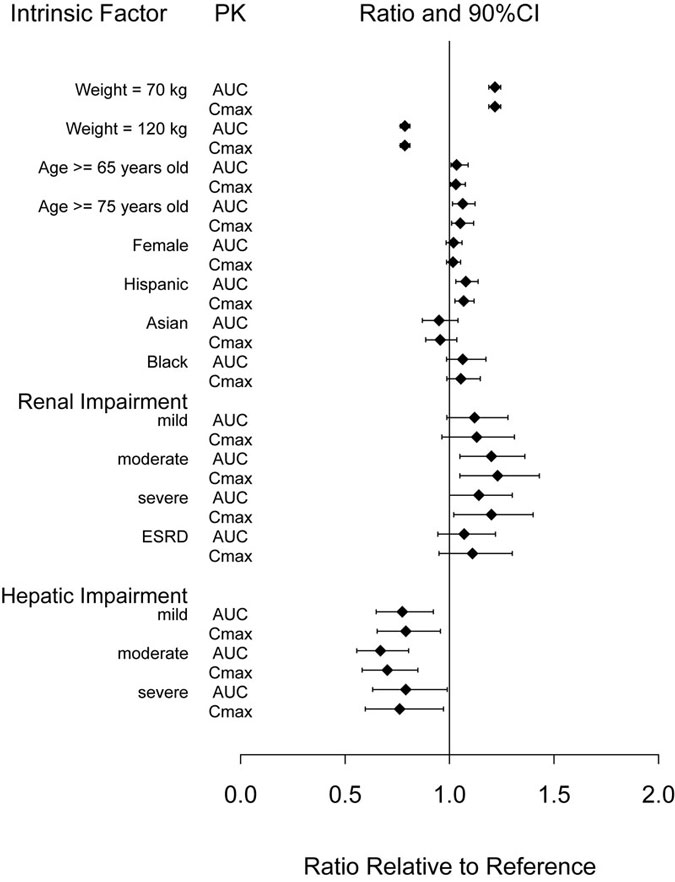
In a clinical pharmacology study in patients with renal impairment, including end-stage renal disease (ESRD), no clinically relevant change in dulaglutide pharmacokinetics (PK) was observed. In the 52-week trial in patients with type 2 diabetes and moderate to severe renal impairment, the PK behavior of TRULICITY 0.75 mg and 1.5 mg once weekly was similar to that demonstrated in previous clinical studies [see Clinical Pharmacology (12.3)].
No dose adjustment is recommended in patients with renal impairment including end-stage renal disease (ESRD). Monitor renal function in patients with renal impairment reporting severe adverse gastrointestinal reactions. Use TRULICITY with caution in patients with ESRD [see Warning and Precautions (5.5), Clinical Pharmacology (12.3)].
12.2 Pharmacodynamics
TRULICITY lowers fasting glucose and reduces postprandial glucose (PPG) concentrations in patients with type 2 diabetes mellitus. The reduction in fasting and postprandial glucose can be observed after a single dose.
12.3 Pharmacokinetics
The pharmacokinetics of dulaglutide is similar between healthy subjects and patients with type 2 diabetes mellitus. Following subcutaneous administration, the time to maximum plasma concentration of dulaglutide at steady state ranges from 24 to 72 hours, with a median of 48 hours. After reaching steady state, the accumulation ratio was approximately 1.56. Steady-state plasma dulaglutide concentrations were achieved between 2 and 4 weeks following once weekly administration. Site of subcutaneous administration (abdomen, upper arm, and thigh) had no statistically significant effect on the exposure to dulaglutide.
Absorption – The mean absolute bioavailability of dulaglutide following subcutaneous administration of single 0.75 mg and 1.5 mg doses was 65% and 47%, respectively. Absolute subcutaneous bioavailability for 3 mg and 4.5 mg doses were estimated to be similar to 1.5 mg although this has not been specifically studied. Dulaglutide concentrations increased approximately proportional to dose from 0.75 mg to 4.5 mg.
Distribution – Apparent population mean central volume of distribution was 3.09 L and the apparent population mean peripheral volume of distribution was 5.98 L.
Elimination
The apparent population mean clearance of dulaglutide was 0.142 L/h. The elimination half-life of dulaglutide was approximately 5 days.
Metabolism – Dulaglutide is presumed to be degraded into its component amino acids by general protein catabolism pathways.
5.2 Acute Pancreatitis
Acute pancreatitis, including fatal and non-fatal hemorrhagic or necrotizing pancreatitis, has been observed in patients treated with GLP-1 receptor agonists, including TRULICITY [see Adverse Reactions (6.1)].
After initiation of TRULICITY, observe patients carefully for signs and symptoms of pancreatitis (including persistent severe abdominal pain, sometimes radiating to the back, which may or may not be accompanied by vomiting). If pancreatitis is suspected, discontinue TRULICITY and initiate appropriate management.
8.7 Hepatic Impairment
In a clinical pharmacology study in patients with varying degrees of hepatic impairment, no clinically relevant change in dulaglutide PK was observed [see Clinical Pharmacology (12.3)]. However, there is limited clinical experience in patients with mild, moderate, or severe hepatic impairment; therefore, use TRULICITY with caution in these patient populations.
1 Indications and Usage
TRULICITY® is indicated:
- As an adjunct to diet and exercise to improve glycemic control in adults and pediatric patients 10 years of age and older with type 2 diabetes mellitus.
- To reduce the risk of major adverse cardiovascular events (cardiovascular death, non-fatal myocardial infarction, or non-fatal stroke) in adults with type 2 diabetes mellitus who have established cardiovascular disease or multiple cardiovascular risk factors.
12.1 Mechanism of Action
TRULICITY contains dulaglutide, which is a human GLP-1 receptor agonist with 90% amino acid sequence homology to endogenous human GLP-1 (7-37). Dulaglutide activates the GLP-1 receptor, a membrane-bound cell-surface receptor coupled to adenylyl cyclase in pancreatic beta cells. Dulaglutide increases intracellular cyclic AMP (cAMP) in beta cells leading to glucose-dependent insulin release. Dulaglutide also decreases glucagon secretion and slows gastric emptying.
16.2 Storage and Handling
- Store TRULICITY in the refrigerator at 36°F to 46°F (2°C to 8°C).
- If needed, each single-dose pen can be kept at room temperature, not to exceed 86°F (30°C) for a total of 14 days.
- Do not freeze TRULICITY. Do not use TRULICITY if it has been frozen.
- Protect TRULICITY from light. Storage of TRULICITY in the original carton is recommended until time of administration.
5 Warnings and Precautions
- Thyroid C-cell Tumors: See Boxed Warning (5.1).
- Acute Pancreatitis: Has been observed in patients treated with GLP-1 receptor agonists, including TRULICITY. Discontinue if pancreatitis is suspected (5.2).
- Hypoglycemia: Concomitant use with an insulin secretagogue or insulin may increase the risk of hypoglycemia, including severe hypoglycemia. Reducing the dose of insulin secretagogue or insulin may be necessary (5.3).
- Hypersensitivity Reactions: Serious hypersensitivity reactions (e.g., anaphylactic reactions and angioedema) have occurred. Discontinue TRULICITY and promptly seek medical advice (5.4).
- Acute Kidney Injury Due to Volume Depletion: Monitor renal function in patients reporting adverse reactions that could lead to volume depletion (5.5).
- Severe Gastrointestinal Adverse Reactions: Use may be associated with gastrointestinal adverse reactions, sometimes severe. TRULICITY is not recommended in patients with severe gastroparesis (5.6).
- Diabetic Retinopathy Complications: Have been reported in a cardiovascular outcomes trial. Monitor patients with a history of diabetic retinopathy (5.7).
- Acute Gallbladder Disease: If cholelithiasis or cholecystitis are suspected, gallbladder studies are indicated (5.8).
- Pulmonary Aspiration During General Anesthesia or Deep Sedation: Has been reported in patients receiving GLP-1 receptor agonists undergoing elective surgeries or procedures. Instruct patients to inform healthcare providers of any planned surgeries or procedures (5.9).
2 Dosage and Administration
Adult Dosage (2.1)
- Recommended starting dosage is 0.75 mg injected subcutaneously once weekly.
- After 4 weeks, the dosage may be increased to 1.5 mg once weekly for additional glycemic control.
- If additional glycemic control is needed, increase dosage in 1.5 mg increments after at least 4 weeks on the current dosage.
- Maximum recommended dosage is 4.5 mg injected subcutaneously once weekly.
Pediatric Dosage (2.2)
- Recommended starting dosage is 0.75 mg injected subcutaneously once weekly.
- If additional glycemic control is needed, increase dosage to the maximum recommended dosage of 1.5 mg once weekly after at least 4 weeks on the 0.75 mg dosage.
Recommendations Regarding Missed Dose (2.3)
- If a dose is missed, administer the missed dose as soon as possible if there are at least 3 days (72 hours) until the next scheduled dose.
Important Administration Instructions (2.4)
- Administer once weekly at any time of day with or without food.
- Inject subcutaneously in the abdomen, thigh, or upper arm.
3 Dosage Forms and Strengths
Injection: TRULICITY is a clear and colorless solution available as:
- 0.75 mg/0.5 mL solution in a single-dose pen
- 1.5 mg/0.5 mL solution in a single-dose pen
- 3 mg/0.5 mL solution in a single-dose pen
- 4.5 mg/0.5 mL solution in a single-dose pen
6.2 Postmarketing Experience
The following additional adverse reactions have been reported during post-approval use of TRULICITY. Because these events are reported voluntarily from a population of uncertain size, it is generally not possible to reliably estimate their frequency or establish a causal relationship to drug exposure.
- Gastrointestinal: acute pancreatitis, hemorrhagic and necrotizing pancreatitis sometimes resulting in death, ileus
- Hepatobiliary: cholecystitis, cholelithiasis requiring cholecystectomy, cholestasis, elevation of liver enzymes, hepatitis
- Hypersensitivity: anaphylactic reactions, angioedema
- Neurologic: dysgeusia, dysesthesia
- Pulmonary: Pulmonary aspiration has occurred in patients receiving GLP-1 receptor agonists undergoing elective surgeries or procedures requiring general anesthesia or deep sedation
- Renal: acute renal failure or worsening of chronic renal failure, sometimes requiring hemodialysis
- Skin and Subcutaneous Tissue: alopecia
5.8 Acute Gallbladder Disease
Acute events of gallbladder disease such as cholelithiasis or cholecystitis have been reported in GLP-1 receptor agonist trials and postmarketing. In a cardiovascular outcomes trial with a median follow up of 5.4 years, cholelithiasis occurred at a rate of 0.62/100 patient-years in TRULICITY-treated patients and 0.56/100 patient-years in placebo-treated patients after adjusting for prior cholecystectomy. Serious events of acute cholecystitis were reported in 0.5% and 0.3% of patients on TRULICITY and placebo respectively. If cholelithiasis is suspected, gallbladder studies and appropriate clinical follow-up are indicated.
8 Use in Specific Populations
Pregnancy: Should be used during pregnancy only if the potential benefit justifies the potential risk to fetus (8.1).
Package Label – Trulicity®
NDC 0002-1433-80
4 Single-Dose Pens
Each pen delivers a 0.75 mg dose.
Use one pen every week.
Rx only
For subcutaneous use only
Single-Dose Only
Dispense the accompanying Medication Guide to each patient.
www.trulicity.com
trulilcity®
(dulaglutide) injection
0.75 mg/0.5 mL
once weekly
Lilly
5.4 Hypersensitivity Reactions
There have been postmarketing reports of serious hypersensitivity reactions including anaphylactic reactions and angioedema in patients treated with TRULICITY [see Adverse Reactions (6.2)]. If a hypersensitivity reaction occurs, discontinue TRULICITY; treat promptly per standard of care, and monitor until signs and symptoms resolve. TRULICITY is contraindicated in patients with a previous serious hypersensitivity reaction to dulaglutide or to any of the components of TRULICITY.
Anaphylaxis and angioedema have been reported with other GLP-1 receptor agonists. Use caution in a patient with a history of angioedema or anaphylaxis with another GLP-1 receptor agonist because it is unknown whether such patients will be predisposed to anaphylaxis with TRULICITY.
6.1 Clinical Trials Experience
Because clinical studies are conducted under widely varying conditions, adverse reaction rates observed in the clinical studies of a drug cannot be directly compared to rates in the clinical studies of another drug and may not reflect the rates observed in practice.
14.1 Overview of Clinical Trials
TRULICITY has been studied in adults as monotherapy and in combination with metformin, sulfonylurea, metformin and sulfonylurea, metformin and thiazolidinedione, sodium-glucose co-transporter-2 inhibitors (SGLT2i) with or without metformin, basal insulin with or without metformin, and prandial insulin with or without metformin. TRULICITY has also been studied in patients with type 2 diabetes mellitus and moderate to severe renal impairment.
Dose escalation was performed in one trial in adults with TRULICITY doses up to 4.5 mg added to metformin. All other clinical studies in adults evaluated TRULICITY 0.75 mg and 1.5 mg without dose escalation; patients were initiated and maintained on either 0.75 mg or 1.5 mg for the duration of the trials [see Clinical Studies (14.2, 14.3, 14.4)].
TRULICITY 0.75 mg and 1.5 mg was studied in pediatric patients 10 years of age and older with type 2 diabetes in combination with or without metformin and/or basal insulin treatment [see Clinical Studies (14.6)].
In patients with type 2 diabetes mellitus, TRULICITY produced reductions from baseline in HbA1c compared to placebo. No overall differences in glycemic effectiveness were observed across demographic subgroups (age, gender, race/ethnicity, duration of diabetes).
A cardiovascular outcomes trial was conducted in adult patients with type 2 diabetes mellitus and established cardiovascular (CV) disease or multiple cardiovascular risk factors. Patients were randomized to TRULICITY 1.5 mg or placebo both added to standard of care. TRULICITY significantly reduced the risk of first occurrence of primary composite endpoint of CV death, non-fatal MI, or non-fatal stroke [see Clinical Studies (14.5)].
17 Patient Counseling Information
Advise the patient to read the FDA-approved patient labeling (Medication Guide and Instructions for Use).
-
Risk of Thyroid C-cell Tumors
Inform patients that TRULICITY causes benign and malignant thyroid C-cell tumors in rats and that the human relevance of this finding has not been determined. Counsel patients to report symptoms of thyroid tumors (e.g., a lump in the neck, persistent hoarseness, dysphagia, or dyspnea) to their physician [see Boxed Warning and Warnings and Precautions (5.1)]. -
Acute Pancreatitis
Inform patients of the potential risk for acute pancreatitis and its symptoms: severe abdominal pain that may radiate to the back, and which may or may not be accompanied by vomiting. Instruct patients to discontinue TRULICITY promptly and contact their physician if pancreatitis is suspected [see Warnings and Precautions (5.2)]. -
Hypoglycemia with Concomitant Use of Insulin Secretagogues or Insulin
Inform patients that the risk of hypoglycemia may be increased when TRULICITY is used in combination with an insulin secretagogue (such as a sulfonylurea) or insulin. Educate patients on the signs and symptoms of hypoglycemia [see Warnings and Precautions (5.3)]. -
Hypersensitivity Reactions
Inform patients that serious hypersensitivity reactions have been reported during postmarketing use of TRULICITY. Advise patients on the symptoms of hypersensitivity reactions and instruct them to stop taking TRULICITY and seek medical advice promptly if such symptoms occur [see Warnings and Precautions (5.4)]. -
Acute Kidney Injury Due to Volume Depletion
Inform patients of the potential risk of acute kidney injury due to dehydration associated with gastrointestinal adverse reactions. Advise patients to take precautions to avoid fluid depletion. Inform patients of the signs and symptoms of acute kidney injury and instruct them to promptly report any of these signs or symptoms or persistent (or extended) nausea, vomiting, and diarrhea to their healthcare provider [see Warnings and Precautions (5.5)]. -
Severe Gastrointestinal Adverse Reactions
Inform patients of the potential risk of severe gastrointestinal adverse reactions. Instruct patients to contact their healthcare provider if they have severe or persistent gastrointestinal symptoms [see Warnings and Precautions (5.6)]. -
Diabetic Retinopathy Complications in Patients with a History of Diabetic Retinopathy
Inform patients to contact their physician if changes in vision are experienced during treatment with TRULICITY [see Warnings and Precautions (5.7)]. -
Acute Gallbladder Disease
Inform patients of the potential risk for cholelithiasis or cholecystitis. Instruct patients to contact their physician if cholelithiasis or cholecystitis is suspected for appropriate clinical follow-up [see Warnings and Precautions (5.8)]. -
Pulmonary Aspiration During General Anesthesia or Deep Sedation
Inform patients that TRULICITY may cause their stomach to empty more slowly which may lead to complications with anesthesia or deep sedation during planned surgeries or procedures. Instruct patients to inform healthcare providers prior to any planned surgeries or procedures if they are taking TRULICITY [see Warnings and Precautions (5.9)]. -
Pregnancy
Advise patients to inform their healthcare provider if they are pregnant or intend to become pregnant [see Use in Specific Populations (8.1)]. -
Missed Dose
Inform patients if a dose is missed and there are at least 3 days (72 hours) until the next scheduled dose, they should administer it as soon as possible and then resume their usual once weekly dosing schedule. If a dose is missed and the next regularly scheduled dose is due in 1 or 2 days, inform the patient to not administer the missed dose and instead resume TRULICITY with the next regularly scheduled dose [see Dosage and Administration (2.3)].
Eli Lilly and Company, Indianapolis, IN 46285, USA
US License Number 1891
Copyright © 2014, 2025, Eli Lilly and Company. All rights reserved.
Pat.: www.lilly.com/patents
TRU-0020-USPI-20250613
5.1 Risk of Thyroid C Cell Tumors
In male and female rats, dulaglutide causes a dose-related and treatment-duration-dependent increase in the incidence of thyroid C-cell tumors (adenomas and carcinomas) after lifetime exposure [see Nonclinical Toxicology (13.1)]. Glucagon-like peptide-1 (GLP-1) receptor agonists have induced thyroid C-cell adenomas and carcinomas in mice and rats at clinically relevant exposures. It is unknown whether TRULICITY will cause thyroid C-cell tumors, including medullary thyroid carcinoma (MTC), in humans, as the human relevance of dulaglutide-induced rodent thyroid C-cell tumors has not been determined.
One case of MTC was reported in a patient treated with TRULICITY in a clinical trial. This patient had pretreatment calcitonin levels approximately 8 times the upper limit of normal (ULN). An additional case of C-cell hyperplasia with elevated calcitonin levels following treatment was reported in the cardiovascular outcomes trial (REWIND). Cases of MTC in patients treated with liraglutide, another GLP-1 receptor agonist, have been reported in the postmarketing period; the data in these reports are insufficient to establish or exclude a causal relationship between MTC and GLP-1 receptor agonist use in humans.
TRULICITY is contraindicated in patients with a personal or family history of MTC or in patients with MEN 2. Counsel patients regarding the potential risk for MTC with the use of TRULICITY and inform them of symptoms of thyroid tumors (e.g. a mass in the neck, dysphagia, dyspnea, persistent hoarseness).
Routine monitoring of serum calcitonin or using thyroid ultrasound is of uncertain value for early detection of MTC in patients treated with TRULICITY. Such monitoring may increase the risk of unnecessary procedures, due to the low test specificity for serum calcitonin and a high background incidence of thyroid disease. Significantly elevated serum calcitonin values may indicate MTC and patients with MTC usually have calcitonin values >50 ng/L. If serum calcitonin is measured and found to be elevated, the patient should be further evaluated. Patients with thyroid nodules noted on physical examination or neck imaging should also be further evaluated.
Warning: Risk of Thyroid C Cell Tumors
- In male and female rats, dulaglutide causes a dose-related and treatment-duration-dependent increase in the incidence of thyroid C-cell tumors (adenomas and carcinomas) after lifetime exposure. It is unknown whether TRULICITY causes thyroid C-cell tumors, including medullary thyroid carcinoma (MTC), in humans as human relevance of dulaglutide-induced rodent thyroid C-cell tumors has not been determined [see Warnings and Precautions (5.1), and Nonclinical Toxicology (13.1)] .
- TRULICITY is contraindicated in patients with a personal or family history of MTC and in patients with Multiple Endocrine Neoplasia syndrome type 2 (MEN 2). Counsel patients regarding the potential risk of MTC with use of TRULICITY and inform them of symptoms of thyroid tumors (e.g., mass in the neck, dysphagia, dyspnea, persistent hoarseness). Routine monitoring of serum calcitonin or using thyroid ultrasound is of uncertain value for early detection of MTC in patients treated with TRULICITY [see Contraindications (4) and Warnings and Precautions (5.1)] .
2.3 Recommendations Regarding Missed Dose
- If a dose is missed, instruct patients to administer the dose as soon as possible if there are at least 3 days (72 hours) until the next scheduled dose. If less than 3 days remain before the next scheduled dose, skip the missed dose and administer the next dose on the regularly scheduled day. In each case, patients can then resume their regular once weekly dosing schedule.
- The day of weekly administration can be changed, if necessary, as long as the last dose was administered 3 or more days before the new day of administration.
2.4 Important Administration Instructions
- Prior to initiation, train patients and caregivers on proper injection technique [see Instructions for Use].
- Administer TRULICITY once weekly, any time of day, with or without food.
- Inject TRULICITY subcutaneously in the abdomen, thigh, or upper arm.
- Rotate injection sites with each dose.
- Inspect TRULICITY visually before use. It should appear clear and colorless. Do not use TRULICITY if particulate matter or coloration is seen.
- When using TRULICITY with insulin, administer as separate injections and never mix. It is acceptable to inject TRULICITY and insulin in the same body region, but the injections should not be adjacent to each other.
13.2 Animal Toxicology And/or Pharmacology
Zucker diabetic fatty (ZDF) rats were given 0.5, 1.5, or 5 mg/kg/twice weekly of dulaglutide (1-, 3-, and 13-fold the MRHD based on AUC) for 3 months. Increases of 12% to 33% in total and pancreatic amylase, but not lipase, were observed at all doses without microscopic pancreatic inflammatory correlates in individual animals. Other changes in the dulaglutide-treated animals included increased interlobular ductal epithelium without active ductal cell proliferation (≥0.5 mg/kg), increased acinar atrophy with/without inflammation (≥1.5 mg/kg), and increased neutrophilic inflammation of the acinar pancreas (5 mg/kg).
Treatment of monkeys for 12 months with 8.15 mg/kg/twice weekly of dulaglutide (nearly 200-fold the MRHD based on AUC) demonstrated no evidence of pancreatic inflammation or pancreatic intraepithelial neoplasia. In 4 of 19 monkeys on dulaglutide treatment, there was an increase in goblet cells within the pancreatic ducts, but no differences from the control group in total amylase or lipase at study termination. There were no proliferative changes in the thyroid C-cells.
5.5 Acute Kidney Injury Due to Volume Depletion
There have been postmarketing reports of acute kidney injury, in some cases requiring hemodialysis, in patients treated with GLP-1 receptor agonists, including TRULICITY [see Adverse Reactions (6.2)]. The majority of the reported events occurred in patients who experienced gastrointestinal reactions leading to dehydration such as nausea, vomiting, or diarrhea [see Adverse Reactions (6.1)]. Monitor renal function in patients reporting adverse reactions to TRULICITY that could lead to volume depletion, especially during dosage initiation and escalation of TRULICITY.
Trulicity 3 Mg Single Dose Pen Instructions for Use
| Instructions for Use | ||
|
TRULICITY
®
(TRU-li-si-tee)
(dulaglutide) injection, for subcutaneous use 3 mg/0.5 mL Single-Dose Pen use 1 time each week (once weekly) |
||
|
|
Information About TRULICITY Single-Dose Pen
Please read this Instructions for Use and the Medication Guide carefully and completely before using your TRULICITY Single-Dose Pen. Talk to your healthcare provider about how to inject TRULICITY the right way.
- TRULICITY Single-Dose Pen (Pen) is a disposable, prefilled medicine delivery device. Each Pen contains 1 dose of TRULICITY (3 mg/0.5 mL). Each Pen should only be used 1 time.
- TRULICITY is used 1 time each week. You may want to mark your calendar to remind you when to take your next dose.
Before You Get Started
|
|
|
|
|
| Remove | Check | Inspect | Prepare |
| Remove the Pen from the refrigerator. Leave the Base Cap on until you are ready to inject. |
Check the Pen label to make sure you have the right medicine and it has not expired. Expiration Date |
Check the Pen to make sure that it is not damaged and inspect the medicine to make sure it is not cloudy, discolored or has particles in it. | Wash your hands. |
Choose Your Injection Site
Your healthcare provider can help you choose the injection site that is best for you.
| Change (rotate) your injection site each week. You may use the same area of your body, but be sure to choose a different injection site in that area. You may inject the medicine into your stomach (abdomen) or thigh. |
|
|
Another person should give you the injection in the back of your upper arm. |
|
Step 1 Uncap the Pen
|
|
Step 2 Place and Unlock
|
|
Step 3 Press and Hold
|
|
Important Information
Disposal of Pen
Storage and Handling
Commonly Asked Questions
Other Information
Where to Learn More
Disposing of Your Used Pens
|
|
Storage and Handling
- Store your Pen in the refrigerator between 36°F to 46°F (2°C to 8°C).
- You may store your Pen at room temperature below 86°F (30°C) for a total of 14 days.
- Do not freeze your Pen. If the Pen has been frozen, throw the Pen away and use a new Pen.
- Storage of your Pen in the original carton is recommended. Protect your Pen from direct heat and light.
- The Pen has glass parts. Handle it carefully. If you drop it on a hard surface, do not use it. Use a new Pen for your injection.
- Keep your TRULICITY Pen and all medicines out of the reach of children.
Commonly Asked Questions
What if I see air bubbles in my Pen?
Air bubbles are normal.
What if I unlock the Pen and press the green Injection Button before pulling off the Base Cap?
Do not remove the Base Cap. Throw away the Pen and get a new Pen.
What if there is a drop of liquid on the tip of the needle when I remove the Base Cap?
A drop of liquid on the tip of the needle is normal.
Do I need to hold the Injection Button down until the injection is complete?
This is not necessary, but it may help you keep the Pen steady and firm against your skin.
I heard more than 2 clicks during my injection—2 louder clicks and 1 soft one. Did I get my complete injection?
Some people may hear a soft click right before the second loud click. That is the normal operation of the Pen. Do not remove the Pen from your skin until you hear the second louder click.
What if there is a drop of liquid or blood on my skin after my injection?
This is normal.
I am not sure if my Pen worked the right way.
Check to see if you have received your dose. Your dose was delivered the right way if the gray plunger is visible (see step 3). Also contact Lilly at 1-800-Lilly-Rx (1-800-545-5979) for further instructions. Until then, store your Pen safely to avoid an accidental needle stick.
Other Information
- If you have vision problems, do not use your Pen without help from a person trained to use the TRULICITY Pen.
Where to Learn More
- If you have any questions or problems with your TRULICITY Single-Dose Pen, contact Lilly at 1-800-Lilly-Rx (1-800-545-5979) or call your healthcare provider.
- For more information about TRULICITY Single-Dose Pen, visit our website at: www.trulicity.com.
|
|
Scan this code to launch
www.trulicity.com |
This Instructions for Use has been approved by the U.S. Food and Drug Administration.
Eli Lilly and Company
Indianapolis, IN 46285, USA
US License Number 1891
TRULICITY is a registered trademark of Eli Lilly and Company.
Copyright © 2020, 2023, Eli Lilly and Company. All rights reserved.
The TRULICITY Pen meets the current dose accuracy and functional requirements of ISO 11608-1:2012 and 11608-5:2012.
Implemented: 04/2023
TRU3MG-0002-IFU-20230407
Trulicity 1.5 Mg Single Dose Pen Instructions for Use
| Instructions for Use | ||
|
TRULICITY® (TRU-li-si-tee)
(dulaglutide) injection, for subcutaneous use 1.5 mg/0.5 mL Single-Dose Pen use 1 time each week (once weekly) |
||
|
|
||
|
Information About TRULICITY Single-Dose Pen
Please read this Instructions for Use and the Medication Guide carefully and completely before using your TRULICITY Single-Dose Pen. Talk to your healthcare provider about how to inject TRULICITY the right way.
|
| Before You Get Started | |||
|
|
|
|
|
| Remove | Check | Inspect | Prepare |
| Remove the Pen from the refrigerator.
Leave the Base Cap on until you are ready to inject. |
Check the Pen label to make sure you have the right medicine and it has not expired. |
Check the Pen to make sure that it is not damaged and inspect the medicine to make sure it is not cloudy, discolored or has particles in it. | Wash your hands. |
| Choose Your Injection Site | |||
| Your healthcare provider can help you choose the injection site that is best for you. |
| Change (rotate) your injection site each week. You may use the same area of your body, but be sure to choose a different injection site in that area. You may inject the medicine into your stomach (abdomen) or thigh. |
|
|
Another person should give you the injection in the back of your upper arm. |
|
Step 1 Uncap the Pen
Make sure the Pen is locked.
|
|
Step 2 Place and Unlock
|
|
Step 3 Press and Hold
|
You will know your injection is complete when the gray plunger is visible. |
|
Important Information
Disposal of Pen Storage and Handling Commonly Asked Questions Other Information Where to Learn More |
|
Disposing of Your Used Pens
|
|
| Storage and Handling |
|
| Commonly Asked Questions | ||
|
What if I see air bubbles in my Pen?
Air bubbles are normal. What if I unlock the Pen and press the green Injection Button before pulling off the Base Cap? Do not remove the Base Cap. Throw away the Pen and get a new Pen. What if there is a drop of liquid on the tip of the needle when I remove the Base Cap? A drop of liquid on the tip of the needle is normal. Do I need to hold the Injection Button down until the injection is complete? This is not necessary, but it may help you keep the Pen steady and firm against your skin. I heard more than 2 clicks during my injection—2 louder clicks and 1 soft one. Did I get my complete injection? Some patients may hear a soft click right before the second loud click. That is the normal operation of the Pen. Do not remove the Pen from your skin until you hear the second louder click. What if there is a drop of liquid or blood on my skin after my injection? This is normal. I am not sure if my Pen worked the right way. Check to see if you have received your dose. Your dose was delivered the right way if the gray plunger is visible (see step 3). Also contact Lilly at 1-800-Lilly-Rx (1-800-545-5979) for further instructions. Until then, store your Pen safely to avoid an accidental needle stick. |
||
| Other Information | ||
|
||
| Where to Learn More | ||
|
||
|
|
SCAN THIS CODE TO LAUNCH www.trulicity.com |
|
|
|
||
| This Instructions for Use has been approved by the U.S. Food and Drug Administration.
Eli Lilly and Company Indianapolis, IN 46285, USA US License Number 1891 TRULICITY is a registered trademark of Eli Lilly and Company. Copyright © 2014, 2022, Eli Lilly and Company. All rights reserved. The TRULICITY Pen meets the current dose accuracy and functional requirements of ISO 11608-1:2012 and 11608-5:2012. Revised: 11/2022 TRUHIAI-0004-IFU-20221117 |
||
Trulicity 4.5 Mg Single Dose Pen Instructions for Use
| Instructions for Use | ||
|
TRULICITY
®
(TRU-li-si-tee)
(dulaglutide) injection, for subcutaneous use 4.5 mg/0.5 mL Single-Dose Pen use 1 time each week (once weekly) |
||
|
|
Information About TRULICITY Single-Dose Pen
Please read this Instructions for Use and the Medication Guide carefully and completely before using your TRULICITY Single-Dose Pen. Talk to your healthcare provider about how to inject TRULICITY the right way.
- TRULICITY Single-Dose Pen (Pen) is a disposable, prefilled medicine delivery device. Each Pen contains 1 dose of TRULICITY (4.5 mg/0.5 mL). Each Pen should only be used 1 time.
- TRULICITY is used 1 time each week. You may want to mark your calendar to remind you when to take your next dose.
Before You Get Started
|
|
|
|
|
| Remove | Check | Inspect | Prepare |
| Remove the Pen from the refrigerator. Leave the Base Cap on until you are ready to inject. |
Check the Pen label to make sure you have the right medicine and it has not expired. Expiration Date |
Check the Pen to make sure that it is not damaged and inspect the medicine to make sure it is not cloudy, discolored or has particles in it. | Wash your hands. |
Choose Your Injection Site
Your healthcare provider can help you choose the injection site that is best for you.
| Change (rotate) your injection site each week. You may use the same area of your body, but be sure to choose a different injection site in that area. You may inject the medicine into your stomach (abdomen) or thigh. |
|
|
Another person should give you the injection in the back of your upper arm. |
|
Step 1 Uncap the Pen
|
|
Step 2 Place and Unlock
Unlock by turning the Lock Ring. |
|
Step 3 Press and Hold
|
Important Information
Disposal of Pen
Storage and Handling
Commonly Asked Questions
Other Information
Where to Learn More
Disposing of Your Used Pens
|
|
Storage and Handling
- Store your Pen in the refrigerator between 36°F to 46°F (2°C to 8°C).
- You may store your Pen at room temperature below 86°F (30°C) for a total of 14 days.
- Do not freeze your Pen. If the Pen has been frozen, throw the Pen away and use a new Pen.
- Storage of your Pen in the original carton is recommended. Protect your Pen from direct heat and light.
- The Pen has glass parts. Handle it carefully. If you drop it on a hard surface, do not use it. Use a new Pen for your injection.
- Keep your TRULICITY Pen and all medicines out of the reach of children.
Commonly Asked Questions
What if I see air bubbles in my Pen?
Air bubbles are normal.
What if I unlock the Pen and press the green Injection Button before pulling off the Base Cap?
Do not remove the Base Cap. Throw away the Pen and get a new Pen.
What if there is a drop of liquid on the tip of the needle when I remove the Base Cap?
A drop of liquid on the tip of the needle is normal.
Do I need to hold the Injection Button down until the injection is complete?
This is not necessary, but it may help you keep the Pen steady and firm against your skin.
I heard more than 2 clicks during my injection—2 louder clicks and 1 soft one. Did I get my complete injection?
Some people may hear a soft click right before the second loud click. That is the normal operation of the Pen. Do not remove the Pen from your skin until you hear the second louder click.
What if there is a drop of liquid or blood on my skin after my injection?
This is normal.
I am not sure if my Pen worked the right way.
Check to see if you have received your dose. Your dose was delivered the right way if the gray plunger is visible (see step 3). Also contact Lilly at 1-800-Lilly-Rx (1-800-545-5979) for further instructions. Until then, store your Pen safely to avoid an accidental needle stick.
Other Information
- If you have vision problems, do not use your Pen without help from a person trained to use the TRULICITY Pen.
Where to Learn More
- If you have any questions or problems with your TRULICITY Single-Dose Pen, contact Lilly at 1-800-Lilly-Rx (1-800-545-5979) or call your healthcare provider.
- For more information about TRULICITY Single-Dose Pen, visit our website at: www.trulicity.com.
|
|
Scan this code to launch www.trulicity.com |
This Instructions for Use has been approved by the U.S. Food and Drug Administration.
Eli Lilly and Company
Indianapolis, IN 46285, USA
US License Number 1891
TRULICITY is a registered trademark of Eli Lilly and Company.
Copyright © 2020, 2023, Eli Lilly and Company. All rights reserved.
The TRULICITY Pen meets the current dose accuracy and functional requirements of ISO 11608-1:2012 and 11608-5:2012.
Implemented: 04/2023
TRU4.5MG-0002-IFU-20230407
Trulicity 0.75 Mg Single Dose Pen Instructions for Use
| Instructions for Use | ||
|
TRULICITY® (TRU-li-si-tee)
(dulaglutide) injection, for subcutaneous use 0.75 mg/0.5 mL Single-Dose Pen use 1 time each week (once weekly) |
||
|
|
||
|
|
||
|
Information About TRULICITY Single-Dose Pen
Please read this Instructions for Use and the Medication Guide carefully and completely before using your TRULICITY Single-Dose Pen. Talk to your healthcare provider about how to inject TRULICITY the right way.
|
| Before You Get Started | |||
|
|
|
|
|
| Remove | Check | Inspect | Prepare |
| Remove the Pen from the refrigerator. Leave the Base Cap on until you are ready to inject. |
Check the Pen label to make sure you have the right medicine and it has not expired. |
Check the Pen to make sure that it is not damaged and inspect the medicine to make sure it is not cloudy, discolored or has particles in it. | Wash your hands. |
| Choose Your Injection Site | |||
| Your healthcare provider can help you choose the injection site that is best for you. |
| Change (rotate) your injection site each week. You may use the same area of your body, but be sure to choose a different injection site in that area. You may inject the medicine into your stomach (abdomen) or thigh. |
|
|
Another person should give you the injection in the back of your upper arm. |
|
|
|
|
|
|
|
Step 1 Uncap the Pen
Make sure the Pen is locked.
|
|
Step 2 Place and Unlock
|
|
Step 3 Press and Hold
|
You will know your injection is complete when the gray plunger is visible. |
|
Important Information
Disposal of Pen Storage and Handling Commonly Asked Questions Other Information Where to Learn More |
||
Disposing of Your Used Pens
|
|
|
| Storage and Handling | ||
|
||
| Commonly Asked Questions | ||
|
What if I see air bubbles in my Pen?
Air bubbles are normal. What if I unlock the Pen and press the green Injection Button before pulling off the Base Cap? Do not remove the Base Cap. Throw away the Pen and get a new Pen. What if there is a drop of liquid on the tip of the needle when I remove the Base Cap? A drop of liquid on the tip of the needle is normal. Do I need to hold the Injection Button down until the injection is complete? This is not necessary, but it may help you keep the Pen steady and firm against your skin. I heard more than 2 clicks during my injection—2 louder clicks and 1 soft one. Did I get my complete injection? Some patients may hear a soft click right before the second loud click. That is the normal operation of the Pen. Do not remove the Pen from your skin until you hear the second louder click. What if there is a drop of liquid or blood on my skin after my injection? This is normal. I am not sure if my Pen worked the right way. Check to see if you have received your dose. Your dose was delivered the right way if the gray plunger is visible (see step 3). Also contact Lilly at 1-800-Lilly-Rx (1-800-545-5979) for further instructions. Until then, store your Pen safely to avoid an accidental needle stick. |
||
| Other Information | ||
|
||
| Where to Learn More | ||
|
||
|
|
SCAN THIS CODE TO LAUNCH www.trulicity.com |
|
|
This Instructions for Use has been approved by the U.S. Food and Drug Administration. Eli Lilly and Company Indianapolis, IN 46285, USA US License Number 1891 TRULICITY is a registered trademark of Eli Lilly and Company. Copyright © 2014, 2022, Eli Lilly and Company. All rights reserved. The TRULICITY Pen meets the current dose accuracy and functional requirements of ISO 11608-1:2012 and 11608-5:2012. Revised: 11/2022 TRULOAI-0004-IFU-20221117 |
13.1 Carcinogenesis, Mutagenesis, and Impairment of Fertility
A 2-year carcinogenicity study was conducted with dulaglutide in male and female rats at doses of 0.05, 0.5, 1.5, and 5 mg/kg (0.2-, 3-, 8-, and 24-fold the MRHD of 4.5 mg once weekly based on AUC) administered by subcutaneous injection twice weekly. In rats, dulaglutide caused a dose-related and treatment-duration-dependent increase in the incidence of thyroid C-cell tumors (adenomas and/or carcinomas) compared to controls, at ≥3-fold the MRHD based on AUC. A statistically significant increase in C-cell adenomas was observed in rats receiving dulaglutide at ≥0.5 mg/kg. Numerical increases in thyroid C-cell carcinomas occurred at 5 mg/kg (24 times the MRHD based on AUC) and were considered to be treatment-related despite the absence of statistical significance.
A 6-month carcinogenicity study was conducted with dulaglutide in rasH2 transgenic mice at doses of 0.3, 1, and 3 mg/kg administered by subcutaneous injection twice weekly. Dulaglutide did not produce increased incidences of thyroid C-cell hyperplasia or neoplasia at any dose.
Dulaglutide is a recombinant protein; no genotoxicity studies have been conducted.
Human relevance of thyroid C-cell tumors in rats is unknown and could not be determined by clinical studies or nonclinical studies [see Boxed Warning and Warnings and Precautions (5.1)].
In fertility and early embryonic development studies in male and female rats, no adverse effects of dulaglutide on sperm morphology, mating, fertility, conception, and embryonic survival were observed at up to 16.3 mg/kg (55-fold the MRHD based on AUC). In female rats, an increase in the number of females with prolonged diestrus and a dose-related decrease in the mean number of corpora lutea, implantation sites, and viable embryos were observed at ≥4.9 mg/kg (≥13-fold the MRHD based on AUC), which occurred in the presence of decreased maternal food consumption and body weight gain.
5.3 Hypoglycemia With Concomitant Use of Insulin Secretagogues Or Insulin
Patients receiving TRULICITY in combination with an insulin secretagogue (e.g., sulfonylurea) or insulin may have an increased risk of hypoglycemia, including severe hypoglycemia [see Adverse Reactions (6.1) and Drug Interactions (7)].
The risk of hypoglycemia may be lowered by a reduction in the dose of sulfonylurea (or other concomitantly administered insulin secretagogue) or insulin. Inform patients using these concomitant medications of the risk of hypoglycemia and educate them on the signs and symptoms of hypoglycemia.
14.2 Glycemic Control Monotherapy Trials in Adults With Type 2 Diabetes Mellitus
In a double-blind trial with primary endpoint at 26 weeks, 807 adult patients inadequately treated with diet and exercise, or with diet and exercise and one antidiabetic agent used at submaximal dose, were randomized to TRULICITY 0.75 mg once weekly, TRULICITY 1.5 mg once weekly, or metformin 1500 to 2000 mg/day following a two-week washout. Seventy-five percent (75%) of the randomized population were treated with one antidiabetic agent at the screening visit. Most patients previously treated with an antidiabetic agent were receiving metformin (~90%) at a median dose of 1000 mg daily and approximately 10% were receiving a sulfonylurea.
Patients had a mean age of 56 years and a mean duration of type 2 diabetes of 3 years. Forty-four percent were male. The White, Black and Asian race accounted for 74%, 7% and 8% of the population, respectively. Twenty-nine percent of the trial population were from the US.
Treatment with TRULICITY 0.75 mg and 1.5 mg once weekly resulted in reduction in HbA1c from baseline at 26-weeks (Table 4). The difference in observed effect size between TRULICITY 0.75 mg and 1.5 mg, respectively, and metformin excluded the pre-specified non-inferiority margin of 0.4%.
|
Abbreviation: HbA1c = hemoglobin A1c. |
|||
|
a Intent-to-treat population. Last observation carried forward (LOCF) was used to impute missing data. Data post-onset of rescue therapy are treated as missing. At Week 26, primary efficacy was missing for 10%, 12% and 14% of individuals randomized to TRULICITY 0.75 mg, TRULICITY 1.5 mg and metformin, respectively. |
|||
|
b Least-squares mean adjusted for baseline value and other stratification factors. |
|||
|
‡ Patients included in the analysis are a subset of the ITT population that had at least one post-baseline assessment. The primary analysis included 265 individuals in each of the treatment arms. |
|||
| 26-Week Primary Time Point | |||
| TRULICITY 0.75 mg | TRULICITY 1.5 mg |
Metformin 1500-2000 mg |
|
| Intent-to-Treat (ITT) Population (N) ‡ | 270 | 269 | 268 |
| HbA1c (%) (Mean) | |||
| Baseline | 7.6 | 7.6 | 7.6 |
| Change from baselineb | -0.7 | -0.8 | -0.6 |
| Fasting Serum Glucose (mg/dL) (Mean) | |||
| Baseline | 161 | 164 | 161 |
| Change from baselineb | -26 | -29 | -24 |
| Body Weight (kg) (Mean) | |||
| Baseline | 91.8 | 92.7 | 92.4 |
| Change from baselineb | -1.4 | -2.3 | -2.2 |
7.2 Concomitant Use With An Insulin Secretagogue (e.g., Sulfonylurea) Or With Insulin
5.7 Diabetic Retinopathy Complications in Patients With A History of Diabetic Retinopathy
In a cardiovascular outcomes trial with a median follow up of 5.4 years involving patients with type 2 diabetes with established cardiovascular disease or multiple cardiovascular risk factors, diabetic retinopathy complications occurred in patients treated with TRULICITY 1.5 mg (1.9%) and placebo (1.5%). These events were prospectively ascertained as a secondary composite endpoint. The proportion of patients with diabetic retinopathy complications was larger among patients with a history of diabetic retinopathy at baseline (TRULICITY 8.5%, placebo 6.2%) than among patients without a known history of diabetic retinopathy (TRULICITY 1%, placebo 1%).
Rapid improvement in glucose control has been associated with a temporary worsening of diabetic retinopathy. Patients with a history of diabetic retinopathy should be monitored for progression of diabetic retinopathy.
14.6 Glycemic Control Trial in Pediatric Patients 10 Years of Age and Older With Type 2 Diabetes Mellitus
In this 26-week randomized, double-blind, placebo-controlled, parallel-arm, multicenter trial with an open-label extension for an additional 26 weeks,154 pediatric patients 10 years of age and older with type 2 diabetes mellitus, who had inadequate glycemic control despite diet and exercise, were randomized to subcutaneous TRULICITY once weekly (0.75 mg and 1.5 mg) or subcutaneous placebo once weekly in combination with or without metformin and/or basal insulin treatment (NCT02963766).
Overall, in this trial demographic and baseline disease characteristics were comparable across the treatment groups. At baseline, 71% of patients were female, and the mean age was 14.5 years (ranging from 10 to 17 years). Overall, 55% were White, 15% were Black or African American, 12% were Asian, 10% were American Indian or Alaska Native, 5% were other races, and 3% had unknown race. Additionally, 55% were Hispanic or Latino, 42% were not Hispanic or Latino, and 3% had unknown ethnicity. At baseline, the mean duration of type 2 diabetes mellitus was 2 years, mean HbA1c was 8.1%, mean weight was 90.5 kg and mean BMI was 34.1 kg/m2.
In this trial, once weekly TRULICITY (0.75 mg and 1.5 mg, pooled) (with or without metformin and/or basal insulin) was superior to placebo (p<0.001) in the change from baseline at Week 26 in HbA1c in pediatric patients 10 years of age and older with type 2 diabetes mellitus (see Table 15).
|
Abbreviations: HbA1c = hemoglobin A1c. |
||||
|
a Combined results for TRULICITY 0.75 mg and 1.5 mg. The comparison of the two dosages together and individually with placebo was prespecified with overall type I error controlled. |
||||
|
b The change from baseline and difference from placebo were analyzed using analysis of covariance with effects for treatment, the baseline value as a covariate, and stratification factors which were HbA1c at screening (< 8% vs >= 8%), insulin use at baseline (yes/no), metformin use at baseline (yes/no). |
||||
|
c For HbA1c and Fasting Blood Glucose, multiple imputation was performed for missing data guided by washout method. At Week 26 primary efficacy (HbA1c) was missing for 8%, 6%, and 10% of patients on placebo, TRULICITY 0.75 mg and TRULICITY 1.5 mg respectively. |
||||
|
d For percentage of patients HbA1c < 7%, missing data was imputed as not achieving the target. |
||||
| Placebo | TRULICITY 0.75 mg once weekly | TRULICITY 1.5 mg once weekly |
TRULICITY once weekly
Pooled a |
|
| Intent-to-Treat Population (N) | 51 | 51 | 52 | 103 |
| HbA1c (%) (Mean) c | ||||
| Baseline Change from baseline at Week 26b Difference from placebo (95% CI)b |
8.1 0.6 - |
7.9 -0.6 -1.2 (-1.8, -0.6) |
8.2 -0.9 -1.5 (-2.1, -0.9) |
8.0 -0.8 -1.4 (-1.9, -0.8) |
| Percentage of Patients with HbA1c <7.0% at Week 26 d | 14% | 55% | 48% | 52% |
| Fasting Blood Glucose (mg/dL) (Mean) c | ||||
| Baseline Change from baseline at Week 26b Difference from placebo (95% CI)b |
159 17.1 - |
149 -12.8 -29.9 (-50.7, -9.1) |
163 -24.9 -42.0 (-63.0, -20.9) |
156 -18.9 -35.9 (-54.2, -17.6) |
14.4 Glycemic Control Trials in Adults With Type 2 Diabetes Mellitus and Moderate to Severe Chronic Kidney Disease
In this open-label comparator trial (double-blind with respect to TRULICITY dose assignment) with primary endpoint at 26 weeks, a total of 576 adult patients with type 2 diabetes were randomized and treated to compare TRULICITY 0.75 mg and 1.5 mg with insulin glargine (NCT01621178).
Patients on insulin and other antidiabetic therapy (e.g., oral antidiabetic drugs, pramlintide) had non-insulin therapies discontinued and had their insulin dose adjusted for 12 weeks prior to randomization. Patients on insulin therapy alone maintained a stable insulin dose for 3 weeks prior to randomization. At randomization, patients discontinued their pre-trial insulin regimen and patients were randomized to TRULICITY 0.75 mg once weekly, TRULICITY 1.5 mg once weekly, or insulin glargine once daily, all in combination with prandial insulin lispro. For patients randomized to insulin glargine, the initial insulin glargine dose was based on the basal insulin dose prior to randomization. Insulin glargine was allowed to be titrated with a fasting plasma glucose goal of ≤150 mg/dL. Insulin lispro was allowed to be titrated with a preprandial and bedtime glucose goal of ≤180 mg/dL.
Patients had a mean age of 65 years; a mean duration of type 2 diabetes of 18 years; 52% were male; race: White, Black, and Asian were 69%, 16%, and 3%, respectively; and 32% of the trial population were in the US. At baseline, overall mean eGFR was 38 mL/min/1.73 m2, 30% of patients had eGFR <30 mL/min/1.73 m2, and 45% of patients had macroalbuminuria. Patients on over 70 units/day of basal insulin were excluded from the trial.
Treatment with TRULICITY 0.75 mg and 1.5 mg once weekly resulted in a reduction in HbA1c at 26-weeks from baseline. The difference in observed effect size between TRULICITY 0.75 mg and 1.5 mg, respectively, and glargine in this trial excluded the pre-specified non-inferiority margin of 0.4%. Mean fasting plasma glucose increased in the TRULICITY arms (Table 13).
Mean baseline body weight was 90.9 kg, 88.1 kg, and 88.2 kg in the TRULICITY 0.75 mg, TRULICITY 1.5 mg, and insulin glargine arms, respectively. The mean changes from baseline at Week 26 were -1.1, -2, and 1.9 kg in the TRULICITY 0.75 mg, TRULICITY 1.5 mg, and insulin glargine arms, respectively.
|
Abbreviation: HbA1c = hemoglobin A1c |
|||
|
a Intent-to-treat population (all randomized and treated patients) was used in the analysis regardless of discontinuation of study drug or initiation of rescue therapy. At Week 26, primary efficacy was missing for 12%, 15%, and 9% of individuals randomized to and treated with TRULICITY 0.75 mg, TRULICITY 1.5 mg, and insulin glargine, respectively. Missing data were imputed using multiple imputation within treatment group. |
|||
|
b Least-squares (LS) mean from ANCOVA pattern mixture model adjusted for baseline value and other stratification factors. |
|||
| 26-Week Primary Time Point | |||
|
TRULICITY 0.75 mg |
TRULICITY 1.5 mg |
Insulin Glargine | |
| Intent-to-Treat Population (N) | 190 | 192 | 194 |
| HbA1c (%) (Mean) | |||
| Baseline | 8.6 | 8.6 | 8.6 |
| Change from baselineb | -0.9 | -1.0 | -1.0 |
| Difference from insulin glargineb (95% CI) | 0.0 (-0.2, 0.3) | -0.1 (-0.3, 0.2) | |
| Percentage of patients HbA1c <8.0% | 73 | 75 | 74 |
| Fasting Serum Glucose (mg/dL) (Mean) | |||
| Baseline | 167 | 161 | 170 |
| Change from baselineb | 6 | 14 | -23 |
| Difference from insulin glargineb (95% CI) | 30 (16, 43) | 37 (24, 50) |
14.5 Cardiovascular Outcomes Trial in Adults With Type 2 Diabetes Mellitus and Cardiovascular Disease Or Multiple Cardiovascular Risk Factors
The REWIND trial (NCT01394952) was a multi-national, multi-center, randomized, placebo-controlled, double-blind trial. In this trial, 9901 adult patients with type 2 diabetes mellitus and established cardiovascular (CV) disease or multiple cardiovascular risk factors were randomized to TRULICITY 1.5 mg or placebo both added to standard of care. The median follow-up duration was 5.4 years. The primary endpoint was the time to the first occurrence of a composite 3-component Major Adverse Cardiovascular Events (MACE) outcome, which included CV death, non-fatal myocardial infarction (MI), and non-fatal stroke.
Patients eligible to enter the trial were 50 years of age or older who had type 2 diabetes mellitus, had an HbA1c value ≤9.5% with no lower limit at screening, and had either established CV disease, or did not have established CV disease but had multiple CV risk factors. Patients who were confirmed to have established CV disease (31.5% of randomized patients) had a history of at least one of the following: MI (16.2%); myocardial ischemia by a stress test or with cardiac imaging (9.3%); ischemic stroke (5.3%); coronary, carotid, or peripheral artery revascularization (18.0%); unstable angina (5.9%); or hospitalization for unstable angina with at least one of the following: ECG changes, myocardial ischemia on imaging, or a need for percutaneous coronary intervention (12.0%). Patients confirmed to be without established CV disease, but with multiple CV risk factors, comprised 62.8% of the randomized trial population.
At baseline, demographic and disease characteristics were balanced between treatment groups. Patients had a mean age of 66 years; 46% were female; race: White, Black, and Asian were 76%, 7%, and 4%, respectively.
The median baseline HbA1c was 7.2%. The mean duration of type 2 diabetes was 10.5 years and the mean BMI was 32.3 kg/m2.
At baseline, 50.5% of patients had mild renal impairment (eGFR ≥60 but <90 mL/min/1.73m2), 21.6% had moderate renal impairment (eGFR ≥30 but <60 mL/min/1.73m2), and 1.1% of patients had severe renal impairment (eGFR <30 mL/min/1.73m2) out of 9713 patients whose eGFR were available.
At baseline, 94.7% of patients were taking antidiabetic medication, with 10.5% of patients taking three or more antidiabetic drugs. The most common background antidiabetic drugs used at baseline were metformin (81.2%), sulfonylurea (46.0%), and insulin (23.9%). At baseline, CV disease and risk factors were managed with ACE inhibitors or angiotensin receptor blockers (81.5%), beta blockers (45.6%), calcium channel blockers (34.4%), diuretics (46.5%), statin therapy (66.1%), antithrombotic agents (58.7%), and aspirin (51.7%). During the trial, investigators were to modify anti-diabetic and cardiovascular medications to achieve local standard of care treatment targets with respect to blood glucose, lipids, and blood pressure, and manage patients recovering from an acute coronary syndrome or stroke event per local treatment guidelines.
For the primary analysis, a Cox proportional hazards model was used to test for superiority. Type I error was controlled across multiple tests. TRULICITY significantly reduced the risk of first occurrence of primary composite endpoint of CV death, non-fatal MI, or non-fatal stroke (HR: 0.88, 95% CI 0.79, 0.99). Refer to Figure 6 and Table 14.
Vital status was available for 99.7% of patients in the trial. A total of 1128 deaths were recorded during the REWIND trial. A majority of the deaths in the trial were adjudicated as CV deaths, and non-CV deaths were comparable between the treatment groups (4.4% in patients treated with TRULICITY and 5.0% in patients treated with placebo). There were 536 all-cause deaths (10.8%) in the dulaglutide group compared to 592 deaths (12.0%) in the placebo group.
| Number of patients at risk | ||||||||
| Placebo | 4952 | 4791 | 4625 | 4437 | 4275 | 3575 | 742 | |
| Dulaglutide | 4949 | 4815 | 4670 | 4521 | 4369 | 3686 | 741 |
Figure 6. KAPLAN MEIER CURVE: Time to First Occurrence of MACE in the REWIND Trial
|
a All randomized patients. |
|||
|
b Cox-proportional hazards model with treatment as a factor. Type I error was controlled for the primary and secondary endpoints. |
|||
|
c p=0.026 for superiority (2-sided). |
|||
|
d Number and percentage of patients with events. |
|||
|
e Results for components of MACE, fatal and non-fatal stroke, and fatal and non-fatal MI are listed descriptively for supportive purposes. No statistical significance should be inferred since these CIs are not adjusted for multiplicity. |
|||
| Time to First Occurrence of: |
TRULICITY
N=4949 |
Placebo
N=4952 |
Hazard Ratio
(95% CI) b |
| Composite of non-fatal myocardial infarction, non-fatal stroke, cardiovascular death (MACE)d | 594 (12.0%) | 663 (13.4%) | 0.88 (0.79, 0.99)c |
| Cardiovascular deathd,e | 317 (6.4%) | 346 (7.0%) | 0.91 (0.78, 1.06) |
| Non-fatal myocardial infarctiond,e | 205 (4.1%) | 212 (4.3%) | 0.96 (0.79, 1.16) |
| Non-fatal stroked,e | 135 (2.7%) | 175 (3.5%) | 0.76 (0.61, 0.95) |
| Fatal or non-fatal myocardial infarctiond,e | 223 (4.5%) | 231 (4.7%) | 0.96 (0.79, 1.15) |
| Fatal or non-fatal stroked,e | 158 (3.2%) | 205 (4.1%) | 0.76 (0.62, 0.94) |
Structured Label Content
Section 42229-5 (42229-5)
Use of TRULICITY has been associated with gastrointestinal adverse reactions, sometimes severe [see Adverse Reactions (6)]. In the pool of placebo-controlled trials, severe gastrointestinal adverse reactions were reported more frequently among patients receiving TRULICITY (0.75 mg 2.2%, 1.5 mg 4.3%) than placebo (1.4%).
TRULICITY is not recommended in patients with severe gastroparesis.
Section 42231-1 (42231-1)
|
This Medication Guide has been approved by the U.S. Food and Drug Administration |
Revised: May 2025 |
||||||
|
TRU-0011-MG-20250528 |
|||||||
|
Medication Guide
TRULICITY ® (TRU-li-si-tee) (dulaglutide) injection, for subcutaneous use |
|||||||
| Read this Medication Guide before you start using TRULICITY and each time you get a refill. There may be new information. This information does not take the place of talking to your healthcare provider about your medical condition or your treatment. | |||||||
|
What is the most important information I should know about TRULICITY?
|
|||||||
What is TRULICITY?
|
|||||||
Do not use TRULICITY if:
|
|||||||
Before using TRULICITY, tell your healthcare provider about all of your medical conditions, including if you:
|
|||||||
|
Tell your healthcare provider about all the medicines you take, including prescription and over-the-counter medicines, vitamins, and herbal supplements. TRULICITY may affect the way some medicines work, and some medicines may affect the way TRULICITY works. Before using TRULICITY, talk to your healthcare provider about low blood sugar and how to manage it. Tell your healthcare provider if you are taking other medicines to treat diabetes, including insulin or sulfonylureas. Know the medicines you take. Keep a list of them to show your healthcare provider and pharmacist when you get a new medicine. |
|||||||
How should I use TRULICITY?
|
|||||||
|
What are the possible side effects of TRULICITY?
|
|||||||
| The most common side effects of TRULICITY may include: | |||||||
|
|
||||||
| Tell your healthcare provider if you have any side effect that bothers you or that does not go away. These are not all the possible side effects of TRULICITY. Call your doctor for medical advice about side effects. You may report side effects to FDA at 1-800-FDA-1088. | |||||||
|
General information about the safe and effective use of TRULICITY.
Medicines are sometimes prescribed for purposes other than those listed in a Medication Guide. Do not use TRULICITY for a condition for which it was not prescribed. Do not give TRULICITY to other people, even if they have the same symptoms you have. It may harm them. This Medication Guide summarizes the most important information about TRULICITY. If you would like more information, talk with your healthcare provider. You can ask your pharmacist or healthcare provider for information about TRULICITY that is written for health professionals. |
|||||||
|
What are the ingredients in TRULICITY?
Active ingredient: dulaglutide Inactive ingredients: citric acid anhydrous, mannitol, polysorbate 80, trisodium citrate dihydrate, in water for injection TRULICITY® is a registered trademark of Eli Lilly and Company. Manufactured by: Eli Lilly and Company, Indianapolis, IN 46285, USA, US License Number 1891 www.TRULICITY.com. Copyright © 2014, 2025, Eli Lilly and Company. All rights reserved. For more information, go to www.TRULICITY.com or call 1-800-545-5979. |
Section 43683-2 (43683-2)
10 Overdosage (10 OVERDOSAGE)
Overdoses have been reported in clinical studies. Effects associated with these overdoses were primarily mild or moderate gastrointestinal events (e.g., nausea, vomiting) and non-severe hypoglycemia. In the event of overdose, consider contacting the Poison Help line (1-800-222-1222) or a medical toxicologist for additional overdosage management recommendations. Initiate appropriate supportive care (including frequent plasma glucose monitoring) according to the patient's clinical signs and symptoms.
11 Description (11 DESCRIPTION)
Dulaglutide is a human GLP-1 receptor agonist. The molecule is a fusion protein that consists of 2 identical, disulfide-linked chains, each containing an N-terminal GLP-1 analog sequence covalently linked to the Fc portion of a modified human immunoglobulin G4 (IgG4) heavy chain by a small peptide linker and is produced using mammalian cell (Chinese hamster ovary) culture. The GLP-1 analog portion of dulaglutide is 90% homologous to native human GLP-1 (7-37). Structural modifications were introduced in the GLP-1 part of the molecule responsible for interaction with the enzyme dipeptidyl-peptidase-IV (DPP-4). Additional modifications were made in an area with a potential T-cell epitope and in the areas of the IgG4 Fc part of the molecule responsible for binding the high-affinity Fc receptors and half-antibody formation. The overall molecular weight of dulaglutide is approximately 63 kilodaltons.
TRULICITY (dulaglutide) injection is a clear, colorless, sterile, preservative-free solution for subcutaneous use. Each single-dose pen contains a 0.5 mL solution of 0.75 mg, 1.5 mg, 3 mg, or 4.5 mg of dulaglutide and the following excipients: citric acid anhydrous (0.07 mg), mannitol (23.2 mg), polysorbate 80 (0.10 mg for 0.75 mg and 1.5 mg; 0.125 mg for 3 mg and 4.5 mg), and trisodium citrate dihydrate (1.37 mg), in water for injection.
2.1 Adult Dosage
- The recommended starting dosage of TRULICITY is 0.75 mg injected subcutaneously once weekly. Follow the dosage escalation below to reduce the risk of gastrointestinal adverse reactions [see Warnings and Precautions (5.6) and Adverse Reactions (6.1)].
- After 4 weeks, the dosage may be increased to 1.5 mg once weekly for additional glycemic control.
- If additional glycemic control is needed, increase the dosage in 1.5 mg increments after at least 4 weeks on the current dosage.
- The maximum recommended dosage is 4.5 mg injected subcutaneously once weekly.
16.1 How Supplied
TRULICITY (dulaglutide) injection is a clear and colorless solution supplied in single-dose pens. TRULICITY is packaged in a cardboard outer carton containing 4 single-dose TRULICITY pens and is supplied as follows:
| Total Strength per Total Volume | NDC |
| 0.75 mg/0.5 mL | NDC 0002-1433-80 |
| 1.5 mg/0.5 mL | NDC 0002-1434-80 |
| 3 mg/0.5 mL | NDC 0002-2236-80 |
| 4.5 mg/0.5 mL | NDC 0002-3182-80 |
8.4 Pediatric Use
The safety and effectiveness of TRULICITY as an adjunct to diet and exercise to improve glycemic control in pediatric patients 10 years of age and older with type 2 diabetes mellitus have been established. Use of TRULICITY for this indication is supported by a 26-week, multicenter, randomized, double-blind, parallel arm, placebo-controlled trial in 154 pediatric patients 10 years of age and older with type 2 diabetes mellitus [see Clinical Studies (14.6)].
TRULICITY-treated pediatric patients reported a higher incidence of injection site-related reactions compared to TRULICITY-treated adults [see Adverse Reactions (6.1)].
The safety and effectiveness of TRULICITY have not been established in pediatric patients less than 10 years of age.
8.5 Geriatric Use
In the adult glycemic control trials [see Clinical Studies (14.2, 14.3)], 620 (19%) of TRULICITY-treated patients were 65 years of age or older and 65 (2%) of TRULICITY-treated patients were 75 years of age or older at baseline. In the TRULICITY 1.5 mg treatment arm of the REWIND trial (cardiovascular outcomes trial in adults with type 2 diabetes mellitus and cardiovascular disease or multiple cardiovascular risk factors) [see Clinical Studies (14.5)], 2,619 (53%) patients were 65 years of age or older, and 484 (10%) patients were 75 years of age or older at baseline.
No overall differences in safety or effectiveness for TRULICITY have been observed between patients 65 years of age and older and younger adult patients.
12.6 Immunogenicity
The observed incidence of anti-drug antibodies is highly dependent on the sensitivity and specificity of the assay. Differences in assay methods preclude meaningful comparisons of the incidence of anti-drug antibodies in the studies described below with the incidence of anti-drug antibodies in other studies.
In glycemic control trials in adults with type 2 diabetes mellitus (monotherapy and combination therapy) [see Clinical Studies (14.2, 14.3)], during a treatment period ranging from 24 to 104 weeks, 64/3,907 (1.6%) of TRULICITY-treated patients developed anti-dulaglutide antibodies (referred to as anti-drug-antibodies (ADA)). Of the 64 TRULICITY-treated patients that developed ADA, 34 patients (0.9% of the overall population) developed dulaglutide-neutralizing antibodies, and 36 patients (0.9% of the overall population) developed antibodies against native GLP-1. There was no identified clinically significant effect of ADA on pharmacokinetics, pharmacodynamics, safety, or effectiveness of TRULICITY over the 24 to 104 week treatment duration in the trials in adults with type 2 diabetes mellitus.
During the 26-week controlled period of the glycemic control trial in pediatric patients 10 years of age or older with type 2 diabetes mellitus [see Clinical Studies (14.6)], 4/101 (4%) of TRULICITY-treated pediatric patients developed ADA. Of the 4 pediatric patients that developed ADA, 1 patient (1% of the overall population) developed dulaglutide-neutralizing antibodies and 3 patients (3% of the overall population) developed antibodies against native GLP-1. During the 52-week postbaseline period of the same trial (through safety follow-up), 6/103 (6%) of TRULICITY-treated patients developed ADA. Of the 6 patients that developed ADA, 1 patient (1% of the overall population) developed dulaglutide-neutralizing antibodies and 4 patients (4% of the overall population) developed antibodies against native GLP-1. Because of the low occurrence of ADA, the effect of these antibodies on the pharmacokinetics, pharmacodynamics, safety, and/or effectiveness of TRULICITY is unknown in pediatric patients.
4 Contraindications (4 CONTRAINDICATIONS)
TRULICITY is contraindicated in patients with:
- Personal or family history of medullary thyroid carcinoma (MTC) or in patients with Multiple Endocrine Neoplasia syndrome type 2 (MEN 2) [see Warnings and Precautions (5.1)].
- Serious hypersensitivity reaction to dulaglutide or to any of the product components. Serious hypersensitivity reactions including anaphylactic reactions and angioedema have been reported with TRULICITY [see Warnings and Precautions (5.4)].
6 Adverse Reactions (6 ADVERSE REACTIONS)
The following serious reactions are described below or elsewhere in the prescribing information:
- Risk of Thyroid C-cell Tumors [see Warnings and Precautions (5.1)]
- Acute Pancreatitis [see Warnings and Precautions (5.2)]
- Hypoglycemia with Concomitant Use of Insulin Secretagogues or Insulin [see Warnings and Precautions (5.3)]
- Hypersensitivity Reactions [see Warnings and Precautions (5.4)]
- Acute Kidney Injury Due to Volume Depletion [see Warnings and Precautions (5.5)]
- Severe Gastrointestinal Adverse Reactions [see Warnings and Precautions (5.6)]
- Diabetic Retinopathy Complications in Patients with a History of Diabetic Retinopathy [see Warnings and Precautions (5.7)]
- Acute Gallbladder Disease [see Warnings and Precautions (5.8)]
- Pulmonary Aspiration During General Anesthesia or Deep Sedation [see Warnings and Precautions (5.9)]
7 Drug Interactions (7 DRUG INTERACTIONS)
Oral Medications: Delays gastric emptying and has the potential to reduce the rate of absorption of concomitantly administered oral medications (7.1).
2.2 Pediatric Dosage
- The recommended starting dosage of TRULICITY is 0.75 mg injected subcutaneously once weekly.
- If additional glycemic control is needed, increase the dosage to the maximum recommended dosage of 1.5 mg once weekly after at least 4 weeks on the 0.75 mg dosage to reduce the risk of gastrointestinal adverse reactions [see Warnings and Precautions (5.6) and Adverse Reactions (6.1)].
7.1 Oral Medications
TRULICITY delays gastric emptying and thus has the potential to reduce the rate of absorption of concomitantly administered oral medications. The delay in gastric emptying is dose-dependent but is attenuated with the recommended dose escalation to higher doses of TRULICITY [see Dosage and Administration (2.1)]. The delay is largest after the first dose and diminishes with subsequent doses. In clinical pharmacology studies, TRULICITY 1.5 mg did not affect the absorption of the tested orally administered medications to a clinically relevant degree [see Clinical Pharmacology (12.3)]. There is limited experience with the use of concomitant medications in clinical trials with TRULICITY doses of 3 mg and 4.5 mg.
Monitor drug levels of oral medications with a narrow therapeutic index (e.g., warfarin) when concomitantly administered with TRULICITY.
8.6 Renal Impairment
TRULICITY has been studied in patients with varying degrees of renal function, including a dedicated clinical trial in patients with moderate to severe chronic kidney disease. No overall differences in safety or effectiveness were observed in these studies according to renal function [see Clinical Studies (14.2, 14.3, 14.4)].
In a clinical pharmacology study in patients with renal impairment, including end-stage renal disease (ESRD), no clinically relevant change in dulaglutide pharmacokinetics (PK) was observed. In the 52-week trial in patients with type 2 diabetes and moderate to severe renal impairment, the PK behavior of TRULICITY 0.75 mg and 1.5 mg once weekly was similar to that demonstrated in previous clinical studies [see Clinical Pharmacology (12.3)].
No dose adjustment is recommended in patients with renal impairment including end-stage renal disease (ESRD). Monitor renal function in patients with renal impairment reporting severe adverse gastrointestinal reactions. Use TRULICITY with caution in patients with ESRD [see Warning and Precautions (5.5), Clinical Pharmacology (12.3)].
12.2 Pharmacodynamics
TRULICITY lowers fasting glucose and reduces postprandial glucose (PPG) concentrations in patients with type 2 diabetes mellitus. The reduction in fasting and postprandial glucose can be observed after a single dose.
12.3 Pharmacokinetics
The pharmacokinetics of dulaglutide is similar between healthy subjects and patients with type 2 diabetes mellitus. Following subcutaneous administration, the time to maximum plasma concentration of dulaglutide at steady state ranges from 24 to 72 hours, with a median of 48 hours. After reaching steady state, the accumulation ratio was approximately 1.56. Steady-state plasma dulaglutide concentrations were achieved between 2 and 4 weeks following once weekly administration. Site of subcutaneous administration (abdomen, upper arm, and thigh) had no statistically significant effect on the exposure to dulaglutide.
Absorption – The mean absolute bioavailability of dulaglutide following subcutaneous administration of single 0.75 mg and 1.5 mg doses was 65% and 47%, respectively. Absolute subcutaneous bioavailability for 3 mg and 4.5 mg doses were estimated to be similar to 1.5 mg although this has not been specifically studied. Dulaglutide concentrations increased approximately proportional to dose from 0.75 mg to 4.5 mg.
Distribution – Apparent population mean central volume of distribution was 3.09 L and the apparent population mean peripheral volume of distribution was 5.98 L.
Elimination
The apparent population mean clearance of dulaglutide was 0.142 L/h. The elimination half-life of dulaglutide was approximately 5 days.
Metabolism – Dulaglutide is presumed to be degraded into its component amino acids by general protein catabolism pathways.
5.2 Acute Pancreatitis
Acute pancreatitis, including fatal and non-fatal hemorrhagic or necrotizing pancreatitis, has been observed in patients treated with GLP-1 receptor agonists, including TRULICITY [see Adverse Reactions (6.1)].
After initiation of TRULICITY, observe patients carefully for signs and symptoms of pancreatitis (including persistent severe abdominal pain, sometimes radiating to the back, which may or may not be accompanied by vomiting). If pancreatitis is suspected, discontinue TRULICITY and initiate appropriate management.
8.7 Hepatic Impairment
In a clinical pharmacology study in patients with varying degrees of hepatic impairment, no clinically relevant change in dulaglutide PK was observed [see Clinical Pharmacology (12.3)]. However, there is limited clinical experience in patients with mild, moderate, or severe hepatic impairment; therefore, use TRULICITY with caution in these patient populations.
1 Indications and Usage (1 INDICATIONS AND USAGE)
TRULICITY® is indicated:
- As an adjunct to diet and exercise to improve glycemic control in adults and pediatric patients 10 years of age and older with type 2 diabetes mellitus.
- To reduce the risk of major adverse cardiovascular events (cardiovascular death, non-fatal myocardial infarction, or non-fatal stroke) in adults with type 2 diabetes mellitus who have established cardiovascular disease or multiple cardiovascular risk factors.
12.1 Mechanism of Action
TRULICITY contains dulaglutide, which is a human GLP-1 receptor agonist with 90% amino acid sequence homology to endogenous human GLP-1 (7-37). Dulaglutide activates the GLP-1 receptor, a membrane-bound cell-surface receptor coupled to adenylyl cyclase in pancreatic beta cells. Dulaglutide increases intracellular cyclic AMP (cAMP) in beta cells leading to glucose-dependent insulin release. Dulaglutide also decreases glucagon secretion and slows gastric emptying.
16.2 Storage and Handling
- Store TRULICITY in the refrigerator at 36°F to 46°F (2°C to 8°C).
- If needed, each single-dose pen can be kept at room temperature, not to exceed 86°F (30°C) for a total of 14 days.
- Do not freeze TRULICITY. Do not use TRULICITY if it has been frozen.
- Protect TRULICITY from light. Storage of TRULICITY in the original carton is recommended until time of administration.
5 Warnings and Precautions (5 WARNINGS AND PRECAUTIONS)
- Thyroid C-cell Tumors: See Boxed Warning (5.1).
- Acute Pancreatitis: Has been observed in patients treated with GLP-1 receptor agonists, including TRULICITY. Discontinue if pancreatitis is suspected (5.2).
- Hypoglycemia: Concomitant use with an insulin secretagogue or insulin may increase the risk of hypoglycemia, including severe hypoglycemia. Reducing the dose of insulin secretagogue or insulin may be necessary (5.3).
- Hypersensitivity Reactions: Serious hypersensitivity reactions (e.g., anaphylactic reactions and angioedema) have occurred. Discontinue TRULICITY and promptly seek medical advice (5.4).
- Acute Kidney Injury Due to Volume Depletion: Monitor renal function in patients reporting adverse reactions that could lead to volume depletion (5.5).
- Severe Gastrointestinal Adverse Reactions: Use may be associated with gastrointestinal adverse reactions, sometimes severe. TRULICITY is not recommended in patients with severe gastroparesis (5.6).
- Diabetic Retinopathy Complications: Have been reported in a cardiovascular outcomes trial. Monitor patients with a history of diabetic retinopathy (5.7).
- Acute Gallbladder Disease: If cholelithiasis or cholecystitis are suspected, gallbladder studies are indicated (5.8).
- Pulmonary Aspiration During General Anesthesia or Deep Sedation: Has been reported in patients receiving GLP-1 receptor agonists undergoing elective surgeries or procedures. Instruct patients to inform healthcare providers of any planned surgeries or procedures (5.9).
2 Dosage and Administration (2 DOSAGE AND ADMINISTRATION)
Adult Dosage (2.1)
- Recommended starting dosage is 0.75 mg injected subcutaneously once weekly.
- After 4 weeks, the dosage may be increased to 1.5 mg once weekly for additional glycemic control.
- If additional glycemic control is needed, increase dosage in 1.5 mg increments after at least 4 weeks on the current dosage.
- Maximum recommended dosage is 4.5 mg injected subcutaneously once weekly.
Pediatric Dosage (2.2)
- Recommended starting dosage is 0.75 mg injected subcutaneously once weekly.
- If additional glycemic control is needed, increase dosage to the maximum recommended dosage of 1.5 mg once weekly after at least 4 weeks on the 0.75 mg dosage.
Recommendations Regarding Missed Dose (2.3)
- If a dose is missed, administer the missed dose as soon as possible if there are at least 3 days (72 hours) until the next scheduled dose.
Important Administration Instructions (2.4)
- Administer once weekly at any time of day with or without food.
- Inject subcutaneously in the abdomen, thigh, or upper arm.
3 Dosage Forms and Strengths (3 DOSAGE FORMS AND STRENGTHS)
Injection: TRULICITY is a clear and colorless solution available as:
- 0.75 mg/0.5 mL solution in a single-dose pen
- 1.5 mg/0.5 mL solution in a single-dose pen
- 3 mg/0.5 mL solution in a single-dose pen
- 4.5 mg/0.5 mL solution in a single-dose pen
6.2 Postmarketing Experience
The following additional adverse reactions have been reported during post-approval use of TRULICITY. Because these events are reported voluntarily from a population of uncertain size, it is generally not possible to reliably estimate their frequency or establish a causal relationship to drug exposure.
- Gastrointestinal: acute pancreatitis, hemorrhagic and necrotizing pancreatitis sometimes resulting in death, ileus
- Hepatobiliary: cholecystitis, cholelithiasis requiring cholecystectomy, cholestasis, elevation of liver enzymes, hepatitis
- Hypersensitivity: anaphylactic reactions, angioedema
- Neurologic: dysgeusia, dysesthesia
- Pulmonary: Pulmonary aspiration has occurred in patients receiving GLP-1 receptor agonists undergoing elective surgeries or procedures requiring general anesthesia or deep sedation
- Renal: acute renal failure or worsening of chronic renal failure, sometimes requiring hemodialysis
- Skin and Subcutaneous Tissue: alopecia
5.8 Acute Gallbladder Disease
Acute events of gallbladder disease such as cholelithiasis or cholecystitis have been reported in GLP-1 receptor agonist trials and postmarketing. In a cardiovascular outcomes trial with a median follow up of 5.4 years, cholelithiasis occurred at a rate of 0.62/100 patient-years in TRULICITY-treated patients and 0.56/100 patient-years in placebo-treated patients after adjusting for prior cholecystectomy. Serious events of acute cholecystitis were reported in 0.5% and 0.3% of patients on TRULICITY and placebo respectively. If cholelithiasis is suspected, gallbladder studies and appropriate clinical follow-up are indicated.
8 Use in Specific Populations (8 USE IN SPECIFIC POPULATIONS)
Pregnancy: Should be used during pregnancy only if the potential benefit justifies the potential risk to fetus (8.1).
Package Label – Trulicity® (PACKAGE LABEL – Trulicity®)
NDC 0002-1433-80
4 Single-Dose Pens
Each pen delivers a 0.75 mg dose.
Use one pen every week.
Rx only
For subcutaneous use only
Single-Dose Only
Dispense the accompanying Medication Guide to each patient.
www.trulicity.com
trulilcity®
(dulaglutide) injection
0.75 mg/0.5 mL
once weekly
Lilly
5.4 Hypersensitivity Reactions
There have been postmarketing reports of serious hypersensitivity reactions including anaphylactic reactions and angioedema in patients treated with TRULICITY [see Adverse Reactions (6.2)]. If a hypersensitivity reaction occurs, discontinue TRULICITY; treat promptly per standard of care, and monitor until signs and symptoms resolve. TRULICITY is contraindicated in patients with a previous serious hypersensitivity reaction to dulaglutide or to any of the components of TRULICITY.
Anaphylaxis and angioedema have been reported with other GLP-1 receptor agonists. Use caution in a patient with a history of angioedema or anaphylaxis with another GLP-1 receptor agonist because it is unknown whether such patients will be predisposed to anaphylaxis with TRULICITY.
6.1 Clinical Trials Experience
Because clinical studies are conducted under widely varying conditions, adverse reaction rates observed in the clinical studies of a drug cannot be directly compared to rates in the clinical studies of another drug and may not reflect the rates observed in practice.
14.1 Overview of Clinical Trials
TRULICITY has been studied in adults as monotherapy and in combination with metformin, sulfonylurea, metformin and sulfonylurea, metformin and thiazolidinedione, sodium-glucose co-transporter-2 inhibitors (SGLT2i) with or without metformin, basal insulin with or without metformin, and prandial insulin with or without metformin. TRULICITY has also been studied in patients with type 2 diabetes mellitus and moderate to severe renal impairment.
Dose escalation was performed in one trial in adults with TRULICITY doses up to 4.5 mg added to metformin. All other clinical studies in adults evaluated TRULICITY 0.75 mg and 1.5 mg without dose escalation; patients were initiated and maintained on either 0.75 mg or 1.5 mg for the duration of the trials [see Clinical Studies (14.2, 14.3, 14.4)].
TRULICITY 0.75 mg and 1.5 mg was studied in pediatric patients 10 years of age and older with type 2 diabetes in combination with or without metformin and/or basal insulin treatment [see Clinical Studies (14.6)].
In patients with type 2 diabetes mellitus, TRULICITY produced reductions from baseline in HbA1c compared to placebo. No overall differences in glycemic effectiveness were observed across demographic subgroups (age, gender, race/ethnicity, duration of diabetes).
A cardiovascular outcomes trial was conducted in adult patients with type 2 diabetes mellitus and established cardiovascular (CV) disease or multiple cardiovascular risk factors. Patients were randomized to TRULICITY 1.5 mg or placebo both added to standard of care. TRULICITY significantly reduced the risk of first occurrence of primary composite endpoint of CV death, non-fatal MI, or non-fatal stroke [see Clinical Studies (14.5)].
17 Patient Counseling Information (17 PATIENT COUNSELING INFORMATION)
Advise the patient to read the FDA-approved patient labeling (Medication Guide and Instructions for Use).
-
Risk of Thyroid C-cell Tumors
Inform patients that TRULICITY causes benign and malignant thyroid C-cell tumors in rats and that the human relevance of this finding has not been determined. Counsel patients to report symptoms of thyroid tumors (e.g., a lump in the neck, persistent hoarseness, dysphagia, or dyspnea) to their physician [see Boxed Warning and Warnings and Precautions (5.1)]. -
Acute Pancreatitis
Inform patients of the potential risk for acute pancreatitis and its symptoms: severe abdominal pain that may radiate to the back, and which may or may not be accompanied by vomiting. Instruct patients to discontinue TRULICITY promptly and contact their physician if pancreatitis is suspected [see Warnings and Precautions (5.2)]. -
Hypoglycemia with Concomitant Use of Insulin Secretagogues or Insulin
Inform patients that the risk of hypoglycemia may be increased when TRULICITY is used in combination with an insulin secretagogue (such as a sulfonylurea) or insulin. Educate patients on the signs and symptoms of hypoglycemia [see Warnings and Precautions (5.3)]. -
Hypersensitivity Reactions
Inform patients that serious hypersensitivity reactions have been reported during postmarketing use of TRULICITY. Advise patients on the symptoms of hypersensitivity reactions and instruct them to stop taking TRULICITY and seek medical advice promptly if such symptoms occur [see Warnings and Precautions (5.4)]. -
Acute Kidney Injury Due to Volume Depletion
Inform patients of the potential risk of acute kidney injury due to dehydration associated with gastrointestinal adverse reactions. Advise patients to take precautions to avoid fluid depletion. Inform patients of the signs and symptoms of acute kidney injury and instruct them to promptly report any of these signs or symptoms or persistent (or extended) nausea, vomiting, and diarrhea to their healthcare provider [see Warnings and Precautions (5.5)]. -
Severe Gastrointestinal Adverse Reactions
Inform patients of the potential risk of severe gastrointestinal adverse reactions. Instruct patients to contact their healthcare provider if they have severe or persistent gastrointestinal symptoms [see Warnings and Precautions (5.6)]. -
Diabetic Retinopathy Complications in Patients with a History of Diabetic Retinopathy
Inform patients to contact their physician if changes in vision are experienced during treatment with TRULICITY [see Warnings and Precautions (5.7)]. -
Acute Gallbladder Disease
Inform patients of the potential risk for cholelithiasis or cholecystitis. Instruct patients to contact their physician if cholelithiasis or cholecystitis is suspected for appropriate clinical follow-up [see Warnings and Precautions (5.8)]. -
Pulmonary Aspiration During General Anesthesia or Deep Sedation
Inform patients that TRULICITY may cause their stomach to empty more slowly which may lead to complications with anesthesia or deep sedation during planned surgeries or procedures. Instruct patients to inform healthcare providers prior to any planned surgeries or procedures if they are taking TRULICITY [see Warnings and Precautions (5.9)]. -
Pregnancy
Advise patients to inform their healthcare provider if they are pregnant or intend to become pregnant [see Use in Specific Populations (8.1)]. -
Missed Dose
Inform patients if a dose is missed and there are at least 3 days (72 hours) until the next scheduled dose, they should administer it as soon as possible and then resume their usual once weekly dosing schedule. If a dose is missed and the next regularly scheduled dose is due in 1 or 2 days, inform the patient to not administer the missed dose and instead resume TRULICITY with the next regularly scheduled dose [see Dosage and Administration (2.3)].
Eli Lilly and Company, Indianapolis, IN 46285, USA
US License Number 1891
Copyright © 2014, 2025, Eli Lilly and Company. All rights reserved.
Pat.: www.lilly.com/patents
TRU-0020-USPI-20250613
5.1 Risk of Thyroid C Cell Tumors (5.1 Risk of Thyroid C-cell Tumors)
In male and female rats, dulaglutide causes a dose-related and treatment-duration-dependent increase in the incidence of thyroid C-cell tumors (adenomas and carcinomas) after lifetime exposure [see Nonclinical Toxicology (13.1)]. Glucagon-like peptide-1 (GLP-1) receptor agonists have induced thyroid C-cell adenomas and carcinomas in mice and rats at clinically relevant exposures. It is unknown whether TRULICITY will cause thyroid C-cell tumors, including medullary thyroid carcinoma (MTC), in humans, as the human relevance of dulaglutide-induced rodent thyroid C-cell tumors has not been determined.
One case of MTC was reported in a patient treated with TRULICITY in a clinical trial. This patient had pretreatment calcitonin levels approximately 8 times the upper limit of normal (ULN). An additional case of C-cell hyperplasia with elevated calcitonin levels following treatment was reported in the cardiovascular outcomes trial (REWIND). Cases of MTC in patients treated with liraglutide, another GLP-1 receptor agonist, have been reported in the postmarketing period; the data in these reports are insufficient to establish or exclude a causal relationship between MTC and GLP-1 receptor agonist use in humans.
TRULICITY is contraindicated in patients with a personal or family history of MTC or in patients with MEN 2. Counsel patients regarding the potential risk for MTC with the use of TRULICITY and inform them of symptoms of thyroid tumors (e.g. a mass in the neck, dysphagia, dyspnea, persistent hoarseness).
Routine monitoring of serum calcitonin or using thyroid ultrasound is of uncertain value for early detection of MTC in patients treated with TRULICITY. Such monitoring may increase the risk of unnecessary procedures, due to the low test specificity for serum calcitonin and a high background incidence of thyroid disease. Significantly elevated serum calcitonin values may indicate MTC and patients with MTC usually have calcitonin values >50 ng/L. If serum calcitonin is measured and found to be elevated, the patient should be further evaluated. Patients with thyroid nodules noted on physical examination or neck imaging should also be further evaluated.
Warning: Risk of Thyroid C Cell Tumors (WARNING: RISK OF THYROID C-CELL TUMORS)
- In male and female rats, dulaglutide causes a dose-related and treatment-duration-dependent increase in the incidence of thyroid C-cell tumors (adenomas and carcinomas) after lifetime exposure. It is unknown whether TRULICITY causes thyroid C-cell tumors, including medullary thyroid carcinoma (MTC), in humans as human relevance of dulaglutide-induced rodent thyroid C-cell tumors has not been determined [see Warnings and Precautions (5.1), and Nonclinical Toxicology (13.1)] .
- TRULICITY is contraindicated in patients with a personal or family history of MTC and in patients with Multiple Endocrine Neoplasia syndrome type 2 (MEN 2). Counsel patients regarding the potential risk of MTC with use of TRULICITY and inform them of symptoms of thyroid tumors (e.g., mass in the neck, dysphagia, dyspnea, persistent hoarseness). Routine monitoring of serum calcitonin or using thyroid ultrasound is of uncertain value for early detection of MTC in patients treated with TRULICITY [see Contraindications (4) and Warnings and Precautions (5.1)] .
2.3 Recommendations Regarding Missed Dose
- If a dose is missed, instruct patients to administer the dose as soon as possible if there are at least 3 days (72 hours) until the next scheduled dose. If less than 3 days remain before the next scheduled dose, skip the missed dose and administer the next dose on the regularly scheduled day. In each case, patients can then resume their regular once weekly dosing schedule.
- The day of weekly administration can be changed, if necessary, as long as the last dose was administered 3 or more days before the new day of administration.
2.4 Important Administration Instructions
- Prior to initiation, train patients and caregivers on proper injection technique [see Instructions for Use].
- Administer TRULICITY once weekly, any time of day, with or without food.
- Inject TRULICITY subcutaneously in the abdomen, thigh, or upper arm.
- Rotate injection sites with each dose.
- Inspect TRULICITY visually before use. It should appear clear and colorless. Do not use TRULICITY if particulate matter or coloration is seen.
- When using TRULICITY with insulin, administer as separate injections and never mix. It is acceptable to inject TRULICITY and insulin in the same body region, but the injections should not be adjacent to each other.
13.2 Animal Toxicology And/or Pharmacology (13.2 Animal Toxicology and/or Pharmacology)
Zucker diabetic fatty (ZDF) rats were given 0.5, 1.5, or 5 mg/kg/twice weekly of dulaglutide (1-, 3-, and 13-fold the MRHD based on AUC) for 3 months. Increases of 12% to 33% in total and pancreatic amylase, but not lipase, were observed at all doses without microscopic pancreatic inflammatory correlates in individual animals. Other changes in the dulaglutide-treated animals included increased interlobular ductal epithelium without active ductal cell proliferation (≥0.5 mg/kg), increased acinar atrophy with/without inflammation (≥1.5 mg/kg), and increased neutrophilic inflammation of the acinar pancreas (5 mg/kg).
Treatment of monkeys for 12 months with 8.15 mg/kg/twice weekly of dulaglutide (nearly 200-fold the MRHD based on AUC) demonstrated no evidence of pancreatic inflammation or pancreatic intraepithelial neoplasia. In 4 of 19 monkeys on dulaglutide treatment, there was an increase in goblet cells within the pancreatic ducts, but no differences from the control group in total amylase or lipase at study termination. There were no proliferative changes in the thyroid C-cells.
5.5 Acute Kidney Injury Due to Volume Depletion
There have been postmarketing reports of acute kidney injury, in some cases requiring hemodialysis, in patients treated with GLP-1 receptor agonists, including TRULICITY [see Adverse Reactions (6.2)]. The majority of the reported events occurred in patients who experienced gastrointestinal reactions leading to dehydration such as nausea, vomiting, or diarrhea [see Adverse Reactions (6.1)]. Monitor renal function in patients reporting adverse reactions to TRULICITY that could lead to volume depletion, especially during dosage initiation and escalation of TRULICITY.
Trulicity 3 Mg Single Dose Pen Instructions for Use (TRULICITY 3 MG SINGLE-DOSE PEN INSTRUCTIONS FOR USE)
| Instructions for Use | ||
|
TRULICITY
®
(TRU-li-si-tee)
(dulaglutide) injection, for subcutaneous use 3 mg/0.5 mL Single-Dose Pen use 1 time each week (once weekly) |
||
|
|
Information About TRULICITY Single-Dose Pen
Please read this Instructions for Use and the Medication Guide carefully and completely before using your TRULICITY Single-Dose Pen. Talk to your healthcare provider about how to inject TRULICITY the right way.
- TRULICITY Single-Dose Pen (Pen) is a disposable, prefilled medicine delivery device. Each Pen contains 1 dose of TRULICITY (3 mg/0.5 mL). Each Pen should only be used 1 time.
- TRULICITY is used 1 time each week. You may want to mark your calendar to remind you when to take your next dose.
Before You Get Started
|
|
|
|
|
| Remove | Check | Inspect | Prepare |
| Remove the Pen from the refrigerator. Leave the Base Cap on until you are ready to inject. |
Check the Pen label to make sure you have the right medicine and it has not expired. Expiration Date |
Check the Pen to make sure that it is not damaged and inspect the medicine to make sure it is not cloudy, discolored or has particles in it. | Wash your hands. |
Choose Your Injection Site
Your healthcare provider can help you choose the injection site that is best for you.
| Change (rotate) your injection site each week. You may use the same area of your body, but be sure to choose a different injection site in that area. You may inject the medicine into your stomach (abdomen) or thigh. |
|
|
Another person should give you the injection in the back of your upper arm. |
|
Step 1 Uncap the Pen
|
|
Step 2 Place and Unlock
|
|
Step 3 Press and Hold
|
|
Important Information
Disposal of Pen
Storage and Handling
Commonly Asked Questions
Other Information
Where to Learn More
Disposing of Your Used Pens
|
|
Storage and Handling
- Store your Pen in the refrigerator between 36°F to 46°F (2°C to 8°C).
- You may store your Pen at room temperature below 86°F (30°C) for a total of 14 days.
- Do not freeze your Pen. If the Pen has been frozen, throw the Pen away and use a new Pen.
- Storage of your Pen in the original carton is recommended. Protect your Pen from direct heat and light.
- The Pen has glass parts. Handle it carefully. If you drop it on a hard surface, do not use it. Use a new Pen for your injection.
- Keep your TRULICITY Pen and all medicines out of the reach of children.
Commonly Asked Questions
What if I see air bubbles in my Pen?
Air bubbles are normal.
What if I unlock the Pen and press the green Injection Button before pulling off the Base Cap?
Do not remove the Base Cap. Throw away the Pen and get a new Pen.
What if there is a drop of liquid on the tip of the needle when I remove the Base Cap?
A drop of liquid on the tip of the needle is normal.
Do I need to hold the Injection Button down until the injection is complete?
This is not necessary, but it may help you keep the Pen steady and firm against your skin.
I heard more than 2 clicks during my injection—2 louder clicks and 1 soft one. Did I get my complete injection?
Some people may hear a soft click right before the second loud click. That is the normal operation of the Pen. Do not remove the Pen from your skin until you hear the second louder click.
What if there is a drop of liquid or blood on my skin after my injection?
This is normal.
I am not sure if my Pen worked the right way.
Check to see if you have received your dose. Your dose was delivered the right way if the gray plunger is visible (see step 3). Also contact Lilly at 1-800-Lilly-Rx (1-800-545-5979) for further instructions. Until then, store your Pen safely to avoid an accidental needle stick.
Other Information
- If you have vision problems, do not use your Pen without help from a person trained to use the TRULICITY Pen.
Where to Learn More
- If you have any questions or problems with your TRULICITY Single-Dose Pen, contact Lilly at 1-800-Lilly-Rx (1-800-545-5979) or call your healthcare provider.
- For more information about TRULICITY Single-Dose Pen, visit our website at: www.trulicity.com.
|
|
Scan this code to launch
www.trulicity.com |
This Instructions for Use has been approved by the U.S. Food and Drug Administration.
Eli Lilly and Company
Indianapolis, IN 46285, USA
US License Number 1891
TRULICITY is a registered trademark of Eli Lilly and Company.
Copyright © 2020, 2023, Eli Lilly and Company. All rights reserved.
The TRULICITY Pen meets the current dose accuracy and functional requirements of ISO 11608-1:2012 and 11608-5:2012.
Implemented: 04/2023
TRU3MG-0002-IFU-20230407
Trulicity 1.5 Mg Single Dose Pen Instructions for Use (TRULICITY 1.5 MG SINGLE-DOSE PEN INSTRUCTIONS FOR USE)
| Instructions for Use | ||
|
TRULICITY® (TRU-li-si-tee)
(dulaglutide) injection, for subcutaneous use 1.5 mg/0.5 mL Single-Dose Pen use 1 time each week (once weekly) |
||
|
|
||
|
Information About TRULICITY Single-Dose Pen
Please read this Instructions for Use and the Medication Guide carefully and completely before using your TRULICITY Single-Dose Pen. Talk to your healthcare provider about how to inject TRULICITY the right way.
|
| Before You Get Started | |||
|
|
|
|
|
| Remove | Check | Inspect | Prepare |
| Remove the Pen from the refrigerator.
Leave the Base Cap on until you are ready to inject. |
Check the Pen label to make sure you have the right medicine and it has not expired. |
Check the Pen to make sure that it is not damaged and inspect the medicine to make sure it is not cloudy, discolored or has particles in it. | Wash your hands. |
| Choose Your Injection Site | |||
| Your healthcare provider can help you choose the injection site that is best for you. |
| Change (rotate) your injection site each week. You may use the same area of your body, but be sure to choose a different injection site in that area. You may inject the medicine into your stomach (abdomen) or thigh. |
|
|
Another person should give you the injection in the back of your upper arm. |
|
Step 1 Uncap the Pen
Make sure the Pen is locked.
|
|
Step 2 Place and Unlock
|
|
Step 3 Press and Hold
|
You will know your injection is complete when the gray plunger is visible. |
|
Important Information
Disposal of Pen Storage and Handling Commonly Asked Questions Other Information Where to Learn More |
|
Disposing of Your Used Pens
|
|
| Storage and Handling |
|
| Commonly Asked Questions | ||
|
What if I see air bubbles in my Pen?
Air bubbles are normal. What if I unlock the Pen and press the green Injection Button before pulling off the Base Cap? Do not remove the Base Cap. Throw away the Pen and get a new Pen. What if there is a drop of liquid on the tip of the needle when I remove the Base Cap? A drop of liquid on the tip of the needle is normal. Do I need to hold the Injection Button down until the injection is complete? This is not necessary, but it may help you keep the Pen steady and firm against your skin. I heard more than 2 clicks during my injection—2 louder clicks and 1 soft one. Did I get my complete injection? Some patients may hear a soft click right before the second loud click. That is the normal operation of the Pen. Do not remove the Pen from your skin until you hear the second louder click. What if there is a drop of liquid or blood on my skin after my injection? This is normal. I am not sure if my Pen worked the right way. Check to see if you have received your dose. Your dose was delivered the right way if the gray plunger is visible (see step 3). Also contact Lilly at 1-800-Lilly-Rx (1-800-545-5979) for further instructions. Until then, store your Pen safely to avoid an accidental needle stick. |
||
| Other Information | ||
|
||
| Where to Learn More | ||
|
||
|
|
SCAN THIS CODE TO LAUNCH www.trulicity.com |
|
|
|
||
| This Instructions for Use has been approved by the U.S. Food and Drug Administration.
Eli Lilly and Company Indianapolis, IN 46285, USA US License Number 1891 TRULICITY is a registered trademark of Eli Lilly and Company. Copyright © 2014, 2022, Eli Lilly and Company. All rights reserved. The TRULICITY Pen meets the current dose accuracy and functional requirements of ISO 11608-1:2012 and 11608-5:2012. Revised: 11/2022 TRUHIAI-0004-IFU-20221117 |
||
Trulicity 4.5 Mg Single Dose Pen Instructions for Use (TRULICITY 4.5 MG SINGLE-DOSE PEN INSTRUCTIONS FOR USE)
| Instructions for Use | ||
|
TRULICITY
®
(TRU-li-si-tee)
(dulaglutide) injection, for subcutaneous use 4.5 mg/0.5 mL Single-Dose Pen use 1 time each week (once weekly) |
||
|
|
Information About TRULICITY Single-Dose Pen
Please read this Instructions for Use and the Medication Guide carefully and completely before using your TRULICITY Single-Dose Pen. Talk to your healthcare provider about how to inject TRULICITY the right way.
- TRULICITY Single-Dose Pen (Pen) is a disposable, prefilled medicine delivery device. Each Pen contains 1 dose of TRULICITY (4.5 mg/0.5 mL). Each Pen should only be used 1 time.
- TRULICITY is used 1 time each week. You may want to mark your calendar to remind you when to take your next dose.
Before You Get Started
|
|
|
|
|
| Remove | Check | Inspect | Prepare |
| Remove the Pen from the refrigerator. Leave the Base Cap on until you are ready to inject. |
Check the Pen label to make sure you have the right medicine and it has not expired. Expiration Date |
Check the Pen to make sure that it is not damaged and inspect the medicine to make sure it is not cloudy, discolored or has particles in it. | Wash your hands. |
Choose Your Injection Site
Your healthcare provider can help you choose the injection site that is best for you.
| Change (rotate) your injection site each week. You may use the same area of your body, but be sure to choose a different injection site in that area. You may inject the medicine into your stomach (abdomen) or thigh. |
|
|
Another person should give you the injection in the back of your upper arm. |
|
Step 1 Uncap the Pen
|
|
Step 2 Place and Unlock
Unlock by turning the Lock Ring. |
|
Step 3 Press and Hold
|
Important Information
Disposal of Pen
Storage and Handling
Commonly Asked Questions
Other Information
Where to Learn More
Disposing of Your Used Pens
|
|
Storage and Handling
- Store your Pen in the refrigerator between 36°F to 46°F (2°C to 8°C).
- You may store your Pen at room temperature below 86°F (30°C) for a total of 14 days.
- Do not freeze your Pen. If the Pen has been frozen, throw the Pen away and use a new Pen.
- Storage of your Pen in the original carton is recommended. Protect your Pen from direct heat and light.
- The Pen has glass parts. Handle it carefully. If you drop it on a hard surface, do not use it. Use a new Pen for your injection.
- Keep your TRULICITY Pen and all medicines out of the reach of children.
Commonly Asked Questions
What if I see air bubbles in my Pen?
Air bubbles are normal.
What if I unlock the Pen and press the green Injection Button before pulling off the Base Cap?
Do not remove the Base Cap. Throw away the Pen and get a new Pen.
What if there is a drop of liquid on the tip of the needle when I remove the Base Cap?
A drop of liquid on the tip of the needle is normal.
Do I need to hold the Injection Button down until the injection is complete?
This is not necessary, but it may help you keep the Pen steady and firm against your skin.
I heard more than 2 clicks during my injection—2 louder clicks and 1 soft one. Did I get my complete injection?
Some people may hear a soft click right before the second loud click. That is the normal operation of the Pen. Do not remove the Pen from your skin until you hear the second louder click.
What if there is a drop of liquid or blood on my skin after my injection?
This is normal.
I am not sure if my Pen worked the right way.
Check to see if you have received your dose. Your dose was delivered the right way if the gray plunger is visible (see step 3). Also contact Lilly at 1-800-Lilly-Rx (1-800-545-5979) for further instructions. Until then, store your Pen safely to avoid an accidental needle stick.
Other Information
- If you have vision problems, do not use your Pen without help from a person trained to use the TRULICITY Pen.
Where to Learn More
- If you have any questions or problems with your TRULICITY Single-Dose Pen, contact Lilly at 1-800-Lilly-Rx (1-800-545-5979) or call your healthcare provider.
- For more information about TRULICITY Single-Dose Pen, visit our website at: www.trulicity.com.
|
|
Scan this code to launch www.trulicity.com |
This Instructions for Use has been approved by the U.S. Food and Drug Administration.
Eli Lilly and Company
Indianapolis, IN 46285, USA
US License Number 1891
TRULICITY is a registered trademark of Eli Lilly and Company.
Copyright © 2020, 2023, Eli Lilly and Company. All rights reserved.
The TRULICITY Pen meets the current dose accuracy and functional requirements of ISO 11608-1:2012 and 11608-5:2012.
Implemented: 04/2023
TRU4.5MG-0002-IFU-20230407
Trulicity 0.75 Mg Single Dose Pen Instructions for Use (TRULICITY 0.75 MG SINGLE-DOSE PEN INSTRUCTIONS FOR USE)
| Instructions for Use | ||
|
TRULICITY® (TRU-li-si-tee)
(dulaglutide) injection, for subcutaneous use 0.75 mg/0.5 mL Single-Dose Pen use 1 time each week (once weekly) |
||
|
|
||
|
|
||
|
Information About TRULICITY Single-Dose Pen
Please read this Instructions for Use and the Medication Guide carefully and completely before using your TRULICITY Single-Dose Pen. Talk to your healthcare provider about how to inject TRULICITY the right way.
|
| Before You Get Started | |||
|
|
|
|
|
| Remove | Check | Inspect | Prepare |
| Remove the Pen from the refrigerator. Leave the Base Cap on until you are ready to inject. |
Check the Pen label to make sure you have the right medicine and it has not expired. |
Check the Pen to make sure that it is not damaged and inspect the medicine to make sure it is not cloudy, discolored or has particles in it. | Wash your hands. |
| Choose Your Injection Site | |||
| Your healthcare provider can help you choose the injection site that is best for you. |
| Change (rotate) your injection site each week. You may use the same area of your body, but be sure to choose a different injection site in that area. You may inject the medicine into your stomach (abdomen) or thigh. |
|
|
Another person should give you the injection in the back of your upper arm. |
|
|
|
|
|
|
|
Step 1 Uncap the Pen
Make sure the Pen is locked.
|
|
Step 2 Place and Unlock
|
|
Step 3 Press and Hold
|
You will know your injection is complete when the gray plunger is visible. |
|
Important Information
Disposal of Pen Storage and Handling Commonly Asked Questions Other Information Where to Learn More |
||
Disposing of Your Used Pens
|
|
|
| Storage and Handling | ||
|
||
| Commonly Asked Questions | ||
|
What if I see air bubbles in my Pen?
Air bubbles are normal. What if I unlock the Pen and press the green Injection Button before pulling off the Base Cap? Do not remove the Base Cap. Throw away the Pen and get a new Pen. What if there is a drop of liquid on the tip of the needle when I remove the Base Cap? A drop of liquid on the tip of the needle is normal. Do I need to hold the Injection Button down until the injection is complete? This is not necessary, but it may help you keep the Pen steady and firm against your skin. I heard more than 2 clicks during my injection—2 louder clicks and 1 soft one. Did I get my complete injection? Some patients may hear a soft click right before the second loud click. That is the normal operation of the Pen. Do not remove the Pen from your skin until you hear the second louder click. What if there is a drop of liquid or blood on my skin after my injection? This is normal. I am not sure if my Pen worked the right way. Check to see if you have received your dose. Your dose was delivered the right way if the gray plunger is visible (see step 3). Also contact Lilly at 1-800-Lilly-Rx (1-800-545-5979) for further instructions. Until then, store your Pen safely to avoid an accidental needle stick. |
||
| Other Information | ||
|
||
| Where to Learn More | ||
|
||
|
|
SCAN THIS CODE TO LAUNCH www.trulicity.com |
|
|
This Instructions for Use has been approved by the U.S. Food and Drug Administration. Eli Lilly and Company Indianapolis, IN 46285, USA US License Number 1891 TRULICITY is a registered trademark of Eli Lilly and Company. Copyright © 2014, 2022, Eli Lilly and Company. All rights reserved. The TRULICITY Pen meets the current dose accuracy and functional requirements of ISO 11608-1:2012 and 11608-5:2012. Revised: 11/2022 TRULOAI-0004-IFU-20221117 |
13.1 Carcinogenesis, Mutagenesis, and Impairment of Fertility
A 2-year carcinogenicity study was conducted with dulaglutide in male and female rats at doses of 0.05, 0.5, 1.5, and 5 mg/kg (0.2-, 3-, 8-, and 24-fold the MRHD of 4.5 mg once weekly based on AUC) administered by subcutaneous injection twice weekly. In rats, dulaglutide caused a dose-related and treatment-duration-dependent increase in the incidence of thyroid C-cell tumors (adenomas and/or carcinomas) compared to controls, at ≥3-fold the MRHD based on AUC. A statistically significant increase in C-cell adenomas was observed in rats receiving dulaglutide at ≥0.5 mg/kg. Numerical increases in thyroid C-cell carcinomas occurred at 5 mg/kg (24 times the MRHD based on AUC) and were considered to be treatment-related despite the absence of statistical significance.
A 6-month carcinogenicity study was conducted with dulaglutide in rasH2 transgenic mice at doses of 0.3, 1, and 3 mg/kg administered by subcutaneous injection twice weekly. Dulaglutide did not produce increased incidences of thyroid C-cell hyperplasia or neoplasia at any dose.
Dulaglutide is a recombinant protein; no genotoxicity studies have been conducted.
Human relevance of thyroid C-cell tumors in rats is unknown and could not be determined by clinical studies or nonclinical studies [see Boxed Warning and Warnings and Precautions (5.1)].
In fertility and early embryonic development studies in male and female rats, no adverse effects of dulaglutide on sperm morphology, mating, fertility, conception, and embryonic survival were observed at up to 16.3 mg/kg (55-fold the MRHD based on AUC). In female rats, an increase in the number of females with prolonged diestrus and a dose-related decrease in the mean number of corpora lutea, implantation sites, and viable embryos were observed at ≥4.9 mg/kg (≥13-fold the MRHD based on AUC), which occurred in the presence of decreased maternal food consumption and body weight gain.
5.3 Hypoglycemia With Concomitant Use of Insulin Secretagogues Or Insulin (5.3 Hypoglycemia with Concomitant Use of Insulin Secretagogues or Insulin)
Patients receiving TRULICITY in combination with an insulin secretagogue (e.g., sulfonylurea) or insulin may have an increased risk of hypoglycemia, including severe hypoglycemia [see Adverse Reactions (6.1) and Drug Interactions (7)].
The risk of hypoglycemia may be lowered by a reduction in the dose of sulfonylurea (or other concomitantly administered insulin secretagogue) or insulin. Inform patients using these concomitant medications of the risk of hypoglycemia and educate them on the signs and symptoms of hypoglycemia.
14.2 Glycemic Control Monotherapy Trials in Adults With Type 2 Diabetes Mellitus (14.2 Glycemic Control Monotherapy Trials in Adults with Type 2 Diabetes Mellitus)
In a double-blind trial with primary endpoint at 26 weeks, 807 adult patients inadequately treated with diet and exercise, or with diet and exercise and one antidiabetic agent used at submaximal dose, were randomized to TRULICITY 0.75 mg once weekly, TRULICITY 1.5 mg once weekly, or metformin 1500 to 2000 mg/day following a two-week washout. Seventy-five percent (75%) of the randomized population were treated with one antidiabetic agent at the screening visit. Most patients previously treated with an antidiabetic agent were receiving metformin (~90%) at a median dose of 1000 mg daily and approximately 10% were receiving a sulfonylurea.
Patients had a mean age of 56 years and a mean duration of type 2 diabetes of 3 years. Forty-four percent were male. The White, Black and Asian race accounted for 74%, 7% and 8% of the population, respectively. Twenty-nine percent of the trial population were from the US.
Treatment with TRULICITY 0.75 mg and 1.5 mg once weekly resulted in reduction in HbA1c from baseline at 26-weeks (Table 4). The difference in observed effect size between TRULICITY 0.75 mg and 1.5 mg, respectively, and metformin excluded the pre-specified non-inferiority margin of 0.4%.
|
Abbreviation: HbA1c = hemoglobin A1c. |
|||
|
a Intent-to-treat population. Last observation carried forward (LOCF) was used to impute missing data. Data post-onset of rescue therapy are treated as missing. At Week 26, primary efficacy was missing for 10%, 12% and 14% of individuals randomized to TRULICITY 0.75 mg, TRULICITY 1.5 mg and metformin, respectively. |
|||
|
b Least-squares mean adjusted for baseline value and other stratification factors. |
|||
|
‡ Patients included in the analysis are a subset of the ITT population that had at least one post-baseline assessment. The primary analysis included 265 individuals in each of the treatment arms. |
|||
| 26-Week Primary Time Point | |||
| TRULICITY 0.75 mg | TRULICITY 1.5 mg |
Metformin 1500-2000 mg |
|
| Intent-to-Treat (ITT) Population (N) ‡ | 270 | 269 | 268 |
| HbA1c (%) (Mean) | |||
| Baseline | 7.6 | 7.6 | 7.6 |
| Change from baselineb | -0.7 | -0.8 | -0.6 |
| Fasting Serum Glucose (mg/dL) (Mean) | |||
| Baseline | 161 | 164 | 161 |
| Change from baselineb | -26 | -29 | -24 |
| Body Weight (kg) (Mean) | |||
| Baseline | 91.8 | 92.7 | 92.4 |
| Change from baselineb | -1.4 | -2.3 | -2.2 |
7.2 Concomitant Use With An Insulin Secretagogue (e.g., Sulfonylurea) Or With Insulin (7.2 Concomitant Use with an Insulin Secretagogue (e.g., Sulfonylurea) or with Insulin)
5.7 Diabetic Retinopathy Complications in Patients With A History of Diabetic Retinopathy (5.7 Diabetic Retinopathy Complications in Patients with a History of Diabetic Retinopathy)
In a cardiovascular outcomes trial with a median follow up of 5.4 years involving patients with type 2 diabetes with established cardiovascular disease or multiple cardiovascular risk factors, diabetic retinopathy complications occurred in patients treated with TRULICITY 1.5 mg (1.9%) and placebo (1.5%). These events were prospectively ascertained as a secondary composite endpoint. The proportion of patients with diabetic retinopathy complications was larger among patients with a history of diabetic retinopathy at baseline (TRULICITY 8.5%, placebo 6.2%) than among patients without a known history of diabetic retinopathy (TRULICITY 1%, placebo 1%).
Rapid improvement in glucose control has been associated with a temporary worsening of diabetic retinopathy. Patients with a history of diabetic retinopathy should be monitored for progression of diabetic retinopathy.
14.6 Glycemic Control Trial in Pediatric Patients 10 Years of Age and Older With Type 2 Diabetes Mellitus (14.6 Glycemic Control Trial in Pediatric Patients 10 Years of Age and Older with Type 2 Diabetes Mellitus)
In this 26-week randomized, double-blind, placebo-controlled, parallel-arm, multicenter trial with an open-label extension for an additional 26 weeks,154 pediatric patients 10 years of age and older with type 2 diabetes mellitus, who had inadequate glycemic control despite diet and exercise, were randomized to subcutaneous TRULICITY once weekly (0.75 mg and 1.5 mg) or subcutaneous placebo once weekly in combination with or without metformin and/or basal insulin treatment (NCT02963766).
Overall, in this trial demographic and baseline disease characteristics were comparable across the treatment groups. At baseline, 71% of patients were female, and the mean age was 14.5 years (ranging from 10 to 17 years). Overall, 55% were White, 15% were Black or African American, 12% were Asian, 10% were American Indian or Alaska Native, 5% were other races, and 3% had unknown race. Additionally, 55% were Hispanic or Latino, 42% were not Hispanic or Latino, and 3% had unknown ethnicity. At baseline, the mean duration of type 2 diabetes mellitus was 2 years, mean HbA1c was 8.1%, mean weight was 90.5 kg and mean BMI was 34.1 kg/m2.
In this trial, once weekly TRULICITY (0.75 mg and 1.5 mg, pooled) (with or without metformin and/or basal insulin) was superior to placebo (p<0.001) in the change from baseline at Week 26 in HbA1c in pediatric patients 10 years of age and older with type 2 diabetes mellitus (see Table 15).
|
Abbreviations: HbA1c = hemoglobin A1c. |
||||
|
a Combined results for TRULICITY 0.75 mg and 1.5 mg. The comparison of the two dosages together and individually with placebo was prespecified with overall type I error controlled. |
||||
|
b The change from baseline and difference from placebo were analyzed using analysis of covariance with effects for treatment, the baseline value as a covariate, and stratification factors which were HbA1c at screening (< 8% vs >= 8%), insulin use at baseline (yes/no), metformin use at baseline (yes/no). |
||||
|
c For HbA1c and Fasting Blood Glucose, multiple imputation was performed for missing data guided by washout method. At Week 26 primary efficacy (HbA1c) was missing for 8%, 6%, and 10% of patients on placebo, TRULICITY 0.75 mg and TRULICITY 1.5 mg respectively. |
||||
|
d For percentage of patients HbA1c < 7%, missing data was imputed as not achieving the target. |
||||
| Placebo | TRULICITY 0.75 mg once weekly | TRULICITY 1.5 mg once weekly |
TRULICITY once weekly
Pooled a |
|
| Intent-to-Treat Population (N) | 51 | 51 | 52 | 103 |
| HbA1c (%) (Mean) c | ||||
| Baseline Change from baseline at Week 26b Difference from placebo (95% CI)b |
8.1 0.6 - |
7.9 -0.6 -1.2 (-1.8, -0.6) |
8.2 -0.9 -1.5 (-2.1, -0.9) |
8.0 -0.8 -1.4 (-1.9, -0.8) |
| Percentage of Patients with HbA1c <7.0% at Week 26 d | 14% | 55% | 48% | 52% |
| Fasting Blood Glucose (mg/dL) (Mean) c | ||||
| Baseline Change from baseline at Week 26b Difference from placebo (95% CI)b |
159 17.1 - |
149 -12.8 -29.9 (-50.7, -9.1) |
163 -24.9 -42.0 (-63.0, -20.9) |
156 -18.9 -35.9 (-54.2, -17.6) |
14.4 Glycemic Control Trials in Adults With Type 2 Diabetes Mellitus and Moderate to Severe Chronic Kidney Disease (14.4 Glycemic Control Trials in Adults with Type 2 Diabetes Mellitus and Moderate to Severe Chronic Kidney Disease)
In this open-label comparator trial (double-blind with respect to TRULICITY dose assignment) with primary endpoint at 26 weeks, a total of 576 adult patients with type 2 diabetes were randomized and treated to compare TRULICITY 0.75 mg and 1.5 mg with insulin glargine (NCT01621178).
Patients on insulin and other antidiabetic therapy (e.g., oral antidiabetic drugs, pramlintide) had non-insulin therapies discontinued and had their insulin dose adjusted for 12 weeks prior to randomization. Patients on insulin therapy alone maintained a stable insulin dose for 3 weeks prior to randomization. At randomization, patients discontinued their pre-trial insulin regimen and patients were randomized to TRULICITY 0.75 mg once weekly, TRULICITY 1.5 mg once weekly, or insulin glargine once daily, all in combination with prandial insulin lispro. For patients randomized to insulin glargine, the initial insulin glargine dose was based on the basal insulin dose prior to randomization. Insulin glargine was allowed to be titrated with a fasting plasma glucose goal of ≤150 mg/dL. Insulin lispro was allowed to be titrated with a preprandial and bedtime glucose goal of ≤180 mg/dL.
Patients had a mean age of 65 years; a mean duration of type 2 diabetes of 18 years; 52% were male; race: White, Black, and Asian were 69%, 16%, and 3%, respectively; and 32% of the trial population were in the US. At baseline, overall mean eGFR was 38 mL/min/1.73 m2, 30% of patients had eGFR <30 mL/min/1.73 m2, and 45% of patients had macroalbuminuria. Patients on over 70 units/day of basal insulin were excluded from the trial.
Treatment with TRULICITY 0.75 mg and 1.5 mg once weekly resulted in a reduction in HbA1c at 26-weeks from baseline. The difference in observed effect size between TRULICITY 0.75 mg and 1.5 mg, respectively, and glargine in this trial excluded the pre-specified non-inferiority margin of 0.4%. Mean fasting plasma glucose increased in the TRULICITY arms (Table 13).
Mean baseline body weight was 90.9 kg, 88.1 kg, and 88.2 kg in the TRULICITY 0.75 mg, TRULICITY 1.5 mg, and insulin glargine arms, respectively. The mean changes from baseline at Week 26 were -1.1, -2, and 1.9 kg in the TRULICITY 0.75 mg, TRULICITY 1.5 mg, and insulin glargine arms, respectively.
|
Abbreviation: HbA1c = hemoglobin A1c |
|||
|
a Intent-to-treat population (all randomized and treated patients) was used in the analysis regardless of discontinuation of study drug or initiation of rescue therapy. At Week 26, primary efficacy was missing for 12%, 15%, and 9% of individuals randomized to and treated with TRULICITY 0.75 mg, TRULICITY 1.5 mg, and insulin glargine, respectively. Missing data were imputed using multiple imputation within treatment group. |
|||
|
b Least-squares (LS) mean from ANCOVA pattern mixture model adjusted for baseline value and other stratification factors. |
|||
| 26-Week Primary Time Point | |||
|
TRULICITY 0.75 mg |
TRULICITY 1.5 mg |
Insulin Glargine | |
| Intent-to-Treat Population (N) | 190 | 192 | 194 |
| HbA1c (%) (Mean) | |||
| Baseline | 8.6 | 8.6 | 8.6 |
| Change from baselineb | -0.9 | -1.0 | -1.0 |
| Difference from insulin glargineb (95% CI) | 0.0 (-0.2, 0.3) | -0.1 (-0.3, 0.2) | |
| Percentage of patients HbA1c <8.0% | 73 | 75 | 74 |
| Fasting Serum Glucose (mg/dL) (Mean) | |||
| Baseline | 167 | 161 | 170 |
| Change from baselineb | 6 | 14 | -23 |
| Difference from insulin glargineb (95% CI) | 30 (16, 43) | 37 (24, 50) |
14.5 Cardiovascular Outcomes Trial in Adults With Type 2 Diabetes Mellitus and Cardiovascular Disease Or Multiple Cardiovascular Risk Factors (14.5 Cardiovascular Outcomes Trial in Adults with Type 2 Diabetes Mellitus and Cardiovascular Disease or Multiple Cardiovascular Risk Factors)
The REWIND trial (NCT01394952) was a multi-national, multi-center, randomized, placebo-controlled, double-blind trial. In this trial, 9901 adult patients with type 2 diabetes mellitus and established cardiovascular (CV) disease or multiple cardiovascular risk factors were randomized to TRULICITY 1.5 mg or placebo both added to standard of care. The median follow-up duration was 5.4 years. The primary endpoint was the time to the first occurrence of a composite 3-component Major Adverse Cardiovascular Events (MACE) outcome, which included CV death, non-fatal myocardial infarction (MI), and non-fatal stroke.
Patients eligible to enter the trial were 50 years of age or older who had type 2 diabetes mellitus, had an HbA1c value ≤9.5% with no lower limit at screening, and had either established CV disease, or did not have established CV disease but had multiple CV risk factors. Patients who were confirmed to have established CV disease (31.5% of randomized patients) had a history of at least one of the following: MI (16.2%); myocardial ischemia by a stress test or with cardiac imaging (9.3%); ischemic stroke (5.3%); coronary, carotid, or peripheral artery revascularization (18.0%); unstable angina (5.9%); or hospitalization for unstable angina with at least one of the following: ECG changes, myocardial ischemia on imaging, or a need for percutaneous coronary intervention (12.0%). Patients confirmed to be without established CV disease, but with multiple CV risk factors, comprised 62.8% of the randomized trial population.
At baseline, demographic and disease characteristics were balanced between treatment groups. Patients had a mean age of 66 years; 46% were female; race: White, Black, and Asian were 76%, 7%, and 4%, respectively.
The median baseline HbA1c was 7.2%. The mean duration of type 2 diabetes was 10.5 years and the mean BMI was 32.3 kg/m2.
At baseline, 50.5% of patients had mild renal impairment (eGFR ≥60 but <90 mL/min/1.73m2), 21.6% had moderate renal impairment (eGFR ≥30 but <60 mL/min/1.73m2), and 1.1% of patients had severe renal impairment (eGFR <30 mL/min/1.73m2) out of 9713 patients whose eGFR were available.
At baseline, 94.7% of patients were taking antidiabetic medication, with 10.5% of patients taking three or more antidiabetic drugs. The most common background antidiabetic drugs used at baseline were metformin (81.2%), sulfonylurea (46.0%), and insulin (23.9%). At baseline, CV disease and risk factors were managed with ACE inhibitors or angiotensin receptor blockers (81.5%), beta blockers (45.6%), calcium channel blockers (34.4%), diuretics (46.5%), statin therapy (66.1%), antithrombotic agents (58.7%), and aspirin (51.7%). During the trial, investigators were to modify anti-diabetic and cardiovascular medications to achieve local standard of care treatment targets with respect to blood glucose, lipids, and blood pressure, and manage patients recovering from an acute coronary syndrome or stroke event per local treatment guidelines.
For the primary analysis, a Cox proportional hazards model was used to test for superiority. Type I error was controlled across multiple tests. TRULICITY significantly reduced the risk of first occurrence of primary composite endpoint of CV death, non-fatal MI, or non-fatal stroke (HR: 0.88, 95% CI 0.79, 0.99). Refer to Figure 6 and Table 14.
Vital status was available for 99.7% of patients in the trial. A total of 1128 deaths were recorded during the REWIND trial. A majority of the deaths in the trial were adjudicated as CV deaths, and non-CV deaths were comparable between the treatment groups (4.4% in patients treated with TRULICITY and 5.0% in patients treated with placebo). There were 536 all-cause deaths (10.8%) in the dulaglutide group compared to 592 deaths (12.0%) in the placebo group.
| Number of patients at risk | ||||||||
| Placebo | 4952 | 4791 | 4625 | 4437 | 4275 | 3575 | 742 | |
| Dulaglutide | 4949 | 4815 | 4670 | 4521 | 4369 | 3686 | 741 |
Figure 6. KAPLAN MEIER CURVE: Time to First Occurrence of MACE in the REWIND Trial
|
a All randomized patients. |
|||
|
b Cox-proportional hazards model with treatment as a factor. Type I error was controlled for the primary and secondary endpoints. |
|||
|
c p=0.026 for superiority (2-sided). |
|||
|
d Number and percentage of patients with events. |
|||
|
e Results for components of MACE, fatal and non-fatal stroke, and fatal and non-fatal MI are listed descriptively for supportive purposes. No statistical significance should be inferred since these CIs are not adjusted for multiplicity. |
|||
| Time to First Occurrence of: |
TRULICITY
N=4949 |
Placebo
N=4952 |
Hazard Ratio
(95% CI) b |
| Composite of non-fatal myocardial infarction, non-fatal stroke, cardiovascular death (MACE)d | 594 (12.0%) | 663 (13.4%) | 0.88 (0.79, 0.99)c |
| Cardiovascular deathd,e | 317 (6.4%) | 346 (7.0%) | 0.91 (0.78, 1.06) |
| Non-fatal myocardial infarctiond,e | 205 (4.1%) | 212 (4.3%) | 0.96 (0.79, 1.16) |
| Non-fatal stroked,e | 135 (2.7%) | 175 (3.5%) | 0.76 (0.61, 0.95) |
| Fatal or non-fatal myocardial infarctiond,e | 223 (4.5%) | 231 (4.7%) | 0.96 (0.79, 1.15) |
| Fatal or non-fatal stroked,e | 158 (3.2%) | 205 (4.1%) | 0.76 (0.62, 0.94) |
Advanced Ingredient Data
Raw Label Data
All Sections (JSON)
Additional Information
Back to search View SPL set listing Open on DailyMed ↗
Source: dailymed · Ingested: 2026-02-15T11:51:28.246119 · Updated: 2026-03-14T22:40:31.369897