benzonatate capsules, usp
418c4c4e-6195-4d0d-a559-ee3f10147b5b
34391-3
HUMAN PRESCRIPTION DRUG LABEL
Drug Facts
Composition & Product
Identifiers & Packaging
Boxed Warning
Hypersensitivity Severe hypersensitivity reactions (including bronchospasm, laryngospasm and cardiovascular collapse) have been reported which are possibly related to local anesthesia from sucking or chewing the capsule instead of swallowing it. Severe reactions have required intervention with vasopressor agents and supportive measures. Psychiatric Effects Isolated instances of bizarre behavior, including mental confusion and visual hallucinations, have also been reported in patients taking benzonatate in combination with other prescribed drugs. Accidental Ingestion and Death in Children Keep benzonatate out of reach of children. Accidental ingestion of benzonatate resulting in death has been reported in children below age 10. Signs and symptoms of overdose have been reported within 15 to 20 minutes and death has been reported within one hour of ingestion. If accidental ingestion occurs, seek medical attention immediately (see OVERDOSAGE).
Contraindications
Hypersensitivity to benzonatate or related compounds.
Adverse Reactions
Potential Adverse Reactions to benzonatate may include: Hypersensitivity reactions including bronchospasm, laryngospasm, cardiovascular collapse possibly related to local anesthesia from chewing or sucking the capsule. CNS: sedation; headache; dizziness; mental confusion; visual hallucinations. GI: constipation, nausea, GI upset. Dermatologic: pruritus; skin eruptions. Other: nasal congestion; sensation of burning in the eyes; vague “chilly” sensation; numbness of the chest; hypersensitivity. Deliberate or accidental overdose has resulted in death, particularly in children.
How Supplied
NDC: 71335-2021-1: 30 Capsules in a BOTTLE NDC: 71335-2021-2: 100 Capsules in a BOTTLE NDC: 71335-2021-3: 45 Capsules in a BOTTLE NDC: 71335-2021-4: 20 Capsules in a BOTTLE NDC: 71335-2021-5: 15 Capsules in a BOTTLE NDC: 71335-2021-6: 21 Capsules in a BOTTLE NDC: 71335-2021-7: 60 Capsules in a BOTTLE NDC: 71335-2021-8: 50 Capsules in a BOTTLE NDC: 71335-2021-9: 90 Capsules in a BOTTLE
Description
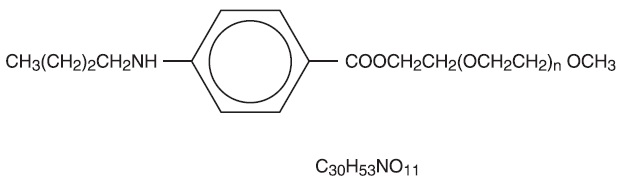
Benzonatate, a non-narcotic antitussive agent, is 2, 5, 8, 11, 14, 17, 20, 23, 26-nonaoxaoctacosan-28-yl p-(butylamino) benzoate; with a molecular weight of 603.7. Benzonatate Capsules, USP contain 100 mg or 200 mg of benzonatate, USP. Benzonatate Capsules also contain: D&C Yellow No. 10, gelatin, glycerin, methylparaben sodium and propylparaben sodium.
Medication Information
Boxed Warning
Hypersensitivity
Severe hypersensitivity reactions (including bronchospasm, laryngospasm and cardiovascular collapse) have been reported which are possibly related to local anesthesia from sucking or chewing the capsule instead of swallowing it. Severe reactions have required intervention with vasopressor agents and supportive measures.
Psychiatric Effects
Isolated instances of bizarre behavior, including mental confusion and visual hallucinations, have also been reported in patients taking benzonatate in combination with other prescribed drugs.
Accidental Ingestion and Death in Children
Keep benzonatate out of reach of children.
Accidental ingestion of benzonatate resulting in death has been reported in children below age 10.
Signs and symptoms of overdose have been reported within 15 to 20 minutes and death has been reported within one hour of ingestion. If accidental ingestion occurs, seek medical attention immediately (see OVERDOSAGE).
Contraindications
Hypersensitivity to benzonatate or related compounds.
Adverse Reactions
Potential Adverse Reactions to benzonatate may include:
Hypersensitivity reactions including bronchospasm, laryngospasm, cardiovascular collapse possibly related to local anesthesia from chewing or sucking the capsule.
CNS: sedation; headache; dizziness; mental confusion; visual hallucinations.
GI: constipation, nausea, GI upset.
Dermatologic: pruritus; skin eruptions.
Other: nasal congestion; sensation of burning in the eyes; vague “chilly” sensation; numbness of the chest; hypersensitivity.
Deliberate or accidental overdose has resulted in death, particularly in children.
How Supplied
NDC: 71335-2021-1: 30 Capsules in a BOTTLE
NDC: 71335-2021-2: 100 Capsules in a BOTTLE
NDC: 71335-2021-3: 45 Capsules in a BOTTLE
NDC: 71335-2021-4: 20 Capsules in a BOTTLE
NDC: 71335-2021-5: 15 Capsules in a BOTTLE
NDC: 71335-2021-6: 21 Capsules in a BOTTLE
NDC: 71335-2021-7: 60 Capsules in a BOTTLE
NDC: 71335-2021-8: 50 Capsules in a BOTTLE
NDC: 71335-2021-9: 90 Capsules in a BOTTLE
Description
Benzonatate, a non-narcotic antitussive agent, is 2, 5, 8, 11, 14, 17, 20, 23, 26-nonaoxaoctacosan-28-yl p-(butylamino) benzoate; with a molecular weight of 603.7.
Benzonatate Capsules, USP contain 100 mg or 200 mg of benzonatate, USP.
Benzonatate Capsules also contain: D&C Yellow No. 10, gelatin, glycerin, methylparaben sodium and propylparaben sodium.
Section 51945-4
Benzonatate 200mg Capsule
Overdosage
Intentional and unintentional overdose may result in death, particularly in children.
The drug is chemically related to tetracaine and other topical anesthetics and shares various aspects of their pharmacology and toxicology. Drugs of this type are generally well absorbed after ingestion.
Signs and Symptoms:
The signs and symptoms of overdose of benzonatate have been reported within 15 to 20 minutes. If capsules are chewed or dissolved in the mouth, oropharyngeal anesthesia will develop rapidly, which may cause choking and airway compromise.
CNS stimulation may cause restlessness and tremors, which may proceed to clonic convulsions followed by profound CNS depression. Convulsions, coma, cerebral edema and cardiac arrest leading to death have been reported within 1 hour of ingestion.
Treatment:
In case of overdose, seek medical attention immediately. Evacuate gastric contents and administer copious amounts of activated charcoal slurry. Even in the conscious patient, cough and gag refluxes may be so depressed as to necessitate special attention to protection against aspiration of gastric contents and orally administered materials. Convulsions should be treated with a short-acting barbiturate given intravenously and carefully titrated for the smallest effective dosage. Intensive support of respiration and cardiovascular-renal function is an essential feature of the treatment of severe intoxication from overdosage.
Do not use CNS stimulants.
Precautions
Benzonatate is chemically related to anesthetic agents of the para-amino-benzoic acid class (e.g., procaine; tetracaine) and has been associated with adverse CNS effects possibly related to a prior sensitivity to related agents or interaction with concomitant medication.
Pediatric Use:
Safety and effectiveness in children below the age of 10 has not been established. Accidental ingestion resulting in death has been reported in children below age 10. Keep out of reach of children.
Nursing Mothers:
It is not known whether this drug is excreted in human milk. Because many drugs are excreted in human milk, caution should be exercised when benzonatate is administered to a nursing woman.
Usage in Pregnancy:
Pregnancy Category C.
Animal reproduction studies have not been conducted with benzonatate. It is also not known whether benzonatate can cause fetal harm when administered to a pregnant woman or can affect reproduction capacity. Benzonatate should be given to a pregnant woman only if clearly needed.
Clinical Pharmacology
Benzonatate acts peripherally by anesthetizing the stretch receptors located in the respiratory passages, lungs, and pleura by dampening their activity and thereby reducing the cough reflex at its source. It begins to act within 15 to 20 minutes and its effect lasts for 3 to 8 hours. Benzonatate has no inhibitory effect on the respiratory center in recommended dosage.
Indications And usage
Benzonatate is indicated for the symptomatic relief of cough.
Information for Patients:
Swallow benzonatate capsules whole. Do not break, chew, dissolve, cut, or crush benzonatate capsules. Release of benzonatate from the capsule in the mouth can produce a temporary local anesthesia of the oral mucosa and choking could occur. If numbness or tingling of the tongue, mouth, throat, or face occurs, refrain from oral ingestion of food or liquids until the numbness has resolved. If the symptoms worsen or persist, seek medical attention.
Keep benzonatate out of reach of children. Accidental ingestion resulting in death has been reported in children. Signs and symptoms of overdose have been reported within 15 to 20 minutes and death has been reported within one hour of ingestion. Signs and symptoms may include restlessness, tremors, convulsions, coma and cardiac arrest. If accidental ingestion occurs, seek medical attention immediately.
Overdosage resulting in death may occur in adults.
Do not exceed a single dose of 200 mg and a total daily dose of 600 mg. If you miss a dose of benzonatate, skip that dose and take the next dose at the next scheduled time. Do not take 2 doses of benzonatate at one time.
Dosage and administration
Adults and Children over 10 years of age:
Usual dose is one 100 mg or 200 mg capsule three times a day as needed for cough. If necessary to control cough, up to 600 mg daily in three divided doses may be given. Benzonatate should be swallowed whole. Benzonatate Capsules are not to be broken, chewed, dissolved, cut or crushed.
Carcinogenesis, Mutagenesis, Impairment of Fertility:
Carcinogenicity, mutagenicity, and reproduction studies have not been conducted with benzonatate.
Structured Label Content
Boxed Warning (BOXED WARNING)
Hypersensitivity
Severe hypersensitivity reactions (including bronchospasm, laryngospasm and cardiovascular collapse) have been reported which are possibly related to local anesthesia from sucking or chewing the capsule instead of swallowing it. Severe reactions have required intervention with vasopressor agents and supportive measures.
Psychiatric Effects
Isolated instances of bizarre behavior, including mental confusion and visual hallucinations, have also been reported in patients taking benzonatate in combination with other prescribed drugs.
Accidental Ingestion and Death in Children
Keep benzonatate out of reach of children.
Accidental ingestion of benzonatate resulting in death has been reported in children below age 10.
Signs and symptoms of overdose have been reported within 15 to 20 minutes and death has been reported within one hour of ingestion. If accidental ingestion occurs, seek medical attention immediately (see OVERDOSAGE).
Contraindications (CONTRAINDICATIONS)
Hypersensitivity to benzonatate or related compounds.
Adverse Reactions (ADVERSE REACTIONS)
Potential Adverse Reactions to benzonatate may include:
Hypersensitivity reactions including bronchospasm, laryngospasm, cardiovascular collapse possibly related to local anesthesia from chewing or sucking the capsule.
CNS: sedation; headache; dizziness; mental confusion; visual hallucinations.
GI: constipation, nausea, GI upset.
Dermatologic: pruritus; skin eruptions.
Other: nasal congestion; sensation of burning in the eyes; vague “chilly” sensation; numbness of the chest; hypersensitivity.
Deliberate or accidental overdose has resulted in death, particularly in children.
How Supplied (HOW SUPPLIED)
NDC: 71335-2021-1: 30 Capsules in a BOTTLE
NDC: 71335-2021-2: 100 Capsules in a BOTTLE
NDC: 71335-2021-3: 45 Capsules in a BOTTLE
NDC: 71335-2021-4: 20 Capsules in a BOTTLE
NDC: 71335-2021-5: 15 Capsules in a BOTTLE
NDC: 71335-2021-6: 21 Capsules in a BOTTLE
NDC: 71335-2021-7: 60 Capsules in a BOTTLE
NDC: 71335-2021-8: 50 Capsules in a BOTTLE
NDC: 71335-2021-9: 90 Capsules in a BOTTLE
Description (DESCRIPTION)
Benzonatate, a non-narcotic antitussive agent, is 2, 5, 8, 11, 14, 17, 20, 23, 26-nonaoxaoctacosan-28-yl p-(butylamino) benzoate; with a molecular weight of 603.7.
Benzonatate Capsules, USP contain 100 mg or 200 mg of benzonatate, USP.
Benzonatate Capsules also contain: D&C Yellow No. 10, gelatin, glycerin, methylparaben sodium and propylparaben sodium.
Section 51945-4 (51945-4)
Benzonatate 200mg Capsule
Overdosage (OVERDOSAGE)
Intentional and unintentional overdose may result in death, particularly in children.
The drug is chemically related to tetracaine and other topical anesthetics and shares various aspects of their pharmacology and toxicology. Drugs of this type are generally well absorbed after ingestion.
Signs and Symptoms:
The signs and symptoms of overdose of benzonatate have been reported within 15 to 20 minutes. If capsules are chewed or dissolved in the mouth, oropharyngeal anesthesia will develop rapidly, which may cause choking and airway compromise.
CNS stimulation may cause restlessness and tremors, which may proceed to clonic convulsions followed by profound CNS depression. Convulsions, coma, cerebral edema and cardiac arrest leading to death have been reported within 1 hour of ingestion.
Treatment:
In case of overdose, seek medical attention immediately. Evacuate gastric contents and administer copious amounts of activated charcoal slurry. Even in the conscious patient, cough and gag refluxes may be so depressed as to necessitate special attention to protection against aspiration of gastric contents and orally administered materials. Convulsions should be treated with a short-acting barbiturate given intravenously and carefully titrated for the smallest effective dosage. Intensive support of respiration and cardiovascular-renal function is an essential feature of the treatment of severe intoxication from overdosage.
Do not use CNS stimulants.
Precautions (PRECAUTIONS)
Benzonatate is chemically related to anesthetic agents of the para-amino-benzoic acid class (e.g., procaine; tetracaine) and has been associated with adverse CNS effects possibly related to a prior sensitivity to related agents or interaction with concomitant medication.
Pediatric Use:
Safety and effectiveness in children below the age of 10 has not been established. Accidental ingestion resulting in death has been reported in children below age 10. Keep out of reach of children.
Nursing Mothers:
It is not known whether this drug is excreted in human milk. Because many drugs are excreted in human milk, caution should be exercised when benzonatate is administered to a nursing woman.
Usage in Pregnancy:
Pregnancy Category C.
Animal reproduction studies have not been conducted with benzonatate. It is also not known whether benzonatate can cause fetal harm when administered to a pregnant woman or can affect reproduction capacity. Benzonatate should be given to a pregnant woman only if clearly needed.
Clinical Pharmacology (CLINICAL PHARMACOLOGY)
Benzonatate acts peripherally by anesthetizing the stretch receptors located in the respiratory passages, lungs, and pleura by dampening their activity and thereby reducing the cough reflex at its source. It begins to act within 15 to 20 minutes and its effect lasts for 3 to 8 hours. Benzonatate has no inhibitory effect on the respiratory center in recommended dosage.
Indications And usage (INDICATIONS AND USAGE)
Benzonatate is indicated for the symptomatic relief of cough.
Information for Patients:
Swallow benzonatate capsules whole. Do not break, chew, dissolve, cut, or crush benzonatate capsules. Release of benzonatate from the capsule in the mouth can produce a temporary local anesthesia of the oral mucosa and choking could occur. If numbness or tingling of the tongue, mouth, throat, or face occurs, refrain from oral ingestion of food or liquids until the numbness has resolved. If the symptoms worsen or persist, seek medical attention.
Keep benzonatate out of reach of children. Accidental ingestion resulting in death has been reported in children. Signs and symptoms of overdose have been reported within 15 to 20 minutes and death has been reported within one hour of ingestion. Signs and symptoms may include restlessness, tremors, convulsions, coma and cardiac arrest. If accidental ingestion occurs, seek medical attention immediately.
Overdosage resulting in death may occur in adults.
Do not exceed a single dose of 200 mg and a total daily dose of 600 mg. If you miss a dose of benzonatate, skip that dose and take the next dose at the next scheduled time. Do not take 2 doses of benzonatate at one time.
Dosage and administration (DOSAGE AND ADMINISTRATION)
Adults and Children over 10 years of age:
Usual dose is one 100 mg or 200 mg capsule three times a day as needed for cough. If necessary to control cough, up to 600 mg daily in three divided doses may be given. Benzonatate should be swallowed whole. Benzonatate Capsules are not to be broken, chewed, dissolved, cut or crushed.
Carcinogenesis, Mutagenesis, Impairment of Fertility:
Carcinogenicity, mutagenicity, and reproduction studies have not been conducted with benzonatate.
Advanced Ingredient Data
Raw Label Data
All Sections (JSON)
Additional Information
Back to search View SPL set listing Open on DailyMed ↗
Source: dailymed · Ingested: 2026-02-15T11:38:01.524939 · Updated: 2026-03-14T21:53:03.632313