Duloxetine Delayed-release Capsules
41876761-9d5b-4190-a200-6a822c54582e
34391-3
HUMAN PRESCRIPTION DRUG LABEL
Drug Facts
Composition & Product
Identifiers & Packaging
Indications and Usage
Duloxetine delayed-release capsules is indicated for the treatment of: Major depressive disorder in adults Generalized anxiety disorder in adults and pediatric patients 7 years of age and older Diabetic peripheral neuropathic pain in adults Fibromyalgia in adults and pediatric patients 13 years of age and older Chronic musculoskeletal pain in adults
Dosage and Administration
Take Duloxetine delayed-release capsules once daily, with or without food. Swallow whole; do not crush, chew, or open capsule ( 2.1 ) Indication Starting Dose Target Dose Maximum Dose MDD ( 2.2 ) 40 mg/day to 60 mg/day Acute Treatment: 40 mg/day (20 mg twice daily) to 60 mg/day (once daily or as 30 mg twice daily); Maintenance Treatment: 60 mg/day 120 mg/day GAD ( 2.3 ) Adults 60 mg/day 60 mg/day (once daily) 120 mg/day Geriatric 30 mg/day 60 mg/day (once daily) 120 mg/day Pediatrics (7 to 17 years of age) 30 mg/day 30 to 60 mg/day (once daily) 120 mg/day DPNP ( 2.4 ) 60 mg/day 60 mg/day (once daily) 60 mg/day FM ( 2.5 ) Adults and Pediatrics (13 to 17 years of age) 30 mg/day 60 mg/day (once daily) 60 mg/day Chronic Musculoskeletal Pain ( 2.6 ) 30 mg/day 60 mg/day (once daily) 60 mg/day Discontinuing Duloxetine delayed-release capsules: Gradually reduce dosage to avoid discontinuation symptoms ( 2.8 , 5.7 )
Contraindications
The use of MAOIs intended to treat psychiatric disorders with Duloxetine delayed-release capsules or within 5 days of stopping treatment with Duloxetine delayed-release capsules is contraindicated because of an increased risk of serotonin syndrome. The use of Duloxetine delayed-release capsules within 14 days of stopping an MAOI intended to treat psychiatric disorders is contraindicated [see Dosage and Administration (2.8) and Warnings and Precautions (5.4) ]. Starting Duloxetine delayed-release capsules in a patient who is being treated with MAOIs such as linezolid or intravenous methylene blue is also contraindicated because of an increased risk of serotonin syndrome [see Dosage and Administration (2.9) and Warnings and Precautions (5.4) ].
Warnings and Precautions
Hepatotoxicity : Hepatic failure, sometimes fatal, has been reported. Discontinue Duloxetine delayed-release capsules in patients who develop jaundice or other evidence of clinically significant liver dysfunction and should not be resumed unless another cause can be established. Avoid use in patients with substantial alcohol use or evidence of chronic liver disease ( 5.2 ) Orthostatic Hypotension, Falls and Syncope : Consider dosage reduction or discontinuation if these events occur ( 5.3 ) Serotonin Syndrome : Increased risk when co-administered with other serotonergic agents, but also when taken alone. If it occurs, discontinue Duloxetine delayed-release capsules and serotonergic agents ( 5.4 ) Increased Risk of Bleeding : May increase the risk of bleeding events. Concomitant use of antiplatelet drugs and anticoagulants may increase this risk ( 5.5 , 7.4 , 8.1 ) Severe Skin Reactions : Severe skin reactions, including erythema multiforme and Stevens-Johnson Syndrome (SJS), can occur; Discontinue at the first appearance of blisters, peeling rash, mucosal erosions, or any other sign of hypersensitivity if no other etiology can be identified ( 5.6 ) Activation of Mania or Hypomania : Prior to initiating, screen patients for personal or family history of bipolar disorder, mania, or hypomania ( 5.8 ) Angle-Closure Glaucoma : Has occurred in patients with untreated anatomically narrow angles treated with antidepressants ( 5.9 ) Seizures : Prescribe with care in patients with a history of seizure disorder ( 5.10 ) Blood Pressure Increases : Monitor blood pressure prior to initiating treatment and periodically throughout treatment ( 5.11 ) Inhibitors of CYP1A2 or Thioridazine : Avoid co-administration with Duloxetine delayed-release capsules ( 5.12 ) Hyponatremia : Can occur in association with SIADH; consider discontinuation ( 5.13 ) Glucose Control in Diabetes : In DPNP patients, increases in fasting blood glucose, and HbA 1c have been observed ( 5.14 ) Conditions that Slow Gastric Emptying : Use cautiously in these patients ( 5.14 ) Sexual Dysfunction : Duloxetine delayed-release capsules may cause symptoms of sexual dysfunction ( 5.16 )
Adverse Reactions
The following serious adverse reactions are described below and elsewhere in the labeling: Suicidal Thoughts and Behaviors in Children, Adolescents, and Young Adults [see Boxed Warning and Warnings and Precautions (5.1) ] Hepatotoxicity [see Warnings and Precautions (5.2) ] Orthostatic Hypotension, Falls and Syncope [see Warnings and Precautions (5.3) ] Serotonin Syndrome [see Warnings and Precautions (5.4) ] Increased Risk of Bleeding [see Warnings and Precautions (5.5) ] Severe Skin Reactions [see Warnings and Precautions (5.6) ] Discontinuation Syndrome [see Warnings and Precautions (5.7) ] Activation of Mania/Hypomania [see Warnings and Precautions (5.8) ] Angle-Closure Glaucoma [see Warnings and Precautions (5.9) ] Seizures [see Warnings and Precautions (5.10) ] Increases in Blood Pressure [see Warnings and Precautions (5.11) ] Clinically Important Drug Interactions [see Warnings and Precautions (5.12) ] Hyponatremia [see Warnings and Precautions (5.13) ] Urinary Hesitation and Retention [see Warnings and Precautions (5.15) ] Sexual Dysfunction [see Warnings and Precautions (5.16) ]
Drug Interactions
Both CYP1A2 and CYP2D6 are responsible for duloxetine metabolism.
How Supplied
Duloxetine delayed-release capsules, USP 30 mg strength, color green, white, imprint B;747 and capsule 16 mm. NDC: 71335-0392-1: 30 Capsules in a BOTTLE NDC: 71335-0392-2: 60 Capsules in a BOTTLE NDC: 71335-0392-3: 28 Capsules in a BOTTLE NDC: 71335-0392-4: 6 Capsules in a BOTTLE NDC: 71335-0392-5: 90 Capsules in a BOTTLE NDC: 71335-0392-6: 15 Capsules in a BOTTLE NDC: 71335-0392-7: 180 Capsules in a BOTTLE NDC: 71335-0392-8: 120 Capsules in a BOTTLE Store at 25°C (77°F); excursions permitted to 15-30°C (59-86°F) [see USP Controlled Room Temperature]. Repackaged/Relabeled by: Bryant Ranch Prepack, Inc. Burbank, CA 9150
Storage and Handling
Duloxetine delayed-release capsules, USP 30 mg strength, color green, white, imprint B;747 and capsule 16 mm. NDC: 71335-0392-1: 30 Capsules in a BOTTLE NDC: 71335-0392-2: 60 Capsules in a BOTTLE NDC: 71335-0392-3: 28 Capsules in a BOTTLE NDC: 71335-0392-4: 6 Capsules in a BOTTLE NDC: 71335-0392-5: 90 Capsules in a BOTTLE NDC: 71335-0392-6: 15 Capsules in a BOTTLE NDC: 71335-0392-7: 180 Capsules in a BOTTLE NDC: 71335-0392-8: 120 Capsules in a BOTTLE Store at 25°C (77°F); excursions permitted to 15-30°C (59-86°F) [see USP Controlled Room Temperature]. Repackaged/Relabeled by: Bryant Ranch Prepack, Inc. Burbank, CA 9150
Description
Antidepressants increased the risk of suicidal thoughts and behavior in children, adolescents, and young adults in short-term studies. These studies did not show an increase in the risk of suicidal thoughts and behavior with antidepressant use in patients over age 24; there was a reduction in risk with antidepressant use in patients aged 65 and older [see Warnings and Precautions (5.1) ] . In patients of all ages who are started on antidepressant therapy, monitor closely for worsening, and for emergence of suicidal thoughts and behaviors. Advise families and caregivers of the need for close observation and communication with the prescriber [see Warnings and Precautions (5.1) ] .
Medication Information
Warnings and Precautions
Hepatotoxicity : Hepatic failure, sometimes fatal, has been reported. Discontinue Duloxetine delayed-release capsules in patients who develop jaundice or other evidence of clinically significant liver dysfunction and should not be resumed unless another cause can be established. Avoid use in patients with substantial alcohol use or evidence of chronic liver disease ( 5.2 ) Orthostatic Hypotension, Falls and Syncope : Consider dosage reduction or discontinuation if these events occur ( 5.3 ) Serotonin Syndrome : Increased risk when co-administered with other serotonergic agents, but also when taken alone. If it occurs, discontinue Duloxetine delayed-release capsules and serotonergic agents ( 5.4 ) Increased Risk of Bleeding : May increase the risk of bleeding events. Concomitant use of antiplatelet drugs and anticoagulants may increase this risk ( 5.5 , 7.4 , 8.1 ) Severe Skin Reactions : Severe skin reactions, including erythema multiforme and Stevens-Johnson Syndrome (SJS), can occur; Discontinue at the first appearance of blisters, peeling rash, mucosal erosions, or any other sign of hypersensitivity if no other etiology can be identified ( 5.6 ) Activation of Mania or Hypomania : Prior to initiating, screen patients for personal or family history of bipolar disorder, mania, or hypomania ( 5.8 ) Angle-Closure Glaucoma : Has occurred in patients with untreated anatomically narrow angles treated with antidepressants ( 5.9 ) Seizures : Prescribe with care in patients with a history of seizure disorder ( 5.10 ) Blood Pressure Increases : Monitor blood pressure prior to initiating treatment and periodically throughout treatment ( 5.11 ) Inhibitors of CYP1A2 or Thioridazine : Avoid co-administration with Duloxetine delayed-release capsules ( 5.12 ) Hyponatremia : Can occur in association with SIADH; consider discontinuation ( 5.13 ) Glucose Control in Diabetes : In DPNP patients, increases in fasting blood glucose, and HbA 1c have been observed ( 5.14 ) Conditions that Slow Gastric Emptying : Use cautiously in these patients ( 5.14 ) Sexual Dysfunction : Duloxetine delayed-release capsules may cause symptoms of sexual dysfunction ( 5.16 )
Indications and Usage
Duloxetine delayed-release capsules is indicated for the treatment of: Major depressive disorder in adults Generalized anxiety disorder in adults and pediatric patients 7 years of age and older Diabetic peripheral neuropathic pain in adults Fibromyalgia in adults and pediatric patients 13 years of age and older Chronic musculoskeletal pain in adults
Dosage and Administration
Take Duloxetine delayed-release capsules once daily, with or without food. Swallow whole; do not crush, chew, or open capsule ( 2.1 ) Indication Starting Dose Target Dose Maximum Dose MDD ( 2.2 ) 40 mg/day to 60 mg/day Acute Treatment: 40 mg/day (20 mg twice daily) to 60 mg/day (once daily or as 30 mg twice daily); Maintenance Treatment: 60 mg/day 120 mg/day GAD ( 2.3 ) Adults 60 mg/day 60 mg/day (once daily) 120 mg/day Geriatric 30 mg/day 60 mg/day (once daily) 120 mg/day Pediatrics (7 to 17 years of age) 30 mg/day 30 to 60 mg/day (once daily) 120 mg/day DPNP ( 2.4 ) 60 mg/day 60 mg/day (once daily) 60 mg/day FM ( 2.5 ) Adults and Pediatrics (13 to 17 years of age) 30 mg/day 60 mg/day (once daily) 60 mg/day Chronic Musculoskeletal Pain ( 2.6 ) 30 mg/day 60 mg/day (once daily) 60 mg/day Discontinuing Duloxetine delayed-release capsules: Gradually reduce dosage to avoid discontinuation symptoms ( 2.8 , 5.7 )
Contraindications
The use of MAOIs intended to treat psychiatric disorders with Duloxetine delayed-release capsules or within 5 days of stopping treatment with Duloxetine delayed-release capsules is contraindicated because of an increased risk of serotonin syndrome. The use of Duloxetine delayed-release capsules within 14 days of stopping an MAOI intended to treat psychiatric disorders is contraindicated [see Dosage and Administration (2.8) and Warnings and Precautions (5.4) ]. Starting Duloxetine delayed-release capsules in a patient who is being treated with MAOIs such as linezolid or intravenous methylene blue is also contraindicated because of an increased risk of serotonin syndrome [see Dosage and Administration (2.9) and Warnings and Precautions (5.4) ].
Adverse Reactions
The following serious adverse reactions are described below and elsewhere in the labeling: Suicidal Thoughts and Behaviors in Children, Adolescents, and Young Adults [see Boxed Warning and Warnings and Precautions (5.1) ] Hepatotoxicity [see Warnings and Precautions (5.2) ] Orthostatic Hypotension, Falls and Syncope [see Warnings and Precautions (5.3) ] Serotonin Syndrome [see Warnings and Precautions (5.4) ] Increased Risk of Bleeding [see Warnings and Precautions (5.5) ] Severe Skin Reactions [see Warnings and Precautions (5.6) ] Discontinuation Syndrome [see Warnings and Precautions (5.7) ] Activation of Mania/Hypomania [see Warnings and Precautions (5.8) ] Angle-Closure Glaucoma [see Warnings and Precautions (5.9) ] Seizures [see Warnings and Precautions (5.10) ] Increases in Blood Pressure [see Warnings and Precautions (5.11) ] Clinically Important Drug Interactions [see Warnings and Precautions (5.12) ] Hyponatremia [see Warnings and Precautions (5.13) ] Urinary Hesitation and Retention [see Warnings and Precautions (5.15) ] Sexual Dysfunction [see Warnings and Precautions (5.16) ]
Drug Interactions
Both CYP1A2 and CYP2D6 are responsible for duloxetine metabolism.
Storage and Handling
Duloxetine delayed-release capsules, USP 30 mg strength, color green, white, imprint B;747 and capsule 16 mm. NDC: 71335-0392-1: 30 Capsules in a BOTTLE NDC: 71335-0392-2: 60 Capsules in a BOTTLE NDC: 71335-0392-3: 28 Capsules in a BOTTLE NDC: 71335-0392-4: 6 Capsules in a BOTTLE NDC: 71335-0392-5: 90 Capsules in a BOTTLE NDC: 71335-0392-6: 15 Capsules in a BOTTLE NDC: 71335-0392-7: 180 Capsules in a BOTTLE NDC: 71335-0392-8: 120 Capsules in a BOTTLE Store at 25°C (77°F); excursions permitted to 15-30°C (59-86°F) [see USP Controlled Room Temperature]. Repackaged/Relabeled by: Bryant Ranch Prepack, Inc. Burbank, CA 9150
How Supplied
Duloxetine delayed-release capsules, USP 30 mg strength, color green, white, imprint B;747 and capsule 16 mm. NDC: 71335-0392-1: 30 Capsules in a BOTTLE NDC: 71335-0392-2: 60 Capsules in a BOTTLE NDC: 71335-0392-3: 28 Capsules in a BOTTLE NDC: 71335-0392-4: 6 Capsules in a BOTTLE NDC: 71335-0392-5: 90 Capsules in a BOTTLE NDC: 71335-0392-6: 15 Capsules in a BOTTLE NDC: 71335-0392-7: 180 Capsules in a BOTTLE NDC: 71335-0392-8: 120 Capsules in a BOTTLE Store at 25°C (77°F); excursions permitted to 15-30°C (59-86°F) [see USP Controlled Room Temperature]. Repackaged/Relabeled by: Bryant Ranch Prepack, Inc. Burbank, CA 9150
Description
Antidepressants increased the risk of suicidal thoughts and behavior in children, adolescents, and young adults in short-term studies. These studies did not show an increase in the risk of suicidal thoughts and behavior with antidepressant use in patients over age 24; there was a reduction in risk with antidepressant use in patients aged 65 and older [see Warnings and Precautions (5.1) ] . In patients of all ages who are started on antidepressant therapy, monitor closely for worsening, and for emergence of suicidal thoughts and behaviors. Advise families and caregivers of the need for close observation and communication with the prescriber [see Warnings and Precautions (5.1) ] .
Section 42229-5
Recommended Dosage in Adults Less than 65 Years of Age
For most adults less than 65 years of age with GAD, initiate Duloxetine delayed-release capsules 60 mg once daily. For some patients, it may be desirable to start at 30 mg once daily for 1 week, to allow patients to adjust to Duloxetine delayed-release capsules before increasing to 60 mg once daily. While a 120 mg once daily dosage was shown to be effective, there is no evidence that doses greater than 60 mg/day confer additional benefit. Nevertheless, if a decision is made to increase the dosage beyond 60 mg once daily, increase dosage in increments of 30 mg once daily. Periodically reassess to determine the continued need for maintenance treatment and the appropriate dosage for such treatment.
Section 51945-4
Duloxetine Delayed-Release Capsules 30 mg
8.8 Race
No specific pharmacokinetic study was conducted to investigate the effects of race.
9.2 Abuse
In animal studies, duloxetine did not demonstrate barbiturate-like (depressant) abuse potential.
While Duloxetine delayed-release capsules have not been systematically studied in humans for its potential for abuse, there was no indication of drug-seeking behavior in the clinical trials. However, it is not possible to predict on the basis of premarketing experience the extent to which a CNS active drug will be misused, diverted, and/or abused once marketed. Consequently, physicians should carefully evaluate patients for a history of drug abuse and follow such patients closely, observing them for signs of misuse or abuse of Duloxetine delayed-release capsules (e.g., development of tolerance, incrementation of dose, drug-seeking behavior).
8.6 Gender
Duloxetine's half-life is similar in men and women. Dosage adjustment based on gender is not necessary.
7.15 Alcohol
When Duloxetine delayed-release capsules and ethanol were administered several hours apart so that peak concentrations of each would coincide, Duloxetine delayed-release capsules did not increase the impairment of mental and motor skills caused by alcohol.
In the Duloxetine delayed-release capsules clinical trials database, three Duloxetine delayed-release capsules-treated patients had liver injury as manifested by ALT and total bilirubin elevations, with evidence of obstruction. Substantial intercurrent ethanol use was present in each of these cases, and this may have contributed to the abnormalities seen [see Warnings and Precautions (5.2, 5.12)].
5.10 Seizures
Duloxetine has not been systematically evaluated in patients with a seizure disorder, and such patients were excluded from clinical studies. In adult placebo-controlled clinical trials, seizures/convulsions occurred in 0.02% (3/12,722) of patients treated with duloxetine and 0.01% (1/9513) of patients treated with placebo. Duloxetine delayed-release capsules should be prescribed with care in patients with a history of a seizure disorder.
7.5 Lorazepam
Under steady-state conditions for duloxetine (60 mg Q 12 hours) and lorazepam (2 mg Q 12 hours), the pharmacokinetics of duloxetine were not affected by co-administration.
7.6 Temazepam
Under steady-state conditions for duloxetine (20 mg qhs) and temazepam (30 mg qhs), the pharmacokinetics of duloxetine were not affected by co-administration.
11 Description
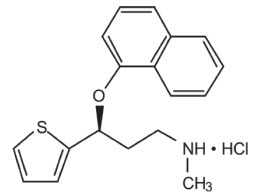
Duloxetine delayed-release capsules, USP are a selective serotonin and norepinephrine reuptake inhibitor (SNRI) for oral administration. Its chemical designation is (+)-(S)-N-methyl-γ-(1-naphthyloxy)-2-thiophenepropylamine hydrochloride. The empirical formula is C18H19NOS∙HCl, which corresponds to a molecular weight of 333.88. The structural formula is:
Duloxetine hydrochloride is a white to slightly brownish white solid, which is slightly soluble in water.
Each capsule contains enteric-coated pellets of 20, 30, 40 or 60 mg of duloxetine (equivalent to 22.4, 33.7, 44.9 or 67.3 mg of duloxetine hydrochloride, respectively). These enteric-coated pellets are designed to prevent degradation of the drug in the acidic environment of the stomach. Inactive ingredients include ammonium hydroxide, black iron oxide, hypromellose, methacrylic acid copolymer dispersion (methacrylic acid-ethyl acrylate copolymer, polysorbate 80, sodium lauryl sulfate), potassium hydroxide, propylene glycol, shellac, sucrose, sugar spheres (maize starch, sucrose), talc, titanium dioxide, triethylcitrate, and hard gelatin capsules (gelatin, titanium dioxide). The 20 mg hard gelatin capsule colorant is yellow iron oxide. The 30 mg hard gelatin capsule colorants are FD&C Blue No. 1, FD&C Yellow No. 6, and FD&C Yellow No. 10. The 40 mg hard gelatin capsule colorants are FD&C Blue No. 2, red iron oxide, and yellow iron oxide. The 60 mg hard gelatin capsule colorants are FD&C Blue No. 1, FD&C Yellow No. 6, FD&C Yellow No.10, and yellow iron oxide.
7.16 Cns Drugs
9.3 Dependence
In drug dependence studies, duloxetine did not demonstrate dependence-producing potential in rats.
Medication Guide
Dispense with Medication Guide available at: www.bpirx.com/products/patientinformation
Read this Medication Guide before you start taking Duloxetine delayed-release capsules and each time you get a refill. There may be new information. This information does not take the place of talking to your healthcare provider about your medical condition or treatment.
Talk to your healthcare provider about:
- all risks and benefits of treatment with antidepressant medicines
- all treatment choices for depression or other serious mental illness
What is the most important information I should know about antidepressant medicines, depression, other serious mental illnesses, and suicidal thoughts or actions?
- Duloxetine delayed-release capsules and other antidepressant medicines may increase suicidal thoughts or actions in some children, teenagers, or young adults within the first few months of treatment or when the dose is changed.
- Depression and other serious mental illnesses are the most important causes of suicidal thoughts or actions. Some people may have a particularly high risk of having suicidal thoughts or actions. These include people who have (or have a family history of) bipolar illness (also called manic-depressive illness).
-
How can I watch for and try to prevent suicidal thoughts and actions?
- Pay close attention to any changes in mood, behavior, actions, thoughts, or feelings, especially sudden changes. This is very important when an antidepressant medicine is started or when the dose is changed.
- Call your healthcare provider right away to report new or sudden changes in mood, behavior, thoughts, or feelings.
- Keep all follow-up visits with your healthcare provider as scheduled. Call your healthcare provider between visits as needed, especially if you have concerns about symptoms.
Call your healthcare provider right away if you have any of the following symptoms or feelings, especially if they are new, worse, or worry you. In an emergency, call 911.
|
|
What else do I need to know about antidepressant medicines?
- Never stop an antidepressant medicine without first talking to a healthcare provider. Stopping an antidepressant medicine suddenly can cause other symptoms.
- Antidepressants are medicines used to treat depression and other illnesses. It is important to discuss all the risks of treating depression and also the risks of not treating it. Patients should discuss all treatment choices with your healthcare provider, not just the use of antidepressants.
- Antidepressant medicines have other side effects. Talk to your healthcare provider about the side effects of the medicine prescribed for you or your family member.
- Antidepressant medicines can interact with other medicines. Know all of the medicines that you or your family member takes. Keep a list of all medicines to show your healthcare provider. Do not start new medicines without first checking with your healthcare provider.
What are Duloxetine delayed-release capsules?
Duloxetine delayed-release capsules are a prescription medicine used to treat a certain type of depression called Major Depressive Disorder (MDD). Duloxetine delayed-release capsules belong to a class of medicines known as SNRIs (or serotonin-norepinephrine reuptake inhibitors).
Duloxetine delayed-release capsules are also used to treat or manage:
|
|
Who should not take Duloxetine delayed-release capsules?
Do Not take Duloxetine delayed-release capsules if you:
-
take a Monoamine Oxidase Inhibitor (MAOI). Ask your healthcare provider or pharmacist if you are not sure if you take an MAOI, including the antibiotic linezolid or intravenous methylene blue.
- Do not take an MAOI within 5 days of stopping Duloxetine delayed-release capsules unless directed to do so by your healthcare provider.
- Do not start Duloxetine delayed-release capsules if you stopped taking an MAOI in the last 14 days unless directed to do so by your healthcare provider.
People who take Duloxetine delayed-release capsules close in time to an MAOI may have a serious problem called Serotonin Syndrome (see "What are the possible side effects of Duloxetine delayed-release capsules?").
What should I tell my healthcare provider before taking Duloxetine delayed release capsules?
Before starting Duloxetine delayed-release capsules, tell your healthcare provider if you:
- have heart problems or high blood pressure
- have diabetes (Duloxetine delayed-release capsules treatment makes it harder for some people with diabetes to control their blood sugar)
- have liver problems
- have kidney problems
- have glaucoma
- have or had seizures or convulsions
- have bipolar disorder or mania
- have low sodium levels in your blood
- have delayed stomach emptying
- have or had bleeding problems
- are pregnant or plan to become pregnant. Duloxetine delayed-release capsules may harm your unborn baby. Talk to your healthcare provider about the risk to your unborn baby if you take Duloxetine delayed-release capsules during pregnancy.
- Tell your healthcare provider right away if you become pregnant or think you are pregnant during treatment with Duloxetine delayed-release capsules.
- are breastfeeding or plan to breastfeed. Duloxetine passes into your breast milk and may harm your baby. Talk to your healthcare provider about the best way to feed your baby while taking Duloxetine delayed-release capsules.
Tell your healthcare provider about all the medicines that you take, including prescription and over-the-counter medicines, vitamins, and herbal supplements. Duloxetine delayed-release capsules and some medicines may interact with each other, may not work as well, or may cause serious side effects.
Especially tell your healthcare provider if you take:
- triptans used to treat migraine headache
- medicines used to treat mood, anxiety, psychotic or thought disorders, including tricyclics, lithium, buspirone, SSRIs, SNRIs or MAOIs
- tramadol, fentanyl, meperidine, methadone, or other opioids
- amphetamines
- cimetidine
- the antibiotics ciprofloxacin, enoxacin
- medicine to treat irregular heart rate (like propafenone, flecainide, quinidine)
- theophylline
- the blood thinner warfarin (Coumadin, Jantoven)
- non-steroidal anti-inflammatory drug (NSAID) (like ibuprofen, naproxen or aspirin).
- over-the-counter supplements such as tryptophan or St. John's Wort
- thioridazine (Mellaril). Mellaril together with Duloxetine delayed-release capsules can cause serious heart rhythm problems or sudden death.
Ask your healthcare provider for a list of these medicines if you are not sure.
Do not take Duloxetine delayed-release capsules with any other medicine that contains duloxetine.
How should I take Duloxetine delayed-release capsules?
- Take Duloxetine delayed-release capsules exactly as your healthcare provider tells you to take them. Your healthcare provider may need to change the dose of Duloxetine delayed-release capsules until it is the right dose for you.
- Swallow Duloxetine delayed-release capsules whole. Do not chew or crush Duloxetine delayed-release capsules.
- Do not open the capsule and sprinkle on food or mix with liquids. Opening the capsule may affect how well Duloxetine delayed-release capsules work.
- Duloxetine delayed-release capsules may be taken with or without food.
- If you miss a dose of Duloxetine delayed-release capsules, take the missed dose as soon as you remember. If it is almost time for the next dose, skip the missed dose and take your next dose at the regular time. Do not take two doses of Duloxetine delayed-release capsules at the same time.
- If you take too much Duloxetine delayed-release capsules, call your healthcare provider or poison control center at 1-800-222-1222 right away, or get emergency treatment.
- When switching from another antidepressant to Duloxetine delayed-release capsules your healthcare provider may want to lower the dose of the initial antidepressant first to potentially avoid side effects.
What should I avoid while taking Duloxetine delayed-release capsules?
- Duloxetine delayed-release capsules can cause sleepiness or may affect your ability to make decisions, think clearly, or react quickly. You should not drive, operate heavy machinery, or do other dangerous activities until you know how Duloxetine delayed-release capsules affects you.
- Use of Duloxetine delayed-release capsules concomitantly with heavy alcohol intake may be associated with severe liver injury. Avoid heavy alcohol use while taking Duloxetine delayed-release capsules.
What are the possible side effects of Duloxetine delayed-release capsules?
Duloxetine delayed-release capsules may cause serious side effects, including: See "What is the most important information I should know about Duloxetine delayed-release capsules?"
Common possible side effects in people who take Duloxetine delayed-release capsules include:
1. liver damage. Symptoms may include:
|
|
|
2. changes in blood pressure and falls. Monitor your blood pressure before starting and throughout treatment. Duloxetine delayed-release capsules may:
- increase your blood pressure.
- decrease your blood pressure when standing and cause dizziness or fainting, mostly when first starting Duloxetine delayed-release capsules or when increasing the dose.
- increase risk of falls, especially in elderly.
3. Serotonin Syndrome: This condition can be life-threatening and symptoms may include:
|
|
4. abnormal bleeding: Duloxetine delayed-release capsules and other antidepressant medicines may increase your risk of bleeding or bruising, especially if you take the blood thinner warfarin (Coumadin, Jantoven), a non-steroidal anti-inflammatory drug (NSAIDs, like ibuprofen or naproxen), or aspirin.
5. severe skin reactions: Duloxetine delayed-release capsules may cause serious skin reactions that may require stopping its use. This may need to be treated in a hospital and may be life-threatening. Call your healthcare provider right away or get emergency help if you have skin blisters, peeling rash, sores in the mouth, hives or any other allergic reactions.
6. discontinuation symptoms: Do not stop Duloxetine delayed-release capsules without first talking to your healthcare provider. Stopping Duloxetine delayed-release capsules too quickly or changing from another antidepressant too quickly may result in serious symptoms including:
|
|
|
7. manic episodes:
|
|
|
8. visual problems:
|
|
|
Only some people are at risk for these problems. You may want to undergo an eye examination to see if you are at risk and receive preventative treatment if you are.
9. seizures or convulsions
10. low salt (sodium) levels in the blood. Elderly people may be at greater risk for this. Symptoms may include:
- headache
- weakness or feeling unsteady
- confusion, problems concentrating or thinking or memory problems
11. problems with urination. Symptoms may include:
|
|
12. sexual problems (dysfunction).
Taking serotonin and norepinephrine reuptake inhibitors (SNRIs), including Duloxetine delayed-release capsules, may cause sexual problems.
Symptoms in males may include:
- delayed ejaculation or inability to have an ejaculation
- decreased sex drive
- problems getting or keeping an erection
Symptoms in females may include:
|
|
Talk to your healthcare provider if you develop any changes in your sexual function or if you have any questions or concerns about sexual problems during treatment with Duloxetine delayed-release capsules. There may be treatments your healthcare provider can suggest. The most common side effects of Duloxetine delayed-release capsules include:
|
|
|
|
Common possible side effects in children and adolescents who take Duloxetine delayed-release capsules include:
|
|
|
Side effects in adults may also occur in children and adolescents who take Duloxetine delayed-release capsules. Children and adolescents should have height and weight monitored during treatment.
Tell your healthcare provider if you have any side effect that bothers you or that does not go away.
These are not all the possible side effects of Duloxetine delayed-release capsules. For more information, ask your healthcare provider or pharmacist.
Call your doctor for medical advice about side effects. You may report side effects to 1-800-FDA-1088.
How should I store Duloxetine delayed-release capsules?
Store Duloxetine delayed-release capsules at room temperature between 68°F to 77°F (20°C to 25°C).
Keep Duloxetine delayed-release capsules and all medicines out of the reach of children.
General information about the safe and effective use of Duloxetine delayed-release capsules.
Medicines are sometimes prescribed for purposes other than those listed in a Medication Guide. Do not use Duloxetine delayed-release capsules for a condition for which it was not prescribed. Do not give Duloxetine delayed-release capsules to other people, even if they have the same symptoms that you have. It may harm them.
This Medication Guide summarizes the most important information about Duloxetine delayed-release capsules. If you would like more information, talk with your healthcare provider. You may ask your healthcare provider or pharmacist for information about Duloxetine delayed-release capsules that is written for healthcare professionals.
For more information, contact Breckenridge Pharmaceutical, Inc. at 1-800-367-3395.
What are the ingredients in Duloxetine delayed-release capsules?
Active ingredient: duloxetine hydrochloride, USP
Inactive ingredients: ammonium hydroxide, black iron oxide, hypromellose, methacrylic acid copolymer dispersion (methacrylic acid-ethyl acrylate copolymer, polysorbate 80, sodium lauryl sulfate), potassium hydroxide, propylene glycol, shellac, sucrose, sugar spheres (maize starch, sucrose), talc, titanium dioxide, triethylcitrate, and hard gelatin capsules (gelatin, titanium dioxide). The 20 mg hard gelatin capsule colorant is yellow iron oxide. The 30 mg hard gelatin capsule colorants are FD&C Blue No. 1, FD&C Yellow No. 6, and FD&C Yellow No. 10. The 40 mg hard gelatin capsule colorants are FD&C Blue No. 2, red iron oxide, and yellow iron oxide. The 60 mg hard gelatin capsule colorants are FD&C Blue No. 1, FD&C Yellow No. 6, FD&C Yellow No.10, and yellow iron oxide.
This Medication Guide has been approved by the U.S. Food and Drug Administration.
Trademarks are the property of their respective owners.
Manufactured for:
Breckenridge Pharmaceutical, Inc.
Berkeley Heights, NJ 07922
Manufactured by:
Towa Pharmaceutical Europe, S.L.
Martorelles (Barcelona), Spain
Revised: 11/2023
5.13 Hyponatremia
Hyponatremia may occur as a result of treatment with SSRIs and SNRIs, including Duloxetine delayed-release capsules. In many cases, this hyponatremia appears to be the result of the syndrome of inappropriate antidiuretic hormone secretion (SIADH). Cases with serum sodium lower than 110 mmol/L have been reported with Duloxetine delayed-release capsules use and appeared to be reversible when Duloxetine delayed-release capsules were discontinued. Geriatric patients may be at greater risk of developing hyponatremia with SSRIs and SNRIs. Also, patients taking diuretics or who are otherwise volume depleted may be at greater risk [see Use in Specific Populations (8.5)]. Discontinuation of Duloxetine delayed-release capsules should be considered in patients with symptomatic hyponatremia and appropriate medical intervention should be instituted.
Signs and symptoms of hyponatremia include headache, difficulty concentrating, memory impairment, confusion, weakness, and unsteadiness, which may lead to falls. More severe and/or acute cases have been associated with hallucination, syncope, seizure, coma, respiratory arrest, and death.
8.4 Pediatric Use
The safety and effectiveness of Duloxetine delayed-release capsules have been established for treatment of generalized anxiety disorder (GAD) in patients 7 to 17 years of age and for treatment of juvenile fibromyalgia syndrome in patients 13 to 17 years of age. The safety and effectiveness of Duloxetine delayed-release capsules have not been established in pediatric patients with major depressive disorder (MDD), diabetic peripheral neuropathic pain, or chronic musculoskeletal pain.
Antidepressants increased the risk of suicidal thoughts and behavior in pediatric patients. Monitor all pediatric patients being treated with antidepressants for clinical worsening and emergence of suicidal thoughts and behaviors, especially during the initial few months of treatment, or at times of dosage changes [see Warnings and Precautions (5.1)]. Perform regular monitoring of weight and growth in pediatric patients treated with Duloxetine delayed-release capsules [see Adverse Reactions (6.1)].
5.2 Hepatotoxicity
There have been reports of hepatic failure, sometimes fatal, in patients treated with Duloxetine delayed-release capsules. These cases have presented as hepatitis with abdominal pain, hepatomegaly, and elevation of transaminase levels to more than twenty times the upper limit of normal (ULN) with or without jaundice, reflecting a mixed or hepatocellular pattern of liver injury. Duloxetine delayed-release capsules should be discontinued in patients who develop jaundice or other evidence of clinically significant liver dysfunction and should not be resumed unless another cause can be established.
Cases of cholestatic jaundice with minimal elevation of transaminase levels have also been reported. Other postmarketing reports indicate that elevated transaminases, bilirubin, and alkaline phosphatase have occurred in patients with chronic liver disease or cirrhosis.
Duloxetine delayed-release capsules increased the risk of elevation of serum transaminase levels in development program clinical trials. Liver transaminase elevations resulted in the discontinuation of 0.3% (92/34,756) of Duloxetine delayed-release capsules-treated patients. In most patients, the median time to detection of the transaminase elevation was about two months. In adult placebo-controlled trials, for patients with normal and abnormal baseline ALT values, elevation of ALT >3 times the ULN occurred in 1.25% (144/11,496) of Duloxetine delayed-release capsules-treated patients compared to 0.45% (39/8716) of placebo-treated patients. In adult placebo- controlled studies using a fixed dose design, there was evidence of a Duloxetine delayed-release capsules dose response relationship for ALT and AST elevation of >3 times the ULN and >5 times the ULN, respectively.
Because it is possible that Duloxetine delayed-release capsules and alcohol may interact to cause liver injury or that Duloxetine delayed-release capsules may aggravate pre-existing liver disease, Duloxetine delayed-release capsules should not be prescribed to patients with substantial alcohol use or evidence of chronic liver disease.
8.7 Smoking Status
Duloxetine bioavailability (AUC) appears to be reduced by about one-third in smokers. Dosage modifications are not recommended for smokers.
4 Contraindications
The use of MAOIs intended to treat psychiatric disorders with Duloxetine delayed-release capsules or within 5 days of stopping treatment with Duloxetine delayed-release capsules is contraindicated because of an increased risk of serotonin syndrome. The use of Duloxetine delayed-release capsules within 14 days of stopping an MAOI intended to treat psychiatric disorders is contraindicated [see Dosage and Administration (2.8) and Warnings and Precautions (5.4)].
Starting Duloxetine delayed-release capsules in a patient who is being treated with MAOIs such as linezolid or intravenous methylene blue is also contraindicated because of an increased risk of serotonin syndrome [see Dosage and Administration (2.9) and Warnings and Precautions (5.4)].
6 Adverse Reactions
The following serious adverse reactions are described below and elsewhere in the labeling:
- Suicidal Thoughts and Behaviors in Children, Adolescents, and Young Adults [see Boxed Warning and Warnings and Precautions (5.1)]
- Hepatotoxicity [see Warnings and Precautions (5.2)]
- Orthostatic Hypotension, Falls and Syncope [see Warnings and Precautions (5.3)]
- Serotonin Syndrome [see Warnings and Precautions (5.4)]
- Increased Risk of Bleeding [see Warnings and Precautions (5.5)]
- Severe Skin Reactions [see Warnings and Precautions (5.6)]
- Discontinuation Syndrome [see Warnings and Precautions (5.7)]
- Activation of Mania/Hypomania [see Warnings and Precautions (5.8)]
- Angle-Closure Glaucoma [see Warnings and Precautions (5.9)]
- Seizures [see Warnings and Precautions (5.10)]
- Increases in Blood Pressure [see Warnings and Precautions (5.11)]
- Clinically Important Drug Interactions [see Warnings and Precautions (5.12)]
- Hyponatremia [see Warnings and Precautions (5.13)]
- Urinary Hesitation and Retention [see Warnings and Precautions (5.15)]
- Sexual Dysfunction [see Warnings and Precautions (5.16)]
7 Drug Interactions
Both CYP1A2 and CYP2D6 are responsible for duloxetine metabolism.
12.2 Pharmacodynamics
Preclinical studies have shown that duloxetine is a potent inhibitor of neuronal serotonin and norepinephrine reuptake and a less potent inhibitor of dopamine reuptake. Duloxetine has no significant affinity for dopaminergic, adrenergic, cholinergic, histaminergic, opioid, glutamate, and GABA receptors in vitro. Duloxetine does not inhibit monoamine oxidase (MAO).
Duloxetine delayed-release capsules are in a class of drugs known to affect urethral resistance [see Warnings and Precautions (5.15)].
12.3 Pharmacokinetics
Duloxetine has an elimination half-life of about 12 hours (range 8 to 17 hours) and its pharmacokinetics are dose proportional over the therapeutic range. Steady-state plasma concentrations are typically achieved after 3 days of dosing. Elimination of duloxetine is mainly through hepatic metabolism involving two P450 isozymes, CYP1A2 and CYP2D6.
5.4 Serotonin Syndrome
Serotonin-norepinephrine reuptake inhibitors (SNRIs), including Duloxetine delayed-release capsules, can precipitate serotonin syndrome, a potentially life-threatening condition. The risk is increased with concomitant use of other serotonergic drugs (including triptans, tricyclic antidepressants, fentanyl, lithium, tramadol, meperidine, methadone, tryptophan, buspirone, amphetamines, and St. John's Wort) and with drugs that impair metabolism of serotonin, i.e., MAOIs, [see Contraindications (4), Drug Interactions (7.13)]. Serotonin syndrome can also occur when these drugs are used alone.
Serotonin syndrome signs and symptoms may include mental status changes (e.g., agitation, hallucinations, delirium, and coma), autonomic instability (e.g., tachycardia, labile blood pressure, dizziness, diaphoresis, flushing, hyperthermia), neuromuscular symptoms (e.g., tremor, rigidity, myoclonus, hyperreflexia, incoordination), seizures, and gastrointestinal symptoms (e.g., nausea, vomiting, diarrhea).
The concomitant use of Duloxetine delayed-release capsules with MAOIs is contraindicated. In addition, do not initiate Duloxetine delayed-release capsules in a patient being treated with MAOIs such as linezolid or intravenous methylene blue. No reports involved the administration of methylene blue by other routes (such as oral tablets or local tissue injection). If it is necessary to initiate treatment with an MAOI such as linezolid or intravenous methylene blue in a patient taking Duloxetine delayed-release capsules, discontinue Duloxetine delayed-release capsules before initiating treatment with the MAOI [see Contraindications (4) and Drug Interactions (7.13)].
Monitor all patients taking Duloxetine delayed-release capsules for the emergence of serotonin syndrome. Discontinue treatment with Duloxetine delayed-release capsules and any concomitant serotonergic agents immediately if the above symptoms occur, and initiate supportive symptomatic treatment. If concomitant use of Duloxetine delayed-release capsules with other serotonergic drugs is clinically warranted, inform patients of the increased risk for serotonin syndrome and monitor for symptoms.
8.9 Hepatic Impairment
Patients with clinically evident hepatic impairment have decreased duloxetine metabolism and elimination. After a single 20 mg dose of Duloxetine delayed-release capsules, 6 cirrhotic patients with moderate liver impairment (Child-Pugh Class B) had a mean plasma duloxetine clearance about 15% that of age- and gender-matched healthy subjects, with a 5-fold increase in mean exposure (AUC). Although Cmax was similar to normals in the cirrhotic patients, the half-life was about 3 times longer [see Dosage and Administration (2.7) and Warnings and Precautions (5.14)].
1 Indications and Usage
Duloxetine delayed-release capsules is indicated for the treatment of:
- Major depressive disorder in adults
- Generalized anxiety disorder in adults and pediatric patients 7 years of age and older
- Diabetic peripheral neuropathic pain in adults
- Fibromyalgia in adults and pediatric patients 13 years of age and older
- Chronic musculoskeletal pain in adults
10.1 Signs and Symptoms
In postmarketing experience, fatal outcomes have been reported for acute duloxetine overdoses, primarily with mixed overdoses, but also with duloxetine only, including 1000 mg of duloxetine (approximately 8.3 times the maximum recommended dosage). Signs and symptoms of overdose (duloxetine alone or with mixed drugs) included somnolence, coma, serotonin syndrome, seizures, syncope, tachycardia, hypotension, hypertension, and vomiting.
5.16 Sexual Dysfunction
Use of SNRIs, including Duloxetine delayed-release capsules, may cause symptoms of sexual dysfunction [see Adverse Reactions (6.1)]. In male patients, SNRI use may result in ejaculatory delay or failure, decreased libido, and erectile dysfunction. In female patients, SNRI use may result in decreased libido and delayed or absent orgasm.
It is important for prescribers to inquire about sexual function prior to initiation of Duloxetine delayed-release capsules and to inquire specifically about changes in sexual function during treatment, because sexual function may not be spontaneously reported. When evaluating changes in sexual function, obtaining a detailed history (including timing of symptom onset) is important because sexual symptoms may have other causes, including the underlying psychiatric disorder. Discuss potential management strategies to support patients in making informed decisions about treatment.
12.1 Mechanism of Action
Although the exact mechanisms of the antidepressant, central pain inhibitory and anxiolytic actions of duloxetine in humans are unknown, these actions are believed to be related to its potentiation of serotonergic and noradrenergic activity in the CNS.
7.1 Inhibitors of Cyp1a2
When duloxetine 60 mg was co-administered with fluvoxamine 100 mg, a potent CYP1A2 inhibitor, to male subjects (n=14) duloxetine AUC was increased approximately 6-fold, the Cmax was increased about 2.5-fold, and duloxetine t1/2 was increased approximately 3-fold. Other drugs that inhibit CYP1A2 metabolism include cimetidine and quinolone antimicrobials such as ciprofloxacin and enoxacin [see Warnings and Precautions (5.12)].
7.2 Inhibitors of Cyp2d6
Concomitant use of duloxetine (40 mg once daily) with paroxetine (20 mg once daily) increased the concentration of duloxetine AUC by about 60%, and greater degrees of inhibition are expected with higher doses of paroxetine. Similar effects would be expected with other potent CYP2D6 inhibitors (e.g., fluoxetine, quinidine) [see Warnings and Precautions (5.12)].
5.6 Severe Skin Reactions
Severe skin reactions, including erythema multiforme and Stevens-Johnson Syndrome (SJS), can occur with Duloxetine delayed-release capsules. The reporting rate of SJS associated with Duloxetine delayed-release capsules use exceeds the general population background incidence rate for this serious skin reaction (1 to 2 cases per million person years). The reporting rate is generally accepted to be an underestimate due to underreporting.
Duloxetine delayed-release capsules should be discontinued at the first appearance of blisters, peeling rash, mucosal erosions, or any other sign of hypersensitivity if no other etiology can be identified.
5 Warnings and Precautions
- Hepatotoxicity: Hepatic failure, sometimes fatal, has been reported. Discontinue Duloxetine delayed-release capsules in patients who develop jaundice or other evidence of clinically significant liver dysfunction and should not be resumed unless another cause can be established. Avoid use in patients with substantial alcohol use or evidence of chronic liver disease (5.2)
- Orthostatic Hypotension, Falls and Syncope: Consider dosage reduction or discontinuation if these events occur (5.3)
- Serotonin Syndrome: Increased risk when co-administered with other serotonergic agents, but also when taken alone. If it occurs, discontinue Duloxetine delayed-release capsules and serotonergic agents (5.4)
- Increased Risk of Bleeding: May increase the risk of bleeding events. Concomitant use of antiplatelet drugs and anticoagulants may increase this risk (5.5, 7.4, 8.1)
- Severe Skin Reactions: Severe skin reactions, including erythema multiforme and Stevens-Johnson Syndrome (SJS), can occur; Discontinue at the first appearance of blisters, peeling rash, mucosal erosions, or any other sign of hypersensitivity if no other etiology can be identified (5.6)
- Activation of Mania or Hypomania: Prior to initiating, screen patients for personal or family history of bipolar disorder, mania, or hypomania (5.8)
- Angle-Closure Glaucoma: Has occurred in patients with untreated anatomically narrow angles treated with antidepressants (5.9)
- Seizures: Prescribe with care in patients with a history of seizure disorder (5.10)
- Blood Pressure Increases: Monitor blood pressure prior to initiating treatment and periodically throughout treatment (5.11)
- Inhibitors of CYP1A2 or Thioridazine: Avoid co-administration with Duloxetine delayed-release capsules (5.12)
- Hyponatremia: Can occur in association with SIADH; consider discontinuation (5.13)
- Glucose Control in Diabetes: In DPNP patients, increases in fasting blood glucose, and HbA1c have been observed (5.14)
- Conditions that Slow Gastric Emptying: Use cautiously in these patients (5.14)
- Sexual Dysfunction: Duloxetine delayed-release capsules may cause symptoms of sexual dysfunction (5.16)
5.9 Angle Closure Glaucoma
The pupillary dilation that occurs following use of many antidepressant drugs including duloxetine may trigger an angle closure attack in a patient with anatomically narrow angles who does not have a patent iridectomy.
10.2 Management of Overdose
There is no specific antidote to a Duloxetine delayed-release capsules overdosage, but if serotonin syndrome ensues, specific treatment (such as with cyproheptadine and/or temperature control) may be considered.
In case of acute overdose with Duloxetine delayed-release capsules, treatment should consist of those general measures employed in the management of overdose with any drug, such as assuring an adequate airway, oxygenation, and ventilation and monitoring cardiac rhythm and vital signs. Gastric lavage with a large-bore orogastric tube with appropriate airway protection, if needed, may be indicated if performed soon after ingestion or in symptomatic patients. Induction of emesis is not recommended.
Activated charcoal may be useful in limiting absorption of duloxetine from the gastrointestinal tract. Administration of activated charcoal has been shown to decrease duloxetine AUC and Cmax by an average of one-third, although some patients had a limited effect of activated charcoal. Due to the large volume of distribution of duloxetine, forced diuresis, dialysis, hemoperfusion, and exchange transfusion are unlikely to be beneficial.
In managing overdose, the possibility of multiple drug involvement should be considered. A specific caution involves patients who overdose with Duloxetine delayed-release capsules and tricyclic antidepressants. In such a case, decreased clearance of the parent tricyclic and/or its active metabolite may increase the possibility of clinically significant sequelae and extend the time needed for close medical observation [see Warnings and Precautions (5.4) and Drug Interactions (7)].
Consider contacting a poison control center (1-800-222-1222 or www.poison.org) for additional information on the treatment of overdosage.
2 Dosage and Administration
- Take Duloxetine delayed-release capsules once daily, with or without food. Swallow whole; do not crush, chew, or open capsule (2.1)
| Indication | Starting Dose | Target Dose | Maximum Dose |
|---|---|---|---|
| MDD (2.2) | 40 mg/day to 60 mg/day | Acute Treatment: 40 mg/day (20 mg twice daily) to 60 mg/day (once daily or as 30 mg twice daily); Maintenance Treatment: 60 mg/day | 120 mg/day |
| GAD (2.3) | |||
| Adults | 60 mg/day | 60 mg/day (once daily) | 120 mg/day |
| Geriatric | 30 mg/day | 60 mg/day (once daily) | 120 mg/day |
| Pediatrics (7 to 17 years of age) |
30 mg/day | 30 to 60 mg/day (once daily) | 120 mg/day |
| DPNP (2.4) | 60 mg/day | 60 mg/day (once daily) | 60 mg/day |
| FM (2.5) | |||
| Adults and Pediatrics (13 to 17 years of age) | 30 mg/day | 60 mg/day (once daily) | 60 mg/day |
| Chronic Musculoskeletal Pain (2.6) | 30 mg/day | 60 mg/day (once daily) | 60 mg/day |
3 Dosage Forms and Strengths
Duloxetine delayed-release capsules, USP are available as:
- 20 mg opaque ochre capsules imprinted with "B" on the cap and "746" on the body
- 30 mg opaque green (cap) /opaque white (body) capsules imprinted with "B" on the cap and "747" on the body.
- 40 mg opaque blue (cap) /opaque orange (body) capsules imprinted with "B" on the cap and "750" on the body.
- 60 mg opaque green (cap) /opaque ochre (body) capsules imprinted with "B" on the cap and "748" on the body
5.7 Discontinuation Syndrome
Discontinuation symptoms have been systematically evaluated in patients taking Duloxetine delayed-release capsules. Following abrupt or tapered discontinuation in adult placebo-controlled clinical trials, the following symptoms occurred at 1% or greater and at a significantly higher rate in Duloxetine delayed-release capsules-treated patients compared to those discontinuing from placebo: dizziness, headache, nausea, diarrhea, paresthesia, irritability, vomiting, insomnia, anxiety, hyperhidrosis, and fatigue.
During marketing of other SSRIs and SNRIs (serotonin and norepinephrine reuptake inhibitors), there have been spontaneous reports of adverse events occurring upon discontinuation of these drugs, particularly when abrupt, including the following: dysphoric mood, irritability, agitation, dizziness, sensory disturbances (e.g., paresthesias such as electric shock sensations), anxiety, confusion, headache, lethargy, emotional lability, insomnia, hypomania, tinnitus, and seizures. Although these events are generally self-limiting, some have been reported to be severe.
Patients should be monitored for these symptoms when discontinuing treatment with Duloxetine delayed-release capsules. A gradual reduction in the dose rather than abrupt cessation is recommended whenever possible. If intolerable symptoms occur following a decrease in the dose or upon discontinuation of treatment, then resuming the previously prescribed dose may be considered. Subsequently, the healthcare provider may continue decreasing the dose but at a more gradual rate [see Dosage and Administration (2.8)].
6.2 Postmarketing Experience
The following adverse reactions have been identified during post approval use of Duloxetine delayed-release capsules. Because these reactions are reported voluntarily from a population of uncertain size, it is not always possible to reliably estimate their frequency or establish a causal relationship to drug exposure.
Adverse reactions reported since market introduction that were temporally related to Duloxetine delayed-release capsules therapy and not mentioned elsewhere in labeling include: acute pancreatitis, anaphylactic reaction, aggression and anger (particularly early in treatment or after treatment discontinuation), angioneurotic edema, angle-closure glaucoma, colitis (microscopic or unspecified), cutaneous vasculitis (sometimes associated with systemic involvement), extrapyramidal disorder, galactorrhea, gynecological bleeding, hallucinations, hyperglycemia, hyperprolactinemia, hypersensitivity, hypertensive crisis, muscle spasm, rash, restless legs syndrome, seizures upon treatment discontinuation, supraventricular arrhythmia, tinnitus (upon treatment discontinuation), trismus, and urticaria.
8.10 Severe Renal Impairment
Limited data are available on the effects of duloxetine in patients with end-stage renal disease (ESRD). After a single 60 mg dose of duloxetine, Cmax and AUC values were approximately 100% greater in patients with ESRD receiving chronic intermittent hemodialysis than in subjects with normal renal function. The elimination half-life, however, was similar in both groups. The AUCs of the major circulating metabolites, 4-hydroxy duloxetine glucuronide and 5-hydroxy, 6- methoxy duloxetine sulfate, largely excreted in urine, were approximately 7- to 9-fold higher and would be expected to increase further with multiple dosing. Population PK analyses suggest that mild to moderate degrees of renal impairment (estimated CrCl 30-80 mL/min) have no significant effect on duloxetine apparent clearance [see Dosage and Administration (2.7) and Warnings and Precautions (5.14)].
7.14 Other Serotonergic Drugs
The concomitant use of serotonergic drugs (including other SNRIs, SSRIs, triptans, tricyclic antidepressants, opioids, lithium, buspirone, amphetamines, tryptophan, and St. John's Wort) with Duloxetine delayed-release capsules increases the risk of serotonin syndrome. Monitor patients for signs and symptoms of serotonin syndrome, particularly during treatment initiation and dosage increases. If serotonin syndrome occurs, consider discontinuation of Duloxetine delayed-release capsules and/or concomitant serotonergic drugs [see Warnings and Precautions (5.4)].
8 Use in Specific Populations
Pregnancy: Third trimester use may increase risk for symptoms of poor adaptation (respiratory distress, temperature instability, feeding difficulty, hypotonia, tremor, irritability) in the neonate (8.1)
Hepatic Impairment: Avoid use in patients with chronic liver disease or cirrhosis (5.14)
Renal Impairment: Avoid use in patients with severe renal impairment, GFR <30 mL/minute (5.14)
5.5 Increased Risk of Bleeding
Drugs that interfere with serotonin reuptake inhibition, including Duloxetine delayed-release capsules, may increase the risk of bleeding events. Case reports and epidemiological studies (case-control and cohort design) have demonstrated an association between use of drugs that interfere with serotonin reuptake and the occurrence of gastrointestinal bleeding. A post-marketing study showed a higher incidence of postpartum hemorrhage in mothers taking Duloxetine delayed-release capsules. Other bleeding events related to SSRI and SNRI use have ranged from ecchymoses, hematomas, epistaxis, and petechiae to life-threatening hemorrhages. Concomitant use of aspirin, nonsteroidal anti-inflammatory drugs (NSAIDs), warfarin, and other anti- coagulants may add to this risk.
Inform patients about the risk of increased bleeding associated with the concomitant use of Duloxetine delayed-release capsules and NSAIDs, aspirin, or other drugs that affect coagulation [see Drug Interactions (7.4)].
6.1 Clinical Trials Experience
Because clinical trials are conducted under widely varying conditions, adverse reaction rates observed in the clinical trials of a drug cannot be directly compared to rates in the clinical trials of another drug and may not reflect the rates observed in practice.
The stated frequencies of adverse reactions represent the proportion of patients who experienced, at least once, one treatment-emergent adverse reaction of the type listed. A reaction was considered treatment-emergent if it occurred for the first time or worsened while receiving therapy following baseline evaluation.
7.11 Drugs Metabolized By Cyp3a
Results of in vitro studies demonstrate that duloxetine does not inhibit or induce CYP3A activity. Therefore, an increase or decrease in the metabolism of CYP3A substrates (e.g., oral contraceptives and other steroidal agents) resulting from induction or inhibition is not anticipated, although clinical studies have not been performed.
7.8 Drugs Metabolized By Cyp1a2
In vitro drug interaction studies demonstrate that duloxetine does not induce CYP1A2 activity. Therefore, an increase in the metabolism of CYP1A2 substrates (e.g., theophylline, caffeine) resulting from induction is not anticipated, although clinical studies of induction have not been performed. Duloxetine is an inhibitor of the CYP1A2 isoform in in vitro studies, and in two clinical studies the average (90% confidence interval) increase in theophylline AUC was 7% (1%-15%) and 20% (13%-27%) when co-administered with duloxetine (60 mg twice daily).
7.9 Drugs Metabolized By Cyp2d6
Duloxetine is a moderate inhibitor of CYP2D6. When duloxetine was administered (at a dose of 60 mg twice daily) in conjunction with a single 50 mg dose of desipramine, a CYP2D6 substrate, the AUC of desipramine increased 3-fold [see Warnings and Precautions (5.12)].
5.11 Increases in Blood Pressure
In adult placebo-controlled clinical trials across the approved adult populations from baseline to endpoint, duloxetine treatment was associated with mean increases of 0.5 mm Hg in systolic blood pressure and 0.8 mm Hg in diastolic blood pressure compared to mean decreases of 0.6 mm Hg systolic and 0.3 mm Hg diastolic in placebo-treated patients. There was no significant difference in the frequency of sustained (3 consecutive visits) elevated blood pressure. In a clinical pharmacology study designed to evaluate the effects of duloxetine on various parameters, including blood pressure at supratherapeutic doses with an accelerated dose titration, there was evidence of increases in supine blood pressure at doses up to 200 mg twice daily (approximately 3.3 times the maximum recommended dosage). At the highest 200 mg twice daily dose, the increase in mean pulse rate was 5.0 to 6.8 beats and increases in mean blood pressure were 4.7 to 6.8 mm Hg (systolic) and 4.5 to 7 mm Hg (diastolic) up to 12 hours after dosing. Blood pressure should be measured prior to initiating treatment and periodically measured throughout treatment [see Adverse Reactions (6.1)].
7.10 Drugs Metabolized By Cyp2c9
Results of in vitro studies demonstrate that duloxetine does not inhibit activity. In a clinical study, the pharmacokinetics of S-warfarin, a CYP2C9 substrate, were not significantly affected by duloxetine [see Drug Interactions (7.4)].
17 Patient Counseling Information
Advise the patient to read the FDA-approved patient labeling (Medication Guide).
- Suicidal Thoughts and Behaviors — Advise patients, their families, and their caregivers to look for the emergence of suicidal ideation and behavior, especially during treatment and when the dose is adjusted up or down and instruct them to report such symptoms to their healthcare provider [see Boxed Warning and Warnings and Precautions (5.1)].
- Administration — Advise patients to swallow Duloxetine delayed-release capsules whole and to not chew, crush, or open the capsule (do not sprinkle contents on food or mixed with liquids) because these actions might affect the enteric coating.
- Hepatotoxicity — Inform patients that severe liver problems, sometimes fatal, have been reported in patients treated with Duloxetine delayed-release capsules. Instruct patients to talk to their healthcare provider if they develop itching, right upper belly pain, dark urine, or yellow skin/eyes while taking Duloxetine delayed-release capsules, which may be signs of liver problems. Instruct patients to talk to their healthcare provider about their alcohol consumption. Use of Duloxetine delayed-release capsules with heavy alcohol intake may be associated with severe liver injury [see Warnings and Precautions (5.2)].
- Alcohol — Although Duloxetine delayed-release capsules does not increase the impairment of mental and motor skills caused by alcohol, use of Duloxetine delayed-release capsules concomitantly with heavy alcohol intake may be associated with severe liver injury [see Warnings and Precautions (5.2) and Drug Interactions (7.15)].
- Orthostatic Hypotension, Falls and Syncope — Advise patients of the risk of orthostatic hypotension, falls and syncope, especially during the period of initial use and subsequent dose escalation, and in association with the use of concomitant drugs that might potentiate the orthostatic effect of Duloxetine delayed-release capsules [see Warnings and Precautions (5.3)].
- Serotonin Syndrome — Caution patients about the risk of serotonin syndrome with the concomitant use of Duloxetine delayed-release capsules and other serotonergic agents including triptans, tricyclic antidepressants, opioids, lithium, buspirone, tryptophan, amphetamines, and St. John's Wort [see Contraindications (4), Warnings and Precautions (5.4), and Drug Interactions (7.14)]. Advise patients of the signs and symptoms associated with serotonin syndrome that may include mental status changes (e.g., agitation, hallucinations, delirium, and coma), autonomic instability (e.g., tachycardia, labile blood pressure, dizziness, diaphoresis, flushing, hyperthermia), neuromuscular changes (e.g., tremor, rigidity, myoclonus, hyperreflexia, incoordination), seizures, and/or gastrointestinal symptoms (e.g., nausea, vomiting, diarrhea). Caution patients to seek medical care immediately if they experience these symptoms .
- Increased Risk of Bleeding — Caution patients about the concomitant use of Duloxetine delayed-release capsules and NSAIDs, aspirin, warfarin, or other drugs that affect coagulation since combined use of psychotropic drugs that interfere with serotonin reuptake and these agents has been associated with an increased risk of bleeding [see Warnings and Precautions (5.5) and Use in Specific Populations (8.1)].
- Severe Skin Reactions — Caution patients that Duloxetine delayed-release capsules may cause serious skin reactions. This may need to be treated in a hospital and may be life-threatening. Counsel patients to call their doctor right away or get emergency help if they have skin blisters, peeling rash, sores in their mouth, hives, or any other allergic reactions [see Warnings and Precautions (5.6)].
- Discontinuation of Treatment — Instruct patients that discontinuation of Duloxetine delayed-release capsules may be associated with symptoms such as dizziness, headache, nausea, diarrhea, paresthesia, irritability, vomiting, insomnia, anxiety, hyperhidrosis, and fatigue, and should be advised not to alter their dosing regimen, or stop taking Duloxetine delayed-release capsules without consulting their healthcare provider [see Warnings and Precautions (5.7)].
- Activation of Mania or Hypomania — Adequately screen patients with depressive symptoms for risk of bipolar disorder (e.g. family history of suicide, bipolar disorder, and depression) prior to initiating treatment with Duloxetine delayed-release capsules. Advise patients to report any signs or symptoms of a manic reaction such as greatly increased energy, severe trouble sleeping, racing thoughts, reckless behavior, talking more or faster than usual, unusually grand ideas, and excessive happiness or irritability [see Warnings and Precautions (5.8)].
- Angle-Closure Glaucoma — Advise patients that taking Duloxetine delayed-release capsules can cause mild pupillary dilation, which in susceptible individuals, can lead to an episode of angle-closure glaucoma. Pre-existing glaucoma is almost always open-angle glaucoma because angle-closure glaucoma, when diagnosed, can be treated definitively with iridectomy. Open-angle glaucoma is not a risk factor for angle-closure glaucoma. Patients may wish to be examined to determine whether they are susceptible to angle-closure, and have a prophylactic procedure (e.g., iridectomy), if they are susceptible [see Warnings and Precautions (5.9)].
- Seizures — Advise patients to inform their healthcare provider if they have a history of seizure disorder [see Warnings and Precautions (5.10)].
- Effects on Blood Pressure — Caution patients that Duloxetine delayed-release capsules may cause an increase in blood pressure [see Warnings and Precautions (5.11)].
- Concomitant Medications — Advise patients to inform their healthcare provider if they are taking, or plan to take, any prescription or over-the-counter medications, since there is a potential for interactions [see Dosage and Administration (2.9, 2.10), Contraindications (4), Warnings and Precautions (5.4, 5.12), and Drug Interactions (7)].
- Hyponatremia — Advise patients that hyponatremia has been reported as a result of treatment with SNRIs and SSRIs, including Duloxetine delayed-release capsules. Advise patients of the signs and symptoms of hyponatremia [see Warnings and Precautions (5.13)].
- Concomitant Illnesses — Advise patients to inform their healthcare provider about all of their medical conditions [see Warnings and Precautions (5.14)].
- Urinary Hesitation and Retention — Duloxetine delayed-release capsules are in a class of medicines that may affect urination. Instruct patients to consult with their healthcare provider if they develop any problems with urine flow [see Warnings and Precautions (5.15)].
- Sexual Dysfunction — Advise patients that use of Duloxetine delayed-release capsules may cause symptoms of sexual dysfunction in both male and female patients. Inform patients that they should discuss any changes in sexual function and potential management strategies with their healthcare provider [see Warnings and Precautions (5.16)].
-
Pregnancy
- Advise women to notify their healthcare provider if they become pregnant or intend to become pregnant during treatment with Duloxetine delayed-release capsules.
- Advise pregnant women or patients who intend to become pregnant that Duloxetine delayed-release capsules may increase the risk of neonatal complications requiring prolonged hospitalization, respiratory support, and tube feeding.
- Advise pregnant women that there is a risk of relapse with discontinuation of antidepressants.
- Lactation — Advise breastfeeding women using Duloxetine delayed-release capsules to monitor infants for sedation, poor feeding and poor weight gain and to seek medical care if they notice these signs [see Use in Specific Populations (8.2)].
- Interference with Psychomotor Performance — Duloxetine delayed-release capsules may be associated with sedation and dizziness. Therefore, caution patients about operating hazardous machinery including automobiles, until they are reasonably certain that Duloxetine delayed-release capsules therapy does not affect their ability to engage in such activities.
5.8 Activation of Mania/hypomania
In adult placebo-controlled trials in patients with MDD, activation of mania or hypomania was reported in 0.1% (4/3779) of duloxetine-treated patients and 0.04% (1/2536) of placebo-treated patients. No activation of mania or hypomania was reported in DPNP, GAD, fibromyalgia, or chronic musculoskeletal pain placebo-controlled trials. Activation of mania or hypomania has been reported in a small proportion of patients with mood disorders who were treated with other marketed drugs effective in the treatment of major depressive disorder. As with these other agents, Duloxetine delayed-release capsules should be used cautiously in patients with a history of mania.
7.12 Drugs Metabolized By Cyp2c19
Results of in vitro studies demonstrate that duloxetine does not inhibit CYP2C19 activity at therapeutic concentrations. Inhibition of the metabolism of CYP2C19 substrates is therefore not anticipated, although clinical studies have not been performed.
14.1 Overview of the Clinical Trials
The efficacy of duloxetine has been established in the following populations in adequate and well-controlled trials:
- Major Depressive Disorder (MDD): 4 short-term (Studies MDD-1, MDD-2, MDD-3, and MDD-4) and 1 maintenance trial (Study MDD-5) in adults [see Clinical Studies (14.2)].
- Generalized Anxiety Disorder (GAD): 3 short-term trials in adults (Studies GAD-1, GAD-2, and GAD-3), 1 maintenance trial in adults (Study GAD-4), 1 short-term trial in geriatric patients (Study GAD-5), and 1 short-term trial in pediatric patients 7 to 17 years of age (Study GAD-6) [see Clinical Studies (14.3)].
- Diabetic Peripheral Neuropathic Pain (DPNP): Two 12-week trials in adults (Studies DPNP-1 and DPNP-2) [see Clinical Studies (14.4)].
- Fibromyalgia (FM): Two trials in adults (one of 3 months duration and one of 6 months duration) (Studies FM-1 and FM-2) and one 13-week trial in pediatric patients 13 to 17 years of age (Study FM-4) [see Clinical Studies (14.5)].
- Chronic Musculoskeletal Pain: Two 12- to 13-week trials in adult patients with chronic low back pain (CLBP) (Studies CLBP-1 and CLBP-3) and one 13-week trial in adult patients with chronic pain due to osteoarthritis (OA) (Study OA-1) [see Clinical Studies (14.6)].
Additionally, a summary of the following trials that did not demonstrate efficacy are presented below: Study FM-3 (a 16-week trial in adult patients with fibromyalgia), Study CLBP-2 (a 13-week trial in adult patients with CLBP), and Study OA-2 (a 13-week trial in adult patients with chronic pain due to OA).
16 How Supplied/storage and Handling
Duloxetine delayed-release capsules, USP 30 mg strength, color green, white, imprint B;747 and capsule 16 mm.
NDC: 71335-0392-1: 30 Capsules in a BOTTLE
NDC: 71335-0392-2: 60 Capsules in a BOTTLE
NDC: 71335-0392-3: 28 Capsules in a BOTTLE
NDC: 71335-0392-4: 6 Capsules in a BOTTLE
NDC: 71335-0392-5: 90 Capsules in a BOTTLE
NDC: 71335-0392-6: 15 Capsules in a BOTTLE
NDC: 71335-0392-7: 180 Capsules in a BOTTLE
NDC: 71335-0392-8: 120 Capsules in a BOTTLE
Store at 25°C (77°F); excursions permitted to 15-30°C (59-86°F) [see USP Controlled Room Temperature].
Repackaged/Relabeled by:
Bryant Ranch Prepack, Inc.
Burbank, CA 9150
5.15 Urinary Hesitation and Retention
Duloxetine delayed-release capsules are in a class of drugs known to affect urethral resistance. If symptoms of urinary hesitation develop during treatment with Duloxetine delayed-release capsules, consideration should be given to the possibility that they might be drug-related.
In post marketing experience, cases of urinary retention have been observed. In some instances of urinary retention associated with duloxetine use, hospitalization and/or catheterization has been needed.
7.7 Drugs That Affect Gastric Acidity
Duloxetine delayed-release capsules have an enteric coating that resists dissolution until reaching a segment of the gastrointestinal tract where the pH exceeds 5.5. In extremely acidic conditions, Duloxetine delayed-release capsules, unprotected by the enteric coating, may undergo hydrolysis to form naphthol. Caution is advised in using Duloxetine delayed-release capsules in patients with conditions that may slow gastric emptying (e.g., some diabetics). Drugs that raise the gastrointestinal pH may lead to an earlier release of duloxetine. However, co- administration of Duloxetine delayed-release capsules with aluminum- and magnesium-containing antacids (51 mEq) or Duloxetine delayed-release capsules with famotidine, had no significant effect on the rate or extent of duloxetine absorption after administration of a 40 mg oral dose. It is unknown whether the concomitant administration of proton pump inhibitors affects duloxetine absorption [see Warnings and Precautions (5.14)].
14.2 Major Depressive Disorder in Adults
The efficacy of Duloxetine delayed-release capsules as a treatment for MDD in adults was established in 4 randomized, double-blind, placebo- controlled, fixed-dose trials in adult outpatients (18 to 83 years) meeting DSM-IV criteria for MDD:
- In Studies MDD-1 and MDD-2, patients were randomized to Duloxetine delayed-release capsules 60 mg once daily (N=123 and N=128, respectively) or placebo (N=122 and N=139, respectively) for 9 weeks
- In Study MDD-3, patients were randomized to Duloxetine delayed-release capsules 20 or 40 mg twice daily (N=86 and N=91, respectively) or placebo (N=89) for 8 weeks
- In Study MDD-4, patients were randomized to Duloxetine delayed-release capsules 40 or 60 mg twice daily (N=95 and N=93, respectively) or placebo (N=93) for 8 weeks.
In all four trials, Duloxetine delayed-release capsules demonstrated superiority over placebo as measured by improvement in the 17-item Hamilton Depression Rating Scale (HAMD-17) total score (see Table 8). There is no evidence that doses greater than 60 mg/day confer additional benefits.
In all of these clinical trials, analyses of the relationship between treatment outcome and age, gender, and race did not suggest any differential responsiveness on the basis of these patient characteristics.
| Study Number | Treatment Group | Primary Efficacy Measure: HAMD-17 | ||
|---|---|---|---|---|
| Mean Baseline Score (SD) | LS Mean Change from Baseline (SE) | Placebo-subtracted Difference Difference (drug minus placebo) in least-squares mean change from baseline. (95% CI) |
||
| SD: standard deviation; SE: standard error; LS Mean: least-squares mean; CI: confidence interval, not adjusted for multiplicity in trials where multiple dose groups were included. | ||||
| Study MDD-1 | Duloxetine delayed-release capsules (60 mg/day) Doses statistically significantly superior to placebo.
|
21.5 (4.10) | -10.9 (0.70) | -4.9 (-6.8, -2.9) |
| Placebo | 21.1 (3.71) | -6.1 (0.69) | -- | |
| Study MDD-2 | Duloxetine delayed-release capsules (60 mg/day) | 20.3 (3.32) | -10.5 (0.71) | -2.2 (-4.0, -0.3) |
| Placebo | 20.5 (3.42) | -8.3 (0.67) | -- | |
| Study MDD-3 | Duloxetine delayed-release capsules (20 mg BID) | 18.6 (5.85) | -7.4 (0.80) | -2.4 (-4.7, -0.2) |
| Duloxetine delayed-release capsules (40 mg BID) | 18.1 (4.52) | -8.6 (0.81) | -3.6 (-5.9, -1.4) | |
| Placebo | 17.2 (5.11) | -5.0 (0.81) | -- | |
| Study MDD-4 | Duloxetine delayed-release capsules (40 mg BID) | 19.9 (3.54) | -11.0 (0.49) | -2.2 (-3.6, -0.9) |
| Duloxetine delayed-release capsules (60 mg BID) | 20.2 (3.41) | -12.1 (0.49) | -3.3 (-4.7, -1.9) | |
| Placebo | 19.9 (3.58) | -8.8 (0.50) | -- |
In Study MDD-5, 533 adult patients meeting DSM-IV criteria for MDD received duloxetine 60 mg once daily during an initial 12-week open-label treatment phase. Two hundred and seventy-eight patients who responded to open label treatment [defined as meeting the following criteria at weeks 10 and 12: a HAMD-17 total score ≤9, Clinical Global Impressions of Severity (CGI-S) ≤2, and not meeting the DSM-IV criteria for MDD] were randomly assigned to continuation of Duloxetine delayed-release capsules at the same dosage (N=136) or to placebo (N=142) for 6 months.
In Study MDD-5, patients on duloxetine experienced a statistically significantly longer time to relapse of depression than did patients on placebo (see Figure 1). Relapse was defined as an increase in the CGI-S score of ≥2 points compared with that obtained at week 12, as well as meeting the DSM-IV criteria for MDD at 2 consecutive visits at least 2 weeks apart, where the 2-week temporal criterion had to be satisfied at only the second visit.
7.3 Dual Inhibition of Cyp1a2 and Cyp2d6
Concomitant administration of duloxetine 40 mg twice daily with fluvoxamine 100 mg, a potent CYP1A2 inhibitor, to CYP2D6 poor metabolizer subjects (n=14) resulted in a 6-fold increase in duloxetine AUC and Cmax.
Warning: Suicidal Thoughts and Behaviors
Antidepressants increased the risk of suicidal thoughts and behavior in children, adolescents, and young adults in short-term studies. These studies did not show an increase in the risk of suicidal thoughts and behavior with antidepressant use in patients over age 24; there was a reduction in risk with antidepressant use in patients aged 65 and older [see Warnings and Precautions (5.1)].
In patients of all ages who are started on antidepressant therapy, monitor closely for worsening, and for emergence of suicidal thoughts and behaviors. Advise families and caregivers of the need for close observation and communication with the prescriber [see Warnings and Precautions (5.1)].
2.1 Important Administration Instructions
Administer Duloxetine delayed-release capsules orally (with or without meals) and swallow whole. Do not chew or crush, and do not open the delayed-release capsule and sprinkle its contents on food or mix with liquids because these actions might affect the enteric coating. If a dose of Duloxetine delayed-release capsules is missed, take the missed dose as soon as it is remembered. If it is almost time for the next dose, skip the missed dose and take the next dose at the regular time. Do not take two doses of Duloxetine delayed-release capsules at the same time.
7.13 Monoamine Oxidase Inhibitors (maois)
7.17 Drugs Highly Bound to Plasma Protein
Because duloxetine is highly bound to plasma protein, administration of Duloxetine delayed-release capsules to a patient taking another drug that is highly protein bound may cause increased free concentrations of the other drug, potentially resulting in adverse reactions. However, co-administration of duloxetine (60 or 120 mg) with warfarin (2-9 mg), a highly protein-bound drug, did not result in significant changes in INR and in the pharmacokinetics of either total S-or total R-warfarin (protein bound plus free drug) [see Drug Interactions (7.4)].
14.6 Chronic Musculoskeletal Pain in Adults
Duloxetine delayed-release capsules are indicated for the treatment of chronic musculoskeletal pain in adults. This has been established in trials in adult patients with chronic low back pain and chronic pain due to osteoarthritis.
5.12 Clinically Important Drug Interactions
Both CYP1A2 and CYP2D6 are responsible for duloxetine metabolism.
5.14 Use in Patients With Concomitant Illness
Clinical experience with Duloxetine delayed-release capsules in patients with concomitant systemic illnesses is limited. There is no information on the effect that alterations in gastric motility may have on the stability of Duloxetine delayed-release capsules' enteric coating. In extremely acidic conditions, Duloxetine delayed-release capsules, unprotected by the enteric coating, may undergo hydrolysis to form naphthol. Caution is advised in using Duloxetine delayed-release capsules in patients with conditions that may slow gastric emptying (e.g., some diabetics).
Duloxetine delayed-release capsules have not been systematically evaluated in patients with a recent history of myocardial infarction or unstable coronary artery disease. Patients with these diagnoses were generally excluded from clinical studies during the product's premarketing testing.
5.3 Orthostatic Hypotension, Falls and Syncope
Orthostatic hypotension, falls, and syncope have been reported in patients treated with the recommended Duloxetine delayed-release capsules dosages. Syncope and orthostatic hypotension tend to occur within the first week of therapy but can occur at any time during Duloxetine delayed-release capsules treatment, particularly after dose increases. The risk of falling appears to be related to the degree of orthostatic decrease in blood pressure (BP) as well as other factors that may increase the underlying risk of falls.
In an analysis of patients from all placebo-controlled trials, patients treated with Duloxetine delayed-release capsules reported a higher rate of falls compared to patients treated with placebo. Risk appears to be related to the presence of orthostatic decrease in BP. The risk of BP decreases may be greater in patients taking concomitant medications that induce orthostatic hypotension (such as antihypertensives) or are potent CYP1A2 inhibitors [see Warnings and Precautions (5.12) and Drug Interactions (7.1)] and in patients taking Duloxetine delayed-release capsules at doses above 60 mg daily. Consideration should be given to dose reduction or discontinuation of Duloxetine delayed-release capsules in patients who experience symptomatic orthostatic hypotension, falls and/or syncope during duloxetine therapy.
Risk of falling also appeared to be proportional to a patient's underlying risk for falls and appeared to increase steadily with age. As geriatric patients tend to have a higher underlying risk for falls due to a higher prevalence of risk factors such as use of multiple medications, medical comorbidities and gait disturbances, the impact of increasing age by itself is unclear. Falls with serious consequences including fractures and hospitalizations have been reported with duloxetine use [see Adverse Reactions (6.1)].
14.4 Diabetic Peripheral Neuropathic Pain in Adults
The efficacy of Duloxetine delayed-release capsules for the management of neuropathic pain associated with diabetic peripheral neuropathy in adults was established in 2 randomized, 12-week, double-blind, placebo-controlled, fixed-dose trials in adult patients having diabetic peripheral neuropathic pain (DPNP) for at least 6 months (Study DPNP-1 and Study DPNP-2). These trials enrolled a total of 791 patients of whom 592 (75%) completed the trials. Patients enrolled had Type I or II diabetes mellitus with a diagnosis of painful distal symmetrical sensorimotor polyneuropathy for at least 6 months. The patients had a baseline pain score of ≥4 on an 11-point scale ranging from 0 (no pain) to 10 (worst possible pain). Patients were permitted up to 4 grams of acetaminophen per day as needed for pain, in addition to Duloxetine delayed-release capsules. Patients recorded their pain daily in a diary.
Both trials compared Duloxetine delayed-release capsules 60 mg once daily or 60 mg twice daily with placebo. Study DPNP-1 additionally compared Duloxetine delayed-release capsules 20 mg with placebo. A total of 457 patients (342 Duloxetine delayed-release capsules, 115 placebo) were enrolled in Study DPNP-1 and a total of 334 patients (226 Duloxetine delayed-release capsules, 108 placebo) were enrolled in Study DPNP-2.
Treatment with Duloxetine delayed-release capsules 60 mg one or two times a day statistically significantly improved the endpoint mean pain scores from baseline and increased the proportion of patients with at least a 50% reduction in pain scores from baseline. For various degrees of improvement in pain from baseline to study endpoint, Figures 3 and 4 show the fraction of patients achieving that degree of improvement in Studies DPNP-1 and DPNP-2, respectively. The figures are cumulative, so that patients whose change from baseline is, for example, 50%, are also included at every level of improvement below 50%. Patients who did not complete the trial were assigned 0% improvement. Some patients experienced a decrease in pain as early as week 1, which persisted throughout the trial.
| Figure 3: Percentage of DPNP Adult Patients Achieving Various Levels of Pain Relief as Measured by 24-Hour Average Pain Severity (Study DPNP-1) | Figure 4: Percentage of DPNP Adult Patients Achieving Various Levels of Pain Relief as Measured by 24-Hour Average Pain Severity (Study DPNP-2) |
2.8 Discontinuing Duloxetine Delayed Release Capsules
Adverse reactions after discontinuation of Duloxetine delayed-release capsules, after abrupt or tapered discontinuation, include: dizziness, headache, nausea, diarrhea, paresthesia, irritability, vomiting, insomnia, anxiety, hyperhidrosis, and fatigue. A gradual reduction in dosage rather than abrupt cessation is recommended whenever possible [see Warnings and Precautions (5.7)].
2.2 Dosage for Treatment of Major Depressive Disorder in Adults
The recommended starting dosage in adults with MDD is 40 mg/day (given as 20 mg twice daily) to 60 mg/day (given either once daily or as 30 mg twice daily). For some patients, it may be desirable to start at 30 mg once daily for 1 week, to allow patients to adjust to Duloxetine delayed-release capsules before increasing to 60 mg once daily. While a 120 mg/day dose was shown to be effective, there is no evidence that doses greater than 60 mg/day confer any additional benefits. Periodically reassess to determine the need for maintenance treatment and the appropriate dosage for such treatment.
2.6 Dosage for Treatment of Chronic Musculoskeletal Pain in Adults
The recommended Duloxetine delayed-release capsules dosage is 60 mg once daily in adults with chronic musculoskeletal pain. Begin treatment at 30 mg once daily for one week, to allow patients to adjust to Duloxetine delayed-release capsules before increasing to 60 mg once daily. There is no evidence that higher dosages confer additional benefit, even in patients who do not respond to a 60 mg once daily dosage, and higher dosages are associated with a higher rate of adverse reactions [see Clinical Studies (14.6)].
2.7 Dosage in Patients With Hepatic Impairment Or Severe Renal Impairment
Avoid use in patients with chronic liver disease or cirrhosis [see Warnings and Precautions (5.14) and Use in Specific Populations (8.9)].
Avoid use in patients with severe renal impairment, GFR <30 mL/minute [see Warnings and Precautions (5.14) and Use in Specific Populations (8.10)].
2.4 Dosage for Treatment of Diabetic Peripheral Neuropathic Pain in Adults
Administer 60 mg once daily in adults with diabetic peripheral neuropathic pain. There is no evidence that doses higher than 60 mg once daily confer additional significant benefit and the higher dosage is clearly less well tolerated. For patients for whom tolerability is a concern, a lower starting dose may be considered.
Since diabetes is frequently complicated by renal disease, consider a lower starting dosage and gradual increase in dosage for patients with renal impairment [see Dosage and Administration (2.7) and Use in Specific Populations (8.10)].
5.1 Suicidal Thoughts and Behaviors in Children, Adolescents, and Young Adults
Patients with major depressive disorder (MDD), both adult and pediatric, may experience worsening of their depression and/or the emergence of suicidal ideation and behavior (suicidality) or unusual changes in behavior, whether or not they are taking antidepressant medications, and this risk may persist until significant remission occurs. Suicide is a known risk of depression and certain other psychiatric disorders, and these disorders themselves are the strongest predictors of suicide. There has been a long-standing concern, however, that antidepressants may have a role in inducing worsening of depression and the emergence of suicidality in certain patients during the early phases of treatment.
Pooled analyses of short-term placebo-controlled trials of antidepressant drugs (SSRIs and others) showed that these drugs increase the risk of suicidal thinking and behavior (suicidality) in children, adolescents, and young adults (ages 18-24) with major depressive disorder (MDD) and other psychiatric disorders. Short-term studies did not show an increase in the risk of suicidality with antidepressants compared to placebo in adults beyond age 24; there was a reduction with antidepressants compared to placebo in adults aged 65 and older.
The pooled analyses of placebo-controlled trials in children and adolescents with MDD, obsessive compulsive disorder (OCD), or other psychiatric disorders included a total of 24 short-term trials of 9 antidepressant drugs in over 4400 patients. The pooled analyses of placebo-controlled trials in adults with MDD or other psychiatric disorders included a total of 295 short-term trials (median duration of 2 months) of 11 antidepressant drugs in over 77,000 patients. There was considerable variation in risk of suicidality among drugs, but a tendency toward an increase in the younger patients for almost all drugs studied. There were differences in absolute risk of suicidality across the different indications, with the highest incidence in MDD. The risk of differences (drug vs placebo), however, were relatively stable within age strata and across indications. These risk differences (drug-placebo difference in the number of cases of suicidality per 1000 patients treated) are provided in Table 1.
| Age Range | Drug-Placebo Difference in Number of Cases of Suicidality per 1000 Patients Treated |
|---|---|
| Increases Compared to Placebo | |
| <18 | 14 additional cases |
| 18-24 | 5 additional cases |
| Decreases Compared to Placebo | |
| 25-64 | 1 fewer case |
| ≥65 | 6 fewer cases |
No suicides occurred in any of the pediatric Duloxetine delayed-release capsules trials. There were suicides in the adult Duloxetine delayed-release capsules trials, but the number was not sufficient to reach any conclusion about Duloxetine delayed-release capsules effect on suicide.
It is unknown whether the suicidality risk extends to longer-term use, i.e., beyond several months. However, there is substantial evidence from placebo-controlled maintenance trials in adults with depression that the use of antidepressants can delay the recurrence of depression.
All patients being treated with antidepressants for any indication should be monitored appropriately and observed closely for clinical worsening, suicidality, and unusual changes in behavior, especially during the initial few months of a course of drug therapy, or at times of dose changes, either increases or decreases.
The following symptoms, anxiety, agitation, panic attacks, insomnia, irritability, hostility, aggressiveness, impulsivity, akathisia (psychomotor restlessness), hypomania, and mania, have been reported in adult and pediatric patients being treated with antidepressants for major depressive disorder as well as for other indications, both psychiatric and nonpsychiatric. Although a causal link between the emergence of such symptoms and either the worsening of depression and/or the emergence of suicidal impulses has not been established, there is concern that such symptoms may represent precursors to emerging suicidality.
Consideration should be given to changing the therapeutic regimen, including possibly discontinuing the medication, in patients whose depression is persistently worse, or who are experiencing emergent suicidality or symptoms that might be precursors to worsening depression or suicidality, especially if these symptoms are severe, abrupt in onset, or were not part of the patient's presenting symptoms.
If the decision has been made to discontinue treatment, medication should be tapered, as rapidly as is feasible, but with recognition that discontinuation can be associated with certain symptoms [see Dosage and Administration (2.8) and Warnings and Precautions (5.7)] for descriptions of the risks of discontinuation of Duloxetine delayed-release capsules.
Families and caregivers of patients being treated with antidepressants for major depressive disorder or other indications, both psychiatric and nonpsychiatric, should be alerted about the need to monitor patients for the emergence of agitation, irritability, unusual changes in behavior, and the other symptoms described above, as well as the emergence of suicidality, and to report such symptoms immediately to health care providers. Such monitoring should include daily observation by families and caregivers. Prescriptions for Duloxetine delayed-release capsules should be written for the smallest quantity of capsules consistent with good patient management, in order to reduce the risk of overdose.
7.4 Drugs That Interfere With Hemostasis (e.g., Nsaids, Aspirin, and Warfarin)
Serotonin release by platelets plays an important role in hemostasis. Epidemiological studies of the case-control and cohort design that have demonstrated an association between use of psychotropic drugs that interfere with serotonin reuptake and the occurrence of upper gastrointestinal bleeding have also shown that concurrent use of an NSAID or aspirin may potentiate this risk of bleeding. Altered anticoagulant effects, including increased bleeding, have been reported when SSRIs or SNRIs are co-administered with warfarin. Concomitant administration of warfarin (2-9 mg once daily) under steady state conditions with Duloxetine delayed-release capsules 60 or 120 mg once daily for up to 14 days in healthy subjects (n=15) did not significantly change INR from baseline (mean INR changes ranged from 0.05 to +0.07). The total warfarin (protein bound plus free drug) pharmacokinetics (AUCτ,ss, Cmax,ss or tmax,ss) for both R- and S-warfarin were not altered by duloxetine. Because of the potential effect of duloxetine on platelets, patients receiving warfarin therapy should be carefully monitored when Duloxetine delayed-release capsules are initiated or discontinued [see Warnings and Precautions (5.5)].
2.10 Use of Duloxetine Delayed Release Capsules With Other Maois Such As Linezolid Or Methylene Blue
Do not start duloxetine in a patient who is being treated with linezolid or intravenous methylene blue because there is an increased risk of serotonin syndrome. In a patient who requires more urgent treatment of a psychiatric condition, other interventions, including hospitalization, should be considered [see Contraindications (4)].
In some cases, a patient already receiving Duloxetine delayed-release capsules therapy may require urgent treatment with linezolid or intravenous methylene blue. If acceptable alternatives to linezolid or intravenous methylene blue treatment are not available and the potential benefits of linezolid or intravenous methylene blue treatment are judged to outweigh the risks of serotonin syndrome in a particular patient, Duloxetine delayed-release capsules should be stopped promptly, and linezolid or intravenous methylene blue can be administered. The patient should be monitored for symptoms of serotonin syndrome for 5 days or until 24 hours after the last dose of linezolid or intravenous methylene blue, whichever comes first. Therapy with Duloxetine delayed-release capsules may be resumed 24 hours after the last dose of linezolid or intravenous methylene blue [see Warnings and Precautions (5.4)].
The risk of administering methylene blue by non-intravenous routes (such as oral tablets or by local injection) or in intravenous doses much lower than 1 mg/kg with Duloxetine delayed-release capsules is unclear. The clinician should, nevertheless, be aware of the possibility of emergent symptoms of serotonin syndrome with such use [see Warnings and Precautions (5.4)].
2.9 Switching A Patient to Or From A Monoamine Oxidase Inhibitor (maoi) Intended to Treat Psychiatric Disorders
At least 14 days should elapse between discontinuation of an MAOI intended to treat psychiatric disorders and initiation of therapy with Duloxetine delayed-release capsules. Conversely, at least 5 days should be allowed after stopping Duloxetine delayed-release capsules before starting an MAOI intended to treat psychiatric disorders [see Contraindications (4)].
Structured Label Content
Section 42229-5 (42229-5)
Recommended Dosage in Adults Less than 65 Years of Age
For most adults less than 65 years of age with GAD, initiate Duloxetine delayed-release capsules 60 mg once daily. For some patients, it may be desirable to start at 30 mg once daily for 1 week, to allow patients to adjust to Duloxetine delayed-release capsules before increasing to 60 mg once daily. While a 120 mg once daily dosage was shown to be effective, there is no evidence that doses greater than 60 mg/day confer additional benefit. Nevertheless, if a decision is made to increase the dosage beyond 60 mg once daily, increase dosage in increments of 30 mg once daily. Periodically reassess to determine the continued need for maintenance treatment and the appropriate dosage for such treatment.
Section 51945-4 (51945-4)
Duloxetine Delayed-Release Capsules 30 mg
8.8 Race
No specific pharmacokinetic study was conducted to investigate the effects of race.
9.2 Abuse
In animal studies, duloxetine did not demonstrate barbiturate-like (depressant) abuse potential.
While Duloxetine delayed-release capsules have not been systematically studied in humans for its potential for abuse, there was no indication of drug-seeking behavior in the clinical trials. However, it is not possible to predict on the basis of premarketing experience the extent to which a CNS active drug will be misused, diverted, and/or abused once marketed. Consequently, physicians should carefully evaluate patients for a history of drug abuse and follow such patients closely, observing them for signs of misuse or abuse of Duloxetine delayed-release capsules (e.g., development of tolerance, incrementation of dose, drug-seeking behavior).
8.6 Gender
Duloxetine's half-life is similar in men and women. Dosage adjustment based on gender is not necessary.
7.15 Alcohol
When Duloxetine delayed-release capsules and ethanol were administered several hours apart so that peak concentrations of each would coincide, Duloxetine delayed-release capsules did not increase the impairment of mental and motor skills caused by alcohol.
In the Duloxetine delayed-release capsules clinical trials database, three Duloxetine delayed-release capsules-treated patients had liver injury as manifested by ALT and total bilirubin elevations, with evidence of obstruction. Substantial intercurrent ethanol use was present in each of these cases, and this may have contributed to the abnormalities seen [see Warnings and Precautions (5.2, 5.12)].
5.10 Seizures
Duloxetine has not been systematically evaluated in patients with a seizure disorder, and such patients were excluded from clinical studies. In adult placebo-controlled clinical trials, seizures/convulsions occurred in 0.02% (3/12,722) of patients treated with duloxetine and 0.01% (1/9513) of patients treated with placebo. Duloxetine delayed-release capsules should be prescribed with care in patients with a history of a seizure disorder.
7.5 Lorazepam
Under steady-state conditions for duloxetine (60 mg Q 12 hours) and lorazepam (2 mg Q 12 hours), the pharmacokinetics of duloxetine were not affected by co-administration.
7.6 Temazepam
Under steady-state conditions for duloxetine (20 mg qhs) and temazepam (30 mg qhs), the pharmacokinetics of duloxetine were not affected by co-administration.
11 Description (11 DESCRIPTION)
Duloxetine delayed-release capsules, USP are a selective serotonin and norepinephrine reuptake inhibitor (SNRI) for oral administration. Its chemical designation is (+)-(S)-N-methyl-γ-(1-naphthyloxy)-2-thiophenepropylamine hydrochloride. The empirical formula is C18H19NOS∙HCl, which corresponds to a molecular weight of 333.88. The structural formula is:
Duloxetine hydrochloride is a white to slightly brownish white solid, which is slightly soluble in water.
Each capsule contains enteric-coated pellets of 20, 30, 40 or 60 mg of duloxetine (equivalent to 22.4, 33.7, 44.9 or 67.3 mg of duloxetine hydrochloride, respectively). These enteric-coated pellets are designed to prevent degradation of the drug in the acidic environment of the stomach. Inactive ingredients include ammonium hydroxide, black iron oxide, hypromellose, methacrylic acid copolymer dispersion (methacrylic acid-ethyl acrylate copolymer, polysorbate 80, sodium lauryl sulfate), potassium hydroxide, propylene glycol, shellac, sucrose, sugar spheres (maize starch, sucrose), talc, titanium dioxide, triethylcitrate, and hard gelatin capsules (gelatin, titanium dioxide). The 20 mg hard gelatin capsule colorant is yellow iron oxide. The 30 mg hard gelatin capsule colorants are FD&C Blue No. 1, FD&C Yellow No. 6, and FD&C Yellow No. 10. The 40 mg hard gelatin capsule colorants are FD&C Blue No. 2, red iron oxide, and yellow iron oxide. The 60 mg hard gelatin capsule colorants are FD&C Blue No. 1, FD&C Yellow No. 6, FD&C Yellow No.10, and yellow iron oxide.
7.16 Cns Drugs (7.16 CNS Drugs)
9.3 Dependence
In drug dependence studies, duloxetine did not demonstrate dependence-producing potential in rats.
Medication Guide (MEDICATION GUIDE)
Dispense with Medication Guide available at: www.bpirx.com/products/patientinformation
Read this Medication Guide before you start taking Duloxetine delayed-release capsules and each time you get a refill. There may be new information. This information does not take the place of talking to your healthcare provider about your medical condition or treatment.
Talk to your healthcare provider about:
- all risks and benefits of treatment with antidepressant medicines
- all treatment choices for depression or other serious mental illness
What is the most important information I should know about antidepressant medicines, depression, other serious mental illnesses, and suicidal thoughts or actions?
- Duloxetine delayed-release capsules and other antidepressant medicines may increase suicidal thoughts or actions in some children, teenagers, or young adults within the first few months of treatment or when the dose is changed.
- Depression and other serious mental illnesses are the most important causes of suicidal thoughts or actions. Some people may have a particularly high risk of having suicidal thoughts or actions. These include people who have (or have a family history of) bipolar illness (also called manic-depressive illness).
-
How can I watch for and try to prevent suicidal thoughts and actions?
- Pay close attention to any changes in mood, behavior, actions, thoughts, or feelings, especially sudden changes. This is very important when an antidepressant medicine is started or when the dose is changed.
- Call your healthcare provider right away to report new or sudden changes in mood, behavior, thoughts, or feelings.
- Keep all follow-up visits with your healthcare provider as scheduled. Call your healthcare provider between visits as needed, especially if you have concerns about symptoms.
Call your healthcare provider right away if you have any of the following symptoms or feelings, especially if they are new, worse, or worry you. In an emergency, call 911.
|
|
What else do I need to know about antidepressant medicines?
- Never stop an antidepressant medicine without first talking to a healthcare provider. Stopping an antidepressant medicine suddenly can cause other symptoms.
- Antidepressants are medicines used to treat depression and other illnesses. It is important to discuss all the risks of treating depression and also the risks of not treating it. Patients should discuss all treatment choices with your healthcare provider, not just the use of antidepressants.
- Antidepressant medicines have other side effects. Talk to your healthcare provider about the side effects of the medicine prescribed for you or your family member.
- Antidepressant medicines can interact with other medicines. Know all of the medicines that you or your family member takes. Keep a list of all medicines to show your healthcare provider. Do not start new medicines without first checking with your healthcare provider.
What are Duloxetine delayed-release capsules?
Duloxetine delayed-release capsules are a prescription medicine used to treat a certain type of depression called Major Depressive Disorder (MDD). Duloxetine delayed-release capsules belong to a class of medicines known as SNRIs (or serotonin-norepinephrine reuptake inhibitors).
Duloxetine delayed-release capsules are also used to treat or manage:
|
|
Who should not take Duloxetine delayed-release capsules?
Do Not take Duloxetine delayed-release capsules if you:
-
take a Monoamine Oxidase Inhibitor (MAOI). Ask your healthcare provider or pharmacist if you are not sure if you take an MAOI, including the antibiotic linezolid or intravenous methylene blue.
- Do not take an MAOI within 5 days of stopping Duloxetine delayed-release capsules unless directed to do so by your healthcare provider.
- Do not start Duloxetine delayed-release capsules if you stopped taking an MAOI in the last 14 days unless directed to do so by your healthcare provider.
People who take Duloxetine delayed-release capsules close in time to an MAOI may have a serious problem called Serotonin Syndrome (see "What are the possible side effects of Duloxetine delayed-release capsules?").
What should I tell my healthcare provider before taking Duloxetine delayed release capsules?
Before starting Duloxetine delayed-release capsules, tell your healthcare provider if you:
- have heart problems or high blood pressure
- have diabetes (Duloxetine delayed-release capsules treatment makes it harder for some people with diabetes to control their blood sugar)
- have liver problems
- have kidney problems
- have glaucoma
- have or had seizures or convulsions
- have bipolar disorder or mania
- have low sodium levels in your blood
- have delayed stomach emptying
- have or had bleeding problems
- are pregnant or plan to become pregnant. Duloxetine delayed-release capsules may harm your unborn baby. Talk to your healthcare provider about the risk to your unborn baby if you take Duloxetine delayed-release capsules during pregnancy.
- Tell your healthcare provider right away if you become pregnant or think you are pregnant during treatment with Duloxetine delayed-release capsules.
- are breastfeeding or plan to breastfeed. Duloxetine passes into your breast milk and may harm your baby. Talk to your healthcare provider about the best way to feed your baby while taking Duloxetine delayed-release capsules.
Tell your healthcare provider about all the medicines that you take, including prescription and over-the-counter medicines, vitamins, and herbal supplements. Duloxetine delayed-release capsules and some medicines may interact with each other, may not work as well, or may cause serious side effects.
Especially tell your healthcare provider if you take:
- triptans used to treat migraine headache
- medicines used to treat mood, anxiety, psychotic or thought disorders, including tricyclics, lithium, buspirone, SSRIs, SNRIs or MAOIs
- tramadol, fentanyl, meperidine, methadone, or other opioids
- amphetamines
- cimetidine
- the antibiotics ciprofloxacin, enoxacin
- medicine to treat irregular heart rate (like propafenone, flecainide, quinidine)
- theophylline
- the blood thinner warfarin (Coumadin, Jantoven)
- non-steroidal anti-inflammatory drug (NSAID) (like ibuprofen, naproxen or aspirin).
- over-the-counter supplements such as tryptophan or St. John's Wort
- thioridazine (Mellaril). Mellaril together with Duloxetine delayed-release capsules can cause serious heart rhythm problems or sudden death.
Ask your healthcare provider for a list of these medicines if you are not sure.
Do not take Duloxetine delayed-release capsules with any other medicine that contains duloxetine.
How should I take Duloxetine delayed-release capsules?
- Take Duloxetine delayed-release capsules exactly as your healthcare provider tells you to take them. Your healthcare provider may need to change the dose of Duloxetine delayed-release capsules until it is the right dose for you.
- Swallow Duloxetine delayed-release capsules whole. Do not chew or crush Duloxetine delayed-release capsules.
- Do not open the capsule and sprinkle on food or mix with liquids. Opening the capsule may affect how well Duloxetine delayed-release capsules work.
- Duloxetine delayed-release capsules may be taken with or without food.
- If you miss a dose of Duloxetine delayed-release capsules, take the missed dose as soon as you remember. If it is almost time for the next dose, skip the missed dose and take your next dose at the regular time. Do not take two doses of Duloxetine delayed-release capsules at the same time.
- If you take too much Duloxetine delayed-release capsules, call your healthcare provider or poison control center at 1-800-222-1222 right away, or get emergency treatment.
- When switching from another antidepressant to Duloxetine delayed-release capsules your healthcare provider may want to lower the dose of the initial antidepressant first to potentially avoid side effects.
What should I avoid while taking Duloxetine delayed-release capsules?
- Duloxetine delayed-release capsules can cause sleepiness or may affect your ability to make decisions, think clearly, or react quickly. You should not drive, operate heavy machinery, or do other dangerous activities until you know how Duloxetine delayed-release capsules affects you.
- Use of Duloxetine delayed-release capsules concomitantly with heavy alcohol intake may be associated with severe liver injury. Avoid heavy alcohol use while taking Duloxetine delayed-release capsules.
What are the possible side effects of Duloxetine delayed-release capsules?
Duloxetine delayed-release capsules may cause serious side effects, including: See "What is the most important information I should know about Duloxetine delayed-release capsules?"
Common possible side effects in people who take Duloxetine delayed-release capsules include:
1. liver damage. Symptoms may include:
|
|
|
2. changes in blood pressure and falls. Monitor your blood pressure before starting and throughout treatment. Duloxetine delayed-release capsules may:
- increase your blood pressure.
- decrease your blood pressure when standing and cause dizziness or fainting, mostly when first starting Duloxetine delayed-release capsules or when increasing the dose.
- increase risk of falls, especially in elderly.
3. Serotonin Syndrome: This condition can be life-threatening and symptoms may include:
|
|
4. abnormal bleeding: Duloxetine delayed-release capsules and other antidepressant medicines may increase your risk of bleeding or bruising, especially if you take the blood thinner warfarin (Coumadin, Jantoven), a non-steroidal anti-inflammatory drug (NSAIDs, like ibuprofen or naproxen), or aspirin.
5. severe skin reactions: Duloxetine delayed-release capsules may cause serious skin reactions that may require stopping its use. This may need to be treated in a hospital and may be life-threatening. Call your healthcare provider right away or get emergency help if you have skin blisters, peeling rash, sores in the mouth, hives or any other allergic reactions.
6. discontinuation symptoms: Do not stop Duloxetine delayed-release capsules without first talking to your healthcare provider. Stopping Duloxetine delayed-release capsules too quickly or changing from another antidepressant too quickly may result in serious symptoms including:
|
|
|
7. manic episodes:
|
|
|
8. visual problems:
|
|
|
Only some people are at risk for these problems. You may want to undergo an eye examination to see if you are at risk and receive preventative treatment if you are.
9. seizures or convulsions
10. low salt (sodium) levels in the blood. Elderly people may be at greater risk for this. Symptoms may include:
- headache
- weakness or feeling unsteady
- confusion, problems concentrating or thinking or memory problems
11. problems with urination. Symptoms may include:
|
|
12. sexual problems (dysfunction).
Taking serotonin and norepinephrine reuptake inhibitors (SNRIs), including Duloxetine delayed-release capsules, may cause sexual problems.
Symptoms in males may include:
- delayed ejaculation or inability to have an ejaculation
- decreased sex drive
- problems getting or keeping an erection
Symptoms in females may include:
|
|
Talk to your healthcare provider if you develop any changes in your sexual function or if you have any questions or concerns about sexual problems during treatment with Duloxetine delayed-release capsules. There may be treatments your healthcare provider can suggest. The most common side effects of Duloxetine delayed-release capsules include:
|
|
|
|
Common possible side effects in children and adolescents who take Duloxetine delayed-release capsules include:
|
|
|
Side effects in adults may also occur in children and adolescents who take Duloxetine delayed-release capsules. Children and adolescents should have height and weight monitored during treatment.
Tell your healthcare provider if you have any side effect that bothers you or that does not go away.
These are not all the possible side effects of Duloxetine delayed-release capsules. For more information, ask your healthcare provider or pharmacist.
Call your doctor for medical advice about side effects. You may report side effects to 1-800-FDA-1088.
How should I store Duloxetine delayed-release capsules?
Store Duloxetine delayed-release capsules at room temperature between 68°F to 77°F (20°C to 25°C).
Keep Duloxetine delayed-release capsules and all medicines out of the reach of children.
General information about the safe and effective use of Duloxetine delayed-release capsules.
Medicines are sometimes prescribed for purposes other than those listed in a Medication Guide. Do not use Duloxetine delayed-release capsules for a condition for which it was not prescribed. Do not give Duloxetine delayed-release capsules to other people, even if they have the same symptoms that you have. It may harm them.
This Medication Guide summarizes the most important information about Duloxetine delayed-release capsules. If you would like more information, talk with your healthcare provider. You may ask your healthcare provider or pharmacist for information about Duloxetine delayed-release capsules that is written for healthcare professionals.
For more information, contact Breckenridge Pharmaceutical, Inc. at 1-800-367-3395.
What are the ingredients in Duloxetine delayed-release capsules?
Active ingredient: duloxetine hydrochloride, USP
Inactive ingredients: ammonium hydroxide, black iron oxide, hypromellose, methacrylic acid copolymer dispersion (methacrylic acid-ethyl acrylate copolymer, polysorbate 80, sodium lauryl sulfate), potassium hydroxide, propylene glycol, shellac, sucrose, sugar spheres (maize starch, sucrose), talc, titanium dioxide, triethylcitrate, and hard gelatin capsules (gelatin, titanium dioxide). The 20 mg hard gelatin capsule colorant is yellow iron oxide. The 30 mg hard gelatin capsule colorants are FD&C Blue No. 1, FD&C Yellow No. 6, and FD&C Yellow No. 10. The 40 mg hard gelatin capsule colorants are FD&C Blue No. 2, red iron oxide, and yellow iron oxide. The 60 mg hard gelatin capsule colorants are FD&C Blue No. 1, FD&C Yellow No. 6, FD&C Yellow No.10, and yellow iron oxide.
This Medication Guide has been approved by the U.S. Food and Drug Administration.
Trademarks are the property of their respective owners.
Manufactured for:
Breckenridge Pharmaceutical, Inc.
Berkeley Heights, NJ 07922
Manufactured by:
Towa Pharmaceutical Europe, S.L.
Martorelles (Barcelona), Spain
Revised: 11/2023
5.13 Hyponatremia
Hyponatremia may occur as a result of treatment with SSRIs and SNRIs, including Duloxetine delayed-release capsules. In many cases, this hyponatremia appears to be the result of the syndrome of inappropriate antidiuretic hormone secretion (SIADH). Cases with serum sodium lower than 110 mmol/L have been reported with Duloxetine delayed-release capsules use and appeared to be reversible when Duloxetine delayed-release capsules were discontinued. Geriatric patients may be at greater risk of developing hyponatremia with SSRIs and SNRIs. Also, patients taking diuretics or who are otherwise volume depleted may be at greater risk [see Use in Specific Populations (8.5)]. Discontinuation of Duloxetine delayed-release capsules should be considered in patients with symptomatic hyponatremia and appropriate medical intervention should be instituted.
Signs and symptoms of hyponatremia include headache, difficulty concentrating, memory impairment, confusion, weakness, and unsteadiness, which may lead to falls. More severe and/or acute cases have been associated with hallucination, syncope, seizure, coma, respiratory arrest, and death.
8.4 Pediatric Use
The safety and effectiveness of Duloxetine delayed-release capsules have been established for treatment of generalized anxiety disorder (GAD) in patients 7 to 17 years of age and for treatment of juvenile fibromyalgia syndrome in patients 13 to 17 years of age. The safety and effectiveness of Duloxetine delayed-release capsules have not been established in pediatric patients with major depressive disorder (MDD), diabetic peripheral neuropathic pain, or chronic musculoskeletal pain.
Antidepressants increased the risk of suicidal thoughts and behavior in pediatric patients. Monitor all pediatric patients being treated with antidepressants for clinical worsening and emergence of suicidal thoughts and behaviors, especially during the initial few months of treatment, or at times of dosage changes [see Warnings and Precautions (5.1)]. Perform regular monitoring of weight and growth in pediatric patients treated with Duloxetine delayed-release capsules [see Adverse Reactions (6.1)].
5.2 Hepatotoxicity
There have been reports of hepatic failure, sometimes fatal, in patients treated with Duloxetine delayed-release capsules. These cases have presented as hepatitis with abdominal pain, hepatomegaly, and elevation of transaminase levels to more than twenty times the upper limit of normal (ULN) with or without jaundice, reflecting a mixed or hepatocellular pattern of liver injury. Duloxetine delayed-release capsules should be discontinued in patients who develop jaundice or other evidence of clinically significant liver dysfunction and should not be resumed unless another cause can be established.
Cases of cholestatic jaundice with minimal elevation of transaminase levels have also been reported. Other postmarketing reports indicate that elevated transaminases, bilirubin, and alkaline phosphatase have occurred in patients with chronic liver disease or cirrhosis.
Duloxetine delayed-release capsules increased the risk of elevation of serum transaminase levels in development program clinical trials. Liver transaminase elevations resulted in the discontinuation of 0.3% (92/34,756) of Duloxetine delayed-release capsules-treated patients. In most patients, the median time to detection of the transaminase elevation was about two months. In adult placebo-controlled trials, for patients with normal and abnormal baseline ALT values, elevation of ALT >3 times the ULN occurred in 1.25% (144/11,496) of Duloxetine delayed-release capsules-treated patients compared to 0.45% (39/8716) of placebo-treated patients. In adult placebo- controlled studies using a fixed dose design, there was evidence of a Duloxetine delayed-release capsules dose response relationship for ALT and AST elevation of >3 times the ULN and >5 times the ULN, respectively.
Because it is possible that Duloxetine delayed-release capsules and alcohol may interact to cause liver injury or that Duloxetine delayed-release capsules may aggravate pre-existing liver disease, Duloxetine delayed-release capsules should not be prescribed to patients with substantial alcohol use or evidence of chronic liver disease.
8.7 Smoking Status
Duloxetine bioavailability (AUC) appears to be reduced by about one-third in smokers. Dosage modifications are not recommended for smokers.
4 Contraindications (4 CONTRAINDICATIONS)
The use of MAOIs intended to treat psychiatric disorders with Duloxetine delayed-release capsules or within 5 days of stopping treatment with Duloxetine delayed-release capsules is contraindicated because of an increased risk of serotonin syndrome. The use of Duloxetine delayed-release capsules within 14 days of stopping an MAOI intended to treat psychiatric disorders is contraindicated [see Dosage and Administration (2.8) and Warnings and Precautions (5.4)].
Starting Duloxetine delayed-release capsules in a patient who is being treated with MAOIs such as linezolid or intravenous methylene blue is also contraindicated because of an increased risk of serotonin syndrome [see Dosage and Administration (2.9) and Warnings and Precautions (5.4)].
6 Adverse Reactions (6 ADVERSE REACTIONS)
The following serious adverse reactions are described below and elsewhere in the labeling:
- Suicidal Thoughts and Behaviors in Children, Adolescents, and Young Adults [see Boxed Warning and Warnings and Precautions (5.1)]
- Hepatotoxicity [see Warnings and Precautions (5.2)]
- Orthostatic Hypotension, Falls and Syncope [see Warnings and Precautions (5.3)]
- Serotonin Syndrome [see Warnings and Precautions (5.4)]
- Increased Risk of Bleeding [see Warnings and Precautions (5.5)]
- Severe Skin Reactions [see Warnings and Precautions (5.6)]
- Discontinuation Syndrome [see Warnings and Precautions (5.7)]
- Activation of Mania/Hypomania [see Warnings and Precautions (5.8)]
- Angle-Closure Glaucoma [see Warnings and Precautions (5.9)]
- Seizures [see Warnings and Precautions (5.10)]
- Increases in Blood Pressure [see Warnings and Precautions (5.11)]
- Clinically Important Drug Interactions [see Warnings and Precautions (5.12)]
- Hyponatremia [see Warnings and Precautions (5.13)]
- Urinary Hesitation and Retention [see Warnings and Precautions (5.15)]
- Sexual Dysfunction [see Warnings and Precautions (5.16)]
7 Drug Interactions (7 DRUG INTERACTIONS)
Both CYP1A2 and CYP2D6 are responsible for duloxetine metabolism.
12.2 Pharmacodynamics
Preclinical studies have shown that duloxetine is a potent inhibitor of neuronal serotonin and norepinephrine reuptake and a less potent inhibitor of dopamine reuptake. Duloxetine has no significant affinity for dopaminergic, adrenergic, cholinergic, histaminergic, opioid, glutamate, and GABA receptors in vitro. Duloxetine does not inhibit monoamine oxidase (MAO).
Duloxetine delayed-release capsules are in a class of drugs known to affect urethral resistance [see Warnings and Precautions (5.15)].
12.3 Pharmacokinetics
Duloxetine has an elimination half-life of about 12 hours (range 8 to 17 hours) and its pharmacokinetics are dose proportional over the therapeutic range. Steady-state plasma concentrations are typically achieved after 3 days of dosing. Elimination of duloxetine is mainly through hepatic metabolism involving two P450 isozymes, CYP1A2 and CYP2D6.
5.4 Serotonin Syndrome
Serotonin-norepinephrine reuptake inhibitors (SNRIs), including Duloxetine delayed-release capsules, can precipitate serotonin syndrome, a potentially life-threatening condition. The risk is increased with concomitant use of other serotonergic drugs (including triptans, tricyclic antidepressants, fentanyl, lithium, tramadol, meperidine, methadone, tryptophan, buspirone, amphetamines, and St. John's Wort) and with drugs that impair metabolism of serotonin, i.e., MAOIs, [see Contraindications (4), Drug Interactions (7.13)]. Serotonin syndrome can also occur when these drugs are used alone.
Serotonin syndrome signs and symptoms may include mental status changes (e.g., agitation, hallucinations, delirium, and coma), autonomic instability (e.g., tachycardia, labile blood pressure, dizziness, diaphoresis, flushing, hyperthermia), neuromuscular symptoms (e.g., tremor, rigidity, myoclonus, hyperreflexia, incoordination), seizures, and gastrointestinal symptoms (e.g., nausea, vomiting, diarrhea).
The concomitant use of Duloxetine delayed-release capsules with MAOIs is contraindicated. In addition, do not initiate Duloxetine delayed-release capsules in a patient being treated with MAOIs such as linezolid or intravenous methylene blue. No reports involved the administration of methylene blue by other routes (such as oral tablets or local tissue injection). If it is necessary to initiate treatment with an MAOI such as linezolid or intravenous methylene blue in a patient taking Duloxetine delayed-release capsules, discontinue Duloxetine delayed-release capsules before initiating treatment with the MAOI [see Contraindications (4) and Drug Interactions (7.13)].
Monitor all patients taking Duloxetine delayed-release capsules for the emergence of serotonin syndrome. Discontinue treatment with Duloxetine delayed-release capsules and any concomitant serotonergic agents immediately if the above symptoms occur, and initiate supportive symptomatic treatment. If concomitant use of Duloxetine delayed-release capsules with other serotonergic drugs is clinically warranted, inform patients of the increased risk for serotonin syndrome and monitor for symptoms.
8.9 Hepatic Impairment
Patients with clinically evident hepatic impairment have decreased duloxetine metabolism and elimination. After a single 20 mg dose of Duloxetine delayed-release capsules, 6 cirrhotic patients with moderate liver impairment (Child-Pugh Class B) had a mean plasma duloxetine clearance about 15% that of age- and gender-matched healthy subjects, with a 5-fold increase in mean exposure (AUC). Although Cmax was similar to normals in the cirrhotic patients, the half-life was about 3 times longer [see Dosage and Administration (2.7) and Warnings and Precautions (5.14)].
1 Indications and Usage (1 INDICATIONS AND USAGE)
Duloxetine delayed-release capsules is indicated for the treatment of:
- Major depressive disorder in adults
- Generalized anxiety disorder in adults and pediatric patients 7 years of age and older
- Diabetic peripheral neuropathic pain in adults
- Fibromyalgia in adults and pediatric patients 13 years of age and older
- Chronic musculoskeletal pain in adults
10.1 Signs and Symptoms
In postmarketing experience, fatal outcomes have been reported for acute duloxetine overdoses, primarily with mixed overdoses, but also with duloxetine only, including 1000 mg of duloxetine (approximately 8.3 times the maximum recommended dosage). Signs and symptoms of overdose (duloxetine alone or with mixed drugs) included somnolence, coma, serotonin syndrome, seizures, syncope, tachycardia, hypotension, hypertension, and vomiting.
5.16 Sexual Dysfunction
Use of SNRIs, including Duloxetine delayed-release capsules, may cause symptoms of sexual dysfunction [see Adverse Reactions (6.1)]. In male patients, SNRI use may result in ejaculatory delay or failure, decreased libido, and erectile dysfunction. In female patients, SNRI use may result in decreased libido and delayed or absent orgasm.
It is important for prescribers to inquire about sexual function prior to initiation of Duloxetine delayed-release capsules and to inquire specifically about changes in sexual function during treatment, because sexual function may not be spontaneously reported. When evaluating changes in sexual function, obtaining a detailed history (including timing of symptom onset) is important because sexual symptoms may have other causes, including the underlying psychiatric disorder. Discuss potential management strategies to support patients in making informed decisions about treatment.
12.1 Mechanism of Action
Although the exact mechanisms of the antidepressant, central pain inhibitory and anxiolytic actions of duloxetine in humans are unknown, these actions are believed to be related to its potentiation of serotonergic and noradrenergic activity in the CNS.
7.1 Inhibitors of Cyp1a2 (7.1 Inhibitors of CYP1A2)
When duloxetine 60 mg was co-administered with fluvoxamine 100 mg, a potent CYP1A2 inhibitor, to male subjects (n=14) duloxetine AUC was increased approximately 6-fold, the Cmax was increased about 2.5-fold, and duloxetine t1/2 was increased approximately 3-fold. Other drugs that inhibit CYP1A2 metabolism include cimetidine and quinolone antimicrobials such as ciprofloxacin and enoxacin [see Warnings and Precautions (5.12)].
7.2 Inhibitors of Cyp2d6 (7.2 Inhibitors of CYP2D6)
Concomitant use of duloxetine (40 mg once daily) with paroxetine (20 mg once daily) increased the concentration of duloxetine AUC by about 60%, and greater degrees of inhibition are expected with higher doses of paroxetine. Similar effects would be expected with other potent CYP2D6 inhibitors (e.g., fluoxetine, quinidine) [see Warnings and Precautions (5.12)].
5.6 Severe Skin Reactions
Severe skin reactions, including erythema multiforme and Stevens-Johnson Syndrome (SJS), can occur with Duloxetine delayed-release capsules. The reporting rate of SJS associated with Duloxetine delayed-release capsules use exceeds the general population background incidence rate for this serious skin reaction (1 to 2 cases per million person years). The reporting rate is generally accepted to be an underestimate due to underreporting.
Duloxetine delayed-release capsules should be discontinued at the first appearance of blisters, peeling rash, mucosal erosions, or any other sign of hypersensitivity if no other etiology can be identified.
5 Warnings and Precautions (5 WARNINGS AND PRECAUTIONS)
- Hepatotoxicity: Hepatic failure, sometimes fatal, has been reported. Discontinue Duloxetine delayed-release capsules in patients who develop jaundice or other evidence of clinically significant liver dysfunction and should not be resumed unless another cause can be established. Avoid use in patients with substantial alcohol use or evidence of chronic liver disease (5.2)
- Orthostatic Hypotension, Falls and Syncope: Consider dosage reduction or discontinuation if these events occur (5.3)
- Serotonin Syndrome: Increased risk when co-administered with other serotonergic agents, but also when taken alone. If it occurs, discontinue Duloxetine delayed-release capsules and serotonergic agents (5.4)
- Increased Risk of Bleeding: May increase the risk of bleeding events. Concomitant use of antiplatelet drugs and anticoagulants may increase this risk (5.5, 7.4, 8.1)
- Severe Skin Reactions: Severe skin reactions, including erythema multiforme and Stevens-Johnson Syndrome (SJS), can occur; Discontinue at the first appearance of blisters, peeling rash, mucosal erosions, or any other sign of hypersensitivity if no other etiology can be identified (5.6)
- Activation of Mania or Hypomania: Prior to initiating, screen patients for personal or family history of bipolar disorder, mania, or hypomania (5.8)
- Angle-Closure Glaucoma: Has occurred in patients with untreated anatomically narrow angles treated with antidepressants (5.9)
- Seizures: Prescribe with care in patients with a history of seizure disorder (5.10)
- Blood Pressure Increases: Monitor blood pressure prior to initiating treatment and periodically throughout treatment (5.11)
- Inhibitors of CYP1A2 or Thioridazine: Avoid co-administration with Duloxetine delayed-release capsules (5.12)
- Hyponatremia: Can occur in association with SIADH; consider discontinuation (5.13)
- Glucose Control in Diabetes: In DPNP patients, increases in fasting blood glucose, and HbA1c have been observed (5.14)
- Conditions that Slow Gastric Emptying: Use cautiously in these patients (5.14)
- Sexual Dysfunction: Duloxetine delayed-release capsules may cause symptoms of sexual dysfunction (5.16)
5.9 Angle Closure Glaucoma (5.9 Angle-Closure Glaucoma)
The pupillary dilation that occurs following use of many antidepressant drugs including duloxetine may trigger an angle closure attack in a patient with anatomically narrow angles who does not have a patent iridectomy.
10.2 Management of Overdose
There is no specific antidote to a Duloxetine delayed-release capsules overdosage, but if serotonin syndrome ensues, specific treatment (such as with cyproheptadine and/or temperature control) may be considered.
In case of acute overdose with Duloxetine delayed-release capsules, treatment should consist of those general measures employed in the management of overdose with any drug, such as assuring an adequate airway, oxygenation, and ventilation and monitoring cardiac rhythm and vital signs. Gastric lavage with a large-bore orogastric tube with appropriate airway protection, if needed, may be indicated if performed soon after ingestion or in symptomatic patients. Induction of emesis is not recommended.
Activated charcoal may be useful in limiting absorption of duloxetine from the gastrointestinal tract. Administration of activated charcoal has been shown to decrease duloxetine AUC and Cmax by an average of one-third, although some patients had a limited effect of activated charcoal. Due to the large volume of distribution of duloxetine, forced diuresis, dialysis, hemoperfusion, and exchange transfusion are unlikely to be beneficial.
In managing overdose, the possibility of multiple drug involvement should be considered. A specific caution involves patients who overdose with Duloxetine delayed-release capsules and tricyclic antidepressants. In such a case, decreased clearance of the parent tricyclic and/or its active metabolite may increase the possibility of clinically significant sequelae and extend the time needed for close medical observation [see Warnings and Precautions (5.4) and Drug Interactions (7)].
Consider contacting a poison control center (1-800-222-1222 or www.poison.org) for additional information on the treatment of overdosage.
2 Dosage and Administration (2 DOSAGE AND ADMINISTRATION)
- Take Duloxetine delayed-release capsules once daily, with or without food. Swallow whole; do not crush, chew, or open capsule (2.1)
| Indication | Starting Dose | Target Dose | Maximum Dose |
|---|---|---|---|
| MDD (2.2) | 40 mg/day to 60 mg/day | Acute Treatment: 40 mg/day (20 mg twice daily) to 60 mg/day (once daily or as 30 mg twice daily); Maintenance Treatment: 60 mg/day | 120 mg/day |
| GAD (2.3) | |||
| Adults | 60 mg/day | 60 mg/day (once daily) | 120 mg/day |
| Geriatric | 30 mg/day | 60 mg/day (once daily) | 120 mg/day |
| Pediatrics (7 to 17 years of age) |
30 mg/day | 30 to 60 mg/day (once daily) | 120 mg/day |
| DPNP (2.4) | 60 mg/day | 60 mg/day (once daily) | 60 mg/day |
| FM (2.5) | |||
| Adults and Pediatrics (13 to 17 years of age) | 30 mg/day | 60 mg/day (once daily) | 60 mg/day |
| Chronic Musculoskeletal Pain (2.6) | 30 mg/day | 60 mg/day (once daily) | 60 mg/day |
3 Dosage Forms and Strengths (3 DOSAGE FORMS AND STRENGTHS)
Duloxetine delayed-release capsules, USP are available as:
- 20 mg opaque ochre capsules imprinted with "B" on the cap and "746" on the body
- 30 mg opaque green (cap) /opaque white (body) capsules imprinted with "B" on the cap and "747" on the body.
- 40 mg opaque blue (cap) /opaque orange (body) capsules imprinted with "B" on the cap and "750" on the body.
- 60 mg opaque green (cap) /opaque ochre (body) capsules imprinted with "B" on the cap and "748" on the body
5.7 Discontinuation Syndrome
Discontinuation symptoms have been systematically evaluated in patients taking Duloxetine delayed-release capsules. Following abrupt or tapered discontinuation in adult placebo-controlled clinical trials, the following symptoms occurred at 1% or greater and at a significantly higher rate in Duloxetine delayed-release capsules-treated patients compared to those discontinuing from placebo: dizziness, headache, nausea, diarrhea, paresthesia, irritability, vomiting, insomnia, anxiety, hyperhidrosis, and fatigue.
During marketing of other SSRIs and SNRIs (serotonin and norepinephrine reuptake inhibitors), there have been spontaneous reports of adverse events occurring upon discontinuation of these drugs, particularly when abrupt, including the following: dysphoric mood, irritability, agitation, dizziness, sensory disturbances (e.g., paresthesias such as electric shock sensations), anxiety, confusion, headache, lethargy, emotional lability, insomnia, hypomania, tinnitus, and seizures. Although these events are generally self-limiting, some have been reported to be severe.
Patients should be monitored for these symptoms when discontinuing treatment with Duloxetine delayed-release capsules. A gradual reduction in the dose rather than abrupt cessation is recommended whenever possible. If intolerable symptoms occur following a decrease in the dose or upon discontinuation of treatment, then resuming the previously prescribed dose may be considered. Subsequently, the healthcare provider may continue decreasing the dose but at a more gradual rate [see Dosage and Administration (2.8)].
6.2 Postmarketing Experience
The following adverse reactions have been identified during post approval use of Duloxetine delayed-release capsules. Because these reactions are reported voluntarily from a population of uncertain size, it is not always possible to reliably estimate their frequency or establish a causal relationship to drug exposure.
Adverse reactions reported since market introduction that were temporally related to Duloxetine delayed-release capsules therapy and not mentioned elsewhere in labeling include: acute pancreatitis, anaphylactic reaction, aggression and anger (particularly early in treatment or after treatment discontinuation), angioneurotic edema, angle-closure glaucoma, colitis (microscopic or unspecified), cutaneous vasculitis (sometimes associated with systemic involvement), extrapyramidal disorder, galactorrhea, gynecological bleeding, hallucinations, hyperglycemia, hyperprolactinemia, hypersensitivity, hypertensive crisis, muscle spasm, rash, restless legs syndrome, seizures upon treatment discontinuation, supraventricular arrhythmia, tinnitus (upon treatment discontinuation), trismus, and urticaria.
8.10 Severe Renal Impairment
Limited data are available on the effects of duloxetine in patients with end-stage renal disease (ESRD). After a single 60 mg dose of duloxetine, Cmax and AUC values were approximately 100% greater in patients with ESRD receiving chronic intermittent hemodialysis than in subjects with normal renal function. The elimination half-life, however, was similar in both groups. The AUCs of the major circulating metabolites, 4-hydroxy duloxetine glucuronide and 5-hydroxy, 6- methoxy duloxetine sulfate, largely excreted in urine, were approximately 7- to 9-fold higher and would be expected to increase further with multiple dosing. Population PK analyses suggest that mild to moderate degrees of renal impairment (estimated CrCl 30-80 mL/min) have no significant effect on duloxetine apparent clearance [see Dosage and Administration (2.7) and Warnings and Precautions (5.14)].
7.14 Other Serotonergic Drugs
The concomitant use of serotonergic drugs (including other SNRIs, SSRIs, triptans, tricyclic antidepressants, opioids, lithium, buspirone, amphetamines, tryptophan, and St. John's Wort) with Duloxetine delayed-release capsules increases the risk of serotonin syndrome. Monitor patients for signs and symptoms of serotonin syndrome, particularly during treatment initiation and dosage increases. If serotonin syndrome occurs, consider discontinuation of Duloxetine delayed-release capsules and/or concomitant serotonergic drugs [see Warnings and Precautions (5.4)].
8 Use in Specific Populations (8 USE IN SPECIFIC POPULATIONS)
Pregnancy: Third trimester use may increase risk for symptoms of poor adaptation (respiratory distress, temperature instability, feeding difficulty, hypotonia, tremor, irritability) in the neonate (8.1)
Hepatic Impairment: Avoid use in patients with chronic liver disease or cirrhosis (5.14)
Renal Impairment: Avoid use in patients with severe renal impairment, GFR <30 mL/minute (5.14)
5.5 Increased Risk of Bleeding
Drugs that interfere with serotonin reuptake inhibition, including Duloxetine delayed-release capsules, may increase the risk of bleeding events. Case reports and epidemiological studies (case-control and cohort design) have demonstrated an association between use of drugs that interfere with serotonin reuptake and the occurrence of gastrointestinal bleeding. A post-marketing study showed a higher incidence of postpartum hemorrhage in mothers taking Duloxetine delayed-release capsules. Other bleeding events related to SSRI and SNRI use have ranged from ecchymoses, hematomas, epistaxis, and petechiae to life-threatening hemorrhages. Concomitant use of aspirin, nonsteroidal anti-inflammatory drugs (NSAIDs), warfarin, and other anti- coagulants may add to this risk.
Inform patients about the risk of increased bleeding associated with the concomitant use of Duloxetine delayed-release capsules and NSAIDs, aspirin, or other drugs that affect coagulation [see Drug Interactions (7.4)].
6.1 Clinical Trials Experience
Because clinical trials are conducted under widely varying conditions, adverse reaction rates observed in the clinical trials of a drug cannot be directly compared to rates in the clinical trials of another drug and may not reflect the rates observed in practice.
The stated frequencies of adverse reactions represent the proportion of patients who experienced, at least once, one treatment-emergent adverse reaction of the type listed. A reaction was considered treatment-emergent if it occurred for the first time or worsened while receiving therapy following baseline evaluation.
7.11 Drugs Metabolized By Cyp3a (7.11 Drugs Metabolized by CYP3A)
Results of in vitro studies demonstrate that duloxetine does not inhibit or induce CYP3A activity. Therefore, an increase or decrease in the metabolism of CYP3A substrates (e.g., oral contraceptives and other steroidal agents) resulting from induction or inhibition is not anticipated, although clinical studies have not been performed.
7.8 Drugs Metabolized By Cyp1a2 (7.8 Drugs Metabolized by CYP1A2)
In vitro drug interaction studies demonstrate that duloxetine does not induce CYP1A2 activity. Therefore, an increase in the metabolism of CYP1A2 substrates (e.g., theophylline, caffeine) resulting from induction is not anticipated, although clinical studies of induction have not been performed. Duloxetine is an inhibitor of the CYP1A2 isoform in in vitro studies, and in two clinical studies the average (90% confidence interval) increase in theophylline AUC was 7% (1%-15%) and 20% (13%-27%) when co-administered with duloxetine (60 mg twice daily).
7.9 Drugs Metabolized By Cyp2d6 (7.9 Drugs Metabolized by CYP2D6)
Duloxetine is a moderate inhibitor of CYP2D6. When duloxetine was administered (at a dose of 60 mg twice daily) in conjunction with a single 50 mg dose of desipramine, a CYP2D6 substrate, the AUC of desipramine increased 3-fold [see Warnings and Precautions (5.12)].
5.11 Increases in Blood Pressure
In adult placebo-controlled clinical trials across the approved adult populations from baseline to endpoint, duloxetine treatment was associated with mean increases of 0.5 mm Hg in systolic blood pressure and 0.8 mm Hg in diastolic blood pressure compared to mean decreases of 0.6 mm Hg systolic and 0.3 mm Hg diastolic in placebo-treated patients. There was no significant difference in the frequency of sustained (3 consecutive visits) elevated blood pressure. In a clinical pharmacology study designed to evaluate the effects of duloxetine on various parameters, including blood pressure at supratherapeutic doses with an accelerated dose titration, there was evidence of increases in supine blood pressure at doses up to 200 mg twice daily (approximately 3.3 times the maximum recommended dosage). At the highest 200 mg twice daily dose, the increase in mean pulse rate was 5.0 to 6.8 beats and increases in mean blood pressure were 4.7 to 6.8 mm Hg (systolic) and 4.5 to 7 mm Hg (diastolic) up to 12 hours after dosing. Blood pressure should be measured prior to initiating treatment and periodically measured throughout treatment [see Adverse Reactions (6.1)].
7.10 Drugs Metabolized By Cyp2c9 (7.10 Drugs Metabolized by CYP2C9)
Results of in vitro studies demonstrate that duloxetine does not inhibit activity. In a clinical study, the pharmacokinetics of S-warfarin, a CYP2C9 substrate, were not significantly affected by duloxetine [see Drug Interactions (7.4)].
17 Patient Counseling Information (17 PATIENT COUNSELING INFORMATION)
Advise the patient to read the FDA-approved patient labeling (Medication Guide).
- Suicidal Thoughts and Behaviors — Advise patients, their families, and their caregivers to look for the emergence of suicidal ideation and behavior, especially during treatment and when the dose is adjusted up or down and instruct them to report such symptoms to their healthcare provider [see Boxed Warning and Warnings and Precautions (5.1)].
- Administration — Advise patients to swallow Duloxetine delayed-release capsules whole and to not chew, crush, or open the capsule (do not sprinkle contents on food or mixed with liquids) because these actions might affect the enteric coating.
- Hepatotoxicity — Inform patients that severe liver problems, sometimes fatal, have been reported in patients treated with Duloxetine delayed-release capsules. Instruct patients to talk to their healthcare provider if they develop itching, right upper belly pain, dark urine, or yellow skin/eyes while taking Duloxetine delayed-release capsules, which may be signs of liver problems. Instruct patients to talk to their healthcare provider about their alcohol consumption. Use of Duloxetine delayed-release capsules with heavy alcohol intake may be associated with severe liver injury [see Warnings and Precautions (5.2)].
- Alcohol — Although Duloxetine delayed-release capsules does not increase the impairment of mental and motor skills caused by alcohol, use of Duloxetine delayed-release capsules concomitantly with heavy alcohol intake may be associated with severe liver injury [see Warnings and Precautions (5.2) and Drug Interactions (7.15)].
- Orthostatic Hypotension, Falls and Syncope — Advise patients of the risk of orthostatic hypotension, falls and syncope, especially during the period of initial use and subsequent dose escalation, and in association with the use of concomitant drugs that might potentiate the orthostatic effect of Duloxetine delayed-release capsules [see Warnings and Precautions (5.3)].
- Serotonin Syndrome — Caution patients about the risk of serotonin syndrome with the concomitant use of Duloxetine delayed-release capsules and other serotonergic agents including triptans, tricyclic antidepressants, opioids, lithium, buspirone, tryptophan, amphetamines, and St. John's Wort [see Contraindications (4), Warnings and Precautions (5.4), and Drug Interactions (7.14)]. Advise patients of the signs and symptoms associated with serotonin syndrome that may include mental status changes (e.g., agitation, hallucinations, delirium, and coma), autonomic instability (e.g., tachycardia, labile blood pressure, dizziness, diaphoresis, flushing, hyperthermia), neuromuscular changes (e.g., tremor, rigidity, myoclonus, hyperreflexia, incoordination), seizures, and/or gastrointestinal symptoms (e.g., nausea, vomiting, diarrhea). Caution patients to seek medical care immediately if they experience these symptoms .
- Increased Risk of Bleeding — Caution patients about the concomitant use of Duloxetine delayed-release capsules and NSAIDs, aspirin, warfarin, or other drugs that affect coagulation since combined use of psychotropic drugs that interfere with serotonin reuptake and these agents has been associated with an increased risk of bleeding [see Warnings and Precautions (5.5) and Use in Specific Populations (8.1)].
- Severe Skin Reactions — Caution patients that Duloxetine delayed-release capsules may cause serious skin reactions. This may need to be treated in a hospital and may be life-threatening. Counsel patients to call their doctor right away or get emergency help if they have skin blisters, peeling rash, sores in their mouth, hives, or any other allergic reactions [see Warnings and Precautions (5.6)].
- Discontinuation of Treatment — Instruct patients that discontinuation of Duloxetine delayed-release capsules may be associated with symptoms such as dizziness, headache, nausea, diarrhea, paresthesia, irritability, vomiting, insomnia, anxiety, hyperhidrosis, and fatigue, and should be advised not to alter their dosing regimen, or stop taking Duloxetine delayed-release capsules without consulting their healthcare provider [see Warnings and Precautions (5.7)].
- Activation of Mania or Hypomania — Adequately screen patients with depressive symptoms for risk of bipolar disorder (e.g. family history of suicide, bipolar disorder, and depression) prior to initiating treatment with Duloxetine delayed-release capsules. Advise patients to report any signs or symptoms of a manic reaction such as greatly increased energy, severe trouble sleeping, racing thoughts, reckless behavior, talking more or faster than usual, unusually grand ideas, and excessive happiness or irritability [see Warnings and Precautions (5.8)].
- Angle-Closure Glaucoma — Advise patients that taking Duloxetine delayed-release capsules can cause mild pupillary dilation, which in susceptible individuals, can lead to an episode of angle-closure glaucoma. Pre-existing glaucoma is almost always open-angle glaucoma because angle-closure glaucoma, when diagnosed, can be treated definitively with iridectomy. Open-angle glaucoma is not a risk factor for angle-closure glaucoma. Patients may wish to be examined to determine whether they are susceptible to angle-closure, and have a prophylactic procedure (e.g., iridectomy), if they are susceptible [see Warnings and Precautions (5.9)].
- Seizures — Advise patients to inform their healthcare provider if they have a history of seizure disorder [see Warnings and Precautions (5.10)].
- Effects on Blood Pressure — Caution patients that Duloxetine delayed-release capsules may cause an increase in blood pressure [see Warnings and Precautions (5.11)].
- Concomitant Medications — Advise patients to inform their healthcare provider if they are taking, or plan to take, any prescription or over-the-counter medications, since there is a potential for interactions [see Dosage and Administration (2.9, 2.10), Contraindications (4), Warnings and Precautions (5.4, 5.12), and Drug Interactions (7)].
- Hyponatremia — Advise patients that hyponatremia has been reported as a result of treatment with SNRIs and SSRIs, including Duloxetine delayed-release capsules. Advise patients of the signs and symptoms of hyponatremia [see Warnings and Precautions (5.13)].
- Concomitant Illnesses — Advise patients to inform their healthcare provider about all of their medical conditions [see Warnings and Precautions (5.14)].
- Urinary Hesitation and Retention — Duloxetine delayed-release capsules are in a class of medicines that may affect urination. Instruct patients to consult with their healthcare provider if they develop any problems with urine flow [see Warnings and Precautions (5.15)].
- Sexual Dysfunction — Advise patients that use of Duloxetine delayed-release capsules may cause symptoms of sexual dysfunction in both male and female patients. Inform patients that they should discuss any changes in sexual function and potential management strategies with their healthcare provider [see Warnings and Precautions (5.16)].
-
Pregnancy
- Advise women to notify their healthcare provider if they become pregnant or intend to become pregnant during treatment with Duloxetine delayed-release capsules.
- Advise pregnant women or patients who intend to become pregnant that Duloxetine delayed-release capsules may increase the risk of neonatal complications requiring prolonged hospitalization, respiratory support, and tube feeding.
- Advise pregnant women that there is a risk of relapse with discontinuation of antidepressants.
- Lactation — Advise breastfeeding women using Duloxetine delayed-release capsules to monitor infants for sedation, poor feeding and poor weight gain and to seek medical care if they notice these signs [see Use in Specific Populations (8.2)].
- Interference with Psychomotor Performance — Duloxetine delayed-release capsules may be associated with sedation and dizziness. Therefore, caution patients about operating hazardous machinery including automobiles, until they are reasonably certain that Duloxetine delayed-release capsules therapy does not affect their ability to engage in such activities.
5.8 Activation of Mania/hypomania (5.8 Activation of Mania/Hypomania)
In adult placebo-controlled trials in patients with MDD, activation of mania or hypomania was reported in 0.1% (4/3779) of duloxetine-treated patients and 0.04% (1/2536) of placebo-treated patients. No activation of mania or hypomania was reported in DPNP, GAD, fibromyalgia, or chronic musculoskeletal pain placebo-controlled trials. Activation of mania or hypomania has been reported in a small proportion of patients with mood disorders who were treated with other marketed drugs effective in the treatment of major depressive disorder. As with these other agents, Duloxetine delayed-release capsules should be used cautiously in patients with a history of mania.
7.12 Drugs Metabolized By Cyp2c19 (7.12 Drugs Metabolized by CYP2C19)
Results of in vitro studies demonstrate that duloxetine does not inhibit CYP2C19 activity at therapeutic concentrations. Inhibition of the metabolism of CYP2C19 substrates is therefore not anticipated, although clinical studies have not been performed.
14.1 Overview of the Clinical Trials
The efficacy of duloxetine has been established in the following populations in adequate and well-controlled trials:
- Major Depressive Disorder (MDD): 4 short-term (Studies MDD-1, MDD-2, MDD-3, and MDD-4) and 1 maintenance trial (Study MDD-5) in adults [see Clinical Studies (14.2)].
- Generalized Anxiety Disorder (GAD): 3 short-term trials in adults (Studies GAD-1, GAD-2, and GAD-3), 1 maintenance trial in adults (Study GAD-4), 1 short-term trial in geriatric patients (Study GAD-5), and 1 short-term trial in pediatric patients 7 to 17 years of age (Study GAD-6) [see Clinical Studies (14.3)].
- Diabetic Peripheral Neuropathic Pain (DPNP): Two 12-week trials in adults (Studies DPNP-1 and DPNP-2) [see Clinical Studies (14.4)].
- Fibromyalgia (FM): Two trials in adults (one of 3 months duration and one of 6 months duration) (Studies FM-1 and FM-2) and one 13-week trial in pediatric patients 13 to 17 years of age (Study FM-4) [see Clinical Studies (14.5)].
- Chronic Musculoskeletal Pain: Two 12- to 13-week trials in adult patients with chronic low back pain (CLBP) (Studies CLBP-1 and CLBP-3) and one 13-week trial in adult patients with chronic pain due to osteoarthritis (OA) (Study OA-1) [see Clinical Studies (14.6)].
Additionally, a summary of the following trials that did not demonstrate efficacy are presented below: Study FM-3 (a 16-week trial in adult patients with fibromyalgia), Study CLBP-2 (a 13-week trial in adult patients with CLBP), and Study OA-2 (a 13-week trial in adult patients with chronic pain due to OA).
16 How Supplied/storage and Handling (16 HOW SUPPLIED/STORAGE AND HANDLING)
Duloxetine delayed-release capsules, USP 30 mg strength, color green, white, imprint B;747 and capsule 16 mm.
NDC: 71335-0392-1: 30 Capsules in a BOTTLE
NDC: 71335-0392-2: 60 Capsules in a BOTTLE
NDC: 71335-0392-3: 28 Capsules in a BOTTLE
NDC: 71335-0392-4: 6 Capsules in a BOTTLE
NDC: 71335-0392-5: 90 Capsules in a BOTTLE
NDC: 71335-0392-6: 15 Capsules in a BOTTLE
NDC: 71335-0392-7: 180 Capsules in a BOTTLE
NDC: 71335-0392-8: 120 Capsules in a BOTTLE
Store at 25°C (77°F); excursions permitted to 15-30°C (59-86°F) [see USP Controlled Room Temperature].
Repackaged/Relabeled by:
Bryant Ranch Prepack, Inc.
Burbank, CA 9150
5.15 Urinary Hesitation and Retention
Duloxetine delayed-release capsules are in a class of drugs known to affect urethral resistance. If symptoms of urinary hesitation develop during treatment with Duloxetine delayed-release capsules, consideration should be given to the possibility that they might be drug-related.
In post marketing experience, cases of urinary retention have been observed. In some instances of urinary retention associated with duloxetine use, hospitalization and/or catheterization has been needed.
7.7 Drugs That Affect Gastric Acidity (7.7 Drugs that Affect Gastric Acidity)
Duloxetine delayed-release capsules have an enteric coating that resists dissolution until reaching a segment of the gastrointestinal tract where the pH exceeds 5.5. In extremely acidic conditions, Duloxetine delayed-release capsules, unprotected by the enteric coating, may undergo hydrolysis to form naphthol. Caution is advised in using Duloxetine delayed-release capsules in patients with conditions that may slow gastric emptying (e.g., some diabetics). Drugs that raise the gastrointestinal pH may lead to an earlier release of duloxetine. However, co- administration of Duloxetine delayed-release capsules with aluminum- and magnesium-containing antacids (51 mEq) or Duloxetine delayed-release capsules with famotidine, had no significant effect on the rate or extent of duloxetine absorption after administration of a 40 mg oral dose. It is unknown whether the concomitant administration of proton pump inhibitors affects duloxetine absorption [see Warnings and Precautions (5.14)].
14.2 Major Depressive Disorder in Adults
The efficacy of Duloxetine delayed-release capsules as a treatment for MDD in adults was established in 4 randomized, double-blind, placebo- controlled, fixed-dose trials in adult outpatients (18 to 83 years) meeting DSM-IV criteria for MDD:
- In Studies MDD-1 and MDD-2, patients were randomized to Duloxetine delayed-release capsules 60 mg once daily (N=123 and N=128, respectively) or placebo (N=122 and N=139, respectively) for 9 weeks
- In Study MDD-3, patients were randomized to Duloxetine delayed-release capsules 20 or 40 mg twice daily (N=86 and N=91, respectively) or placebo (N=89) for 8 weeks
- In Study MDD-4, patients were randomized to Duloxetine delayed-release capsules 40 or 60 mg twice daily (N=95 and N=93, respectively) or placebo (N=93) for 8 weeks.
In all four trials, Duloxetine delayed-release capsules demonstrated superiority over placebo as measured by improvement in the 17-item Hamilton Depression Rating Scale (HAMD-17) total score (see Table 8). There is no evidence that doses greater than 60 mg/day confer additional benefits.
In all of these clinical trials, analyses of the relationship between treatment outcome and age, gender, and race did not suggest any differential responsiveness on the basis of these patient characteristics.
| Study Number | Treatment Group | Primary Efficacy Measure: HAMD-17 | ||
|---|---|---|---|---|
| Mean Baseline Score (SD) | LS Mean Change from Baseline (SE) | Placebo-subtracted Difference Difference (drug minus placebo) in least-squares mean change from baseline. (95% CI) |
||
| SD: standard deviation; SE: standard error; LS Mean: least-squares mean; CI: confidence interval, not adjusted for multiplicity in trials where multiple dose groups were included. | ||||
| Study MDD-1 | Duloxetine delayed-release capsules (60 mg/day) Doses statistically significantly superior to placebo.
|
21.5 (4.10) | -10.9 (0.70) | -4.9 (-6.8, -2.9) |
| Placebo | 21.1 (3.71) | -6.1 (0.69) | -- | |
| Study MDD-2 | Duloxetine delayed-release capsules (60 mg/day) | 20.3 (3.32) | -10.5 (0.71) | -2.2 (-4.0, -0.3) |
| Placebo | 20.5 (3.42) | -8.3 (0.67) | -- | |
| Study MDD-3 | Duloxetine delayed-release capsules (20 mg BID) | 18.6 (5.85) | -7.4 (0.80) | -2.4 (-4.7, -0.2) |
| Duloxetine delayed-release capsules (40 mg BID) | 18.1 (4.52) | -8.6 (0.81) | -3.6 (-5.9, -1.4) | |
| Placebo | 17.2 (5.11) | -5.0 (0.81) | -- | |
| Study MDD-4 | Duloxetine delayed-release capsules (40 mg BID) | 19.9 (3.54) | -11.0 (0.49) | -2.2 (-3.6, -0.9) |
| Duloxetine delayed-release capsules (60 mg BID) | 20.2 (3.41) | -12.1 (0.49) | -3.3 (-4.7, -1.9) | |
| Placebo | 19.9 (3.58) | -8.8 (0.50) | -- |
In Study MDD-5, 533 adult patients meeting DSM-IV criteria for MDD received duloxetine 60 mg once daily during an initial 12-week open-label treatment phase. Two hundred and seventy-eight patients who responded to open label treatment [defined as meeting the following criteria at weeks 10 and 12: a HAMD-17 total score ≤9, Clinical Global Impressions of Severity (CGI-S) ≤2, and not meeting the DSM-IV criteria for MDD] were randomly assigned to continuation of Duloxetine delayed-release capsules at the same dosage (N=136) or to placebo (N=142) for 6 months.
In Study MDD-5, patients on duloxetine experienced a statistically significantly longer time to relapse of depression than did patients on placebo (see Figure 1). Relapse was defined as an increase in the CGI-S score of ≥2 points compared with that obtained at week 12, as well as meeting the DSM-IV criteria for MDD at 2 consecutive visits at least 2 weeks apart, where the 2-week temporal criterion had to be satisfied at only the second visit.
7.3 Dual Inhibition of Cyp1a2 and Cyp2d6 (7.3 Dual Inhibition of CYP1A2 and CYP2D6)
Concomitant administration of duloxetine 40 mg twice daily with fluvoxamine 100 mg, a potent CYP1A2 inhibitor, to CYP2D6 poor metabolizer subjects (n=14) resulted in a 6-fold increase in duloxetine AUC and Cmax.
Warning: Suicidal Thoughts and Behaviors (WARNING: SUICIDAL THOUGHTS AND BEHAVIORS)
Antidepressants increased the risk of suicidal thoughts and behavior in children, adolescents, and young adults in short-term studies. These studies did not show an increase in the risk of suicidal thoughts and behavior with antidepressant use in patients over age 24; there was a reduction in risk with antidepressant use in patients aged 65 and older [see Warnings and Precautions (5.1)].
In patients of all ages who are started on antidepressant therapy, monitor closely for worsening, and for emergence of suicidal thoughts and behaviors. Advise families and caregivers of the need for close observation and communication with the prescriber [see Warnings and Precautions (5.1)].
2.1 Important Administration Instructions
Administer Duloxetine delayed-release capsules orally (with or without meals) and swallow whole. Do not chew or crush, and do not open the delayed-release capsule and sprinkle its contents on food or mix with liquids because these actions might affect the enteric coating. If a dose of Duloxetine delayed-release capsules is missed, take the missed dose as soon as it is remembered. If it is almost time for the next dose, skip the missed dose and take the next dose at the regular time. Do not take two doses of Duloxetine delayed-release capsules at the same time.
7.13 Monoamine Oxidase Inhibitors (maois) (7.13 Monoamine Oxidase Inhibitors (MAOIs))
7.17 Drugs Highly Bound to Plasma Protein
Because duloxetine is highly bound to plasma protein, administration of Duloxetine delayed-release capsules to a patient taking another drug that is highly protein bound may cause increased free concentrations of the other drug, potentially resulting in adverse reactions. However, co-administration of duloxetine (60 or 120 mg) with warfarin (2-9 mg), a highly protein-bound drug, did not result in significant changes in INR and in the pharmacokinetics of either total S-or total R-warfarin (protein bound plus free drug) [see Drug Interactions (7.4)].
14.6 Chronic Musculoskeletal Pain in Adults
Duloxetine delayed-release capsules are indicated for the treatment of chronic musculoskeletal pain in adults. This has been established in trials in adult patients with chronic low back pain and chronic pain due to osteoarthritis.
5.12 Clinically Important Drug Interactions
Both CYP1A2 and CYP2D6 are responsible for duloxetine metabolism.
5.14 Use in Patients With Concomitant Illness (5.14 Use in Patients with Concomitant Illness)
Clinical experience with Duloxetine delayed-release capsules in patients with concomitant systemic illnesses is limited. There is no information on the effect that alterations in gastric motility may have on the stability of Duloxetine delayed-release capsules' enteric coating. In extremely acidic conditions, Duloxetine delayed-release capsules, unprotected by the enteric coating, may undergo hydrolysis to form naphthol. Caution is advised in using Duloxetine delayed-release capsules in patients with conditions that may slow gastric emptying (e.g., some diabetics).
Duloxetine delayed-release capsules have not been systematically evaluated in patients with a recent history of myocardial infarction or unstable coronary artery disease. Patients with these diagnoses were generally excluded from clinical studies during the product's premarketing testing.
5.3 Orthostatic Hypotension, Falls and Syncope
Orthostatic hypotension, falls, and syncope have been reported in patients treated with the recommended Duloxetine delayed-release capsules dosages. Syncope and orthostatic hypotension tend to occur within the first week of therapy but can occur at any time during Duloxetine delayed-release capsules treatment, particularly after dose increases. The risk of falling appears to be related to the degree of orthostatic decrease in blood pressure (BP) as well as other factors that may increase the underlying risk of falls.
In an analysis of patients from all placebo-controlled trials, patients treated with Duloxetine delayed-release capsules reported a higher rate of falls compared to patients treated with placebo. Risk appears to be related to the presence of orthostatic decrease in BP. The risk of BP decreases may be greater in patients taking concomitant medications that induce orthostatic hypotension (such as antihypertensives) or are potent CYP1A2 inhibitors [see Warnings and Precautions (5.12) and Drug Interactions (7.1)] and in patients taking Duloxetine delayed-release capsules at doses above 60 mg daily. Consideration should be given to dose reduction or discontinuation of Duloxetine delayed-release capsules in patients who experience symptomatic orthostatic hypotension, falls and/or syncope during duloxetine therapy.
Risk of falling also appeared to be proportional to a patient's underlying risk for falls and appeared to increase steadily with age. As geriatric patients tend to have a higher underlying risk for falls due to a higher prevalence of risk factors such as use of multiple medications, medical comorbidities and gait disturbances, the impact of increasing age by itself is unclear. Falls with serious consequences including fractures and hospitalizations have been reported with duloxetine use [see Adverse Reactions (6.1)].
14.4 Diabetic Peripheral Neuropathic Pain in Adults
The efficacy of Duloxetine delayed-release capsules for the management of neuropathic pain associated with diabetic peripheral neuropathy in adults was established in 2 randomized, 12-week, double-blind, placebo-controlled, fixed-dose trials in adult patients having diabetic peripheral neuropathic pain (DPNP) for at least 6 months (Study DPNP-1 and Study DPNP-2). These trials enrolled a total of 791 patients of whom 592 (75%) completed the trials. Patients enrolled had Type I or II diabetes mellitus with a diagnosis of painful distal symmetrical sensorimotor polyneuropathy for at least 6 months. The patients had a baseline pain score of ≥4 on an 11-point scale ranging from 0 (no pain) to 10 (worst possible pain). Patients were permitted up to 4 grams of acetaminophen per day as needed for pain, in addition to Duloxetine delayed-release capsules. Patients recorded their pain daily in a diary.
Both trials compared Duloxetine delayed-release capsules 60 mg once daily or 60 mg twice daily with placebo. Study DPNP-1 additionally compared Duloxetine delayed-release capsules 20 mg with placebo. A total of 457 patients (342 Duloxetine delayed-release capsules, 115 placebo) were enrolled in Study DPNP-1 and a total of 334 patients (226 Duloxetine delayed-release capsules, 108 placebo) were enrolled in Study DPNP-2.
Treatment with Duloxetine delayed-release capsules 60 mg one or two times a day statistically significantly improved the endpoint mean pain scores from baseline and increased the proportion of patients with at least a 50% reduction in pain scores from baseline. For various degrees of improvement in pain from baseline to study endpoint, Figures 3 and 4 show the fraction of patients achieving that degree of improvement in Studies DPNP-1 and DPNP-2, respectively. The figures are cumulative, so that patients whose change from baseline is, for example, 50%, are also included at every level of improvement below 50%. Patients who did not complete the trial were assigned 0% improvement. Some patients experienced a decrease in pain as early as week 1, which persisted throughout the trial.
| Figure 3: Percentage of DPNP Adult Patients Achieving Various Levels of Pain Relief as Measured by 24-Hour Average Pain Severity (Study DPNP-1) | Figure 4: Percentage of DPNP Adult Patients Achieving Various Levels of Pain Relief as Measured by 24-Hour Average Pain Severity (Study DPNP-2) |
2.8 Discontinuing Duloxetine Delayed Release Capsules (2.8 Discontinuing Duloxetine delayed-release capsules)
Adverse reactions after discontinuation of Duloxetine delayed-release capsules, after abrupt or tapered discontinuation, include: dizziness, headache, nausea, diarrhea, paresthesia, irritability, vomiting, insomnia, anxiety, hyperhidrosis, and fatigue. A gradual reduction in dosage rather than abrupt cessation is recommended whenever possible [see Warnings and Precautions (5.7)].
2.2 Dosage for Treatment of Major Depressive Disorder in Adults
The recommended starting dosage in adults with MDD is 40 mg/day (given as 20 mg twice daily) to 60 mg/day (given either once daily or as 30 mg twice daily). For some patients, it may be desirable to start at 30 mg once daily for 1 week, to allow patients to adjust to Duloxetine delayed-release capsules before increasing to 60 mg once daily. While a 120 mg/day dose was shown to be effective, there is no evidence that doses greater than 60 mg/day confer any additional benefits. Periodically reassess to determine the need for maintenance treatment and the appropriate dosage for such treatment.
2.6 Dosage for Treatment of Chronic Musculoskeletal Pain in Adults
The recommended Duloxetine delayed-release capsules dosage is 60 mg once daily in adults with chronic musculoskeletal pain. Begin treatment at 30 mg once daily for one week, to allow patients to adjust to Duloxetine delayed-release capsules before increasing to 60 mg once daily. There is no evidence that higher dosages confer additional benefit, even in patients who do not respond to a 60 mg once daily dosage, and higher dosages are associated with a higher rate of adverse reactions [see Clinical Studies (14.6)].
2.7 Dosage in Patients With Hepatic Impairment Or Severe Renal Impairment (2.7 Dosage in Patients with Hepatic Impairment or Severe Renal Impairment)
Avoid use in patients with chronic liver disease or cirrhosis [see Warnings and Precautions (5.14) and Use in Specific Populations (8.9)].
Avoid use in patients with severe renal impairment, GFR <30 mL/minute [see Warnings and Precautions (5.14) and Use in Specific Populations (8.10)].
2.4 Dosage for Treatment of Diabetic Peripheral Neuropathic Pain in Adults
Administer 60 mg once daily in adults with diabetic peripheral neuropathic pain. There is no evidence that doses higher than 60 mg once daily confer additional significant benefit and the higher dosage is clearly less well tolerated. For patients for whom tolerability is a concern, a lower starting dose may be considered.
Since diabetes is frequently complicated by renal disease, consider a lower starting dosage and gradual increase in dosage for patients with renal impairment [see Dosage and Administration (2.7) and Use in Specific Populations (8.10)].
5.1 Suicidal Thoughts and Behaviors in Children, Adolescents, and Young Adults
Patients with major depressive disorder (MDD), both adult and pediatric, may experience worsening of their depression and/or the emergence of suicidal ideation and behavior (suicidality) or unusual changes in behavior, whether or not they are taking antidepressant medications, and this risk may persist until significant remission occurs. Suicide is a known risk of depression and certain other psychiatric disorders, and these disorders themselves are the strongest predictors of suicide. There has been a long-standing concern, however, that antidepressants may have a role in inducing worsening of depression and the emergence of suicidality in certain patients during the early phases of treatment.
Pooled analyses of short-term placebo-controlled trials of antidepressant drugs (SSRIs and others) showed that these drugs increase the risk of suicidal thinking and behavior (suicidality) in children, adolescents, and young adults (ages 18-24) with major depressive disorder (MDD) and other psychiatric disorders. Short-term studies did not show an increase in the risk of suicidality with antidepressants compared to placebo in adults beyond age 24; there was a reduction with antidepressants compared to placebo in adults aged 65 and older.
The pooled analyses of placebo-controlled trials in children and adolescents with MDD, obsessive compulsive disorder (OCD), or other psychiatric disorders included a total of 24 short-term trials of 9 antidepressant drugs in over 4400 patients. The pooled analyses of placebo-controlled trials in adults with MDD or other psychiatric disorders included a total of 295 short-term trials (median duration of 2 months) of 11 antidepressant drugs in over 77,000 patients. There was considerable variation in risk of suicidality among drugs, but a tendency toward an increase in the younger patients for almost all drugs studied. There were differences in absolute risk of suicidality across the different indications, with the highest incidence in MDD. The risk of differences (drug vs placebo), however, were relatively stable within age strata and across indications. These risk differences (drug-placebo difference in the number of cases of suicidality per 1000 patients treated) are provided in Table 1.
| Age Range | Drug-Placebo Difference in Number of Cases of Suicidality per 1000 Patients Treated |
|---|---|
| Increases Compared to Placebo | |
| <18 | 14 additional cases |
| 18-24 | 5 additional cases |
| Decreases Compared to Placebo | |
| 25-64 | 1 fewer case |
| ≥65 | 6 fewer cases |
No suicides occurred in any of the pediatric Duloxetine delayed-release capsules trials. There were suicides in the adult Duloxetine delayed-release capsules trials, but the number was not sufficient to reach any conclusion about Duloxetine delayed-release capsules effect on suicide.
It is unknown whether the suicidality risk extends to longer-term use, i.e., beyond several months. However, there is substantial evidence from placebo-controlled maintenance trials in adults with depression that the use of antidepressants can delay the recurrence of depression.
All patients being treated with antidepressants for any indication should be monitored appropriately and observed closely for clinical worsening, suicidality, and unusual changes in behavior, especially during the initial few months of a course of drug therapy, or at times of dose changes, either increases or decreases.
The following symptoms, anxiety, agitation, panic attacks, insomnia, irritability, hostility, aggressiveness, impulsivity, akathisia (psychomotor restlessness), hypomania, and mania, have been reported in adult and pediatric patients being treated with antidepressants for major depressive disorder as well as for other indications, both psychiatric and nonpsychiatric. Although a causal link between the emergence of such symptoms and either the worsening of depression and/or the emergence of suicidal impulses has not been established, there is concern that such symptoms may represent precursors to emerging suicidality.
Consideration should be given to changing the therapeutic regimen, including possibly discontinuing the medication, in patients whose depression is persistently worse, or who are experiencing emergent suicidality or symptoms that might be precursors to worsening depression or suicidality, especially if these symptoms are severe, abrupt in onset, or were not part of the patient's presenting symptoms.
If the decision has been made to discontinue treatment, medication should be tapered, as rapidly as is feasible, but with recognition that discontinuation can be associated with certain symptoms [see Dosage and Administration (2.8) and Warnings and Precautions (5.7)] for descriptions of the risks of discontinuation of Duloxetine delayed-release capsules.
Families and caregivers of patients being treated with antidepressants for major depressive disorder or other indications, both psychiatric and nonpsychiatric, should be alerted about the need to monitor patients for the emergence of agitation, irritability, unusual changes in behavior, and the other symptoms described above, as well as the emergence of suicidality, and to report such symptoms immediately to health care providers. Such monitoring should include daily observation by families and caregivers. Prescriptions for Duloxetine delayed-release capsules should be written for the smallest quantity of capsules consistent with good patient management, in order to reduce the risk of overdose.
7.4 Drugs That Interfere With Hemostasis (e.g., Nsaids, Aspirin, and Warfarin) (7.4 Drugs that Interfere with Hemostasis (e.g., NSAIDs, Aspirin, and Warfarin))
Serotonin release by platelets plays an important role in hemostasis. Epidemiological studies of the case-control and cohort design that have demonstrated an association between use of psychotropic drugs that interfere with serotonin reuptake and the occurrence of upper gastrointestinal bleeding have also shown that concurrent use of an NSAID or aspirin may potentiate this risk of bleeding. Altered anticoagulant effects, including increased bleeding, have been reported when SSRIs or SNRIs are co-administered with warfarin. Concomitant administration of warfarin (2-9 mg once daily) under steady state conditions with Duloxetine delayed-release capsules 60 or 120 mg once daily for up to 14 days in healthy subjects (n=15) did not significantly change INR from baseline (mean INR changes ranged from 0.05 to +0.07). The total warfarin (protein bound plus free drug) pharmacokinetics (AUCτ,ss, Cmax,ss or tmax,ss) for both R- and S-warfarin were not altered by duloxetine. Because of the potential effect of duloxetine on platelets, patients receiving warfarin therapy should be carefully monitored when Duloxetine delayed-release capsules are initiated or discontinued [see Warnings and Precautions (5.5)].
2.10 Use of Duloxetine Delayed Release Capsules With Other Maois Such As Linezolid Or Methylene Blue (2.10 Use of Duloxetine delayed-release capsules with Other MAOIs such as Linezolid or Methylene Blue)
Do not start duloxetine in a patient who is being treated with linezolid or intravenous methylene blue because there is an increased risk of serotonin syndrome. In a patient who requires more urgent treatment of a psychiatric condition, other interventions, including hospitalization, should be considered [see Contraindications (4)].
In some cases, a patient already receiving Duloxetine delayed-release capsules therapy may require urgent treatment with linezolid or intravenous methylene blue. If acceptable alternatives to linezolid or intravenous methylene blue treatment are not available and the potential benefits of linezolid or intravenous methylene blue treatment are judged to outweigh the risks of serotonin syndrome in a particular patient, Duloxetine delayed-release capsules should be stopped promptly, and linezolid or intravenous methylene blue can be administered. The patient should be monitored for symptoms of serotonin syndrome for 5 days or until 24 hours after the last dose of linezolid or intravenous methylene blue, whichever comes first. Therapy with Duloxetine delayed-release capsules may be resumed 24 hours after the last dose of linezolid or intravenous methylene blue [see Warnings and Precautions (5.4)].
The risk of administering methylene blue by non-intravenous routes (such as oral tablets or by local injection) or in intravenous doses much lower than 1 mg/kg with Duloxetine delayed-release capsules is unclear. The clinician should, nevertheless, be aware of the possibility of emergent symptoms of serotonin syndrome with such use [see Warnings and Precautions (5.4)].
2.9 Switching A Patient to Or From A Monoamine Oxidase Inhibitor (maoi) Intended to Treat Psychiatric Disorders (2.9 Switching a Patient to or from a Monoamine Oxidase Inhibitor (MAOI) Intended to Treat Psychiatric Disorders)
At least 14 days should elapse between discontinuation of an MAOI intended to treat psychiatric disorders and initiation of therapy with Duloxetine delayed-release capsules. Conversely, at least 5 days should be allowed after stopping Duloxetine delayed-release capsules before starting an MAOI intended to treat psychiatric disorders [see Contraindications (4)].
Advanced Ingredient Data
Raw Label Data
All Sections (JSON)
Additional Information
Back to search View SPL set listing Open on DailyMed ↗
Source: dailymed · Ingested: 2026-02-15T11:42:33.300226 · Updated: 2026-03-14T22:09:49.950257