Memantine Hydrochloride Oral Solution
4076d3ef-d0a9-96c5-1a15-812c1e42929c
34391-3
HUMAN PRESCRIPTION DRUG LABEL
Drug Facts
Composition & Product
Identifiers & Packaging
Indications and Usage
Memantine hydrochloride oral solution is indicated for the treatment of moderate to severe dementia of the Alzheimer's type.
Dosage and Administration
The recommended starting dose of memantine hydrochloride oral solution is 5 mg (2.5 mL) once daily. The dose should be increased in 5 mg increments to 10 mg/day (2.5 mL twice daily), 15 mg/day (2.5 mL and 5 mL as separate doses), and 20 mg/day (5 mL twice daily). The minimum recommended interval between dose increases is one week. The dosage shown to be effective in controlled clinical trials is 20 mg/day (5 mL twice daily). Dosing Titration Schedule Total daily dose Strength per dose (mg) Starting Dose 5 mg 5 mg Dose after week 1 10 mg 5 mg (first daily dose) 5 mg (second daily dose) Dose after week 2 15 mg 5 mg (first daily dose) 10 mg (second daily dose) Dose after week 3 20 mg 10 mg (first daily dose) 10 mg (second daily dose) Memantine hydrochloride oral solution can be taken with or without food. If a patient misses a single dose of memantine hydrochloride oral solution, that patient should not double up on the next dose. The next dose should be taken as scheduled. If a patient fails to take memantine hydrochloride oral solution for several days, dosing may need to be resumed at lower doses and retitrated as described above. Do not mix memantine hydrochloride oral solution with any other liquid. Memantine hydrochloride oral solution is administered with a plastic dispensing syringe and a press-in bottle adapter. The supplied syringe should be used to withdraw the correct volume of oral solution and the oral solution should be slowly squirted into the corner of the patient's mouth.
Contraindications
Memantine hydrochloride oral solution is contraindicated in patients with known hypersensitivity to memantine hydrochloride or to any excipients used in the formulation.
Warnings and Precautions
Conditions that raise urine pH may decrease the urinary elimination of memantine, resulting in increased plasma levels of memantine. ( 5.1 , 7.1 )
Adverse Reactions
Most common adverse reactions (≥ 5% and greater than placebo) are dizziness, headache, confusion and constipation. ( 6.1 ) To report SUSPECTED ADVERSE REACTIONS, contact Apotex Corp. at 1-800-667-4708 or FDA at 1-800-FDA-1088 or www.fda.gov/medwatch .
How Supplied
2 mg/mL Oral Solution 12 fl. oz. (360 mL) bottle NDC 60505-6162-5 Store at 20° to 25°C (68° to 77°F) [See USP Controlled Room Temperature].
Storage and Handling
2 mg/mL Oral Solution 12 fl. oz. (360 mL) bottle NDC 60505-6162-5 Store at 20° to 25°C (68° to 77°F) [See USP Controlled Room Temperature].
Description
Dosage and Administration (2) 08/2014
Medication Information
Warnings and Precautions
Conditions that raise urine pH may decrease the urinary elimination of memantine, resulting in increased plasma levels of memantine. ( 5.1 , 7.1 )
Indications and Usage
Memantine hydrochloride oral solution is indicated for the treatment of moderate to severe dementia of the Alzheimer's type.
Dosage and Administration
The recommended starting dose of memantine hydrochloride oral solution is 5 mg (2.5 mL) once daily. The dose should be increased in 5 mg increments to 10 mg/day (2.5 mL twice daily), 15 mg/day (2.5 mL and 5 mL as separate doses), and 20 mg/day (5 mL twice daily). The minimum recommended interval between dose increases is one week. The dosage shown to be effective in controlled clinical trials is 20 mg/day (5 mL twice daily). Dosing Titration Schedule Total daily dose Strength per dose (mg) Starting Dose 5 mg 5 mg Dose after week 1 10 mg 5 mg (first daily dose) 5 mg (second daily dose) Dose after week 2 15 mg 5 mg (first daily dose) 10 mg (second daily dose) Dose after week 3 20 mg 10 mg (first daily dose) 10 mg (second daily dose) Memantine hydrochloride oral solution can be taken with or without food. If a patient misses a single dose of memantine hydrochloride oral solution, that patient should not double up on the next dose. The next dose should be taken as scheduled. If a patient fails to take memantine hydrochloride oral solution for several days, dosing may need to be resumed at lower doses and retitrated as described above. Do not mix memantine hydrochloride oral solution with any other liquid. Memantine hydrochloride oral solution is administered with a plastic dispensing syringe and a press-in bottle adapter. The supplied syringe should be used to withdraw the correct volume of oral solution and the oral solution should be slowly squirted into the corner of the patient's mouth.
Contraindications
Memantine hydrochloride oral solution is contraindicated in patients with known hypersensitivity to memantine hydrochloride or to any excipients used in the formulation.
Adverse Reactions
Most common adverse reactions (≥ 5% and greater than placebo) are dizziness, headache, confusion and constipation. ( 6.1 ) To report SUSPECTED ADVERSE REACTIONS, contact Apotex Corp. at 1-800-667-4708 or FDA at 1-800-FDA-1088 or www.fda.gov/medwatch .
Storage and Handling
2 mg/mL Oral Solution 12 fl. oz. (360 mL) bottle NDC 60505-6162-5 Store at 20° to 25°C (68° to 77°F) [See USP Controlled Room Temperature].
How Supplied
2 mg/mL Oral Solution 12 fl. oz. (360 mL) bottle NDC 60505-6162-5 Store at 20° to 25°C (68° to 77°F) [See USP Controlled Room Temperature].
Description
Dosage and Administration (2) 08/2014
Section 42229-5
Special Populations
Section 42230-3
Patient Information
Memantine Hydrochloride Oral Solution
Read this Patient Information that comes with memantine hydrochloride oral solution before you start taking it and each time you get a refill. There may be new information. This information does not take the place of talking to your doctor about your medical condition or your treatment.
What is memantine hydrochloride oral solution?
Memantine hydrochloride oral solution is a prescription medicine used for the treatment of moderate to severe dementia in people with Alzheimer's disease. Memantine hydrochloride oral solution belongs to a class of medicines called NMDA (N-methyl-D-aspartate) inhibitors.
It is not known if memantine hydrochloride oral solution is safe and effective in children.
Who should not take memantine hydrochloride oral solution?
Do not take memantine hydrochloride oral solution if you are allergic to memantine or any of the ingredients in memantine hydrochloride oral solution. See the end of this leaflet for a complete list of ingredients in memantine hydrochloride oral solution.
What should I tell my doctor before taking memantine hydrochloride oral solution?
Before you take memantine hydrochloride oral solution, tell your doctor if you:
- have or have had seizures
- have or have had problems passing urine
- have or have had bladder or kidney problems
- have liver problems
- have any other medical conditions
- are pregnant or plan to become pregnant. It is not known if memantine hydrochloride will harm your unborn baby.
- are breastfeeding or plan to breastfeed. It is not known if memantine hydrochloride passes into your breast milk. You and your doctor should decide if you will take memantine hydrochloride oral solution or breastfeed.
Tell your doctor about all the medicines you take, including prescription and non-prescription medicines, vitamins, and herbal supplements.
Taking memantine hydrochloride oral solution with certain other medicines may affect each other. Taking memantine hydrochloride oral solution with other medicines can cause serious side effects.
Especially tell your doctor if you take:
- other NMDA antagonists such as amantadine, ketamine, and dextromethorphan
- medicines that make your urine alkaline such as carbonic anhydrase inhibitors and sodium bicarbonate
Ask your doctor or pharmacist for a list of these medicines, if you are not sure.
Know the medicines you take. Keep a list of them to show your doctor and pharmacist when you get a new medicine.
How should I take memantine hydrochloride oral solution?
- See the step-by-step instructions for taking memantine hydrochloride oral solution at the end of this Patient Information.
- Your doctor will tell you how much memantine hydrochloride oral solution to take and when to take it.
- Your doctor may change your dose if needed.
- Memantine hydrochloride oral solution can be taken with food or without food.
- If you forget to take one dose of memantine hydrochloride oral solution, do not double up on the next dose. You should take only the next dose as scheduled.
- If you have forgotten to take memantine hydrochloride oral solution for several days, you should not take the next dose until you talk to your doctor.
- If you take too much memantine hydrochloride oral solution, call your doctor or poison control center at 1-800-222-1222 right away, or go to the nearest hospital emergency room.
What are the possible side effects of memantine hydrochloride oral solution?
Memantine hydrochloride oral solution may cause side effects, including:
The most common side effects of memantine hydrochloride oral solution include:
- dizziness
- headache
- confusion
- constipation
These are not all the possible side effects of memantine hydrochloride oral solution. For more information, ask your doctor or pharmacist.
Call your doctor for medical advice about side effects. You may report side effects to FDA at 1-800-FDA-1088.
How should I store memantine hydrochloride oral solution?
- Store at 20° to 25°C (68° to 77°F) [See USP Controlled Room Temperature].
What are the ingredients in memantine hydrochloride oral solution?
Active ingredient: memantine hydrochloride
Inactive ingredients: citric acid (anhydrous), glycerin, methylparaben, peppermint oil, propylene glycol, propylparaben, purified water, sodium citrate (dihydrate) and sorbitol solution 70%
Keep memantine hydrochloride oral solution and all medicines out of the reach of children.
General information about the safe and effective use of memantine hydrochloride oral solution.
Medicines are sometimes prescribed for purposes other than those listed in a Patient Information leaflet. Do not take memantine hydrochloride oral solution for a condition for which it was not prescribed. Do not give memantine hydrochloride oral solution to other people, even if they have the same condition. It may harm them.
This Patient Information leaflet summarizes the most important information about memantine hydrochloride oral solution. If you would like more information, talk with your doctor. You can ask your doctor or pharmacist for information about memantine hydrochloride oral solution that was written for healthcare professionals.
For more information about memantine hydrochloride oral solution, go to www.apotex.com or call Apotex Corp. at 1-800-706-5575.
Section 43683-2
Section 51945-4
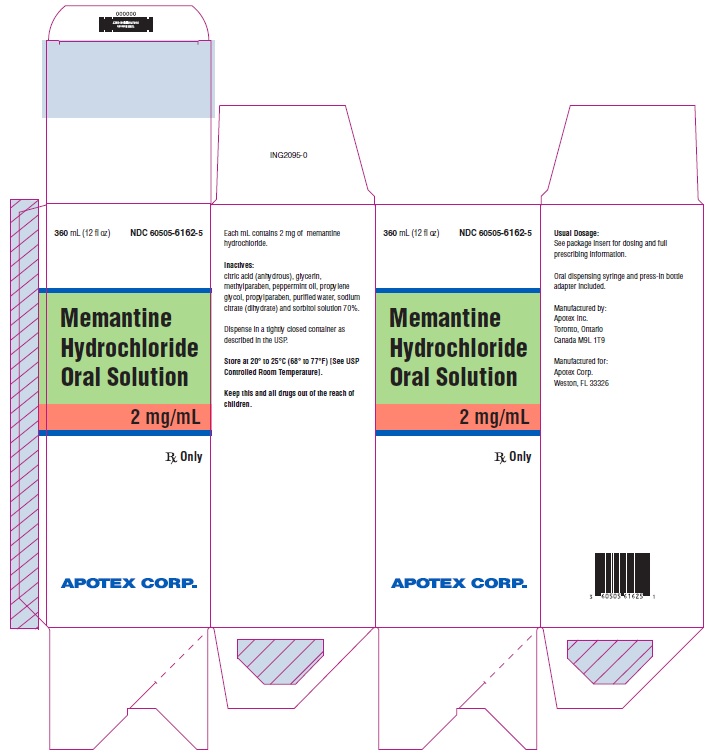
Principal Display Panel – Bottle
Memantine Hydrochloride Oral Solution
2 mg/mL
Rx only NDC 60505-6162-5
12 fl oz (360 mL)
10 Overdosage
Signs and symptoms most often accompanying memantine overdosage in clinical trials and from worldwide marketing experience, alone or in combination with other drugs and/or alcohol, include agitation, asthenia, bradycardia, confusion, coma, dizziness, ECG changes, increased blood pressure, lethargy, loss of consciousness, psychosis, restlessness, slowed movement, somnolence, stupor, unsteady gait, visual hallucinations, vertigo, vomiting, and weakness. The largest known ingestion of memantine worldwide was 2 grams in a patient who took memantine in conjunction with unspecified antidiabetic medications. The patient experienced coma, diplopia, and agitation, but subsequently recovered. Fatal outcome has been very rarely reported with memantine, and the relationship to memantine was unclear.
Because strategies for the management of overdose are continually evolving, it is advisable to contact a poison control center to determine the latest recommendations for the management of an overdose of any drug. As in any cases of overdose, general supportive measures should be utilized, and treatment should be symptomatic. Elimination of memantine can be enhanced by acidification of urine.
11 Description
Memantine hydrochloride oral solution is an orally active NMDA receptor antagonist. The chemical name for memantine hydrochloride is 1-amino-3,5-dimethyladamantane hydrochloride with the following structural formula:
The molecular formula is C12H21N•HCl and the molecular weight is 215.76. Memantine hydrochloride occurs as a fine white to off-white powder and is soluble in water.
Memantine hydrochloride oral solution contains memantine hydrochloride in a strength equivalent to 2 mg of memantine hydrochloride in each mL. The oral solution also contains the following inactive ingredients: citric acid (anhydrous), glycerin, methylparaben, peppermint oil, propylene glycol, propylparaben, purified water, sodium citrate (dihydrate) and sorbitol solution 70%.
8.4 Pediatric Use
Safety and effectiveness in pediatric patients have not been established.
8.5 Geriatric Use
The majority of people with Alzheimer's disease are 65 years and older. In the clinical studies of memantine hydrochloride oral solution the mean age of patients was approximately 76; over 90% of patients were 65 years and older, 60% were 75 years and older, and 12% were at or above 85 years of age. The efficacy and safety data presented in the clinical trial sections were obtained from these patients. There were no clinically meaningful differences in most adverse events reported by patient groups ≥ 65 years old and < 65 year old.
14 Clinical Studies
The clinical efficacy studies described below were conducted with memantine hydrochloride tablets and not with memantine hydrochloride oral solution; however, bioequivalence of memantine hydrochloride oral solution with memantine hydrochloride tablets has been demonstrated.
The effectiveness of memantine hydrochloride as a treatment for patients with moderate to severe Alzheimer's disease was demonstrated in 2 randomized, double-blind, placebo-controlled clinical studies (Studies 1 and 2) conducted in the United States that assessed both cognitive function and day to day function. The mean age of patients participating in these two trials was 76 with a range of 50 to 93 years. Approximately 66% of patients were female and 91% of patients were Caucasian. A third study (Study 3), carried out in Latvia, enrolled patients with severe dementia, but did not assess cognitive function as a planned endpoint. Study Outcome Measures: In each U.S. study, the effectiveness of memantine hydrochloride was determined using both an instrument designed to evaluate overall function through caregiver-related assessment, and an instrument that measures cognition. Both studies showed that patients on memantine hydrochloride experienced significant improvement on both measures compared to placebo.
Day-to-day function was assessed in both studies using the modified Alzheimer's disease Cooperative Study - Activities of Daily Living inventory (ADCS-ADL). The ADCS-ADL consists of a comprehensive battery of ADL questions used to measure the functional capabilities of patients. Each ADL item is rated from the highest level of independent performance to complete loss. The investigator performs the inventory by interviewing a caregiver familiar with the behavior of the patient. A subset of 19 items, including ratings of the patient's ability to eat, dress, bathe, telephone, travel, shop, and perform other household chores has been validated for the assessment of patients with moderate to severe dementia. This is the modified ADCS-ADL, which has a scoring range of 0 to 54, with the lower scores indicating greater functional impairment.
The ability of memantine hydrochloride to improve cognitive performance was assessed in both studies with the Severe Impairment Battery (SIB), a multi-item instrument that has been validated for the evaluation of cognitive function in patients with moderate to severe dementia. The SIB examines selected aspects of cognitive performance, including elements of attention, orientation, language, memory, visuospatial ability, construction, praxis, and social interaction. The SIB scoring range is from 0 to 100, with lower scores indicating greater cognitive impairment.
4 Contraindications
Memantine hydrochloride oral solution is contraindicated in patients with known hypersensitivity to memantine hydrochloride or to any excipients used in the formulation.
6 Adverse Reactions
Most common adverse reactions (≥ 5% and greater than placebo) are dizziness, headache, confusion and constipation. (6.1)
To report SUSPECTED ADVERSE REACTIONS, contact Apotex Corp. at 1-800-667-4708 or FDA at 1-800-FDA-1088 or www.fda.gov/medwatch .
8.3 Nursing Mothers
It is not known whether this drug is excreted in human milk. Because many drugs are excreted in human milk, caution should be exercised when memantine hydrochloride oral solution is administered to a nursing mother.
8.6 Renal Impairment
12.2 Pharmacodynamics
Memantine showed low to negligible affinity for GABA, benzodiazepine, dopamine, adrenergic, histamine and glycine receptors and for voltage-dependent Ca2+, Na+ or K+ channels. Memantine also showed antagonistic effects at the 5HT3 receptor with a potency similar to that for the NMDA receptor and blocked nicotinic acetylcholine receptors with one-sixth to one-tenth the potency.
In vitro studies have shown that memantine does not affect the reversible inhibition of acetylcholinesterase by donepezil, galantamine, or tacrine.
8.7 Hepatic Impairment
1 Indications and Usage
Memantine hydrochloride oral solution is indicated for the treatment of moderate to severe dementia of the Alzheimer's type.
12.1 Mechanism of Action
Persistent activation of central nervous system N-methyl-D-aspartate (NMDA) receptors by the excitatory amino acid glutamate has been hypothesized to contribute to the symptomatology of Alzheimer's disease. Memantine is postulated to exert its therapeutic effect through its action as a low to moderate affinity uncompetitive (open-channel) NMDA receptor antagonist which binds preferentially to the NMDA receptor-operated cation channels. There is no evidence that memantine prevents or slows neurodegeneration in patients with Alzheimer's disease.
5 Warnings and Precautions
2 Dosage and Administration
The recommended starting dose of memantine hydrochloride oral solution is 5 mg (2.5 mL) once daily. The dose should be increased in 5 mg increments to 10 mg/day (2.5 mL twice daily), 15 mg/day (2.5 mL and 5 mL as separate doses), and 20 mg/day (5 mL twice daily). The minimum recommended interval between dose increases is one week. The dosage shown to be effective in controlled clinical trials is 20 mg/day (5 mL twice daily).
Dosing Titration Schedule
| Total daily dose | Strength per dose (mg) | |
|---|---|---|
| Starting Dose | 5 mg | 5 mg |
| Dose after week 1 | 10 mg | 5 mg (first daily dose) |
| 5 mg (second daily dose) | ||
| Dose after week 2 | 15 mg | 5 mg (first daily dose) |
| 10 mg (second daily dose) | ||
| Dose after week 3 | 20 mg | 10 mg (first daily dose) |
| 10 mg (second daily dose) |
Memantine hydrochloride oral solution can be taken with or without food. If a patient misses a single dose of memantine hydrochloride oral solution, that patient should not double up on the next dose. The next dose should be taken as scheduled. If a patient fails to take memantine hydrochloride oral solution for several days, dosing may need to be resumed at lower doses and retitrated as described above.
Do not mix memantine hydrochloride oral solution with any other liquid. Memantine hydrochloride oral solution is administered with a plastic dispensing syringe and a press-in bottle adapter. The supplied syringe should be used to withdraw the correct volume of oral solution and the oral solution should be slowly squirted into the corner of the patient's mouth.
3 Dosage Forms and Strengths
Memantine hydrochloride 2 mg/mL oral solution: clear, alcohol-free, sugar-free, and peppermint flavored.
5.1 Genitourinary Conditions
Conditions that raise urine pH may decrease the urinary elimination of memantine resulting in increased plasma levels of memantine [see Drug Interactions (7.1)].
6.2 Postmarketing Experience
The following adverse reactions have been identified during post-approval use of memantine. Because these reactions are reported voluntarily from a population of uncertain size, it is not always possible to reliably estimate their frequency or establish a causal relationship to drug exposure. These reactions include:
Blood and Lymphatic System Disorders - agranulocytosis, leukopenia (including neutropenia), pancytopenia, thrombocytopenia, thrombotic thrombocytopenic purpura.
Cardiac Disorders - cardiac failure congestive.
Gastrointestinal Disorders - pancreatitis.
Hepatobiliary Disorders - hepatitis.
Psychiatric Disorders - suicidal ideation.
Renal and Urinary Disorders - acute renal failure (including increased creatinine and renal insufficiency).
Skin Disorders - Stevens Johnson syndrome.
6.1 Clinical Trials Experience
Memantine hydrochloride oral solution was evaluated in eight double-blind placebo-controlled trials involving a total of 1,862 dementia (Alzheimer's disease, vascular dementia) patients (940 patients treated with memantine hydrochloride oral solution and 922 patients treated with placebo) for a treatment period up to 28 weeks.
Because clinical trials are conducted under widely varying conditions, adverse reaction rates observed in the clinical trials of a drug cannot be directly compared to rates in the clinical trials of another drug and may not reflect the rates observed in clinical practice.
17 Patient Counseling Information
See FDA-approved patient labeling (Patient Information and Instructions for Use).
To assure safe and effective use of memantine hydrochloride oral solution, the following information and instructions provided in the patient information section should be discussed with patients and caregivers.
Patients/caregivers should be instructed to follow the dose titration schedule provided by their physician or healthcare professional for memantine hydrochloride oral solution.
If a patient misses a single dose of memantine hydrochloride oral solution, that patient should not double up on the next dose. The next dose should be taken as scheduled. If a patient fails to take memantine hydrochloride oral solution for several days, dosing should not be resumed without consulting that patient's healthcare professional.
Patients/caregivers should be instructed on how to use the memantine hydrochloride oral solution dosing device. They should be made aware of the patient instruction sheet that is enclosed with the product. Patients/caregivers should be instructed to address any questions on the usage of the solution to their physician or pharmacist.
All Product/Brand names are the trademarks of their respective owners.
| Manufactured by: | Manufactured for: | |
| Apotex Inc. | Apotex Corp. | |
| Toronto, Ontario | Weston, FL | |
| Canada M9L 1T9 | 33326 |
March 2017
16 How Supplied/storage and Handling
2 mg/mL Oral Solution
12 fl. oz. (360 mL) bottle NDC 60505-6162-5
Store at 20° to 25°C (68° to 77°F) [See USP Controlled Room Temperature].
7.1 Drugs That Make the Urine Alkaline
The clearance of memantine was reduced by about 80% under alkaline urine conditions at pH 8. Therefore, alterations of urine pH towards the alkaline condition may lead to an accumulation of the drug with a possible increase in adverse effects. Urine pH is altered by diet, drugs (e.g. carbonic anhydrase inhibitors, sodium bicarbonate) and clinical state of the patient (e.g. renal tubular acidosis or severe infections of the urinary tract). Hence, memantine should be used with caution under these conditions.
13.2 Animal Toxicology And/or Pharmacology
Memantine induced neuronal lesions (vacuolation and necrosis) in the multipolar and pyramidal cells in cortical layers III and IV of the posterior cingulate and retrosplenial neocortices in rats, similar to those which are known to occur in rodents administered other NMDA receptor antagonists. Lesions were seen after a single dose of memantine. In a study in which rats were given daily oral doses of memantine for 14 days, the no-effect dose for neuronal necrosis was 6 times the maximum recommended human dose of 20 mg/day on a mg/m2 basis.
In acute and repeat-dose neurotoxicity studies in female rats, oral administration of memantine and donepezil in combination resulted in increased incidence, severity, and distribution of neurodegeneration compared with memantine alone. The no-effect levels of the combination were associated with clinically relevant plasma memantine and donepezil exposures.
The relevance of these findings to humans is unknown.
13.1 Carcinogenesis, Mutagenesis, Impairment of Fertility
There was no evidence of carcinogenicity in a 113-week oral study in mice at doses up to 40 mg/kg/day (10 times the maximum recommended human dose [MRHD] on a mg/m2 basis). There was also no evidence of carcinogenicity in rats orally dosed at up to 40 mg/kg/day for 71 weeks followed by 20 mg/kg/day (20 and 10 times the MRHD on a mg/m2 basis, respectively) through 128 weeks.
Memantine produced no evidence of genotoxic potential when evaluated in the in vitro S. typhimurium or E. coli reverse mutation assay, an in vitro chromosomal aberration test in human lymphocytes, an in vivo cytogenetics assay for chromosome damage in rats, and the in vivo mouse micronucleus assay. The results were equivocal in an in vitro gene mutation assay using Chinese hamster V79 cells.
No impairment of fertility or reproductive performance was seen in rats administered up to 18 mg/kg/day (9 times the MRHD on a mg/m2 basis) orally from 14 days prior to mating through gestation and lactation in females, or for 60 days prior to mating in males.
7.2 Use With Other N Methyl D Aspartate (nmda) Antagonists
The combined use of memantine hydrochloride oral solution with other NMDA antagonists (amantadine, ketamine, and dextromethorphan) has not been systematically evaluated and such use should be approached with caution.
Structured Label Content
Section 42229-5 (42229-5)
Special Populations
Section 42230-3 (42230-3)
Patient Information
Memantine Hydrochloride Oral Solution
Read this Patient Information that comes with memantine hydrochloride oral solution before you start taking it and each time you get a refill. There may be new information. This information does not take the place of talking to your doctor about your medical condition or your treatment.
What is memantine hydrochloride oral solution?
Memantine hydrochloride oral solution is a prescription medicine used for the treatment of moderate to severe dementia in people with Alzheimer's disease. Memantine hydrochloride oral solution belongs to a class of medicines called NMDA (N-methyl-D-aspartate) inhibitors.
It is not known if memantine hydrochloride oral solution is safe and effective in children.
Who should not take memantine hydrochloride oral solution?
Do not take memantine hydrochloride oral solution if you are allergic to memantine or any of the ingredients in memantine hydrochloride oral solution. See the end of this leaflet for a complete list of ingredients in memantine hydrochloride oral solution.
What should I tell my doctor before taking memantine hydrochloride oral solution?
Before you take memantine hydrochloride oral solution, tell your doctor if you:
- have or have had seizures
- have or have had problems passing urine
- have or have had bladder or kidney problems
- have liver problems
- have any other medical conditions
- are pregnant or plan to become pregnant. It is not known if memantine hydrochloride will harm your unborn baby.
- are breastfeeding or plan to breastfeed. It is not known if memantine hydrochloride passes into your breast milk. You and your doctor should decide if you will take memantine hydrochloride oral solution or breastfeed.
Tell your doctor about all the medicines you take, including prescription and non-prescription medicines, vitamins, and herbal supplements.
Taking memantine hydrochloride oral solution with certain other medicines may affect each other. Taking memantine hydrochloride oral solution with other medicines can cause serious side effects.
Especially tell your doctor if you take:
- other NMDA antagonists such as amantadine, ketamine, and dextromethorphan
- medicines that make your urine alkaline such as carbonic anhydrase inhibitors and sodium bicarbonate
Ask your doctor or pharmacist for a list of these medicines, if you are not sure.
Know the medicines you take. Keep a list of them to show your doctor and pharmacist when you get a new medicine.
How should I take memantine hydrochloride oral solution?
- See the step-by-step instructions for taking memantine hydrochloride oral solution at the end of this Patient Information.
- Your doctor will tell you how much memantine hydrochloride oral solution to take and when to take it.
- Your doctor may change your dose if needed.
- Memantine hydrochloride oral solution can be taken with food or without food.
- If you forget to take one dose of memantine hydrochloride oral solution, do not double up on the next dose. You should take only the next dose as scheduled.
- If you have forgotten to take memantine hydrochloride oral solution for several days, you should not take the next dose until you talk to your doctor.
- If you take too much memantine hydrochloride oral solution, call your doctor or poison control center at 1-800-222-1222 right away, or go to the nearest hospital emergency room.
What are the possible side effects of memantine hydrochloride oral solution?
Memantine hydrochloride oral solution may cause side effects, including:
The most common side effects of memantine hydrochloride oral solution include:
- dizziness
- headache
- confusion
- constipation
These are not all the possible side effects of memantine hydrochloride oral solution. For more information, ask your doctor or pharmacist.
Call your doctor for medical advice about side effects. You may report side effects to FDA at 1-800-FDA-1088.
How should I store memantine hydrochloride oral solution?
- Store at 20° to 25°C (68° to 77°F) [See USP Controlled Room Temperature].
What are the ingredients in memantine hydrochloride oral solution?
Active ingredient: memantine hydrochloride
Inactive ingredients: citric acid (anhydrous), glycerin, methylparaben, peppermint oil, propylene glycol, propylparaben, purified water, sodium citrate (dihydrate) and sorbitol solution 70%
Keep memantine hydrochloride oral solution and all medicines out of the reach of children.
General information about the safe and effective use of memantine hydrochloride oral solution.
Medicines are sometimes prescribed for purposes other than those listed in a Patient Information leaflet. Do not take memantine hydrochloride oral solution for a condition for which it was not prescribed. Do not give memantine hydrochloride oral solution to other people, even if they have the same condition. It may harm them.
This Patient Information leaflet summarizes the most important information about memantine hydrochloride oral solution. If you would like more information, talk with your doctor. You can ask your doctor or pharmacist for information about memantine hydrochloride oral solution that was written for healthcare professionals.
For more information about memantine hydrochloride oral solution, go to www.apotex.com or call Apotex Corp. at 1-800-706-5575.
Section 43683-2 (43683-2)
Section 51945-4 (51945-4)
Principal Display Panel – Bottle
Memantine Hydrochloride Oral Solution
2 mg/mL
Rx only NDC 60505-6162-5
12 fl oz (360 mL)
10 Overdosage (10 OVERDOSAGE)
Signs and symptoms most often accompanying memantine overdosage in clinical trials and from worldwide marketing experience, alone or in combination with other drugs and/or alcohol, include agitation, asthenia, bradycardia, confusion, coma, dizziness, ECG changes, increased blood pressure, lethargy, loss of consciousness, psychosis, restlessness, slowed movement, somnolence, stupor, unsteady gait, visual hallucinations, vertigo, vomiting, and weakness. The largest known ingestion of memantine worldwide was 2 grams in a patient who took memantine in conjunction with unspecified antidiabetic medications. The patient experienced coma, diplopia, and agitation, but subsequently recovered. Fatal outcome has been very rarely reported with memantine, and the relationship to memantine was unclear.
Because strategies for the management of overdose are continually evolving, it is advisable to contact a poison control center to determine the latest recommendations for the management of an overdose of any drug. As in any cases of overdose, general supportive measures should be utilized, and treatment should be symptomatic. Elimination of memantine can be enhanced by acidification of urine.
11 Description (11 DESCRIPTION)
Memantine hydrochloride oral solution is an orally active NMDA receptor antagonist. The chemical name for memantine hydrochloride is 1-amino-3,5-dimethyladamantane hydrochloride with the following structural formula:
The molecular formula is C12H21N•HCl and the molecular weight is 215.76. Memantine hydrochloride occurs as a fine white to off-white powder and is soluble in water.
Memantine hydrochloride oral solution contains memantine hydrochloride in a strength equivalent to 2 mg of memantine hydrochloride in each mL. The oral solution also contains the following inactive ingredients: citric acid (anhydrous), glycerin, methylparaben, peppermint oil, propylene glycol, propylparaben, purified water, sodium citrate (dihydrate) and sorbitol solution 70%.
8.4 Pediatric Use
Safety and effectiveness in pediatric patients have not been established.
8.5 Geriatric Use
The majority of people with Alzheimer's disease are 65 years and older. In the clinical studies of memantine hydrochloride oral solution the mean age of patients was approximately 76; over 90% of patients were 65 years and older, 60% were 75 years and older, and 12% were at or above 85 years of age. The efficacy and safety data presented in the clinical trial sections were obtained from these patients. There were no clinically meaningful differences in most adverse events reported by patient groups ≥ 65 years old and < 65 year old.
14 Clinical Studies (14 CLINICAL STUDIES)
The clinical efficacy studies described below were conducted with memantine hydrochloride tablets and not with memantine hydrochloride oral solution; however, bioequivalence of memantine hydrochloride oral solution with memantine hydrochloride tablets has been demonstrated.
The effectiveness of memantine hydrochloride as a treatment for patients with moderate to severe Alzheimer's disease was demonstrated in 2 randomized, double-blind, placebo-controlled clinical studies (Studies 1 and 2) conducted in the United States that assessed both cognitive function and day to day function. The mean age of patients participating in these two trials was 76 with a range of 50 to 93 years. Approximately 66% of patients were female and 91% of patients were Caucasian. A third study (Study 3), carried out in Latvia, enrolled patients with severe dementia, but did not assess cognitive function as a planned endpoint. Study Outcome Measures: In each U.S. study, the effectiveness of memantine hydrochloride was determined using both an instrument designed to evaluate overall function through caregiver-related assessment, and an instrument that measures cognition. Both studies showed that patients on memantine hydrochloride experienced significant improvement on both measures compared to placebo.
Day-to-day function was assessed in both studies using the modified Alzheimer's disease Cooperative Study - Activities of Daily Living inventory (ADCS-ADL). The ADCS-ADL consists of a comprehensive battery of ADL questions used to measure the functional capabilities of patients. Each ADL item is rated from the highest level of independent performance to complete loss. The investigator performs the inventory by interviewing a caregiver familiar with the behavior of the patient. A subset of 19 items, including ratings of the patient's ability to eat, dress, bathe, telephone, travel, shop, and perform other household chores has been validated for the assessment of patients with moderate to severe dementia. This is the modified ADCS-ADL, which has a scoring range of 0 to 54, with the lower scores indicating greater functional impairment.
The ability of memantine hydrochloride to improve cognitive performance was assessed in both studies with the Severe Impairment Battery (SIB), a multi-item instrument that has been validated for the evaluation of cognitive function in patients with moderate to severe dementia. The SIB examines selected aspects of cognitive performance, including elements of attention, orientation, language, memory, visuospatial ability, construction, praxis, and social interaction. The SIB scoring range is from 0 to 100, with lower scores indicating greater cognitive impairment.
4 Contraindications (4 CONTRAINDICATIONS)
Memantine hydrochloride oral solution is contraindicated in patients with known hypersensitivity to memantine hydrochloride or to any excipients used in the formulation.
6 Adverse Reactions (6 ADVERSE REACTIONS)
Most common adverse reactions (≥ 5% and greater than placebo) are dizziness, headache, confusion and constipation. (6.1)
To report SUSPECTED ADVERSE REACTIONS, contact Apotex Corp. at 1-800-667-4708 or FDA at 1-800-FDA-1088 or www.fda.gov/medwatch .
8.3 Nursing Mothers
It is not known whether this drug is excreted in human milk. Because many drugs are excreted in human milk, caution should be exercised when memantine hydrochloride oral solution is administered to a nursing mother.
8.6 Renal Impairment
12.2 Pharmacodynamics
Memantine showed low to negligible affinity for GABA, benzodiazepine, dopamine, adrenergic, histamine and glycine receptors and for voltage-dependent Ca2+, Na+ or K+ channels. Memantine also showed antagonistic effects at the 5HT3 receptor with a potency similar to that for the NMDA receptor and blocked nicotinic acetylcholine receptors with one-sixth to one-tenth the potency.
In vitro studies have shown that memantine does not affect the reversible inhibition of acetylcholinesterase by donepezil, galantamine, or tacrine.
8.7 Hepatic Impairment
1 Indications and Usage (1 INDICATIONS AND USAGE)
Memantine hydrochloride oral solution is indicated for the treatment of moderate to severe dementia of the Alzheimer's type.
12.1 Mechanism of Action
Persistent activation of central nervous system N-methyl-D-aspartate (NMDA) receptors by the excitatory amino acid glutamate has been hypothesized to contribute to the symptomatology of Alzheimer's disease. Memantine is postulated to exert its therapeutic effect through its action as a low to moderate affinity uncompetitive (open-channel) NMDA receptor antagonist which binds preferentially to the NMDA receptor-operated cation channels. There is no evidence that memantine prevents or slows neurodegeneration in patients with Alzheimer's disease.
5 Warnings and Precautions (5 WARNINGS AND PRECAUTIONS)
2 Dosage and Administration (2 DOSAGE AND ADMINISTRATION)
The recommended starting dose of memantine hydrochloride oral solution is 5 mg (2.5 mL) once daily. The dose should be increased in 5 mg increments to 10 mg/day (2.5 mL twice daily), 15 mg/day (2.5 mL and 5 mL as separate doses), and 20 mg/day (5 mL twice daily). The minimum recommended interval between dose increases is one week. The dosage shown to be effective in controlled clinical trials is 20 mg/day (5 mL twice daily).
Dosing Titration Schedule
| Total daily dose | Strength per dose (mg) | |
|---|---|---|
| Starting Dose | 5 mg | 5 mg |
| Dose after week 1 | 10 mg | 5 mg (first daily dose) |
| 5 mg (second daily dose) | ||
| Dose after week 2 | 15 mg | 5 mg (first daily dose) |
| 10 mg (second daily dose) | ||
| Dose after week 3 | 20 mg | 10 mg (first daily dose) |
| 10 mg (second daily dose) |
Memantine hydrochloride oral solution can be taken with or without food. If a patient misses a single dose of memantine hydrochloride oral solution, that patient should not double up on the next dose. The next dose should be taken as scheduled. If a patient fails to take memantine hydrochloride oral solution for several days, dosing may need to be resumed at lower doses and retitrated as described above.
Do not mix memantine hydrochloride oral solution with any other liquid. Memantine hydrochloride oral solution is administered with a plastic dispensing syringe and a press-in bottle adapter. The supplied syringe should be used to withdraw the correct volume of oral solution and the oral solution should be slowly squirted into the corner of the patient's mouth.
3 Dosage Forms and Strengths (3 DOSAGE FORMS AND STRENGTHS)
Memantine hydrochloride 2 mg/mL oral solution: clear, alcohol-free, sugar-free, and peppermint flavored.
5.1 Genitourinary Conditions
Conditions that raise urine pH may decrease the urinary elimination of memantine resulting in increased plasma levels of memantine [see Drug Interactions (7.1)].
6.2 Postmarketing Experience
The following adverse reactions have been identified during post-approval use of memantine. Because these reactions are reported voluntarily from a population of uncertain size, it is not always possible to reliably estimate their frequency or establish a causal relationship to drug exposure. These reactions include:
Blood and Lymphatic System Disorders - agranulocytosis, leukopenia (including neutropenia), pancytopenia, thrombocytopenia, thrombotic thrombocytopenic purpura.
Cardiac Disorders - cardiac failure congestive.
Gastrointestinal Disorders - pancreatitis.
Hepatobiliary Disorders - hepatitis.
Psychiatric Disorders - suicidal ideation.
Renal and Urinary Disorders - acute renal failure (including increased creatinine and renal insufficiency).
Skin Disorders - Stevens Johnson syndrome.
6.1 Clinical Trials Experience
Memantine hydrochloride oral solution was evaluated in eight double-blind placebo-controlled trials involving a total of 1,862 dementia (Alzheimer's disease, vascular dementia) patients (940 patients treated with memantine hydrochloride oral solution and 922 patients treated with placebo) for a treatment period up to 28 weeks.
Because clinical trials are conducted under widely varying conditions, adverse reaction rates observed in the clinical trials of a drug cannot be directly compared to rates in the clinical trials of another drug and may not reflect the rates observed in clinical practice.
17 Patient Counseling Information (17 PATIENT COUNSELING INFORMATION)
See FDA-approved patient labeling (Patient Information and Instructions for Use).
To assure safe and effective use of memantine hydrochloride oral solution, the following information and instructions provided in the patient information section should be discussed with patients and caregivers.
Patients/caregivers should be instructed to follow the dose titration schedule provided by their physician or healthcare professional for memantine hydrochloride oral solution.
If a patient misses a single dose of memantine hydrochloride oral solution, that patient should not double up on the next dose. The next dose should be taken as scheduled. If a patient fails to take memantine hydrochloride oral solution for several days, dosing should not be resumed without consulting that patient's healthcare professional.
Patients/caregivers should be instructed on how to use the memantine hydrochloride oral solution dosing device. They should be made aware of the patient instruction sheet that is enclosed with the product. Patients/caregivers should be instructed to address any questions on the usage of the solution to their physician or pharmacist.
All Product/Brand names are the trademarks of their respective owners.
| Manufactured by: | Manufactured for: | |
| Apotex Inc. | Apotex Corp. | |
| Toronto, Ontario | Weston, FL | |
| Canada M9L 1T9 | 33326 |
March 2017
16 How Supplied/storage and Handling (16 HOW SUPPLIED/STORAGE AND HANDLING)
2 mg/mL Oral Solution
12 fl. oz. (360 mL) bottle NDC 60505-6162-5
Store at 20° to 25°C (68° to 77°F) [See USP Controlled Room Temperature].
7.1 Drugs That Make the Urine Alkaline (7.1 Drugs that Make the Urine Alkaline)
The clearance of memantine was reduced by about 80% under alkaline urine conditions at pH 8. Therefore, alterations of urine pH towards the alkaline condition may lead to an accumulation of the drug with a possible increase in adverse effects. Urine pH is altered by diet, drugs (e.g. carbonic anhydrase inhibitors, sodium bicarbonate) and clinical state of the patient (e.g. renal tubular acidosis or severe infections of the urinary tract). Hence, memantine should be used with caution under these conditions.
13.2 Animal Toxicology And/or Pharmacology (13.2 Animal Toxicology and/or Pharmacology)
Memantine induced neuronal lesions (vacuolation and necrosis) in the multipolar and pyramidal cells in cortical layers III and IV of the posterior cingulate and retrosplenial neocortices in rats, similar to those which are known to occur in rodents administered other NMDA receptor antagonists. Lesions were seen after a single dose of memantine. In a study in which rats were given daily oral doses of memantine for 14 days, the no-effect dose for neuronal necrosis was 6 times the maximum recommended human dose of 20 mg/day on a mg/m2 basis.
In acute and repeat-dose neurotoxicity studies in female rats, oral administration of memantine and donepezil in combination resulted in increased incidence, severity, and distribution of neurodegeneration compared with memantine alone. The no-effect levels of the combination were associated with clinically relevant plasma memantine and donepezil exposures.
The relevance of these findings to humans is unknown.
13.1 Carcinogenesis, Mutagenesis, Impairment of Fertility
There was no evidence of carcinogenicity in a 113-week oral study in mice at doses up to 40 mg/kg/day (10 times the maximum recommended human dose [MRHD] on a mg/m2 basis). There was also no evidence of carcinogenicity in rats orally dosed at up to 40 mg/kg/day for 71 weeks followed by 20 mg/kg/day (20 and 10 times the MRHD on a mg/m2 basis, respectively) through 128 weeks.
Memantine produced no evidence of genotoxic potential when evaluated in the in vitro S. typhimurium or E. coli reverse mutation assay, an in vitro chromosomal aberration test in human lymphocytes, an in vivo cytogenetics assay for chromosome damage in rats, and the in vivo mouse micronucleus assay. The results were equivocal in an in vitro gene mutation assay using Chinese hamster V79 cells.
No impairment of fertility or reproductive performance was seen in rats administered up to 18 mg/kg/day (9 times the MRHD on a mg/m2 basis) orally from 14 days prior to mating through gestation and lactation in females, or for 60 days prior to mating in males.
7.2 Use With Other N Methyl D Aspartate (nmda) Antagonists (7.2 Use with Other N-methyl-D-aspartate (NMDA) Antagonists)
The combined use of memantine hydrochloride oral solution with other NMDA antagonists (amantadine, ketamine, and dextromethorphan) has not been systematically evaluated and such use should be approached with caution.
Advanced Ingredient Data
Raw Label Data
All Sections (JSON)
Additional Information
Back to search View SPL set listing Open on DailyMed ↗
Source: dailymed · Ingested: 2026-02-15T11:46:37.215248 · Updated: 2026-03-14T22:25:11.616622