Rystiggo
3c0eb8c2-c042-4954-b451-3baa77f5e6d1
34391-3
HUMAN PRESCRIPTION DRUG LABEL
Drug Facts
Composition & Product
Identifiers & Packaging
Indications and Usage
RYSTIGGO is indicated for the treatment of generalized myasthenia gravis (gMG) in adult patients who are anti-acetylcholine receptor (AChR) or anti-muscle-specific tyrosine kinase (MuSK) antibody positive.
Dosage and Administration
Evaluate the need to administer age-appropriate vaccines according to immunization guidelines before initiation of a new treatment cycle with RYSTIGGO. ( 2.1 ) For subcutaneous infusion only. ( 2.2 ) The recommended dosage is administered as a subcutaneous infusion once weekly for 6 weeks. ( 2.2 ) Body Weight of Patient Dose Volume to be Infused Less than 50 kg 420 mg 3 mL 50 kg to less than 100 kg 560 mg 4 mL 100 kg and above 840 mg 6 mL Administer subsequent treatment cycles based on clinical evaluation; the safety of initiating subsequent cycles sooner than 63 days from the start of the previous treatment cycle has not been established. ( 2.2 )
Contraindications
None.
Warnings and Precautions
Infections: Delay administration of RYSTIGGO to patients with an active infection. Monitor for signs and symptoms of infection in patients treated with RYSTIGGO. If serious infection occurs, administer appropriate treatment and consider withholding RYSTIGGO until the infection has resolved. ( 5.1 ) Aseptic Meningitis: Serious events of aseptic meningitis have been reported. Monitor for symptoms; diagnostic workup and treatment should be initiated according to the standard of care. ( 5.2 ) Hypersensitivity Reactions: Angioedema and rash have occurred. If a hypersensitivity reaction occurs, discontinue the infusion and institute appropriate therapy. ( 5.3 )
Adverse Reactions
The following clinically significant adverse reactions are discussed in greater detail in other sections of the labeling: Infections [see Warnings and Precautions (5.1) ] Aseptic Meningitis [see Warnings and Precautions (5.2) ] Hypersensitivity Reactions [see Warnings and Precautions (5.3) ]
Drug Interactions
Closely monitor for reduced effectiveness of medications that bind to the human neonatal Fc receptor. When concomitant long-term use of such medications is essential for patient care, consider discontinuing RYSTIGGO and using alternate therapies. ( 7.1 )
How Supplied
RYSTIGGO (rozanolixizumab-noli) injection is a sterile, preservative-free, clear to slightly opalescent, colorless to pale brownish yellow solution supplied as: NDC Description Strength 50474-980-79 2 mL single-dose glass vial in a carton 280 mg/2 mL 50474-981-83 3 mL single-dose glass vial in a carton 420 mg/3 mL 50474-982-84 4 mL single-dose glass vial in a carton 560 mg/4 mL 50474-983-86 6 mL single-dose glass vial in a carton 840 mg/6 mL
Storage and Handling
Store vials refrigerated at 36°F to 46°F (2°C to 8°C) in the original carton to protect from light until the time of use. Do not freeze. Do not shake. If needed, vials may be stored at room temperature up to 77°F (25°C) for a single period of up to 20 days in the original carton to protect the vial from light. Once a vial has been stored at room temperature, it should not be returned to the refrigerator. The discard date is 20 days after removal of the vial from the refrigerator. Write the discard date in the space provided on the carton. Discard the vial if not used within 20 days or if the expiration date has passed, whichever occurs first.
Description
Dosage and Administration ( 2.3 ) 8/2025
Medication Information
Warnings and Precautions
Infections: Delay administration of RYSTIGGO to patients with an active infection. Monitor for signs and symptoms of infection in patients treated with RYSTIGGO. If serious infection occurs, administer appropriate treatment and consider withholding RYSTIGGO until the infection has resolved. ( 5.1 ) Aseptic Meningitis: Serious events of aseptic meningitis have been reported. Monitor for symptoms; diagnostic workup and treatment should be initiated according to the standard of care. ( 5.2 ) Hypersensitivity Reactions: Angioedema and rash have occurred. If a hypersensitivity reaction occurs, discontinue the infusion and institute appropriate therapy. ( 5.3 )
Indications and Usage
RYSTIGGO is indicated for the treatment of generalized myasthenia gravis (gMG) in adult patients who are anti-acetylcholine receptor (AChR) or anti-muscle-specific tyrosine kinase (MuSK) antibody positive.
Dosage and Administration
Evaluate the need to administer age-appropriate vaccines according to immunization guidelines before initiation of a new treatment cycle with RYSTIGGO. ( 2.1 ) For subcutaneous infusion only. ( 2.2 ) The recommended dosage is administered as a subcutaneous infusion once weekly for 6 weeks. ( 2.2 ) Body Weight of Patient Dose Volume to be Infused Less than 50 kg 420 mg 3 mL 50 kg to less than 100 kg 560 mg 4 mL 100 kg and above 840 mg 6 mL Administer subsequent treatment cycles based on clinical evaluation; the safety of initiating subsequent cycles sooner than 63 days from the start of the previous treatment cycle has not been established. ( 2.2 )
Contraindications
None.
Adverse Reactions
The following clinically significant adverse reactions are discussed in greater detail in other sections of the labeling: Infections [see Warnings and Precautions (5.1) ] Aseptic Meningitis [see Warnings and Precautions (5.2) ] Hypersensitivity Reactions [see Warnings and Precautions (5.3) ]
Drug Interactions
Closely monitor for reduced effectiveness of medications that bind to the human neonatal Fc receptor. When concomitant long-term use of such medications is essential for patient care, consider discontinuing RYSTIGGO and using alternate therapies. ( 7.1 )
Storage and Handling
Store vials refrigerated at 36°F to 46°F (2°C to 8°C) in the original carton to protect from light until the time of use. Do not freeze. Do not shake. If needed, vials may be stored at room temperature up to 77°F (25°C) for a single period of up to 20 days in the original carton to protect the vial from light. Once a vial has been stored at room temperature, it should not be returned to the refrigerator. The discard date is 20 days after removal of the vial from the refrigerator. Write the discard date in the space provided on the carton. Discard the vial if not used within 20 days or if the expiration date has passed, whichever occurs first.
How Supplied
RYSTIGGO (rozanolixizumab-noli) injection is a sterile, preservative-free, clear to slightly opalescent, colorless to pale brownish yellow solution supplied as: NDC Description Strength 50474-980-79 2 mL single-dose glass vial in a carton 280 mg/2 mL 50474-981-83 3 mL single-dose glass vial in a carton 420 mg/3 mL 50474-982-84 4 mL single-dose glass vial in a carton 560 mg/4 mL 50474-983-86 6 mL single-dose glass vial in a carton 840 mg/6 mL
Description
Dosage and Administration ( 2.3 ) 8/2025
Section 42229-5
Immunization
Immunization with vaccines during RYSTIGGO treatment has not been studied. The safety of immunization with live or live-attenuated vaccines and the response to immunization with any vaccine are unknown. Because RYSTIGGO causes a reduction in IgG levels, vaccination with live-attenuated or live vaccines is not recommended during treatment with RYSTIGGO. Evaluate the need to administer age-appropriate vaccines according to immunization guidelines before initiation of a new treatment cycle with RYSTIGGO.
Section 43683-2
| Dosage and Administration ( 2.3) | 8/2025 |
11 Description
Rozanolixizumab-noli, a neonatal Fc receptor blocker, is a recombinant, humanized IgG4P monoclonal antibody, expressed in a genetically engineered Chinese hamster ovary DG44 cell line. Rozanolixizumab-noli has an approximate molecular weight of 148 kDa.
5.1 Infections
RYSTIGGO may increase the risk of infection [see Adverse Reactions (6.1)] . Delay RYSTIGGO administration in patients with an active infection until the infection is resolved. During treatment with RYSTIGGO, monitor for clinical signs and symptoms of infection. If serious infection occurs, administer appropriate treatment and consider withholding RYSTIGGO until the infection has resolved.
16.1 How Supplied
RYSTIGGO (rozanolixizumab-noli) injection is a sterile, preservative-free, clear to slightly opalescent, colorless to pale brownish yellow solution supplied as:
| NDC | Description | Strength |
|---|---|---|
| 50474-980-79 | 2 mL single-dose glass vial in a carton | 280 mg/2 mL |
| 50474-981-83 | 3 mL single-dose glass vial in a carton | 420 mg/3 mL |
| 50474-982-84 | 4 mL single-dose glass vial in a carton | 560 mg/4 mL |
| 50474-983-86 | 6 mL single-dose glass vial in a carton | 840 mg/6 mL |
8.4 Pediatric Use
Safety and effectiveness in pediatric patients have not been established.
8.5 Geriatric Use
Clinical studies of RYSTIGGO did not include sufficient numbers of patients aged 65 and over to determine whether they respond differently from younger adult patients.
12.6 Immunogenicity
The observed incidence of anti-drug antibodies is highly dependent on the sensitivity and specificity of the assay. Differences in assay methods preclude meaningful comparisons of the incidence of anti-drug antibodies in the studies described below with the incidence of anti-drug antibodies in other studies, including those of rozanolixizumab-noli or of other rozanolixizumab products.
The anti-drug antibody (ADA) incidence from Study 1 (MG0003) was 37% (49/133) at the end of the observation period after one treatment cycle of 6-week dosing. The incidence of neutralizing antibodies was 21% (28/133). For patients who developed ADA, there was up to 60% decrease in trough concentrations compared with those in ADA negative patients. However, these observations need to be interpreted with caution because of the limitations with PK analytical assay sensitivity. There appears to be no clinically meaningful impact of ADA (including neutralizing antibodies) on efficacy of rozanolixizumab-noli. The safety profile appears to be similar in ADA positive and ADA negative patients.
14 Clinical Studies
The efficacy of RYSTIGGO for the treatment of generalized myasthenia gravis (gMG) in adults who are anti-AChR antibody positive or anti-MuSK antibody positive was established in a multicenter, randomized, double-blind, placebo-controlled study (Study 1; NCT03971422). The study included a 4-week screening period and a 6-week treatment period followed by 8 weeks of observation. During the treatment period, RYSTIGGO or placebo were administered subcutaneously once a week for six weeks.
Study 1 enrolled patients who met the following criteria:
- Presence of autoantibodies against AChR or MuSK
- Myasthenia Gravis Foundation of America (MGFA) Clinical Classification Class II to IVa
- Myasthenia Gravis-Activities of Daily Living (MG-ADL) total score of at least 3 (with at least 3 points from non-ocular symptoms)
- On stable dose of MG therapy prior to screening that included acetylcholinesterase (AChE) inhibitors, steroids, or non-steroidal immunosuppressive therapies (NSISTs), either in combination or alone
- Serum IgG levels of at least 5.5 g/L
In Study 1, a total of 200 patients were randomized 1:1:1 to receive weight-tiered doses of RYSTIGGO (n=133), equivalent to ≈7 mg/kg (n=66) or ≈10 mg/kg (n=67), or placebo (n=67). Baseline characteristics were similar between treatment groups. Patients had a median age of 52 years at baseline (range: 18 to 89 years) and a median time since diagnosis of 6 years. Sixty-one percent of patients were female, 68% were White, 11% were Asian, 3% were Black or African American, 1% were American Indian or Alaska Native, and 7% were of Hispanic or Latino ethnicity. Median MG-ADL total score was 8, and the median Quantitative Myasthenia Gravis (QMG) total score was 15. The majority of patients, 89.5% (n=179) were positive for AChR antibodies and 10.5% (n=21) were positive for MuSK antibodies.
At baseline in each group, over 83% of patients received AChE inhibitors, over 56% of patients received steroids, and approximately 50% received NSISTs, at stable doses.
Patients were treated with RYSTIGGO via subcutaneous infusion once per week for a period of 6 weeks [see Dosage and Administration (2.2)] , followed by an observation period of up to 8 weeks.
The efficacy of RYSTIGGO was measured using the MG-ADL scale, which assesses the impact of gMG on daily functions of 8 signs or symptoms that are typically affected in gMG. Each item is assessed on a 4-point scale where a score of 0 represents normal function and a score of 3 represents loss of ability to perform that function. A total score ranges from 0 to 24, with the higher scores indicating more impairment.
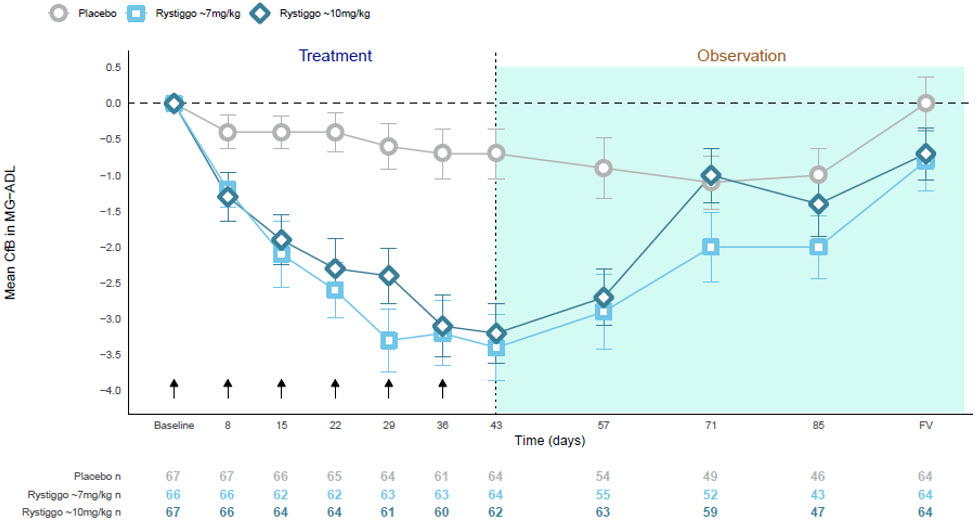
The primary efficacy endpoint was the comparison of the change from baseline between treatment groups in the MG-ADL total score at day 43. A statistically significant difference favoring RYSTIGGO was observed in the MG-ADL total score change from baseline [-3.4 points in RYSTIGGO-treated group at either dose vs -0.8 points in the placebo-treated group (p<0.001)].
The secondary endpoint was the change between treatment groups from baseline to day 43 in the QMG. The QMG is a 13-item categorical grading system that assesses muscle weakness. Each item is assessed on a 4-point scale where a score of 0 represents no weakness and a score of 3 represents severe weakness. A total possible score ranges from 0 to 39, where higher scores indicate more severe impairment.
A statistically significant difference favoring RYSTIGGO was observed in the QMG total score change from baseline [-5.4 points and -6.7 points in RYSTIGGO-treated group at ≈7 mg/kg and ≈10 mg/kg dose level, respectively, vs -1.9 points in the placebo-treated group (p<0.001)].
The results are presented in Table 3.
| Efficacy Endpoints | RYSTIGGO
≈7mg/kg N = 66 |
RYSTIGGO
≈10mg/kg N = 67 |
Placebo
N = 67 |
|---|---|---|---|
| Abbreviations: CI = confidence interval; MG-ADL, myasthenia gravis activities of daily living scale; QMG, quantitative myasthenia gravis; LS = least square; SE = standard error. | |||
| MG-ADL Total Score | |||
| LS Mean (SE) | -3.4 (0.5) | -3.4 (0.5) | -0.8 (0.5) |
| Difference from placebo (95% CI) | -2.6 (-4.1, -1.2) | -2.6 (-4.0, -1.2) | - |
| p-value | <0.001 | <0.001 | - |
| QMG Total Score | |||
| LS Mean (SE) | -5.4 (0.7) | -6.7 (0.7) | -1.9 (0.7) |
| Difference from placebo (95% CI) | -3.5 (-5.6, -1.6) | -4.8 (-6.8, -2.9) | - |
| p-value | <0.001 | <0.001 | - |
Figure 1 shows the mean change from baseline in MG-ADL score at Day 43 in Study 1.
| CfB=Change from Baseline; FV=Final Visit; MG−ADL=Myasthenia Gravis Activities of Daily Living.
NOTE: Error bars represent +/− standard error; arrows indicate timepoints at which treatment was given. |
| Figure 1: Observed Mean Change from Baseline to Day 43 in MG-ADL Score |
4 Contraindications
None.
6 Adverse Reactions
The following clinically significant adverse reactions are discussed in greater detail in other sections of the labeling:
- Infections [see Warnings and Precautions (5.1)]
- Aseptic Meningitis [see Warnings and Precautions (5.2)]
- Hypersensitivity Reactions [see Warnings and Precautions (5.3)]
7 Drug Interactions
- Closely monitor for reduced effectiveness of medications that bind to the human neonatal Fc receptor. When concomitant long-term use of such medications is essential for patient care, consider discontinuing RYSTIGGO and using alternate therapies. ( 7.1)
12.2 Pharmacodynamics
In Study 1 [see Clinical Studies (14)] , the pharmacological effect of rozanolixizumab-noli was assessed by measuring the decrease in serum IgG levels and AChR and MuSK autoantibody levels. In patients testing positive for AChR and MuSK autoantibodies who were treated with RYSTIGGO, there was a reduction in total IgG levels relative to baseline. Decreases in AChR autoantibody and MuSK autoantibody levels followed a similar pattern.
12.3 Pharmacokinetics
Rozanolixizumab-noli exhibited nonlinear pharmacokinetics. Rozanolixizumab-noli exposure increased in a greater than dose-proportional manner over a dose range from 1 mg/kg to 20 mg/kg (two times the maximum recommended dose) following subcutaneous administration.
2.2 Recommended Dosage
The recommended dosage of RYSTIGGO is based on body weight, as shown below in Table 1.
| Body Weight of Patient | Dose | Volume to be Infused |
|---|---|---|
| Less than 50 kg | 420 mg | 3 mL |
| 50 kg to less than 100 kg | 560 mg | 4 mL |
| 100 kg and above | 840 mg | 6 mL |
Administer the recommended dosage as a subcutaneous infusion using an infusion pump at a rate of up to 20 mL/hour once weekly for 6 weeks. For detailed preparation and administration instructions, see Preparation and Administration Instructions (2.3).
Administer subsequent treatment cycles based on clinical evaluation. The safety of initiating subsequent cycles sooner than 63 days from the start of the previous treatment cycle has not been established.
If a scheduled dose is missed, RYSTIGGO may be administered up to 4 days after the scheduled time point. Thereafter, resume the original dosing schedule until the treatment cycle is completed.
5.2 Aseptic Meningitis
Serious adverse reactions of aseptic meningitis (also called drug-induced aseptic meningitis) have been reported in patients treated with RYSTIGGO [see Adverse Reactions (6.1)] . If symptoms consistent with aseptic meningitis develop, diagnostic workup and treatment should be initiated according to the standard of care.
1 Indications and Usage
RYSTIGGO is indicated for the treatment of generalized myasthenia gravis (gMG) in adult patients who are anti-acetylcholine receptor (AChR) or anti-muscle-specific tyrosine kinase (MuSK) antibody positive.
12.1 Mechanism of Action
Rozanolixizumab-noli is a humanized IgG4 monoclonal antibody that binds to the neonatal Fc receptor (FcRn), resulting in the reduction of circulating IgG.
16.2 Storage and Handling
Store vials refrigerated at 36°F to 46°F (2°C to 8°C) in the original carton to protect from light until the time of use. Do not freeze. Do not shake.
If needed, vials may be stored at room temperature up to 77°F (25°C) for a single period of up to 20 days in the original carton to protect the vial from light. Once a vial has been stored at room temperature, it should not be returned to the refrigerator. The discard date is 20 days after removal of the vial from the refrigerator. Write the discard date in the space provided on the carton. Discard the vial if not used within 20 days or if the expiration date has passed, whichever occurs first.
5 Warnings and Precautions
- Infections: Delay administration of RYSTIGGO to patients with an active infection. Monitor for signs and symptoms of infection in patients treated with RYSTIGGO. If serious infection occurs, administer appropriate treatment and consider withholding RYSTIGGO until the infection has resolved. ( 5.1)
- Aseptic Meningitis: Serious events of aseptic meningitis have been reported. Monitor for symptoms; diagnostic workup and treatment should be initiated according to the standard of care. ( 5.2)
- Hypersensitivity Reactions: Angioedema and rash have occurred. If a hypersensitivity reaction occurs, discontinue the infusion and institute appropriate therapy. ( 5.3)
2 Dosage and Administration
- Evaluate the need to administer age-appropriate vaccines according to immunization guidelines before initiation of a new treatment cycle with RYSTIGGO. ( 2.1)
- For subcutaneous infusion only. ( 2.2)
- The recommended dosage is administered as a subcutaneous infusion once weekly for 6 weeks. (
2.2)
Body Weight of Patient Dose Volume to be Infused Less than 50 kg 420 mg 3 mL 50 kg to less than 100 kg 560 mg 4 mL 100 kg and above 840 mg 6 mL - Administer subsequent treatment cycles based on clinical evaluation; the safety of initiating subsequent cycles sooner than 63 days from the start of the previous treatment cycle has not been established. ( 2.2)
2.1 Recommended Vaccination
Because RYSTIGGO causes transient reduction in IgG levels, immunization with live-attenuated or live vaccines is not recommended during treatment with RYSTIGGO. Evaluate the need to administer age-appropriate immunizations according to immunization guidelines before initiation of a new treatment cycle with RYSTIGGO [see Dosage and Administration (2.2)and Warnings and Precautions (5.1)] .
3 Dosage Forms and Strengths
RYSTIGGO is a clear to slightly opalescent, colorless to pale brownish yellow solution available as:
- 280 mg/2 mL (140 mg/mL) in a single-dose vial.
- 420 mg/3 mL (140 mg/mL) in a single-dose vial.
- 560 mg/4 mL (140 mg/mL) in a single-dose vial.
- 840 mg/6 mL (140 mg/mL) in a single-dose vial.
6.2 Postmarketing Experience
The following adverse reactions have been identified during postapproval use of RYSTIGGO. Because these reactions are reported voluntarily from a population of uncertain size, it is not always possible to reliably estimate their frequency or establish a causal relationship to drug exposure.
Infections: herpes zoster
6.1 Clinical Trial Experience
Because clinical trials are conducted under widely varying conditions, adverse reaction rates observed in the clinical trials of a drug cannot be directly compared to rates in the clinical trials of another drug and may not reflect the rates observed in practice.
In clinical studies, the safety of RYSTIGGO has been evaluated in 196 patients who received at least one dose of RYSTIGGO, including 88 patients exposed to at least 5 treatment cycles and 9 patients exposed to at least 10 treatment cycles.
In a placebo-controlled study (Study 1) in patients with gMG, 133 patients received RYSTIGGO [see Clinical Studies (14)] . Of these 133 patients, approximately 56% were female, 68% were White, 12% were Asian, and 6% were of Hispanic or Latino ethnicity. The mean age at study entry was 52.5 years (range 19 to 89 years).
Patients treated with RYSTIGGO received 1 treatment cycle in Study 1. In an extension study, the minimum time for initiating subsequent treatment cycles, specified by study protocol, was 63 days from the start of the previous treatment cycle. Patients treated with RYSTIGGO on average initiated 4 cycles in one year (range 1 to 7 cycles). The median time between start of treatment cycles was 98 days for patients treated with RYSTIGGO who initiated 4 cycles.
Adverse reactions reported in at least 5% of patients treated with RYSTIGGO and more frequently than placebo are summarized in Table 2. The most common adverse reactions (reported in at least 10% of patients treated with RYSTIGGO) were headache, infections, diarrhea, pyrexia, hypersensitivity reactions, and nausea.
| Adverse Reaction | RYSTIGGO
(N = 133) % |
Placebo
(N = 67) % |
|---|---|---|
| Headache | 44 | 19 |
| Any infection | 23 | 19 |
| Upper respiratory tract infection | 8 | 6 |
| Diarrhea | 20 | 13 |
| Pyrexia | 17 | 2 |
| Hypersensitivity reactions | 11 | 5 |
| Nausea | 10 | 8 |
| Administration site reactions | 8 | 3 |
| Abdominal pain | 8 | 6 |
| Arthralgia | 7 | 3 |
8 Use in Specific Populations
Pregnancy: Based on animal data, may cause fetal harm. ( 8.1)
5.3 Hypersensitivity Reactions
Hypersensitivity reactions, including angioedema and rash, were observed in patients treated with RYSTIGGO [see Adverse Reactions (6.1)] . Management of hypersensitivity reactions depend on the type and severity of the reaction. Monitor patients during treatment with RYSTIGGO and for 15 minutes after the administration is complete for clinical signs and symptoms of hypersensitivity reactions [see Dosage and Administration (2.3)] . If a hypersensitivity reaction occurs, the healthcare professional should institute appropriate measures if needed or the patient should seek medical attention.
7.1 Effect of Rystiggo On Other Drugs
Concomitant use of RYSTIGGO with medications that bind to the human neonatal Fc receptor (FcRn) (e.g., immunoglobulin products, monoclonal antibodies, or antibody derivatives containing the human Fc domain of the IgG subclass) may lower systemic exposures and reduce effectiveness of such medications. Closely monitor for reduced effectiveness of medications that bind to the human neonatal Fc receptor. When concomitant long-term use of such medications is essential for patient care, consider discontinuing RYSTIGGO and using alternative therapies.
Principal Display Panel 2 Ml Vial Carton
NDC 50474-980-79
Rx only
RYSTIGGO
®
(rozanolixizumab-noli)
Injection
280 mg/2 mL
(140 mg/mL)
For Subcutaneous Use Only
One single-dose vial - Discard unused portion.
To be administered by a healthcare provider only.
Recommended Dosage: See prescribing information.
OPEN HERE
Principal Display Panel 3 Ml Vial Carton
NDC 50474-981-83
Rx only
RYSTIGGO
®
(rozanolixizumab-noli)
Injection
420 mg/3 mL
(140 mg/mL)
For Subcutaneous Use Only
One single-dose vial - Discard unused portion.
To be administered by a healthcare provider only.
Recommended Dosage: See prescribing information.
OPEN HERE
Principal Display Panel 4 Ml Vial Carton
NDC 50474-982-84
Rx only
RYSTIGGO
®
(rozanolixizumab-noli)
Injection
560 mg/4 mL
(140 mg/mL)
For Subcutaneous Use Only
One single-dose vial - Discard unused portion.
To be administered by a healthcare provider only.
Recommended Dosage: See prescribing information.
OPEN HERE
Principal Display Panel 6 Ml Vial Carton
NDC 50474-983-86
Rx only
RYSTIGGO
®
(rozanolixizumab-noli)
Injection
840 mg/6 mL
(140 mg/mL)
For Subcutaneous Use Only
One single-dose vial - Discard unused portion.
To be administered by a healthcare provider only.
Recommended Dosage: See prescribing information.
OPEN HERE
2.3 Preparation and Administration Instructions
RYSTIGGO should only be prepared and infused by a healthcare provider.
RYSTIGGO is for subcutaneous administration only using an infusion pump. Refer to the infusion pump manufacturer's instructions for full preparation and administration information. It is recommended to use pumps where the administered volume can be pre-set as each vial contains excess volume for priming of the infusion line.
The following criteria are recommended for administration of RYSTIGGO:
- Syringe pump occlusion alarm limits should be at the maximum setting
- Administration tubing length should be 61 cm or shorter
- Infusion set with a needle of 26 gauge or larger should be used.
Read the instructions below before preparing and administering RYSTIGGO solution.
- Use aseptic technique when preparing and administering RYSTIGGO.
- Prior to use, allow vials to reach room temperature for approximately 30 minutes. Do not use heating devices. Keep the vial in the original carton to protect from light until ready to use. Do not shake.
- Vials may be stored at room temperature up to 77°F (25°C) for a single period of up to 20 days in the original carton [see How Supplied/Storage and Handling (16.2)].
- Infuse RYSTIGGO within 4 hours of puncturing the vial. RYSTIGGO should be administered immediately after priming the infusion set.
- Parenteral drug products should be inspected visually for particulate matter and discoloration prior to administration, whenever solution and container permit. The solution should be colorless to pale brownish-yellow, clear to slightly opalescent. Do not use the vial if the liquid looks cloudy, contains foreign particles, or has changed color.
- Use transfer needles to fill the syringe.
- Remove the needle from the syringe and attach the infusion set to the syringe.
- Follow the device manufacturer's instructions to prepare the pump and prime the tubing.
- Choose an infusion site in the lower right or lower left part of the abdomen below the navel and clean with an alcohol wipe. Do not infuse where the skin is tender, bruised, red, or hard. Avoid infusing into tattoos, scars, or stretch marks. Rotate infusion sites for subsequent administrations.
- Insert the infusion set needle into the infusion site and secure the needle to the skin with sterile gauze and tape or a transparent dressing.
- Infuse RYSTIGGO at a constant flow rate up to 20 mL/hour.
- Monitor patients during administration and for 15 minutes after completion for clinical signs and symptoms of hypersensitivity reactions. If a hypersensitivity reaction occurs during administration, discontinue administration of RYSTIGGO and institute appropriate supportive measures [see Warnings and Precautions (5.3)].
- When the infusion is complete, do not flushthe infusion line as the volume of infusion has been adjusted taking into account the losses in the line.
- Each RYSTIGGO vial is for one-time use only. RYSTIGGO does not contain preservatives. Discard any remaining solution.
Structured Label Content
Section 42229-5 (42229-5)
Immunization
Immunization with vaccines during RYSTIGGO treatment has not been studied. The safety of immunization with live or live-attenuated vaccines and the response to immunization with any vaccine are unknown. Because RYSTIGGO causes a reduction in IgG levels, vaccination with live-attenuated or live vaccines is not recommended during treatment with RYSTIGGO. Evaluate the need to administer age-appropriate vaccines according to immunization guidelines before initiation of a new treatment cycle with RYSTIGGO.
Section 43683-2 (43683-2)
| Dosage and Administration ( 2.3) | 8/2025 |
11 Description (11 DESCRIPTION)
Rozanolixizumab-noli, a neonatal Fc receptor blocker, is a recombinant, humanized IgG4P monoclonal antibody, expressed in a genetically engineered Chinese hamster ovary DG44 cell line. Rozanolixizumab-noli has an approximate molecular weight of 148 kDa.
5.1 Infections
RYSTIGGO may increase the risk of infection [see Adverse Reactions (6.1)] . Delay RYSTIGGO administration in patients with an active infection until the infection is resolved. During treatment with RYSTIGGO, monitor for clinical signs and symptoms of infection. If serious infection occurs, administer appropriate treatment and consider withholding RYSTIGGO until the infection has resolved.
16.1 How Supplied
RYSTIGGO (rozanolixizumab-noli) injection is a sterile, preservative-free, clear to slightly opalescent, colorless to pale brownish yellow solution supplied as:
| NDC | Description | Strength |
|---|---|---|
| 50474-980-79 | 2 mL single-dose glass vial in a carton | 280 mg/2 mL |
| 50474-981-83 | 3 mL single-dose glass vial in a carton | 420 mg/3 mL |
| 50474-982-84 | 4 mL single-dose glass vial in a carton | 560 mg/4 mL |
| 50474-983-86 | 6 mL single-dose glass vial in a carton | 840 mg/6 mL |
8.4 Pediatric Use
Safety and effectiveness in pediatric patients have not been established.
8.5 Geriatric Use
Clinical studies of RYSTIGGO did not include sufficient numbers of patients aged 65 and over to determine whether they respond differently from younger adult patients.
12.6 Immunogenicity
The observed incidence of anti-drug antibodies is highly dependent on the sensitivity and specificity of the assay. Differences in assay methods preclude meaningful comparisons of the incidence of anti-drug antibodies in the studies described below with the incidence of anti-drug antibodies in other studies, including those of rozanolixizumab-noli or of other rozanolixizumab products.
The anti-drug antibody (ADA) incidence from Study 1 (MG0003) was 37% (49/133) at the end of the observation period after one treatment cycle of 6-week dosing. The incidence of neutralizing antibodies was 21% (28/133). For patients who developed ADA, there was up to 60% decrease in trough concentrations compared with those in ADA negative patients. However, these observations need to be interpreted with caution because of the limitations with PK analytical assay sensitivity. There appears to be no clinically meaningful impact of ADA (including neutralizing antibodies) on efficacy of rozanolixizumab-noli. The safety profile appears to be similar in ADA positive and ADA negative patients.
14 Clinical Studies (14 CLINICAL STUDIES)
The efficacy of RYSTIGGO for the treatment of generalized myasthenia gravis (gMG) in adults who are anti-AChR antibody positive or anti-MuSK antibody positive was established in a multicenter, randomized, double-blind, placebo-controlled study (Study 1; NCT03971422). The study included a 4-week screening period and a 6-week treatment period followed by 8 weeks of observation. During the treatment period, RYSTIGGO or placebo were administered subcutaneously once a week for six weeks.
Study 1 enrolled patients who met the following criteria:
- Presence of autoantibodies against AChR or MuSK
- Myasthenia Gravis Foundation of America (MGFA) Clinical Classification Class II to IVa
- Myasthenia Gravis-Activities of Daily Living (MG-ADL) total score of at least 3 (with at least 3 points from non-ocular symptoms)
- On stable dose of MG therapy prior to screening that included acetylcholinesterase (AChE) inhibitors, steroids, or non-steroidal immunosuppressive therapies (NSISTs), either in combination or alone
- Serum IgG levels of at least 5.5 g/L
In Study 1, a total of 200 patients were randomized 1:1:1 to receive weight-tiered doses of RYSTIGGO (n=133), equivalent to ≈7 mg/kg (n=66) or ≈10 mg/kg (n=67), or placebo (n=67). Baseline characteristics were similar between treatment groups. Patients had a median age of 52 years at baseline (range: 18 to 89 years) and a median time since diagnosis of 6 years. Sixty-one percent of patients were female, 68% were White, 11% were Asian, 3% were Black or African American, 1% were American Indian or Alaska Native, and 7% were of Hispanic or Latino ethnicity. Median MG-ADL total score was 8, and the median Quantitative Myasthenia Gravis (QMG) total score was 15. The majority of patients, 89.5% (n=179) were positive for AChR antibodies and 10.5% (n=21) were positive for MuSK antibodies.
At baseline in each group, over 83% of patients received AChE inhibitors, over 56% of patients received steroids, and approximately 50% received NSISTs, at stable doses.
Patients were treated with RYSTIGGO via subcutaneous infusion once per week for a period of 6 weeks [see Dosage and Administration (2.2)] , followed by an observation period of up to 8 weeks.
The efficacy of RYSTIGGO was measured using the MG-ADL scale, which assesses the impact of gMG on daily functions of 8 signs or symptoms that are typically affected in gMG. Each item is assessed on a 4-point scale where a score of 0 represents normal function and a score of 3 represents loss of ability to perform that function. A total score ranges from 0 to 24, with the higher scores indicating more impairment.
The primary efficacy endpoint was the comparison of the change from baseline between treatment groups in the MG-ADL total score at day 43. A statistically significant difference favoring RYSTIGGO was observed in the MG-ADL total score change from baseline [-3.4 points in RYSTIGGO-treated group at either dose vs -0.8 points in the placebo-treated group (p<0.001)].
The secondary endpoint was the change between treatment groups from baseline to day 43 in the QMG. The QMG is a 13-item categorical grading system that assesses muscle weakness. Each item is assessed on a 4-point scale where a score of 0 represents no weakness and a score of 3 represents severe weakness. A total possible score ranges from 0 to 39, where higher scores indicate more severe impairment.
A statistically significant difference favoring RYSTIGGO was observed in the QMG total score change from baseline [-5.4 points and -6.7 points in RYSTIGGO-treated group at ≈7 mg/kg and ≈10 mg/kg dose level, respectively, vs -1.9 points in the placebo-treated group (p<0.001)].
The results are presented in Table 3.
| Efficacy Endpoints | RYSTIGGO
≈7mg/kg N = 66 |
RYSTIGGO
≈10mg/kg N = 67 |
Placebo
N = 67 |
|---|---|---|---|
| Abbreviations: CI = confidence interval; MG-ADL, myasthenia gravis activities of daily living scale; QMG, quantitative myasthenia gravis; LS = least square; SE = standard error. | |||
| MG-ADL Total Score | |||
| LS Mean (SE) | -3.4 (0.5) | -3.4 (0.5) | -0.8 (0.5) |
| Difference from placebo (95% CI) | -2.6 (-4.1, -1.2) | -2.6 (-4.0, -1.2) | - |
| p-value | <0.001 | <0.001 | - |
| QMG Total Score | |||
| LS Mean (SE) | -5.4 (0.7) | -6.7 (0.7) | -1.9 (0.7) |
| Difference from placebo (95% CI) | -3.5 (-5.6, -1.6) | -4.8 (-6.8, -2.9) | - |
| p-value | <0.001 | <0.001 | - |
Figure 1 shows the mean change from baseline in MG-ADL score at Day 43 in Study 1.
| CfB=Change from Baseline; FV=Final Visit; MG−ADL=Myasthenia Gravis Activities of Daily Living.
NOTE: Error bars represent +/− standard error; arrows indicate timepoints at which treatment was given. |
| Figure 1: Observed Mean Change from Baseline to Day 43 in MG-ADL Score |
4 Contraindications (4 CONTRAINDICATIONS)
None.
6 Adverse Reactions (6 ADVERSE REACTIONS)
The following clinically significant adverse reactions are discussed in greater detail in other sections of the labeling:
- Infections [see Warnings and Precautions (5.1)]
- Aseptic Meningitis [see Warnings and Precautions (5.2)]
- Hypersensitivity Reactions [see Warnings and Precautions (5.3)]
7 Drug Interactions (7 DRUG INTERACTIONS)
- Closely monitor for reduced effectiveness of medications that bind to the human neonatal Fc receptor. When concomitant long-term use of such medications is essential for patient care, consider discontinuing RYSTIGGO and using alternate therapies. ( 7.1)
12.2 Pharmacodynamics
In Study 1 [see Clinical Studies (14)] , the pharmacological effect of rozanolixizumab-noli was assessed by measuring the decrease in serum IgG levels and AChR and MuSK autoantibody levels. In patients testing positive for AChR and MuSK autoantibodies who were treated with RYSTIGGO, there was a reduction in total IgG levels relative to baseline. Decreases in AChR autoantibody and MuSK autoantibody levels followed a similar pattern.
12.3 Pharmacokinetics
Rozanolixizumab-noli exhibited nonlinear pharmacokinetics. Rozanolixizumab-noli exposure increased in a greater than dose-proportional manner over a dose range from 1 mg/kg to 20 mg/kg (two times the maximum recommended dose) following subcutaneous administration.
2.2 Recommended Dosage
The recommended dosage of RYSTIGGO is based on body weight, as shown below in Table 1.
| Body Weight of Patient | Dose | Volume to be Infused |
|---|---|---|
| Less than 50 kg | 420 mg | 3 mL |
| 50 kg to less than 100 kg | 560 mg | 4 mL |
| 100 kg and above | 840 mg | 6 mL |
Administer the recommended dosage as a subcutaneous infusion using an infusion pump at a rate of up to 20 mL/hour once weekly for 6 weeks. For detailed preparation and administration instructions, see Preparation and Administration Instructions (2.3).
Administer subsequent treatment cycles based on clinical evaluation. The safety of initiating subsequent cycles sooner than 63 days from the start of the previous treatment cycle has not been established.
If a scheduled dose is missed, RYSTIGGO may be administered up to 4 days after the scheduled time point. Thereafter, resume the original dosing schedule until the treatment cycle is completed.
5.2 Aseptic Meningitis
Serious adverse reactions of aseptic meningitis (also called drug-induced aseptic meningitis) have been reported in patients treated with RYSTIGGO [see Adverse Reactions (6.1)] . If symptoms consistent with aseptic meningitis develop, diagnostic workup and treatment should be initiated according to the standard of care.
1 Indications and Usage (1 INDICATIONS AND USAGE)
RYSTIGGO is indicated for the treatment of generalized myasthenia gravis (gMG) in adult patients who are anti-acetylcholine receptor (AChR) or anti-muscle-specific tyrosine kinase (MuSK) antibody positive.
12.1 Mechanism of Action
Rozanolixizumab-noli is a humanized IgG4 monoclonal antibody that binds to the neonatal Fc receptor (FcRn), resulting in the reduction of circulating IgG.
16.2 Storage and Handling
Store vials refrigerated at 36°F to 46°F (2°C to 8°C) in the original carton to protect from light until the time of use. Do not freeze. Do not shake.
If needed, vials may be stored at room temperature up to 77°F (25°C) for a single period of up to 20 days in the original carton to protect the vial from light. Once a vial has been stored at room temperature, it should not be returned to the refrigerator. The discard date is 20 days after removal of the vial from the refrigerator. Write the discard date in the space provided on the carton. Discard the vial if not used within 20 days or if the expiration date has passed, whichever occurs first.
5 Warnings and Precautions (5 WARNINGS AND PRECAUTIONS)
- Infections: Delay administration of RYSTIGGO to patients with an active infection. Monitor for signs and symptoms of infection in patients treated with RYSTIGGO. If serious infection occurs, administer appropriate treatment and consider withholding RYSTIGGO until the infection has resolved. ( 5.1)
- Aseptic Meningitis: Serious events of aseptic meningitis have been reported. Monitor for symptoms; diagnostic workup and treatment should be initiated according to the standard of care. ( 5.2)
- Hypersensitivity Reactions: Angioedema and rash have occurred. If a hypersensitivity reaction occurs, discontinue the infusion and institute appropriate therapy. ( 5.3)
2 Dosage and Administration (2 DOSAGE AND ADMINISTRATION)
- Evaluate the need to administer age-appropriate vaccines according to immunization guidelines before initiation of a new treatment cycle with RYSTIGGO. ( 2.1)
- For subcutaneous infusion only. ( 2.2)
- The recommended dosage is administered as a subcutaneous infusion once weekly for 6 weeks. (
2.2)
Body Weight of Patient Dose Volume to be Infused Less than 50 kg 420 mg 3 mL 50 kg to less than 100 kg 560 mg 4 mL 100 kg and above 840 mg 6 mL - Administer subsequent treatment cycles based on clinical evaluation; the safety of initiating subsequent cycles sooner than 63 days from the start of the previous treatment cycle has not been established. ( 2.2)
2.1 Recommended Vaccination
Because RYSTIGGO causes transient reduction in IgG levels, immunization with live-attenuated or live vaccines is not recommended during treatment with RYSTIGGO. Evaluate the need to administer age-appropriate immunizations according to immunization guidelines before initiation of a new treatment cycle with RYSTIGGO [see Dosage and Administration (2.2)and Warnings and Precautions (5.1)] .
3 Dosage Forms and Strengths (3 DOSAGE FORMS AND STRENGTHS)
RYSTIGGO is a clear to slightly opalescent, colorless to pale brownish yellow solution available as:
- 280 mg/2 mL (140 mg/mL) in a single-dose vial.
- 420 mg/3 mL (140 mg/mL) in a single-dose vial.
- 560 mg/4 mL (140 mg/mL) in a single-dose vial.
- 840 mg/6 mL (140 mg/mL) in a single-dose vial.
6.2 Postmarketing Experience
The following adverse reactions have been identified during postapproval use of RYSTIGGO. Because these reactions are reported voluntarily from a population of uncertain size, it is not always possible to reliably estimate their frequency or establish a causal relationship to drug exposure.
Infections: herpes zoster
6.1 Clinical Trial Experience
Because clinical trials are conducted under widely varying conditions, adverse reaction rates observed in the clinical trials of a drug cannot be directly compared to rates in the clinical trials of another drug and may not reflect the rates observed in practice.
In clinical studies, the safety of RYSTIGGO has been evaluated in 196 patients who received at least one dose of RYSTIGGO, including 88 patients exposed to at least 5 treatment cycles and 9 patients exposed to at least 10 treatment cycles.
In a placebo-controlled study (Study 1) in patients with gMG, 133 patients received RYSTIGGO [see Clinical Studies (14)] . Of these 133 patients, approximately 56% were female, 68% were White, 12% were Asian, and 6% were of Hispanic or Latino ethnicity. The mean age at study entry was 52.5 years (range 19 to 89 years).
Patients treated with RYSTIGGO received 1 treatment cycle in Study 1. In an extension study, the minimum time for initiating subsequent treatment cycles, specified by study protocol, was 63 days from the start of the previous treatment cycle. Patients treated with RYSTIGGO on average initiated 4 cycles in one year (range 1 to 7 cycles). The median time between start of treatment cycles was 98 days for patients treated with RYSTIGGO who initiated 4 cycles.
Adverse reactions reported in at least 5% of patients treated with RYSTIGGO and more frequently than placebo are summarized in Table 2. The most common adverse reactions (reported in at least 10% of patients treated with RYSTIGGO) were headache, infections, diarrhea, pyrexia, hypersensitivity reactions, and nausea.
| Adverse Reaction | RYSTIGGO
(N = 133) % |
Placebo
(N = 67) % |
|---|---|---|
| Headache | 44 | 19 |
| Any infection | 23 | 19 |
| Upper respiratory tract infection | 8 | 6 |
| Diarrhea | 20 | 13 |
| Pyrexia | 17 | 2 |
| Hypersensitivity reactions | 11 | 5 |
| Nausea | 10 | 8 |
| Administration site reactions | 8 | 3 |
| Abdominal pain | 8 | 6 |
| Arthralgia | 7 | 3 |
8 Use in Specific Populations (8 USE IN SPECIFIC POPULATIONS)
Pregnancy: Based on animal data, may cause fetal harm. ( 8.1)
5.3 Hypersensitivity Reactions
Hypersensitivity reactions, including angioedema and rash, were observed in patients treated with RYSTIGGO [see Adverse Reactions (6.1)] . Management of hypersensitivity reactions depend on the type and severity of the reaction. Monitor patients during treatment with RYSTIGGO and for 15 minutes after the administration is complete for clinical signs and symptoms of hypersensitivity reactions [see Dosage and Administration (2.3)] . If a hypersensitivity reaction occurs, the healthcare professional should institute appropriate measures if needed or the patient should seek medical attention.
7.1 Effect of Rystiggo On Other Drugs (7.1 Effect of RYSTIGGO on Other Drugs)
Concomitant use of RYSTIGGO with medications that bind to the human neonatal Fc receptor (FcRn) (e.g., immunoglobulin products, monoclonal antibodies, or antibody derivatives containing the human Fc domain of the IgG subclass) may lower systemic exposures and reduce effectiveness of such medications. Closely monitor for reduced effectiveness of medications that bind to the human neonatal Fc receptor. When concomitant long-term use of such medications is essential for patient care, consider discontinuing RYSTIGGO and using alternative therapies.
Principal Display Panel 2 Ml Vial Carton (PRINCIPAL DISPLAY PANEL - 2 mL Vial Carton)
NDC 50474-980-79
Rx only
RYSTIGGO
®
(rozanolixizumab-noli)
Injection
280 mg/2 mL
(140 mg/mL)
For Subcutaneous Use Only
One single-dose vial - Discard unused portion.
To be administered by a healthcare provider only.
Recommended Dosage: See prescribing information.
OPEN HERE
Principal Display Panel 3 Ml Vial Carton (PRINCIPAL DISPLAY PANEL - 3 mL Vial Carton)
NDC 50474-981-83
Rx only
RYSTIGGO
®
(rozanolixizumab-noli)
Injection
420 mg/3 mL
(140 mg/mL)
For Subcutaneous Use Only
One single-dose vial - Discard unused portion.
To be administered by a healthcare provider only.
Recommended Dosage: See prescribing information.
OPEN HERE
Principal Display Panel 4 Ml Vial Carton (PRINCIPAL DISPLAY PANEL - 4 mL Vial Carton)
NDC 50474-982-84
Rx only
RYSTIGGO
®
(rozanolixizumab-noli)
Injection
560 mg/4 mL
(140 mg/mL)
For Subcutaneous Use Only
One single-dose vial - Discard unused portion.
To be administered by a healthcare provider only.
Recommended Dosage: See prescribing information.
OPEN HERE
Principal Display Panel 6 Ml Vial Carton (PRINCIPAL DISPLAY PANEL - 6 mL Vial Carton)
NDC 50474-983-86
Rx only
RYSTIGGO
®
(rozanolixizumab-noli)
Injection
840 mg/6 mL
(140 mg/mL)
For Subcutaneous Use Only
One single-dose vial - Discard unused portion.
To be administered by a healthcare provider only.
Recommended Dosage: See prescribing information.
OPEN HERE
2.3 Preparation and Administration Instructions
RYSTIGGO should only be prepared and infused by a healthcare provider.
RYSTIGGO is for subcutaneous administration only using an infusion pump. Refer to the infusion pump manufacturer's instructions for full preparation and administration information. It is recommended to use pumps where the administered volume can be pre-set as each vial contains excess volume for priming of the infusion line.
The following criteria are recommended for administration of RYSTIGGO:
- Syringe pump occlusion alarm limits should be at the maximum setting
- Administration tubing length should be 61 cm or shorter
- Infusion set with a needle of 26 gauge or larger should be used.
Read the instructions below before preparing and administering RYSTIGGO solution.
- Use aseptic technique when preparing and administering RYSTIGGO.
- Prior to use, allow vials to reach room temperature for approximately 30 minutes. Do not use heating devices. Keep the vial in the original carton to protect from light until ready to use. Do not shake.
- Vials may be stored at room temperature up to 77°F (25°C) for a single period of up to 20 days in the original carton [see How Supplied/Storage and Handling (16.2)].
- Infuse RYSTIGGO within 4 hours of puncturing the vial. RYSTIGGO should be administered immediately after priming the infusion set.
- Parenteral drug products should be inspected visually for particulate matter and discoloration prior to administration, whenever solution and container permit. The solution should be colorless to pale brownish-yellow, clear to slightly opalescent. Do not use the vial if the liquid looks cloudy, contains foreign particles, or has changed color.
- Use transfer needles to fill the syringe.
- Remove the needle from the syringe and attach the infusion set to the syringe.
- Follow the device manufacturer's instructions to prepare the pump and prime the tubing.
- Choose an infusion site in the lower right or lower left part of the abdomen below the navel and clean with an alcohol wipe. Do not infuse where the skin is tender, bruised, red, or hard. Avoid infusing into tattoos, scars, or stretch marks. Rotate infusion sites for subsequent administrations.
- Insert the infusion set needle into the infusion site and secure the needle to the skin with sterile gauze and tape or a transparent dressing.
- Infuse RYSTIGGO at a constant flow rate up to 20 mL/hour.
- Monitor patients during administration and for 15 minutes after completion for clinical signs and symptoms of hypersensitivity reactions. If a hypersensitivity reaction occurs during administration, discontinue administration of RYSTIGGO and institute appropriate supportive measures [see Warnings and Precautions (5.3)].
- When the infusion is complete, do not flushthe infusion line as the volume of infusion has been adjusted taking into account the losses in the line.
- Each RYSTIGGO vial is for one-time use only. RYSTIGGO does not contain preservatives. Discard any remaining solution.
Advanced Ingredient Data
Raw Label Data
All Sections (JSON)
Additional Information
Back to search View SPL set listing Open on DailyMed ↗
Source: dailymed · Ingested: 2026-02-15T11:52:28.301507 · Updated: 2026-03-14T22:43:50.676219