trandolapril and verapamil hydrochloride extended-release tablets
39bad727-af4c-4d20-933b-7f287e88099a
34391-3
HUMAN PRESCRIPTION DRUG LABEL
Drug Facts
Composition & Product
Identifiers & Packaging
Indications and Usage
Trandolapril and verapamil hydrochloride extended-release tablets are indicated for the treatment of hypertension. This fixed combination drug is not indicated for the initial therapy of hypertension (see DOSAGE AND ADMINISTRATION ). In using trandolapril and verapamil hydrochloride extended-release tablets, consideration should be given to the fact that an angiotensin converting enzyme inhibitor, captopril, has caused agranulocytosis, particularly in patients with renal impairment or collagen vascular disease, and that available data are insufficient to show that trandolapril does not have similar risk (see WARNINGS - Neutropenia/Agranulocytosis ).
Dosage and Administration
The recommended usual dosage range of trandolapril for hypertension is 1 to 4 mg per day administered in a single dose or two divided doses. The recommended usual dosage range of verapamil hydrochloride sustained-release tablets for hypertension is 120 to 480 mg per day administered in a single dose or two divided doses. The hazards (see WARNINGS ) of trandolapril are generally independent of dose; those of verapamil are a mixture of dose-dependent phenomena (primarily dizziness, AV block, constipation) and dose-independent phenomena, the former much more common than the latter. Therapy with any combination of trandolapril and verapamil will thus be associated with both sets of dose-independent hazards. The dose-dependent side effects of verapamil have not been shown to be decreased by the addition of trandolapril nor vice versa. Rarely, the dose-independent hazards of trandolapril are serious. To minimize dose-independent hazards, it is usually appropriate to begin therapy with trandolapril and verapamil hydrochloride extended-release tablets only after a patient has either (a) failed to achieve the desired antihypertensive effect with one or the other monotherapy at its respective maximally recommended dose and shortest dosing interval, or (b) the dose of one or the other monotherapy cannot be increased further because of dose-limiting side effects. Clinical trials with trandolapril and verapamil hydrochloride extended-release tablets have explored only once-a-day doses. The antihypertensive effect and or adverse effects of adding 4 mg of trandolapril once-a-day to a dose of 240 mg verapamil hydrochloride sustained-release tablets administered twice-a-day has not been studied, nor have the effects of adding as little of 180 mg verapamil hydrochloride sustained-release tablets to 2 mg trandolapril administered twice-a-day been evaluated. Over the dose range of verapamil hydrochloride sustained-release tablets 120 to 240 mg once-a-day and trandolapril 0.5 to 8 mg once-a-day, the effects of the combination increase with increasing doses of either component.
Contraindications
Trandolapril and verapamil hydrochloride extended-release tablets are contraindicated in patients who are hypersensitive to any ACE inhibitor or verapamil. Because of the verapamil component, trandolapril and verapamil hydrochloride extended-release tablets are contraindicated in: 1. Severe left ventricular dysfunction (see WARNINGS ). 2. Hypotension (systolic pressure less than 90 mmHg) or cardiogenic shock. 3. Sick sinus syndrome (except in patients with a functioning artificial ventricular pacemaker). 4. Second- or third-degree AV block (except in patients with a functioning artificial ventricular pacemaker). 5. Patients with atrial flutter or atrial fibrillation and an accessory bypass tract (e.g. Wolff-Parkinson-White, Lown-Ganong-Levine syndromes) (see WARNINGS ). 6. Patients taking flibanserin (see PRECAUTIONS - Drug Interactions ). Because of the trandolapril component, trandolapril and verapamil hydrochloride extended-release tablets are contraindicated in patients with a history of angioedema related to previous treatment with an angiotensin converting enzyme (ACE) inhibitor. Do not co-administer aliskiren with trandolapril and verapamil hydrochloride extended-release tablets in patients with diabetes (see PRECAUTIONS - Drug Interactions ). Trandolapril and verapamil hydrochloride extended-release tablets are contraindicated in combination with a neprilysin inhibitor (e.g., sacubitril). Do not administer trandolapril and verapamil hydrochloride extended-release tablets within 36 hours of switching to or from sacubitril/valsartan, a neprilysin inhibitor (see WARNINGS ).
Adverse Reactions
The frequency of cardiovascular adverse reactions which require therapy is rare, hence, experience with their treatment is limited. Whenever severe hypotension or complete AV block occur following oral administration of trandolapril and verapamil hydrochloride extended-release tablets (verapamil component), the appropriate emergency measures should be applied immediately, e.g., intravenously administered isoproterenol HCl, levarterenol bitartrate, atropine (all in the usual doses), or calcium gluconate (10% solution). In patients with hypertrophic cardiomyopathy (IHSS), alpha-adrenergic agents (phenylephrine, metaraminol bitartrate or methoxamine) should be used to maintain blood pressure, and isoproterenol and levarterenol should be avoided. If further support is necessary, inotropic agents (dopamine or dobutamine) may be administered. Actual treatment and dosage should depend on the severity and the clinical situation and the judgment and experience of the treating physician.
Drug Interactions
In vitro metabolic studies indicate that verapamil is metabolized by cytochrome P450 including CYP3A4, CYP1A2, CYP2C8, CYP2C9 and CYP2C18. Verapamil has been shown to be an inhibitor of CYP3A4 enzymes and P-glycoprotein (P-gp). Clinically significant interactions have been reported with inhibitors of CYP3A4 (e.g. erythromycin, ritonavir) causing elevation of plasma levels of verapamil while inducers of CYP3A4 (e.g. rifampin) have caused a lowering of plasma levels of verapamil. Therefore, patients receiving inhibitors or inducers of the cytochrome P450 system should be monitored for drug interactions.
How Supplied
Trandolapril and Verapamil Hydrochloride Extended-Release Tablets, 1 mg/240 mg are supplied as white to pinkish white colored, oval, biconvex, film-coated tablets with ‘294’ debossed on one side and plain on the other side containing 1 mg trandolapril, USP in an immediate-release form and 240 mg verapamil hydrochloride, USP in an extended-release form. NDC 68462-294-90 — bottles of 90 NDC 68462-294-01 — bottles of 100 NDC 68462-294-10 — bottles of 1000 Trandolapril and Verapamil Hydrochloride Extended-Release Tablets, 2 mg/180 mg are supplied as pink colored, oval, biconvex, film-coated tablets with ‘295’ debossed on one side and plain on the other side containing 2 mg trandolapril, USP in an immediate-release form and 180 mg verapamil hydrochloride, USP in an extended-release form. NDC 68462-295-90 — bottles of 90 NDC 68462-295-01 — bottles of 100 NDC 68462-295-10 — bottles of 1000 Trandolapril and Verapamil Hydrochloride Extended-Release Tablets, 2 mg/240 mg are supplied as cream colored, oval, biconvex, film-coated tablets with ‘296’ debossed on one side and plain on the other side containing 2 mg trandolapril, USP in an immediate-release form and 240 mg verapamil hydrochloride, USP in an extended-release form. NDC 68462-296-90 — bottles of 90 NDC 68462-296-01 — bottles of 100 NDC 68462-296-10 — bottles of 1000 Trandolapril and Verapamil Hydrochloride Extended-Release Tablets, 4 mg/240 mg are supplied as brown colored, oval, biconvex, film-coated tablets with ‘G38’ debossed on one side and plain on the other side containing 4 mg trandolapril, USP in an immediate-release form and 240 mg verapamil hydrochloride, USP in an extended-release form. NDC 68462-329-01 — bottles of 100 NDC 68462-329-10 — bottles of 1000 Dispense in well-closed container with safety closure.
Description
• When pregnancy is detected, discontinue trandolapril and verapamil hydrochloride extended-release tablets as soon as possible. • Drugs that act directly on the renin-angiotensin system can cause injury and death to the developing fetus (see WARNINGS: Fetal Toxicity ) .
Medication Information
Indications and Usage
Trandolapril and verapamil hydrochloride extended-release tablets are indicated for the treatment of hypertension.
This fixed combination drug is not indicated for the initial therapy of hypertension (see DOSAGE AND ADMINISTRATION ).
In using trandolapril and verapamil hydrochloride extended-release tablets, consideration should be given to the fact that an angiotensin converting enzyme inhibitor, captopril, has caused agranulocytosis, particularly in patients with renal impairment or collagen vascular disease, and that available data are insufficient to show that trandolapril does not have similar risk (see WARNINGS - Neutropenia/Agranulocytosis ).
Dosage and Administration
The recommended usual dosage range of trandolapril for hypertension is 1 to 4 mg per day administered in a single dose or two divided doses. The recommended usual dosage range of verapamil hydrochloride sustained-release tablets for hypertension is 120 to 480 mg per day administered in a single dose or two divided doses.
The hazards (see WARNINGS ) of trandolapril are generally independent of dose; those of verapamil are a mixture of dose-dependent phenomena (primarily dizziness, AV block, constipation) and dose-independent phenomena, the former much more common than the latter. Therapy with any combination of trandolapril and verapamil will thus be associated with both sets of dose-independent hazards. The dose-dependent side effects of verapamil have not been shown to be decreased by the addition of trandolapril nor vice versa.
Rarely, the dose-independent hazards of trandolapril are serious. To minimize dose-independent hazards, it is usually appropriate to begin therapy with trandolapril and verapamil hydrochloride extended-release tablets only after a patient has either (a) failed to achieve the desired antihypertensive effect with one or the other monotherapy at its respective maximally recommended dose and shortest dosing interval, or (b) the dose of one or the other monotherapy cannot be increased further because of dose-limiting side effects.
Clinical trials with trandolapril and verapamil hydrochloride extended-release tablets have explored only once-a-day doses. The antihypertensive effect and or adverse effects of adding 4 mg of trandolapril once-a-day to a dose of 240 mg verapamil hydrochloride sustained-release tablets administered twice-a-day has not been studied, nor have the effects of adding as little of 180 mg verapamil hydrochloride sustained-release tablets to 2 mg trandolapril administered twice-a-day been evaluated. Over the dose range of verapamil hydrochloride sustained-release tablets 120 to 240 mg once-a-day and trandolapril 0.5 to 8 mg once-a-day, the effects of the combination increase with increasing doses of either component.
Contraindications
Trandolapril and verapamil hydrochloride extended-release tablets are contraindicated in patients who are hypersensitive to any ACE inhibitor or verapamil.
Because of the verapamil component, trandolapril and verapamil hydrochloride extended-release tablets are contraindicated in:
-
1.Severe left ventricular dysfunction (see WARNINGS ).
-
2.Hypotension (systolic pressure less than 90 mmHg) or cardiogenic shock.
-
3.Sick sinus syndrome (except in patients with a functioning artificial ventricular pacemaker).
-
4.Second- or third-degree AV block (except in patients with a functioning artificial ventricular pacemaker).
-
5.Patients with atrial flutter or atrial fibrillation and an accessory bypass tract (e.g. Wolff-Parkinson-White, Lown-Ganong-Levine syndromes) (see WARNINGS ).
-
6.Patients taking flibanserin (see PRECAUTIONS - Drug Interactions ).
Because of the trandolapril component, trandolapril and verapamil hydrochloride extended-release tablets are contraindicated in patients with a history of angioedema related to previous treatment with an angiotensin converting enzyme (ACE) inhibitor.
Do not co-administer aliskiren with trandolapril and verapamil hydrochloride extended-release tablets in patients with diabetes (see PRECAUTIONS - Drug Interactions ).
Trandolapril and verapamil hydrochloride extended-release tablets are contraindicated in combination with a neprilysin inhibitor (e.g., sacubitril). Do not administer trandolapril and verapamil hydrochloride extended-release tablets within 36 hours of switching to or from sacubitril/valsartan, a neprilysin inhibitor (see WARNINGS ).
Adverse Reactions
Trandolapril and verapamil hydrochloride extended-release tablets have been evaluated in over 1,957 subjects and patients. Of these, 541 patients, including 23% elderly patients, participated in U.S. controlled clinical trials, and 251 were studied in foreign controlled clinical trials. In clinical trials with trandolapril and verapamil hydrochloride extended-release tablets, no adverse experiences peculiar to this combination drug have been observed. Adverse experiences that have occurred have been limited to those that have been previously reported with verapamil or trandolapril. Trandolapril and verapamil hydrochloride extended-release tablets have been evaluated for long-term safety in 272 patients treated for 1 year or more. Adverse experiences were usually mild and transient.
Discontinuation of therapy because of adverse events in U.S. placebo-controlled hypertension studies was required in 2.6% and 1.9% of patients treated with trandolapril and verapamil hydrochloride extended-release tablets and placebo, respectively.
Adverse experiences occurring in 1% or more of the 541 patients in placebo-controlled hypertension trials who were treated with a range of trandolapril (0.5 to 8 mg) and verapamil (120 to 240 mg) combinations are shown below.
|
|
Trandolapril and Verapamil Hydrochloride Extended-Release Tablets
|
PLACEBO
|
|
AV Block First Degree |
3.9 (0.2) |
0.5 (0) |
|
Bradycardia |
1.8 (0) |
0 (0) |
|
Bronchitis |
1.5 (0) |
0.5 (0) |
|
Chest Pain |
2.2 (0) |
1 (0) |
|
Constipation |
3.3 (0) |
1 (0) |
|
Cough |
4.6 (0) |
2.4 (0) |
|
Diarrhea |
1.5 (0.2) |
1 (0) |
|
Dizziness |
3.1 (0) |
1.9 (0.5) |
|
Dyspnea |
1.3 (0.4) |
0 (0) |
|
Edema |
1.3 (0) |
2.4 (0) |
|
Fatigue |
2.8 (0.4) |
2.4 (0) |
|
Headache(s)+ |
8.9 (0) |
9.7 (0.5) |
|
Increased Liver Enzymes* |
2.8 (0.2) |
1 (0) |
|
Nausea |
1.5 (0.2) |
0.5 (0) |
|
Pain Extremity(ies) |
1.1 (0.2) |
0.5 (0) |
|
Pain Back+ |
2.2 (0) |
2.4 (0) |
|
Pain Joint(s) |
1.7 (0) |
1 (0) |
|
Upper Respiratory Tract Infection(s)+ |
5.4 (0) |
7.8 (0) |
|
Upper Respiratory Tract Congestion+ |
2.4 (0) |
3.4 (0) |
|
* Also includes increase in SGPT, SGOT, Alkaline Phosphatase |
Other clinical adverse experiences possibly, probably, or definitely related to drug treatment occurring in 0.3% or more of patients treated with trandolapril/verapamil combinations with or without concomitant diuretic in controlled or uncontrolled trials (N = 990) and less frequent, clinically significant events (in italics) include the following:
Drug Interactions
In vitro metabolic studies indicate that verapamil is metabolized by cytochrome P450 including CYP3A4, CYP1A2, CYP2C8, CYP2C9 and CYP2C18. Verapamil has been shown to be an inhibitor of CYP3A4 enzymes and P-glycoprotein (P-gp).
Clinically significant interactions have been reported with inhibitors of CYP3A4 (e.g. erythromycin, ritonavir) causing elevation of plasma levels of verapamil while inducers of CYP3A4 (e.g. rifampin) have caused a lowering of plasma levels of verapamil. Therefore, patients receiving inhibitors or inducers of the cytochrome P450 system should be monitored for drug interactions.
How Supplied
Trandolapril and Verapamil Hydrochloride Extended-Release Tablets, 1 mg/240 mg are supplied as white to pinkish white colored, oval, biconvex, film-coated tablets with ‘294’ debossed on one side and plain on the other side containing 1 mg trandolapril, USP in an immediate-release form and 240 mg verapamil hydrochloride, USP in an extended-release form.
NDC 68462-294-90 — bottles of 90
NDC 68462-294-01 — bottles of 100
NDC 68462-294-10 — bottles of 1000
Trandolapril and Verapamil Hydrochloride Extended-Release Tablets, 2 mg/180 mg are supplied as pink colored, oval, biconvex, film-coated tablets with ‘295’ debossed on one side and plain on the other side containing 2 mg trandolapril, USP in an immediate-release form and 180 mg verapamil hydrochloride, USP in an extended-release form.
NDC 68462-295-90 — bottles of 90
NDC 68462-295-01 — bottles of 100
NDC 68462-295-10 — bottles of 1000
Trandolapril and Verapamil Hydrochloride Extended-Release Tablets, 2 mg/240 mg are supplied as cream colored, oval, biconvex, film-coated tablets with ‘296’ debossed on one side and plain on the other side containing 2 mg trandolapril, USP in an immediate-release form and 240 mg verapamil hydrochloride, USP in an extended-release form.
NDC 68462-296-90 — bottles of 90
NDC 68462-296-01 — bottles of 100
NDC 68462-296-10 — bottles of 1000
Trandolapril and Verapamil Hydrochloride Extended-Release Tablets, 4 mg/240 mg are supplied as brown colored, oval, biconvex, film-coated tablets with ‘G38’ debossed on one side and plain on the other side containing 4 mg trandolapril, USP in an immediate-release form and 240 mg verapamil hydrochloride, USP in an extended-release form.
NDC 68462-329-01 — bottles of 100
NDC 68462-329-10 — bottles of 1000
Dispense in well-closed container with safety closure.
Description
Trandolapril and verapamil hydrochloride extended-release tablets combine a slow release formulation of a calcium channel blocker, verapamil hydrochloride, USP, and an immediate release formulation of an angiotensin converting enzyme inhibitor, trandolapril, USP.
Gold
Nitritoid reactions (symptoms include facial flushing, nausea, vomiting and hypotension) have been reported rarely in patients on therapy with injectable gold (sodium aurothiomalate) and concomitant ACE inhibitor therapy including trandolapril and verapamil hydrochloride extended-release tablets.
Cough
Presumably due to the inhibition of the degradation of endogenous bradykinin, persistent nonproductive cough has been reported with all ACE inhibitors, always resolving after discontinuation of therapy. ACE inhibitor-induced cough should be considered in the differential diagnosis of cough. In controlled trials of trandolapril, cough was present in 2% of trandolapril patients and 0% of patients given placebo. There was no evidence of a relationship to dose.
Other
Other adverse experiences (in addition to those in table and listed above) that have been reported with the individual components are listed below.
Section 42229-5
Verapamil Component
With the immediate release formulation, more than 90% of the orally administered dose is absorbed with peak plasma concentrations of verapamil observed 1 to 2 hours after dosing. A delayed rate but similar extent of absorption is observed for the sustained release formulation when compared to the immediate release formulation. Because of the rapid biotransformation of verapamil during its first pass through the portal circulation, absolute bioavailability ranges from 20% to 35%. A nonlinear correlation exists between verapamil dose and plasma concentrations.
In early dose titration with verapamil, a relationship exists between plasma concentrations of verapamil and prolongation of the PR interval. However, during chronic administration, this relationship may disappear. No relationship has been established between the plasma concentration of verapamil and reduction in blood pressure.
In healthy subjects, orally administered verapamil undergoes extensive metabolism in the liver. Twelve metabolites have been identified in plasma; all except norverapamil are present in trace amounts only. Approximately 70% of an administered dose is excreted as metabolites in the urine and 16% or more in the feces within 5 days. Urinary excretion of unchanged drug is about 3% to 4% of the dose. Verapamil is approximately 90% bound to plasma proteins.
In patients with hepatic insufficiency, verapamil clearance is decreased about 30% and the elimination half-life is prolonged up to 14 to 16 hours (see PRECAUTIONS ). In patients with liver dysfunction, a dosage adjustment may be required. In the elderly (≥65 years), verapamil clearance is reduced resulting in increases in elimination half-life.
Storage:
Store at 20°C to 25°C (68°F to 77°F) [see USP Controlled Room Temperature].
Distributed by:
Glenmark Pharmaceuticals Inc., USA
Elmwood Park, NJ 07407
Questions? 1 (888) 721-7115
www.glenmarkpharma-us.com
April 2025
Digitalis
Clinical use of verapamil in digitalized patients has shown the combination to be well tolerated if digoxin doses are properly adjusted. Chronic verapamil treatment can increase serum digoxin levels by 50 to 75% during the first week of therapy, and this can result in digoxin toxicity. In patients with hepatic cirrhosis, the influence of verapamil on digoxin kinetics is magnified. Verapamil may reduce total body clearance and extrarenal clearance of digitoxin by 27% and 29%, respectively. Maintenance digoxin doses should be reduced when verapamil is administered, and the patient should be carefully monitored to avoid over- or under-digitalization. Whenever overdigitalization is suspected, the daily dose of digoxin should be reduced or temporarily discontinued. Upon discontinuation of any verapamil-containing regime including trandolapril and verapamil hydrochloride extended-release tablets, the patient should be reassessed to avoid underdigitalization. No clinically significant pharmacokinetic interaction has been found between trandolapril (or its metabolites) and digoxin.
Pregnancy
Female patients of childbearing age should be told about the consequences of exposure to trandolapril and verapamil hydrochloride extended-release tablets during pregnancy (see WARNINGS ). Discuss treatment options with women planning to become pregnant. Patients should be asked to report pregnancies to their physicians as soon as possible.
Pulmonary
Dyspnea.
Quinidine
In a small number of patients with hypertrophic cardiomyopathy (IHSS), concomitant use of verapamil and quinidine resulted in significant hypotension. Until further data are obtained, combined therapy of verapamil and quinidine in patients with hypertrophic cardiomyopathy should probably be avoided.
The electrophysiological effects of quinidine and verapamil on AV conduction were studied in 8 patients. Verapamil significantly counteracted the effects of quinidine on AV conduction. There has been a report of increased quinidine levels during verapamil therapy.
Angioedema
Angioedema of the face, extremities, lips, tongue, glottis, and larynx has been reported in patients treated with ACE inhibitors including trandolapril. Symptoms suggestive of angioedema or facial edema occurred in 0.13% of trandolapril-treated patients. Two of the four cases were life-threatening and resolved without treatment or with medication (corticosteroids). Angioedema associated with laryngeal edema can be fatal. If laryngeal stridor or angioedema of the face, tongue or glottis occurs, treatment with trandolapril and verapamil hydrochloride extended-release tablets should be discontinued immediately, the patient treated in accordance with accepted medical care and carefully observed until the swelling disappears. In instances where swelling is confined to the face and lips, the condition generally resolves without treatment; antihistamines may be useful in relieving symptoms. Where there is involvement of the tongue, glottis, or larynx, likely to cause airway obstruction, emergency therapy, including but not limited to subcutaneous epinephrine solution 1:1,000 (0.3 to 0.5 mL) should be promptly administered (see PRECAUTIONS and ADVERSE REACTIONS).
Patients receiving coadministration of an ACE inhibitor with an mTOR (mammalian target of rapamycin) inhibitor (e.g., temsirolimus, sirolimus, everolimus) or a neprilysin inhibitor (e.g., sacubitril) may be at increased risk for angioedema.
Cimetidine
The interaction between cimetidine and chronically administered verapamil has not been studied. Variable results on clearance have been obtained in acute studies of healthy volunteers; clearance of verapamil was either reduced or unchanged. No clinically significant pharmacokinetic interaction has been found between trandolapril (or its metabolites) and cimetidine.
Dabigatran
Verapamil, a P-gp inhibitor, increases exposure to dabigatran (a thrombin inhibitor) when administered concomitantly; however, no dose adjustment of dabigatran is required when administered with verapamil.
Flecainide
A study of healthy volunteers showed that the concomitant administration of flecainide and verapamil may have additive effects on myocardial contractility, AV conduction, and repolarization. Concomitant therapy with flecainide and verapamil may result in additive negative inotropic effect and prolongation of atrioventricular conduction.
Hematology
(See WARNINGS ). Low white blood cells, low neutrophils, low lymphocytes, low platelets.
Ivabradine
Concurrent use of verapamil increases exposure to ivabradine and may exacerbate bradycardia and conduction disturbances. Avoid co-administration of verapamil and ivabradine.
Overdosage
No specific information is available on the treatment of overdosage with trandolapril and verapamil hydrochloride extended-release tablets.
Flibanserin
Verapamil component
Use of a moderate CYP3A4 inhibitor such as verapamil with flibanserin significantly increases flibanserin concentrations, which can lead to severe hypotension and syncope. Concomitant use is contraindicated (see CONTRAINDICATIONS). Discontinue trandolapril and verapamil hydrochloride extended-release tablets at least 2 weeks prior to starting flibanserin. Do not administer trandolapril and verapamil hydrochloride extended-release tablets within 2 days of discontinuing flibanserin.
Hemopoietic
Decreased leukocytes, decreased neutrophils.
Hypotension
(See WARNINGS ). In hypertensive patients, hypotension occurred in 0.6% and near syncope occurred in 0.1%. Hypotension or syncope was a cause for discontinuation of therapy in 0.4% of hypertensive patients.
Dermatologic
Pruritus, rash.
Erythromycin
Hypotension, bradyarrhythmias, and lactic acidosis have been observed in patients receiving concurrent erythromycin ethylsuccinate.
Genitourinary
Endometriosis, hematuria, nocturia, polyuria, proteinuria.
Geriatric Use
In placebo-controlled studies, where 23% of patients receiving trandolapril and verapamil hydrochloride extended-release tablets were 65 years and older, and 2.4% were 75 years and older, no overall differences in effectiveness or safety were observed between these patients and younger patients. However, greater sensitivity of some older individual patients cannot be ruled out.
Pediatric Use
Neonates with a history of in utero exposure to trandolapril and verapamil hydrochloride extended-release tablets:
If oliguria or hypotension occurs, direct attention toward support of blood pressure and renal perfusion. Exchange transfusions or dialysis may be required as a means of reversing hypotension and/or substituting for disordered renal function.
The safety and effectiveness of trandolapril and verapamil hydrochloride extended-release tablets in children below the age of 18 have not been established.
Cardiovascular
Angina, AV block second degree, bundle branch block, edema, flushing, hypotension, myocardial infarction, palpitations, premature ventricular contractions, nonspecific ST-T changes, near syncope, tachycardia.
Clarithromycin
Hypotension, bradyarrhythmias, and lactic acidosis have been observed in patients receiving concurrent clarithromycin.
Nursing Mothers
Verapamil is excreted in human milk. Radiolabeled trandolapril or its metabolites are secreted in rat milk. Trandolapril and verapamil hydrochloride extended-release tablets should not be administered to nursing mothers.
Clinical Studies
In controlled clinical trials, once daily doses of trandolapril and verapamil hydrochloride extended-release tablets, trandolapril 4 mg/verapamil HCl extended-release 240 mg or trandolapril 2 mg/verapamil HCl extended-release 180 mg, decreased placebo-corrected seated pressure (systolic/diastolic) 24 hours after dosing by about 7 to 12/6 to 8 mmHg. Each of the components of trandolapril and verapamil hydrochloride extended-release tablets added to the antihypertensive effect. Treatment effects were consistent across age groups (<65, ≥65 years), and gender (male, female).
Blood pressure reductions were significantly greater for the trandolapril and verapamil hydrochloride extended-release tablet 4 mg/240 mg combination than for either of the components used alone.
The antihypertensive effects of trandolapril and verapamil hydrochloride extended-release tablets have continued during therapy for at least 1 year.
Cardiac Failures
Inotropic agents (e.g., isoproterenol, dopamine, dobutamine), diuretics. Asystole should be handled by the usual measures including cardiopulmonary resuscitation.
Gastrointestinal
Diarrhea, dyspepsia, dry mouth, nausea.
Serum Electrolytes
Hyperkalemia (see PRECAUTIONS ), hyponatremia.
Replacement Therapy
For convenience, patients receiving trandolapril (up to 8 mg) and verapamil (up to 240 mg) in separate tablets, administered once-a-day, may instead wish to receive trandolapril and verapamil hydrochloride extended-release tablets containing the same component doses.
Trandolapril and verapamil hydrochloride extended-release tablets should be administered with food.
Verapamil Component
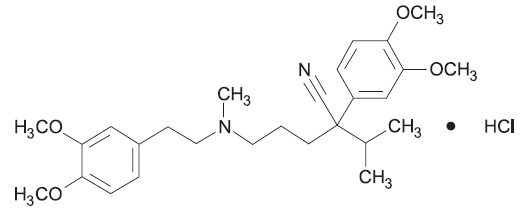
Verapamil hydrochloride, USP is chemically described as benzeneacetonitrile, α [3-[[2-(3,4-dimethoxyphenyl) -ethyl] methylamino] propyl] -3,4-dimethoxy-α -(1-methylethyl)-, monohydrochloride, (±). Its molecular formula is C27H38N2O4 • HCl and its structural formula is:
Verapamil hydrochloride, USP is a white or practically white crystalline powder, with a molecular weight of 491.06 g/mol. It is soluble in water, freely soluble in chloroform, sparingly soluble in alcohol and practically insoluble in ether. It is practically odorless and has a bitter taste.
Liver Function Tests
Elevations of liver enzymes (SGOT, SGPT, LDH, and alkaline phosphatase) and/or serum bilirubin occurred. Discontinuation for elevated liver enzymes occurred in 0.9 percent of patients (see WARNINGS ).
Renal Function Tests
Increases in creatinine and blood urea nitrogen levels occurred in 1.1 percent and 0.3 percent, respectively, of patients receiving trandolapril and verapamil hydrochloride extended-release tablets with or without hydrochlorothiazide therapy. None of these increases required discontinuation of treatment. Increases in these laboratory values are more likely to occur in patients with renal insufficiency or those pretreated with a diuretic and, based on experience with other ACE inhibitors, would be expected to be especially likely in patients with renal artery stenosis (see PRECAUTIONS and WARNINGS ).
Clinical Pharmacology
Verapamil hydrochloride and trandolapril have been used individually and in combination for the treatment of hypertension. For the four dosing strengths, the antihypertensive effect of the combination is approximately additive to the individual components.
General Body Function
Chest pain, malaise, weakness.
Central Nervous System
Drowsiness, hypesthesia, insomnia, loss of balance, paresthesia, vertigo.
Disopyramide Phosphate
Data on possible interactions between verapamil and disopyramide phosphate are not available. Therefore, disopyramide should not be administered within 48 hours before or 24 hours after verapamil administration.
Eye, Ear, Nose, Throat
Epistaxis, tinnitus, upper respiratory tract infection, blurred vision.
Musculoskeletal System
Arthralgias/myalgias, gout (increased uric acid).
Trandolapril Component
Trandolapril, USP is the ethyl ester prodrug of a nonsulfhydryl angiotensin converting enzyme (ACE) inhibitor, trandolaprilat. It is chemically described as (2S,3aR,7aS)- 1- [(S)-2-[[(S)-1-(EthoxyCarbonyl)-3-phenylpropyl] amino]Propanoyl]octahydro-1H-indole-2-carboxylic acid. Its molecular formula is C24H34N2O5 and its structural formula is:
Trandolapril, USP is a white or almost white powder with a molecular weight of 430.54 g/mol. It is practically insoluble in water; freely soluble in methylene chloride; sparingly soluble in absolute alcohol.
Trandolapril and verapamil hydrochloride extended-release tablets are formulated for oral administration, containing verapamil hydrochloride, USP as a controlled release formulation and trandolapril, USP as an immediate release formulation. The tablet strengths are trandolapril and verapamil hydrochloride extended-release tablets 1 mg/240 mg, trandolapril and verapamil hydrochloride extended-release tablets 2 mg/180 mg, trandolapril and verapamil hydrochloride extended-release tablets 2 mg/240 mg, and trandolapril and verapamil hydrochloride extended-release tablets 4 mg/240 mg. The tablets also contain the following ingredients: colloidal silicon dioxide, corn starch, croscarmellose sodium, ferric oxide red, hypromellose, lactose monohydrate, povidone, sodium alginate, sodium stearyl fumarate, magnesium stearate, and microcrystalline cellulose. The film coating contains: 1 mg/240 mg – hypromellose, titanium dioxide, and polyethylene glycol; 2 mg/180 mg – hypromellose, titanium dioxide, polyethylene glycol, iron oxide red, and FD&C blue #2; 2 mg/240 mg – hypromellose, titanium dioxide, polyethylene glycol, iron oxide yellow, iron oxide black, and iron oxide red; 4 mg/240 mg – hypromellose, titanium dioxide, polyethylene glycol, iron oxide yellow, iron oxide red, and iron oxide black.
Antihypertensive Agents
Concomitant use of trandolapril and verapamil hydrochloride extended-release tablets with other antihypertensive agents including diuretics, vasodilators, beta-adrenergic blockers, and alpha-antagonists may result in additive hypotensive effects. There are reports that verapamil may result in higher concentrations of the alpha-agonists prazosin and terazosin.
Warning: Fetal Toxicity
-
•When pregnancy is detected, discontinue trandolapril and verapamil hydrochloride extended-release tablets as soon as possible.
-
•Drugs that act directly on the renin-angiotensin system can cause injury and death to the developing fetus (see WARNINGS: Fetal Toxicity).
Post Marketing Experience
There has been a single postmarketing report of paralysis (tetraparesis) associated with the combined use of verapamil and colchicine. This may have been caused by colchicine crossing the blood-brain barrier due to CYP3A4 and P-gp inhibition by verapamil. Combined use of verapamil and colchicine is not recommended (see PRECAUTIONS - Drug Interactions ).
Other (trandolapril Component)
No clinically significant pharmacokinetic interaction has been found between trandolapril (or its metabolites) and nifedipine.
The anticoagulant effect of warfarin was not significantly changed by trandolapril.
Emotional, Mental, Sexual States
Anxiety, impotence, abnormal mentation.
Principle Display Panel 1 Mg/240 Mg
Principle Display Panel 2 Mg/180 Mg
Principle Display Panel 2 Mg/240 Mg
Principle Display Panel 4 Mg/240 Mg
Anaphylactoid and Possibly Related Reactions
Presumably because angiotensin-converting enzyme inhibitors affect the metabolism of eicosanoids and polypeptides, including endogenous bradykinin, patients receiving ACE inhibitors, including trandolapril may be subject to a variety of adverse reactions, some of them serious.
Animal Pharmacology And/or Animal Toxicology
In chronic animal toxicology studies, verapamil caused lenticular and/or suture line changes at 30 mg/kg/day or greater and frank cataracts at 62.5 mg/kg/day or greater in the beagle dog but not the rat. Development of cataracts due to verapamil has not been reported in man.
Use in Patients With Impaired Renal Function
Trandolapril and verapamil hydrochloride extended-release tablets have not been evaluated in patients with impaired renal function.
Anaphylactoid Reactions During Desensitization
Two patients undergoing desensitizing treatment with hymenoptera venom while receiving ACE inhibitors sustained life-threatening anaphylactoid reactions. In the same patients, these reactions did not occur when ACE inhibitors were temporarily withheld, but they reappeared when the ACE inhibitors were inadvertently readministered.
Use in Patients With Impaired Hepatic Function
Trandolapril and verapamil hydrochloride extended-release tablets have not been evaluated in subjects with impaired hepatic function.
Bradycardia and Conduction System Abnormalities
Atropine, isoproterenol, and cardiac pacing.
Anaphylactoid Reactions During Membrane Exposure
Anaphylactoid reactions have been reported in patients dialyzed with high-flux membranes and treated concomitantly with an ACE inhibitor. Anaphylactoid reactions have also been reported in patients undergoing low-density lipoprotein apheresis with dextran sulfate absorption.
Treatment of Acute Cardiovascular Adverse Reactions
The frequency of cardiovascular adverse reactions which require therapy is rare, hence, experience with their treatment is limited. Whenever severe hypotension or complete AV block occur following oral administration of trandolapril and verapamil hydrochloride extended-release tablets (verapamil component), the appropriate emergency measures should be applied immediately, e.g., intravenously administered isoproterenol HCl, levarterenol bitartrate, atropine (all in the usual doses), or calcium gluconate (10% solution). In patients with hypertrophic cardiomyopathy (IHSS), alpha-adrenergic agents (phenylephrine, metaraminol bitartrate or methoxamine) should be used to maintain blood pressure, and isoproterenol and levarterenol should be avoided. If further support is necessary, inotropic agents (dopamine or dobutamine) may be administered. Actual treatment and dosage should depend on the severity and the clinical situation and the judgment and experience of the treating physician.
Trandolapril and Verapamil Hydrochloride Extended Release Tablets
Following a single oral dose of trandolapril and verapamil hydrochloride extended-release tablets in healthy subjects, peak plasma concentrations are reached within 0.5 to 2 hours for trandolapril and within 4 to 15 hours for verapamil. Peak plasma concentrations of the active desmethyl metabolite of verapamil, norverapamil, are reached within 5 to 15 hours. Cleavage of the ester group converts trandolapril to its active diacid metabolite, trandolaprilat, which reaches peak plasma concentrations within 2 to 12 hours. The pharmacokinetics of trandolapril and trandolaprilat are not altered when trandolapril is administered in combination with verapamil, compared to monotherapy.
The AUC and Cmax for both verapamil and norverapamil are increased when 240 mg of controlled release verapamil is administered concomitantly with 4 mg trandolapril. The increase in Cmax is 54 and 30% and the AUC is increased by 65 and 32% for verapamil and norverapamil, respectively. Administration of trandolapril and verapamil hydrochloride extended-release tablets 4 mg/240 mg (4 mg trandolapril and 240 mg verapamil hydrochloride extended-release) with a high-fat meal does not alter the bioavailability of trandolapril whereas verapamil peak concentrations and area under the curve (AUC) decrease 37% and 28%, respectively. Food thus decreases verapamil bioavailability and the time to peak plasma concentration for both verapamil and norverapamil are delayed by approximately 7 hours. Both optical isomers of verapamil are similarly affected.
The elimination half-life of trandolapril is about 6 hours. At steady state, the effective half-life of trandolaprilat is 22.5 hours. Like all ACE inhibitors, trandolaprilat also has a prolonged terminal elimination phase, involving a small fraction of administered drug, probably representing binding to plasma and tissue ACE.
The terminal half-life of verapamil is 6 to 11 hours. Steady-state plasma concentrations of the two components are achieved after about a week of once-daily dosing of trandolapril and verapamil hydrochloride extended-release tablets. At steady-state, plasma concentrations of verapamil and trandolaprilat are up to two-fold higher than those observed after a single oral trandolapril and verapamil hydrochloride extended-release tablets dose.
The pharmacokinetics of verapamil and trandolaprilat are significantly different in the elderly (≥65 years) than in younger subjects. The bioavailability of verapamil and norverapamil are increased by 87% and 77%, respectively, and that of trandolapril by approximately 35% in the elderly. AUCs are approximately 80% and 35% higher, respectively.
Structured Label Content
Indications and Usage (INDICATIONS AND USAGE)
Trandolapril and verapamil hydrochloride extended-release tablets are indicated for the treatment of hypertension.
This fixed combination drug is not indicated for the initial therapy of hypertension (see DOSAGE AND ADMINISTRATION ).
In using trandolapril and verapamil hydrochloride extended-release tablets, consideration should be given to the fact that an angiotensin converting enzyme inhibitor, captopril, has caused agranulocytosis, particularly in patients with renal impairment or collagen vascular disease, and that available data are insufficient to show that trandolapril does not have similar risk (see WARNINGS - Neutropenia/Agranulocytosis ).
Dosage and Administration (DOSAGE AND ADMINISTRATION)
The recommended usual dosage range of trandolapril for hypertension is 1 to 4 mg per day administered in a single dose or two divided doses. The recommended usual dosage range of verapamil hydrochloride sustained-release tablets for hypertension is 120 to 480 mg per day administered in a single dose or two divided doses.
The hazards (see WARNINGS ) of trandolapril are generally independent of dose; those of verapamil are a mixture of dose-dependent phenomena (primarily dizziness, AV block, constipation) and dose-independent phenomena, the former much more common than the latter. Therapy with any combination of trandolapril and verapamil will thus be associated with both sets of dose-independent hazards. The dose-dependent side effects of verapamil have not been shown to be decreased by the addition of trandolapril nor vice versa.
Rarely, the dose-independent hazards of trandolapril are serious. To minimize dose-independent hazards, it is usually appropriate to begin therapy with trandolapril and verapamil hydrochloride extended-release tablets only after a patient has either (a) failed to achieve the desired antihypertensive effect with one or the other monotherapy at its respective maximally recommended dose and shortest dosing interval, or (b) the dose of one or the other monotherapy cannot be increased further because of dose-limiting side effects.
Clinical trials with trandolapril and verapamil hydrochloride extended-release tablets have explored only once-a-day doses. The antihypertensive effect and or adverse effects of adding 4 mg of trandolapril once-a-day to a dose of 240 mg verapamil hydrochloride sustained-release tablets administered twice-a-day has not been studied, nor have the effects of adding as little of 180 mg verapamil hydrochloride sustained-release tablets to 2 mg trandolapril administered twice-a-day been evaluated. Over the dose range of verapamil hydrochloride sustained-release tablets 120 to 240 mg once-a-day and trandolapril 0.5 to 8 mg once-a-day, the effects of the combination increase with increasing doses of either component.
Contraindications (CONTRAINDICATIONS)
Trandolapril and verapamil hydrochloride extended-release tablets are contraindicated in patients who are hypersensitive to any ACE inhibitor or verapamil.
Because of the verapamil component, trandolapril and verapamil hydrochloride extended-release tablets are contraindicated in:
-
1.Severe left ventricular dysfunction (see WARNINGS ).
-
2.Hypotension (systolic pressure less than 90 mmHg) or cardiogenic shock.
-
3.Sick sinus syndrome (except in patients with a functioning artificial ventricular pacemaker).
-
4.Second- or third-degree AV block (except in patients with a functioning artificial ventricular pacemaker).
-
5.Patients with atrial flutter or atrial fibrillation and an accessory bypass tract (e.g. Wolff-Parkinson-White, Lown-Ganong-Levine syndromes) (see WARNINGS ).
-
6.Patients taking flibanserin (see PRECAUTIONS - Drug Interactions ).
Because of the trandolapril component, trandolapril and verapamil hydrochloride extended-release tablets are contraindicated in patients with a history of angioedema related to previous treatment with an angiotensin converting enzyme (ACE) inhibitor.
Do not co-administer aliskiren with trandolapril and verapamil hydrochloride extended-release tablets in patients with diabetes (see PRECAUTIONS - Drug Interactions ).
Trandolapril and verapamil hydrochloride extended-release tablets are contraindicated in combination with a neprilysin inhibitor (e.g., sacubitril). Do not administer trandolapril and verapamil hydrochloride extended-release tablets within 36 hours of switching to or from sacubitril/valsartan, a neprilysin inhibitor (see WARNINGS ).
Adverse Reactions (ADVERSE REACTIONS)
Trandolapril and verapamil hydrochloride extended-release tablets have been evaluated in over 1,957 subjects and patients. Of these, 541 patients, including 23% elderly patients, participated in U.S. controlled clinical trials, and 251 were studied in foreign controlled clinical trials. In clinical trials with trandolapril and verapamil hydrochloride extended-release tablets, no adverse experiences peculiar to this combination drug have been observed. Adverse experiences that have occurred have been limited to those that have been previously reported with verapamil or trandolapril. Trandolapril and verapamil hydrochloride extended-release tablets have been evaluated for long-term safety in 272 patients treated for 1 year or more. Adverse experiences were usually mild and transient.
Discontinuation of therapy because of adverse events in U.S. placebo-controlled hypertension studies was required in 2.6% and 1.9% of patients treated with trandolapril and verapamil hydrochloride extended-release tablets and placebo, respectively.
Adverse experiences occurring in 1% or more of the 541 patients in placebo-controlled hypertension trials who were treated with a range of trandolapril (0.5 to 8 mg) and verapamil (120 to 240 mg) combinations are shown below.
|
|
Trandolapril and Verapamil Hydrochloride Extended-Release Tablets
|
PLACEBO
|
|
AV Block First Degree |
3.9 (0.2) |
0.5 (0) |
|
Bradycardia |
1.8 (0) |
0 (0) |
|
Bronchitis |
1.5 (0) |
0.5 (0) |
|
Chest Pain |
2.2 (0) |
1 (0) |
|
Constipation |
3.3 (0) |
1 (0) |
|
Cough |
4.6 (0) |
2.4 (0) |
|
Diarrhea |
1.5 (0.2) |
1 (0) |
|
Dizziness |
3.1 (0) |
1.9 (0.5) |
|
Dyspnea |
1.3 (0.4) |
0 (0) |
|
Edema |
1.3 (0) |
2.4 (0) |
|
Fatigue |
2.8 (0.4) |
2.4 (0) |
|
Headache(s)+ |
8.9 (0) |
9.7 (0.5) |
|
Increased Liver Enzymes* |
2.8 (0.2) |
1 (0) |
|
Nausea |
1.5 (0.2) |
0.5 (0) |
|
Pain Extremity(ies) |
1.1 (0.2) |
0.5 (0) |
|
Pain Back+ |
2.2 (0) |
2.4 (0) |
|
Pain Joint(s) |
1.7 (0) |
1 (0) |
|
Upper Respiratory Tract Infection(s)+ |
5.4 (0) |
7.8 (0) |
|
Upper Respiratory Tract Congestion+ |
2.4 (0) |
3.4 (0) |
|
* Also includes increase in SGPT, SGOT, Alkaline Phosphatase |
Other clinical adverse experiences possibly, probably, or definitely related to drug treatment occurring in 0.3% or more of patients treated with trandolapril/verapamil combinations with or without concomitant diuretic in controlled or uncontrolled trials (N = 990) and less frequent, clinically significant events (in italics) include the following:
Drug Interactions
In vitro metabolic studies indicate that verapamil is metabolized by cytochrome P450 including CYP3A4, CYP1A2, CYP2C8, CYP2C9 and CYP2C18. Verapamil has been shown to be an inhibitor of CYP3A4 enzymes and P-glycoprotein (P-gp).
Clinically significant interactions have been reported with inhibitors of CYP3A4 (e.g. erythromycin, ritonavir) causing elevation of plasma levels of verapamil while inducers of CYP3A4 (e.g. rifampin) have caused a lowering of plasma levels of verapamil. Therefore, patients receiving inhibitors or inducers of the cytochrome P450 system should be monitored for drug interactions.
How Supplied (HOW SUPPLIED)
Trandolapril and Verapamil Hydrochloride Extended-Release Tablets, 1 mg/240 mg are supplied as white to pinkish white colored, oval, biconvex, film-coated tablets with ‘294’ debossed on one side and plain on the other side containing 1 mg trandolapril, USP in an immediate-release form and 240 mg verapamil hydrochloride, USP in an extended-release form.
NDC 68462-294-90 — bottles of 90
NDC 68462-294-01 — bottles of 100
NDC 68462-294-10 — bottles of 1000
Trandolapril and Verapamil Hydrochloride Extended-Release Tablets, 2 mg/180 mg are supplied as pink colored, oval, biconvex, film-coated tablets with ‘295’ debossed on one side and plain on the other side containing 2 mg trandolapril, USP in an immediate-release form and 180 mg verapamil hydrochloride, USP in an extended-release form.
NDC 68462-295-90 — bottles of 90
NDC 68462-295-01 — bottles of 100
NDC 68462-295-10 — bottles of 1000
Trandolapril and Verapamil Hydrochloride Extended-Release Tablets, 2 mg/240 mg are supplied as cream colored, oval, biconvex, film-coated tablets with ‘296’ debossed on one side and plain on the other side containing 2 mg trandolapril, USP in an immediate-release form and 240 mg verapamil hydrochloride, USP in an extended-release form.
NDC 68462-296-90 — bottles of 90
NDC 68462-296-01 — bottles of 100
NDC 68462-296-10 — bottles of 1000
Trandolapril and Verapamil Hydrochloride Extended-Release Tablets, 4 mg/240 mg are supplied as brown colored, oval, biconvex, film-coated tablets with ‘G38’ debossed on one side and plain on the other side containing 4 mg trandolapril, USP in an immediate-release form and 240 mg verapamil hydrochloride, USP in an extended-release form.
NDC 68462-329-01 — bottles of 100
NDC 68462-329-10 — bottles of 1000
Dispense in well-closed container with safety closure.
Description (DESCRIPTION)
Trandolapril and verapamil hydrochloride extended-release tablets combine a slow release formulation of a calcium channel blocker, verapamil hydrochloride, USP, and an immediate release formulation of an angiotensin converting enzyme inhibitor, trandolapril, USP.
Gold
Nitritoid reactions (symptoms include facial flushing, nausea, vomiting and hypotension) have been reported rarely in patients on therapy with injectable gold (sodium aurothiomalate) and concomitant ACE inhibitor therapy including trandolapril and verapamil hydrochloride extended-release tablets.
Cough
Presumably due to the inhibition of the degradation of endogenous bradykinin, persistent nonproductive cough has been reported with all ACE inhibitors, always resolving after discontinuation of therapy. ACE inhibitor-induced cough should be considered in the differential diagnosis of cough. In controlled trials of trandolapril, cough was present in 2% of trandolapril patients and 0% of patients given placebo. There was no evidence of a relationship to dose.
Other
Other adverse experiences (in addition to those in table and listed above) that have been reported with the individual components are listed below.
Section 42229-5 (42229-5)
Verapamil Component
With the immediate release formulation, more than 90% of the orally administered dose is absorbed with peak plasma concentrations of verapamil observed 1 to 2 hours after dosing. A delayed rate but similar extent of absorption is observed for the sustained release formulation when compared to the immediate release formulation. Because of the rapid biotransformation of verapamil during its first pass through the portal circulation, absolute bioavailability ranges from 20% to 35%. A nonlinear correlation exists between verapamil dose and plasma concentrations.
In early dose titration with verapamil, a relationship exists between plasma concentrations of verapamil and prolongation of the PR interval. However, during chronic administration, this relationship may disappear. No relationship has been established between the plasma concentration of verapamil and reduction in blood pressure.
In healthy subjects, orally administered verapamil undergoes extensive metabolism in the liver. Twelve metabolites have been identified in plasma; all except norverapamil are present in trace amounts only. Approximately 70% of an administered dose is excreted as metabolites in the urine and 16% or more in the feces within 5 days. Urinary excretion of unchanged drug is about 3% to 4% of the dose. Verapamil is approximately 90% bound to plasma proteins.
In patients with hepatic insufficiency, verapamil clearance is decreased about 30% and the elimination half-life is prolonged up to 14 to 16 hours (see PRECAUTIONS ). In patients with liver dysfunction, a dosage adjustment may be required. In the elderly (≥65 years), verapamil clearance is reduced resulting in increases in elimination half-life.
Storage:
Store at 20°C to 25°C (68°F to 77°F) [see USP Controlled Room Temperature].
Distributed by:
Glenmark Pharmaceuticals Inc., USA
Elmwood Park, NJ 07407
Questions? 1 (888) 721-7115
www.glenmarkpharma-us.com
April 2025
Digitalis
Clinical use of verapamil in digitalized patients has shown the combination to be well tolerated if digoxin doses are properly adjusted. Chronic verapamil treatment can increase serum digoxin levels by 50 to 75% during the first week of therapy, and this can result in digoxin toxicity. In patients with hepatic cirrhosis, the influence of verapamil on digoxin kinetics is magnified. Verapamil may reduce total body clearance and extrarenal clearance of digitoxin by 27% and 29%, respectively. Maintenance digoxin doses should be reduced when verapamil is administered, and the patient should be carefully monitored to avoid over- or under-digitalization. Whenever overdigitalization is suspected, the daily dose of digoxin should be reduced or temporarily discontinued. Upon discontinuation of any verapamil-containing regime including trandolapril and verapamil hydrochloride extended-release tablets, the patient should be reassessed to avoid underdigitalization. No clinically significant pharmacokinetic interaction has been found between trandolapril (or its metabolites) and digoxin.
Pregnancy
Female patients of childbearing age should be told about the consequences of exposure to trandolapril and verapamil hydrochloride extended-release tablets during pregnancy (see WARNINGS ). Discuss treatment options with women planning to become pregnant. Patients should be asked to report pregnancies to their physicians as soon as possible.
Pulmonary
Dyspnea.
Quinidine
In a small number of patients with hypertrophic cardiomyopathy (IHSS), concomitant use of verapamil and quinidine resulted in significant hypotension. Until further data are obtained, combined therapy of verapamil and quinidine in patients with hypertrophic cardiomyopathy should probably be avoided.
The electrophysiological effects of quinidine and verapamil on AV conduction were studied in 8 patients. Verapamil significantly counteracted the effects of quinidine on AV conduction. There has been a report of increased quinidine levels during verapamil therapy.
Angioedema
Angioedema of the face, extremities, lips, tongue, glottis, and larynx has been reported in patients treated with ACE inhibitors including trandolapril. Symptoms suggestive of angioedema or facial edema occurred in 0.13% of trandolapril-treated patients. Two of the four cases were life-threatening and resolved without treatment or with medication (corticosteroids). Angioedema associated with laryngeal edema can be fatal. If laryngeal stridor or angioedema of the face, tongue or glottis occurs, treatment with trandolapril and verapamil hydrochloride extended-release tablets should be discontinued immediately, the patient treated in accordance with accepted medical care and carefully observed until the swelling disappears. In instances where swelling is confined to the face and lips, the condition generally resolves without treatment; antihistamines may be useful in relieving symptoms. Where there is involvement of the tongue, glottis, or larynx, likely to cause airway obstruction, emergency therapy, including but not limited to subcutaneous epinephrine solution 1:1,000 (0.3 to 0.5 mL) should be promptly administered (see PRECAUTIONS and ADVERSE REACTIONS).
Patients receiving coadministration of an ACE inhibitor with an mTOR (mammalian target of rapamycin) inhibitor (e.g., temsirolimus, sirolimus, everolimus) or a neprilysin inhibitor (e.g., sacubitril) may be at increased risk for angioedema.
Cimetidine
The interaction between cimetidine and chronically administered verapamil has not been studied. Variable results on clearance have been obtained in acute studies of healthy volunteers; clearance of verapamil was either reduced or unchanged. No clinically significant pharmacokinetic interaction has been found between trandolapril (or its metabolites) and cimetidine.
Dabigatran
Verapamil, a P-gp inhibitor, increases exposure to dabigatran (a thrombin inhibitor) when administered concomitantly; however, no dose adjustment of dabigatran is required when administered with verapamil.
Flecainide
A study of healthy volunteers showed that the concomitant administration of flecainide and verapamil may have additive effects on myocardial contractility, AV conduction, and repolarization. Concomitant therapy with flecainide and verapamil may result in additive negative inotropic effect and prolongation of atrioventricular conduction.
Hematology
(See WARNINGS ). Low white blood cells, low neutrophils, low lymphocytes, low platelets.
Ivabradine
Concurrent use of verapamil increases exposure to ivabradine and may exacerbate bradycardia and conduction disturbances. Avoid co-administration of verapamil and ivabradine.
Overdosage (OVERDOSAGE)
No specific information is available on the treatment of overdosage with trandolapril and verapamil hydrochloride extended-release tablets.
Flibanserin
Verapamil component
Use of a moderate CYP3A4 inhibitor such as verapamil with flibanserin significantly increases flibanserin concentrations, which can lead to severe hypotension and syncope. Concomitant use is contraindicated (see CONTRAINDICATIONS). Discontinue trandolapril and verapamil hydrochloride extended-release tablets at least 2 weeks prior to starting flibanserin. Do not administer trandolapril and verapamil hydrochloride extended-release tablets within 2 days of discontinuing flibanserin.
Hemopoietic
Decreased leukocytes, decreased neutrophils.
Hypotension
(See WARNINGS ). In hypertensive patients, hypotension occurred in 0.6% and near syncope occurred in 0.1%. Hypotension or syncope was a cause for discontinuation of therapy in 0.4% of hypertensive patients.
Dermatologic
Pruritus, rash.
Erythromycin
Hypotension, bradyarrhythmias, and lactic acidosis have been observed in patients receiving concurrent erythromycin ethylsuccinate.
Genitourinary
Endometriosis, hematuria, nocturia, polyuria, proteinuria.
Geriatric Use
In placebo-controlled studies, where 23% of patients receiving trandolapril and verapamil hydrochloride extended-release tablets were 65 years and older, and 2.4% were 75 years and older, no overall differences in effectiveness or safety were observed between these patients and younger patients. However, greater sensitivity of some older individual patients cannot be ruled out.
Pediatric Use
Neonates with a history of in utero exposure to trandolapril and verapamil hydrochloride extended-release tablets:
If oliguria or hypotension occurs, direct attention toward support of blood pressure and renal perfusion. Exchange transfusions or dialysis may be required as a means of reversing hypotension and/or substituting for disordered renal function.
The safety and effectiveness of trandolapril and verapamil hydrochloride extended-release tablets in children below the age of 18 have not been established.
Cardiovascular
Angina, AV block second degree, bundle branch block, edema, flushing, hypotension, myocardial infarction, palpitations, premature ventricular contractions, nonspecific ST-T changes, near syncope, tachycardia.
Clarithromycin
Hypotension, bradyarrhythmias, and lactic acidosis have been observed in patients receiving concurrent clarithromycin.
Nursing Mothers
Verapamil is excreted in human milk. Radiolabeled trandolapril or its metabolites are secreted in rat milk. Trandolapril and verapamil hydrochloride extended-release tablets should not be administered to nursing mothers.
Clinical Studies (CLINICAL STUDIES)
In controlled clinical trials, once daily doses of trandolapril and verapamil hydrochloride extended-release tablets, trandolapril 4 mg/verapamil HCl extended-release 240 mg or trandolapril 2 mg/verapamil HCl extended-release 180 mg, decreased placebo-corrected seated pressure (systolic/diastolic) 24 hours after dosing by about 7 to 12/6 to 8 mmHg. Each of the components of trandolapril and verapamil hydrochloride extended-release tablets added to the antihypertensive effect. Treatment effects were consistent across age groups (<65, ≥65 years), and gender (male, female).
Blood pressure reductions were significantly greater for the trandolapril and verapamil hydrochloride extended-release tablet 4 mg/240 mg combination than for either of the components used alone.
The antihypertensive effects of trandolapril and verapamil hydrochloride extended-release tablets have continued during therapy for at least 1 year.
Cardiac Failures
Inotropic agents (e.g., isoproterenol, dopamine, dobutamine), diuretics. Asystole should be handled by the usual measures including cardiopulmonary resuscitation.
Gastrointestinal
Diarrhea, dyspepsia, dry mouth, nausea.
Serum Electrolytes
Hyperkalemia (see PRECAUTIONS ), hyponatremia.
Replacement Therapy
For convenience, patients receiving trandolapril (up to 8 mg) and verapamil (up to 240 mg) in separate tablets, administered once-a-day, may instead wish to receive trandolapril and verapamil hydrochloride extended-release tablets containing the same component doses.
Trandolapril and verapamil hydrochloride extended-release tablets should be administered with food.
Verapamil Component
Verapamil hydrochloride, USP is chemically described as benzeneacetonitrile, α [3-[[2-(3,4-dimethoxyphenyl) -ethyl] methylamino] propyl] -3,4-dimethoxy-α -(1-methylethyl)-, monohydrochloride, (±). Its molecular formula is C27H38N2O4 • HCl and its structural formula is:
Verapamil hydrochloride, USP is a white or practically white crystalline powder, with a molecular weight of 491.06 g/mol. It is soluble in water, freely soluble in chloroform, sparingly soluble in alcohol and practically insoluble in ether. It is practically odorless and has a bitter taste.
Liver Function Tests
Elevations of liver enzymes (SGOT, SGPT, LDH, and alkaline phosphatase) and/or serum bilirubin occurred. Discontinuation for elevated liver enzymes occurred in 0.9 percent of patients (see WARNINGS ).
Renal Function Tests
Increases in creatinine and blood urea nitrogen levels occurred in 1.1 percent and 0.3 percent, respectively, of patients receiving trandolapril and verapamil hydrochloride extended-release tablets with or without hydrochlorothiazide therapy. None of these increases required discontinuation of treatment. Increases in these laboratory values are more likely to occur in patients with renal insufficiency or those pretreated with a diuretic and, based on experience with other ACE inhibitors, would be expected to be especially likely in patients with renal artery stenosis (see PRECAUTIONS and WARNINGS ).
Clinical Pharmacology (CLINICAL PHARMACOLOGY)
Verapamil hydrochloride and trandolapril have been used individually and in combination for the treatment of hypertension. For the four dosing strengths, the antihypertensive effect of the combination is approximately additive to the individual components.
General Body Function
Chest pain, malaise, weakness.
Central Nervous System
Drowsiness, hypesthesia, insomnia, loss of balance, paresthesia, vertigo.
Disopyramide Phosphate
Data on possible interactions between verapamil and disopyramide phosphate are not available. Therefore, disopyramide should not be administered within 48 hours before or 24 hours after verapamil administration.
Eye, Ear, Nose, Throat
Epistaxis, tinnitus, upper respiratory tract infection, blurred vision.
Musculoskeletal System
Arthralgias/myalgias, gout (increased uric acid).
Trandolapril Component
Trandolapril, USP is the ethyl ester prodrug of a nonsulfhydryl angiotensin converting enzyme (ACE) inhibitor, trandolaprilat. It is chemically described as (2S,3aR,7aS)- 1- [(S)-2-[[(S)-1-(EthoxyCarbonyl)-3-phenylpropyl] amino]Propanoyl]octahydro-1H-indole-2-carboxylic acid. Its molecular formula is C24H34N2O5 and its structural formula is:
Trandolapril, USP is a white or almost white powder with a molecular weight of 430.54 g/mol. It is practically insoluble in water; freely soluble in methylene chloride; sparingly soluble in absolute alcohol.
Trandolapril and verapamil hydrochloride extended-release tablets are formulated for oral administration, containing verapamil hydrochloride, USP as a controlled release formulation and trandolapril, USP as an immediate release formulation. The tablet strengths are trandolapril and verapamil hydrochloride extended-release tablets 1 mg/240 mg, trandolapril and verapamil hydrochloride extended-release tablets 2 mg/180 mg, trandolapril and verapamil hydrochloride extended-release tablets 2 mg/240 mg, and trandolapril and verapamil hydrochloride extended-release tablets 4 mg/240 mg. The tablets also contain the following ingredients: colloidal silicon dioxide, corn starch, croscarmellose sodium, ferric oxide red, hypromellose, lactose monohydrate, povidone, sodium alginate, sodium stearyl fumarate, magnesium stearate, and microcrystalline cellulose. The film coating contains: 1 mg/240 mg – hypromellose, titanium dioxide, and polyethylene glycol; 2 mg/180 mg – hypromellose, titanium dioxide, polyethylene glycol, iron oxide red, and FD&C blue #2; 2 mg/240 mg – hypromellose, titanium dioxide, polyethylene glycol, iron oxide yellow, iron oxide black, and iron oxide red; 4 mg/240 mg – hypromellose, titanium dioxide, polyethylene glycol, iron oxide yellow, iron oxide red, and iron oxide black.
Antihypertensive Agents
Concomitant use of trandolapril and verapamil hydrochloride extended-release tablets with other antihypertensive agents including diuretics, vasodilators, beta-adrenergic blockers, and alpha-antagonists may result in additive hypotensive effects. There are reports that verapamil may result in higher concentrations of the alpha-agonists prazosin and terazosin.
Warning: Fetal Toxicity (WARNING: FETAL TOXICITY)
-
•When pregnancy is detected, discontinue trandolapril and verapamil hydrochloride extended-release tablets as soon as possible.
-
•Drugs that act directly on the renin-angiotensin system can cause injury and death to the developing fetus (see WARNINGS: Fetal Toxicity).
Post Marketing Experience
There has been a single postmarketing report of paralysis (tetraparesis) associated with the combined use of verapamil and colchicine. This may have been caused by colchicine crossing the blood-brain barrier due to CYP3A4 and P-gp inhibition by verapamil. Combined use of verapamil and colchicine is not recommended (see PRECAUTIONS - Drug Interactions ).
Other (trandolapril Component) (Other (Trandolapril Component))
No clinically significant pharmacokinetic interaction has been found between trandolapril (or its metabolites) and nifedipine.
The anticoagulant effect of warfarin was not significantly changed by trandolapril.
Emotional, Mental, Sexual States
Anxiety, impotence, abnormal mentation.
Principle Display Panel 1 Mg/240 Mg (Principle Display Panel - 1 mg/240 mg)
Principle Display Panel 2 Mg/180 Mg (Principle Display Panel - 2 mg/180 mg)
Principle Display Panel 2 Mg/240 Mg (Principle Display Panel - 2 mg/240 mg)
Principle Display Panel 4 Mg/240 Mg (Principle Display Panel - 4 mg/240 mg)
Anaphylactoid and Possibly Related Reactions
Presumably because angiotensin-converting enzyme inhibitors affect the metabolism of eicosanoids and polypeptides, including endogenous bradykinin, patients receiving ACE inhibitors, including trandolapril may be subject to a variety of adverse reactions, some of them serious.
Animal Pharmacology And/or Animal Toxicology (Animal Pharmacology and/or Animal Toxicology)
In chronic animal toxicology studies, verapamil caused lenticular and/or suture line changes at 30 mg/kg/day or greater and frank cataracts at 62.5 mg/kg/day or greater in the beagle dog but not the rat. Development of cataracts due to verapamil has not been reported in man.
Use in Patients With Impaired Renal Function (Use in Patients with Impaired Renal Function)
Trandolapril and verapamil hydrochloride extended-release tablets have not been evaluated in patients with impaired renal function.
Anaphylactoid Reactions During Desensitization
Two patients undergoing desensitizing treatment with hymenoptera venom while receiving ACE inhibitors sustained life-threatening anaphylactoid reactions. In the same patients, these reactions did not occur when ACE inhibitors were temporarily withheld, but they reappeared when the ACE inhibitors were inadvertently readministered.
Use in Patients With Impaired Hepatic Function (Use in Patients with Impaired Hepatic Function)
Trandolapril and verapamil hydrochloride extended-release tablets have not been evaluated in subjects with impaired hepatic function.
Bradycardia and Conduction System Abnormalities
Atropine, isoproterenol, and cardiac pacing.
Anaphylactoid Reactions During Membrane Exposure
Anaphylactoid reactions have been reported in patients dialyzed with high-flux membranes and treated concomitantly with an ACE inhibitor. Anaphylactoid reactions have also been reported in patients undergoing low-density lipoprotein apheresis with dextran sulfate absorption.
Treatment of Acute Cardiovascular Adverse Reactions
The frequency of cardiovascular adverse reactions which require therapy is rare, hence, experience with their treatment is limited. Whenever severe hypotension or complete AV block occur following oral administration of trandolapril and verapamil hydrochloride extended-release tablets (verapamil component), the appropriate emergency measures should be applied immediately, e.g., intravenously administered isoproterenol HCl, levarterenol bitartrate, atropine (all in the usual doses), or calcium gluconate (10% solution). In patients with hypertrophic cardiomyopathy (IHSS), alpha-adrenergic agents (phenylephrine, metaraminol bitartrate or methoxamine) should be used to maintain blood pressure, and isoproterenol and levarterenol should be avoided. If further support is necessary, inotropic agents (dopamine or dobutamine) may be administered. Actual treatment and dosage should depend on the severity and the clinical situation and the judgment and experience of the treating physician.
Trandolapril and Verapamil Hydrochloride Extended Release Tablets (Trandolapril and Verapamil Hydrochloride Extended-Release Tablets)
Following a single oral dose of trandolapril and verapamil hydrochloride extended-release tablets in healthy subjects, peak plasma concentrations are reached within 0.5 to 2 hours for trandolapril and within 4 to 15 hours for verapamil. Peak plasma concentrations of the active desmethyl metabolite of verapamil, norverapamil, are reached within 5 to 15 hours. Cleavage of the ester group converts trandolapril to its active diacid metabolite, trandolaprilat, which reaches peak plasma concentrations within 2 to 12 hours. The pharmacokinetics of trandolapril and trandolaprilat are not altered when trandolapril is administered in combination with verapamil, compared to monotherapy.
The AUC and Cmax for both verapamil and norverapamil are increased when 240 mg of controlled release verapamil is administered concomitantly with 4 mg trandolapril. The increase in Cmax is 54 and 30% and the AUC is increased by 65 and 32% for verapamil and norverapamil, respectively. Administration of trandolapril and verapamil hydrochloride extended-release tablets 4 mg/240 mg (4 mg trandolapril and 240 mg verapamil hydrochloride extended-release) with a high-fat meal does not alter the bioavailability of trandolapril whereas verapamil peak concentrations and area under the curve (AUC) decrease 37% and 28%, respectively. Food thus decreases verapamil bioavailability and the time to peak plasma concentration for both verapamil and norverapamil are delayed by approximately 7 hours. Both optical isomers of verapamil are similarly affected.
The elimination half-life of trandolapril is about 6 hours. At steady state, the effective half-life of trandolaprilat is 22.5 hours. Like all ACE inhibitors, trandolaprilat also has a prolonged terminal elimination phase, involving a small fraction of administered drug, probably representing binding to plasma and tissue ACE.
The terminal half-life of verapamil is 6 to 11 hours. Steady-state plasma concentrations of the two components are achieved after about a week of once-daily dosing of trandolapril and verapamil hydrochloride extended-release tablets. At steady-state, plasma concentrations of verapamil and trandolaprilat are up to two-fold higher than those observed after a single oral trandolapril and verapamil hydrochloride extended-release tablets dose.
The pharmacokinetics of verapamil and trandolaprilat are significantly different in the elderly (≥65 years) than in younger subjects. The bioavailability of verapamil and norverapamil are increased by 87% and 77%, respectively, and that of trandolapril by approximately 35% in the elderly. AUCs are approximately 80% and 35% higher, respectively.
Advanced Ingredient Data
Raw Label Data
All Sections (JSON)
Additional Information
Back to search View SPL set listing Open on DailyMed ↗
Source: dailymed · Ingested: 2026-02-15T11:52:53.471140 · Updated: 2026-03-14T22:44:52.002107