Tybost
3784c35c-e87f-410c-900b-8fd6313c6010
34391-3
HUMAN PRESCRIPTION DRUG LABEL
Drug Facts
Composition & Product
Identifiers & Packaging
Indications and Usage
TYBOST is a CYP3A inhibitor indicated to increase systemic exposure of atazanavir or darunavir (once daily dosing regimen) in combination with other antiretroviral agents in the treatment of HIV-1 infection in adults and in pediatric patients weighing at least 14 kg. ( 1.1 ) Limitations of Use : TYBOST is not interchangeable with ritonavir to increase systemic exposure of darunavir 600 mg twice daily, fosamprenavir, saquinavir, or tipranavir due to lack of exposure data. The use of TYBOST is not recommended with darunavir 600 mg twice daily, fosamprenavir, saquinavir, or tipranavir. ( 1.2 , 5.4 ) Complex or unknown mechanisms of drug interactions preclude extrapolation of ritonavir drug interactions to certain TYBOST interactions. TYBOST and ritonavir when administered with either atazanavir or darunavir may result in different drug interactions when used with concomitant medications. ( 1.2 , 5.3 , 7 , 12.3 )
Dosage and Administration
TYBOST must be coadministered with atazanavir or darunavir at the same time, with food, and in combination with other HIV-1 antiretroviral agents. ( 2.1 , 2.2 ) Recommended dosage in adults: ( 2.1 ) Adult Patient Populations Coadministered Agent Dosage TYBOST Dosage Treatment-naïve or treatment-experienced atazanavir 300 mg orally once daily 150 mg orally once daily Treatment-naïve or treatment-experienced with no darunavir resistance-associated substitutions darunavir 800 mg orally once daily Recommended dosage in pediatric patients: TYBOST 150 mg or TYBOST 90 mg orally once daily based on body weight. For dosage recommendations for TYBOST and the coadministered protease inhibitor atazanavir or darunavir in pediatric patients, refer to Table 2 and Table 3 of the full prescribing information respectively. ( 2.2 ) Prior to starting TYBOST, assess estimated creatinine clearance. ( 2.3 ) Coadministration with tenofovir disoproxil fumarate (TDF): assess estimated creatinine clearance, urine glucose, and urine protein at baseline. ( 2.3 ) TYBOST coadministered with TDF is not recommended in patients who have an estimated creatinine clearance below 70 mL/min because dose adjustment of TDF is required below 50 mL/min and such dose adjustments have not been established for coadministration with TYBOST. ( 2.4 )
Contraindications
The concomitant use of TYBOST with atazanavir or darunavir and the following drugs is contraindicated due to the potential for serious and/or life-threatening events or loss of therapeutic effect [see Drug Interactions (7.3) and Clinical Pharmacology (12.3) ] . Alpha 1-adrenoreceptor antagonist: alfuzosin Antianginal: ranolazine Antiarrhythmic: dronedarone Anticonvulsants: carbamazepine, phenobarbital, phenytoin Anti-gout: colchicine Antimycobacterial: rifampin Antineoplastics: irinotecan These contraindications apply only to TYBOST coadministered with atazanavir Antipsychotics: lurasidone, pimozide Ergot Derivatives: dihydroergotamine, ergotamine, methylergonovine Herbal Products: St. John's wort ( Hypericum perforatum ) Hormonal Contraceptives: drospirenone/ ethinyl estradiol Lipid-modifying Agents: lomitapide, lovastatin, simvastatin Non-nucleoside Reverse Transcriptase Inhibitor: nevirapine Phosphodiesterase-5 (PDE-5) Inhibitor: sildenafil when administered as Revatio ® for the treatment of pulmonary arterial hypertension Protease Inhibitor: indinavir Sedative/hypnotics triazolam, orally administered midazolam
Warnings and Precautions
Assess creatinine clearance (CLcr) before initiating treatment. ( 5.1 ) When TYBOST is used in combination with a TDF-containing regimen, cases of acute renal failure and Fanconi syndrome have been reported. ( 5.2 ) Use with TDF: Assess urine glucose and urine protein at baseline and monitor CLcr, urine glucose, and urine protein. Monitor serum phosphorus in patients with or at risk for renal impairment. ( 5.2 ) TYBOST in combination with more than one antiretroviral that requires pharmacokinetic enhancement (i.e., two protease inhibitors or elvitegravir in combination with a protease inhibitor) is not recommended. ( 5.4 ) Use with HIV-1 protease inhibitors other than atazanavir or darunavir administered once daily is not recommended. ( 5.4 ) Coadministration with drugs or regimens containing ritonavir is not recommended. ( 5.4 )
Adverse Reactions
Initiation of TYBOST, a CYP3A inhibitor, in patients receiving medications metabolized by CYP3A, or initiation of medications metabolized by CYP3A in patients already receiving TYBOST, may increase plasma concentrations of medications metabolized by CYP3A and reduce plasma concentrations of active metabolite(s) formed by CYP3A. Initiation of medications that inhibit or induce CYP3A may respectively increase or decrease concentrations of TYBOST with atazanavir or darunavir. These interactions may lead to: clinically significant adverse reactions, potentially leading to severe, life-threatening, or fatal events from higher exposures of concomitant medications. clinically significant adverse reactions from higher exposures of TYBOST and atazanavir or darunavir. These interactions may lead to: loss of therapeutic effect of TYBOST with atazanavir or darunavir and possible development of resistance. loss of therapeutic effect of the concomitant medications from lower exposures of active metabolite(s). See Table 7 for steps to prevent or manage these possible and known significant drug interactions, including dosing recommendations [see Drug Interactions (7) ] . Consider the potential for drug interactions prior to and during TYBOST with atazanavir or darunavir therapy; review concomitant medications during TYBOST with atazanavir or darunavir therapy; and monitor for the adverse reactions associated with concomitant medications [see Contraindications (4) and Drug Interactions (7) ] . TYBOST or ritonavir when administered with either atazanavir or darunavir may result in different drug interactions when used with concomitant medications. Complex or unknown mechanisms of drug interactions preclude extrapolation of ritonavir drug interactions to certain TYBOST interactions [see Drug Interactions (7) and Clinical Pharmacology (12.3) ].
Drug Interactions
TYBOST, in combination with atazanavir or darunavir, can alter the concentration of drugs metabolized by CYP3A or CYP2D6. Drugs that induce CYP3A can alter the concentrations of TYBOST, atazanavir and darunavir. Consult the full prescribing information prior to and during treatment for potential drug interactions. ( 4 , 5.3 , 7 , 12.3 )
How Supplied
TYBOST tablets are available in bottles containing 30 tablets and a silica gel desiccant, with a child-resistant closure.
Storage and Handling
TYBOST tablets are available in bottles containing 30 tablets and a silica gel desiccant, with a child-resistant closure.
Description
Indications and Usage ( 1.1 ) 06/2025 Dosage and Administration ( 2.2 ) 06/2025
Medication Information
Warnings and Precautions
Assess creatinine clearance (CLcr) before initiating treatment. ( 5.1 ) When TYBOST is used in combination with a TDF-containing regimen, cases of acute renal failure and Fanconi syndrome have been reported. ( 5.2 ) Use with TDF: Assess urine glucose and urine protein at baseline and monitor CLcr, urine glucose, and urine protein. Monitor serum phosphorus in patients with or at risk for renal impairment. ( 5.2 ) TYBOST in combination with more than one antiretroviral that requires pharmacokinetic enhancement (i.e., two protease inhibitors or elvitegravir in combination with a protease inhibitor) is not recommended. ( 5.4 ) Use with HIV-1 protease inhibitors other than atazanavir or darunavir administered once daily is not recommended. ( 5.4 ) Coadministration with drugs or regimens containing ritonavir is not recommended. ( 5.4 )
Indications and Usage
TYBOST is a CYP3A inhibitor indicated to increase systemic exposure of atazanavir or darunavir (once daily dosing regimen) in combination with other antiretroviral agents in the treatment of HIV-1 infection in adults and in pediatric patients weighing at least 14 kg. ( 1.1 ) Limitations of Use : TYBOST is not interchangeable with ritonavir to increase systemic exposure of darunavir 600 mg twice daily, fosamprenavir, saquinavir, or tipranavir due to lack of exposure data. The use of TYBOST is not recommended with darunavir 600 mg twice daily, fosamprenavir, saquinavir, or tipranavir. ( 1.2 , 5.4 ) Complex or unknown mechanisms of drug interactions preclude extrapolation of ritonavir drug interactions to certain TYBOST interactions. TYBOST and ritonavir when administered with either atazanavir or darunavir may result in different drug interactions when used with concomitant medications. ( 1.2 , 5.3 , 7 , 12.3 )
Dosage and Administration
TYBOST must be coadministered with atazanavir or darunavir at the same time, with food, and in combination with other HIV-1 antiretroviral agents. ( 2.1 , 2.2 ) Recommended dosage in adults: ( 2.1 ) Adult Patient Populations Coadministered Agent Dosage TYBOST Dosage Treatment-naïve or treatment-experienced atazanavir 300 mg orally once daily 150 mg orally once daily Treatment-naïve or treatment-experienced with no darunavir resistance-associated substitutions darunavir 800 mg orally once daily Recommended dosage in pediatric patients: TYBOST 150 mg or TYBOST 90 mg orally once daily based on body weight. For dosage recommendations for TYBOST and the coadministered protease inhibitor atazanavir or darunavir in pediatric patients, refer to Table 2 and Table 3 of the full prescribing information respectively. ( 2.2 ) Prior to starting TYBOST, assess estimated creatinine clearance. ( 2.3 ) Coadministration with tenofovir disoproxil fumarate (TDF): assess estimated creatinine clearance, urine glucose, and urine protein at baseline. ( 2.3 ) TYBOST coadministered with TDF is not recommended in patients who have an estimated creatinine clearance below 70 mL/min because dose adjustment of TDF is required below 50 mL/min and such dose adjustments have not been established for coadministration with TYBOST. ( 2.4 )
Contraindications
The concomitant use of TYBOST with atazanavir or darunavir and the following drugs is contraindicated due to the potential for serious and/or life-threatening events or loss of therapeutic effect [see Drug Interactions (7.3) and Clinical Pharmacology (12.3) ] . Alpha 1-adrenoreceptor antagonist: alfuzosin Antianginal: ranolazine Antiarrhythmic: dronedarone Anticonvulsants: carbamazepine, phenobarbital, phenytoin Anti-gout: colchicine Antimycobacterial: rifampin Antineoplastics: irinotecan These contraindications apply only to TYBOST coadministered with atazanavir Antipsychotics: lurasidone, pimozide Ergot Derivatives: dihydroergotamine, ergotamine, methylergonovine Herbal Products: St. John's wort ( Hypericum perforatum ) Hormonal Contraceptives: drospirenone/ ethinyl estradiol Lipid-modifying Agents: lomitapide, lovastatin, simvastatin Non-nucleoside Reverse Transcriptase Inhibitor: nevirapine Phosphodiesterase-5 (PDE-5) Inhibitor: sildenafil when administered as Revatio ® for the treatment of pulmonary arterial hypertension Protease Inhibitor: indinavir Sedative/hypnotics triazolam, orally administered midazolam
Adverse Reactions
Initiation of TYBOST, a CYP3A inhibitor, in patients receiving medications metabolized by CYP3A, or initiation of medications metabolized by CYP3A in patients already receiving TYBOST, may increase plasma concentrations of medications metabolized by CYP3A and reduce plasma concentrations of active metabolite(s) formed by CYP3A. Initiation of medications that inhibit or induce CYP3A may respectively increase or decrease concentrations of TYBOST with atazanavir or darunavir. These interactions may lead to: clinically significant adverse reactions, potentially leading to severe, life-threatening, or fatal events from higher exposures of concomitant medications. clinically significant adverse reactions from higher exposures of TYBOST and atazanavir or darunavir. These interactions may lead to: loss of therapeutic effect of TYBOST with atazanavir or darunavir and possible development of resistance. loss of therapeutic effect of the concomitant medications from lower exposures of active metabolite(s). See Table 7 for steps to prevent or manage these possible and known significant drug interactions, including dosing recommendations [see Drug Interactions (7) ] . Consider the potential for drug interactions prior to and during TYBOST with atazanavir or darunavir therapy; review concomitant medications during TYBOST with atazanavir or darunavir therapy; and monitor for the adverse reactions associated with concomitant medications [see Contraindications (4) and Drug Interactions (7) ] . TYBOST or ritonavir when administered with either atazanavir or darunavir may result in different drug interactions when used with concomitant medications. Complex or unknown mechanisms of drug interactions preclude extrapolation of ritonavir drug interactions to certain TYBOST interactions [see Drug Interactions (7) and Clinical Pharmacology (12.3) ].
Drug Interactions
TYBOST, in combination with atazanavir or darunavir, can alter the concentration of drugs metabolized by CYP3A or CYP2D6. Drugs that induce CYP3A can alter the concentrations of TYBOST, atazanavir and darunavir. Consult the full prescribing information prior to and during treatment for potential drug interactions. ( 4 , 5.3 , 7 , 12.3 )
Storage and Handling
TYBOST tablets are available in bottles containing 30 tablets and a silica gel desiccant, with a child-resistant closure.
How Supplied
TYBOST tablets are available in bottles containing 30 tablets and a silica gel desiccant, with a child-resistant closure.
Description
Indications and Usage ( 1.1 ) 06/2025 Dosage and Administration ( 2.2 ) 06/2025
Section 42229-5
Adult Patients:
TYBOST is a CYP3A inhibitor indicated to increase systemic exposure of atazanavir or darunavir (once daily dosing regimen) in combination with other antiretroviral agents in the treatment of HIV-1 infection in adults [see Dosage and Administration (2.1)].
Section 42230-3
| This Patient Information has been approved by the U.S. Food and Drug Administration. | Revised: 06/2025 |
|
Patient Information
TYBOST® (TYE-bost) (cobicistat) tablets |
|
|
Important: Ask your healthcare provider or pharmacist about medicines that should not be taken with TYBOST. For more information, see the section “What should I tell my healthcare provider before taking TYBOST?”
Also read the Patient Information for atazanavir or darunavir prescribed by your healthcare provider when taking TYBOST. |
|
|
What is TYBOST?
TYBOST is a prescription medicine used in adults and children who weigh at least 31 pounds (14 kg):
|
|
| Do not take TYBOST combined with atazanavir or darunavir if you also take a medicine that contains: | |
|
|
Do not take TYBOST with atazanavir if you also take a medicine that contains:
|
|
|
Before you take TYBOST, tell your healthcare provider about all of your medical conditions, including if you:
|
|
How should I take TYBOST?
|
|
|
What are the possible side effects of TYBOST?
TYBOST may cause serious side effects, including:
These are not all the possible side effects of TYBOST. Call your doctor for medical advice about side effects. You may report side effects to FDA at 1-800-FDA-1088. |
|
How should I store TYBOST?
|
|
|
General information about the safe and effective use of TYBOST.
Medicines are sometimes prescribed for purposes other than those listed in a Patient Information leaflet. Do not use TYBOST for a condition for which it was not prescribed. Do not give TYBOST to other people, even if they have the same symptoms you have. It may harm them. You can ask your pharmacist or healthcare provider for information about TYBOST that is written for health professionals. |
|
|
What are the ingredients in TYBOST?
Active ingredient: cobicistat Inactive ingredients: silicon dioxide, microcrystalline cellulose, croscarmellose sodium, and magnesium stearate. The 150 mg tablets are film-coated with a coating material containing polyethylene glycol, polyvinyl alcohol, talc, titanium dioxide, sunset yellow FCF (FD&C Yellow #6) aluminum lake, and iron oxide yellow. The 90 mg tablets are film-coated with a coating material containing polyvinyl alcohol, titanium dioxide, polyethylene glycol, and talc. Manufactured and distributed by: Gilead Sciences, Inc. Foster City, CA 94404 © 2021 Gilead Sciences, Inc. All rights reserved. TYBOST, GSI, and TRUVADA are trademarks of Gilead Sciences, Inc., or its related companies. All other trademarks are the property of their respective owners. 203094-GS-011 For more information, call 1-800-445-3235 or go to www.GILEAD.com |
Section 44425-7
- TYBOST tablets, 150 mg, are orange, round, biconvex, film-coated, and debossed with “GSI” on one side and plain faced on the other side. (NDC 61958-1401-1).
- TYBOST tablets, 90 mg, are white, round, biconvex, film-coated, and debossed with “TYB” on one side and “90” on the other side. (NDC 61958-1402-1).
Store at 25 °C (77 °F); excursions permitted to 15°C –30 °C (59–86 °F) (see USP Controlled Room Temperature).
- Keep container tightly closed.
- Dispense only in original container.
- Do not use if seal over bottle opening is broken or missing.
10 Overdosage
If overdose occurs, the patient must be monitored for evidence of toxicity. Treatment of overdose with TYBOST consists of general supportive measures including monitoring of vital signs, as well as observation of the clinical status of the patient.
As cobicistat is highly bound to plasma proteins, it is unlikely that it will be significantly removed by hemodialysis or peritoneal dialysis.
11 Description
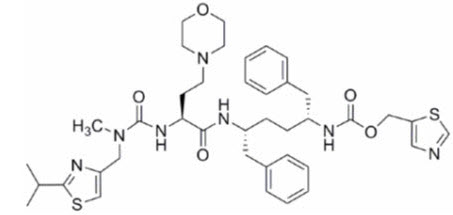
TYBOST (cobicistat) is a mechanism-based CYP3A inhibitor.
The chemical name for cobicistat is 1,3-thiazol-5-ylmethyl [(2R,5R)-5-{[(2S)-2-[(methyl{[2-(propan-2-yl)-1,3-thiazol-4-yl]methyl}carbamoyl)amino]-4-(morpholin-4-yl)butanoyl]amino}-1,6-diphenylhexan-2-yl]carbamate. It has a molecular formula of C40H53N7O5S2 and a molecular weight of 776.0. It has the following structural formula:
Cobicistat is adsorbed onto silicon dioxide. Cobicistat on silicon dioxide is a white to pale yellow solid with a solubility of 0.1 mg/mL in water at 20 °C.
TYBOST tablets are for oral administration. Each tablet contains 150 mg or 90 mg of cobicistat. The 150 mg and 90 mg tablets include the following inactive ingredients: silicon dioxide, microcrystalline cellulose, croscarmellose sodium, and magnesium stearate. The 150 mg tablets are film-coated with a coating material containing the following inactive ingredients: polyethylene glycol, polyvinyl alcohol, talc, titanium dioxide, sunset yellow FCF (FD&C Yellow #6) aluminum lake, and iron oxide yellow. The 90 mg tablets are film-coated with a coating material containing the following inactive ingredients: polyvinyl alcohol, titanium dioxide, polyethylene glycol, and talc.
8.4 Pediatric Use
The safety and effectiveness of TYBOST coadministered with atazanavir or darunavir and two nucleoside reverse transcriptase inhibitors for the treatment of HIV-1 infection have been established in pediatric patients weighing at least 14 kg [see Indications and Usage (1.1) and Dosage and Administration (2.2)].
Use of TYBOST and Darunavir
Adolescent Patients Weighing at Least 40 kg
Use of TYBOST and darunavir for this indication is supported by evidence from adequate and well-controlled studies in adults, and by pharmacokinetic, safety, and virologic data from an open-label trial (Trial 128; cohort 1 [Part A]) in virologically suppressed pediatric participants with HIV-1 aged 12 years and older (n=7). The safety, pharmacokinetics, and effectiveness in these participants were similar to that in adults [see Adverse Reactions (6.1), Clinical Pharmacology (12.3), and Clinical Studies (14.2)].
Pediatric Patients Weighing at Least 15 kg to Less than 40 kg:
Use of TYBOST and darunavir in combination with other ARVs is supported by evidence from adequate and well-controlled studies in adults, and by pharmacokinetic, safety, and efficacy data from an open-label trial (Trial 128; cohorts 2 and 3) in pediatric participants with HIV-1 at least 2 years of age and weighing at least 15 kg to less than 40 kg (n=20, all of whom were virologically suppressed at baseline).
The safety, pharmacokinetics, and effectiveness of TYBOST when administered with darunavir in pediatric patients weighing at least 15 kg to less than 40 kg were similar to that in adults [see Adverse Reactions (6.1), Clinical Pharmacology (12.3), and Clinical Studies (14.2)].
Pediatric Patients Weighing Less than 15 kg:
Safety, pharmacokinetics, and effectiveness of TYBOST in combination with darunavir in pediatric patients weighing less than 15 kg have not been established.
Use of TYBOST and Atazanavir
Adolescent Patients Weighing at Least 35 kg:
Use of TYBOST and atazanavir is supported by evidence from adequate and well-controlled studies in adults, and by safety, pharmacokinetic, and efficacy data from an open-label trial (Trial 128; cohort 1 [Part A]) in pediatric participants with HIV-1 at least 12 years of age (n=14). The safety, pharmacokinetics, and effectiveness in these participants were similar to that in adults [see Adverse Reactions (6.1), Clinical Pharmacology (12.3), and Clinical Studies (14.2)].
Pediatric Patients Weighing at Least 14 kg to Less than 35 kg:
- Use of TYBOST and Atazanavir with Tenofovir Alafenamide (TAF)
The use of TYBOST in combination with atazanavir and TAF in pediatric patients weighing less than 35 kg is not recommended.
-
The use of TYBOST with atazanavir and emtricitabine/tenofovir alafenamide (FTC/TAF) was studied in pediatric participants weighing at least 14 kg to less than 35 kg. In Trial 128, patients who received ATV +cobicistat in cohort 2 (25 kg to <40 kg, n=14) and cohort 3 (14 kg to <25 kg, n=15) showed TAF exposures (Cmax and AUC) that exceeded adult exposures by 4-5-fold in cohort 2 and 2-3-fold in cohort 3. Limited safety data were available to support the increased TAF exposures. Therefore, the use of TYBOST with atazanavir and TAF is not recommended in pediatric participants weighing at least 14 kg to less than 35 kg [see Drug Interactions (7.3)].
-
•Use of TYBOST and Atazanavir with other antiretrovirals other than TAF
-
Use of TYBOST and atazanavir is supported by evidence from adequate and well-controlled studies in adults, and by pharmacokinetic data from Trial 128 in pediatric participants weighing at least 14 kg to less than 35 kg. In this population, the pharmacokinetics of atazanavir and cobicistat were similar to adults [see Clinical Pharmacology (12.3)].
Pediatric Patients Weighing Less than 14 kg:
Safety, pharmacokinetics, and effectiveness of TYBOST in combination with atazanavir in pediatric participants weighing less than 14 kg have not been established.
8.5 Geriatric Use
Clinical trials of TYBOST did not include sufficient numbers of participants aged 65 years and older to determine whether they respond differently from younger participants.
4 Contraindications
The concomitant use of TYBOST with atazanavir or darunavir and the following drugs is contraindicated due to the potential for serious and/or life-threatening events or loss of therapeutic effect [see Drug Interactions (7.3) and Clinical Pharmacology (12.3)].
- Alpha 1-adrenoreceptor antagonist: alfuzosin
- Antianginal: ranolazine
- Antiarrhythmic: dronedarone
- Anticonvulsants: carbamazepine, phenobarbital, phenytoin
- Anti-gout: colchicine
- Antimycobacterial: rifampin
- Antineoplastics: irinotecanThese contraindications apply only to TYBOST coadministered with atazanavir
- Antipsychotics: lurasidone, pimozide
- Ergot Derivatives: dihydroergotamine, ergotamine, methylergonovine
- Herbal Products: St. John's wort (Hypericum perforatum)
- Hormonal Contraceptives: drospirenone/ ethinyl estradiol
- Lipid-modifying Agents: lomitapide, lovastatin, simvastatin
- Non-nucleoside Reverse Transcriptase Inhibitor: nevirapine
- Phosphodiesterase-5 (PDE-5) Inhibitor: sildenafil when administered as Revatio® for the treatment of pulmonary arterial hypertension
- Protease Inhibitor: indinavir
- Sedative/hypnotics triazolam, orally administered midazolam
6 Adverse Reactions
The following adverse reaction is described in greater detail in another section of the labeling:
- New Onset or Worsening Renal Impairment When Used with Tenofovir Disoproxil Fumarate [see Warnings and Precautions (5.2)].
7 Drug Interactions
TYBOST, in combination with atazanavir or darunavir, can alter the concentration of drugs metabolized by CYP3A or CYP2D6. Drugs that induce CYP3A can alter the concentrations of TYBOST, atazanavir and darunavir. Consult the full prescribing information prior to and during treatment for potential drug interactions. (4, 5.3, 7, 12.3)
2.4 Renal Impairment
TYBOST coadministered with TDF is not recommended in patients who have an estimated creatinine clearance below 70 mL/min because dose adjustment of TDF is required below 50 mL/min and such dose adjustments have not been established for coadministration with TYBOST [see Warnings and Precautions (5.2) and Adverse Reactions (6.1)].
8.6 Renal Impairment
No dosage adjustment of TYBOST is required in patients with renal impairment, including those with severe renal impairment. No clinically relevant differences in cobicistat pharmacokinetics were observed between participants with severe renal impairment and healthy participants. TYBOST is coadministered with atazanavir or darunavir; therefore, refer to the prescribing information for atazanavir or darunavir for information regarding dosing recommendations of these drugs in patients with renal impairment [see Clinical Pharmacology (12.3)].
TYBOST has been shown to decrease estimated creatinine clearance without affecting actual renal glomerular function. Dosing recommendations are not available for drugs that require dosing adjustment for renal impairment when used in combination with TYBOST [see Dosage and Administration (2), Warnings and Precautions (5.1), Adverse Reactions (6.1), and Clinical Pharmacology (12.2)].
1.2 Limitations of Use
- TYBOST is not interchangeable with ritonavir to increase systemic exposure of darunavir 600 mg twice daily, fosamprenavir, saquinavir, or tipranavir due to lack of exposure data. The use of TYBOST is not recommended with darunavir 600 mg twice daily, fosamprenavir, saquinavir, or tipranavir [see Warnings and Precautions (5.4)].
- Complex or unknown mechanisms of drug interactions preclude extrapolation of ritonavir drug interactions to certain TYBOST interactions. TYBOST and ritonavir when administered with either atazanavir or darunavir may result in different drug interactions when used with concomitant medications [see Warnings and Precautions (5.3), Drug Interactions (7), and Clinical Pharmacology (12.3)].
8.7 Hepatic Impairment
No dosing adjustment of TYBOST is necessary for patients with mild-to-moderate hepatic impairment. No data are available in patients with severe hepatic impairment. TYBOST is coadministered with atazanavir or darunavir and other antiretroviral drugs; therefore, refer to the prescribing information of these other drugs for information regarding dosing recommendations in patients with hepatic impairment [see Clinical Pharmacology (12.3)].
1 Indications and Usage
TYBOST is a CYP3A inhibitor indicated to increase systemic exposure of atazanavir or darunavir (once daily dosing regimen) in combination with other antiretroviral agents in the treatment of HIV-1 infection in adults and in pediatric patients weighing at least 14 kg. (1.1)
Limitations of Use:
- TYBOST is not interchangeable with ritonavir to increase systemic exposure of darunavir 600 mg twice daily, fosamprenavir, saquinavir, or tipranavir due to lack of exposure data. The use of TYBOST is not recommended with darunavir 600 mg twice daily, fosamprenavir, saquinavir, or tipranavir. (1.2, 5.4)
- Complex or unknown mechanisms of drug interactions preclude extrapolation of ritonavir drug interactions to certain TYBOST interactions. TYBOST and ritonavir when administered with either atazanavir or darunavir may result in different drug interactions when used with concomitant medications. (1.2, 5.3, 7, 12.3)
12.1 Mechanism of Action
Cobicistat is a mechanism-based inhibitor of cytochrome P450 3A (CYP3A). Inhibition of CYP3A-mediated metabolism by cobicistat increases the systemic exposure of CYP3A substrates atazanavir and darunavir.
5 Warnings and Precautions
- Assess creatinine clearance (CLcr) before initiating treatment. (5.1)
- When TYBOST is used in combination with a TDF-containing regimen, cases of acute renal failure and Fanconi syndrome have been reported. (5.2)
- Use with TDF: Assess urine glucose and urine protein at baseline and monitor CLcr, urine glucose, and urine protein. Monitor serum phosphorus in patients with or at risk for renal impairment. (5.2)
- TYBOST in combination with more than one antiretroviral that requires pharmacokinetic enhancement (i.e., two protease inhibitors or elvitegravir in combination with a protease inhibitor) is not recommended. (5.4)
- Use with HIV-1 protease inhibitors other than atazanavir or darunavir administered once daily is not recommended. (5.4)
- Coadministration with drugs or regimens containing ritonavir is not recommended. (5.4)
2 Dosage and Administration
- TYBOST must be coadministered with atazanavir or darunavir at the same time, with food, and in combination with other HIV-1 antiretroviral agents. (2.1, 2.2)
- Recommended dosage in adults: (2.1)
| Adult Patient Populations |
Coadministered Agent Dosage | TYBOST Dosage |
|---|---|---|
| Treatment-naïve or treatment-experienced | atazanavir 300 mg orally once daily | 150 mg orally once daily |
| Treatment-naïve or treatment-experienced with no darunavir resistance-associated substitutions | darunavir 800 mg orally once daily |
- Recommended dosage in pediatric patients: TYBOST 150 mg or TYBOST 90 mg orally once daily based on body weight. For dosage recommendations for TYBOST and the coadministered protease inhibitor atazanavir or darunavir in pediatric patients, refer to Table 2 and Table 3 of the full prescribing information respectively. (2.2)
- Prior to starting TYBOST, assess estimated creatinine clearance. (2.3)
- Coadministration with tenofovir disoproxil fumarate (TDF): assess estimated creatinine clearance, urine glucose, and urine protein at baseline. (2.3)
- TYBOST coadministered with TDF is not recommended in patients who have an estimated creatinine clearance below 70 mL/min because dose adjustment of TDF is required below 50 mL/min and such dose adjustments have not been established for coadministration with TYBOST. (2.4)
3 Dosage Forms and Strengths
TYBOST, 150 mg: Orange, round, biconvex, film-coated tablets debossed with "GSI" on one side and plain faced on the other side of the tablet.
TYBOST, 90 mg: White, round, biconvex, film-coated tablets debossed with "TYB" on one side and "90" on the other side of the tablet.
8 Use in Specific Populations
6.1 Clinical Trials Experience
Because clinical trials are conducted under widely varying conditions, adverse reaction rates observed in the clinical trials of a drug cannot be directly compared to rates in the clinical trials of another drug and may not reflect the rates observed in practice.
5.1 Effects On Serum Creatinine
TYBOST decreases estimated creatinine clearance due to inhibition of tubular secretion of creatinine without affecting actual renal glomerular function. This effect should be considered when interpreting changes in estimated creatinine clearance in patients initiating TYBOST, particularly in patients with medical conditions or receiving drugs needing monitoring with estimated creatinine clearance.
Prior to initiating therapy with TYBOST, assess estimated creatinine clearance [see Dosage and Administration (2.3)]. Dosage recommendations are not available for drugs that require dosage adjustments in TYBOST-treated patients with renal impairment [see Adverse Reactions (6.1), Drug Interactions (7.3), and Clinical Pharmacology (12.2)]. Consider alternative medications that do not require dosage adjustments in patients with renal impairment.
Although TYBOST may cause modest increases in serum creatinine and modest declines in estimated creatinine clearance without affecting renal glomerular function, patients who experience a confirmed increase in serum creatinine of greater than 0.4 mg/dL from baseline should be closely monitored for renal safety.
2.1 Recommended Dosage in Adults
Administer TYBOST in conjunction with atazanavir or darunavir and other antiretroviral agents in the treatment of adults with HIV-1 infection. The recommended dosages of TYBOST and atazanavir or darunavir given with food are presented in Table 1. TYBOST must be coadministered at the same time as atazanavir or darunavir [see Drug Interactions (7)]. Consult the prescribing information for atazanavir or darunavir.
| Patient Populations | Coadministered Agent Dosage | TYBOST Dosage |
|---|---|---|
| Treatment-naïve or treatment-experienced | atazanavir 300 mg orally once daily | 150 mg orally once daily |
| Treatment-naïve or treatment-experienced with no darunavir resistance-associated substitutions | darunavir 800 mg orally once daily |
17 Patient Counseling Information
Advise the patient to read the FDA-approved patient labeling (Patient Information).
16 How Supplied/storage and Handling
TYBOST tablets are available in bottles containing 30 tablets and a silica gel desiccant, with a child-resistant closure.
2.5 Not Recommended During Pregnancy
TYBOST coadministered with darunavir is not recommended for use during pregnancy because of substantially lower exposures of darunavir and cobicistat during the second and third trimesters [see Use in Specific Populations (8.1) and Clinical Pharmacology (12.3)].
TYBOST coadministered with atazanavir is not recommended for use during pregnancy because of substantially lower exposures of cobicistat during the second and third trimesters [see Use in Specific Populations (8.1) and Clinical Pharmacology (12.3)].
TYBOST coadministered with darunavir or atazanavir should not be initiated in pregnant individuals. An alternative regimen is recommended for individuals who become pregnant during therapy with TYBOST coadministered with darunavir or atazanavir.
2.3 Testing Prior to Initiation of Tybost
Prior to or when initiating TYBOST and during treatment with TYBOST, on a clinically appropriate schedule, assess estimated creatinine clearance because TYBOST decreases estimated creatinine clearance due to inhibition of tubular secretion of creatinine without affecting actual renal glomerular function [see Warnings and Precautions (5.1)]. When coadministering TYBOST with TDF, assess estimated creatinine clearance, urine glucose, and urine protein at baseline. In patients with chronic kidney disease, also assess serum phosphorus [see Warnings and Precautions (5.2)].
2.2 Recommended Dosage in Pediatric Patients
Administer TYBOST in conjunction with atazanavir or darunavir and other antiretroviral agents in the treatment of pediatric patients with HIV-1 infection. The recommended dosages of TYBOST and atazanavir or darunavir given with food are based on weight and presented in Table 2 and Table 3, respectively. TYBOST must be coadministered at the same time as atazanavir or darunavir [see Drug Interactions (7)]. Consult the prescribing information for atazanavir or darunavir.
| Body Weight | Atazanavir Dosage | TYBOST Dosage |
|---|---|---|
| Weighing at least 14 kg to less than 25 kg | 200 mg orally once daily | 90 mg orally once daily |
| Weighing at least 25 kg to less than 35 kg | 200 mg orally once daily | 150 mg orally once daily |
| Weighing at least 35 kg | 300 mg orally once daily |
| Body Weight | Darunavir Dosage | TYBOST Dosage |
|---|---|---|
| Weighing at least 15 kg to less than 25 kg | 600 mg orally once daily | 90 mg orally once daily |
| Weighing at least 25 kg to less than 30 kg | 600 mg orally once daily | 150 mg orally once daily |
| Weighing at least 30 kg to less than 40 kg | 675 mg orally once daily | |
| Weighing at least 40 kg | 800 mg orally once daily |
Principal Display Panel 90 Mg Tablet Bottle Label
NDC 61958-1402-1
30 tablets
Tybost
®
(cobicistat) tablets
90 mg
Note to pharmacist:
Do not cover ALERT box
with pharmacy label.
ALERT: Find out about medicines that
should NOT be taken with Tybost
Rx only
Principal Display Panel 150 Mg Tablet Bottle Label
NDC 61958-1401-1
30 tablets
Tybost®
(cobicistat) tablets
150 mg
Rx only
Note to pharmacist:
Do not cover ALERT box with pharmacy label.
ALERT: Find out about medicines that
should NOT be taken with Tybost
7.3 Established and Other Potentially Significant Interactions
Coadministration of TYBOST with fosamprenavir, saquinavir, or tipranavir is not recommended because pharmacokinetic data are not available to provide appropriate dosing recommendations. Use of TYBOST with lopinavir is not recommended because lopinavir is co-formulated with ritonavir.
Table 7 provides dosing recommendations as a result of drug interactions with TYBOST coadministered with atazanavir or darunavir. These recommendations are based on either drug interaction trials or predicted interactions due to the expected magnitude of the interaction and potential for serious adverse events or loss of therapeutic effect [see Contraindications (4), Warnings and Precautions (5.3, 5.4), and Clinical Pharmacology (12.3)].
In Table 7, if not specifically stated, the drug interaction information applies to both coadministered agents: TYBOST coadministered with atazanavir or darunavir [see Clinical Pharmacology (12.3)].
In addition to the drug interactions noted in Table 7, TYBOST is not recommended for use in combination with fixed-dose combination tablets that contain cobicistat, lopinavir/ritonavir or regimens containing ritonavir, or in combination with more than one antiretroviral agent that requires pharmacokinetic enhancement [see Warnings and Precautions (5.4)].
Evaluate whether dosing adjustments of concomitant medications or coadministered antiretroviral drugs are necessary in:
- Patients on a stable concomitant medication who initiate or switch to a TYBOST-containing regimen
- Patients on a TYBOST-containing regimen who initiate a new concomitant medication
- Patients initiating a TYBOST-containing regimen and a new concomitant medication simultaneously
Under these circumstances, also monitor for adverse events and/or monitor concentrations of concomitant medications if appropriate.
No dose adjustment is required when TDF or rilpivirine are coadministered with TYBOST and atazanavir or darunavir.
| Concomitant Drug Class: Drug Name | Potential Effect ↑ = Increase, ↓ = Decrease, ↔ = No change
|
Clinical Comment |
|---|---|---|
| Antiretroviral Agents: Nucleotide Reverse Transcriptase Inhibitor (NRTI) | ||
| tenofovir alafenamide | ↔tenofovir alafenamide ↑tenofovir alafenamide |
TYBOST coadministered with darunavir in pediatric patients weighing at least 15 kg:
No dose adjustment. TYBOST coadministered with atazanavir in pediatric patients weighing 14 to less than 35 kg: Coadministration is not recommended [see Use in Specific Populations (8.4)]. |
| Antiretroviral Agents: Non-Nucleoside Reverse Transcriptase Inhibitors (NNRTIs) | ||
| efavirenz | ↓ cobicistat ↓ darunavir ↓ atazanavir |
TYBOST coadministered with darunavir:
Coadministration of darunavir and TYBOST with efavirenz is not recommended because it may result in the loss of therapeutic effect and development of resistance to darunavir. TYBOST coadministered with atazanavir: In treatment-naïve adult patients: Atazanavir 400 mg with TYBOST 150 mg should be coadministered once daily as a single dose with food, and efavirenz 600 mg should be administered once daily on an empty stomach, preferably at bedtime. In treatment-experienced adult patients: Coadministration of atazanavir and TYBOST with efavirenz in treatment-experienced patients is not recommended because it may result in the loss of therapeutic effect and development of resistance to atazanavir. |
| etravirine | ↓ cobicistat darunavir: effect unknown ↓ atazanavir |
Coadministration with etravirine is not recommended because it may result in the loss of therapeutic effect and development of resistance to atazanavir or darunavir. |
| nevirapine | ↓ atazanavir ↑ nevirapine ↓ cobicistat darunavir: effect unknown |
Contraindicated with TYBOST coadministered with atazanavir only:
Coadministration of atazanavir with nevirapine is contraindicated due to potential for loss of atazanavir therapeutic effect and development of resistance, and potential for nevirapine-associated adverse reactions. TYBOST coadministered with darunavir: TYBOST coadministration with nevirapine and darunavir is not recommended because it may result in the loss of therapeutic effect and development of resistance to darunavir. |
| Antiretroviral Agents: CCR5 Antagonists | ||
| maraviroc | ↑ maraviroc | Maraviroc is a substrate of CYP3A. When coadministering with maraviroc, adult patients should receive maraviroc 150 mg twice daily. |
| Antiretroviral Agents: Protease Inhibitors | ||
| indinavir | Contraindicated with TYBOST coadministered with atazanavir only: Both atazanavir and indinavir are associated with indirect (unconjugated) hyperbilirubinemia. | |
| Other Agents: | ||
|
Alpha 1- adrenoreceptor antagonist: alfuzosin |
↑ alfuzosin | Coadministration with alfuzosin is contraindicated due to potential for serious and/or life-threatening reactions such as hypotension. |
|
Antianginal
ranolazine |
↑ ranolazine | Coadministration with ranolazine is contraindicated due to potential for serious and/or life-threatening reactions. |
|
Antacids:
e.g., aluminum and magnesium hydroxide (please also see H2-Receptor Antagonists and Proton Pump Inhibitors below) |
↓ atazanavir |
TYBOST coadministered with atazanavir:
With concomitant use, administer a minimum of 2 hours apart. |
|
Antiarrhythmics:
dronedarone |
↑ dronedarone | Coadministration with dronedarone is contraindicated due to potential for serious and/or life-threatening reactions such as cardiac arrhythmias. |
|
digoxin |
↑ digoxin |
When coadministering with digoxin, titrate the digoxin dose and monitor digoxin concentrations. |
|
Other antiarrhythmics: e.g., amiodarone disopyramide flecainide mexiletine propafenone quinidine |
↑ antiarrhythmics |
Clinical monitoring is recommended upon coadministration with antiarrhythmics. |
|
Antibacterials
(macrolide or ketolide antibiotics): clarithromycin erythromycin telithromycin |
↑ clarithromycin ↑ erythromycin ↑ telithromycin ↑ cobicistat ↑ atazanavir ↑ darunavir |
Consider alternative antibiotics with concomitant use of TYBOST coadministered with atazanavir or darunavir. |
|
Anticancer Agents:
irinotecan |
↑ irinotecan | Contraindicated with TYBOST coadministered with atazanavir only: Coadministration of atazanavir with irinotecan is contraindicated due to potential for increased irinotecan toxicity. |
| dasatinib nilotinib vinblastine vincristine |
↑ anticancer agents | A decrease in the dosage or an adjustment of the dosing interval of dasatinib or nilotinib may be necessary upon coadministration with TYBOST coadministered with atazanavir or darunavir. Consult the dasatinib and nilotinib prescribing information for dosing instructions. For vincristine and vinblastine, monitor for hematologic or gastrointestinal side effects. |
|
Anticoagulants:
Direct Oral Anticoagulants (DOACs) apixaban rivaroxaban betrixaban dabigatran edoxaban |
↑ apixaban |
TYBOST coadministered with atazanavir or darunavir:
Due to potentially increased bleeding risk, dosing recommendations for coadministration of apixaban with TYBOST depends on the apixaban dose. Refer to apixaban dosing instructions for coadministration with strong CYP3A and P-gp inhibitors in apixaban prescribing information. |
| ↑ rivaroxaban | Coadministration of rivaroxaban with TYBOST is not recommended because it may lead to an increased bleeding risk. | |
|
atazanavir: ↑ betrixaban ↑ dabigatran ↑ edoxaban |
TYBOST coadministered with atazanavir: Due to potentially increased bleeding risk, dosing recommendations for coadministration of betrixaban, dabigatran, or edoxaban with a P-gp inhibitor such as TYBOST coadministered with atazanavir depends on DOAC indication and renal function. Refer to DOAC dosing instructions for coadministration with P-gp inhibitors in DOAC prescribing information. |
|
|
darunavir: ↔ betrixaban ↔ dabigatran ↔ edoxaban |
TYBOST coadministered with darunavir: No dose adjustment. |
|
|
warfarin |
warfarin: effect unknown |
Monitor the international normalized ratio (INR) upon coadministration of TYBOST with warfarin. |
|
Anticonvulsants:
carbamazepine, phenobarbital, phenytoin |
↓ atazanavir ↓ darunavir ↓ cobicistat |
Coadministration with carbamazepine, phenobarbital, or phenytoin is contraindicated due to potential for loss of therapeutic effect and development of resistance. |
|
Anticonvulsants with CYP3A induction effects that are NOT contraindicated e.g., eslicarbazepine, oxcarbazepine |
↓ cobicistat ↓ atazanavir darunavir: effect unknown |
Consider alternative anticonvulsant or antiretroviral therapy to avoid potential changes in exposures. If coadministration is necessary, monitor for lack or loss of virologic response. |
|
Anticonvulsants that are metabolized by CYP3A e.g., clonazepam |
↑ clonazepam |
Clinical monitoring of anticonvulsants is recommended. |
|
Antidepressants:
Selective Serotonin Reuptake Inhibitors (SSRIs) e.g., paroxetine Tricyclic Antidepressants (TCAs) e.g., amitriptyline desipramine imipramine nortriptyline Other antidepressants: trazodone |
SSRIs: effects unknown ↑ TCAs ↑ trazodone |
When coadministering with SSRIs, TCAs, or trazodone, careful dose titration of the antidepressant to the desired effect, including using the lowest feasible initial or maintenance dose, and monitoring for antidepressant response are recommended. |
|
Antifungals:
itraconazole ketoconazole |
↑ itraconazole ↑ ketoconazole |
Specific dosing recommendations are not available for coadministration with itraconazole or ketoconazole. |
| voriconazole | Voriconazole: effects unknown ↑ cobicistat ↑ atazanavir ↑ darunavir |
Coadministration with voriconazole is not recommended unless the benefit/risk assessment justifies the use of voriconazole. |
|
Anti-gout:
colchicine |
↑ colchicine | Coadministration with colchicine is contraindicated in patients with renal and/or hepatic impairment due to potential for serious and/or life-threatening reactions. Treatment of gout flares in adult patients – coadministration of colchicine: 0.6 mg (1 tablet) x 1 dose, followed by 0.3 mg (half tablet) 1 hour later. Treatment course to be repeated no earlier than 3 days. Prophylaxis of gout flares in adult patients – coadministration of colchicine: If the original regimen was 0.6 mg twice a day, the regimen should be adjusted to 0.3 mg once a day. If the original regimen was 0.6 mg once a day, the regimen should be adjusted to 0.3 mg once every other day. Treatment of familial Mediterranean fever in adult patients – coadministration of colchicine: Maximum daily dose of 0.6 mg (may be given as 0.3 mg twice a day). |
|
Antimycobacterial:
rifampin |
↓ atazanavir ↓ darunavir ↓ cobicistat |
Coadministration with rifampin is contraindicated due to potential for loss of therapeutic effect and development of resistance. |
| rifabutin |
↑ rifabutin cobicistat: effects unknown darunavir: effects unknown atazanavir: effects unknown |
The recommended adult dosage regimen for rifabutin is 150 mg every other day. Monitor for rifabutin associated adverse reactions including neutropenia and uveitis. |
| Antiplatelets: | ||
| ticagrelor | ↑ ticagrelor | Coadministration with ticagrelor is not recommended. |
|
clopidogrel |
↓ clopidogrel active metabolite |
Coadministration with clopidogrel is not recommended due to potential reduction of the antiplatelet activity of clopidogrel. |
| prasugrel | ↔ prasugrel active metabolite |
No dose adjustment is needed when prasugrel is co-administered with TYBOST. |
| Antipsychotics: | ||
| lurasidone | ↑ lurasidone | Coadministration with lurasidone is contraindicated due to potential for serious and/or life-threatening reactions. |
| pimozide |
↑ pimozide |
Coadministration with pimozide is contraindicated due to potential for serious and/or life-threatening reactions such as cardiac arrhythmias. |
| quetiapine |
↑ quetiapine |
Initiation of TYBOST coadministered with atazanavir or darunavir in patients taking quetiapine: Consider alternative antiretroviral therapy to avoid increases in quetiapine exposure. If coadministration is necessary, reduce the quetiapine dose to 1/6 of the current dose and monitor for quetiapine-associated adverse reactions. Refer to the quetiapine prescribing information for recommendations on adverse reaction monitoring. Initiation of quetiapine in patients taking TYBOST coadministered with atazanavir or darunavir: Refer to the quetiapine prescribing information for initial dosing and titration of quetiapine. |
| Other antipsychotics: e.g., perphenazine risperidone thioridazine |
↑ antipsychotic | A decrease in the dose of antipsychotics that are metabolized by CYP3A or CYP2D6 may be needed upon coadministration. |
|
Beta-Blockers:
e.g., metoprolol carvedilol timolol |
↑ beta-blockers | Clinical monitoring is recommended for coadministration with beta-blockers that are metabolized by CYP2D6. |
|
Calcium Channel Blockers:
e.g., amlodipine diltiazem felodipine nifedipine verapamil |
↑ calcium channel blockers | Clinical monitoring is recommended for coadministration with calcium channel blockers metabolized by CYP3A. |
|
Corticosteroids:
e.g., betamethasone budesonide ciclesonide dexamethasone fluticasone methylprednisolone mometasone triamcinolone |
↓ cobicistat ↓ atazanavir ↓ darunavir ↑ corticosteroids |
Coadministration with oral dexamethasone or other systemic corticosteroids that induce CYP3A may result in loss of therapeutic effect and development of resistance to atazanavir or darunavir. Consider alternative corticosteroids. Coadministration with corticosteroids (all routes of administration) whose exposures are significantly increased by strong CYP3A inhibitors can increase the risk for Cushing’s syndrome and adrenal suppression. Alternative corticosteroids including beclomethasone, prednisone, and prednisolone (whose PK and/or PD are less affected by strong CYP3A inhibitors relative to other studied steroids) should be considered, particularly for long-term use. |
|
Endothelin Receptor Antagonists:
bosentan |
↑ bosentan ↓ cobicistat ↓ darunavir ↓ atazanavir |
Initiation of bosentan in adult patients taking TYBOST coadministered with atazanavir or darunavir:
In patients who have been receiving TYBOST coadministered with atazanavir or darunavir for at least 10 days, start bosentan at 62.5 mg once daily or every other day based upon individual tolerability. Initiation of TYBOST coadministered with atazanavir or darunavir in adult patients taking bosentan: Discontinue use of bosentan at least 36 hours prior to initiation of TYBOST coadministered with atazanavir or darunavir. After at least 10 days following the initiation of TYBOST combined with atazanavir or darunavir, resume bosentan at 62.5 mg once daily or every other day based upon individual tolerability. Switching from ritonavir to TYBOST coadministered with atazanavir or darunavir: Maintain bosentan dose. |
|
Ergot Derivatives:
dihydroergotamine, ergotamine, methylergonovine |
↑ ergot derivatives | Coadministration is contraindicated due to potential for serious and/or life-threatening reactions such as acute ergot toxicity characterized by peripheral vasospasm and ischemia of the extremities and other tissues. |
|
H2-Receptor Antagonists:
e.g., famotidine |
↓ atazanavir |
TYBOST coadministered with atazanavir in adult patients:
Administer atazanavir/TYBOST either at the same time or a minimum of 10 hours after administering H2-receptor antagonists. The dose of the H2-receptor antagonist should not exceed a dose comparable to famotidine 40 mg twice daily in treatment-naïve adult patients or 20 mg twice daily in treatment-experienced adult patients. TYBOST coadministered with atazanavir and TDF in adult patients: Treatment-experienced adult patients: The recommended once daily dosage regimen is TYBOST 150 mg coadministered with atazanavir 400 mg with concomitant use of H2-receptor antagonists and tenofovir DF. |
|
Herbal Products:
St. John’s wort (Hypericum perforatum) |
↓ atazanavir ↓ darunavir ↓ cobicistat |
Coadministration is contraindicated due to potential for loss of therapeutic effect and development of resistance. |
| Hormonal Contraceptives: | Additional or alternative non-hormonal forms of contraception should be considered when estrogen based contraceptives are coadministered with TYBOST and atazanavir or darunavir. | |
| drospirenone/ethinyl estradiol | atazanavir: ↑ drospirenone |
Contraindicated with TYBOST coadministered with atazanavir only: Coadministration of atazanavir with drospirenone is contraindicated due to potential for drospirenone-associated hyperkalemia. |
|
darunavir: ↑ drospirenone ↓ ethinyl estradiol |
TYBOST coadministered with darunavir: For coadministration with drospirenone, clinical monitoring is recommended due to the potential for hyperkalemia. |
|
|
Other progestin/estrogen contraceptives |
progestin: effects unknown estrogen: effects unknown |
No data are available to make recommendations on the coadministration of TYBOST and atazanavir or darunavir with other hormonal contraceptives. |
|
Immuno-suppressants:
cyclosporine everolimus sirolimus tacrolimus |
↑ immuno-suppressants | These immunosuppressant agents are metabolized by CYP3A. Therapeutic drug monitoring is recommended if coadministered. |
|
Inhaled Beta Agonist:
salmeterol |
↑ salmeterol | Coadministration with salmeterol is not recommended and may result in increased risk of cardiovascular adverse events associated with salmeterol, including QT prolongation, palpitations, and sinus tachycardia. |
|
Lipid-modifying Agents:
HMG-CoA reductase inhibitors: lovastatin simvastatin |
↑ lovastatin ↑ simvastatin |
Coadministration with lovastatin or simvastatin is contraindicated due to potential for serious reactions such as myopathy including rhabdomyolysis. |
| Other HMG-CoA reductase inhibitors: e.g., atorvastatin rosuvastatin |
↑ HMG-CoA reductase inhibitors | Coadministration of atazanavir and TYBOST with atorvastatin is not recommended. For HMG-CoA reductase inhibitors that are not contraindicated with TYBOST coadministered with atazanavir or darunavir, start with the lowest recommended dose and titrate while monitoring for safety (e.g., myopathy). Dosage recommendations with atorvastatin or rosuvastatin are as follows. TYBOST coadministered with atazanavir in adult patients:
|
| Other lipid-modifying agents: lomitapide |
↑ lomitapide | Coadministration with lomitapide is contraindicated due to potential for markedly increased transaminases. |
|
Narcotic Analgesics For treatment of opioid dependence: buprenorphine buprenorphine/ naloxone methadone |
buprenorphine or buprenorphine/ naloxone: effects unknown methadone: effects unknown |
Initiation of buprenorphine, buprenorphine/naloxone, or methadone in patients taking TYBOST coadministered with atazanavir or darunavir:
Carefully titrate the dose of buprenorphine, buprenorphine/naloxone, or methadone to the desired effect; use the lowest feasible initial or maintenance dose. Initiation of TYBOST coadministered with atazanavir or darunavir in patients taking buprenorphine, buprenorphine/naloxone, or methadone: A dose adjustment for buprenorphine, buprenorphine/naloxone, or methadone may be needed. Monitor clinical signs and symptoms. |
|
fentanyl |
↑ fentanyl |
Careful monitoring of therapeutic and adverse effects of fentanyl (including potentially fatal respiratory depression) is recommended with coadministration. |
| tramadol |
↑ tramadol |
A dose decrease may be needed for tramadol with concomitant use. |
|
Phosphodiesterase-5 (PDE-5) Inhibitors:
avanafil sildenafil tadalafil vardenafil |
↑ PDE-5 inhibitors | Coadministration with avanafil is not recommended because a safe and effective avanafil dosage regimen has not been established. Coadministration with TYBOST coadministered with atazanavir or darunavir may result in an increase in PDE-5 inhibitor associated adverse events, including hypotension, syncope, visual disturbances, and priapism. Use of PDE-5 inhibitors for pulmonary arterial hypertension (PAH):
Sildenafil at a single dose not exceeding 25 mg in 48 hours, tadalafil at a single dose not exceeding 10 mg in 72 hours, or vardenafil at a single dose not exceeding 2.5 mg in 72 hours can be used with increased monitoring for PDE-5 inhibitor associated adverse events. |
|
Proton-pump Inhibitors (PPIs)
e.g., omeprazole |
↓ atazanavir |
TYBOST coadministered with atazanavir in adult patients:
In treatment-naïve adult patients, administer TYBOST with atazanavir a minimum of 12 hours after administering PPIs. The dose of the PPI should not exceed a dose comparable to omeprazole 20 mg daily. In treatment-experienced adult patients, coadministration with PPIs, with or without tenofovir, is not recommended. |
| Sedative/Hypnotics: | ||
| midazolam (oral), triazolam |
↑ midazolam ↑ triazolam |
Coadministration with triazolam or oral administered midazolam is contraindicated due to potential for serious and/or life-threatening reactions such as prolonged or increased sedation or respiratory depression. Triazolam and orally administered midazolam are extensively metabolized by CYP3A. Coadministration of triazolam or orally administered midazolam with TYBOST may cause large increases in the concentrations of these benzodiazepines. |
| Other benzodiazepines: e.g., parenterally administered midazolam clorazepate diazepam estazolam flurazepam |
↑ sedatives/hypnotics | Coadministration with parenteral midazolam may increase plasma concentrations of midazolam. Coadministration should be done in a setting that ensures close clinical monitoring and appropriate medical management in case of respiratory depression and/or prolonged sedation. Dosing reduction for midazolam should be considered, especially if more than a single dose of midazolam is administered. |
|
buspirone zolpidem |
With other sedatives/hypnotics that are CYP3A metabolized, dose reduction may be necessary and clinical monitoring is recommended. |
5.4 Antiretrovirals That Are Not Recommended in Combination With Tybost
The following antiretrovirals are not recommended in combination with TYBOST because dosing recommendations for such combinations have not been established and coadministration may result in decreased plasma concentrations of the antiretroviral agents, leading to loss of therapeutic effect and development of resistance:
- More than one antiretroviral that requires pharmacokinetic enhancement (i.e., two protease inhibitors or a protease inhibitor in combination with elvitegravir)
- Darunavir in combination with efavirenz, nevirapine, or etravirine
- Atazanavir in combination with etravirine
- Atazanavir in combination with efavirenz in treatment-experienced patients
- Darunavir 600 mg twice daily
- Other HIV-1 protease inhibitors including fosamprenavir, saquinavir, or tipranavir
TYBOST in combination with fixed-dose combination tablets that contain cobicistat is not recommended.
TYBOST in combination with lopinavir/ritonavir or regimens containing ritonavir is not recommended due to similar effects of TYBOST and ritonavir on CYP3A.
14.2 Clinical Trial Results in Pediatric Participants With Hiv 1 – Trial 128
Trial 128 was a Phase 2/3 multicenter, open-label trial to evaluate the pharmacokinetics, safety, and efficacy of TYBOST coadministered with atazanavir or darunavir in pediatric participants with HIV-1 and baseline estimated creatinine clearance ≥90 mL/min/1.73 m2, including virologically-suppressed pediatric participants between the ages of 12 to less than 18 years (cohort 1 [Part A], N=22), pediatric participants between the ages of 6 to less than 12 years (cohort 2, N=23, 9 of whom switched to TYBOST co-administered with darunavir and were all virologically-suppressed at baseline), and pediatric participants at least 2 years of age (cohort 3, N=26, 11 of whom switched to TYBOST co-administered with darunavir and were all virologically-suppressed at baseline). Participants in cohort 1 (Part A) were on a stable antiretroviral regimen (for at least 3 months), consisting of atazanavir or darunavir, both administered with ritonavir combined with 2 NRTIs or consisting of a third agent administered with 2 NRTIs (cohorts 2 and 3 only). TYBOST 150 mg was given once daily with atazanavir or darunavir in cohort 1 (Part A) and cohort 2. TYBOST 90 mg was given once daily with atazanavir or darunavir in cohort 3. For all cohorts, participants were administered a background regimen containing 2 NRTIs.
Cohort 1 (Part A): 12 to <18 years; ≥35 kg
In cohort 1 (Part A), the mean age of participants was 14 years (range 12 to 17 years); median weight was 55 kg; 62% were male, 38% were Asian, 33% were White, 19% were Black, and 67% were not Hispanic or Latino. At baseline, 20/21 participants had plasma HIV-1 RNA <50 copies/mL and 1 participant had plasma HIV-1 RNA of 50 copies/mL.
In participants who switched to TYBOST coadministered with atazanavir, 93% (13/14) of participants were suppressed (HIV-1 RNA <50 copies/mL) at Week 48 and 1 evaluable participant experienced virologic failure at Week 24 without significant emergent resistance associated substitutions in reverse transcriptase or protease. From a median baseline CD4+ cell count and CD4+% of 770 cells/mm3 (range 486 to 1765 cells/mm3) and 33% (range 23% to 45%), respectively, the median change from baseline in CD4+ cell count and CD4+% at Week 48 was -60 cells/mm3 (range -500 to 705 cells/mm3) and -0.3% (range -6% to 8%), respectively.
In participants who switched to TYBOST coadministered with darunavir, 86% (6/7) of participants remained suppressed (HIV-1 RNA <50 copies/mL), and 1 subject had missing data at Week 48. From a median baseline CD4+ cell count and CD4+% of 1117 cells/mm3 (range 658 to 2416 cells/mm3) and 45% (range 28% to 56%), respectively, the median change from baseline in CD4+ cell count and CD4+% at Week 48 was -342 cells/mm3 (range -1389 to 219 cells/mm3) and -6% (range -12% to 5%), respectively. All 6 participants with available data had CD4+ cell counts above 800 cells/mm3 at Week 48.
Cohort 2: 6 to <12 years; ≥25 kg to <40 kg
Participants in cohort 2 who switched to TYBOST coadministered with darunavir (n=9) had a mean age of 10 years (range 9 to 11 years); median weight was 29 kg; 11% were male, and 89% were Black. At baseline, all participants had plasma HIV-1 RNA <50 copies/mL.
In these participants who switched to TYBOST coadministered with darunavir, 100% (9/9) of participants remained suppressed (HIV-1 RNA <50 copies/mL) at Week 48. From a mean (SD) baseline CD4+ count of 898 (209), the mean (SD) change from baseline in CD4+ cell count was 10 (199) cells/mm3 and the mean (SD) change in CD4% was 1.26% (6.2%) at Week 48.
Cohort 3: ≥2 years; ≥14 kg to <25 kg
Participants in cohort 3 who switched to TYBOST coadministered with darunavir (n=11) had a mean age of 5 years (range 3 to 7 years); median weight was 17 kg; 45% were male, and 100% were Black. At baseline, all participants had plasma HIV-1 RNA <50 copies/mL.
In these participants who switched to TYBOST coadministered with darunavir, 91% (10/11) of participants remained suppressed (HIV-1 RNA <50 copies/mL) at Week 48. From a mean (SD) CD4+ count of 1185 (317), the mean (SD) change from baseline in CD4+ cell count was -122 (329) cells/mm3 and the mean (SD) change in CD4% was 1.4% (2.5%) at Week 48.
5.2 New Onset Or Worsening Renal Impairment When Used With Tenofovir Disoproxil Fumarate
Renal impairment, including cases of acute renal failure and Fanconi syndrome, has been reported when TYBOST was used in an antiretroviral regimen that contained TDF.
- Coadministration of TYBOST and TDF is not recommended in patients who have an estimated creatinine clearance below 70 mL/min because dose adjustment of TDF is required below 50 mL/min and such dose adjustments have not been established for coadministration with TYBOST [see Dosage and Administration (2.3, 2.4)].
- Document urine glucose and urine protein at baseline [see Dosage and Administration (2.3)] and perform routine monitoring of estimated creatinine clearance, urine glucose, and urine protein during treatment when TYBOST is used with TDF. Measure serum phosphorus in patients with or at risk for renal impairment when used with TDF.
- Coadministration of TYBOST and TDF in combination with concomitant or recent use of a nephrotoxic agent is not recommended.
In a clinical trial of TYBOST over 144 weeks (N=692), 10 (2.9%) participants treated with TYBOST coadministered with atazanavir and TRUVADA® and 11 (3.2%) participants treated with ritonavir coadministered with atazanavir and TRUVADA discontinued study drug due to a renal adverse event. Seven of the 10 participants (2.0% overall) in the TYBOST group had laboratory findings consistent with proximal renal tubulopathy leading to study drug discontinuation compared to 7 of 11 participants (2.0% overall) in the ritonavir group. One participant in the TYBOST group had renal impairment at baseline (i.e., estimated creatinine clearance less than 70 mL/min). The laboratory findings in these 7 participants with evidence of proximal tubulopathy improved but did not completely resolve in all participants upon discontinuation of TYBOST coadministered with atazanavir and TRUVADA. Renal replacement therapy was not required in any participant.
14.1 Clinical Trial Results in Treatment Naïve Adult Participants With Hiv 1 – Trial 114
The activity of TYBOST as a CYP3A inhibitor to increase the systemic exposures of atazanavir or darunavir has been demonstrated in pharmacokinetic trials. In these trials, the exposure of atazanavir or darunavir coadministered with TYBOST 150 mg was consistent with those observed with ritonavir 100 mg [see Clinical Pharmacology (12.2)]. For clinical efficacy of darunavir/ritonavir 800/100 mg once daily, refer to the prescribing information for darunavir.
The safety and efficacy of TYBOST coadministered with atazanavir were evaluated in a randomized, double-blind, active-controlled trial (Trial 114) in treatment-naïve participants with HIV-1 and baseline estimated creatinine clearance above 70 mL/min (N=692). In Trial 114, participants were randomized in a 1:1 ratio to receive either atazanavir 300 mg + TYBOST 150 mg once daily or atazanavir 300 mg + ritonavir 100 mg once daily. All participants received concomitant treatment with 300 mg of TDF and 200 mg of emtricitabine once a day administered as single tablet TRUVADA. Randomization was stratified by screening HIV-1 RNA level (≤100,000 copies/mL or >100,000 copies/mL).
The mean age of participants was 37 years (range 19–70); 83% were male, 60% were White, 18% were Black, and 12% were Asian. The mean baseline plasma HIV-1 RNA was 4.8 log10 copies/mL (range 3.2–6.4). Forty percent of patients had baseline viral loads >100,000 copies/mL. The mean baseline CD4+ cell count was 352 cells/mm3 (range 1–1455) and 17% had CD4+ cell counts ≤200 cells/mm3.
Virologic outcomes in Trial 114 through Week 144 are presented in Table 13. In Trial 114, the mean increase from baseline in CD4+ cell count at Week 144 was 281 cells/mm3 in the TYBOST group and 297 cells/mm3 in the ritonavir group.
| TYBOST + Atazanavir + TRUVADA (N=344) |
Ritonavir + Atazanavir + TRUVADA (N=348) |
|
|---|---|---|
| HIV-1 RNA <50 copies/mL | 72% | 74% |
| Treatment Difference | −2.1% (95% CI = −8.7%, 4.5%) | |
|
HIV RNA ≥50 copies/mL Included participants who had ≥50 copies/mL in the Week 144 window; participants who discontinued early due to lack or loss of efficacy; participants who discontinued for reasons other than an adverse event (AE), death, or lack or loss of efficacy and at the time of discontinuation had a viral value of ≥50 copies/mL.
|
8% | 5% |
| No Virologic Data at Week 144 Window | 20% | 21% |
| Discontinued Study Drug Due to AE or Death Includes participants who discontinued due to AE or death at any time point from Day 1 through the time window if this resulted in no virologic data on treatment during the specified window.
|
11% | 11% |
| Discontinued Study Drug Due to Other Reasons and Last Available HIV-1 RNA <50 copies/mL Includes participants who discontinued for reasons other than an AE, death, or lack or loss of efficacy; e.g., withdrew consent, lost to follow-up, etc.
|
8% | 10% |
| Missing Data During Window but on Study Drug | <1% | <1% |
5.3 Risk of Serious Adverse Reactions Or Loss of Virologic Response Due to Drug Interactions
Initiation of TYBOST, a CYP3A inhibitor, in patients receiving medications metabolized by CYP3A, or initiation of medications metabolized by CYP3A in patients already receiving TYBOST, may increase plasma concentrations of medications metabolized by CYP3A and reduce plasma concentrations of active metabolite(s) formed by CYP3A. Initiation of medications that inhibit or induce CYP3A may respectively increase or decrease concentrations of TYBOST with atazanavir or darunavir.
These interactions may lead to:
- clinically significant adverse reactions, potentially leading to severe, life-threatening, or fatal events from higher exposures of concomitant medications.
- clinically significant adverse reactions from higher exposures of TYBOST and atazanavir or darunavir.
These interactions may lead to:
- loss of therapeutic effect of TYBOST with atazanavir or darunavir and possible development of resistance.
- loss of therapeutic effect of the concomitant medications from lower exposures of active metabolite(s).
See Table 7 for steps to prevent or manage these possible and known significant drug interactions, including dosing recommendations [see Drug Interactions (7)]. Consider the potential for drug interactions prior to and during TYBOST with atazanavir or darunavir therapy; review concomitant medications during TYBOST with atazanavir or darunavir therapy; and monitor for the adverse reactions associated with concomitant medications [see Contraindications (4) and Drug Interactions (7)].
TYBOST or ritonavir when administered with either atazanavir or darunavir may result in different drug interactions when used with concomitant medications. Complex or unknown mechanisms of drug interactions preclude extrapolation of ritonavir drug interactions to certain TYBOST interactions [see Drug Interactions (7) and Clinical Pharmacology (12.3)].
7.1 Potential Effect of Cobicistat (coadministered With Atazanavir Or Darunavir) On the Pharmacokinetics of Concomitant Drugs
Cobicistat is an inhibitor of CYP3A and CYP2D6. The transporters that cobicistat inhibits include p-glycoprotein (P-gp), BCRP, OATP1B1, and OATP1B3. The plasma concentration of drugs that are primarily metabolized by CYP3A or CYP2D6, or are substrates of P-gp, BCRP, OATP1B1, or OATP1B3 may be increased if those drugs are coadministered with TYBOST.
Based on in vitro data, cobicistat is not expected to induce CYP1A2 or CYP2B6 and based on in vivo data, cobicistat is not expected to induce MDR1 or, in general, CYP3A to a clinically significant extent. The induction effect of cobicistat on CYP2C9, CYP2C19, or UGT1A1 is unknown, but is expected to be low based on CYP3A in vitro induction data.
Coadministration of TYBOST with atazanavir or darunavir with drugs highly dependent on CYP3A for clearance and for which elevated plasma concentrations are associated with serious and/or life-threatening events is contraindicated. Coadministration with drugs that have active metabolite(s) formed by CYP3A may result in reduced plasma concentrations of these active metabolite(s). Coadministration with other CYP3A substrates may require a dose adjustment or additional monitoring as shown in Table 7.
7.2 Potential Effect of Concomitant Drugs On the Pharmacokinetics of Cobicistat (coadministered With Atazanavir Or Darunavir)
Cobicistat is metabolized by CYP3A, and to a minor extent, by CYP2D6. Atazanavir and darunavir are also metabolized by CYP3A.
Coadministration of TYBOST with atazanavir or darunavir in combination with drugs that induce CYP3A activity have the potential to decrease plasma concentrations of cobicistat, atazanavir, and darunavir, which may lead to loss of therapeutic effect and development of resistance (see Table 7).
Coadministration of TYBOST with atazanavir or darunavir in combination with other drugs that inhibit CYP3A may further increase the plasma concentrations of cobicistat, atazanavir, and darunavir (see Table 7).
Structured Label Content
Section 42229-5 (42229-5)
Adult Patients:
TYBOST is a CYP3A inhibitor indicated to increase systemic exposure of atazanavir or darunavir (once daily dosing regimen) in combination with other antiretroviral agents in the treatment of HIV-1 infection in adults [see Dosage and Administration (2.1)].
Section 42230-3 (42230-3)
| This Patient Information has been approved by the U.S. Food and Drug Administration. | Revised: 06/2025 |
|
Patient Information
TYBOST® (TYE-bost) (cobicistat) tablets |
|
|
Important: Ask your healthcare provider or pharmacist about medicines that should not be taken with TYBOST. For more information, see the section “What should I tell my healthcare provider before taking TYBOST?”
Also read the Patient Information for atazanavir or darunavir prescribed by your healthcare provider when taking TYBOST. |
|
|
What is TYBOST?
TYBOST is a prescription medicine used in adults and children who weigh at least 31 pounds (14 kg):
|
|
| Do not take TYBOST combined with atazanavir or darunavir if you also take a medicine that contains: | |
|
|
Do not take TYBOST with atazanavir if you also take a medicine that contains:
|
|
|
Before you take TYBOST, tell your healthcare provider about all of your medical conditions, including if you:
|
|
How should I take TYBOST?
|
|
|
What are the possible side effects of TYBOST?
TYBOST may cause serious side effects, including:
These are not all the possible side effects of TYBOST. Call your doctor for medical advice about side effects. You may report side effects to FDA at 1-800-FDA-1088. |
|
How should I store TYBOST?
|
|
|
General information about the safe and effective use of TYBOST.
Medicines are sometimes prescribed for purposes other than those listed in a Patient Information leaflet. Do not use TYBOST for a condition for which it was not prescribed. Do not give TYBOST to other people, even if they have the same symptoms you have. It may harm them. You can ask your pharmacist or healthcare provider for information about TYBOST that is written for health professionals. |
|
|
What are the ingredients in TYBOST?
Active ingredient: cobicistat Inactive ingredients: silicon dioxide, microcrystalline cellulose, croscarmellose sodium, and magnesium stearate. The 150 mg tablets are film-coated with a coating material containing polyethylene glycol, polyvinyl alcohol, talc, titanium dioxide, sunset yellow FCF (FD&C Yellow #6) aluminum lake, and iron oxide yellow. The 90 mg tablets are film-coated with a coating material containing polyvinyl alcohol, titanium dioxide, polyethylene glycol, and talc. Manufactured and distributed by: Gilead Sciences, Inc. Foster City, CA 94404 © 2021 Gilead Sciences, Inc. All rights reserved. TYBOST, GSI, and TRUVADA are trademarks of Gilead Sciences, Inc., or its related companies. All other trademarks are the property of their respective owners. 203094-GS-011 For more information, call 1-800-445-3235 or go to www.GILEAD.com |
Section 43683-2 (43683-2)
Section 44425-7 (44425-7)
- TYBOST tablets, 150 mg, are orange, round, biconvex, film-coated, and debossed with “GSI” on one side and plain faced on the other side. (NDC 61958-1401-1).
- TYBOST tablets, 90 mg, are white, round, biconvex, film-coated, and debossed with “TYB” on one side and “90” on the other side. (NDC 61958-1402-1).
Store at 25 °C (77 °F); excursions permitted to 15°C –30 °C (59–86 °F) (see USP Controlled Room Temperature).
- Keep container tightly closed.
- Dispense only in original container.
- Do not use if seal over bottle opening is broken or missing.
10 Overdosage (10 OVERDOSAGE)
If overdose occurs, the patient must be monitored for evidence of toxicity. Treatment of overdose with TYBOST consists of general supportive measures including monitoring of vital signs, as well as observation of the clinical status of the patient.
As cobicistat is highly bound to plasma proteins, it is unlikely that it will be significantly removed by hemodialysis or peritoneal dialysis.
11 Description (11 DESCRIPTION)
TYBOST (cobicistat) is a mechanism-based CYP3A inhibitor.
The chemical name for cobicistat is 1,3-thiazol-5-ylmethyl [(2R,5R)-5-{[(2S)-2-[(methyl{[2-(propan-2-yl)-1,3-thiazol-4-yl]methyl}carbamoyl)amino]-4-(morpholin-4-yl)butanoyl]amino}-1,6-diphenylhexan-2-yl]carbamate. It has a molecular formula of C40H53N7O5S2 and a molecular weight of 776.0. It has the following structural formula:
Cobicistat is adsorbed onto silicon dioxide. Cobicistat on silicon dioxide is a white to pale yellow solid with a solubility of 0.1 mg/mL in water at 20 °C.
TYBOST tablets are for oral administration. Each tablet contains 150 mg or 90 mg of cobicistat. The 150 mg and 90 mg tablets include the following inactive ingredients: silicon dioxide, microcrystalline cellulose, croscarmellose sodium, and magnesium stearate. The 150 mg tablets are film-coated with a coating material containing the following inactive ingredients: polyethylene glycol, polyvinyl alcohol, talc, titanium dioxide, sunset yellow FCF (FD&C Yellow #6) aluminum lake, and iron oxide yellow. The 90 mg tablets are film-coated with a coating material containing the following inactive ingredients: polyvinyl alcohol, titanium dioxide, polyethylene glycol, and talc.
8.4 Pediatric Use
The safety and effectiveness of TYBOST coadministered with atazanavir or darunavir and two nucleoside reverse transcriptase inhibitors for the treatment of HIV-1 infection have been established in pediatric patients weighing at least 14 kg [see Indications and Usage (1.1) and Dosage and Administration (2.2)].
Use of TYBOST and Darunavir
Adolescent Patients Weighing at Least 40 kg
Use of TYBOST and darunavir for this indication is supported by evidence from adequate and well-controlled studies in adults, and by pharmacokinetic, safety, and virologic data from an open-label trial (Trial 128; cohort 1 [Part A]) in virologically suppressed pediatric participants with HIV-1 aged 12 years and older (n=7). The safety, pharmacokinetics, and effectiveness in these participants were similar to that in adults [see Adverse Reactions (6.1), Clinical Pharmacology (12.3), and Clinical Studies (14.2)].
Pediatric Patients Weighing at Least 15 kg to Less than 40 kg:
Use of TYBOST and darunavir in combination with other ARVs is supported by evidence from adequate and well-controlled studies in adults, and by pharmacokinetic, safety, and efficacy data from an open-label trial (Trial 128; cohorts 2 and 3) in pediatric participants with HIV-1 at least 2 years of age and weighing at least 15 kg to less than 40 kg (n=20, all of whom were virologically suppressed at baseline).
The safety, pharmacokinetics, and effectiveness of TYBOST when administered with darunavir in pediatric patients weighing at least 15 kg to less than 40 kg were similar to that in adults [see Adverse Reactions (6.1), Clinical Pharmacology (12.3), and Clinical Studies (14.2)].
Pediatric Patients Weighing Less than 15 kg:
Safety, pharmacokinetics, and effectiveness of TYBOST in combination with darunavir in pediatric patients weighing less than 15 kg have not been established.
Use of TYBOST and Atazanavir
Adolescent Patients Weighing at Least 35 kg:
Use of TYBOST and atazanavir is supported by evidence from adequate and well-controlled studies in adults, and by safety, pharmacokinetic, and efficacy data from an open-label trial (Trial 128; cohort 1 [Part A]) in pediatric participants with HIV-1 at least 12 years of age (n=14). The safety, pharmacokinetics, and effectiveness in these participants were similar to that in adults [see Adverse Reactions (6.1), Clinical Pharmacology (12.3), and Clinical Studies (14.2)].
Pediatric Patients Weighing at Least 14 kg to Less than 35 kg:
- Use of TYBOST and Atazanavir with Tenofovir Alafenamide (TAF)
The use of TYBOST in combination with atazanavir and TAF in pediatric patients weighing less than 35 kg is not recommended.
-
The use of TYBOST with atazanavir and emtricitabine/tenofovir alafenamide (FTC/TAF) was studied in pediatric participants weighing at least 14 kg to less than 35 kg. In Trial 128, patients who received ATV +cobicistat in cohort 2 (25 kg to <40 kg, n=14) and cohort 3 (14 kg to <25 kg, n=15) showed TAF exposures (Cmax and AUC) that exceeded adult exposures by 4-5-fold in cohort 2 and 2-3-fold in cohort 3. Limited safety data were available to support the increased TAF exposures. Therefore, the use of TYBOST with atazanavir and TAF is not recommended in pediatric participants weighing at least 14 kg to less than 35 kg [see Drug Interactions (7.3)].
-
•Use of TYBOST and Atazanavir with other antiretrovirals other than TAF
-
Use of TYBOST and atazanavir is supported by evidence from adequate and well-controlled studies in adults, and by pharmacokinetic data from Trial 128 in pediatric participants weighing at least 14 kg to less than 35 kg. In this population, the pharmacokinetics of atazanavir and cobicistat were similar to adults [see Clinical Pharmacology (12.3)].
Pediatric Patients Weighing Less than 14 kg:
Safety, pharmacokinetics, and effectiveness of TYBOST in combination with atazanavir in pediatric participants weighing less than 14 kg have not been established.
8.5 Geriatric Use
Clinical trials of TYBOST did not include sufficient numbers of participants aged 65 years and older to determine whether they respond differently from younger participants.
4 Contraindications (4 CONTRAINDICATIONS)
The concomitant use of TYBOST with atazanavir or darunavir and the following drugs is contraindicated due to the potential for serious and/or life-threatening events or loss of therapeutic effect [see Drug Interactions (7.3) and Clinical Pharmacology (12.3)].
- Alpha 1-adrenoreceptor antagonist: alfuzosin
- Antianginal: ranolazine
- Antiarrhythmic: dronedarone
- Anticonvulsants: carbamazepine, phenobarbital, phenytoin
- Anti-gout: colchicine
- Antimycobacterial: rifampin
- Antineoplastics: irinotecanThese contraindications apply only to TYBOST coadministered with atazanavir
- Antipsychotics: lurasidone, pimozide
- Ergot Derivatives: dihydroergotamine, ergotamine, methylergonovine
- Herbal Products: St. John's wort (Hypericum perforatum)
- Hormonal Contraceptives: drospirenone/ ethinyl estradiol
- Lipid-modifying Agents: lomitapide, lovastatin, simvastatin
- Non-nucleoside Reverse Transcriptase Inhibitor: nevirapine
- Phosphodiesterase-5 (PDE-5) Inhibitor: sildenafil when administered as Revatio® for the treatment of pulmonary arterial hypertension
- Protease Inhibitor: indinavir
- Sedative/hypnotics triazolam, orally administered midazolam
6 Adverse Reactions (6 ADVERSE REACTIONS)
The following adverse reaction is described in greater detail in another section of the labeling:
- New Onset or Worsening Renal Impairment When Used with Tenofovir Disoproxil Fumarate [see Warnings and Precautions (5.2)].
7 Drug Interactions (7 DRUG INTERACTIONS)
TYBOST, in combination with atazanavir or darunavir, can alter the concentration of drugs metabolized by CYP3A or CYP2D6. Drugs that induce CYP3A can alter the concentrations of TYBOST, atazanavir and darunavir. Consult the full prescribing information prior to and during treatment for potential drug interactions. (4, 5.3, 7, 12.3)
2.4 Renal Impairment
TYBOST coadministered with TDF is not recommended in patients who have an estimated creatinine clearance below 70 mL/min because dose adjustment of TDF is required below 50 mL/min and such dose adjustments have not been established for coadministration with TYBOST [see Warnings and Precautions (5.2) and Adverse Reactions (6.1)].
8.6 Renal Impairment
No dosage adjustment of TYBOST is required in patients with renal impairment, including those with severe renal impairment. No clinically relevant differences in cobicistat pharmacokinetics were observed between participants with severe renal impairment and healthy participants. TYBOST is coadministered with atazanavir or darunavir; therefore, refer to the prescribing information for atazanavir or darunavir for information regarding dosing recommendations of these drugs in patients with renal impairment [see Clinical Pharmacology (12.3)].
TYBOST has been shown to decrease estimated creatinine clearance without affecting actual renal glomerular function. Dosing recommendations are not available for drugs that require dosing adjustment for renal impairment when used in combination with TYBOST [see Dosage and Administration (2), Warnings and Precautions (5.1), Adverse Reactions (6.1), and Clinical Pharmacology (12.2)].
1.2 Limitations of Use
- TYBOST is not interchangeable with ritonavir to increase systemic exposure of darunavir 600 mg twice daily, fosamprenavir, saquinavir, or tipranavir due to lack of exposure data. The use of TYBOST is not recommended with darunavir 600 mg twice daily, fosamprenavir, saquinavir, or tipranavir [see Warnings and Precautions (5.4)].
- Complex or unknown mechanisms of drug interactions preclude extrapolation of ritonavir drug interactions to certain TYBOST interactions. TYBOST and ritonavir when administered with either atazanavir or darunavir may result in different drug interactions when used with concomitant medications [see Warnings and Precautions (5.3), Drug Interactions (7), and Clinical Pharmacology (12.3)].
8.7 Hepatic Impairment
No dosing adjustment of TYBOST is necessary for patients with mild-to-moderate hepatic impairment. No data are available in patients with severe hepatic impairment. TYBOST is coadministered with atazanavir or darunavir and other antiretroviral drugs; therefore, refer to the prescribing information of these other drugs for information regarding dosing recommendations in patients with hepatic impairment [see Clinical Pharmacology (12.3)].
1 Indications and Usage (1 INDICATIONS AND USAGE)
TYBOST is a CYP3A inhibitor indicated to increase systemic exposure of atazanavir or darunavir (once daily dosing regimen) in combination with other antiretroviral agents in the treatment of HIV-1 infection in adults and in pediatric patients weighing at least 14 kg. (1.1)
Limitations of Use:
- TYBOST is not interchangeable with ritonavir to increase systemic exposure of darunavir 600 mg twice daily, fosamprenavir, saquinavir, or tipranavir due to lack of exposure data. The use of TYBOST is not recommended with darunavir 600 mg twice daily, fosamprenavir, saquinavir, or tipranavir. (1.2, 5.4)
- Complex or unknown mechanisms of drug interactions preclude extrapolation of ritonavir drug interactions to certain TYBOST interactions. TYBOST and ritonavir when administered with either atazanavir or darunavir may result in different drug interactions when used with concomitant medications. (1.2, 5.3, 7, 12.3)
12.1 Mechanism of Action
Cobicistat is a mechanism-based inhibitor of cytochrome P450 3A (CYP3A). Inhibition of CYP3A-mediated metabolism by cobicistat increases the systemic exposure of CYP3A substrates atazanavir and darunavir.
5 Warnings and Precautions (5 WARNINGS AND PRECAUTIONS)
- Assess creatinine clearance (CLcr) before initiating treatment. (5.1)
- When TYBOST is used in combination with a TDF-containing regimen, cases of acute renal failure and Fanconi syndrome have been reported. (5.2)
- Use with TDF: Assess urine glucose and urine protein at baseline and monitor CLcr, urine glucose, and urine protein. Monitor serum phosphorus in patients with or at risk for renal impairment. (5.2)
- TYBOST in combination with more than one antiretroviral that requires pharmacokinetic enhancement (i.e., two protease inhibitors or elvitegravir in combination with a protease inhibitor) is not recommended. (5.4)
- Use with HIV-1 protease inhibitors other than atazanavir or darunavir administered once daily is not recommended. (5.4)
- Coadministration with drugs or regimens containing ritonavir is not recommended. (5.4)
2 Dosage and Administration (2 DOSAGE AND ADMINISTRATION)
- TYBOST must be coadministered with atazanavir or darunavir at the same time, with food, and in combination with other HIV-1 antiretroviral agents. (2.1, 2.2)
- Recommended dosage in adults: (2.1)
| Adult Patient Populations |
Coadministered Agent Dosage | TYBOST Dosage |
|---|---|---|
| Treatment-naïve or treatment-experienced | atazanavir 300 mg orally once daily | 150 mg orally once daily |
| Treatment-naïve or treatment-experienced with no darunavir resistance-associated substitutions | darunavir 800 mg orally once daily |
- Recommended dosage in pediatric patients: TYBOST 150 mg or TYBOST 90 mg orally once daily based on body weight. For dosage recommendations for TYBOST and the coadministered protease inhibitor atazanavir or darunavir in pediatric patients, refer to Table 2 and Table 3 of the full prescribing information respectively. (2.2)
- Prior to starting TYBOST, assess estimated creatinine clearance. (2.3)
- Coadministration with tenofovir disoproxil fumarate (TDF): assess estimated creatinine clearance, urine glucose, and urine protein at baseline. (2.3)
- TYBOST coadministered with TDF is not recommended in patients who have an estimated creatinine clearance below 70 mL/min because dose adjustment of TDF is required below 50 mL/min and such dose adjustments have not been established for coadministration with TYBOST. (2.4)
3 Dosage Forms and Strengths (3 DOSAGE FORMS AND STRENGTHS)
TYBOST, 150 mg: Orange, round, biconvex, film-coated tablets debossed with "GSI" on one side and plain faced on the other side of the tablet.
TYBOST, 90 mg: White, round, biconvex, film-coated tablets debossed with "TYB" on one side and "90" on the other side of the tablet.
8 Use in Specific Populations (8 USE IN SPECIFIC POPULATIONS)
6.1 Clinical Trials Experience
Because clinical trials are conducted under widely varying conditions, adverse reaction rates observed in the clinical trials of a drug cannot be directly compared to rates in the clinical trials of another drug and may not reflect the rates observed in practice.
5.1 Effects On Serum Creatinine (5.1 Effects on Serum Creatinine)
TYBOST decreases estimated creatinine clearance due to inhibition of tubular secretion of creatinine without affecting actual renal glomerular function. This effect should be considered when interpreting changes in estimated creatinine clearance in patients initiating TYBOST, particularly in patients with medical conditions or receiving drugs needing monitoring with estimated creatinine clearance.
Prior to initiating therapy with TYBOST, assess estimated creatinine clearance [see Dosage and Administration (2.3)]. Dosage recommendations are not available for drugs that require dosage adjustments in TYBOST-treated patients with renal impairment [see Adverse Reactions (6.1), Drug Interactions (7.3), and Clinical Pharmacology (12.2)]. Consider alternative medications that do not require dosage adjustments in patients with renal impairment.
Although TYBOST may cause modest increases in serum creatinine and modest declines in estimated creatinine clearance without affecting renal glomerular function, patients who experience a confirmed increase in serum creatinine of greater than 0.4 mg/dL from baseline should be closely monitored for renal safety.
2.1 Recommended Dosage in Adults
Administer TYBOST in conjunction with atazanavir or darunavir and other antiretroviral agents in the treatment of adults with HIV-1 infection. The recommended dosages of TYBOST and atazanavir or darunavir given with food are presented in Table 1. TYBOST must be coadministered at the same time as atazanavir or darunavir [see Drug Interactions (7)]. Consult the prescribing information for atazanavir or darunavir.
| Patient Populations | Coadministered Agent Dosage | TYBOST Dosage |
|---|---|---|
| Treatment-naïve or treatment-experienced | atazanavir 300 mg orally once daily | 150 mg orally once daily |
| Treatment-naïve or treatment-experienced with no darunavir resistance-associated substitutions | darunavir 800 mg orally once daily |
17 Patient Counseling Information (17 PATIENT COUNSELING INFORMATION)
Advise the patient to read the FDA-approved patient labeling (Patient Information).
16 How Supplied/storage and Handling (16 HOW SUPPLIED/STORAGE AND HANDLING)
TYBOST tablets are available in bottles containing 30 tablets and a silica gel desiccant, with a child-resistant closure.
2.5 Not Recommended During Pregnancy
TYBOST coadministered with darunavir is not recommended for use during pregnancy because of substantially lower exposures of darunavir and cobicistat during the second and third trimesters [see Use in Specific Populations (8.1) and Clinical Pharmacology (12.3)].
TYBOST coadministered with atazanavir is not recommended for use during pregnancy because of substantially lower exposures of cobicistat during the second and third trimesters [see Use in Specific Populations (8.1) and Clinical Pharmacology (12.3)].
TYBOST coadministered with darunavir or atazanavir should not be initiated in pregnant individuals. An alternative regimen is recommended for individuals who become pregnant during therapy with TYBOST coadministered with darunavir or atazanavir.
2.3 Testing Prior to Initiation of Tybost (2.3 Testing Prior to Initiation of TYBOST)
Prior to or when initiating TYBOST and during treatment with TYBOST, on a clinically appropriate schedule, assess estimated creatinine clearance because TYBOST decreases estimated creatinine clearance due to inhibition of tubular secretion of creatinine without affecting actual renal glomerular function [see Warnings and Precautions (5.1)]. When coadministering TYBOST with TDF, assess estimated creatinine clearance, urine glucose, and urine protein at baseline. In patients with chronic kidney disease, also assess serum phosphorus [see Warnings and Precautions (5.2)].
2.2 Recommended Dosage in Pediatric Patients
Administer TYBOST in conjunction with atazanavir or darunavir and other antiretroviral agents in the treatment of pediatric patients with HIV-1 infection. The recommended dosages of TYBOST and atazanavir or darunavir given with food are based on weight and presented in Table 2 and Table 3, respectively. TYBOST must be coadministered at the same time as atazanavir or darunavir [see Drug Interactions (7)]. Consult the prescribing information for atazanavir or darunavir.
| Body Weight | Atazanavir Dosage | TYBOST Dosage |
|---|---|---|
| Weighing at least 14 kg to less than 25 kg | 200 mg orally once daily | 90 mg orally once daily |
| Weighing at least 25 kg to less than 35 kg | 200 mg orally once daily | 150 mg orally once daily |
| Weighing at least 35 kg | 300 mg orally once daily |
| Body Weight | Darunavir Dosage | TYBOST Dosage |
|---|---|---|
| Weighing at least 15 kg to less than 25 kg | 600 mg orally once daily | 90 mg orally once daily |
| Weighing at least 25 kg to less than 30 kg | 600 mg orally once daily | 150 mg orally once daily |
| Weighing at least 30 kg to less than 40 kg | 675 mg orally once daily | |
| Weighing at least 40 kg | 800 mg orally once daily |
Principal Display Panel 90 Mg Tablet Bottle Label (PRINCIPAL DISPLAY PANEL - 90 mg Tablet Bottle Label)
NDC 61958-1402-1
30 tablets
Tybost
®
(cobicistat) tablets
90 mg
Note to pharmacist:
Do not cover ALERT box
with pharmacy label.
ALERT: Find out about medicines that
should NOT be taken with Tybost
Rx only
Principal Display Panel 150 Mg Tablet Bottle Label (PRINCIPAL DISPLAY PANEL - 150 mg Tablet Bottle Label)
NDC 61958-1401-1
30 tablets
Tybost®
(cobicistat) tablets
150 mg
Rx only
Note to pharmacist:
Do not cover ALERT box with pharmacy label.
ALERT: Find out about medicines that
should NOT be taken with Tybost
7.3 Established and Other Potentially Significant Interactions
Coadministration of TYBOST with fosamprenavir, saquinavir, or tipranavir is not recommended because pharmacokinetic data are not available to provide appropriate dosing recommendations. Use of TYBOST with lopinavir is not recommended because lopinavir is co-formulated with ritonavir.
Table 7 provides dosing recommendations as a result of drug interactions with TYBOST coadministered with atazanavir or darunavir. These recommendations are based on either drug interaction trials or predicted interactions due to the expected magnitude of the interaction and potential for serious adverse events or loss of therapeutic effect [see Contraindications (4), Warnings and Precautions (5.3, 5.4), and Clinical Pharmacology (12.3)].
In Table 7, if not specifically stated, the drug interaction information applies to both coadministered agents: TYBOST coadministered with atazanavir or darunavir [see Clinical Pharmacology (12.3)].
In addition to the drug interactions noted in Table 7, TYBOST is not recommended for use in combination with fixed-dose combination tablets that contain cobicistat, lopinavir/ritonavir or regimens containing ritonavir, or in combination with more than one antiretroviral agent that requires pharmacokinetic enhancement [see Warnings and Precautions (5.4)].
Evaluate whether dosing adjustments of concomitant medications or coadministered antiretroviral drugs are necessary in:
- Patients on a stable concomitant medication who initiate or switch to a TYBOST-containing regimen
- Patients on a TYBOST-containing regimen who initiate a new concomitant medication
- Patients initiating a TYBOST-containing regimen and a new concomitant medication simultaneously
Under these circumstances, also monitor for adverse events and/or monitor concentrations of concomitant medications if appropriate.
No dose adjustment is required when TDF or rilpivirine are coadministered with TYBOST and atazanavir or darunavir.
| Concomitant Drug Class: Drug Name | Potential Effect ↑ = Increase, ↓ = Decrease, ↔ = No change
|
Clinical Comment |
|---|---|---|
| Antiretroviral Agents: Nucleotide Reverse Transcriptase Inhibitor (NRTI) | ||
| tenofovir alafenamide | ↔tenofovir alafenamide ↑tenofovir alafenamide |
TYBOST coadministered with darunavir in pediatric patients weighing at least 15 kg:
No dose adjustment. TYBOST coadministered with atazanavir in pediatric patients weighing 14 to less than 35 kg: Coadministration is not recommended [see Use in Specific Populations (8.4)]. |
| Antiretroviral Agents: Non-Nucleoside Reverse Transcriptase Inhibitors (NNRTIs) | ||
| efavirenz | ↓ cobicistat ↓ darunavir ↓ atazanavir |
TYBOST coadministered with darunavir:
Coadministration of darunavir and TYBOST with efavirenz is not recommended because it may result in the loss of therapeutic effect and development of resistance to darunavir. TYBOST coadministered with atazanavir: In treatment-naïve adult patients: Atazanavir 400 mg with TYBOST 150 mg should be coadministered once daily as a single dose with food, and efavirenz 600 mg should be administered once daily on an empty stomach, preferably at bedtime. In treatment-experienced adult patients: Coadministration of atazanavir and TYBOST with efavirenz in treatment-experienced patients is not recommended because it may result in the loss of therapeutic effect and development of resistance to atazanavir. |
| etravirine | ↓ cobicistat darunavir: effect unknown ↓ atazanavir |
Coadministration with etravirine is not recommended because it may result in the loss of therapeutic effect and development of resistance to atazanavir or darunavir. |
| nevirapine | ↓ atazanavir ↑ nevirapine ↓ cobicistat darunavir: effect unknown |
Contraindicated with TYBOST coadministered with atazanavir only:
Coadministration of atazanavir with nevirapine is contraindicated due to potential for loss of atazanavir therapeutic effect and development of resistance, and potential for nevirapine-associated adverse reactions. TYBOST coadministered with darunavir: TYBOST coadministration with nevirapine and darunavir is not recommended because it may result in the loss of therapeutic effect and development of resistance to darunavir. |
| Antiretroviral Agents: CCR5 Antagonists | ||
| maraviroc | ↑ maraviroc | Maraviroc is a substrate of CYP3A. When coadministering with maraviroc, adult patients should receive maraviroc 150 mg twice daily. |
| Antiretroviral Agents: Protease Inhibitors | ||
| indinavir | Contraindicated with TYBOST coadministered with atazanavir only: Both atazanavir and indinavir are associated with indirect (unconjugated) hyperbilirubinemia. | |
| Other Agents: | ||
|
Alpha 1- adrenoreceptor antagonist: alfuzosin |
↑ alfuzosin | Coadministration with alfuzosin is contraindicated due to potential for serious and/or life-threatening reactions such as hypotension. |
|
Antianginal
ranolazine |
↑ ranolazine | Coadministration with ranolazine is contraindicated due to potential for serious and/or life-threatening reactions. |
|
Antacids:
e.g., aluminum and magnesium hydroxide (please also see H2-Receptor Antagonists and Proton Pump Inhibitors below) |
↓ atazanavir |
TYBOST coadministered with atazanavir:
With concomitant use, administer a minimum of 2 hours apart. |
|
Antiarrhythmics:
dronedarone |
↑ dronedarone | Coadministration with dronedarone is contraindicated due to potential for serious and/or life-threatening reactions such as cardiac arrhythmias. |
|
digoxin |
↑ digoxin |
When coadministering with digoxin, titrate the digoxin dose and monitor digoxin concentrations. |
|
Other antiarrhythmics: e.g., amiodarone disopyramide flecainide mexiletine propafenone quinidine |
↑ antiarrhythmics |
Clinical monitoring is recommended upon coadministration with antiarrhythmics. |
|
Antibacterials
(macrolide or ketolide antibiotics): clarithromycin erythromycin telithromycin |
↑ clarithromycin ↑ erythromycin ↑ telithromycin ↑ cobicistat ↑ atazanavir ↑ darunavir |
Consider alternative antibiotics with concomitant use of TYBOST coadministered with atazanavir or darunavir. |
|
Anticancer Agents:
irinotecan |
↑ irinotecan | Contraindicated with TYBOST coadministered with atazanavir only: Coadministration of atazanavir with irinotecan is contraindicated due to potential for increased irinotecan toxicity. |
| dasatinib nilotinib vinblastine vincristine |
↑ anticancer agents | A decrease in the dosage or an adjustment of the dosing interval of dasatinib or nilotinib may be necessary upon coadministration with TYBOST coadministered with atazanavir or darunavir. Consult the dasatinib and nilotinib prescribing information for dosing instructions. For vincristine and vinblastine, monitor for hematologic or gastrointestinal side effects. |
|
Anticoagulants:
Direct Oral Anticoagulants (DOACs) apixaban rivaroxaban betrixaban dabigatran edoxaban |
↑ apixaban |
TYBOST coadministered with atazanavir or darunavir:
Due to potentially increased bleeding risk, dosing recommendations for coadministration of apixaban with TYBOST depends on the apixaban dose. Refer to apixaban dosing instructions for coadministration with strong CYP3A and P-gp inhibitors in apixaban prescribing information. |
| ↑ rivaroxaban | Coadministration of rivaroxaban with TYBOST is not recommended because it may lead to an increased bleeding risk. | |
|
atazanavir: ↑ betrixaban ↑ dabigatran ↑ edoxaban |
TYBOST coadministered with atazanavir: Due to potentially increased bleeding risk, dosing recommendations for coadministration of betrixaban, dabigatran, or edoxaban with a P-gp inhibitor such as TYBOST coadministered with atazanavir depends on DOAC indication and renal function. Refer to DOAC dosing instructions for coadministration with P-gp inhibitors in DOAC prescribing information. |
|
|
darunavir: ↔ betrixaban ↔ dabigatran ↔ edoxaban |
TYBOST coadministered with darunavir: No dose adjustment. |
|
|
warfarin |
warfarin: effect unknown |
Monitor the international normalized ratio (INR) upon coadministration of TYBOST with warfarin. |
|
Anticonvulsants:
carbamazepine, phenobarbital, phenytoin |
↓ atazanavir ↓ darunavir ↓ cobicistat |
Coadministration with carbamazepine, phenobarbital, or phenytoin is contraindicated due to potential for loss of therapeutic effect and development of resistance. |
|
Anticonvulsants with CYP3A induction effects that are NOT contraindicated e.g., eslicarbazepine, oxcarbazepine |
↓ cobicistat ↓ atazanavir darunavir: effect unknown |
Consider alternative anticonvulsant or antiretroviral therapy to avoid potential changes in exposures. If coadministration is necessary, monitor for lack or loss of virologic response. |
|
Anticonvulsants that are metabolized by CYP3A e.g., clonazepam |
↑ clonazepam |
Clinical monitoring of anticonvulsants is recommended. |
|
Antidepressants:
Selective Serotonin Reuptake Inhibitors (SSRIs) e.g., paroxetine Tricyclic Antidepressants (TCAs) e.g., amitriptyline desipramine imipramine nortriptyline Other antidepressants: trazodone |
SSRIs: effects unknown ↑ TCAs ↑ trazodone |
When coadministering with SSRIs, TCAs, or trazodone, careful dose titration of the antidepressant to the desired effect, including using the lowest feasible initial or maintenance dose, and monitoring for antidepressant response are recommended. |
|
Antifungals:
itraconazole ketoconazole |
↑ itraconazole ↑ ketoconazole |
Specific dosing recommendations are not available for coadministration with itraconazole or ketoconazole. |
| voriconazole | Voriconazole: effects unknown ↑ cobicistat ↑ atazanavir ↑ darunavir |
Coadministration with voriconazole is not recommended unless the benefit/risk assessment justifies the use of voriconazole. |
|
Anti-gout:
colchicine |
↑ colchicine | Coadministration with colchicine is contraindicated in patients with renal and/or hepatic impairment due to potential for serious and/or life-threatening reactions. Treatment of gout flares in adult patients – coadministration of colchicine: 0.6 mg (1 tablet) x 1 dose, followed by 0.3 mg (half tablet) 1 hour later. Treatment course to be repeated no earlier than 3 days. Prophylaxis of gout flares in adult patients – coadministration of colchicine: If the original regimen was 0.6 mg twice a day, the regimen should be adjusted to 0.3 mg once a day. If the original regimen was 0.6 mg once a day, the regimen should be adjusted to 0.3 mg once every other day. Treatment of familial Mediterranean fever in adult patients – coadministration of colchicine: Maximum daily dose of 0.6 mg (may be given as 0.3 mg twice a day). |
|
Antimycobacterial:
rifampin |
↓ atazanavir ↓ darunavir ↓ cobicistat |
Coadministration with rifampin is contraindicated due to potential for loss of therapeutic effect and development of resistance. |
| rifabutin |
↑ rifabutin cobicistat: effects unknown darunavir: effects unknown atazanavir: effects unknown |
The recommended adult dosage regimen for rifabutin is 150 mg every other day. Monitor for rifabutin associated adverse reactions including neutropenia and uveitis. |
| Antiplatelets: | ||
| ticagrelor | ↑ ticagrelor | Coadministration with ticagrelor is not recommended. |
|
clopidogrel |
↓ clopidogrel active metabolite |
Coadministration with clopidogrel is not recommended due to potential reduction of the antiplatelet activity of clopidogrel. |
| prasugrel | ↔ prasugrel active metabolite |
No dose adjustment is needed when prasugrel is co-administered with TYBOST. |
| Antipsychotics: | ||
| lurasidone | ↑ lurasidone | Coadministration with lurasidone is contraindicated due to potential for serious and/or life-threatening reactions. |
| pimozide |
↑ pimozide |
Coadministration with pimozide is contraindicated due to potential for serious and/or life-threatening reactions such as cardiac arrhythmias. |
| quetiapine |
↑ quetiapine |
Initiation of TYBOST coadministered with atazanavir or darunavir in patients taking quetiapine: Consider alternative antiretroviral therapy to avoid increases in quetiapine exposure. If coadministration is necessary, reduce the quetiapine dose to 1/6 of the current dose and monitor for quetiapine-associated adverse reactions. Refer to the quetiapine prescribing information for recommendations on adverse reaction monitoring. Initiation of quetiapine in patients taking TYBOST coadministered with atazanavir or darunavir: Refer to the quetiapine prescribing information for initial dosing and titration of quetiapine. |
| Other antipsychotics: e.g., perphenazine risperidone thioridazine |
↑ antipsychotic | A decrease in the dose of antipsychotics that are metabolized by CYP3A or CYP2D6 may be needed upon coadministration. |
|
Beta-Blockers:
e.g., metoprolol carvedilol timolol |
↑ beta-blockers | Clinical monitoring is recommended for coadministration with beta-blockers that are metabolized by CYP2D6. |
|
Calcium Channel Blockers:
e.g., amlodipine diltiazem felodipine nifedipine verapamil |
↑ calcium channel blockers | Clinical monitoring is recommended for coadministration with calcium channel blockers metabolized by CYP3A. |
|
Corticosteroids:
e.g., betamethasone budesonide ciclesonide dexamethasone fluticasone methylprednisolone mometasone triamcinolone |
↓ cobicistat ↓ atazanavir ↓ darunavir ↑ corticosteroids |
Coadministration with oral dexamethasone or other systemic corticosteroids that induce CYP3A may result in loss of therapeutic effect and development of resistance to atazanavir or darunavir. Consider alternative corticosteroids. Coadministration with corticosteroids (all routes of administration) whose exposures are significantly increased by strong CYP3A inhibitors can increase the risk for Cushing’s syndrome and adrenal suppression. Alternative corticosteroids including beclomethasone, prednisone, and prednisolone (whose PK and/or PD are less affected by strong CYP3A inhibitors relative to other studied steroids) should be considered, particularly for long-term use. |
|
Endothelin Receptor Antagonists:
bosentan |
↑ bosentan ↓ cobicistat ↓ darunavir ↓ atazanavir |
Initiation of bosentan in adult patients taking TYBOST coadministered with atazanavir or darunavir:
In patients who have been receiving TYBOST coadministered with atazanavir or darunavir for at least 10 days, start bosentan at 62.5 mg once daily or every other day based upon individual tolerability. Initiation of TYBOST coadministered with atazanavir or darunavir in adult patients taking bosentan: Discontinue use of bosentan at least 36 hours prior to initiation of TYBOST coadministered with atazanavir or darunavir. After at least 10 days following the initiation of TYBOST combined with atazanavir or darunavir, resume bosentan at 62.5 mg once daily or every other day based upon individual tolerability. Switching from ritonavir to TYBOST coadministered with atazanavir or darunavir: Maintain bosentan dose. |
|
Ergot Derivatives:
dihydroergotamine, ergotamine, methylergonovine |
↑ ergot derivatives | Coadministration is contraindicated due to potential for serious and/or life-threatening reactions such as acute ergot toxicity characterized by peripheral vasospasm and ischemia of the extremities and other tissues. |
|
H2-Receptor Antagonists:
e.g., famotidine |
↓ atazanavir |
TYBOST coadministered with atazanavir in adult patients:
Administer atazanavir/TYBOST either at the same time or a minimum of 10 hours after administering H2-receptor antagonists. The dose of the H2-receptor antagonist should not exceed a dose comparable to famotidine 40 mg twice daily in treatment-naïve adult patients or 20 mg twice daily in treatment-experienced adult patients. TYBOST coadministered with atazanavir and TDF in adult patients: Treatment-experienced adult patients: The recommended once daily dosage regimen is TYBOST 150 mg coadministered with atazanavir 400 mg with concomitant use of H2-receptor antagonists and tenofovir DF. |
|
Herbal Products:
St. John’s wort (Hypericum perforatum) |
↓ atazanavir ↓ darunavir ↓ cobicistat |
Coadministration is contraindicated due to potential for loss of therapeutic effect and development of resistance. |
| Hormonal Contraceptives: | Additional or alternative non-hormonal forms of contraception should be considered when estrogen based contraceptives are coadministered with TYBOST and atazanavir or darunavir. | |
| drospirenone/ethinyl estradiol | atazanavir: ↑ drospirenone |
Contraindicated with TYBOST coadministered with atazanavir only: Coadministration of atazanavir with drospirenone is contraindicated due to potential for drospirenone-associated hyperkalemia. |
|
darunavir: ↑ drospirenone ↓ ethinyl estradiol |
TYBOST coadministered with darunavir: For coadministration with drospirenone, clinical monitoring is recommended due to the potential for hyperkalemia. |
|
|
Other progestin/estrogen contraceptives |
progestin: effects unknown estrogen: effects unknown |
No data are available to make recommendations on the coadministration of TYBOST and atazanavir or darunavir with other hormonal contraceptives. |
|
Immuno-suppressants:
cyclosporine everolimus sirolimus tacrolimus |
↑ immuno-suppressants | These immunosuppressant agents are metabolized by CYP3A. Therapeutic drug monitoring is recommended if coadministered. |
|
Inhaled Beta Agonist:
salmeterol |
↑ salmeterol | Coadministration with salmeterol is not recommended and may result in increased risk of cardiovascular adverse events associated with salmeterol, including QT prolongation, palpitations, and sinus tachycardia. |
|
Lipid-modifying Agents:
HMG-CoA reductase inhibitors: lovastatin simvastatin |
↑ lovastatin ↑ simvastatin |
Coadministration with lovastatin or simvastatin is contraindicated due to potential for serious reactions such as myopathy including rhabdomyolysis. |
| Other HMG-CoA reductase inhibitors: e.g., atorvastatin rosuvastatin |
↑ HMG-CoA reductase inhibitors | Coadministration of atazanavir and TYBOST with atorvastatin is not recommended. For HMG-CoA reductase inhibitors that are not contraindicated with TYBOST coadministered with atazanavir or darunavir, start with the lowest recommended dose and titrate while monitoring for safety (e.g., myopathy). Dosage recommendations with atorvastatin or rosuvastatin are as follows. TYBOST coadministered with atazanavir in adult patients:
|
| Other lipid-modifying agents: lomitapide |
↑ lomitapide | Coadministration with lomitapide is contraindicated due to potential for markedly increased transaminases. |
|
Narcotic Analgesics For treatment of opioid dependence: buprenorphine buprenorphine/ naloxone methadone |
buprenorphine or buprenorphine/ naloxone: effects unknown methadone: effects unknown |
Initiation of buprenorphine, buprenorphine/naloxone, or methadone in patients taking TYBOST coadministered with atazanavir or darunavir:
Carefully titrate the dose of buprenorphine, buprenorphine/naloxone, or methadone to the desired effect; use the lowest feasible initial or maintenance dose. Initiation of TYBOST coadministered with atazanavir or darunavir in patients taking buprenorphine, buprenorphine/naloxone, or methadone: A dose adjustment for buprenorphine, buprenorphine/naloxone, or methadone may be needed. Monitor clinical signs and symptoms. |
|
fentanyl |
↑ fentanyl |
Careful monitoring of therapeutic and adverse effects of fentanyl (including potentially fatal respiratory depression) is recommended with coadministration. |
| tramadol |
↑ tramadol |
A dose decrease may be needed for tramadol with concomitant use. |
|
Phosphodiesterase-5 (PDE-5) Inhibitors:
avanafil sildenafil tadalafil vardenafil |
↑ PDE-5 inhibitors | Coadministration with avanafil is not recommended because a safe and effective avanafil dosage regimen has not been established. Coadministration with TYBOST coadministered with atazanavir or darunavir may result in an increase in PDE-5 inhibitor associated adverse events, including hypotension, syncope, visual disturbances, and priapism. Use of PDE-5 inhibitors for pulmonary arterial hypertension (PAH):
Sildenafil at a single dose not exceeding 25 mg in 48 hours, tadalafil at a single dose not exceeding 10 mg in 72 hours, or vardenafil at a single dose not exceeding 2.5 mg in 72 hours can be used with increased monitoring for PDE-5 inhibitor associated adverse events. |
|
Proton-pump Inhibitors (PPIs)
e.g., omeprazole |
↓ atazanavir |
TYBOST coadministered with atazanavir in adult patients:
In treatment-naïve adult patients, administer TYBOST with atazanavir a minimum of 12 hours after administering PPIs. The dose of the PPI should not exceed a dose comparable to omeprazole 20 mg daily. In treatment-experienced adult patients, coadministration with PPIs, with or without tenofovir, is not recommended. |
| Sedative/Hypnotics: | ||
| midazolam (oral), triazolam |
↑ midazolam ↑ triazolam |
Coadministration with triazolam or oral administered midazolam is contraindicated due to potential for serious and/or life-threatening reactions such as prolonged or increased sedation or respiratory depression. Triazolam and orally administered midazolam are extensively metabolized by CYP3A. Coadministration of triazolam or orally administered midazolam with TYBOST may cause large increases in the concentrations of these benzodiazepines. |
| Other benzodiazepines: e.g., parenterally administered midazolam clorazepate diazepam estazolam flurazepam |
↑ sedatives/hypnotics | Coadministration with parenteral midazolam may increase plasma concentrations of midazolam. Coadministration should be done in a setting that ensures close clinical monitoring and appropriate medical management in case of respiratory depression and/or prolonged sedation. Dosing reduction for midazolam should be considered, especially if more than a single dose of midazolam is administered. |
|
buspirone zolpidem |
With other sedatives/hypnotics that are CYP3A metabolized, dose reduction may be necessary and clinical monitoring is recommended. |
5.4 Antiretrovirals That Are Not Recommended in Combination With Tybost (5.4 Antiretrovirals that are Not Recommended in Combination with TYBOST)
The following antiretrovirals are not recommended in combination with TYBOST because dosing recommendations for such combinations have not been established and coadministration may result in decreased plasma concentrations of the antiretroviral agents, leading to loss of therapeutic effect and development of resistance:
- More than one antiretroviral that requires pharmacokinetic enhancement (i.e., two protease inhibitors or a protease inhibitor in combination with elvitegravir)
- Darunavir in combination with efavirenz, nevirapine, or etravirine
- Atazanavir in combination with etravirine
- Atazanavir in combination with efavirenz in treatment-experienced patients
- Darunavir 600 mg twice daily
- Other HIV-1 protease inhibitors including fosamprenavir, saquinavir, or tipranavir
TYBOST in combination with fixed-dose combination tablets that contain cobicistat is not recommended.
TYBOST in combination with lopinavir/ritonavir or regimens containing ritonavir is not recommended due to similar effects of TYBOST and ritonavir on CYP3A.
14.2 Clinical Trial Results in Pediatric Participants With Hiv 1 – Trial 128 (14.2 Clinical Trial Results in Pediatric Participants with HIV-1 – Trial 128)
Trial 128 was a Phase 2/3 multicenter, open-label trial to evaluate the pharmacokinetics, safety, and efficacy of TYBOST coadministered with atazanavir or darunavir in pediatric participants with HIV-1 and baseline estimated creatinine clearance ≥90 mL/min/1.73 m2, including virologically-suppressed pediatric participants between the ages of 12 to less than 18 years (cohort 1 [Part A], N=22), pediatric participants between the ages of 6 to less than 12 years (cohort 2, N=23, 9 of whom switched to TYBOST co-administered with darunavir and were all virologically-suppressed at baseline), and pediatric participants at least 2 years of age (cohort 3, N=26, 11 of whom switched to TYBOST co-administered with darunavir and were all virologically-suppressed at baseline). Participants in cohort 1 (Part A) were on a stable antiretroviral regimen (for at least 3 months), consisting of atazanavir or darunavir, both administered with ritonavir combined with 2 NRTIs or consisting of a third agent administered with 2 NRTIs (cohorts 2 and 3 only). TYBOST 150 mg was given once daily with atazanavir or darunavir in cohort 1 (Part A) and cohort 2. TYBOST 90 mg was given once daily with atazanavir or darunavir in cohort 3. For all cohorts, participants were administered a background regimen containing 2 NRTIs.
Cohort 1 (Part A): 12 to <18 years; ≥35 kg
In cohort 1 (Part A), the mean age of participants was 14 years (range 12 to 17 years); median weight was 55 kg; 62% were male, 38% were Asian, 33% were White, 19% were Black, and 67% were not Hispanic or Latino. At baseline, 20/21 participants had plasma HIV-1 RNA <50 copies/mL and 1 participant had plasma HIV-1 RNA of 50 copies/mL.
In participants who switched to TYBOST coadministered with atazanavir, 93% (13/14) of participants were suppressed (HIV-1 RNA <50 copies/mL) at Week 48 and 1 evaluable participant experienced virologic failure at Week 24 without significant emergent resistance associated substitutions in reverse transcriptase or protease. From a median baseline CD4+ cell count and CD4+% of 770 cells/mm3 (range 486 to 1765 cells/mm3) and 33% (range 23% to 45%), respectively, the median change from baseline in CD4+ cell count and CD4+% at Week 48 was -60 cells/mm3 (range -500 to 705 cells/mm3) and -0.3% (range -6% to 8%), respectively.
In participants who switched to TYBOST coadministered with darunavir, 86% (6/7) of participants remained suppressed (HIV-1 RNA <50 copies/mL), and 1 subject had missing data at Week 48. From a median baseline CD4+ cell count and CD4+% of 1117 cells/mm3 (range 658 to 2416 cells/mm3) and 45% (range 28% to 56%), respectively, the median change from baseline in CD4+ cell count and CD4+% at Week 48 was -342 cells/mm3 (range -1389 to 219 cells/mm3) and -6% (range -12% to 5%), respectively. All 6 participants with available data had CD4+ cell counts above 800 cells/mm3 at Week 48.
Cohort 2: 6 to <12 years; ≥25 kg to <40 kg
Participants in cohort 2 who switched to TYBOST coadministered with darunavir (n=9) had a mean age of 10 years (range 9 to 11 years); median weight was 29 kg; 11% were male, and 89% were Black. At baseline, all participants had plasma HIV-1 RNA <50 copies/mL.
In these participants who switched to TYBOST coadministered with darunavir, 100% (9/9) of participants remained suppressed (HIV-1 RNA <50 copies/mL) at Week 48. From a mean (SD) baseline CD4+ count of 898 (209), the mean (SD) change from baseline in CD4+ cell count was 10 (199) cells/mm3 and the mean (SD) change in CD4% was 1.26% (6.2%) at Week 48.
Cohort 3: ≥2 years; ≥14 kg to <25 kg
Participants in cohort 3 who switched to TYBOST coadministered with darunavir (n=11) had a mean age of 5 years (range 3 to 7 years); median weight was 17 kg; 45% were male, and 100% were Black. At baseline, all participants had plasma HIV-1 RNA <50 copies/mL.
In these participants who switched to TYBOST coadministered with darunavir, 91% (10/11) of participants remained suppressed (HIV-1 RNA <50 copies/mL) at Week 48. From a mean (SD) CD4+ count of 1185 (317), the mean (SD) change from baseline in CD4+ cell count was -122 (329) cells/mm3 and the mean (SD) change in CD4% was 1.4% (2.5%) at Week 48.
5.2 New Onset Or Worsening Renal Impairment When Used With Tenofovir Disoproxil Fumarate (5.2 New Onset or Worsening Renal Impairment When Used with Tenofovir Disoproxil Fumarate)
Renal impairment, including cases of acute renal failure and Fanconi syndrome, has been reported when TYBOST was used in an antiretroviral regimen that contained TDF.
- Coadministration of TYBOST and TDF is not recommended in patients who have an estimated creatinine clearance below 70 mL/min because dose adjustment of TDF is required below 50 mL/min and such dose adjustments have not been established for coadministration with TYBOST [see Dosage and Administration (2.3, 2.4)].
- Document urine glucose and urine protein at baseline [see Dosage and Administration (2.3)] and perform routine monitoring of estimated creatinine clearance, urine glucose, and urine protein during treatment when TYBOST is used with TDF. Measure serum phosphorus in patients with or at risk for renal impairment when used with TDF.
- Coadministration of TYBOST and TDF in combination with concomitant or recent use of a nephrotoxic agent is not recommended.
In a clinical trial of TYBOST over 144 weeks (N=692), 10 (2.9%) participants treated with TYBOST coadministered with atazanavir and TRUVADA® and 11 (3.2%) participants treated with ritonavir coadministered with atazanavir and TRUVADA discontinued study drug due to a renal adverse event. Seven of the 10 participants (2.0% overall) in the TYBOST group had laboratory findings consistent with proximal renal tubulopathy leading to study drug discontinuation compared to 7 of 11 participants (2.0% overall) in the ritonavir group. One participant in the TYBOST group had renal impairment at baseline (i.e., estimated creatinine clearance less than 70 mL/min). The laboratory findings in these 7 participants with evidence of proximal tubulopathy improved but did not completely resolve in all participants upon discontinuation of TYBOST coadministered with atazanavir and TRUVADA. Renal replacement therapy was not required in any participant.
14.1 Clinical Trial Results in Treatment Naïve Adult Participants With Hiv 1 – Trial 114 (14.1 Clinical Trial Results in Treatment-Naïve Adult Participants with HIV-1 – Trial 114)
The activity of TYBOST as a CYP3A inhibitor to increase the systemic exposures of atazanavir or darunavir has been demonstrated in pharmacokinetic trials. In these trials, the exposure of atazanavir or darunavir coadministered with TYBOST 150 mg was consistent with those observed with ritonavir 100 mg [see Clinical Pharmacology (12.2)]. For clinical efficacy of darunavir/ritonavir 800/100 mg once daily, refer to the prescribing information for darunavir.
The safety and efficacy of TYBOST coadministered with atazanavir were evaluated in a randomized, double-blind, active-controlled trial (Trial 114) in treatment-naïve participants with HIV-1 and baseline estimated creatinine clearance above 70 mL/min (N=692). In Trial 114, participants were randomized in a 1:1 ratio to receive either atazanavir 300 mg + TYBOST 150 mg once daily or atazanavir 300 mg + ritonavir 100 mg once daily. All participants received concomitant treatment with 300 mg of TDF and 200 mg of emtricitabine once a day administered as single tablet TRUVADA. Randomization was stratified by screening HIV-1 RNA level (≤100,000 copies/mL or >100,000 copies/mL).
The mean age of participants was 37 years (range 19–70); 83% were male, 60% were White, 18% were Black, and 12% were Asian. The mean baseline plasma HIV-1 RNA was 4.8 log10 copies/mL (range 3.2–6.4). Forty percent of patients had baseline viral loads >100,000 copies/mL. The mean baseline CD4+ cell count was 352 cells/mm3 (range 1–1455) and 17% had CD4+ cell counts ≤200 cells/mm3.
Virologic outcomes in Trial 114 through Week 144 are presented in Table 13. In Trial 114, the mean increase from baseline in CD4+ cell count at Week 144 was 281 cells/mm3 in the TYBOST group and 297 cells/mm3 in the ritonavir group.
| TYBOST + Atazanavir + TRUVADA (N=344) |
Ritonavir + Atazanavir + TRUVADA (N=348) |
|
|---|---|---|
| HIV-1 RNA <50 copies/mL | 72% | 74% |
| Treatment Difference | −2.1% (95% CI = −8.7%, 4.5%) | |
|
HIV RNA ≥50 copies/mL Included participants who had ≥50 copies/mL in the Week 144 window; participants who discontinued early due to lack or loss of efficacy; participants who discontinued for reasons other than an adverse event (AE), death, or lack or loss of efficacy and at the time of discontinuation had a viral value of ≥50 copies/mL.
|
8% | 5% |
| No Virologic Data at Week 144 Window | 20% | 21% |
| Discontinued Study Drug Due to AE or Death Includes participants who discontinued due to AE or death at any time point from Day 1 through the time window if this resulted in no virologic data on treatment during the specified window.
|
11% | 11% |
| Discontinued Study Drug Due to Other Reasons and Last Available HIV-1 RNA <50 copies/mL Includes participants who discontinued for reasons other than an AE, death, or lack or loss of efficacy; e.g., withdrew consent, lost to follow-up, etc.
|
8% | 10% |
| Missing Data During Window but on Study Drug | <1% | <1% |
5.3 Risk of Serious Adverse Reactions Or Loss of Virologic Response Due to Drug Interactions (5.3 Risk of Serious Adverse Reactions or Loss of Virologic Response Due to Drug Interactions)
Initiation of TYBOST, a CYP3A inhibitor, in patients receiving medications metabolized by CYP3A, or initiation of medications metabolized by CYP3A in patients already receiving TYBOST, may increase plasma concentrations of medications metabolized by CYP3A and reduce plasma concentrations of active metabolite(s) formed by CYP3A. Initiation of medications that inhibit or induce CYP3A may respectively increase or decrease concentrations of TYBOST with atazanavir or darunavir.
These interactions may lead to:
- clinically significant adverse reactions, potentially leading to severe, life-threatening, or fatal events from higher exposures of concomitant medications.
- clinically significant adverse reactions from higher exposures of TYBOST and atazanavir or darunavir.
These interactions may lead to:
- loss of therapeutic effect of TYBOST with atazanavir or darunavir and possible development of resistance.
- loss of therapeutic effect of the concomitant medications from lower exposures of active metabolite(s).
See Table 7 for steps to prevent or manage these possible and known significant drug interactions, including dosing recommendations [see Drug Interactions (7)]. Consider the potential for drug interactions prior to and during TYBOST with atazanavir or darunavir therapy; review concomitant medications during TYBOST with atazanavir or darunavir therapy; and monitor for the adverse reactions associated with concomitant medications [see Contraindications (4) and Drug Interactions (7)].
TYBOST or ritonavir when administered with either atazanavir or darunavir may result in different drug interactions when used with concomitant medications. Complex or unknown mechanisms of drug interactions preclude extrapolation of ritonavir drug interactions to certain TYBOST interactions [see Drug Interactions (7) and Clinical Pharmacology (12.3)].
7.1 Potential Effect of Cobicistat (coadministered With Atazanavir Or Darunavir) On the Pharmacokinetics of Concomitant Drugs (7.1 Potential Effect of Cobicistat (Coadministered with Atazanavir or Darunavir) on the Pharmacokinetics of Concomitant Drugs)
Cobicistat is an inhibitor of CYP3A and CYP2D6. The transporters that cobicistat inhibits include p-glycoprotein (P-gp), BCRP, OATP1B1, and OATP1B3. The plasma concentration of drugs that are primarily metabolized by CYP3A or CYP2D6, or are substrates of P-gp, BCRP, OATP1B1, or OATP1B3 may be increased if those drugs are coadministered with TYBOST.
Based on in vitro data, cobicistat is not expected to induce CYP1A2 or CYP2B6 and based on in vivo data, cobicistat is not expected to induce MDR1 or, in general, CYP3A to a clinically significant extent. The induction effect of cobicistat on CYP2C9, CYP2C19, or UGT1A1 is unknown, but is expected to be low based on CYP3A in vitro induction data.
Coadministration of TYBOST with atazanavir or darunavir with drugs highly dependent on CYP3A for clearance and for which elevated plasma concentrations are associated with serious and/or life-threatening events is contraindicated. Coadministration with drugs that have active metabolite(s) formed by CYP3A may result in reduced plasma concentrations of these active metabolite(s). Coadministration with other CYP3A substrates may require a dose adjustment or additional monitoring as shown in Table 7.
7.2 Potential Effect of Concomitant Drugs On the Pharmacokinetics of Cobicistat (coadministered With Atazanavir Or Darunavir) (7.2 Potential Effect of Concomitant Drugs on the Pharmacokinetics of Cobicistat (Coadministered with Atazanavir or Darunavir))
Cobicistat is metabolized by CYP3A, and to a minor extent, by CYP2D6. Atazanavir and darunavir are also metabolized by CYP3A.
Coadministration of TYBOST with atazanavir or darunavir in combination with drugs that induce CYP3A activity have the potential to decrease plasma concentrations of cobicistat, atazanavir, and darunavir, which may lead to loss of therapeutic effect and development of resistance (see Table 7).
Coadministration of TYBOST with atazanavir or darunavir in combination with other drugs that inhibit CYP3A may further increase the plasma concentrations of cobicistat, atazanavir, and darunavir (see Table 7).
Advanced Ingredient Data
Raw Label Data
All Sections (JSON)
Additional Information
Back to search View SPL set listing Open on DailyMed ↗
Source: dailymed · Ingested: 2026-02-15T11:48:16.085434 · Updated: 2026-03-14T22:50:18.975367