These Highlights Do Not Include All The Information Needed To Use Byqlovi ®
31ca5a0f-812e-491d-aa00-d8ed424ba322
34391-3
HUMAN PRESCRIPTION DRUG LABEL
Drug Facts
Composition & Product
Identifiers & Packaging
Indications and Usage
BYQLOVI is indicated for the treatment of post-operative inflammation and pain following ocular surgery.
Dosage and Administration
Instill one drop of BYQLOVI into the affected eye twice daily beginning the day after surgery and continuing throughout the first 2 weeks of the post-operative period. ( 2.1 ) Wash hands well before each use. ( 2.2 )
Contraindications
BYQLOVI is contraindicated in most active viral diseases of the cornea and conjunctiva, including epithelial herpes simplex keratitis (dendritic keratitis), vaccinia, and varicella, and also in mycobacterial infection of the eye and fungal diseases of ocular structures.
Warnings and Precautions
Intraocular Pressure (IOP) Increase : Prolonged use of corticosteroids may result in glaucoma with damage to the optic nerve, defects in visual acuity and fields of vision. Steroids should be used with caution in the presence of glaucoma. If this product is used for 10 days or longer, IOP should be monitored. ( 5.1 ) Cataracts : Prolonged use of corticosteroids may result in posterior subcapsular cataract formation. ( 5.2 ) Delayed Healing : The use of steroids after cataract surgery may delay healing and increase the incidence of bleb formation. ( 5.3 ) Corneal and Scleral Melting : In those diseases causing thinning of the cornea or sclera, perforations have been known to occur with the use of topical steroids. The initial prescription and renewal of the medication order should be made by a physician only after examination of the patient with the aid of magnification, such as slit lamp biomicroscopy, and where appropriate, fluorescein staining. ( 5.4 ) Bacterial Infections : Prolonged use of corticosteroids may suppress the host response and thus increase the hazard of secondary ocular infections. In acute purulent conditions, steroids may mask infection or enhance existing infection. If signs and symptoms fail to improve after 2 days, the patient should be reevaluated. ( 5.5 ) Viral Infections : Employment of a corticosteroid medication in the treatment of patients with a history of herpes simplex requires great caution. Use of ocular steroids may prolong the course and may exacerbate the severity of many viral infections of the eye (including herpes simplex). ( 5.6 ) Fungal Infections : Fungal infections of the cornea are particularly prone to develop coincidentally with long-term local steroid application. Fungus invasion must be considered in any persistent corneal ulceration where a steroid has been used or is in use. Fungal culture should be taken when appropriate. ( 5.7 )
Adverse Reactions
The following serious reactions are found elsewhere in the labeling: Intraocular Pressure (IOP) Increase [see Warnings and Precautions ( 5.1 )] Posterior Subcapsular Cataract Formation [see Warnings and Precautions ( 5.2 )] Delayed Healing [see Warnings and Precautions ( 5.3 )] Corneal and Scleral Melting [see Warnings and Precautions ( 5.4 )] Bacterial Infections [see Warnings and Precautions ( 5.5 )] Viral Infections [see Warnings and Precautions ( 5.6 )] Fungal Infections [see Warnings and Precautions ( 5.7 )]
How Supplied
BYQLOVI (clobetasol propionate ophthalmic suspension) 0.05% (0.5 mg/mL) is a sterile ophthalmic suspension. It is supplied in a multi-dose white low- density polyethylene plastic 5 mL eye-dropper bottle with a low-density polyethylene white tip and a high- density polyethylene pink cap with a tamper-proof ring at the bottom of the cap. 3.5 mL in a 5 mL bottle (NDC 82667-021-05)
Storage and Handling
Do not use if tamper-evident ring seal is broken. Keep the bottle tightly closed with the pink cap when not in use. Store upright at 15°C to 25°C (59°F to 77°F). Do not freeze. After opening, BYQLOVI can be used until the expiration date on the bottle.
Description
BYQLOVI is indicated for the treatment of post-operative inflammation and pain following ocular surgery.
Medication Information
Warnings and Precautions
Intraocular Pressure (IOP) Increase : Prolonged use of corticosteroids may result in glaucoma with damage to the optic nerve, defects in visual acuity and fields of vision. Steroids should be used with caution in the presence of glaucoma. If this product is used for 10 days or longer, IOP should be monitored. ( 5.1 ) Cataracts : Prolonged use of corticosteroids may result in posterior subcapsular cataract formation. ( 5.2 ) Delayed Healing : The use of steroids after cataract surgery may delay healing and increase the incidence of bleb formation. ( 5.3 ) Corneal and Scleral Melting : In those diseases causing thinning of the cornea or sclera, perforations have been known to occur with the use of topical steroids. The initial prescription and renewal of the medication order should be made by a physician only after examination of the patient with the aid of magnification, such as slit lamp biomicroscopy, and where appropriate, fluorescein staining. ( 5.4 ) Bacterial Infections : Prolonged use of corticosteroids may suppress the host response and thus increase the hazard of secondary ocular infections. In acute purulent conditions, steroids may mask infection or enhance existing infection. If signs and symptoms fail to improve after 2 days, the patient should be reevaluated. ( 5.5 ) Viral Infections : Employment of a corticosteroid medication in the treatment of patients with a history of herpes simplex requires great caution. Use of ocular steroids may prolong the course and may exacerbate the severity of many viral infections of the eye (including herpes simplex). ( 5.6 ) Fungal Infections : Fungal infections of the cornea are particularly prone to develop coincidentally with long-term local steroid application. Fungus invasion must be considered in any persistent corneal ulceration where a steroid has been used or is in use. Fungal culture should be taken when appropriate. ( 5.7 )
Indications and Usage
BYQLOVI is indicated for the treatment of post-operative inflammation and pain following ocular surgery.
Dosage and Administration
Instill one drop of BYQLOVI into the affected eye twice daily beginning the day after surgery and continuing throughout the first 2 weeks of the post-operative period. ( 2.1 ) Wash hands well before each use. ( 2.2 )
Contraindications
BYQLOVI is contraindicated in most active viral diseases of the cornea and conjunctiva, including epithelial herpes simplex keratitis (dendritic keratitis), vaccinia, and varicella, and also in mycobacterial infection of the eye and fungal diseases of ocular structures.
Adverse Reactions
The following serious reactions are found elsewhere in the labeling: Intraocular Pressure (IOP) Increase [see Warnings and Precautions ( 5.1 )] Posterior Subcapsular Cataract Formation [see Warnings and Precautions ( 5.2 )] Delayed Healing [see Warnings and Precautions ( 5.3 )] Corneal and Scleral Melting [see Warnings and Precautions ( 5.4 )] Bacterial Infections [see Warnings and Precautions ( 5.5 )] Viral Infections [see Warnings and Precautions ( 5.6 )] Fungal Infections [see Warnings and Precautions ( 5.7 )]
Storage and Handling
Do not use if tamper-evident ring seal is broken. Keep the bottle tightly closed with the pink cap when not in use. Store upright at 15°C to 25°C (59°F to 77°F). Do not freeze. After opening, BYQLOVI can be used until the expiration date on the bottle.
How Supplied
BYQLOVI (clobetasol propionate ophthalmic suspension) 0.05% (0.5 mg/mL) is a sterile ophthalmic suspension. It is supplied in a multi-dose white low- density polyethylene plastic 5 mL eye-dropper bottle with a low-density polyethylene white tip and a high- density polyethylene pink cap with a tamper-proof ring at the bottom of the cap. 3.5 mL in a 5 mL bottle (NDC 82667-021-05)
Description
BYQLOVI is indicated for the treatment of post-operative inflammation and pain following ocular surgery.
Section 42229-5
Risk Summary
There are no adequate and well-controlled clinical studies of BYQLOVI administration in pregnant women to inform drug-associated risks. Plasma concentrations of clobetasol propionate were minimal following topical ophthalmic administration of BYQLOVI [see Clinical Pharmacology ( 12.3)] . However, corticosteroids, including clobetasol propionate have been shown to be teratogenic and fetotoxic in laboratory animals when administered systemically at relatively low dosage levels (see Data) .
BYQLOVI should be used during pregnancy only if the potential benefit justifies the potential risk to the fetus.
In the US general population, the estimated background risk of major birth defects and miscarriage in clinically recognized pregnancies is 2-4% and 15-20%, respectively.
Section 51945-4
Principal Display Panel - 3.5 mL Carton Label
NDC 82667-021-05
Rx only
BYQLOVI
(clobetasol propionate
ophthalmic suspension)
0.05%
FOR TOPICAL APPLICATION
IN THE EYE
3.5mL Sterile
5.2 Cataracts
Prolonged use of corticosteroids may result in posterior subcapsular cataract formation.
11 Description
BYQLOVI (clobetasol propionate ophthalmic suspension) 0.05% contains the active compound clobetasol propionate, a synthetic corticosteroid, that has a high degree of glucocorticoid activity and a slight degree of mineralocorticoid activity.
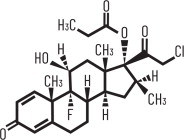
Chemically, clobetasol propionate is 21-chloro-9-fluoro-11β,17-dihydroxy-16β- methylpregna- 1,4-diene-3,20-dione 17-propionate and it has the following structural formula:
Clobetasol propionate has the empirical formula C25H32CIFO5 and a molecular weight of 467. BYQLOVI contains a sterile, anti-inflammatory corticosteroid for topical ophthalmic use.
Each mL of BYQLOVI contains:
ACTIVE: clobetasol propionate 0.5 mg (0.05%)
INACTIVES: sodium chloride, hydrogenated soybean lecithin, citric acid, glycerin, poloxamer 407, polyvinyl alcohol, boric acid, edetate disodium dihydrate, methylcellulose, trisodium citrate, and water for injection
PRESERVATIVE: benzalkonium chloride 0.0036%.
16.1 How Supplied
BYQLOVI (clobetasol propionate ophthalmic suspension) 0.05% (0.5 mg/mL) is a sterile ophthalmic suspension. It is supplied in a multi-dose white low- density polyethylene plastic 5 mL eye-dropper bottle with a low-density polyethylene white tip and a high- density polyethylene pink cap with a tamper-proof ring at the bottom of the cap.
3.5 mL in a 5 mL bottle (NDC 82667-021-05)
8.4 Pediatric Use
The safety and effectiveness of BYQLOVI in pediatric patients have not been established.
8.5 Geriatric Use
No overall differences in safety and effectiveness of BYQLOVI have been observed between patients 65 years of age and older and younger adult patients.
14 Clinical Studies
Clinical efficacy was evaluated in 2 multi-center, randomized, double-masked, vehicle- controlled trials in which patients had ≥10 cells in the anterior chamber after cataract surgery were assigned to BYQLOVI 0.05% (N=366) or vehicle (N=382) (NCT04739709 (Study 1) and NCT04810962 (Study 2)). One drop of BYQLOVI 0.05% or vehicle was self-administered twice a day for 14 days, beginning on the day after surgery. Complete resolution of inflammation (an anterior chamber cell count of 0 maintained through Day 15 without rescue medication) and complete resolution of pain (a patient-reported pain grade of 0 maintained through Day 15 without rescue medication) were assessed at post-operative day (POD) 4, 8, and 15.
The co-primary efficacy endpoints were the proportion of subjects with Anterior Chamber Cell (ACC) count = 0 (ACC grade = 0) at POD8 maintained through POD15, and the proportion of subjects with Ocular Pain Grade = 0 at POD4 maintained through POD15. In the intent-to-treat analysis, both co-primary efficacy endpoints were statistically significantly better in BYQLOVI 0.05%-treated patients compared to vehicle- treated patients (p<0.01). The clinical trial efficacy results from both studies are provided below.
Figure 1: Percent of Patients with Anterior Chamber Cell Count = 0 at Post- Operative Days 8 and 15
Figure 2: Percent of Patients with Complete Resolution of Pain at Post-Operative Days 4, 8, and 15
4 Contraindications
BYQLOVI is contraindicated in most active viral diseases of the cornea and conjunctiva, including epithelial herpes simplex keratitis (dendritic keratitis), vaccinia, and varicella, and also in mycobacterial infection of the eye and fungal diseases of ocular structures.
5.3 Delayed Healing
The use of corticosteroids after cataract surgery may delay healing and increase the incidence of bleb formation.
6 Adverse Reactions
The following serious reactions are found elsewhere in the labeling:
- Intraocular Pressure (IOP) Increase [see Warnings and Precautions ( 5.1)]
- Posterior Subcapsular Cataract Formation [see Warnings and Precautions ( 5.2)]
- Delayed Healing [see Warnings and Precautions ( 5.3)]
- Corneal and Scleral Melting [see Warnings and Precautions ( 5.4)]
- Bacterial Infections [see Warnings and Precautions ( 5.5)]
- Viral Infections [see Warnings and Precautions ( 5.6)]
- Fungal Infections [see Warnings and Precautions ( 5.7)]
5.6 Viral Infections
Employment of a corticosteroid medication in the treatment of patients with a history of herpes simplex requires great caution. Use of ocular corticosteroids may prolong the course and may exacerbate the severity of many viral infections of the eye (including herpes simplex).
12.2 Pharmacodynamics
In patients treated with BYQLOVI twice daily for 21 days, the mean (SD) changes from baseline in cortisol concentrations, -18.1 (126.2) nmol/L and +5.1 (129.8) nmol/L for the BYQLOVI and matching vehicle arms, respectively, were not statistically significant, considering the variability observed in the cortisol concentrations.
12.3 Pharmacokinetics
After the first and second (12 hours apart) ocular instillations of BYQLOVI in healthy adults (n=12), peak plasma clobetasol propionate concentrations (Cmax) were below the lower limit of quantitation (LLOQ, 0.04 ng/mL) in 13 out of 22 PK profiles and ranged from 0.040 to 0.182 ng/mL in the other 9 profiles. Time to peak concentration (Tmax) was observed between 0.5 - 1 hour post-dose. Clobetasol propionate concentrations declined to lower than LLOQ after 4 to 5 hours post-dose.
5.7 Fungal Infections
Fungal infections of the cornea are particularly prone to develop coincidentally with long- term local corticosteroid application. Fungus invasion must be considered in any persistent corneal ulceration where a corticosteroid has been used or is in use. Fungal culture should be taken when appropriate.
5.9 Contact Lens Wear
BYQLOVI should not be instilled while wearing contact lenses. Remove contact lenses prior to instillation of BYQLOVI. The preservative in BYQLOVI may be absorbed by soft contact lenses. Lenses may be reinserted after 15 minutes following administration of BYQLOVI.
2.1 Recommended Dosage
Instill one drop of BYQLOVI into the affected eye twice daily beginning the day after surgery and continuing throughout the first 2 weeks of the post-operative period.
1 Indications and Usage
BYQLOVI is indicated for the treatment of post-operative inflammation and pain following ocular surgery.
12.1 Mechanism of Action
Like other topical corticosteroids, clobetasol propionate has anti-inflammatory, antipruritic, and vasoconstrictive properties. The mechanism of the anti-inflammatory activity of the topical steroids, in general, is unclear. However, corticosteroids are thought to act by the induction of phospholipase A2 inhibitory proteins, collectively called lipocortins. It is postulated that these proteins control the biosynthesis of potent mediators of inflammation such as prostaglandins and leukotrienes by inhibiting the release of their common precursor, arachidonic acid. Arachidonic acid is released from membrane phospholipids by phospholipase A2.
5.5 Bacterial Infections
Prolonged use of corticosteroids may suppress the host response and thus increase the hazard of secondary ocular infections. In acute purulent conditions, steroids may mask infection or enhance existing infection. If signs and symptoms fail to improve after 2 days, the patient should be reevaluated.
16.2 Storage and Handling
- Do not use if tamper-evident ring seal is broken.
- Keep the bottle tightly closed with the pink cap when not in use.
Store upright at 15°C to 25°C (59°F to 77°F). Do not freeze. After opening, BYQLOVI can be used until the expiration date on the bottle.
5.8 Risk of Contamination
Do not allow the dropper tip to touch any surface, as this may contaminate the ophthalmic suspension.
5 Warnings and Precautions
- Intraocular Pressure (IOP) Increase: Prolonged use of corticosteroids may result in glaucoma with damage to the optic nerve, defects in visual acuity and fields of vision. Steroids should be used with caution in the presence of glaucoma. If this product is used for 10 days or longer, IOP should be monitored. ( 5.1)
- Cataracts: Prolonged use of corticosteroids may result in posterior subcapsular cataract formation. ( 5.2)
- Delayed Healing: The use of steroids after cataract surgery may delay healing and increase the incidence of bleb formation. ( 5.3)
- Corneal and Scleral Melting: In those diseases causing thinning of the cornea or sclera, perforations have been known to occur with the use of topical steroids. The initial prescription and renewal of the medication order should be made by a physician only after examination of the patient with the aid of magnification, such as slit lamp biomicroscopy, and where appropriate, fluorescein staining. ( 5.4)
- Bacterial Infections: Prolonged use of corticosteroids may suppress the host response and thus increase the hazard of secondary ocular infections. In acute purulent conditions, steroids may mask infection or enhance existing infection. If signs and symptoms fail to improve after 2 days, the patient should be reevaluated. ( 5.5)
- Viral Infections: Employment of a corticosteroid medication in the treatment of patients with a history of herpes simplex requires great caution. Use of ocular steroids may prolong the course and may exacerbate the severity of many viral infections of the eye (including herpes simplex). ( 5.6)
- Fungal Infections: Fungal infections of the cornea are particularly prone to develop coincidentally with long-term local steroid application. Fungus invasion must be considered in any persistent corneal ulceration where a steroid has been used or is in use. Fungal culture should be taken when appropriate. ( 5.7)
2 Dosage and Administration
3 Dosage Forms and Strengths
Ophthalmic suspension containing clobetasol propionate 0.05% (0.5 mg/mL).
6.1 Clinical Trials Experience
Because clinical trials are conducted under widely varying conditions, adverse reaction rates observed in the clinical trials of a drug cannot be directly compared to rates in the clinical trials of another drug and may not reflect the rates observed in practice.
Ocular adverse reactions occurring in ≥ 1% of subjects in clinical studies who received BYQLOVI included eye inflammation (2%), corneal edema (2%), anterior chamber inflammation (2%), cystoid macular edema (2%), intraocular pressure elevation (1%), photophobia (1%) and vitreous detachment (1%). Many of these reactions may have been the consequence of the surgical procedure.
2.2 Administration Instructions
Wash hands well before each use.
If using other eye drops in addition to BYQLOVI, wait at least 5 minutes between instillation of BYQLOVI and other eye drops.
5.4 Corneal and Scleral Melting
In those diseases causing thinning of the cornea or sclera, perforations have been known to occur with the use of topical corticosteroids. The initial prescription and renewal of the medication order should be made by a physician only after examination of the patient with the aid of magnification, such as slit lamp biomicroscopy, and where appropriate, fluorescein staining.
5.1 Intraocular Pressure (iop) Increase
Prolonged use of corticosteroids may result in glaucoma with damage to the optic nerve, defects in visual acuity and fields of vision. Steroids should be used with caution in the presence of glaucoma. If BYQLOVI is used for 10 days or longer, IOP should be monitored.
Structured Label Content
Section 42229-5 (42229-5)
Risk Summary
There are no adequate and well-controlled clinical studies of BYQLOVI administration in pregnant women to inform drug-associated risks. Plasma concentrations of clobetasol propionate were minimal following topical ophthalmic administration of BYQLOVI [see Clinical Pharmacology ( 12.3)] . However, corticosteroids, including clobetasol propionate have been shown to be teratogenic and fetotoxic in laboratory animals when administered systemically at relatively low dosage levels (see Data) .
BYQLOVI should be used during pregnancy only if the potential benefit justifies the potential risk to the fetus.
In the US general population, the estimated background risk of major birth defects and miscarriage in clinically recognized pregnancies is 2-4% and 15-20%, respectively.
Section 51945-4 (51945-4)
Principal Display Panel - 3.5 mL Carton Label
NDC 82667-021-05
Rx only
BYQLOVI
(clobetasol propionate
ophthalmic suspension)
0.05%
FOR TOPICAL APPLICATION
IN THE EYE
3.5mL Sterile
5.2 Cataracts
Prolonged use of corticosteroids may result in posterior subcapsular cataract formation.
11 Description (11 DESCRIPTION)
BYQLOVI (clobetasol propionate ophthalmic suspension) 0.05% contains the active compound clobetasol propionate, a synthetic corticosteroid, that has a high degree of glucocorticoid activity and a slight degree of mineralocorticoid activity.
Chemically, clobetasol propionate is 21-chloro-9-fluoro-11β,17-dihydroxy-16β- methylpregna- 1,4-diene-3,20-dione 17-propionate and it has the following structural formula:
Clobetasol propionate has the empirical formula C25H32CIFO5 and a molecular weight of 467. BYQLOVI contains a sterile, anti-inflammatory corticosteroid for topical ophthalmic use.
Each mL of BYQLOVI contains:
ACTIVE: clobetasol propionate 0.5 mg (0.05%)
INACTIVES: sodium chloride, hydrogenated soybean lecithin, citric acid, glycerin, poloxamer 407, polyvinyl alcohol, boric acid, edetate disodium dihydrate, methylcellulose, trisodium citrate, and water for injection
PRESERVATIVE: benzalkonium chloride 0.0036%.
16.1 How Supplied
BYQLOVI (clobetasol propionate ophthalmic suspension) 0.05% (0.5 mg/mL) is a sterile ophthalmic suspension. It is supplied in a multi-dose white low- density polyethylene plastic 5 mL eye-dropper bottle with a low-density polyethylene white tip and a high- density polyethylene pink cap with a tamper-proof ring at the bottom of the cap.
3.5 mL in a 5 mL bottle (NDC 82667-021-05)
8.4 Pediatric Use
The safety and effectiveness of BYQLOVI in pediatric patients have not been established.
8.5 Geriatric Use
No overall differences in safety and effectiveness of BYQLOVI have been observed between patients 65 years of age and older and younger adult patients.
14 Clinical Studies (14 CLINICAL STUDIES)
Clinical efficacy was evaluated in 2 multi-center, randomized, double-masked, vehicle- controlled trials in which patients had ≥10 cells in the anterior chamber after cataract surgery were assigned to BYQLOVI 0.05% (N=366) or vehicle (N=382) (NCT04739709 (Study 1) and NCT04810962 (Study 2)). One drop of BYQLOVI 0.05% or vehicle was self-administered twice a day for 14 days, beginning on the day after surgery. Complete resolution of inflammation (an anterior chamber cell count of 0 maintained through Day 15 without rescue medication) and complete resolution of pain (a patient-reported pain grade of 0 maintained through Day 15 without rescue medication) were assessed at post-operative day (POD) 4, 8, and 15.
The co-primary efficacy endpoints were the proportion of subjects with Anterior Chamber Cell (ACC) count = 0 (ACC grade = 0) at POD8 maintained through POD15, and the proportion of subjects with Ocular Pain Grade = 0 at POD4 maintained through POD15. In the intent-to-treat analysis, both co-primary efficacy endpoints were statistically significantly better in BYQLOVI 0.05%-treated patients compared to vehicle- treated patients (p<0.01). The clinical trial efficacy results from both studies are provided below.
Figure 1: Percent of Patients with Anterior Chamber Cell Count = 0 at Post- Operative Days 8 and 15
Figure 2: Percent of Patients with Complete Resolution of Pain at Post-Operative Days 4, 8, and 15
4 Contraindications (4 CONTRAINDICATIONS)
BYQLOVI is contraindicated in most active viral diseases of the cornea and conjunctiva, including epithelial herpes simplex keratitis (dendritic keratitis), vaccinia, and varicella, and also in mycobacterial infection of the eye and fungal diseases of ocular structures.
5.3 Delayed Healing
The use of corticosteroids after cataract surgery may delay healing and increase the incidence of bleb formation.
6 Adverse Reactions (6 ADVERSE REACTIONS)
The following serious reactions are found elsewhere in the labeling:
- Intraocular Pressure (IOP) Increase [see Warnings and Precautions ( 5.1)]
- Posterior Subcapsular Cataract Formation [see Warnings and Precautions ( 5.2)]
- Delayed Healing [see Warnings and Precautions ( 5.3)]
- Corneal and Scleral Melting [see Warnings and Precautions ( 5.4)]
- Bacterial Infections [see Warnings and Precautions ( 5.5)]
- Viral Infections [see Warnings and Precautions ( 5.6)]
- Fungal Infections [see Warnings and Precautions ( 5.7)]
5.6 Viral Infections
Employment of a corticosteroid medication in the treatment of patients with a history of herpes simplex requires great caution. Use of ocular corticosteroids may prolong the course and may exacerbate the severity of many viral infections of the eye (including herpes simplex).
12.2 Pharmacodynamics
In patients treated with BYQLOVI twice daily for 21 days, the mean (SD) changes from baseline in cortisol concentrations, -18.1 (126.2) nmol/L and +5.1 (129.8) nmol/L for the BYQLOVI and matching vehicle arms, respectively, were not statistically significant, considering the variability observed in the cortisol concentrations.
12.3 Pharmacokinetics
After the first and second (12 hours apart) ocular instillations of BYQLOVI in healthy adults (n=12), peak plasma clobetasol propionate concentrations (Cmax) were below the lower limit of quantitation (LLOQ, 0.04 ng/mL) in 13 out of 22 PK profiles and ranged from 0.040 to 0.182 ng/mL in the other 9 profiles. Time to peak concentration (Tmax) was observed between 0.5 - 1 hour post-dose. Clobetasol propionate concentrations declined to lower than LLOQ after 4 to 5 hours post-dose.
5.7 Fungal Infections
Fungal infections of the cornea are particularly prone to develop coincidentally with long- term local corticosteroid application. Fungus invasion must be considered in any persistent corneal ulceration where a corticosteroid has been used or is in use. Fungal culture should be taken when appropriate.
5.9 Contact Lens Wear
BYQLOVI should not be instilled while wearing contact lenses. Remove contact lenses prior to instillation of BYQLOVI. The preservative in BYQLOVI may be absorbed by soft contact lenses. Lenses may be reinserted after 15 minutes following administration of BYQLOVI.
2.1 Recommended Dosage
Instill one drop of BYQLOVI into the affected eye twice daily beginning the day after surgery and continuing throughout the first 2 weeks of the post-operative period.
1 Indications and Usage (1 INDICATIONS AND USAGE)
BYQLOVI is indicated for the treatment of post-operative inflammation and pain following ocular surgery.
12.1 Mechanism of Action
Like other topical corticosteroids, clobetasol propionate has anti-inflammatory, antipruritic, and vasoconstrictive properties. The mechanism of the anti-inflammatory activity of the topical steroids, in general, is unclear. However, corticosteroids are thought to act by the induction of phospholipase A2 inhibitory proteins, collectively called lipocortins. It is postulated that these proteins control the biosynthesis of potent mediators of inflammation such as prostaglandins and leukotrienes by inhibiting the release of their common precursor, arachidonic acid. Arachidonic acid is released from membrane phospholipids by phospholipase A2.
5.5 Bacterial Infections
Prolonged use of corticosteroids may suppress the host response and thus increase the hazard of secondary ocular infections. In acute purulent conditions, steroids may mask infection or enhance existing infection. If signs and symptoms fail to improve after 2 days, the patient should be reevaluated.
16.2 Storage and Handling
- Do not use if tamper-evident ring seal is broken.
- Keep the bottle tightly closed with the pink cap when not in use.
Store upright at 15°C to 25°C (59°F to 77°F). Do not freeze. After opening, BYQLOVI can be used until the expiration date on the bottle.
5.8 Risk of Contamination
Do not allow the dropper tip to touch any surface, as this may contaminate the ophthalmic suspension.
5 Warnings and Precautions (5 WARNINGS AND PRECAUTIONS)
- Intraocular Pressure (IOP) Increase: Prolonged use of corticosteroids may result in glaucoma with damage to the optic nerve, defects in visual acuity and fields of vision. Steroids should be used with caution in the presence of glaucoma. If this product is used for 10 days or longer, IOP should be monitored. ( 5.1)
- Cataracts: Prolonged use of corticosteroids may result in posterior subcapsular cataract formation. ( 5.2)
- Delayed Healing: The use of steroids after cataract surgery may delay healing and increase the incidence of bleb formation. ( 5.3)
- Corneal and Scleral Melting: In those diseases causing thinning of the cornea or sclera, perforations have been known to occur with the use of topical steroids. The initial prescription and renewal of the medication order should be made by a physician only after examination of the patient with the aid of magnification, such as slit lamp biomicroscopy, and where appropriate, fluorescein staining. ( 5.4)
- Bacterial Infections: Prolonged use of corticosteroids may suppress the host response and thus increase the hazard of secondary ocular infections. In acute purulent conditions, steroids may mask infection or enhance existing infection. If signs and symptoms fail to improve after 2 days, the patient should be reevaluated. ( 5.5)
- Viral Infections: Employment of a corticosteroid medication in the treatment of patients with a history of herpes simplex requires great caution. Use of ocular steroids may prolong the course and may exacerbate the severity of many viral infections of the eye (including herpes simplex). ( 5.6)
- Fungal Infections: Fungal infections of the cornea are particularly prone to develop coincidentally with long-term local steroid application. Fungus invasion must be considered in any persistent corneal ulceration where a steroid has been used or is in use. Fungal culture should be taken when appropriate. ( 5.7)
2 Dosage and Administration (2 DOSAGE AND ADMINISTRATION)
3 Dosage Forms and Strengths (3 DOSAGE FORMS AND STRENGTHS)
Ophthalmic suspension containing clobetasol propionate 0.05% (0.5 mg/mL).
6.1 Clinical Trials Experience
Because clinical trials are conducted under widely varying conditions, adverse reaction rates observed in the clinical trials of a drug cannot be directly compared to rates in the clinical trials of another drug and may not reflect the rates observed in practice.
Ocular adverse reactions occurring in ≥ 1% of subjects in clinical studies who received BYQLOVI included eye inflammation (2%), corneal edema (2%), anterior chamber inflammation (2%), cystoid macular edema (2%), intraocular pressure elevation (1%), photophobia (1%) and vitreous detachment (1%). Many of these reactions may have been the consequence of the surgical procedure.
2.2 Administration Instructions
Wash hands well before each use.
If using other eye drops in addition to BYQLOVI, wait at least 5 minutes between instillation of BYQLOVI and other eye drops.
5.4 Corneal and Scleral Melting
In those diseases causing thinning of the cornea or sclera, perforations have been known to occur with the use of topical corticosteroids. The initial prescription and renewal of the medication order should be made by a physician only after examination of the patient with the aid of magnification, such as slit lamp biomicroscopy, and where appropriate, fluorescein staining.
5.1 Intraocular Pressure (iop) Increase (5.1 Intraocular Pressure (IOP) Increase)
Prolonged use of corticosteroids may result in glaucoma with damage to the optic nerve, defects in visual acuity and fields of vision. Steroids should be used with caution in the presence of glaucoma. If BYQLOVI is used for 10 days or longer, IOP should be monitored.
Advanced Ingredient Data
Raw Label Data
All Sections (JSON)
Additional Information
Back to search View SPL set listing Open on DailyMed ↗
Source: dailymed · Ingested: 2026-02-15T11:52:44.969472 · Updated: 2026-03-14T22:44:32.835928