technescan™ pyp™
304b63f4-a32e-4700-805d-5bc9f27e7d6a
34391-3
HUMAN PRESCRIPTION DRUG LABEL
Drug Facts
Composition & Product
Identifiers & Packaging
Indications and Usage
Technescan PYP, after radiolabeling with sodium pertechnetate Tc 99m, is indicated for: • Skeletal imaging to demonstrate areas of altered osteogenesis in adults • Cardiac imaging as an adjunct in the diagnosis of acute myocardial infarction in adults (See WARNINGS ) Technescan PYP, in conjunction with sodium pertechnetate Tc 99m injection for red blood cell (RBC) labeling, is indicated for gated cardiac blood pool imaging and for the detection of gastrointestinal bleeding sites in adults.
Contraindications
None known.
Adverse Reactions
The following adverse reactions associated with the use of Technescan PYP have been reported: flushing, hypotension, fever, chills, nausea, vomiting, and dizziness, as well as hypersensitivity reactions such as itching and various skin rashes.
Drug Interactions
The biodistribution of technetium Tc 99m pyrophosphate may be altered in the presence of high levels of certain cations (iron, calcium, and aluminum). This may result in reduced uptake of radionuclide in the skeleton and increased extraosseal uptake, which may potentially degrade imaging quality. In patients with high levels of these cations caused by concomitant medications, particularly patients receiving iron infusions, consider performing an imaging study with technetium Tc 99m pyrophosphate injection once the cation levels have normalized (e.g., after 3 to 5 half-lives of the cation). (See WARNINGS .)
How Supplied
Technescan PYP (kit for the preparation of technetium Tc 99m pyrophosphate injection) contains 11.9 mg sodium pyrophosphate as a white lyophilized powder in a multiple-dose vial. Technescan PYP is available in cartons of 5 vials (NDC 69945-094-20). Before preparation, store the Technescan PYP reaction vial refrigerated at 2°C to 8°C (36°F to 46°F). After preparation, store the vial at 20°C to 25°C (68°F to 77°F) [see USP Controlled Room Temperature]. If radiolabeled, store the vial in appropriate shielding to protect from radiation. Use within 6 hours of preparation. Dispose of unused Technetium Tc 99m Pyrophosphate Injection in accordance with appropriate regulations. This reagent kit is for distribution to persons licensed by the U.S. Nuclear Regulatory Commission or the relevant regulatory authority of an Agreement State. Manufactured by: Curium US LLC 2703 Wagner Place Maryland Heights, MO 63043 Made in USA ©2025 Curium US LLC. Technescan TM PYP TM , Curium TM , and the Curium logo are trademarks of a Curium company. A094I0 Revised: 11/2025 CURIUM™
Description
Drug Characteristics Technescan™ PYP™ (kit for the preparation of technetium Tc 99m pyrophosphate injection) is a radioactive diagnostic drug for intravenous use after radiolabeling with sodium pertechnetate Tc 99m injection or after reconstitution with 0.9% sodium chloride injection in conjunction with sodium pertechnetate Tc 99m injection. Each vial contains 11.9 mg sodium pyrophosphate, 3.2 mg (minimum) stannous chloride (SnCl 2 •2H 2 O), and 4.4 mg (maximum) total tin expressed as stannous chloride (SnCl 2 •2H 2 O). Prior to lyophilization, the pH is adjusted with hydrochloric acid. The pH of the reconstituted drug is between 4.5 and 7.5. No bacteriostatic preservative is present. The vial contains a sterile, non-pyrogenic, lyophilized powder packaged under nitrogen. The precise structures of the stannous-pyrophosphate and technetium Tc 99m pyrophosphate complexes are not known.
Medication Information
Warnings
Image interpretation errors can occur. As an adjunct in the diagnosis of confirmed myocardial infarction (ECG and serum enzymes positive), the estimate of false negative image interpretations was 6%. False negative image interpretations can occur if made too early in the evolutionary phase of the infarct or too late in the resolution phase. In a study involving 22 patients in whom ECG was positive and serum enzymes questionable or negative, but in whom the final diagnosis of acute myocardial infarction was made, the estimates of false negative and false positive image interpretations were 23% and 9%, respectively. False positive image interpretations have been reported following coronary artery bypass graft surgery and in unstable angina pectoris, old myocardial infarcts, and cardiac contusions.
Technetium Tc 99m pyrophosphate may impair brain imaging with sodium pertechnetate Tc 99m and result in false positive or false negative image interpretation. It is recommended, where feasible, that brain imaging precede skeletal imaging procedures.
Gated cardiac blood pool and gastrointestinal bleed imaging may be impaired in patients receiving sodium heparin for anticoagulant therapy. This is characterized by a reduction in the amount of injected radioactivity remaining in the blood pool. Avoid heparinized catheter systems for administration of Technescan PYP.
The biodistribution of technetium Tc 99m pyrophosphate may be altered in the presence of high levels of certain cations (iron, calcium, and aluminum). This may result in reduced uptake of radionuclide in the skeleton and increased extraosseal uptake, which may potentially degrade imaging quality. High levels of these cations may be caused by concomitant medications or medical conditions (e.g., iron overload, hypercalcemia, etc.). Most cases are observed after iron infusion. (See PRECAUTIONS, Drug Interactions.)
Indications and Usage
Technescan PYP, after radiolabeling with sodium pertechnetate Tc 99m, is indicated for:
• Skeletal imaging to demonstrate areas of altered osteogenesis in adults
• Cardiac imaging as an adjunct in the diagnosis of acute myocardial infarction in adults (See
WARNINGS)
Technescan PYP, in conjunction with sodium pertechnetate Tc 99m injection for red blood cell (RBC) labeling, is indicated for gated cardiac blood pool imaging and for the detection of gastrointestinal bleeding sites in adults.
Contraindications
None known.
Adverse Reactions
The following adverse reactions associated with the use of Technescan PYP have been reported: flushing, hypotension, fever, chills, nausea, vomiting, and dizziness, as well as hypersensitivity reactions such as itching and various skin rashes.
Drug Interactions
The biodistribution of technetium Tc 99m pyrophosphate may be altered in the presence of high levels of certain cations (iron, calcium, and aluminum). This may result in reduced uptake of radionuclide in the skeleton and increased extraosseal uptake, which may potentially degrade imaging quality. In patients with high levels of these cations caused by concomitant medications, particularly patients receiving iron infusions, consider performing an imaging study with technetium Tc 99m pyrophosphate injection once the cation levels have normalized (e.g., after 3 to 5 half-lives of the cation). (See WARNINGS.)
How Supplied
Technescan PYP (kit for the preparation of technetium Tc 99m pyrophosphate injection) contains 11.9 mg sodium pyrophosphate as a white lyophilized powder in a multiple-dose vial.
Technescan PYP is available in cartons of 5 vials (NDC 69945-094-20).
Before preparation, store the Technescan PYP reaction vial refrigerated at 2°C to 8°C (36°F to 46°F).
After preparation, store the vial at 20°C to 25°C (68°F to 77°F) [see USP Controlled Room Temperature]. If radiolabeled, store the vial in appropriate shielding to protect from radiation. Use within 6 hours of preparation.
Dispose of unused Technetium Tc 99m Pyrophosphate Injection in accordance with appropriate regulations.
This reagent kit is for distribution to persons licensed by the U.S. Nuclear Regulatory Commission or the relevant regulatory authority of an Agreement State.
Manufactured by:
Curium US LLC
2703 Wagner Place
Maryland Heights, MO 63043
Made in USA
©2025 Curium US LLC. Technescan TMPYP TM, Curium TM, and the Curium logo are trademarks of a Curium company.
A094I0
Revised: 11/2025
CURIUM™
Description
Drug Characteristics
Technescan™ PYP™ (kit for the preparation of technetium Tc 99m pyrophosphate injection) is a radioactive diagnostic drug for intravenous use after radiolabeling with sodium pertechnetate Tc 99m injection or after reconstitution with 0.9% sodium chloride injection in conjunction with sodium pertechnetate Tc 99m injection.
Each vial contains 11.9 mg sodium pyrophosphate, 3.2 mg (minimum) stannous chloride (SnCl 2•2H 2O), and 4.4 mg (maximum) total tin expressed as stannous chloride (SnCl 2•2H 2O). Prior to lyophilization, the pH is adjusted with hydrochloric acid. The pH of the reconstituted drug is between 4.5 and 7.5. No bacteriostatic preservative is present. The vial contains a sterile, non-pyrogenic, lyophilized powder packaged under nitrogen.
The precise structures of the stannous-pyrophosphate and technetium Tc 99m pyrophosphate complexes are not known.
General
Technetium Tc 99m pyrophosphate contributes to a patient’s overall long-term cumulative radiation exposure. Long-term cumulative radiation exposure is associated with an increased risk of cancer. Ensure safe drug handling to protect patients and healthcare providers from unintentional radiation exposure. (See DOSAGE AND ADMINISTRATION, Radiation Safety-Drug Handling.) Advise patients to drink fluids before and after administration and to void as often as possible after administration to reduce unnecessary exposure to radiation.
Pregnancy
Animal reproduction studies have not been conducted with Technetium Tc 99m Pyrophosphate Injection. It is also not known whether this drug can cause fetal harm when administered to a pregnant woman or can affect reproduction capacity.
All radiopharmaceuticals, including Technescan PYP, have the potential to cause fetal harm depending on the fetal stage of development and the magnitude of the radiation dose. If considering Technescan PYP administration to a pregnant woman, inform the patient about the potential for adverse pregnancy outcomes based on the radiation dose from technetium Tc 99m pyrophosphate and the gestational timing of exposure.
Overdosage
In case of overdose of Technetium Tc 99m Pyrophosphate Injection, encourage patients to maintain hydration and to void frequently to minimize radiation exposure.
Geriatric Use
Of the 137 subjects included in clinical studies of Technescan PYP labeled with technetium-99m for skeletal imaging, 28 subjects (20%) were 65 to 74 years of age, and 21 (15%) were 75 years of age and older. No overall differences in safety or effectiveness were observed between these subjects and younger subjects, and other reported clinical experience has not identified differences between elderly and younger patients.
This drug is known to be substantially excreted by the kidney, and the risk of toxic reactions to this drug may be greater in patients with impaired renal function. Because elderly patients are more likely to have decreased renal function, care should be taken in dose selection, and it may be useful to monitor renal function.
Pediatric Use
Safety and effectiveness in pediatric patients have not been established.
Nursing Mothers
Technetium-99m is excreted in human milk during lactation, therefore, formula feedings should be substituted for breast feeding.
Radiation Dosimetry
Skeletal and Cardiac Imaging
Estimated absorbed radiation doses from an intravenous injection of Technetium Tc 99m Pyrophosphate Injection in adults are shown in Table 5.
| Organ/Tissue | Absorbed Dose per Unit Activity Administered
(mGy/MBq) |
| Skeleton* | 0.010 |
| Bone Marrow | 0.008 |
| Kidneys | 0.038 |
| Total Body | 0.002 |
| Bladder | |
| 2-hr. void | 0.026 |
| 4.8-hr. void | 0.062 |
| Testes | |
| 2-hr. void | 0.003 |
| 4.8-hr. void | 0.004 |
| Ovaries | |
| 2-hr. void | 0.003 |
| 4.8-hr. void | 0.004 |
| Heart | |
| Normal | 0.002 |
| Impaired | 0.004 |
*Dose at point of highest uptake may be a factor of 10 higher.
Gated Cardiac Blood Pool and Gastrointestinal Bleed Imaging
Estimated absorbed radiation doses from an intravenous administration of sodium pertechnetate Tc 99m injection, 30 minutes after the intravenous administration of Technescan PYP are shown in Table 6.
| Organ/Tissue | Absorbed Dose per Unit Activity Administered
(mGy/MBq) |
| Bladder Wall | 0.009 |
| Ovaries | 0.006 |
| Testes | 0.004 |
| Red Marrow | 0.005 |
| Spleen** | 0.004 |
| Blood | 0.014 |
| Total Body | 0.004 |
*Assumes non-resting state, with 75% of the sodium pertechnetate Tc 99m labeling red blood cells and the other 25% remaining as pertechnetate.
**Assumes no initial uptake in spleen.
Clinical Pharmacology
Skeletal and Cardiac Imaging
When injected intravenously, technetium Tc 99m pyrophosphate has a specific affinity for areas of altered osteogenesis. It is also concentrated in the injured myocardium, primarily in areas of irreversibly damaged myocardial cells.
One to 2 hours after intravenous injection of technetium Tc 99m pyrophosphate, an estimated 40% to 50% of the injected dose is taken up by the skeleton, and approximately 0.01% to 0.02% of the injected dose is taken up per gram of acutely infarcted myocardium. Within a period of 1 hour, 10% to 11% remains in the vascular system, declining to approximately 2% to 3% 24 hours after injection. The average urinary excretion is approximately 40% of the administered dose after 24 hours.
Gated Cardiac Blood Pool and Gastrointestinal Bleed Imaging
Technescan PYP also has an affinity for red blood cells. When Technescan PYP reconstituted in 0.9% sodium chloride injection is administered 15 minutes to 30 minutes prior to the intravenous administration of sodium pertechnetate Tc 99m injection for red blood cell labeling, approximately 75% of the administered activity remains in the blood pool to allow imaging of the cardiac chambers. When the modified in vivo/in vitro red blood cell labeling method is used, comparable percentages of the injected radioactivity are obtained.
Directions for Drug Preparation
Procedural Precautions
• The contents of the Technescan PYP reaction vial may be used for the preparation of Technetium Tc 99m Pyrophosphate Injection. Technescan PYP may also be reconstituted with preservative-free 0.9% sodium chloride injection and injected intravenously prior to labeling of red blood cells with sodium pertechnetate Tc 99m injection using either the in vivo or modified in vivo/in vitro method.
• The components of the kit are sterile and non-pyrogenic. It is essential that the user follow the directions carefully and adhere to strict aseptic procedures during preparation.
• Wear waterproof gloves during the entire preparation procedure and during subsequent patient dose withdrawals from the reaction vial.
• Make all withdrawals and administration of sodium pertechnetate Tc 99m injection with an adequately shielded syringe.
• Keep the prepared Technetium Tc 99m Pyrophosphate Injection in the lead shield described below (with cap in place) during the useful life of the radioactive preparation. Make all withdrawals and administration of the Technetium Tc 99m Pyrophosphate Injection with an adequately shielded syringe.
• Any sodium pertechnetate Tc 99m injection that contains an oxidizing agent is not suitable for use in the preparation of Technetium Tc 99m Pyrophosphate Injection.
Procedure for the Preparation of Technetium Tc 99m Pyrophosphate Injection
1. Remove a Technescan PYP reaction vial from the refrigerator and allow the vial contents to come to room temperature, 20°C to 25°C (68°F to 77°F), for approximately 5 minutes.
2. Attach the radioassay information label with radiation warning symbol to the reaction vial and place the vial in a lead Dispensing Shield fitted with a lead cap and having a minimum wall thickness of 1/8 inch. Do not remove the reaction vial from the Dispensing Shield, except temporarily, for Step 5 below.
3. Add 1 mL to 10 mL of sodium pertechnetate Tc 99m injection to the reaction vial. In choosing the amount of the sodium pertechnetate Tc 99m injection radioactivity to be used in the preparation of the Technetium Tc 99m Pyrophosphate Injection, the labeling efficiency, number of patients, administered radioactive dose, and radioactive decay must be taken into account. The recommended maximum activity of sodium pertechnetate Tc 99m injection to be added to the reaction vial is 3,700 MBq (100 mCi).
4. With the reaction vial in the Dispensing Shield (with cap in place), shake sufficiently to bring the lyophilized material into solution. Allow to stand for 5 minutes at room temperature.
5. Using proper shielding, visually inspect the reaction vial. The resulting solution should be clear and free of particulate matter. If not, do not use the product.
6. Assay the product in a suitable calibrator and record the time, date of preparation, and the activity of the Technetium Tc 99m Pyrophosphate Injection onto the radioassay information label.
7. Check the radiochemical purity prior to administration.
8. Store the reaction vial in the Dispensing Shield at 20°C to 25°C (68° to 77°F). Use within 6 hours of radiolabeling.
9. Dispose of unused drug in a safe manner in accordance with applicable regulations.
Procedure for the Reconstitution of Technescan PYP
a. Remove a Technescan PYP reaction vial from the refrigerator and allow the vial contents to come to room temperature, 20°C to 25°C (68°F to 77°F), for approximately 5 minutes.
b. Add 3 mL of preservative-free 0.9% sodium chloride injection to the reaction vial.
c. Shake the reaction vial sufficiently to bring the lyophilized material into solution. Allow to stand for 5 minutes at room temperature.
d. Visually inspect the reaction vial. The resulting solution should be clear and free of particulate matter. If not, do not use the product.
e. Store the reconstituted reaction vial upright at 20°C to 25°C (68°F to 77°F). Use within 6 hours of reconstitution.
Nuclear Physical Characteristics
Technetium-99m decays by isomeric transition with a physical half-life of 6.02 hours. The principal photon that is useful for detection and imaging is listed in Table 1.
| Radiation | Mean % per Disintegration | Energy (keV) |
| Gamma-2 | 89.07 | 140.5 |
The specific gamma ray constant for technetium-99m is 0.795 R/hr-mCi at 1 cm. The first half-value layer is 0.023 cm of lead (Pb). A range of values for the relative attenuation of the radiation emitted by this radionuclide that results from interposition of various thicknesses of Pb is shown in Table 2. For example, the use of 0.27 cm thickness of Pb will attenuate the external radiation emitted by a factor of about 1,000.
| Shield
Thickness (Pb) cm |
Coefficient
of Attenuation |
| 0.023
0.09 0.18 0.27 |
0.5
10 -1 10 -2 10 -3 |
To correct for physical decay of this radionuclide, the fractions that remain at selected time intervals after the time of calibration are shown in Table 3.
|
*Calibration Time |
|||
| Hours | Fraction
Remaining |
Hours | Fraction
Remaining |
| 0* | 1 | 7 | 0.447 |
| 1 | 0.891 | 8 | 0.398 |
| 2 | 0.794 | 9 | 0.355 |
| 3 | 0.708 | 10 | 0.316 |
| 4 | 0.631 | 11 | 0.282 |
| 5 | 0.562 | 12 | 0.251 |
| 6 | 0.501 |
Principal Display Panel A094v0
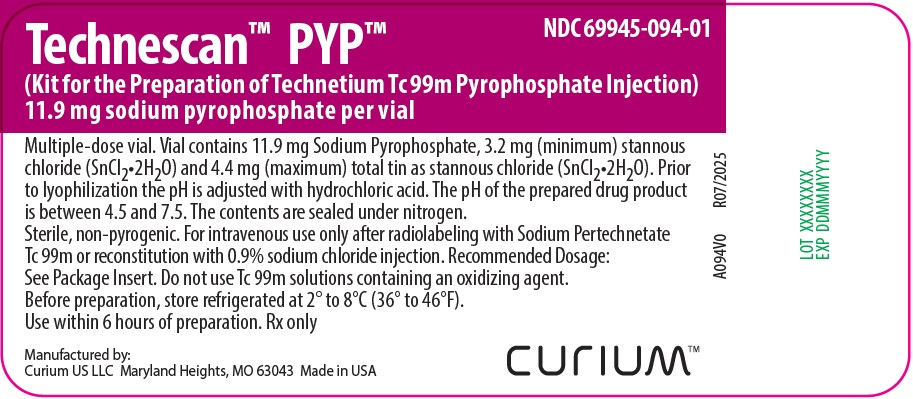
Technescan™ PYP™ NDC 69945-094-01
(Kit for the Preparation of Technetium Tc 99m Pyrophosphate Injection)
11.9 mg sodium pyrophosphate per vial
Multiple-dose vial. Vial contains 11.9 mg Sodium Pyrophosphate, 3.2 mg (minimum) stannous chloride (SnCl
2•2H
2O) and 4.4 mg (maximum) total tin as stannous chloride (SnCl
2•2H
2O). Prior to lyophilization the pH is adjusted with hydrochloric acid. The pH of the prepared drug product is between 4.5 and 7.5. The contents are sealed under nitrogen.
Sterile, non-pyrogenic. For intravenous use only after radiolabeling with Sodium Pertechnetate Tc 99m or reconstitution with 0.9% sodium chloride injection. Recommended Dosage: See Package Insert. Do not use Tc 99m solutions containing an oxidizing agent.
Before preparation, store refrigerated at 2° to 8°C (36° to 46°F).
Use within 6 hours of preparation. Rx only
Manufactured by:
Curium US LLC Maryland Heights, MO 63043 Made in USA
CURIUM™
A094V0 R07/2025
Radiation Safety – Drug Handling
After radiolabeling of Technescan PYP, the reaction vial contains Technetium Tc 99m Pyrophosphate Injection. Handle Technetium Tc 99m Pyrophosphate Injection with appropriate safety measures to minimize radiation exposure. (See PRECAUTIONS, General.) Use waterproof gloves, effective radiation shielding, and other appropriate safety measures when preparing and handling Technetium Tc 99m Pyrophosphate Injection.
Radiopharmaceuticals should be used by or under the control of healthcare providers who are qualified by specific training and experience in the safe use and handling of radionuclides, and whose experience and training have been approved by the appropriate governmental agency authorized to license the use of radionuclides.
Carcinogenesis, Mutagenesis, Impairment of Fertility
No long-term animal studies have been performed to evaluate carcinogenic or mutagenic potential, or whether this drug affects fertility in males or females.
Recommended Dosage, Administration, and Imaging Instructions for Skeletal and Cardiac Imaging
Dosing and Administration Instructions
- The recommended activity of Technetium Tc 99m Pyrophosphate Injection for each type of imaging is presented in Table 4.
- Administer Technetium Tc 99m Pyrophosphate Injection intravenously over 10 seconds to 20 seconds.
- Measure the patient dose with a dose calibrator immediately before administration.
- If not contraindicated by patient’s condition, encourage patients to drink fluids before and after administration and void as often as possible to reduce unnecessary radiation exposure.
- For radiolabeling instructions, see Directions for Drug Preparation, Procedure for the Preparation of Technetium Tc 99m Pyrophosphate Injection.
Table 4. Recommended Administered Activity of Technetium Tc 99m Pyrophosphate Injection for Skeletal and Cardiac Imaging in Adults
| Indication | Activity of Technetium Tc 99m Pyrophosphate | Fraction of
Vial Contents Required for Pyrophosphate |
| Skeletal Imaging | 185 MBq to 555 MBq
(5 mCi to 15 mCi) |
0.07 to 0.91 |
| Cardiac Imaging | 370 MBq to 555 MBq
(10 mCi to 15 mCi) |
0.26 to 0.45 |
Skeletal Imaging
Begin imaging 1 hour to 6 hours following administration.
Cardiac Imaging
- The patient's cardiac condition should be stable before beginning the cardiac imaging procedure.
- Begin imaging 60 minutes to 90 minutes following administration. The acute myocardial infarct can be visualized from 24 hours to 9 days following onset of symptoms, with maximum localization at 48 to 72 hours. Cardiac imaging should be done with a gamma scintillation camera. It is recommended that images include anterior, left anterior oblique, and left lateral projections.
- Interference from chest wall lesions such as breast tumors and healing rib fractures can be minimized by employing the three recommended projections.
Recommended Dosage, Administration, and Imaging Instructions for Gated Cardiac Blood Pool and Gastrointestinal Bleed Imaging
Dose
The recommended dose of Technescan PYP reconstituted in 0.9% sodium chloride injection for gated cardiac blood pool and gastrointestinal bleed imaging in adults is 1 mL, followed by 555 MBq to 740 MBq (15 mCi to 20 mCi) of sodium pertechnetate Tc 99m injection.
Administration Instructions for In Vivo RBC Labeling Method
a. Reconstitute Technescan PYP with 0.9% sodium chloride injection. (See Directions for Drug Preparation, Procedure for the Reconstitution of Technescan PYP.)
b. Administer the patient dose of reconstituted Technescan PYP intravenously by direct venipuncture. Do not use heparinized catheters. (See WARNINGS.)
c. Wait 15 minutes to 30 minutes.
d. Administer sodium pertechnetate Tc 99m injection intravenously.
Administration Instructions for Modified In Vivo/In Vitro RBC Labeling Method Using ACD
a. Reconstitute Technescan PYP with 0.9% sodium chloride injection. (See Directions for Drug Preparation, Procedure for the Reconstitution of Technescan PYP.)
b. Administer the patient dose of reconstituted Technescan PYP intravenously by direct venipuncture. Do not use heparinized catheters. (See WARNINGS.)
c. Insert an intravenous line with a 3-way stopcock in a large peripheral vein and maintain the line with a continuous drip of 0.9% sodium chloride injection.
d. 30 minutes post-injection:
- Clear the line by withdrawing and discarding approximately 5 mL of blood.
- Then draw approximately 5 mL of blood into a syringe containing 1 mL preservative-free acid-citrate-dextrose (ACD) and 555 MBq to 740 MBq (15 mCi to 20 mCi) of sodium pertechnetate Tc 99m injection.
- Turn the stopcock, flush the line, and adjust the flow of 0.9% sodium chloride injection.
e. Gently rotate syringe to mix and incubate at room temperature for 10 minutes.
f. Inject the mixture via the 3-way stopcock.
Administration Instructions for Modified In Vivo/In Vitro RBC Labeling Method Using Heparin
a. Reconstitute Technescan PYP with 0.9% sodium chloride injection. (See Directions for Drug Preparation, Procedure for the Reconstitution of Technescan PYP.)
b. Administer the patient dose of reconstituted Technescan PYP intravenously by direct venipuncture. Do not use heparinized catheters. (See WARNINGS.)
c. Insert an infusion set fitted with a 3-way stopcock in a large peripheral vein, and heparinize the intravenous line with 0.9% sodium chloride injection containing 5 units/mL to 10 units/mL of preservative-free heparin.
d. Thirty minutes after Technescan PYP injection, draw 3 mL of blood into a syringe containing 555 MBq to 740 MBq (15 mCi to 20 mCi) of sodium pertechnetate Tc 99m injection. Anticoagulation of the blood is provided by residual heparin in the intravenous line.
e. Gently rotate the syringe to mix and incubate at room temperature for 10 minutes.
f. Inject the mixture via the 3-way stopcock.
Gated Cardiac Blood Pool Imaging
Begin cardiac imaging 10 minutes following the administration of sodium pertechnetate Tc 99m injection (in vivo method) or Tc 99m labeled red blood cells (modified in vivo/in vitro method) utilizing a scintillation camera interfaced to an electrocardiographic gating device.
Gastrointestinal Bleed Imaging
The imaging of gastrointestinal bleeding is dependent on factors such as the region of imaging, rate and volume of the bleed, efficacy of labeling of the red blood cells, and timeliness of imaging. Acquire sequential images over a period of time until a positive image is obtained or clinical conditions warrant the discontinuance of the procedure. The period of time for collecting the images may range up to 36 hours.
Structured Label Content
Warnings (WARNINGS)
Image interpretation errors can occur. As an adjunct in the diagnosis of confirmed myocardial infarction (ECG and serum enzymes positive), the estimate of false negative image interpretations was 6%. False negative image interpretations can occur if made too early in the evolutionary phase of the infarct or too late in the resolution phase. In a study involving 22 patients in whom ECG was positive and serum enzymes questionable or negative, but in whom the final diagnosis of acute myocardial infarction was made, the estimates of false negative and false positive image interpretations were 23% and 9%, respectively. False positive image interpretations have been reported following coronary artery bypass graft surgery and in unstable angina pectoris, old myocardial infarcts, and cardiac contusions.
Technetium Tc 99m pyrophosphate may impair brain imaging with sodium pertechnetate Tc 99m and result in false positive or false negative image interpretation. It is recommended, where feasible, that brain imaging precede skeletal imaging procedures.
Gated cardiac blood pool and gastrointestinal bleed imaging may be impaired in patients receiving sodium heparin for anticoagulant therapy. This is characterized by a reduction in the amount of injected radioactivity remaining in the blood pool. Avoid heparinized catheter systems for administration of Technescan PYP.
The biodistribution of technetium Tc 99m pyrophosphate may be altered in the presence of high levels of certain cations (iron, calcium, and aluminum). This may result in reduced uptake of radionuclide in the skeleton and increased extraosseal uptake, which may potentially degrade imaging quality. High levels of these cations may be caused by concomitant medications or medical conditions (e.g., iron overload, hypercalcemia, etc.). Most cases are observed after iron infusion. (See PRECAUTIONS, Drug Interactions.)
Indications and Usage (INDICATIONS AND USAGE)
Technescan PYP, after radiolabeling with sodium pertechnetate Tc 99m, is indicated for:
• Skeletal imaging to demonstrate areas of altered osteogenesis in adults
• Cardiac imaging as an adjunct in the diagnosis of acute myocardial infarction in adults (See
WARNINGS)
Technescan PYP, in conjunction with sodium pertechnetate Tc 99m injection for red blood cell (RBC) labeling, is indicated for gated cardiac blood pool imaging and for the detection of gastrointestinal bleeding sites in adults.
Contraindications (CONTRAINDICATIONS)
None known.
Adverse Reactions (ADVERSE REACTIONS)
The following adverse reactions associated with the use of Technescan PYP have been reported: flushing, hypotension, fever, chills, nausea, vomiting, and dizziness, as well as hypersensitivity reactions such as itching and various skin rashes.
Drug Interactions
The biodistribution of technetium Tc 99m pyrophosphate may be altered in the presence of high levels of certain cations (iron, calcium, and aluminum). This may result in reduced uptake of radionuclide in the skeleton and increased extraosseal uptake, which may potentially degrade imaging quality. In patients with high levels of these cations caused by concomitant medications, particularly patients receiving iron infusions, consider performing an imaging study with technetium Tc 99m pyrophosphate injection once the cation levels have normalized (e.g., after 3 to 5 half-lives of the cation). (See WARNINGS.)
How Supplied (HOW SUPPLIED)
Technescan PYP (kit for the preparation of technetium Tc 99m pyrophosphate injection) contains 11.9 mg sodium pyrophosphate as a white lyophilized powder in a multiple-dose vial.
Technescan PYP is available in cartons of 5 vials (NDC 69945-094-20).
Before preparation, store the Technescan PYP reaction vial refrigerated at 2°C to 8°C (36°F to 46°F).
After preparation, store the vial at 20°C to 25°C (68°F to 77°F) [see USP Controlled Room Temperature]. If radiolabeled, store the vial in appropriate shielding to protect from radiation. Use within 6 hours of preparation.
Dispose of unused Technetium Tc 99m Pyrophosphate Injection in accordance with appropriate regulations.
This reagent kit is for distribution to persons licensed by the U.S. Nuclear Regulatory Commission or the relevant regulatory authority of an Agreement State.
Manufactured by:
Curium US LLC
2703 Wagner Place
Maryland Heights, MO 63043
Made in USA
©2025 Curium US LLC. Technescan TMPYP TM, Curium TM, and the Curium logo are trademarks of a Curium company.
A094I0
Revised: 11/2025
CURIUM™
Description (DESCRIPTION)
Drug Characteristics
Technescan™ PYP™ (kit for the preparation of technetium Tc 99m pyrophosphate injection) is a radioactive diagnostic drug for intravenous use after radiolabeling with sodium pertechnetate Tc 99m injection or after reconstitution with 0.9% sodium chloride injection in conjunction with sodium pertechnetate Tc 99m injection.
Each vial contains 11.9 mg sodium pyrophosphate, 3.2 mg (minimum) stannous chloride (SnCl 2•2H 2O), and 4.4 mg (maximum) total tin expressed as stannous chloride (SnCl 2•2H 2O). Prior to lyophilization, the pH is adjusted with hydrochloric acid. The pH of the reconstituted drug is between 4.5 and 7.5. No bacteriostatic preservative is present. The vial contains a sterile, non-pyrogenic, lyophilized powder packaged under nitrogen.
The precise structures of the stannous-pyrophosphate and technetium Tc 99m pyrophosphate complexes are not known.
General
Technetium Tc 99m pyrophosphate contributes to a patient’s overall long-term cumulative radiation exposure. Long-term cumulative radiation exposure is associated with an increased risk of cancer. Ensure safe drug handling to protect patients and healthcare providers from unintentional radiation exposure. (See DOSAGE AND ADMINISTRATION, Radiation Safety-Drug Handling.) Advise patients to drink fluids before and after administration and to void as often as possible after administration to reduce unnecessary exposure to radiation.
Pregnancy
Animal reproduction studies have not been conducted with Technetium Tc 99m Pyrophosphate Injection. It is also not known whether this drug can cause fetal harm when administered to a pregnant woman or can affect reproduction capacity.
All radiopharmaceuticals, including Technescan PYP, have the potential to cause fetal harm depending on the fetal stage of development and the magnitude of the radiation dose. If considering Technescan PYP administration to a pregnant woman, inform the patient about the potential for adverse pregnancy outcomes based on the radiation dose from technetium Tc 99m pyrophosphate and the gestational timing of exposure.
Overdosage (OVERDOSAGE)
In case of overdose of Technetium Tc 99m Pyrophosphate Injection, encourage patients to maintain hydration and to void frequently to minimize radiation exposure.
Geriatric Use
Of the 137 subjects included in clinical studies of Technescan PYP labeled with technetium-99m for skeletal imaging, 28 subjects (20%) were 65 to 74 years of age, and 21 (15%) were 75 years of age and older. No overall differences in safety or effectiveness were observed between these subjects and younger subjects, and other reported clinical experience has not identified differences between elderly and younger patients.
This drug is known to be substantially excreted by the kidney, and the risk of toxic reactions to this drug may be greater in patients with impaired renal function. Because elderly patients are more likely to have decreased renal function, care should be taken in dose selection, and it may be useful to monitor renal function.
Pediatric Use
Safety and effectiveness in pediatric patients have not been established.
Nursing Mothers
Technetium-99m is excreted in human milk during lactation, therefore, formula feedings should be substituted for breast feeding.
Radiation Dosimetry
Skeletal and Cardiac Imaging
Estimated absorbed radiation doses from an intravenous injection of Technetium Tc 99m Pyrophosphate Injection in adults are shown in Table 5.
| Organ/Tissue | Absorbed Dose per Unit Activity Administered
(mGy/MBq) |
| Skeleton* | 0.010 |
| Bone Marrow | 0.008 |
| Kidneys | 0.038 |
| Total Body | 0.002 |
| Bladder | |
| 2-hr. void | 0.026 |
| 4.8-hr. void | 0.062 |
| Testes | |
| 2-hr. void | 0.003 |
| 4.8-hr. void | 0.004 |
| Ovaries | |
| 2-hr. void | 0.003 |
| 4.8-hr. void | 0.004 |
| Heart | |
| Normal | 0.002 |
| Impaired | 0.004 |
*Dose at point of highest uptake may be a factor of 10 higher.
Gated Cardiac Blood Pool and Gastrointestinal Bleed Imaging
Estimated absorbed radiation doses from an intravenous administration of sodium pertechnetate Tc 99m injection, 30 minutes after the intravenous administration of Technescan PYP are shown in Table 6.
| Organ/Tissue | Absorbed Dose per Unit Activity Administered
(mGy/MBq) |
| Bladder Wall | 0.009 |
| Ovaries | 0.006 |
| Testes | 0.004 |
| Red Marrow | 0.005 |
| Spleen** | 0.004 |
| Blood | 0.014 |
| Total Body | 0.004 |
*Assumes non-resting state, with 75% of the sodium pertechnetate Tc 99m labeling red blood cells and the other 25% remaining as pertechnetate.
**Assumes no initial uptake in spleen.
Clinical Pharmacology (CLINICAL PHARMACOLOGY)
Skeletal and Cardiac Imaging
When injected intravenously, technetium Tc 99m pyrophosphate has a specific affinity for areas of altered osteogenesis. It is also concentrated in the injured myocardium, primarily in areas of irreversibly damaged myocardial cells.
One to 2 hours after intravenous injection of technetium Tc 99m pyrophosphate, an estimated 40% to 50% of the injected dose is taken up by the skeleton, and approximately 0.01% to 0.02% of the injected dose is taken up per gram of acutely infarcted myocardium. Within a period of 1 hour, 10% to 11% remains in the vascular system, declining to approximately 2% to 3% 24 hours after injection. The average urinary excretion is approximately 40% of the administered dose after 24 hours.
Gated Cardiac Blood Pool and Gastrointestinal Bleed Imaging
Technescan PYP also has an affinity for red blood cells. When Technescan PYP reconstituted in 0.9% sodium chloride injection is administered 15 minutes to 30 minutes prior to the intravenous administration of sodium pertechnetate Tc 99m injection for red blood cell labeling, approximately 75% of the administered activity remains in the blood pool to allow imaging of the cardiac chambers. When the modified in vivo/in vitro red blood cell labeling method is used, comparable percentages of the injected radioactivity are obtained.
Directions for Drug Preparation
Procedural Precautions
• The contents of the Technescan PYP reaction vial may be used for the preparation of Technetium Tc 99m Pyrophosphate Injection. Technescan PYP may also be reconstituted with preservative-free 0.9% sodium chloride injection and injected intravenously prior to labeling of red blood cells with sodium pertechnetate Tc 99m injection using either the in vivo or modified in vivo/in vitro method.
• The components of the kit are sterile and non-pyrogenic. It is essential that the user follow the directions carefully and adhere to strict aseptic procedures during preparation.
• Wear waterproof gloves during the entire preparation procedure and during subsequent patient dose withdrawals from the reaction vial.
• Make all withdrawals and administration of sodium pertechnetate Tc 99m injection with an adequately shielded syringe.
• Keep the prepared Technetium Tc 99m Pyrophosphate Injection in the lead shield described below (with cap in place) during the useful life of the radioactive preparation. Make all withdrawals and administration of the Technetium Tc 99m Pyrophosphate Injection with an adequately shielded syringe.
• Any sodium pertechnetate Tc 99m injection that contains an oxidizing agent is not suitable for use in the preparation of Technetium Tc 99m Pyrophosphate Injection.
Procedure for the Preparation of Technetium Tc 99m Pyrophosphate Injection
1. Remove a Technescan PYP reaction vial from the refrigerator and allow the vial contents to come to room temperature, 20°C to 25°C (68°F to 77°F), for approximately 5 minutes.
2. Attach the radioassay information label with radiation warning symbol to the reaction vial and place the vial in a lead Dispensing Shield fitted with a lead cap and having a minimum wall thickness of 1/8 inch. Do not remove the reaction vial from the Dispensing Shield, except temporarily, for Step 5 below.
3. Add 1 mL to 10 mL of sodium pertechnetate Tc 99m injection to the reaction vial. In choosing the amount of the sodium pertechnetate Tc 99m injection radioactivity to be used in the preparation of the Technetium Tc 99m Pyrophosphate Injection, the labeling efficiency, number of patients, administered radioactive dose, and radioactive decay must be taken into account. The recommended maximum activity of sodium pertechnetate Tc 99m injection to be added to the reaction vial is 3,700 MBq (100 mCi).
4. With the reaction vial in the Dispensing Shield (with cap in place), shake sufficiently to bring the lyophilized material into solution. Allow to stand for 5 minutes at room temperature.
5. Using proper shielding, visually inspect the reaction vial. The resulting solution should be clear and free of particulate matter. If not, do not use the product.
6. Assay the product in a suitable calibrator and record the time, date of preparation, and the activity of the Technetium Tc 99m Pyrophosphate Injection onto the radioassay information label.
7. Check the radiochemical purity prior to administration.
8. Store the reaction vial in the Dispensing Shield at 20°C to 25°C (68° to 77°F). Use within 6 hours of radiolabeling.
9. Dispose of unused drug in a safe manner in accordance with applicable regulations.
Procedure for the Reconstitution of Technescan PYP
a. Remove a Technescan PYP reaction vial from the refrigerator and allow the vial contents to come to room temperature, 20°C to 25°C (68°F to 77°F), for approximately 5 minutes.
b. Add 3 mL of preservative-free 0.9% sodium chloride injection to the reaction vial.
c. Shake the reaction vial sufficiently to bring the lyophilized material into solution. Allow to stand for 5 minutes at room temperature.
d. Visually inspect the reaction vial. The resulting solution should be clear and free of particulate matter. If not, do not use the product.
e. Store the reconstituted reaction vial upright at 20°C to 25°C (68°F to 77°F). Use within 6 hours of reconstitution.
Nuclear Physical Characteristics
Technetium-99m decays by isomeric transition with a physical half-life of 6.02 hours. The principal photon that is useful for detection and imaging is listed in Table 1.
| Radiation | Mean % per Disintegration | Energy (keV) |
| Gamma-2 | 89.07 | 140.5 |
The specific gamma ray constant for technetium-99m is 0.795 R/hr-mCi at 1 cm. The first half-value layer is 0.023 cm of lead (Pb). A range of values for the relative attenuation of the radiation emitted by this radionuclide that results from interposition of various thicknesses of Pb is shown in Table 2. For example, the use of 0.27 cm thickness of Pb will attenuate the external radiation emitted by a factor of about 1,000.
| Shield
Thickness (Pb) cm |
Coefficient
of Attenuation |
| 0.023
0.09 0.18 0.27 |
0.5
10 -1 10 -2 10 -3 |
To correct for physical decay of this radionuclide, the fractions that remain at selected time intervals after the time of calibration are shown in Table 3.
|
*Calibration Time |
|||
| Hours | Fraction
Remaining |
Hours | Fraction
Remaining |
| 0* | 1 | 7 | 0.447 |
| 1 | 0.891 | 8 | 0.398 |
| 2 | 0.794 | 9 | 0.355 |
| 3 | 0.708 | 10 | 0.316 |
| 4 | 0.631 | 11 | 0.282 |
| 5 | 0.562 | 12 | 0.251 |
| 6 | 0.501 |
Principal Display Panel A094v0 (PRINCIPAL DISPLAY PANEL - A094V0)
Technescan™ PYP™ NDC 69945-094-01
(Kit for the Preparation of Technetium Tc 99m Pyrophosphate Injection)
11.9 mg sodium pyrophosphate per vial
Multiple-dose vial. Vial contains 11.9 mg Sodium Pyrophosphate, 3.2 mg (minimum) stannous chloride (SnCl
2•2H
2O) and 4.4 mg (maximum) total tin as stannous chloride (SnCl
2•2H
2O). Prior to lyophilization the pH is adjusted with hydrochloric acid. The pH of the prepared drug product is between 4.5 and 7.5. The contents are sealed under nitrogen.
Sterile, non-pyrogenic. For intravenous use only after radiolabeling with Sodium Pertechnetate Tc 99m or reconstitution with 0.9% sodium chloride injection. Recommended Dosage: See Package Insert. Do not use Tc 99m solutions containing an oxidizing agent.
Before preparation, store refrigerated at 2° to 8°C (36° to 46°F).
Use within 6 hours of preparation. Rx only
Manufactured by:
Curium US LLC Maryland Heights, MO 63043 Made in USA
CURIUM™
A094V0 R07/2025
Radiation Safety – Drug Handling
After radiolabeling of Technescan PYP, the reaction vial contains Technetium Tc 99m Pyrophosphate Injection. Handle Technetium Tc 99m Pyrophosphate Injection with appropriate safety measures to minimize radiation exposure. (See PRECAUTIONS, General.) Use waterproof gloves, effective radiation shielding, and other appropriate safety measures when preparing and handling Technetium Tc 99m Pyrophosphate Injection.
Radiopharmaceuticals should be used by or under the control of healthcare providers who are qualified by specific training and experience in the safe use and handling of radionuclides, and whose experience and training have been approved by the appropriate governmental agency authorized to license the use of radionuclides.
Carcinogenesis, Mutagenesis, Impairment of Fertility
No long-term animal studies have been performed to evaluate carcinogenic or mutagenic potential, or whether this drug affects fertility in males or females.
Recommended Dosage, Administration, and Imaging Instructions for Skeletal and Cardiac Imaging
Dosing and Administration Instructions
- The recommended activity of Technetium Tc 99m Pyrophosphate Injection for each type of imaging is presented in Table 4.
- Administer Technetium Tc 99m Pyrophosphate Injection intravenously over 10 seconds to 20 seconds.
- Measure the patient dose with a dose calibrator immediately before administration.
- If not contraindicated by patient’s condition, encourage patients to drink fluids before and after administration and void as often as possible to reduce unnecessary radiation exposure.
- For radiolabeling instructions, see Directions for Drug Preparation, Procedure for the Preparation of Technetium Tc 99m Pyrophosphate Injection.
Table 4. Recommended Administered Activity of Technetium Tc 99m Pyrophosphate Injection for Skeletal and Cardiac Imaging in Adults
| Indication | Activity of Technetium Tc 99m Pyrophosphate | Fraction of
Vial Contents Required for Pyrophosphate |
| Skeletal Imaging | 185 MBq to 555 MBq
(5 mCi to 15 mCi) |
0.07 to 0.91 |
| Cardiac Imaging | 370 MBq to 555 MBq
(10 mCi to 15 mCi) |
0.26 to 0.45 |
Skeletal Imaging
Begin imaging 1 hour to 6 hours following administration.
Cardiac Imaging
- The patient's cardiac condition should be stable before beginning the cardiac imaging procedure.
- Begin imaging 60 minutes to 90 minutes following administration. The acute myocardial infarct can be visualized from 24 hours to 9 days following onset of symptoms, with maximum localization at 48 to 72 hours. Cardiac imaging should be done with a gamma scintillation camera. It is recommended that images include anterior, left anterior oblique, and left lateral projections.
- Interference from chest wall lesions such as breast tumors and healing rib fractures can be minimized by employing the three recommended projections.
Recommended Dosage, Administration, and Imaging Instructions for Gated Cardiac Blood Pool and Gastrointestinal Bleed Imaging
Dose
The recommended dose of Technescan PYP reconstituted in 0.9% sodium chloride injection for gated cardiac blood pool and gastrointestinal bleed imaging in adults is 1 mL, followed by 555 MBq to 740 MBq (15 mCi to 20 mCi) of sodium pertechnetate Tc 99m injection.
Administration Instructions for In Vivo RBC Labeling Method
a. Reconstitute Technescan PYP with 0.9% sodium chloride injection. (See Directions for Drug Preparation, Procedure for the Reconstitution of Technescan PYP.)
b. Administer the patient dose of reconstituted Technescan PYP intravenously by direct venipuncture. Do not use heparinized catheters. (See WARNINGS.)
c. Wait 15 minutes to 30 minutes.
d. Administer sodium pertechnetate Tc 99m injection intravenously.
Administration Instructions for Modified In Vivo/In Vitro RBC Labeling Method Using ACD
a. Reconstitute Technescan PYP with 0.9% sodium chloride injection. (See Directions for Drug Preparation, Procedure for the Reconstitution of Technescan PYP.)
b. Administer the patient dose of reconstituted Technescan PYP intravenously by direct venipuncture. Do not use heparinized catheters. (See WARNINGS.)
c. Insert an intravenous line with a 3-way stopcock in a large peripheral vein and maintain the line with a continuous drip of 0.9% sodium chloride injection.
d. 30 minutes post-injection:
- Clear the line by withdrawing and discarding approximately 5 mL of blood.
- Then draw approximately 5 mL of blood into a syringe containing 1 mL preservative-free acid-citrate-dextrose (ACD) and 555 MBq to 740 MBq (15 mCi to 20 mCi) of sodium pertechnetate Tc 99m injection.
- Turn the stopcock, flush the line, and adjust the flow of 0.9% sodium chloride injection.
e. Gently rotate syringe to mix and incubate at room temperature for 10 minutes.
f. Inject the mixture via the 3-way stopcock.
Administration Instructions for Modified In Vivo/In Vitro RBC Labeling Method Using Heparin
a. Reconstitute Technescan PYP with 0.9% sodium chloride injection. (See Directions for Drug Preparation, Procedure for the Reconstitution of Technescan PYP.)
b. Administer the patient dose of reconstituted Technescan PYP intravenously by direct venipuncture. Do not use heparinized catheters. (See WARNINGS.)
c. Insert an infusion set fitted with a 3-way stopcock in a large peripheral vein, and heparinize the intravenous line with 0.9% sodium chloride injection containing 5 units/mL to 10 units/mL of preservative-free heparin.
d. Thirty minutes after Technescan PYP injection, draw 3 mL of blood into a syringe containing 555 MBq to 740 MBq (15 mCi to 20 mCi) of sodium pertechnetate Tc 99m injection. Anticoagulation of the blood is provided by residual heparin in the intravenous line.
e. Gently rotate the syringe to mix and incubate at room temperature for 10 minutes.
f. Inject the mixture via the 3-way stopcock.
Gated Cardiac Blood Pool Imaging
Begin cardiac imaging 10 minutes following the administration of sodium pertechnetate Tc 99m injection (in vivo method) or Tc 99m labeled red blood cells (modified in vivo/in vitro method) utilizing a scintillation camera interfaced to an electrocardiographic gating device.
Gastrointestinal Bleed Imaging
The imaging of gastrointestinal bleeding is dependent on factors such as the region of imaging, rate and volume of the bleed, efficacy of labeling of the red blood cells, and timeliness of imaging. Acquire sequential images over a period of time until a positive image is obtained or clinical conditions warrant the discontinuance of the procedure. The period of time for collecting the images may range up to 36 hours.
Advanced Ingredient Data
Raw Label Data
All Sections (JSON)
Additional Information
Back to search View SPL set listing Open on DailyMed ↗
Source: dailymed · Ingested: 2026-02-15T11:50:52.016929 · Updated: 2026-03-14T22:38:43.060348