hydrocortisone acetate
2fdb9940-6da8-49b0-a236-9817943f7a4b
34391-3
HUMAN PRESCRIPTION DRUG LABEL
Drug Facts
Composition & Product
Identifiers & Packaging
Indications and Usage
Hydrocortisone Acetate Suppositories are indicated for use in inflamed hemorrhoids, post irradiation (factitial) proctitis, as an adjunct in the treatment of chronic ulcerative colitis, cryptitis, other inflammatory conditions of the anorectum, and pruritus ani.
Dosage and Administration
Usual dosage: One suppository in the rectum twice daily morning and night for two weeks, in nonspecific proctitis. In more severe cases, one suppository three times daily; or two suppositories twice daily. In factitial proctitis, recommended therapy is six to eight weeks or less, according to the response of the individual case.
Contraindications
Hydrocortisone Acetate Suppositories are contraindicated in those patients with a history of hypersensitivity to any of the components.
Adverse Reactions
The following local adverse reactions have been reported with Hydrocortisone Acetate Suppositories: burning, itching, irritation, dryness, folliculitis, hypopigmentation, allergic contact dermatitis, and secondary infection. To report SUSPECTED ADVERSE REACTIONS, contact Padagis at 1-866-634-9120 or FDA at 1-800-FDA-1088 or www.fda.gov/medwatch.
How Supplied
Hydrocortisone Acetate Suppositories are easy to open, color coded and available in cartons of 12. 25 mg NDC 0574-7090-12 30 mg NDC 0574-7093-12
Description
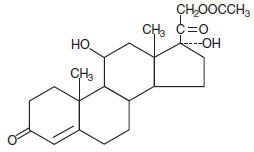
Each Hydrocortisone Acetate Suppository for rectal administration contains hydrocortisone acetate in a hydrogenated cocoglyceride base. Hydrocortisone acetate is a corticosteroid. The molecular weight of hydrocortisone acetate is 404.50. Chemically, hydrocortisone acetate is pregn-4-ene-3, 20 dione, 21- (acetyloxy)-11, 17-dihydroxy-, (11β)- with an empirical formula of C 23 H 32 O 6 the following structural formula:
Medication Information
Indications and Usage
Hydrocortisone Acetate Suppositories are indicated for use in inflamed hemorrhoids, post irradiation (factitial) proctitis, as an adjunct in the treatment of chronic ulcerative colitis, cryptitis, other inflammatory conditions of the anorectum, and pruritus ani.
Dosage and Administration
Usual dosage: One suppository in the rectum twice daily morning and night for two weeks, in nonspecific proctitis. In more severe cases, one suppository three times daily; or two suppositories twice daily. In factitial proctitis, recommended therapy is six to eight weeks or less, according to the response of the individual case.
Contraindications
Hydrocortisone Acetate Suppositories are contraindicated in those patients with a history of hypersensitivity to any of the components.
Adverse Reactions
The following local adverse reactions have been reported with Hydrocortisone Acetate Suppositories: burning, itching, irritation, dryness, folliculitis, hypopigmentation, allergic contact dermatitis, and secondary infection.
To report SUSPECTED ADVERSE REACTIONS, contact Padagis at 1-866-634-9120 or FDA at 1-800-FDA-1088 or www.fda.gov/medwatch.
How Supplied
Hydrocortisone Acetate Suppositories are easy to open, color coded and available in cartons of 12.
25 mg NDC 0574-7090-12
30 mg NDC 0574-7093-12
Description
Each Hydrocortisone Acetate Suppository for rectal administration contains hydrocortisone acetate in a hydrogenated cocoglyceride base.
Hydrocortisone acetate is a corticosteroid. The molecular weight of hydrocortisone acetate is 404.50. Chemically, hydrocortisone acetate is pregn-4-ene-3, 20 dione, 21- (acetyloxy)-11, 17-dihydroxy-, (11β)- with an empirical formula of C23H32O6the following structural formula:
Section 42229-5
Rx Only
Manufactured By
Padagis
Minneapolis, MN 55427
www.padagis.com
2204561 1B400 RC J2 Rev 05-22
Section 44425-7
Store at 20° to 25°C (68° to 77°F) [see USP Controlled Room Temperature]. Protect from freezing.
Overdosage
If signs and symptoms of systemic overdosage occur, discontinue use.
Precautions
Do not use unless adequate proctologic examination is made.
If irritation develops, the product should be discontinued and appropriate therapy instituted.
In the presence of an infection, the use of an appropriate antifungal or antibacterial agent should be instituted. If a favorable response does not occur promptly, Hydrocortisone Acetate Suppositories should be discontinued until the infection has been adequately controlled.
Carcinogenesis
No long-term studies in animals have been performed to evaluate the carcinogenic potential of corticosteroid suppositories.
Pregnancy Category C
In laboratory animals, topical steroids have been associated with an increase in the incidence of fetal abnormalities when gestating females have been exposed to rather low dosage levels. There are no adequate and well-controlled studies in pregnant women.
Hydrocortisone acetate suppositories should only be used during pregnancy if the potential benefit justifies the risk to the fetus. Drugs of this class should not be used extensively on pregnant patients, in large amounts, or for prolonged periods of time.
It is not known whether this drug is excreted in human milk. Because many drugs are excreted in human milk and because of the potential for serious adverse reactions in nursing infants from hydrocortisone acetate suppositories, a decision should be made whether to discontinue nursing or to discontinue the drug, taking into account the importance of the drug to the mother.
Clinical Pharmacology
In normal subjects, about 26 percent of hydrocortisone acetate is absorbed when the hydrocortisone acetate suppository is applied to the rectum. Absorption of hydrocortisone acetate may vary across abraded or inflamed surfaces.
Topical steroids are primarily effective because of their anti-inflammatory, antipruritic and vasoconstrictive action.
Drug Abuse and Dependence
Drug abuse and dependence have not been reported in patients treated with Hydrocortisone Acetate Suppositories.
Principal Display Panel 25 Mg Carton
NDC 0574-7090-12
Rx Only
Hydrocortisone Acetate Suppositories
25 mg
UNIT DOSE
FOR RECTAL USE ONLY
12 Suppositories
The following image is a placeholder representing the product identifier that is either affixed or imprinted on the drug package label during the packaging operation.
Principal Display Panel – 30mg Carton
NDC 0574-7093-12
Rx Only
Hydrocortisone Acetate Suppositories
30 mg
UNIT DOSE
FOR RECTAL USE ONLY
12 Suppositories
The following image is a placeholder representing the product identifier that is either affixed or imprinted on the drug package label during the packaging operation.
Structured Label Content
Indications and Usage (INDICATIONS AND USAGE)
Hydrocortisone Acetate Suppositories are indicated for use in inflamed hemorrhoids, post irradiation (factitial) proctitis, as an adjunct in the treatment of chronic ulcerative colitis, cryptitis, other inflammatory conditions of the anorectum, and pruritus ani.
Dosage and Administration (DOSAGE AND ADMINISTRATION)
Usual dosage: One suppository in the rectum twice daily morning and night for two weeks, in nonspecific proctitis. In more severe cases, one suppository three times daily; or two suppositories twice daily. In factitial proctitis, recommended therapy is six to eight weeks or less, according to the response of the individual case.
Contraindications (CONTRAINDICATIONS)
Hydrocortisone Acetate Suppositories are contraindicated in those patients with a history of hypersensitivity to any of the components.
Adverse Reactions (ADVERSE REACTIONS)
The following local adverse reactions have been reported with Hydrocortisone Acetate Suppositories: burning, itching, irritation, dryness, folliculitis, hypopigmentation, allergic contact dermatitis, and secondary infection.
To report SUSPECTED ADVERSE REACTIONS, contact Padagis at 1-866-634-9120 or FDA at 1-800-FDA-1088 or www.fda.gov/medwatch.
How Supplied (HOW SUPPLIED)
Hydrocortisone Acetate Suppositories are easy to open, color coded and available in cartons of 12.
25 mg NDC 0574-7090-12
30 mg NDC 0574-7093-12
Description (DESCRIPTION)
Each Hydrocortisone Acetate Suppository for rectal administration contains hydrocortisone acetate in a hydrogenated cocoglyceride base.
Hydrocortisone acetate is a corticosteroid. The molecular weight of hydrocortisone acetate is 404.50. Chemically, hydrocortisone acetate is pregn-4-ene-3, 20 dione, 21- (acetyloxy)-11, 17-dihydroxy-, (11β)- with an empirical formula of C23H32O6the following structural formula:
Section 42229-5 (42229-5)
Rx Only
Manufactured By
Padagis
Minneapolis, MN 55427
www.padagis.com
2204561 1B400 RC J2 Rev 05-22
Section 44425-7 (44425-7)
Store at 20° to 25°C (68° to 77°F) [see USP Controlled Room Temperature]. Protect from freezing.
Overdosage (OVERDOSAGE)
If signs and symptoms of systemic overdosage occur, discontinue use.
Precautions (PRECAUTIONS)
Do not use unless adequate proctologic examination is made.
If irritation develops, the product should be discontinued and appropriate therapy instituted.
In the presence of an infection, the use of an appropriate antifungal or antibacterial agent should be instituted. If a favorable response does not occur promptly, Hydrocortisone Acetate Suppositories should be discontinued until the infection has been adequately controlled.
Carcinogenesis
No long-term studies in animals have been performed to evaluate the carcinogenic potential of corticosteroid suppositories.
Pregnancy Category C
In laboratory animals, topical steroids have been associated with an increase in the incidence of fetal abnormalities when gestating females have been exposed to rather low dosage levels. There are no adequate and well-controlled studies in pregnant women.
Hydrocortisone acetate suppositories should only be used during pregnancy if the potential benefit justifies the risk to the fetus. Drugs of this class should not be used extensively on pregnant patients, in large amounts, or for prolonged periods of time.
It is not known whether this drug is excreted in human milk. Because many drugs are excreted in human milk and because of the potential for serious adverse reactions in nursing infants from hydrocortisone acetate suppositories, a decision should be made whether to discontinue nursing or to discontinue the drug, taking into account the importance of the drug to the mother.
Clinical Pharmacology (CLINICAL PHARMACOLOGY)
In normal subjects, about 26 percent of hydrocortisone acetate is absorbed when the hydrocortisone acetate suppository is applied to the rectum. Absorption of hydrocortisone acetate may vary across abraded or inflamed surfaces.
Topical steroids are primarily effective because of their anti-inflammatory, antipruritic and vasoconstrictive action.
Drug Abuse and Dependence (DRUG ABUSE AND DEPENDENCE)
Drug abuse and dependence have not been reported in patients treated with Hydrocortisone Acetate Suppositories.
Principal Display Panel 25 Mg Carton (PRINCIPAL DISPLAY PANEL - 25 mg Carton)
NDC 0574-7090-12
Rx Only
Hydrocortisone Acetate Suppositories
25 mg
UNIT DOSE
FOR RECTAL USE ONLY
12 Suppositories
The following image is a placeholder representing the product identifier that is either affixed or imprinted on the drug package label during the packaging operation.
Principal Display Panel – 30mg Carton (PRINCIPAL DISPLAY PANEL – 30mg Carton)
NDC 0574-7093-12
Rx Only
Hydrocortisone Acetate Suppositories
30 mg
UNIT DOSE
FOR RECTAL USE ONLY
12 Suppositories
The following image is a placeholder representing the product identifier that is either affixed or imprinted on the drug package label during the packaging operation.
Advanced Ingredient Data
Raw Label Data
All Sections (JSON)
Additional Information
Back to search View SPL set listing Open on DailyMed ↗
Source: dailymed · Ingested: 2026-02-15T11:44:06.681801 · Updated: 2026-03-14T22:18:42.758225