erythromycin ophthalmic ointment usp, 0.5%
2cc726c2-3746-6dbf-e063-6294a90a789f
34391-3
HUMAN PRESCRIPTION DRUG LABEL
Drug Facts
Composition & Product
Identifiers & Packaging
Indications and Usage
For the treatment of superficial ocular infections involving the conjunctiva and/or cornea caused by organisms susceptible to erythromycin. For prophylaxis of ophthalmia neonatorum due to N. gonorrhoeae or C. trachomatis . The effectiveness of erythromycin in the prevention of ophthalmia caused by penicillinase-producing N.gonorrhoeae is not established. For infants born to mothers with clinically apparent gonorrhea, intravenous or intramuscular injections of aqueous crystalline penicillin G should be given; a single dose of 50,000 units for term infants or 20,000 units for infants of low birth weight. Topical prophylaxis alone is inadequate for these infants.
Dosage and Administration
In the treatment of superficial ocular infections, a ribbon approximately 1 cm in length of Erythromycin Opthalmic Ointment should be applied directly to the infected structure up to 6 times daily, depending on the severity of the infection. For prophylaxis of neonatal gonococcal or chlamydial conjunctivitis, a ribbon of ointment approximately 1 cm in length should be instilled into each lower conjunctival sac. The ointment should not be flushed from the eye following instillation. A new tube should be used for each infant.
Contraindications
This drug is contraindicated in patients with a history of hypersensitivity to erythromycin.
Adverse Reactions
The most frequently reported adverse reactions are minor ocular irritations, redness, and hypersensitivity reactions.
How Supplied
Sterile Erythromycin Ophthalmic Ointment USP, 0.5% is available as follows: 3.5 g (1/8 oz) sterile tamper-resistant tube (NDC 60760-670-35)
Description
Sterile Rx only
Medication Information
Indications and Usage
For the treatment of superficial ocular infections involving the conjunctiva and/or cornea caused by organisms susceptible to erythromycin. For prophylaxis of ophthalmia neonatorum due to N. gonorrhoeae or C. trachomatis . The effectiveness of erythromycin in the prevention of ophthalmia caused by penicillinase-producing N.gonorrhoeae is not established. For infants born to mothers with clinically apparent gonorrhea, intravenous or intramuscular injections of aqueous crystalline penicillin G should be given; a single dose of 50,000 units for term infants or 20,000 units for infants of low birth weight. Topical prophylaxis alone is inadequate for these infants.
Dosage and Administration
In the treatment of superficial ocular infections, a ribbon approximately 1 cm in length of Erythromycin Opthalmic Ointment should be applied directly to the infected structure up to 6 times daily, depending on the severity of the infection. For prophylaxis of neonatal gonococcal or chlamydial conjunctivitis, a ribbon of ointment approximately 1 cm in length should be instilled into each lower conjunctival sac. The ointment should not be flushed from the eye following instillation. A new tube should be used for each infant.
Contraindications
This drug is contraindicated in patients with a history of hypersensitivity to erythromycin.
Adverse Reactions
The most frequently reported adverse reactions are minor ocular irritations, redness, and hypersensitivity reactions.
How Supplied
Sterile Erythromycin Ophthalmic Ointment USP, 0.5% is available as follows: 3.5 g (1/8 oz) sterile tamper-resistant tube (NDC 60760-670-35)
Description
Sterile Rx only
Section 34072-9
General:The use of antimicrobial agents may be associated with the overgrowth of nonsusceptible organisms including fungi; in such a case, antibiotic administration should be stopped and appropriate measures taken.
Section 34076-0
Information for Patients:Avoid contaminating the applicator tip with material from the eye, fingers, or other source.
Section 34080-2
Nursing Mothers:Caution should be exercised when erythromycin is administered to a nursing woman.
Section 34081-0
Pediatric Use -See INDICATIONS AND USAGE and DOSAGE AND ADMINISTRATION.
Section 34082-8
Geriatric Use:No overall differences in safety or effectiveness have been observed between elderly and younger patients.
Section 34083-6
Carcinogenesis, Mutagenesis, Impairment of Fertility:Two year oral studies conducted in rats with erythromycin did not provide evidence of tumorigenicity. Mutagenicity studies have not been conducted. No evidence of impaired fertility that appeared related to erythromycin was reported in animal studies.
Section 42228-7
Pregnancy:Teratogenic Effects: Pregnancy Category B. Reproduction studies have been performed in rats, mice, and rabbits using erythromycin and its various salts and esters, at doses that were several multiples of the usual human dose. No evidence of harm to the fetus that appeared related to erythromycin was reported in these studies. There are, however, no adequate and well controlled studies in pregnant women. Because animal reproductive studies are not always predictive of human response, the erythromycins should be used during pregnancy only if clearly needed.
Section 42229-5
Sterile
Rx only
Section 44425-7
STORAGE:Store at 20° to 25°C (68° to 77°F) [see USP Controlled Room Temperature].
Avoid excessive heat.
Protect from freezing.
Distributed by:
Armas Pahrmaceuticals, Inc.
Freehold, NJ 07728 (USA)
Manufactured by:
Ophtapharm AG, Riethofstrasse 1, Hellingen,
8442, Switzerland (CHE) for Sentiss
Made in Switzerland
83008101 Rev. 07/23
Section 49489-8
Microbiology: Erythromycin inhibits protein synthesis without affecting nucleic acid synthesis. Erythromycin is usually active against the following organisms in vitroand in clinical infections:
Streptococcus pyogenes(group A β-hemolytic)
Alpha-hemolytic streptococci (viridans group)
Staphylococcus aureus, including penicillinase-producing strains (methicillin-resistant staphylococci are uniformly resistant to erythromycin)
Streptococcus pneumoniae
Mycoplasma pneumoniae(Eaton Agent, PPLO)
Haemophilus influenzae(not all strains of this organism are susceptible at the erythromycin concentrations ordinarily achieved)
Treponema pallidum
Corynebacterium diphtheriae
Neisseria gonorrhoeae
Chlamydia trachomatis
Section 51945-4
Description:
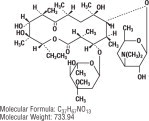
Erythromycin Ophthalmic Ointment belongs to the macrolide group of antibiotics. It is basic and readily forms a salt when combined with an acid. The base, as crystals or powder, is slightly soluble in water, moderately soluble in ether, and readily soluble in alcohol or chloroform. Erythromycin ((3R*, 4S*, 5S*, 6R*, 7R*, 9R*, 11R*, 12R*, 13S*, 14R*)-4-[(2,6-dideoxy-3-C-methyl-3- O-methyl-α-L- ribo-hexopyranosyl)-oxy]-14-ethyl-7,12,13-trihydroxy-3,5,7,9,11,13-hexamethyl-6-[[3,4,6-trideoxy-3-(dimethyl-amino)-β-D- xylo-hexopyranosyl]oxy]oxacyclotetradecane-2,10-dione)) is an antibiotic produced from a strain of Streptomyces erythraeus.
It has the following structural formula:
Each gram contains Erythromycin USP 5 mg in a sterile ophthalmic base of mineral oil and white petrolatum.
How Supplied:
Sterile Erythromycin Ophthalmic Ointment USP, 0.5% is available as follows:
3.5 g (1/8 oz) sterile tamper-resistant tube (NDC 60760-670-35)
Adverse Reactions:
The most frequently reported adverse reactions are minor ocular irritations, redness, and hypersensitivity reactions.
Contraindications:
This drug is contraindicated in patients with a history of hypersensitivity to erythromycin.
Indications and Usage:
For the treatment of superficial ocular infections involving the conjunctiva and/or cornea caused by organisms susceptible to erythromycin.
For prophylaxis of ophthalmia neonatorum due to N. gonorrhoeaeor C. trachomatis.
The effectiveness of erythromycin in the prevention of ophthalmia caused by penicillinase-producing N.gonorrhoeaeis not established.
For infants born to mothers with clinically apparent gonorrhea, intravenous or intramuscular injections of aqueous crystalline penicillin G should be given; a single dose of 50,000 units for term infants or 20,000 units for infants of low birth weight. Topical prophylaxis alone is inadequate for these infants.
Dosage and Administration:
In the treatment of superficial ocular infections, a ribbon approximately 1 cm in length of Erythromycin Opthalmic Ointment should be applied directly to the infected structure up to 6 times daily, depending on the severity of the infection.
For prophylaxis of neonatal gonococcal or chlamydial conjunctivitis, a ribbon of ointment approximately 1 cm in length should be instilled into each lower conjunctival sac. The ointment should not be flushed from the eye following instillation. A new tube should be used for each infant.
Structured Label Content
Section 34072-9 (34072-9)
General:The use of antimicrobial agents may be associated with the overgrowth of nonsusceptible organisms including fungi; in such a case, antibiotic administration should be stopped and appropriate measures taken.
Section 34076-0 (34076-0)
Information for Patients:Avoid contaminating the applicator tip with material from the eye, fingers, or other source.
Section 34080-2 (34080-2)
Nursing Mothers:Caution should be exercised when erythromycin is administered to a nursing woman.
Section 34081-0 (34081-0)
Pediatric Use -See INDICATIONS AND USAGE and DOSAGE AND ADMINISTRATION.
Section 34082-8 (34082-8)
Geriatric Use:No overall differences in safety or effectiveness have been observed between elderly and younger patients.
Section 34083-6 (34083-6)
Carcinogenesis, Mutagenesis, Impairment of Fertility:Two year oral studies conducted in rats with erythromycin did not provide evidence of tumorigenicity. Mutagenicity studies have not been conducted. No evidence of impaired fertility that appeared related to erythromycin was reported in animal studies.
Section 42228-7 (42228-7)
Pregnancy:Teratogenic Effects: Pregnancy Category B. Reproduction studies have been performed in rats, mice, and rabbits using erythromycin and its various salts and esters, at doses that were several multiples of the usual human dose. No evidence of harm to the fetus that appeared related to erythromycin was reported in these studies. There are, however, no adequate and well controlled studies in pregnant women. Because animal reproductive studies are not always predictive of human response, the erythromycins should be used during pregnancy only if clearly needed.
Section 42229-5 (42229-5)
Sterile
Rx only
Section 44425-7 (44425-7)
STORAGE:Store at 20° to 25°C (68° to 77°F) [see USP Controlled Room Temperature].
Avoid excessive heat.
Protect from freezing.
Distributed by:
Armas Pahrmaceuticals, Inc.
Freehold, NJ 07728 (USA)
Manufactured by:
Ophtapharm AG, Riethofstrasse 1, Hellingen,
8442, Switzerland (CHE) for Sentiss
Made in Switzerland
83008101 Rev. 07/23
Section 49489-8 (49489-8)
Microbiology: Erythromycin inhibits protein synthesis without affecting nucleic acid synthesis. Erythromycin is usually active against the following organisms in vitroand in clinical infections:
Streptococcus pyogenes(group A β-hemolytic)
Alpha-hemolytic streptococci (viridans group)
Staphylococcus aureus, including penicillinase-producing strains (methicillin-resistant staphylococci are uniformly resistant to erythromycin)
Streptococcus pneumoniae
Mycoplasma pneumoniae(Eaton Agent, PPLO)
Haemophilus influenzae(not all strains of this organism are susceptible at the erythromycin concentrations ordinarily achieved)
Treponema pallidum
Corynebacterium diphtheriae
Neisseria gonorrhoeae
Chlamydia trachomatis
Section 51945-4 (51945-4)
Description: (DESCRIPTION:)
Erythromycin Ophthalmic Ointment belongs to the macrolide group of antibiotics. It is basic and readily forms a salt when combined with an acid. The base, as crystals or powder, is slightly soluble in water, moderately soluble in ether, and readily soluble in alcohol or chloroform. Erythromycin ((3R*, 4S*, 5S*, 6R*, 7R*, 9R*, 11R*, 12R*, 13S*, 14R*)-4-[(2,6-dideoxy-3-C-methyl-3- O-methyl-α-L- ribo-hexopyranosyl)-oxy]-14-ethyl-7,12,13-trihydroxy-3,5,7,9,11,13-hexamethyl-6-[[3,4,6-trideoxy-3-(dimethyl-amino)-β-D- xylo-hexopyranosyl]oxy]oxacyclotetradecane-2,10-dione)) is an antibiotic produced from a strain of Streptomyces erythraeus.
It has the following structural formula:
Each gram contains Erythromycin USP 5 mg in a sterile ophthalmic base of mineral oil and white petrolatum.
How Supplied: (HOW SUPPLIED:)
Sterile Erythromycin Ophthalmic Ointment USP, 0.5% is available as follows:
3.5 g (1/8 oz) sterile tamper-resistant tube (NDC 60760-670-35)
Adverse Reactions: (ADVERSE REACTIONS:)
The most frequently reported adverse reactions are minor ocular irritations, redness, and hypersensitivity reactions.
Contraindications: (CONTRAINDICATIONS:)
This drug is contraindicated in patients with a history of hypersensitivity to erythromycin.
Indications and Usage: (INDICATIONS AND USAGE:)
For the treatment of superficial ocular infections involving the conjunctiva and/or cornea caused by organisms susceptible to erythromycin.
For prophylaxis of ophthalmia neonatorum due to N. gonorrhoeaeor C. trachomatis.
The effectiveness of erythromycin in the prevention of ophthalmia caused by penicillinase-producing N.gonorrhoeaeis not established.
For infants born to mothers with clinically apparent gonorrhea, intravenous or intramuscular injections of aqueous crystalline penicillin G should be given; a single dose of 50,000 units for term infants or 20,000 units for infants of low birth weight. Topical prophylaxis alone is inadequate for these infants.
Dosage and Administration: (DOSAGE AND ADMINISTRATION:)
In the treatment of superficial ocular infections, a ribbon approximately 1 cm in length of Erythromycin Opthalmic Ointment should be applied directly to the infected structure up to 6 times daily, depending on the severity of the infection.
For prophylaxis of neonatal gonococcal or chlamydial conjunctivitis, a ribbon of ointment approximately 1 cm in length should be instilled into each lower conjunctival sac. The ointment should not be flushed from the eye following instillation. A new tube should be used for each infant.
Advanced Ingredient Data
Raw Label Data
All Sections (JSON)
Additional Information
Back to search View SPL set listing Open on DailyMed ↗
Source: dailymed · Ingested: 2026-02-15T11:45:31.146815 · Updated: 2026-03-14T22:22:33.812720