Lorbrena
2b34d62d-e02a-4af3-bc0d-1571dd4ee76d
34391-3
HUMAN PRESCRIPTION DRUG LABEL
Drug Facts
Composition & Product
Identifiers & Packaging
Indications and Usage
LORBRENA ® is indicated for the treatment of adult patients with metastatic non-small cell lung cancer (NSCLC) whose tumors are anaplastic lymphoma kinase (ALK)-positive as detected by an FDA-approved test.
Dosage and Administration
Contraindications
LORBRENA is contraindicated in patients taking strong CYP3A inducers, due to the potential for serious hepatotoxicity [see Warnings and Precautions (5.1) ] .
Warnings and Precautions
• Risk of Serious Hepatotoxicity with Concomitant Use of Strong CYP3A Inducers : Discontinue strong CYP3A inducers for 3 plasma half-lives of the strong CYP3A inducer prior to initiating LORBRENA. ( 2.4 , 5.1 ) • Central Nervous System (CNS) Effects : CNS effects include seizures, psychotic effects and changes in cognitive function, mood (including suicidal ideation), speech, mental status, and sleep. Withhold and resume LORBRENA at same or reduced dose or permanently discontinue LORBRENA based on severity. ( 2.3 , 5.2 ) • Hyperlipidemia : Initiate or increase the dose of lipid-lowering agents. Withhold and resume LORBRENA at same or reduced dose based on severity. ( 2.3 , 5.3 ) • Atrioventricular Block : Withhold and resume LORBRENA at same or reduced dose based on severity. ( 2.3 , 5.4 ) • Interstitial Lung Disease/Pneumonitis : Immediately withhold LORBRENA in patients with suspected ILD/pneumonitis. Permanently discontinue LORBRENA for treatment-related ILD/pneumonitis of any severity. ( 2.3 , 5.5 ) • Hypertension : Monitor blood pressure after 2 weeks and then at least monthly during treatment. For severe hypertension, withhold LORBRENA, then dose reduce or permanently discontinue. ( 2.3 , 5.6 ) • Hyperglycemia : Assess fasting serum glucose prior to starting LORBRENA and regularly during treatment. If not adequately controlled with optimal medical management, withhold LORBRENA, then consider dose reduction or permanently discontinue, based on severity. ( 2.3 , 5.7 ) • Embryo-Fetal Toxicity : Can cause fetal harm. Advise females of reproductive potential of the potential risk to a fetus. Advise males and females of reproductive potential to use an effective non-hormonal method of contraception. ( 5.8 , 7.2 , 8.1 , 8.3 )
Adverse Reactions
The following adverse reactions are described elsewhere in the labeling: • Risk of Serious Hepatotoxicity with Concomitant Use of Strong CYP3A Inducers [see Warnings and Precautions (5.1) ] • Central Nervous System Effects [see Warnings and Precautions (5.2) ] • Hyperlipidemia [see Warnings and Precautions (5.3) ] • Atrioventricular Block [see Warnings and Precautions (5.4) ] • Interstitial Lung Disease/Pneumonitis [see Warnings and Precautions (5.5) ] • Hypertension [see Warnings and Precautions (5.6) ] • Hyperglycemia [see Warnings and Precautions (5.7) ]
Drug Interactions
Strong CYP3A Inducers LORBRENA is contraindicated in patients taking strong CYP3A inducers. Discontinue strong CYP3A inducers for 3 plasma half-lives of the strong CYP3A inducer prior to initiating LORBRENA [see Contraindications (4) , Warnings and Precautions (5.1) , Drug Interactions (7.1) , Clinical Pharmacology (12.3) ] . Moderate CYP3A Inducers Avoid concomitant use of moderate CYP3A inducers with LORBRENA. If concomitant use with moderate CYP3A inducers is unavoidable, increase the LORBRENA dose to 125 mg once daily [see Drug Interactions (7.1) , Clinical Pharmacology (12.3) ] . Strong CYP3A Inhibitors Avoid concomitant use of LORBRENA with strong CYP3A inhibitors. If concomitant use with a strong CYP3A inhibitor is unavoidable, reduce the starting dose of LORBRENA from 100 mg orally once daily to 75 mg orally once daily. In patients who have had a dose reduction to 75 mg orally once daily due to adverse reactions and who initiate a strong CYP3A inhibitor, reduce the LORBRENA dose to 50 mg orally once daily. If concomitant use of a strong CYP3A inhibitor is discontinued, increase the LORBRENA dose (after 3 plasma half-lives of the strong CYP3A inhibitor) to the dose that was used before starting the strong inhibitor [see Drug Interactions (7.1) , Clinical Pharmacology (12.3) ] . Fluconazole Avoid concomitant use of LORBRENA with fluconazole [see Clinical Pharmacology (12.3) ] . If concomitant use is unavoidable, reduce the starting dose of LORBRENA from 100 mg orally once daily to 75 mg orally once daily [see Drug Interactions (7.1) , Clinical Pharmacology (12.3) ] .
How Supplied
Table 11 describes the available strengths and package configurations for LORBRENA: Table 11 LORBRENA Tablets Strength (mg) Package Configuration NDC Description 25 30 tablets bottle with a child-resistant closure 0069-0227-01 8 mm round, tan, immediate release film‑coated tablet, debossed with “Pfizer” on one side and “25” and “LLN” on the other side 25 120 tablets bottle with a child-resistant closure 0069-0227-03 8 mm round, tan, immediate release film‑coated tablet, debossed with “Pfizer” on one side and “25” and “LLN” on the other side 100 30 tablets bottle with a child-resistant closure 0069-0231-01 8.5 mm × 17 mm oval, lavender, immediate release, film‑coated tablet, debossed with “Pfizer” on one side and “LLN 100” on the other side
Storage and Handling
Table 11 describes the available strengths and package configurations for LORBRENA: Table 11 LORBRENA Tablets Strength (mg) Package Configuration NDC Description 25 30 tablets bottle with a child-resistant closure 0069-0227-01 8 mm round, tan, immediate release film‑coated tablet, debossed with “Pfizer” on one side and “25” and “LLN” on the other side 25 120 tablets bottle with a child-resistant closure 0069-0227-03 8 mm round, tan, immediate release film‑coated tablet, debossed with “Pfizer” on one side and “25” and “LLN” on the other side 100 30 tablets bottle with a child-resistant closure 0069-0231-01 8.5 mm × 17 mm oval, lavender, immediate release, film‑coated tablet, debossed with “Pfizer” on one side and “LLN 100” on the other side
Description
Dosage Modifications for Drug Interactions ( 2.4 ) 1/2026 Recommended Dosage for Severe Hepatic Impairment ( 2.5 ) 1/2026 Recommended Dosage for Renal Impairment ( 2.6 ) 1/2026
Medication Information
Warnings and Precautions
• Risk of Serious Hepatotoxicity with Concomitant Use of Strong CYP3A Inducers : Discontinue strong CYP3A inducers for 3 plasma half-lives of the strong CYP3A inducer prior to initiating LORBRENA. ( 2.4 , 5.1 ) • Central Nervous System (CNS) Effects : CNS effects include seizures, psychotic effects and changes in cognitive function, mood (including suicidal ideation), speech, mental status, and sleep. Withhold and resume LORBRENA at same or reduced dose or permanently discontinue LORBRENA based on severity. ( 2.3 , 5.2 ) • Hyperlipidemia : Initiate or increase the dose of lipid-lowering agents. Withhold and resume LORBRENA at same or reduced dose based on severity. ( 2.3 , 5.3 ) • Atrioventricular Block : Withhold and resume LORBRENA at same or reduced dose based on severity. ( 2.3 , 5.4 ) • Interstitial Lung Disease/Pneumonitis : Immediately withhold LORBRENA in patients with suspected ILD/pneumonitis. Permanently discontinue LORBRENA for treatment-related ILD/pneumonitis of any severity. ( 2.3 , 5.5 ) • Hypertension : Monitor blood pressure after 2 weeks and then at least monthly during treatment. For severe hypertension, withhold LORBRENA, then dose reduce or permanently discontinue. ( 2.3 , 5.6 ) • Hyperglycemia : Assess fasting serum glucose prior to starting LORBRENA and regularly during treatment. If not adequately controlled with optimal medical management, withhold LORBRENA, then consider dose reduction or permanently discontinue, based on severity. ( 2.3 , 5.7 ) • Embryo-Fetal Toxicity : Can cause fetal harm. Advise females of reproductive potential of the potential risk to a fetus. Advise males and females of reproductive potential to use an effective non-hormonal method of contraception. ( 5.8 , 7.2 , 8.1 , 8.3 )
Indications and Usage
LORBRENA ® is indicated for the treatment of adult patients with metastatic non-small cell lung cancer (NSCLC) whose tumors are anaplastic lymphoma kinase (ALK)-positive as detected by an FDA-approved test.
Dosage and Administration
Contraindications
LORBRENA is contraindicated in patients taking strong CYP3A inducers, due to the potential for serious hepatotoxicity [see Warnings and Precautions (5.1) ] .
Adverse Reactions
The following adverse reactions are described elsewhere in the labeling: • Risk of Serious Hepatotoxicity with Concomitant Use of Strong CYP3A Inducers [see Warnings and Precautions (5.1) ] • Central Nervous System Effects [see Warnings and Precautions (5.2) ] • Hyperlipidemia [see Warnings and Precautions (5.3) ] • Atrioventricular Block [see Warnings and Precautions (5.4) ] • Interstitial Lung Disease/Pneumonitis [see Warnings and Precautions (5.5) ] • Hypertension [see Warnings and Precautions (5.6) ] • Hyperglycemia [see Warnings and Precautions (5.7) ]
Drug Interactions
Strong CYP3A Inducers LORBRENA is contraindicated in patients taking strong CYP3A inducers. Discontinue strong CYP3A inducers for 3 plasma half-lives of the strong CYP3A inducer prior to initiating LORBRENA [see Contraindications (4) , Warnings and Precautions (5.1) , Drug Interactions (7.1) , Clinical Pharmacology (12.3) ] . Moderate CYP3A Inducers Avoid concomitant use of moderate CYP3A inducers with LORBRENA. If concomitant use with moderate CYP3A inducers is unavoidable, increase the LORBRENA dose to 125 mg once daily [see Drug Interactions (7.1) , Clinical Pharmacology (12.3) ] . Strong CYP3A Inhibitors Avoid concomitant use of LORBRENA with strong CYP3A inhibitors. If concomitant use with a strong CYP3A inhibitor is unavoidable, reduce the starting dose of LORBRENA from 100 mg orally once daily to 75 mg orally once daily. In patients who have had a dose reduction to 75 mg orally once daily due to adverse reactions and who initiate a strong CYP3A inhibitor, reduce the LORBRENA dose to 50 mg orally once daily. If concomitant use of a strong CYP3A inhibitor is discontinued, increase the LORBRENA dose (after 3 plasma half-lives of the strong CYP3A inhibitor) to the dose that was used before starting the strong inhibitor [see Drug Interactions (7.1) , Clinical Pharmacology (12.3) ] . Fluconazole Avoid concomitant use of LORBRENA with fluconazole [see Clinical Pharmacology (12.3) ] . If concomitant use is unavoidable, reduce the starting dose of LORBRENA from 100 mg orally once daily to 75 mg orally once daily [see Drug Interactions (7.1) , Clinical Pharmacology (12.3) ] .
Storage and Handling
Table 11 describes the available strengths and package configurations for LORBRENA: Table 11 LORBRENA Tablets Strength (mg) Package Configuration NDC Description 25 30 tablets bottle with a child-resistant closure 0069-0227-01 8 mm round, tan, immediate release film‑coated tablet, debossed with “Pfizer” on one side and “25” and “LLN” on the other side 25 120 tablets bottle with a child-resistant closure 0069-0227-03 8 mm round, tan, immediate release film‑coated tablet, debossed with “Pfizer” on one side and “25” and “LLN” on the other side 100 30 tablets bottle with a child-resistant closure 0069-0231-01 8.5 mm × 17 mm oval, lavender, immediate release, film‑coated tablet, debossed with “Pfizer” on one side and “LLN 100” on the other side
How Supplied
Table 11 describes the available strengths and package configurations for LORBRENA: Table 11 LORBRENA Tablets Strength (mg) Package Configuration NDC Description 25 30 tablets bottle with a child-resistant closure 0069-0227-01 8 mm round, tan, immediate release film‑coated tablet, debossed with “Pfizer” on one side and “25” and “LLN” on the other side 25 120 tablets bottle with a child-resistant closure 0069-0227-03 8 mm round, tan, immediate release film‑coated tablet, debossed with “Pfizer” on one side and “25” and “LLN” on the other side 100 30 tablets bottle with a child-resistant closure 0069-0231-01 8.5 mm × 17 mm oval, lavender, immediate release, film‑coated tablet, debossed with “Pfizer” on one side and “LLN 100” on the other side
Description
Dosage Modifications for Drug Interactions ( 2.4 ) 1/2026 Recommended Dosage for Severe Hepatic Impairment ( 2.5 ) 1/2026 Recommended Dosage for Renal Impairment ( 2.6 ) 1/2026
Section 42229-5
Previously Untreated ALK-Positive Metastatic NSCLC (CROWN Study)
The safety of LORBRENA was evaluated in 149 patients with ALK-positive NSCLC in a randomized, open-label, active-controlled trial for the treatment of patients with ALK-positive, locally advanced or metastatic, NSCLC who had not received previous systemic treatment for advanced disease [see Clinical Studies (14)]. The median duration of exposure to LORBRENA was 16.7 months (4 days to 34.3 months) and 76% received LORBRENA for at least 12 months.
Serious adverse reactions occurred in 34% of patients treated with LORBRENA; the most frequently reported serious adverse reactions were pneumonia (4.7%), dyspnea (2.7%), respiratory failure (2.7%), cognitive effects (2.0%), and pyrexia (2.0%). Fatal adverse reactions occurred in 3.4% of patients treated with LORBRENA and included pneumonia (0.7%), respiratory failure (0.7%), cardiac failure acute (0.7%), pulmonary embolism (0.7%), and sudden death (0.7%).
Permanent discontinuation of LORBRENA due to adverse reactions occurred in 6.7% of patients. The most frequent adverse reaction that led to permanent discontinuation of LORBRENA was cognitive effects (1.3%). Adverse reactions leading to dose interruptions occurred in 49% of patients treated with LORBRENA. The most frequent adverse reactions that led to dose interruptions of LORBRENA were hypertriglyceridemia (7%), edema (5%), pneumonia (4.7%) cognitive effects (4.0%), mood effects (4.0%), and hypercholesterolemia (3.4%). Adverse reactions leading to dose reductions occurred in 21% of patients treated with LORBRENA. The most frequent adverse reactions that led to dose reductions were edema (5%), hypertriglyceridemia (4.0%), and peripheral neuropathy (3.4%).
Tables 2 and 3 summarize most frequent adverse reactions and laboratory abnormalities, respectively, in patients treated with LORBRENA in Study B7461006.
| Adverse Reaction |
LORBRENA
N=149 |
Crizotinib
N=142 |
||
|---|---|---|---|---|
|
All Grades
(%) |
Grade 3 or 4
(%) |
All Grades
(%) |
Grade 3 or 4
(%) |
|
| Abbreviations: NCI CTCAE=National Cancer Institute Common Terminology Criteria for Adverse Events; SOC=System organ class. | ||||
|
Psychiatric |
||||
|
Mood effects Mood effects (including affective disorder, affect lability, agitation, anger, anxiety, bipolar I disorder, depressed mood, depression, depressive symptom, euphoric mood, intentional self-injury, irritability, mood altered, mood swings, stress).
|
16 |
2 |
5 |
0 |
|
Nervous system |
||||
|
Peripheral neuropathy Peripheral neuropathy (including dysesthesia, gait disturbance, hypoesthesia, motor dysfunction, muscular weakness, neuralgia, neuropathy peripheral, paresthesia, peripheral motor neuropathy, peripheral sensory neuropathy).
|
34 |
2 |
15 |
0.7 |
|
Cognitive effects Cognitive effects (including events from SOC Nervous system disorders: amnesia, cognitive disorder, disturbance in attention, memory impairment, mental impairment; and also including events from SOC Psychiatric disorders: confusional state, delirium, disorientation).
|
21 |
2 |
6 |
0 |
|
Headache |
17 |
0 |
18 |
0.7 |
|
Dizziness |
11 |
0 |
14 |
0 |
|
Sleep effects Sleep effects (including insomnia, nightmare, sleep disorder, somnambulism).
|
11 |
1.3 |
10 |
0 |
|
Respiratory |
||||
|
Dyspnea |
20 |
2.7 |
16 |
2.1 |
|
Cough |
16 |
0 |
18 |
0 |
|
Respiratory failure |
2.7 |
2 |
0 |
0 |
|
Vascular disorders |
||||
|
Hypertension |
18 |
10 |
2.1 |
0 |
|
Ocular |
||||
|
Vision disorder Vision disorder (including diplopia, photophobia, photopsia, vision blurred, visual acuity reduced, visual impairment, vitreous floaters).
|
18 |
0 |
39 |
0.7 |
|
Gastrointestinal |
||||
|
Diarrhea |
21 |
1.3 |
52 |
0.7 |
|
Nausea |
15 |
0.7 |
52 |
2.1 |
|
Constipation |
17 |
0 |
30 |
0.7 |
|
Vomiting |
13 |
0.7 |
39 |
1.4 |
|
Musculoskeletal and connective tissue |
||||
|
Arthralgia |
19 |
0.7 |
11 |
0 |
|
Myalgia Myalgia (including musculoskeletal pain, myalgia).
|
15 |
0.7 |
7 |
0 |
|
Back pain |
15 |
0.7 |
11 |
0 |
|
Pain in extremity |
17 |
0 |
8 |
0 |
|
General |
||||
|
Edema Edema (including edema, edema peripheral, eyelid edema, face edema, generalized edema, localized edema, periorbital edema, peripheral swelling, swelling).
|
56 |
4 |
40 |
1.4 |
|
Weight gain |
38 |
17 |
13 |
2.1 |
|
Fatigue Fatigue (including asthenia, fatigue).
|
19 |
1.3 |
32 |
2.8 |
|
Pyrexia |
17 |
1.3 |
13 |
1.4 |
|
Chest pain |
11 |
1.3 |
14 |
0.7 |
|
Infections |
||||
|
Upper respiratory tract infection Upper respiratory tract infection (including upper respiratory infection).
|
11 |
0.7 |
7.7 |
1.4 |
|
Pneumonia |
7.4 |
2 |
8.5 |
3.5 |
|
Bronchitis |
6.7 |
2 |
2.1 |
0 |
|
Skin |
||||
|
Rash Rash (including dermatitis acneiform, maculopapular rash, rash).
|
11 |
0 |
8.5 |
0 |
Additional clinically significant adverse reactions occurring at an incidence between 1% and 10% were speech effects (6.7%) and psychotic effects (3.4%).
| Laboratory Abnormality |
LORBRENA
N=149 |
Crizotinib
N=142 |
||
|---|---|---|---|---|
|
All Grades
(%) |
Grade 3 or 4
(%) |
All Grades
(%) |
Grade 3 or 4
(%) |
|
| Abbreviations: ALT=alanine aminotransferase; AST=aspartate aminotransferase; CPK=creatine phosphokinase; GGT=gamma glutamyl transferase; NCI CTCAE=National Cancer Institute Common Terminology Criteria for Adverse Events; PTT=partial thromboplastin time. | ||||
| N=number of patients who had at least one on-study assessment for the parameter of interest. | ||||
|
Chemistry |
||||
|
Hypertriglyceridemia N=149 (LORBRENA).
N=141 (crizotinib).
|
95 |
22 |
27 |
0 |
|
Hypercholesterolemia |
91 |
19 |
12 |
0 |
|
Increased creatinine |
81 |
0.7 |
99 |
2.1 |
|
Increased GGT |
52 |
6 |
41 |
6 |
|
Increased AST |
48 |
2 |
75 |
3.5 |
|
Hyperglycemia |
48 |
7 |
27 |
2.1 |
|
Increased ALT |
44 |
2.7 |
75 |
4.3 |
|
Increased CPK |
39 |
2 |
64 |
5 |
|
Hypoalbuminemia |
36 |
0.7 |
61 |
6 |
|
Increased lipase |
28 |
7 |
34 |
5 |
|
Increased alkaline phosphatase |
23 |
0 |
50 |
0.7 |
|
Hyperkalemia |
21 |
1.3 |
27 |
2.1 |
|
Increased amylase N=148 (LORBRENA).
|
20 |
1.4 |
32 |
1.4 |
|
Hematology |
||||
|
Anemia |
48 |
2 |
38 |
2.8 |
|
Activated PTT N=138 (LORBRENA).
N=135 (crizotinib).
|
25 |
0 |
14 |
0 |
|
Lymphopenia |
23 |
2.7 |
43 |
6 |
|
Thrombocytopenia |
23 |
0 |
7 |
0.7 |
Section 42230-3
|
PATIENT INFORMATION
LORBRENA (lor-BREN-ah) (lorlatinib) tablets |
||
|---|---|---|
| This Patient Information has been approved by the U.S. Food and Drug Administration. Revised: January 2026 | ||
|
What is the most important information I should know about LORBRENA? |
||
|
LORBRENA can cause serious side effects, including: |
||
|
||
|
|
|
|
If you get serious side effects during treatment, your healthcare provider may change your dose, temporarily stop, or permanently stop treatment with LORBRENA. |
||
|
What is LORBRENA? |
||
|
LORBRENA is a prescription medicine used to treat adults with non-small cell lung cancer (NSCLC): |
||
|
||
|
Your healthcare provider will perform a test to make sure that LORBRENA is right for you. |
||
|
Do not take LORBRENA if you take certain other medicines called strong CYP3A inducers. Ask your healthcare provider for a list of these medicines if you are not sure. |
||
|
Before taking LORBRENA, tell your healthcare provider about all of your medical conditions, including if you: |
||
|
||
|
Tell your healthcare provider about all the medicines you take, including prescription medicines, over-the-counter medicines, vitamins, and herbal supplements. Taking LORBRENA with certain other medicines may increase your risk of side effects and may affect the way LORBRENA or the other medicines work. |
||
|
How should I take LORBRENA? |
||
|
||
|
What are the possible side effects of LORBRENA? |
||
|
The most common side effects of LORBRENA include: |
||
|
|
|
|
LORBRENA may cause decreased fertility in males, which may affect your ability to have children. Talk to your healthcare provider if you have concerns about fertility. |
||
|
These are not all of the possible side effects of LORBRENA. |
||
|
Call your doctor for medical advice about side effects. You may report side effects to FDA at 1‑800‑FDA‑1088. |
||
|
How should I store LORBRENA? |
||
|
||
|
Keep LORBRENA and all medicines out of the reach of children. |
||
|
General information about the safe and effective use of LORBRENA. |
||
|
Medicines are sometimes prescribed for purposes other than those listed in a Patient Information leaflet. Do not use LORBRENA for a condition for which it was not prescribed. Do not give LORBRENA to other people, even if they have the same symptoms that you have. It may harm them. You can ask your pharmacist or healthcare provider for more information about LORBRENA that is written for health professionals. |
||
|
What are the ingredients in LORBRENA? |
||
|
Active ingredient: lorlatinib |
||
|
Inactive ingredients: microcrystalline cellulose, dibasic calcium phosphate anhydrous, sodium starch glycolate, and magnesium stearate. |
||
|
Film-coating contains: hydroxypropyl methylcellulose (HPMC) 2910/hypromellose, lactose monohydrate, macrogol/polyethylene glycol (PEG) 3350, triacetin, titanium dioxide, ferrosoferric oxide/black iron oxide, and iron oxide red. |
||
|
For more information, go to www.Pfizer.com. |
||
|
LAB-1163-6.0 |
||
Section 43683-2
Section 44425-7
Store at 20°C to 25°C (68°F to 77°F); excursions permitted between 15°C to 30°C (59°F to 86°F) [see USP Controlled Room Temperature].
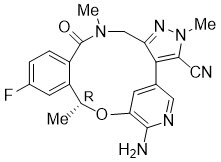
11 Description
LORBRENA (lorlatinib) is a kinase inhibitor for oral administration. The molecular formula is C21H19FN6O2 (anhydrous form) and the molecular weight is 406.41 Daltons. The chemical name is (10R)-7-amino-12-fluoro-2,10,16-trimethyl-15-oxo-10,15,16,17-tetrahydro-2H-4,8-methenopyrazolo[4,3-h][2,5,11] benzoxadiazacyclotetradecine-3-carbonitrile. The chemical structure is shown below:
Lorlatinib is a white to off-white powder with a pKa of 4.92. The solubility of lorlatinib in aqueous media decreases over the range pH 2.55 to pH 8.02 from 32.38 mg/mL to 0.17 mg/mL. The log of the distribution coefficient (octanol/water) at pH 9 is 2.45.
LORBRENA is supplied as tablets containing 25 mg or 100 mg of lorlatinib with the following inactive ingredients: microcrystalline cellulose, dibasic calcium phosphate anhydrous, sodium starch glycolate, and magnesium stearate. The film-coating contains hydroxypropyl methylcellulose (HPMC) 2910/hypromellose, lactose monohydrate, macrogol/polyethylene glycol (PEG) 3350, triacetin, titanium dioxide, ferrosoferric oxide/black iron oxide, and iron oxide red.
5.6 Hypertension
Hypertension can occur in patients receiving LORBRENA [see Adverse Reactions (6.1)]. Hypertension occurred in 13% of patients who received 100 mg LORBRENA once daily, including Grade 3 or 4 in 6% of patients. The median time to onset of hypertension was 6.4 months (1 day to 2.8 years), and 2.3% of patients temporarily discontinued LORBRENA for hypertension.
Control blood pressure prior to initiation of LORBRENA. Monitor blood pressure after 2 weeks and at least monthly thereafter during treatment with LORBRENA. Withhold and resume at a reduced dose or permanently discontinue LORBRENA based on severity [see Dosage and Administration (2.3)].
5.7 Hyperglycemia
Hyperglycemia can occur in patients receiving LORBRENA [see Adverse Reactions (6.1)]. Hyperglycemia occurred in 9% of patients who received 100 mg LORBRENA, including Grade 3 or 4 in 3.2% of patients. The median time to onset of hyperglycemia was 4.8 months (1 day to 2.9 years), and 0.8% of patients temporarily discontinued LORBRENA for hyperglycemia.
Assess fasting serum glucose prior to initiation of LORBRENA and monitor periodically thereafter. Withhold and resume at a reduced dose or permanently discontinue LORBRENA based on severity [see Dosage and Administration (2.3)].
8.4 Pediatric Use
The safety and effectiveness of LORBRENA in pediatric patients have not been established.
8.5 Geriatric Use
Of the patients in Study B7461001 (N=295) and Study B7461006 (N=149) who received 100 mg LORBRENA orally once daily, 18% and 40% of patients, respectively, were aged 65 years or older. No clinically important differences in safety or efficacy were observed between patients aged 65 years or older and younger patients.
5.3 Hyperlipidemia
Increases in serum cholesterol and triglycerides can occur in patients receiving LORBRENA [see Adverse Reactions (6.1)]. Grade 3 or 4 elevations in total cholesterol occurred in 18% and Grade 3 or 4 elevations in triglycerides occurred in 19% of the 476 patients who received 100 mg LORBRENA once daily. The median time to onset was 15 days for both hypercholesterolemia and hypertriglyceridemia. Approximately 4% and 7% of patients required temporary discontinuation and 1% and 3% of patients required dose reduction of LORBRENA for elevations in cholesterol and in triglycerides in Study B7461001 and Study B7461006, respectively. Eighty-three percent of patients required initiation of lipid-lowering medications, with a median time to onset of start of such medications of 17 days.
Initiate or increase the dose of lipid-lowering agents in patients with hyperlipidemia. Monitor serum cholesterol and triglycerides before initiating LORBRENA, 1 and 2 months after initiating LORBRENA, and periodically thereafter. Withhold and resume at the same dose for the first occurrence; resume at the same or a reduced dose of LORBRENA for recurrence based on severity [see Dosage and Administration (2.3)].
4 Contraindications
LORBRENA is contraindicated in patients taking strong CYP3A inducers, due to the potential for serious hepatotoxicity [see Warnings and Precautions (5.1)].
6 Adverse Reactions
The following adverse reactions are described elsewhere in the labeling:
-
•Risk of Serious Hepatotoxicity with Concomitant Use of Strong CYP3A Inducers [see Warnings and Precautions (5.1)]
-
•Central Nervous System Effects [see Warnings and Precautions (5.2)]
-
•Hyperlipidemia [see Warnings and Precautions (5.3)]
-
•Atrioventricular Block [see Warnings and Precautions (5.4)]
-
•Interstitial Lung Disease/Pneumonitis [see Warnings and Precautions (5.5)]
-
•Hypertension [see Warnings and Precautions (5.6)]
-
•Hyperglycemia [see Warnings and Precautions (5.7)]
7 Drug Interactions
-
•Strong CYP3A Inducers: Contraindicated. (2.4, 7.1)
-
•Moderate CYP3A Inducers: Avoid concomitant use. If concomitant use cannot be avoided, increase the LORBRENA dose. (2.4, 7.1)
-
•Strong CYP3A Inhibitors: Avoid concomitant use; reduce LORBRENA dose if concomitant use cannot be avoided. (2.4, 7.1)
-
•Fluconazole: Avoid concomitant use; reduce LORBRENA dose if concomitant use cannot be avoided. (2.4, 7.1)
-
•Certain CYP3A Substrates: Avoid concomitant use with CYP3A substrates for which minimal concentration changes may lead to serious therapeutic failures. (7.2)
-
•Certain P-gp Substrates: Avoid concomitant use with P-gp substrates for which minimal concentration changes may lead to serious therapeutic failures. (7.2)
8.7 Renal Impairment
In patients with CLcr 15 to <30 mL/min (estimated by Cockcroft‑Gault), the recommended dosage of LORBRENA is 75 mg orally once daily [see Dosage and Administration (2.6) and Clinical Pharmacology (12.3)].
No dose adjustment is recommended for patients with CLcr 30 to 89 mL/min (estimated by Cockcroft‑Gault) [see Clinical Pharmacology (12.3)].
12.2 Pharmacodynamics
Exposure-response relationships for Grade 3 or 4 hypercholesterolemia and for any Grade 3 or 4 adverse reaction were observed at steady-state exposures achieved at the recommended dosage, with higher probability of the occurrence of adverse reactions with increasing lorlatinib exposure.
12.3 Pharmacokinetics
At the recommended dosage, the mean (coefficient of variation [CV] %) maximum plasma concentration (Cmax) is 577 ng/mL (42%) and the AUC0-24h is 5,650 ng·h/mL (39%). Steady-state lorlatinib Cmax increases proportionally and AUC increased slightly less than proportionally over the dose range of 10 mg to 200 mg orally once daily (0.1 to 2 times the recommended dosage).
2.1 Patient Selection
Select patients for the treatment of metastatic NSCLC with LORBRENA based on the presence of ALK positivity in tumor specimens [see Indications and Usage (1) and Clinical Studies (14)].
Information on FDA-approved tests for the detection of ALK rearrangements in NSCLC is available at http://www.fda.gov/CompanionDiagnostics.
2.2 Recommended Dosage
The recommended dosage of LORBRENA is 100 mg orally once daily, with or without food, until disease progression or unacceptable toxicity [see Clinical Pharmacology (12.3)].
Swallow tablets whole. Do not chew, crush or split tablets. Do not ingest if tablets are broken, cracked, or otherwise not intact.
Take LORBRENA at the same time each day. If a dose is missed, then take the missed dose unless the next dose is due within 4 hours. Do not take 2 doses at the same time to make up for a missed dose.
Do not take an additional dose if vomiting occurs after LORBRENA but continue with the next scheduled dose.
8.6 Hepatic Impairment
In patients with severe hepatic impairment (Child-Pugh C), the recommended dosage of LORBRENA is 50 mg orally once daily [see Dosage and Administration (2.5) and Clinical Pharmacology (12.3)].
No dose adjustment is recommended for patients with mild (total bilirubin ≤ ULN with AST > ULN or total bilirubin >1 to 1.5 × ULN with any AST) to moderate (Child-Pugh B) hepatic impairment [see Clinical Pharmacology (12.3)].
1 Indications and Usage
LORBRENA® is indicated for the treatment of adult patients with metastatic non-small cell lung cancer (NSCLC) whose tumors are anaplastic lymphoma kinase (ALK)-positive as detected by an FDA-approved test.
12.1 Mechanism of Action
Lorlatinib is a kinase inhibitor with in vitro activity against ALK and ROS1 as well as TYK1, FER, FPS, TRKA, TRKB, TRKC, FAK, FAK2, and ACK. Lorlatinib demonstrated in vitro activity against multiple mutant forms of the ALK enzyme, including some mutations detected in tumors at the time of disease progression on crizotinib and other ALK inhibitors.
In mice subcutaneously implanted with tumors harboring EML4 fusions with either ALK variant 1 or ALK mutations, including the G1202R and I1171T mutations detected in tumors at the time of disease progression on ALK inhibitors, administration of lorlatinib resulted in antitumor activity. Lorlatinib also demonstrated anti-tumor activity and prolonged survival in mice implanted intracranially with EML4-ALK-driven tumor cell lines. The overall antitumor activity of lorlatinib in in vivo models was dose-dependent and correlated with inhibition of ALK phosphorylation.
5.8 Embryo Fetal Toxicity
Based on findings from animal studies and its mechanism of action, LORBRENA can cause fetal harm when administered to a pregnant woman. Administration of lorlatinib to pregnant rats and rabbits by oral gavage during the period of organogenesis resulted in malformations, increased post-implantation loss, and abortion at maternal exposures that were equal to or less than the human exposure at the recommended dose of 100 mg once daily based on area under the curve (AUC).
Advise pregnant women of the potential risk to a fetus. Advise females of reproductive potential to use an effective non-hormonal method of contraception, since LORBRENA can render hormonal contraceptives ineffective, during treatment with LORBRENA and for at least 6 months after the final dose. Advise males with female partners of reproductive potential to use effective contraception during treatment with LORBRENA and for 3 months after the final dose [see Drug Interactions (7.2), Use in Specific Populations (8.1, 8.3), Nonclinical Toxicology (13.1)].
5 Warnings and Precautions
-
•Risk of Serious Hepatotoxicity with Concomitant Use of Strong CYP3A Inducers: Discontinue strong CYP3A inducers for 3 plasma half-lives of the strong CYP3A inducer prior to initiating LORBRENA. (2.4, 5.1)
-
•Central Nervous System (CNS) Effects: CNS effects include seizures, psychotic effects and changes in cognitive function, mood (including suicidal ideation), speech, mental status, and sleep. Withhold and resume LORBRENA at same or reduced dose or permanently discontinue LORBRENA based on severity. (2.3, 5.2)
-
•Hyperlipidemia: Initiate or increase the dose of lipid-lowering agents. Withhold and resume LORBRENA at same or reduced dose based on severity. (2.3, 5.3)
-
•Atrioventricular Block: Withhold and resume LORBRENA at same or reduced dose based on severity. (2.3, 5.4)
-
•Interstitial Lung Disease/Pneumonitis: Immediately withhold LORBRENA in patients with suspected ILD/pneumonitis. Permanently discontinue LORBRENA for treatment-related ILD/pneumonitis of any severity. (2.3, 5.5)
-
•Hypertension: Monitor blood pressure after 2 weeks and then at least monthly during treatment. For severe hypertension, withhold LORBRENA, then dose reduce or permanently discontinue. (2.3, 5.6)
-
•Hyperglycemia: Assess fasting serum glucose prior to starting LORBRENA and regularly during treatment. If not adequately controlled with optimal medical management, withhold LORBRENA, then consider dose reduction or permanently discontinue, based on severity. (2.3, 5.7)
-
•Embryo-Fetal Toxicity: Can cause fetal harm. Advise females of reproductive potential of the potential risk to a fetus. Advise males and females of reproductive potential to use an effective non-hormonal method of contraception. (5.8, 7.2, 8.1, 8.3)
5.4 Atrioventricular Block
PR interval prolongation and atrioventricular (AV) block can occur in patients receiving LORBRENA [see Adverse Reactions (6.1), Clinical Pharmacology (12.2)]. In 476 patients who received 100 mg LORBRENA once daily and who had a baseline electrocardiography (ECG), 1.9% experienced AV block and 0.2% experienced Grade 3 AV block and underwent pacemaker placement.
Monitor ECG prior to initiating LORBRENA and periodically thereafter. Withhold and resume at a reduced dose or at the same dose in patients who undergo pacemaker placement. Permanently discontinue for recurrence in patients without a pacemaker [see Dosage and Administration (2.3)].
2 Dosage and Administration
3 Dosage Forms and Strengths
Tablets:
-
•25 mg: 8 mm round, tan, immediate release, film-coated, debossed with "Pfizer" on one side and "25" and "LLN" on the other side
-
•100 mg: 8.5 mm × 17 mm oval, lavender, immediate release, film-coated, debossed with "Pfizer" on one side and "LLN 100" on the other side
8 Use in Specific Populations
Lactation: Advise not to breastfeed. (8.2)
6.1 Clinical Trials Experience
Because clinical trials are conducted under widely varying conditions, adverse reaction rates observed in the clinical trials of a drug cannot be directly compared to rates in the clinical trials of another drug and may not reflect the rates observed in practice.
The pooled safety population described in the Warnings and Precautions section reflects exposure to LORBRENA in 476 patients who received 100 mg LORBRENA once daily in Study B7461001 (N=327) and Study B7461006 (N=149). Among 476 patients who received LORBRENA, 75% were exposed for 6 months or longer and 61% were exposed for greater than 1 year. In this pooled safety population, the most frequent adverse reactions in ≥ 20% of 476 patients who received LORBRENA were edema (56%), peripheral neuropathy (44%), weight gain (31%), cognitive effects (28%), fatigue (27%), dyspnea (27%), arthralgia (24%), diarrhea (23%), mood effects (21%), and cough (21%). The most frequent Grade 3–4 laboratory abnormalities in ≥ 20% of 476 patients who received LORBRENA were hypercholesterolemia (21%) and hypertriglyceridemia (21%).
17 Patient Counseling Information
Advise the patient to read the FDA-approved patient labeling (Patient Information).
5.2 Central Nervous System Effects
A broad spectrum of central nervous system (CNS) effects can occur in patients receiving LORBRENA. These include seizures, psychotic effects and changes in cognitive function, mood (including suicidal ideation), speech, mental status, and sleep. Overall, CNS effects occurred in 52% of the 476 patients who received 100 mg LORBRENA once daily in clinical trials [see Adverse Reactions (6.1)]. Cognitive effects occurred in 28% of the 476 patients; 2.9% of these events were severe (Grade 3 or 4). Mood effects occurred in 21% of patients; 1.7% of these events were severe. Speech effects occurred in 11% of patients; 0.6% of these events were severe. Psychotic effects occurred in 7% of patients; 0.6% of these events were severe. Mental status changes occurred in 1.3% of patients; 1.1% of these events were severe. Seizures occurred in 1.9% of patients, sometimes in conjunction with other neurologic findings. Sleep effects occurred in 12% of patients. The median time to first onset of any CNS effect was 1.4 months (1 day to 3.4 years). Overall, 2.1% of patients required permanent discontinuation of LORBRENA for a CNS effect; 10% required temporary discontinuation and 8% required dose reduction.
Withhold and resume at the same dose or at a reduced dose or permanently discontinue LORBRENA based on severity [see Dosage and Administration (2.3)].
16 How Supplied/storage and Handling
Table 11 describes the available strengths and package configurations for LORBRENA:
| Strength (mg) | Package Configuration | NDC | Description |
|---|---|---|---|
|
25 |
30 tablets bottle with a child-resistant closure |
0069-0227-01 |
8 mm round, tan, immediate release film‑coated tablet, debossed with “Pfizer” on one side and “25” and “LLN” on the other side |
|
25 |
120 tablets bottle with a child-resistant closure |
0069-0227-03 |
8 mm round, tan, immediate release film‑coated tablet, debossed with “Pfizer” on one side and “25” and “LLN” on the other side |
|
100 |
30 tablets bottle with a child-resistant closure |
0069-0231-01 |
8.5 mm × 17 mm oval, lavender, immediate release, film‑coated tablet, debossed with “Pfizer” on one side and “LLN 100” on the other side |
7.2 Effect of Lorbrena On Other Drugs
5.5 Interstitial Lung Disease/pneumonitis
Severe or life-threatening pulmonary adverse reactions consistent with interstitial lung disease (ILD)/pneumonitis can occur with LORBRENA. ILD/pneumonitis occurred in 1.9% of patients who received 100 mg LORBRENA once daily, including Grade 3 or 4 ILD/pneumonitis in 0.6% of patients. Four patients (0.8%) discontinued LORBRENA for ILD/pneumonitis.
Promptly investigate for ILD/pneumonitis in any patient who presents with worsening of respiratory symptoms indicative of ILD/pneumonitis (e.g., dyspnea, cough, and fever). Immediately withhold LORBRENA in patients with suspected ILD/pneumonitis. Permanently discontinue LORBRENA for treatment-related ILD/pneumonitis of any severity [see Dosage and Administration (2.3)].
13.2 Animal Toxicology And/or Pharmacology
Distended abdomen, skin rash, and increased cholesterol and triglycerides occurred in animals. These findings were accompanied by hyperplasia and dilation of the bile ducts in the liver and acinar atrophy of the pancreas in rats at 15 mg/kg/day and in dogs at 2 mg/kg/day (approximately 8 and 0.5 times, respectively, the human exposure at the recommended dose of 100 mg based on AUC). All effects were reversible within the recovery period.
2.6 Recommended Dosage for Renal Impairment
The recommended dosage of LORBRENA for patients with creatinine clearance [CLcr] 15 to < 30 mL/min (estimated by Cockcroft‑Gault) is 75 mg orally once daily [see Use in Specific Populations (8.7) and Clinical Pharmacology (12.3)].
2.3 Dosage Modifications for Adverse Reactions
The recommended dose reductions are:
-
•First dose reduction: LORBRENA 75 mg orally once daily
-
•Second dose reduction: LORBRENA 50 mg orally once daily
Permanently discontinue LORBRENA in patients who are unable to tolerate 50 mg orally once daily.
Dosage modifications for adverse reactions of LORBRENA are provided in Table 1.
|
Adverse Reaction
Grade based on National Cancer Institute (NCI) Common Terminology Criteria for Adverse Events (CTCAE) version 4.03.
|
Dosage Modifications |
|---|---|
| Abbreviation: AV=atrioventricular; DBP=diastolic blood pressure; SBP=systolic blood pressure. | |
|
Central Nervous System Effects [see Warnings and Precautions (5.2)] |
|
|
Grade 1 |
Continue at the same dose or withhold the dose until recovery to baseline. Resume LORBRENA at the same dose or at a reduced dose. |
|
Grade 2 OR Grade 3 |
Withhold dose until Grade 0 or 1. Resume LORBRENA at a reduced dose. |
|
Grade 4 |
Permanently discontinue LORBRENA. |
|
Hyperlipidemia [see Warnings and Precautions (5.3)] |
|
|
Grade 4 hypercholesterolemia OR
|
Withhold LORBRENA until recovery of hypercholesterolemia and/or hypertriglyceridemia to less than or equal to Grade 2. Resume LORBRENA at the same dose. |
|
Atrioventricular (AV) Block [see Warnings and Precautions (5.4)] |
|
|
Second-degree AV block |
Withhold LORBRENA until PR interval is less than 200 ms. Resume LORBRENA at a reduced dose. |
|
First occurrence of complete AV block |
Withhold LORBRENA until
If a pacemaker is placed, resume LORBRENA at the same dose. |
|
Recurrent complete AV block |
Place pacemaker or permanently discontinue LORBRENA. |
|
Interstitial Lung Disease (ILD)/Pneumonitis [see Warnings and Precautions (5.5)] |
|
|
Any Grade treatment–related ILD/Pneumonitis |
Permanently discontinue LORBRENA. |
|
Hypertension [see Warnings and Precautions (5.6)] |
|
|
Grade 3 (SBP greater than or equal to 160 mmHg or DBP greater than or equal to 100 mmHg; medical intervention indicated; more than one antihypertensive drug, or more intensive therapy than previously used indicated) |
Withhold LORBRENA until hypertension has recovered to Grade 1 or less (SBP less than 140 mmHg and DBP less than 90 mmHg), then resume LORBRENA at the same dose. |
|
Grade 4 (life-threatening consequences, urgent intervention indicated) |
Withhold LORBRENA until recovery to Grade 1 or less, and resume at a reduced dose or permanently discontinue LORBRENA. |
|
Hyperglycemia [see Warnings and Precautions (5.7)] |
|
|
Grade 3 (greater than 250 mg/dL) despite optimal anti-hyperglycemic therapy OR Grade 4 |
Withhold LORBRENA until hyperglycemia is adequately controlled, then resume LORBRENA at the next lower dosage. |
|
Other Adverse Reactions |
|
|
Grade 1 OR Grade 2 |
Continue LORBRENA at same dose or reduced dose. |
|
Grade 3 OR Grade 4 |
Withhold LORBRENA until symptoms resolve to less than or equal to Grade 2 or baseline. Resume LORBRENA at reduced dose. |
2.4 Dosage Modifications for Drug Interactions
Strong CYP3A Inducers
LORBRENA is contraindicated in patients taking strong CYP3A inducers. Discontinue strong CYP3A inducers for 3 plasma half-lives of the strong CYP3A inducer prior to initiating LORBRENA [see Contraindications (4), Warnings and Precautions (5.1), Drug Interactions (7.1), Clinical Pharmacology (12.3)].
Moderate CYP3A Inducers
Avoid concomitant use of moderate CYP3A inducers with LORBRENA. If concomitant use with moderate CYP3A inducers is unavoidable, increase the LORBRENA dose to 125 mg once daily [see Drug Interactions (7.1), Clinical Pharmacology (12.3)].
Strong CYP3A Inhibitors
Avoid concomitant use of LORBRENA with strong CYP3A inhibitors. If concomitant use with a strong CYP3A inhibitor is unavoidable, reduce the starting dose of LORBRENA from 100 mg orally once daily to 75 mg orally once daily.
In patients who have had a dose reduction to 75 mg orally once daily due to adverse reactions and who initiate a strong CYP3A inhibitor, reduce the LORBRENA dose to 50 mg orally once daily.
If concomitant use of a strong CYP3A inhibitor is discontinued, increase the LORBRENA dose (after 3 plasma half-lives of the strong CYP3A inhibitor) to the dose that was used before starting the strong inhibitor [see Drug Interactions (7.1), Clinical Pharmacology (12.3)].
Fluconazole
Avoid concomitant use of LORBRENA with fluconazole [see Clinical Pharmacology (12.3)]. If concomitant use is unavoidable, reduce the starting dose of LORBRENA from 100 mg orally once daily to 75 mg orally once daily [see Drug Interactions (7.1), Clinical Pharmacology (12.3)].
Principal Display Panel 25 Mg Tablet Bottle Label
Pfizer
NDC 0069-0227-01
Lorbrena®
(lorlatinib) tablets
25 mg
30 Tablets
Rx only
2.5 Recommended Dosage for Severe Hepatic Impairment
The recommended dosage of LORBRENA for patients with severe hepatic impairment (Child-Pugh C) is 50 mg orally once daily [see Use in Specific Populations (8.6), Clinical Pharmacology (12.3)].
Principal Display Panel 100 Mg Tablet Bottle Label
Pfizer
NDC 0069-0231-01
Lorbrena®
(lorlatinib) tablets
100 mg
30 Tablets
Rx only
13.1 Carcinogenesis, Mutagenesis, Impairment of Fertility
Carcinogenicity studies have not been conducted with lorlatinib. Lorlatinib was aneugenic in an in vitro assay in human lymphoblastoid TK6 cells and positive for micronuclei formation in vivo in the bone marrow of rats. Lorlatinib was not mutagenic in an in vitro bacterial reverse mutation (Ames) assay.
Dedicated fertility studies were not conducted with lorlatinib. Findings in male reproductive organs occurred in repeat-dose toxicity studies and included lower testicular, epididymal, and prostate weights; testicular tubular degeneration/atrophy; prostatic atrophy; and/or epididymal inflammation at 15 mg/kg/day and 7 mg/kg/day in rats and dogs, respectively (approximately 8 and 2 times, respectively, the human exposure at the recommended dose of 100 mg based on AUC). The effects on male reproductive organs were reversible.
5.1 Risk of Serious Hepatotoxicity With Concomitant Use of Strong Cyp3a Inducers
Severe hepatotoxicity occurred in 10 of 12 healthy subjects receiving a single dose of LORBRENA with multiple daily doses of rifampin, a strong CYP3A inducer. Grade 4 alanine aminotransferase (ALT) or aspartate aminotransferase (AST) elevations occurred in 50% of subjects, Grade 3 ALT or AST elevations occurred in 33% and Grade 2 ALT or AST elevations occurred in 8%. ALT or AST elevations occurred within 3 days and returned to within normal limits after a median of 15 days (7 to 34 days); the median time to recovery was 18 days in subjects with Grade 3 or 4 ALT or AST elevations and 7 days in subjects with Grade 2 ALT or AST elevations [see Drug Interactions (7.1)].
LORBRENA is contraindicated in patients taking strong CYP3A inducers. Discontinue strong CYP3A inducers for 3 plasma half-lives of the strong CYP3A inducer prior to initiating LORBRENA [see Contraindications (4), Drug Interactions (7.1)].
Structured Label Content
Section 42229-5 (42229-5)
Previously Untreated ALK-Positive Metastatic NSCLC (CROWN Study)
The safety of LORBRENA was evaluated in 149 patients with ALK-positive NSCLC in a randomized, open-label, active-controlled trial for the treatment of patients with ALK-positive, locally advanced or metastatic, NSCLC who had not received previous systemic treatment for advanced disease [see Clinical Studies (14)]. The median duration of exposure to LORBRENA was 16.7 months (4 days to 34.3 months) and 76% received LORBRENA for at least 12 months.
Serious adverse reactions occurred in 34% of patients treated with LORBRENA; the most frequently reported serious adverse reactions were pneumonia (4.7%), dyspnea (2.7%), respiratory failure (2.7%), cognitive effects (2.0%), and pyrexia (2.0%). Fatal adverse reactions occurred in 3.4% of patients treated with LORBRENA and included pneumonia (0.7%), respiratory failure (0.7%), cardiac failure acute (0.7%), pulmonary embolism (0.7%), and sudden death (0.7%).
Permanent discontinuation of LORBRENA due to adverse reactions occurred in 6.7% of patients. The most frequent adverse reaction that led to permanent discontinuation of LORBRENA was cognitive effects (1.3%). Adverse reactions leading to dose interruptions occurred in 49% of patients treated with LORBRENA. The most frequent adverse reactions that led to dose interruptions of LORBRENA were hypertriglyceridemia (7%), edema (5%), pneumonia (4.7%) cognitive effects (4.0%), mood effects (4.0%), and hypercholesterolemia (3.4%). Adverse reactions leading to dose reductions occurred in 21% of patients treated with LORBRENA. The most frequent adverse reactions that led to dose reductions were edema (5%), hypertriglyceridemia (4.0%), and peripheral neuropathy (3.4%).
Tables 2 and 3 summarize most frequent adverse reactions and laboratory abnormalities, respectively, in patients treated with LORBRENA in Study B7461006.
| Adverse Reaction |
LORBRENA
N=149 |
Crizotinib
N=142 |
||
|---|---|---|---|---|
|
All Grades
(%) |
Grade 3 or 4
(%) |
All Grades
(%) |
Grade 3 or 4
(%) |
|
| Abbreviations: NCI CTCAE=National Cancer Institute Common Terminology Criteria for Adverse Events; SOC=System organ class. | ||||
|
Psychiatric |
||||
|
Mood effects Mood effects (including affective disorder, affect lability, agitation, anger, anxiety, bipolar I disorder, depressed mood, depression, depressive symptom, euphoric mood, intentional self-injury, irritability, mood altered, mood swings, stress).
|
16 |
2 |
5 |
0 |
|
Nervous system |
||||
|
Peripheral neuropathy Peripheral neuropathy (including dysesthesia, gait disturbance, hypoesthesia, motor dysfunction, muscular weakness, neuralgia, neuropathy peripheral, paresthesia, peripheral motor neuropathy, peripheral sensory neuropathy).
|
34 |
2 |
15 |
0.7 |
|
Cognitive effects Cognitive effects (including events from SOC Nervous system disorders: amnesia, cognitive disorder, disturbance in attention, memory impairment, mental impairment; and also including events from SOC Psychiatric disorders: confusional state, delirium, disorientation).
|
21 |
2 |
6 |
0 |
|
Headache |
17 |
0 |
18 |
0.7 |
|
Dizziness |
11 |
0 |
14 |
0 |
|
Sleep effects Sleep effects (including insomnia, nightmare, sleep disorder, somnambulism).
|
11 |
1.3 |
10 |
0 |
|
Respiratory |
||||
|
Dyspnea |
20 |
2.7 |
16 |
2.1 |
|
Cough |
16 |
0 |
18 |
0 |
|
Respiratory failure |
2.7 |
2 |
0 |
0 |
|
Vascular disorders |
||||
|
Hypertension |
18 |
10 |
2.1 |
0 |
|
Ocular |
||||
|
Vision disorder Vision disorder (including diplopia, photophobia, photopsia, vision blurred, visual acuity reduced, visual impairment, vitreous floaters).
|
18 |
0 |
39 |
0.7 |
|
Gastrointestinal |
||||
|
Diarrhea |
21 |
1.3 |
52 |
0.7 |
|
Nausea |
15 |
0.7 |
52 |
2.1 |
|
Constipation |
17 |
0 |
30 |
0.7 |
|
Vomiting |
13 |
0.7 |
39 |
1.4 |
|
Musculoskeletal and connective tissue |
||||
|
Arthralgia |
19 |
0.7 |
11 |
0 |
|
Myalgia Myalgia (including musculoskeletal pain, myalgia).
|
15 |
0.7 |
7 |
0 |
|
Back pain |
15 |
0.7 |
11 |
0 |
|
Pain in extremity |
17 |
0 |
8 |
0 |
|
General |
||||
|
Edema Edema (including edema, edema peripheral, eyelid edema, face edema, generalized edema, localized edema, periorbital edema, peripheral swelling, swelling).
|
56 |
4 |
40 |
1.4 |
|
Weight gain |
38 |
17 |
13 |
2.1 |
|
Fatigue Fatigue (including asthenia, fatigue).
|
19 |
1.3 |
32 |
2.8 |
|
Pyrexia |
17 |
1.3 |
13 |
1.4 |
|
Chest pain |
11 |
1.3 |
14 |
0.7 |
|
Infections |
||||
|
Upper respiratory tract infection Upper respiratory tract infection (including upper respiratory infection).
|
11 |
0.7 |
7.7 |
1.4 |
|
Pneumonia |
7.4 |
2 |
8.5 |
3.5 |
|
Bronchitis |
6.7 |
2 |
2.1 |
0 |
|
Skin |
||||
|
Rash Rash (including dermatitis acneiform, maculopapular rash, rash).
|
11 |
0 |
8.5 |
0 |
Additional clinically significant adverse reactions occurring at an incidence between 1% and 10% were speech effects (6.7%) and psychotic effects (3.4%).
| Laboratory Abnormality |
LORBRENA
N=149 |
Crizotinib
N=142 |
||
|---|---|---|---|---|
|
All Grades
(%) |
Grade 3 or 4
(%) |
All Grades
(%) |
Grade 3 or 4
(%) |
|
| Abbreviations: ALT=alanine aminotransferase; AST=aspartate aminotransferase; CPK=creatine phosphokinase; GGT=gamma glutamyl transferase; NCI CTCAE=National Cancer Institute Common Terminology Criteria for Adverse Events; PTT=partial thromboplastin time. | ||||
| N=number of patients who had at least one on-study assessment for the parameter of interest. | ||||
|
Chemistry |
||||
|
Hypertriglyceridemia N=149 (LORBRENA).
N=141 (crizotinib).
|
95 |
22 |
27 |
0 |
|
Hypercholesterolemia |
91 |
19 |
12 |
0 |
|
Increased creatinine |
81 |
0.7 |
99 |
2.1 |
|
Increased GGT |
52 |
6 |
41 |
6 |
|
Increased AST |
48 |
2 |
75 |
3.5 |
|
Hyperglycemia |
48 |
7 |
27 |
2.1 |
|
Increased ALT |
44 |
2.7 |
75 |
4.3 |
|
Increased CPK |
39 |
2 |
64 |
5 |
|
Hypoalbuminemia |
36 |
0.7 |
61 |
6 |
|
Increased lipase |
28 |
7 |
34 |
5 |
|
Increased alkaline phosphatase |
23 |
0 |
50 |
0.7 |
|
Hyperkalemia |
21 |
1.3 |
27 |
2.1 |
|
Increased amylase N=148 (LORBRENA).
|
20 |
1.4 |
32 |
1.4 |
|
Hematology |
||||
|
Anemia |
48 |
2 |
38 |
2.8 |
|
Activated PTT N=138 (LORBRENA).
N=135 (crizotinib).
|
25 |
0 |
14 |
0 |
|
Lymphopenia |
23 |
2.7 |
43 |
6 |
|
Thrombocytopenia |
23 |
0 |
7 |
0.7 |
Section 42230-3 (42230-3)
|
PATIENT INFORMATION
LORBRENA (lor-BREN-ah) (lorlatinib) tablets |
||
|---|---|---|
| This Patient Information has been approved by the U.S. Food and Drug Administration. Revised: January 2026 | ||
|
What is the most important information I should know about LORBRENA? |
||
|
LORBRENA can cause serious side effects, including: |
||
|
||
|
|
|
|
If you get serious side effects during treatment, your healthcare provider may change your dose, temporarily stop, or permanently stop treatment with LORBRENA. |
||
|
What is LORBRENA? |
||
|
LORBRENA is a prescription medicine used to treat adults with non-small cell lung cancer (NSCLC): |
||
|
||
|
Your healthcare provider will perform a test to make sure that LORBRENA is right for you. |
||
|
Do not take LORBRENA if you take certain other medicines called strong CYP3A inducers. Ask your healthcare provider for a list of these medicines if you are not sure. |
||
|
Before taking LORBRENA, tell your healthcare provider about all of your medical conditions, including if you: |
||
|
||
|
Tell your healthcare provider about all the medicines you take, including prescription medicines, over-the-counter medicines, vitamins, and herbal supplements. Taking LORBRENA with certain other medicines may increase your risk of side effects and may affect the way LORBRENA or the other medicines work. |
||
|
How should I take LORBRENA? |
||
|
||
|
What are the possible side effects of LORBRENA? |
||
|
The most common side effects of LORBRENA include: |
||
|
|
|
|
LORBRENA may cause decreased fertility in males, which may affect your ability to have children. Talk to your healthcare provider if you have concerns about fertility. |
||
|
These are not all of the possible side effects of LORBRENA. |
||
|
Call your doctor for medical advice about side effects. You may report side effects to FDA at 1‑800‑FDA‑1088. |
||
|
How should I store LORBRENA? |
||
|
||
|
Keep LORBRENA and all medicines out of the reach of children. |
||
|
General information about the safe and effective use of LORBRENA. |
||
|
Medicines are sometimes prescribed for purposes other than those listed in a Patient Information leaflet. Do not use LORBRENA for a condition for which it was not prescribed. Do not give LORBRENA to other people, even if they have the same symptoms that you have. It may harm them. You can ask your pharmacist or healthcare provider for more information about LORBRENA that is written for health professionals. |
||
|
What are the ingredients in LORBRENA? |
||
|
Active ingredient: lorlatinib |
||
|
Inactive ingredients: microcrystalline cellulose, dibasic calcium phosphate anhydrous, sodium starch glycolate, and magnesium stearate. |
||
|
Film-coating contains: hydroxypropyl methylcellulose (HPMC) 2910/hypromellose, lactose monohydrate, macrogol/polyethylene glycol (PEG) 3350, triacetin, titanium dioxide, ferrosoferric oxide/black iron oxide, and iron oxide red. |
||
|
For more information, go to www.Pfizer.com. |
||
|
LAB-1163-6.0 |
||
Section 43683-2 (43683-2)
Section 44425-7 (44425-7)
Store at 20°C to 25°C (68°F to 77°F); excursions permitted between 15°C to 30°C (59°F to 86°F) [see USP Controlled Room Temperature].
11 Description (11 DESCRIPTION)
LORBRENA (lorlatinib) is a kinase inhibitor for oral administration. The molecular formula is C21H19FN6O2 (anhydrous form) and the molecular weight is 406.41 Daltons. The chemical name is (10R)-7-amino-12-fluoro-2,10,16-trimethyl-15-oxo-10,15,16,17-tetrahydro-2H-4,8-methenopyrazolo[4,3-h][2,5,11] benzoxadiazacyclotetradecine-3-carbonitrile. The chemical structure is shown below:
Lorlatinib is a white to off-white powder with a pKa of 4.92. The solubility of lorlatinib in aqueous media decreases over the range pH 2.55 to pH 8.02 from 32.38 mg/mL to 0.17 mg/mL. The log of the distribution coefficient (octanol/water) at pH 9 is 2.45.
LORBRENA is supplied as tablets containing 25 mg or 100 mg of lorlatinib with the following inactive ingredients: microcrystalline cellulose, dibasic calcium phosphate anhydrous, sodium starch glycolate, and magnesium stearate. The film-coating contains hydroxypropyl methylcellulose (HPMC) 2910/hypromellose, lactose monohydrate, macrogol/polyethylene glycol (PEG) 3350, triacetin, titanium dioxide, ferrosoferric oxide/black iron oxide, and iron oxide red.
5.6 Hypertension
Hypertension can occur in patients receiving LORBRENA [see Adverse Reactions (6.1)]. Hypertension occurred in 13% of patients who received 100 mg LORBRENA once daily, including Grade 3 or 4 in 6% of patients. The median time to onset of hypertension was 6.4 months (1 day to 2.8 years), and 2.3% of patients temporarily discontinued LORBRENA for hypertension.
Control blood pressure prior to initiation of LORBRENA. Monitor blood pressure after 2 weeks and at least monthly thereafter during treatment with LORBRENA. Withhold and resume at a reduced dose or permanently discontinue LORBRENA based on severity [see Dosage and Administration (2.3)].
5.7 Hyperglycemia
Hyperglycemia can occur in patients receiving LORBRENA [see Adverse Reactions (6.1)]. Hyperglycemia occurred in 9% of patients who received 100 mg LORBRENA, including Grade 3 or 4 in 3.2% of patients. The median time to onset of hyperglycemia was 4.8 months (1 day to 2.9 years), and 0.8% of patients temporarily discontinued LORBRENA for hyperglycemia.
Assess fasting serum glucose prior to initiation of LORBRENA and monitor periodically thereafter. Withhold and resume at a reduced dose or permanently discontinue LORBRENA based on severity [see Dosage and Administration (2.3)].
8.4 Pediatric Use
The safety and effectiveness of LORBRENA in pediatric patients have not been established.
8.5 Geriatric Use
Of the patients in Study B7461001 (N=295) and Study B7461006 (N=149) who received 100 mg LORBRENA orally once daily, 18% and 40% of patients, respectively, were aged 65 years or older. No clinically important differences in safety or efficacy were observed between patients aged 65 years or older and younger patients.
5.3 Hyperlipidemia
Increases in serum cholesterol and triglycerides can occur in patients receiving LORBRENA [see Adverse Reactions (6.1)]. Grade 3 or 4 elevations in total cholesterol occurred in 18% and Grade 3 or 4 elevations in triglycerides occurred in 19% of the 476 patients who received 100 mg LORBRENA once daily. The median time to onset was 15 days for both hypercholesterolemia and hypertriglyceridemia. Approximately 4% and 7% of patients required temporary discontinuation and 1% and 3% of patients required dose reduction of LORBRENA for elevations in cholesterol and in triglycerides in Study B7461001 and Study B7461006, respectively. Eighty-three percent of patients required initiation of lipid-lowering medications, with a median time to onset of start of such medications of 17 days.
Initiate or increase the dose of lipid-lowering agents in patients with hyperlipidemia. Monitor serum cholesterol and triglycerides before initiating LORBRENA, 1 and 2 months after initiating LORBRENA, and periodically thereafter. Withhold and resume at the same dose for the first occurrence; resume at the same or a reduced dose of LORBRENA for recurrence based on severity [see Dosage and Administration (2.3)].
4 Contraindications (4 CONTRAINDICATIONS)
LORBRENA is contraindicated in patients taking strong CYP3A inducers, due to the potential for serious hepatotoxicity [see Warnings and Precautions (5.1)].
6 Adverse Reactions (6 ADVERSE REACTIONS)
The following adverse reactions are described elsewhere in the labeling:
-
•Risk of Serious Hepatotoxicity with Concomitant Use of Strong CYP3A Inducers [see Warnings and Precautions (5.1)]
-
•Central Nervous System Effects [see Warnings and Precautions (5.2)]
-
•Hyperlipidemia [see Warnings and Precautions (5.3)]
-
•Atrioventricular Block [see Warnings and Precautions (5.4)]
-
•Interstitial Lung Disease/Pneumonitis [see Warnings and Precautions (5.5)]
-
•Hypertension [see Warnings and Precautions (5.6)]
-
•Hyperglycemia [see Warnings and Precautions (5.7)]
7 Drug Interactions (7 DRUG INTERACTIONS)
-
•Strong CYP3A Inducers: Contraindicated. (2.4, 7.1)
-
•Moderate CYP3A Inducers: Avoid concomitant use. If concomitant use cannot be avoided, increase the LORBRENA dose. (2.4, 7.1)
-
•Strong CYP3A Inhibitors: Avoid concomitant use; reduce LORBRENA dose if concomitant use cannot be avoided. (2.4, 7.1)
-
•Fluconazole: Avoid concomitant use; reduce LORBRENA dose if concomitant use cannot be avoided. (2.4, 7.1)
-
•Certain CYP3A Substrates: Avoid concomitant use with CYP3A substrates for which minimal concentration changes may lead to serious therapeutic failures. (7.2)
-
•Certain P-gp Substrates: Avoid concomitant use with P-gp substrates for which minimal concentration changes may lead to serious therapeutic failures. (7.2)
8.7 Renal Impairment
In patients with CLcr 15 to <30 mL/min (estimated by Cockcroft‑Gault), the recommended dosage of LORBRENA is 75 mg orally once daily [see Dosage and Administration (2.6) and Clinical Pharmacology (12.3)].
No dose adjustment is recommended for patients with CLcr 30 to 89 mL/min (estimated by Cockcroft‑Gault) [see Clinical Pharmacology (12.3)].
12.2 Pharmacodynamics
Exposure-response relationships for Grade 3 or 4 hypercholesterolemia and for any Grade 3 or 4 adverse reaction were observed at steady-state exposures achieved at the recommended dosage, with higher probability of the occurrence of adverse reactions with increasing lorlatinib exposure.
12.3 Pharmacokinetics
At the recommended dosage, the mean (coefficient of variation [CV] %) maximum plasma concentration (Cmax) is 577 ng/mL (42%) and the AUC0-24h is 5,650 ng·h/mL (39%). Steady-state lorlatinib Cmax increases proportionally and AUC increased slightly less than proportionally over the dose range of 10 mg to 200 mg orally once daily (0.1 to 2 times the recommended dosage).
2.1 Patient Selection
Select patients for the treatment of metastatic NSCLC with LORBRENA based on the presence of ALK positivity in tumor specimens [see Indications and Usage (1) and Clinical Studies (14)].
Information on FDA-approved tests for the detection of ALK rearrangements in NSCLC is available at http://www.fda.gov/CompanionDiagnostics.
2.2 Recommended Dosage
The recommended dosage of LORBRENA is 100 mg orally once daily, with or without food, until disease progression or unacceptable toxicity [see Clinical Pharmacology (12.3)].
Swallow tablets whole. Do not chew, crush or split tablets. Do not ingest if tablets are broken, cracked, or otherwise not intact.
Take LORBRENA at the same time each day. If a dose is missed, then take the missed dose unless the next dose is due within 4 hours. Do not take 2 doses at the same time to make up for a missed dose.
Do not take an additional dose if vomiting occurs after LORBRENA but continue with the next scheduled dose.
8.6 Hepatic Impairment
In patients with severe hepatic impairment (Child-Pugh C), the recommended dosage of LORBRENA is 50 mg orally once daily [see Dosage and Administration (2.5) and Clinical Pharmacology (12.3)].
No dose adjustment is recommended for patients with mild (total bilirubin ≤ ULN with AST > ULN or total bilirubin >1 to 1.5 × ULN with any AST) to moderate (Child-Pugh B) hepatic impairment [see Clinical Pharmacology (12.3)].
1 Indications and Usage (1 INDICATIONS AND USAGE)
LORBRENA® is indicated for the treatment of adult patients with metastatic non-small cell lung cancer (NSCLC) whose tumors are anaplastic lymphoma kinase (ALK)-positive as detected by an FDA-approved test.
12.1 Mechanism of Action
Lorlatinib is a kinase inhibitor with in vitro activity against ALK and ROS1 as well as TYK1, FER, FPS, TRKA, TRKB, TRKC, FAK, FAK2, and ACK. Lorlatinib demonstrated in vitro activity against multiple mutant forms of the ALK enzyme, including some mutations detected in tumors at the time of disease progression on crizotinib and other ALK inhibitors.
In mice subcutaneously implanted with tumors harboring EML4 fusions with either ALK variant 1 or ALK mutations, including the G1202R and I1171T mutations detected in tumors at the time of disease progression on ALK inhibitors, administration of lorlatinib resulted in antitumor activity. Lorlatinib also demonstrated anti-tumor activity and prolonged survival in mice implanted intracranially with EML4-ALK-driven tumor cell lines. The overall antitumor activity of lorlatinib in in vivo models was dose-dependent and correlated with inhibition of ALK phosphorylation.
5.8 Embryo Fetal Toxicity (5.8 Embryo-Fetal Toxicity)
Based on findings from animal studies and its mechanism of action, LORBRENA can cause fetal harm when administered to a pregnant woman. Administration of lorlatinib to pregnant rats and rabbits by oral gavage during the period of organogenesis resulted in malformations, increased post-implantation loss, and abortion at maternal exposures that were equal to or less than the human exposure at the recommended dose of 100 mg once daily based on area under the curve (AUC).
Advise pregnant women of the potential risk to a fetus. Advise females of reproductive potential to use an effective non-hormonal method of contraception, since LORBRENA can render hormonal contraceptives ineffective, during treatment with LORBRENA and for at least 6 months after the final dose. Advise males with female partners of reproductive potential to use effective contraception during treatment with LORBRENA and for 3 months after the final dose [see Drug Interactions (7.2), Use in Specific Populations (8.1, 8.3), Nonclinical Toxicology (13.1)].
5 Warnings and Precautions (5 WARNINGS AND PRECAUTIONS)
-
•Risk of Serious Hepatotoxicity with Concomitant Use of Strong CYP3A Inducers: Discontinue strong CYP3A inducers for 3 plasma half-lives of the strong CYP3A inducer prior to initiating LORBRENA. (2.4, 5.1)
-
•Central Nervous System (CNS) Effects: CNS effects include seizures, psychotic effects and changes in cognitive function, mood (including suicidal ideation), speech, mental status, and sleep. Withhold and resume LORBRENA at same or reduced dose or permanently discontinue LORBRENA based on severity. (2.3, 5.2)
-
•Hyperlipidemia: Initiate or increase the dose of lipid-lowering agents. Withhold and resume LORBRENA at same or reduced dose based on severity. (2.3, 5.3)
-
•Atrioventricular Block: Withhold and resume LORBRENA at same or reduced dose based on severity. (2.3, 5.4)
-
•Interstitial Lung Disease/Pneumonitis: Immediately withhold LORBRENA in patients with suspected ILD/pneumonitis. Permanently discontinue LORBRENA for treatment-related ILD/pneumonitis of any severity. (2.3, 5.5)
-
•Hypertension: Monitor blood pressure after 2 weeks and then at least monthly during treatment. For severe hypertension, withhold LORBRENA, then dose reduce or permanently discontinue. (2.3, 5.6)
-
•Hyperglycemia: Assess fasting serum glucose prior to starting LORBRENA and regularly during treatment. If not adequately controlled with optimal medical management, withhold LORBRENA, then consider dose reduction or permanently discontinue, based on severity. (2.3, 5.7)
-
•Embryo-Fetal Toxicity: Can cause fetal harm. Advise females of reproductive potential of the potential risk to a fetus. Advise males and females of reproductive potential to use an effective non-hormonal method of contraception. (5.8, 7.2, 8.1, 8.3)
5.4 Atrioventricular Block
PR interval prolongation and atrioventricular (AV) block can occur in patients receiving LORBRENA [see Adverse Reactions (6.1), Clinical Pharmacology (12.2)]. In 476 patients who received 100 mg LORBRENA once daily and who had a baseline electrocardiography (ECG), 1.9% experienced AV block and 0.2% experienced Grade 3 AV block and underwent pacemaker placement.
Monitor ECG prior to initiating LORBRENA and periodically thereafter. Withhold and resume at a reduced dose or at the same dose in patients who undergo pacemaker placement. Permanently discontinue for recurrence in patients without a pacemaker [see Dosage and Administration (2.3)].
2 Dosage and Administration (2 DOSAGE AND ADMINISTRATION)
3 Dosage Forms and Strengths (3 DOSAGE FORMS AND STRENGTHS)
Tablets:
-
•25 mg: 8 mm round, tan, immediate release, film-coated, debossed with "Pfizer" on one side and "25" and "LLN" on the other side
-
•100 mg: 8.5 mm × 17 mm oval, lavender, immediate release, film-coated, debossed with "Pfizer" on one side and "LLN 100" on the other side
8 Use in Specific Populations (8 USE IN SPECIFIC POPULATIONS)
Lactation: Advise not to breastfeed. (8.2)
6.1 Clinical Trials Experience
Because clinical trials are conducted under widely varying conditions, adverse reaction rates observed in the clinical trials of a drug cannot be directly compared to rates in the clinical trials of another drug and may not reflect the rates observed in practice.
The pooled safety population described in the Warnings and Precautions section reflects exposure to LORBRENA in 476 patients who received 100 mg LORBRENA once daily in Study B7461001 (N=327) and Study B7461006 (N=149). Among 476 patients who received LORBRENA, 75% were exposed for 6 months or longer and 61% were exposed for greater than 1 year. In this pooled safety population, the most frequent adverse reactions in ≥ 20% of 476 patients who received LORBRENA were edema (56%), peripheral neuropathy (44%), weight gain (31%), cognitive effects (28%), fatigue (27%), dyspnea (27%), arthralgia (24%), diarrhea (23%), mood effects (21%), and cough (21%). The most frequent Grade 3–4 laboratory abnormalities in ≥ 20% of 476 patients who received LORBRENA were hypercholesterolemia (21%) and hypertriglyceridemia (21%).
17 Patient Counseling Information (17 PATIENT COUNSELING INFORMATION)
Advise the patient to read the FDA-approved patient labeling (Patient Information).
5.2 Central Nervous System Effects
A broad spectrum of central nervous system (CNS) effects can occur in patients receiving LORBRENA. These include seizures, psychotic effects and changes in cognitive function, mood (including suicidal ideation), speech, mental status, and sleep. Overall, CNS effects occurred in 52% of the 476 patients who received 100 mg LORBRENA once daily in clinical trials [see Adverse Reactions (6.1)]. Cognitive effects occurred in 28% of the 476 patients; 2.9% of these events were severe (Grade 3 or 4). Mood effects occurred in 21% of patients; 1.7% of these events were severe. Speech effects occurred in 11% of patients; 0.6% of these events were severe. Psychotic effects occurred in 7% of patients; 0.6% of these events were severe. Mental status changes occurred in 1.3% of patients; 1.1% of these events were severe. Seizures occurred in 1.9% of patients, sometimes in conjunction with other neurologic findings. Sleep effects occurred in 12% of patients. The median time to first onset of any CNS effect was 1.4 months (1 day to 3.4 years). Overall, 2.1% of patients required permanent discontinuation of LORBRENA for a CNS effect; 10% required temporary discontinuation and 8% required dose reduction.
Withhold and resume at the same dose or at a reduced dose or permanently discontinue LORBRENA based on severity [see Dosage and Administration (2.3)].
16 How Supplied/storage and Handling (16 HOW SUPPLIED/STORAGE AND HANDLING)
Table 11 describes the available strengths and package configurations for LORBRENA:
| Strength (mg) | Package Configuration | NDC | Description |
|---|---|---|---|
|
25 |
30 tablets bottle with a child-resistant closure |
0069-0227-01 |
8 mm round, tan, immediate release film‑coated tablet, debossed with “Pfizer” on one side and “25” and “LLN” on the other side |
|
25 |
120 tablets bottle with a child-resistant closure |
0069-0227-03 |
8 mm round, tan, immediate release film‑coated tablet, debossed with “Pfizer” on one side and “25” and “LLN” on the other side |
|
100 |
30 tablets bottle with a child-resistant closure |
0069-0231-01 |
8.5 mm × 17 mm oval, lavender, immediate release, film‑coated tablet, debossed with “Pfizer” on one side and “LLN 100” on the other side |
7.2 Effect of Lorbrena On Other Drugs (7.2 Effect of LORBRENA on Other Drugs)
5.5 Interstitial Lung Disease/pneumonitis (5.5 Interstitial Lung Disease/Pneumonitis)
Severe or life-threatening pulmonary adverse reactions consistent with interstitial lung disease (ILD)/pneumonitis can occur with LORBRENA. ILD/pneumonitis occurred in 1.9% of patients who received 100 mg LORBRENA once daily, including Grade 3 or 4 ILD/pneumonitis in 0.6% of patients. Four patients (0.8%) discontinued LORBRENA for ILD/pneumonitis.
Promptly investigate for ILD/pneumonitis in any patient who presents with worsening of respiratory symptoms indicative of ILD/pneumonitis (e.g., dyspnea, cough, and fever). Immediately withhold LORBRENA in patients with suspected ILD/pneumonitis. Permanently discontinue LORBRENA for treatment-related ILD/pneumonitis of any severity [see Dosage and Administration (2.3)].
13.2 Animal Toxicology And/or Pharmacology (13.2 Animal Toxicology and/or Pharmacology)
Distended abdomen, skin rash, and increased cholesterol and triglycerides occurred in animals. These findings were accompanied by hyperplasia and dilation of the bile ducts in the liver and acinar atrophy of the pancreas in rats at 15 mg/kg/day and in dogs at 2 mg/kg/day (approximately 8 and 0.5 times, respectively, the human exposure at the recommended dose of 100 mg based on AUC). All effects were reversible within the recovery period.
2.6 Recommended Dosage for Renal Impairment
The recommended dosage of LORBRENA for patients with creatinine clearance [CLcr] 15 to < 30 mL/min (estimated by Cockcroft‑Gault) is 75 mg orally once daily [see Use in Specific Populations (8.7) and Clinical Pharmacology (12.3)].
2.3 Dosage Modifications for Adverse Reactions
The recommended dose reductions are:
-
•First dose reduction: LORBRENA 75 mg orally once daily
-
•Second dose reduction: LORBRENA 50 mg orally once daily
Permanently discontinue LORBRENA in patients who are unable to tolerate 50 mg orally once daily.
Dosage modifications for adverse reactions of LORBRENA are provided in Table 1.
|
Adverse Reaction
Grade based on National Cancer Institute (NCI) Common Terminology Criteria for Adverse Events (CTCAE) version 4.03.
|
Dosage Modifications |
|---|---|
| Abbreviation: AV=atrioventricular; DBP=diastolic blood pressure; SBP=systolic blood pressure. | |
|
Central Nervous System Effects [see Warnings and Precautions (5.2)] |
|
|
Grade 1 |
Continue at the same dose or withhold the dose until recovery to baseline. Resume LORBRENA at the same dose or at a reduced dose. |
|
Grade 2 OR Grade 3 |
Withhold dose until Grade 0 or 1. Resume LORBRENA at a reduced dose. |
|
Grade 4 |
Permanently discontinue LORBRENA. |
|
Hyperlipidemia [see Warnings and Precautions (5.3)] |
|
|
Grade 4 hypercholesterolemia OR
|
Withhold LORBRENA until recovery of hypercholesterolemia and/or hypertriglyceridemia to less than or equal to Grade 2. Resume LORBRENA at the same dose. |
|
Atrioventricular (AV) Block [see Warnings and Precautions (5.4)] |
|
|
Second-degree AV block |
Withhold LORBRENA until PR interval is less than 200 ms. Resume LORBRENA at a reduced dose. |
|
First occurrence of complete AV block |
Withhold LORBRENA until
If a pacemaker is placed, resume LORBRENA at the same dose. |
|
Recurrent complete AV block |
Place pacemaker or permanently discontinue LORBRENA. |
|
Interstitial Lung Disease (ILD)/Pneumonitis [see Warnings and Precautions (5.5)] |
|
|
Any Grade treatment–related ILD/Pneumonitis |
Permanently discontinue LORBRENA. |
|
Hypertension [see Warnings and Precautions (5.6)] |
|
|
Grade 3 (SBP greater than or equal to 160 mmHg or DBP greater than or equal to 100 mmHg; medical intervention indicated; more than one antihypertensive drug, or more intensive therapy than previously used indicated) |
Withhold LORBRENA until hypertension has recovered to Grade 1 or less (SBP less than 140 mmHg and DBP less than 90 mmHg), then resume LORBRENA at the same dose. |
|
Grade 4 (life-threatening consequences, urgent intervention indicated) |
Withhold LORBRENA until recovery to Grade 1 or less, and resume at a reduced dose or permanently discontinue LORBRENA. |
|
Hyperglycemia [see Warnings and Precautions (5.7)] |
|
|
Grade 3 (greater than 250 mg/dL) despite optimal anti-hyperglycemic therapy OR Grade 4 |
Withhold LORBRENA until hyperglycemia is adequately controlled, then resume LORBRENA at the next lower dosage. |
|
Other Adverse Reactions |
|
|
Grade 1 OR Grade 2 |
Continue LORBRENA at same dose or reduced dose. |
|
Grade 3 OR Grade 4 |
Withhold LORBRENA until symptoms resolve to less than or equal to Grade 2 or baseline. Resume LORBRENA at reduced dose. |
2.4 Dosage Modifications for Drug Interactions
Strong CYP3A Inducers
LORBRENA is contraindicated in patients taking strong CYP3A inducers. Discontinue strong CYP3A inducers for 3 plasma half-lives of the strong CYP3A inducer prior to initiating LORBRENA [see Contraindications (4), Warnings and Precautions (5.1), Drug Interactions (7.1), Clinical Pharmacology (12.3)].
Moderate CYP3A Inducers
Avoid concomitant use of moderate CYP3A inducers with LORBRENA. If concomitant use with moderate CYP3A inducers is unavoidable, increase the LORBRENA dose to 125 mg once daily [see Drug Interactions (7.1), Clinical Pharmacology (12.3)].
Strong CYP3A Inhibitors
Avoid concomitant use of LORBRENA with strong CYP3A inhibitors. If concomitant use with a strong CYP3A inhibitor is unavoidable, reduce the starting dose of LORBRENA from 100 mg orally once daily to 75 mg orally once daily.
In patients who have had a dose reduction to 75 mg orally once daily due to adverse reactions and who initiate a strong CYP3A inhibitor, reduce the LORBRENA dose to 50 mg orally once daily.
If concomitant use of a strong CYP3A inhibitor is discontinued, increase the LORBRENA dose (after 3 plasma half-lives of the strong CYP3A inhibitor) to the dose that was used before starting the strong inhibitor [see Drug Interactions (7.1), Clinical Pharmacology (12.3)].
Fluconazole
Avoid concomitant use of LORBRENA with fluconazole [see Clinical Pharmacology (12.3)]. If concomitant use is unavoidable, reduce the starting dose of LORBRENA from 100 mg orally once daily to 75 mg orally once daily [see Drug Interactions (7.1), Clinical Pharmacology (12.3)].
Principal Display Panel 25 Mg Tablet Bottle Label (PRINCIPAL DISPLAY PANEL - 25 mg Tablet Bottle Label)
Pfizer
NDC 0069-0227-01
Lorbrena®
(lorlatinib) tablets
25 mg
30 Tablets
Rx only
2.5 Recommended Dosage for Severe Hepatic Impairment
The recommended dosage of LORBRENA for patients with severe hepatic impairment (Child-Pugh C) is 50 mg orally once daily [see Use in Specific Populations (8.6), Clinical Pharmacology (12.3)].
Principal Display Panel 100 Mg Tablet Bottle Label (PRINCIPAL DISPLAY PANEL - 100 mg Tablet Bottle Label)
Pfizer
NDC 0069-0231-01
Lorbrena®
(lorlatinib) tablets
100 mg
30 Tablets
Rx only
13.1 Carcinogenesis, Mutagenesis, Impairment of Fertility
Carcinogenicity studies have not been conducted with lorlatinib. Lorlatinib was aneugenic in an in vitro assay in human lymphoblastoid TK6 cells and positive for micronuclei formation in vivo in the bone marrow of rats. Lorlatinib was not mutagenic in an in vitro bacterial reverse mutation (Ames) assay.
Dedicated fertility studies were not conducted with lorlatinib. Findings in male reproductive organs occurred in repeat-dose toxicity studies and included lower testicular, epididymal, and prostate weights; testicular tubular degeneration/atrophy; prostatic atrophy; and/or epididymal inflammation at 15 mg/kg/day and 7 mg/kg/day in rats and dogs, respectively (approximately 8 and 2 times, respectively, the human exposure at the recommended dose of 100 mg based on AUC). The effects on male reproductive organs were reversible.
5.1 Risk of Serious Hepatotoxicity With Concomitant Use of Strong Cyp3a Inducers (5.1 Risk of Serious Hepatotoxicity with Concomitant Use of Strong CYP3A Inducers)
Severe hepatotoxicity occurred in 10 of 12 healthy subjects receiving a single dose of LORBRENA with multiple daily doses of rifampin, a strong CYP3A inducer. Grade 4 alanine aminotransferase (ALT) or aspartate aminotransferase (AST) elevations occurred in 50% of subjects, Grade 3 ALT or AST elevations occurred in 33% and Grade 2 ALT or AST elevations occurred in 8%. ALT or AST elevations occurred within 3 days and returned to within normal limits after a median of 15 days (7 to 34 days); the median time to recovery was 18 days in subjects with Grade 3 or 4 ALT or AST elevations and 7 days in subjects with Grade 2 ALT or AST elevations [see Drug Interactions (7.1)].
LORBRENA is contraindicated in patients taking strong CYP3A inducers. Discontinue strong CYP3A inducers for 3 plasma half-lives of the strong CYP3A inducer prior to initiating LORBRENA [see Contraindications (4), Drug Interactions (7.1)].
Advanced Ingredient Data
Raw Label Data
All Sections (JSON)
Additional Information
Back to search View SPL set listing Open on DailyMed ↗
Source: dailymed · Ingested: 2026-02-15T11:53:24.839369 · Updated: 2026-03-14T22:46:23.904707