Datroway
2950227c-6230-4ca4-a135-46e44d9424a0
34391-3
HUMAN PRESCRIPTION DRUG LABEL
Drug Facts
Composition & Product
Identifiers & Packaging
Indications and Usage
DATROWAY is a Trop-2-directed antibody and topoisomerase inhibitor conjugate indicated for the treatment of: adult patients with locally advanced or metastatic epidermal growth factor receptor (EGFR)-mutated non-small cell lung cancer (NSCLC) who have received prior EGFR-directed therapy and platinum-based chemotherapy. ( 1.1 ) This indication is approved under accelerated approval based on objective response rate and duration of response [see Clinical Studies (14.1) ] . Continued approval for this indication may be contingent upon verification and description of clinical benefit in the confirmatory trial. adult patients with unresectable or metastatic, hormone receptor (HR)-positive, human epidermal growth factor receptor 2 (HER2)-negative (IHC 0, IHC 1+ or IHC 2+/ISH-) breast cancer who have received prior endocrine-based therapy and chemotherapy for unresectable or metastatic disease. ( 1.2 )
Dosage and Administration
Reconstitute DATROWAY with Sterile Water for Injection. ( 2.5 ) Dilute with 5% Dextrose Injection. ( 2.5 ) For intravenous infusion only. Do not administer as an intravenous push or bolus. DO NOT use Sodium Chloride Injection, USP. ( 2.5 ) Premedicate to reduce the risk of infusion reactions and nausea and vomiting. ( 2.3 ) The recommended dosage of DATROWAY is 6 mg/kg (up to a maximum of 540 mg for patients ≥90 kg) given as an intravenous infusion once every 3 weeks (21-day cycle) until disease progression or unacceptable toxicity. ( 2.3 , 2.4 )
Contraindications
None.
Warnings and Precautions
Interstitial Lung Disease (ILD) and Pneumonitis: DATROWAY can cause severe and fatal cases of ILD/pneumonitis. Monitor for new or worsening signs and symptoms of ILD/pneumonitis. If ILD/pneumonitis is suspected, withhold DATROWAY and initiate corticosteroids. Permanently discontinue DATROWAY in patients with confirmed Grade 2 or higher ILD/pneumonitis. ( 5.1 ) Ocular Adverse Reactions: DATROWAY can cause ocular adverse reactions including dry eye, keratitis, blepharitis, meibomian gland dysfunction, increased lacrimation, conjunctivitis, and blurred vision. Monitor patients for ocular adverse reactions during treatment with DATROWAY. Advise patients to use preservative-free lubricating eye drops and to avoid using contact lenses during treatment with DATROWAY. Withhold, reduce the dose, or permanently discontinue DATROWAY based on the severity of ocular adverse reactions. Refer patients to an eye care professional for any new or worsening ocular signs and symptoms. ( 2.3 , 2.4 , 5.2 ) Stomatitis/Oral Mucositis: DATROWAY can cause stomatitis, including mouth ulcers and oral mucositis. Advise patients to use a steroid-containing mouthwash when starting treatment and to hold ice chips or ice water in mouth during the infusion of DATROWAY. Withhold, reduce the dose, or permanently discontinue DATROWAY based on severity. ( 2.3 , 2.4 , 5.3 ) Embryo-Fetal Toxicity : DATROWAY can cause fetal harm. Advise patients of potential risk to a fetus and to use effective contraception. ( 5.4 , 8.1 , 8.3 )
Adverse Reactions
The following clinically significant adverse reactions are described elsewhere in the labeling: Interstitial Lung Disease/Pneumonitis [see Warnings and Precautions (5.1) ] Ocular Adverse Reactions [see Warnings and Precautions (5.2) ] Stomatitis [see Warnings and Precautions (5.3) ]
Description
DATROWAY is a Trop-2-directed antibody and topoisomerase inhibitor conjugate indicated for the treatment of: adult patients with locally advanced or metastatic epidermal growth factor receptor (EGFR)-mutated non-small cell lung cancer (NSCLC) who have received prior EGFR-directed therapy and platinum-based chemotherapy. ( 1.1 ) This indication is approved under accelerated approval based on objective response rate and duration of response [see Clinical Studies (14.1) ] . Continued approval for this indication may be contingent upon verification and description of clinical benefit in the confirmatory trial. adult patients with unresectable or metastatic, hormone receptor (HR)-positive, human epidermal growth factor receptor 2 (HER2)-negative (IHC 0, IHC 1+ or IHC 2+/ISH-) breast cancer who have received prior endocrine-based therapy and chemotherapy for unresectable or metastatic disease. ( 1.2 )
Medication Information
Warnings and Precautions
Interstitial Lung Disease (ILD) and Pneumonitis: DATROWAY can cause severe and fatal cases of ILD/pneumonitis. Monitor for new or worsening signs and symptoms of ILD/pneumonitis. If ILD/pneumonitis is suspected, withhold DATROWAY and initiate corticosteroids. Permanently discontinue DATROWAY in patients with confirmed Grade 2 or higher ILD/pneumonitis. ( 5.1 ) Ocular Adverse Reactions: DATROWAY can cause ocular adverse reactions including dry eye, keratitis, blepharitis, meibomian gland dysfunction, increased lacrimation, conjunctivitis, and blurred vision. Monitor patients for ocular adverse reactions during treatment with DATROWAY. Advise patients to use preservative-free lubricating eye drops and to avoid using contact lenses during treatment with DATROWAY. Withhold, reduce the dose, or permanently discontinue DATROWAY based on the severity of ocular adverse reactions. Refer patients to an eye care professional for any new or worsening ocular signs and symptoms. ( 2.3 , 2.4 , 5.2 ) Stomatitis/Oral Mucositis: DATROWAY can cause stomatitis, including mouth ulcers and oral mucositis. Advise patients to use a steroid-containing mouthwash when starting treatment and to hold ice chips or ice water in mouth during the infusion of DATROWAY. Withhold, reduce the dose, or permanently discontinue DATROWAY based on severity. ( 2.3 , 2.4 , 5.3 ) Embryo-Fetal Toxicity : DATROWAY can cause fetal harm. Advise patients of potential risk to a fetus and to use effective contraception. ( 5.4 , 8.1 , 8.3 )
Indications and Usage
DATROWAY is a Trop-2-directed antibody and topoisomerase inhibitor conjugate indicated for the treatment of: adult patients with locally advanced or metastatic epidermal growth factor receptor (EGFR)-mutated non-small cell lung cancer (NSCLC) who have received prior EGFR-directed therapy and platinum-based chemotherapy. ( 1.1 ) This indication is approved under accelerated approval based on objective response rate and duration of response [see Clinical Studies (14.1) ] . Continued approval for this indication may be contingent upon verification and description of clinical benefit in the confirmatory trial. adult patients with unresectable or metastatic, hormone receptor (HR)-positive, human epidermal growth factor receptor 2 (HER2)-negative (IHC 0, IHC 1+ or IHC 2+/ISH-) breast cancer who have received prior endocrine-based therapy and chemotherapy for unresectable or metastatic disease. ( 1.2 )
Dosage and Administration
Reconstitute DATROWAY with Sterile Water for Injection. ( 2.5 ) Dilute with 5% Dextrose Injection. ( 2.5 ) For intravenous infusion only. Do not administer as an intravenous push or bolus. DO NOT use Sodium Chloride Injection, USP. ( 2.5 ) Premedicate to reduce the risk of infusion reactions and nausea and vomiting. ( 2.3 ) The recommended dosage of DATROWAY is 6 mg/kg (up to a maximum of 540 mg for patients ≥90 kg) given as an intravenous infusion once every 3 weeks (21-day cycle) until disease progression or unacceptable toxicity. ( 2.3 , 2.4 )
Contraindications
None.
Adverse Reactions
The following clinically significant adverse reactions are described elsewhere in the labeling: Interstitial Lung Disease/Pneumonitis [see Warnings and Precautions (5.1) ] Ocular Adverse Reactions [see Warnings and Precautions (5.2) ] Stomatitis [see Warnings and Precautions (5.3) ]
Description
DATROWAY is a Trop-2-directed antibody and topoisomerase inhibitor conjugate indicated for the treatment of: adult patients with locally advanced or metastatic epidermal growth factor receptor (EGFR)-mutated non-small cell lung cancer (NSCLC) who have received prior EGFR-directed therapy and platinum-based chemotherapy. ( 1.1 ) This indication is approved under accelerated approval based on objective response rate and duration of response [see Clinical Studies (14.1) ] . Continued approval for this indication may be contingent upon verification and description of clinical benefit in the confirmatory trial. adult patients with unresectable or metastatic, hormone receptor (HR)-positive, human epidermal growth factor receptor 2 (HER2)-negative (IHC 0, IHC 1+ or IHC 2+/ISH-) breast cancer who have received prior endocrine-based therapy and chemotherapy for unresectable or metastatic disease. ( 1.2 )
Section 42229-5
Dosage Modifications for Adverse Reactions
The recommended dose reduction levels for adverse reactions are described in Table 2.
| Dose Reductions | Recommended Dose |
|---|---|
| First | 4 mg/kg (up to a maximum of 360 mg for patients ≥90 kg) |
| Second | 3 mg/kg (up to a maximum of 270 mg for patients ≥90 kg) |
| Third | Permanently discontinue |
Do not re-escalate the DATROWAY dose after a dose reduction. Permanently discontinue DATROWAY in patients who are unable to tolerate 3 mg/kg intravenously once every 3 weeks.
The recommended dosage modifications and management of adverse reactions for DATROWAY are described in Table 3.
| Adverse Reaction | Severity Toxicity grades are in accordance with National Cancer Institute Common Terminology Criteria for Adverse Events (NCI CTCAE) version 5.0.
|
Dosage Modifications |
|---|---|---|
|
Interstitial Lung Disease (ILD)/Pneumonitis
[see Warnings and Precautions (5.1)] |
Asymptomatic ILD/pneumonitis Grade 1 | Withhold DATROWAY until ILD/pneumonitis is completely resolved, then:
|
| Symptomatic ILD/pneumonitis Grade 2 or greater |
|
|
|
Keratitis
[see Warnings and Precautions (5.2) and Adverse Reactions (6.1)] |
Nonconfluent superficial keratitis |
|
| Confluent superficial keratitis, a cornea epithelial defect, or 3-line or more loss in best corrected visual acuity |
|
|
| Corneal ulcer or stromal opacity or best corrected distance visual acuity 20/200 or worse |
|
|
| Corneal perforation |
|
|
|
Stomatitis
[see Warnings and Precautions (5.3)] |
Grade 1 |
|
| Grade 2 |
|
|
| Grade 3 |
|
|
| Grade 4 |
|
|
|
Infusion-Related Reactions (IRR)
[see Adverse Reactions (6.1)] |
Grade 1 |
|
| Grade 2 |
|
|
| Grade 3 or 4 |
|
|
|
Other Non-Hematologic Adverse Reactions
[see Adverse Reactions (6.1)] |
Grade 3 |
|
| Grade 4 |
|
Section 42231-1
| This Medication Guide has been approved by the U.S. Food and Drug Administration. | Revised: 06/2025 | ||
|
MEDICATION GUIDE
DATROWAY® (DAT-roe-way) (datopotamab deruxtecan-dlnk) for injection, for intravenous use |
|||
|
What is the most important information I should know about DATROWAY? DATROWAY can cause serious side effects, including:
|
|||
|
What is DATROWAY?
DATROWAY is a prescription medicine used to treat adults who have:
|
|||
Before receiving DATROWAY, tell your healthcare provider about all of your medical conditions, including if you:
|
|||
How will I receive DATROWAY?
|
|||
|
What are the possible side effects of DATROWAY? DATROWAY can cause serious side effects, including: The most common side effects of DATROWAY when used in adults with EGFR-mutated non-small cell lung cancer include: |
|||
|
|
||
| The most common side effects of DATROWAY when used in adults with HR-positive HER2-negative breast cancer include: | |||
|
|
||
| DATROWAY may cause fertility problems in males and females, which may affect your ability to have children. Talk to your healthcare provider if you have concerns about fertility. These are not all of the possible side effects of DATROWAY. Call your doctor for medical advice about side effects. You may report side effects to FDA at 1-800-FDA-1088. |
|||
|
General information about the safe and effective use of DATROWAY.
Medicines are sometimes prescribed for purposes other than those listed in a Medication Guide. You can ask your pharmacist or healthcare provider for information about DATROWAY that is written for health professionals. |
|||
|
What are the ingredients in DATROWAY?
Active ingredient: datopotamab deruxtecan-dlnk Inactive ingredients: L-histidine, L-histidine hydrochloride monohydrate, polysorbate 80, and sucrose Manufactured by: Daiichi Sankyo, Inc., Basking Ridge, NJ 07920 U.S. License No. 2128 Marketed by: Daiichi Sankyo, Inc., Basking Ridge, NJ 07920 and AstraZeneca Pharmaceuticals LP, Wilmington, DE 19850 DATROWAY® is a registered trademark of Daiichi Sankyo Company, Ltd. © 2025 Daiichi Sankyo Co., Ltd. USMG-DAT-C7-0625-r002 For more information, call 1-877-437-7763 or go to https://www.DATROWAY.com. |
Section 44425-7
Storage and Handling
Store vials in a refrigerator at 2ºC to 8ºC (36ºF to 46ºF) in the original carton to protect from light until time of reconstitution. Do not freeze. Do not shake the reconstituted or diluted solution [see Dosage and Administration (2.5)].
DATROWAY (datopotamab deruxtecan-dlnk) is a hazardous drug. Follow applicable special handling and disposal procedures.1
15 References
- OSHA Hazardous Drugs. OSHA. http://www.osha.gov/SLTC/hazardousdrugs/index.html
11 Description
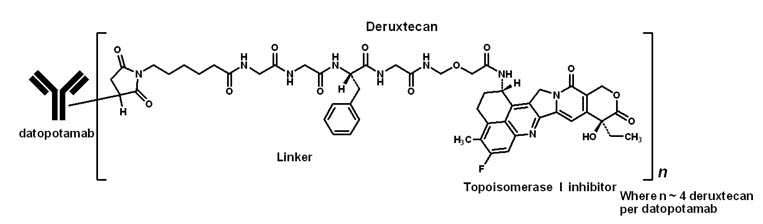
Datopotamab deruxtecan-dlnk is a Trop-2-directed antibody and topoisomerase inhibitor conjugate. Datopotamab deruxtecan-dlnk is an antibody-drug conjugate (ADC) composed of three components: 1) a humanized anti-Trop-2 IgG1 monoclonal antibody (mAb), covalently linked to 2) a topoisomerase I inhibitor, via 3) a tetrapeptide-based cleavable linker. Deruxtecan is composed of a protease-cleavable maleimide tetrapeptide linker and the topoisomerase inhibitor, DXd, which is an exatecan derivative.
The antibody is produced in Chinese hamster ovary cells by recombinant DNA technology, and the topoisomerase inhibitor and linker are produced by chemical synthesis. Approximately 4 molecules of deruxtecan are attached to each antibody molecule. Datopotamab deruxtecan-dlnk has the following structure:
DATROWAY (datopotamab deruxtecan-dlnk) for injection is a sterile, white to yellowish white, preservative-free lyophilized powder in single-dose vials. Each vial delivers 100 mg of datopotamab deruxtecan-dlnk, L-histidine (3.88 mg), L-histidine hydrochloride monohydrate (5.25 mg), polysorbate 80 (1.50 mg), and sucrose (450 mg). Following reconstitution with 5 mL of Sterile Water for Injection, USP, the resulting concentration of datopotamab deruxtecan-dlnk is 20 mg/mL with a pH of 6.0. The resulting solution is administered by intravenous infusion following dilution.
5.3 Stomatitis
DATROWAY can cause stomatitis, including mouth ulcers and oral mucositis.
In the pooled safety population [see Adverse Reactions (6.1)], stomatitis occurred in 63% of patients treated with DATROWAY, including 8% of patients with Grade 3 events and one patient with a Grade 4 reaction. The median time to first onset of stomatitis was 0.5 months (range: 0.03 months to 18.6 months). Stomatitis led to dosage interruption in 6% of patients, dosage reductions in 11% of patients, and permanent discontinuation of DATROWAY in 0.5% of patients.
In patients who received DATROWAY in TROPION-Breast01, 39% used a mouthwash containing corticosteroid for management or prophylaxis of stomatitis/oral mucositis at any time during the treatment.
Advise patients to use a steroid-containing mouthwash for prophylaxis and treatment of stomatitis. Instruct the patient to hold ice chips or ice water in the mouth throughout the infusion of DATROWAY.
Monitor patients for signs and symptoms of stomatitis. If stomatitis occurs, increase the frequency of mouthwash and administer other topical treatments as clinically indicated. Based on the severity of the adverse reaction, withhold, reduce the dose, or permanently discontinue DATROWAY [see Dosage and Administration (2.4)].
8.4 Pediatric Use
Safety and effectiveness of DATROWAY have not been established in pediatric patients.
8.5 Geriatric Use
Of the 125 patients with EGFR-mutated NSCLC in TROPION-Lung05, TROPION-Lung01, TROPION-PanTumor01 treated with DATROWAY 6 mg/kg, 44% were ≥65 years of age and 10% were ≥75 years of age. No clinically meaningful differences in efficacy and safety were observed between patients ≥65 years of age versus younger patients.
Of the 365 patients in TROPION-Breast01 treated with DATROWAY 6 mg/kg, 25% were ≥65 years of age and 5% were ≥75 years of age. Grade ≥3 and serious adverse reactions were more common in patients ≥65 years (42% and 25%, respectively) compared to patients <65 years (33% and 15%, respectively). In TROPION-Breast01, no other meaningful differences in safety or efficacy were observed between patients ≥65 years of age versus younger patients.
12.6 Immunogenicity
There is insufficient information from TROPION-Breast01, TROPION-Lung01, and TROPION-Lung05 to characterize the anti-drug antibody response to datopotamab deruxtecan-dlnk and the effects of anti-drug antibodies on pharmacokinetics, pharmacodynamics, safety, or effectiveness of datopotamab deruxtecan-dlnk products.
4 Contraindications
None.
6 Adverse Reactions
The following clinically significant adverse reactions are described elsewhere in the labeling:
- Interstitial Lung Disease/Pneumonitis [see Warnings and Precautions (5.1)]
- Ocular Adverse Reactions [see Warnings and Precautions (5.2)]
- Stomatitis [see Warnings and Precautions (5.3)]
8.6 Renal Impairment
A higher incidence of ILD/pneumonitis has been observed in patients with mild and moderate renal impairment (creatinine clearance [CLcr] 30 to <90 mL/min) [see Warnings and Precautions (5.1)]. Monitor patients with renal impairment for increased adverse reactions, including respiratory reactions. No dosage adjustment is recommended in patients with mild to moderate renal impairment [see Clinical Pharmacology (12.3)]. The effect of severe renal impairment (CLcr <30 mL/min) on the pharmacokinetics of datopotamab deruxtecan-dlnk or DXd is unknown.
12.2 Pharmacodynamics
Datopotamab deruxtecan-dlnk time course of pharmacodynamic response is unknown.
12.3 Pharmacokinetics
Datopotamab deruxtecan-dlnk and DXd exposure after the first dose of the approved recommended dosage of cycle 1 are provided in Table 8. Datopotamab deruxtecan-dlnk and released DXd maximum concentration (Cmax) and area under the time-concentration curve (AUC) increases proportionally over a dose range of 4 mg/kg to 10 mg/kg (approximately 0.7 to 1.7 times the approved recommended dosage). No clinically significant datopotamab deruxtecan-dlnk accumulation occurs between cycles 1 and 3.
| PK Parameter | Datopotamab deruxtecan-dlnk | DXd |
|---|---|---|
| Abbreviations: Cmax =maximum concentration; AUC =area under the time-concentration curve | ||
| Cmax | 154 µg/mL (20%) | 2.8 ng/mL (58%) |
| AUC | 671 µg*day/mL (31%) | 18 ng*day/mL (43%) |
2.1 Patient Selection
Select patients with locally advanced or metastatic NSCLC for treatment with DATROWAY based on the presence of epidermal growth factor receptor (EGFR) mutations in tumor or plasma specimens [see Clinical Studies (14.1)]. Testing may be performed at any time from initial diagnosis and does not need to be repeated once EGFR mutation status has been established.
2.2 Recommended Dosage
The recommended dosage of DATROWAY is 6 mg/kg (up to a maximum of 540 mg for patients ≥90 kg) administered as an intravenous infusion once every 3 weeks (21-day cycle) until disease progression or unacceptable toxicity.
If a planned dose is delayed or missed, administer as soon as possible; do not wait until the next planned cycle. Adjust the schedule of administration to maintain a 3-week interval between doses.
8.7 Hepatic Impairment
No dosage adjustment is recommended in patients with mild hepatic impairment (total bilirubin ≤ULN and any AST >ULN or total bilirubin >1 to 1.5 times ULN and any AST). Limited data are available in patients with moderate hepatic impairment (total bilirubin >1.5 to 3 times ULN and any AST). Monitor patients with moderate hepatic impairment for increased adverse reactions [see Dosage and Administration (2.4)]. The recommended dosage of DATROWAY has not been established for patients with severe hepatic impairment (total bilirubin >3 times ULN and any AST) [see Clinical Pharmacology (12.3)].
1 Indications and Usage
DATROWAY is a Trop-2-directed antibody and topoisomerase inhibitor conjugate indicated for the treatment of:
- adult patients with locally advanced or metastatic epidermal growth factor receptor (EGFR)-mutated non-small cell lung cancer (NSCLC) who have received prior EGFR-directed therapy and platinum-based chemotherapy. (1.1)
This indication is approved under accelerated approval based on objective response rate and duration of response [see Clinical Studies (14.1)]. Continued approval for this indication may be contingent upon verification and description of clinical benefit in the confirmatory trial. - adult patients with unresectable or metastatic, hormone receptor (HR)-positive, human epidermal growth factor receptor 2 (HER2)-negative (IHC 0, IHC 1+ or IHC 2+/ISH-) breast cancer who have received prior endocrine-based therapy and chemotherapy for unresectable or metastatic disease. (1.2)
12.1 Mechanism of Action
Datopotamab deruxtecan-dlnk, is a Trop-2-directed antibody-drug conjugate. The antibody is a humanized anti-Trop2 IgG1. The small molecule, DXd, is a topoisomerase I inhibitor attached to the antibody by a cleavable linker. Following binding to Trop-2 on cells, including tumor cells, datopotamab deruxtecan-dlnk undergoes internalization and intracellular linker cleavage by lysosomal enzymes. Upon release, the membrane-permeable DXd causes DNA damage and apoptotic cell death. Datopotamab deruxtecan-dlnk had anti-tumor activity in mouse models of lung cancer including EGFR-mutated and breast cancer.
5.4 Embryo Fetal Toxicity
Based on its mechanism of action, DATROWAY can cause embryo-fetal harm when administered to a pregnant woman because the topoisomerase inhibitor component of DATROWAY, DXd [see Description (11)], is genotoxic and affects actively dividing cells [see Use in Specific Populations (8.1), Clinical Pharmacology (12.1), Nonclinical Toxicology (13.1)].
Advise patients of the potential risk to a fetus. Advise female patients of reproductive potential to use effective contraception during treatment with DATROWAY and for 7 months after the last dose. Advise male patients with female partners of reproductive potential to use effective contraception during treatment with DATROWAY and for 4 months after the last dose [see Use in Specific Populations (8.1, 8.3)].
5 Warnings and Precautions
- Interstitial Lung Disease (ILD) and Pneumonitis: DATROWAY can cause severe and fatal cases of ILD/pneumonitis. Monitor for new or worsening signs and symptoms of ILD/pneumonitis. If ILD/pneumonitis is suspected, withhold DATROWAY and initiate corticosteroids. Permanently discontinue DATROWAY in patients with confirmed Grade 2 or higher ILD/pneumonitis. (5.1)
- Ocular Adverse Reactions: DATROWAY can cause ocular adverse reactions including dry eye, keratitis, blepharitis, meibomian gland dysfunction, increased lacrimation, conjunctivitis, and blurred vision. Monitor patients for ocular adverse reactions during treatment with DATROWAY. Advise patients to use preservative-free lubricating eye drops and to avoid using contact lenses during treatment with DATROWAY. Withhold, reduce the dose, or permanently discontinue DATROWAY based on the severity of ocular adverse reactions. Refer patients to an eye care professional for any new or worsening ocular signs and symptoms. (2.3, 2.4, 5.2)
- Stomatitis/Oral Mucositis: DATROWAY can cause stomatitis, including mouth ulcers and oral mucositis. Advise patients to use a steroid-containing mouthwash when starting treatment and to hold ice chips or ice water in mouth during the infusion of DATROWAY. Withhold, reduce the dose, or permanently discontinue DATROWAY based on severity. (2.3, 2.4, 5.3)
- Embryo-Fetal Toxicity: DATROWAY can cause fetal harm. Advise patients of potential risk to a fetus and to use effective contraception. (5.4, 8.1, 8.3)
2 Dosage and Administration
- Reconstitute DATROWAY with Sterile Water for Injection. (2.5)
- Dilute with 5% Dextrose Injection. (2.5)
- For intravenous infusion only. Do not administer as an intravenous push or bolus. DO NOT use Sodium Chloride Injection, USP. (2.5)
- Premedicate to reduce the risk of infusion reactions and nausea and vomiting. (2.3)
- The recommended dosage of DATROWAY is 6 mg/kg (up to a maximum of 540 mg for patients ≥90 kg) given as an intravenous infusion once every 3 weeks (21-day cycle) until disease progression or unacceptable toxicity. (2.3, 2.4)
3 Dosage Forms and Strengths
For injection: 100 mg of datopotamab deruxtecan-dlnk as a white to yellowish white, lyophilized powder in a single-dose vial for reconstitution and further dilution.
5.2 Ocular Adverse Reactions
DATROWAY can cause ocular adverse reactions including dry eye, keratitis, blepharitis, meibomian gland dysfunction, increased lacrimation, conjunctivitis, and blurred vision.
In the pooled safety population [see Adverse Reactions (6.1)], ocular adverse reactions occurred in 36% of patients treated with DATROWAY. Twenty patients (2.2%) experienced Grade 3 ocular adverse reactions, which included keratitis, dry eye, and blurred vision, and one patient experienced a Grade 4 ocular adverse reaction of conjunctival hemorrhage. The most common (≥5%) ocular adverse reactions were dry eye (17%), keratitis (14%), and increased lacrimation (7%). The median time to onset for ocular adverse reactions was 2.3 months (range: 0.03 months to 23.2 months). Of the patients who experienced ocular adverse reactions, 39% had complete resolution, and 10% had partial improvement (defined as a decrease in severity by one or more grades from the worst grade at last follow up). Ocular adverse reactions led to dosage interruption in 3.6% of patients, dosage reductions in 2.5% of patients, and permanent discontinuation of DATROWAY in 1% of patients.
Patients with clinically significant corneal disease were excluded from clinical studies.
Advise patients to use preservative-free lubricant eye drops several times daily for prophylaxis. Advise patients to avoid use of contact lenses unless directed by an eye care professional.
Refer patients to an eye care professional for an ophthalmic exam including visual acuity testing, slit lamp examination (with fluorescein staining), intraocular pressure, and fundoscopy at treatment initiation, annually while on treatment, at end of treatment, and as clinically indicated.
Promptly refer patients to an eye care professional for any new or worsening ocular adverse reactions. Monitor patients for ocular adverse reactions during treatment with DATROWAY, and if diagnosis is confirmed, withhold, reduce the dose, or permanently discontinue DATROWAY based on severity [see Dosage and Administration (2.4)].
8 Use in Specific Populations
6.1 Clinical Trials Experience
Because clinical trials are conducted under widely varying conditions, adverse reaction rates observed in the clinical trials of a drug cannot be directly compared to rates in the clinical trials of another drug and may not reflect the rates observed in practice.
The pooled safety population described in WARNINGS AND PRECAUTIONS reflects exposure to DATROWAY in 927 patients as a single agent at 6 mg/kg administered as an intravenous infusion once every 3 weeks (21-day cycle) until disease progression or unacceptable toxicity. This included 137 patients with NSCLC in TROPION-Lung05 [see Clinical Studies (14.1)], 297 patients with NSCLC in TROPION-Lung01 [see Clinical Studies (14.1)], 360 patients with HR-positive, HER2-negative breast cancer in TROPION-Breast01 [see Clinical Studies (14.2)], and 50 patients with NSCLC and 83 patients with breast cancer in TROPION-PanTumor01 (NCT03401385). Among 927 patients who received DATROWAY, 45% were exposed for 6 months or longer and 19% were exposed for greater than one year. In this pooled safety population, the most common (≥20%) adverse reactions were stomatitis (63%), nausea (52%), fatigue (45%), alopecia (38%), constipation (28%), decreased appetite (23%), rash (23%), vomiting (22%), and musculoskeletal pain (20%). In this pooled safety population, the most common (≥2%) Grade 3 or 4 laboratory abnormalities were decreased lymphocytes (9%) and decreased hemoglobin (3.5%).
17 Patient Counseling Information
Advise the patient to read the FDA-approved patient labeling (Medication Guide).
2.5 Preparation and Administration
Reconstitute and further dilute DATROWAY prior to intravenous infusion. Use appropriate aseptic technique.
DATROWAY (datopotamab deruxtecan-dlnk) is a hazardous drug. Follow applicable special handling and disposal procedures.1
5.1 Interstitial Lung Disease/pneumonitis
DATROWAY can cause severe, life-threatening, or fatal interstitial lung disease (ILD) or pneumonitis.
Principal Display Panel 100 Mg Vial Carton
NDC 65597-801-01
Rx only
DATROWAY®
(datopotamab deruxtecan-dlnk)
For Injection
100 mg per vial
For Intravenous Infusion Only
Reconstitute and dilute prior to administration.
Single-dose vial. Discard unused portion.
Dispense the enclosed Medication Guide to
each patient.
Hazardous Drug
KEEP REFRIGERATED
1 vial
Daiichi-Sankyo
AstraZeneca
8.3 Females and Males of Reproductive Potential
DATROWAY can cause embryo-fetal harm when administered to a pregnant woman [see Use in Specific Populations (8.1)].
13.1 Carcinogenesis, Mutagenesis, Impairment of Fertility
Carcinogenicity studies have not been conducted with datopotamab deruxtecan-dlnk.
The topoisomerase inhibitor component of datopotamab deruxtecan-dlnk, DXd, was clastogenic in both an in vivo rat bone marrow micronucleus assay and an in vitro Chinese hamster lung chromosome aberration assay and was not mutagenic in an in vitro bacterial reverse mutation assay.
Dedicated fertility studies have not been conducted with datopotamab deruxtecan-dlnk. In a 3-month repeat-dose toxicity study, intravenous administration of datopotamab deruxtecan-dlnk once every 3 weeks in rats resulted in decreased weights in the testes and epididymides, degeneration of the germinal epithelium and atrophy of seminiferous tubules in testes, and cell debris, decreased number of sperm, and single-cell necrosis of the ductal epithelium in epididymides at 200 mg/kg (approximately 29 times the human recommended dose of 6 mg/kg based on AUC). Findings in female rats included increased atretic follicles in the ovary and single cell necrosis of mucosal epithelium in the vagina at 200 mg/kg. These findings, except for the lesions in the testis and epididymis, were not observed after a 2-month recovery period.
2.3 Premedication, Concomitant Medications, and Required Eye Care
Conduct an ophthalmic exam including visual acuity testing, slit lamp examination (with fluorescein staining), intraocular pressure, and fundoscopy at initiation of DATROWAY, annually while on treatment, at end of treatment, and as clinically indicated.
Administer DATROWAY with the premedication and concomitant medications described in Table 1.
Monitor patients for infusion-related reactions in a setting where cardiopulmonary resuscitation medication and equipment are available. Monitor patients for at least 1 hour for the first 2 cycles of DATROWAY infusions. If there are no infusion-related reactions observed, monitor patients for at least 30 minutes for all subsequent cycles of infusions.
| Premedication
With or without systemic corticosteroid
|
Examples (or equivalent) | Timing of Treatment/Duration |
|---|---|---|
|
Eye drops
[see Warnings and Precautions (5.2)] |
Preservative-free lubricant eye drops | Administer at least four times daily and as needed |
|
Mouthwash
[see Warnings and Precautions (5.3)] |
Steroid-containing mouthwash (dexamethasone oral solution 0.1 mg/mL) | Administer four times daily and as needed |
|
Antihistamine
[see Adverse Reactions (6.1)] |
Diphenhydramine (25 to 50 mg) administered intravenously or orally | Administer 30-60 minutes prior to each infusion |
|
Antipyretic
[see Adverse Reactions (6.1)] |
Acetaminophen (650 to 1,000 mg) administered intravenously or orally | Administer 30-60 minutes prior to each infusion |
|
Antiemetics
[see Adverse Reactions (6.1)] |
5-HT3 serotonin receptor antagonist or appropriate alternatives intravenously or oral | Prior to each infusion and thereafter as needed |
1.2 Unresectable Or Metastatic, Hr Positive, Her2 Negative Breast Cancer
DATROWAY is indicated for the treatment of adult patients with unresectable or metastatic, hormone receptor (HR)-positive, human epidermal growth factor receptor 2 (HER2)-negative (IHC 0, IHC 1+ or IHC 2+/ISH-) breast cancer who have received prior endocrine-based therapy and chemotherapy for unresectable or metastatic disease.
14.1 Locally Advanced Or Metastatic Egfr Mutated Non Small Cell Lung Cancer
The efficacy of DATROWAY was evaluated in a pooled subgroup of patients with locally advanced or metastatic EGFR-mutated NSCLC who were enrolled across two clinical studies: TROPION-Lung05 and TROPION-Lung01.
TROPION-Lung05 (NCT04484142) was a global, multicenter, single-arm, open-label trial in patients with previously treated NSCLC with an actionable genomic alteration and TROPION-Lung01 (NCT04656652) was a global, multicenter, randomized, active-controlled, open-label trial in patients with previously treated NSCLC with or without an actionable genomic alteration. For both trials, eligible patients with EGFR-mutated NSCLC must have previously received an EGFR-directed therapy and platinum-based chemotherapy. Patients with a history of ILD/pneumonitis requiring treatment with steroids, ongoing ILD/pneumonitis, or clinically significant corneal disease at screening were ineligible. Patients who had brain metastases that were untreated and symptomatic were also ineligible. Patients received DATROWAY 6 mg/kg by intravenous infusion every 3 weeks until unacceptable toxicity or disease progression.
For the pooled efficacy population, the major efficacy outcome measure was overall response rate (ORR) by BICR per RECIST v1.1. An additional efficacy outcome was duration of response (DOR) by BICR.
Efficacy was assessed in 114 patients with EGFR-mutated NSCLC. The median age was 63 years (range 36 to 81); 43% were ≥65 years of age; 63% were female; 70% were Asian and 22% were White; 1.8% were of Hispanic/Latino ethnicity; 68% had ECOG PS of 1 and 32% had ECOG PS of 0; and 33% had brain metastases at baseline. Fifty-three percent (53%) of patients had tumors with exon 19 deletions, 34% had exon 21 L858R mutations, 28% had T790M mutations, 2.6% had exon 20 insertion mutations and 14% had other EGFR mutations. Four percent (4.4%) of patients received one prior line of systemic therapy, 39% received two prior lines of systemic therapy, and 57% received three or more prior lines of systemic therapy in the locally advanced or metastatic setting. All patients received prior EGFR-directed therapy including 84% receiving prior osimertinib; 99% received prior platinum-based chemotherapy and 28% received prior anti-PD-1/ PD-L1 therapy.
Efficacy results are summarized in Table 9.
| DATROWAY TL05 N=77 |
DATROWAY TL01 N=37 |
DATROWAY Pooled N=114 |
|
|---|---|---|---|
| CI: confidence interval | |||
| Overall Response Rate (95% CI) | 45% (34, 57) | 43% (27, 61) | 45% (35, 54) |
| Complete Response | 5% | 2.7% | 4.4% |
| Partial Response | 40% | 41% | 40% |
| Duration of Response Median, months (95% CI) | 6.9 (4.2, 10.2) | 6.5 (4.0, 8.4) | 6.5 (4.2, 8.4) |
| ≥6 months | 49% | 44% | 47% |
| ≥12 months | 23% | 6% | 18% |
In the TROPION-Lung05 trial, a difference was noted between ORR by BICR and ORR assessed by investigator; investigator assessed ORR was 34% (95% CI: 23, 45). In the TROPION-Lung01 trial, ORR assessed by investigator was similar to ORR by BICR.
1.1 Locally Advanced Or Metastatic Egfr Mutated Non Small Cell Lung Cancer (nsclc)
DATROWAY is indicated for the treatment of adult patients with locally advanced or metastatic epidermal growth factor receptor (EGFR)-mutated non-small cell lung cancer (NSCLC) who have received prior EGFR-directed therapy and platinum-based chemotherapy.
This indication is approved under accelerated approval based on objective response rate and duration of response [see Clinical Studies (14.1)]. Continued approval for this indication may be contingent upon verification and description of clinical benefit in the confirmatory trial.
Structured Label Content
Section 42229-5 (42229-5)
Dosage Modifications for Adverse Reactions
The recommended dose reduction levels for adverse reactions are described in Table 2.
| Dose Reductions | Recommended Dose |
|---|---|
| First | 4 mg/kg (up to a maximum of 360 mg for patients ≥90 kg) |
| Second | 3 mg/kg (up to a maximum of 270 mg for patients ≥90 kg) |
| Third | Permanently discontinue |
Do not re-escalate the DATROWAY dose after a dose reduction. Permanently discontinue DATROWAY in patients who are unable to tolerate 3 mg/kg intravenously once every 3 weeks.
The recommended dosage modifications and management of adverse reactions for DATROWAY are described in Table 3.
| Adverse Reaction | Severity Toxicity grades are in accordance with National Cancer Institute Common Terminology Criteria for Adverse Events (NCI CTCAE) version 5.0.
|
Dosage Modifications |
|---|---|---|
|
Interstitial Lung Disease (ILD)/Pneumonitis
[see Warnings and Precautions (5.1)] |
Asymptomatic ILD/pneumonitis Grade 1 | Withhold DATROWAY until ILD/pneumonitis is completely resolved, then:
|
| Symptomatic ILD/pneumonitis Grade 2 or greater |
|
|
|
Keratitis
[see Warnings and Precautions (5.2) and Adverse Reactions (6.1)] |
Nonconfluent superficial keratitis |
|
| Confluent superficial keratitis, a cornea epithelial defect, or 3-line or more loss in best corrected visual acuity |
|
|
| Corneal ulcer or stromal opacity or best corrected distance visual acuity 20/200 or worse |
|
|
| Corneal perforation |
|
|
|
Stomatitis
[see Warnings and Precautions (5.3)] |
Grade 1 |
|
| Grade 2 |
|
|
| Grade 3 |
|
|
| Grade 4 |
|
|
|
Infusion-Related Reactions (IRR)
[see Adverse Reactions (6.1)] |
Grade 1 |
|
| Grade 2 |
|
|
| Grade 3 or 4 |
|
|
|
Other Non-Hematologic Adverse Reactions
[see Adverse Reactions (6.1)] |
Grade 3 |
|
| Grade 4 |
|
Section 42231-1 (42231-1)
| This Medication Guide has been approved by the U.S. Food and Drug Administration. | Revised: 06/2025 | ||
|
MEDICATION GUIDE
DATROWAY® (DAT-roe-way) (datopotamab deruxtecan-dlnk) for injection, for intravenous use |
|||
|
What is the most important information I should know about DATROWAY? DATROWAY can cause serious side effects, including:
|
|||
|
What is DATROWAY?
DATROWAY is a prescription medicine used to treat adults who have:
|
|||
Before receiving DATROWAY, tell your healthcare provider about all of your medical conditions, including if you:
|
|||
How will I receive DATROWAY?
|
|||
|
What are the possible side effects of DATROWAY? DATROWAY can cause serious side effects, including: The most common side effects of DATROWAY when used in adults with EGFR-mutated non-small cell lung cancer include: |
|||
|
|
||
| The most common side effects of DATROWAY when used in adults with HR-positive HER2-negative breast cancer include: | |||
|
|
||
| DATROWAY may cause fertility problems in males and females, which may affect your ability to have children. Talk to your healthcare provider if you have concerns about fertility. These are not all of the possible side effects of DATROWAY. Call your doctor for medical advice about side effects. You may report side effects to FDA at 1-800-FDA-1088. |
|||
|
General information about the safe and effective use of DATROWAY.
Medicines are sometimes prescribed for purposes other than those listed in a Medication Guide. You can ask your pharmacist or healthcare provider for information about DATROWAY that is written for health professionals. |
|||
|
What are the ingredients in DATROWAY?
Active ingredient: datopotamab deruxtecan-dlnk Inactive ingredients: L-histidine, L-histidine hydrochloride monohydrate, polysorbate 80, and sucrose Manufactured by: Daiichi Sankyo, Inc., Basking Ridge, NJ 07920 U.S. License No. 2128 Marketed by: Daiichi Sankyo, Inc., Basking Ridge, NJ 07920 and AstraZeneca Pharmaceuticals LP, Wilmington, DE 19850 DATROWAY® is a registered trademark of Daiichi Sankyo Company, Ltd. © 2025 Daiichi Sankyo Co., Ltd. USMG-DAT-C7-0625-r002 For more information, call 1-877-437-7763 or go to https://www.DATROWAY.com. |
Section 44425-7 (44425-7)
Storage and Handling
Store vials in a refrigerator at 2ºC to 8ºC (36ºF to 46ºF) in the original carton to protect from light until time of reconstitution. Do not freeze. Do not shake the reconstituted or diluted solution [see Dosage and Administration (2.5)].
DATROWAY (datopotamab deruxtecan-dlnk) is a hazardous drug. Follow applicable special handling and disposal procedures.1
15 References (15 REFERENCES)
- OSHA Hazardous Drugs. OSHA. http://www.osha.gov/SLTC/hazardousdrugs/index.html
11 Description (11 DESCRIPTION)
Datopotamab deruxtecan-dlnk is a Trop-2-directed antibody and topoisomerase inhibitor conjugate. Datopotamab deruxtecan-dlnk is an antibody-drug conjugate (ADC) composed of three components: 1) a humanized anti-Trop-2 IgG1 monoclonal antibody (mAb), covalently linked to 2) a topoisomerase I inhibitor, via 3) a tetrapeptide-based cleavable linker. Deruxtecan is composed of a protease-cleavable maleimide tetrapeptide linker and the topoisomerase inhibitor, DXd, which is an exatecan derivative.
The antibody is produced in Chinese hamster ovary cells by recombinant DNA technology, and the topoisomerase inhibitor and linker are produced by chemical synthesis. Approximately 4 molecules of deruxtecan are attached to each antibody molecule. Datopotamab deruxtecan-dlnk has the following structure:
DATROWAY (datopotamab deruxtecan-dlnk) for injection is a sterile, white to yellowish white, preservative-free lyophilized powder in single-dose vials. Each vial delivers 100 mg of datopotamab deruxtecan-dlnk, L-histidine (3.88 mg), L-histidine hydrochloride monohydrate (5.25 mg), polysorbate 80 (1.50 mg), and sucrose (450 mg). Following reconstitution with 5 mL of Sterile Water for Injection, USP, the resulting concentration of datopotamab deruxtecan-dlnk is 20 mg/mL with a pH of 6.0. The resulting solution is administered by intravenous infusion following dilution.
5.3 Stomatitis
DATROWAY can cause stomatitis, including mouth ulcers and oral mucositis.
In the pooled safety population [see Adverse Reactions (6.1)], stomatitis occurred in 63% of patients treated with DATROWAY, including 8% of patients with Grade 3 events and one patient with a Grade 4 reaction. The median time to first onset of stomatitis was 0.5 months (range: 0.03 months to 18.6 months). Stomatitis led to dosage interruption in 6% of patients, dosage reductions in 11% of patients, and permanent discontinuation of DATROWAY in 0.5% of patients.
In patients who received DATROWAY in TROPION-Breast01, 39% used a mouthwash containing corticosteroid for management or prophylaxis of stomatitis/oral mucositis at any time during the treatment.
Advise patients to use a steroid-containing mouthwash for prophylaxis and treatment of stomatitis. Instruct the patient to hold ice chips or ice water in the mouth throughout the infusion of DATROWAY.
Monitor patients for signs and symptoms of stomatitis. If stomatitis occurs, increase the frequency of mouthwash and administer other topical treatments as clinically indicated. Based on the severity of the adverse reaction, withhold, reduce the dose, or permanently discontinue DATROWAY [see Dosage and Administration (2.4)].
8.4 Pediatric Use
Safety and effectiveness of DATROWAY have not been established in pediatric patients.
8.5 Geriatric Use
Of the 125 patients with EGFR-mutated NSCLC in TROPION-Lung05, TROPION-Lung01, TROPION-PanTumor01 treated with DATROWAY 6 mg/kg, 44% were ≥65 years of age and 10% were ≥75 years of age. No clinically meaningful differences in efficacy and safety were observed between patients ≥65 years of age versus younger patients.
Of the 365 patients in TROPION-Breast01 treated with DATROWAY 6 mg/kg, 25% were ≥65 years of age and 5% were ≥75 years of age. Grade ≥3 and serious adverse reactions were more common in patients ≥65 years (42% and 25%, respectively) compared to patients <65 years (33% and 15%, respectively). In TROPION-Breast01, no other meaningful differences in safety or efficacy were observed between patients ≥65 years of age versus younger patients.
12.6 Immunogenicity
There is insufficient information from TROPION-Breast01, TROPION-Lung01, and TROPION-Lung05 to characterize the anti-drug antibody response to datopotamab deruxtecan-dlnk and the effects of anti-drug antibodies on pharmacokinetics, pharmacodynamics, safety, or effectiveness of datopotamab deruxtecan-dlnk products.
4 Contraindications (4 CONTRAINDICATIONS)
None.
6 Adverse Reactions (6 ADVERSE REACTIONS)
The following clinically significant adverse reactions are described elsewhere in the labeling:
- Interstitial Lung Disease/Pneumonitis [see Warnings and Precautions (5.1)]
- Ocular Adverse Reactions [see Warnings and Precautions (5.2)]
- Stomatitis [see Warnings and Precautions (5.3)]
8.6 Renal Impairment
A higher incidence of ILD/pneumonitis has been observed in patients with mild and moderate renal impairment (creatinine clearance [CLcr] 30 to <90 mL/min) [see Warnings and Precautions (5.1)]. Monitor patients with renal impairment for increased adverse reactions, including respiratory reactions. No dosage adjustment is recommended in patients with mild to moderate renal impairment [see Clinical Pharmacology (12.3)]. The effect of severe renal impairment (CLcr <30 mL/min) on the pharmacokinetics of datopotamab deruxtecan-dlnk or DXd is unknown.
12.2 Pharmacodynamics
Datopotamab deruxtecan-dlnk time course of pharmacodynamic response is unknown.
12.3 Pharmacokinetics
Datopotamab deruxtecan-dlnk and DXd exposure after the first dose of the approved recommended dosage of cycle 1 are provided in Table 8. Datopotamab deruxtecan-dlnk and released DXd maximum concentration (Cmax) and area under the time-concentration curve (AUC) increases proportionally over a dose range of 4 mg/kg to 10 mg/kg (approximately 0.7 to 1.7 times the approved recommended dosage). No clinically significant datopotamab deruxtecan-dlnk accumulation occurs between cycles 1 and 3.
| PK Parameter | Datopotamab deruxtecan-dlnk | DXd |
|---|---|---|
| Abbreviations: Cmax =maximum concentration; AUC =area under the time-concentration curve | ||
| Cmax | 154 µg/mL (20%) | 2.8 ng/mL (58%) |
| AUC | 671 µg*day/mL (31%) | 18 ng*day/mL (43%) |
2.1 Patient Selection
Select patients with locally advanced or metastatic NSCLC for treatment with DATROWAY based on the presence of epidermal growth factor receptor (EGFR) mutations in tumor or plasma specimens [see Clinical Studies (14.1)]. Testing may be performed at any time from initial diagnosis and does not need to be repeated once EGFR mutation status has been established.
2.2 Recommended Dosage
The recommended dosage of DATROWAY is 6 mg/kg (up to a maximum of 540 mg for patients ≥90 kg) administered as an intravenous infusion once every 3 weeks (21-day cycle) until disease progression or unacceptable toxicity.
If a planned dose is delayed or missed, administer as soon as possible; do not wait until the next planned cycle. Adjust the schedule of administration to maintain a 3-week interval between doses.
8.7 Hepatic Impairment
No dosage adjustment is recommended in patients with mild hepatic impairment (total bilirubin ≤ULN and any AST >ULN or total bilirubin >1 to 1.5 times ULN and any AST). Limited data are available in patients with moderate hepatic impairment (total bilirubin >1.5 to 3 times ULN and any AST). Monitor patients with moderate hepatic impairment for increased adverse reactions [see Dosage and Administration (2.4)]. The recommended dosage of DATROWAY has not been established for patients with severe hepatic impairment (total bilirubin >3 times ULN and any AST) [see Clinical Pharmacology (12.3)].
1 Indications and Usage (1 INDICATIONS AND USAGE)
DATROWAY is a Trop-2-directed antibody and topoisomerase inhibitor conjugate indicated for the treatment of:
- adult patients with locally advanced or metastatic epidermal growth factor receptor (EGFR)-mutated non-small cell lung cancer (NSCLC) who have received prior EGFR-directed therapy and platinum-based chemotherapy. (1.1)
This indication is approved under accelerated approval based on objective response rate and duration of response [see Clinical Studies (14.1)]. Continued approval for this indication may be contingent upon verification and description of clinical benefit in the confirmatory trial. - adult patients with unresectable or metastatic, hormone receptor (HR)-positive, human epidermal growth factor receptor 2 (HER2)-negative (IHC 0, IHC 1+ or IHC 2+/ISH-) breast cancer who have received prior endocrine-based therapy and chemotherapy for unresectable or metastatic disease. (1.2)
12.1 Mechanism of Action
Datopotamab deruxtecan-dlnk, is a Trop-2-directed antibody-drug conjugate. The antibody is a humanized anti-Trop2 IgG1. The small molecule, DXd, is a topoisomerase I inhibitor attached to the antibody by a cleavable linker. Following binding to Trop-2 on cells, including tumor cells, datopotamab deruxtecan-dlnk undergoes internalization and intracellular linker cleavage by lysosomal enzymes. Upon release, the membrane-permeable DXd causes DNA damage and apoptotic cell death. Datopotamab deruxtecan-dlnk had anti-tumor activity in mouse models of lung cancer including EGFR-mutated and breast cancer.
5.4 Embryo Fetal Toxicity (5.4 Embryo-Fetal Toxicity)
Based on its mechanism of action, DATROWAY can cause embryo-fetal harm when administered to a pregnant woman because the topoisomerase inhibitor component of DATROWAY, DXd [see Description (11)], is genotoxic and affects actively dividing cells [see Use in Specific Populations (8.1), Clinical Pharmacology (12.1), Nonclinical Toxicology (13.1)].
Advise patients of the potential risk to a fetus. Advise female patients of reproductive potential to use effective contraception during treatment with DATROWAY and for 7 months after the last dose. Advise male patients with female partners of reproductive potential to use effective contraception during treatment with DATROWAY and for 4 months after the last dose [see Use in Specific Populations (8.1, 8.3)].
5 Warnings and Precautions (5 WARNINGS AND PRECAUTIONS)
- Interstitial Lung Disease (ILD) and Pneumonitis: DATROWAY can cause severe and fatal cases of ILD/pneumonitis. Monitor for new or worsening signs and symptoms of ILD/pneumonitis. If ILD/pneumonitis is suspected, withhold DATROWAY and initiate corticosteroids. Permanently discontinue DATROWAY in patients with confirmed Grade 2 or higher ILD/pneumonitis. (5.1)
- Ocular Adverse Reactions: DATROWAY can cause ocular adverse reactions including dry eye, keratitis, blepharitis, meibomian gland dysfunction, increased lacrimation, conjunctivitis, and blurred vision. Monitor patients for ocular adverse reactions during treatment with DATROWAY. Advise patients to use preservative-free lubricating eye drops and to avoid using contact lenses during treatment with DATROWAY. Withhold, reduce the dose, or permanently discontinue DATROWAY based on the severity of ocular adverse reactions. Refer patients to an eye care professional for any new or worsening ocular signs and symptoms. (2.3, 2.4, 5.2)
- Stomatitis/Oral Mucositis: DATROWAY can cause stomatitis, including mouth ulcers and oral mucositis. Advise patients to use a steroid-containing mouthwash when starting treatment and to hold ice chips or ice water in mouth during the infusion of DATROWAY. Withhold, reduce the dose, or permanently discontinue DATROWAY based on severity. (2.3, 2.4, 5.3)
- Embryo-Fetal Toxicity: DATROWAY can cause fetal harm. Advise patients of potential risk to a fetus and to use effective contraception. (5.4, 8.1, 8.3)
2 Dosage and Administration (2 DOSAGE AND ADMINISTRATION)
- Reconstitute DATROWAY with Sterile Water for Injection. (2.5)
- Dilute with 5% Dextrose Injection. (2.5)
- For intravenous infusion only. Do not administer as an intravenous push or bolus. DO NOT use Sodium Chloride Injection, USP. (2.5)
- Premedicate to reduce the risk of infusion reactions and nausea and vomiting. (2.3)
- The recommended dosage of DATROWAY is 6 mg/kg (up to a maximum of 540 mg for patients ≥90 kg) given as an intravenous infusion once every 3 weeks (21-day cycle) until disease progression or unacceptable toxicity. (2.3, 2.4)
3 Dosage Forms and Strengths (3 DOSAGE FORMS AND STRENGTHS)
For injection: 100 mg of datopotamab deruxtecan-dlnk as a white to yellowish white, lyophilized powder in a single-dose vial for reconstitution and further dilution.
5.2 Ocular Adverse Reactions
DATROWAY can cause ocular adverse reactions including dry eye, keratitis, blepharitis, meibomian gland dysfunction, increased lacrimation, conjunctivitis, and blurred vision.
In the pooled safety population [see Adverse Reactions (6.1)], ocular adverse reactions occurred in 36% of patients treated with DATROWAY. Twenty patients (2.2%) experienced Grade 3 ocular adverse reactions, which included keratitis, dry eye, and blurred vision, and one patient experienced a Grade 4 ocular adverse reaction of conjunctival hemorrhage. The most common (≥5%) ocular adverse reactions were dry eye (17%), keratitis (14%), and increased lacrimation (7%). The median time to onset for ocular adverse reactions was 2.3 months (range: 0.03 months to 23.2 months). Of the patients who experienced ocular adverse reactions, 39% had complete resolution, and 10% had partial improvement (defined as a decrease in severity by one or more grades from the worst grade at last follow up). Ocular adverse reactions led to dosage interruption in 3.6% of patients, dosage reductions in 2.5% of patients, and permanent discontinuation of DATROWAY in 1% of patients.
Patients with clinically significant corneal disease were excluded from clinical studies.
Advise patients to use preservative-free lubricant eye drops several times daily for prophylaxis. Advise patients to avoid use of contact lenses unless directed by an eye care professional.
Refer patients to an eye care professional for an ophthalmic exam including visual acuity testing, slit lamp examination (with fluorescein staining), intraocular pressure, and fundoscopy at treatment initiation, annually while on treatment, at end of treatment, and as clinically indicated.
Promptly refer patients to an eye care professional for any new or worsening ocular adverse reactions. Monitor patients for ocular adverse reactions during treatment with DATROWAY, and if diagnosis is confirmed, withhold, reduce the dose, or permanently discontinue DATROWAY based on severity [see Dosage and Administration (2.4)].
8 Use in Specific Populations (8 USE IN SPECIFIC POPULATIONS)
6.1 Clinical Trials Experience
Because clinical trials are conducted under widely varying conditions, adverse reaction rates observed in the clinical trials of a drug cannot be directly compared to rates in the clinical trials of another drug and may not reflect the rates observed in practice.
The pooled safety population described in WARNINGS AND PRECAUTIONS reflects exposure to DATROWAY in 927 patients as a single agent at 6 mg/kg administered as an intravenous infusion once every 3 weeks (21-day cycle) until disease progression or unacceptable toxicity. This included 137 patients with NSCLC in TROPION-Lung05 [see Clinical Studies (14.1)], 297 patients with NSCLC in TROPION-Lung01 [see Clinical Studies (14.1)], 360 patients with HR-positive, HER2-negative breast cancer in TROPION-Breast01 [see Clinical Studies (14.2)], and 50 patients with NSCLC and 83 patients with breast cancer in TROPION-PanTumor01 (NCT03401385). Among 927 patients who received DATROWAY, 45% were exposed for 6 months or longer and 19% were exposed for greater than one year. In this pooled safety population, the most common (≥20%) adverse reactions were stomatitis (63%), nausea (52%), fatigue (45%), alopecia (38%), constipation (28%), decreased appetite (23%), rash (23%), vomiting (22%), and musculoskeletal pain (20%). In this pooled safety population, the most common (≥2%) Grade 3 or 4 laboratory abnormalities were decreased lymphocytes (9%) and decreased hemoglobin (3.5%).
17 Patient Counseling Information (17 PATIENT COUNSELING INFORMATION)
Advise the patient to read the FDA-approved patient labeling (Medication Guide).
2.5 Preparation and Administration
Reconstitute and further dilute DATROWAY prior to intravenous infusion. Use appropriate aseptic technique.
DATROWAY (datopotamab deruxtecan-dlnk) is a hazardous drug. Follow applicable special handling and disposal procedures.1
5.1 Interstitial Lung Disease/pneumonitis (5.1 Interstitial Lung Disease/Pneumonitis)
DATROWAY can cause severe, life-threatening, or fatal interstitial lung disease (ILD) or pneumonitis.
Principal Display Panel 100 Mg Vial Carton (PRINCIPAL DISPLAY PANEL - 100 mg Vial Carton)
NDC 65597-801-01
Rx only
DATROWAY®
(datopotamab deruxtecan-dlnk)
For Injection
100 mg per vial
For Intravenous Infusion Only
Reconstitute and dilute prior to administration.
Single-dose vial. Discard unused portion.
Dispense the enclosed Medication Guide to
each patient.
Hazardous Drug
KEEP REFRIGERATED
1 vial
Daiichi-Sankyo
AstraZeneca
8.3 Females and Males of Reproductive Potential
DATROWAY can cause embryo-fetal harm when administered to a pregnant woman [see Use in Specific Populations (8.1)].
13.1 Carcinogenesis, Mutagenesis, Impairment of Fertility
Carcinogenicity studies have not been conducted with datopotamab deruxtecan-dlnk.
The topoisomerase inhibitor component of datopotamab deruxtecan-dlnk, DXd, was clastogenic in both an in vivo rat bone marrow micronucleus assay and an in vitro Chinese hamster lung chromosome aberration assay and was not mutagenic in an in vitro bacterial reverse mutation assay.
Dedicated fertility studies have not been conducted with datopotamab deruxtecan-dlnk. In a 3-month repeat-dose toxicity study, intravenous administration of datopotamab deruxtecan-dlnk once every 3 weeks in rats resulted in decreased weights in the testes and epididymides, degeneration of the germinal epithelium and atrophy of seminiferous tubules in testes, and cell debris, decreased number of sperm, and single-cell necrosis of the ductal epithelium in epididymides at 200 mg/kg (approximately 29 times the human recommended dose of 6 mg/kg based on AUC). Findings in female rats included increased atretic follicles in the ovary and single cell necrosis of mucosal epithelium in the vagina at 200 mg/kg. These findings, except for the lesions in the testis and epididymis, were not observed after a 2-month recovery period.
2.3 Premedication, Concomitant Medications, and Required Eye Care
Conduct an ophthalmic exam including visual acuity testing, slit lamp examination (with fluorescein staining), intraocular pressure, and fundoscopy at initiation of DATROWAY, annually while on treatment, at end of treatment, and as clinically indicated.
Administer DATROWAY with the premedication and concomitant medications described in Table 1.
Monitor patients for infusion-related reactions in a setting where cardiopulmonary resuscitation medication and equipment are available. Monitor patients for at least 1 hour for the first 2 cycles of DATROWAY infusions. If there are no infusion-related reactions observed, monitor patients for at least 30 minutes for all subsequent cycles of infusions.
| Premedication
With or without systemic corticosteroid
|
Examples (or equivalent) | Timing of Treatment/Duration |
|---|---|---|
|
Eye drops
[see Warnings and Precautions (5.2)] |
Preservative-free lubricant eye drops | Administer at least four times daily and as needed |
|
Mouthwash
[see Warnings and Precautions (5.3)] |
Steroid-containing mouthwash (dexamethasone oral solution 0.1 mg/mL) | Administer four times daily and as needed |
|
Antihistamine
[see Adverse Reactions (6.1)] |
Diphenhydramine (25 to 50 mg) administered intravenously or orally | Administer 30-60 minutes prior to each infusion |
|
Antipyretic
[see Adverse Reactions (6.1)] |
Acetaminophen (650 to 1,000 mg) administered intravenously or orally | Administer 30-60 minutes prior to each infusion |
|
Antiemetics
[see Adverse Reactions (6.1)] |
5-HT3 serotonin receptor antagonist or appropriate alternatives intravenously or oral | Prior to each infusion and thereafter as needed |
1.2 Unresectable Or Metastatic, Hr Positive, Her2 Negative Breast Cancer (1.2 Unresectable or Metastatic, HR-Positive, HER2-Negative Breast Cancer)
DATROWAY is indicated for the treatment of adult patients with unresectable or metastatic, hormone receptor (HR)-positive, human epidermal growth factor receptor 2 (HER2)-negative (IHC 0, IHC 1+ or IHC 2+/ISH-) breast cancer who have received prior endocrine-based therapy and chemotherapy for unresectable or metastatic disease.
14.1 Locally Advanced Or Metastatic Egfr Mutated Non Small Cell Lung Cancer (14.1 Locally Advanced or Metastatic EGFR-Mutated Non-Small Cell Lung Cancer)
The efficacy of DATROWAY was evaluated in a pooled subgroup of patients with locally advanced or metastatic EGFR-mutated NSCLC who were enrolled across two clinical studies: TROPION-Lung05 and TROPION-Lung01.
TROPION-Lung05 (NCT04484142) was a global, multicenter, single-arm, open-label trial in patients with previously treated NSCLC with an actionable genomic alteration and TROPION-Lung01 (NCT04656652) was a global, multicenter, randomized, active-controlled, open-label trial in patients with previously treated NSCLC with or without an actionable genomic alteration. For both trials, eligible patients with EGFR-mutated NSCLC must have previously received an EGFR-directed therapy and platinum-based chemotherapy. Patients with a history of ILD/pneumonitis requiring treatment with steroids, ongoing ILD/pneumonitis, or clinically significant corneal disease at screening were ineligible. Patients who had brain metastases that were untreated and symptomatic were also ineligible. Patients received DATROWAY 6 mg/kg by intravenous infusion every 3 weeks until unacceptable toxicity or disease progression.
For the pooled efficacy population, the major efficacy outcome measure was overall response rate (ORR) by BICR per RECIST v1.1. An additional efficacy outcome was duration of response (DOR) by BICR.
Efficacy was assessed in 114 patients with EGFR-mutated NSCLC. The median age was 63 years (range 36 to 81); 43% were ≥65 years of age; 63% were female; 70% were Asian and 22% were White; 1.8% were of Hispanic/Latino ethnicity; 68% had ECOG PS of 1 and 32% had ECOG PS of 0; and 33% had brain metastases at baseline. Fifty-three percent (53%) of patients had tumors with exon 19 deletions, 34% had exon 21 L858R mutations, 28% had T790M mutations, 2.6% had exon 20 insertion mutations and 14% had other EGFR mutations. Four percent (4.4%) of patients received one prior line of systemic therapy, 39% received two prior lines of systemic therapy, and 57% received three or more prior lines of systemic therapy in the locally advanced or metastatic setting. All patients received prior EGFR-directed therapy including 84% receiving prior osimertinib; 99% received prior platinum-based chemotherapy and 28% received prior anti-PD-1/ PD-L1 therapy.
Efficacy results are summarized in Table 9.
| DATROWAY TL05 N=77 |
DATROWAY TL01 N=37 |
DATROWAY Pooled N=114 |
|
|---|---|---|---|
| CI: confidence interval | |||
| Overall Response Rate (95% CI) | 45% (34, 57) | 43% (27, 61) | 45% (35, 54) |
| Complete Response | 5% | 2.7% | 4.4% |
| Partial Response | 40% | 41% | 40% |
| Duration of Response Median, months (95% CI) | 6.9 (4.2, 10.2) | 6.5 (4.0, 8.4) | 6.5 (4.2, 8.4) |
| ≥6 months | 49% | 44% | 47% |
| ≥12 months | 23% | 6% | 18% |
In the TROPION-Lung05 trial, a difference was noted between ORR by BICR and ORR assessed by investigator; investigator assessed ORR was 34% (95% CI: 23, 45). In the TROPION-Lung01 trial, ORR assessed by investigator was similar to ORR by BICR.
1.1 Locally Advanced Or Metastatic Egfr Mutated Non Small Cell Lung Cancer (nsclc) (1.1 Locally Advanced or Metastatic EGFR-Mutated Non-Small Cell Lung Cancer (NSCLC))
DATROWAY is indicated for the treatment of adult patients with locally advanced or metastatic epidermal growth factor receptor (EGFR)-mutated non-small cell lung cancer (NSCLC) who have received prior EGFR-directed therapy and platinum-based chemotherapy.
This indication is approved under accelerated approval based on objective response rate and duration of response [see Clinical Studies (14.1)]. Continued approval for this indication may be contingent upon verification and description of clinical benefit in the confirmatory trial.
Advanced Ingredient Data
Raw Label Data
All Sections (JSON)
Additional Information
Back to search View SPL set listing Open on DailyMed ↗
Source: dailymed · Ingested: 2026-02-15T11:51:55.334204 · Updated: 2026-03-14T22:42:19.657154