Piasky
2597efc2-a97b-487c-b500-a67fd282a73b
34391-3
HUMAN PRESCRIPTION DRUG LABEL
Drug Facts
Composition & Product
Identifiers & Packaging
Indications and Usage
PIASKY is indicated for the treatment of adult and pediatric patients 13 years and older with paroxysmal nocturnal hemoglobinuria (PNH) and body weight of at least 40 kg.
Dosage and Administration
See Full Prescribing Information for instructions on preparation, dosage, and administration. ( 2.2 , 2.3 , 2.4 , 2.5 ) Start with one loading dose administered by intravenous infusion, followed by 4 additional loading doses administered by subcutaneous injection. Then administer a maintenance dose every 4 weeks by subcutaneous injection. For patients switching from another complement inhibitor, the first loading dose of PIASKY should be administered no sooner than the time of the next scheduled complement inhibitor administration. See Full Prescribing Information for considerations when switching from another C5 inhibitor. Administer doses based on the patient's actual body weight ( 2.2 )
Contraindications
PIASKY is contraindicated: For initiation in patients with an unresolved serious Neisseria meningitidis infection [see Warnings and Precautions (5.1) ]. In patients with a known serious hypersensitivity reaction to crovalimab or any of the excipients [see Warnings and Precautions (5.5) ] .
Warnings and Precautions
Type III hypersensitivity reactions: Monitor patients switching from another C5 inhibitor to PIASKY or from PIASKY to another C5 inhibitor as they are at risk of Type III hypersensitivity reactions related to the formation of drug-target-drug complexes ( 5.3 ) Other Infections: PIASKY can increase susceptibility to serious infections especially those caused by encapsulated bacteria. ( 5.4 ) Infusion- and Injection-Related Reactions: Monitor for these reactions and initiate medical management as needed ( 5.5 )
Adverse Reactions
The following clinically significant adverse reactions are discussed in greater detail in other sections of the label: Serious Meningococcal Infection [see Warnings and Precautions (5.1) ] Type III Hypersensitivity Reactions Related to Drug-Target-Drug Complexes [see Warnings and Precautions (5.3) ] Other Infections [see Warnings and Precautions (5.4) ] Infusion- and Injection-Related Reactions [see Warnings and Precautions (5.5) ]
Drug Interactions
PIASKY binds different epitopes on C5 compared to eculizumab and ravulizumab, which can lead to the formation of DTDCs when patients switch between PIASKY and either eculizumab or ravulizumab. These DTDCs comprise one or more units of C5 bound to both PIASKY and to eculizumab or ravulizumab. These DTDCs are expected to be cleared within approximately 8 weeks (in the case of eculizumab) or longer (in the case of ravulizumab) and can result in Type III hypersensitivity reactions [see Warnings and Precautions (5.3) , Adverse Reactions (6.1) and Clinical Pharmacology (12.3) ] .
How Supplied
PIASKY (crovalimab-akkz) injection is a sterile, preservative-free, clear to opalescent, and almost colorless to brownish-yellow solution. Each PIASKY carton contains one 340 mg/2 mL (170 mg/mL) single-dose vial (NDC 50242-115-01).
Storage and Handling
Store refrigerated at 2°C to 8°C (36°F to 46°F) in the outer carton to protect from light. Do not freeze. Do not shake. Once removed from the refrigerator, the unopened vial can be kept at room temperature up to 30°C (86°F) in its outer carton for no longer than 7 days. Prior to administration, unopened vials of PIASKY may be stored out of the refrigerator at room temperature if needed and then returned to refrigeration. The total combined time out of refrigeration should not exceed 7 days and the temperature should not exceed 30°C (86°F). Discard if stored out of the refrigerator at room temperature for longer than 7 days.
Description
PIASKY, a complement inhibitor, increases the risk of serious infections caused by Neisseria meningitidis [see Warnings and Precautions (5.1) ] . Life-threatening and fatal meningococcal infections have occurred in patients treated with complement inhibitors. These infections may become rapidly life-threatening or fatal if not recognized and treated early. Complete or update vaccination for meningococcal bacteria (for serogroups A, C, W, Y, and B) at least 2 weeks prior to the first dose of PIASKY, unless the risks of delaying therapy with PIASKY outweigh the risk of developing a serious infection. Comply with the most current Advisory Committee on Immunization Practices (ACIP) recommendations for meningococcal vaccination in patients receiving a complement inhibitor. See Warnings and Precautions (5.1) for additional guidance on the management of the risk of serious infections caused by meningococcal bacteria. Patients receiving PIASKY are at increased risk for invasive disease caused by N. meningitidis , even if they develop antibodies following vaccination. Monitor patients for early signs of serious meningococcal infections and evaluate immediately if infection is suspected. Because of the risk of serious meningococcal infections, PIASKY is available only through a restricted program under a Risk Evaluation and Mitigation Strategy (REMS) called PIASKY REMS [see Warnings and Precautions (5.2) ] .
Medication Information
Warnings and Precautions
Type III hypersensitivity reactions: Monitor patients switching from another C5 inhibitor to PIASKY or from PIASKY to another C5 inhibitor as they are at risk of Type III hypersensitivity reactions related to the formation of drug-target-drug complexes ( 5.3 ) Other Infections: PIASKY can increase susceptibility to serious infections especially those caused by encapsulated bacteria. ( 5.4 ) Infusion- and Injection-Related Reactions: Monitor for these reactions and initiate medical management as needed ( 5.5 )
Indications and Usage
PIASKY is indicated for the treatment of adult and pediatric patients 13 years and older with paroxysmal nocturnal hemoglobinuria (PNH) and body weight of at least 40 kg.
Dosage and Administration
See Full Prescribing Information for instructions on preparation, dosage, and administration. ( 2.2 , 2.3 , 2.4 , 2.5 ) Start with one loading dose administered by intravenous infusion, followed by 4 additional loading doses administered by subcutaneous injection. Then administer a maintenance dose every 4 weeks by subcutaneous injection. For patients switching from another complement inhibitor, the first loading dose of PIASKY should be administered no sooner than the time of the next scheduled complement inhibitor administration. See Full Prescribing Information for considerations when switching from another C5 inhibitor. Administer doses based on the patient's actual body weight ( 2.2 )
Contraindications
PIASKY is contraindicated: For initiation in patients with an unresolved serious Neisseria meningitidis infection [see Warnings and Precautions (5.1) ]. In patients with a known serious hypersensitivity reaction to crovalimab or any of the excipients [see Warnings and Precautions (5.5) ] .
Adverse Reactions
The following clinically significant adverse reactions are discussed in greater detail in other sections of the label: Serious Meningococcal Infection [see Warnings and Precautions (5.1) ] Type III Hypersensitivity Reactions Related to Drug-Target-Drug Complexes [see Warnings and Precautions (5.3) ] Other Infections [see Warnings and Precautions (5.4) ] Infusion- and Injection-Related Reactions [see Warnings and Precautions (5.5) ]
Drug Interactions
PIASKY binds different epitopes on C5 compared to eculizumab and ravulizumab, which can lead to the formation of DTDCs when patients switch between PIASKY and either eculizumab or ravulizumab. These DTDCs comprise one or more units of C5 bound to both PIASKY and to eculizumab or ravulizumab. These DTDCs are expected to be cleared within approximately 8 weeks (in the case of eculizumab) or longer (in the case of ravulizumab) and can result in Type III hypersensitivity reactions [see Warnings and Precautions (5.3) , Adverse Reactions (6.1) and Clinical Pharmacology (12.3) ] .
Storage and Handling
Store refrigerated at 2°C to 8°C (36°F to 46°F) in the outer carton to protect from light. Do not freeze. Do not shake. Once removed from the refrigerator, the unopened vial can be kept at room temperature up to 30°C (86°F) in its outer carton for no longer than 7 days. Prior to administration, unopened vials of PIASKY may be stored out of the refrigerator at room temperature if needed and then returned to refrigeration. The total combined time out of refrigeration should not exceed 7 days and the temperature should not exceed 30°C (86°F). Discard if stored out of the refrigerator at room temperature for longer than 7 days.
How Supplied
PIASKY (crovalimab-akkz) injection is a sterile, preservative-free, clear to opalescent, and almost colorless to brownish-yellow solution. Each PIASKY carton contains one 340 mg/2 mL (170 mg/mL) single-dose vial (NDC 50242-115-01).
Description
PIASKY, a complement inhibitor, increases the risk of serious infections caused by Neisseria meningitidis [see Warnings and Precautions (5.1) ] . Life-threatening and fatal meningococcal infections have occurred in patients treated with complement inhibitors. These infections may become rapidly life-threatening or fatal if not recognized and treated early. Complete or update vaccination for meningococcal bacteria (for serogroups A, C, W, Y, and B) at least 2 weeks prior to the first dose of PIASKY, unless the risks of delaying therapy with PIASKY outweigh the risk of developing a serious infection. Comply with the most current Advisory Committee on Immunization Practices (ACIP) recommendations for meningococcal vaccination in patients receiving a complement inhibitor. See Warnings and Precautions (5.1) for additional guidance on the management of the risk of serious infections caused by meningococcal bacteria. Patients receiving PIASKY are at increased risk for invasive disease caused by N. meningitidis , even if they develop antibodies following vaccination. Monitor patients for early signs of serious meningococcal infections and evaluate immediately if infection is suspected. Because of the risk of serious meningococcal infections, PIASKY is available only through a restricted program under a Risk Evaluation and Mitigation Strategy (REMS) called PIASKY REMS [see Warnings and Precautions (5.2) ] .
Section 42229-5
Preparation of Intravenous Infusion
- Use aseptic technique to prepare PIASKY for intravenous administration. PIASKY must be diluted and administered as an intravenous infusion over 60 minutes ± 10 minutes (1,000 mg) or 90 minutes ± 10 minutes (1,500 mg).
- PIASKY solution must be diluted in 0.9% Sodium Chloride Injection prior to administration. A 0.2 micron in-line filter must be used with the infusion set during administration. A dedicated infusion line must be used during intravenous administration.
- Only dilute PIASKY in 0.9% Sodium Chloride Injection.
Section 42231-1
| MEDICATION GUIDE PIASKY (pea-UH-sky) (crovalimab-akkz) injection, for intravenous or subcutaneous use |
||||||
|---|---|---|---|---|---|---|
| This Medication Guide has been approved by the U.S. Food and Drug Administration | Issued: 06/2024 | |||||
|
What is the most important information I should know about PIASKY? PIASKY is a medicine that affects your immune system. PIASKY may lower the ability of your immune system to fight infections.
|
||||||
|
|
|||||
|
Your healthcare provider will give you a Patient Safety Card about the risk of serious meningococcal infection. Carry it with you at all times during treatment and for 11 months after your last dose of PIASKY. Your risk of meningococcal infection may continue for several months after your last dose of PIASKY. It is important to show this card to any healthcare provider who treats you. This will help them diagnose and treat you quickly. PIASKY is only available through a program called the PIASKY Risk Evaluation and Mitigation Strategy (PIASKY REMS). Before you can receive PIASKY, your healthcare provider must:
|
||||||
|
||||||
|
|
|||||
|
||||||
|
|
|||||
| For more information about side effects, see "What are the possible side effects of PIASKY?" | ||||||
|
What is PIASKY?
PIASKY is a prescription medicine used to treat a disease called paroxysmal nocturnal hemoglobinuria (PNH) in adults and children 13 years of age and older who weigh at least 88 pounds (40 kg). It is not known if PIASKY is safe and effective in children under 13 years of age and in people who weigh less than 88 pounds (40 kg). |
||||||
|
Who should not receive PIASKY? Do not receive PIASKY if you:
|
||||||
Before receiving PIASKY tell your healthcare provider about all of your medical conditions, including if you:
Especially tell your healthcare provider if you are currently being treated with or have ever been treated with any other complement C5 inhibitor (C5 inhibitor) medicine. PIASKY is a C5 inhibitor medicine. Ask your healthcare provider if you are not sure if you have been treated with a C5 inhibitor medicine. See " What are the possible side effects of PIASKY? " Know the medicines you take and the vaccines you receive. Keep a list of them to show your healthcare provider and pharmacist when you get a new medicine. |
||||||
How should I receive PIASKY?
|
||||||
|
|
|||||
|
What are the possible side effects of PIASKY? PIASKY may cause serious side effects including:
|
||||||
|
|
|||||
| The most common side effects of PIASKY include: | ||||||
|
|
|||||
| Tell your healthcare provider about any side effect that bothers you or that does not go away. These are not all of the possible side effects of PIASKY. Call your doctor for medical advice about side effects. You may report side effects to FDA at 1-800-FDA-1088. |
||||||
|
General information about the safe and effective use of PIASKY.
Medicines are sometimes prescribed for purposes other than those listed in a Medication Guide. Do not use PIASKY for a condition for which it was not prescribed. You can ask your pharmacist or healthcare provider for information about PIASKY that is written for health professionals. |
||||||
|
What are the ingredients in PIASKY? Active ingredient: crovalimab-akkz Inactive ingredients: arginine hydrochloride, histidine, poloxamer 188, and Water for Injection. Aspartic acid may be added to adjust the pH. Manufactured by: Genentech, Inc., A Member of the Roche Group, 1 DNA Way, South San Francisco, CA 94080-4990 U.S. License No.: 1048 PIASKY is a registered trademark of Chugai Pharmaceutical Co., Ltd., Tokyo, Japan ©2024 Genentech, Inc. All rights reserved. For more information, go to www.PIASKY.com or call 1-877-436-3683. |
11 Description
Crovalimab-akkz, a complement C5 inhibitor, is a humanized monoclonal antibody based on a human IgG1 framework. The recombinant antibody is produced in Chinese hamster ovary CHO cells and consists of two heavy chains (451 amino acid residues each) and two light chains (217 amino acid residues each). The approximate molecular weight is 145 kDa.
PIASKY (crovalimab-akkz) injection is a preservative-free, sterile, clear to opalescent, almost colorless to brownish-yellow, solution supplied in a single-dose vial for intravenous use or subcutaneous use. Intravenous use requires dilution prior to administration.
Each single-dose vial contains a 2 mL solution of crovalimab-akkz (340 mg), arginine hydrochloride (42.2 mg), histidine (9.4 mg), poloxamer 188 (1 mg), and Water for Injection USP. The pH is 5.8. Aspartic acid may be added to adjust the pH.
5.2 Piasky Rems
PIASKY is available only through a restricted program under a REMS called PIASKY REMS, because of the risk of serious meningococcal infections [see Warnings and Precautions (5.1)].
Notable requirements of the PIASKY REMS include the following:
- Prescribers must enroll in the REMS.
- Prescribers must counsel patients about the risk of serious meningococcal infection.
- Prescribers must provide the patients with the REMS educational materials.
- Prescribers must assess patient vaccination status for meningococcal vaccines (against serogroups A, C, W, Y, and B) and vaccinate if needed according to current ACIP recommendations two weeks prior to the first dose of PIASKY.
- Prescribers must provide a prescription for antibacterial drug prophylaxis if treatment must be started urgently, and the patient is not up to date with both meningococcal vaccines according to current ACIP recommendations at least two weeks prior to the first dose of PIASKY.
- Healthcare settings and pharmacies that dispense PIASKY must be certified in the REMS and must verify prescribers are certified.
- Patients must receive counseling from the prescriber about the need to receive meningococcal vaccines per ACIP recommendations, the need to take antibiotics as directed by the prescriber, and the signs and symptoms of meningococcal infection.
- Patients must be instructed to carry the Patient Safety Card with them at all times during and for 11 months following treatment with PIASKY.
Further information is available at www.PIASKYREMS.com or 1-866-4My-Skyy (469-7599).
16.1 How Supplied
PIASKY (crovalimab-akkz) injection is a sterile, preservative-free, clear to opalescent, and almost colorless to brownish-yellow solution. Each PIASKY carton contains one 340 mg/2 mL (170 mg/mL) single-dose vial (NDC 50242-115-01).
8.4 Pediatric Use
The safety and effectiveness of PIASKY for the treatment of PNH have been established in pediatric patients 13 years and older with a body weight ≥ 40 kg. Use of PIASKY for this indication in pediatric patients is supported by evidence from adequate and well-controlled studies in adults along with additional pharmacokinetic, pharmacodynamic, efficacy and safety data in pediatric patients aged 13 to 17 years [see Adverse Reactions (6.1), Clinical Pharmacology (12.3), and Clinical Studies (14.1)].
The safety and effectiveness of PIASKY have not been established in pediatric patients less than 13 years of age and in those with body weight < 40 kg.
8.5 Geriatric Use
Clinical studies of PIASKY did not include sufficient numbers of subjects aged 65 and over to determine whether they respond differently from younger subjects. In general, dose selection for elderly patients should be cautious, reflecting the greater frequency of decreased hepatic, renal, or cardiac function and of concomitant disease or other therapy.
Of the 393 PIASKY-treated patients in COMMODORE 1, 2 and 3, 43 (10.9%) were 65 years of age and older. In patients who were complement inhibitor naïve, serious adverse reactions were reported in 1 patient (8%) who was 65 years or older compared to 6 (4%) patients who were 18 to 64 years of age. In patients who previously received a different C5 inhibitor and switched to PIASKY, serious adverse reactions were reported in 3 (7%) patients who were 65 years or older compared to 12 (4%) patients who were 18 to 64 years of age.
12.6 Immunogenicity
The observed incidence of anti-drug antibodies is highly dependent on the sensitivity and specificity of the assay. Differences in assay methods preclude meaningful comparisons of the incidence of anti-drug antibodies in the studies described below with the incidence of anti-drug antibodies in other studies, including other crovalimab-akkz products.
In the active-controlled COMMODORE 2 study, 30% (42/140) of treatment-naïve patients who received PIASKY and 34% (23/67) of patients who switched from treatment with another C5 inhibitor to PIASKY (switch patients) tested positive for anti-crovalimab-akkz-antibodies. The positive antidrug antibodies (ADAs) were detected after a median treatment duration of 48 weeks (range: 0.1 to 108 weeks) in treatment-naïve patients and 24 weeks (range: 0.3 to 76 weeks), in switch patients.
Across COMMODORE 1, COMMODORE 2, and COMMODORE 3, the incidence of treatment-emergent ADAs was 31% (60/191) following a median treatment duration of 52 weeks (range 0.1 to 108 weeks) in treatment-naïve patients and 23% (43/184) following a median treatment duration of 32 weeks (0.3 to 108 weeks) in switch patients.
Among the patients who were randomized to PIASKY, those who developed anti-crovalimab-akkz antibodies had reduced crovalimab-akkz concentrations, geometric mean decrease in the range of 39% to 56%, compared to those who did not develop anti-crovalimab-akkz antibodies through the course of the treatment period in COMMODORE 2. Despite this effect, crovalimab-akkz concentrations remained above 100 µg/mL (the threshold for complete terminal complement inhibition) in more than 80% of ADA-positive patients. Approximately 3% (11/375) of ADA-positive patients had a loss of pharmacological activity (based on CH50 or free C5) coinciding with a loss of exposure and with loss of efficacy, manifesting as a sustained loss of hemolysis control in 1.6% (6/375) of patients with PNH. There was no evidence for a clinical impact of ADA status on the safety profile of PIASKY.
4 Contraindications
PIASKY is contraindicated:
- For initiation in patients with an unresolved serious Neisseria meningitidis infection [see Warnings and Precautions (5.1)].
- In patients with a known serious hypersensitivity reaction to crovalimab or any of the excipients [see Warnings and Precautions (5.5)].
6 Adverse Reactions
The following clinically significant adverse reactions are discussed in greater detail in other sections of the label:
- Serious Meningococcal Infection [see Warnings and Precautions (5.1)]
- Type III Hypersensitivity Reactions Related to Drug-Target-Drug Complexes [see Warnings and Precautions (5.3)]
- Other Infections [see Warnings and Precautions (5.4)]
- Infusion- and Injection-Related Reactions [see Warnings and Precautions (5.5)]
5.4 Other Infections
Due to its mechanism of action, PIASKY may increase susceptibility to infections, especially with encapsulated bacteria, such as infections with Neisseria spp. but also Streptococcus pneumoniae, Haemophilus influenzae, and to a lesser extent, Neisseria gonorrhoeae. Children treated with PIASKY may be at increased risk of developing serious infections due to Streptococcus pneumoniae and Haemophilus influenzae type b (Hib). Vaccinate patients against Streptococcus pneumoniae and Haemophilus influenzae type b (Hib) infections according to ACIP recommendations.
If PIASKY is administered to patients with active systemic infections, monitor closely for signs and symptoms of worsening infection. If the patient's infection worsens, consider whether to discontinue PIASKY.
7. Drug Interactions
PIASKY binds different epitopes on C5 compared to eculizumab and ravulizumab, which can lead to the formation of DTDCs when patients switch between PIASKY and either eculizumab or ravulizumab. These DTDCs comprise one or more units of C5 bound to both PIASKY and to eculizumab or ravulizumab. These DTDCs are expected to be cleared within approximately 8 weeks (in the case of eculizumab) or longer (in the case of ravulizumab) and can result in Type III hypersensitivity reactions [see Warnings and Precautions (5.3), Adverse Reactions (6.1) and Clinical Pharmacology (12.3)].
12.2 Pharmacodynamics
Concentration-dependent inhibition of terminal complement activity following treatment with PIASKY was observed in patients with PNH naïve to complement inhibitor therapy and patients switching from another complement C5 inhibitor therapy. Terminal complement activity (CH50 as measured by Liposome Immunoassay [LIA]) inhibition was achieved by the end of the initial PIASKY infusion and was sustained through the duration of PIASKY treatment. Similarly, mean free C5 concentrations declined to low levels (<0.0001 g/L) in comparison to baseline and remained low throughout the treatment period.
12.3 Pharmacokinetics
Crovalimab-akkz exhibits dose proportional pharmacokinetics over the dose range from 75 to 1500 mg when given as a single intravenous infusion and from 100 to 1020 mg when given as a subcutaneous injection. Following the first intravenous loading dose, crovalimab-akkz concentrations exceeded the target threshold for complete terminal complement inhibition (100 µg/mL). After approximately 12 weeks, with the administration of subsequent subcutaneous doses, crovalimab-akkz attained a steady-state plateau of exposure. Pharmacokinetic exposures in patients with PNH are summarized for the recommended dosage of crovalimab-akkz in Table 6.
| Body weight of patients | Ctrough,ss (µg/mL) | Cmax,ss (µg/mL) | AUCτ,ss (µg × day/mL) |
|---|---|---|---|
| AUCτ,ss = area under the concentration-time curve for a dosing interval at steady state; Cmax,ss = maximum concentration during a dosing interval at steady state; Ctrough,ss = trough concentration at steady state. | |||
| ≥ 40 kg to < 100 kg | 230 (31.6%) | 292 (30.1%) | 7478 (30.5%) |
| ≥ 100 kg | 205 (31.5%) | 265 (30.9%) | 6748 (30.7%) |
1 Indications and Usage
PIASKY is indicated for the treatment of adult and pediatric patients 13 years and older with paroxysmal nocturnal hemoglobinuria (PNH) and body weight of at least 40 kg.
12.1 Mechanism of Action
Crovalimab-akkz is a monoclonal antibody that specifically binds with high affinity to the complement protein C5, inhibiting its cleavage into C5a and C5b, preventing the formation of the membrane attack complex (MAC). Crovalimab-akkz inhibits terminal complement-mediated intravascular hemolysis in patients with PNH.
16.2 Storage and Handling
- Store refrigerated at 2°C to 8°C (36°F to 46°F) in the outer carton to protect from light. Do not freeze. Do not shake.
- Once removed from the refrigerator, the unopened vial can be kept at room temperature up to 30°C (86°F) in its outer carton for no longer than 7 days.
- Prior to administration, unopened vials of PIASKY may be stored out of the refrigerator at room temperature if needed and then returned to refrigeration. The total combined time out of refrigeration should not exceed 7 days and the temperature should not exceed 30°C (86°F). Discard if stored out of the refrigerator at room temperature for longer than 7 days.
2.4 Delayed Or Missed Dose
If an entire planned dose or part of a planned dose of PIASKY is missed, administer the missed dose or remainder of the missed dose as soon as possible before the day of the next scheduled dose. Then administer the next dose on the regularly scheduled dosing day. Do not administer two doses or more than the prescribed dose on the same day to make up for a missed dose.
5 Warnings and Precautions
- Type III hypersensitivity reactions: Monitor patients switching from another C5 inhibitor to PIASKY or from PIASKY to another C5 inhibitor as they are at risk of Type III hypersensitivity reactions related to the formation of drug-target-drug complexes (5.3)
- Other Infections: PIASKY can increase susceptibility to serious infections especially those caused by encapsulated bacteria. (5.4)
- Infusion- and Injection-Related Reactions: Monitor for these reactions and initiate medical management as needed (5.5)
2 Dosage and Administration
See Full Prescribing Information for instructions on preparation, dosage, and administration. (2.2, 2.3, 2.4, 2.5)
Start with one loading dose administered by intravenous infusion, followed by 4 additional loading doses administered by subcutaneous injection. Then administer a maintenance dose every 4 weeks by subcutaneous injection.
For patients switching from another complement inhibitor, the first loading dose of PIASKY should be administered no sooner than the time of the next scheduled complement inhibitor administration. See Full Prescribing Information for considerations when switching from another C5 inhibitor.
Administer doses based on the patient's actual body weight (2.2)
3 Dosage Forms and Strengths
Injection: 340 mg/2 mL (170 mg/mL) as a clear to opalescent and almost colorless to brownish-yellow solution in a single-dose vial.
6.1 Clinical Trial Experience
Because clinical trials are conducted under widely varying conditions, adverse reaction rates observed in the clinical trials of a drug cannot be directly compared to rates in the clinical trials of another drug and may not reflect the rates observed in practice.
2.2 Recommended Dosage Regimen
The recommended dosage regimen consists of one loading dose administered by intravenous (IV) infusion (on Day 1), followed by four additional weekly loading doses administered by subcutaneous (SUBQ) injection (on Days 2, 8, 15, and 22). The maintenance dose starts on Day 29 and is then administered every 4 weeks by subcutaneous injection. Administer doses based on the patient's actual body weight, as shown in Table 1.
| Body Weight | ≥ 40 kg to < 100 kg | ≥ 100 kg |
|---|---|---|
| IV = intravenous, SUBQ = subcutaneous | ||
|
Loading Dose
Day 1 Day 2, 8, 15, 22 |
1,000 mg (IV) 340 mg (SUBQ) |
1,500 mg (IV) 340 mg (SUBQ) |
|
Maintenance Dose
Day 29 and Q4W Q4W=every 4 weeks thereafter |
680 mg (SUBQ) |
1,020 mg (SUBQ) |
The dosing schedule is allowed to occasionally vary within 2 days of the scheduled administration day (except at Day 1 and Day 2). If this occurs, the subsequent dose should be administered according to the regular schedule.
Modification of the maintenance dose is required if the patient's body weight changes to become consistently greater than or lower than 100 kg during the course of therapy.
8. Use in Specific Populations
Lactation: Breastfeeding not recommended (8.2)
17 Patient Counseling Information
Advise the patient to read the FDA-approved patient labeling (Medication Guide).
2.5 Preparation and Administration
Each vial of PIASKY is for one-time use in only one patient.
PIASKY is administered as an intravenous infusion (first dose) and as a subcutaneous injection (subsequent doses). Only healthcare providers should administer PIASKY.
Parenteral drug products should be inspected visually for particulate matter and discoloration prior to administration, whenever solution and container permit. PIASKY is clear to opalescent, and an almost colorless to brownish-yellow solution. PIASKY should be discarded if the medicine looks cloudy, discolored, or has particles in it.
5.1 Serious Meningococcal Infection
PIASKY, a complement inhibitor, increases a patient's susceptibility to serious, life-threatening, or fatal infections caused by meningococcal bacteria (meningococcemia and/or meningitis) in any serogroup, including non-groupable strains. Life-threatening and fatal meningococcal infections have occurred in both vaccinated and unvaccinated patients treated with complement inhibitors. The initiation of PIASKY is contraindicated in patients with a serious unresolved Neisseria meningitidis infection.
Complete or update meningococcal vaccination (for serogroups A, C, W, Y, and B) at least 2 weeks prior to administration of the first dose of PIASKY, according to the current Advisory Committee on Immunization Practices (ACIP) recommendations for patients receiving a complement inhibitor. Revaccinate patients in accordance with ACIP recommendations considering the duration of PIASKY therapy.
Note that ACIP recommends an administration schedule in patients receiving complement inhibitors that differs from the administration schedule in the vaccine prescribing information.
If urgent PIASKY therapy is indicated in a patient who is not up to date with meningococcal vaccines according to ACIP recommendations, provide the patient with antibacterial drug prophylaxis and administer meningococcal vaccines as soon as possible. Various durations and regimens of antibacterial drug prophylaxis have been considered, but the optimal durations and drug regimens for prophylaxis and their efficacy have not been studied in unvaccinated or vaccinated patients receiving complement inhibitors, including PIASKY. The benefits and risks of treatment with PIASKY, as well as the benefits and risks of antibacterial drug prophylaxis in unvaccinated or vaccinated patients, must be considered against the known risks for serious infections caused by N. meningitidis.
Vaccination does not eliminate the risk of meningococcal infections, despite development of antibodies following vaccination.
Closely monitor patients for early signs and symptoms of meningococcal infection and evaluate patients immediately if infection is suspected. Inform patients of these signs and symptoms and instruct patients to seek immediate medical care if these signs and symptoms occur. Promptly treat known infections. Meningococcal infection may become rapidly life-threatening or fatal if not recognized and treated early. Consider interruption of PIASKY in patients who are undergoing treatment for serious meningococcal infection.
PIASKY is available only through a restricted program under a REMS [see Warnings and Precautions (5.2)].
14.1 Paroxysmal Nocturnal Hemoglobinuria
The efficacy of PIASKY in patients with PNH was evaluated in COMMODORE 2 (NCT04434092), an active-controlled, open-label, non-inferiority study that randomized 204 patients (body weight ≥ 40 kg) with PNH not previously treated with a complement inhibitor in a 2:1 ratio to receive either PIASKY (n=135) or eculizumab (n=69). The study additionally enrolled 6 pediatric patients (aged >12 years and body weight ≥ 40 kg) to receive PIASKY in a separate non-randomized cohort.
Patients were required to be vaccinated against Neisseria meningitidis, either within 3 years prior to the start of treatment or within 7 days after starting treatment with PIASKY. Patients vaccinated within 2 weeks prior to initiating PIASKY or after the start of study treatment received prophylactic antibiotics until at least 2 weeks after the vaccination.
A single intravenous loading dose of PIASKY was given on Day 1 (1,000 mg for patients weighing ≥40 kg to <100 kg, or 1,500 mg for patients weighing >100 kg), followed by four additional weekly subcutaneous loading doses of 340 mg on Days 2, 8, 15 and 22. Starting at Day 29, maintenance subcutaneous doses were given every 4 weeks (680 mg for patients weighing ≥40 kg to <100 kg, or 1,020 mg for patients weighing ≥100 kg).
The study consisted of a primary treatment period of 24 weeks, after which patients had the option to continue or switch to PIASKY in an extension period.
Eligible patients had LDH level ≥ 2 × upper limit of normal (ULN) and at least one or more PNH-related signs or symptoms in the past 3 months. Randomization was stratified by the most recent LDH value (≥ 2 to ≤ 4 × ULN, or > 4× ULN) and by the transfusion history (0, > 0 to ≤ 6, or > 6 packed red blood cell (pRBC) units administered within 6 months prior to randomization). In the PIASKY and eculizumab arms, the median PNH clone size was 90.9% and 95.1% for monocytes, 91.4% and 93.6% for granulocytes and 25.3% and 44.6% for erythrocytes, respectively.
Demographics and baseline characteristics of the randomized study population were generally balanced between the treatment arms and are presented in Table 7.
| Parameters | PIASKY (N= 135) |
Eculizumab (N= 69) |
|---|---|---|
| pRBCs = packed red blood cells | ||
| Age (years) at PNH diagnosis | ||
| Mean (SD) | 35.8 (15.5) | 37.4 (16.4) |
| Median (range) | 31.0 (11.5- 74.7) | 32.1 (11.2- 76.8) |
| Age (years) at first administration of the study drug | ||
| Mean (SD) | 40.5 (15.2) | 41.9 (16.0) |
| Median (range) | 36.0 (18-76) | 38.0 (17-78) |
| <18 years, n (%) | 0 | 2 (2.9%) |
| 18 – 64 years, n (%) | 122 (90.4%) | 58 (84.1%) |
| ≥65 years, n (%) | 13 (9.6%) | 9 (13.0%) |
| Weight | ||
| 40 to <100 kg, n (%) | 131 (97.0%) | 66 (95.7%) |
| ≥100 kg, n (%) | 4 (3.0%) | 3 (4.3%) |
| Sex | ||
| Male, n (%) | 77 (57.0%) | 35 (50.7%) |
| Female, n (%) | 58 (43.0%) | 34 (49.3%) |
| Race | ||
| Asian | 86 (63.7%) | 51 (73.9%) |
| White | 45 (33.3%) | 16 (23.2%) |
| Black or African American | 3 (2.2%) | 1 (1.4%) |
| Unknown | 1 (0.7%) | 1 (1.4%) |
| Ethnicity | ||
| Hispanic or Latino | 18 (13.3%) | 6 (8.7%) |
| Not Hispanic or Latino | 114 (84.4%) | 61 (88.4%) |
| Not reported | 3 (2.2%) | 2 (2.9%) |
| Baseline hemoglobin (g/dL) |
||
| Median (range) | 8.5 (6.3-13.5) | 8.5 (5.8-12.9) |
| LDH levels at baseline (× ULN) | ||
| Median (range) | 7.0 (2.0 – 16.3) | 7.7 (2.0 – 20.3) |
| History of pRBC transfusion in the 12 months prior to screening | ||
| Yes, n (%) | 103 (77.4%) | 50 (73.5%) |
| Number of pRBC units transfused in the 12 months prior to screening | ||
| Median (range) | 3.8 (0-43.5) | 3.0 (0-41.0) |
| History of aplastic anemia | ||
| Yes, n (%) | 53 (39.3%) | 26 (37.7%) |
| History of myelodysplastic syndrome | ||
| Yes, n (%) | 6 (4.4%) | 6 (8.7%) |
| History of Major Adverse Vascular Event | ||
| Yes, n (%) | 21 (15.6%) | 10 (14.5%) |
| Medications at baseline Includes medications that were started prior to initiation of study treatment and were either stopped before or were ongoing at time of initiation of study treatment.
|
||
| Anticoagulants, n (%) | 35 (25.9%) | 17 (24.6%) |
| Systemic corticosteroids, n (%) | 46 (34.1%) | 25 (36.2%) |
| Immunosuppressive therapy, n (%) | 23 (17%) | 13 (18.8%) |
Efficacy was based on hemolysis control, as measured by the mean proportion of patients with LDH ≤ 1.5× ULN from Week 5 to Week 25; and the proportion of patients who achieved transfusion avoidance, defined as patients who were pRBC transfusion-free, from baseline through Week 25. Other efficacy endpoints included the proportion of patients with breakthrough hemolysis and the proportion of patients with stabilized hemoglobin. Breakthrough hemolysis was defined as at least one new or worsening symptom or sign of intravascular hemolysis in the presence of elevated LDH ≥ 2 × ULN after prior reduction of LDH to ≤ 1.5 × ULN on treatment. Hemoglobin stabilization was defined as avoidance of a ≥ 2 g/dL decrease in hemoglobin level from baseline, in the absence of transfusion.
Efficacy results for these endpoints are shown in Table 8.
| PIASKY (N=134) One patient randomized to PIASKY did not have post-baseline LDH and was not included in the primary efficacy analysis
|
Eculizumab (N = 69) |
|
|---|---|---|
| CI = confidence interval | ||
| Proportion of patients with Transfusion Avoidance, % (95% CI) | 65.7 (56.9, 73.5) | 68.1 (55.7, 78.5) |
| Difference in proportions Difference calculated as PIASKY minus eculizumab , % (95% CI) Non-inferiority was demonstrated based on the margin pre-specified in the study protocol
|
-2.8% (-15.7, 11.1) | |
| Mean proportion of patients achieving hemolysis control, % (95% CI) | 79.3 (72.9, 84.5) | 79.0 (69.7, 86.0) |
| Odds Ratio Odds ratio calculated as odds for PIASKY divided by odds for eculizumab (95% CI)
|
1.02 (0.57, 1.82) | |
| Proportion of patients with Breakthrough Hemolysis, % (95% CI) | 10.4 (6.0, 17.2) | 14.5 (7.5, 25.5) |
| Difference in proportions, % (95% CI) | - 3.9% (-14.8, 5.3) | |
| Proportion of patients with stabilized hemoglobin, % (95% CI) | 63.4 (54.6, 71.5) | 60.9 (48.4, 72.2) |
| Difference in proportions, % (95% CI) | 2.2 (-11.4, 16.3) |
Warning: Serious Meningococcal Infections
PIASKY, a complement inhibitor, increases the risk of serious infections caused by Neisseria meningitidis [see Warnings and Precautions (5.1)]. Life-threatening and fatal meningococcal infections have occurred in patients treated with complement inhibitors. These infections may become rapidly life-threatening or fatal if not recognized and treated early.
- Complete or update vaccination for meningococcal bacteria (for serogroups A, C, W, Y, and B) at least 2 weeks prior to the first dose of PIASKY, unless the risks of delaying therapy with PIASKY outweigh the risk of developing a serious infection. Comply with the most current Advisory Committee on Immunization Practices (ACIP) recommendations for meningococcal vaccination in patients receiving a complement inhibitor. See Warnings and Precautions (5.1) for additional guidance on the management of the risk of serious infections caused by meningococcal bacteria.
- Patients receiving PIASKY are at increased risk for invasive disease caused by N. meningitidis, even if they develop antibodies following vaccination. Monitor patients for early signs of serious meningococcal infections and evaluate immediately if infection is suspected.
Because of the risk of serious meningococcal infections, PIASKY is available only through a restricted program under a Risk Evaluation and Mitigation Strategy (REMS) called PIASKY REMS [see Warnings and Precautions (5.2)].
5.5 Infusion and Injection Related Reactions
Administration of PIASKY may cause infusion-related reactions or systemic injection-related reactions, depending on the route of administration [see Adverse Reactions (6)]. These may include hypersensitivity reactions (including anaphylaxis) but also a range of other symptoms such as injection site pain, erythema, headache or myalgia. One patient experienced a serious infusion-related reaction that resolved 4 days after interruption of infusion with PIASKY. Instruct patients/caregivers to seek immediate medical attention if the patient develops symptoms of a serious hypersensitivity reaction and to report this reaction to their healthcare provider.
If a serious hypersensitivity reaction (including anaphylaxis) occurs, discontinue PIASKY treatment immediately, institute appropriate treatment, per standard of care, and monitor until signs and symptoms are resolved. PIASKY is contraindicated in patients with a known serious hypersensitivity reaction to crovalimab or any of the excipients.
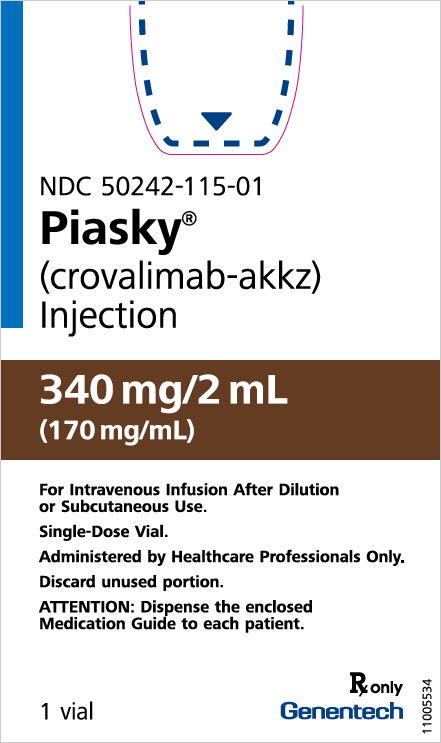
Principal Display Panel 340 Mg/2 Ml Vial Carton
NDC 50242-115-01
Piasky®
(crovalimab-akkz)
Injection
340 mg/2 mL
(170 mg/mL)
For Intravenous Infusion After Dilution
or Subcutaneous Use.
Single-Dose Vial.
Administered by Healthcare Professionals Only.
Discard unused portion.
ATTENTION: Dispense the enclosed
Medication Guide to each patient.
1 vial
Rx only
Genentech
11005534
13.1 Carcinogenesis, Mutagenesis, Impairment of Fertility
Long-term carcinogenicity studies and genotoxicity studies have not been conducted with crovalimab-akkz. No effects on female or male reproductive organs were observed in cynomolgus monkeys following repeated administration of crovalimab-akkz for up to 6 months with subcutaneous doses up to 100 mg/kg/week which corresponds to 18- and 16- times for males and females, respectively, the MRHD based on AUC.
5.6 Monitoring Pnh Manifestations After Discontinuation of Piasky
In case of PIASKY discontinuation, patients who do not switch to another treatment for PNH, must be closely monitored for at least 20 weeks for signs and symptoms of serious hemolysis, identified by elevated lactate dehydrogenase (LDH) levels, along with a sudden decrease in hemoglobin, or re-appearance of symptoms such as fatigue, hemoglobinuria, abdominal pain, dyspnea, major adverse vascular events (including thrombosis), dysphagia, erectile dysfunction or renal impairment.
If signs and symptoms of hemolysis occur after discontinuation of PIASKY, consider restarting treatment with PIASKY, if appropriate, or initiating another treatment for PNH.
2.1 Recommended Vaccination and Prophylaxis for Meningococcal Infection
Vaccinate patients for meningococcal infection (serogroups A, C, W, Y and B) according to current ACIP recommendations at least 2 weeks prior to initiation of PIASKY [see Warnings and Precautions (5.1)].
If urgent PIASKY therapy is indicated in a patient who is not up to date with meningococcal vaccines according to ACIP recommendations, provide the patient with antibacterial drug prophylaxis and administer these vaccines as soon as possible.
Healthcare providers who prescribe PIASKY must enroll in the PIASKY REMS [see Warnings and Precautions (5.2)].
2.3 Recommended Timing for Switching to Piasky From Another C5 Inhibitor
Healthcare providers should consider the benefits of the timing of switching C5 inhibitors vs. the risks of Type III hypersensitivity reactions [see Warnings and Precautions (5.3)]. For patients switching from another C5 inhibitor (e.g., eculizumab or ravulizumab), the first intravenous loading dose of PIASKY should be administered no sooner than the time of the next scheduled complement inhibitor administration. The administration of the additional subcutaneous loading doses and maintenance doses of PIASKY should follow as per the schedule shown in Table 1.
5.3 Type Iii Hypersensitivity Reactions Related to Drug Target Drug Complexes
Patients who are switching from another C5 inhibitor (e.g., eculizumab or ravulizumab) to PIASKY or from PIASKY to another C5 inhibitor are at risk of serious Type III hypersensitivity reactions related to the formation of drug-target-drug-complexes (DTDCs), because PIASKY and these other C5 inhibitors bind different epitopes of C5 [see Drug Interactions (7)].
In clinical trials, Type III hypersensitivity reactions were reported in 39 of 201 patients (19%) who switched from eculizumab or ravulizumab to PIASKY. Four of these patients (10%) had not fully recovered from symptoms of Type III hypersensitivity reactions at the time of their last follow up visit. In addition, Type III hypersensitivity reactions were reported in 2 of 8 patients (25%) who switched from PIASKY to eculizumab or ravulizumab, including one patient who developed Grade 3 axonal neuropathy [see Adverse Reactions (6)].
Symptoms of Type III hypersensitivity reactions that occurred in more than 2 patients were arthralgia, rash, pyrexia, myalgia, headache, fatigue, petechiae and abdominal pain. Among patients who experienced Type III hypersensitivity reactions, 8 (21%) had events that were considered serious due to hospitalization. Symptoms of serious Type III hypersensitivity reactions included pyrexia and arthralgia. Type III hypersensitivity reactions can also cause renal abnormalities.
Healthcare providers should consider the benefits of the timing of switching C5 inhibitors vs. the risks of Type III hypersensitivity reactions. Patients are expected to no longer be at risk of Type III hypersensitivity reactions if the prior C5 inhibitor has been cleared from the body prior to starting PIASKY or if PIASKY has been cleared from the body prior to starting another C5 inhibitor. Therefore, initiating PIASKY sooner than 5.5 half-lives from the last dose of a C5 inhibitor (e.g., eculizumab or ravulizumab) or initiating a C5 inhibitor (e.g., eculizumab or ravulizumab) sooner than 5.5 half-lives from the last dose of PIASKY increases the risk of Type III hypersensitivity reactions.
Based on time-to-onset of Type III hypersensitivity reactions observed in clinical trials, patients should be monitored for the first 30 days of the new therapy for the occurrence of symptoms of Type III hypersensitivity reactions. For mild or moderate Type III hypersensitivity reactions, administer symptomatic treatment, such as topical corticosteroids, antihistamines, antipyretics, and/or analgesics. For severe reactions, initiate and taper oral or systemic corticosteroid therapy as clinically indicated.
Structured Label Content
Section 42229-5 (42229-5)
Preparation of Intravenous Infusion
- Use aseptic technique to prepare PIASKY for intravenous administration. PIASKY must be diluted and administered as an intravenous infusion over 60 minutes ± 10 minutes (1,000 mg) or 90 minutes ± 10 minutes (1,500 mg).
- PIASKY solution must be diluted in 0.9% Sodium Chloride Injection prior to administration. A 0.2 micron in-line filter must be used with the infusion set during administration. A dedicated infusion line must be used during intravenous administration.
- Only dilute PIASKY in 0.9% Sodium Chloride Injection.
Section 42231-1 (42231-1)
| MEDICATION GUIDE PIASKY (pea-UH-sky) (crovalimab-akkz) injection, for intravenous or subcutaneous use |
||||||
|---|---|---|---|---|---|---|
| This Medication Guide has been approved by the U.S. Food and Drug Administration | Issued: 06/2024 | |||||
|
What is the most important information I should know about PIASKY? PIASKY is a medicine that affects your immune system. PIASKY may lower the ability of your immune system to fight infections.
|
||||||
|
|
|||||
|
Your healthcare provider will give you a Patient Safety Card about the risk of serious meningococcal infection. Carry it with you at all times during treatment and for 11 months after your last dose of PIASKY. Your risk of meningococcal infection may continue for several months after your last dose of PIASKY. It is important to show this card to any healthcare provider who treats you. This will help them diagnose and treat you quickly. PIASKY is only available through a program called the PIASKY Risk Evaluation and Mitigation Strategy (PIASKY REMS). Before you can receive PIASKY, your healthcare provider must:
|
||||||
|
||||||
|
|
|||||
|
||||||
|
|
|||||
| For more information about side effects, see "What are the possible side effects of PIASKY?" | ||||||
|
What is PIASKY?
PIASKY is a prescription medicine used to treat a disease called paroxysmal nocturnal hemoglobinuria (PNH) in adults and children 13 years of age and older who weigh at least 88 pounds (40 kg). It is not known if PIASKY is safe and effective in children under 13 years of age and in people who weigh less than 88 pounds (40 kg). |
||||||
|
Who should not receive PIASKY? Do not receive PIASKY if you:
|
||||||
Before receiving PIASKY tell your healthcare provider about all of your medical conditions, including if you:
Especially tell your healthcare provider if you are currently being treated with or have ever been treated with any other complement C5 inhibitor (C5 inhibitor) medicine. PIASKY is a C5 inhibitor medicine. Ask your healthcare provider if you are not sure if you have been treated with a C5 inhibitor medicine. See " What are the possible side effects of PIASKY? " Know the medicines you take and the vaccines you receive. Keep a list of them to show your healthcare provider and pharmacist when you get a new medicine. |
||||||
How should I receive PIASKY?
|
||||||
|
|
|||||
|
What are the possible side effects of PIASKY? PIASKY may cause serious side effects including:
|
||||||
|
|
|||||
| The most common side effects of PIASKY include: | ||||||
|
|
|||||
| Tell your healthcare provider about any side effect that bothers you or that does not go away. These are not all of the possible side effects of PIASKY. Call your doctor for medical advice about side effects. You may report side effects to FDA at 1-800-FDA-1088. |
||||||
|
General information about the safe and effective use of PIASKY.
Medicines are sometimes prescribed for purposes other than those listed in a Medication Guide. Do not use PIASKY for a condition for which it was not prescribed. You can ask your pharmacist or healthcare provider for information about PIASKY that is written for health professionals. |
||||||
|
What are the ingredients in PIASKY? Active ingredient: crovalimab-akkz Inactive ingredients: arginine hydrochloride, histidine, poloxamer 188, and Water for Injection. Aspartic acid may be added to adjust the pH. Manufactured by: Genentech, Inc., A Member of the Roche Group, 1 DNA Way, South San Francisco, CA 94080-4990 U.S. License No.: 1048 PIASKY is a registered trademark of Chugai Pharmaceutical Co., Ltd., Tokyo, Japan ©2024 Genentech, Inc. All rights reserved. For more information, go to www.PIASKY.com or call 1-877-436-3683. |
11 Description (11 DESCRIPTION)
Crovalimab-akkz, a complement C5 inhibitor, is a humanized monoclonal antibody based on a human IgG1 framework. The recombinant antibody is produced in Chinese hamster ovary CHO cells and consists of two heavy chains (451 amino acid residues each) and two light chains (217 amino acid residues each). The approximate molecular weight is 145 kDa.
PIASKY (crovalimab-akkz) injection is a preservative-free, sterile, clear to opalescent, almost colorless to brownish-yellow, solution supplied in a single-dose vial for intravenous use or subcutaneous use. Intravenous use requires dilution prior to administration.
Each single-dose vial contains a 2 mL solution of crovalimab-akkz (340 mg), arginine hydrochloride (42.2 mg), histidine (9.4 mg), poloxamer 188 (1 mg), and Water for Injection USP. The pH is 5.8. Aspartic acid may be added to adjust the pH.
5.2 Piasky Rems (5.2 PIASKY REMS)
PIASKY is available only through a restricted program under a REMS called PIASKY REMS, because of the risk of serious meningococcal infections [see Warnings and Precautions (5.1)].
Notable requirements of the PIASKY REMS include the following:
- Prescribers must enroll in the REMS.
- Prescribers must counsel patients about the risk of serious meningococcal infection.
- Prescribers must provide the patients with the REMS educational materials.
- Prescribers must assess patient vaccination status for meningococcal vaccines (against serogroups A, C, W, Y, and B) and vaccinate if needed according to current ACIP recommendations two weeks prior to the first dose of PIASKY.
- Prescribers must provide a prescription for antibacterial drug prophylaxis if treatment must be started urgently, and the patient is not up to date with both meningococcal vaccines according to current ACIP recommendations at least two weeks prior to the first dose of PIASKY.
- Healthcare settings and pharmacies that dispense PIASKY must be certified in the REMS and must verify prescribers are certified.
- Patients must receive counseling from the prescriber about the need to receive meningococcal vaccines per ACIP recommendations, the need to take antibiotics as directed by the prescriber, and the signs and symptoms of meningococcal infection.
- Patients must be instructed to carry the Patient Safety Card with them at all times during and for 11 months following treatment with PIASKY.
Further information is available at www.PIASKYREMS.com or 1-866-4My-Skyy (469-7599).
16.1 How Supplied
PIASKY (crovalimab-akkz) injection is a sterile, preservative-free, clear to opalescent, and almost colorless to brownish-yellow solution. Each PIASKY carton contains one 340 mg/2 mL (170 mg/mL) single-dose vial (NDC 50242-115-01).
8.4 Pediatric Use
The safety and effectiveness of PIASKY for the treatment of PNH have been established in pediatric patients 13 years and older with a body weight ≥ 40 kg. Use of PIASKY for this indication in pediatric patients is supported by evidence from adequate and well-controlled studies in adults along with additional pharmacokinetic, pharmacodynamic, efficacy and safety data in pediatric patients aged 13 to 17 years [see Adverse Reactions (6.1), Clinical Pharmacology (12.3), and Clinical Studies (14.1)].
The safety and effectiveness of PIASKY have not been established in pediatric patients less than 13 years of age and in those with body weight < 40 kg.
8.5 Geriatric Use
Clinical studies of PIASKY did not include sufficient numbers of subjects aged 65 and over to determine whether they respond differently from younger subjects. In general, dose selection for elderly patients should be cautious, reflecting the greater frequency of decreased hepatic, renal, or cardiac function and of concomitant disease or other therapy.
Of the 393 PIASKY-treated patients in COMMODORE 1, 2 and 3, 43 (10.9%) were 65 years of age and older. In patients who were complement inhibitor naïve, serious adverse reactions were reported in 1 patient (8%) who was 65 years or older compared to 6 (4%) patients who were 18 to 64 years of age. In patients who previously received a different C5 inhibitor and switched to PIASKY, serious adverse reactions were reported in 3 (7%) patients who were 65 years or older compared to 12 (4%) patients who were 18 to 64 years of age.
12.6 Immunogenicity
The observed incidence of anti-drug antibodies is highly dependent on the sensitivity and specificity of the assay. Differences in assay methods preclude meaningful comparisons of the incidence of anti-drug antibodies in the studies described below with the incidence of anti-drug antibodies in other studies, including other crovalimab-akkz products.
In the active-controlled COMMODORE 2 study, 30% (42/140) of treatment-naïve patients who received PIASKY and 34% (23/67) of patients who switched from treatment with another C5 inhibitor to PIASKY (switch patients) tested positive for anti-crovalimab-akkz-antibodies. The positive antidrug antibodies (ADAs) were detected after a median treatment duration of 48 weeks (range: 0.1 to 108 weeks) in treatment-naïve patients and 24 weeks (range: 0.3 to 76 weeks), in switch patients.
Across COMMODORE 1, COMMODORE 2, and COMMODORE 3, the incidence of treatment-emergent ADAs was 31% (60/191) following a median treatment duration of 52 weeks (range 0.1 to 108 weeks) in treatment-naïve patients and 23% (43/184) following a median treatment duration of 32 weeks (0.3 to 108 weeks) in switch patients.
Among the patients who were randomized to PIASKY, those who developed anti-crovalimab-akkz antibodies had reduced crovalimab-akkz concentrations, geometric mean decrease in the range of 39% to 56%, compared to those who did not develop anti-crovalimab-akkz antibodies through the course of the treatment period in COMMODORE 2. Despite this effect, crovalimab-akkz concentrations remained above 100 µg/mL (the threshold for complete terminal complement inhibition) in more than 80% of ADA-positive patients. Approximately 3% (11/375) of ADA-positive patients had a loss of pharmacological activity (based on CH50 or free C5) coinciding with a loss of exposure and with loss of efficacy, manifesting as a sustained loss of hemolysis control in 1.6% (6/375) of patients with PNH. There was no evidence for a clinical impact of ADA status on the safety profile of PIASKY.
4 Contraindications (4 CONTRAINDICATIONS)
PIASKY is contraindicated:
- For initiation in patients with an unresolved serious Neisseria meningitidis infection [see Warnings and Precautions (5.1)].
- In patients with a known serious hypersensitivity reaction to crovalimab or any of the excipients [see Warnings and Precautions (5.5)].
6 Adverse Reactions (6 ADVERSE REACTIONS)
The following clinically significant adverse reactions are discussed in greater detail in other sections of the label:
- Serious Meningococcal Infection [see Warnings and Precautions (5.1)]
- Type III Hypersensitivity Reactions Related to Drug-Target-Drug Complexes [see Warnings and Precautions (5.3)]
- Other Infections [see Warnings and Precautions (5.4)]
- Infusion- and Injection-Related Reactions [see Warnings and Precautions (5.5)]
5.4 Other Infections
Due to its mechanism of action, PIASKY may increase susceptibility to infections, especially with encapsulated bacteria, such as infections with Neisseria spp. but also Streptococcus pneumoniae, Haemophilus influenzae, and to a lesser extent, Neisseria gonorrhoeae. Children treated with PIASKY may be at increased risk of developing serious infections due to Streptococcus pneumoniae and Haemophilus influenzae type b (Hib). Vaccinate patients against Streptococcus pneumoniae and Haemophilus influenzae type b (Hib) infections according to ACIP recommendations.
If PIASKY is administered to patients with active systemic infections, monitor closely for signs and symptoms of worsening infection. If the patient's infection worsens, consider whether to discontinue PIASKY.
7. Drug Interactions (7. DRUG INTERACTIONS)
PIASKY binds different epitopes on C5 compared to eculizumab and ravulizumab, which can lead to the formation of DTDCs when patients switch between PIASKY and either eculizumab or ravulizumab. These DTDCs comprise one or more units of C5 bound to both PIASKY and to eculizumab or ravulizumab. These DTDCs are expected to be cleared within approximately 8 weeks (in the case of eculizumab) or longer (in the case of ravulizumab) and can result in Type III hypersensitivity reactions [see Warnings and Precautions (5.3), Adverse Reactions (6.1) and Clinical Pharmacology (12.3)].
12.2 Pharmacodynamics
Concentration-dependent inhibition of terminal complement activity following treatment with PIASKY was observed in patients with PNH naïve to complement inhibitor therapy and patients switching from another complement C5 inhibitor therapy. Terminal complement activity (CH50 as measured by Liposome Immunoassay [LIA]) inhibition was achieved by the end of the initial PIASKY infusion and was sustained through the duration of PIASKY treatment. Similarly, mean free C5 concentrations declined to low levels (<0.0001 g/L) in comparison to baseline and remained low throughout the treatment period.
12.3 Pharmacokinetics
Crovalimab-akkz exhibits dose proportional pharmacokinetics over the dose range from 75 to 1500 mg when given as a single intravenous infusion and from 100 to 1020 mg when given as a subcutaneous injection. Following the first intravenous loading dose, crovalimab-akkz concentrations exceeded the target threshold for complete terminal complement inhibition (100 µg/mL). After approximately 12 weeks, with the administration of subsequent subcutaneous doses, crovalimab-akkz attained a steady-state plateau of exposure. Pharmacokinetic exposures in patients with PNH are summarized for the recommended dosage of crovalimab-akkz in Table 6.
| Body weight of patients | Ctrough,ss (µg/mL) | Cmax,ss (µg/mL) | AUCτ,ss (µg × day/mL) |
|---|---|---|---|
| AUCτ,ss = area under the concentration-time curve for a dosing interval at steady state; Cmax,ss = maximum concentration during a dosing interval at steady state; Ctrough,ss = trough concentration at steady state. | |||
| ≥ 40 kg to < 100 kg | 230 (31.6%) | 292 (30.1%) | 7478 (30.5%) |
| ≥ 100 kg | 205 (31.5%) | 265 (30.9%) | 6748 (30.7%) |
1 Indications and Usage (1 INDICATIONS AND USAGE)
PIASKY is indicated for the treatment of adult and pediatric patients 13 years and older with paroxysmal nocturnal hemoglobinuria (PNH) and body weight of at least 40 kg.
12.1 Mechanism of Action
Crovalimab-akkz is a monoclonal antibody that specifically binds with high affinity to the complement protein C5, inhibiting its cleavage into C5a and C5b, preventing the formation of the membrane attack complex (MAC). Crovalimab-akkz inhibits terminal complement-mediated intravascular hemolysis in patients with PNH.
16.2 Storage and Handling
- Store refrigerated at 2°C to 8°C (36°F to 46°F) in the outer carton to protect from light. Do not freeze. Do not shake.
- Once removed from the refrigerator, the unopened vial can be kept at room temperature up to 30°C (86°F) in its outer carton for no longer than 7 days.
- Prior to administration, unopened vials of PIASKY may be stored out of the refrigerator at room temperature if needed and then returned to refrigeration. The total combined time out of refrigeration should not exceed 7 days and the temperature should not exceed 30°C (86°F). Discard if stored out of the refrigerator at room temperature for longer than 7 days.
2.4 Delayed Or Missed Dose (2.4 Delayed or Missed Dose)
If an entire planned dose or part of a planned dose of PIASKY is missed, administer the missed dose or remainder of the missed dose as soon as possible before the day of the next scheduled dose. Then administer the next dose on the regularly scheduled dosing day. Do not administer two doses or more than the prescribed dose on the same day to make up for a missed dose.
5 Warnings and Precautions (5 WARNINGS AND PRECAUTIONS)
- Type III hypersensitivity reactions: Monitor patients switching from another C5 inhibitor to PIASKY or from PIASKY to another C5 inhibitor as they are at risk of Type III hypersensitivity reactions related to the formation of drug-target-drug complexes (5.3)
- Other Infections: PIASKY can increase susceptibility to serious infections especially those caused by encapsulated bacteria. (5.4)
- Infusion- and Injection-Related Reactions: Monitor for these reactions and initiate medical management as needed (5.5)
2 Dosage and Administration (2 DOSAGE AND ADMINISTRATION)
See Full Prescribing Information for instructions on preparation, dosage, and administration. (2.2, 2.3, 2.4, 2.5)
Start with one loading dose administered by intravenous infusion, followed by 4 additional loading doses administered by subcutaneous injection. Then administer a maintenance dose every 4 weeks by subcutaneous injection.
For patients switching from another complement inhibitor, the first loading dose of PIASKY should be administered no sooner than the time of the next scheduled complement inhibitor administration. See Full Prescribing Information for considerations when switching from another C5 inhibitor.
Administer doses based on the patient's actual body weight (2.2)
3 Dosage Forms and Strengths (3 DOSAGE FORMS AND STRENGTHS)
Injection: 340 mg/2 mL (170 mg/mL) as a clear to opalescent and almost colorless to brownish-yellow solution in a single-dose vial.
6.1 Clinical Trial Experience
Because clinical trials are conducted under widely varying conditions, adverse reaction rates observed in the clinical trials of a drug cannot be directly compared to rates in the clinical trials of another drug and may not reflect the rates observed in practice.
2.2 Recommended Dosage Regimen
The recommended dosage regimen consists of one loading dose administered by intravenous (IV) infusion (on Day 1), followed by four additional weekly loading doses administered by subcutaneous (SUBQ) injection (on Days 2, 8, 15, and 22). The maintenance dose starts on Day 29 and is then administered every 4 weeks by subcutaneous injection. Administer doses based on the patient's actual body weight, as shown in Table 1.
| Body Weight | ≥ 40 kg to < 100 kg | ≥ 100 kg |
|---|---|---|
| IV = intravenous, SUBQ = subcutaneous | ||
|
Loading Dose
Day 1 Day 2, 8, 15, 22 |
1,000 mg (IV) 340 mg (SUBQ) |
1,500 mg (IV) 340 mg (SUBQ) |
|
Maintenance Dose
Day 29 and Q4W Q4W=every 4 weeks thereafter |
680 mg (SUBQ) |
1,020 mg (SUBQ) |
The dosing schedule is allowed to occasionally vary within 2 days of the scheduled administration day (except at Day 1 and Day 2). If this occurs, the subsequent dose should be administered according to the regular schedule.
Modification of the maintenance dose is required if the patient's body weight changes to become consistently greater than or lower than 100 kg during the course of therapy.
8. Use in Specific Populations (8. USE IN SPECIFIC POPULATIONS)
Lactation: Breastfeeding not recommended (8.2)
17 Patient Counseling Information (17 PATIENT COUNSELING INFORMATION)
Advise the patient to read the FDA-approved patient labeling (Medication Guide).
2.5 Preparation and Administration
Each vial of PIASKY is for one-time use in only one patient.
PIASKY is administered as an intravenous infusion (first dose) and as a subcutaneous injection (subsequent doses). Only healthcare providers should administer PIASKY.
Parenteral drug products should be inspected visually for particulate matter and discoloration prior to administration, whenever solution and container permit. PIASKY is clear to opalescent, and an almost colorless to brownish-yellow solution. PIASKY should be discarded if the medicine looks cloudy, discolored, or has particles in it.
5.1 Serious Meningococcal Infection
PIASKY, a complement inhibitor, increases a patient's susceptibility to serious, life-threatening, or fatal infections caused by meningococcal bacteria (meningococcemia and/or meningitis) in any serogroup, including non-groupable strains. Life-threatening and fatal meningococcal infections have occurred in both vaccinated and unvaccinated patients treated with complement inhibitors. The initiation of PIASKY is contraindicated in patients with a serious unresolved Neisseria meningitidis infection.
Complete or update meningococcal vaccination (for serogroups A, C, W, Y, and B) at least 2 weeks prior to administration of the first dose of PIASKY, according to the current Advisory Committee on Immunization Practices (ACIP) recommendations for patients receiving a complement inhibitor. Revaccinate patients in accordance with ACIP recommendations considering the duration of PIASKY therapy.
Note that ACIP recommends an administration schedule in patients receiving complement inhibitors that differs from the administration schedule in the vaccine prescribing information.
If urgent PIASKY therapy is indicated in a patient who is not up to date with meningococcal vaccines according to ACIP recommendations, provide the patient with antibacterial drug prophylaxis and administer meningococcal vaccines as soon as possible. Various durations and regimens of antibacterial drug prophylaxis have been considered, but the optimal durations and drug regimens for prophylaxis and their efficacy have not been studied in unvaccinated or vaccinated patients receiving complement inhibitors, including PIASKY. The benefits and risks of treatment with PIASKY, as well as the benefits and risks of antibacterial drug prophylaxis in unvaccinated or vaccinated patients, must be considered against the known risks for serious infections caused by N. meningitidis.
Vaccination does not eliminate the risk of meningococcal infections, despite development of antibodies following vaccination.
Closely monitor patients for early signs and symptoms of meningococcal infection and evaluate patients immediately if infection is suspected. Inform patients of these signs and symptoms and instruct patients to seek immediate medical care if these signs and symptoms occur. Promptly treat known infections. Meningococcal infection may become rapidly life-threatening or fatal if not recognized and treated early. Consider interruption of PIASKY in patients who are undergoing treatment for serious meningococcal infection.
PIASKY is available only through a restricted program under a REMS [see Warnings and Precautions (5.2)].
14.1 Paroxysmal Nocturnal Hemoglobinuria
The efficacy of PIASKY in patients with PNH was evaluated in COMMODORE 2 (NCT04434092), an active-controlled, open-label, non-inferiority study that randomized 204 patients (body weight ≥ 40 kg) with PNH not previously treated with a complement inhibitor in a 2:1 ratio to receive either PIASKY (n=135) or eculizumab (n=69). The study additionally enrolled 6 pediatric patients (aged >12 years and body weight ≥ 40 kg) to receive PIASKY in a separate non-randomized cohort.
Patients were required to be vaccinated against Neisseria meningitidis, either within 3 years prior to the start of treatment or within 7 days after starting treatment with PIASKY. Patients vaccinated within 2 weeks prior to initiating PIASKY or after the start of study treatment received prophylactic antibiotics until at least 2 weeks after the vaccination.
A single intravenous loading dose of PIASKY was given on Day 1 (1,000 mg for patients weighing ≥40 kg to <100 kg, or 1,500 mg for patients weighing >100 kg), followed by four additional weekly subcutaneous loading doses of 340 mg on Days 2, 8, 15 and 22. Starting at Day 29, maintenance subcutaneous doses were given every 4 weeks (680 mg for patients weighing ≥40 kg to <100 kg, or 1,020 mg for patients weighing ≥100 kg).
The study consisted of a primary treatment period of 24 weeks, after which patients had the option to continue or switch to PIASKY in an extension period.
Eligible patients had LDH level ≥ 2 × upper limit of normal (ULN) and at least one or more PNH-related signs or symptoms in the past 3 months. Randomization was stratified by the most recent LDH value (≥ 2 to ≤ 4 × ULN, or > 4× ULN) and by the transfusion history (0, > 0 to ≤ 6, or > 6 packed red blood cell (pRBC) units administered within 6 months prior to randomization). In the PIASKY and eculizumab arms, the median PNH clone size was 90.9% and 95.1% for monocytes, 91.4% and 93.6% for granulocytes and 25.3% and 44.6% for erythrocytes, respectively.
Demographics and baseline characteristics of the randomized study population were generally balanced between the treatment arms and are presented in Table 7.
| Parameters | PIASKY (N= 135) |
Eculizumab (N= 69) |
|---|---|---|
| pRBCs = packed red blood cells | ||
| Age (years) at PNH diagnosis | ||
| Mean (SD) | 35.8 (15.5) | 37.4 (16.4) |
| Median (range) | 31.0 (11.5- 74.7) | 32.1 (11.2- 76.8) |
| Age (years) at first administration of the study drug | ||
| Mean (SD) | 40.5 (15.2) | 41.9 (16.0) |
| Median (range) | 36.0 (18-76) | 38.0 (17-78) |
| <18 years, n (%) | 0 | 2 (2.9%) |
| 18 – 64 years, n (%) | 122 (90.4%) | 58 (84.1%) |
| ≥65 years, n (%) | 13 (9.6%) | 9 (13.0%) |
| Weight | ||
| 40 to <100 kg, n (%) | 131 (97.0%) | 66 (95.7%) |
| ≥100 kg, n (%) | 4 (3.0%) | 3 (4.3%) |
| Sex | ||
| Male, n (%) | 77 (57.0%) | 35 (50.7%) |
| Female, n (%) | 58 (43.0%) | 34 (49.3%) |
| Race | ||
| Asian | 86 (63.7%) | 51 (73.9%) |
| White | 45 (33.3%) | 16 (23.2%) |
| Black or African American | 3 (2.2%) | 1 (1.4%) |
| Unknown | 1 (0.7%) | 1 (1.4%) |
| Ethnicity | ||
| Hispanic or Latino | 18 (13.3%) | 6 (8.7%) |
| Not Hispanic or Latino | 114 (84.4%) | 61 (88.4%) |
| Not reported | 3 (2.2%) | 2 (2.9%) |
| Baseline hemoglobin (g/dL) |
||
| Median (range) | 8.5 (6.3-13.5) | 8.5 (5.8-12.9) |
| LDH levels at baseline (× ULN) | ||
| Median (range) | 7.0 (2.0 – 16.3) | 7.7 (2.0 – 20.3) |
| History of pRBC transfusion in the 12 months prior to screening | ||
| Yes, n (%) | 103 (77.4%) | 50 (73.5%) |
| Number of pRBC units transfused in the 12 months prior to screening | ||
| Median (range) | 3.8 (0-43.5) | 3.0 (0-41.0) |
| History of aplastic anemia | ||
| Yes, n (%) | 53 (39.3%) | 26 (37.7%) |
| History of myelodysplastic syndrome | ||
| Yes, n (%) | 6 (4.4%) | 6 (8.7%) |
| History of Major Adverse Vascular Event | ||
| Yes, n (%) | 21 (15.6%) | 10 (14.5%) |
| Medications at baseline Includes medications that were started prior to initiation of study treatment and were either stopped before or were ongoing at time of initiation of study treatment.
|
||
| Anticoagulants, n (%) | 35 (25.9%) | 17 (24.6%) |
| Systemic corticosteroids, n (%) | 46 (34.1%) | 25 (36.2%) |
| Immunosuppressive therapy, n (%) | 23 (17%) | 13 (18.8%) |
Efficacy was based on hemolysis control, as measured by the mean proportion of patients with LDH ≤ 1.5× ULN from Week 5 to Week 25; and the proportion of patients who achieved transfusion avoidance, defined as patients who were pRBC transfusion-free, from baseline through Week 25. Other efficacy endpoints included the proportion of patients with breakthrough hemolysis and the proportion of patients with stabilized hemoglobin. Breakthrough hemolysis was defined as at least one new or worsening symptom or sign of intravascular hemolysis in the presence of elevated LDH ≥ 2 × ULN after prior reduction of LDH to ≤ 1.5 × ULN on treatment. Hemoglobin stabilization was defined as avoidance of a ≥ 2 g/dL decrease in hemoglobin level from baseline, in the absence of transfusion.
Efficacy results for these endpoints are shown in Table 8.
| PIASKY (N=134) One patient randomized to PIASKY did not have post-baseline LDH and was not included in the primary efficacy analysis
|
Eculizumab (N = 69) |
|
|---|---|---|
| CI = confidence interval | ||
| Proportion of patients with Transfusion Avoidance, % (95% CI) | 65.7 (56.9, 73.5) | 68.1 (55.7, 78.5) |
| Difference in proportions Difference calculated as PIASKY minus eculizumab , % (95% CI) Non-inferiority was demonstrated based on the margin pre-specified in the study protocol
|
-2.8% (-15.7, 11.1) | |
| Mean proportion of patients achieving hemolysis control, % (95% CI) | 79.3 (72.9, 84.5) | 79.0 (69.7, 86.0) |
| Odds Ratio Odds ratio calculated as odds for PIASKY divided by odds for eculizumab (95% CI)
|
1.02 (0.57, 1.82) | |
| Proportion of patients with Breakthrough Hemolysis, % (95% CI) | 10.4 (6.0, 17.2) | 14.5 (7.5, 25.5) |
| Difference in proportions, % (95% CI) | - 3.9% (-14.8, 5.3) | |
| Proportion of patients with stabilized hemoglobin, % (95% CI) | 63.4 (54.6, 71.5) | 60.9 (48.4, 72.2) |
| Difference in proportions, % (95% CI) | 2.2 (-11.4, 16.3) |
Warning: Serious Meningococcal Infections (WARNING: SERIOUS MENINGOCOCCAL INFECTIONS)
PIASKY, a complement inhibitor, increases the risk of serious infections caused by Neisseria meningitidis [see Warnings and Precautions (5.1)]. Life-threatening and fatal meningococcal infections have occurred in patients treated with complement inhibitors. These infections may become rapidly life-threatening or fatal if not recognized and treated early.
- Complete or update vaccination for meningococcal bacteria (for serogroups A, C, W, Y, and B) at least 2 weeks prior to the first dose of PIASKY, unless the risks of delaying therapy with PIASKY outweigh the risk of developing a serious infection. Comply with the most current Advisory Committee on Immunization Practices (ACIP) recommendations for meningococcal vaccination in patients receiving a complement inhibitor. See Warnings and Precautions (5.1) for additional guidance on the management of the risk of serious infections caused by meningococcal bacteria.
- Patients receiving PIASKY are at increased risk for invasive disease caused by N. meningitidis, even if they develop antibodies following vaccination. Monitor patients for early signs of serious meningococcal infections and evaluate immediately if infection is suspected.
Because of the risk of serious meningococcal infections, PIASKY is available only through a restricted program under a Risk Evaluation and Mitigation Strategy (REMS) called PIASKY REMS [see Warnings and Precautions (5.2)].
5.5 Infusion and Injection Related Reactions (5.5 Infusion- and Injection-Related Reactions)
Administration of PIASKY may cause infusion-related reactions or systemic injection-related reactions, depending on the route of administration [see Adverse Reactions (6)]. These may include hypersensitivity reactions (including anaphylaxis) but also a range of other symptoms such as injection site pain, erythema, headache or myalgia. One patient experienced a serious infusion-related reaction that resolved 4 days after interruption of infusion with PIASKY. Instruct patients/caregivers to seek immediate medical attention if the patient develops symptoms of a serious hypersensitivity reaction and to report this reaction to their healthcare provider.
If a serious hypersensitivity reaction (including anaphylaxis) occurs, discontinue PIASKY treatment immediately, institute appropriate treatment, per standard of care, and monitor until signs and symptoms are resolved. PIASKY is contraindicated in patients with a known serious hypersensitivity reaction to crovalimab or any of the excipients.
Principal Display Panel 340 Mg/2 Ml Vial Carton (PRINCIPAL DISPLAY PANEL - 340 mg/2 mL Vial Carton)
NDC 50242-115-01
Piasky®
(crovalimab-akkz)
Injection
340 mg/2 mL
(170 mg/mL)
For Intravenous Infusion After Dilution
or Subcutaneous Use.
Single-Dose Vial.
Administered by Healthcare Professionals Only.
Discard unused portion.
ATTENTION: Dispense the enclosed
Medication Guide to each patient.
1 vial
Rx only
Genentech
11005534
13.1 Carcinogenesis, Mutagenesis, Impairment of Fertility
Long-term carcinogenicity studies and genotoxicity studies have not been conducted with crovalimab-akkz. No effects on female or male reproductive organs were observed in cynomolgus monkeys following repeated administration of crovalimab-akkz for up to 6 months with subcutaneous doses up to 100 mg/kg/week which corresponds to 18- and 16- times for males and females, respectively, the MRHD based on AUC.
5.6 Monitoring Pnh Manifestations After Discontinuation of Piasky (5.6 Monitoring PNH Manifestations after Discontinuation of PIASKY)
In case of PIASKY discontinuation, patients who do not switch to another treatment for PNH, must be closely monitored for at least 20 weeks for signs and symptoms of serious hemolysis, identified by elevated lactate dehydrogenase (LDH) levels, along with a sudden decrease in hemoglobin, or re-appearance of symptoms such as fatigue, hemoglobinuria, abdominal pain, dyspnea, major adverse vascular events (including thrombosis), dysphagia, erectile dysfunction or renal impairment.
If signs and symptoms of hemolysis occur after discontinuation of PIASKY, consider restarting treatment with PIASKY, if appropriate, or initiating another treatment for PNH.
2.1 Recommended Vaccination and Prophylaxis for Meningococcal Infection
Vaccinate patients for meningococcal infection (serogroups A, C, W, Y and B) according to current ACIP recommendations at least 2 weeks prior to initiation of PIASKY [see Warnings and Precautions (5.1)].
If urgent PIASKY therapy is indicated in a patient who is not up to date with meningococcal vaccines according to ACIP recommendations, provide the patient with antibacterial drug prophylaxis and administer these vaccines as soon as possible.
Healthcare providers who prescribe PIASKY must enroll in the PIASKY REMS [see Warnings and Precautions (5.2)].
2.3 Recommended Timing for Switching to Piasky From Another C5 Inhibitor (2.3 Recommended Timing for Switching to PIASKY from Another C5 Inhibitor)
Healthcare providers should consider the benefits of the timing of switching C5 inhibitors vs. the risks of Type III hypersensitivity reactions [see Warnings and Precautions (5.3)]. For patients switching from another C5 inhibitor (e.g., eculizumab or ravulizumab), the first intravenous loading dose of PIASKY should be administered no sooner than the time of the next scheduled complement inhibitor administration. The administration of the additional subcutaneous loading doses and maintenance doses of PIASKY should follow as per the schedule shown in Table 1.
5.3 Type Iii Hypersensitivity Reactions Related to Drug Target Drug Complexes (5.3 Type III Hypersensitivity Reactions Related to Drug-Target-Drug Complexes)
Patients who are switching from another C5 inhibitor (e.g., eculizumab or ravulizumab) to PIASKY or from PIASKY to another C5 inhibitor are at risk of serious Type III hypersensitivity reactions related to the formation of drug-target-drug-complexes (DTDCs), because PIASKY and these other C5 inhibitors bind different epitopes of C5 [see Drug Interactions (7)].
In clinical trials, Type III hypersensitivity reactions were reported in 39 of 201 patients (19%) who switched from eculizumab or ravulizumab to PIASKY. Four of these patients (10%) had not fully recovered from symptoms of Type III hypersensitivity reactions at the time of their last follow up visit. In addition, Type III hypersensitivity reactions were reported in 2 of 8 patients (25%) who switched from PIASKY to eculizumab or ravulizumab, including one patient who developed Grade 3 axonal neuropathy [see Adverse Reactions (6)].
Symptoms of Type III hypersensitivity reactions that occurred in more than 2 patients were arthralgia, rash, pyrexia, myalgia, headache, fatigue, petechiae and abdominal pain. Among patients who experienced Type III hypersensitivity reactions, 8 (21%) had events that were considered serious due to hospitalization. Symptoms of serious Type III hypersensitivity reactions included pyrexia and arthralgia. Type III hypersensitivity reactions can also cause renal abnormalities.
Healthcare providers should consider the benefits of the timing of switching C5 inhibitors vs. the risks of Type III hypersensitivity reactions. Patients are expected to no longer be at risk of Type III hypersensitivity reactions if the prior C5 inhibitor has been cleared from the body prior to starting PIASKY or if PIASKY has been cleared from the body prior to starting another C5 inhibitor. Therefore, initiating PIASKY sooner than 5.5 half-lives from the last dose of a C5 inhibitor (e.g., eculizumab or ravulizumab) or initiating a C5 inhibitor (e.g., eculizumab or ravulizumab) sooner than 5.5 half-lives from the last dose of PIASKY increases the risk of Type III hypersensitivity reactions.
Based on time-to-onset of Type III hypersensitivity reactions observed in clinical trials, patients should be monitored for the first 30 days of the new therapy for the occurrence of symptoms of Type III hypersensitivity reactions. For mild or moderate Type III hypersensitivity reactions, administer symptomatic treatment, such as topical corticosteroids, antihistamines, antipyretics, and/or analgesics. For severe reactions, initiate and taper oral or systemic corticosteroid therapy as clinically indicated.
Advanced Ingredient Data
Raw Label Data
All Sections (JSON)
Additional Information
Back to search View SPL set listing Open on DailyMed ↗
Source: dailymed · Ingested: 2026-02-15T11:50:37.634620 · Updated: 2026-03-14T22:38:11.072710