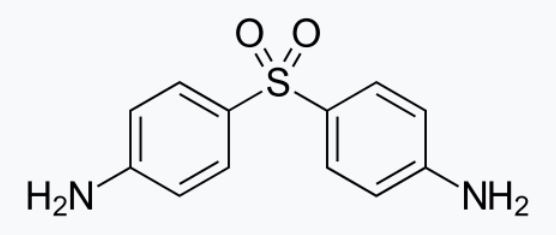
dapsone
229af266-d901-43e2-828a-4931d1124ea3
34391-3
HUMAN PRESCRIPTION DRUG LABEL
Drug Facts
Composition & Product
Identifiers & Packaging
Indications and Usage
Dermatitis herpetiformis: (D.H.) Leprosy: All forms of leprosy except for cases of proven Dapsone resistance.
Adverse Reactions
In addition to the warnings listed above, the following syndromes and serious reactions have been reported in patients on Dapsone.
How Supplied
Dapsone Tablets USP, 25 mg are available as round white scored tablets, debossed “25” above and “102” below the score and on the obverse “JACOBUS” in: Unit of Use carton of 30 tablets (2 x 15). The blisters are light and child-resistant. NDC 13925-504-30. light and child-resistant bottles of 100, NDC 49938-102-01. Dapsone Tablets USP, 100 mg are available as round white scored tablets, debossed “100” above and “101” below the score and on the obverse “JACOBUS” in: Unit of Use carton of 30 tablets (2 x 15).The blisters are light and child-resistant. NDC 13925-505-30. light and child-resistant bottles of 100, NDC 49938-101-01.
Description
Dapsone-USP, 4,4'-diaminodiphenylsulfone (DDS), is a primary treatment for Dermatitis herpetiformis. It is an antibacterial drug for susceptible cases of leprosy. It is a white, odorless crystalline powder, practically in-soluble in water and insoluble in fixed and vegetable oils. Dapsone is issued on prescription in tablets of 25 and 100 mg for oral use. Inactive Ingredients: Colloidal silicone dioxide, magnesium stearate, microcrystalline cellulose and corn starch. <p class="First">Dapsone-USP, 4,4'-diaminodiphenylsulfone (DDS), is a primary treatment for Dermatitis herpetiformis. It is an antibacterial drug for susceptible cases of leprosy. It is a white, odorless crystalline powder, practically in-soluble in water and insoluble in fixed and vegetable oils.</p><p>Dapsone is issued on prescription in tablets of 25 and 100 mg for oral use.</p><div class="Figure"><img id="mm01" src="/validator-lite/validator/spl/2d014f94-1f55-4f1c-8152-469a5bdb4f02/image-1-dapsone-structure.jpg" alt="" data-mce-src="../validator/spl/2d014f94-1f55-4f1c-8152-469a5bdb4f02/image-1-dapsone-structure.jpg"></div><p>Inactive Ingredients: Colloidal silicone dioxide, magnesium stearate, microcrystalline cellulose and corn starch.</p><p>&lt;p class="First"&gt;Dapsone-USP, 4,4'-diaminodiphenylsulfone (DDS), is a primary treatment for Dermatitis herpetiformis. It is an antibacterial drug for susceptible cases of leprosy. It is a white, odorless crystalline powder, practically in-soluble in water and insoluble in fixed and vegetable oils.&lt;/p&gt;&lt;p&gt;Dapsone is issued on prescription in tablets of 25 and 100 mg for oral use.&lt;/p&gt;&lt;div class="Figure"&gt;&lt;img id="mm01" src="/validator-lite/validator/spl/2d014f94-1f55-4f1c-8152-469a5bdb4f02/image-1-dapsone-structure.jpg" alt="" data-mce-src="../validator/spl/2d014f94-1f55-4f1c-8152-469a5bdb4f02/image-1-dapsone-structure.jpg"&gt;&lt;/div&gt;&lt;p&gt;Inactive Ingredients: Colloidal silicone dioxide, magnesium stearate, microcrystalline cellulose and corn starch.&lt;/p&gt;</p>
Medication Information
Warnings
The patient should be warned to respond to the presence of clinical signs such as sore throat, fever, pallor, purpura or jaundice. Deaths associated with the administration of Dapsone have been reported from agranulocytosis, aplastic anemia and other blood dyscrasias. Complete blood counts should be done frequently in patients receiving Dapsone. The FDA Dermatology Advisory Committee recommended that, when feasible, counts should be done weekly for the first month, monthly for six months and semi-annually thereafter. If a significant reduction in leucocytes, platelets or hemopoiesis is noted, Dapsone should be discontinued and the patient followed intensively. Folic acid antagonists have similar effects and may increase the incidence of hematologic reactions; if co-administered with Dapsone the patient should be monitored more frequently. Patients on weekly pyrimethamine and Dapsone have developed agranulocytosis during the second and third month of therapy.
Severe anemia should be treated prior to initiation of therapy and hemoglobin monitored. Hemolysis and methemoglobin may be poorly tolerated by patients with severe cardiopulmonary disease.
Cutaneous reactions, especially bullous, include exfoliative dermatitis and are probably one of the most serious, though rare, complications of sulfone therapy. They are directly due to drug sensitization. Such reactions include toxic erythema, erythema multiforme, toxic epidermal necrolysis, morbilliform and scarlatiniform reactions, urticaria and erythema nodosum. If new or toxic dermatologic reactions occur, sulfone therapy must be promptly discontinued and appropriate therapy instituted. Leprosy reactional states, including cutaneous, are not hypersensitivity reactions to Dapsone and do not require discontinuation. See special section.
Indications and Usage
Dermatitis herpetiformis: (D.H.)
Leprosy: All forms of leprosy except for cases of proven Dapsone resistance.
Adverse Reactions
In addition to the warnings listed above, the following syndromes and serious reactions have been reported in patients on Dapsone.
How Supplied
Dapsone Tablets USP, 25 mg are available as round white scored tablets, debossed “25” above and “102” below the score and on the obverse “JACOBUS” in:
- Unit of Use carton of 30 tablets (2 x 15). The blisters are light and child-resistant. NDC 13925-504-30.
- light and child-resistant bottles of 100, NDC 49938-102-01.
Dapsone Tablets USP, 100 mg are available as round white scored tablets, debossed “100” above and “101” below the score and on the obverse “JACOBUS” in:
- Unit of Use carton of 30 tablets (2 x 15).The blisters are light and child-resistant. NDC 13925-505-30.
- light and child-resistant bottles of 100, NDC 49938-101-01.
Description
Dapsone-USP, 4,4'-diaminodiphenylsulfone (DDS), is a primary treatment for Dermatitis herpetiformis. It is an antibacterial drug for susceptible cases of leprosy. It is a white, odorless crystalline powder, practically in-soluble in water and insoluble in fixed and vegetable oils.
Dapsone is issued on prescription in tablets of 25 and 100 mg for oral use.
Inactive Ingredients: Colloidal silicone dioxide, magnesium stearate, microcrystalline cellulose and corn starch.
<p class="First">Dapsone-USP, 4,4'-diaminodiphenylsulfone (DDS), is a primary treatment for Dermatitis herpetiformis. It is an antibacterial drug for susceptible cases of leprosy. It is a white, odorless crystalline powder, practically in-soluble in water and insoluble in fixed and vegetable oils.</p><p>Dapsone is issued on prescription in tablets of 25 and 100 mg for oral use.</p><div class="Figure"><img id="mm01" src="/validator-lite/validator/spl/2d014f94-1f55-4f1c-8152-469a5bdb4f02/image-1-dapsone-structure.jpg" alt="" data-mce-src="../validator/spl/2d014f94-1f55-4f1c-8152-469a5bdb4f02/image-1-dapsone-structure.jpg"></div><p>Inactive Ingredients: Colloidal silicone dioxide, magnesium stearate, microcrystalline cellulose and corn starch.</p><p><p class="First">Dapsone-USP, 4,4'-diaminodiphenylsulfone (DDS), is a primary treatment for Dermatitis herpetiformis. It is an antibacterial drug for susceptible cases of leprosy. It is a white, odorless crystalline powder, practically in-soluble in water and insoluble in fixed and vegetable oils.</p><p>Dapsone is issued on prescription in tablets of 25 and 100 mg for oral use.</p><div class="Figure"><img id="mm01" src="/validator-lite/validator/spl/2d014f94-1f55-4f1c-8152-469a5bdb4f02/image-1-dapsone-structure.jpg" alt="" data-mce-src="../validator/spl/2d014f94-1f55-4f1c-8152-469a5bdb4f02/image-1-dapsone-structure.jpg"></div><p>Inactive Ingredients: Colloidal silicone dioxide, magnesium stearate, microcrystalline cellulose and corn starch.</p></p>
Section 34072-9
General: Hemolysis and Heinz body formation may be exaggerated in individuals with a glucose-6-phosphate dehydrogenase (G6PD) deficiency, or methemoglobin reductase deficiency, or hemoglobin M. This reaction is frequently dose-related. Dapsone should be given with caution to these patients or if the patient is exposed to other agents or conditions such as infection or diabetic ketosis capable of producing hemolysis. Drugs or chemicals which have produced significant hemolysis in G6PD or methemoglobin reductase deficient patients include Dapsone, sulfanil amide, nitrite, aniline, phenylhydrazine, napthalene, niridazole, nitro-furantoin and 8-amino-antimalarials such as primaquine. Toxic hepatitis and cholestatic jaundice have been reported early in therapy. Hyperbilirubinemia may occur more often in G6PD deficient patients. When feasible, baseline and subsequent monitoring of liver function is recommended; if abnormal, Dapsone should be discontinued until the source of the abnormality is established.
Section 34073-7
Drug Interactions: Rifampin lowers Dapsone levels 7 to 10-fold by accelerating plasma clearance; in leprosy this reduction has not required a change in dosage. Folic acid antagonists such as pyrimethamine may increase the likelihood of hematologic reactions. A modest interaction has been reported for patients receiving 100 mg Dapsone daily in combination with trimethoprim 5 mg/kg q6h. On Day 7, the serum Dapsone levels averaged 2.1 ± 1.0 μg/mL in comparison to 1.5 ± 0.5 μg/mL for Dapsone alone. On Day 7, trimethoprim levels averaged 18.4 ± 5.2 μg/mL in comparison to 12.4 ± 4.5 μg/mL for patients not receiving Dapsone. Thus, there is a mutual interaction between Dapsone and trimethoprim in which each raises the level of the other about 1.5 times.
A crossover study1 designed to assess the potential of a drug interaction between Dapsone, 100 mg/day and trimethoprim, 200 mg every 12 hours, in eight asymptomatic HIV positive volunteers (average CD4 count 524 cells/mm3) demonstrated that there was not a significant drug intreraction between Dapsone and trimethoprim. However, an earlier report2 also by Lee et al, in 78 HIV infected patients with acute Pneumocystis carinii pneumonia, receiving Dapsone, 100 mg/day and higher trimethoprim dose, 20 mg/kg/day, demonstrated that the serum levels of Dapsone were increased by 40% and trimethoprim levels were increased by 48% when the drugs were administered concurrently.
Section 34080-2
Nursing Mothers: Dapsone is excreted in breast milk in substantial amounts. Hemolytic reactions can occur in neonates. See section on hemolysis. Because of the potential for tumorgenicity shown for Dapsone in animal studies a decision should be made whether to discontinue nursing or discontinue the drug taking into account the importance of drug to the mother.
Section 34081-0
Pediatric Use: Pediatric patients are treated on the same schedule as adults but with correspondingly smaller doses. Dapsone is generally not considered to have an effect on the later growth, development and functional development of the pediatric patient.
Section 34083-6
Carcinogenesis, mutagenesis: Dapsone has been found carcinogenic (sarcomagenic) for male rats and female mice causing mesenchymal tumors in the spleen and peritoneum, and thyroid carcinoma in female rats. Dapsone is not mutagenic with or without microsomal activation in S. typhimurium tester strains 1535, 1537, 1538, 98, or 100.
Section 42228-7
Pregnancy: Teratogenic Effects. Pregnancy Category C: Animal reproduction studies have not been conducted with Dapsone. Extensive, but uncontrolled experience and two published surveys on the use of Dapsone in pregnant women have not shown that Dapsone increases the risk of fetal abnormalities if administered during all trimesters of pregnancy or can affect reproduction capacity. Because of the lack of animal studies or controlled human experience, Dapsone should be given to a pregnant woman only if clearly needed. In general, for leprosy, USPHS at Carville recommends maintenance of Dapsone. Dapsone has been important for the management of some pregnant D.H. patients.
Section 42229-5
Actions: The mechanism of action in Dermatitis herpetiformis has not been established. By the kinetic method in mice, Dapsone is bactericidal as well as bacteriostatic against Mycobacterium leprae.
Section 51945-4
Principal Display Panel - Label 25 mg 30 count
Contains 12: NDC 13925-504-30
Dapsone
Tablets USP
25 mg
12 cartons each containing
30 tablets ( 2 x 15 unit of use)
Store at 20° to 25° C (68° to 77°) [See USP Controlled Room Temperature]
Protect From Light
Principal Display Panel - Label 25 mg 100 count
NDC 13925-504-01
DAPSONE
Tablets, USP
25 mg
100 tablets
Caution: Federal law prohibits dispensing
without prescription. Dispense this product
in a well closed, light-resistant container
with child resistant closure.
Overdosage
Nausea, vomiting, hyperexcitability can appear a few minutes up to 24 hours after ingestion of an overdosage. Methemoglobin induced depression, convulsions or severe cyanosis requires prompt treatment. In normal and methemoglobin reductase deficient patients, methylene blue, 1-2 mg/kg of body weight, given slowly intravenously, is the treatment of choice. The effect is complete in 30 minutes, but may have to be repeated if methemoglobin reaccumulates. For non-emergencies, if treatment is needed, methylene blue may be given orally in doses of 3-5 mg/kg every 4-6 hours. Methylene blue reduction depends on G6PD and should not be given to fully expressed G6PD deficient patients.
References
- Lee, B., et al., Zidovudine, Trimethoprim, and Dapsone Pharmacokinetic Interactions in Patients with HIV Infection. Antimicrobial Agents and Chemotherapy, May 1996; 1231-1236.
- Lee, B., et al., Dapsone, Trimethoprim, and Sulfamethoxazole Plasma Levels During Treatment of Pneumocystis Carinii Pneumonia in Patients with AIDS, Annals of Internal Medicine, 1989; 110:606-611.
Store at 20°- 25° C (68°- 77°F). [see USP Controlled Room Temperature]. Protect from light.
Rx only. Keep this and all drugs out of the reach of children.
Contraindication
Hypersensitivity to Dapsone and/or its derivatives.
Leprosy Reactional States
Abrupt changes in clinical activity occur in leprosy with any effective treatment and are known as reactional states. The majority can be classified into two groups.
The “Reversal” reaction (Type 1) may occur in borderline or tuberculoid leprosy patients often soon after chemotherapy is started. The mechanism is presumed to result from a reduction in the antigenic load: the patient is able to mount an enhanced delayed hypersensitivity response to residual infection leading to swelling (“Reversal”) of existing skin and nerve lesions. If severe, or if neuritis is present, large doses of steroids should always be used. If severe, the patient should be hospitalized. In general anti-leprosy treatment is continued and therapy to suppress the reaction is indicated such as analgesics, steroids, or surgical decompression of swollen nerve trunks. USPHS at Carville, LA should be contacted for advice in management.
Erythema nodosum leprosum (ENL) (lepromatous reaction) (Type 2 reaction) occurs mainly in lepromatous patients and small numbers of borderline patients. Approximately 50% of treated patients show this reaction in the first year. The principal clinical features are fever and tender erythematous skin nodules sometimes associated with malaise, neuritis, orchitis, albuminuria, joint swelling, iritis, epistaxis or depression. Skin lesions can become pustular and/or ulcerate. Histologically there is a vasculitis with an intense polymorphonuclear infiltrate. Elevated circulating immune complexes are considered to be the mechanism of reaction. If severe, patients should be hospitalized. In general, anti-leprosy treatment is continued. Analgesics, steroids, and other agents available from USPHS, Carville, LA, are used to suppress the reaction.
Structured Label Content
Warnings (WARNINGS)
The patient should be warned to respond to the presence of clinical signs such as sore throat, fever, pallor, purpura or jaundice. Deaths associated with the administration of Dapsone have been reported from agranulocytosis, aplastic anemia and other blood dyscrasias. Complete blood counts should be done frequently in patients receiving Dapsone. The FDA Dermatology Advisory Committee recommended that, when feasible, counts should be done weekly for the first month, monthly for six months and semi-annually thereafter. If a significant reduction in leucocytes, platelets or hemopoiesis is noted, Dapsone should be discontinued and the patient followed intensively. Folic acid antagonists have similar effects and may increase the incidence of hematologic reactions; if co-administered with Dapsone the patient should be monitored more frequently. Patients on weekly pyrimethamine and Dapsone have developed agranulocytosis during the second and third month of therapy.
Severe anemia should be treated prior to initiation of therapy and hemoglobin monitored. Hemolysis and methemoglobin may be poorly tolerated by patients with severe cardiopulmonary disease.
Cutaneous reactions, especially bullous, include exfoliative dermatitis and are probably one of the most serious, though rare, complications of sulfone therapy. They are directly due to drug sensitization. Such reactions include toxic erythema, erythema multiforme, toxic epidermal necrolysis, morbilliform and scarlatiniform reactions, urticaria and erythema nodosum. If new or toxic dermatologic reactions occur, sulfone therapy must be promptly discontinued and appropriate therapy instituted. Leprosy reactional states, including cutaneous, are not hypersensitivity reactions to Dapsone and do not require discontinuation. See special section.
Indications and Usage (INDICATIONS AND USAGE)
Dermatitis herpetiformis: (D.H.)
Leprosy: All forms of leprosy except for cases of proven Dapsone resistance.
Adverse Reactions (ADVERSE REACTIONS)
In addition to the warnings listed above, the following syndromes and serious reactions have been reported in patients on Dapsone.
How Supplied (HOW SUPPLIED)
Dapsone Tablets USP, 25 mg are available as round white scored tablets, debossed “25” above and “102” below the score and on the obverse “JACOBUS” in:
- Unit of Use carton of 30 tablets (2 x 15). The blisters are light and child-resistant. NDC 13925-504-30.
- light and child-resistant bottles of 100, NDC 49938-102-01.
Dapsone Tablets USP, 100 mg are available as round white scored tablets, debossed “100” above and “101” below the score and on the obverse “JACOBUS” in:
- Unit of Use carton of 30 tablets (2 x 15).The blisters are light and child-resistant. NDC 13925-505-30.
- light and child-resistant bottles of 100, NDC 49938-101-01.
Description (DESCRIPTION)
Dapsone-USP, 4,4'-diaminodiphenylsulfone (DDS), is a primary treatment for Dermatitis herpetiformis. It is an antibacterial drug for susceptible cases of leprosy. It is a white, odorless crystalline powder, practically in-soluble in water and insoluble in fixed and vegetable oils.
Dapsone is issued on prescription in tablets of 25 and 100 mg for oral use.
Inactive Ingredients: Colloidal silicone dioxide, magnesium stearate, microcrystalline cellulose and corn starch.
<p class="First">Dapsone-USP, 4,4'-diaminodiphenylsulfone (DDS), is a primary treatment for Dermatitis herpetiformis. It is an antibacterial drug for susceptible cases of leprosy. It is a white, odorless crystalline powder, practically in-soluble in water and insoluble in fixed and vegetable oils.</p><p>Dapsone is issued on prescription in tablets of 25 and 100 mg for oral use.</p><div class="Figure"><img id="mm01" src="/validator-lite/validator/spl/2d014f94-1f55-4f1c-8152-469a5bdb4f02/image-1-dapsone-structure.jpg" alt="" data-mce-src="../validator/spl/2d014f94-1f55-4f1c-8152-469a5bdb4f02/image-1-dapsone-structure.jpg"></div><p>Inactive Ingredients: Colloidal silicone dioxide, magnesium stearate, microcrystalline cellulose and corn starch.</p><p><p class="First">Dapsone-USP, 4,4'-diaminodiphenylsulfone (DDS), is a primary treatment for Dermatitis herpetiformis. It is an antibacterial drug for susceptible cases of leprosy. It is a white, odorless crystalline powder, practically in-soluble in water and insoluble in fixed and vegetable oils.</p><p>Dapsone is issued on prescription in tablets of 25 and 100 mg for oral use.</p><div class="Figure"><img id="mm01" src="/validator-lite/validator/spl/2d014f94-1f55-4f1c-8152-469a5bdb4f02/image-1-dapsone-structure.jpg" alt="" data-mce-src="../validator/spl/2d014f94-1f55-4f1c-8152-469a5bdb4f02/image-1-dapsone-structure.jpg"></div><p>Inactive Ingredients: Colloidal silicone dioxide, magnesium stearate, microcrystalline cellulose and corn starch.</p></p>
Section 34072-9 (34072-9)
General: Hemolysis and Heinz body formation may be exaggerated in individuals with a glucose-6-phosphate dehydrogenase (G6PD) deficiency, or methemoglobin reductase deficiency, or hemoglobin M. This reaction is frequently dose-related. Dapsone should be given with caution to these patients or if the patient is exposed to other agents or conditions such as infection or diabetic ketosis capable of producing hemolysis. Drugs or chemicals which have produced significant hemolysis in G6PD or methemoglobin reductase deficient patients include Dapsone, sulfanil amide, nitrite, aniline, phenylhydrazine, napthalene, niridazole, nitro-furantoin and 8-amino-antimalarials such as primaquine. Toxic hepatitis and cholestatic jaundice have been reported early in therapy. Hyperbilirubinemia may occur more often in G6PD deficient patients. When feasible, baseline and subsequent monitoring of liver function is recommended; if abnormal, Dapsone should be discontinued until the source of the abnormality is established.
Section 34073-7 (34073-7)
Drug Interactions: Rifampin lowers Dapsone levels 7 to 10-fold by accelerating plasma clearance; in leprosy this reduction has not required a change in dosage. Folic acid antagonists such as pyrimethamine may increase the likelihood of hematologic reactions. A modest interaction has been reported for patients receiving 100 mg Dapsone daily in combination with trimethoprim 5 mg/kg q6h. On Day 7, the serum Dapsone levels averaged 2.1 ± 1.0 μg/mL in comparison to 1.5 ± 0.5 μg/mL for Dapsone alone. On Day 7, trimethoprim levels averaged 18.4 ± 5.2 μg/mL in comparison to 12.4 ± 4.5 μg/mL for patients not receiving Dapsone. Thus, there is a mutual interaction between Dapsone and trimethoprim in which each raises the level of the other about 1.5 times.
A crossover study1 designed to assess the potential of a drug interaction between Dapsone, 100 mg/day and trimethoprim, 200 mg every 12 hours, in eight asymptomatic HIV positive volunteers (average CD4 count 524 cells/mm3) demonstrated that there was not a significant drug intreraction between Dapsone and trimethoprim. However, an earlier report2 also by Lee et al, in 78 HIV infected patients with acute Pneumocystis carinii pneumonia, receiving Dapsone, 100 mg/day and higher trimethoprim dose, 20 mg/kg/day, demonstrated that the serum levels of Dapsone were increased by 40% and trimethoprim levels were increased by 48% when the drugs were administered concurrently.
Section 34080-2 (34080-2)
Nursing Mothers: Dapsone is excreted in breast milk in substantial amounts. Hemolytic reactions can occur in neonates. See section on hemolysis. Because of the potential for tumorgenicity shown for Dapsone in animal studies a decision should be made whether to discontinue nursing or discontinue the drug taking into account the importance of drug to the mother.
Section 34081-0 (34081-0)
Pediatric Use: Pediatric patients are treated on the same schedule as adults but with correspondingly smaller doses. Dapsone is generally not considered to have an effect on the later growth, development and functional development of the pediatric patient.
Section 34083-6 (34083-6)
Carcinogenesis, mutagenesis: Dapsone has been found carcinogenic (sarcomagenic) for male rats and female mice causing mesenchymal tumors in the spleen and peritoneum, and thyroid carcinoma in female rats. Dapsone is not mutagenic with or without microsomal activation in S. typhimurium tester strains 1535, 1537, 1538, 98, or 100.
Section 42228-7 (42228-7)
Pregnancy: Teratogenic Effects. Pregnancy Category C: Animal reproduction studies have not been conducted with Dapsone. Extensive, but uncontrolled experience and two published surveys on the use of Dapsone in pregnant women have not shown that Dapsone increases the risk of fetal abnormalities if administered during all trimesters of pregnancy or can affect reproduction capacity. Because of the lack of animal studies or controlled human experience, Dapsone should be given to a pregnant woman only if clearly needed. In general, for leprosy, USPHS at Carville recommends maintenance of Dapsone. Dapsone has been important for the management of some pregnant D.H. patients.
Section 42229-5 (42229-5)
Actions: The mechanism of action in Dermatitis herpetiformis has not been established. By the kinetic method in mice, Dapsone is bactericidal as well as bacteriostatic against Mycobacterium leprae.
Section 51945-4 (51945-4)
Principal Display Panel - Label 25 mg 30 count
Contains 12: NDC 13925-504-30
Dapsone
Tablets USP
25 mg
12 cartons each containing
30 tablets ( 2 x 15 unit of use)
Store at 20° to 25° C (68° to 77°) [See USP Controlled Room Temperature]
Protect From Light
Principal Display Panel - Label 25 mg 100 count
NDC 13925-504-01
DAPSONE
Tablets, USP
25 mg
100 tablets
Caution: Federal law prohibits dispensing
without prescription. Dispense this product
in a well closed, light-resistant container
with child resistant closure.
Overdosage (OVERDOSAGE)
Nausea, vomiting, hyperexcitability can appear a few minutes up to 24 hours after ingestion of an overdosage. Methemoglobin induced depression, convulsions or severe cyanosis requires prompt treatment. In normal and methemoglobin reductase deficient patients, methylene blue, 1-2 mg/kg of body weight, given slowly intravenously, is the treatment of choice. The effect is complete in 30 minutes, but may have to be repeated if methemoglobin reaccumulates. For non-emergencies, if treatment is needed, methylene blue may be given orally in doses of 3-5 mg/kg every 4-6 hours. Methylene blue reduction depends on G6PD and should not be given to fully expressed G6PD deficient patients.
References (REFERENCES)
- Lee, B., et al., Zidovudine, Trimethoprim, and Dapsone Pharmacokinetic Interactions in Patients with HIV Infection. Antimicrobial Agents and Chemotherapy, May 1996; 1231-1236.
- Lee, B., et al., Dapsone, Trimethoprim, and Sulfamethoxazole Plasma Levels During Treatment of Pneumocystis Carinii Pneumonia in Patients with AIDS, Annals of Internal Medicine, 1989; 110:606-611.
Store at 20°- 25° C (68°- 77°F). [see USP Controlled Room Temperature]. Protect from light.
Rx only. Keep this and all drugs out of the reach of children.
Contraindication (CONTRAINDICATION)
Hypersensitivity to Dapsone and/or its derivatives.
Leprosy Reactional States (LEPROSY REACTIONAL STATES)
Abrupt changes in clinical activity occur in leprosy with any effective treatment and are known as reactional states. The majority can be classified into two groups.
The “Reversal” reaction (Type 1) may occur in borderline or tuberculoid leprosy patients often soon after chemotherapy is started. The mechanism is presumed to result from a reduction in the antigenic load: the patient is able to mount an enhanced delayed hypersensitivity response to residual infection leading to swelling (“Reversal”) of existing skin and nerve lesions. If severe, or if neuritis is present, large doses of steroids should always be used. If severe, the patient should be hospitalized. In general anti-leprosy treatment is continued and therapy to suppress the reaction is indicated such as analgesics, steroids, or surgical decompression of swollen nerve trunks. USPHS at Carville, LA should be contacted for advice in management.
Erythema nodosum leprosum (ENL) (lepromatous reaction) (Type 2 reaction) occurs mainly in lepromatous patients and small numbers of borderline patients. Approximately 50% of treated patients show this reaction in the first year. The principal clinical features are fever and tender erythematous skin nodules sometimes associated with malaise, neuritis, orchitis, albuminuria, joint swelling, iritis, epistaxis or depression. Skin lesions can become pustular and/or ulcerate. Histologically there is a vasculitis with an intense polymorphonuclear infiltrate. Elevated circulating immune complexes are considered to be the mechanism of reaction. If severe, patients should be hospitalized. In general, anti-leprosy treatment is continued. Analgesics, steroids, and other agents available from USPHS, Carville, LA, are used to suppress the reaction.
Advanced Ingredient Data
Raw Label Data
All Sections (JSON)
Additional Information
Back to search View SPL set listing Open on DailyMed ↗
Source: dailymed · Ingested: 2026-02-15T11:49:38.042675 · Updated: 2026-03-14T22:33:53.508557