These Highlights Do Not Include All The Information Needed To Use Tavalisse®
21149cc3-049b-43e2-b141-c9499160556c
34391-3
HUMAN PRESCRIPTION DRUG LABEL
Drug Facts
Composition & Product
Identifiers & Packaging
Indications and Usage
TAVALISSE is indicated for the treatment of thrombocytopenia in adult patients with chronic immune thrombocytopenia (ITP) who have had an insufficient response to a previous treatment.
Dosage and Administration
Initiate TAVALISSE at 100 mg orally twice daily with or without food. After 4 weeks, increase to 150 mg twice daily, if needed, to achieve platelet counts of at least 50 × 10 9 /L as necessary to reduce the risk of bleeding. ( 2.1 ) Manage adverse reactions using dose reduction, interruption of treatment, or discontinuation. ( 2.3 ) Discontinue TAVALISSE after 12 weeks of treatment if the platelet count does not increase to a level sufficient to avoid clinically important bleeding. ( 2.5 )
Contraindications
None.
Warnings and Precautions
Hypertension: Monitor blood pressure every 2 weeks until stable, then monthly. Manage hypertension using standard antihypertensive treatment and, if needed, interrupt, reduce or discontinue TAVALISSE. ( 5.1 ) Hepatotoxicity: Monitor LFTs monthly. If LFT levels are elevated, interrupt, reduce or discontinue TAVALISSE. ( 5.2 ) Diarrhea: Manage diarrhea with supportive measures. If diarrhea becomes severe, interrupt, reduce or discontinue TAVALISSE. ( 5.3 ) Neutropenia: Monitor ANC monthly, and for infection. If neutrophil count decreases below 1.0 × 10 9 /L, interrupt, reduce or discontinue TAVALISSE. ( 5.4 ) Embryo-Fetal Toxicity: TAVALISSE can cause fetal harm. Advise patients of potential risk to a fetus and to use effective contraception. ( 5.5 )
Adverse Reactions
The following clinically important adverse reactions, that can become serious are described elsewhere in the labeling: Hypertension [ see Warnings and Precautions (5.1) ] Hepatotoxicity [ see Warnings and Precautions (5.2) ] Diarrhea [ see Warnings and Precautions (5.3) ] Neutropenia [ see Warnings and Precautions (5.4) ]
Drug Interactions
Concomitant use with a strong CYP3A4 inhibitor increases exposure to R406 (the major active metabolite). Monitor for toxicities of TAVALISSE that may require TAVALISSE dose modifications (see Table 1 ) when given concurrently with a strong CYP3A4 inhibitor [see Drug Interactions (7.1) ] .
How Supplied
TAVALISSE 100 mg tablets are round, biconvex, orange, film-coated tablets debossed with "100" on one side and "R" on the reverse side. TAVALISSE 150 mg tablets are oval, biconvex, orange, film-coated tablets debossed with "150" on one side and "R" on the reverse side. 100 mg tablets: Available in bottle of 60 with 2 desiccant canisters NDC 71332-001-01 150 mg tablets: Available in bottle of 60 with 2 desiccant canisters NDC 71332-002-01
Storage and Handling
TAVALISSE 100 mg tablets are round, biconvex, orange, film-coated tablets debossed with "100" on one side and "R" on the reverse side. TAVALISSE 150 mg tablets are oval, biconvex, orange, film-coated tablets debossed with "150" on one side and "R" on the reverse side. 100 mg tablets: Available in bottle of 60 with 2 desiccant canisters NDC 71332-001-01 150 mg tablets: Available in bottle of 60 with 2 desiccant canisters NDC 71332-002-01
Description
TAVALISSE is indicated for the treatment of thrombocytopenia in adult patients with chronic immune thrombocytopenia (ITP) who have had an insufficient response to a previous treatment.
Medication Information
Warnings and Precautions
Hypertension: Monitor blood pressure every 2 weeks until stable, then monthly. Manage hypertension using standard antihypertensive treatment and, if needed, interrupt, reduce or discontinue TAVALISSE. ( 5.1 ) Hepatotoxicity: Monitor LFTs monthly. If LFT levels are elevated, interrupt, reduce or discontinue TAVALISSE. ( 5.2 ) Diarrhea: Manage diarrhea with supportive measures. If diarrhea becomes severe, interrupt, reduce or discontinue TAVALISSE. ( 5.3 ) Neutropenia: Monitor ANC monthly, and for infection. If neutrophil count decreases below 1.0 × 10 9 /L, interrupt, reduce or discontinue TAVALISSE. ( 5.4 ) Embryo-Fetal Toxicity: TAVALISSE can cause fetal harm. Advise patients of potential risk to a fetus and to use effective contraception. ( 5.5 )
Indications and Usage
TAVALISSE is indicated for the treatment of thrombocytopenia in adult patients with chronic immune thrombocytopenia (ITP) who have had an insufficient response to a previous treatment.
Dosage and Administration
Initiate TAVALISSE at 100 mg orally twice daily with or without food. After 4 weeks, increase to 150 mg twice daily, if needed, to achieve platelet counts of at least 50 × 10 9 /L as necessary to reduce the risk of bleeding. ( 2.1 ) Manage adverse reactions using dose reduction, interruption of treatment, or discontinuation. ( 2.3 ) Discontinue TAVALISSE after 12 weeks of treatment if the platelet count does not increase to a level sufficient to avoid clinically important bleeding. ( 2.5 )
Contraindications
None.
Adverse Reactions
The following clinically important adverse reactions, that can become serious are described elsewhere in the labeling: Hypertension [ see Warnings and Precautions (5.1) ] Hepatotoxicity [ see Warnings and Precautions (5.2) ] Diarrhea [ see Warnings and Precautions (5.3) ] Neutropenia [ see Warnings and Precautions (5.4) ]
Drug Interactions
Concomitant use with a strong CYP3A4 inhibitor increases exposure to R406 (the major active metabolite). Monitor for toxicities of TAVALISSE that may require TAVALISSE dose modifications (see Table 1 ) when given concurrently with a strong CYP3A4 inhibitor [see Drug Interactions (7.1) ] .
Storage and Handling
TAVALISSE 100 mg tablets are round, biconvex, orange, film-coated tablets debossed with "100" on one side and "R" on the reverse side. TAVALISSE 150 mg tablets are oval, biconvex, orange, film-coated tablets debossed with "150" on one side and "R" on the reverse side. 100 mg tablets: Available in bottle of 60 with 2 desiccant canisters NDC 71332-001-01 150 mg tablets: Available in bottle of 60 with 2 desiccant canisters NDC 71332-002-01
How Supplied
TAVALISSE 100 mg tablets are round, biconvex, orange, film-coated tablets debossed with "100" on one side and "R" on the reverse side. TAVALISSE 150 mg tablets are oval, biconvex, orange, film-coated tablets debossed with "150" on one side and "R" on the reverse side. 100 mg tablets: Available in bottle of 60 with 2 desiccant canisters NDC 71332-001-01 150 mg tablets: Available in bottle of 60 with 2 desiccant canisters NDC 71332-002-01
Description
TAVALISSE is indicated for the treatment of thrombocytopenia in adult patients with chronic immune thrombocytopenia (ITP) who have had an insufficient response to a previous treatment.
Section 42229-5
Strong CYP3A4 Inhibitors
Concomitant use with strong CYP3A4 inhibitors increases exposure to R406 (the major active metabolite), which may increase the risk of adverse reactions. Monitor for toxicities of TAVALISSE that may require dose reduction (see Table 1) when given concurrently with a strong CYP3A4 inhibitor [see Dosage and Administration (2.4) and Clinical Pharmacology (12.3)].
Section 42230-3
| PATIENT INFORMATION TAVALISSE® (TAV-a-leese) (fostamatinib disodium hexahydrate) tablets |
|
|---|---|
| This Patient Information has been approved by the U.S. Food and Drug Administration. | Issued: November 2020 |
|
What is the most important information I should know about TAVALISSE?
Your healthcare provider may change your dose, temporarily stop, or permanently stop treatment with TAVALISSE if you have side effects. |
|
|
What is TAVALISSE?
TAVALISSE is a prescription medicine that is used to treat adults with low platelet counts due to chronic immune thrombocytopenia (ITP) when a prior treatment for ITP has not worked well enough. It is not known if TAVALISSE is safe and effective in children. |
|
Before you take TAVALISSE, tell your healthcare provider about all of your medical conditions, including if you:
Tell your healthcare provider about all the medicines you take, including prescription and over-the-counter medicines, vitamins, and herbal supplements. Taking TAVALISSE with certain other medicines may affect how the other medicines work and other medicines may affect how TAVALISSE works. |
|
How should I take TAVALISSE?
|
|
|
What are the possible side effects of TAVALISSE? |
|
|
|
| These are not all the side effects of TAVALISSE. For more information, ask your healthcare provider or pharmacist. Call your doctor for medical advice about side effects. You may report side effects to FDA at 1-800-FDA-1088. |
|
How should I store TAVALISSE?
|
|
|
General information about the safe and effective use of TAVALISSE
Medicines are sometimes prescribed for purposes other than those listed in the Patient Information. Do not use TAVALISSE for a condition for which it was not prescribed. Do not give TAVALISSE to other people, even if they have the same symptoms that you have. It may harm them. You can ask your healthcare provider or pharmacist for information about TAVALISSE that is written for health professionals. |
|
|
What are the ingredients in TAVALISSE?
Active ingredient: fostamatinib disodium hexahydrate Inactive ingredients: The tablet core contains mannitol, sodium bicarbonate, sodium starch glycolate, povidone, and magnesium stearate. The film coating contains polyvinyl alcohol, titanium dioxide, polyethylene glycol 3350, talc, iron oxide yellow, and iron oxide red. Manufactured for: Rigel Pharmaceuticals, Inc., South San Francisco, CA 94080 USA Manufactured by: Patheon, Inc., 111 Consumers Drive, Whitby, Ontario L1N 5Z5 Canada © Rigel Pharmaceuticals, Inc. All rights reserved. TAVALISSE is a registered trademark of Rigel Pharmaceuticals, Inc. For more information go to www.TAVALISSE.com or call 1-800-983-1329. |
Section 44425-7
Store at room temperature, 20°C to 25°C (68°F to 77°F); excursions permitted between 15°C to 30°C (59°F to 86°F) [see USP Controlled Room Temperature]. Do not remove desiccants.
5.3 Diarrhea
Diarrhea occurred in 31% of patients treated with TAVALISSE. Severe diarrhea occurred in 1% of patients treated with TAVALISSE. Monitor patients for the development of diarrhea. Manage diarrhea using supportive care measures, including dietary changes, hydration and/or antidiarrheal medication, early after the onset of symptoms. Interrupt, dose reduce, or discontinue TAVALISSE if diarrhea becomes severe (Grade 3 or above) [see Dosage and Administration (2.3)].
10 Overdosage
There is no specific antidote for overdose with TAVALISSE, and the amount of R406 (the pharmacologically active metabolite of fostamatinib) cleared by dialysis is negligible. In the event of an overdose, monitor patient closely for signs and symptoms of adverse reactions, and treat the reactions with supportive care [see Warnings and Precautions (5)].
11 Description
Fostamatinib is a tyrosine kinase inhibitor. TAVALISSE is formulated with the disodium hexahydrate salt of fostamatinib, a phosphate prodrug that converts to its pharmacologically active metabolite, R406, in vivo.
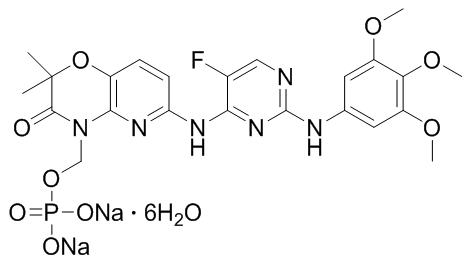
The chemical name for fostamatinib disodium hexahydrate is disodium (6-[[5-fluoro-2-(3,4,5-trimethoxyanilino) pyrimidin-4-yl]amino]-2,2-dimethyl-3-oxo-pyrido[3,2-b][1,4]oxazin-4-yl)methyl phosphate hexahydrate. The molecular formula is C23H24FN6Na2O9P∙6H2O, and the molecular weight is 732.52. The structural formula is:
Fostamatinib disodium is a white to off-white powder that is practically insoluble in pH 1.2 aqueous buffer, slightly soluble in water, and soluble in methanol.
Each TAVALISSE oral tablet contains 100 mg or 150 mg fostamatinib, equivalent to 126.2 mg or 189.3 mg fostamatinib disodium hexahydrate, respectively.
The inactive ingredients in the tablet core are mannitol, sodium bicarbonate, sodium starch glycolate, povidone, and magnesium stearate. The inactive ingredients in the film coating are polyvinyl alcohol, titanium dioxide, polyethylene glycol 3350, talc, iron oxide yellow, and iron oxide red.
2.2 Monitoring
After obtaining baseline assessments:
- Monitor CBCs, including platelet counts, monthly until a stable platelet count (at least 50 × 109/L) is achieved. Thereafter, continue to monitor CBCs, including neutrophils, regularly.
- Monitor liver function tests (LFTs) (e.g., ALT, AST, and bilirubin) monthly.
- Monitor blood pressure every 2 weeks until establishment of a stable dose, then monthly thereafter.
5.4 Neutropenia
Neutropenia occurred in 6% of patients treated with TAVALISSE; febrile neutropenia occurred in 1% of patients.
Monitor the ANC monthly, and for infection during treatment. Manage toxicity with TAVALISSE interruption, reduction or discontinuation [see Dosage and Administration (2.3)].
5.1 Hypertension
Hypertension can occur with TAVALISSE treatment; hypertensive crisis occurred in 1% of patients. Patients with pre-existing hypertension may be more susceptible to the hypertensive effects of TAVALISSE.
Monitor blood pressure every 2 weeks until stable, then monthly and adjust or initiate antihypertensive therapy to ensure maintenance of blood pressure control during TAVALISSE therapy. If increased blood pressure persists despite appropriate therapy, TAVALISSE interruption, reduction or discontinuation may be necessary [see Dosage and Administration (2.3)].
8.4 Pediatric Use
Safety and effectiveness in pediatric patients have not been established. TAVALISSE is not recommended for use in patients less than 18 years of age because adverse effects on actively growing bones were observed in nonclinical studies. In subchronic, chronic, and carcinogenicity studies of TAVALISSE, chondrodystrophy of the femoral head was seen in rodents. In a study in juvenile rabbits, growth plate dysplasia was observed in the proximal femur and femoro-tibial joint, and bone marrow cellularity was reduced in the femur and sternum.
8.5 Geriatric Use
Of the 102 patients with ITP who received TAVALISSE, 28 (27%) were 65 years of age and older, while 11 (11%) were 75 years of age and older. In patients 65 years of age and older, 6 (21%) patients experienced serious adverse events and 5 (18%) experienced adverse events leading to treatment withdrawal while in patients under 65 years of age, 7 (9%) and 5 (7%) experienced serious adverse events and adverse events leading to treatment withdrawal, respectively. In patients 65 years of age and older who received TAVALISSE, 11 (39%) patients experienced hypertension versus 2 (18%) placebo compared to 17 (23%) in patients under 65 of age versus 4 (11%) placebo. No overall differences in effectiveness were observed in these patients compared to younger patients.
5.2 Hepatotoxicity
Elevated liver function tests (LFTs), mainly ALT and AST, can occur with TAVALISSE.
In the placebo-controlled studies, laboratory testing showed maximum ALT/AST levels more than 3 × the upper limit of normal (ULN) in 9% of patients receiving TAVALISSE [see Adverse Reactions (6.1)]. For most patients, transaminases recovered to baseline levels within 2 to 6 weeks of dose-modification.
Monitor liver function tests monthly during treatment. If ALT or AST increase more than 3 × ULN, manage hepatotoxicity using TAVALISSE interruption, reduction, or discontinuation [see Dosage and Administration (2.3)].
14 Clinical Studies
TAVALISSE was studied in two placebo-controlled efficacy and safety studies (referred to as FIT-1 [NCT02076399] and FIT-2 [NCT02076412]), and in an open-label extension study referred to as FIT-3 (NCT 02077192).
2.5 Discontinuation
Discontinue TAVALISSE after 12 weeks of treatment if the platelet count does not increase to a level sufficient to avoid clinically important bleeding [see Clinical Studies (14)].
4 Contraindications
None.
6 Adverse Reactions
The following clinically important adverse reactions, that can become serious are described elsewhere in the labeling:
- Hypertension [see Warnings and Precautions (5.1) ]
- Hepatotoxicity [see Warnings and Precautions (5.2) ]
- Diarrhea [see Warnings and Precautions (5.3) ]
- Neutropenia [see Warnings and Precautions (5.4) ]
7 Drug Interactions
12.2 Pharmacodynamics
Mean treatment-related increases of 2.93 mmHg in systolic blood pressure and 3.53 mmHg in diastolic blood pressure over placebo were observed following TAVALISSE doses of 100 mg twice daily for 28 days. About 31% of patients in the TAVALISSE group experienced blood pressures ≥140/90 mmHg compared to 15% of patients in the placebo group. Blood pressure returned to baseline within 1 week following TAVALISSE discontinuation in 58% (11 of 19) of patients in the TAVALISSE group who had blood pressures ≥140/90 mmHg.
12.3 Pharmacokinetics
TAVALISSE is a prodrug that is converted in the gut to the major active metabolite, R406. Mean (± standard deviation [SD]) exposure estimates of R406 are 550 (± 270) ng/mL for Cmax and 7080 (± 2670) ng∙h/mL for AUC. R406 exposure is approximately dose proportional up to 200 mg twice daily (1.3 times the 150 mg dosage). R406 accumulates approximately 2- to 3-fold upon twice daily dosing at 100–160 mg (0.67 to 1.06 times the 150 mg dosage).
2.1 Recommended Dosage
Initiate TAVALISSE at a dose of 100 mg taken orally twice daily. After a month, if platelet count has not increased to at least 50 × 109/L, increase TAVALISSE dose to 150 mg twice daily.
Use the lowest dose of TAVALISSE to achieve and maintain a platelet count at least 50 × 109/L as necessary to reduce the risk of bleeding.
TAVALISSE may be taken with or without food. In the case of a missed dose of TAVALISSE, instruct patients to take their next dose at its regularly scheduled time.
1 Indications and Usage
TAVALISSE is indicated for the treatment of thrombocytopenia in adult patients with chronic immune thrombocytopenia (ITP) who have had an insufficient response to a previous treatment.
12.1 Mechanism of Action
Fostamatinib is a tyrosine kinase inhibitor with demonstrated activity against spleen tyrosine kinase (SYK). The major metabolite of fostamatinib, R406, inhibits signal transduction of Fc-activating receptors and B-cell receptor. The fostamatinib metabolite R406 reduces antibody-mediated destruction of platelets.
5.5 Embryo Fetal Toxicity
Based on findings from animal studies and its mechanism of action, TAVALISSE can cause fetal harm when administered to a pregnant woman. In animal reproduction studies, administration of fostamatinib to pregnant rats and rabbits during organogenesis caused adverse developmental outcomes including embryo-fetal mortality (post-implantation loss), alterations to growth (lower fetal weights), and structural abnormalities (variations and malformations) at maternal exposures (AUCs) approximately 0.3 and 10 times the human exposure at the maximum recommended human dose (MRHD), respectively. Advise pregnant women of the potential risk to a fetus. Advise females of reproductive potential to use effective contraception during treatment and for at least 1 month after the last dose. [see Use in Specific Populations (8.1) and Clinical Pharmacology (12.1)].
5 Warnings and Precautions
- Hypertension: Monitor blood pressure every 2 weeks until stable, then monthly. Manage hypertension using standard antihypertensive treatment and, if needed, interrupt, reduce or discontinue TAVALISSE. (5.1)
- Hepatotoxicity: Monitor LFTs monthly. If LFT levels are elevated, interrupt, reduce or discontinue TAVALISSE. (5.2)
- Diarrhea: Manage diarrhea with supportive measures. If diarrhea becomes severe, interrupt, reduce or discontinue TAVALISSE. (5.3)
- Neutropenia: Monitor ANC monthly, and for infection. If neutrophil count decreases below 1.0 × 10⁹/L, interrupt, reduce or discontinue TAVALISSE. (5.4)
- Embryo-Fetal Toxicity: TAVALISSE can cause fetal harm. Advise patients of potential risk to a fetus and to use effective contraception. (5.5 )
2 Dosage and Administration
- Initiate TAVALISSE at 100 mg orally twice daily with or without food. After 4 weeks, increase to 150 mg twice daily, if needed, to achieve platelet counts of at least 50 × 109/L as necessary to reduce the risk of bleeding. (2.1)
- Manage adverse reactions using dose reduction, interruption of treatment, or discontinuation. (2.3)
- Discontinue TAVALISSE after 12 weeks of treatment if the platelet count does not increase to a level sufficient to avoid clinically important bleeding. (2.5)
3 Dosage Forms and Strengths
TAVALISSE is available as:
- 100 mg tablet: orange, film-coated, round, biconvex tablets debossed with "100" on one side and "R" on the reverse side.
- 150 mg tablet: orange, film-coated, oval, biconvex tablets debossed with "150" on one side and "R" on the reverse side.
8 Use in Specific Populations
6.1 Clinical Trials Experience
Because clinical trials are conducted under widely varying conditions, adverse reaction rates observed in the clinical trials of a drug cannot be directly compared to rates in the clinical trials of another drug and may not reflect the rates observed in practice.
TAVALISSE was studied in two randomized, double-blind, placebo-controlled trials that were identical in design. The data described below reflect exposure to TAVALISSE in 102 patients with chronic ITP who had received one or more prior ITP treatment(s). Groups were stratified with respect to splenectomy and severity of thrombocytopenia. Patients randomized to the TAVALISSE arm received 100 mg orally twice daily. Based upon platelet count and tolerability, if a patient's platelet count did not increase to at least 50 × 109/L, the TAVALISSE dose could be increased to 150 mg twice daily after one month. In the placebo controlled studies, the median duration of TAVALISSE exposure in these studies was 86 days (range 8 to 183) [see Clinical Studies (14) for additional details for patients on TAVALISSE].
In the ITP double-blind studies, serious adverse drug reactions were febrile neutropenia, diarrhea, pneumonia, and hypertensive crisis, which each occurred in 1% of patients receiving TAVALISSE. In addition, severe adverse reactions observed in patients receiving TAVALISSE included dyspnea and hypertension (both 2%); and neutropenia, arthralgia, chest pain, diarrhea, dizziness, nephrolithiasis, pain in extremity, toothache, syncope and hypoxia (all 1%) [see Warnings and Precautions (5.1)]. Table 3 presents the common adverse reactions from these studies.
| Adverse Reaction | TAVALISSE (N=102) |
Placebo (N=48) |
||||||
|---|---|---|---|---|---|---|---|---|
| Mild % |
Moderate % |
Severe % |
TOTAL % |
Mild % |
Moderate % |
Severe % |
TOTAL % |
|
| ALT = Alanine aminotransferase AST = Aspartate aminotransferase Note: Common adverse reactions defined as all adverse reactions occurring at a rate of ≥ 5% of patients in the TAVALISSE group and greater than placebo rate. |
||||||||
| Diarrhea Includes diarrhea and frequent bowel movement.
|
21 | 10 | 1 | 31 | 13 | 2 | 0 | 15 |
| Hypertension Includes hypertension, blood pressure (BP) increased, BP diastolic abnormal, and BP diastolic increased.
|
17 | 9 | 2 | 28 | 10 | 0 | 2 | 13 |
| Nausea | 16 | 3 | 0 | 19 | 8 | 0 | 0 | 8 |
| Dizziness | 8 | 2 | 1 | 11 | 6 | 2 | 0 | 8 |
| ALT increased | 5 | 6 | 0 | 11 | 0 | 0 | 0 | 0 |
| AST increased | 5 | 4 | 0 | 9 | 0 | 0 | 0 | 0 |
| Respiratory infection Includes upper respiratory tract infection, respiratory tract infection, lower respiratory tract infection, and viral upper respiratory tract infection.
|
7 | 4 | 0 | 11 | 6 | 0 | 0 | 6 |
| Rash Includes rash, rash erythematous and rash macular.
|
8 | 1 | 0 | 9 | 2 | 0 | 0 | 2 |
| Abdominal pain Includes abdominal pain, and abdominal pain upper.
|
5 | 1 | 0 | 6 | 2 | 0 | 0 | 2 |
| Fatigue | 4 | 2 | 0 | 6 | 0 | 2 | 0 | 2 |
| Chest pain | 2 | 3 | 1 | 6 | 2 | 0 | 0 | 2 |
| Neutropenia Includes neutropenia and neutrophil count decreased.
|
3 | 2 | 1 | 6 | 0 | 0 | 0 | 0 |
| Enzyme | Maximum Level of Elevation | Number of Patients (%) | |
|---|---|---|---|
| TAVALISSE (N=102) |
Placebo (N=48) |
||
| Alanine aminotransferase (ALT) and/or Aspartate aminotransferase (AST) | >3 and ≤5 × ULN | 3 (3) | 0 |
| >5 and ≤10 × ULN | 5 (5) | 0 | |
| ≥10 × ULN | 1 (1) | 0 |
17 Patient Counseling Information
Advise the patient to read the FDA-approved patient labeling (Patient Information).
- Hypertension:
Inform patients that periodic monitoring of their blood pressure is required, as high blood pressure has occurred in patients taking TAVALISSE. Inform patients of the signs and symptoms of hypertension. Advise patients to undergo routine blood pressure monitoring and to contact their health care provider if blood pressure is elevated or if they experience signs or symptoms of hypertension [see Warnings and Precautions (5.1)]. - Hepatotoxicity:
Inform patients that periodic monitoring of their liver enzymes is required, and any elevations (which may indicate liver injury) will be managed appropriately, including interruption, reduction, or discontinuation of TAVALISSE [see Warnings and Precautions (5.2)]. - Diarrhea:
Advise patients to use supportive care measures, and if diarrhea becomes severe, it may necessitate interruption, reduction, or discontinuation of TAVALISSE [see Warnings and Precautions (5.3)]. - Neutropenia:
Inform patients that monitoring of their complete blood counts is required, and a decrease in neutrophils may necessitate interruption, reduction, or discontinuation of TAVALISSE [see Warnings and Precautions (5.4)]. - Advise patients to inform their healthcare providers of all their medications, including prescription medicines, over-the-counter drugs, vitamins, and herbal products [see Drug Interactions (7)].
- Embryo-Fetal Toxicity
Advise females to inform their healthcare provider if they are pregnant or become pregnant. Inform female patients of the potential risk to a fetus [see Use in Specific Populations (8.1)].
Advise females of reproductive potential to use effective contraception during treatment and for at least 1 month after receiving the last dose of TAVALISSE [see Warnings and Precautions (5.5) and Use in Specific Populations (8.1, 8.3)]. - Lactation
Advise lactating women not to breastfeed during treatment with TAVALISSE and for at least 1 month after the last dose [see Use in Specific Populations (8.2)]. - Inform patients that TAVALISSE may be taken with or without food. In the case of a missed dose of TAVALISSE, instruct patients to take their next dose at its regularly scheduled time.
16 How Supplied/storage and Handling
TAVALISSE 100 mg tablets are round, biconvex, orange, film-coated tablets debossed with "100" on one side and "R" on the reverse side.
TAVALISSE 150 mg tablets are oval, biconvex, orange, film-coated tablets debossed with "150" on one side and "R" on the reverse side.
| 100 mg tablets: Available in bottle of 60 with 2 desiccant canisters | NDC 71332-001-01 |
| 150 mg tablets: Available in bottle of 60 with 2 desiccant canisters | NDC 71332-002-01 |
2.3 Dose Modification for Adverse Reactions
TAVALISSE dose modification is recommended based on individual safety and tolerability. Management of some adverse reactions may require dose-interruption, reduction, or discontinuation.
A dose reduction schedule is provided in Table 1, based on daily dose. For example, if a patient is on the maximum dose at the time of an adverse reaction, the first dose reduction would be from 300 mg/day to 200 mg/day.
| Daily Dose | Administered as: | |
|---|---|---|
| AM | PM | |
| 300 mg/day | 150 mg | 150 mg |
| 200 mg/day | 100 mg | 100 mg |
| 150 mg/day | 150 mg Once daily TAVALISSE should be taken in the morning.
|
--- |
| 100 mg/day If further dose reduction below 100 mg/day is required, discontinue TAVALISSE.
|
100 mg | --- |
The recommended dose modifications for adverse reactions are provided in Table 2.
| Adverse Reaction | Recommended Action |
|---|---|
| ALT = alanine aminotransferase; AST = aspartate aminotransferase; BP = blood pressure; BL = bilirubin; ULN = upper limit of normal; LFT = liver function tests (AST, ALT, total BL with fractionation if elevated, alkaline phosphatase); AST/ALT = AST or ALT | |
| Hypertension | |
| Stage 1: systolic between 130-139 or diastolic between 80-89 mmHg |
|
| Stage 2: systolic at least 140 or diastolic at least 90 mmHg |
|
| Hypertensive crisis: systolic over 180 and/or diastolic over 120 mmHg |
|
| Hepatotoxicity | |
| AST/ALT is 3 × ULN or higher and less than 5 × ULN | If patient is symptomatic (e.g., nausea, vomiting, abdominal pain):
|
If patient is asymptomatic:
|
|
| AST/ALT is 5 × ULN or higher and total BL is less than 2 × ULN |
|
| AST/ALT is 3 × ULN or higher and total BL is greater than 2 × ULN |
|
| Elevated unconjugated (indirect) BL in absence of other LFT abnormalities |
|
| Diarrhea | |
| Diarrhea |
|
| Neutropenia | |
| Neutropenia |
|
2.4 Dose Modification for Drug Interactions
Concomitant use with a strong CYP3A4 inhibitor increases exposure to R406 (the major active metabolite). Monitor for toxicities of TAVALISSE that may require TAVALISSE dose modifications (see Table 1) when given concurrently with a strong CYP3A4 inhibitor [see Drug Interactions (7.1)].
Principal Display Panel 100 Mg Tablet Bottle Label
NDC 71332-001-01
Rx only
Tavalisse
®
(fostamatinib) tablets
100 mg
60 Tablets
Principal Display Panel 150 Mg Tablet Bottle Label
NDC 71332-002-01
Rx only
Tavalisse
®
(fostamatinib) tablets
150 mg
60 Tablets
13.1 Carcinogenesis, Mutagenesis, Impairment of Fertility
Fostamatinib was not carcinogenic in a 2-year study in mice when administered daily by oral gavage at doses up to 500/250 mg/kg/day, and was not carcinogenic in rats when administered by oral gavage at 45 mg/kg/day.
Fostamatinib and its major active metabolite (R406) were not mutagenic in an in vitro bacterial reverse mutation (Ames) assay or clastogenic in an in vitro human lymphocyte chromosomal aberration assay or an in vivo mouse bone marrow micronucleus assay.
In a fertility study with oral fostamatinib, all mating (e.g., time to mating, breeding proficiency), sperm assessments (e.g., number and motility), and organ weight (e.g., paired testis weight) parameters in male rats were unaffected by dosages as high as 40 mg/kg/day, which is 6.7 times the MRHD. All mating and fertility parameters in female rats were unaffected by dosages as high as 11 mg/kg/day (which is 1.8 times the MRHD), but a slight decrease in pregnancy rates and an increase in post-implantation loss were seen at 25 mg/kg/day, which is 4.2 times the MRHD.
Structured Label Content
Section 42229-5 (42229-5)
Strong CYP3A4 Inhibitors
Concomitant use with strong CYP3A4 inhibitors increases exposure to R406 (the major active metabolite), which may increase the risk of adverse reactions. Monitor for toxicities of TAVALISSE that may require dose reduction (see Table 1) when given concurrently with a strong CYP3A4 inhibitor [see Dosage and Administration (2.4) and Clinical Pharmacology (12.3)].
Section 42230-3 (42230-3)
| PATIENT INFORMATION TAVALISSE® (TAV-a-leese) (fostamatinib disodium hexahydrate) tablets |
|
|---|---|
| This Patient Information has been approved by the U.S. Food and Drug Administration. | Issued: November 2020 |
|
What is the most important information I should know about TAVALISSE?
Your healthcare provider may change your dose, temporarily stop, or permanently stop treatment with TAVALISSE if you have side effects. |
|
|
What is TAVALISSE?
TAVALISSE is a prescription medicine that is used to treat adults with low platelet counts due to chronic immune thrombocytopenia (ITP) when a prior treatment for ITP has not worked well enough. It is not known if TAVALISSE is safe and effective in children. |
|
Before you take TAVALISSE, tell your healthcare provider about all of your medical conditions, including if you:
Tell your healthcare provider about all the medicines you take, including prescription and over-the-counter medicines, vitamins, and herbal supplements. Taking TAVALISSE with certain other medicines may affect how the other medicines work and other medicines may affect how TAVALISSE works. |
|
How should I take TAVALISSE?
|
|
|
What are the possible side effects of TAVALISSE? |
|
|
|
| These are not all the side effects of TAVALISSE. For more information, ask your healthcare provider or pharmacist. Call your doctor for medical advice about side effects. You may report side effects to FDA at 1-800-FDA-1088. |
|
How should I store TAVALISSE?
|
|
|
General information about the safe and effective use of TAVALISSE
Medicines are sometimes prescribed for purposes other than those listed in the Patient Information. Do not use TAVALISSE for a condition for which it was not prescribed. Do not give TAVALISSE to other people, even if they have the same symptoms that you have. It may harm them. You can ask your healthcare provider or pharmacist for information about TAVALISSE that is written for health professionals. |
|
|
What are the ingredients in TAVALISSE?
Active ingredient: fostamatinib disodium hexahydrate Inactive ingredients: The tablet core contains mannitol, sodium bicarbonate, sodium starch glycolate, povidone, and magnesium stearate. The film coating contains polyvinyl alcohol, titanium dioxide, polyethylene glycol 3350, talc, iron oxide yellow, and iron oxide red. Manufactured for: Rigel Pharmaceuticals, Inc., South San Francisco, CA 94080 USA Manufactured by: Patheon, Inc., 111 Consumers Drive, Whitby, Ontario L1N 5Z5 Canada © Rigel Pharmaceuticals, Inc. All rights reserved. TAVALISSE is a registered trademark of Rigel Pharmaceuticals, Inc. For more information go to www.TAVALISSE.com or call 1-800-983-1329. |
Section 44425-7 (44425-7)
Store at room temperature, 20°C to 25°C (68°F to 77°F); excursions permitted between 15°C to 30°C (59°F to 86°F) [see USP Controlled Room Temperature]. Do not remove desiccants.
5.3 Diarrhea
Diarrhea occurred in 31% of patients treated with TAVALISSE. Severe diarrhea occurred in 1% of patients treated with TAVALISSE. Monitor patients for the development of diarrhea. Manage diarrhea using supportive care measures, including dietary changes, hydration and/or antidiarrheal medication, early after the onset of symptoms. Interrupt, dose reduce, or discontinue TAVALISSE if diarrhea becomes severe (Grade 3 or above) [see Dosage and Administration (2.3)].
10 Overdosage (10 OVERDOSAGE)
There is no specific antidote for overdose with TAVALISSE, and the amount of R406 (the pharmacologically active metabolite of fostamatinib) cleared by dialysis is negligible. In the event of an overdose, monitor patient closely for signs and symptoms of adverse reactions, and treat the reactions with supportive care [see Warnings and Precautions (5)].
11 Description (11 DESCRIPTION)
Fostamatinib is a tyrosine kinase inhibitor. TAVALISSE is formulated with the disodium hexahydrate salt of fostamatinib, a phosphate prodrug that converts to its pharmacologically active metabolite, R406, in vivo.
The chemical name for fostamatinib disodium hexahydrate is disodium (6-[[5-fluoro-2-(3,4,5-trimethoxyanilino) pyrimidin-4-yl]amino]-2,2-dimethyl-3-oxo-pyrido[3,2-b][1,4]oxazin-4-yl)methyl phosphate hexahydrate. The molecular formula is C23H24FN6Na2O9P∙6H2O, and the molecular weight is 732.52. The structural formula is:
Fostamatinib disodium is a white to off-white powder that is practically insoluble in pH 1.2 aqueous buffer, slightly soluble in water, and soluble in methanol.
Each TAVALISSE oral tablet contains 100 mg or 150 mg fostamatinib, equivalent to 126.2 mg or 189.3 mg fostamatinib disodium hexahydrate, respectively.
The inactive ingredients in the tablet core are mannitol, sodium bicarbonate, sodium starch glycolate, povidone, and magnesium stearate. The inactive ingredients in the film coating are polyvinyl alcohol, titanium dioxide, polyethylene glycol 3350, talc, iron oxide yellow, and iron oxide red.
2.2 Monitoring
After obtaining baseline assessments:
- Monitor CBCs, including platelet counts, monthly until a stable platelet count (at least 50 × 109/L) is achieved. Thereafter, continue to monitor CBCs, including neutrophils, regularly.
- Monitor liver function tests (LFTs) (e.g., ALT, AST, and bilirubin) monthly.
- Monitor blood pressure every 2 weeks until establishment of a stable dose, then monthly thereafter.
5.4 Neutropenia
Neutropenia occurred in 6% of patients treated with TAVALISSE; febrile neutropenia occurred in 1% of patients.
Monitor the ANC monthly, and for infection during treatment. Manage toxicity with TAVALISSE interruption, reduction or discontinuation [see Dosage and Administration (2.3)].
5.1 Hypertension
Hypertension can occur with TAVALISSE treatment; hypertensive crisis occurred in 1% of patients. Patients with pre-existing hypertension may be more susceptible to the hypertensive effects of TAVALISSE.
Monitor blood pressure every 2 weeks until stable, then monthly and adjust or initiate antihypertensive therapy to ensure maintenance of blood pressure control during TAVALISSE therapy. If increased blood pressure persists despite appropriate therapy, TAVALISSE interruption, reduction or discontinuation may be necessary [see Dosage and Administration (2.3)].
8.4 Pediatric Use
Safety and effectiveness in pediatric patients have not been established. TAVALISSE is not recommended for use in patients less than 18 years of age because adverse effects on actively growing bones were observed in nonclinical studies. In subchronic, chronic, and carcinogenicity studies of TAVALISSE, chondrodystrophy of the femoral head was seen in rodents. In a study in juvenile rabbits, growth plate dysplasia was observed in the proximal femur and femoro-tibial joint, and bone marrow cellularity was reduced in the femur and sternum.
8.5 Geriatric Use
Of the 102 patients with ITP who received TAVALISSE, 28 (27%) were 65 years of age and older, while 11 (11%) were 75 years of age and older. In patients 65 years of age and older, 6 (21%) patients experienced serious adverse events and 5 (18%) experienced adverse events leading to treatment withdrawal while in patients under 65 years of age, 7 (9%) and 5 (7%) experienced serious adverse events and adverse events leading to treatment withdrawal, respectively. In patients 65 years of age and older who received TAVALISSE, 11 (39%) patients experienced hypertension versus 2 (18%) placebo compared to 17 (23%) in patients under 65 of age versus 4 (11%) placebo. No overall differences in effectiveness were observed in these patients compared to younger patients.
5.2 Hepatotoxicity
Elevated liver function tests (LFTs), mainly ALT and AST, can occur with TAVALISSE.
In the placebo-controlled studies, laboratory testing showed maximum ALT/AST levels more than 3 × the upper limit of normal (ULN) in 9% of patients receiving TAVALISSE [see Adverse Reactions (6.1)]. For most patients, transaminases recovered to baseline levels within 2 to 6 weeks of dose-modification.
Monitor liver function tests monthly during treatment. If ALT or AST increase more than 3 × ULN, manage hepatotoxicity using TAVALISSE interruption, reduction, or discontinuation [see Dosage and Administration (2.3)].
14 Clinical Studies (14 CLINICAL STUDIES)
TAVALISSE was studied in two placebo-controlled efficacy and safety studies (referred to as FIT-1 [NCT02076399] and FIT-2 [NCT02076412]), and in an open-label extension study referred to as FIT-3 (NCT 02077192).
2.5 Discontinuation
Discontinue TAVALISSE after 12 weeks of treatment if the platelet count does not increase to a level sufficient to avoid clinically important bleeding [see Clinical Studies (14)].
4 Contraindications (4 CONTRAINDICATIONS)
None.
6 Adverse Reactions (6 ADVERSE REACTIONS)
The following clinically important adverse reactions, that can become serious are described elsewhere in the labeling:
- Hypertension [see Warnings and Precautions (5.1) ]
- Hepatotoxicity [see Warnings and Precautions (5.2) ]
- Diarrhea [see Warnings and Precautions (5.3) ]
- Neutropenia [see Warnings and Precautions (5.4) ]
7 Drug Interactions (7 DRUG INTERACTIONS)
12.2 Pharmacodynamics
Mean treatment-related increases of 2.93 mmHg in systolic blood pressure and 3.53 mmHg in diastolic blood pressure over placebo were observed following TAVALISSE doses of 100 mg twice daily for 28 days. About 31% of patients in the TAVALISSE group experienced blood pressures ≥140/90 mmHg compared to 15% of patients in the placebo group. Blood pressure returned to baseline within 1 week following TAVALISSE discontinuation in 58% (11 of 19) of patients in the TAVALISSE group who had blood pressures ≥140/90 mmHg.
12.3 Pharmacokinetics
TAVALISSE is a prodrug that is converted in the gut to the major active metabolite, R406. Mean (± standard deviation [SD]) exposure estimates of R406 are 550 (± 270) ng/mL for Cmax and 7080 (± 2670) ng∙h/mL for AUC. R406 exposure is approximately dose proportional up to 200 mg twice daily (1.3 times the 150 mg dosage). R406 accumulates approximately 2- to 3-fold upon twice daily dosing at 100–160 mg (0.67 to 1.06 times the 150 mg dosage).
2.1 Recommended Dosage
Initiate TAVALISSE at a dose of 100 mg taken orally twice daily. After a month, if platelet count has not increased to at least 50 × 109/L, increase TAVALISSE dose to 150 mg twice daily.
Use the lowest dose of TAVALISSE to achieve and maintain a platelet count at least 50 × 109/L as necessary to reduce the risk of bleeding.
TAVALISSE may be taken with or without food. In the case of a missed dose of TAVALISSE, instruct patients to take their next dose at its regularly scheduled time.
1 Indications and Usage (1 INDICATIONS AND USAGE)
TAVALISSE is indicated for the treatment of thrombocytopenia in adult patients with chronic immune thrombocytopenia (ITP) who have had an insufficient response to a previous treatment.
12.1 Mechanism of Action
Fostamatinib is a tyrosine kinase inhibitor with demonstrated activity against spleen tyrosine kinase (SYK). The major metabolite of fostamatinib, R406, inhibits signal transduction of Fc-activating receptors and B-cell receptor. The fostamatinib metabolite R406 reduces antibody-mediated destruction of platelets.
5.5 Embryo Fetal Toxicity (5.5 Embryo-Fetal Toxicity)
Based on findings from animal studies and its mechanism of action, TAVALISSE can cause fetal harm when administered to a pregnant woman. In animal reproduction studies, administration of fostamatinib to pregnant rats and rabbits during organogenesis caused adverse developmental outcomes including embryo-fetal mortality (post-implantation loss), alterations to growth (lower fetal weights), and structural abnormalities (variations and malformations) at maternal exposures (AUCs) approximately 0.3 and 10 times the human exposure at the maximum recommended human dose (MRHD), respectively. Advise pregnant women of the potential risk to a fetus. Advise females of reproductive potential to use effective contraception during treatment and for at least 1 month after the last dose. [see Use in Specific Populations (8.1) and Clinical Pharmacology (12.1)].
5 Warnings and Precautions (5 WARNINGS AND PRECAUTIONS)
- Hypertension: Monitor blood pressure every 2 weeks until stable, then monthly. Manage hypertension using standard antihypertensive treatment and, if needed, interrupt, reduce or discontinue TAVALISSE. (5.1)
- Hepatotoxicity: Monitor LFTs monthly. If LFT levels are elevated, interrupt, reduce or discontinue TAVALISSE. (5.2)
- Diarrhea: Manage diarrhea with supportive measures. If diarrhea becomes severe, interrupt, reduce or discontinue TAVALISSE. (5.3)
- Neutropenia: Monitor ANC monthly, and for infection. If neutrophil count decreases below 1.0 × 10⁹/L, interrupt, reduce or discontinue TAVALISSE. (5.4)
- Embryo-Fetal Toxicity: TAVALISSE can cause fetal harm. Advise patients of potential risk to a fetus and to use effective contraception. (5.5 )
2 Dosage and Administration (2 DOSAGE AND ADMINISTRATION)
- Initiate TAVALISSE at 100 mg orally twice daily with or without food. After 4 weeks, increase to 150 mg twice daily, if needed, to achieve platelet counts of at least 50 × 109/L as necessary to reduce the risk of bleeding. (2.1)
- Manage adverse reactions using dose reduction, interruption of treatment, or discontinuation. (2.3)
- Discontinue TAVALISSE after 12 weeks of treatment if the platelet count does not increase to a level sufficient to avoid clinically important bleeding. (2.5)
3 Dosage Forms and Strengths (3 DOSAGE FORMS AND STRENGTHS)
TAVALISSE is available as:
- 100 mg tablet: orange, film-coated, round, biconvex tablets debossed with "100" on one side and "R" on the reverse side.
- 150 mg tablet: orange, film-coated, oval, biconvex tablets debossed with "150" on one side and "R" on the reverse side.
8 Use in Specific Populations (8 USE IN SPECIFIC POPULATIONS)
6.1 Clinical Trials Experience
Because clinical trials are conducted under widely varying conditions, adverse reaction rates observed in the clinical trials of a drug cannot be directly compared to rates in the clinical trials of another drug and may not reflect the rates observed in practice.
TAVALISSE was studied in two randomized, double-blind, placebo-controlled trials that were identical in design. The data described below reflect exposure to TAVALISSE in 102 patients with chronic ITP who had received one or more prior ITP treatment(s). Groups were stratified with respect to splenectomy and severity of thrombocytopenia. Patients randomized to the TAVALISSE arm received 100 mg orally twice daily. Based upon platelet count and tolerability, if a patient's platelet count did not increase to at least 50 × 109/L, the TAVALISSE dose could be increased to 150 mg twice daily after one month. In the placebo controlled studies, the median duration of TAVALISSE exposure in these studies was 86 days (range 8 to 183) [see Clinical Studies (14) for additional details for patients on TAVALISSE].
In the ITP double-blind studies, serious adverse drug reactions were febrile neutropenia, diarrhea, pneumonia, and hypertensive crisis, which each occurred in 1% of patients receiving TAVALISSE. In addition, severe adverse reactions observed in patients receiving TAVALISSE included dyspnea and hypertension (both 2%); and neutropenia, arthralgia, chest pain, diarrhea, dizziness, nephrolithiasis, pain in extremity, toothache, syncope and hypoxia (all 1%) [see Warnings and Precautions (5.1)]. Table 3 presents the common adverse reactions from these studies.
| Adverse Reaction | TAVALISSE (N=102) |
Placebo (N=48) |
||||||
|---|---|---|---|---|---|---|---|---|
| Mild % |
Moderate % |
Severe % |
TOTAL % |
Mild % |
Moderate % |
Severe % |
TOTAL % |
|
| ALT = Alanine aminotransferase AST = Aspartate aminotransferase Note: Common adverse reactions defined as all adverse reactions occurring at a rate of ≥ 5% of patients in the TAVALISSE group and greater than placebo rate. |
||||||||
| Diarrhea Includes diarrhea and frequent bowel movement.
|
21 | 10 | 1 | 31 | 13 | 2 | 0 | 15 |
| Hypertension Includes hypertension, blood pressure (BP) increased, BP diastolic abnormal, and BP diastolic increased.
|
17 | 9 | 2 | 28 | 10 | 0 | 2 | 13 |
| Nausea | 16 | 3 | 0 | 19 | 8 | 0 | 0 | 8 |
| Dizziness | 8 | 2 | 1 | 11 | 6 | 2 | 0 | 8 |
| ALT increased | 5 | 6 | 0 | 11 | 0 | 0 | 0 | 0 |
| AST increased | 5 | 4 | 0 | 9 | 0 | 0 | 0 | 0 |
| Respiratory infection Includes upper respiratory tract infection, respiratory tract infection, lower respiratory tract infection, and viral upper respiratory tract infection.
|
7 | 4 | 0 | 11 | 6 | 0 | 0 | 6 |
| Rash Includes rash, rash erythematous and rash macular.
|
8 | 1 | 0 | 9 | 2 | 0 | 0 | 2 |
| Abdominal pain Includes abdominal pain, and abdominal pain upper.
|
5 | 1 | 0 | 6 | 2 | 0 | 0 | 2 |
| Fatigue | 4 | 2 | 0 | 6 | 0 | 2 | 0 | 2 |
| Chest pain | 2 | 3 | 1 | 6 | 2 | 0 | 0 | 2 |
| Neutropenia Includes neutropenia and neutrophil count decreased.
|
3 | 2 | 1 | 6 | 0 | 0 | 0 | 0 |
| Enzyme | Maximum Level of Elevation | Number of Patients (%) | |
|---|---|---|---|
| TAVALISSE (N=102) |
Placebo (N=48) |
||
| Alanine aminotransferase (ALT) and/or Aspartate aminotransferase (AST) | >3 and ≤5 × ULN | 3 (3) | 0 |
| >5 and ≤10 × ULN | 5 (5) | 0 | |
| ≥10 × ULN | 1 (1) | 0 |
17 Patient Counseling Information (17 PATIENT COUNSELING INFORMATION)
Advise the patient to read the FDA-approved patient labeling (Patient Information).
- Hypertension:
Inform patients that periodic monitoring of their blood pressure is required, as high blood pressure has occurred in patients taking TAVALISSE. Inform patients of the signs and symptoms of hypertension. Advise patients to undergo routine blood pressure monitoring and to contact their health care provider if blood pressure is elevated or if they experience signs or symptoms of hypertension [see Warnings and Precautions (5.1)]. - Hepatotoxicity:
Inform patients that periodic monitoring of their liver enzymes is required, and any elevations (which may indicate liver injury) will be managed appropriately, including interruption, reduction, or discontinuation of TAVALISSE [see Warnings and Precautions (5.2)]. - Diarrhea:
Advise patients to use supportive care measures, and if diarrhea becomes severe, it may necessitate interruption, reduction, or discontinuation of TAVALISSE [see Warnings and Precautions (5.3)]. - Neutropenia:
Inform patients that monitoring of their complete blood counts is required, and a decrease in neutrophils may necessitate interruption, reduction, or discontinuation of TAVALISSE [see Warnings and Precautions (5.4)]. - Advise patients to inform their healthcare providers of all their medications, including prescription medicines, over-the-counter drugs, vitamins, and herbal products [see Drug Interactions (7)].
- Embryo-Fetal Toxicity
Advise females to inform their healthcare provider if they are pregnant or become pregnant. Inform female patients of the potential risk to a fetus [see Use in Specific Populations (8.1)].
Advise females of reproductive potential to use effective contraception during treatment and for at least 1 month after receiving the last dose of TAVALISSE [see Warnings and Precautions (5.5) and Use in Specific Populations (8.1, 8.3)]. - Lactation
Advise lactating women not to breastfeed during treatment with TAVALISSE and for at least 1 month after the last dose [see Use in Specific Populations (8.2)]. - Inform patients that TAVALISSE may be taken with or without food. In the case of a missed dose of TAVALISSE, instruct patients to take their next dose at its regularly scheduled time.
16 How Supplied/storage and Handling (16 HOW SUPPLIED/STORAGE AND HANDLING)
TAVALISSE 100 mg tablets are round, biconvex, orange, film-coated tablets debossed with "100" on one side and "R" on the reverse side.
TAVALISSE 150 mg tablets are oval, biconvex, orange, film-coated tablets debossed with "150" on one side and "R" on the reverse side.
| 100 mg tablets: Available in bottle of 60 with 2 desiccant canisters | NDC 71332-001-01 |
| 150 mg tablets: Available in bottle of 60 with 2 desiccant canisters | NDC 71332-002-01 |
2.3 Dose Modification for Adverse Reactions
TAVALISSE dose modification is recommended based on individual safety and tolerability. Management of some adverse reactions may require dose-interruption, reduction, or discontinuation.
A dose reduction schedule is provided in Table 1, based on daily dose. For example, if a patient is on the maximum dose at the time of an adverse reaction, the first dose reduction would be from 300 mg/day to 200 mg/day.
| Daily Dose | Administered as: | |
|---|---|---|
| AM | PM | |
| 300 mg/day | 150 mg | 150 mg |
| 200 mg/day | 100 mg | 100 mg |
| 150 mg/day | 150 mg Once daily TAVALISSE should be taken in the morning.
|
--- |
| 100 mg/day If further dose reduction below 100 mg/day is required, discontinue TAVALISSE.
|
100 mg | --- |
The recommended dose modifications for adverse reactions are provided in Table 2.
| Adverse Reaction | Recommended Action |
|---|---|
| ALT = alanine aminotransferase; AST = aspartate aminotransferase; BP = blood pressure; BL = bilirubin; ULN = upper limit of normal; LFT = liver function tests (AST, ALT, total BL with fractionation if elevated, alkaline phosphatase); AST/ALT = AST or ALT | |
| Hypertension | |
| Stage 1: systolic between 130-139 or diastolic between 80-89 mmHg |
|
| Stage 2: systolic at least 140 or diastolic at least 90 mmHg |
|
| Hypertensive crisis: systolic over 180 and/or diastolic over 120 mmHg |
|
| Hepatotoxicity | |
| AST/ALT is 3 × ULN or higher and less than 5 × ULN | If patient is symptomatic (e.g., nausea, vomiting, abdominal pain):
|
If patient is asymptomatic:
|
|
| AST/ALT is 5 × ULN or higher and total BL is less than 2 × ULN |
|
| AST/ALT is 3 × ULN or higher and total BL is greater than 2 × ULN |
|
| Elevated unconjugated (indirect) BL in absence of other LFT abnormalities |
|
| Diarrhea | |
| Diarrhea |
|
| Neutropenia | |
| Neutropenia |
|
2.4 Dose Modification for Drug Interactions
Concomitant use with a strong CYP3A4 inhibitor increases exposure to R406 (the major active metabolite). Monitor for toxicities of TAVALISSE that may require TAVALISSE dose modifications (see Table 1) when given concurrently with a strong CYP3A4 inhibitor [see Drug Interactions (7.1)].
Principal Display Panel 100 Mg Tablet Bottle Label (PRINCIPAL DISPLAY PANEL - 100 mg Tablet Bottle Label)
NDC 71332-001-01
Rx only
Tavalisse
®
(fostamatinib) tablets
100 mg
60 Tablets
Principal Display Panel 150 Mg Tablet Bottle Label (PRINCIPAL DISPLAY PANEL - 150 mg Tablet Bottle Label)
NDC 71332-002-01
Rx only
Tavalisse
®
(fostamatinib) tablets
150 mg
60 Tablets
13.1 Carcinogenesis, Mutagenesis, Impairment of Fertility
Fostamatinib was not carcinogenic in a 2-year study in mice when administered daily by oral gavage at doses up to 500/250 mg/kg/day, and was not carcinogenic in rats when administered by oral gavage at 45 mg/kg/day.
Fostamatinib and its major active metabolite (R406) were not mutagenic in an in vitro bacterial reverse mutation (Ames) assay or clastogenic in an in vitro human lymphocyte chromosomal aberration assay or an in vivo mouse bone marrow micronucleus assay.
In a fertility study with oral fostamatinib, all mating (e.g., time to mating, breeding proficiency), sperm assessments (e.g., number and motility), and organ weight (e.g., paired testis weight) parameters in male rats were unaffected by dosages as high as 40 mg/kg/day, which is 6.7 times the MRHD. All mating and fertility parameters in female rats were unaffected by dosages as high as 11 mg/kg/day (which is 1.8 times the MRHD), but a slight decrease in pregnancy rates and an increase in post-implantation loss were seen at 25 mg/kg/day, which is 4.2 times the MRHD.
Advanced Ingredient Data
Raw Label Data
All Sections (JSON)
Additional Information
Back to search View SPL set listing Open on DailyMed ↗
Source: dailymed · Ingested: 2026-02-15T11:42:42.430181 · Updated: 2026-03-14T22:49:12.025925