Sodium Polystyrene Sulfonate For Suspension
2017bfbe-cda8-46f1-b4f1-9c086c3249a9
34391-3
HUMAN PRESCRIPTION DRUG LABEL
Drug Facts
Composition & Product
Identifiers & Packaging
Indications and Usage
SODIUM POLYSTYRENE SULFONATE FOR SUSPENSION is indicated for the treatment of hyperkalemia.
Dosage and Administration
Oral : The average total daily adult dose of SODIUM POLYSTYRENE SULFONATE FOR SUSPENSION is 15 g to 60 g, administered as a 15-g dose (four level teaspoons), one to four times daily ( 2.1 ). Rectal : The average adult dose is 30 g to 50 g every six hours ( 2.1 ).
Contraindications
SODIUM POLYSTYRENE SULFONATE FOR SUSPENSION is contraindicated in patients with the following conditions: Hypersensitivity to polystyrene sulfonate resins Obstructive bowel disease Neonates with reduced gut motility
Warnings and Precautions
Intestinal Necrosis: cases of intestinal necrosis and other serious gastrointestinal events have been reported ( 5.1 ). Electrolyte Disturbances: Severe hypokalemia can occur. ( 5.2 ). Fluid overload in patient sensitive to high sodium intake: Monitor patients who are sensitive to sodium intake for signs of fluid overload. ( 5.3 ). Risk of aspiration: Acute bronchitis or bronchopneumonia caused by inhalation of sodium polystyrene sulfonate particles has been reported. ( 5.4 ).
Adverse Reactions
The following adverse reactions are discussed elsewhere in the labeling: Intestinal Necrosis [see Warnings and Precautions (5.1) ] Electrolyte Disturbances [see Warnings and Precautions (5.2 , 5.3) ] Aspiration [see Warnings and Precautions (5.4) ] The following adverse reactions have been identified during post-approval use of SODIUM POLYSTYRENE SULFONATE FOR SUSPENSION. Because these reactions are reported voluntarily from a population of uncertain size, it is not always possible to estimate their frequency reliably or establish a causal relationship to drug exposure. Gastrointestinal: anorexia, constipation, diarrhea, fecal impaction, gastrointestinal concretions (bezoars), ischemic colitis, nausea, ulcerations, vomiting, gastric irritation, intestinal obstruction (due to concentration of aluminium hydroxide) Metabolic: systemic alkalosis
Drug Interactions
Take other orally administered drugs at least 3 hours before or 3 hours after SODIUM POLYSTYRENE SULFONATE FOR SUSPENSION ( 7.1 ). Cation-Donating Antacids: may reduce the resin's potassium exchange capability and increase risk of systemic alkalosis( 7.2 ). Sorbitol: Concomitant use may contribute to the risk of intestinal necrosis and is not recommended ( 7.3 ).
How Supplied
SODIUM POLYSTYRENE SULFONATE FOR SUSPENSION is available as a light brown to brown, finely ground powder in jars of 1 pound (454 g), NDC 46287-012-16.
Description
SODIUM POLYSTYRENE SULFONATE FOR SUSPENSION is indicated for the treatment of hyperkalemia.
Medication Information
Warnings and Precautions
Intestinal Necrosis: cases of intestinal necrosis and other serious gastrointestinal events have been reported ( 5.1 ). Electrolyte Disturbances: Severe hypokalemia can occur. ( 5.2 ). Fluid overload in patient sensitive to high sodium intake: Monitor patients who are sensitive to sodium intake for signs of fluid overload. ( 5.3 ). Risk of aspiration: Acute bronchitis or bronchopneumonia caused by inhalation of sodium polystyrene sulfonate particles has been reported. ( 5.4 ).
Indications and Usage
SODIUM POLYSTYRENE SULFONATE FOR SUSPENSION is indicated for the treatment of hyperkalemia.
Dosage and Administration
Oral : The average total daily adult dose of SODIUM POLYSTYRENE SULFONATE FOR SUSPENSION is 15 g to 60 g, administered as a 15-g dose (four level teaspoons), one to four times daily ( 2.1 ). Rectal : The average adult dose is 30 g to 50 g every six hours ( 2.1 ).
Contraindications
SODIUM POLYSTYRENE SULFONATE FOR SUSPENSION is contraindicated in patients with the following conditions: Hypersensitivity to polystyrene sulfonate resins Obstructive bowel disease Neonates with reduced gut motility
Adverse Reactions
The following adverse reactions are discussed elsewhere in the labeling: Intestinal Necrosis [see Warnings and Precautions (5.1) ] Electrolyte Disturbances [see Warnings and Precautions (5.2 , 5.3) ] Aspiration [see Warnings and Precautions (5.4) ] The following adverse reactions have been identified during post-approval use of SODIUM POLYSTYRENE SULFONATE FOR SUSPENSION. Because these reactions are reported voluntarily from a population of uncertain size, it is not always possible to estimate their frequency reliably or establish a causal relationship to drug exposure. Gastrointestinal: anorexia, constipation, diarrhea, fecal impaction, gastrointestinal concretions (bezoars), ischemic colitis, nausea, ulcerations, vomiting, gastric irritation, intestinal obstruction (due to concentration of aluminium hydroxide) Metabolic: systemic alkalosis
Drug Interactions
Take other orally administered drugs at least 3 hours before or 3 hours after SODIUM POLYSTYRENE SULFONATE FOR SUSPENSION ( 7.1 ). Cation-Donating Antacids: may reduce the resin's potassium exchange capability and increase risk of systemic alkalosis( 7.2 ). Sorbitol: Concomitant use may contribute to the risk of intestinal necrosis and is not recommended ( 7.3 ).
How Supplied
SODIUM POLYSTYRENE SULFONATE FOR SUSPENSION is available as a light brown to brown, finely ground powder in jars of 1 pound (454 g), NDC 46287-012-16.
Description
SODIUM POLYSTYRENE SULFONATE FOR SUSPENSION is indicated for the treatment of hyperkalemia.
Section 42229-5
Limitation of Use:
SODIUM POLYSTYRENE SULFONATE FOR SUSPENSION should not be used as an emergency treatment for life-threatening hyperkalemia because of its delayed onset of action [see Clinical Pharmacology (12.2)].
Section 44425-7
Store at 20° - 25° C (68° - 77° F); excursions permitted to 15° – 30° C (59° – 86° F) [see USP Controlled Room Temperature]
7.3 Sorbitol
Sorbitol may contribute to the risk of intestinal necrosis [see Warnings and Precautions (5.1)] and concomitant use is not recommended.
10 Overdosage
Overdosage may result in electrolyte disturbances including hypokalemia, hypocalcemia, and hypomagnesemia. Appropriate measures should be taken to correct serum electrolytes (potassium, calcium, magnesium), and the resin should be removed from the alimentary tract by appropriate use of laxatives or enemas.
11 Description
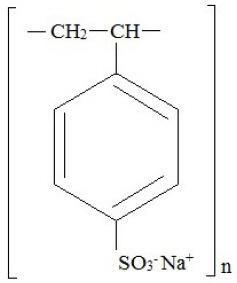
SODIUM POLYSTYRENE SULFONATE FOR SUSPENSION is a benzene, diethenyl-polymer, with ethenylbenzene, sulfonated, sodium salt and has the following structural formula:
The drug is a light brown to brown, finely ground, powdered form of sodium polystyrene sulfonate, a cation-exchange resin prepared in the sodium phase with an in vitro exchange capacity of approximately 3.1 mEq (in vivo approximately 1 mEq) of potassium per gram. The sodium content is approximately 100 mg (4.1 mEq) per gram of the drug. It can be administered orally or rectally as an enema.
One gram of SODIUM POLYSTYRENE SULFONATE FOR SUSPENSION contains 4.1 mEq of sodium.
8.4 Pediatric Use
Studies of safety and efficacy have not been conducted in pediatric patients.
In pediatric patients, as in adults, SODIUM POLYSTYRENE SULFONATE FOR SUSPENSION is expected to bind potassium at the practical exchange ratio of 1mEq potassium per 1 gram of resin.
In neonates, SODIUM POLYSTYRENE SULFONATE FOR SUSPENSION should not be given by the oral route. In both children and neonates, excessive dosage or inadequate dilution could result in impaction of the resin. Premature infants or low birth weight infants may have an increased risk for gastrointestinal adverse effects with SODIUM POLYSTYRENE SULFONATE FOR SUSPENSION use [see Warnings and Precautions (5.4)].
4 Contraindications
SODIUM POLYSTYRENE SULFONATE FOR SUSPENSION is contraindicated in patients with the following conditions:
- Hypersensitivity to polystyrene sulfonate resins
- Obstructive bowel disease
- Neonates with reduced gut motility
6 Adverse Reactions
The following adverse reactions are discussed elsewhere in the labeling:
- Intestinal Necrosis [see Warnings and Precautions (5.1)]
- Electrolyte Disturbances [see Warnings and Precautions (5.2, 5.3)]
- Aspiration [see Warnings and Precautions (5.4)]
The following adverse reactions have been identified during post-approval use of SODIUM POLYSTYRENE SULFONATE FOR SUSPENSION. Because these reactions are reported voluntarily from a population of uncertain size, it is not always possible to estimate their frequency reliably or establish a causal relationship to drug exposure.
Gastrointestinal: anorexia, constipation, diarrhea, fecal impaction, gastrointestinal concretions (bezoars), ischemic colitis, nausea, ulcerations, vomiting, gastric irritation, intestinal obstruction (due to concentration of aluminium hydroxide)
Metabolic: systemic alkalosis
7 Drug Interactions
- Take other orally administered drugs at least 3 hours before or 3 hours after SODIUM POLYSTYRENE SULFONATE FOR SUSPENSION (7.1).
- Cation-Donating Antacids: may reduce the resin's potassium exchange capability and increase risk of systemic alkalosis(7.2).
- Sorbitol: Concomitant use may contribute to the risk of intestinal necrosis and is not recommended (7.3).
12.2 Pharmacodynamics
The effective lowering of serum potassium with SODIUM POLYSTYRENE SULFONATE FOR SUSPENSION may take hours to days.
12.3 Pharmacokinetics
The in vivo efficiency of sodium-potassium exchange resins is approximately 33 percent; hence, about one third of the resin's actual sodium content is delivered to the body.
SODIUM POLYSTYRENE SULFONATE FOR SUSPENSION is not absorbed systemically.
2.2 Recommended Dosage
The intensity and duration of therapy depend upon the severity and resistance of hyperkalemia.
5.4 Risk of Aspiration
Cases of acute bronchitis or bronchopneumonia caused by inhalation of sodium polystyrene sulfonate particles have been reported. Patients with impaired gag reflex, altered level of consciousness, or patients prone to regurgitation may be at increased risk. Administer SODIUM POLYSTYRENE SULFONATE FOR SUSPENSION with the patient in an upright position.
1 Indications and Usage
SODIUM POLYSTYRENE SULFONATE FOR SUSPENSION is indicated for the treatment of hyperkalemia.
2.1 General Information
Administer SODIUM POLYSTYRENE SULFONATE FOR SUSPENSION at least 3 hours before or 3 hours after other oral medications. Patients with gastroparesis may require a 6 hour separation [see Warnings and Precautions (5.5) and Drug Interaction (7)]
5.1 Intestinal Necrosis
Cases of intestinal necrosis, some fatal, and other serious gastrointestinal adverse events (bleeding, ischemic colitis, perforation) have been reported in association with SODIUM POLYSTYRENE SULFONATE FOR SUSPENSION use. The majority of these cases reported the concomitant use of sorbitol. Risk factors for gastrointestinal adverse events were present in many of the cases including prematurity, history of intestinal disease or surgery, hypovolemia, and renal insufficiency and failure. Concomitant administration of sorbitol is not recommended.
- Use only in patients who have normal bowel function. Avoid use in patients who have not had a bowel movement post-surgery.
- Avoid use in patients who are at risk for developing constipation or impaction (including those with history of impaction, chronic constipation, inflammatory bowel disease, ischemic colitis, vascular intestinal atherosclerosis, previous bowel resection, or bowel obstruction). Discontinue use in patients who develop constipation.
12.1 Mechanism of Action
SODIUM POLYSTYRENE SULFONATE FOR SUSPENSION is a non-absorbed, cation exchange polymer that contains a sodium counterion.
SODIUM POLYSTYRENE SULFONATE FOR SUSPENSION increases fecal potassium excretion through binding of potassium in the lumen of the gastrointestinal tract. Binding of potassium reduces the concentration of free potassium in the gastrointestinal lumen, resulting in a reduction of serum potassium levels. The practical exchange ratio is 1 mEq K per 1 gram of resin.
As the resin passes along the intestine or is retained in the colon after administration by enema, the sodium ions are partially released and are replaced by potassium ions. This action occurs primarily in the large intestine, which excretes potassium ions to a greater degree than does the small intestine. The efficiency of this process is limited and unpredictably variable.
7.1 General Interactions
No formal drug interaction studies have been conducted in humans.
SODIUM POLYSTYRENE SULFONATE FOR SUSPENSION has the potential to bind other drugs. In in vitro binding studies, SODIUM POLYSTYRENE SULFONATE FOR SUSPENSION was shown to significantly bind the oral medications (n=6) that were tested. Decreased absorption of lithium and thyroxine have also been reported with co-administration of SODIUM POLYSTYRENE SULFONATE FOR SUSPENSION. Binding of SODIUM POLYSTYRENE SULFONATE FOR SUSPENSION to other oral medications could cause decreased gastrointestinal absorption and loss of efficacy when taken close to the time SODIUM POLYSTYRENE SULFONATE FOR SUSPENSION is administered. Administer SODIUM POLYSTYRENE SULFONATE FOR SUSPENSION at least 3 hours before or 3 hours after other oral medications. Patients with gastroparesis may require a 6 hour separation. Monitor for clinical response and/or blood levels where possible.
5 Warnings and Precautions
- Intestinal Necrosis: cases of intestinal necrosis and other serious gastrointestinal events have been reported (5.1).
- Electrolyte Disturbances: Severe hypokalemia can occur. (5.2).
- Fluid overload in patient sensitive to high sodium intake: Monitor patients who are sensitive to sodium intake for signs of fluid overload. (5.3).
- Risk of aspiration: Acute bronchitis or bronchopneumonia caused by inhalation of sodium polystyrene sulfonate particles has been reported. (5.4).
2 Dosage and Administration
3 Dosage Forms and Strengths
SODIUM POLYSTYRENE SULFONATE FOR SUSPENSION is a light brown to brown, finely ground powder and is available in 454 g jars.
5.2 Electrolyte Disturbances
Monitor serum potassium during therapy because severe hypokalemia may occur.
SODIUM POLYSTYRENE SULFONATE FOR SUSPENSION is not totally selective for potassium, and small amounts of other cations such as magnesium and calcium can also be lost during treatment. Monitor calcium and magnesium in patients receiving SODIUM POLYSTYRENE SULFONATE FOR SUSPENSION.
7.2 Cation Donating Antacids
The simultaneous oral administration of SODIUM POLYSTYRENE SULFONATE FOR SUSPENSION with nonabsorbable cation-donating antacids and laxatives may reduce the resin's potassium exchange capability and increase the risk of systemic alkalosis.
2.3 Preparation and Administration
Prepare suspension fresh and use within 24 hours.
Do not heat SODIUM POLYSTYRENE SULFONATE FOR SUSPENSION as it could alter the exchange properties of the resin.
One level teaspoon contains approximately 3.5 g of SODIUM POLYSTYRENE
SULFONATE FOR SUSPENSION and 15 mEq of sodium.
16 How Supplied/storage Andhandling
SODIUM POLYSTYRENE SULFONATE FOR SUSPENSION is available as a light brown to brown, finely ground powder in jars of 1 pound (454 g), NDC 46287-012-16.
Principal Display Panel 454 G Jar Label
NDC 46287-012-16
454 g
Sodium Polystyrene
Sulfonate for Suspension
USUAL DOSAGE: 15 g (approximately 4 level teaspoonfuls)
one to four times daily in water. For rectal use, see complete
instructions in package insert The effect must be carefully
controlled by frequent serum potassium determinations
within each 24 hour period Sodium content approximately
60 mEq per 15 g.
SEE PACKAGE INSERT FOR COMPLETE INSTRUCTIONS.
Suspension should be freshly prepared and not stored beyond
24 hours.
Dispense in a tight, light resistant container.
Store at 20°-25°C (68°-77°F); excursions permitted to
15°-30°C (59°-86°F). [See USP Controlled Room
Temperature].
GTIN: 00346287012160
Rx Only
3047
R1017
PHARMA
Farmville, NC 27828
5.5 Binding to Other Orally Administered Medications
SODIUM POLYSTYRENE SULFONATE FOR SUSPENSION may bind orally administered medications, which could decrease their gastrointestinal absorption and lead to reduced efficacy. Administer other oral medications at least 3 hours before or 3 hours after SODIUM POLYSTYRENE SULFONATE FOR SUSPENSION. Patients with gastroparesis may require a 6 hour separation. [see Dosage and Administration (2.1) and Drug Interactions (7)].
13.1 Carcinogenesis, Mutagenesis, Impairment of Fertility
Studies have not been performed.
5.3 Fluid Overload in Patients Sensitive to High Sodiumintake
Each 15 g dose of SODIUM POLYSTYRENE SULFONATE FOR SUSPENSION contains 1500 mg (60 mEq) of sodium. Monitor patients who are sensitive to sodium intake (heart failure, hypertension, edema) for signs of fluid overload.
Adjustment of other sources of sodium may be required.
Structured Label Content
Section 42229-5 (42229-5)
Limitation of Use:
SODIUM POLYSTYRENE SULFONATE FOR SUSPENSION should not be used as an emergency treatment for life-threatening hyperkalemia because of its delayed onset of action [see Clinical Pharmacology (12.2)].
Section 44425-7 (44425-7)
Store at 20° - 25° C (68° - 77° F); excursions permitted to 15° – 30° C (59° – 86° F) [see USP Controlled Room Temperature]
7.3 Sorbitol
Sorbitol may contribute to the risk of intestinal necrosis [see Warnings and Precautions (5.1)] and concomitant use is not recommended.
10 Overdosage (10 OVERDOSAGE)
Overdosage may result in electrolyte disturbances including hypokalemia, hypocalcemia, and hypomagnesemia. Appropriate measures should be taken to correct serum electrolytes (potassium, calcium, magnesium), and the resin should be removed from the alimentary tract by appropriate use of laxatives or enemas.
11 Description (11 DESCRIPTION)
SODIUM POLYSTYRENE SULFONATE FOR SUSPENSION is a benzene, diethenyl-polymer, with ethenylbenzene, sulfonated, sodium salt and has the following structural formula:
The drug is a light brown to brown, finely ground, powdered form of sodium polystyrene sulfonate, a cation-exchange resin prepared in the sodium phase with an in vitro exchange capacity of approximately 3.1 mEq (in vivo approximately 1 mEq) of potassium per gram. The sodium content is approximately 100 mg (4.1 mEq) per gram of the drug. It can be administered orally or rectally as an enema.
One gram of SODIUM POLYSTYRENE SULFONATE FOR SUSPENSION contains 4.1 mEq of sodium.
8.4 Pediatric Use
Studies of safety and efficacy have not been conducted in pediatric patients.
In pediatric patients, as in adults, SODIUM POLYSTYRENE SULFONATE FOR SUSPENSION is expected to bind potassium at the practical exchange ratio of 1mEq potassium per 1 gram of resin.
In neonates, SODIUM POLYSTYRENE SULFONATE FOR SUSPENSION should not be given by the oral route. In both children and neonates, excessive dosage or inadequate dilution could result in impaction of the resin. Premature infants or low birth weight infants may have an increased risk for gastrointestinal adverse effects with SODIUM POLYSTYRENE SULFONATE FOR SUSPENSION use [see Warnings and Precautions (5.4)].
4 Contraindications (4 CONTRAINDICATIONS)
SODIUM POLYSTYRENE SULFONATE FOR SUSPENSION is contraindicated in patients with the following conditions:
- Hypersensitivity to polystyrene sulfonate resins
- Obstructive bowel disease
- Neonates with reduced gut motility
6 Adverse Reactions (6 ADVERSE REACTIONS)
The following adverse reactions are discussed elsewhere in the labeling:
- Intestinal Necrosis [see Warnings and Precautions (5.1)]
- Electrolyte Disturbances [see Warnings and Precautions (5.2, 5.3)]
- Aspiration [see Warnings and Precautions (5.4)]
The following adverse reactions have been identified during post-approval use of SODIUM POLYSTYRENE SULFONATE FOR SUSPENSION. Because these reactions are reported voluntarily from a population of uncertain size, it is not always possible to estimate their frequency reliably or establish a causal relationship to drug exposure.
Gastrointestinal: anorexia, constipation, diarrhea, fecal impaction, gastrointestinal concretions (bezoars), ischemic colitis, nausea, ulcerations, vomiting, gastric irritation, intestinal obstruction (due to concentration of aluminium hydroxide)
Metabolic: systemic alkalosis
7 Drug Interactions (7 DRUG INTERACTIONS)
- Take other orally administered drugs at least 3 hours before or 3 hours after SODIUM POLYSTYRENE SULFONATE FOR SUSPENSION (7.1).
- Cation-Donating Antacids: may reduce the resin's potassium exchange capability and increase risk of systemic alkalosis(7.2).
- Sorbitol: Concomitant use may contribute to the risk of intestinal necrosis and is not recommended (7.3).
12.2 Pharmacodynamics
The effective lowering of serum potassium with SODIUM POLYSTYRENE SULFONATE FOR SUSPENSION may take hours to days.
12.3 Pharmacokinetics
The in vivo efficiency of sodium-potassium exchange resins is approximately 33 percent; hence, about one third of the resin's actual sodium content is delivered to the body.
SODIUM POLYSTYRENE SULFONATE FOR SUSPENSION is not absorbed systemically.
2.2 Recommended Dosage
The intensity and duration of therapy depend upon the severity and resistance of hyperkalemia.
5.4 Risk of Aspiration
Cases of acute bronchitis or bronchopneumonia caused by inhalation of sodium polystyrene sulfonate particles have been reported. Patients with impaired gag reflex, altered level of consciousness, or patients prone to regurgitation may be at increased risk. Administer SODIUM POLYSTYRENE SULFONATE FOR SUSPENSION with the patient in an upright position.
1 Indications and Usage (1 INDICATIONS AND USAGE)
SODIUM POLYSTYRENE SULFONATE FOR SUSPENSION is indicated for the treatment of hyperkalemia.
2.1 General Information
Administer SODIUM POLYSTYRENE SULFONATE FOR SUSPENSION at least 3 hours before or 3 hours after other oral medications. Patients with gastroparesis may require a 6 hour separation [see Warnings and Precautions (5.5) and Drug Interaction (7)]
5.1 Intestinal Necrosis
Cases of intestinal necrosis, some fatal, and other serious gastrointestinal adverse events (bleeding, ischemic colitis, perforation) have been reported in association with SODIUM POLYSTYRENE SULFONATE FOR SUSPENSION use. The majority of these cases reported the concomitant use of sorbitol. Risk factors for gastrointestinal adverse events were present in many of the cases including prematurity, history of intestinal disease or surgery, hypovolemia, and renal insufficiency and failure. Concomitant administration of sorbitol is not recommended.
- Use only in patients who have normal bowel function. Avoid use in patients who have not had a bowel movement post-surgery.
- Avoid use in patients who are at risk for developing constipation or impaction (including those with history of impaction, chronic constipation, inflammatory bowel disease, ischemic colitis, vascular intestinal atherosclerosis, previous bowel resection, or bowel obstruction). Discontinue use in patients who develop constipation.
12.1 Mechanism of Action
SODIUM POLYSTYRENE SULFONATE FOR SUSPENSION is a non-absorbed, cation exchange polymer that contains a sodium counterion.
SODIUM POLYSTYRENE SULFONATE FOR SUSPENSION increases fecal potassium excretion through binding of potassium in the lumen of the gastrointestinal tract. Binding of potassium reduces the concentration of free potassium in the gastrointestinal lumen, resulting in a reduction of serum potassium levels. The practical exchange ratio is 1 mEq K per 1 gram of resin.
As the resin passes along the intestine or is retained in the colon after administration by enema, the sodium ions are partially released and are replaced by potassium ions. This action occurs primarily in the large intestine, which excretes potassium ions to a greater degree than does the small intestine. The efficiency of this process is limited and unpredictably variable.
7.1 General Interactions
No formal drug interaction studies have been conducted in humans.
SODIUM POLYSTYRENE SULFONATE FOR SUSPENSION has the potential to bind other drugs. In in vitro binding studies, SODIUM POLYSTYRENE SULFONATE FOR SUSPENSION was shown to significantly bind the oral medications (n=6) that were tested. Decreased absorption of lithium and thyroxine have also been reported with co-administration of SODIUM POLYSTYRENE SULFONATE FOR SUSPENSION. Binding of SODIUM POLYSTYRENE SULFONATE FOR SUSPENSION to other oral medications could cause decreased gastrointestinal absorption and loss of efficacy when taken close to the time SODIUM POLYSTYRENE SULFONATE FOR SUSPENSION is administered. Administer SODIUM POLYSTYRENE SULFONATE FOR SUSPENSION at least 3 hours before or 3 hours after other oral medications. Patients with gastroparesis may require a 6 hour separation. Monitor for clinical response and/or blood levels where possible.
5 Warnings and Precautions (5 WARNINGS AND PRECAUTIONS)
- Intestinal Necrosis: cases of intestinal necrosis and other serious gastrointestinal events have been reported (5.1).
- Electrolyte Disturbances: Severe hypokalemia can occur. (5.2).
- Fluid overload in patient sensitive to high sodium intake: Monitor patients who are sensitive to sodium intake for signs of fluid overload. (5.3).
- Risk of aspiration: Acute bronchitis or bronchopneumonia caused by inhalation of sodium polystyrene sulfonate particles has been reported. (5.4).
2 Dosage and Administration (2 DOSAGE AND ADMINISTRATION)
3 Dosage Forms and Strengths (3 DOSAGE FORMS AND STRENGTHS)
SODIUM POLYSTYRENE SULFONATE FOR SUSPENSION is a light brown to brown, finely ground powder and is available in 454 g jars.
5.2 Electrolyte Disturbances
Monitor serum potassium during therapy because severe hypokalemia may occur.
SODIUM POLYSTYRENE SULFONATE FOR SUSPENSION is not totally selective for potassium, and small amounts of other cations such as magnesium and calcium can also be lost during treatment. Monitor calcium and magnesium in patients receiving SODIUM POLYSTYRENE SULFONATE FOR SUSPENSION.
7.2 Cation Donating Antacids (7.2 Cation-Donating Antacids)
The simultaneous oral administration of SODIUM POLYSTYRENE SULFONATE FOR SUSPENSION with nonabsorbable cation-donating antacids and laxatives may reduce the resin's potassium exchange capability and increase the risk of systemic alkalosis.
2.3 Preparation and Administration
Prepare suspension fresh and use within 24 hours.
Do not heat SODIUM POLYSTYRENE SULFONATE FOR SUSPENSION as it could alter the exchange properties of the resin.
One level teaspoon contains approximately 3.5 g of SODIUM POLYSTYRENE
SULFONATE FOR SUSPENSION and 15 mEq of sodium.
16 How Supplied/storage Andhandling (16 HOW SUPPLIED/STORAGE ANDHANDLING)
SODIUM POLYSTYRENE SULFONATE FOR SUSPENSION is available as a light brown to brown, finely ground powder in jars of 1 pound (454 g), NDC 46287-012-16.
Principal Display Panel 454 G Jar Label (PRINCIPAL DISPLAY PANEL - 454 g Jar Label)
NDC 46287-012-16
454 g
Sodium Polystyrene
Sulfonate for Suspension
USUAL DOSAGE: 15 g (approximately 4 level teaspoonfuls)
one to four times daily in water. For rectal use, see complete
instructions in package insert The effect must be carefully
controlled by frequent serum potassium determinations
within each 24 hour period Sodium content approximately
60 mEq per 15 g.
SEE PACKAGE INSERT FOR COMPLETE INSTRUCTIONS.
Suspension should be freshly prepared and not stored beyond
24 hours.
Dispense in a tight, light resistant container.
Store at 20°-25°C (68°-77°F); excursions permitted to
15°-30°C (59°-86°F). [See USP Controlled Room
Temperature].
GTIN: 00346287012160
Rx Only
3047
R1017
PHARMA
Farmville, NC 27828
5.5 Binding to Other Orally Administered Medications
SODIUM POLYSTYRENE SULFONATE FOR SUSPENSION may bind orally administered medications, which could decrease their gastrointestinal absorption and lead to reduced efficacy. Administer other oral medications at least 3 hours before or 3 hours after SODIUM POLYSTYRENE SULFONATE FOR SUSPENSION. Patients with gastroparesis may require a 6 hour separation. [see Dosage and Administration (2.1) and Drug Interactions (7)].
13.1 Carcinogenesis, Mutagenesis, Impairment of Fertility
Studies have not been performed.
5.3 Fluid Overload in Patients Sensitive to High Sodiumintake (5.3 Fluid Overload in Patients Sensitive to High SodiumIntake)
Each 15 g dose of SODIUM POLYSTYRENE SULFONATE FOR SUSPENSION contains 1500 mg (60 mEq) of sodium. Monitor patients who are sensitive to sodium intake (heart failure, hypertension, edema) for signs of fluid overload.
Adjustment of other sources of sodium may be required.
Advanced Ingredient Data
Raw Label Data
All Sections (JSON)
Additional Information
Back to search View SPL set listing Open on DailyMed ↗
Source: dailymed · Ingested: 2026-02-15T11:35:52.251494 · Updated: 2026-03-14T21:44:32.860131