Phenylephrine Hydrochloride
1e77b9c8-fa17-4aa4-adc8-ff716ab2e5d7
34391-3
HUMAN PRESCRIPTION DRUG LABEL
Drug Facts
Composition & Product
Identifiers & Packaging
Indications and Usage
Phenylephrine Hydrochloride Injection 10 mg/mL is indicated for increasing blood pressure in adults with clinically important hypotension resulting primarily from vasodilation in the settings of anesthesia and septic shock.
Dosage and Administration
• MUST BE DILUTED before administration. ( 2.1 ) Dosing for Perioperative Hypotension • Intravenous bolus administration: 50 mcg to 250 mcg ( 2.2 ) • Intravenous continuous infusion: 0.5 mcg/kg/minute to 1.4 mcg/kg/minute titrated to effect ( 2.2 ) Dosing for Patients with Vasodilatory Shock • Intravenous continuous infusion: 0.5 mcg/kg/minute to 6 mcg/kg/minute titrated to effect ( 2.2 )
Contraindications
The use of Phenylephrine Hydrochloride Injection 10 mg/mL is contraindicated in patients with: • Hypersensitivity to the product or any of its components
Warnings and Precautions
• Severe bradycardia and decreased cardiac output : ( 5.2 ) • Extravasation : during intravenous administration may cause necrosis or sloughing of tissue ( 5.4 ) • Concomitant use with oxytocic drugs : pressor effect of sympathomimetic pressor amines is potentiated ( 5.5 )
Adverse Reactions
The following adverse reactions associated with the use of phenylephrine hydrochloride were identified in the literature. Because these reactions are reported voluntarily from a population of uncertain size, it is not always possible to estimate their frequency reliably or to establish a causal relationship to drug exposure. Cardiac disorders : Bradycardia, AV block, ventricular extrasystoles, myocardial ischemia Gastrointestinal disorders : Nausea, vomiting General disorders and administrative site conditions : Chest pain, extravasation Immune system disorders : Sulfite sensitivity Nervous system disorders : Headache, nervousness, paresthesia, tremor Psychiatric disorders : Excitability Respiratory : Pulmonary edema, rales Skin and subcutaneous tissue disorders : Diaphoresis, pallor, piloerection, skin blanching, skin necrosis with extravasation Vascular disorders : Hypertensive crisis
Drug Interactions
• Agonistic effects with monoamine oxidase inhibitors (MAOI), β-adrenergic blocking agents, α-2 adrenergic agonists, steroids, tricyclic antidepressants, norepinephrine transport inhibitors, ergot alkaloids, centrally-acting sympatholytic agents and atropine sulfate ( 7.1 ) • Antagonistic effects on and by α-adrenergic blocking agents ( 7.2 )
How Supplied
Phenylephrine Hydrochloride Injection, USP, is supplied as follows: Product Code Unit of Sale Strength Each RF751101 NDC 65219-388-01 Unit of 25 10 mg per mL NDC 65219-388-00 1 mL Single Dose Vial This product is RFID enabled. 751101 NDC 63323-751-01 Unit of 25 10 mg per mL NDC 63323-751-00 1 mL Single Dose Vial Store at 20° to 25°C (68° to 77°F), excursions permitted to 15° to 30°C (59° to 86°F) [see USP Controlled Room Temperature]. Protect from light. Keep covered in carton until time of use. For single use only. Discard unused portion.
Storage and Handling
Phenylephrine Hydrochloride Injection, USP, is supplied as follows: Product Code Unit of Sale Strength Each RF751101 NDC 65219-388-01 Unit of 25 10 mg per mL NDC 65219-388-00 1 mL Single Dose Vial This product is RFID enabled. 751101 NDC 63323-751-01 Unit of 25 10 mg per mL NDC 63323-751-00 1 mL Single Dose Vial Store at 20° to 25°C (68° to 77°F), excursions permitted to 15° to 30°C (59° to 86°F) [see USP Controlled Room Temperature]. Protect from light. Keep covered in carton until time of use. For single use only. Discard unused portion.
Description
Dosage and Administration ( 2.1 ) 03/2023
Medication Information
Warnings and Precautions
• Severe bradycardia and decreased cardiac output : ( 5.2 ) • Extravasation : during intravenous administration may cause necrosis or sloughing of tissue ( 5.4 ) • Concomitant use with oxytocic drugs : pressor effect of sympathomimetic pressor amines is potentiated ( 5.5 )
Indications and Usage
Phenylephrine Hydrochloride Injection 10 mg/mL is indicated for increasing blood pressure in adults with clinically important hypotension resulting primarily from vasodilation in the settings of anesthesia and septic shock.
Dosage and Administration
• MUST BE DILUTED before administration. ( 2.1 ) Dosing for Perioperative Hypotension • Intravenous bolus administration: 50 mcg to 250 mcg ( 2.2 ) • Intravenous continuous infusion: 0.5 mcg/kg/minute to 1.4 mcg/kg/minute titrated to effect ( 2.2 ) Dosing for Patients with Vasodilatory Shock • Intravenous continuous infusion: 0.5 mcg/kg/minute to 6 mcg/kg/minute titrated to effect ( 2.2 )
Contraindications
The use of Phenylephrine Hydrochloride Injection 10 mg/mL is contraindicated in patients with: • Hypersensitivity to the product or any of its components
Adverse Reactions
The following adverse reactions associated with the use of phenylephrine hydrochloride were identified in the literature. Because these reactions are reported voluntarily from a population of uncertain size, it is not always possible to estimate their frequency reliably or to establish a causal relationship to drug exposure. Cardiac disorders : Bradycardia, AV block, ventricular extrasystoles, myocardial ischemia Gastrointestinal disorders : Nausea, vomiting General disorders and administrative site conditions : Chest pain, extravasation Immune system disorders : Sulfite sensitivity Nervous system disorders : Headache, nervousness, paresthesia, tremor Psychiatric disorders : Excitability Respiratory : Pulmonary edema, rales Skin and subcutaneous tissue disorders : Diaphoresis, pallor, piloerection, skin blanching, skin necrosis with extravasation Vascular disorders : Hypertensive crisis
Drug Interactions
• Agonistic effects with monoamine oxidase inhibitors (MAOI), β-adrenergic blocking agents, α-2 adrenergic agonists, steroids, tricyclic antidepressants, norepinephrine transport inhibitors, ergot alkaloids, centrally-acting sympatholytic agents and atropine sulfate ( 7.1 ) • Antagonistic effects on and by α-adrenergic blocking agents ( 7.2 )
Storage and Handling
Phenylephrine Hydrochloride Injection, USP, is supplied as follows: Product Code Unit of Sale Strength Each RF751101 NDC 65219-388-01 Unit of 25 10 mg per mL NDC 65219-388-00 1 mL Single Dose Vial This product is RFID enabled. 751101 NDC 63323-751-01 Unit of 25 10 mg per mL NDC 63323-751-00 1 mL Single Dose Vial Store at 20° to 25°C (68° to 77°F), excursions permitted to 15° to 30°C (59° to 86°F) [see USP Controlled Room Temperature]. Protect from light. Keep covered in carton until time of use. For single use only. Discard unused portion.
How Supplied
Phenylephrine Hydrochloride Injection, USP, is supplied as follows: Product Code Unit of Sale Strength Each RF751101 NDC 65219-388-01 Unit of 25 10 mg per mL NDC 65219-388-00 1 mL Single Dose Vial This product is RFID enabled. 751101 NDC 63323-751-01 Unit of 25 10 mg per mL NDC 63323-751-00 1 mL Single Dose Vial Store at 20° to 25°C (68° to 77°F), excursions permitted to 15° to 30°C (59° to 86°F) [see USP Controlled Room Temperature]. Protect from light. Keep covered in carton until time of use. For single use only. Discard unused portion.
Description
Dosage and Administration ( 2.1 ) 03/2023
Section 42229-5
Preparing a 100 mcg/mL Solution for Intravenous Bolus Administration
For intravenous bolus administration, withdraw 10 mg (1 mL of a 10 mg/mL concentration) of Phenylephrine Hydrochloride Injection 10 mg/mL and dilute with 99 mL of 5% Dextrose Injection, USP or 0.9% Sodium Chloride Injection, USP. This will yield a final concentration of 100 mcg/mL. Withdraw an appropriate dose from the 100 mcg/mL solution prior to intravenous bolus administration.
Section 43683-2
|
Dosage and Administration (2.1) |
03/2023 |
Section 51945-4
PACKAGE LABEL- PRINCIPAL DISPLAY – Phenylephrine 1 mL Vial Label
NDC 63323-751-00 751101
Phenylephrine
Hydrochloride
Injection, USP
10 mg per mL
For Intravenous Use
Dilute Before Use
DISCARD UNUSED PORTION
PROTECT FROM LIGHT
1 mL Single Dose Vial Rx only
Agonists
The pressor effect of phenylephrine hydrochloride is increased in patients receiving:
-
•Monoamine oxidase inhibitors (MAOI), such as selegiline.
-
•β-adrenergic blockers
-
•α-2 adrenergic agonists, such as clonidine
-
•Steroids
-
•Tricyclic antidepressants
-
•Norepinephrine transport inhibitors, such as atomoxetine
-
•Ergot alkaloids, such as methylergonovine maleate
-
•Centrally-acting sympatholytic agents, such as guanfacine or reserpine
-
•Atropine sulfate
10 Overdosage
Overdose of phenylephrine hydrochloride injection 10 mg/mL can cause a rapid rise in blood pressure. Symptoms of overdose include headache, vomiting, hypertension, reflex bradycardia, and cardiac arrhythmias including ventricular extrasystoles and ventricular tachycardia, and may cause a sensation of fullness in the head and tingling of the extremities. Consider using an α-adrenergic antagonist.
11 Description
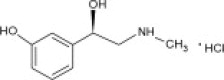
Phenylephrine Hydrochloride Injection contain active pharmaceutical ingredient phenylephrine in the form of hydrochloride salt. Phenylephrine is a synthetic sympathomimetic agent in sterile form for parenteral injection. Chemically, phenylephrine hydrochloride is (-)-m-Hydroxy-α-[(methylamino)methyl]benzyl alcohol hydrochloride and has the following structural formula:
Phenylephrine hydrochloride is very soluble in water, freely soluble in ethanol, and insoluble in chloroform and ethyl ether. Phenylephrine hydrochloride is sensitive to light.
Phenylephrine Hydrochloride Injection, USP is a clear, colorless, aqueous solution that is essentially free of visible foreign matter. It MUST BE DILUTED before administration as bolus intravenous infusion or continuous intravenous infusion.
Each mL contains: Phenylephrine Hydrochloride 10 mg; Sodium Chloride 3.5 mg; Sodium Citrate Dihydrate 4 mg; and Citric Acid 1 mg in water for injection. The pH may be adjusted in the range of 3.5 to 5.5 with Sodium Hydroxide and/or Hydrochloric Acid, if necessary.
5.2 Bradycardia
Phenylephrine Hydrochloride Injection 10 mg/mL can cause severe bradycardia and decreased cardiac output.
7.2 Antagonists
α-adrenergic blocking agents, including phenothiazines (e.g., chlorpromazine) and amiodarone block phenylephrine and are in turn blocked by phenylephrine.
8.4 Pediatric Use
Safety and effectiveness in pediatric patients have not been established.
8.5 Geriatric Use
Clinical studies of phenylephrine did not include sufficient numbers of subjects aged 65 and over to determine whether they respond differently from younger subjects. Other reported clinical experience has not identified differences in responses between the elderly and younger patients. In general, dose selection for an elderly patient should be cautious, usually starting at the low end of the dosing range, reflecting the greater frequency of decreased hepatic, renal, or cardiac function, and of concomitant disease or other drug therapy.
5.8 Renal Toxicity
Phenylephrine Hydrochloride Injection 10 mg/mL can increase the need for renal replacement therapy in patients with septic shock. Monitor renal function.
14 Clinical Studies
Increases in systolic and mean blood pressure following administration of phenylephrine were observed in 42 literature-based studies in the perioperative setting, including 26 studies where phenylephrine was used in low- risk (ASA 1 and 2) pregnant women undergoing neuraxial anesthesia during cesarean delivery, 3 studies in non- obstetric surgery under neuraxial anesthesia, and 13 studies in patients undergoing surgery under general anesthesia. Mean arterial blood pressure increases were also observed in two double-blind, active-controlled studies in patients with septic shock.
4 Contraindications
The use of Phenylephrine Hydrochloride Injection 10 mg/mL is contraindicated in patients with:
-
•Hypersensitivity to the product or any of its components
6 Adverse Reactions
The following adverse reactions associated with the use of phenylephrine hydrochloride were identified in the literature. Because these reactions are reported voluntarily from a population of uncertain size, it is not always possible to estimate their frequency reliably or to establish a causal relationship to drug exposure.
Cardiac disorders: Bradycardia, AV block, ventricular extrasystoles, myocardial ischemia
Gastrointestinal disorders: Nausea, vomiting
General disorders and administrative site conditions: Chest pain, extravasation
Immune system disorders: Sulfite sensitivity
Nervous system disorders: Headache, nervousness, paresthesia, tremor
Psychiatric disorders: Excitability
Respiratory: Pulmonary edema, rales
Skin and subcutaneous tissue disorders: Diaphoresis, pallor, piloerection, skin blanching, skin necrosis with extravasation
Vascular disorders: Hypertensive crisis
7 Drug Interactions
-
•Agonistic effects with monoamine oxidase inhibitors (MAOI), β-adrenergic blocking agents, α-2 adrenergic agonists, steroids, tricyclic antidepressants, norepinephrine transport inhibitors, ergot alkaloids, centrally-acting sympatholytic agents and atropine sulfate (7.1)
-
•Antagonistic effects on and by α-adrenergic blocking agents (7.2)
8.7 Renal Impairment
In patients with end stage renal disease (ESRD) undergoing hemodialysis, dose-response data indicates increased responsiveness to phenylephrine. Consider using lower doses of phenylephrine hydrochloride in ESRD patients.
12.2 Pharmacodynamics
Phenylephrine is the active moiety. Metabolites are inactive at both the α-1and α-2 adrenergic receptors. Following parenteral administration of phenylephrine hydrochloride, increases in systolic blood pressure, diastolic blood pressure, mean arterial blood pressure, and total peripheral vascular resistance are observed. The onset of blood pressure increase following an intravenous bolus phenylephrine hydrochloride administration is rapid and the effect may persist for up to 20 minutes. As mean arterial pressure increases following parenteral doses, vagal activity also increases, resulting in reflex bradycardia.
Most vascular beds are constricted, including renal, splanchnic, and hepatic.
12.3 Pharmacokinetics
Following an intravenous infusion of phenylephrine hydrochloride, the effective half-life was approximately 5 minutes. The steady-state volume of distribution (340 L) exceeded the body volume by a factor of 5, suggesting a high distribution into certain organ compartments. The average total serum clearance (2095 mL/min) was close to one-third of the cardiac output.
A mass balance study showed that phenylephrine is extensively metabolized by the liver with only 12% of the dose excreted unchanged in the urine. Deamination by monoamino oxidase is the primary metabolic pathway resulting in the formation of the major metabolite (m-hydroxymandelic acid) which accounts for 57% of the total administered dose.
8.6 Hepatic Impairment
In patients with liver cirrhosis [Child Pugh Class A (n=3), Class B (n=5) and Class C (n=1)], dose-response data indicate decreased responsiveness to phenylephrine. Consider using larger doses than usual in hepatic impaired subjects.
1 Indications and Usage
Phenylephrine Hydrochloride Injection 10 mg/mL is indicated for increasing blood pressure in adults with clinically important hypotension resulting primarily from vasodilation in the settings of anesthesia and septic shock.
12.1 Mechanism of Action
Phenylephrine hydrochloride is an α-1 adrenergic receptor agonist.
5 Warnings and Precautions
2 Dosage and Administration
-
•MUST BE DILUTED before administration. (2.1)
Dosing for Perioperative Hypotension
-
•Intravenous bolus administration: 50 mcg to 250 mcg (2.2)
-
•Intravenous continuous infusion: 0.5 mcg/kg/minute to 1.4 mcg/kg/minute titrated to effect (2.2)
Dosing for Patients with Vasodilatory Shock
-
•Intravenous continuous infusion: 0.5 mcg/kg/minute to 6 mcg/kg/minute titrated to effect (2.2)
3 Dosage Forms and Strengths
Phenylephrine Hydrochloride Injection, USP:
-
•10 mg per mL phenylephrine hydrochloride is supplied as a 1 mL single dose vial.
17 Patient Counseling Information
Inform patients, families, or caregivers that the primary side effect of phenylephrine is hypertension and, rarely, hypertensive crisis. Patients may experience bradycardia (slow heart rate), which in some cases may produce heart block or other cardiac arrhythmias, extra ventricular beats, myocardial ischemia in patients with underlying cardiac disease, and pulmonary edema (fluid in the lungs) or rales. Common, less serious symptoms include the following:
-
•chest pain
-
•skin or tissue damage if the drug leaks out of the venous catheter into the surrounding tissue
-
•headache, nervousness, tremor, numbness/tingling (paresthesias) in hands or feet
-
•nausea, vomiting
-
•excitability, dizziness, sweating, flushing
Lake Zurich, IL 60047
www.fresenius-kabi.com/us
451579C
5.4 Skin and Subcutaneous Necrosis
Extravasation of phenylephrine can cause necrosis or sloughing of tissue.
16 How Supplied/storage and Handling
Phenylephrine Hydrochloride Injection, USP, is supplied as follows:
|
Product Code |
Unit of Sale |
Strength |
Each |
|
RF751101 |
NDC 65219-388-01 |
10 mg per mL |
NDC 65219-388-00 |
|
751101 |
NDC 63323-751-01 |
10 mg per mL |
NDC 63323-751-00 |
Store at 20° to 25°C (68° to 77°F), excursions permitted to 15° to 30°C (59° to 86°F) [see USP Controlled Room Temperature]. Protect from light. Keep covered in carton until time of use. For single use only. Discard unused portion.
5.7 Peripheral and Visceral Ischemia
Phenylephrine Hydrochloride Injection 10 mg/mL can cause excessive peripheral and visceral vasoconstriction and ischemia to vital organs, particularly in patients with extensive peripheral vascular disease.
2.1 General Administration Instructions
-
•Phenylephrine Hydrochloride Injection 10 mg/mL MUST BE DILUTED before administration as an intravenous bolus or for continuous intravenous infusion. The diluted solution should not be held for more than 4 hours at room temperature or for more than 24 hours under refrigerated conditions (2°C – 8°C).
Parenteral drug products should be inspected for particulate matter and discoloration prior to administration.
Discard any unused portion.
During Phenylephrine Hydrochloride Injection 10 mg/mL administration:
-
•Correct intravascular volume depletion.
-
•Correct acidosis. Acidosis may reduce the effectiveness of phenylephrine.
5.3 Risk in Patients With Autonomic Dysfunction
The pressor response to adrenergic drugs, including phenylephrine, can be increased in patients with autonomic dysfunction, as may occur with spinal cord injuries.
5.5 Pressor Effect With Concomitant Oxytocic Drugs
Oxytocic drugs potentiate the pressor effect of sympathomimetic pressor amines including Phenylephrine Hydrochloride Injection 10 mg/mL [see Drug Interactions (7.1)], with the potential for hemorrhagic stroke.
5.1 Exacerbation of Angina, Heart Failure, Or Pulmonary Arterial Hypertension
Because of its pressor effects, phenylephrine hydrochloride can precipitate angina in patients with severe arteriosclerosis or history of angina, exacerbate underlying heart failure, and increase pulmonary arterial pressure.
Structured Label Content
Section 42229-5 (42229-5)
Preparing a 100 mcg/mL Solution for Intravenous Bolus Administration
For intravenous bolus administration, withdraw 10 mg (1 mL of a 10 mg/mL concentration) of Phenylephrine Hydrochloride Injection 10 mg/mL and dilute with 99 mL of 5% Dextrose Injection, USP or 0.9% Sodium Chloride Injection, USP. This will yield a final concentration of 100 mcg/mL. Withdraw an appropriate dose from the 100 mcg/mL solution prior to intravenous bolus administration.
Section 43683-2 (43683-2)
|
Dosage and Administration (2.1) |
03/2023 |
Section 51945-4 (51945-4)
PACKAGE LABEL- PRINCIPAL DISPLAY – Phenylephrine 1 mL Vial Label
NDC 63323-751-00 751101
Phenylephrine
Hydrochloride
Injection, USP
10 mg per mL
For Intravenous Use
Dilute Before Use
DISCARD UNUSED PORTION
PROTECT FROM LIGHT
1 mL Single Dose Vial Rx only
Agonists
The pressor effect of phenylephrine hydrochloride is increased in patients receiving:
-
•Monoamine oxidase inhibitors (MAOI), such as selegiline.
-
•β-adrenergic blockers
-
•α-2 adrenergic agonists, such as clonidine
-
•Steroids
-
•Tricyclic antidepressants
-
•Norepinephrine transport inhibitors, such as atomoxetine
-
•Ergot alkaloids, such as methylergonovine maleate
-
•Centrally-acting sympatholytic agents, such as guanfacine or reserpine
-
•Atropine sulfate
10 Overdosage (10 OVERDOSAGE)
Overdose of phenylephrine hydrochloride injection 10 mg/mL can cause a rapid rise in blood pressure. Symptoms of overdose include headache, vomiting, hypertension, reflex bradycardia, and cardiac arrhythmias including ventricular extrasystoles and ventricular tachycardia, and may cause a sensation of fullness in the head and tingling of the extremities. Consider using an α-adrenergic antagonist.
11 Description (11 DESCRIPTION)
Phenylephrine Hydrochloride Injection contain active pharmaceutical ingredient phenylephrine in the form of hydrochloride salt. Phenylephrine is a synthetic sympathomimetic agent in sterile form for parenteral injection. Chemically, phenylephrine hydrochloride is (-)-m-Hydroxy-α-[(methylamino)methyl]benzyl alcohol hydrochloride and has the following structural formula:
Phenylephrine hydrochloride is very soluble in water, freely soluble in ethanol, and insoluble in chloroform and ethyl ether. Phenylephrine hydrochloride is sensitive to light.
Phenylephrine Hydrochloride Injection, USP is a clear, colorless, aqueous solution that is essentially free of visible foreign matter. It MUST BE DILUTED before administration as bolus intravenous infusion or continuous intravenous infusion.
Each mL contains: Phenylephrine Hydrochloride 10 mg; Sodium Chloride 3.5 mg; Sodium Citrate Dihydrate 4 mg; and Citric Acid 1 mg in water for injection. The pH may be adjusted in the range of 3.5 to 5.5 with Sodium Hydroxide and/or Hydrochloric Acid, if necessary.
5.2 Bradycardia
Phenylephrine Hydrochloride Injection 10 mg/mL can cause severe bradycardia and decreased cardiac output.
7.2 Antagonists
α-adrenergic blocking agents, including phenothiazines (e.g., chlorpromazine) and amiodarone block phenylephrine and are in turn blocked by phenylephrine.
8.4 Pediatric Use
Safety and effectiveness in pediatric patients have not been established.
8.5 Geriatric Use
Clinical studies of phenylephrine did not include sufficient numbers of subjects aged 65 and over to determine whether they respond differently from younger subjects. Other reported clinical experience has not identified differences in responses between the elderly and younger patients. In general, dose selection for an elderly patient should be cautious, usually starting at the low end of the dosing range, reflecting the greater frequency of decreased hepatic, renal, or cardiac function, and of concomitant disease or other drug therapy.
5.8 Renal Toxicity
Phenylephrine Hydrochloride Injection 10 mg/mL can increase the need for renal replacement therapy in patients with septic shock. Monitor renal function.
14 Clinical Studies (14 CLINICAL STUDIES)
Increases in systolic and mean blood pressure following administration of phenylephrine were observed in 42 literature-based studies in the perioperative setting, including 26 studies where phenylephrine was used in low- risk (ASA 1 and 2) pregnant women undergoing neuraxial anesthesia during cesarean delivery, 3 studies in non- obstetric surgery under neuraxial anesthesia, and 13 studies in patients undergoing surgery under general anesthesia. Mean arterial blood pressure increases were also observed in two double-blind, active-controlled studies in patients with septic shock.
4 Contraindications (4 CONTRAINDICATIONS)
The use of Phenylephrine Hydrochloride Injection 10 mg/mL is contraindicated in patients with:
-
•Hypersensitivity to the product or any of its components
6 Adverse Reactions (6 ADVERSE REACTIONS)
The following adverse reactions associated with the use of phenylephrine hydrochloride were identified in the literature. Because these reactions are reported voluntarily from a population of uncertain size, it is not always possible to estimate their frequency reliably or to establish a causal relationship to drug exposure.
Cardiac disorders: Bradycardia, AV block, ventricular extrasystoles, myocardial ischemia
Gastrointestinal disorders: Nausea, vomiting
General disorders and administrative site conditions: Chest pain, extravasation
Immune system disorders: Sulfite sensitivity
Nervous system disorders: Headache, nervousness, paresthesia, tremor
Psychiatric disorders: Excitability
Respiratory: Pulmonary edema, rales
Skin and subcutaneous tissue disorders: Diaphoresis, pallor, piloerection, skin blanching, skin necrosis with extravasation
Vascular disorders: Hypertensive crisis
7 Drug Interactions (7 DRUG INTERACTIONS)
-
•Agonistic effects with monoamine oxidase inhibitors (MAOI), β-adrenergic blocking agents, α-2 adrenergic agonists, steroids, tricyclic antidepressants, norepinephrine transport inhibitors, ergot alkaloids, centrally-acting sympatholytic agents and atropine sulfate (7.1)
-
•Antagonistic effects on and by α-adrenergic blocking agents (7.2)
8.7 Renal Impairment
In patients with end stage renal disease (ESRD) undergoing hemodialysis, dose-response data indicates increased responsiveness to phenylephrine. Consider using lower doses of phenylephrine hydrochloride in ESRD patients.
12.2 Pharmacodynamics
Phenylephrine is the active moiety. Metabolites are inactive at both the α-1and α-2 adrenergic receptors. Following parenteral administration of phenylephrine hydrochloride, increases in systolic blood pressure, diastolic blood pressure, mean arterial blood pressure, and total peripheral vascular resistance are observed. The onset of blood pressure increase following an intravenous bolus phenylephrine hydrochloride administration is rapid and the effect may persist for up to 20 minutes. As mean arterial pressure increases following parenteral doses, vagal activity also increases, resulting in reflex bradycardia.
Most vascular beds are constricted, including renal, splanchnic, and hepatic.
12.3 Pharmacokinetics
Following an intravenous infusion of phenylephrine hydrochloride, the effective half-life was approximately 5 minutes. The steady-state volume of distribution (340 L) exceeded the body volume by a factor of 5, suggesting a high distribution into certain organ compartments. The average total serum clearance (2095 mL/min) was close to one-third of the cardiac output.
A mass balance study showed that phenylephrine is extensively metabolized by the liver with only 12% of the dose excreted unchanged in the urine. Deamination by monoamino oxidase is the primary metabolic pathway resulting in the formation of the major metabolite (m-hydroxymandelic acid) which accounts for 57% of the total administered dose.
8.6 Hepatic Impairment
In patients with liver cirrhosis [Child Pugh Class A (n=3), Class B (n=5) and Class C (n=1)], dose-response data indicate decreased responsiveness to phenylephrine. Consider using larger doses than usual in hepatic impaired subjects.
1 Indications and Usage (1 INDICATIONS AND USAGE)
Phenylephrine Hydrochloride Injection 10 mg/mL is indicated for increasing blood pressure in adults with clinically important hypotension resulting primarily from vasodilation in the settings of anesthesia and septic shock.
12.1 Mechanism of Action
Phenylephrine hydrochloride is an α-1 adrenergic receptor agonist.
5 Warnings and Precautions (5 WARNINGS AND PRECAUTIONS)
2 Dosage and Administration (2 DOSAGE AND ADMINISTRATION)
-
•MUST BE DILUTED before administration. (2.1)
Dosing for Perioperative Hypotension
-
•Intravenous bolus administration: 50 mcg to 250 mcg (2.2)
-
•Intravenous continuous infusion: 0.5 mcg/kg/minute to 1.4 mcg/kg/minute titrated to effect (2.2)
Dosing for Patients with Vasodilatory Shock
-
•Intravenous continuous infusion: 0.5 mcg/kg/minute to 6 mcg/kg/minute titrated to effect (2.2)
3 Dosage Forms and Strengths (3 DOSAGE FORMS AND STRENGTHS)
Phenylephrine Hydrochloride Injection, USP:
-
•10 mg per mL phenylephrine hydrochloride is supplied as a 1 mL single dose vial.
17 Patient Counseling Information (17 PATIENT COUNSELING INFORMATION)
Inform patients, families, or caregivers that the primary side effect of phenylephrine is hypertension and, rarely, hypertensive crisis. Patients may experience bradycardia (slow heart rate), which in some cases may produce heart block or other cardiac arrhythmias, extra ventricular beats, myocardial ischemia in patients with underlying cardiac disease, and pulmonary edema (fluid in the lungs) or rales. Common, less serious symptoms include the following:
-
•chest pain
-
•skin or tissue damage if the drug leaks out of the venous catheter into the surrounding tissue
-
•headache, nervousness, tremor, numbness/tingling (paresthesias) in hands or feet
-
•nausea, vomiting
-
•excitability, dizziness, sweating, flushing
Lake Zurich, IL 60047
www.fresenius-kabi.com/us
451579C
5.4 Skin and Subcutaneous Necrosis
Extravasation of phenylephrine can cause necrosis or sloughing of tissue.
16 How Supplied/storage and Handling (16 HOW SUPPLIED/STORAGE AND HANDLING)
Phenylephrine Hydrochloride Injection, USP, is supplied as follows:
|
Product Code |
Unit of Sale |
Strength |
Each |
|
RF751101 |
NDC 65219-388-01 |
10 mg per mL |
NDC 65219-388-00 |
|
751101 |
NDC 63323-751-01 |
10 mg per mL |
NDC 63323-751-00 |
Store at 20° to 25°C (68° to 77°F), excursions permitted to 15° to 30°C (59° to 86°F) [see USP Controlled Room Temperature]. Protect from light. Keep covered in carton until time of use. For single use only. Discard unused portion.
5.7 Peripheral and Visceral Ischemia
Phenylephrine Hydrochloride Injection 10 mg/mL can cause excessive peripheral and visceral vasoconstriction and ischemia to vital organs, particularly in patients with extensive peripheral vascular disease.
2.1 General Administration Instructions
-
•Phenylephrine Hydrochloride Injection 10 mg/mL MUST BE DILUTED before administration as an intravenous bolus or for continuous intravenous infusion. The diluted solution should not be held for more than 4 hours at room temperature or for more than 24 hours under refrigerated conditions (2°C – 8°C).
Parenteral drug products should be inspected for particulate matter and discoloration prior to administration.
Discard any unused portion.
During Phenylephrine Hydrochloride Injection 10 mg/mL administration:
-
•Correct intravascular volume depletion.
-
•Correct acidosis. Acidosis may reduce the effectiveness of phenylephrine.
5.3 Risk in Patients With Autonomic Dysfunction (5.3 Risk in Patients with Autonomic Dysfunction)
The pressor response to adrenergic drugs, including phenylephrine, can be increased in patients with autonomic dysfunction, as may occur with spinal cord injuries.
5.5 Pressor Effect With Concomitant Oxytocic Drugs (5.5 Pressor Effect with Concomitant Oxytocic Drugs)
Oxytocic drugs potentiate the pressor effect of sympathomimetic pressor amines including Phenylephrine Hydrochloride Injection 10 mg/mL [see Drug Interactions (7.1)], with the potential for hemorrhagic stroke.
5.1 Exacerbation of Angina, Heart Failure, Or Pulmonary Arterial Hypertension (5.1 Exacerbation of Angina, Heart Failure, or Pulmonary Arterial Hypertension)
Because of its pressor effects, phenylephrine hydrochloride can precipitate angina in patients with severe arteriosclerosis or history of angina, exacerbate underlying heart failure, and increase pulmonary arterial pressure.
Advanced Ingredient Data
Raw Label Data
All Sections (JSON)
Additional Information
Back to search View SPL set listing Open on DailyMed ↗
Source: dailymed · Ingested: 2026-02-15T11:47:49.413617 · Updated: 2026-03-14T22:28:06.461439