Nuplazid
1e6bea44-57d6-4bac-9328-46e1ee59f83b
34391-3
HUMAN PRESCRIPTION DRUG LABEL
Drug Facts
Composition & Product
Identifiers & Packaging
Indications and Usage
NUPLAZID ® is indicated for the treatment of hallucinations and delusions associated with Parkinson's disease psychosis [ see Clinical Studies (14) ] .
Dosage and Administration
Recommended dose is 34 mg taken orally once daily, without titration. ( 2.1 ) Can be taken with or without food. ( 2.2 ) Capsules may be swallowed whole or opened and entire contents sprinkled over a tablespoon of certain types of soft food. ( 2.2 )
Contraindications
NUPLAZID is contraindicated in patients with a history of a hypersensitivity reaction to pimavanserin or any of its components. Rash, urticaria, and reactions consistent with angioedema (e.g., tongue swelling, circumoral edema, throat tightness, and dyspnea) have been reported [see Adverse Reactions (6.2) ] .
Warnings and Precautions
QT Interval Prolongation: Increases in QT interval; avoid use with drugs that also increase the QT interval and in patients with risk factors for prolonged QT interval. ( 5.2 )
Adverse Reactions
The following serious adverse reactions are discussed elsewhere in the labeling: Increased Mortality in Elderly Patients with Dementia-Related Psychosis [see Boxed Warning and Warnings and Precautions (5.1) ] QT Interval Prolongation [see Warnings and Precautions (5.2) ]
Drug Interactions
Strong CYP3A4 Inhibitors: Reduce NUPLAZID dose to 10 mg once daily. ( 2.3 , 7.1 ) Strong or Moderate CYP3A4 Inducers: Avoid concomitant use of NUPLAZID. ( 2.3 , 7.1 )
How Supplied
NUPLAZID (pimavanserin) is available as:
Storage and Handling
NUPLAZID (pimavanserin) is available as:
Description
Elderly patients with dementia-related psychosis treated with antipsychotic drugs are at an increased risk of death. NUPLAZID is not approved for the treatment of patients with dementia who experience psychosis unless their hallucinations and delusions are related to Parkinson's disease [see Warnings and Precautions (5.1) ] .
Medication Information
Warnings and Precautions
QT Interval Prolongation: Increases in QT interval; avoid use with drugs that also increase the QT interval and in patients with risk factors for prolonged QT interval. ( 5.2 )
Indications and Usage
NUPLAZID ® is indicated for the treatment of hallucinations and delusions associated with Parkinson's disease psychosis [ see Clinical Studies (14) ] .
Dosage and Administration
Recommended dose is 34 mg taken orally once daily, without titration. ( 2.1 ) Can be taken with or without food. ( 2.2 ) Capsules may be swallowed whole or opened and entire contents sprinkled over a tablespoon of certain types of soft food. ( 2.2 )
Contraindications
NUPLAZID is contraindicated in patients with a history of a hypersensitivity reaction to pimavanserin or any of its components. Rash, urticaria, and reactions consistent with angioedema (e.g., tongue swelling, circumoral edema, throat tightness, and dyspnea) have been reported [see Adverse Reactions (6.2) ] .
Adverse Reactions
The following serious adverse reactions are discussed elsewhere in the labeling: Increased Mortality in Elderly Patients with Dementia-Related Psychosis [see Boxed Warning and Warnings and Precautions (5.1) ] QT Interval Prolongation [see Warnings and Precautions (5.2) ]
Drug Interactions
Strong CYP3A4 Inhibitors: Reduce NUPLAZID dose to 10 mg once daily. ( 2.3 , 7.1 ) Strong or Moderate CYP3A4 Inducers: Avoid concomitant use of NUPLAZID. ( 2.3 , 7.1 )
Storage and Handling
NUPLAZID (pimavanserin) is available as:
How Supplied
NUPLAZID (pimavanserin) is available as:
Description
Elderly patients with dementia-related psychosis treated with antipsychotic drugs are at an increased risk of death. NUPLAZID is not approved for the treatment of patients with dementia who experience psychosis unless their hallucinations and delusions are related to Parkinson's disease [see Warnings and Precautions (5.1) ] .
Section 34083-6
Carcinogenesis
There was no increase in the incidence of tumors following daily oral administration of pimavanserin to mice or rats for 2 years. Mice were administered pimavanserin at oral doses of 2.6, 6, and 13 (males)/8.5, 21, and 43 mg/kg/day (females) which are 0.01- to 1- (males)/0.5- to 7- (females) times the MRHD of 34 mg/day based on AUC. Rats were administered pimavanserin at oral doses of 2.6, 8.5, and 26 (males)/4.3, 13, and 43 mg/kg/day (females) which are 0.01- to 4- (males)/0.04- to 16- (females) times the MRHD of 34 mg/day based on AUC.
Section 42229-5
-
Coadministration with Strong CYP3A4 Inhibitors
The recommended dose of NUPLAZID when coadministered with strong CYP3A4 inhibitors is 10 mg, taken orally as one tablet once daily [see Drug Interactions (7.1)].
Section 44425-7
Storage
34 mg Capsule:
Store at 20°C to 25°C (68°F to 77°F); excursions permitted between 15°C and 30°C (59°F and 86°F) [See USP Controlled Room Temperature]. To prevent potential capsule color fading, protect from light.
10 mg Tablet:
Store at 20°C to 25°C (68°F to 77°F); excursions permitted between 15°C and 30°C (59°F and 86°F) [See USP Controlled Room Temperature].
9.2 Abuse
NUPLAZID has not been systematically studied in humans for its potential for abuse, tolerance, or physical dependence.
While short-term, placebo-controlled and long-term, open-label clinical trials did not reveal increases in drug-seeking behavior, the limited experience from the clinical trials do not predict the extent to which a CNS-active drug will be misused, diverted, and/or abused once marketed.
11 Description
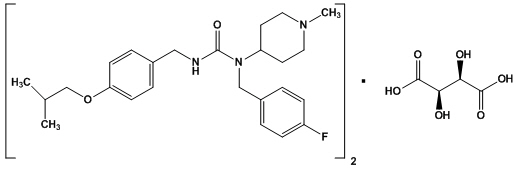
NUPLAZID contains pimavanserin, an atypical antipsychotic, which is present as pimavanserin tartrate salt with the chemical name, urea, N-[(4-fluorophenyl)methyl]-N-(1-methyl-4-piperidinyl)-N'-[[4-(2-methylpropoxy)phenyl]methyl]-,(2R,3R)-2,3-dihydroxybutanedioate (2:1). Pimavanserin tartrate is freely soluble in water. Its molecular formula is (C25H34FN3O2)2∙C4H6O6 and its molecular weight is 1005.20 (tartrate salt). The chemical structure is:
The molecular formula of pimavanserin free base is C25H34FN3O2 and its molecular weight is 427.55.
NUPLAZID capsules are intended for oral administration only. Each capsule contains 40 mg of pimavanserin tartrate, which is equivalent to 34 mg of pimavanserin free base. Inactive ingredients include magnesium stearate and microcrystalline cellulose. Additionally, the following inactive ingredients are present as components of the capsule shell: black iron oxide, FD&C blue #1, hypromellose, titanium dioxide, and yellow iron oxide.
NUPLAZID tablets are intended for oral administration only. Each round, orange, immediate-release, film coated tablet contains 11.8 mg of pimavanserin tartrate, which is equivalent to 10 mg pimavanserin free base. Inactive ingredients include magnesium stearate, pregelatinized starch, and silicified microcrystalline cellulose. Additionally, the following inactive ingredients are present as components of the film coat: polyethylene glycol, polyvinyl alcohol, red iron oxide, talc, titanium dioxide, and yellow iron oxide.
8.4 Pediatric Use
Safety and effectiveness of NUPLAZID have not been established in pediatric patients.
8.5 Geriatric Use
No dose adjustment is required for elderly patients.
Parkinson's disease is a disorder occurring primarily in individuals over 55 years of age. The mean age of patients enrolled in the 6-week clinical studies with NUPLAZID [see Adverse Reactions (6.1)] was 71 years, with 49% 65-75 years old and 31% >75 years old. In the pooled population of patients enrolled in 6-week, placebo-controlled studies (N=614), 27% had MMSE scores from 21 to 24 compared to 73% with scores ≥25. No clinically meaningful differences in safety or effectiveness were noted between these two groups.
14 Clinical Studies
The efficacy of NUPLAZID 34 mg as a treatment of hallucinations and delusions associated with Parkinson's disease (PD) psychosis was demonstrated in a 6-week, randomized, placebo-controlled, parallel-group study. In this outpatient study, 199 patients were randomized in a 1:1 ratio to NUPLAZID 34 mg or placebo once daily. Study patients (male or female and aged 40 years or older) had a diagnosis of PD (with or without dementia) established at least 1 year prior to study entry and had psychotic symptoms (hallucinations and/or delusions) that started after the PD diagnosis and that were severe and frequent enough to warrant treatment with an antipsychotic. At entry, patients were required to have a Mini-Mental State Examination (MMSE) score ≥21 and to be able to self-report symptoms. The majority of patients were on PD medications at entry; these medications were required to be stable for at least 30 days prior to study start and throughout the study period.
The PD-adapted Scale for the Assessment of Positive Symptoms (SAPS-PD) was used to evaluate the efficacy of NUPLAZID 34 mg. SAPS-PD is a 9-item scale adapted for PD from the Hallucinations and Delusions domains of the SAPS. Each item is scored on a scale of 0-5, with 0 being none and 5 representing severe and frequent symptoms. Therefore, the SAPS-PD total score can range from 0 to 45 with higher scores reflecting greater severity of illness. A negative change in score indicates improvement. Primary efficacy was evaluated based on change from baseline to Week 6 in SAPS-PD total score.
As shown in Table 3, Figure 3, and Figure 4, NUPLAZID 34 mg (n=95) was statistically significantly superior to placebo (n=90) in decreasing the frequency and/or severity of hallucinations and delusions in patients with PDP as measured by central, independent, and blinded raters using the SAPS-PD scale. An effect was seen on both the hallucinations and delusions components of the SAPS-PD.
| Endpoint | Treatment Group | Mean Baseline Score (SD) | LS Mean Change from Baseline (SE) | Placebo-subtracted Difference Difference (drug minus placebo) in least-squares mean change from baseline. (95% CI) |
|---|---|---|---|---|
| SD: standard deviation; SE: standard error; LS Mean: least-squares mean; CI: confidence interval. | ||||
| SAPS-PD | NUPLAZID | 15.9 (6.12) | -5.79 (0.66) | -3.06 Statistically significantly superior to placebo. (-4.91, -1.20) |
| Placebo | 14.7 (5.55) | -2.73 (0.67) | -- | |
| SAPS-PD Hallucinations Supportive analysis.
|
NUPLAZID | 11.1 (4.58) | -3.81 (0.46) | -2.01 (-3.29, -0.72) |
| Placebo | 10.0 (3.80) | -1.80 (0.46) | -- | |
| SAPS-PD Delusions |
NUPLAZID | 4.8 (3.59) | -1.95 (0.32) | -0.94 (-1.83, -0.04) |
| Placebo | 4.8 (3.82) | -1.01 (0.32) | -- |
The effect of NUPLAZID on SAPS-PD improved through the six-week trial period, as shown in Figure 3.
Figure 3 SAPS-PD Change from Baseline through 6 Weeks Total Study Treatment
Figure 4 Proportion of Patients with SAPS-PD Score Improvement at the End of Week 6 (N=185)
| Complete response = SAPS-PD score reduced to zero from baseline value. |
| Patients with missing values were counted as non-responders. |
|
|
4 Contraindications
NUPLAZID is contraindicated in patients with a history of a hypersensitivity reaction to pimavanserin or any of its components. Rash, urticaria, and reactions consistent with angioedema (e.g., tongue swelling, circumoral edema, throat tightness, and dyspnea) have been reported [see Adverse Reactions (6.2)].
6 Adverse Reactions
The following serious adverse reactions are discussed elsewhere in the labeling:
- Increased Mortality in Elderly Patients with Dementia-Related Psychosis [see Boxed Warning and Warnings and Precautions (5.1)]
- QT Interval Prolongation [see Warnings and Precautions (5.2)]
7 Drug Interactions
10.1 Human Experience
The pre-marketing clinical trials involving NUPLAZID in approximately 1200 subjects and patients do not provide information regarding symptoms with overdose. In healthy subject studies, dose-limiting nausea and vomiting were observed.
12.2 Pharmacodynamics
In vitro, pimavanserin acts as an inverse agonist and antagonist at serotonin 5-HT2A receptors with high binding affinity (Ki value 0.087 nM) and at serotonin 5-HT2C receptors with lower binding affinity (Ki value 0.44 nM). Pimavanserin shows low binding to sigma 1 receptors (Ki value 120 nM) and has no appreciable affinity (Ki value >300 nM), to serotonin 5-HT2B, dopaminergic (including D2), muscarinic, histaminergic, or adrenergic receptors, or to calcium channels.
12.3 Pharmacokinetics
Pimavanserin demonstrates dose-proportional pharmacokinetics after single oral doses from 17 to 255 mg (0.5- to 7.5-times the recommended dosage). The pharmacokinetics of pimavanserin are similar in both the study population and healthy subjects. The mean plasma half-lives for pimavanserin and the active metabolite (N-desmethylated metabolite) are approximately 57 hours and 200 hours, respectively.
2.1 Recommended Dosage
The recommended dose of NUPLAZID is 34 mg taken orally once daily, without titration.
1 Indications and Usage
NUPLAZID® is indicated for the treatment of hallucinations and delusions associated with Parkinson's disease psychosis [see Clinical Studies (14)].
12.1 Mechanism of Action
The mechanism of action of pimavanserin in the treatment of hallucinations and delusions associated with PDP is unclear. However, the effect of pimavanserin could be mediated through a combination of inverse agonist and antagonist activity at serotonin 5-HT2A receptors and to a lesser extent at serotonin 5-HT2C receptors.
9.1 Controlled Substance
NUPLAZID is not a controlled substance.
5 Warnings and Precautions
- QT Interval Prolongation: Increases in QT interval; avoid use with drugs that also increase the QT interval and in patients with risk factors for prolonged QT interval. (5.2)
10.2 Management of Overdose
There are no known specific antidotes for NUPLAZID. In managing overdose, cardiovascular monitoring should commence immediately and should include continuous ECG monitoring to detect possible arrhythmias [see Warnings and Precautions (5.2)]. If antiarrhythmic therapy is administered, disopyramide, procainamide, and quinidine should not be used, as they have the potential for QT-prolonging effects that might be additive to those of NUPLAZID [see Drug Interactions (7.1)]. Consider the long plasma half-life of pimavanserin (about 57 hours) and the possibility of multiple drug involvement. Consult a Certified Poison Control Center (1-800-222-1222) for up-to-date guidance and advice.
2 Dosage and Administration
3 Dosage Forms and Strengths
NUPLAZID (pimavanserin) is available as:
- 34 mg strength capsules. The capsules are opaque white and light green with "PIMA" and "34" printed in black.
- 10 mg strength tablets. The orange, round, coated tablets are debossed on one side with a "P" and "10" on the reverse side.
5.2 Qt Interval Prolongation
NUPLAZID prolongs the QT interval. The use of NUPLAZID should be avoided in patients with known QT prolongation or in combination with other drugs known to prolong QT interval including Class 1A antiarrhythmics (e.g., quinidine, procainamide) or Class 3 antiarrhythmics (e.g., amiodarone, sotalol), certain antipsychotic medications (e.g., ziprasidone, chlorpromazine, thioridazine), and certain antibiotics (e.g., gatifloxacin, moxifloxacin) [see Drug Interactions (7.1)]. NUPLAZID should also be avoided in patients with a history of cardiac arrhythmias, as well as other circumstances that may increase the risk of the occurrence of torsade de pointes and/or sudden death, including symptomatic bradycardia, hypokalemia or hypomagnesemia, and the presence of congenital prolongation of the QT interval [see Clinical Pharmacology (12.2)].
6.2 Postmarketing Experience
The following adverse reactions have been identified during postapproval use of NUPLAZID. Because these reactions are reported voluntarily from a population of uncertain size, it is not always possible to reliably estimate their frequency or establish a causal relationship to drug exposure. These reactions include rash, urticaria, reactions consistent with angioedema (e.g., tongue swelling, circumoral edema, throat tightness, and dyspnea), somnolence, falls, agitation, aggression, and fecal incontinence.
2.2 Administration Information
NUPLAZID can be taken with or without food [see Clinical Pharmacology (12.3)].
NUPLAZID capsules can be taken whole, or opened and the entire contents sprinkled over a tablespoon (15 mL) of applesauce, yogurt, pudding, or a liquid nutritional supplement. Consume the drug/food mixture immediately without chewing; do not store for future use.
6.1 Clinical Trials Experience
Because clinical trials are conducted under widely varying conditions, adverse reaction rates observed in the clinical trials of a drug cannot be directly compared to rates in the clinical trials of another drug and may not reflect the rates observed in practice.
The clinical trial database for NUPLAZID consists of over 1200 subjects and patients exposed to one or more doses of NUPLAZID. Of these, 616 were patients with hallucinations and delusions associated with Parkinson's disease psychosis (PDP). In the placebo-controlled setting, the majority of experience in patients comes from studies evaluating once-daily NUPLAZID doses of 34 mg (N=202) compared to placebo (N=231) for up to 6 weeks. In the controlled trial setting, the study population was approximately 64% male and 91% Caucasian, and the mean age was about 71 years at study entry. Additional clinical trial experience in patients with hallucinations and delusions associated with PDP comes from two open-label, safety extension studies (total N=497). The majority of patients receiving long-term treatment received 34 mg once-daily (N=459). Over 300 patients have been treated for more than 6 months; over 270 have been treated for at least 12 months; and over 150 have been treated for at least 24 months.
The following adverse reactions are based on the 6-week, placebo-controlled studies in which NUPLAZID was administered once daily to patients with hallucinations and delusions associated with PDP.
Common Adverse Reactions (incidence ≥5% and at least twice the rate of placebo): peripheral edema (7% NUPLAZID 34 mg vs. 2% placebo) and confusional state (6% NUPLAZID 34 mg vs. 3% placebo).
8.8 Other Specific Populations
No dosage adjustment is required based on patient's age, sex, ethnicity, or weight. These factors do not affect the pharmacokinetics of NUPLAZID [see Clinical Pharmacology (12.3)].
8.6 Patients With Renal Impairment
No dosage adjustment for NUPLAZID is needed in patients with mild to severe renal impairment or end stage renal disease (ESRD); however, increased exposure (Cmax and AUC) to NUPLAZID occurred in patients with severe renal impairment (CrCL <30 mL/min, Cockcroft-Gault) in a renal impairment study [see Clinical Pharmacology (12.3)].
NUPLAZID should be used with caution in patients with severe renal impairment and end stage renal disease.
In a renal impairment study, dialysis did not appear to significantly affect the concentrations of NUPLAZID [see Clinical Pharmacology (12.3)].
16 How Supplied/storage and Handling
NUPLAZID (pimavanserin) is available as:
8.7 Patients With Hepatic Impairment
No dosage adjustment for NUPLAZID is recommended in patients with hepatic impairment based on the exposure differences observed in patients with and without hepatic impairment in a hepatic impairment study [see Clinical Pharmacology (12.3)].
13.2 Animal Toxicology And/or Pharmacology
Phospholipidosis (foamy macrophages and/or cytoplasmic vacuolation) was observed in multiple tissues and organs of mice, rats, and monkeys following oral daily administration of pimavanserin. The occurrence of phospholipidosis was both dose- and duration-dependent. The most severely affected organs were the lungs and kidneys. In rats, diffuse phospholipidosis was associated with increased lung and kidney weights, respiratory-related clinical signs including rales, labored breathing, and gasping, renal tubular degeneration, and, in some animals, focal/multifocal chronic inflammation in the lungs at exposures ≥10-times those at the MRHD of 34 mg/day based on AUC. Phospholipidosis caused mortality in rats at exposures ≥16-times the MRHD of 34 mg/day based on AUC. The chronic inflammation in the rat lung was characterized by minimal to mild focal collagen positive fibroplasia as shown by specialized staining. Chronic inflammation of the lungs was not seen in monkeys treated for 12 months (exposures 9-times the MRHD). Based on the exposures at the estimated No Observed Effect Level (NOEL) for chronic lung inflammation in rats, there is a 5- to 9-times safety margin after 6-months of treatment and a 2- to 4-times safety margin after 24-months (lifetime) treatment compared to exposure at the MRHD. The relevance of these findings to human risk is not clear.
Principal Display Panel 10 Mg Tablet Bottle Label
NDC 63090-100-30
10 mg
NUPLAZID®
(pimavanserin) tablets
10 mg per tablet
Rx only
30 Tablets
Principal Display Panel 34 Mg Capsule Bottle Label
NDC 63090-340-30
34 mg
NUPLAZID®
(pimavanserin) capsules
34 mg per capsule
Rx only
30 Capsules
7.1 Drugs Having Clinically Important Interactions With Nuplazid
| QT Interval Prolongation | |
| Clinical Impact: | Concomitant use of drugs that prolong the QT interval may add to the QT effects of NUPLAZID and increase the risk of cardiac arrhythmia. |
| Intervention: | Avoid the use of NUPLAZID in combination with other drugs known to prolong QT interval (e.g., Class 1A antiarrythmics, Class 3 antiarrythmics, certain antipsychotics or antibiotics) [see Warnings and Precautions (5.2)]. |
| Strong CYP3A4 Inhibitors | |
| Clinical Impact: | Concomitant use of NUPLAZID with a strong CYP3A4 inhibitor increases pimavanserin exposure [see Clinical Pharmacology (12.3)]. |
| Intervention: | If NUPLAZID is used with a strong CYP3A4 inhibitor, reduce the dosage of NUPLAZID [see Dosage and Administration (2.3)]. |
| Strong or Moderate CYP3A4 Inducers | |
| Clinical Impact: | Concomitant use of NUPLAZID with strong or moderate CYP3A4 inducers reduces pimavanserin exposure [see Clinical Pharmacology (12.3)]. |
| Intervention: | Avoid concomitant use of strong or moderate CYP3A4 inducers with NUPLAZID [see Dosage and Administration (2.3)]. |
7.2 Drugs Having No Clinically Important Interactions With Nuplazid
Based on pharmacokinetic studies, no dosage adjustment of carbidopa/levodopa is required when administered concomitantly with NUPLAZID [see Clinical Pharmacology (12.3)].
5.1 Increased Mortality in Elderly Patients With Dementia Related Psychosis
Antipsychotic drugs increase the all-cause risk of death in elderly patients with dementia-related psychosis. Analyses of 17 dementia-related psychosis placebo-controlled trials (modal duration of 10 weeks and largely in patients taking atypical antipsychotic drugs) revealed a risk of death in the drug-treated patients of between 1.6- to 1.7-times that in placebo-treated patients. Over the course of a typical 10-week controlled trial, the rate of death in drug-treated patients was about 4.5%, compared to a rate of about 2.6% in placebo-treated patients.
Although the causes of death were varied, most of the deaths appeared to be either cardiovascular (e.g., heart failure, sudden death) or infectious (e.g., pneumonia) in nature. NUPLAZID is not approved for the treatment of patients with dementia who experience psychosis unless their hallucinations and delusions are related to Parkinson's disease [see Boxed Warning].
Warning: Increased Mortality in Elderly Patients With Dementia Related Psychosis
Elderly patients with dementia-related psychosis treated with antipsychotic drugs are at an increased risk of death. NUPLAZID is not approved for the treatment of patients with dementia who experience psychosis unless their hallucinations and delusions are related to Parkinson's disease [see Warnings and Precautions (5.1)].
Structured Label Content
Section 34083-6 (34083-6)
Carcinogenesis
There was no increase in the incidence of tumors following daily oral administration of pimavanserin to mice or rats for 2 years. Mice were administered pimavanserin at oral doses of 2.6, 6, and 13 (males)/8.5, 21, and 43 mg/kg/day (females) which are 0.01- to 1- (males)/0.5- to 7- (females) times the MRHD of 34 mg/day based on AUC. Rats were administered pimavanserin at oral doses of 2.6, 8.5, and 26 (males)/4.3, 13, and 43 mg/kg/day (females) which are 0.01- to 4- (males)/0.04- to 16- (females) times the MRHD of 34 mg/day based on AUC.
Section 42229-5 (42229-5)
-
Coadministration with Strong CYP3A4 Inhibitors
The recommended dose of NUPLAZID when coadministered with strong CYP3A4 inhibitors is 10 mg, taken orally as one tablet once daily [see Drug Interactions (7.1)].
Section 44425-7 (44425-7)
Storage
34 mg Capsule:
Store at 20°C to 25°C (68°F to 77°F); excursions permitted between 15°C and 30°C (59°F and 86°F) [See USP Controlled Room Temperature]. To prevent potential capsule color fading, protect from light.
10 mg Tablet:
Store at 20°C to 25°C (68°F to 77°F); excursions permitted between 15°C and 30°C (59°F and 86°F) [See USP Controlled Room Temperature].
9.2 Abuse
NUPLAZID has not been systematically studied in humans for its potential for abuse, tolerance, or physical dependence.
While short-term, placebo-controlled and long-term, open-label clinical trials did not reveal increases in drug-seeking behavior, the limited experience from the clinical trials do not predict the extent to which a CNS-active drug will be misused, diverted, and/or abused once marketed.
11 Description (11 DESCRIPTION)
NUPLAZID contains pimavanserin, an atypical antipsychotic, which is present as pimavanserin tartrate salt with the chemical name, urea, N-[(4-fluorophenyl)methyl]-N-(1-methyl-4-piperidinyl)-N'-[[4-(2-methylpropoxy)phenyl]methyl]-,(2R,3R)-2,3-dihydroxybutanedioate (2:1). Pimavanserin tartrate is freely soluble in water. Its molecular formula is (C25H34FN3O2)2∙C4H6O6 and its molecular weight is 1005.20 (tartrate salt). The chemical structure is:
The molecular formula of pimavanserin free base is C25H34FN3O2 and its molecular weight is 427.55.
NUPLAZID capsules are intended for oral administration only. Each capsule contains 40 mg of pimavanserin tartrate, which is equivalent to 34 mg of pimavanserin free base. Inactive ingredients include magnesium stearate and microcrystalline cellulose. Additionally, the following inactive ingredients are present as components of the capsule shell: black iron oxide, FD&C blue #1, hypromellose, titanium dioxide, and yellow iron oxide.
NUPLAZID tablets are intended for oral administration only. Each round, orange, immediate-release, film coated tablet contains 11.8 mg of pimavanserin tartrate, which is equivalent to 10 mg pimavanserin free base. Inactive ingredients include magnesium stearate, pregelatinized starch, and silicified microcrystalline cellulose. Additionally, the following inactive ingredients are present as components of the film coat: polyethylene glycol, polyvinyl alcohol, red iron oxide, talc, titanium dioxide, and yellow iron oxide.
8.4 Pediatric Use
Safety and effectiveness of NUPLAZID have not been established in pediatric patients.
8.5 Geriatric Use
No dose adjustment is required for elderly patients.
Parkinson's disease is a disorder occurring primarily in individuals over 55 years of age. The mean age of patients enrolled in the 6-week clinical studies with NUPLAZID [see Adverse Reactions (6.1)] was 71 years, with 49% 65-75 years old and 31% >75 years old. In the pooled population of patients enrolled in 6-week, placebo-controlled studies (N=614), 27% had MMSE scores from 21 to 24 compared to 73% with scores ≥25. No clinically meaningful differences in safety or effectiveness were noted between these two groups.
14 Clinical Studies (14 CLINICAL STUDIES)
The efficacy of NUPLAZID 34 mg as a treatment of hallucinations and delusions associated with Parkinson's disease (PD) psychosis was demonstrated in a 6-week, randomized, placebo-controlled, parallel-group study. In this outpatient study, 199 patients were randomized in a 1:1 ratio to NUPLAZID 34 mg or placebo once daily. Study patients (male or female and aged 40 years or older) had a diagnosis of PD (with or without dementia) established at least 1 year prior to study entry and had psychotic symptoms (hallucinations and/or delusions) that started after the PD diagnosis and that were severe and frequent enough to warrant treatment with an antipsychotic. At entry, patients were required to have a Mini-Mental State Examination (MMSE) score ≥21 and to be able to self-report symptoms. The majority of patients were on PD medications at entry; these medications were required to be stable for at least 30 days prior to study start and throughout the study period.
The PD-adapted Scale for the Assessment of Positive Symptoms (SAPS-PD) was used to evaluate the efficacy of NUPLAZID 34 mg. SAPS-PD is a 9-item scale adapted for PD from the Hallucinations and Delusions domains of the SAPS. Each item is scored on a scale of 0-5, with 0 being none and 5 representing severe and frequent symptoms. Therefore, the SAPS-PD total score can range from 0 to 45 with higher scores reflecting greater severity of illness. A negative change in score indicates improvement. Primary efficacy was evaluated based on change from baseline to Week 6 in SAPS-PD total score.
As shown in Table 3, Figure 3, and Figure 4, NUPLAZID 34 mg (n=95) was statistically significantly superior to placebo (n=90) in decreasing the frequency and/or severity of hallucinations and delusions in patients with PDP as measured by central, independent, and blinded raters using the SAPS-PD scale. An effect was seen on both the hallucinations and delusions components of the SAPS-PD.
| Endpoint | Treatment Group | Mean Baseline Score (SD) | LS Mean Change from Baseline (SE) | Placebo-subtracted Difference Difference (drug minus placebo) in least-squares mean change from baseline. (95% CI) |
|---|---|---|---|---|
| SD: standard deviation; SE: standard error; LS Mean: least-squares mean; CI: confidence interval. | ||||
| SAPS-PD | NUPLAZID | 15.9 (6.12) | -5.79 (0.66) | -3.06 Statistically significantly superior to placebo. (-4.91, -1.20) |
| Placebo | 14.7 (5.55) | -2.73 (0.67) | -- | |
| SAPS-PD Hallucinations Supportive analysis.
|
NUPLAZID | 11.1 (4.58) | -3.81 (0.46) | -2.01 (-3.29, -0.72) |
| Placebo | 10.0 (3.80) | -1.80 (0.46) | -- | |
| SAPS-PD Delusions |
NUPLAZID | 4.8 (3.59) | -1.95 (0.32) | -0.94 (-1.83, -0.04) |
| Placebo | 4.8 (3.82) | -1.01 (0.32) | -- |
The effect of NUPLAZID on SAPS-PD improved through the six-week trial period, as shown in Figure 3.
Figure 3 SAPS-PD Change from Baseline through 6 Weeks Total Study Treatment
Figure 4 Proportion of Patients with SAPS-PD Score Improvement at the End of Week 6 (N=185)
| Complete response = SAPS-PD score reduced to zero from baseline value. |
| Patients with missing values were counted as non-responders. |
|
|
4 Contraindications (4 CONTRAINDICATIONS)
NUPLAZID is contraindicated in patients with a history of a hypersensitivity reaction to pimavanserin or any of its components. Rash, urticaria, and reactions consistent with angioedema (e.g., tongue swelling, circumoral edema, throat tightness, and dyspnea) have been reported [see Adverse Reactions (6.2)].
6 Adverse Reactions (6 ADVERSE REACTIONS)
The following serious adverse reactions are discussed elsewhere in the labeling:
- Increased Mortality in Elderly Patients with Dementia-Related Psychosis [see Boxed Warning and Warnings and Precautions (5.1)]
- QT Interval Prolongation [see Warnings and Precautions (5.2)]
7 Drug Interactions (7 DRUG INTERACTIONS)
10.1 Human Experience
The pre-marketing clinical trials involving NUPLAZID in approximately 1200 subjects and patients do not provide information regarding symptoms with overdose. In healthy subject studies, dose-limiting nausea and vomiting were observed.
12.2 Pharmacodynamics
In vitro, pimavanserin acts as an inverse agonist and antagonist at serotonin 5-HT2A receptors with high binding affinity (Ki value 0.087 nM) and at serotonin 5-HT2C receptors with lower binding affinity (Ki value 0.44 nM). Pimavanserin shows low binding to sigma 1 receptors (Ki value 120 nM) and has no appreciable affinity (Ki value >300 nM), to serotonin 5-HT2B, dopaminergic (including D2), muscarinic, histaminergic, or adrenergic receptors, or to calcium channels.
12.3 Pharmacokinetics
Pimavanserin demonstrates dose-proportional pharmacokinetics after single oral doses from 17 to 255 mg (0.5- to 7.5-times the recommended dosage). The pharmacokinetics of pimavanserin are similar in both the study population and healthy subjects. The mean plasma half-lives for pimavanserin and the active metabolite (N-desmethylated metabolite) are approximately 57 hours and 200 hours, respectively.
2.1 Recommended Dosage
The recommended dose of NUPLAZID is 34 mg taken orally once daily, without titration.
1 Indications and Usage (1 INDICATIONS AND USAGE)
NUPLAZID® is indicated for the treatment of hallucinations and delusions associated with Parkinson's disease psychosis [see Clinical Studies (14)].
12.1 Mechanism of Action
The mechanism of action of pimavanserin in the treatment of hallucinations and delusions associated with PDP is unclear. However, the effect of pimavanserin could be mediated through a combination of inverse agonist and antagonist activity at serotonin 5-HT2A receptors and to a lesser extent at serotonin 5-HT2C receptors.
9.1 Controlled Substance
NUPLAZID is not a controlled substance.
5 Warnings and Precautions (5 WARNINGS AND PRECAUTIONS)
- QT Interval Prolongation: Increases in QT interval; avoid use with drugs that also increase the QT interval and in patients with risk factors for prolonged QT interval. (5.2)
10.2 Management of Overdose
There are no known specific antidotes for NUPLAZID. In managing overdose, cardiovascular monitoring should commence immediately and should include continuous ECG monitoring to detect possible arrhythmias [see Warnings and Precautions (5.2)]. If antiarrhythmic therapy is administered, disopyramide, procainamide, and quinidine should not be used, as they have the potential for QT-prolonging effects that might be additive to those of NUPLAZID [see Drug Interactions (7.1)]. Consider the long plasma half-life of pimavanserin (about 57 hours) and the possibility of multiple drug involvement. Consult a Certified Poison Control Center (1-800-222-1222) for up-to-date guidance and advice.
2 Dosage and Administration (2 DOSAGE AND ADMINISTRATION)
3 Dosage Forms and Strengths (3 DOSAGE FORMS AND STRENGTHS)
NUPLAZID (pimavanserin) is available as:
- 34 mg strength capsules. The capsules are opaque white and light green with "PIMA" and "34" printed in black.
- 10 mg strength tablets. The orange, round, coated tablets are debossed on one side with a "P" and "10" on the reverse side.
5.2 Qt Interval Prolongation (5.2 QT Interval Prolongation)
NUPLAZID prolongs the QT interval. The use of NUPLAZID should be avoided in patients with known QT prolongation or in combination with other drugs known to prolong QT interval including Class 1A antiarrhythmics (e.g., quinidine, procainamide) or Class 3 antiarrhythmics (e.g., amiodarone, sotalol), certain antipsychotic medications (e.g., ziprasidone, chlorpromazine, thioridazine), and certain antibiotics (e.g., gatifloxacin, moxifloxacin) [see Drug Interactions (7.1)]. NUPLAZID should also be avoided in patients with a history of cardiac arrhythmias, as well as other circumstances that may increase the risk of the occurrence of torsade de pointes and/or sudden death, including symptomatic bradycardia, hypokalemia or hypomagnesemia, and the presence of congenital prolongation of the QT interval [see Clinical Pharmacology (12.2)].
6.2 Postmarketing Experience
The following adverse reactions have been identified during postapproval use of NUPLAZID. Because these reactions are reported voluntarily from a population of uncertain size, it is not always possible to reliably estimate their frequency or establish a causal relationship to drug exposure. These reactions include rash, urticaria, reactions consistent with angioedema (e.g., tongue swelling, circumoral edema, throat tightness, and dyspnea), somnolence, falls, agitation, aggression, and fecal incontinence.
2.2 Administration Information
NUPLAZID can be taken with or without food [see Clinical Pharmacology (12.3)].
NUPLAZID capsules can be taken whole, or opened and the entire contents sprinkled over a tablespoon (15 mL) of applesauce, yogurt, pudding, or a liquid nutritional supplement. Consume the drug/food mixture immediately without chewing; do not store for future use.
6.1 Clinical Trials Experience
Because clinical trials are conducted under widely varying conditions, adverse reaction rates observed in the clinical trials of a drug cannot be directly compared to rates in the clinical trials of another drug and may not reflect the rates observed in practice.
The clinical trial database for NUPLAZID consists of over 1200 subjects and patients exposed to one or more doses of NUPLAZID. Of these, 616 were patients with hallucinations and delusions associated with Parkinson's disease psychosis (PDP). In the placebo-controlled setting, the majority of experience in patients comes from studies evaluating once-daily NUPLAZID doses of 34 mg (N=202) compared to placebo (N=231) for up to 6 weeks. In the controlled trial setting, the study population was approximately 64% male and 91% Caucasian, and the mean age was about 71 years at study entry. Additional clinical trial experience in patients with hallucinations and delusions associated with PDP comes from two open-label, safety extension studies (total N=497). The majority of patients receiving long-term treatment received 34 mg once-daily (N=459). Over 300 patients have been treated for more than 6 months; over 270 have been treated for at least 12 months; and over 150 have been treated for at least 24 months.
The following adverse reactions are based on the 6-week, placebo-controlled studies in which NUPLAZID was administered once daily to patients with hallucinations and delusions associated with PDP.
Common Adverse Reactions (incidence ≥5% and at least twice the rate of placebo): peripheral edema (7% NUPLAZID 34 mg vs. 2% placebo) and confusional state (6% NUPLAZID 34 mg vs. 3% placebo).
8.8 Other Specific Populations
No dosage adjustment is required based on patient's age, sex, ethnicity, or weight. These factors do not affect the pharmacokinetics of NUPLAZID [see Clinical Pharmacology (12.3)].
8.6 Patients With Renal Impairment (8.6 Patients with Renal Impairment)
No dosage adjustment for NUPLAZID is needed in patients with mild to severe renal impairment or end stage renal disease (ESRD); however, increased exposure (Cmax and AUC) to NUPLAZID occurred in patients with severe renal impairment (CrCL <30 mL/min, Cockcroft-Gault) in a renal impairment study [see Clinical Pharmacology (12.3)].
NUPLAZID should be used with caution in patients with severe renal impairment and end stage renal disease.
In a renal impairment study, dialysis did not appear to significantly affect the concentrations of NUPLAZID [see Clinical Pharmacology (12.3)].
16 How Supplied/storage and Handling (16 HOW SUPPLIED/STORAGE AND HANDLING)
NUPLAZID (pimavanserin) is available as:
8.7 Patients With Hepatic Impairment (8.7 Patients with Hepatic Impairment)
No dosage adjustment for NUPLAZID is recommended in patients with hepatic impairment based on the exposure differences observed in patients with and without hepatic impairment in a hepatic impairment study [see Clinical Pharmacology (12.3)].
13.2 Animal Toxicology And/or Pharmacology (13.2 Animal Toxicology and/or Pharmacology)
Phospholipidosis (foamy macrophages and/or cytoplasmic vacuolation) was observed in multiple tissues and organs of mice, rats, and monkeys following oral daily administration of pimavanserin. The occurrence of phospholipidosis was both dose- and duration-dependent. The most severely affected organs were the lungs and kidneys. In rats, diffuse phospholipidosis was associated with increased lung and kidney weights, respiratory-related clinical signs including rales, labored breathing, and gasping, renal tubular degeneration, and, in some animals, focal/multifocal chronic inflammation in the lungs at exposures ≥10-times those at the MRHD of 34 mg/day based on AUC. Phospholipidosis caused mortality in rats at exposures ≥16-times the MRHD of 34 mg/day based on AUC. The chronic inflammation in the rat lung was characterized by minimal to mild focal collagen positive fibroplasia as shown by specialized staining. Chronic inflammation of the lungs was not seen in monkeys treated for 12 months (exposures 9-times the MRHD). Based on the exposures at the estimated No Observed Effect Level (NOEL) for chronic lung inflammation in rats, there is a 5- to 9-times safety margin after 6-months of treatment and a 2- to 4-times safety margin after 24-months (lifetime) treatment compared to exposure at the MRHD. The relevance of these findings to human risk is not clear.
Principal Display Panel 10 Mg Tablet Bottle Label (PRINCIPAL DISPLAY PANEL - 10 mg Tablet Bottle Label)
NDC 63090-100-30
10 mg
NUPLAZID®
(pimavanserin) tablets
10 mg per tablet
Rx only
30 Tablets
Principal Display Panel 34 Mg Capsule Bottle Label (PRINCIPAL DISPLAY PANEL - 34 mg Capsule Bottle Label)
NDC 63090-340-30
34 mg
NUPLAZID®
(pimavanserin) capsules
34 mg per capsule
Rx only
30 Capsules
7.1 Drugs Having Clinically Important Interactions With Nuplazid (7.1 Drugs Having Clinically Important Interactions with NUPLAZID)
| QT Interval Prolongation | |
| Clinical Impact: | Concomitant use of drugs that prolong the QT interval may add to the QT effects of NUPLAZID and increase the risk of cardiac arrhythmia. |
| Intervention: | Avoid the use of NUPLAZID in combination with other drugs known to prolong QT interval (e.g., Class 1A antiarrythmics, Class 3 antiarrythmics, certain antipsychotics or antibiotics) [see Warnings and Precautions (5.2)]. |
| Strong CYP3A4 Inhibitors | |
| Clinical Impact: | Concomitant use of NUPLAZID with a strong CYP3A4 inhibitor increases pimavanserin exposure [see Clinical Pharmacology (12.3)]. |
| Intervention: | If NUPLAZID is used with a strong CYP3A4 inhibitor, reduce the dosage of NUPLAZID [see Dosage and Administration (2.3)]. |
| Strong or Moderate CYP3A4 Inducers | |
| Clinical Impact: | Concomitant use of NUPLAZID with strong or moderate CYP3A4 inducers reduces pimavanserin exposure [see Clinical Pharmacology (12.3)]. |
| Intervention: | Avoid concomitant use of strong or moderate CYP3A4 inducers with NUPLAZID [see Dosage and Administration (2.3)]. |
7.2 Drugs Having No Clinically Important Interactions With Nuplazid (7.2 Drugs Having No Clinically Important Interactions with NUPLAZID)
Based on pharmacokinetic studies, no dosage adjustment of carbidopa/levodopa is required when administered concomitantly with NUPLAZID [see Clinical Pharmacology (12.3)].
5.1 Increased Mortality in Elderly Patients With Dementia Related Psychosis (5.1 Increased Mortality in Elderly Patients with Dementia-Related Psychosis)
Antipsychotic drugs increase the all-cause risk of death in elderly patients with dementia-related psychosis. Analyses of 17 dementia-related psychosis placebo-controlled trials (modal duration of 10 weeks and largely in patients taking atypical antipsychotic drugs) revealed a risk of death in the drug-treated patients of between 1.6- to 1.7-times that in placebo-treated patients. Over the course of a typical 10-week controlled trial, the rate of death in drug-treated patients was about 4.5%, compared to a rate of about 2.6% in placebo-treated patients.
Although the causes of death were varied, most of the deaths appeared to be either cardiovascular (e.g., heart failure, sudden death) or infectious (e.g., pneumonia) in nature. NUPLAZID is not approved for the treatment of patients with dementia who experience psychosis unless their hallucinations and delusions are related to Parkinson's disease [see Boxed Warning].
Warning: Increased Mortality in Elderly Patients With Dementia Related Psychosis (WARNING: INCREASED MORTALITY IN ELDERLY PATIENTS WITH DEMENTIA-RELATED PSYCHOSIS)
Elderly patients with dementia-related psychosis treated with antipsychotic drugs are at an increased risk of death. NUPLAZID is not approved for the treatment of patients with dementia who experience psychosis unless their hallucinations and delusions are related to Parkinson's disease [see Warnings and Precautions (5.1)].
Advanced Ingredient Data
Raw Label Data
All Sections (JSON)
Additional Information
Back to search View SPL set listing Open on DailyMed ↗
Source: dailymed · Ingested: 2026-02-15T11:45:44.309158 · Updated: 2026-03-14T22:23:07.861015