Topotecan Injection
1d4e1cce-c57e-4a8b-be96-f95a2778e221
34391-3
HUMAN PRESCRIPTION DRUG LABEL
Drug Facts
Composition & Product
Identifiers & Packaging
Indications and Usage
Topotecan Injection is indicated for the treatment of patients with small cell lung cancer (SCLC) with platinum-sensitive disease who progressed at least 60 days after initiation of first-line chemotherapy.
Dosage and Administration
Recommended dosage : 1.5 mg/m 2 by intravenous infusion over 30 minutes daily for 5 consecutive days, starting on Day 1 of a 21-day cycle. ( 2.2 ) Renal impairment : Reduce dose for creatinine clearance (CLcr) of 20 to 39 mL/min. ( 2.4 )
Contraindications
Topotecan Injection is contraindicated in patients who have a history of severe hypersensitivity reactions to topotecan. Reactions have included anaphylactoid reactions [see Adverse Reactions (6.2) ] .
Warnings and Precautions
Interstitial lung disease (ILD): Fatal cases have occurred. Permanently discontinue if ILD confirmed. ( 5.2 ) Extravasation and tissue injury : Severe cases have occurred. If extravasation occurs, immediately stop administration and institute recommended management procedures. ( 5.3 ) Embryo-fetal toxicity : Can cause fetal harm. Advise women of potential risk to the fetus. ( 5.4 , 8.1 , 8.3 )
Adverse Reactions
The following serious adverse reactions are described elsewhere in the labeling: Myelosuppression [see Warnings and Precautions (5.1) ] Interstitial Lung Disease [see Warnings and Precautions (5.2) ] Extravasation and Tissue Injury [see Warnings and Precautions (5.3) ]
How Supplied
Topotecan Injection is supplied in 4 mg/4 mL (1 mg/mL topotecan free base) single-dose vials. Each vial contains 4 mL of the sterile, clear, yellow to yellow-green solution. NDC 0409-0302-01 (Package of 1 single-dose vial)
Storage and Handling
Topotecan Injection is supplied in 4 mg/4 mL (1 mg/mL topotecan free base) single-dose vials. Each vial contains 4 mL of the sterile, clear, yellow to yellow-green solution. NDC 0409-0302-01 (Package of 1 single-dose vial)
Description
Topotecan can cause severe myelosuppression. Administer first cycle only to patients with baseline neutrophil counts of greater than or equal to 1,500/mm 3 and platelet counts greater than or equal to 100,000/mm 3 . Monitor blood cell counts [see Warnings and Precautions (5.1) ] .
Medication Information
Warnings and Precautions
Interstitial lung disease (ILD): Fatal cases have occurred. Permanently discontinue if ILD confirmed. ( 5.2 ) Extravasation and tissue injury : Severe cases have occurred. If extravasation occurs, immediately stop administration and institute recommended management procedures. ( 5.3 ) Embryo-fetal toxicity : Can cause fetal harm. Advise women of potential risk to the fetus. ( 5.4 , 8.1 , 8.3 )
Indications and Usage
Topotecan Injection is indicated for the treatment of patients with small cell lung cancer (SCLC) with platinum-sensitive disease who progressed at least 60 days after initiation of first-line chemotherapy.
Dosage and Administration
Recommended dosage : 1.5 mg/m 2 by intravenous infusion over 30 minutes daily for 5 consecutive days, starting on Day 1 of a 21-day cycle. ( 2.2 ) Renal impairment : Reduce dose for creatinine clearance (CLcr) of 20 to 39 mL/min. ( 2.4 )
Contraindications
Topotecan Injection is contraindicated in patients who have a history of severe hypersensitivity reactions to topotecan. Reactions have included anaphylactoid reactions [see Adverse Reactions (6.2) ] .
Adverse Reactions
The following serious adverse reactions are described elsewhere in the labeling: Myelosuppression [see Warnings and Precautions (5.1) ] Interstitial Lung Disease [see Warnings and Precautions (5.2) ] Extravasation and Tissue Injury [see Warnings and Precautions (5.3) ]
Storage and Handling
Topotecan Injection is supplied in 4 mg/4 mL (1 mg/mL topotecan free base) single-dose vials. Each vial contains 4 mL of the sterile, clear, yellow to yellow-green solution. NDC 0409-0302-01 (Package of 1 single-dose vial)
How Supplied
Topotecan Injection is supplied in 4 mg/4 mL (1 mg/mL topotecan free base) single-dose vials. Each vial contains 4 mL of the sterile, clear, yellow to yellow-green solution. NDC 0409-0302-01 (Package of 1 single-dose vial)
Description
Topotecan can cause severe myelosuppression. Administer first cycle only to patients with baseline neutrophil counts of greater than or equal to 1,500/mm 3 and platelet counts greater than or equal to 100,000/mm 3 . Monitor blood cell counts [see Warnings and Precautions (5.1) ] .
Section 42229-5
Hematologic
Do not administer subsequent cycles of Topotecan Injection until neutrophils recover to greater than 1,000/mm3, platelets recover to greater than 100,000/mm3, and hemoglobin levels recover to greater than or equal to 9 g/dL (with transfusion if necessary).
Reduce the dose of Topotecan Injection to 1.25 mg/m2/day for:
- neutrophil counts of less than 500/mm3 or administer granulocyte-colony stimulating factor (G-CSF) starting no sooner than 24 hours following the last dose
- platelet counts less than 25,000/mm3 during previous cycle
Section 44425-7
Store refrigerated between 2°C and 8°C (36°F and 46°F) in the original carton to protect from light. Discard unused portion.
Topotecan Injection is a cytotoxic drug. Follow applicable handling and disposal procedures.1
10 Overdosage
Overdoses (up to 10-fold of the recommended dose) have occurred in patients receiving intravenous topotecan. The primary complication of overdosage is myelosuppression. Elevated hepatic enzymes, mucositis, gastrointestinal toxicity and skin toxicity have occurred with overdosages. If an overdose is suspected, monitor the patient closely for myelosuppression and institute supportive-care measures as appropriate.
15 References
1. "OSHA Hazardous Drugs." OSHA. http://www.osha.gov/SLTC/hazardousdrugs/index.html.
11 Description
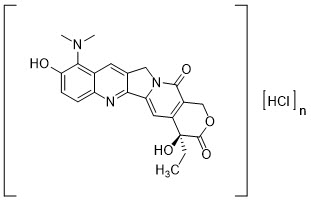
Topotecan is a semi-synthetic derivative of camptothecin and a topoisomerase inhibitor. The chemical name for topotecan hydrochloride is (S)-10-[(dimethylamino)methyl]-4-ethyl-4,9-dihydroxy-1H-pyrano[3',4':6,7]indolizino[1,2-b]quinoline-3,14-(4H,12H)-dione 1.25 hydrochloride. It has the molecular formula C23H23N3O5∙xHCl (x=1.25) and a molecular weight of 467.02. It is soluble in water and melts with decomposition at 213°C to 218°C.
Topotecan hydrochloride has the following structural formula:
Topotecan Injection for intravenous use is supplied as a sterile, non-pyrogenic, clear, yellow to yellow-green solution in single-dose vial at a topotecan free base concentration of 4 mg/4 mL (1 mg/mL).
Each mL contains 1 mg topotecan free base (equivalent to 1.11 mg of topotecan hydrochloride), 5 mg tartaric acid, NF and water for injection, USP. It may also contain hydrochloric acid and/or sodium hydroxide to adjust the pH. The solution pH ranges from 2.6 to 3.2.
8.4 Pediatric Use
Safety and effectiveness in pediatric patients have not been established.
8.5 Geriatric Use
Of the 879 patients with SCLC or another solid tumor who received topotecan in clinical trials, 32% were aged 65 years and older, while 3.8% were aged 75 years and older. No overall differences in effectiveness or safety were observed between these patients and younger patients and other reported clinical experience has not identified differences in responses between the elderly and younger patients.
4 Contraindications
Topotecan Injection is contraindicated in patients who have a history of severe hypersensitivity reactions to topotecan. Reactions have included anaphylactoid reactions [see Adverse Reactions (6.2)].
6 Adverse Reactions
The following serious adverse reactions are described elsewhere in the labeling:
- Myelosuppression [see Warnings and Precautions (5.1)]
- Interstitial Lung Disease [see Warnings and Precautions (5.2)]
- Extravasation and Tissue Injury [see Warnings and Precautions (5.3)]
5.1 Myelosuppression
Topotecan can cause severe myelosuppression.
Grade 4 neutropenia occurred in 78% of 879 patients, with a median duration of 7 days and was most common during Cycle 1 (58% of patients). Grade 4 neutropenia associated with infection occurred in 13% and febrile neutropenia occurred in 5%. Sepsis occurred in 4% and was fatal in 1%. Grade 4 thrombocytopenia occurred in 27%, with a median duration of 5 days. Grade 3 or 4 anemia occurred in 37% of patients.
Topotecan can cause fatal typhlitis (neutropenic enterocolitis). Consider the possibility of typhlitis in patients presenting with fever, neutropenia, and abdominal pain.
Administer the first cycle of Topotecan Injection only to patients with a baseline neutrophil count of greater than or equal to 1,500/mm3 and a platelet count greater than or equal to 100,000/mm3. Monitor blood counts frequently during treatment. Withhold and reduce dose of Topotecan Injection based on neutrophil counts, platelet counts and hemoglobin levels [see Dosage and Administration (2.3)].
8.6 Renal Impairment
Reduce the dose of Topotecan Injection for patients with a CLcr of 20 to 39 mL/min [see Dosage and Administration (2.4), Clinical Pharmacology (12.3)]. No dosage adjustment is recommended for patients with CLcr greater than or equal to 40 mL/min. Insufficient data are available in patients with CLcr less than 20 mL/min to provide a dosage recommendation for Topotecan Injection.
12.3 Pharmacokinetics
Following administration of topotecan at doses of 0.5 to 1.5 mg/m2 (0.3 to 1 times the recommended dose) administered as a 30-minute infusion, area under the curve (AUC) increases approximately proportional with dose.
1 Indications and Usage
Topotecan Injection is indicated for the treatment of patients with small cell lung cancer (SCLC) with platinum-sensitive disease who progressed at least 60 days after initiation of first-line chemotherapy.
12.1 Mechanism of Action
Topoisomerase I relieves torsional strain in DNA by inducing reversible single-strand breaks. Topotecan binds to the topoisomerase I-DNA complex and prevents re-ligation of these single-strand breaks. The cytotoxicity of topotecan is thought to be due to double-strand DNA damage produced during DNA synthesis, when replication enzymes interact with the ternary complex formed by topotecan, topoisomerase I, and DNA. Mammalian cells cannot efficiently repair these double-strand breaks.
5.4 Embryo Fetal Toxicity
Based on animal data, topotecan can cause fetal harm when administered to a pregnant woman. Topotecan caused embryolethality, fetotoxicity, and teratogenicity in rats and rabbits when administered during organogenesis. Advise women of the potential risk to a fetus. Advise females of reproductive potential to use effective contraception during treatment and for 6 months after the last dose of Topotecan Injection. Advise males with a female partner of reproductive potential to use effective contraception during treatment with Topotecan Injection and for 3 months after the last dose [see Use in Specific Populations (8.1, 8.3), Nonclinical Toxicology (13.1)].
Warning: Myelosuppression
Topotecan can cause severe myelosuppression. Administer first cycle only to patients with baseline neutrophil counts of greater than or equal to 1,500/mm3and platelet counts greater than or equal to 100,000/mm3. Monitor blood cell counts [see Warnings and Precautions (5.1)].
5 Warnings and Precautions
- Interstitial lung disease (ILD): Fatal cases have occurred. Permanently discontinue if ILD confirmed. (5.2)
- Extravasation and tissue injury: Severe cases have occurred. If extravasation occurs, immediately stop administration and institute recommended management procedures. (5.3)
- Embryo-fetal toxicity: Can cause fetal harm. Advise women of potential risk to the fetus. (5.4, 8.1, 8.3)
14.1 Small Cell Lung Cancer
The efficacy of topotecan was studied in 426 patients with recurrent or progressive SCLC in a randomized, comparative trial and in 3 single-arm trials.
2 Dosage and Administration
3 Dosage Forms and Strengths
Injection: 4 mg/4 mL (1 mg/mL topotecan free base) clear, yellow to yellow-green solution in single-dose vial.
6.2 Postmarketing Experience
The following reactions have been identified during postapproval use of topotecan. Because these reactions are reported voluntarily from a population of unknown size, it is not always possible to reliably estimate their frequency or establish a causal relationship to drug exposure.
5.2 Interstitial Lung Disease
Interstitial lung disease (ILD), including fatalities, has occurred with topotecan [see Adverse Reactions (6.2)]. Underlying risk factors include history of ILD, pulmonary fibrosis, lung cancer, thoracic radiation, and use of pneumotoxic drugs and/or colony stimulating factors. Monitor patients for pulmonary symptoms indicative of ILD (e.g., cough, fever, dyspnea, and/or hypoxia), and discontinue Topotecan Injection if a new diagnosis of ILD is confirmed.
8 Use in Specific Populations
Lactation: Advise not to breastfeed. (8.2)
6.1 Clinical Trials Experience
Because clinical trials are conducted under widely varying conditions, adverse reaction rates observed in the clinical trials of a drug cannot be directly compared with rates in the clinical trials of another drug and may not reflect the rates observed in practice.
The data in Warnings and Precautions reflect exposure to topotecan from 8 trials in which 879 patients with small cell lung cancer (SCLC) and other solid tumors received topotecan 1.5 mg/m2 by intravenous infusion daily for 5 consecutive days, starting on Day 1 of a 21-day cycle.
2.1 Important Safety Information
Verify dosage using body surface area. Do not exceed a single dose of 4 mg intravenously.
2.5 Preparation and Administration
Topotecan Injection is a cytotoxic drug. Follow applicable special handling and disposable procedures.1
Withdraw the appropriate volume from the vial and discard any unused portion.
Dilute Topotecan Injection in a minimum of 50 mL of 0.9% Sodium Chloride Injection, USP or 5% Dextrose Injection, USP prior to administration. Infuse diluted Topotecan Injection over 30 minutes.
Store diluted Topotecan Injection at 20°C and 25°C (68°F and 77°F) in ambient lighting conditions for no more than 24 hours. Discard unused portion after 24 hours.
Visually inspect for particulate matter and discoloration prior to administration, whenever solution and container permit. Discard if particulate matter or discoloration is observed.
5.3 Extravasation and Tissue Injury
Extravasation with topotecan has been observed; severe cases have been reported. If signs or symptoms of extravasation occur, immediately stop administration of Topotecan Injection and institute recommended management procedures [see Adverse Reactions (6.2)].
16 How Supplied/storage and Handling
Topotecan Injection is supplied in 4 mg/4 mL (1 mg/mL topotecan free base) single-dose vials. Each vial contains 4 mL of the sterile, clear, yellow to yellow-green solution.
NDC 0409-0302-01 (Package of 1 single-dose vial)
2.4 Dosage Modification for Renal Impairment
Reduce the dose of Topotecan Injection to 0.75 mg/m2/day for patients with creatinine clearance (CLcr) of 20 to 39 mL/min (calculated with the Cockcroft-Gault method using ideal body weight) [see Clinical Pharmacology (12.3)].
Principal Display Panel 4 Mg/4 Ml Vial Label
Topotecan Injection
4 mg/4 mL
(1 mg/mL)
Must Dilute Before
Intravenous Infusion
Caution: Cytotoxic agent
Principal Display Panel 4 Mg/4 Ml Vial Carton
Single-dose Vial
Discard Unused Portion
Hospira
NDC 0409-0302-01
Sterile
Rx only
Topotecan
Injection
4 mg/4 mL
(1 mg/mL)
Must Dilute Before
Intravenous Infusion
Caution: Cytotoxic Agent
2.2 Recommended Dosage for Small Cell Lung Cancer
The recommended dosage of Topotecan Injection is 1.5 mg/m2 by intravenous infusion over 30 minutes daily for 5 consecutive days, starting on Day 1 of a 21-day cycle.
13.1 Carcinogenesis, Mutagenesis, Impairment of Fertility
Carcinogenicity testing of topotecan has not been performed. Topotecan is known to be genotoxic to mammalian cells and is a probable carcinogen. Topotecan was mutagenic to L5178Y mouse lymphoma cells and clastogenic to cultured human lymphocytes with and without metabolic activation. It was also clastogenic to mouse bone marrow. Topotecan did not cause mutations in bacterial cells.
Topotecan given to female rats prior to mating at an intravenous dose of 1.4 mg/m2 (about equal to the 1.5 mg/m2 clinical dose based on BSA) caused superovulation possibly related to inhibition of follicular atresia. This dose given to pregnant female rats also caused increased pre-implantation loss. A one month study in dogs given a daily intravenous topotecan dose of 0.4 mg/m2 (about 0.25 times the 1.5 mg/m2 clinical dose based on BSA) suggests that treatment may cause an increase in the incidence of multinucleated spermatogonial giant cells in the testes.
Structured Label Content
Section 42229-5 (42229-5)
Hematologic
Do not administer subsequent cycles of Topotecan Injection until neutrophils recover to greater than 1,000/mm3, platelets recover to greater than 100,000/mm3, and hemoglobin levels recover to greater than or equal to 9 g/dL (with transfusion if necessary).
Reduce the dose of Topotecan Injection to 1.25 mg/m2/day for:
- neutrophil counts of less than 500/mm3 or administer granulocyte-colony stimulating factor (G-CSF) starting no sooner than 24 hours following the last dose
- platelet counts less than 25,000/mm3 during previous cycle
Section 44425-7 (44425-7)
Store refrigerated between 2°C and 8°C (36°F and 46°F) in the original carton to protect from light. Discard unused portion.
Topotecan Injection is a cytotoxic drug. Follow applicable handling and disposal procedures.1
10 Overdosage (10 OVERDOSAGE)
Overdoses (up to 10-fold of the recommended dose) have occurred in patients receiving intravenous topotecan. The primary complication of overdosage is myelosuppression. Elevated hepatic enzymes, mucositis, gastrointestinal toxicity and skin toxicity have occurred with overdosages. If an overdose is suspected, monitor the patient closely for myelosuppression and institute supportive-care measures as appropriate.
15 References (15 REFERENCES)
1. "OSHA Hazardous Drugs." OSHA. http://www.osha.gov/SLTC/hazardousdrugs/index.html.
11 Description (11 DESCRIPTION)
Topotecan is a semi-synthetic derivative of camptothecin and a topoisomerase inhibitor. The chemical name for topotecan hydrochloride is (S)-10-[(dimethylamino)methyl]-4-ethyl-4,9-dihydroxy-1H-pyrano[3',4':6,7]indolizino[1,2-b]quinoline-3,14-(4H,12H)-dione 1.25 hydrochloride. It has the molecular formula C23H23N3O5∙xHCl (x=1.25) and a molecular weight of 467.02. It is soluble in water and melts with decomposition at 213°C to 218°C.
Topotecan hydrochloride has the following structural formula:
Topotecan Injection for intravenous use is supplied as a sterile, non-pyrogenic, clear, yellow to yellow-green solution in single-dose vial at a topotecan free base concentration of 4 mg/4 mL (1 mg/mL).
Each mL contains 1 mg topotecan free base (equivalent to 1.11 mg of topotecan hydrochloride), 5 mg tartaric acid, NF and water for injection, USP. It may also contain hydrochloric acid and/or sodium hydroxide to adjust the pH. The solution pH ranges from 2.6 to 3.2.
8.4 Pediatric Use
Safety and effectiveness in pediatric patients have not been established.
8.5 Geriatric Use
Of the 879 patients with SCLC or another solid tumor who received topotecan in clinical trials, 32% were aged 65 years and older, while 3.8% were aged 75 years and older. No overall differences in effectiveness or safety were observed between these patients and younger patients and other reported clinical experience has not identified differences in responses between the elderly and younger patients.
4 Contraindications (4 CONTRAINDICATIONS)
Topotecan Injection is contraindicated in patients who have a history of severe hypersensitivity reactions to topotecan. Reactions have included anaphylactoid reactions [see Adverse Reactions (6.2)].
6 Adverse Reactions (6 ADVERSE REACTIONS)
The following serious adverse reactions are described elsewhere in the labeling:
- Myelosuppression [see Warnings and Precautions (5.1)]
- Interstitial Lung Disease [see Warnings and Precautions (5.2)]
- Extravasation and Tissue Injury [see Warnings and Precautions (5.3)]
5.1 Myelosuppression
Topotecan can cause severe myelosuppression.
Grade 4 neutropenia occurred in 78% of 879 patients, with a median duration of 7 days and was most common during Cycle 1 (58% of patients). Grade 4 neutropenia associated with infection occurred in 13% and febrile neutropenia occurred in 5%. Sepsis occurred in 4% and was fatal in 1%. Grade 4 thrombocytopenia occurred in 27%, with a median duration of 5 days. Grade 3 or 4 anemia occurred in 37% of patients.
Topotecan can cause fatal typhlitis (neutropenic enterocolitis). Consider the possibility of typhlitis in patients presenting with fever, neutropenia, and abdominal pain.
Administer the first cycle of Topotecan Injection only to patients with a baseline neutrophil count of greater than or equal to 1,500/mm3 and a platelet count greater than or equal to 100,000/mm3. Monitor blood counts frequently during treatment. Withhold and reduce dose of Topotecan Injection based on neutrophil counts, platelet counts and hemoglobin levels [see Dosage and Administration (2.3)].
8.6 Renal Impairment
Reduce the dose of Topotecan Injection for patients with a CLcr of 20 to 39 mL/min [see Dosage and Administration (2.4), Clinical Pharmacology (12.3)]. No dosage adjustment is recommended for patients with CLcr greater than or equal to 40 mL/min. Insufficient data are available in patients with CLcr less than 20 mL/min to provide a dosage recommendation for Topotecan Injection.
12.3 Pharmacokinetics
Following administration of topotecan at doses of 0.5 to 1.5 mg/m2 (0.3 to 1 times the recommended dose) administered as a 30-minute infusion, area under the curve (AUC) increases approximately proportional with dose.
1 Indications and Usage (1 INDICATIONS AND USAGE)
Topotecan Injection is indicated for the treatment of patients with small cell lung cancer (SCLC) with platinum-sensitive disease who progressed at least 60 days after initiation of first-line chemotherapy.
12.1 Mechanism of Action
Topoisomerase I relieves torsional strain in DNA by inducing reversible single-strand breaks. Topotecan binds to the topoisomerase I-DNA complex and prevents re-ligation of these single-strand breaks. The cytotoxicity of topotecan is thought to be due to double-strand DNA damage produced during DNA synthesis, when replication enzymes interact with the ternary complex formed by topotecan, topoisomerase I, and DNA. Mammalian cells cannot efficiently repair these double-strand breaks.
5.4 Embryo Fetal Toxicity (5.4 Embryo-Fetal Toxicity)
Based on animal data, topotecan can cause fetal harm when administered to a pregnant woman. Topotecan caused embryolethality, fetotoxicity, and teratogenicity in rats and rabbits when administered during organogenesis. Advise women of the potential risk to a fetus. Advise females of reproductive potential to use effective contraception during treatment and for 6 months after the last dose of Topotecan Injection. Advise males with a female partner of reproductive potential to use effective contraception during treatment with Topotecan Injection and for 3 months after the last dose [see Use in Specific Populations (8.1, 8.3), Nonclinical Toxicology (13.1)].
Warning: Myelosuppression (WARNING: MYELOSUPPRESSION)
Topotecan can cause severe myelosuppression. Administer first cycle only to patients with baseline neutrophil counts of greater than or equal to 1,500/mm3and platelet counts greater than or equal to 100,000/mm3. Monitor blood cell counts [see Warnings and Precautions (5.1)].
5 Warnings and Precautions (5 WARNINGS AND PRECAUTIONS)
- Interstitial lung disease (ILD): Fatal cases have occurred. Permanently discontinue if ILD confirmed. (5.2)
- Extravasation and tissue injury: Severe cases have occurred. If extravasation occurs, immediately stop administration and institute recommended management procedures. (5.3)
- Embryo-fetal toxicity: Can cause fetal harm. Advise women of potential risk to the fetus. (5.4, 8.1, 8.3)
14.1 Small Cell Lung Cancer
The efficacy of topotecan was studied in 426 patients with recurrent or progressive SCLC in a randomized, comparative trial and in 3 single-arm trials.
2 Dosage and Administration (2 DOSAGE AND ADMINISTRATION)
3 Dosage Forms and Strengths (3 DOSAGE FORMS AND STRENGTHS)
Injection: 4 mg/4 mL (1 mg/mL topotecan free base) clear, yellow to yellow-green solution in single-dose vial.
6.2 Postmarketing Experience
The following reactions have been identified during postapproval use of topotecan. Because these reactions are reported voluntarily from a population of unknown size, it is not always possible to reliably estimate their frequency or establish a causal relationship to drug exposure.
5.2 Interstitial Lung Disease
Interstitial lung disease (ILD), including fatalities, has occurred with topotecan [see Adverse Reactions (6.2)]. Underlying risk factors include history of ILD, pulmonary fibrosis, lung cancer, thoracic radiation, and use of pneumotoxic drugs and/or colony stimulating factors. Monitor patients for pulmonary symptoms indicative of ILD (e.g., cough, fever, dyspnea, and/or hypoxia), and discontinue Topotecan Injection if a new diagnosis of ILD is confirmed.
8 Use in Specific Populations (8 USE IN SPECIFIC POPULATIONS)
Lactation: Advise not to breastfeed. (8.2)
6.1 Clinical Trials Experience
Because clinical trials are conducted under widely varying conditions, adverse reaction rates observed in the clinical trials of a drug cannot be directly compared with rates in the clinical trials of another drug and may not reflect the rates observed in practice.
The data in Warnings and Precautions reflect exposure to topotecan from 8 trials in which 879 patients with small cell lung cancer (SCLC) and other solid tumors received topotecan 1.5 mg/m2 by intravenous infusion daily for 5 consecutive days, starting on Day 1 of a 21-day cycle.
2.1 Important Safety Information
Verify dosage using body surface area. Do not exceed a single dose of 4 mg intravenously.
2.5 Preparation and Administration
Topotecan Injection is a cytotoxic drug. Follow applicable special handling and disposable procedures.1
Withdraw the appropriate volume from the vial and discard any unused portion.
Dilute Topotecan Injection in a minimum of 50 mL of 0.9% Sodium Chloride Injection, USP or 5% Dextrose Injection, USP prior to administration. Infuse diluted Topotecan Injection over 30 minutes.
Store diluted Topotecan Injection at 20°C and 25°C (68°F and 77°F) in ambient lighting conditions for no more than 24 hours. Discard unused portion after 24 hours.
Visually inspect for particulate matter and discoloration prior to administration, whenever solution and container permit. Discard if particulate matter or discoloration is observed.
5.3 Extravasation and Tissue Injury
Extravasation with topotecan has been observed; severe cases have been reported. If signs or symptoms of extravasation occur, immediately stop administration of Topotecan Injection and institute recommended management procedures [see Adverse Reactions (6.2)].
16 How Supplied/storage and Handling (16 HOW SUPPLIED/STORAGE AND HANDLING)
Topotecan Injection is supplied in 4 mg/4 mL (1 mg/mL topotecan free base) single-dose vials. Each vial contains 4 mL of the sterile, clear, yellow to yellow-green solution.
NDC 0409-0302-01 (Package of 1 single-dose vial)
2.4 Dosage Modification for Renal Impairment
Reduce the dose of Topotecan Injection to 0.75 mg/m2/day for patients with creatinine clearance (CLcr) of 20 to 39 mL/min (calculated with the Cockcroft-Gault method using ideal body weight) [see Clinical Pharmacology (12.3)].
Principal Display Panel 4 Mg/4 Ml Vial Label (PRINCIPAL DISPLAY PANEL - 4 mg/4 mL Vial Label)
Topotecan Injection
4 mg/4 mL
(1 mg/mL)
Must Dilute Before
Intravenous Infusion
Caution: Cytotoxic agent
Principal Display Panel 4 Mg/4 Ml Vial Carton (PRINCIPAL DISPLAY PANEL - 4 mg/4 mL Vial Carton)
Single-dose Vial
Discard Unused Portion
Hospira
NDC 0409-0302-01
Sterile
Rx only
Topotecan
Injection
4 mg/4 mL
(1 mg/mL)
Must Dilute Before
Intravenous Infusion
Caution: Cytotoxic Agent
2.2 Recommended Dosage for Small Cell Lung Cancer
The recommended dosage of Topotecan Injection is 1.5 mg/m2 by intravenous infusion over 30 minutes daily for 5 consecutive days, starting on Day 1 of a 21-day cycle.
13.1 Carcinogenesis, Mutagenesis, Impairment of Fertility
Carcinogenicity testing of topotecan has not been performed. Topotecan is known to be genotoxic to mammalian cells and is a probable carcinogen. Topotecan was mutagenic to L5178Y mouse lymphoma cells and clastogenic to cultured human lymphocytes with and without metabolic activation. It was also clastogenic to mouse bone marrow. Topotecan did not cause mutations in bacterial cells.
Topotecan given to female rats prior to mating at an intravenous dose of 1.4 mg/m2 (about equal to the 1.5 mg/m2 clinical dose based on BSA) caused superovulation possibly related to inhibition of follicular atresia. This dose given to pregnant female rats also caused increased pre-implantation loss. A one month study in dogs given a daily intravenous topotecan dose of 0.4 mg/m2 (about 0.25 times the 1.5 mg/m2 clinical dose based on BSA) suggests that treatment may cause an increase in the incidence of multinucleated spermatogonial giant cells in the testes.
Advanced Ingredient Data
Raw Label Data
All Sections (JSON)
Additional Information
Back to search View SPL set listing Open on DailyMed ↗
Source: dailymed · Ingested: 2026-02-15T11:35:52.275460 · Updated: 2026-03-14T21:44:32.860131