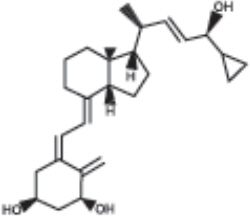
Calcipotriene And Betamethasone Dipropionate Topical Suspension
1d0ab2e6-1ab1-4d3e-ad55-7fa26446f191
34391-3
HUMAN PRESCRIPTION DRUG LABEL
Drug Facts
Composition & Product
Identifiers & Packaging
Indications and Usage
Calcipotriene and Betamethasone Dipropionate Topical Suspension is indicated for the topical treatment of plaque psoriasis of the scalp in patients 12 years and older and plaque psoriasis of the scalp and body in patients 18 years and older. Additional pediatric use information is approved for LEO Pharma A/S's Taclonex ® (calcipotriene and betamethasone dipropionate) Topical Suspension. However, due to LEO Pharma A/S's marketing exclusivity rights, this drug product is not labeled with that information.
Dosage and Administration
Instruct patients to shake bottle prior to using calcipotriene and betamethasone dipropionate topical suspension. Apply calcipotriene and betamethasone dipropionate topical suspension to affected areas on the scalp and body once daily for up to 8 weeks. Calcipotriene and betamethasone dipropionate topical suspension should be discontinued when control is achieved. Instruct patients to wash their hands after applying the product. Inform patients that they should not take a bath or shower or wash their hair right after application of calcipotriene and betamethasone dipropionate topical suspension. Patients 12 to 17 years should not use more than 60 grams per week and patients 18 years and older should not use more than 100 grams per week. Calcipotriene and Betamethasone Dipropionate Topical Suspension should not be: Used with occlusive dressings unless directed by a healthcare provider. Used on the face, groin, or axillae, or if skin atrophy is present at the treatment site. Applied to the scalp in the 12 hours before or after any chemical treatments to the hair. Calcipotriene and Betamethasone Dipropionate Topical Suspension is not for oral, ophthalmic, or intravaginal use.
Contraindications
None.
Warnings and Precautions
Hypercalcemia and Hypercalciuria: Hypercalcemia and hypercalciuria have been reported. If either occurs, discontinue until parameters of calcium metabolism normalize. ( 5.1 ) Effects on Endocrine System: Can cause reversible hypothalamic-pituitary-adrenal (HPA) axis suppression with the potential for glucocorticosteroid insufficiency during and after withdrawal of treatment. Risk factors include the use of high-potency topical corticosteroid, use over a large surface area or to areas under occlusion, prolonged use, altered skin barrier, liver failure, and use in pediatric patients. Modify use should HPA axis suppression develop. ( 5.2 , 8.4 ) Ophthalmic Adverse Reactions: May increase the risk of cataracts and glaucoma. If visual symptoms occur, consider referral to an ophthalmologist. ( 5.5 )
Adverse Reactions
The most common adverse reactions (≥1%) are folliculitis and burning sensation of skin ( 6.1 ) To report SUSPECTED ADVERSE REACTIONS, contact Taro Pharmaceuticals U.S.A., Inc. at 1-866-923-4914 or FDA at 1-800-FDA-1088 or www.fda.gov/medwatch. Additional pediatric use information is approved for LEO Pharma A/S's Taclonex ® (calcipotriene and betamethasone dipropionate) Topical Suspension. However, due to LEO Pharma A/S's marketing exclusivity rights, this drug product is not labeled with that information.
How Supplied
Calcipotriene and Betamethasone Dipropionate Topical Suspension, 0.005%/0.064% is a viscous, nearly odorless, almost clear, colorless to slightly off-white suspension. It is available as: 60 gram bottle (NDC 51672-1402-4) 120 gram (2 bottles of 60 g) (NDC 51672-1402-8)
Description
Warnings and Precautions, Ophthalmic Adverse Reactions ( 5.5 ) 7/2019
Medication Information
Warnings and Precautions
Hypercalcemia and Hypercalciuria: Hypercalcemia and hypercalciuria have been reported. If either occurs, discontinue until parameters of calcium metabolism normalize. ( 5.1 ) Effects on Endocrine System: Can cause reversible hypothalamic-pituitary-adrenal (HPA) axis suppression with the potential for glucocorticosteroid insufficiency during and after withdrawal of treatment. Risk factors include the use of high-potency topical corticosteroid, use over a large surface area or to areas under occlusion, prolonged use, altered skin barrier, liver failure, and use in pediatric patients. Modify use should HPA axis suppression develop. ( 5.2 , 8.4 ) Ophthalmic Adverse Reactions: May increase the risk of cataracts and glaucoma. If visual symptoms occur, consider referral to an ophthalmologist. ( 5.5 )
Indications and Usage
Calcipotriene and Betamethasone Dipropionate Topical Suspension is indicated for the topical treatment of plaque psoriasis of the scalp in patients 12 years and older and plaque psoriasis of the scalp and body in patients 18 years and older. Additional pediatric use information is approved for LEO Pharma A/S's Taclonex ® (calcipotriene and betamethasone dipropionate) Topical Suspension. However, due to LEO Pharma A/S's marketing exclusivity rights, this drug product is not labeled with that information.
Dosage and Administration
Instruct patients to shake bottle prior to using calcipotriene and betamethasone dipropionate topical suspension. Apply calcipotriene and betamethasone dipropionate topical suspension to affected areas on the scalp and body once daily for up to 8 weeks. Calcipotriene and betamethasone dipropionate topical suspension should be discontinued when control is achieved. Instruct patients to wash their hands after applying the product. Inform patients that they should not take a bath or shower or wash their hair right after application of calcipotriene and betamethasone dipropionate topical suspension. Patients 12 to 17 years should not use more than 60 grams per week and patients 18 years and older should not use more than 100 grams per week. Calcipotriene and Betamethasone Dipropionate Topical Suspension should not be: Used with occlusive dressings unless directed by a healthcare provider. Used on the face, groin, or axillae, or if skin atrophy is present at the treatment site. Applied to the scalp in the 12 hours before or after any chemical treatments to the hair. Calcipotriene and Betamethasone Dipropionate Topical Suspension is not for oral, ophthalmic, or intravaginal use.
Contraindications
None.
Adverse Reactions
The most common adverse reactions (≥1%) are folliculitis and burning sensation of skin ( 6.1 ) To report SUSPECTED ADVERSE REACTIONS, contact Taro Pharmaceuticals U.S.A., Inc. at 1-866-923-4914 or FDA at 1-800-FDA-1088 or www.fda.gov/medwatch. Additional pediatric use information is approved for LEO Pharma A/S's Taclonex ® (calcipotriene and betamethasone dipropionate) Topical Suspension. However, due to LEO Pharma A/S's marketing exclusivity rights, this drug product is not labeled with that information.
How Supplied
Calcipotriene and Betamethasone Dipropionate Topical Suspension, 0.005%/0.064% is a viscous, nearly odorless, almost clear, colorless to slightly off-white suspension. It is available as: 60 gram bottle (NDC 51672-1402-4) 120 gram (2 bottles of 60 g) (NDC 51672-1402-8)
Description
Warnings and Precautions, Ophthalmic Adverse Reactions ( 5.5 ) 7/2019
Section 42229-5
Hypothalamic-Pituitary-Adrenal Axis Suppression
Calcipotriene and betamethasone dipropionate topical suspension can cause reversible hypothalamic-pituitary-adrenal (HPA) axis suppression with the potential for clinical glucocorticosteroid insufficiency. This may occur during treatment or upon withdrawal of treatment. Factors that predispose a patient to HPA axis suppression include the use of high-potency steroids, large treatment surface areas, prolonged use, use of occlusive dressings, altered skin barrier, liver failure, and young age.
Evaluation for HPA axis suppression may be done by using the adrenocorticotropic hormone (ACTH) stimulation test. If HPA axis suppression is documented, gradually withdraw calcipotriene and betamethasone dipropionate topical suspension, reduce the frequency of application, or substitute with a less potent corticosteroid.
The following trials evaluated the effects of calcipotriene and betamethasone dipropionate topical suspension on HPA axis suppression:
- In a trial evaluating the effects of calcipotriene and betamethasone dipropionate topical suspension and calcipotriene and betamethasone dipropionate ointment on the HPA axis, 32 adult subjects applied both calcipotriene and betamethasone dipropionate topical suspension on the scalp and calcipotriene and betamethasone dipropionate ointment on the body. Adrenal suppression was identified in 5 of 32 subjects (16%) after 4 weeks of treatment and in 2 of 11 subjects (18%) who continued treatment for 8 weeks. In another trial, 36 adult subjects applied calcipotriene and betamethasone dipropionate topical suspension on the body and scalp and 7 subjects applied calcipotriene and betamethasone dipropionate topical suspension on the body. Adrenal suppression occurred in 3 out of 43 subjects (7%) after 4 weeks of treatment and in none of the 36 subjects who continued treatment for 8 weeks [see Clinical Pharmacology (12.2)].
- In two trials, the effects of calcipotriene and betamethasone dipropionate topical suspension on the HPA axis were evaluated in 31 and 30 pediatric subjects aged 12 to 17 years old who applied calcipotriene and betamethasone dipropionate topical suspension on the scalp and the scalp/body, respectively. Adrenal suppression occurred in 1 of 30 evaluable subjects (3%) after 4 weeks of treatment (scalp) and 5 of 31 evaluable subjects (16%) after up to 8 weeks of treatment (scalp and body) [see Use in Specific Populations (8.4)and Clinical Pharmacology (12.2)].
Section 42230-3
| PATIENT INFORMATION
Calcipotriene and Betamethasone Dipropionate (kal si poe trye´ een and bay" ta meth´ a sone dye proe´ pee oh nate) Topical Suspension |
||
|---|---|---|
| This Patient Information has been approved by the U.S. Food and Drug Administration.
Issued: March, 2020 PK-9018-0 0320-0 39 |
||
| Important:Calcipotriene and betamethasone dipropionate topical suspension is for use on skin only (topical). Do not get calcipotriene and betamethasone dipropionate topical suspension near or in your mouth, eyes, or vagina. | ||
| There are other medicines that contain the same medicine that is in calcipotriene and betamethasone dipropionate topical suspension and are used to treat plaque psoriasis. Do not use other products containing calcipotriene or a corticosteroid medicine with calcipotriene and betamethasone dipropionate topical suspension without talking to your healthcare provider first. | ||
| What is Calcipotriene and Betamethasone Dipropionate Topical Suspension? | ||
| Calcipotriene and betamethasone dipropionate topical suspension is a prescription medicine used on the skin (topical) to treat plaque psoriasis of the scalp in people 12 years and older and plaque psoriasis of the scalp and body in people 18 years and older. | ||
| It is not known if calcipotriene and betamethasone dipropionate topical suspension is safe and effective in children under 12 years of age. | ||
| Before you use Calcipotriene and Betamethasone Dipropionate Topical Suspension, tell your healthcare provider about all of your medical conditions, including if you: | ||
|
||
| Tell your healthcare provider about all the medicines you take,including prescription and over-the-counter medicines, vitamins, and herbal supplements. | ||
| How should I use Calcipotriene and Betamethasone Dipropionate Topical Suspension? | ||
| See the " Instructions for Use" for detailed information about the right way to use Calcipotriene and Betamethasone Dipropionate Topical Suspension. | ||
|
||
| What are the possible side effects of Calcipotriene and Betamethasone Dipropionate Topical Suspension? | ||
| Calcipotriene and Betamethasone Dipropionate Topical Suspension may cause serious side effects, including: | ||
|
||
|
|
|
|
||
| The most common side effects of Calcipotriene and Betamethasone Dipropionate Topical Suspensioninclude inflamed hair pores (folliculitis) and skin burning. | ||
| Call your doctor for medical advice about side effects. You may report side effects to FDA at 1800-FDA-1088. | ||
| How should I store Calcipotriene and Betamethasone Dipropionate Topical Suspension? | ||
|
||
| Keep Calcipotriene and Betamethasone Dipropionate Topical Suspension and all medicines out of reach of children. | ||
| General information about Calcipotriene and Betamethasone Dipropionate Topical Suspension. | ||
| Medicines are sometimes prescribed for purposes other than those listed in a Patient Information leaflet. Do not use calcipotriene and betamethasone dipropionate topical suspension for a condition for which it was not prescribed. Do not give calcipotriene and betamethasone dipropionate topical suspension to other people, even if they have the same symptoms you have. It may harm them. You can ask your pharmacist or healthcare provider for information about calcipotriene and betamethasone dipropionate topical suspension that is written for health professionals. | ||
| What are the ingredients in calcipotriene and betamethasone dipropionate topical suspension? | ||
| Active ingredients:calcipotriene hydrate and betamethasone dipropionate. | ||
| Inactive ingredients:all- rac-alpha-tocopherol, butylhydroxytoluene, hydrogenated castor oil, mineral oil, and polyoxypropylene stearyl ether | ||
| Additional pediatric use information is approved for LEO Pharma A/S's Taclonex ®(calcipotriene and betamethasone dipropionate) Topical Suspension. However, due to LEO Pharma A/S's marketing exclusivity rights, this drug product is not labeled with that information. | ||
| Mfd. by: Taro Pharmaceuticals Inc., Brampton, Ontario, Canada L6T 1C1 | ||
| Dist. by: Taro Pharmaceuticals U.S.A., Inc.,Hawthorne, NY 10532 | ||
| For more information, go to www.taro.com or call 1-866-923-4914 |
Section 43683-2
| Warnings and Precautions, Ophthalmic Adverse Reactions ( 5.5) | 7/2019 |
Section 44425-7
Store at 20° to 25°C (68° to 77°F)[See USP Controlled Room Temperature]. Do not refrigerate.
Keep the bottle in the carton when not in use. Unused product should be discarded six months after the bottle has been opened.
Shake before use. Keep out of reach of children
Section 59845-8
|
Keep calcipotriene and betamethasone dipropionate topical suspension and all medicines out of the reach of children.
This Instructions for Use has been approved by the U.S. Food and Drug Administration. Mfd. by: Taro Pharmaceuticals Inc., Brampton, Ontario, Canada L6T 1C1 Dist. by: Taro Pharmaceuticals U.S.A., Inc.,Hawthorne, NY 10532 Issued: March, 2020 PK-9018-0 0320-0 39 |
||||
|
Instructions for Use
Calcipotriene and Betamethasone Dipropionate (kal si poe trye ´ een and bay" ta meth´ a sone dye proe´ pee oh nate) Topical Suspension |
||||
| Important:Calcipotriene and betamethasone dipropionate topical suspension is for use on skin only (topical). Do not get calcipotriene and betamethasone dipropionate topical suspension near or in your mouth, eyes, or vagina. | ||||
| Read this Instructions for Use before you start using calcipotriene and betamethasone dipropionate topical suspensionand each time you get a refill. There may be new information. This information does not take the place of talking with your healthcare provider about your medical condition or treatment. | ||||
| How to apply calcipotriene and betamethasone dipropionate topical suspension to your body: | ||||
| Follow your healthcare provider's instructions of how much calcipotriene and betamethasone dipropionate topical suspension to use and where to use it. Apply calcipotriene and betamethasone dipropionate topical suspension directly to areas affected by plaque psoriasis and gently rub in. Wash your hands after applying calcipotriene and betamethasone dipropionate topical suspension, unless you are treating areas on your hands. | ||||
| How to apply calcipotriene and betamethasone dipropionate topical suspension to your scalp: | ||||
| You do not need to wash your hair before you apply calcipotriene and betamethasone dipropionate topical suspension. | ||||
| Step 1:Shake the bottle before use. Remove the cap from the bottle. (See Figure A). | ||||
| Step 2:Locate the area to treat using your fingers and part your hair. (See Figure B). | ||||
| Step 3:Squeeze a drop of calcipotriene and betamethasone dipropionate topical suspension to your fingertip. (See Figure C). | ||||
| Step 4:Use your fingers to apply the drop of calcipotriene and betamethasone dipropionate topical suspension directly to scalp affected by plaque psoriasis. Gently rub in. (See Figure D). | ||||
| Step 5:After applying calcipotriene and betamethasone dipropionate topical suspension, put the cap back on the bottle. | ||||
| Step 6:Wash your hands after applying calcipotriene and betamethasone dipropionate topical suspension. Do not wash your hair right after you apply calcipotriene and betamethasone dipropionate topical suspension to your scalp. | ||||
| How should I store calcipotriene and betamethasone dipropionate topical suspension? | ||||
|
11 Description
Calcipotriene and betamethasone dipropionate topical suspension contains calcipotriene hydrate and betamethasone dipropionate. It is for topical use only. Calcipotriene hydrate is a synthetic vitamin D 3analog.
16.1 How Supplied
Calcipotriene and Betamethasone Dipropionate Topical Suspension, 0.005%/0.064% is a viscous, nearly odorless, almost clear, colorless to slightly off-white suspension. It is available as:
| 60 gram bottle | (NDC 51672-1402-4) |
| 120 gram (2 bottles of 60 g) | (NDC 51672-1402-8) |
8.4 Pediatric Use
The safety and effectiveness of calcipotriene and betamethasone dipropionate topical suspension for the treatment of plaque psoriasis of the scalp have been established in pediatric patients age 12 to 17 years. The use of calcipotriene and betamethasone dipropionate topical suspension for this indication is supported by evidence from adequate and well-controlled trials in adults and from uncontrolled trials in pediatric subjects that enrolled 109 adolescents with moderate psoriasis of the scalp. After 4 weeks of once daily treatment with calcipotriene and betamethasone dipropionate topical suspension, HPA axis suppression was observed in 3% of adolescents with psoriasis of the scalp and 16% of adolescents with psoriasis of the scalp and body [see Warnings and Precautions (5.2), Adverse Reactions (6.1), and Clinical Pharmacology (12.2)].
Because of a higher ratio of skin surface area to body mass, pediatric patients are at a greater risk than adults of systemic toxicity when treated with topical corticosteroids. Pediatric patients are, therefore, also at greater risk of HPA axis suppression and adrenal insufficiency with the use of topical corticosteroids including calcipotriene and betamethasone dipropionate topical suspension [see Clinical Pharmacology (12.2)].
Rare systemic toxicities such as Cushing's syndrome, linear growth retardation, delayed weight gain, and intracranial hypertension have been reported in pediatric patients, especially those with prolonged exposure to large doses of high potency topical corticosteroids. Local adverse reactions including striae have also been reported with use of topical corticosteroids in pediatric patients.
The safety and effectiveness of calcipotriene and betamethasone dipropionate topical suspension in pediatric patients less than 12 years of age have not been established.
Additional pediatric use information is approved for LEO Pharma A/S's Taclonex ®(calcipotriene and betamethasone dipropionate) Topical Suspension. However, due to LEO Pharma A/S's marketing exclusivity rights, this drug product is not labeled with that information.
8.5 Geriatric Use
Clinical studies of calcipotriene and betamethasone dipropionate topical suspension in plaque psoriasis on non-scalp areas included 124 subjects who were 65 years of age or older, and 36 were 75 years of age or older. Clinical studies of calcipotriene and betamethasone dipropionate topical suspension in subjects with psoriasis of the scalp included 334 subjects who were 65 years or older and 84 subjects who were 75 years or older.
No overall differences in safety or effectiveness of calcipotriene and betamethasone dipropionate topical suspension were observed between these subjects and younger subjects, and other reported clinical experience has not identified any differences in responses between the elderly and younger subjects, but greater sensitivity of some older individuals cannot be ruled out.
4 Contraindications
None.
6 Adverse Reactions
The most common adverse reactions (≥1%) are folliculitis and burning sensation of skin ( 6.1)
To report SUSPECTED ADVERSE REACTIONS, contact Taro Pharmaceuticals U.S.A., Inc. at 1-866-923-4914 or FDA at 1-800-FDA-1088 or www.fda.gov/medwatch.
Additional pediatric use information is approved for LEO Pharma A/S's Taclonex ®(calcipotriene and betamethasone dipropionate) Topical Suspension. However, due to LEO Pharma A/S's marketing exclusivity rights, this drug product is not labeled with that information.
1 Indications and Usage
Calcipotriene and Betamethasone Dipropionate Topical Suspension is indicated for the topical treatment of plaque psoriasis of the scalp in patients 12 years and older and plaque psoriasis of the scalp and body in patients 18 years and older.
Additional pediatric use information is approved for LEO Pharma A/S's Taclonex ®(calcipotriene and betamethasone dipropionate) Topical Suspension. However, due to LEO Pharma A/S's marketing exclusivity rights, this drug product is not labeled with that information.
12.1 Mechanism of Action
Calcipotriene and betamethasone dipropionate topical suspension combines the pharmacological effects of calcipotriene hydrate as a synthetic vitamin D 3analog and betamethasone dipropionate as a synthetic corticosteroid. However, while their pharmacologic and clinical effects are known, the exact mechanisms of their actions in the treatment of plaque psoriasis of the scalp and body are unknown.
5 Warnings and Precautions
- Hypercalcemia and Hypercalciuria:Hypercalcemia and hypercalciuria have been reported. If either occurs, discontinue until parameters of calcium metabolism normalize. ( 5.1)
- Effects on Endocrine System:Can cause reversible hypothalamic-pituitary-adrenal (HPA) axis suppression with the potential for glucocorticosteroid insufficiency during and after withdrawal of treatment. Risk factors include the use of high-potency topical corticosteroid, use over a large surface area or to areas under occlusion, prolonged use, altered skin barrier, liver failure, and use in pediatric patients. Modify use should HPA axis suppression develop. ( 5.2, 8.4)
- Ophthalmic Adverse Reactions:May increase the risk of cataracts and glaucoma. If visual symptoms occur, consider referral to an ophthalmologist. ( 5.5)
2 Dosage and Administration
Instruct patients to shake bottle prior to using calcipotriene and betamethasone dipropionate topical suspension. Apply calcipotriene and betamethasone dipropionate topical suspension to affected areas on the scalp and body once daily for up to 8 weeks. Calcipotriene and betamethasone dipropionate topical suspension should be discontinued when control is achieved. Instruct patients to wash their hands after applying the product. Inform patients that they should not take a bath or shower or wash their hair right after application of calcipotriene and betamethasone dipropionate topical suspension.
Patients 12 to 17 years should not use more than 60 grams per week and patients 18 years and older should not use more than 100 grams per week.
Calcipotriene and Betamethasone Dipropionate Topical Suspension should not be:
- Used with occlusive dressings unless directed by a healthcare provider.
- Used on the face, groin, or axillae, or if skin atrophy is present at the treatment site.
- Applied to the scalp in the 12 hours before or after any chemical treatments to the hair.
Calcipotriene and Betamethasone Dipropionate Topical Suspension is not for oral, ophthalmic, or intravaginal use.
3 Dosage Forms and Strengths
Topical Suspension: 0.005%/0.064% - each gram contains 50 mcg of calcipotriene and 0.643 mg of betamethasone dipropionate in a viscous, nearly odorless, almost clear, colorless to slightly off-white suspension.
6.2 Postmarketing Experience
Because adverse reactions are reported voluntarily from a population of uncertain size, it is not always possible to reliably estimate their frequency or establish a causal relationship to drug exposure.
Postmarketing reports for local adverse reactions to topical corticosteroids included atrophy, striae, telangiectasias, itching, dryness, hypopigmentation, perioral dermatitis, secondary infection, and miliaria.
Ophthalmic adverse reactions of cataracts, glaucoma, increased intraocular pressure, and central serous chorioretinopathy have been reported during use of topical corticosteroids, including topical betamethasone products.
6.1 Clinical Trials Experience
Because clinical trials are conducted under widely varying conditions, adverse reaction rates observed in the clinical trials of a drug cannot be directly compared to rates in the clinical trials of another drug and may not reflect the rates observed in practice.
5.5 Ophthalmic Adverse Reactions
Use of topical corticosteroids, including calcipotriene and betamethasone dipropionate topical suspension, may increase the risk of posterior subcapsular cataracts and glaucoma. Cataracts and glaucoma have been reported with the postmarketing use of topical corticosteroid products [see Adverse Reactions (6.2)]. Avoid contact of calcipotriene and betamethasone dipropionate topical suspension with eyes. Calcipotriene and betamethasone dipropionate topical suspension may cause eye irritation. Advise patients to report any visual symptoms and consider referral to an ophthalmologist for evaluation.
17 Patient Counseling Information
See FDA-approved patient labeling ( Patient Informationand Instructions for Use).
5.1 Hypercalcemia and Hypercalciuria
Hypercalcemia and hypercalciuria have been observed with use of calcipotriene and betamethasone dipropionate topical suspension. If hypercalcemia or hypercalciuria develop, discontinue treatment until parameters of calcium metabolism have normalized. The incidence of hypercalcemia and hypercalciuria following calcipotriene and betamethasone dipropionate topical suspension treatment of more than 8 weeks has not been evaluated [see Clinical Pharmacology (12.2)].
Principal Display Panel 60 G Bottle Carton
Net Wt. 60 g
NDC 51672-1402-4
Calcipotriene and
Betamethasone
Dipropionate
Topical Suspension
0.005%/0.064%
Shake before use
FOR TOPICAL USE ONLY
Keep this and all
medications out of the
reach of children.
Rx only
TARO
13.1 Carcinogenesis, Mutagenesis, Impairment of Fertility
When calcipotriene was applied topically to mice for up to 24 months at dosages of 3, 10, and 30 mcg/kg/day (9, 30, and 90 mcg/m 2/day, respectively), no significant changes in tumor incidence were observed when compared to control.
A 104-week oral carcinogenicity study was conducted with calcipotriene in male and female rats at doses of 1, 5 and 15 mcg/kg/day (6, 30, and 90 mcg/m 2/day, respectively). Beginning week 71, the dosage for high-dose animals of both genders was reduced to 10 mcg/kg/day (60 mcg/m 2/day). A treatment-related increase in benign C-cell adenomas was observed in the thyroid of females that received 15 mcg/kg/day. A treatment-related increase in benign pheochromocytomas was observed in the adrenal glands of males that received 15 mcg/kg/day. No other statistically significant differences in tumor incidence were observed when compared to control. The relevance of these findings to patients is unknown.
When betamethasone dipropionate was applied topically to CD-1 mice for up to 24 months at dosages approximating 1.3, 4.2, and 8.5 mcg/kg/day in females, and 1.3, 4.2, and 12.9 mcg/kg/day in males (up to 26 mcg/m 2/day and 39 mcg/m 2/day, in females and males, respectively), no significant changes in tumor incidence were observed when compared to control.
When betamethasone dipropionate was administered via oral gavage to male and female Sprague Dawley rats for up to 24 months at dosages of 20, 60, and 200 mcg/kg/day (120, 360, and 1200 mcg/m 2/day, respectively), no significant changes in tumor incidence were observed when compared to control.
Calcipotriene did not elicit any genotoxic effects in the Ames mutagenicity assay, the mouse lymphoma TK locus assay, the human lymphocyte chromosome aberration test, or the mouse micronucleus test. Betamethasone dipropionate did not elicit any genotoxic effects in the Ames mutagenicity assay, the mouse lymphoma TK locus assay, or in the rat micronucleus test.
Studies in rats with oral doses of up to 54 mcg/kg/day (324 mcg/m 2/day) of calcipotriene indicated no impairment of fertility or general reproductive performance. Studies in male rats at oral doses of up to 200 mcg/kg/day (1200 mcg/m 2/day), and in female rats at oral doses of up to 1000 mcg/kg/day (6000 mcg/m 2/day), of betamethasone dipropionate indicated no impairment of fertility.
5.4 Allergic Contact Dermatitis With Topical Calcipotriene
Allergic contact dermatitis has been observed with use of topical calcipotriene. Such an observation should be corroborated with appropriate diagnostic patch testing.
5.3 Allergic Contact Dermatitis With Topical Corticosteroids
Allergic contact dermatitis to a topical corticosteroid is usually diagnosed by observing a failure to heal rather than a clinical exacerbation. Such an observation should be corroborated with appropriate diagnostic patch testing.
Structured Label Content
Section 42229-5 (42229-5)
Hypothalamic-Pituitary-Adrenal Axis Suppression
Calcipotriene and betamethasone dipropionate topical suspension can cause reversible hypothalamic-pituitary-adrenal (HPA) axis suppression with the potential for clinical glucocorticosteroid insufficiency. This may occur during treatment or upon withdrawal of treatment. Factors that predispose a patient to HPA axis suppression include the use of high-potency steroids, large treatment surface areas, prolonged use, use of occlusive dressings, altered skin barrier, liver failure, and young age.
Evaluation for HPA axis suppression may be done by using the adrenocorticotropic hormone (ACTH) stimulation test. If HPA axis suppression is documented, gradually withdraw calcipotriene and betamethasone dipropionate topical suspension, reduce the frequency of application, or substitute with a less potent corticosteroid.
The following trials evaluated the effects of calcipotriene and betamethasone dipropionate topical suspension on HPA axis suppression:
- In a trial evaluating the effects of calcipotriene and betamethasone dipropionate topical suspension and calcipotriene and betamethasone dipropionate ointment on the HPA axis, 32 adult subjects applied both calcipotriene and betamethasone dipropionate topical suspension on the scalp and calcipotriene and betamethasone dipropionate ointment on the body. Adrenal suppression was identified in 5 of 32 subjects (16%) after 4 weeks of treatment and in 2 of 11 subjects (18%) who continued treatment for 8 weeks. In another trial, 36 adult subjects applied calcipotriene and betamethasone dipropionate topical suspension on the body and scalp and 7 subjects applied calcipotriene and betamethasone dipropionate topical suspension on the body. Adrenal suppression occurred in 3 out of 43 subjects (7%) after 4 weeks of treatment and in none of the 36 subjects who continued treatment for 8 weeks [see Clinical Pharmacology (12.2)].
- In two trials, the effects of calcipotriene and betamethasone dipropionate topical suspension on the HPA axis were evaluated in 31 and 30 pediatric subjects aged 12 to 17 years old who applied calcipotriene and betamethasone dipropionate topical suspension on the scalp and the scalp/body, respectively. Adrenal suppression occurred in 1 of 30 evaluable subjects (3%) after 4 weeks of treatment (scalp) and 5 of 31 evaluable subjects (16%) after up to 8 weeks of treatment (scalp and body) [see Use in Specific Populations (8.4)and Clinical Pharmacology (12.2)].
Section 42230-3 (42230-3)
| PATIENT INFORMATION
Calcipotriene and Betamethasone Dipropionate (kal si poe trye´ een and bay" ta meth´ a sone dye proe´ pee oh nate) Topical Suspension |
||
|---|---|---|
| This Patient Information has been approved by the U.S. Food and Drug Administration.
Issued: March, 2020 PK-9018-0 0320-0 39 |
||
| Important:Calcipotriene and betamethasone dipropionate topical suspension is for use on skin only (topical). Do not get calcipotriene and betamethasone dipropionate topical suspension near or in your mouth, eyes, or vagina. | ||
| There are other medicines that contain the same medicine that is in calcipotriene and betamethasone dipropionate topical suspension and are used to treat plaque psoriasis. Do not use other products containing calcipotriene or a corticosteroid medicine with calcipotriene and betamethasone dipropionate topical suspension without talking to your healthcare provider first. | ||
| What is Calcipotriene and Betamethasone Dipropionate Topical Suspension? | ||
| Calcipotriene and betamethasone dipropionate topical suspension is a prescription medicine used on the skin (topical) to treat plaque psoriasis of the scalp in people 12 years and older and plaque psoriasis of the scalp and body in people 18 years and older. | ||
| It is not known if calcipotriene and betamethasone dipropionate topical suspension is safe and effective in children under 12 years of age. | ||
| Before you use Calcipotriene and Betamethasone Dipropionate Topical Suspension, tell your healthcare provider about all of your medical conditions, including if you: | ||
|
||
| Tell your healthcare provider about all the medicines you take,including prescription and over-the-counter medicines, vitamins, and herbal supplements. | ||
| How should I use Calcipotriene and Betamethasone Dipropionate Topical Suspension? | ||
| See the " Instructions for Use" for detailed information about the right way to use Calcipotriene and Betamethasone Dipropionate Topical Suspension. | ||
|
||
| What are the possible side effects of Calcipotriene and Betamethasone Dipropionate Topical Suspension? | ||
| Calcipotriene and Betamethasone Dipropionate Topical Suspension may cause serious side effects, including: | ||
|
||
|
|
|
|
||
| The most common side effects of Calcipotriene and Betamethasone Dipropionate Topical Suspensioninclude inflamed hair pores (folliculitis) and skin burning. | ||
| Call your doctor for medical advice about side effects. You may report side effects to FDA at 1800-FDA-1088. | ||
| How should I store Calcipotriene and Betamethasone Dipropionate Topical Suspension? | ||
|
||
| Keep Calcipotriene and Betamethasone Dipropionate Topical Suspension and all medicines out of reach of children. | ||
| General information about Calcipotriene and Betamethasone Dipropionate Topical Suspension. | ||
| Medicines are sometimes prescribed for purposes other than those listed in a Patient Information leaflet. Do not use calcipotriene and betamethasone dipropionate topical suspension for a condition for which it was not prescribed. Do not give calcipotriene and betamethasone dipropionate topical suspension to other people, even if they have the same symptoms you have. It may harm them. You can ask your pharmacist or healthcare provider for information about calcipotriene and betamethasone dipropionate topical suspension that is written for health professionals. | ||
| What are the ingredients in calcipotriene and betamethasone dipropionate topical suspension? | ||
| Active ingredients:calcipotriene hydrate and betamethasone dipropionate. | ||
| Inactive ingredients:all- rac-alpha-tocopherol, butylhydroxytoluene, hydrogenated castor oil, mineral oil, and polyoxypropylene stearyl ether | ||
| Additional pediatric use information is approved for LEO Pharma A/S's Taclonex ®(calcipotriene and betamethasone dipropionate) Topical Suspension. However, due to LEO Pharma A/S's marketing exclusivity rights, this drug product is not labeled with that information. | ||
| Mfd. by: Taro Pharmaceuticals Inc., Brampton, Ontario, Canada L6T 1C1 | ||
| Dist. by: Taro Pharmaceuticals U.S.A., Inc.,Hawthorne, NY 10532 | ||
| For more information, go to www.taro.com or call 1-866-923-4914 |
Section 43683-2 (43683-2)
| Warnings and Precautions, Ophthalmic Adverse Reactions ( 5.5) | 7/2019 |
Section 44425-7 (44425-7)
Store at 20° to 25°C (68° to 77°F)[See USP Controlled Room Temperature]. Do not refrigerate.
Keep the bottle in the carton when not in use. Unused product should be discarded six months after the bottle has been opened.
Shake before use. Keep out of reach of children
Section 59845-8 (59845-8)
|
Keep calcipotriene and betamethasone dipropionate topical suspension and all medicines out of the reach of children.
This Instructions for Use has been approved by the U.S. Food and Drug Administration. Mfd. by: Taro Pharmaceuticals Inc., Brampton, Ontario, Canada L6T 1C1 Dist. by: Taro Pharmaceuticals U.S.A., Inc.,Hawthorne, NY 10532 Issued: March, 2020 PK-9018-0 0320-0 39 |
||||
|
Instructions for Use
Calcipotriene and Betamethasone Dipropionate (kal si poe trye ´ een and bay" ta meth´ a sone dye proe´ pee oh nate) Topical Suspension |
||||
| Important:Calcipotriene and betamethasone dipropionate topical suspension is for use on skin only (topical). Do not get calcipotriene and betamethasone dipropionate topical suspension near or in your mouth, eyes, or vagina. | ||||
| Read this Instructions for Use before you start using calcipotriene and betamethasone dipropionate topical suspensionand each time you get a refill. There may be new information. This information does not take the place of talking with your healthcare provider about your medical condition or treatment. | ||||
| How to apply calcipotriene and betamethasone dipropionate topical suspension to your body: | ||||
| Follow your healthcare provider's instructions of how much calcipotriene and betamethasone dipropionate topical suspension to use and where to use it. Apply calcipotriene and betamethasone dipropionate topical suspension directly to areas affected by plaque psoriasis and gently rub in. Wash your hands after applying calcipotriene and betamethasone dipropionate topical suspension, unless you are treating areas on your hands. | ||||
| How to apply calcipotriene and betamethasone dipropionate topical suspension to your scalp: | ||||
| You do not need to wash your hair before you apply calcipotriene and betamethasone dipropionate topical suspension. | ||||
| Step 1:Shake the bottle before use. Remove the cap from the bottle. (See Figure A). | ||||
| Step 2:Locate the area to treat using your fingers and part your hair. (See Figure B). | ||||
| Step 3:Squeeze a drop of calcipotriene and betamethasone dipropionate topical suspension to your fingertip. (See Figure C). | ||||
| Step 4:Use your fingers to apply the drop of calcipotriene and betamethasone dipropionate topical suspension directly to scalp affected by plaque psoriasis. Gently rub in. (See Figure D). | ||||
| Step 5:After applying calcipotriene and betamethasone dipropionate topical suspension, put the cap back on the bottle. | ||||
| Step 6:Wash your hands after applying calcipotriene and betamethasone dipropionate topical suspension. Do not wash your hair right after you apply calcipotriene and betamethasone dipropionate topical suspension to your scalp. | ||||
| How should I store calcipotriene and betamethasone dipropionate topical suspension? | ||||
|
11 Description (11 DESCRIPTION)
Calcipotriene and betamethasone dipropionate topical suspension contains calcipotriene hydrate and betamethasone dipropionate. It is for topical use only. Calcipotriene hydrate is a synthetic vitamin D 3analog.
16.1 How Supplied
Calcipotriene and Betamethasone Dipropionate Topical Suspension, 0.005%/0.064% is a viscous, nearly odorless, almost clear, colorless to slightly off-white suspension. It is available as:
| 60 gram bottle | (NDC 51672-1402-4) |
| 120 gram (2 bottles of 60 g) | (NDC 51672-1402-8) |
8.4 Pediatric Use
The safety and effectiveness of calcipotriene and betamethasone dipropionate topical suspension for the treatment of plaque psoriasis of the scalp have been established in pediatric patients age 12 to 17 years. The use of calcipotriene and betamethasone dipropionate topical suspension for this indication is supported by evidence from adequate and well-controlled trials in adults and from uncontrolled trials in pediatric subjects that enrolled 109 adolescents with moderate psoriasis of the scalp. After 4 weeks of once daily treatment with calcipotriene and betamethasone dipropionate topical suspension, HPA axis suppression was observed in 3% of adolescents with psoriasis of the scalp and 16% of adolescents with psoriasis of the scalp and body [see Warnings and Precautions (5.2), Adverse Reactions (6.1), and Clinical Pharmacology (12.2)].
Because of a higher ratio of skin surface area to body mass, pediatric patients are at a greater risk than adults of systemic toxicity when treated with topical corticosteroids. Pediatric patients are, therefore, also at greater risk of HPA axis suppression and adrenal insufficiency with the use of topical corticosteroids including calcipotriene and betamethasone dipropionate topical suspension [see Clinical Pharmacology (12.2)].
Rare systemic toxicities such as Cushing's syndrome, linear growth retardation, delayed weight gain, and intracranial hypertension have been reported in pediatric patients, especially those with prolonged exposure to large doses of high potency topical corticosteroids. Local adverse reactions including striae have also been reported with use of topical corticosteroids in pediatric patients.
The safety and effectiveness of calcipotriene and betamethasone dipropionate topical suspension in pediatric patients less than 12 years of age have not been established.
Additional pediatric use information is approved for LEO Pharma A/S's Taclonex ®(calcipotriene and betamethasone dipropionate) Topical Suspension. However, due to LEO Pharma A/S's marketing exclusivity rights, this drug product is not labeled with that information.
8.5 Geriatric Use
Clinical studies of calcipotriene and betamethasone dipropionate topical suspension in plaque psoriasis on non-scalp areas included 124 subjects who were 65 years of age or older, and 36 were 75 years of age or older. Clinical studies of calcipotriene and betamethasone dipropionate topical suspension in subjects with psoriasis of the scalp included 334 subjects who were 65 years or older and 84 subjects who were 75 years or older.
No overall differences in safety or effectiveness of calcipotriene and betamethasone dipropionate topical suspension were observed between these subjects and younger subjects, and other reported clinical experience has not identified any differences in responses between the elderly and younger subjects, but greater sensitivity of some older individuals cannot be ruled out.
4 Contraindications (4 CONTRAINDICATIONS)
None.
6 Adverse Reactions (6 ADVERSE REACTIONS)
The most common adverse reactions (≥1%) are folliculitis and burning sensation of skin ( 6.1)
To report SUSPECTED ADVERSE REACTIONS, contact Taro Pharmaceuticals U.S.A., Inc. at 1-866-923-4914 or FDA at 1-800-FDA-1088 or www.fda.gov/medwatch.
Additional pediatric use information is approved for LEO Pharma A/S's Taclonex ®(calcipotriene and betamethasone dipropionate) Topical Suspension. However, due to LEO Pharma A/S's marketing exclusivity rights, this drug product is not labeled with that information.
1 Indications and Usage (1 INDICATIONS AND USAGE)
Calcipotriene and Betamethasone Dipropionate Topical Suspension is indicated for the topical treatment of plaque psoriasis of the scalp in patients 12 years and older and plaque psoriasis of the scalp and body in patients 18 years and older.
Additional pediatric use information is approved for LEO Pharma A/S's Taclonex ®(calcipotriene and betamethasone dipropionate) Topical Suspension. However, due to LEO Pharma A/S's marketing exclusivity rights, this drug product is not labeled with that information.
12.1 Mechanism of Action
Calcipotriene and betamethasone dipropionate topical suspension combines the pharmacological effects of calcipotriene hydrate as a synthetic vitamin D 3analog and betamethasone dipropionate as a synthetic corticosteroid. However, while their pharmacologic and clinical effects are known, the exact mechanisms of their actions in the treatment of plaque psoriasis of the scalp and body are unknown.
5 Warnings and Precautions (5 WARNINGS AND PRECAUTIONS)
- Hypercalcemia and Hypercalciuria:Hypercalcemia and hypercalciuria have been reported. If either occurs, discontinue until parameters of calcium metabolism normalize. ( 5.1)
- Effects on Endocrine System:Can cause reversible hypothalamic-pituitary-adrenal (HPA) axis suppression with the potential for glucocorticosteroid insufficiency during and after withdrawal of treatment. Risk factors include the use of high-potency topical corticosteroid, use over a large surface area or to areas under occlusion, prolonged use, altered skin barrier, liver failure, and use in pediatric patients. Modify use should HPA axis suppression develop. ( 5.2, 8.4)
- Ophthalmic Adverse Reactions:May increase the risk of cataracts and glaucoma. If visual symptoms occur, consider referral to an ophthalmologist. ( 5.5)
2 Dosage and Administration (2 DOSAGE AND ADMINISTRATION)
Instruct patients to shake bottle prior to using calcipotriene and betamethasone dipropionate topical suspension. Apply calcipotriene and betamethasone dipropionate topical suspension to affected areas on the scalp and body once daily for up to 8 weeks. Calcipotriene and betamethasone dipropionate topical suspension should be discontinued when control is achieved. Instruct patients to wash their hands after applying the product. Inform patients that they should not take a bath or shower or wash their hair right after application of calcipotriene and betamethasone dipropionate topical suspension.
Patients 12 to 17 years should not use more than 60 grams per week and patients 18 years and older should not use more than 100 grams per week.
Calcipotriene and Betamethasone Dipropionate Topical Suspension should not be:
- Used with occlusive dressings unless directed by a healthcare provider.
- Used on the face, groin, or axillae, or if skin atrophy is present at the treatment site.
- Applied to the scalp in the 12 hours before or after any chemical treatments to the hair.
Calcipotriene and Betamethasone Dipropionate Topical Suspension is not for oral, ophthalmic, or intravaginal use.
3 Dosage Forms and Strengths (3 DOSAGE FORMS AND STRENGTHS)
Topical Suspension: 0.005%/0.064% - each gram contains 50 mcg of calcipotriene and 0.643 mg of betamethasone dipropionate in a viscous, nearly odorless, almost clear, colorless to slightly off-white suspension.
6.2 Postmarketing Experience
Because adverse reactions are reported voluntarily from a population of uncertain size, it is not always possible to reliably estimate their frequency or establish a causal relationship to drug exposure.
Postmarketing reports for local adverse reactions to topical corticosteroids included atrophy, striae, telangiectasias, itching, dryness, hypopigmentation, perioral dermatitis, secondary infection, and miliaria.
Ophthalmic adverse reactions of cataracts, glaucoma, increased intraocular pressure, and central serous chorioretinopathy have been reported during use of topical corticosteroids, including topical betamethasone products.
6.1 Clinical Trials Experience
Because clinical trials are conducted under widely varying conditions, adverse reaction rates observed in the clinical trials of a drug cannot be directly compared to rates in the clinical trials of another drug and may not reflect the rates observed in practice.
5.5 Ophthalmic Adverse Reactions
Use of topical corticosteroids, including calcipotriene and betamethasone dipropionate topical suspension, may increase the risk of posterior subcapsular cataracts and glaucoma. Cataracts and glaucoma have been reported with the postmarketing use of topical corticosteroid products [see Adverse Reactions (6.2)]. Avoid contact of calcipotriene and betamethasone dipropionate topical suspension with eyes. Calcipotriene and betamethasone dipropionate topical suspension may cause eye irritation. Advise patients to report any visual symptoms and consider referral to an ophthalmologist for evaluation.
17 Patient Counseling Information (17 PATIENT COUNSELING INFORMATION)
See FDA-approved patient labeling ( Patient Informationand Instructions for Use).
5.1 Hypercalcemia and Hypercalciuria
Hypercalcemia and hypercalciuria have been observed with use of calcipotriene and betamethasone dipropionate topical suspension. If hypercalcemia or hypercalciuria develop, discontinue treatment until parameters of calcium metabolism have normalized. The incidence of hypercalcemia and hypercalciuria following calcipotriene and betamethasone dipropionate topical suspension treatment of more than 8 weeks has not been evaluated [see Clinical Pharmacology (12.2)].
Principal Display Panel 60 G Bottle Carton (PRINCIPAL DISPLAY PANEL - 60 g Bottle Carton)
Net Wt. 60 g
NDC 51672-1402-4
Calcipotriene and
Betamethasone
Dipropionate
Topical Suspension
0.005%/0.064%
Shake before use
FOR TOPICAL USE ONLY
Keep this and all
medications out of the
reach of children.
Rx only
TARO
13.1 Carcinogenesis, Mutagenesis, Impairment of Fertility
When calcipotriene was applied topically to mice for up to 24 months at dosages of 3, 10, and 30 mcg/kg/day (9, 30, and 90 mcg/m 2/day, respectively), no significant changes in tumor incidence were observed when compared to control.
A 104-week oral carcinogenicity study was conducted with calcipotriene in male and female rats at doses of 1, 5 and 15 mcg/kg/day (6, 30, and 90 mcg/m 2/day, respectively). Beginning week 71, the dosage for high-dose animals of both genders was reduced to 10 mcg/kg/day (60 mcg/m 2/day). A treatment-related increase in benign C-cell adenomas was observed in the thyroid of females that received 15 mcg/kg/day. A treatment-related increase in benign pheochromocytomas was observed in the adrenal glands of males that received 15 mcg/kg/day. No other statistically significant differences in tumor incidence were observed when compared to control. The relevance of these findings to patients is unknown.
When betamethasone dipropionate was applied topically to CD-1 mice for up to 24 months at dosages approximating 1.3, 4.2, and 8.5 mcg/kg/day in females, and 1.3, 4.2, and 12.9 mcg/kg/day in males (up to 26 mcg/m 2/day and 39 mcg/m 2/day, in females and males, respectively), no significant changes in tumor incidence were observed when compared to control.
When betamethasone dipropionate was administered via oral gavage to male and female Sprague Dawley rats for up to 24 months at dosages of 20, 60, and 200 mcg/kg/day (120, 360, and 1200 mcg/m 2/day, respectively), no significant changes in tumor incidence were observed when compared to control.
Calcipotriene did not elicit any genotoxic effects in the Ames mutagenicity assay, the mouse lymphoma TK locus assay, the human lymphocyte chromosome aberration test, or the mouse micronucleus test. Betamethasone dipropionate did not elicit any genotoxic effects in the Ames mutagenicity assay, the mouse lymphoma TK locus assay, or in the rat micronucleus test.
Studies in rats with oral doses of up to 54 mcg/kg/day (324 mcg/m 2/day) of calcipotriene indicated no impairment of fertility or general reproductive performance. Studies in male rats at oral doses of up to 200 mcg/kg/day (1200 mcg/m 2/day), and in female rats at oral doses of up to 1000 mcg/kg/day (6000 mcg/m 2/day), of betamethasone dipropionate indicated no impairment of fertility.
5.4 Allergic Contact Dermatitis With Topical Calcipotriene (5.4 Allergic Contact Dermatitis with Topical Calcipotriene)
Allergic contact dermatitis has been observed with use of topical calcipotriene. Such an observation should be corroborated with appropriate diagnostic patch testing.
5.3 Allergic Contact Dermatitis With Topical Corticosteroids (5.3 Allergic Contact Dermatitis with Topical Corticosteroids)
Allergic contact dermatitis to a topical corticosteroid is usually diagnosed by observing a failure to heal rather than a clinical exacerbation. Such an observation should be corroborated with appropriate diagnostic patch testing.
Advanced Ingredient Data
Raw Label Data
All Sections (JSON)
Additional Information
Back to search View SPL set listing Open on DailyMed ↗
Source: dailymed · Ingested: 2026-02-15T11:47:58.009577 · Updated: 2026-03-14T22:28:36.113572