Kisunla
190352d4-ef62-4679-b4fa-e846e2766afa
34391-3
HUMAN PRESCRIPTION DRUG LABEL
Drug Facts
Composition & Product
Identifiers & Packaging
Indications and Usage
KISUNLA TM is indicated for the treatment of Alzheimer's disease. Treatment with KISUNLA should be initiated in patients with mild cognitive impairment or mild dementia stage of disease, the population in which treatment was initiated in the clinical trials.
Dosage and Administration
Confirm the presence of amyloid beta pathology prior to initiating treatment. ( 2.1 ) Administer KISUNLA as an intravenous infusion over approximately 30 minutes every four weeks as follows ( 2.2 ): Infusion 1: 350 mg Infusion 2: 700 mg Infusion 3: 1,050 mg Infusion 4 and beyond: 1,400 mg Consider stopping dosing with KISUNLA based on reduction of amyloid plaques to minimal levels on amyloid PET imaging. ( 2.2 ) Obtain a recent baseline brain MRI prior to initiating treatment. ( 2.3 , 5.1 ) Obtain an MRI prior to the 2nd, 3rd, 4th, and 7th infusions. If radiographically observed ARIA occurs, treatment recommendations are based on type, severity, and presence of symptoms. ( 2.3 , 5.1 ) Dilution to a final concentration of 4 mg/mL to 10 mg/mL with 0.9% Sodium Chloride Injection, is required prior to administration. ( 2.4 )
Contraindications
KISUNLA is contraindicated in patients with known serious hypersensitivity to donanemab-azbt or to any of the excipients. Reactions have included anaphylaxis [see Warnings and Precautions ( 5.2 )] .
Warnings and Precautions
Amyloid Related Imaging Abnormalities (ARIA): Enhanced clinical vigilance for ARIA is recommended during the first 24 weeks of treatment with KISUNLA. Risk of ARIA, including symptomatic ARIA, was increased in apolipoprotein E ε4 (ApoE ε4) homozygotes compared to heterozygotes and noncarriers. The risk of ARIA-E and ARIA-H is increased in KISUNLA-treated patients with pretreatment microhemorrhages and/or superficial siderosis. If a patient experiences symptoms suggestive of ARIA, clinical evaluation should be performed, including MRI scanning if indicated. ( 2.3 , 5.1 ) Infusion-Related Reactions: The infusion rate may be reduced, or the infusion may be discontinued, and appropriate therapy initiated as clinically indicated. Consider pre-treatment with antihistamines, acetaminophen, or corticosteroids prior to subsequent dosing. ( 5.3 )
Adverse Reactions
The following clinically significant adverse reactions are described elsewhere in the labeling: Amyloid Related Imaging Abnormalities [see Warnings and Precautions ( 5.1 )] Hypersensitivity Reactions [see Warnings and Precautions ( 5.2 )] Infusion-Related Reactions [see Warnings and Precautions ( 5.3 )]
How Supplied
KISUNLA (donanemab-azbt) injection is a sterile, preservative-free, clear to opalescent, colorless to slightly yellow to slightly brown solution. KISUNLA is supplied in one vial per carton as follows: 350 mg/20 mL (17.5 mg/mL) single-dose vial: NDC 0002-9401-01.
Description
Boxed Warning 07/2025 Dosage and Administration ( 2.2 , 2.3 , 2.4 , 2.5 ) 07/2025 Warnings and Precautions ( 5.1 , 5.3 ) 07/2025
Medication Information
Warnings and Precautions
Amyloid Related Imaging Abnormalities (ARIA): Enhanced clinical vigilance for ARIA is recommended during the first 24 weeks of treatment with KISUNLA. Risk of ARIA, including symptomatic ARIA, was increased in apolipoprotein E ε4 (ApoE ε4) homozygotes compared to heterozygotes and noncarriers. The risk of ARIA-E and ARIA-H is increased in KISUNLA-treated patients with pretreatment microhemorrhages and/or superficial siderosis. If a patient experiences symptoms suggestive of ARIA, clinical evaluation should be performed, including MRI scanning if indicated. ( 2.3 , 5.1 ) Infusion-Related Reactions: The infusion rate may be reduced, or the infusion may be discontinued, and appropriate therapy initiated as clinically indicated. Consider pre-treatment with antihistamines, acetaminophen, or corticosteroids prior to subsequent dosing. ( 5.3 )
Indications and Usage
KISUNLA TM is indicated for the treatment of Alzheimer's disease. Treatment with KISUNLA should be initiated in patients with mild cognitive impairment or mild dementia stage of disease, the population in which treatment was initiated in the clinical trials.
Dosage and Administration
Confirm the presence of amyloid beta pathology prior to initiating treatment. ( 2.1 ) Administer KISUNLA as an intravenous infusion over approximately 30 minutes every four weeks as follows ( 2.2 ): Infusion 1: 350 mg Infusion 2: 700 mg Infusion 3: 1,050 mg Infusion 4 and beyond: 1,400 mg Consider stopping dosing with KISUNLA based on reduction of amyloid plaques to minimal levels on amyloid PET imaging. ( 2.2 ) Obtain a recent baseline brain MRI prior to initiating treatment. ( 2.3 , 5.1 ) Obtain an MRI prior to the 2nd, 3rd, 4th, and 7th infusions. If radiographically observed ARIA occurs, treatment recommendations are based on type, severity, and presence of symptoms. ( 2.3 , 5.1 ) Dilution to a final concentration of 4 mg/mL to 10 mg/mL with 0.9% Sodium Chloride Injection, is required prior to administration. ( 2.4 )
Contraindications
KISUNLA is contraindicated in patients with known serious hypersensitivity to donanemab-azbt or to any of the excipients. Reactions have included anaphylaxis [see Warnings and Precautions ( 5.2 )] .
Adverse Reactions
The following clinically significant adverse reactions are described elsewhere in the labeling: Amyloid Related Imaging Abnormalities [see Warnings and Precautions ( 5.1 )] Hypersensitivity Reactions [see Warnings and Precautions ( 5.2 )] Infusion-Related Reactions [see Warnings and Precautions ( 5.3 )]
How Supplied
KISUNLA (donanemab-azbt) injection is a sterile, preservative-free, clear to opalescent, colorless to slightly yellow to slightly brown solution. KISUNLA is supplied in one vial per carton as follows: 350 mg/20 mL (17.5 mg/mL) single-dose vial: NDC 0002-9401-01.
Description
Boxed Warning 07/2025 Dosage and Administration ( 2.2 , 2.3 , 2.4 , 2.5 ) 07/2025 Warnings and Precautions ( 5.1 , 5.3 ) 07/2025
Section 42229-5
Monitoring for ARIA
Obtain a recent baseline brain magnetic resonance imaging (MRI) prior to initiating treatment with KISUNLA. Obtain an MRI prior to the 2nd, 3rd, 4th, and 7th infusions. If a patient experiences symptoms suggestive of ARIA, clinical evaluation should be performed, including an MRI if indicated.
Section 42231-1
|
This Medication Guide has been approved by the U.S. Food and Drug Administration |
Issued: 7/2024 |
||
|
MEDICATION GUIDE
KISUNLA™ (kih-SUHN-lah) (donanemab-azbt) injection, for intravenous use |
|||
|
What is the most important information I should know about KISUNLA?
KISUNLA can cause serious side effects, including: Amyloid Related Imaging Abnormalities or ARIA. ARIA is a common side effect that does not usually cause any symptoms, but serious symptoms can occur. ARIA can be fatal. It is most commonly seen as temporary swelling in areas of the brain that usually resolves over time. Some people may also have small spots of bleeding in or on the surface of the brain, and infrequently, larger areas of bleeding in the brain can occur. Most people who develop ARIA do not get symptoms; however, some people may have symptoms such as: |
|||
|
|
|
|
| Some people have a genetic risk factor (homozygous apolipoprotein E ε4 gene carriers) that may cause an increased risk for ARIA. Talk to your healthcare provider about testing to see if you have this risk factor. You may be at a higher risk of developing bleeding in the brain if you take medicines to reduce blood clots from forming (antithrombotic medicines) while receiving KISUNLA. Your healthcare provider will do magnetic resonance imaging (MRI) scans before and during your treatment with KISUNLA to check you for ARIA. You should carry information that you are receiving KISUNLA which can cause ARIA, and that ARIA symptoms can look like stroke symptoms. Call your healthcare provider or go to the nearest hospital emergency room right away if you have any of the symptoms listed above. There are registries that collect information on treatments for Alzheimer's disease. Your healthcare provider can help you become enrolled in these registries. For more information, go to www.kisunla.com or call 1-800-LillyRx (1-800-545-5979). |
|||
What is KISUNLA?
|
|||
| It is not known if KISUNLA is safe and effective in children. | |||
Do not receive KISUNLA if you:
|
|||
Before receiving KISUNLA, tell your healthcare provider about all of your medical conditions, including if you:
|
|||
|
Tell your healthcare provider about all of the medicines you take, including prescription and over-the-counter medicines, vitamins, and herbal supplements. Especially tell your healthcare provider if you take medicines to reduce blood clots from forming (antithrombotic medicines, including aspirin). Ask your healthcare provider for a list of these medications if you are not sure. Know the medicines you take. Keep a list of them to show your healthcare provider and pharmacist when you get a new medicine. |
|||
How will I receive KISUNLA?
|
|||
|
What are the possible side effects of KISUNLA?
KISUNLA can cause serious side effects, including:
|
|||
| If you have ever had an infusion-related reaction while receiving KISUNLA, your healthcare provider may give you medicines before your KISUNLA infusions to decrease your chance of having an infusion reaction. These medicines may include an antihistamine, acetaminophen, or a steroid. The most common side effects of KISUNLA include:
|
|||
| These are not all the possible side effects of KISUNLA. For more information ask your healthcare provider or pharmacist. Call your doctor for medical advice about side effects. You may report side effects to FDA at 1-800-FDA-1088. | |||
|
General information about the safe and effective use of KISUNLA
Medicines are sometimes prescribed for purposes other than those listed in this Medication Guide. You can ask your pharmacist or healthcare provider for more information about KISUNLA that is written for health professionals. |
|||
|
What are the ingredients in KISUNLA?
Active ingredient: donanemab-azbt Inactive ingredients: anhydrous citric acid, polysorbate 80, sodium citrate, sucrose, and Water for Injection, USP KISUNLA is a trademark of Eli Lilly and Company. For more information, go to www.kisunla.com or call 1-800-LillyRx (1-800-545-5979). Eli Lilly and Company, Indianapolis, IN 46285, USA US License No. 1891 Copyright © 2024, Eli Lilly and Company. All rights reserved. |
KIS-0001-MG-20240702
Section 43683-2
11 Description
Donanemab-azbt is a humanized immunoglobulin gamma 1 (IgG1) monoclonal antibody directed against insoluble N-truncated pyroglutamate amyloid beta, and is expressed in a Chinese hamster ovary cell line. Donanemab-azbt has an approximate molecular weight of 145 kDa.
KISUNLA (donanemab-azbt) injection is a sterile, preservative-free, clear to opalescent, colorless to slightly yellow to slightly brown solution for intravenous infusion after dilution. KISUNLA is supplied in single-dose vials available in a concentration of 350 mg/20 mL (17.5 mg/mL).
Each mL of solution contains 17.5 mg donanemab-azbt, anhydrous citric acid (0.32 mg), polysorbate 80 (0.20 mg), sodium citrate (2.15 mg), sucrose (80 mg), and Water for Injection, USP, at a pH of 5.5 to 6.5.
16.1 How Supplied
KISUNLA (donanemab-azbt) injection is a sterile, preservative-free, clear to opalescent, colorless to slightly yellow to slightly brown solution. KISUNLA is supplied in one vial per carton as follows:
350 mg/20 mL (17.5 mg/mL) single-dose vial: NDC 0002-9401-01.
8.4 Pediatric Use
Safety and effectiveness in pediatric patients have not been established.
8.5 Geriatric Use
In Study 1, the age of patients exposed to KISUNLA ranged from 59 to 86 years, with a mean age of 73 years; 90% were 65 years and older, and 41% were 75 years and older. No overall differences in safety or effectiveness of KISUNLA have been observed between patients 65 years of age and older and younger adult patients.
In Study 2, the range of patients exposed to KISUNLA ranged from 59 to 85 years, with mean age of 74 years; 93% were 65 years and older, 55% were 75 years and older. Study 2 did not include a sufficient number of younger adult patients to determine if patients 65 years of age and older respond differently than younger adult patients.
12.6 Immunogenicity
The observed incidence of anti-drug antibodies (ADA) is highly dependent on the sensitivity and specificity of the assay. Differences in assay methods preclude meaningful comparisons of the incidence of ADA in the studies described below with the incidence of ADAs in other studies, including those of donanemab-azbt or of other donanemab products.
In up to 18 months of treatment in Study 1 [see Clinical Studies (14)], 87% (691/792) of patients receiving KISUNLA Dosing Regimen 1 developed anti-donanemab-azbt antibodies, and of those, 100% had neutralizing antibodies. In up to 12 months of treatment in Study 2, 87% (176/202) of patients receiving KISUNLA Dosing Regimen 2 developed anti-donanemab-azbt antibodies, and of those, 100% had neutralizing antibodies.
Anti-donanemab-azbt antibody formation was associated with a higher incidence of infusion-related reactions compared to placebo [see Adverse Reactions (6.1)].
14 Clinical Studies
The effectiveness of KISUNLA for the treatment of Alzheimer's disease was established by Study 1, which assessed Dosing Regimen 1 (700 mg every 4 weeks for the first 3 doses, and then 1,400 mg every 4 weeks). Study 2 was conducted to assess different titration regimens, including Dosing Regimen 2 (doses every 4 weeks with 350 mg the first infusion, 700 mg the second infusion, 1,050 mg the third infusion, and then 1,400 mg every 4 weeks) that demonstrated comparable pharmacodynamic effects on amyloid plaque reduction with a reduced incidence of ARIA-related events compared to Dosing Regimen 1 [see Dosage and Administration (2.2), Warnings and Precautions (5.1), Clinical Pharmacology (12.2)].
4 Contraindications
KISUNLA is contraindicated in patients with known serious hypersensitivity to donanemab-azbt or to any of the excipients. Reactions have included anaphylaxis [see Warnings and Precautions (5.2)].
6 Adverse Reactions
12.3 Pharmacokinetics
The pharmacokinetics (PK) of KISUNLA were characterized using a population PK analysis with concentration data collected from 2131 patients with Alzheimer's disease who received KISUNLA in single or multiple doses. Accumulation of <1.3-fold occurs with every-4-week dosing. Steady-state exposures, which were similar from Dosing Regimens 1 and 2, are achieved after a single dose. In single doses from 350 to 2800 mg (~2 times the approved recommended dosage of 1,400 mg), and multiple 350 to 1,400 mg doses, exposures (Cmax and AUC) increased proportionally.
2.1 Patient Selection
Confirm the presence of amyloid beta pathology prior to initiating treatment [see Clinical Pharmacology (12.1)].
1 Indications and Usage
KISUNLATM is indicated for the treatment of Alzheimer's disease. Treatment with KISUNLA should be initiated in patients with mild cognitive impairment or mild dementia stage of disease, the population in which treatment was initiated in the clinical trials.
2.2 Dosing Instructions
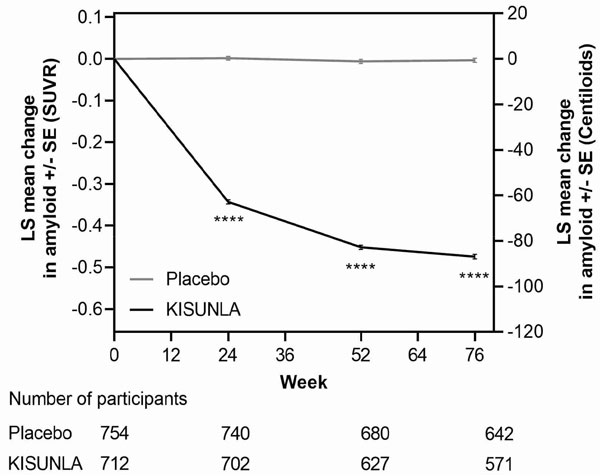
Administer KISUNLA every four weeks as an intravenous infusion over approximately 30 minutes with the recommended dosage and dosing schedule described in Table 1. KISUNLA must be diluted prior to administration (see Table 4).
|
Intravenous Infusion
(every 4 weeks) |
KISUNLA Dosage
(administered over approximately 30 minutes) |
| Infusion 1 | 350 mg |
| Infusion 2 | 700 mg |
| Infusion 3 | 1,050 mg |
| Infusion 4 and beyond | 1,400 mg |
Consider stopping dosing with KISUNLA based on reduction of amyloid plaques to minimal levels on amyloid PET imaging. In Study 1 and Study 2, dosing was stopped based on a reduction of amyloid levels below predefined thresholds on PET imaging [see Clinical Studies (14)].
If an infusion is missed, resume administration every 4 weeks at the same dose as soon as possible.
12.1 Mechanism of Action
Donanemab-azbt is a humanized immunoglobulin gamma 1 (IgG1) monoclonal antibody directed against insoluble N-truncated pyroglutamate amyloid beta. The accumulation of amyloid beta plaques in the brain is a defining pathophysiological feature of Alzheimer's disease. Donanemab-azbt reduces amyloid beta plaques, as evaluated in Study 1 [see Clinical Studies (14)].
2.4 Dilution Instructions
- Prior to administration, KISUNLA must be diluted with 0.9% sodium chloride injection (see Table 4 ).
- Use aseptic technique when preparing the diluted KISUNLA solution for intravenous infusion.
- Allow KISUNLA to equilibrate to room temperature before preparation.
- Parenteral drug products should be inspected visually for particulate matter and discoloration prior to administration, whenever solution and container permit. KISUNLA solution is clear to opalescent, colorless to slightly yellow to slightly brown. Do not use if particulate matter or discolorations are present.
- Withdraw required volume of KISUNLA and mix with 0.9% sodium chloride injection, to the recommended total volume for a final concentration of 4 mg/mL to 10 mg/mL (see Table 4 ). Use only 0.9% sodium chloride injection for dilution.
|
a final concentration of 4 mg/mL to 10 mg/mL |
||||
|
b 2 vials of KISUNLA |
||||
|
c 3 vials of KISUNLA |
||||
|
d 4 vials of KISUNLA |
||||
| KISUNLA Dose (mg) | KISUNLA Volume (mL) | Volume of 0.9% Sodium Chloride Injection Diluent (mL) | Final Volume of Diluted Solution to be Infused (mL) | Final Concentration of Diluted Solution (mg/mL)a |
| 350 mg | 20 mL | 15 mL to 67.5 mL | 35 mL to 87.5 mL | 350 mg/87.5 mL (4 mg/mL) to 350 mg/35 mL (10 mg/mL) |
| 700 mg | 40 mLb | 30 mL to 135 mL | 70 mL to 175 mL | 700 mg/175 mL (4 mg/mL) to 700 mg/70 mL (10 mg/mL) |
| 1,050 mg | 60 mLc | 45 mL to 202.5 mL | 105 mL to 262.5 mL | 1,050 mg/262.5 mL (4 mg/mL) to 1,050 mg/105 mL (10 mg/mL) |
| 1,400 mg | 80 mLd | 60 mL to 270 mL | 140 mL to 350 mL | 1,400 mg/350 mL (4 mg/mL) to 1,400 mg/140 mL (10 mg/mL) |
- Each vial is for one-time use only. Discard any unused portion left in the vial.
- Gently invert the diluted KISUNLA solution to mix completely. Do not shake.
- After dilution, immediate use is recommended [see Description (11)]. If the diluted KISUNLA solution is not administered immediately, store refrigerated at 2°C to 8°C (36°F to 46°F) for up to 72 hours or at room temperature (20°C to 25°C [68°F to 77°F]) for up to 12 hours.
- Do not freeze the diluted KISUNLA solution.
- Storage times include the duration of infusion.
5 Warnings and Precautions
- Amyloid Related Imaging Abnormalities (ARIA): Enhanced clinical vigilance for ARIA is recommended during the first 24 weeks of treatment with KISUNLA. Risk of ARIA, including symptomatic ARIA, was increased in apolipoprotein E ε4 (ApoE ε4) homozygotes compared to heterozygotes and noncarriers. The risk of ARIA-E and ARIA-H is increased in KISUNLA-treated patients with pretreatment microhemorrhages and/or superficial siderosis. If a patient experiences symptoms suggestive of ARIA, clinical evaluation should be performed, including MRI scanning if indicated. (2.3, 5.1)
- Infusion-Related Reactions: The infusion rate may be reduced, or the infusion may be discontinued, and appropriate therapy initiated as clinically indicated. Consider pre-treatment with antihistamines, acetaminophen, or corticosteroids prior to subsequent dosing. (5.3)
2 Dosage and Administration
- Confirm the presence of amyloid beta pathology prior to initiating treatment. (2.1)
-
Administer KISUNLA as an intravenous infusion over approximately 30 minutes every four weeks as follows (2.2):
- Infusion 1: 350 mg
- Infusion 2: 700 mg
- Infusion 3: 1,050 mg
- Infusion 4 and beyond: 1,400 mg
- Consider stopping dosing with KISUNLA based on reduction of amyloid plaques to minimal levels on amyloid PET imaging. (2.2)
- Obtain a recent baseline brain MRI prior to initiating treatment. (2.3, 5.1)
- Obtain an MRI prior to the 2nd, 3rd, 4th, and 7th infusions. If radiographically observed ARIA occurs, treatment recommendations are based on type, severity, and presence of symptoms. (2.3, 5.1)
- Dilution to a final concentration of 4 mg/mL to 10 mg/mL with 0.9% Sodium Chloride Injection, is required prior to administration. (2.4)
3 Dosage Forms and Strengths
Injection: 350 mg/20 mL (17.5 mg/mL) clear to opalescent, colorless to slightly yellow to slightly brown solution in a single-dose vial.
5.2 Hypersensitivity Reactions
Hypersensitivity reactions, including anaphylaxis and angioedema, have occurred in patients who were treated with KISUNLA [see Adverse Reactions (6.1)]. Promptly discontinue the infusion upon the first observation of any signs or symptoms consistent with a hypersensitivity reaction and initiate appropriate therapy. KISUNLA is contraindicated in patients with a history of serious hypersensitivity to donanemab-azbt or to any of the excipients of KISUNLA.
5.3 Infusion Related Reactions
In Study 1, infusion-related reactions were observed in 9% of patients treated with KISUNLA, the majority (70%) of which occurred within the first 4 infusions, compared to 0.5% of patients on placebo. Infusion-related reactions were mostly mild (57%) or moderate (39%) in severity. Infusion-related reactions resulted in discontinuations in 4% of patients treated with KISUNLA.
In Study 2, infusion-related reactions associated with KISUNLA occurred in 16% of patients; the majority (88%) occurred within the first 4 infusions. Infusion-related reactions were mostly mild (47%) or moderate (50%) in severity. Infusion-related reactions resulted in discontinuations in 2.8% of patients treated with KISUNLA.
Most infusion-related reactions associated with KISUNLA occurred during the infusion or within 30 minutes after completion of the infusion, however some have occurred hours after an infusion. Signs and symptoms of infusion-related reactions include chills, erythema, nausea/vomiting, flushing, difficulty breathing/dyspnea, sweating, elevated blood pressure, headache, chest pain, and low blood pressure.
In the event of an infusion-related reaction, the infusion rate may be reduced, or the infusion may be discontinued, and appropriate therapy initiated as clinically indicated. Consider pre-treatment with antihistamines, acetaminophen, or corticosteroids prior to subsequent dosing.
6.1 Clinical Trials Experience
Because clinical trials are conducted under widely varying conditions, adverse reaction rates observed in the clinical trials of a drug cannot be directly compared to rates in the clinical trials of another drug and may not reflect the rates observed in practice.
2.5 Administration Instructions
- Visually inspect the diluted KISUNLA solution for particles or discoloration prior to administration. Do not use if it is discolored, or opaque or foreign particles are seen.
- Prior to infusion, if the diluted solution has been stored under refrigeration, allow the diluted KISUNLA solution to warm to room temperature.
- Administer the entire diluted solution intravenously over approximately 30 minutes.
- Flush the line only with 0.9% sodium chloride injection at the end of the infusion per access specific line maintenance protocol.
- Observe the patient post-infusion for a minimum of 30 minutes, and consider longer periods of observation if clinically indicated, to evaluate for infusion reactions and hypersensitivity reactions. The infusion rate may be reduced, or the infusion may be discontinued, and appropriate therapy administered as clinically indicated. Consider pre-medication at subsequent dosing with antihistamines, non-steroidal anti-inflammatory drugs, or corticosteroids [see Warnings and Precautions (5.2)].
17 Patient Counseling Information
Advise the patient to read the FDA-approved patient labeling (Medication Guide).
Package Label – Kisunla 350 Mg Vial
Product of Ireland or South Korea
NDC 0002-9401-01
Rx only
kisunlaTM
(donanemab-azbt)
injection
350 mg/20 mL
(17.5 mg/mL)
For Intravenous Infusion Only
Must Dilute Prior to Use
One Single-Dose Vial
Dispense with enclosed Medication Guide
www.kisunla.com
Lilly
Product of Ireland
Product of South Korea
5.1 Amyloid Related Imaging Abnormalities
Monoclonal antibodies directed against aggregated forms of beta amyloid, including KISUNLA, can cause amyloid related imaging abnormalities (ARIA), characterized as ARIA with edema (ARIA-E), which can be observed on MRI as brain edema or sulcal effusions, and ARIA with hemosiderin deposition (ARIA-H), which includes microhemorrhage and superficial siderosis. ARIA can occur spontaneously in patients with Alzheimer's disease, particularly in patients with MRI findings suggestive of cerebral amyloid angiopathy, such as pretreatment microhemorrhage or superficial siderosis. ARIA-H associated with monoclonal antibodies directed against aggregated forms of beta amyloid generally occurs in association with an occurrence of ARIA-E. ARIA-H of any cause and ARIA-E can occur together.
ARIA usually occurs early in treatment and is usually asymptomatic, although serious and life-threatening events, including seizure and status epilepticus, can occur. ARIA can be fatal. When present, reported symptoms associated with ARIA may include, but are not limited to, headache, confusion, visual changes, dizziness, nausea, and gait difficulty. Focal neurologic deficits may also occur. Symptoms associated with ARIA usually resolve over time. In addition to ARIA, intracerebral hemorrhages greater than 1 cm in diameter have occurred in patients treated with KISUNLA.
Consider the benefit of KISUNLA for the treatment of Alzheimer's disease and potential risk of serious adverse events associated with ARIA when deciding to initiate treatment with KISUNLA.
Warning: Amyloid Related Imaging Abnormalities
Monoclonal antibodies directed against aggregated forms of beta amyloid, including KISUNLA, can cause amyloid related imaging abnormalities (ARIA), characterized as ARIA with edema (ARIA-E) and ARIA with hemosiderin deposition (ARIA-H). Incidence and timing of ARIA vary among treatments. ARIA usually occurs early in treatment and is usually asymptomatic, although serious and life-threatening events can occur. ARIA can be fatal. Serious intracerebral hemorrhages >1 cm, some of which have been fatal, have been observed in patients treated with this class of medications. Because ARIA-E can cause focal neurologic deficits that can mimic an ischemic stroke, treating clinicians should consider whether such symptoms could be due to ARIA-E before giving thrombolytic therapy in a patient being treated with KISUNLA [see Warnings and Precautions (5.1), Adverse Reactions (6.1)] .
ApoE ε4 Homozygotes
Patients who are apolipoprotein E ε4 (ApoE ε4) homozygotes (approximately 15% of Alzheimer's disease patients) treated with this class of medications, including KISUNLA, have a higher incidence of ARIA, including symptomatic, serious, and severe radiographic ARIA, compared to heterozygotes and noncarriers [see Warnings and Precautions (5.1)] . Testing for ApoE ε4 status should be performed prior to initiation of treatment to inform the risk of developing ARIA. Prior to testing, the risk of ARIA across genotypes and the implications of genetic testing results should be discussed with patients. Prescribers should inform patients that if genotype testing is not performed, they can still be treated with KISUNLA; however, it cannot be determined if they are ApoE ε4 homozygotes and at higher risk for ARIA [see Warnings and Precautions (5.1)] .
Consider the benefit of KISUNLA for the treatment of Alzheimer's disease and potential risk of serious adverse events associated with ARIA when deciding to initiate treatment with KISUNLA [see Warnings and Precautions (5.1) and Clinical Studies (14)] .
Structured Label Content
Section 42229-5 (42229-5)
Monitoring for ARIA
Obtain a recent baseline brain magnetic resonance imaging (MRI) prior to initiating treatment with KISUNLA. Obtain an MRI prior to the 2nd, 3rd, 4th, and 7th infusions. If a patient experiences symptoms suggestive of ARIA, clinical evaluation should be performed, including an MRI if indicated.
Section 42231-1 (42231-1)
|
This Medication Guide has been approved by the U.S. Food and Drug Administration |
Issued: 7/2024 |
||
|
MEDICATION GUIDE
KISUNLA™ (kih-SUHN-lah) (donanemab-azbt) injection, for intravenous use |
|||
|
What is the most important information I should know about KISUNLA?
KISUNLA can cause serious side effects, including: Amyloid Related Imaging Abnormalities or ARIA. ARIA is a common side effect that does not usually cause any symptoms, but serious symptoms can occur. ARIA can be fatal. It is most commonly seen as temporary swelling in areas of the brain that usually resolves over time. Some people may also have small spots of bleeding in or on the surface of the brain, and infrequently, larger areas of bleeding in the brain can occur. Most people who develop ARIA do not get symptoms; however, some people may have symptoms such as: |
|||
|
|
|
|
| Some people have a genetic risk factor (homozygous apolipoprotein E ε4 gene carriers) that may cause an increased risk for ARIA. Talk to your healthcare provider about testing to see if you have this risk factor. You may be at a higher risk of developing bleeding in the brain if you take medicines to reduce blood clots from forming (antithrombotic medicines) while receiving KISUNLA. Your healthcare provider will do magnetic resonance imaging (MRI) scans before and during your treatment with KISUNLA to check you for ARIA. You should carry information that you are receiving KISUNLA which can cause ARIA, and that ARIA symptoms can look like stroke symptoms. Call your healthcare provider or go to the nearest hospital emergency room right away if you have any of the symptoms listed above. There are registries that collect information on treatments for Alzheimer's disease. Your healthcare provider can help you become enrolled in these registries. For more information, go to www.kisunla.com or call 1-800-LillyRx (1-800-545-5979). |
|||
What is KISUNLA?
|
|||
| It is not known if KISUNLA is safe and effective in children. | |||
Do not receive KISUNLA if you:
|
|||
Before receiving KISUNLA, tell your healthcare provider about all of your medical conditions, including if you:
|
|||
|
Tell your healthcare provider about all of the medicines you take, including prescription and over-the-counter medicines, vitamins, and herbal supplements. Especially tell your healthcare provider if you take medicines to reduce blood clots from forming (antithrombotic medicines, including aspirin). Ask your healthcare provider for a list of these medications if you are not sure. Know the medicines you take. Keep a list of them to show your healthcare provider and pharmacist when you get a new medicine. |
|||
How will I receive KISUNLA?
|
|||
|
What are the possible side effects of KISUNLA?
KISUNLA can cause serious side effects, including:
|
|||
| If you have ever had an infusion-related reaction while receiving KISUNLA, your healthcare provider may give you medicines before your KISUNLA infusions to decrease your chance of having an infusion reaction. These medicines may include an antihistamine, acetaminophen, or a steroid. The most common side effects of KISUNLA include:
|
|||
| These are not all the possible side effects of KISUNLA. For more information ask your healthcare provider or pharmacist. Call your doctor for medical advice about side effects. You may report side effects to FDA at 1-800-FDA-1088. | |||
|
General information about the safe and effective use of KISUNLA
Medicines are sometimes prescribed for purposes other than those listed in this Medication Guide. You can ask your pharmacist or healthcare provider for more information about KISUNLA that is written for health professionals. |
|||
|
What are the ingredients in KISUNLA?
Active ingredient: donanemab-azbt Inactive ingredients: anhydrous citric acid, polysorbate 80, sodium citrate, sucrose, and Water for Injection, USP KISUNLA is a trademark of Eli Lilly and Company. For more information, go to www.kisunla.com or call 1-800-LillyRx (1-800-545-5979). Eli Lilly and Company, Indianapolis, IN 46285, USA US License No. 1891 Copyright © 2024, Eli Lilly and Company. All rights reserved. |
KIS-0001-MG-20240702
Section 43683-2 (43683-2)
11 Description (11 DESCRIPTION)
Donanemab-azbt is a humanized immunoglobulin gamma 1 (IgG1) monoclonal antibody directed against insoluble N-truncated pyroglutamate amyloid beta, and is expressed in a Chinese hamster ovary cell line. Donanemab-azbt has an approximate molecular weight of 145 kDa.
KISUNLA (donanemab-azbt) injection is a sterile, preservative-free, clear to opalescent, colorless to slightly yellow to slightly brown solution for intravenous infusion after dilution. KISUNLA is supplied in single-dose vials available in a concentration of 350 mg/20 mL (17.5 mg/mL).
Each mL of solution contains 17.5 mg donanemab-azbt, anhydrous citric acid (0.32 mg), polysorbate 80 (0.20 mg), sodium citrate (2.15 mg), sucrose (80 mg), and Water for Injection, USP, at a pH of 5.5 to 6.5.
16.1 How Supplied
KISUNLA (donanemab-azbt) injection is a sterile, preservative-free, clear to opalescent, colorless to slightly yellow to slightly brown solution. KISUNLA is supplied in one vial per carton as follows:
350 mg/20 mL (17.5 mg/mL) single-dose vial: NDC 0002-9401-01.
8.4 Pediatric Use
Safety and effectiveness in pediatric patients have not been established.
8.5 Geriatric Use
In Study 1, the age of patients exposed to KISUNLA ranged from 59 to 86 years, with a mean age of 73 years; 90% were 65 years and older, and 41% were 75 years and older. No overall differences in safety or effectiveness of KISUNLA have been observed between patients 65 years of age and older and younger adult patients.
In Study 2, the range of patients exposed to KISUNLA ranged from 59 to 85 years, with mean age of 74 years; 93% were 65 years and older, 55% were 75 years and older. Study 2 did not include a sufficient number of younger adult patients to determine if patients 65 years of age and older respond differently than younger adult patients.
12.6 Immunogenicity
The observed incidence of anti-drug antibodies (ADA) is highly dependent on the sensitivity and specificity of the assay. Differences in assay methods preclude meaningful comparisons of the incidence of ADA in the studies described below with the incidence of ADAs in other studies, including those of donanemab-azbt or of other donanemab products.
In up to 18 months of treatment in Study 1 [see Clinical Studies (14)], 87% (691/792) of patients receiving KISUNLA Dosing Regimen 1 developed anti-donanemab-azbt antibodies, and of those, 100% had neutralizing antibodies. In up to 12 months of treatment in Study 2, 87% (176/202) of patients receiving KISUNLA Dosing Regimen 2 developed anti-donanemab-azbt antibodies, and of those, 100% had neutralizing antibodies.
Anti-donanemab-azbt antibody formation was associated with a higher incidence of infusion-related reactions compared to placebo [see Adverse Reactions (6.1)].
14 Clinical Studies (14 CLINICAL STUDIES)
The effectiveness of KISUNLA for the treatment of Alzheimer's disease was established by Study 1, which assessed Dosing Regimen 1 (700 mg every 4 weeks for the first 3 doses, and then 1,400 mg every 4 weeks). Study 2 was conducted to assess different titration regimens, including Dosing Regimen 2 (doses every 4 weeks with 350 mg the first infusion, 700 mg the second infusion, 1,050 mg the third infusion, and then 1,400 mg every 4 weeks) that demonstrated comparable pharmacodynamic effects on amyloid plaque reduction with a reduced incidence of ARIA-related events compared to Dosing Regimen 1 [see Dosage and Administration (2.2), Warnings and Precautions (5.1), Clinical Pharmacology (12.2)].
4 Contraindications (4 CONTRAINDICATIONS)
KISUNLA is contraindicated in patients with known serious hypersensitivity to donanemab-azbt or to any of the excipients. Reactions have included anaphylaxis [see Warnings and Precautions (5.2)].
6 Adverse Reactions (6 ADVERSE REACTIONS)
12.3 Pharmacokinetics
The pharmacokinetics (PK) of KISUNLA were characterized using a population PK analysis with concentration data collected from 2131 patients with Alzheimer's disease who received KISUNLA in single or multiple doses. Accumulation of <1.3-fold occurs with every-4-week dosing. Steady-state exposures, which were similar from Dosing Regimens 1 and 2, are achieved after a single dose. In single doses from 350 to 2800 mg (~2 times the approved recommended dosage of 1,400 mg), and multiple 350 to 1,400 mg doses, exposures (Cmax and AUC) increased proportionally.
2.1 Patient Selection
Confirm the presence of amyloid beta pathology prior to initiating treatment [see Clinical Pharmacology (12.1)].
1 Indications and Usage (1 INDICATIONS AND USAGE)
KISUNLATM is indicated for the treatment of Alzheimer's disease. Treatment with KISUNLA should be initiated in patients with mild cognitive impairment or mild dementia stage of disease, the population in which treatment was initiated in the clinical trials.
2.2 Dosing Instructions
Administer KISUNLA every four weeks as an intravenous infusion over approximately 30 minutes with the recommended dosage and dosing schedule described in Table 1. KISUNLA must be diluted prior to administration (see Table 4).
|
Intravenous Infusion
(every 4 weeks) |
KISUNLA Dosage
(administered over approximately 30 minutes) |
| Infusion 1 | 350 mg |
| Infusion 2 | 700 mg |
| Infusion 3 | 1,050 mg |
| Infusion 4 and beyond | 1,400 mg |
Consider stopping dosing with KISUNLA based on reduction of amyloid plaques to minimal levels on amyloid PET imaging. In Study 1 and Study 2, dosing was stopped based on a reduction of amyloid levels below predefined thresholds on PET imaging [see Clinical Studies (14)].
If an infusion is missed, resume administration every 4 weeks at the same dose as soon as possible.
12.1 Mechanism of Action
Donanemab-azbt is a humanized immunoglobulin gamma 1 (IgG1) monoclonal antibody directed against insoluble N-truncated pyroglutamate amyloid beta. The accumulation of amyloid beta plaques in the brain is a defining pathophysiological feature of Alzheimer's disease. Donanemab-azbt reduces amyloid beta plaques, as evaluated in Study 1 [see Clinical Studies (14)].
2.4 Dilution Instructions
- Prior to administration, KISUNLA must be diluted with 0.9% sodium chloride injection (see Table 4 ).
- Use aseptic technique when preparing the diluted KISUNLA solution for intravenous infusion.
- Allow KISUNLA to equilibrate to room temperature before preparation.
- Parenteral drug products should be inspected visually for particulate matter and discoloration prior to administration, whenever solution and container permit. KISUNLA solution is clear to opalescent, colorless to slightly yellow to slightly brown. Do not use if particulate matter or discolorations are present.
- Withdraw required volume of KISUNLA and mix with 0.9% sodium chloride injection, to the recommended total volume for a final concentration of 4 mg/mL to 10 mg/mL (see Table 4 ). Use only 0.9% sodium chloride injection for dilution.
|
a final concentration of 4 mg/mL to 10 mg/mL |
||||
|
b 2 vials of KISUNLA |
||||
|
c 3 vials of KISUNLA |
||||
|
d 4 vials of KISUNLA |
||||
| KISUNLA Dose (mg) | KISUNLA Volume (mL) | Volume of 0.9% Sodium Chloride Injection Diluent (mL) | Final Volume of Diluted Solution to be Infused (mL) | Final Concentration of Diluted Solution (mg/mL)a |
| 350 mg | 20 mL | 15 mL to 67.5 mL | 35 mL to 87.5 mL | 350 mg/87.5 mL (4 mg/mL) to 350 mg/35 mL (10 mg/mL) |
| 700 mg | 40 mLb | 30 mL to 135 mL | 70 mL to 175 mL | 700 mg/175 mL (4 mg/mL) to 700 mg/70 mL (10 mg/mL) |
| 1,050 mg | 60 mLc | 45 mL to 202.5 mL | 105 mL to 262.5 mL | 1,050 mg/262.5 mL (4 mg/mL) to 1,050 mg/105 mL (10 mg/mL) |
| 1,400 mg | 80 mLd | 60 mL to 270 mL | 140 mL to 350 mL | 1,400 mg/350 mL (4 mg/mL) to 1,400 mg/140 mL (10 mg/mL) |
- Each vial is for one-time use only. Discard any unused portion left in the vial.
- Gently invert the diluted KISUNLA solution to mix completely. Do not shake.
- After dilution, immediate use is recommended [see Description (11)]. If the diluted KISUNLA solution is not administered immediately, store refrigerated at 2°C to 8°C (36°F to 46°F) for up to 72 hours or at room temperature (20°C to 25°C [68°F to 77°F]) for up to 12 hours.
- Do not freeze the diluted KISUNLA solution.
- Storage times include the duration of infusion.
5 Warnings and Precautions (5 WARNINGS AND PRECAUTIONS)
- Amyloid Related Imaging Abnormalities (ARIA): Enhanced clinical vigilance for ARIA is recommended during the first 24 weeks of treatment with KISUNLA. Risk of ARIA, including symptomatic ARIA, was increased in apolipoprotein E ε4 (ApoE ε4) homozygotes compared to heterozygotes and noncarriers. The risk of ARIA-E and ARIA-H is increased in KISUNLA-treated patients with pretreatment microhemorrhages and/or superficial siderosis. If a patient experiences symptoms suggestive of ARIA, clinical evaluation should be performed, including MRI scanning if indicated. (2.3, 5.1)
- Infusion-Related Reactions: The infusion rate may be reduced, or the infusion may be discontinued, and appropriate therapy initiated as clinically indicated. Consider pre-treatment with antihistamines, acetaminophen, or corticosteroids prior to subsequent dosing. (5.3)
2 Dosage and Administration (2 DOSAGE AND ADMINISTRATION)
- Confirm the presence of amyloid beta pathology prior to initiating treatment. (2.1)
-
Administer KISUNLA as an intravenous infusion over approximately 30 minutes every four weeks as follows (2.2):
- Infusion 1: 350 mg
- Infusion 2: 700 mg
- Infusion 3: 1,050 mg
- Infusion 4 and beyond: 1,400 mg
- Consider stopping dosing with KISUNLA based on reduction of amyloid plaques to minimal levels on amyloid PET imaging. (2.2)
- Obtain a recent baseline brain MRI prior to initiating treatment. (2.3, 5.1)
- Obtain an MRI prior to the 2nd, 3rd, 4th, and 7th infusions. If radiographically observed ARIA occurs, treatment recommendations are based on type, severity, and presence of symptoms. (2.3, 5.1)
- Dilution to a final concentration of 4 mg/mL to 10 mg/mL with 0.9% Sodium Chloride Injection, is required prior to administration. (2.4)
3 Dosage Forms and Strengths (3 DOSAGE FORMS AND STRENGTHS)
Injection: 350 mg/20 mL (17.5 mg/mL) clear to opalescent, colorless to slightly yellow to slightly brown solution in a single-dose vial.
5.2 Hypersensitivity Reactions
Hypersensitivity reactions, including anaphylaxis and angioedema, have occurred in patients who were treated with KISUNLA [see Adverse Reactions (6.1)]. Promptly discontinue the infusion upon the first observation of any signs or symptoms consistent with a hypersensitivity reaction and initiate appropriate therapy. KISUNLA is contraindicated in patients with a history of serious hypersensitivity to donanemab-azbt or to any of the excipients of KISUNLA.
5.3 Infusion Related Reactions (5.3 Infusion-Related Reactions)
In Study 1, infusion-related reactions were observed in 9% of patients treated with KISUNLA, the majority (70%) of which occurred within the first 4 infusions, compared to 0.5% of patients on placebo. Infusion-related reactions were mostly mild (57%) or moderate (39%) in severity. Infusion-related reactions resulted in discontinuations in 4% of patients treated with KISUNLA.
In Study 2, infusion-related reactions associated with KISUNLA occurred in 16% of patients; the majority (88%) occurred within the first 4 infusions. Infusion-related reactions were mostly mild (47%) or moderate (50%) in severity. Infusion-related reactions resulted in discontinuations in 2.8% of patients treated with KISUNLA.
Most infusion-related reactions associated with KISUNLA occurred during the infusion or within 30 minutes after completion of the infusion, however some have occurred hours after an infusion. Signs and symptoms of infusion-related reactions include chills, erythema, nausea/vomiting, flushing, difficulty breathing/dyspnea, sweating, elevated blood pressure, headache, chest pain, and low blood pressure.
In the event of an infusion-related reaction, the infusion rate may be reduced, or the infusion may be discontinued, and appropriate therapy initiated as clinically indicated. Consider pre-treatment with antihistamines, acetaminophen, or corticosteroids prior to subsequent dosing.
6.1 Clinical Trials Experience
Because clinical trials are conducted under widely varying conditions, adverse reaction rates observed in the clinical trials of a drug cannot be directly compared to rates in the clinical trials of another drug and may not reflect the rates observed in practice.
2.5 Administration Instructions
- Visually inspect the diluted KISUNLA solution for particles or discoloration prior to administration. Do not use if it is discolored, or opaque or foreign particles are seen.
- Prior to infusion, if the diluted solution has been stored under refrigeration, allow the diluted KISUNLA solution to warm to room temperature.
- Administer the entire diluted solution intravenously over approximately 30 minutes.
- Flush the line only with 0.9% sodium chloride injection at the end of the infusion per access specific line maintenance protocol.
- Observe the patient post-infusion for a minimum of 30 minutes, and consider longer periods of observation if clinically indicated, to evaluate for infusion reactions and hypersensitivity reactions. The infusion rate may be reduced, or the infusion may be discontinued, and appropriate therapy administered as clinically indicated. Consider pre-medication at subsequent dosing with antihistamines, non-steroidal anti-inflammatory drugs, or corticosteroids [see Warnings and Precautions (5.2)].
17 Patient Counseling Information (17 PATIENT COUNSELING INFORMATION)
Advise the patient to read the FDA-approved patient labeling (Medication Guide).
Package Label – Kisunla 350 Mg Vial (PACKAGE LABEL – Kisunla 350 mg Vial)
Product of Ireland or South Korea
NDC 0002-9401-01
Rx only
kisunlaTM
(donanemab-azbt)
injection
350 mg/20 mL
(17.5 mg/mL)
For Intravenous Infusion Only
Must Dilute Prior to Use
One Single-Dose Vial
Dispense with enclosed Medication Guide
www.kisunla.com
Lilly
Product of Ireland
Product of South Korea
5.1 Amyloid Related Imaging Abnormalities
Monoclonal antibodies directed against aggregated forms of beta amyloid, including KISUNLA, can cause amyloid related imaging abnormalities (ARIA), characterized as ARIA with edema (ARIA-E), which can be observed on MRI as brain edema or sulcal effusions, and ARIA with hemosiderin deposition (ARIA-H), which includes microhemorrhage and superficial siderosis. ARIA can occur spontaneously in patients with Alzheimer's disease, particularly in patients with MRI findings suggestive of cerebral amyloid angiopathy, such as pretreatment microhemorrhage or superficial siderosis. ARIA-H associated with monoclonal antibodies directed against aggregated forms of beta amyloid generally occurs in association with an occurrence of ARIA-E. ARIA-H of any cause and ARIA-E can occur together.
ARIA usually occurs early in treatment and is usually asymptomatic, although serious and life-threatening events, including seizure and status epilepticus, can occur. ARIA can be fatal. When present, reported symptoms associated with ARIA may include, but are not limited to, headache, confusion, visual changes, dizziness, nausea, and gait difficulty. Focal neurologic deficits may also occur. Symptoms associated with ARIA usually resolve over time. In addition to ARIA, intracerebral hemorrhages greater than 1 cm in diameter have occurred in patients treated with KISUNLA.
Consider the benefit of KISUNLA for the treatment of Alzheimer's disease and potential risk of serious adverse events associated with ARIA when deciding to initiate treatment with KISUNLA.
Warning: Amyloid Related Imaging Abnormalities (WARNING: AMYLOID RELATED IMAGING ABNORMALITIES)
Monoclonal antibodies directed against aggregated forms of beta amyloid, including KISUNLA, can cause amyloid related imaging abnormalities (ARIA), characterized as ARIA with edema (ARIA-E) and ARIA with hemosiderin deposition (ARIA-H). Incidence and timing of ARIA vary among treatments. ARIA usually occurs early in treatment and is usually asymptomatic, although serious and life-threatening events can occur. ARIA can be fatal. Serious intracerebral hemorrhages >1 cm, some of which have been fatal, have been observed in patients treated with this class of medications. Because ARIA-E can cause focal neurologic deficits that can mimic an ischemic stroke, treating clinicians should consider whether such symptoms could be due to ARIA-E before giving thrombolytic therapy in a patient being treated with KISUNLA [see Warnings and Precautions (5.1), Adverse Reactions (6.1)] .
ApoE ε4 Homozygotes
Patients who are apolipoprotein E ε4 (ApoE ε4) homozygotes (approximately 15% of Alzheimer's disease patients) treated with this class of medications, including KISUNLA, have a higher incidence of ARIA, including symptomatic, serious, and severe radiographic ARIA, compared to heterozygotes and noncarriers [see Warnings and Precautions (5.1)] . Testing for ApoE ε4 status should be performed prior to initiation of treatment to inform the risk of developing ARIA. Prior to testing, the risk of ARIA across genotypes and the implications of genetic testing results should be discussed with patients. Prescribers should inform patients that if genotype testing is not performed, they can still be treated with KISUNLA; however, it cannot be determined if they are ApoE ε4 homozygotes and at higher risk for ARIA [see Warnings and Precautions (5.1)] .
Consider the benefit of KISUNLA for the treatment of Alzheimer's disease and potential risk of serious adverse events associated with ARIA when deciding to initiate treatment with KISUNLA [see Warnings and Precautions (5.1) and Clinical Studies (14)] .
Advanced Ingredient Data
Raw Label Data
All Sections (JSON)
Additional Information
Back to search View SPL set listing Open on DailyMed ↗
Source: dailymed · Ingested: 2026-02-15T11:51:51.041027 · Updated: 2026-03-14T22:41:48.077270