vyfemla™
175ce5c4-d332-4c97-a0b8-10821dc813ef
34391-3
HUMAN PRESCRIPTION DRUG LABEL
Drug Facts
Composition & Product
Identifiers & Packaging
Indications and Usage
Oral contraceptives are indicated for the prevention of pregnancy in women who elect to use this product as a method of contraception. Oral contraceptives are highly effective. Table 1 lists the typical accidental pregnancy rates for users of combination oral contraceptives and other methods of contraception. The efficacy of these contraceptive methods, except sterilization, depends upon the reliability with which they are used. Correct and consistent use of methods can result in lower failure rates. TABLE 1 LOWEST EXPECTED AND TYPICAL FAILURE RATES DURING THE FIRST YEAR OF CONTINUOUS USE OF A METHOD % of Women Experiencing an Accidental Pregnancy in the First Year of Continuous Use Reproduced with permission of the Population Council from J. Trussell, et al: Contraceptive failure in the United States: An update. Studies in Family Planning, 21(1), January-February 1990. Method Lowest Expected The authors’ best guess of the percentage of women expected to experience an accidental pregnancy among couples who initiate a method (not necessarily for the first time) and who use it consistently and correctly during the first year if they do not stop for any reason other than pregnancy. Typical This term represents “typical” couples who initiate use of a method (not necessarily for the first time), who experience an accidental pregnancy during the first year if they do not stop use for any reason other than pregnancy. (No contraception) (85) (85) Oral contraceptives combined 0.1 3 Combined typical rate for both combined and progestin only. progestin only 0.5 3 Diaphragm with spermicidal cream or jelly 6 18 Spermicides alone (foam, creams, jellies and vaginal suppositories) 3 21 Vaginal sponge nulliparous 6 18 multiparous 9 28 IUD 0.8 to 2.0 3 Combined typical rate for both medicated and nonmedicated IUD. Condom without spermicides 2 12 Periodic abstinence (all methods) 1 to 9 20 Injectable progestogen 0.3 to 0.4 0.3 to 0.4 Implants 6 capsules 0.04 0.04 2 rods 0.03 0.03 Female sterilization 0.2 0.4 Male sterilization 0.1 0.15
Dosage and Administration
The following is a summary of the instructions given to the patient in the " HOW TO TAKE THE PILL " section of the DETAILED PATIENT PACKAGE LABELING . The patient is given instructions in five (5) categories: IMPORTANT POINTS TO REMEMBER: The patient is told (a) that she should take one pill every day at the same time, (b) many women have spotting or light bleeding or gastric distress during the first one to three cycles, (c) missing pills can also cause spotting or light bleeding, (d) she should use a back-up method for contraception if she has vomiting or diarrhea or takes some concomitant medications, and/or if she has trouble remembering the pill, (e) if she has any other questions, she should consult her physician. BEFORE SHE STARTS TAKING HER PILLS : She should decide what time of day she wishes to take the pill, check whether her pill pack has 28 pills, and note the order in which she should take the pills (diagrammatic drawings of the pill pack are included in the patient insert). WHEN SHE SHOULD START THE FIRST PACK: The Day-One start is listed as the first choice and the Sunday start (the Sunday after her period starts) is given as the second choice. If she uses the Sunday start she should use a back-up method in the first cycle if she has intercourse before she has taken seven pills. WHAT TO DO DURING THE CYCLE: The patient is advised to take one pill at the same time every day until the pack is empty. If she is on the 28 day regimen, she should start the next pack the day after the last inactive tablet and not wait any days between packs. WHAT TO DO IF SHE MISSES A PILL OR PILLS: The patient is given instructions about what she should do if she misses one, two or more than two pills at varying times in her cycle for both the Day-One and the Sunday start. The patient is warned that she may become pregnant if she has unprotected intercourse in the seven days after missing pills. To avoid this, she must use another birth control method such as condom, foam, or sponge in these seven days.
Contraindications
Vyfemla is contraindicated in females who are known to have or develop the following conditions: Thrombophlebitis or thromboembolic disorders A past history of deep vein thrombophlebitis or thromboembolic disorders Cerebrovascular or coronary artery disease Current diagnosis of, or history of, breast cancer, which may be hormone sensitive Carcinoma of the endometrium or other known or suspected estrogen-dependent neoplasia Undiagnosed abnormal genital bleeding Cholestatic jaundice of pregnancy or jaundice with prior pill use Hepatic adenomas or carcinomas Known or suspected pregnancy Are receiving Hepatitis C drug combinations containing ombitasvir/paritaprevir/ritonavir, with or without dasabuvir, due to the potential for ALT elevations (see WARNINGS , RISK OF LIVER ENZYME ELEVATIONS WITH CONCOMITANT HEPATITIS C TREATMENT ).
Adverse Reactions
Post Marketing Experience: Five studies that compared breast cancer risk between ever-users (current or past use) of COCs and never-users of COCs reported no association between ever use of COCs and breast cancer risk, with effect estimates ranging from 0.90 - 1.12 (Figure 2). Three studies compared breast cancer risk between current or recent COC users (<6 months since last use) and never users of COCs (Figure 2). One of these studies reported no association between breast cancer risk and COC use. The other two studies found an increased relative risk of 1.19 – 1.33 with current or recent use. Both of these studies found an increased risk of breast cancer with current use of longer duration, with relative risks ranging from 1.03 with less than one year of COC use to approximately 1.4 with more than 8-10 years of COC use. RR = relative risk; OR = odds ratio; HR = hazard ratio. "ever COC" are females with current or past COC use; "never COC use" are females that never used COCs. An increased risk of the following serious adverse reactions has been associated with the use of oral contraceptives [see WARNINGS section]: Thrombophlebitis Arterial thromboembolism Pulmonary embolism Myocardial infarction Cerebral hemorrhage Cerebral thrombosis Hypertension Gallbladder disease Hepatic adenomas or benign liver tumors There is evidence of an association between the following conditions and the use of oral contraceptives, although additional confirmatory studies are needed: Mesenteric thrombosis Retinal thrombosis The following adverse reactions have been reported in patients receiving oral contraceptives and are believed to be drug-related: Nausea Vomiting Gastrointestinal symptoms (such as abdominal cramps and bloating) Breakthrough bleeding Spotting Change in menstrual flow Amenorrhea Temporary infertility after discontinuation of treatment Edema Melasma which may persist Breast changes: tenderness, enlargement, and secretion Change in weight (increase or decrease) Change in cervical ectropion and secretion Possible diminution in lactation when given immediately postpartum Cholestatic jaundice Migraine Rash (allergic) Mental depression Reduced tolerance to carbohydrates Vaginal candidiasis Change in corneal curvature (steepening) Intolerance to contact lenses The following adverse reactions have been reported in users of oral contraceptives, and the association has been neither confirmed nor refuted: Premenstrual syndrome Cataracts Changes in appetite Cystitis-like syndrome Headache Nervousness Dizziness Hirsutism Loss of scalp hair Erythema multiforme Erythema nodosum Hemorrhagic eruption Vaginitis Porphyria Impaired renal function Hemolytic uremic syndrome Budd-Chiari syndrome Acne Changes in libido Colitis
How Supplied
Vyfemla (norethindrone and ethinyl estradiol tablets USP) is available in blister (NDC 68180-875-71) containing 28 tablets packed in a pouch (NDC 68180-875-71). Such three pouches are packaged in a carton (NDC 68180-875-73). Each of the 21 light peach colored, round, flat face beveled edged tablets debossed with "LU" on one side and "I25" on the other side containing 0.4 mg norethindrone and 0.035 mg ethinyl estradiol. Each of the 7 white to off-white, round, biconvex tablets debossed with "LU" on one side and "U22" on other side containing inert ingredients. Store at 25°C (77°F); excursions permitted to 15 to 30°C (59 to 86°F). [See USP Controlled Room Temperature]. References are available upon request. Distributed by: Lupin Pharmaceuticals, Inc. Naples, FL 34108 United States. Manufactured by: Lupin Limited Pithampur (M.P.) - 454 775 INDIA Revised: November 2024
Description
Rx only 28 - DAY REGIMEN Patients should be counseled that this product does not protect against HIV-infection (AIDS) and other sexually transmitted diseases.
Medication Information
Recent Major Changes
Cigarette smoking increases the risk of serious cardiovascular side effects from oral contraceptive use. This risk increases with age and with heavy smoking (15 or more cigarettes per day) and is quite marked in women over 35 years of age. Women who use oral contraceptives should be strongly advised not to smoke.
Indications and Usage
Oral contraceptives are indicated for the prevention of pregnancy in women who elect to use this product as a method of contraception.
Oral contraceptives are highly effective. Table 1 lists the typical accidental pregnancy rates for users of combination oral contraceptives and other methods of contraception. The efficacy of these contraceptive methods, except sterilization, depends upon the reliability with which they are used. Correct and consistent use of methods can result in lower failure rates.
|
Reproduced with permission of the Population Council from J. Trussell, et al: Contraceptive failure in the United States: An update. |
||
|
Studies in Family Planning, 21(1), January-February 1990. |
||
|
Method
|
Lowest
Expected
The authors’ best guess of the percentage of women expected to experience an accidental pregnancy among couples who initiate a method (not necessarily for the first time) and who use it consistently and correctly during the first year if they do not stop for any reason other than pregnancy.
|
Typical
This term represents “typical” couples who initiate use of a method (not necessarily for the first time), who experience an accidental pregnancy during the first year if they do not stop use for any reason other than pregnancy.
|
| (No contraception) |
(85) |
(85) |
| Oral contraceptives |
|
|
| combined |
0.1 |
3 Combined typical rate for both combined and progestin only.
|
| progestin only |
0.5 |
3
|
| Diaphragm with spermicidal cream or jelly |
6 |
18 |
| Spermicides alone (foam, creams, jellies and vaginal suppositories) |
3 |
21 |
| Vaginal sponge |
|
|
| nulliparous |
6 |
18 |
| multiparous |
9 |
28 |
| IUD |
0.8 to 2.0 |
3 Combined typical rate for both medicated and nonmedicated IUD.
|
| Condom without spermicides |
2 |
12 |
| Periodic abstinence (all methods) |
1 to 9 |
20 |
| Injectable progestogen |
0.3 to 0.4 |
0.3 to 0.4 |
| Implants |
|
|
| 6 capsules |
0.04 |
0.04 |
| 2 rods |
0.03 |
0.03 |
| Female sterilization |
0.2 |
0.4 |
| Male sterilization |
0.1 |
0.15 |
Dosage and Administration
The following is a summary of the instructions given to the patient in the "HOW TO TAKE THE PILL" section of the DETAILED PATIENT PACKAGE LABELING.
The patient is given instructions in five (5) categories:
- IMPORTANT POINTS TO REMEMBER: The patient is told (a) that she should take one pill every day at the same time, (b) many women have spotting or light bleeding or gastric distress during the first one to three cycles, (c) missing pills can also cause spotting or light bleeding, (d) she should use a back-up method for contraception if she has vomiting or diarrhea or takes some concomitant medications, and/or if she has trouble remembering the pill, (e) if she has any other questions, she should consult her physician.
- BEFORE SHE STARTS TAKING HER PILLS : She should decide what time of day she wishes to take the pill, check whether her pill pack has 28 pills, and note the order in which she should take the pills (diagrammatic drawings of the pill pack are included in the patient insert).
- WHEN SHE SHOULD START THE FIRST PACK: The Day-One start is listed as the first choice and the Sunday start (the Sunday after her period starts) is given as the second choice. If she uses the Sunday start she should use a back-up method in the first cycle if she has intercourse before she has taken seven pills.
- WHAT TO DO DURING THE CYCLE: The patient is advised to take one pill at the same time every day until the pack is empty. If she is on the 28 day regimen, she should start the next pack the day after the last inactive tablet and not wait any days between packs.
- WHAT TO DO IF SHE MISSES A PILL OR PILLS: The patient is given instructions about what she should do if she misses one, two or more than two pills at varying times in her cycle for both the Day-One and the Sunday start. The patient is warned that she may become pregnant if she has unprotected intercourse in the seven days after missing pills. To avoid this, she must use another birth control method such as condom, foam, or sponge in these seven days.
Contraindications
Vyfemla is contraindicated in females who are known to have or develop the following conditions:
- Thrombophlebitis or thromboembolic disorders
- A past history of deep vein thrombophlebitis or thromboembolic disorders
- Cerebrovascular or coronary artery disease
- Current diagnosis of, or history of, breast cancer, which may be hormone sensitive
- Carcinoma of the endometrium or other known or suspected estrogen-dependent neoplasia
- Undiagnosed abnormal genital bleeding
- Cholestatic jaundice of pregnancy or jaundice with prior pill use
- Hepatic adenomas or carcinomas
- Known or suspected pregnancy
Are receiving Hepatitis C drug combinations containing ombitasvir/paritaprevir/ritonavir, with or without dasabuvir, due to the potential for ALT elevations (see WARNINGS, RISK OF LIVER ENZYME ELEVATIONS WITH CONCOMITANT HEPATITIS C TREATMENT).
Adverse Reactions
Post Marketing Experience:
Five studies that compared breast cancer risk between ever-users (current or past use) of COCs and never-users of COCs reported no association between ever use of COCs and breast cancer risk, with effect estimates ranging from 0.90 - 1.12 (Figure 2).
Three studies compared breast cancer risk between current or recent COC users (<6 months since last use) and never users of COCs (Figure 2). One of these studies reported no association between breast cancer risk and COC use. The other two studies found an increased relative risk of 1.19 – 1.33 with current or recent use. Both of these studies found an increased risk of breast cancer with current use of longer duration, with relative risks ranging from 1.03 with less than one year of COC use to approximately 1.4 with more than 8-10 years of COC use.
RR = relative risk; OR = odds ratio; HR = hazard ratio. "ever COC" are females with current or past COC use; "never COC use" are females that never used COCs.
An increased risk of the following serious adverse reactions has been associated with the use of oral contraceptives [see WARNINGS section]:
- Thrombophlebitis
- Arterial thromboembolism
- Pulmonary embolism
- Myocardial infarction
- Cerebral hemorrhage
- Cerebral thrombosis
- Hypertension
- Gallbladder disease
- Hepatic adenomas or benign liver tumors
There is evidence of an association between the following conditions and the use of oral contraceptives, although additional confirmatory studies are needed:
- Mesenteric thrombosis
- Retinal thrombosis
The following adverse reactions have been reported in patients receiving oral contraceptives and are believed to be drug-related:
- Nausea
- Vomiting
- Gastrointestinal symptoms (such as abdominal cramps and bloating)
- Breakthrough bleeding
- Spotting
- Change in menstrual flow
- Amenorrhea
- Temporary infertility after discontinuation of treatment
- Edema
- Melasma which may persist
- Breast changes: tenderness, enlargement, and secretion
- Change in weight (increase or decrease)
- Change in cervical ectropion and secretion
- Possible diminution in lactation when given immediately postpartum
- Cholestatic jaundice
- Migraine
- Rash (allergic)
- Mental depression
- Reduced tolerance to carbohydrates
- Vaginal candidiasis
- Change in corneal curvature (steepening)
- Intolerance to contact lenses
The following adverse reactions have been reported in users of oral contraceptives, and the association has been neither confirmed nor refuted:
- Premenstrual syndrome
- Cataracts
- Changes in appetite
- Cystitis-like syndrome
- Headache
- Nervousness
- Dizziness
- Hirsutism
- Loss of scalp hair
- Erythema multiforme
- Erythema nodosum
- Hemorrhagic eruption
- Vaginitis
- Porphyria
- Impaired renal function
- Hemolytic uremic syndrome
- Budd-Chiari syndrome
- Acne
- Changes in libido
- Colitis
How Supplied
Vyfemla (norethindrone and ethinyl estradiol tablets USP) is available in blister (NDC 68180-875-71) containing 28 tablets packed in a pouch (NDC 68180-875-71). Such three pouches are packaged in a carton (NDC 68180-875-73).
- Each of the 21 light peach colored, round, flat face beveled edged tablets debossed with "LU" on one side and "I25" on the other side containing 0.4 mg norethindrone and 0.035 mg ethinyl estradiol.
- Each of the 7 white to off-white, round, biconvex tablets debossed with "LU" on one side and "U22" on other side containing inert ingredients.
Store at 25°C (77°F); excursions permitted to 15 to 30°C (59 to 86°F). [See USP Controlled Room Temperature].
References are available upon request.
Distributed by:
Lupin Pharmaceuticals, Inc.
Naples, FL 34108
United States.
Manufactured by:
Lupin Limited
Pithampur (M.P.) - 454 775
INDIA
Revised: November 2024
Description
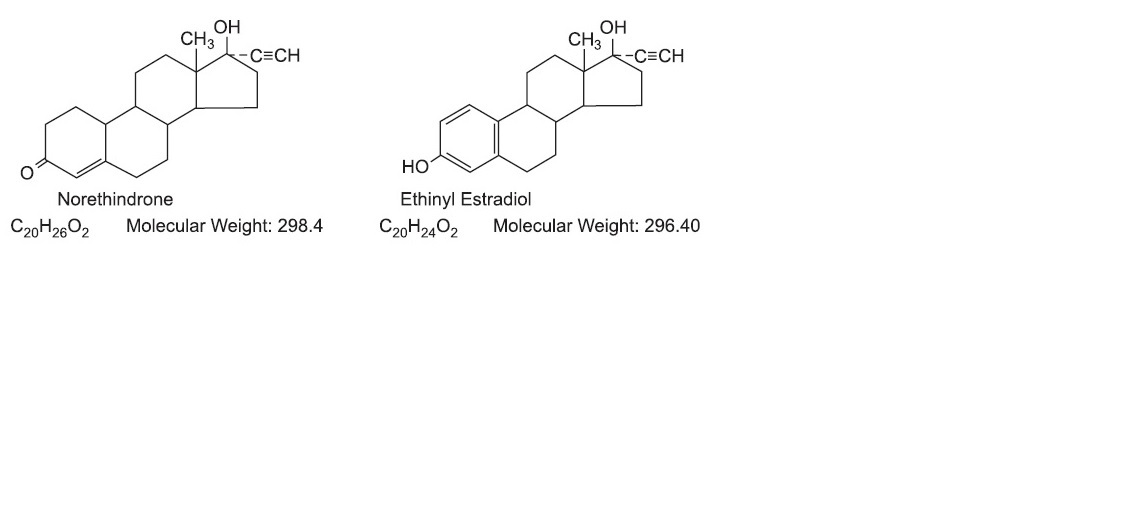
Vyfemla™ (norethindrone and ethinyl estradiol tablets USP) provides a continuous regimen for oral contraception derived from 21 light peach tablets composed of norethindrone and ethinyl estradiol to be followed by 7 white tablets of inert ingredients. The structural formulas are:
The light peach active Vyfemla (norethindrone and ethinyl estradiol tablets USP) contains 0.4 mg norethindrone and 0.035 mg ethinyl estradiol and contain the following inactive ingredients: FD&C yellow No. 6 (aluminum lake), lactose anhydrous, lactose monohydrate, magnesium stearate, povidone, and sodium starch glycolate. The white tablets in the 28 Day regimen contains only inert ingredients as follows croscarmellose sodium, lactose monohydrate, magnesium stearate and microcrystalline cellulose.
Principal Display Panel
Vyfemla™
(norethindrone and ethinyl estradiol tablets USP)
0.4 mg/0.035 mg
28 Day Regimen
Blister Pack:
NDC: 68180-875-71
28 Tablets
Vyfemla™
(norethindrone and ethinyl estradiol tablets USP)
0.4 mg/0.035 mg
28 Day Regimen
Pouch Pack:
NDC: 68180-875-71
1 Blister of 28 Tablets
Vyfemla™
(norethindrone and ethinyl estradiol tablets USP)
0.4 mg/0.035 mg
28 Day Regimen
Carton Pack:
NDC: 68180-875-73
3 Blisters of 28 Tablets Each
Section 42229-5
Rx only
28 - DAY REGIMEN
Patients should be counseled that this product does not protect against HIV-infection (AIDS) and other sexually transmitted diseases.
Overdosage
Serious ill effects have not been reported following acute ingestion of large doses of oral contraceptives by young children.
Overdosage may cause nausea, and withdrawal bleeding may occur in females.
NONCONTRACEPTIVE HEALTH BENEFITS
The following noncontraceptive health benefits related to the use of oral contraceptives are supported by epidemiological studies which largely utilized oral contraceptive formulations containing estrogen doses exceeding 0.035 mg of ethinyl estradiol or 0.05 mg of mestranol.
Effects on menses:
- Increased menstrual cycle regularity
- Decreased blood loss and decreased incidence of iron deficiency anemia
- Decreased incidence of dysmenorrhea
Effects related to inhibition of ovulation:
- Decreased incidence of functional ovarian cysts
- Decreased incidence of ectopic pregnancies
Effects from long-term use:
- Decreased incidence of fibroadenomas and fibrocystic disease of the breast
- Decreased incidence of acute pelvic inflammatory disease
- Decreased incidence of endometrial cancer
- Decreased incidence of ovarian cancer
Precautions
1. Sexually Transmitted Diseases
Patients should be counseled that this product does not protect against HIV infection (AIDS) and other sexually transmitted diseases.
2. Physical Examination and Follow-Up
It is good medical practice for all women to have annual history and physical examinations, including women using oral contraceptives. The physical examination, however, may be deferred until after initiation of oral contraceptives if requested by the woman and judged appropriate by the clinician. The physical examination should include special reference to blood pressure, breasts, abdomen and pelvic organs, including cervical cytology, and relevant laboratory tests. In case of undiagnosed, persistent or recurrent abnormal vaginal bleeding, appropriate measures should be conducted to rule out malignancy. Women with a strong family history of breast cancer or who have breast nodules should be monitored with particular care.
3. Lipid Disorders
Women who are being treated for hyperlipidemias should be followed closely if they elect to use oral contraceptives. Some progestogens may elevate LDL levels and may render the control of hyperlipidemias more difficult.
4. Liver Function
If jaundice develops in any woman receiving such drugs, the medication should be discontinued. Steroid hormones may be poorly metabolized in patients with impaired liver function.
5. Fluid Retention
Oral contraceptives may cause some degree of fluid retention. They should be prescribed with caution, and only with careful monitoring, in patients with conditions which might be aggravated by fluid retention.
6. Emotional Disorders
Women with a history of depression should be carefully observed and the drug discontinued if depression recurs to a serious degree.
Patients becoming significantly depressed while taking oral contraceptives should stop the medication and use an alternate method of contraception in an attempt to determine whether the symptom is drug related.
7. Contact Lenses
Contact lens wearers who develop visual changes or changes in lens tolerance should be assessed by an ophthalmologist.
8. Drug Interactions
Reduced efficacy and increased incidence of breakthrough bleeding and menstrual irregularities have been associated with concomitant use of rifampin. A similar association, though less marked, has been suggested with barbiturates, phenylbutazone, phenytoin sodium, and possibly with griseofulvin, ampicillin, and tetracyclines.
Concomitant Use with HCV Combination Therapy – Liver Enzyme Elevation
Do not co-administer levonorgestrel and ethinyl estradiol tablets with HCV drug combinations containing ombitasvir/paritaprevir/ritonavir, with or without dasabuvir, due to potential for ALT elevations (see WARNINGS , RISK OF LIVER ENZYME ELEVATIONS WITH CONCOMITANT HEPATITIS C TREATMENT).
9. Interactions with Laboratory Tests
Certain endocrine and liver function tests and blood components may be affected by oral contraceptives:
- Increased prothrombin and factors VII, VIII, IX, and X; decreased antithrombin 3; increased norepinephrine-induced platelet aggregability.
- Increased thyroid-binding globulin (TBG) leading to increased circulating total thyroid hormone, as measured by protein-bound iodine (PBI), T4 by column or by radioimmunoassay. Free T3 resin uptake is decreased, reflecting the elevated TBG, free T4 concentration is unaltered.
- Other binding proteins may be elevated in serum.
- Sex-binding globulins are increased and result in elevated levels of total circulating sex steroids and corticoids; however, free or biologically active levels remain unchanged.
- Triglycerides may be increased.
- Glucose tolerance may be decreased.
- Serum folate levels may be depressed by oral contraceptive therapy. This may be of clinical significance if a woman becomes pregnant shortly after discontinuing oral contraceptives.
10. Carcinogenesis
See WARNINGS section.
11. Pregnancy
Pregnancy Category X
See CONTRAINDICATIONS and WARNINGS sections.
12. Nursing Mothers
Small amounts of oral contraceptive steroids have been identified in the milk of nursing mothers and a few adverse effects on the child have been reported, including jaundice and breast enlargement. In addition, oral contraceptives given in the postpartum period may interfere with lactation by decreasing the quantity and quality of breast milk. If possible, the nursing mother should be advised not to use oral contraceptives but to use other forms of contraception until she has completely weaned her child.
13. Vomiting and/or Diarrhea
Although a cause-and-effect relationship has not been clearly established, several cases of oral contraceptive failure have been reported in association with vomiting and/or diarrhea. If significant gastrointestinal disturbance occurs in any woman receiving contraceptive steroids, the use of a back-up method of contraception for the remainder of that cycle is recommended.
14. Pediatric Use
Safety and efficacy of Vyfemla (norethindrone and ethinyl estradiol tablets USP) have been established in women of reproductive age. Safety and efficacy are expected to be the same in postpubertal adolescents under the age of 16 years and in users ages 16 years and older. Use of this product before menarche is not indicated.
Introduction
Any woman who considers using oral contraceptives (the "birth control pill" or "the pill") should understand the benefits and risks of using this form of birth control.
Although the oral contraceptives have important advantages over other methods of contraception, they have certain risks that no other method has and some of these risks may continue after you have stopped using the oral contraceptive. This brochure will give you much of the information you will need to make this decision and will also help you determine if you are at risk of developing any of the serious side effects of the pill. It will tell you how to use the pill properly so that it will be as effective as possible. However, this brochure is not a replacement for a careful discussion between you and your health care professional.
You should discuss the information provided in this brochure with him or her, both when you first start taking the pill and during your revisits. You should also follow your health care professional's advice with regard to regular check-ups while you are on the pill.
EFFECTIVENESS OF ORAL CONTRACEPTIVES
Oral contraceptives or "birth control pills" or "the pill" are used to prevent pregnancy and are more effective than other nonsurgical methods of birth control. The chance of becoming pregnant is less than 1% (1 pregnancy per 100 women per year of use) when the pills are used correctly and no pills are missed. Typical failure rates are actually 3% per year. The chance of becoming pregnant increases with each missed pill during a menstrual cycle.
In comparison, typical accidental pregnancy rates for other nonsurgical methods of birth control during the first year of use are as follows:
IUD: 3%
Diaphragm with spermicides: 18%
Spermicides alone: 21%
Vaginal Sponge: 18% to 28%
Condom alone: 12%
Periodic abstinence: 20%
Injectable progestogen: 0.3% to 0.4%
Implants: 0.03% to 0.04%
No methods: 85%.
WHO SHOULD NOT TAKE ORAL CONTRACEPTIVES
General Precautions
1. Missed Periods and Use of Oral Contraceptives Before or During Early Pregnancy
There may be times when you may not menstruate regularly after you have completed taking a cycle of pills. If you have taken your pills regularly and miss one menstrual period, continue taking your pills for the next cycle but be sure to inform your health care professional before doing so. If you have not taken the pills daily as instructed and missed a menstrual period, or if you missed two consecutive menstrual periods, you may be pregnant. Check with your health care professional immediately to determine whether you are pregnant. Do not continue to take oral contraceptives until you are sure you are not pregnant, but continue to use another method of contraception.
There is no conclusive evidence that oral contraceptive use is associated with an increase in birth defects, when taken inadvertently during early pregnancy. Previously, a few studies had reported that oral contraceptives might be associated with birth defects, but these studies have not been confirmed. Nevertheless, oral contraceptives or any other drugs should not be used during pregnancy unless clearly necessary and prescribed by your doctor. You should check with your doctor about risks to your unborn child of any medication taken during pregnancy.
2. While Breastfeeding
If you are breastfeeding, consult your doctor before starting oral contraceptives. Some of the drug will be passed on to the child in the milk. A few adverse effects on the child have been reported, including yellowing of the skin (jaundice) and breast enlargement. In addition, oral contraceptives may decrease the amount and quality of your milk. If possible, do not use oral contraceptives while breastfeeding. You should use another method of contraception since breastfeeding provides only partial protection from becoming pregnant and this partial protection decreases significantly as you breastfeed for longer periods of time. You should consider starting oral contraceptives only after you have weaned your child completely.
3. Laboratory Tests
If you are scheduled for any laboratory tests, tell your doctor you are taking birth control pills. Certain blood tests may be affected by birth control pills.
4. Drug Interactions
Certain drugs may interact with birth control pills to make them less effective in preventing pregnancy or cause an increase in breakthrough bleeding. Such drugs include rifampin, drugs used for epilepsy such as barbiturates (for example, phenobarbital) and phenytoin (Dilantin is one brand of this drug), phenylbutazone (Butazolidin is one brand) and possibly ampicillin and tetracyclines (several brand names). You may need to use an additional method of contraception when you take drugs which can make oral contraceptives less effective.
HOW TO TAKE THE PILL
|
IMPORTANT
POINTS
TO
REMEMBER
|
SEXUALLY-TRANSMITTED DISEASES
This product (like all oral contraceptives) is intended to prevent pregnancy. It does not protect against transmission of HIV (AIDS) and other sexually transmitted diseases such as Chlamydia, genital herpes, genital warts, gonorrhea, hepatitis B, and syphilis.
BEFORE YOU START TAKING YOUR PILLS:
- BE SURE TO READ THESE DIRECTIONS:
- Before you start taking your pills.
- Anytime you are not sure what to do.
- THE RIGHT WAY TO TAKE THE PILL IS TO TAKE ONE PILL EVERY DAY AT THE SAME TIME.
- If you miss pills you could get pregnant. This includes starting the pack late. The more pills you miss, the more likely you are to get pregnant.
- MANY WOMEN HAVE SPOTTING OR LIGHT BLEEDING, OR MAY FEEL SICK TO THEIR STOMACH DURING THE FIRST 1 to 3 PACKS OF PILLS.
- If you do feel sick to your stomach, do not stop taking the pill. The problem will usually go away. If it doesn't go away, check with your doctor or clinic.
- MISSING PILLS CAN ALSO CAUSE SPOTTING OR LIGHT BLEEDING, even when you make up these missed pills.
- On the days you take 2 pills to make up for missed pills, you could also feel a little sick to your stomach.
- IF YOU HAVE VOMITING OR DIARRHEA, for any reasons, or IF YOU TAKE SOME MEDICINES, including some antibiotics, your pills may not work as well.
- Use a back-up method (such as condoms, foam, or sponge) until you check with your doctor or clinic.
- IF YOU HAVE TROUBLE REMEMBERING TO TAKE THE PILL, talk to your doctor or clinic about how to make pill-taking easier or about using another method of birth control.
- IF YOU HAVE ANY QUESTIONS OR ARE UNSURE ABOUT THE INFORMATION IN THIS LEAFLET, call your doctor or clinic.
|
BEFORE
YOU
START
TAKING
YOUR
PILLS
|
- DECIDE WHAT TIME OF DAY YOU WANT TO TAKE YOUR PILL.
- It is important to take it at about the same time every day.
- LOOK AT YOUR PILL PACK TO SEE IF IT HAS 28 PILLS:
- The 28-pill pack has 21 "active" light peach pills (with hormones) to take for 3 weeks, followed by 1 week of reminder white pills (without hormones).
Refer to the sample of the blister below.
For use of day labels, see WHEN TO START THE FIRST PACK OF PILLS
3. BE SURE YOU HAVE READY AT ALL TIMES:
ANOTHER KIND OF BIRTH CONTROL (such as condoms, foam, or sponge) to use as a back-up in case you miss pills.
An EXTRA, FULL PILL PACK.
|
WHEN
TO
START
THE
FIRST
PACK
OF
PILLS
|
You have a choice of which day to start taking your first pack of pills. Vyfemla™ (norethindrone and ethinyl estradiol tablets USP) is available in Blister which is designed for Sunday Start. Day 1 Start is also provided. Decide with your doctor or clinic which is the best day for you. Pick a time of day which will be easy to remember.
DAY-1 START:
- Take the first "active" light peach pill of the first pack during the first 24 hours of your period.
- You will not need to use a back-up method of birth control, since you are starting the pill at the beginning of your period.
SUNDAY START:
- Take the first "active" light peach pill of the first pack on the Sunday after your period starts, even if you are still bleeding. If your period begins on Sunday, start the pack that same day.
- Use another method of birth control as a back-up method if you have sex anytime from the Sunday you start your first pack until the next Sunday (7 days). Condoms, foam, or the sponge are good back-up methods of birth control.
|
WHAT
TO
DO
DURING
THE
MONTH
|
1. TAKE ONE PILL AT THE SAME TIME EVERY DAY UNTIL THE PACK IS EMPTY.
Do not skip pills even if you are spotting or bleeding between monthly periods or feel sick to your stomach (nausea).
Do not skip pills even if you do not have sex very often.
2. WHEN YOU FINISH A PACK OR SWITCH YOUR BRAND OF PILLS:
28 pills: Start the next pack on the day after your last "reminder" pill. Do not wait any days between packs.
|
WHAT
TO
DO
IF
YOU
MISS
PILLS
|
If you MISS 1 light peach "active" pill:
- Take it as soon as you remember. Take the next pill at your regular time. This means you may take 2 pills in 1 day.
- You do not need to use a back-up birth control method if you have sex.
If you MISS 2 light peach "active" pills in a row in WEEK 1 OR WEEK 2 of your pack:
- Take 2 pills on the day you remember and 2 pills the next day.
- Then take 1 pill a day until you finish the pack.
- You MAY BECOME PREGNANT if you have sex in the 7 days after you miss pills. You MUST use another birth control method (such as condoms, foam, or sponge) as a back-up for those 7 days.
If you MISS 2 light peach "active" pills in a row in THE 3rd WEEK:
1. If you are a Day 1 Starter:
THROW OUT the rest of the pill pack and start a new pack that same day.
If you are a Sunday Starter:
Keep taking 1 pill every day until Sunday.
On Sunday, THROW OUT the rest of the pack and start a new pack of pills that same day.
2. You may not have your period this month but this is expected. However, if you miss your period 2 months in a row, call your doctor or clinic because you might be pregnant.
3. You MAY BECOME PREGNANT if you have sex in the 7 days after you miss pills. You MUST use another birth control method (such as condoms, foam, or sponge) as a back-up for those 7 days.
If you MISS 3 OR MORE light peach "active" pills in a row (during the first 3 weeks):
1. If you are a Day 1 Starter:
THROW OUT the rest of the pill pack and start a new pack that same day.
If you are a Sunday Starter:
Keep taking 1 pill every day until Sunday.
On Sunday, THROW OUT the rest of the pack and start a new pack of pills that same day.
2. You may not have your period this month but this is expected. However, if you miss your period 2 months in a row, call your doctor or clinic because you might be pregnant.
3. You MAY BECOME PREGNANT if you have sex in the 7 days after you miss pills. You MUST use another birth control method (such as condoms, foam, or sponge) as a back-up for those 7 days.
|
A
REMINDER
FOR
THOSE
ON
28
-
DAY
PACKS
:
If you forget any of the 7 white "reminder" pills in Week 4: THROW AWAY the pills you missed. Keep taking 1 pill each day until the pack is empty. You do not need a back-up method. |
|
FINALLY
,
IF
YOU
ARE
STILL
NOT
SURE
WHAT
TO
DO
ABOUT
THE
PILLS
YOU
HAVE
MISSED
:
Use a BACK-UP METHOD anytime you have sex. KEEP TAKING ONE “ACTIVE” PILL EACH DAY until you can reach your doctor or clinic. |
Clinical Pharmacology
Combination oral contraceptives act by suppression of gonadotropins. Although the primary mechanism of this action is inhibition of ovulation, other alterations include changes in the cervical mucus (which increase the difficulty of sperm entry into the uterus) and the endometrium (which reduce the likelihood of implantation).
Detailed Patient Labeling
This product (like all oral contraceptives) is intended to prevent pregnancy. It does not protect against HIV infection (AIDS) and other sexually transmitted diseases.
Brief Summary Patient Package Insert
This product (like all oral contraceptives) is intended to prevent pregnancy. It does not protect against HIV infection (AIDS) and other sexually transmitted diseases.
Oral contraceptives, also known as "birth control pills" or "the pill," are taken to prevent pregnancy and when taken correctly, have a failure rate of about 1% per year when used without missing any pills. The typical failure rate of large numbers of pill users is less than 3% per year when women who miss pills are included.
Oral contraceptive use is associated with certain serious diseases that can be life-threatening or may cause temporary or permanent disability. The risks associated with taking oral contraceptives increase significantly if you:
- Smoke
- Have high blood pressure, diabetes, high cholesterol
- Have or have had clotting disorders, heart attack, stroke, angina pectoris, cancer of the breast or sex organs, jaundice or malignant or benign liver tumors.
You should not take the pill if you suspect you are pregnant or have unexplained vaginal bleeding.
Structured Label Content
Recent Major Changes (34066-1)
Cigarette smoking increases the risk of serious cardiovascular side effects from oral contraceptive use. This risk increases with age and with heavy smoking (15 or more cigarettes per day) and is quite marked in women over 35 years of age. Women who use oral contraceptives should be strongly advised not to smoke.
Indications and Usage (INDICATIONS AND USAGE)
Oral contraceptives are indicated for the prevention of pregnancy in women who elect to use this product as a method of contraception.
Oral contraceptives are highly effective. Table 1 lists the typical accidental pregnancy rates for users of combination oral contraceptives and other methods of contraception. The efficacy of these contraceptive methods, except sterilization, depends upon the reliability with which they are used. Correct and consistent use of methods can result in lower failure rates.
|
Reproduced with permission of the Population Council from J. Trussell, et al: Contraceptive failure in the United States: An update. |
||
|
Studies in Family Planning, 21(1), January-February 1990. |
||
|
Method
|
Lowest
Expected
The authors’ best guess of the percentage of women expected to experience an accidental pregnancy among couples who initiate a method (not necessarily for the first time) and who use it consistently and correctly during the first year if they do not stop for any reason other than pregnancy.
|
Typical
This term represents “typical” couples who initiate use of a method (not necessarily for the first time), who experience an accidental pregnancy during the first year if they do not stop use for any reason other than pregnancy.
|
| (No contraception) |
(85) |
(85) |
| Oral contraceptives |
|
|
| combined |
0.1 |
3 Combined typical rate for both combined and progestin only.
|
| progestin only |
0.5 |
3
|
| Diaphragm with spermicidal cream or jelly |
6 |
18 |
| Spermicides alone (foam, creams, jellies and vaginal suppositories) |
3 |
21 |
| Vaginal sponge |
|
|
| nulliparous |
6 |
18 |
| multiparous |
9 |
28 |
| IUD |
0.8 to 2.0 |
3 Combined typical rate for both medicated and nonmedicated IUD.
|
| Condom without spermicides |
2 |
12 |
| Periodic abstinence (all methods) |
1 to 9 |
20 |
| Injectable progestogen |
0.3 to 0.4 |
0.3 to 0.4 |
| Implants |
|
|
| 6 capsules |
0.04 |
0.04 |
| 2 rods |
0.03 |
0.03 |
| Female sterilization |
0.2 |
0.4 |
| Male sterilization |
0.1 |
0.15 |
Dosage and Administration (DOSAGE AND ADMINISTRATION)
The following is a summary of the instructions given to the patient in the "HOW TO TAKE THE PILL" section of the DETAILED PATIENT PACKAGE LABELING.
The patient is given instructions in five (5) categories:
- IMPORTANT POINTS TO REMEMBER: The patient is told (a) that she should take one pill every day at the same time, (b) many women have spotting or light bleeding or gastric distress during the first one to three cycles, (c) missing pills can also cause spotting or light bleeding, (d) she should use a back-up method for contraception if she has vomiting or diarrhea or takes some concomitant medications, and/or if she has trouble remembering the pill, (e) if she has any other questions, she should consult her physician.
- BEFORE SHE STARTS TAKING HER PILLS : She should decide what time of day she wishes to take the pill, check whether her pill pack has 28 pills, and note the order in which she should take the pills (diagrammatic drawings of the pill pack are included in the patient insert).
- WHEN SHE SHOULD START THE FIRST PACK: The Day-One start is listed as the first choice and the Sunday start (the Sunday after her period starts) is given as the second choice. If she uses the Sunday start she should use a back-up method in the first cycle if she has intercourse before she has taken seven pills.
- WHAT TO DO DURING THE CYCLE: The patient is advised to take one pill at the same time every day until the pack is empty. If she is on the 28 day regimen, she should start the next pack the day after the last inactive tablet and not wait any days between packs.
- WHAT TO DO IF SHE MISSES A PILL OR PILLS: The patient is given instructions about what she should do if she misses one, two or more than two pills at varying times in her cycle for both the Day-One and the Sunday start. The patient is warned that she may become pregnant if she has unprotected intercourse in the seven days after missing pills. To avoid this, she must use another birth control method such as condom, foam, or sponge in these seven days.
Contraindications (CONTRAINDICATIONS)
Vyfemla is contraindicated in females who are known to have or develop the following conditions:
- Thrombophlebitis or thromboembolic disorders
- A past history of deep vein thrombophlebitis or thromboembolic disorders
- Cerebrovascular or coronary artery disease
- Current diagnosis of, or history of, breast cancer, which may be hormone sensitive
- Carcinoma of the endometrium or other known or suspected estrogen-dependent neoplasia
- Undiagnosed abnormal genital bleeding
- Cholestatic jaundice of pregnancy or jaundice with prior pill use
- Hepatic adenomas or carcinomas
- Known or suspected pregnancy
Are receiving Hepatitis C drug combinations containing ombitasvir/paritaprevir/ritonavir, with or without dasabuvir, due to the potential for ALT elevations (see WARNINGS, RISK OF LIVER ENZYME ELEVATIONS WITH CONCOMITANT HEPATITIS C TREATMENT).
Adverse Reactions (ADVERSE REACTIONS)
Post Marketing Experience:
Five studies that compared breast cancer risk between ever-users (current or past use) of COCs and never-users of COCs reported no association between ever use of COCs and breast cancer risk, with effect estimates ranging from 0.90 - 1.12 (Figure 2).
Three studies compared breast cancer risk between current or recent COC users (<6 months since last use) and never users of COCs (Figure 2). One of these studies reported no association between breast cancer risk and COC use. The other two studies found an increased relative risk of 1.19 – 1.33 with current or recent use. Both of these studies found an increased risk of breast cancer with current use of longer duration, with relative risks ranging from 1.03 with less than one year of COC use to approximately 1.4 with more than 8-10 years of COC use.
RR = relative risk; OR = odds ratio; HR = hazard ratio. "ever COC" are females with current or past COC use; "never COC use" are females that never used COCs.
An increased risk of the following serious adverse reactions has been associated with the use of oral contraceptives [see WARNINGS section]:
- Thrombophlebitis
- Arterial thromboembolism
- Pulmonary embolism
- Myocardial infarction
- Cerebral hemorrhage
- Cerebral thrombosis
- Hypertension
- Gallbladder disease
- Hepatic adenomas or benign liver tumors
There is evidence of an association between the following conditions and the use of oral contraceptives, although additional confirmatory studies are needed:
- Mesenteric thrombosis
- Retinal thrombosis
The following adverse reactions have been reported in patients receiving oral contraceptives and are believed to be drug-related:
- Nausea
- Vomiting
- Gastrointestinal symptoms (such as abdominal cramps and bloating)
- Breakthrough bleeding
- Spotting
- Change in menstrual flow
- Amenorrhea
- Temporary infertility after discontinuation of treatment
- Edema
- Melasma which may persist
- Breast changes: tenderness, enlargement, and secretion
- Change in weight (increase or decrease)
- Change in cervical ectropion and secretion
- Possible diminution in lactation when given immediately postpartum
- Cholestatic jaundice
- Migraine
- Rash (allergic)
- Mental depression
- Reduced tolerance to carbohydrates
- Vaginal candidiasis
- Change in corneal curvature (steepening)
- Intolerance to contact lenses
The following adverse reactions have been reported in users of oral contraceptives, and the association has been neither confirmed nor refuted:
- Premenstrual syndrome
- Cataracts
- Changes in appetite
- Cystitis-like syndrome
- Headache
- Nervousness
- Dizziness
- Hirsutism
- Loss of scalp hair
- Erythema multiforme
- Erythema nodosum
- Hemorrhagic eruption
- Vaginitis
- Porphyria
- Impaired renal function
- Hemolytic uremic syndrome
- Budd-Chiari syndrome
- Acne
- Changes in libido
- Colitis
How Supplied (HOW SUPPLIED)
Vyfemla (norethindrone and ethinyl estradiol tablets USP) is available in blister (NDC 68180-875-71) containing 28 tablets packed in a pouch (NDC 68180-875-71). Such three pouches are packaged in a carton (NDC 68180-875-73).
- Each of the 21 light peach colored, round, flat face beveled edged tablets debossed with "LU" on one side and "I25" on the other side containing 0.4 mg norethindrone and 0.035 mg ethinyl estradiol.
- Each of the 7 white to off-white, round, biconvex tablets debossed with "LU" on one side and "U22" on other side containing inert ingredients.
Store at 25°C (77°F); excursions permitted to 15 to 30°C (59 to 86°F). [See USP Controlled Room Temperature].
References are available upon request.
Distributed by:
Lupin Pharmaceuticals, Inc.
Naples, FL 34108
United States.
Manufactured by:
Lupin Limited
Pithampur (M.P.) - 454 775
INDIA
Revised: November 2024
Description (DESCRIPTION)
Vyfemla™ (norethindrone and ethinyl estradiol tablets USP) provides a continuous regimen for oral contraception derived from 21 light peach tablets composed of norethindrone and ethinyl estradiol to be followed by 7 white tablets of inert ingredients. The structural formulas are:
The light peach active Vyfemla (norethindrone and ethinyl estradiol tablets USP) contains 0.4 mg norethindrone and 0.035 mg ethinyl estradiol and contain the following inactive ingredients: FD&C yellow No. 6 (aluminum lake), lactose anhydrous, lactose monohydrate, magnesium stearate, povidone, and sodium starch glycolate. The white tablets in the 28 Day regimen contains only inert ingredients as follows croscarmellose sodium, lactose monohydrate, magnesium stearate and microcrystalline cellulose.
Principal Display Panel (PRINCIPAL DISPLAY PANEL)
Vyfemla™
(norethindrone and ethinyl estradiol tablets USP)
0.4 mg/0.035 mg
28 Day Regimen
Blister Pack:
NDC: 68180-875-71
28 Tablets
Vyfemla™
(norethindrone and ethinyl estradiol tablets USP)
0.4 mg/0.035 mg
28 Day Regimen
Pouch Pack:
NDC: 68180-875-71
1 Blister of 28 Tablets
Vyfemla™
(norethindrone and ethinyl estradiol tablets USP)
0.4 mg/0.035 mg
28 Day Regimen
Carton Pack:
NDC: 68180-875-73
3 Blisters of 28 Tablets Each
Section 42229-5 (42229-5)
Rx only
28 - DAY REGIMEN
Patients should be counseled that this product does not protect against HIV-infection (AIDS) and other sexually transmitted diseases.
Overdosage (OVERDOSAGE)
Serious ill effects have not been reported following acute ingestion of large doses of oral contraceptives by young children.
Overdosage may cause nausea, and withdrawal bleeding may occur in females.
NONCONTRACEPTIVE HEALTH BENEFITS
The following noncontraceptive health benefits related to the use of oral contraceptives are supported by epidemiological studies which largely utilized oral contraceptive formulations containing estrogen doses exceeding 0.035 mg of ethinyl estradiol or 0.05 mg of mestranol.
Effects on menses:
- Increased menstrual cycle regularity
- Decreased blood loss and decreased incidence of iron deficiency anemia
- Decreased incidence of dysmenorrhea
Effects related to inhibition of ovulation:
- Decreased incidence of functional ovarian cysts
- Decreased incidence of ectopic pregnancies
Effects from long-term use:
- Decreased incidence of fibroadenomas and fibrocystic disease of the breast
- Decreased incidence of acute pelvic inflammatory disease
- Decreased incidence of endometrial cancer
- Decreased incidence of ovarian cancer
Precautions (PRECAUTIONS)
1. Sexually Transmitted Diseases
Patients should be counseled that this product does not protect against HIV infection (AIDS) and other sexually transmitted diseases.
2. Physical Examination and Follow-Up
It is good medical practice for all women to have annual history and physical examinations, including women using oral contraceptives. The physical examination, however, may be deferred until after initiation of oral contraceptives if requested by the woman and judged appropriate by the clinician. The physical examination should include special reference to blood pressure, breasts, abdomen and pelvic organs, including cervical cytology, and relevant laboratory tests. In case of undiagnosed, persistent or recurrent abnormal vaginal bleeding, appropriate measures should be conducted to rule out malignancy. Women with a strong family history of breast cancer or who have breast nodules should be monitored with particular care.
3. Lipid Disorders
Women who are being treated for hyperlipidemias should be followed closely if they elect to use oral contraceptives. Some progestogens may elevate LDL levels and may render the control of hyperlipidemias more difficult.
4. Liver Function
If jaundice develops in any woman receiving such drugs, the medication should be discontinued. Steroid hormones may be poorly metabolized in patients with impaired liver function.
5. Fluid Retention
Oral contraceptives may cause some degree of fluid retention. They should be prescribed with caution, and only with careful monitoring, in patients with conditions which might be aggravated by fluid retention.
6. Emotional Disorders
Women with a history of depression should be carefully observed and the drug discontinued if depression recurs to a serious degree.
Patients becoming significantly depressed while taking oral contraceptives should stop the medication and use an alternate method of contraception in an attempt to determine whether the symptom is drug related.
7. Contact Lenses
Contact lens wearers who develop visual changes or changes in lens tolerance should be assessed by an ophthalmologist.
8. Drug Interactions
Reduced efficacy and increased incidence of breakthrough bleeding and menstrual irregularities have been associated with concomitant use of rifampin. A similar association, though less marked, has been suggested with barbiturates, phenylbutazone, phenytoin sodium, and possibly with griseofulvin, ampicillin, and tetracyclines.
Concomitant Use with HCV Combination Therapy – Liver Enzyme Elevation
Do not co-administer levonorgestrel and ethinyl estradiol tablets with HCV drug combinations containing ombitasvir/paritaprevir/ritonavir, with or without dasabuvir, due to potential for ALT elevations (see WARNINGS , RISK OF LIVER ENZYME ELEVATIONS WITH CONCOMITANT HEPATITIS C TREATMENT).
9. Interactions with Laboratory Tests
Certain endocrine and liver function tests and blood components may be affected by oral contraceptives:
- Increased prothrombin and factors VII, VIII, IX, and X; decreased antithrombin 3; increased norepinephrine-induced platelet aggregability.
- Increased thyroid-binding globulin (TBG) leading to increased circulating total thyroid hormone, as measured by protein-bound iodine (PBI), T4 by column or by radioimmunoassay. Free T3 resin uptake is decreased, reflecting the elevated TBG, free T4 concentration is unaltered.
- Other binding proteins may be elevated in serum.
- Sex-binding globulins are increased and result in elevated levels of total circulating sex steroids and corticoids; however, free or biologically active levels remain unchanged.
- Triglycerides may be increased.
- Glucose tolerance may be decreased.
- Serum folate levels may be depressed by oral contraceptive therapy. This may be of clinical significance if a woman becomes pregnant shortly after discontinuing oral contraceptives.
10. Carcinogenesis
See WARNINGS section.
11. Pregnancy
Pregnancy Category X
See CONTRAINDICATIONS and WARNINGS sections.
12. Nursing Mothers
Small amounts of oral contraceptive steroids have been identified in the milk of nursing mothers and a few adverse effects on the child have been reported, including jaundice and breast enlargement. In addition, oral contraceptives given in the postpartum period may interfere with lactation by decreasing the quantity and quality of breast milk. If possible, the nursing mother should be advised not to use oral contraceptives but to use other forms of contraception until she has completely weaned her child.
13. Vomiting and/or Diarrhea
Although a cause-and-effect relationship has not been clearly established, several cases of oral contraceptive failure have been reported in association with vomiting and/or diarrhea. If significant gastrointestinal disturbance occurs in any woman receiving contraceptive steroids, the use of a back-up method of contraception for the remainder of that cycle is recommended.
14. Pediatric Use
Safety and efficacy of Vyfemla (norethindrone and ethinyl estradiol tablets USP) have been established in women of reproductive age. Safety and efficacy are expected to be the same in postpubertal adolescents under the age of 16 years and in users ages 16 years and older. Use of this product before menarche is not indicated.
Introduction (INTRODUCTION)
Any woman who considers using oral contraceptives (the "birth control pill" or "the pill") should understand the benefits and risks of using this form of birth control.
Although the oral contraceptives have important advantages over other methods of contraception, they have certain risks that no other method has and some of these risks may continue after you have stopped using the oral contraceptive. This brochure will give you much of the information you will need to make this decision and will also help you determine if you are at risk of developing any of the serious side effects of the pill. It will tell you how to use the pill properly so that it will be as effective as possible. However, this brochure is not a replacement for a careful discussion between you and your health care professional.
You should discuss the information provided in this brochure with him or her, both when you first start taking the pill and during your revisits. You should also follow your health care professional's advice with regard to regular check-ups while you are on the pill.
EFFECTIVENESS OF ORAL CONTRACEPTIVES
Oral contraceptives or "birth control pills" or "the pill" are used to prevent pregnancy and are more effective than other nonsurgical methods of birth control. The chance of becoming pregnant is less than 1% (1 pregnancy per 100 women per year of use) when the pills are used correctly and no pills are missed. Typical failure rates are actually 3% per year. The chance of becoming pregnant increases with each missed pill during a menstrual cycle.
In comparison, typical accidental pregnancy rates for other nonsurgical methods of birth control during the first year of use are as follows:
IUD: 3%
Diaphragm with spermicides: 18%
Spermicides alone: 21%
Vaginal Sponge: 18% to 28%
Condom alone: 12%
Periodic abstinence: 20%
Injectable progestogen: 0.3% to 0.4%
Implants: 0.03% to 0.04%
No methods: 85%.
WHO SHOULD NOT TAKE ORAL CONTRACEPTIVES
General Precautions (GENERAL PRECAUTIONS)
1. Missed Periods and Use of Oral Contraceptives Before or During Early Pregnancy
There may be times when you may not menstruate regularly after you have completed taking a cycle of pills. If you have taken your pills regularly and miss one menstrual period, continue taking your pills for the next cycle but be sure to inform your health care professional before doing so. If you have not taken the pills daily as instructed and missed a menstrual period, or if you missed two consecutive menstrual periods, you may be pregnant. Check with your health care professional immediately to determine whether you are pregnant. Do not continue to take oral contraceptives until you are sure you are not pregnant, but continue to use another method of contraception.
There is no conclusive evidence that oral contraceptive use is associated with an increase in birth defects, when taken inadvertently during early pregnancy. Previously, a few studies had reported that oral contraceptives might be associated with birth defects, but these studies have not been confirmed. Nevertheless, oral contraceptives or any other drugs should not be used during pregnancy unless clearly necessary and prescribed by your doctor. You should check with your doctor about risks to your unborn child of any medication taken during pregnancy.
2. While Breastfeeding
If you are breastfeeding, consult your doctor before starting oral contraceptives. Some of the drug will be passed on to the child in the milk. A few adverse effects on the child have been reported, including yellowing of the skin (jaundice) and breast enlargement. In addition, oral contraceptives may decrease the amount and quality of your milk. If possible, do not use oral contraceptives while breastfeeding. You should use another method of contraception since breastfeeding provides only partial protection from becoming pregnant and this partial protection decreases significantly as you breastfeed for longer periods of time. You should consider starting oral contraceptives only after you have weaned your child completely.
3. Laboratory Tests
If you are scheduled for any laboratory tests, tell your doctor you are taking birth control pills. Certain blood tests may be affected by birth control pills.
4. Drug Interactions
Certain drugs may interact with birth control pills to make them less effective in preventing pregnancy or cause an increase in breakthrough bleeding. Such drugs include rifampin, drugs used for epilepsy such as barbiturates (for example, phenobarbital) and phenytoin (Dilantin is one brand of this drug), phenylbutazone (Butazolidin is one brand) and possibly ampicillin and tetracyclines (several brand names). You may need to use an additional method of contraception when you take drugs which can make oral contraceptives less effective.
HOW TO TAKE THE PILL
|
IMPORTANT
POINTS
TO
REMEMBER
|
SEXUALLY-TRANSMITTED DISEASES
This product (like all oral contraceptives) is intended to prevent pregnancy. It does not protect against transmission of HIV (AIDS) and other sexually transmitted diseases such as Chlamydia, genital herpes, genital warts, gonorrhea, hepatitis B, and syphilis.
BEFORE YOU START TAKING YOUR PILLS:
- BE SURE TO READ THESE DIRECTIONS:
- Before you start taking your pills.
- Anytime you are not sure what to do.
- THE RIGHT WAY TO TAKE THE PILL IS TO TAKE ONE PILL EVERY DAY AT THE SAME TIME.
- If you miss pills you could get pregnant. This includes starting the pack late. The more pills you miss, the more likely you are to get pregnant.
- MANY WOMEN HAVE SPOTTING OR LIGHT BLEEDING, OR MAY FEEL SICK TO THEIR STOMACH DURING THE FIRST 1 to 3 PACKS OF PILLS.
- If you do feel sick to your stomach, do not stop taking the pill. The problem will usually go away. If it doesn't go away, check with your doctor or clinic.
- MISSING PILLS CAN ALSO CAUSE SPOTTING OR LIGHT BLEEDING, even when you make up these missed pills.
- On the days you take 2 pills to make up for missed pills, you could also feel a little sick to your stomach.
- IF YOU HAVE VOMITING OR DIARRHEA, for any reasons, or IF YOU TAKE SOME MEDICINES, including some antibiotics, your pills may not work as well.
- Use a back-up method (such as condoms, foam, or sponge) until you check with your doctor or clinic.
- IF YOU HAVE TROUBLE REMEMBERING TO TAKE THE PILL, talk to your doctor or clinic about how to make pill-taking easier or about using another method of birth control.
- IF YOU HAVE ANY QUESTIONS OR ARE UNSURE ABOUT THE INFORMATION IN THIS LEAFLET, call your doctor or clinic.
|
BEFORE
YOU
START
TAKING
YOUR
PILLS
|
- DECIDE WHAT TIME OF DAY YOU WANT TO TAKE YOUR PILL.
- It is important to take it at about the same time every day.
- LOOK AT YOUR PILL PACK TO SEE IF IT HAS 28 PILLS:
- The 28-pill pack has 21 "active" light peach pills (with hormones) to take for 3 weeks, followed by 1 week of reminder white pills (without hormones).
Refer to the sample of the blister below.
For use of day labels, see WHEN TO START THE FIRST PACK OF PILLS
3. BE SURE YOU HAVE READY AT ALL TIMES:
ANOTHER KIND OF BIRTH CONTROL (such as condoms, foam, or sponge) to use as a back-up in case you miss pills.
An EXTRA, FULL PILL PACK.
|
WHEN
TO
START
THE
FIRST
PACK
OF
PILLS
|
You have a choice of which day to start taking your first pack of pills. Vyfemla™ (norethindrone and ethinyl estradiol tablets USP) is available in Blister which is designed for Sunday Start. Day 1 Start is also provided. Decide with your doctor or clinic which is the best day for you. Pick a time of day which will be easy to remember.
DAY-1 START:
- Take the first "active" light peach pill of the first pack during the first 24 hours of your period.
- You will not need to use a back-up method of birth control, since you are starting the pill at the beginning of your period.
SUNDAY START:
- Take the first "active" light peach pill of the first pack on the Sunday after your period starts, even if you are still bleeding. If your period begins on Sunday, start the pack that same day.
- Use another method of birth control as a back-up method if you have sex anytime from the Sunday you start your first pack until the next Sunday (7 days). Condoms, foam, or the sponge are good back-up methods of birth control.
|
WHAT
TO
DO
DURING
THE
MONTH
|
1. TAKE ONE PILL AT THE SAME TIME EVERY DAY UNTIL THE PACK IS EMPTY.
Do not skip pills even if you are spotting or bleeding between monthly periods or feel sick to your stomach (nausea).
Do not skip pills even if you do not have sex very often.
2. WHEN YOU FINISH A PACK OR SWITCH YOUR BRAND OF PILLS:
28 pills: Start the next pack on the day after your last "reminder" pill. Do not wait any days between packs.
|
WHAT
TO
DO
IF
YOU
MISS
PILLS
|
If you MISS 1 light peach "active" pill:
- Take it as soon as you remember. Take the next pill at your regular time. This means you may take 2 pills in 1 day.
- You do not need to use a back-up birth control method if you have sex.
If you MISS 2 light peach "active" pills in a row in WEEK 1 OR WEEK 2 of your pack:
- Take 2 pills on the day you remember and 2 pills the next day.
- Then take 1 pill a day until you finish the pack.
- You MAY BECOME PREGNANT if you have sex in the 7 days after you miss pills. You MUST use another birth control method (such as condoms, foam, or sponge) as a back-up for those 7 days.
If you MISS 2 light peach "active" pills in a row in THE 3rd WEEK:
1. If you are a Day 1 Starter:
THROW OUT the rest of the pill pack and start a new pack that same day.
If you are a Sunday Starter:
Keep taking 1 pill every day until Sunday.
On Sunday, THROW OUT the rest of the pack and start a new pack of pills that same day.
2. You may not have your period this month but this is expected. However, if you miss your period 2 months in a row, call your doctor or clinic because you might be pregnant.
3. You MAY BECOME PREGNANT if you have sex in the 7 days after you miss pills. You MUST use another birth control method (such as condoms, foam, or sponge) as a back-up for those 7 days.
If you MISS 3 OR MORE light peach "active" pills in a row (during the first 3 weeks):
1. If you are a Day 1 Starter:
THROW OUT the rest of the pill pack and start a new pack that same day.
If you are a Sunday Starter:
Keep taking 1 pill every day until Sunday.
On Sunday, THROW OUT the rest of the pack and start a new pack of pills that same day.
2. You may not have your period this month but this is expected. However, if you miss your period 2 months in a row, call your doctor or clinic because you might be pregnant.
3. You MAY BECOME PREGNANT if you have sex in the 7 days after you miss pills. You MUST use another birth control method (such as condoms, foam, or sponge) as a back-up for those 7 days.
|
A
REMINDER
FOR
THOSE
ON
28
-
DAY
PACKS
:
If you forget any of the 7 white "reminder" pills in Week 4: THROW AWAY the pills you missed. Keep taking 1 pill each day until the pack is empty. You do not need a back-up method. |
|
FINALLY
,
IF
YOU
ARE
STILL
NOT
SURE
WHAT
TO
DO
ABOUT
THE
PILLS
YOU
HAVE
MISSED
:
Use a BACK-UP METHOD anytime you have sex. KEEP TAKING ONE “ACTIVE” PILL EACH DAY until you can reach your doctor or clinic. |
Clinical Pharmacology (CLINICAL PHARMACOLOGY)
Combination oral contraceptives act by suppression of gonadotropins. Although the primary mechanism of this action is inhibition of ovulation, other alterations include changes in the cervical mucus (which increase the difficulty of sperm entry into the uterus) and the endometrium (which reduce the likelihood of implantation).
Detailed Patient Labeling (DETAILED PATIENT LABELING)
This product (like all oral contraceptives) is intended to prevent pregnancy. It does not protect against HIV infection (AIDS) and other sexually transmitted diseases.
Brief Summary Patient Package Insert (BRIEF SUMMARY PATIENT PACKAGE INSERT)
This product (like all oral contraceptives) is intended to prevent pregnancy. It does not protect against HIV infection (AIDS) and other sexually transmitted diseases.
Oral contraceptives, also known as "birth control pills" or "the pill," are taken to prevent pregnancy and when taken correctly, have a failure rate of about 1% per year when used without missing any pills. The typical failure rate of large numbers of pill users is less than 3% per year when women who miss pills are included.
Oral contraceptive use is associated with certain serious diseases that can be life-threatening or may cause temporary or permanent disability. The risks associated with taking oral contraceptives increase significantly if you:
- Smoke
- Have high blood pressure, diabetes, high cholesterol
- Have or have had clotting disorders, heart attack, stroke, angina pectoris, cancer of the breast or sex organs, jaundice or malignant or benign liver tumors.
You should not take the pill if you suspect you are pregnant or have unexplained vaginal bleeding.
Advanced Ingredient Data
Raw Label Data
All Sections (JSON)
Additional Information
Back to search View SPL set listing Open on DailyMed ↗
Source: dailymed · Ingested: 2026-02-15T11:50:22.432431 · Updated: 2026-03-14T22:37:20.090322