Mydayis
141a7970-3f06-44ea-9ab7-aeece2c085fc
34391-3
HUMAN PRESCRIPTION DRUG LABEL
Drug Facts
Composition & Product
Identifiers & Packaging
Indications and Usage
MYDAYIS is indicated for the treatment of Attention Deficit Hyperactivity Disorder (ADHD) in patients 13 years and older [see Clinical Studies (14) ] .
Dosage and Administration
MYDAYIS should be administered once daily upon awakening . Recommended Starting Dose Titration Schedule Maximum Daily Dose Adults 12.5 mg 12.5 mg weekly 50 mg Pediatrics (13 to 17) 12.5 mg 12.5 mg weekly 25 mg In adult patients with severe renal impairment the maximum dose should not exceed 25 mg daily. Use in adult patients with ESRD is not recommended. ( 2.6 , 8.6 ) The maximum dose in pediatric patients with severe renal impairment is 12.5 mg daily. Use in pediatric patients with ESRD is not recommended. ( 2.6 , 8.6 ) Patients are advised to take consistently either with or without food. ( 2.2 ) Administer upon awakening because the effects may last up to 16 hours and there is the potential for insomnia. ( 2.2 ) Prior to treatment, assess for presence of cardiac disease. ( 2.1 ) To avoid substitution errors and overdosage, do not substitute for other amphetamine products on a milligram-per-milligram basis because of different amphetamine base compositions and differing pharmacokinetic profiles. ( 2.7 )
Contraindications
MYDAYIS is contraindicated in patients with: Known hypersensitivity to amphetamine, or other components of MYDAYIS. Hypersensitivity reactions such as angioedema and anaphylactic reactions have been reported in patients treated with other amphetamine products [see Adverse Reactions (6.2) ] . Concomitant treatment with monoamine oxidase inhibitors (MAOIs), and also within 14 days following discontinuation of treatment with a monoamine oxidase inhibitor, because of an increased risk of hypertensive crisis [see Drug Interactions (7.1) ] .
Warnings and Precautions
Risks to Patients with Serious Cardiac Disease: Avoid use in patients with known structural cardiac abnormalities, cardiomyopathy, serious cardiac arrhythmia, coronary artery disease, or other serious cardiac disease. ( 5.2 ) Increased Blood Pressure and Heart Rate: Monitor blood pressure and pulse. ( 5.3 ) Psychiatric Adverse Reactions: Prior to initiating MYDAYIS, screen patients for risk factors for developing a manic episode. If new psychotic or manic symptoms occur, consider discontinuing MYDAYIS. ( 5.4 ) Long-Term Suppression of Growth in Pediatric Patients: Closely monitor growth (height and weight) in pediatric patients. Pediatric patients not growing or gaining height or weight as expected may need to have their treatment interrupted. ( 5.5 ) Peripheral Vasculopathy, Including Raynaud’s Phenomenon: Careful observation for digital changes is necessary during MYDAYIS treatment. Further clinical evaluation (e.g., rheumatology referral) may be appropriate for patients who develop signs or symptoms of peripheral vasculopathy. ( 5.6 ) Seizures: May lower the convulsive threshold. If a seizure occurs, discontinue MYDAYIS. ( 5.7 ) Serotonin Syndrome: Increased risk when coadministered with serotonergic agents (e.g., SSRIs, SNRIs, triptans), but also during overdosage situations. If it occurs, discontinue MYDAYIS and initiate supportive treatment. ( 5.8 ) Motor and Verbal Tics, and Worsening of Tourette’s Syndrome: Before initiating MYDAYIS, assess the family history and clinically evaluate patients for tics or Tourette’s syndrome. Regularly monitor patients for the emergence or worsening of tics or Tourette’s syndrome. Discontinue treatment if clinically appropriate. ( 5.10 )
Adverse Reactions
The following adverse reactions are discussed in greater detail in other sections of the labeling: Abuse, Misuse, and Addiction [see Boxed Warning , Warnings and Precautions (5.1) , Drug Abuse and Dependence (9.2 , 9.3) ] Hypersensitivity to amphetamine products or other ingredients of MYDAYIS [see Contraindications (4) ] Hypertensive Crisis When Used Concomitantly with Monoamine Oxidase Inhibitors [see Contraindications (4) , Drug Interactions (7.1) ] Risks to Patients with Serious Cardiac Disease [see Warnings and Precautions (5.2) ] Increased Blood Pressure and Heart Rate [see Warnings and Precautions (5.3) ] Psychiatric Adverse Reactions [see Warnings and Precautions (5.4) ] Long-Term Suppression of Growth in Pediatric Patients [see Warnings and Precautions (5.5) ] Peripheral Vasculopathy, Including Raynaud's Phenomenon [see Warnings and Precautions (5.6) ] Seizures [see Warnings and Precautions (5.7) ] Serotonin Syndrome [see Warnings and Precautions (5.8) ] Motor and Verbal Tics, and Worsening of Tourette's Syndrome [see Warnings and Precautions (5.10) ]
Drug Interactions
Acidifying and Alkalinizing Agents: Agents that alter GI and urinary pH can alter blood levels of amphetamine. Acidifying agents (GI and urinary) decrease amphetamine blood levels, while alkalinizing agents (GI and urinary) increase amphetamine blood levels. Adjust MYDAYIS dosage accordingly. ( 2.5 , 7.1 )
Description
MYDAYIS has a high potential for abuse and misuse, which can lead to the development of a substance use disorder, including addiction. Misuse and abuse of CNS stimulants, including MYDAYIS, can result in overdose and death [see Overdosage (10) ] , and this risk is increased with higher doses or unapproved methods of administration, such as snorting or injection. Before prescribing MYDAYIS, assess each patient’s risk for abuse, misuse, and addiction. Educate patients and their families about these risks, proper storage of the drug, and proper disposal of any unused drug. Throughout MYDAYIS treatment, reassess each patient’s risk of abuse, misuse, and addiction and frequently monitor for signs and symptoms of abuse, misuse, and addiction [see Warnings and Precautions (5.1) , Drug Abuse and Dependence (9.2) ].
Medication Information
Warnings and Precautions
Risks to Patients with Serious Cardiac Disease: Avoid use in patients with known structural cardiac abnormalities, cardiomyopathy, serious cardiac arrhythmia, coronary artery disease, or other serious cardiac disease. ( 5.2 ) Increased Blood Pressure and Heart Rate: Monitor blood pressure and pulse. ( 5.3 ) Psychiatric Adverse Reactions: Prior to initiating MYDAYIS, screen patients for risk factors for developing a manic episode. If new psychotic or manic symptoms occur, consider discontinuing MYDAYIS. ( 5.4 ) Long-Term Suppression of Growth in Pediatric Patients: Closely monitor growth (height and weight) in pediatric patients. Pediatric patients not growing or gaining height or weight as expected may need to have their treatment interrupted. ( 5.5 ) Peripheral Vasculopathy, Including Raynaud’s Phenomenon: Careful observation for digital changes is necessary during MYDAYIS treatment. Further clinical evaluation (e.g., rheumatology referral) may be appropriate for patients who develop signs or symptoms of peripheral vasculopathy. ( 5.6 ) Seizures: May lower the convulsive threshold. If a seizure occurs, discontinue MYDAYIS. ( 5.7 ) Serotonin Syndrome: Increased risk when coadministered with serotonergic agents (e.g., SSRIs, SNRIs, triptans), but also during overdosage situations. If it occurs, discontinue MYDAYIS and initiate supportive treatment. ( 5.8 ) Motor and Verbal Tics, and Worsening of Tourette’s Syndrome: Before initiating MYDAYIS, assess the family history and clinically evaluate patients for tics or Tourette’s syndrome. Regularly monitor patients for the emergence or worsening of tics or Tourette’s syndrome. Discontinue treatment if clinically appropriate. ( 5.10 )
Indications and Usage
MYDAYIS is indicated for the treatment of Attention Deficit Hyperactivity Disorder (ADHD) in patients 13 years and older [see Clinical Studies (14) ] .
Dosage and Administration
MYDAYIS should be administered once daily upon awakening . Recommended Starting Dose Titration Schedule Maximum Daily Dose Adults 12.5 mg 12.5 mg weekly 50 mg Pediatrics (13 to 17) 12.5 mg 12.5 mg weekly 25 mg In adult patients with severe renal impairment the maximum dose should not exceed 25 mg daily. Use in adult patients with ESRD is not recommended. ( 2.6 , 8.6 ) The maximum dose in pediatric patients with severe renal impairment is 12.5 mg daily. Use in pediatric patients with ESRD is not recommended. ( 2.6 , 8.6 ) Patients are advised to take consistently either with or without food. ( 2.2 ) Administer upon awakening because the effects may last up to 16 hours and there is the potential for insomnia. ( 2.2 ) Prior to treatment, assess for presence of cardiac disease. ( 2.1 ) To avoid substitution errors and overdosage, do not substitute for other amphetamine products on a milligram-per-milligram basis because of different amphetamine base compositions and differing pharmacokinetic profiles. ( 2.7 )
Contraindications
MYDAYIS is contraindicated in patients with: Known hypersensitivity to amphetamine, or other components of MYDAYIS. Hypersensitivity reactions such as angioedema and anaphylactic reactions have been reported in patients treated with other amphetamine products [see Adverse Reactions (6.2) ] . Concomitant treatment with monoamine oxidase inhibitors (MAOIs), and also within 14 days following discontinuation of treatment with a monoamine oxidase inhibitor, because of an increased risk of hypertensive crisis [see Drug Interactions (7.1) ] .
Adverse Reactions
The following adverse reactions are discussed in greater detail in other sections of the labeling: Abuse, Misuse, and Addiction [see Boxed Warning , Warnings and Precautions (5.1) , Drug Abuse and Dependence (9.2 , 9.3) ] Hypersensitivity to amphetamine products or other ingredients of MYDAYIS [see Contraindications (4) ] Hypertensive Crisis When Used Concomitantly with Monoamine Oxidase Inhibitors [see Contraindications (4) , Drug Interactions (7.1) ] Risks to Patients with Serious Cardiac Disease [see Warnings and Precautions (5.2) ] Increased Blood Pressure and Heart Rate [see Warnings and Precautions (5.3) ] Psychiatric Adverse Reactions [see Warnings and Precautions (5.4) ] Long-Term Suppression of Growth in Pediatric Patients [see Warnings and Precautions (5.5) ] Peripheral Vasculopathy, Including Raynaud's Phenomenon [see Warnings and Precautions (5.6) ] Seizures [see Warnings and Precautions (5.7) ] Serotonin Syndrome [see Warnings and Precautions (5.8) ] Motor and Verbal Tics, and Worsening of Tourette's Syndrome [see Warnings and Precautions (5.10) ]
Drug Interactions
Acidifying and Alkalinizing Agents: Agents that alter GI and urinary pH can alter blood levels of amphetamine. Acidifying agents (GI and urinary) decrease amphetamine blood levels, while alkalinizing agents (GI and urinary) increase amphetamine blood levels. Adjust MYDAYIS dosage accordingly. ( 2.5 , 7.1 )
Description
MYDAYIS has a high potential for abuse and misuse, which can lead to the development of a substance use disorder, including addiction. Misuse and abuse of CNS stimulants, including MYDAYIS, can result in overdose and death [see Overdosage (10) ] , and this risk is increased with higher doses or unapproved methods of administration, such as snorting or injection. Before prescribing MYDAYIS, assess each patient’s risk for abuse, misuse, and addiction. Educate patients and their families about these risks, proper storage of the drug, and proper disposal of any unused drug. Throughout MYDAYIS treatment, reassess each patient’s risk of abuse, misuse, and addiction and frequently monitor for signs and symptoms of abuse, misuse, and addiction [see Warnings and Precautions (5.1) , Drug Abuse and Dependence (9.2) ].
Section 42229-5
Limitations of Use:
Pediatric patients 12 years and younger experienced higher plasma exposure than patients 13 years and older at the same dose, and experienced higher rates of adverse reactions, mainly insomnia and decreased appetite [see Use in Specific Populations (8.4)].
Section 42231-1
| MEDICATION GUIDE MYDAYIS® (my-DAY-is) (mixed salts of a single-entity amphetamine product) extended-release capsules, CII |
||
|---|---|---|
| This Medication Guide has been approved by the U.S. Food and Drug Administration | MYD365 | Revised: 3/2025 |
|
What is the most important information I should know about MYDAYIS? MYDAYIS may cause serious side effects, including:
|
||
|
What is MYDAYIS?
MYDAYIS is a central nervous system (CNS) stimulant prescription medicine used for the treatment of Attention Deficit Hyperactivity Disorder (ADHD) in people 13 years of age and older. MYDAYIS is not for use in children 12 years of age and younger. MYDAYIS is a federally controlled substance (CII) because it contains amphetamine that can be a target for people who abuse prescription medicines or street drugs. Keep MYDAYIS in a safe place to protect it from theft. Never give your MYDAYIS to anyone else, because it may cause death or harm them. Selling or giving away MYDAYIS may harm others and is against the law. |
||
Do not take MYDAYIS if you or your child are:
|
||
Before taking MYDAYIS, tell your healthcare provider about all medical conditions, including if you or your child:
|
||
| Tell your healthcare provider about all the medicines that you or your child take, including prescription and over-the-counter medicines, vitamins, and herbal supplements. | ||
| MYDAYIS may affect the way other medicines work and other medicines may affect how MYDAYIS works. Taking MYDAYIS with other medicines can cause serious side effects. | ||
| Especially tell your healthcare provider if you or your child take: | ||
|
|
|
| Know the medicines that you or your child take. Keep a list of your medicines with you to show your or your child’s healthcare provider and pharmacist when you or your child get a new medicine. | ||
| Your healthcare provider will decide whether MYDAYIS can be taken with other medicines. Do not start any new medicine during treatment with MYDAYIS without talking to your or your child’s healthcare provider first. | ||
How should I take MYDAYIS?
|
||
|
What should I avoid during treatment with MYDAYIS?
You should avoid drinking alcohol during treatment with MYDAYIS. |
||
|
What are possible side effects of MYDAYIS? MYDAYIS may cause serious side effects, including:
|
||
|
||
|
|
|
| The most common side effects of MYDAYIS include: | ||
|
|
|
| These are not all the possible side effects of MYDAYIS. | ||
| Call your doctor for medical advice about side effects. You may report side effects to FDA at 1-800-FDA-1088. | ||
How should I store MYDAYIS?
|
||
| General information about the safe and effective use of MYDAYIS | ||
| Medicines are sometimes prescribed for purposes other than those listed in a Medication Guide. Do not use MYDAYIS for a condition for which it was not prescribed. Do not give MYDAYIS to other people, even if they have the same condition. It may harm them and it is against the law. You can ask your healthcare provider or pharmacist for information about MYDAYIS that is written for healthcare professionals. | ||
| What are the ingredients in MYDAYIS? | ||
| Active ingredients: dextroamphetamine sulfate and amphetamine sulfate, dextroamphetamine saccharate and amphetamine aspartate monohydrate | ||
| Inactive ingredients: hard gelatin capsules, ethylcellulose, hydroxypropyl methylcellulose, methacrylic acid copolymer, methyl acrylate, methyl methacrylate, Opadry® beige, sugar spheres, talc, and triethyl citrate. Gelatin capsules contain gelatin, titanium dioxide, yellow iron oxide and edible inks. The 12.5 mg and 25 mg capsules also contain FD&C Blue #2. The 37.5 mg also contains red iron oxide. The 50 mg capsule also contains D&C Red #28, D&C Red #33, and FD&C Blue #1. | ||
| Distributed by: Takeda Pharmaceuticals America, Inc., Cambridge, MA 02142 |
||
| MYDAYIS is a registered trademark of Takeda Pharmaceuticals U.S.A., Inc. OPADRY is a registered trademark of BPSI Holdings, LLC. © 2025 Takeda Pharmaceuticals U.S.A., Inc. All rights reserved. |
||
| For more information about MYDAYIS go to www.mydayis.com or call 1-877-825-3327. |
Section 44425-7
Storage and Handling
Dispense in a tight, light-resistant container as defined in the USP.
Store at room temperature, 20ºC to 25ºC (68ºF to 77ºF). Excursions permitted between 15ºC to 30ºC (59ºF to 86ºF) [see USP Controlled Room Temperature].
9.2 Abuse
MYDAYIS has a high potential for abuse and misuse which can lead to the development of a substance use disorder, including addiction [see Warnings and Precautions (5.1)]. MYDAYIS can be diverted for non-medical use into illicit channels or distribution.
Abuse is the intentional non-therapeutic use of a drug, even once, to achieve a desired psychological or physiological effect. Misuse is the intentional use, for therapeutic purposes, of a drug by an individual in a way other than prescribed by a healthcare provider or for whom it was not prescribed. Drug addiction is a cluster of behavioral, cognitive, and physiological phenomena that may include a strong desire to take the drug, difficulties in controlling drug use (e.g., continuing drug use despite harmful consequences, giving a higher priority to drug use than other activities and obligations), and possible tolerance or physical dependence.
Misuse and abuse of amphetamine may cause increased heart rate, respiratory rate, or blood pressure; sweating; dilated pupils; hyperactivity; restlessness; insomnia; decreased appetite; loss of coordination; tremors; flushed skin; vomiting; and/or abdominal pain. Anxiety, psychosis, hostility, aggression, and suicidal or homicidal ideation have also been observed with CNS stimulants abuse and/or misuse. Misuse and abuse of CNS stimulants, including MYDAYIS, can result in overdose and death [see Overdosage (10)], and this risk is increased with higher doses or unapproved methods of administration, such as snorting or injection.
5.7 Seizures
MYDAYIS may lower the convulsive threshold in patients with prior history of seizure, in patients with prior EEG abnormalities in the absence of seizures, and in patients without a history of seizures and no prior EEG evidence of seizures. In the presence of seizures, MYDAYIS should be discontinued.
10 Overdosage
Clinical Effects of Overdose
Overdose of CNS stimulants is characterized by the following sympathomimetic effects:
- Cardiovascular effects including tachyarrhythmias, and hypertension or hypotension. Vasospasm, myocardial infarction, or aortic dissection may precipitate sudden cardiac death. Takotsubo cardiomyopathy may develop.
- CNS effects including psychomotor agitation, confusion, and hallucinations. Serotonin syndrome, seizures, cerebral vascular accidents, and coma may occur.
- Life-threatening hyperthermia (temperatures greater than 104°F) and rhabdomyolysis may develop.
Overdose Management
Consider the possibility of multiple drug ingestion. The pharmacokinetic profile of MYDAYIS should be considered when treating patients with overdose. D-amphetamine is not dialyzable. Consider contacting the Poison Help line (1-800-222-1222) or a medical toxicologist for additional overdose management recommendations.
11 Description
MYDAYIS extended-release capsules contain mixed salts of a single-entity amphetamine, a CNS stimulant. MYDAYIS contains equal amounts (by weight) of four salts: dextroamphetamine sulfate and amphetamine sulfate, dextroamphetamine saccharate and amphetamine aspartate monohydrate. This results in a 3:1 mixture of dextro- to levo- amphetamine base equivalent.
The 12.5 mg, 25 mg, 37.5 mg, and 50 mg strength capsules are for oral administration. They contain three types of drug-releasing beads, an immediate release and two different types of delayed release (DR) beads. The first DR bead releases amphetamine at pH 5.5 and the other DR bead releases amphetamine at pH 7.0.
| CAPSULE STRENGTHS | ||||
|---|---|---|---|---|
| EACH CAPSULE CONTAINS: | 12.5 mg | 25 mg | 37.5 mg | 50 mg |
| Dextroamphetamine Saccharate | 3.125 mg | 6.250 mg | 9.375 mg | 12.500 mg |
| Amphetamine Aspartate Monohydrate | 3.125 mg | 6.250 mg | 9.375 mg | 12.500 mg |
| Dextroamphetamine Sulfate | 3.125 mg | 6.250 mg | 9.375 mg | 12.500 mg |
| Amphetamine Sulfate |
3.125 mg |
6.250 mg |
9.375 mg |
12.500 mg |
| Total mixed amphetamine salts | 12.500 mg | 25 mg | 37.5 mg | 50 mg |
| Total amphetamine base equivalence | 7.8 mg | 15.6 mg | 23.5 mg | 31.3 mg |
8.4 Pediatric Use
The safety and effectiveness of MYDAYIS in pediatric patients with ADHD ages 13 to 17 years have been established in two placebo-controlled clinical studies [see Adverse Reactions (6.1), Clinical Pharmacology (12.3), Clinical Studies (14)].
The safety and effectiveness of MYDAYIS have not been established in pediatric patients ages 12 years and younger.
MYDAYIS has been studied for the treatment of ADHD in pediatric patients 6 to 12 years in two placebo controlled safety and efficacy trials. In the first trial, pediatric patients 6 to 12 years experienced higher rates of adverse reactions in some cases compared to patients 13 years and older, including higher rates of insomnia (30% vs 8%) and appetite decreased (43% vs 22%). In addition, amphetamine systemic exposures (both d- and l-) in pediatric patients 6 to 12 years following a single dose were higher than those observed in adults at the same dose (72 to 79% higher Cmax and approximately 83% higher AUC). A second trial evaluated a lower dose than those approved for pediatric patients 13 to 17 years; efficacy was not demonstrated for the lower dose. Therefore, a safe and effective dose cannot be established in pediatric patients 12 years and younger.
8.5 Geriatric Use
Clinical studies of MYDAYIS did not include sufficient numbers of subjects aged 65 and over to determine whether they respond differently from younger subjects. Other reported clinical experience has not identified differences in responses between the elderly and younger patients. In general, dose selection for an elderly patient should start at the low end of the dosing range, reflecting the greater frequency of decreased hepatic, renal, or cardiac function, and of concomitant disease or other drug therapy.
14 Clinical Studies
Efficacy of MYDAYIS in the treatment of ADHD was established in the following trials:
- Three short-term trials in adults (18 to 55 years, Studies 1, 2, and 3)
- Two short-term trials in pediatric patients (13 to 17 years, Studies 4 and 5)
4 Contraindications
MYDAYIS is contraindicated in patients with:
- Known hypersensitivity to amphetamine, or other components of MYDAYIS. Hypersensitivity reactions such as angioedema and anaphylactic reactions have been reported in patients treated with other amphetamine products [see Adverse Reactions (6.2)].
- Concomitant treatment with monoamine oxidase inhibitors (MAOIs), and also within 14 days following discontinuation of treatment with a monoamine oxidase inhibitor, because of an increased risk of hypertensive crisis [see Drug Interactions (7.1)].
6 Adverse Reactions
The following adverse reactions are discussed in greater detail in other sections of the labeling:
- Abuse, Misuse, and Addiction [see Boxed Warning, Warnings and Precautions (5.1), Drug Abuse and Dependence (9.2, 9.3)]
- Hypersensitivity to amphetamine products or other ingredients of MYDAYIS [see Contraindications (4)]
- Hypertensive Crisis When Used Concomitantly with Monoamine Oxidase Inhibitors [see Contraindications (4), Drug Interactions (7.1)]
- Risks to Patients with Serious Cardiac Disease [see Warnings and Precautions (5.2)]
- Increased Blood Pressure and Heart Rate [see Warnings and Precautions (5.3)]
- Psychiatric Adverse Reactions [see Warnings and Precautions (5.4)]
- Long-Term Suppression of Growth in Pediatric Patients [see Warnings and Precautions (5.5)]
- Peripheral Vasculopathy, Including Raynaud's Phenomenon [see Warnings and Precautions (5.6)]
- Seizures [see Warnings and Precautions (5.7)]
- Serotonin Syndrome [see Warnings and Precautions (5.8)]
- Motor and Verbal Tics, and Worsening of Tourette's Syndrome [see Warnings and Precautions (5.10)]
7 Drug Interactions
Acidifying and Alkalinizing Agents: Agents that alter GI and urinary pH can alter blood levels of amphetamine. Acidifying agents (GI and urinary) decrease amphetamine blood levels, while alkalinizing agents (GI and urinary) increase amphetamine blood levels. Adjust MYDAYIS dosage accordingly. (2.5, 7.1)
8.6 Renal Impairment
Due to reduced clearance of amphetamine in patients with severe renal insufficiency (GFR 15 to <30 mL/min/1.73 m2), the maximum dose in adults should be reduced. Pediatric patients ages 13 to 17 years with severe renal insufficiency can be given the recommended starting dose if tolerated, but the dose should not be escalated. MYDAYIS is not recommended in patients with ESRD (GFR <15 mL/min/1.73 m2) [see Dosage and Administration (2.6), Clinical Pharmacology (12.3)].
d-Amphetamine is not dialyzable.
12.2 Pharmacodynamics
Amphetamines block the reuptake of norepinephrine and dopamine into the presynaptic neuron and increase the release of these monoamines into the extraneuronal space.
12.3 Pharmacokinetics
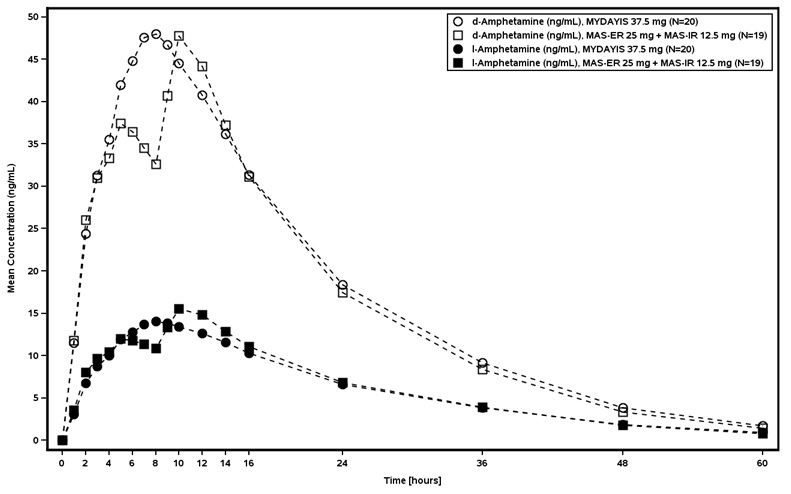
MYDAYIS contains d-amphetamine and l-amphetamine salts in the ratio of 3:1. Pharmacokinetic studies of d- and l-amphetamine after oral administration of MYDAYIS have been conducted in healthy adults (19 to 52 years) and pediatric patients (6 to 17 years) with ADHD. Following administration of MYDAYIS, the peak plasma concentrations occurred in about 7 to 10 hours in pediatric patients and about 8 hours in adults for both d-amphetamine and l-amphetamine. The mean plasma elimination half-life for d-amphetamine ranges from about 10 to 11 hours and l-amphetamine from 10 to 13 hours in both pediatric and adult patients.
5.8 Serotonin Syndrome
Serotonin syndrome, a potentially life-threatening reaction, may occur when amphetamines are used in combination with other drugs that affect the serotonergic neurotransmitter systems such as monoamine oxidase inhibitors (MAOIs), selective serotonin reuptake inhibitors (SSRIs), serotonin norepinephrine reuptake inhibitors (SNRIs), triptans, tricyclic antidepressants, fentanyl, lithium, tramadol, tryptophan, buspirone, and St. John's Wort [see Drug Interactions (7.1)]. The coadministration with cytochrome P450 2D6 (CYP2D6) inhibitors may also increase the risk with increased exposure to MYDAYIS. In these situations, consider an alternative nonserotonergic drug or an alternative drug that does not inhibit CYP2D6 [see Drug Interactions (7.1)].
Serotonin syndrome symptoms may include mental status changes (e.g., agitation, hallucinations, delirium, and coma), autonomic instability (e.g., tachycardia, labile blood pressure, dizziness, diaphoresis, flushing, hyperthermia), neuromuscular symptoms (e.g., tremor, rigidity, myoclonus, hyperreflexia, incoordination), seizures, and/or gastrointestinal symptoms (e.g., nausea, vomiting, diarrhea).
Concomitant use of MYDAYIS with MAOI drugs is contraindicated [see Contraindications (4)].
Discontinue treatment with MYDAYIS and any concomitant serotonergic agents immediately if the above symptoms occur, and initiate supportive symptomatic treatment. If concomitant use of MYDAYIS with other serotonergic drugs or CYP2D6 inhibitors is clinically warranted, initiate MYDAYIS with lower doses, monitor patients for the emergence of serotonin syndrome during drug initiation or titration, and inform patients of the increased risk for serotonin syndrome.
1 Indications and Usage
MYDAYIS is indicated for the treatment of Attention Deficit Hyperactivity Disorder (ADHD) in patients 13 years and older [see Clinical Studies (14)].
12.1 Mechanism of Action
Amphetamines are non-catecholamine sympathomimetic amines with CNS stimulant activity. The exact mode of therapeutic action in ADHD is not known.
9.1 Controlled Substance
MYDAYIS contains mixed amphetamine salts, a Schedule II controlled substance.
2.1 Pretreatment Screening
Prior to treating patients with MYDAYIS, assess:
- for the presence of cardiac disease (i.e., perform a careful history, family history of sudden death or ventricular arrhythmia, and physical exam) [see Warnings and Precautions (5.2)]
- the family history and clinically evaluate patients for motor or verbal tics or Tourette’s syndrome before initiating MYDAYIS [see Warnings and Precautions (5.10)]
5 Warnings and Precautions
- Risks to Patients with Serious Cardiac Disease: Avoid use in patients with known structural cardiac abnormalities, cardiomyopathy, serious cardiac arrhythmia, coronary artery disease, or other serious cardiac disease. (5.2)
- Increased Blood Pressure and Heart Rate: Monitor blood pressure and pulse. (5.3)
- Psychiatric Adverse Reactions: Prior to initiating MYDAYIS, screen patients for risk factors for developing a manic episode. If new psychotic or manic symptoms occur, consider discontinuing MYDAYIS. (5.4)
- Long-Term Suppression of Growth in Pediatric Patients: Closely monitor growth (height and weight) in pediatric patients. Pediatric patients not growing or gaining height or weight as expected may need to have their treatment interrupted. (5.5)
- Peripheral Vasculopathy, Including Raynaud’s Phenomenon: Careful observation for digital changes is necessary during MYDAYIS treatment. Further clinical evaluation (e.g., rheumatology referral) may be appropriate for patients who develop signs or symptoms of peripheral vasculopathy. (5.6)
- Seizures: May lower the convulsive threshold. If a seizure occurs, discontinue MYDAYIS. (5.7)
- Serotonin Syndrome: Increased risk when coadministered with serotonergic agents (e.g., SSRIs, SNRIs, triptans), but also during overdosage situations. If it occurs, discontinue MYDAYIS and initiate supportive treatment. (5.8)
- Motor and Verbal Tics, and Worsening of Tourette’s Syndrome: Before initiating MYDAYIS, assess the family history and clinically evaluate patients for tics or Tourette’s syndrome. Regularly monitor patients for the emergence or worsening of tics or Tourette’s syndrome. Discontinue treatment if clinically appropriate. (5.10)
2 Dosage and Administration
- MYDAYIS should be administered once daily upon awakening.
| Recommended Starting Dose | Titration Schedule | Maximum Daily Dose | |
|---|---|---|---|
| Adults | 12.5 mg | 12.5 mg weekly | 50 mg |
| Pediatrics (13 to 17) | 12.5 mg | 12.5 mg weekly | 25 mg |
- In adult patients with severe renal impairment the maximum dose should not exceed 25 mg daily. Use in adult patients with ESRD is not recommended. (2.6, 8.6)
- The maximum dose in pediatric patients with severe renal impairment is 12.5 mg daily. Use in pediatric patients with ESRD is not recommended. (2.6, 8.6)
- Patients are advised to take consistently either with or without food. (2.2)
- Administer upon awakening because the effects may last up to 16 hours and there is the potential for insomnia. (2.2)
- Prior to treatment, assess for presence of cardiac disease. (2.1)
- To avoid substitution errors and overdosage, do not substitute for other amphetamine products on a milligram-per-milligram basis because of different amphetamine base compositions and differing pharmacokinetic profiles. (2.7)
3 Dosage Forms and Strengths
- Extended-release capsules 12.5 mg: green body/green cap (imprinted with SHIRE 465 and 12.5 mg)
- Extended-release capsules 25 mg: ivory body/green cap (imprinted with SHIRE 465 and 25 mg)
- Extended-release capsules 37.5 mg: ivory body/light caramel cap (imprinted with SHIRE 465 and 37.5 mg)
- Extended-release capsules 50 mg: ivory body/purple cap (imprinted with SHIRE 465 and 50 mg)
8 Use in Specific Populations
- Pregnancy: Based on animal data, may cause fetal harm. (8.1)
- Lactation: Breastfeeding not recommended. (8.2)
- Pediatric: Safety and effectiveness have not been established in pediatric patients ages 12 years and younger. (8.4)
- Renal Impairment: Dose adjustment is needed in patients with severe renal insufficiency. Use of MYDAYIS in patients with ESRD is not recommended. (2.6, 8.6)
6.1 Clinical Trials Experience
Because clinical trials are conducted under widely varying conditions, adverse reaction rates observed in the clinical trials of a drug cannot be directly compared to rates in the clinical trials of another drug and may not reflect the rates observed in clinical practice.
MYDAYIS was studied in adults (18 to 55 years) and pediatric patients (13 to 17 years) who met Diagnostic and Statistical Manual of Mental Disorders, 4th or 5th editions (DSM-IV-TR® or DSM-5) criteria for ADHD. The safety data for adults were pooled from three randomized, double-blind, placebo-controlled studies in doses of 12.5 mg to 75 mg per day (1.5 times the maximum recommended dosage). Doses higher than 50 mg per day did not demonstrate additional clinical benefit and are not recommended.
The safety data for pediatric patients (13 to 17 years) is from 1 randomized, double-blind, placebo-controlled study of doses of 12.5 mg to 25 mg. The total exposure in patients treated with MYDAYIS totalled 704; this included pediatric patients, 78 adolescent patients and 626 adult patients from multiple well-controlled trials. The duration of use ranged from 4 to 7 weeks [see Clinical Studies (14)].
2.3 Administration Instructions
Administer MYDAYIS orally with or without food. Advise patients to take MYDAYIS consistently either with food or without food [see Clinical Pharmacology (12.3)].
MYDAYIS may be administered in one of the following ways:
- Swallow MYDAYIS capsules whole, or
- Open capsule and sprinkle the entire contents over a spoonful of applesauce. The sprinkled applesauce should be consumed immediately; it should not be stored. Patients should take the sprinkled applesauce in its entirety without chewing.
- The dose of a single capsule should not be divided.
5.1 Abuse, Misuse, and Addiction
MYDAYIS has a high potential for abuse and misuse. The use of MYDAYIS exposes individuals to the risks of abuse and misuse, which can lead to the development of a substance use disorder, including addiction. MYDAYIS can be diverted for non-medical use into illicit channels or distribution [see Drug Abuse and Dependence (9.2)]. Misuse and abuse of CNS stimulants, including MYDAYIS, can result in overdose and death [see Overdosage (10)], and this risk is increased with higher doses or unapproved methods of administration, such as snorting or injection.
Before prescribing MYDAYIS, assess each patient’s risk for abuse, misuse, and addiction. Educate patients and their families about these risks and proper disposal of any unused drug. Advise patients to store MYDAYIS in a safe place, preferably locked, and instruct patients to not give MYDAYIS to anyone else. Throughout MYDAYIS treatment, reassess each patient’s risk of abuse, misuse, and addiction and frequently monitor for signs and symptoms of abuse, misuse, and addiction.
17 Patient Counseling Information
Advise the patient to read the FDA-approved patient labeling (Medication Guide).
7.2 Drug/laboratory Test Interactions
Amphetamines can cause a significant elevation in plasma corticosteroid levels. This increase is greatest in the evening. Amphetamines may interfere with urinary steroid determinations.
Warning: Abuse, Misuse, and Addiction
MYDAYIS has a high potential for abuse and misuse, which can lead to the development of a substance use disorder, including addiction. Misuse and abuse of CNS stimulants, including MYDAYIS, can result in overdose and death [see Overdosage (10)], and this risk is increased with higher doses or unapproved methods of administration, such as snorting or injection.
Before prescribing MYDAYIS, assess each patient’s risk for abuse, misuse, and addiction. Educate patients and their families about these risks, proper storage of the drug, and proper disposal of any unused drug. Throughout MYDAYIS treatment, reassess each patient’s risk of abuse, misuse, and addiction and frequently monitor for signs and symptoms of abuse, misuse, and addiction [see Warnings and Precautions (5.1), Drug Abuse and Dependence (9.2)].
2.2 General Administration Information
Because the effects of MYDAYIS may last up to 16 hours and there is potential for insomnia, administer once daily in the morning upon awakening. In the event of a missed dose, do not administer later in the day. Do not administer additional medication to make up for the missed dose [see Adverse Reactions (6.1), Clinical Studies (14)].
13.2 Animal Toxicology And/or Pharmacology
Acute administration of high doses of amphetamine (d- or d, l-) has been shown to produce long-lasting neurotoxic effects, including irreversible nerve fiber damage in rodents. The significance of these findings to humans is unknown.
5.3 Increased Blood Pressure and Heart Rate
CNS stimulants cause an increase in blood pressure (mean increase about 2 to 4 mmHg) and heart rate (mean increase about 3 to 6 bpm). Some patients may have larger increases.
Monitor all MYDAYIS-treated patients for potential tachycardia and hypertension [see Adverse Reactions (6.1)].
2.6 Dosage in Patients With Renal Impairment
In adult patients with severe renal impairment (GFR between 15 to <30 mL/min/1.73 m2), the recommended starting dose of MYDAYIS is 12.5 mg daily with a maximum recommended dose of 25 mg daily. MYDAYIS is not recommended for use in patients with end stage renal disease (ESRD <15 mL/min/1.73 m2). In pediatric patients (13 to 17 years) with severe renal impairment, the maximum dose is 12.5 mg, if tolerated [see Use in Specific Populations (8.6), Clinical Pharmacology (12.3)].
2.7 Switching From Other Amphetamine Products
For patients switching from another medication or any other amphetamine products, discontinue that treatment, and titrate with MYDAYIS using the titration schedule [see Dosage and Administration (2.4)].
Do not substitute for other amphetamine products on a milligram-per-milligram basis because of different amphetamine base compositions and differing pharmacokinetic profiles [see Warnings and Precautions (5.9), Description (11), Clinical Pharmacology (12.3)].
2.5 Dosage Modifications Due to Drug Interactions
Agents that alter gastrointestinal and urinary pH can impact urinary excretion and alter blood levels of amphetamine. Acidifying agents (e.g., ascorbic acid) decrease blood levels, while alkalinizing agents (e.g., sodium bicarbonate) increase blood levels. Adjust MYDAYIS dosage accordingly [see Drug Interactions (7.1)].
5.2 Risks to Patients With Serious Cardiac Disease
Sudden death has been reported in patients with structural cardiac abnormalities or other serious cardiac disease who were treated with CNS stimulants at the recommended ADHD dosage.
Avoid MYDAYIS use in patients with known structural cardiac abnormalities, cardiomyopathy, serious cardiac arrhythmia, coronary artery disease, or other serious cardiac disease.
5.9 Potential for Overdose Due to Medication Errors
Medication errors, including substitution and dispensing errors, between MYDAYIS and other amphetamine products could occur, leading to possible overdosage. To avoid substitution errors and overdosage, do not substitute for other amphetamine products on a milligram-per-milligram basis because of different amphetamine base compositions and differing pharmacokinetic profiles [see Dosage and Administration (2.7), Overdosage (10)].
Principal Display Panel 25 Mg Capsule Bottle Label
ONCE-DAILY
NDC 54092-471-01
Mydayis®
(Mixed Salts of A Single-Entity
Amphetamine Product)
Extended-Release Capsules
25 mg
100 Capsules
Do not substitute for Adderall XR.
CII Rx only
Takeda
Principal Display Panel 50 Mg Capsule Bottle Label
ONCE-DAILY
NDC 54092-477-01
Mydayis®
(Mixed Salts of A Single-Entity
Amphetamine Product)
Extended-Release Capsules
50 mg
100 Capsules
Do not substitute for Adderall XR.
CII Rx only
Takeda
Principal Display Panel 12.5 Mg Capsule Bottle Label
ONCE-DAILY
NDC 54092-468-01
Mydayis®
(Mixed Salts of A Single-Entity
Amphetamine Product)
Extended-Release Capsules
12.5 mg
100 Capsules
Do not substitute for Adderall XR.
CII Rx only
Takeda
Principal Display Panel 37.5 Mg Capsule Bottle Label
ONCE-DAILY
NDC 54092-474-01
Mydayis®
(Mixed Salts of A Single-Entity
Amphetamine Product)
Extended-Release Capsules
37.5 mg
100 Capsules
Do not substitute for Adderall XR.
CII Rx only
Takeda
5.5 Long Term Suppression of Growth in Pediatric Patients
CNS stimulants have been associated with weight loss and slowing of growth rate in pediatric patients.
In a 4 week, placebo-controlled trial of MYDAYIS in patients ages 6 to 17 years old with ADHD, there was a decrease in weight in the MYDAYIS groups compared to weight gain in the placebo group [see Adverse Reactions (6.1)].
Closely monitor growth (weight and height) in MYDAYIS-treated pediatric patients. Pediatric patients who are not growing or gaining weight as expected may need to have their treatment interrupted. MYDAYIS is not approved for use in pediatric patients 12 years and younger [see Use in Specific Populations (8.4)].
5.6 Peripheral Vasculopathy, Including Raynaud’s Phenomenon
CNS stimulants, including MYDAYIS, used to treat ADHD are associated with peripheral vasculopathy, including Raynaud’s phenomenon. Signs and symptoms are usually intermittent and mild; however, sequelae have included digital ulceration and/or soft tissue breakdown. Effects of peripheral vasculopathy, including Raynaud’s phenomenon, were observed in post-marketing reports and at the therapeutic dosage of CNS stimulants in all age groups throughout the course of treatment. Signs and symptoms generally improved after dosage reduction or discontinuation of the CNS stimulant.
Careful observation for digital changes is necessary during MYDAYIS treatment. Further clinical evaluation (e.g., rheumatology referral) may be appropriate for MYDAYIS-treated patients who develop signs or symptoms of peripheral vasculopathy.
6.2 Adverse Reactions Associated With the Use of Amphetamines
The following adverse reactions have been associated with the use of amphetamines. The following adverse reactions have been identified during postapproval use of amphetamines. Because these reactions are reported voluntarily from a population of uncertain size, it is not possible to reliably estimate their frequency or establish a causal relationship to drug exposure.
Allergic: Urticaria, rash, hypersensitivity reactions, including angioedema and anaphylaxis. Serious skin rashes, including Stevens-Johnson syndrome and toxic epidermal necrolysis have been reported.
Cardiovascular: Dyspnea, sudden death. There have been isolated reports of cardiomyopathy associated with chronic amphetamine use.
Central Nervous System: Psychotic episodes at recommended doses, overstimulation, restlessness, euphoria, dyskinesia, dysphoria, headache, tics, fatigue, aggression, anger, logorrhea, dermatillomania, and paresthesia (including formication), motor and verbal tics.
Endocrine: Impotence, changes in libido, frequent or prolonged erections.
Eye Disorders: Mydriasis.
Gastrointestinal: Unpleasant taste, constipation, intestinal ischemia.
Musculoskeletal and Connective Tissue Disorders: Rhabdomyolysis.
Skin: Alopecia.
Vascular Disorders: Raynaud’s phenomenon.
5.10 Motor and Verbal Tics, and Worsening of Tourette’s Syndrome
CNS stimulants, including amphetamine, have been associated with the onset or exacerbation of motor and verbal tics. Worsening of Tourette’s syndrome has also been reported [see Adverse Reactions (6.2)].
Before initiating MYDAYIS, assess the family history and clinically evaluate patients for tics or Tourette’s syndrome. Regularly monitor MYDAYIS-treated patients for the emergence or worsening of tics or Tourette’s syndrome, and discontinue treatment if clinically appropriate.
7.1 Drugs Having Clinically Important Interactions With Amphetamines
| Monoamine Oxidase Inhibitors (MAOIs) | |
| Clinical Impact | MAOI antidepressants slow amphetamine metabolism, increasing amphetamines effect on the release of norepinephrine and other monoamines from adrenergic nerve endings causing headaches and other signs of hypertensive crisis. Toxic neurological effects and malignant hyperpyrexia can occur, sometimes with fatal results. |
| Intervention | Do not administer MYDAYIS during or within 14 days following the administration of MAOI [see Contraindications (4)]. |
| Serotonergic Drugs | |
| Clinical Impact | The concomitant use of amphetamines and serotonergic drugs increases the risk of serotonin syndrome. |
| Intervention | Initiate with lower doses and monitor patients for signs and symptoms of serotonin syndrome, particularly during MYDAYIS initiation or dosage increase. If serotonin syndrome occurs, discontinue MYDAYIS and concomitant serotonergic drug(s) [see Warnings and Precautions (5.7)]. |
| Alkalinizing Agents | |
| Clinical Impact | May increase exposure to amphetamine and exacerbate the action of amphetamine. |
| Intervention | Caution should be taken when coadministering MYDAYIS and gastrointestinal and urinary alkalinizing agents. |
| Acidifying Agents | |
| Clinical Impact | Lower blood levels and efficacy of amphetamines. |
| Intervention | Increase dose of MYDAYIS based on clinical response. |
| Tricyclic Antidepressants | |
| Clinical Impact | May enhance the activity of tricyclic or sympathomimetic agents causing sustained increases in the concentration of d-amphetamine in the brain; cardiovascular effects can be potentiated. |
| Intervention | Monitor frequently and adjust MYDAYIS dose or use alternative therapy based on clinical response. |
| CYP2D6 Inhibitors | |
| Clinical Impact | May increase the exposure of amphetamine. |
| Intervention | Start with lower doses and monitor frequently and adjust MYDAYIS dose or use alternative therapy based on clinical response. |
| Gastric pH Modulators | |
| Clinical Impact | Potential change in shape of PK profile and exposure may occur. |
| Intervention | Monitor patients for changes in clinical effect and use alternative therapy based on clinical response. |
Structured Label Content
Section 42229-5 (42229-5)
Limitations of Use:
Pediatric patients 12 years and younger experienced higher plasma exposure than patients 13 years and older at the same dose, and experienced higher rates of adverse reactions, mainly insomnia and decreased appetite [see Use in Specific Populations (8.4)].
Section 42231-1 (42231-1)
| MEDICATION GUIDE MYDAYIS® (my-DAY-is) (mixed salts of a single-entity amphetamine product) extended-release capsules, CII |
||
|---|---|---|
| This Medication Guide has been approved by the U.S. Food and Drug Administration | MYD365 | Revised: 3/2025 |
|
What is the most important information I should know about MYDAYIS? MYDAYIS may cause serious side effects, including:
|
||
|
What is MYDAYIS?
MYDAYIS is a central nervous system (CNS) stimulant prescription medicine used for the treatment of Attention Deficit Hyperactivity Disorder (ADHD) in people 13 years of age and older. MYDAYIS is not for use in children 12 years of age and younger. MYDAYIS is a federally controlled substance (CII) because it contains amphetamine that can be a target for people who abuse prescription medicines or street drugs. Keep MYDAYIS in a safe place to protect it from theft. Never give your MYDAYIS to anyone else, because it may cause death or harm them. Selling or giving away MYDAYIS may harm others and is against the law. |
||
Do not take MYDAYIS if you or your child are:
|
||
Before taking MYDAYIS, tell your healthcare provider about all medical conditions, including if you or your child:
|
||
| Tell your healthcare provider about all the medicines that you or your child take, including prescription and over-the-counter medicines, vitamins, and herbal supplements. | ||
| MYDAYIS may affect the way other medicines work and other medicines may affect how MYDAYIS works. Taking MYDAYIS with other medicines can cause serious side effects. | ||
| Especially tell your healthcare provider if you or your child take: | ||
|
|
|
| Know the medicines that you or your child take. Keep a list of your medicines with you to show your or your child’s healthcare provider and pharmacist when you or your child get a new medicine. | ||
| Your healthcare provider will decide whether MYDAYIS can be taken with other medicines. Do not start any new medicine during treatment with MYDAYIS without talking to your or your child’s healthcare provider first. | ||
How should I take MYDAYIS?
|
||
|
What should I avoid during treatment with MYDAYIS?
You should avoid drinking alcohol during treatment with MYDAYIS. |
||
|
What are possible side effects of MYDAYIS? MYDAYIS may cause serious side effects, including:
|
||
|
||
|
|
|
| The most common side effects of MYDAYIS include: | ||
|
|
|
| These are not all the possible side effects of MYDAYIS. | ||
| Call your doctor for medical advice about side effects. You may report side effects to FDA at 1-800-FDA-1088. | ||
How should I store MYDAYIS?
|
||
| General information about the safe and effective use of MYDAYIS | ||
| Medicines are sometimes prescribed for purposes other than those listed in a Medication Guide. Do not use MYDAYIS for a condition for which it was not prescribed. Do not give MYDAYIS to other people, even if they have the same condition. It may harm them and it is against the law. You can ask your healthcare provider or pharmacist for information about MYDAYIS that is written for healthcare professionals. | ||
| What are the ingredients in MYDAYIS? | ||
| Active ingredients: dextroamphetamine sulfate and amphetamine sulfate, dextroamphetamine saccharate and amphetamine aspartate monohydrate | ||
| Inactive ingredients: hard gelatin capsules, ethylcellulose, hydroxypropyl methylcellulose, methacrylic acid copolymer, methyl acrylate, methyl methacrylate, Opadry® beige, sugar spheres, talc, and triethyl citrate. Gelatin capsules contain gelatin, titanium dioxide, yellow iron oxide and edible inks. The 12.5 mg and 25 mg capsules also contain FD&C Blue #2. The 37.5 mg also contains red iron oxide. The 50 mg capsule also contains D&C Red #28, D&C Red #33, and FD&C Blue #1. | ||
| Distributed by: Takeda Pharmaceuticals America, Inc., Cambridge, MA 02142 |
||
| MYDAYIS is a registered trademark of Takeda Pharmaceuticals U.S.A., Inc. OPADRY is a registered trademark of BPSI Holdings, LLC. © 2025 Takeda Pharmaceuticals U.S.A., Inc. All rights reserved. |
||
| For more information about MYDAYIS go to www.mydayis.com or call 1-877-825-3327. |
Section 44425-7 (44425-7)
Storage and Handling
Dispense in a tight, light-resistant container as defined in the USP.
Store at room temperature, 20ºC to 25ºC (68ºF to 77ºF). Excursions permitted between 15ºC to 30ºC (59ºF to 86ºF) [see USP Controlled Room Temperature].
9.2 Abuse
MYDAYIS has a high potential for abuse and misuse which can lead to the development of a substance use disorder, including addiction [see Warnings and Precautions (5.1)]. MYDAYIS can be diverted for non-medical use into illicit channels or distribution.
Abuse is the intentional non-therapeutic use of a drug, even once, to achieve a desired psychological or physiological effect. Misuse is the intentional use, for therapeutic purposes, of a drug by an individual in a way other than prescribed by a healthcare provider or for whom it was not prescribed. Drug addiction is a cluster of behavioral, cognitive, and physiological phenomena that may include a strong desire to take the drug, difficulties in controlling drug use (e.g., continuing drug use despite harmful consequences, giving a higher priority to drug use than other activities and obligations), and possible tolerance or physical dependence.
Misuse and abuse of amphetamine may cause increased heart rate, respiratory rate, or blood pressure; sweating; dilated pupils; hyperactivity; restlessness; insomnia; decreased appetite; loss of coordination; tremors; flushed skin; vomiting; and/or abdominal pain. Anxiety, psychosis, hostility, aggression, and suicidal or homicidal ideation have also been observed with CNS stimulants abuse and/or misuse. Misuse and abuse of CNS stimulants, including MYDAYIS, can result in overdose and death [see Overdosage (10)], and this risk is increased with higher doses or unapproved methods of administration, such as snorting or injection.
5.7 Seizures
MYDAYIS may lower the convulsive threshold in patients with prior history of seizure, in patients with prior EEG abnormalities in the absence of seizures, and in patients without a history of seizures and no prior EEG evidence of seizures. In the presence of seizures, MYDAYIS should be discontinued.
10 Overdosage (10 OVERDOSAGE)
Clinical Effects of Overdose
Overdose of CNS stimulants is characterized by the following sympathomimetic effects:
- Cardiovascular effects including tachyarrhythmias, and hypertension or hypotension. Vasospasm, myocardial infarction, or aortic dissection may precipitate sudden cardiac death. Takotsubo cardiomyopathy may develop.
- CNS effects including psychomotor agitation, confusion, and hallucinations. Serotonin syndrome, seizures, cerebral vascular accidents, and coma may occur.
- Life-threatening hyperthermia (temperatures greater than 104°F) and rhabdomyolysis may develop.
Overdose Management
Consider the possibility of multiple drug ingestion. The pharmacokinetic profile of MYDAYIS should be considered when treating patients with overdose. D-amphetamine is not dialyzable. Consider contacting the Poison Help line (1-800-222-1222) or a medical toxicologist for additional overdose management recommendations.
11 Description (11 DESCRIPTION)
MYDAYIS extended-release capsules contain mixed salts of a single-entity amphetamine, a CNS stimulant. MYDAYIS contains equal amounts (by weight) of four salts: dextroamphetamine sulfate and amphetamine sulfate, dextroamphetamine saccharate and amphetamine aspartate monohydrate. This results in a 3:1 mixture of dextro- to levo- amphetamine base equivalent.
The 12.5 mg, 25 mg, 37.5 mg, and 50 mg strength capsules are for oral administration. They contain three types of drug-releasing beads, an immediate release and two different types of delayed release (DR) beads. The first DR bead releases amphetamine at pH 5.5 and the other DR bead releases amphetamine at pH 7.0.
| CAPSULE STRENGTHS | ||||
|---|---|---|---|---|
| EACH CAPSULE CONTAINS: | 12.5 mg | 25 mg | 37.5 mg | 50 mg |
| Dextroamphetamine Saccharate | 3.125 mg | 6.250 mg | 9.375 mg | 12.500 mg |
| Amphetamine Aspartate Monohydrate | 3.125 mg | 6.250 mg | 9.375 mg | 12.500 mg |
| Dextroamphetamine Sulfate | 3.125 mg | 6.250 mg | 9.375 mg | 12.500 mg |
| Amphetamine Sulfate |
3.125 mg |
6.250 mg |
9.375 mg |
12.500 mg |
| Total mixed amphetamine salts | 12.500 mg | 25 mg | 37.5 mg | 50 mg |
| Total amphetamine base equivalence | 7.8 mg | 15.6 mg | 23.5 mg | 31.3 mg |
8.4 Pediatric Use
The safety and effectiveness of MYDAYIS in pediatric patients with ADHD ages 13 to 17 years have been established in two placebo-controlled clinical studies [see Adverse Reactions (6.1), Clinical Pharmacology (12.3), Clinical Studies (14)].
The safety and effectiveness of MYDAYIS have not been established in pediatric patients ages 12 years and younger.
MYDAYIS has been studied for the treatment of ADHD in pediatric patients 6 to 12 years in two placebo controlled safety and efficacy trials. In the first trial, pediatric patients 6 to 12 years experienced higher rates of adverse reactions in some cases compared to patients 13 years and older, including higher rates of insomnia (30% vs 8%) and appetite decreased (43% vs 22%). In addition, amphetamine systemic exposures (both d- and l-) in pediatric patients 6 to 12 years following a single dose were higher than those observed in adults at the same dose (72 to 79% higher Cmax and approximately 83% higher AUC). A second trial evaluated a lower dose than those approved for pediatric patients 13 to 17 years; efficacy was not demonstrated for the lower dose. Therefore, a safe and effective dose cannot be established in pediatric patients 12 years and younger.
8.5 Geriatric Use
Clinical studies of MYDAYIS did not include sufficient numbers of subjects aged 65 and over to determine whether they respond differently from younger subjects. Other reported clinical experience has not identified differences in responses between the elderly and younger patients. In general, dose selection for an elderly patient should start at the low end of the dosing range, reflecting the greater frequency of decreased hepatic, renal, or cardiac function, and of concomitant disease or other drug therapy.
14 Clinical Studies (14 CLINICAL STUDIES)
Efficacy of MYDAYIS in the treatment of ADHD was established in the following trials:
- Three short-term trials in adults (18 to 55 years, Studies 1, 2, and 3)
- Two short-term trials in pediatric patients (13 to 17 years, Studies 4 and 5)
4 Contraindications (4 CONTRAINDICATIONS)
MYDAYIS is contraindicated in patients with:
- Known hypersensitivity to amphetamine, or other components of MYDAYIS. Hypersensitivity reactions such as angioedema and anaphylactic reactions have been reported in patients treated with other amphetamine products [see Adverse Reactions (6.2)].
- Concomitant treatment with monoamine oxidase inhibitors (MAOIs), and also within 14 days following discontinuation of treatment with a monoamine oxidase inhibitor, because of an increased risk of hypertensive crisis [see Drug Interactions (7.1)].
6 Adverse Reactions (6 ADVERSE REACTIONS)
The following adverse reactions are discussed in greater detail in other sections of the labeling:
- Abuse, Misuse, and Addiction [see Boxed Warning, Warnings and Precautions (5.1), Drug Abuse and Dependence (9.2, 9.3)]
- Hypersensitivity to amphetamine products or other ingredients of MYDAYIS [see Contraindications (4)]
- Hypertensive Crisis When Used Concomitantly with Monoamine Oxidase Inhibitors [see Contraindications (4), Drug Interactions (7.1)]
- Risks to Patients with Serious Cardiac Disease [see Warnings and Precautions (5.2)]
- Increased Blood Pressure and Heart Rate [see Warnings and Precautions (5.3)]
- Psychiatric Adverse Reactions [see Warnings and Precautions (5.4)]
- Long-Term Suppression of Growth in Pediatric Patients [see Warnings and Precautions (5.5)]
- Peripheral Vasculopathy, Including Raynaud's Phenomenon [see Warnings and Precautions (5.6)]
- Seizures [see Warnings and Precautions (5.7)]
- Serotonin Syndrome [see Warnings and Precautions (5.8)]
- Motor and Verbal Tics, and Worsening of Tourette's Syndrome [see Warnings and Precautions (5.10)]
7 Drug Interactions (7 DRUG INTERACTIONS)
Acidifying and Alkalinizing Agents: Agents that alter GI and urinary pH can alter blood levels of amphetamine. Acidifying agents (GI and urinary) decrease amphetamine blood levels, while alkalinizing agents (GI and urinary) increase amphetamine blood levels. Adjust MYDAYIS dosage accordingly. (2.5, 7.1)
8.6 Renal Impairment
Due to reduced clearance of amphetamine in patients with severe renal insufficiency (GFR 15 to <30 mL/min/1.73 m2), the maximum dose in adults should be reduced. Pediatric patients ages 13 to 17 years with severe renal insufficiency can be given the recommended starting dose if tolerated, but the dose should not be escalated. MYDAYIS is not recommended in patients with ESRD (GFR <15 mL/min/1.73 m2) [see Dosage and Administration (2.6), Clinical Pharmacology (12.3)].
d-Amphetamine is not dialyzable.
12.2 Pharmacodynamics
Amphetamines block the reuptake of norepinephrine and dopamine into the presynaptic neuron and increase the release of these monoamines into the extraneuronal space.
12.3 Pharmacokinetics
MYDAYIS contains d-amphetamine and l-amphetamine salts in the ratio of 3:1. Pharmacokinetic studies of d- and l-amphetamine after oral administration of MYDAYIS have been conducted in healthy adults (19 to 52 years) and pediatric patients (6 to 17 years) with ADHD. Following administration of MYDAYIS, the peak plasma concentrations occurred in about 7 to 10 hours in pediatric patients and about 8 hours in adults for both d-amphetamine and l-amphetamine. The mean plasma elimination half-life for d-amphetamine ranges from about 10 to 11 hours and l-amphetamine from 10 to 13 hours in both pediatric and adult patients.
5.8 Serotonin Syndrome
Serotonin syndrome, a potentially life-threatening reaction, may occur when amphetamines are used in combination with other drugs that affect the serotonergic neurotransmitter systems such as monoamine oxidase inhibitors (MAOIs), selective serotonin reuptake inhibitors (SSRIs), serotonin norepinephrine reuptake inhibitors (SNRIs), triptans, tricyclic antidepressants, fentanyl, lithium, tramadol, tryptophan, buspirone, and St. John's Wort [see Drug Interactions (7.1)]. The coadministration with cytochrome P450 2D6 (CYP2D6) inhibitors may also increase the risk with increased exposure to MYDAYIS. In these situations, consider an alternative nonserotonergic drug or an alternative drug that does not inhibit CYP2D6 [see Drug Interactions (7.1)].
Serotonin syndrome symptoms may include mental status changes (e.g., agitation, hallucinations, delirium, and coma), autonomic instability (e.g., tachycardia, labile blood pressure, dizziness, diaphoresis, flushing, hyperthermia), neuromuscular symptoms (e.g., tremor, rigidity, myoclonus, hyperreflexia, incoordination), seizures, and/or gastrointestinal symptoms (e.g., nausea, vomiting, diarrhea).
Concomitant use of MYDAYIS with MAOI drugs is contraindicated [see Contraindications (4)].
Discontinue treatment with MYDAYIS and any concomitant serotonergic agents immediately if the above symptoms occur, and initiate supportive symptomatic treatment. If concomitant use of MYDAYIS with other serotonergic drugs or CYP2D6 inhibitors is clinically warranted, initiate MYDAYIS with lower doses, monitor patients for the emergence of serotonin syndrome during drug initiation or titration, and inform patients of the increased risk for serotonin syndrome.
1 Indications and Usage (1 INDICATIONS AND USAGE)
MYDAYIS is indicated for the treatment of Attention Deficit Hyperactivity Disorder (ADHD) in patients 13 years and older [see Clinical Studies (14)].
12.1 Mechanism of Action
Amphetamines are non-catecholamine sympathomimetic amines with CNS stimulant activity. The exact mode of therapeutic action in ADHD is not known.
9.1 Controlled Substance
MYDAYIS contains mixed amphetamine salts, a Schedule II controlled substance.
2.1 Pretreatment Screening
Prior to treating patients with MYDAYIS, assess:
- for the presence of cardiac disease (i.e., perform a careful history, family history of sudden death or ventricular arrhythmia, and physical exam) [see Warnings and Precautions (5.2)]
- the family history and clinically evaluate patients for motor or verbal tics or Tourette’s syndrome before initiating MYDAYIS [see Warnings and Precautions (5.10)]
5 Warnings and Precautions (5 WARNINGS AND PRECAUTIONS)
- Risks to Patients with Serious Cardiac Disease: Avoid use in patients with known structural cardiac abnormalities, cardiomyopathy, serious cardiac arrhythmia, coronary artery disease, or other serious cardiac disease. (5.2)
- Increased Blood Pressure and Heart Rate: Monitor blood pressure and pulse. (5.3)
- Psychiatric Adverse Reactions: Prior to initiating MYDAYIS, screen patients for risk factors for developing a manic episode. If new psychotic or manic symptoms occur, consider discontinuing MYDAYIS. (5.4)
- Long-Term Suppression of Growth in Pediatric Patients: Closely monitor growth (height and weight) in pediatric patients. Pediatric patients not growing or gaining height or weight as expected may need to have their treatment interrupted. (5.5)
- Peripheral Vasculopathy, Including Raynaud’s Phenomenon: Careful observation for digital changes is necessary during MYDAYIS treatment. Further clinical evaluation (e.g., rheumatology referral) may be appropriate for patients who develop signs or symptoms of peripheral vasculopathy. (5.6)
- Seizures: May lower the convulsive threshold. If a seizure occurs, discontinue MYDAYIS. (5.7)
- Serotonin Syndrome: Increased risk when coadministered with serotonergic agents (e.g., SSRIs, SNRIs, triptans), but also during overdosage situations. If it occurs, discontinue MYDAYIS and initiate supportive treatment. (5.8)
- Motor and Verbal Tics, and Worsening of Tourette’s Syndrome: Before initiating MYDAYIS, assess the family history and clinically evaluate patients for tics or Tourette’s syndrome. Regularly monitor patients for the emergence or worsening of tics or Tourette’s syndrome. Discontinue treatment if clinically appropriate. (5.10)
2 Dosage and Administration (2 DOSAGE AND ADMINISTRATION)
- MYDAYIS should be administered once daily upon awakening.
| Recommended Starting Dose | Titration Schedule | Maximum Daily Dose | |
|---|---|---|---|
| Adults | 12.5 mg | 12.5 mg weekly | 50 mg |
| Pediatrics (13 to 17) | 12.5 mg | 12.5 mg weekly | 25 mg |
- In adult patients with severe renal impairment the maximum dose should not exceed 25 mg daily. Use in adult patients with ESRD is not recommended. (2.6, 8.6)
- The maximum dose in pediatric patients with severe renal impairment is 12.5 mg daily. Use in pediatric patients with ESRD is not recommended. (2.6, 8.6)
- Patients are advised to take consistently either with or without food. (2.2)
- Administer upon awakening because the effects may last up to 16 hours and there is the potential for insomnia. (2.2)
- Prior to treatment, assess for presence of cardiac disease. (2.1)
- To avoid substitution errors and overdosage, do not substitute for other amphetamine products on a milligram-per-milligram basis because of different amphetamine base compositions and differing pharmacokinetic profiles. (2.7)
3 Dosage Forms and Strengths (3 DOSAGE FORMS AND STRENGTHS)
- Extended-release capsules 12.5 mg: green body/green cap (imprinted with SHIRE 465 and 12.5 mg)
- Extended-release capsules 25 mg: ivory body/green cap (imprinted with SHIRE 465 and 25 mg)
- Extended-release capsules 37.5 mg: ivory body/light caramel cap (imprinted with SHIRE 465 and 37.5 mg)
- Extended-release capsules 50 mg: ivory body/purple cap (imprinted with SHIRE 465 and 50 mg)
8 Use in Specific Populations (8 USE IN SPECIFIC POPULATIONS)
- Pregnancy: Based on animal data, may cause fetal harm. (8.1)
- Lactation: Breastfeeding not recommended. (8.2)
- Pediatric: Safety and effectiveness have not been established in pediatric patients ages 12 years and younger. (8.4)
- Renal Impairment: Dose adjustment is needed in patients with severe renal insufficiency. Use of MYDAYIS in patients with ESRD is not recommended. (2.6, 8.6)
6.1 Clinical Trials Experience
Because clinical trials are conducted under widely varying conditions, adverse reaction rates observed in the clinical trials of a drug cannot be directly compared to rates in the clinical trials of another drug and may not reflect the rates observed in clinical practice.
MYDAYIS was studied in adults (18 to 55 years) and pediatric patients (13 to 17 years) who met Diagnostic and Statistical Manual of Mental Disorders, 4th or 5th editions (DSM-IV-TR® or DSM-5) criteria for ADHD. The safety data for adults were pooled from three randomized, double-blind, placebo-controlled studies in doses of 12.5 mg to 75 mg per day (1.5 times the maximum recommended dosage). Doses higher than 50 mg per day did not demonstrate additional clinical benefit and are not recommended.
The safety data for pediatric patients (13 to 17 years) is from 1 randomized, double-blind, placebo-controlled study of doses of 12.5 mg to 25 mg. The total exposure in patients treated with MYDAYIS totalled 704; this included pediatric patients, 78 adolescent patients and 626 adult patients from multiple well-controlled trials. The duration of use ranged from 4 to 7 weeks [see Clinical Studies (14)].
2.3 Administration Instructions
Administer MYDAYIS orally with or without food. Advise patients to take MYDAYIS consistently either with food or without food [see Clinical Pharmacology (12.3)].
MYDAYIS may be administered in one of the following ways:
- Swallow MYDAYIS capsules whole, or
- Open capsule and sprinkle the entire contents over a spoonful of applesauce. The sprinkled applesauce should be consumed immediately; it should not be stored. Patients should take the sprinkled applesauce in its entirety without chewing.
- The dose of a single capsule should not be divided.
5.1 Abuse, Misuse, and Addiction
MYDAYIS has a high potential for abuse and misuse. The use of MYDAYIS exposes individuals to the risks of abuse and misuse, which can lead to the development of a substance use disorder, including addiction. MYDAYIS can be diverted for non-medical use into illicit channels or distribution [see Drug Abuse and Dependence (9.2)]. Misuse and abuse of CNS stimulants, including MYDAYIS, can result in overdose and death [see Overdosage (10)], and this risk is increased with higher doses or unapproved methods of administration, such as snorting or injection.
Before prescribing MYDAYIS, assess each patient’s risk for abuse, misuse, and addiction. Educate patients and their families about these risks and proper disposal of any unused drug. Advise patients to store MYDAYIS in a safe place, preferably locked, and instruct patients to not give MYDAYIS to anyone else. Throughout MYDAYIS treatment, reassess each patient’s risk of abuse, misuse, and addiction and frequently monitor for signs and symptoms of abuse, misuse, and addiction.
17 Patient Counseling Information (17 PATIENT COUNSELING INFORMATION)
Advise the patient to read the FDA-approved patient labeling (Medication Guide).
7.2 Drug/laboratory Test Interactions (7.2 Drug/Laboratory Test Interactions)
Amphetamines can cause a significant elevation in plasma corticosteroid levels. This increase is greatest in the evening. Amphetamines may interfere with urinary steroid determinations.
Warning: Abuse, Misuse, and Addiction (WARNING: ABUSE, MISUSE, AND ADDICTION)
MYDAYIS has a high potential for abuse and misuse, which can lead to the development of a substance use disorder, including addiction. Misuse and abuse of CNS stimulants, including MYDAYIS, can result in overdose and death [see Overdosage (10)], and this risk is increased with higher doses or unapproved methods of administration, such as snorting or injection.
Before prescribing MYDAYIS, assess each patient’s risk for abuse, misuse, and addiction. Educate patients and their families about these risks, proper storage of the drug, and proper disposal of any unused drug. Throughout MYDAYIS treatment, reassess each patient’s risk of abuse, misuse, and addiction and frequently monitor for signs and symptoms of abuse, misuse, and addiction [see Warnings and Precautions (5.1), Drug Abuse and Dependence (9.2)].
2.2 General Administration Information
Because the effects of MYDAYIS may last up to 16 hours and there is potential for insomnia, administer once daily in the morning upon awakening. In the event of a missed dose, do not administer later in the day. Do not administer additional medication to make up for the missed dose [see Adverse Reactions (6.1), Clinical Studies (14)].
13.2 Animal Toxicology And/or Pharmacology (13.2 Animal Toxicology and/or Pharmacology)
Acute administration of high doses of amphetamine (d- or d, l-) has been shown to produce long-lasting neurotoxic effects, including irreversible nerve fiber damage in rodents. The significance of these findings to humans is unknown.
5.3 Increased Blood Pressure and Heart Rate
CNS stimulants cause an increase in blood pressure (mean increase about 2 to 4 mmHg) and heart rate (mean increase about 3 to 6 bpm). Some patients may have larger increases.
Monitor all MYDAYIS-treated patients for potential tachycardia and hypertension [see Adverse Reactions (6.1)].
2.6 Dosage in Patients With Renal Impairment (2.6 Dosage in Patients with Renal Impairment)
In adult patients with severe renal impairment (GFR between 15 to <30 mL/min/1.73 m2), the recommended starting dose of MYDAYIS is 12.5 mg daily with a maximum recommended dose of 25 mg daily. MYDAYIS is not recommended for use in patients with end stage renal disease (ESRD <15 mL/min/1.73 m2). In pediatric patients (13 to 17 years) with severe renal impairment, the maximum dose is 12.5 mg, if tolerated [see Use in Specific Populations (8.6), Clinical Pharmacology (12.3)].
2.7 Switching From Other Amphetamine Products
For patients switching from another medication or any other amphetamine products, discontinue that treatment, and titrate with MYDAYIS using the titration schedule [see Dosage and Administration (2.4)].
Do not substitute for other amphetamine products on a milligram-per-milligram basis because of different amphetamine base compositions and differing pharmacokinetic profiles [see Warnings and Precautions (5.9), Description (11), Clinical Pharmacology (12.3)].
2.5 Dosage Modifications Due to Drug Interactions
Agents that alter gastrointestinal and urinary pH can impact urinary excretion and alter blood levels of amphetamine. Acidifying agents (e.g., ascorbic acid) decrease blood levels, while alkalinizing agents (e.g., sodium bicarbonate) increase blood levels. Adjust MYDAYIS dosage accordingly [see Drug Interactions (7.1)].
5.2 Risks to Patients With Serious Cardiac Disease (5.2 Risks to Patients with Serious Cardiac Disease)
Sudden death has been reported in patients with structural cardiac abnormalities or other serious cardiac disease who were treated with CNS stimulants at the recommended ADHD dosage.
Avoid MYDAYIS use in patients with known structural cardiac abnormalities, cardiomyopathy, serious cardiac arrhythmia, coronary artery disease, or other serious cardiac disease.
5.9 Potential for Overdose Due to Medication Errors
Medication errors, including substitution and dispensing errors, between MYDAYIS and other amphetamine products could occur, leading to possible overdosage. To avoid substitution errors and overdosage, do not substitute for other amphetamine products on a milligram-per-milligram basis because of different amphetamine base compositions and differing pharmacokinetic profiles [see Dosage and Administration (2.7), Overdosage (10)].
Principal Display Panel 25 Mg Capsule Bottle Label (PRINCIPAL DISPLAY PANEL - 25 mg Capsule Bottle Label)
ONCE-DAILY
NDC 54092-471-01
Mydayis®
(Mixed Salts of A Single-Entity
Amphetamine Product)
Extended-Release Capsules
25 mg
100 Capsules
Do not substitute for Adderall XR.
CII Rx only
Takeda
Principal Display Panel 50 Mg Capsule Bottle Label (PRINCIPAL DISPLAY PANEL - 50 mg Capsule Bottle Label)
ONCE-DAILY
NDC 54092-477-01
Mydayis®
(Mixed Salts of A Single-Entity
Amphetamine Product)
Extended-Release Capsules
50 mg
100 Capsules
Do not substitute for Adderall XR.
CII Rx only
Takeda
Principal Display Panel 12.5 Mg Capsule Bottle Label (PRINCIPAL DISPLAY PANEL - 12.5 mg Capsule Bottle Label)
ONCE-DAILY
NDC 54092-468-01
Mydayis®
(Mixed Salts of A Single-Entity
Amphetamine Product)
Extended-Release Capsules
12.5 mg
100 Capsules
Do not substitute for Adderall XR.
CII Rx only
Takeda
Principal Display Panel 37.5 Mg Capsule Bottle Label (PRINCIPAL DISPLAY PANEL - 37.5 mg Capsule Bottle Label)
ONCE-DAILY
NDC 54092-474-01
Mydayis®
(Mixed Salts of A Single-Entity
Amphetamine Product)
Extended-Release Capsules
37.5 mg
100 Capsules
Do not substitute for Adderall XR.
CII Rx only
Takeda
5.5 Long Term Suppression of Growth in Pediatric Patients (5.5 Long-Term Suppression of Growth in Pediatric Patients)
CNS stimulants have been associated with weight loss and slowing of growth rate in pediatric patients.
In a 4 week, placebo-controlled trial of MYDAYIS in patients ages 6 to 17 years old with ADHD, there was a decrease in weight in the MYDAYIS groups compared to weight gain in the placebo group [see Adverse Reactions (6.1)].
Closely monitor growth (weight and height) in MYDAYIS-treated pediatric patients. Pediatric patients who are not growing or gaining weight as expected may need to have their treatment interrupted. MYDAYIS is not approved for use in pediatric patients 12 years and younger [see Use in Specific Populations (8.4)].
5.6 Peripheral Vasculopathy, Including Raynaud’s Phenomenon
CNS stimulants, including MYDAYIS, used to treat ADHD are associated with peripheral vasculopathy, including Raynaud’s phenomenon. Signs and symptoms are usually intermittent and mild; however, sequelae have included digital ulceration and/or soft tissue breakdown. Effects of peripheral vasculopathy, including Raynaud’s phenomenon, were observed in post-marketing reports and at the therapeutic dosage of CNS stimulants in all age groups throughout the course of treatment. Signs and symptoms generally improved after dosage reduction or discontinuation of the CNS stimulant.
Careful observation for digital changes is necessary during MYDAYIS treatment. Further clinical evaluation (e.g., rheumatology referral) may be appropriate for MYDAYIS-treated patients who develop signs or symptoms of peripheral vasculopathy.
6.2 Adverse Reactions Associated With the Use of Amphetamines (6.2 Adverse Reactions Associated with the Use of Amphetamines)
The following adverse reactions have been associated with the use of amphetamines. The following adverse reactions have been identified during postapproval use of amphetamines. Because these reactions are reported voluntarily from a population of uncertain size, it is not possible to reliably estimate their frequency or establish a causal relationship to drug exposure.
Allergic: Urticaria, rash, hypersensitivity reactions, including angioedema and anaphylaxis. Serious skin rashes, including Stevens-Johnson syndrome and toxic epidermal necrolysis have been reported.
Cardiovascular: Dyspnea, sudden death. There have been isolated reports of cardiomyopathy associated with chronic amphetamine use.
Central Nervous System: Psychotic episodes at recommended doses, overstimulation, restlessness, euphoria, dyskinesia, dysphoria, headache, tics, fatigue, aggression, anger, logorrhea, dermatillomania, and paresthesia (including formication), motor and verbal tics.
Endocrine: Impotence, changes in libido, frequent or prolonged erections.
Eye Disorders: Mydriasis.
Gastrointestinal: Unpleasant taste, constipation, intestinal ischemia.
Musculoskeletal and Connective Tissue Disorders: Rhabdomyolysis.
Skin: Alopecia.
Vascular Disorders: Raynaud’s phenomenon.
5.10 Motor and Verbal Tics, and Worsening of Tourette’s Syndrome
CNS stimulants, including amphetamine, have been associated with the onset or exacerbation of motor and verbal tics. Worsening of Tourette’s syndrome has also been reported [see Adverse Reactions (6.2)].
Before initiating MYDAYIS, assess the family history and clinically evaluate patients for tics or Tourette’s syndrome. Regularly monitor MYDAYIS-treated patients for the emergence or worsening of tics or Tourette’s syndrome, and discontinue treatment if clinically appropriate.
7.1 Drugs Having Clinically Important Interactions With Amphetamines (7.1 Drugs Having Clinically Important Interactions with Amphetamines)
| Monoamine Oxidase Inhibitors (MAOIs) | |
| Clinical Impact | MAOI antidepressants slow amphetamine metabolism, increasing amphetamines effect on the release of norepinephrine and other monoamines from adrenergic nerve endings causing headaches and other signs of hypertensive crisis. Toxic neurological effects and malignant hyperpyrexia can occur, sometimes with fatal results. |
| Intervention | Do not administer MYDAYIS during or within 14 days following the administration of MAOI [see Contraindications (4)]. |
| Serotonergic Drugs | |
| Clinical Impact | The concomitant use of amphetamines and serotonergic drugs increases the risk of serotonin syndrome. |
| Intervention | Initiate with lower doses and monitor patients for signs and symptoms of serotonin syndrome, particularly during MYDAYIS initiation or dosage increase. If serotonin syndrome occurs, discontinue MYDAYIS and concomitant serotonergic drug(s) [see Warnings and Precautions (5.7)]. |
| Alkalinizing Agents | |
| Clinical Impact | May increase exposure to amphetamine and exacerbate the action of amphetamine. |
| Intervention | Caution should be taken when coadministering MYDAYIS and gastrointestinal and urinary alkalinizing agents. |
| Acidifying Agents | |
| Clinical Impact | Lower blood levels and efficacy of amphetamines. |
| Intervention | Increase dose of MYDAYIS based on clinical response. |
| Tricyclic Antidepressants | |
| Clinical Impact | May enhance the activity of tricyclic or sympathomimetic agents causing sustained increases in the concentration of d-amphetamine in the brain; cardiovascular effects can be potentiated. |
| Intervention | Monitor frequently and adjust MYDAYIS dose or use alternative therapy based on clinical response. |
| CYP2D6 Inhibitors | |
| Clinical Impact | May increase the exposure of amphetamine. |
| Intervention | Start with lower doses and monitor frequently and adjust MYDAYIS dose or use alternative therapy based on clinical response. |
| Gastric pH Modulators | |
| Clinical Impact | Potential change in shape of PK profile and exposure may occur. |
| Intervention | Monitor patients for changes in clinical effect and use alternative therapy based on clinical response. |
Advanced Ingredient Data
Raw Label Data
All Sections (JSON)
Additional Information
Back to search View SPL set listing Open on DailyMed ↗
Source: dailymed · Ingested: 2026-02-15T11:46:10.899442 · Updated: 2026-03-14T22:24:12.336762