Kinevac
1408aabb-6982-48e5-ae9f-504ec43b0003
34391-3
HUMAN PRESCRIPTION DRUG LABEL
Drug Facts
Composition & Product
Identifiers & Packaging
Indications and Usage
Kinevac is indicated in adults to: to stimulate gallbladder contraction, as may be assessed by various methods of diagnostic imaging, or to obtain by duodenal aspiration a sample of concentrated bile for analysis of cholesterol, bile salts, phospholipids, and crystals; to stimulate pancreatic secretion in combination with secretin prior to obtaining a duodenal aspirate for analysis of enzyme activity, composition, and cytology; to accelerate the transit of a barium meal through the small bowel, thereby decreasing the time and extent of radiation associated with fluoroscopy and x-ray examination of the intestinal tract.
Dosage and Administration
Recommended Adult Dosage and Administration by Indication: To Stimulate Contraction of the Gallbladder 0.02 mcg/kg as a single dose over 30 to 60 seconds via intravenous injection. If satisfactory contraction does not occur in 15 minutes, administer a dose of 0.04 mcg/kg over 30 to 60 seconds. ( 2.1 ) Alternatively consider an intravenous infusion to reduce gastrointestinal adverse reactions : 0.12 mcg/kg diluted in 100 mL of 0.9% Sodium Chloride Injection USP and infused over 50 minutes at a rate of 2 mL per minute. ( 2.1 , 2.2 , 5.3 ) To Stimulate Pancreatic Secretion in Combination with Secretin 30 minutes after initiation of secretin for injection, administer 0.02 mcg/kg diluted in 30 mL of 0.9% Sodium Chloride Injection USP and infused over 30 minutes at a rate of 1 mL per minute. ( 2.1 , 2.2 ) To Accelerate Transit of a Barium Meal Through the Small Intestine After the barium meal is beyond the proximal jejunum, administer 0.04 mcg/kg over 30 to 60 seconds via intravenous injection. ( 2.1 ) If satisfactory transit of the barium meal has not occurred in 30 minutes, administer a second dose of 0.04 mcg/kg over 30 to 60 seconds. ( 2.1 ) Alternatively consider an intravenous infusion to reduce gastrointestinal adverse reactions : 0.12 mcg/kg diluted in 100 mL 0.9% Sodium Chloride Injection USP and infused over 30 minutes. ( 2.1 , 2.2 , 5.3 )
Contraindications
KINEVAC is contraindicated in patients with: a history of hypersensitivity to sulfites or sincalide. Serious hypersensitivity reactions have included anaphylaxis and anaphylactic shock [see Warnings and Precautions ( 5.1 ), Adverse Reactions ( 6 )] . intestinal obstruction.
Warnings and Precautions
Anaphylaxis, Anaphylactic Shock and Other Serious Hypersensitivity Reactions : Contains sodium metabisulfite. Serious reactions may occur during or soon after administration. If symptoms occur, discontinue the drug. ( 4 , 5.1 ) Evacuation of Gallstones : Stimulation of gallbladder contraction in patients with small gallbladder stones could lead to the evacuation of the stones from the gallbladder, resulting in their lodging in the cystic duct or in the common bile duct. ( 5.2 ) Gastrointestinal Adverse Reactions with Intravenous Injection : Administration as an intravenous injection may cause transient nausea, vomiting, abdominal pain or cramping, dizziness or flushing. To reduce the risk of adverse reactions when used to stimulate contraction of the gallbladder or accelerate transit of a barium meal through the small intestine, administer as an intravenous infusion over 50 or 30 minutes, respectively. ( 2.1 , 5.3 ) Preterm Labor or Spontaneous Abortion : Advise pregnant women of the potential risk for preterm labor and spontaneous abortion. ( 5.4 , 8.1 )
Adverse Reactions
Administration of Kinevac as an intravenous injection may cause adverse reactions such as nausea, vomiting, abdominal pain or cramping, dizziness, and flushing [see Adverse Reactions ( 6 )] . These reactions are generally transient. To reduce the risk of adverse reactions with intravenous injection when used to stimulate contraction of the gallbladder or accelerate transit of a barium meal through the small intestine, administer Kinevac as an intravenous infusion over 50 or 30 minutes, respectively [see Dosage and Administration ( 2.1 )] .
Drug Interactions
Drugs that Affect Gallbladder Motility or Contractile Response : May interfere with response to sincalide. Consider discontinuing these drugs prior to administration of Kinevac, when used to stimulate contraction of the gallbladder. ( 7.1 )
How Supplied
Kinevac (sincalide for injection) is supplied as 5 mcg of sincalide as a lyophilized white powder for reconstitution in a single-dose vial; in packages of 10 vials (NDC 0270-0556-15). Store at 25° C (77° F); excursions permitted to 15-30° C (59-86° F) [See USP Controlled Room Temperature].
Storage and Handling
Kinevac (sincalide for injection) is supplied as 5 mcg of sincalide as a lyophilized white powder for reconstitution in a single-dose vial; in packages of 10 vials (NDC 0270-0556-15). Store at 25° C (77° F); excursions permitted to 15-30° C (59-86° F) [See USP Controlled Room Temperature].
Description
Contraindications ( 4 ) 10/2023 Warnings and Precautions ( 5.1 ) 10/2023 Anaphylaxis, Anaphylactic Shock and Other Serious Hypersensitivity Reactions ( 5.1 ) 10/2023
Medication Information
Warnings and Precautions
Anaphylaxis, Anaphylactic Shock and Other Serious Hypersensitivity Reactions : Contains sodium metabisulfite. Serious reactions may occur during or soon after administration. If symptoms occur, discontinue the drug. ( 4 , 5.1 ) Evacuation of Gallstones : Stimulation of gallbladder contraction in patients with small gallbladder stones could lead to the evacuation of the stones from the gallbladder, resulting in their lodging in the cystic duct or in the common bile duct. ( 5.2 ) Gastrointestinal Adverse Reactions with Intravenous Injection : Administration as an intravenous injection may cause transient nausea, vomiting, abdominal pain or cramping, dizziness or flushing. To reduce the risk of adverse reactions when used to stimulate contraction of the gallbladder or accelerate transit of a barium meal through the small intestine, administer as an intravenous infusion over 50 or 30 minutes, respectively. ( 2.1 , 5.3 ) Preterm Labor or Spontaneous Abortion : Advise pregnant women of the potential risk for preterm labor and spontaneous abortion. ( 5.4 , 8.1 )
Indications and Usage
Kinevac is indicated in adults to: to stimulate gallbladder contraction, as may be assessed by various methods of diagnostic imaging, or to obtain by duodenal aspiration a sample of concentrated bile for analysis of cholesterol, bile salts, phospholipids, and crystals; to stimulate pancreatic secretion in combination with secretin prior to obtaining a duodenal aspirate for analysis of enzyme activity, composition, and cytology; to accelerate the transit of a barium meal through the small bowel, thereby decreasing the time and extent of radiation associated with fluoroscopy and x-ray examination of the intestinal tract.
Dosage and Administration
Recommended Adult Dosage and Administration by Indication: To Stimulate Contraction of the Gallbladder 0.02 mcg/kg as a single dose over 30 to 60 seconds via intravenous injection. If satisfactory contraction does not occur in 15 minutes, administer a dose of 0.04 mcg/kg over 30 to 60 seconds. ( 2.1 ) Alternatively consider an intravenous infusion to reduce gastrointestinal adverse reactions : 0.12 mcg/kg diluted in 100 mL of 0.9% Sodium Chloride Injection USP and infused over 50 minutes at a rate of 2 mL per minute. ( 2.1 , 2.2 , 5.3 ) To Stimulate Pancreatic Secretion in Combination with Secretin 30 minutes after initiation of secretin for injection, administer 0.02 mcg/kg diluted in 30 mL of 0.9% Sodium Chloride Injection USP and infused over 30 minutes at a rate of 1 mL per minute. ( 2.1 , 2.2 ) To Accelerate Transit of a Barium Meal Through the Small Intestine After the barium meal is beyond the proximal jejunum, administer 0.04 mcg/kg over 30 to 60 seconds via intravenous injection. ( 2.1 ) If satisfactory transit of the barium meal has not occurred in 30 minutes, administer a second dose of 0.04 mcg/kg over 30 to 60 seconds. ( 2.1 ) Alternatively consider an intravenous infusion to reduce gastrointestinal adverse reactions : 0.12 mcg/kg diluted in 100 mL 0.9% Sodium Chloride Injection USP and infused over 30 minutes. ( 2.1 , 2.2 , 5.3 )
Contraindications
KINEVAC is contraindicated in patients with: a history of hypersensitivity to sulfites or sincalide. Serious hypersensitivity reactions have included anaphylaxis and anaphylactic shock [see Warnings and Precautions ( 5.1 ), Adverse Reactions ( 6 )] . intestinal obstruction.
Adverse Reactions
Administration of Kinevac as an intravenous injection may cause adverse reactions such as nausea, vomiting, abdominal pain or cramping, dizziness, and flushing [see Adverse Reactions ( 6 )] . These reactions are generally transient. To reduce the risk of adverse reactions with intravenous injection when used to stimulate contraction of the gallbladder or accelerate transit of a barium meal through the small intestine, administer Kinevac as an intravenous infusion over 50 or 30 minutes, respectively [see Dosage and Administration ( 2.1 )] .
Drug Interactions
Drugs that Affect Gallbladder Motility or Contractile Response : May interfere with response to sincalide. Consider discontinuing these drugs prior to administration of Kinevac, when used to stimulate contraction of the gallbladder. ( 7.1 )
Storage and Handling
Kinevac (sincalide for injection) is supplied as 5 mcg of sincalide as a lyophilized white powder for reconstitution in a single-dose vial; in packages of 10 vials (NDC 0270-0556-15). Store at 25° C (77° F); excursions permitted to 15-30° C (59-86° F) [See USP Controlled Room Temperature].
How Supplied
Kinevac (sincalide for injection) is supplied as 5 mcg of sincalide as a lyophilized white powder for reconstitution in a single-dose vial; in packages of 10 vials (NDC 0270-0556-15). Store at 25° C (77° F); excursions permitted to 15-30° C (59-86° F) [See USP Controlled Room Temperature].
Description
Contraindications ( 4 ) 10/2023 Warnings and Precautions ( 5.1 ) 10/2023 Anaphylaxis, Anaphylactic Shock and Other Serious Hypersensitivity Reactions ( 5.1 ) 10/2023
Section 43683-2
Section 51945-4
Kinevac
5 mcg Vial Label
NDC: 0270-0556-15
10 overdosage
In the event of an overdose, symptoms related to vagal stimulation, such as gastrointestinal symptoms (abdominal cramps, nausea, vomiting and diarrhea), hypotension with dizziness or fainting may occur. Overdosage symptoms should be treated symptomatically and should be of short duration.
A single bolus intravenous injection of 0.05 mcg/kg (approximately 2 to 3 times the human dose of 0.02 mcg/kg), sincalide caused hypotension and bradycardia in dogs. In addition, higher doses injected intravenously once or repeatedly in dogs caused syncope and ECG changes (approximately 5 times the human dose of 0.02 mcg/kg). These effects were attributed to sincalide-induced vagal stimulation in that all were prevented by pretreatment with atropine or bilateral vagotomy.
8.1 pregnancy
Risk Summary
Based on limited human data and mechanism of action, sincalide may cause preterm labor or spontaneous abortion [see Warnings and Precautions (5.4)]. Available data with sincalide for injection are insufficient to establish a drug-associated risk of major birth defects, miscarriage or adverse maternal or fetal outcomes. In animal embryo-fetal development studies in which sincalide was administered to hamsters and rats during the period of organogenesis, no effects were seen at doses comparable to the maximum recommended clinical dose on a mg/kg basis. However, in a prenatal development study in which rats were administered sincalide during organogenesis through parturition, decreased weight gain and developmental delays were observed at a dose 122 times higher than the maximum recommended human dose based on body surface area.
The estimated background risk of major birth defects and miscarriage for the indicated population is unknown. All pregnancies have a background risk of birth defect, loss, or other adverse outcomes. In the U.S. general population, the estimated background risk of major birth defects and miscarriage in clinically recognized pregnancies is 2 to 4% and 15 to 20%, respectively.
Data
Animal Data
There were no effects on embryo-fetal development in hamsters when sincalide was administered subcutaneously at 250 or 750 ng/kg during organogenesis (Gestation Days 7 to 13) at doses up to 0.8 times the maximum recommended dose of 120 ng/kg on a body surface area basis. No effects on embryo-fetal development were observed in Sprague-Dawley rats at subcutaneous doses of 250, 450, or 750 ng/kg from Gestation Days 6 to16, representing 1.0 time the maximum recommended human dose on a body surface area basis. In a separate study at a higher dose of 90 mcg/kg administered subcutaneously to CFY rats from Gestation Day 10 through parturition (representing 122 times the maximum recommended human dose on a body surface area basis), offspring showed decreased growth, behavioral changes, and developmental delays.
8.2 lactation
Risk Summary
There are no data regarding the presence of sincalide in human or animal milk, the effects on the breastfed infant, or the effects on milk production. The developmental and health benefits of breastfeeding should be considered along with the mother’s clinical need for Kinevac and any potential adverse effect on the breastfed infant from Kinevac or from the underlying condition.
11 description
Kinevac (sincalide for injection) is a cholecystopancreatic-gastrointestinal hormone for parenteral administration. The agent is a synthetically-prepared C-terminal octapeptide of cholecystokinin.
Each single-dose vial of sincalide provides a sterile nonpyrogenic lyophilized white powder consisting of 5 mcg sincalide with 30 mg arginine hydrochloride, 15 mg lysine hydrochloride, 170 mg mannitol, 4 mg methionine, 2 mg pentetic acid, 0.005 mcg polysorbate 20, 9 mg potassium phosphate dibasic, and 0.04 mg sodium metabisulfite.
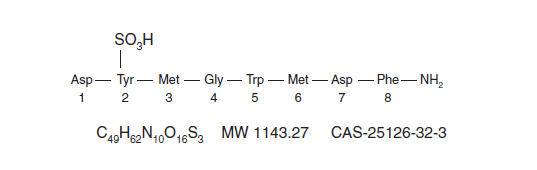
The pH is adjusted to 6.0 to 8.0 with hydrochloric acid and/or sodium hydroxide prior to lyophilization. Sincalide is designated chemically as L-α-aspartyl-O-sulfo-L-tyrosyl-L-methionylglycyl-L-tryptophyl-L-methionyl- L-α-aspartyl-L-phenylalaninamide. Graphic formula:
8.4 pediatric Use
The safety and effectiveness in pediatric patients have not been established.
8.5 geriatric Use
Clinical studies of Kinevac did not include sufficient numbers of subjects aged 65 and over to determine whether they respond differently from younger subjects.
4 contraindications
6 adverse Reactions
The following clinically significant adverse reactions are described elsewhere in labeling:
- Anaphylaxis, anaphylactic shock, and other serious hypersensitivity reactions [see Warnings and Precautions (5.1)]
- Evacuation of gallstones [see Warnings and Precautions (5.2)]
- Adverse reactions with intravenous injection [see Warnings and Precautions (5.3)]
- Preterm labor or spontaneous abortion [see Warnings and Precautions (5.4)]
The following adverse reactions associated with the use of Kinevac were identified in clinical trials or postmarketing reports. Because these reactions were reported voluntarily from a population of uncertain size, it is not always possible to estimate their frequency, reliably, or to establish a causal relationship to drug exposure.
The most frequent adverse reactions (20% or greater) are gastrointestinal: abdominal discomfort or pain, and nausea; these may not necessarily indicate an abnormality of the biliary tract unless there is other clinical or radiologic evidence of disease.
Less common adverse reactions include:
Hypersensitivity reactions: anaphylaxis and anaphylactic shock, hypotension, throat tightness, bradycardia, shortness of breath, nausea, abdominal cramping, diaphoresis, hives, rash, itching; and numbness of face, lips and eyes [see Contraindications (4), (5.1)].
Neurological reactions: seizures, headache.
Vasovagal reactions: dizziness, loss of consciousness, nausea, diaphoresis, syncope and hypotension (generally self-limiting).
Other: nausea, vomiting, flushing, hypertension, urge to defecate, diarrhea, sneezing.
7 drug Interactions
Drugs that Affect Gallbladder Motility or Contractile Response: May interfere with response to sincalide. Consider discontinuing these drugs prior to administration of Kinevac, when used to stimulate contraction of the gallbladder. (7.1)
12.2 pharmacodynamics
Following an intravenous (bolus) injection of 0.02 mcg/kg of sincalide, maximal contraction of the gallbladder occurred in 5 to 15 minutes. Sincalide reduced gallbladder radiographic size by at least 40%, which is generally considered satisfactory contraction.
1 indications and Usage
Kinevac is indicated in adults to:
- to stimulate gallbladder contraction, as may be assessed by various methods of diagnostic imaging, or to obtain by duodenal aspiration a sample of concentrated bile for analysis of cholesterol, bile salts, phospholipids, and crystals;
- to stimulate pancreatic secretion in combination with secretin prior to obtaining a duodenal aspirate for analysis of enzyme activity, composition, and cytology;
- to accelerate the transit of a barium meal through the small bowel, thereby decreasing the time and extent of radiation associated with fluoroscopy and x-ray examination of the intestinal tract.
12.1 mechanism of Action
When injected intravenously, sincalide stimulates gallbladder contraction and reduction in size. The evacuation of bile that results is similar to that which occurs physiologically in response to endogenous cholecystokinin. Sincalide also stimulates pancreatic secretion and intestinal motility causing pyloric contraction and slows gastric emptying.
Concurrent administration of sincalide with secretin increases both the volume of pancreatic secretion and the out-put of bicarbonate and enzymes. This combined effect of secretin and sincalide permits the assessment of specific pancreatic function through measurement and analysis of the duodenal aspirate.
5 warnings and Precautions
- Anaphylaxis, Anaphylactic Shock and Other Serious Hypersensitivity Reactions: Contains sodium metabisulfite. Serious reactions may occur during or soon after administration. If symptoms occur, discontinue the drug. (4, 5.1)
- Evacuation of Gallstones: Stimulation of gallbladder contraction in patients with small gallbladder stones could lead to the evacuation of the stones from the gallbladder, resulting in their lodging in the cystic duct or in the common bile duct. (5.2)
- Gastrointestinal Adverse Reactions with Intravenous Injection: Administration as an intravenous injection may cause transient nausea, vomiting, abdominal pain or cramping, dizziness or flushing. To reduce the risk of adverse reactions when used to stimulate contraction of the gallbladder or accelerate transit of a barium meal through the small intestine, administer as an intravenous infusion over 50 or 30 minutes, respectively. (2.1, 5.3)
- Preterm Labor or Spontaneous Abortion: Advise pregnant women of the potential risk for preterm labor and spontaneous abortion. (5.4, 8.1)
2 dosage and Administration
Recommended Adult Dosage and
Administration by Indication:
To Stimulate Contraction
of the Gallbladder
- 0.02 mcg/kg as a single dose over 30 to 60 seconds via intravenous injection. If satisfactory contraction does not occur in 15 minutes, administer a dose of 0.04 mcg/kg over 30 to 60 seconds. (2.1)
- Alternatively consider an intravenous infusion to reduce gastrointestinal adverse reactions: 0.12 mcg/kg diluted in 100 mL of 0.9% Sodium Chloride Injection USP and infused over 50 minutes at a rate of 2 mL per minute. (2.1, 2.2, 5.3)
To Stimulate Pancreatic Secretion in Combination with Secretin
- 30 minutes after initiation of secretin for injection, administer 0.02 mcg/kg diluted in 30 mL of 0.9% Sodium Chloride Injection USP and infused over 30 minutes at a rate of 1 mL per minute. (2.1, 2.2)
To Accelerate Transit of a Barium Meal Through the Small Intestine
- After the barium meal is beyond the proximal jejunum, administer 0.04 mcg/kg over 30 to 60 seconds via intravenous injection. (2.1)
- If satisfactory transit of the barium meal has not occurred in 30 minutes, administer a second dose of 0.04 mcg/kg over 30 to 60 seconds. (2.1)
- Alternatively consider an intravenous infusion to reduce gastrointestinal adverse reactions: 0.12 mcg/kg diluted in 100 mL 0.9% Sodium Chloride Injection USP and infused over 30 minutes. (2.1, 2.2, 5.3)
2.2 preparation Instructions
For Intravenous Injection
- Reconstitute Kinevac aseptically by adding 5 mL of Sterile Water for Injection USP to the vial.
- Inspect the reconstituted solution visually for particulate matter and discoloration after reconstitution and prior to administration.
- Withdraw the prescribed dose of the reconstituted solution from the vial and administer as an intravenous injection over 30 to 60 seconds, as shown in Table 1. Discard the unused portion.
- Store the reconstituted solution at room temperature. Discard after 8 hours.
- For single use only; discard unused portion.
For Intravenous Infusion
- Reconstitute Kinevac aseptically by adding 5 mL of Sterile Water for Injection USP to the vial.
- After reconstitution, withdraw the prescribed dose of the solution from the vial. Discard unused portion.
- Dilute the reconstituted solution in 30 mL or 100 mL of 0.9% Sodium Chloride Injection USP, depending on the indication, as described in Table 1.
- Inspect the Kinevac solutions visually for particulate matter and discoloration after reconstitution, dilution and prior to administration.
- Store the diluted solution at room temperature. Discard after 1 hour .
3 dosage Forms and Strengths
For injection: 5 mcg of sincalide as a lyophilized white powder for reconstitution in a single-dose vial.
5.2 evacuation of Gallstones
Stimulation of gallbladder contraction in patients with small gallbladder stones could lead to the evacuation of the stones from the gallbladder, resulting in their lodging in the cystic duct or in the common bile duct.
17 patient Counseling Information
Anaphylaxis, Anaphylactic Shock and Other Serious Hypersensitivity Reactions
Inform patients that serious hypersensitivity reactions, including anaphylaxis and anaphylactic shock have been reported during or following administration of Kinevac. Advise patients to report immediately to a healthcare provider if they experience symptoms of a hypersensitivity reaction [see Warnings and Precautions (5.1)].
Gastrointestinal Adverse Reactions
Advise patients that Kinevac may cause transient gastrointestinal symptoms [see Warnings and Precautions (5.3)].
Pregnancy
Advise pregnant women of the potential risk for preterm labor and spontaneous abortion [see Warnings and Precautions (5.4), Use in Specific Populations (8.1)].
U.S. Patent 6,803,046
Rx only
Manufactured for
Bracco
Diagnostics Inc.
Monroe Township, NJ 08831
By
Fresenius Kabi USA, LLC
Lake Zurich, Illinois 60047
16 how Supplied/storage and Handling
Kinevac (sincalide for injection) is supplied as 5 mcg of sincalide as a lyophilized white powder for reconstitution in a single-dose vial; in packages of 10 vials (NDC 0270-0556-15).
Store at 25° C (77° F); excursions permitted to 15-30° C (59-86° F) [See USP Controlled Room Temperature].
5.4 preterm Labor Or Spontaneous Abortion
Because of Kinevac’s effect on smooth muscle, pregnant patients should be advised that spontaneous abortion or premature induction of labor may occur [see Use in Specific Populations (8.1)].
2.1 recommended Dosage and Administration Instructions
The recommended dosage and administration of Kinevac by indication is shown in Table 1. For preparation instructions see Dosage and Administration (2.2).
Table 1: Recommended Adult Dosage and Administration of Kinevac by Treatment Indication
| Indication | Recommended Adult Dosage and Administration of KINEVAC |
| To stimulate contraction of the gallbladder |
Kinevac 0.02 mcg/kg as a single dose over 30 to 60 seconds via intravenous injection. If satisfactory contraction does not occur in 15 minutes, administer a dose of 0.04 mcg/kg over 30 to 60 seconds. Alternatively, Consider an Intravenous Infusion to Reduce Gastrointestinal Adverse Reactions [see Warnings and Precautions (5.3)] : 0.12 mcg/kg diluted in 100 mL of 0.9% Sodium Chloride Injection USP and infused over 50 minutes at a rate of 2 mL per minute. |
| To stimulate pancreatic secretion in combination with secretin for injection |
Secretin for Injection: 0.25 units/kg as intravenous infusion over 60 minutes Kinevac: 30 minutes after initiation of secretin infusion, administer Kinevac 0.02 mcg/kg diluted in 30 mL of 0.9% Sodium Chloride Injection USP and infused over 30 minutes at a rate of 1 mL per minute. |
| To accelerate the transit of a barium meal through the small intestine |
After the barium meal is beyond the proximal jejunum, administer Kinevac 0.04 mcg/kg over 30 to 60 seconds via intravenous injection. If satisfactory transit of the barium meal has not occurred in 30 minutes, administer a second dose of 0.04 mcg/kg over 30 to 60 seconds. Alternatively, Consider an Intravenous Infusion to Reduce Gastrointestinal Adverse Reactions [see Warnings and Precautions (5.3)] : 0.12 mcg/kg diluted in 100 mL 0.9% Sodium Chloride Injection USP and infused over 30 minutes. |
13.1 carcinogenesis, Mutagenesis, Impairment of Fertility
Long-term studies in animals have not been performed to evaluate carcinogenic or mutagenic potential, or possible impairment of fertility in males or females.
5.3 gastrointestinal Adverse Reactions With Intravenous Injection
Administration of Kinevac as an intravenous injection may cause adverse reactions such as nausea, vomiting, abdominal pain or cramping, dizziness, and flushing [see Adverse Reactions (6)]. These reactions are generally transient. To reduce the risk of adverse reactions with intravenous injection when used to stimulate contraction of the gallbladder or accelerate transit of a barium meal through the small intestine, administer Kinevac as an intravenous infusion over 50 or 30 minutes, respectively [see Dosage and Administration (2.1)].
7.1 drugs That Affect Gallbladder Motility Or Contractile Response
Drugs that may stimulate or inhibit gallbladder motility or contractile response may interfere with the response to sincalide. Consider discontinuing these drugs prior to administration of Kinevac, when used to stimulate contraction of the gallbladder.
5.1 anaphylaxis, Anaphylactic Shock and Other Serious Hypersensitivity Reactions
Contains sodium metabisulfite [see Description (11)], a sulfite that may cause allergic-type reactions including anaphylactic symptoms and life-threatening or less severe asthmatic episodes in certain susceptible people. The overall prevalence of sulfite sensitivity in the general population is unknown and probably low. Sulfite sensitivity is seen more frequently in asthmatic than in non-asthmatic people.
In postmarketing experience, anaphylaxis, anaphylactic shock and other serious hypersensitivity reactions have been reported during and within one hour following administration of Kinevac [see Adverse Reactions (6)].
Kinevac is contraindicated in patients with a history of hypersensitivity to sulfites. Due to the potential for anaphylaxis, appropriate medical support should be readily available when Kinevac is administered. If anaphylaxis or other hypersensitivity reactions occur, immediately discontinue the infusion and initiate appropriate medical treatment. Observe patients closely during and after the infusion. Do not reinitiate Kinevac in patients who have experienced symptoms of hypersensitivity [see Contraindications (4)].
Structured Label Content
Section 43683-2 (43683-2)
Section 51945-4 (51945-4)
Kinevac
5 mcg Vial Label
NDC: 0270-0556-15
10 overdosage (10 OVERDOSAGE)
In the event of an overdose, symptoms related to vagal stimulation, such as gastrointestinal symptoms (abdominal cramps, nausea, vomiting and diarrhea), hypotension with dizziness or fainting may occur. Overdosage symptoms should be treated symptomatically and should be of short duration.
A single bolus intravenous injection of 0.05 mcg/kg (approximately 2 to 3 times the human dose of 0.02 mcg/kg), sincalide caused hypotension and bradycardia in dogs. In addition, higher doses injected intravenously once or repeatedly in dogs caused syncope and ECG changes (approximately 5 times the human dose of 0.02 mcg/kg). These effects were attributed to sincalide-induced vagal stimulation in that all were prevented by pretreatment with atropine or bilateral vagotomy.
8.1 pregnancy (8.1 Pregnancy)
Risk Summary
Based on limited human data and mechanism of action, sincalide may cause preterm labor or spontaneous abortion [see Warnings and Precautions (5.4)]. Available data with sincalide for injection are insufficient to establish a drug-associated risk of major birth defects, miscarriage or adverse maternal or fetal outcomes. In animal embryo-fetal development studies in which sincalide was administered to hamsters and rats during the period of organogenesis, no effects were seen at doses comparable to the maximum recommended clinical dose on a mg/kg basis. However, in a prenatal development study in which rats were administered sincalide during organogenesis through parturition, decreased weight gain and developmental delays were observed at a dose 122 times higher than the maximum recommended human dose based on body surface area.
The estimated background risk of major birth defects and miscarriage for the indicated population is unknown. All pregnancies have a background risk of birth defect, loss, or other adverse outcomes. In the U.S. general population, the estimated background risk of major birth defects and miscarriage in clinically recognized pregnancies is 2 to 4% and 15 to 20%, respectively.
Data
Animal Data
There were no effects on embryo-fetal development in hamsters when sincalide was administered subcutaneously at 250 or 750 ng/kg during organogenesis (Gestation Days 7 to 13) at doses up to 0.8 times the maximum recommended dose of 120 ng/kg on a body surface area basis. No effects on embryo-fetal development were observed in Sprague-Dawley rats at subcutaneous doses of 250, 450, or 750 ng/kg from Gestation Days 6 to16, representing 1.0 time the maximum recommended human dose on a body surface area basis. In a separate study at a higher dose of 90 mcg/kg administered subcutaneously to CFY rats from Gestation Day 10 through parturition (representing 122 times the maximum recommended human dose on a body surface area basis), offspring showed decreased growth, behavioral changes, and developmental delays.
8.2 lactation (8.2 Lactation)
Risk Summary
There are no data regarding the presence of sincalide in human or animal milk, the effects on the breastfed infant, or the effects on milk production. The developmental and health benefits of breastfeeding should be considered along with the mother’s clinical need for Kinevac and any potential adverse effect on the breastfed infant from Kinevac or from the underlying condition.
11 description (11 DESCRIPTION)
Kinevac (sincalide for injection) is a cholecystopancreatic-gastrointestinal hormone for parenteral administration. The agent is a synthetically-prepared C-terminal octapeptide of cholecystokinin.
Each single-dose vial of sincalide provides a sterile nonpyrogenic lyophilized white powder consisting of 5 mcg sincalide with 30 mg arginine hydrochloride, 15 mg lysine hydrochloride, 170 mg mannitol, 4 mg methionine, 2 mg pentetic acid, 0.005 mcg polysorbate 20, 9 mg potassium phosphate dibasic, and 0.04 mg sodium metabisulfite.
The pH is adjusted to 6.0 to 8.0 with hydrochloric acid and/or sodium hydroxide prior to lyophilization. Sincalide is designated chemically as L-α-aspartyl-O-sulfo-L-tyrosyl-L-methionylglycyl-L-tryptophyl-L-methionyl- L-α-aspartyl-L-phenylalaninamide. Graphic formula:
8.4 pediatric Use (8.4 Pediatric Use)
The safety and effectiveness in pediatric patients have not been established.
8.5 geriatric Use (8.5 Geriatric Use)
Clinical studies of Kinevac did not include sufficient numbers of subjects aged 65 and over to determine whether they respond differently from younger subjects.
4 contraindications (4 CONTRAINDICATIONS)
6 adverse Reactions (6 ADVERSE REACTIONS)
The following clinically significant adverse reactions are described elsewhere in labeling:
- Anaphylaxis, anaphylactic shock, and other serious hypersensitivity reactions [see Warnings and Precautions (5.1)]
- Evacuation of gallstones [see Warnings and Precautions (5.2)]
- Adverse reactions with intravenous injection [see Warnings and Precautions (5.3)]
- Preterm labor or spontaneous abortion [see Warnings and Precautions (5.4)]
The following adverse reactions associated with the use of Kinevac were identified in clinical trials or postmarketing reports. Because these reactions were reported voluntarily from a population of uncertain size, it is not always possible to estimate their frequency, reliably, or to establish a causal relationship to drug exposure.
The most frequent adverse reactions (20% or greater) are gastrointestinal: abdominal discomfort or pain, and nausea; these may not necessarily indicate an abnormality of the biliary tract unless there is other clinical or radiologic evidence of disease.
Less common adverse reactions include:
Hypersensitivity reactions: anaphylaxis and anaphylactic shock, hypotension, throat tightness, bradycardia, shortness of breath, nausea, abdominal cramping, diaphoresis, hives, rash, itching; and numbness of face, lips and eyes [see Contraindications (4), (5.1)].
Neurological reactions: seizures, headache.
Vasovagal reactions: dizziness, loss of consciousness, nausea, diaphoresis, syncope and hypotension (generally self-limiting).
Other: nausea, vomiting, flushing, hypertension, urge to defecate, diarrhea, sneezing.
7 drug Interactions (7 DRUG INTERACTIONS)
Drugs that Affect Gallbladder Motility or Contractile Response: May interfere with response to sincalide. Consider discontinuing these drugs prior to administration of Kinevac, when used to stimulate contraction of the gallbladder. (7.1)
12.2 pharmacodynamics (12.2 Pharmacodynamics)
Following an intravenous (bolus) injection of 0.02 mcg/kg of sincalide, maximal contraction of the gallbladder occurred in 5 to 15 minutes. Sincalide reduced gallbladder radiographic size by at least 40%, which is generally considered satisfactory contraction.
1 indications and Usage (1 INDICATIONS AND USAGE)
Kinevac is indicated in adults to:
- to stimulate gallbladder contraction, as may be assessed by various methods of diagnostic imaging, or to obtain by duodenal aspiration a sample of concentrated bile for analysis of cholesterol, bile salts, phospholipids, and crystals;
- to stimulate pancreatic secretion in combination with secretin prior to obtaining a duodenal aspirate for analysis of enzyme activity, composition, and cytology;
- to accelerate the transit of a barium meal through the small bowel, thereby decreasing the time and extent of radiation associated with fluoroscopy and x-ray examination of the intestinal tract.
12.1 mechanism of Action (12.1 Mechanism of Action)
When injected intravenously, sincalide stimulates gallbladder contraction and reduction in size. The evacuation of bile that results is similar to that which occurs physiologically in response to endogenous cholecystokinin. Sincalide also stimulates pancreatic secretion and intestinal motility causing pyloric contraction and slows gastric emptying.
Concurrent administration of sincalide with secretin increases both the volume of pancreatic secretion and the out-put of bicarbonate and enzymes. This combined effect of secretin and sincalide permits the assessment of specific pancreatic function through measurement and analysis of the duodenal aspirate.
5 warnings and Precautions (5 WARNINGS AND PRECAUTIONS)
- Anaphylaxis, Anaphylactic Shock and Other Serious Hypersensitivity Reactions: Contains sodium metabisulfite. Serious reactions may occur during or soon after administration. If symptoms occur, discontinue the drug. (4, 5.1)
- Evacuation of Gallstones: Stimulation of gallbladder contraction in patients with small gallbladder stones could lead to the evacuation of the stones from the gallbladder, resulting in their lodging in the cystic duct or in the common bile duct. (5.2)
- Gastrointestinal Adverse Reactions with Intravenous Injection: Administration as an intravenous injection may cause transient nausea, vomiting, abdominal pain or cramping, dizziness or flushing. To reduce the risk of adverse reactions when used to stimulate contraction of the gallbladder or accelerate transit of a barium meal through the small intestine, administer as an intravenous infusion over 50 or 30 minutes, respectively. (2.1, 5.3)
- Preterm Labor or Spontaneous Abortion: Advise pregnant women of the potential risk for preterm labor and spontaneous abortion. (5.4, 8.1)
2 dosage and Administration (2 DOSAGE AND ADMINISTRATION)
Recommended Adult Dosage and
Administration by Indication:
To Stimulate Contraction
of the Gallbladder
- 0.02 mcg/kg as a single dose over 30 to 60 seconds via intravenous injection. If satisfactory contraction does not occur in 15 minutes, administer a dose of 0.04 mcg/kg over 30 to 60 seconds. (2.1)
- Alternatively consider an intravenous infusion to reduce gastrointestinal adverse reactions: 0.12 mcg/kg diluted in 100 mL of 0.9% Sodium Chloride Injection USP and infused over 50 minutes at a rate of 2 mL per minute. (2.1, 2.2, 5.3)
To Stimulate Pancreatic Secretion in Combination with Secretin
- 30 minutes after initiation of secretin for injection, administer 0.02 mcg/kg diluted in 30 mL of 0.9% Sodium Chloride Injection USP and infused over 30 minutes at a rate of 1 mL per minute. (2.1, 2.2)
To Accelerate Transit of a Barium Meal Through the Small Intestine
- After the barium meal is beyond the proximal jejunum, administer 0.04 mcg/kg over 30 to 60 seconds via intravenous injection. (2.1)
- If satisfactory transit of the barium meal has not occurred in 30 minutes, administer a second dose of 0.04 mcg/kg over 30 to 60 seconds. (2.1)
- Alternatively consider an intravenous infusion to reduce gastrointestinal adverse reactions: 0.12 mcg/kg diluted in 100 mL 0.9% Sodium Chloride Injection USP and infused over 30 minutes. (2.1, 2.2, 5.3)
2.2 preparation Instructions (2.2 Preparation Instructions)
For Intravenous Injection
- Reconstitute Kinevac aseptically by adding 5 mL of Sterile Water for Injection USP to the vial.
- Inspect the reconstituted solution visually for particulate matter and discoloration after reconstitution and prior to administration.
- Withdraw the prescribed dose of the reconstituted solution from the vial and administer as an intravenous injection over 30 to 60 seconds, as shown in Table 1. Discard the unused portion.
- Store the reconstituted solution at room temperature. Discard after 8 hours.
- For single use only; discard unused portion.
For Intravenous Infusion
- Reconstitute Kinevac aseptically by adding 5 mL of Sterile Water for Injection USP to the vial.
- After reconstitution, withdraw the prescribed dose of the solution from the vial. Discard unused portion.
- Dilute the reconstituted solution in 30 mL or 100 mL of 0.9% Sodium Chloride Injection USP, depending on the indication, as described in Table 1.
- Inspect the Kinevac solutions visually for particulate matter and discoloration after reconstitution, dilution and prior to administration.
- Store the diluted solution at room temperature. Discard after 1 hour .
3 dosage Forms and Strengths (3 DOSAGE FORMS AND STRENGTHS)
For injection: 5 mcg of sincalide as a lyophilized white powder for reconstitution in a single-dose vial.
5.2 evacuation of Gallstones (5.2 Evacuation of Gallstones)
Stimulation of gallbladder contraction in patients with small gallbladder stones could lead to the evacuation of the stones from the gallbladder, resulting in their lodging in the cystic duct or in the common bile duct.
17 patient Counseling Information (17 PATIENT COUNSELING INFORMATION)
Anaphylaxis, Anaphylactic Shock and Other Serious Hypersensitivity Reactions
Inform patients that serious hypersensitivity reactions, including anaphylaxis and anaphylactic shock have been reported during or following administration of Kinevac. Advise patients to report immediately to a healthcare provider if they experience symptoms of a hypersensitivity reaction [see Warnings and Precautions (5.1)].
Gastrointestinal Adverse Reactions
Advise patients that Kinevac may cause transient gastrointestinal symptoms [see Warnings and Precautions (5.3)].
Pregnancy
Advise pregnant women of the potential risk for preterm labor and spontaneous abortion [see Warnings and Precautions (5.4), Use in Specific Populations (8.1)].
U.S. Patent 6,803,046
Rx only
Manufactured for
Bracco
Diagnostics Inc.
Monroe Township, NJ 08831
By
Fresenius Kabi USA, LLC
Lake Zurich, Illinois 60047
16 how Supplied/storage and Handling (16 HOW SUPPLIED/STORAGE AND HANDLING)
Kinevac (sincalide for injection) is supplied as 5 mcg of sincalide as a lyophilized white powder for reconstitution in a single-dose vial; in packages of 10 vials (NDC 0270-0556-15).
Store at 25° C (77° F); excursions permitted to 15-30° C (59-86° F) [See USP Controlled Room Temperature].
5.4 preterm Labor Or Spontaneous Abortion (5.4 Preterm Labor or Spontaneous Abortion)
Because of Kinevac’s effect on smooth muscle, pregnant patients should be advised that spontaneous abortion or premature induction of labor may occur [see Use in Specific Populations (8.1)].
2.1 recommended Dosage and Administration Instructions (2.1 Recommended Dosage and Administration Instructions)
The recommended dosage and administration of Kinevac by indication is shown in Table 1. For preparation instructions see Dosage and Administration (2.2).
Table 1: Recommended Adult Dosage and Administration of Kinevac by Treatment Indication
| Indication | Recommended Adult Dosage and Administration of KINEVAC |
| To stimulate contraction of the gallbladder |
Kinevac 0.02 mcg/kg as a single dose over 30 to 60 seconds via intravenous injection. If satisfactory contraction does not occur in 15 minutes, administer a dose of 0.04 mcg/kg over 30 to 60 seconds. Alternatively, Consider an Intravenous Infusion to Reduce Gastrointestinal Adverse Reactions [see Warnings and Precautions (5.3)] : 0.12 mcg/kg diluted in 100 mL of 0.9% Sodium Chloride Injection USP and infused over 50 minutes at a rate of 2 mL per minute. |
| To stimulate pancreatic secretion in combination with secretin for injection |
Secretin for Injection: 0.25 units/kg as intravenous infusion over 60 minutes Kinevac: 30 minutes after initiation of secretin infusion, administer Kinevac 0.02 mcg/kg diluted in 30 mL of 0.9% Sodium Chloride Injection USP and infused over 30 minutes at a rate of 1 mL per minute. |
| To accelerate the transit of a barium meal through the small intestine |
After the barium meal is beyond the proximal jejunum, administer Kinevac 0.04 mcg/kg over 30 to 60 seconds via intravenous injection. If satisfactory transit of the barium meal has not occurred in 30 minutes, administer a second dose of 0.04 mcg/kg over 30 to 60 seconds. Alternatively, Consider an Intravenous Infusion to Reduce Gastrointestinal Adverse Reactions [see Warnings and Precautions (5.3)] : 0.12 mcg/kg diluted in 100 mL 0.9% Sodium Chloride Injection USP and infused over 30 minutes. |
13.1 carcinogenesis, Mutagenesis, Impairment of Fertility (13.1 Carcinogenesis, Mutagenesis, Impairment of Fertility)
Long-term studies in animals have not been performed to evaluate carcinogenic or mutagenic potential, or possible impairment of fertility in males or females.
5.3 gastrointestinal Adverse Reactions With Intravenous Injection (5.3 Gastrointestinal Adverse Reactions with Intravenous Injection)
Administration of Kinevac as an intravenous injection may cause adverse reactions such as nausea, vomiting, abdominal pain or cramping, dizziness, and flushing [see Adverse Reactions (6)]. These reactions are generally transient. To reduce the risk of adverse reactions with intravenous injection when used to stimulate contraction of the gallbladder or accelerate transit of a barium meal through the small intestine, administer Kinevac as an intravenous infusion over 50 or 30 minutes, respectively [see Dosage and Administration (2.1)].
7.1 drugs That Affect Gallbladder Motility Or Contractile Response (7.1 Drugs that Affect Gallbladder Motility or Contractile Response)
Drugs that may stimulate or inhibit gallbladder motility or contractile response may interfere with the response to sincalide. Consider discontinuing these drugs prior to administration of Kinevac, when used to stimulate contraction of the gallbladder.
5.1 anaphylaxis, Anaphylactic Shock and Other Serious Hypersensitivity Reactions (5.1 Anaphylaxis, Anaphylactic Shock and Other Serious Hypersensitivity Reactions)
Contains sodium metabisulfite [see Description (11)], a sulfite that may cause allergic-type reactions including anaphylactic symptoms and life-threatening or less severe asthmatic episodes in certain susceptible people. The overall prevalence of sulfite sensitivity in the general population is unknown and probably low. Sulfite sensitivity is seen more frequently in asthmatic than in non-asthmatic people.
In postmarketing experience, anaphylaxis, anaphylactic shock and other serious hypersensitivity reactions have been reported during and within one hour following administration of Kinevac [see Adverse Reactions (6)].
Kinevac is contraindicated in patients with a history of hypersensitivity to sulfites. Due to the potential for anaphylaxis, appropriate medical support should be readily available when Kinevac is administered. If anaphylaxis or other hypersensitivity reactions occur, immediately discontinue the infusion and initiate appropriate medical treatment. Observe patients closely during and after the infusion. Do not reinitiate Kinevac in patients who have experienced symptoms of hypersensitivity [see Contraindications (4)].
Advanced Ingredient Data
Raw Label Data
All Sections (JSON)
Additional Information
Back to search View SPL set listing Open on DailyMed ↗
Source: dailymed · Ingested: 2026-02-15T11:39:06.993801 · Updated: 2026-03-14T21:56:34.647389