cyproheptadine hydrochloride tablets, usp
0e43e99b-2e0b-4f55-b93a-a6908634880d
34391-3
HUMAN PRESCRIPTION DRUG LABEL
Drug Facts
Composition & Product
Identifiers & Packaging
Drug Interactions
MAO inhibitors prolong and intensify the anticholinergic effects of antihistamines. Antihistamines may have additive effects with alcohol and other CNS depressants, e.g., hypnotics, sedatives, tranquilizers, antianxiety agents.
How Supplied
Product: 50090-6129 NDC: 50090-6129-1 30 TABLET in a BOTTLE
Description
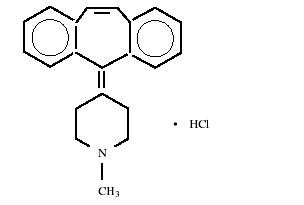
Cyproheptadine hydrochloride, USP is an antihistaminic and antiserotonergic agent. Cyproheptadine hydrochloride, USP is a white to slightly yellow, odorless or practically odorless, crystalline powder, with a molecular weight of 350.89, which is slightly soluble in water, freely soluble in methanol, soluble in chloroform, sparingly soluble in alcohol, practically insoluble in ether. It is the sesquihydrate of 4-(5H-dibenzo [a, d] cyclohepten-5-ylidene)-1-methylpiperidine hydrochloride. The molecular formula of the anhydrous salt is C 21 H 21 N•HCl and the structural formula of the anhydrous salt is: Molecular Formula: C 21 H 21 N• HCl Molecular Weight: 350.89 Cyproheptadine hydrochloride, USP is available for oral administration in 4 mg tablets. Inactive ingredients include: lactose monohydrate, magnesium stearate, microcrystalline cellulose, and sodium starch glycolate (botanical source: potato).
Medication Information
Drug Interactions
MAO inhibitors prolong and intensify the anticholinergic effects of antihistamines.
Antihistamines may have additive effects with alcohol and other CNS depressants, e.g., hypnotics, sedatives, tranquilizers, antianxiety agents.
How Supplied
Product: 50090-6129
NDC: 50090-6129-1 30 TABLET in a BOTTLE
Description
Cyproheptadine hydrochloride, USP is an antihistaminic and antiserotonergic agent. Cyproheptadine hydrochloride, USP is a white to slightly yellow, odorless or practically odorless, crystalline powder, with a molecular weight of 350.89, which is slightly soluble in water, freely soluble in methanol, soluble in chloroform, sparingly soluble in alcohol, practically insoluble in ether. It is the sesquihydrate of 4-(5H-dibenzo [a, d] cyclohepten-5-ylidene)-1-methylpiperidine hydrochloride. The molecular formula of the anhydrous salt is C 21 H 21 N•HCl and the structural formula of the anhydrous salt is: Molecular Formula: C 21 H 21 N• HCl Molecular Weight: 350.89 Cyproheptadine hydrochloride, USP is available for oral administration in 4 mg tablets. Inactive ingredients include: lactose monohydrate, magnesium stearate, microcrystalline cellulose, and sodium starch glycolate (botanical source: potato).
Adults
The total daily dose for adults should not exceed 0.5 mg /kg /day. The therapeutic range is 4 to 20 mg a day, with the majority of patients requiring 12 to 16 mg a day. An occasional patient may require as much as 32 mg a day for adequate relief. It is suggested that dosage be initiated with 4 mg (1 tablet) three times a day and adjusted according to the size and response of the patient.
Section 42229-5
Cyproheptadine hydrochloride, USP is an antihistaminic and antiserotonergic agent.
Cyproheptadine hydrochloride, USP is a white to slightly yellow, odorless or practically odorless, crystalline powder, with a molecular weight of 350.89, which is slightly soluble in water, freely soluble in methanol, soluble in chloroform, sparingly soluble in alcohol, practically insoluble in ether. It is the sesquihydrate of 4-(5H-dibenzo [a, d] cyclohepten-5-ylidene)-1-methylpiperidine hydrochloride. The molecular formula of the anhydrous salt is C21H21N•HCl and the structural formula of the anhydrous salt is:
Molecular Formula: C21H21N• HCl
Molecular Weight: 350.89
Cyproheptadine hydrochloride, USP is available for oral administration in 4 mg tablets. Inactive ingredients include: lactose monohydrate, magnesium stearate, microcrystalline cellulose, and sodium starch glycolate (botanical source: potato).
General
Cyproheptadine has an atropine-like action and, therefore, should be used with caution in patients with:
History of bronchial asthma Increased intraocular pressure Hyperthyroidism
Cardiovascular disease
Hypertension
Pregnancy
Pregnancy Category B
Reproduction studies have been performed in rabbits, mice, and rats at oral or subcutaneous doses up to 32 times the maximum recommended human oral dose and have revealed no evidence of impaired fertility or harm to the fetus due to cyproheptadine. Cyproheptadine has been shown to be fetotoxic in rats when given by intraperitoneal injection in doses four times the maximum recommended human oral dose. Two studies in pregnant women, however, have not shown that cyproheptadine increases the risk of abnormalities when administered during the first, second and third trimesters of pregnancy. No teratogenic effects were observed in any of the newborns. Nevertheless, because the studies in humans cannot rule out the possibility of harm, cyproheptadine should be used during pregnancy only if clearly needed.
Geriatric Use
Clinical studies of cyproheptadine hydrochloride tablets did not include sufficient numbers of subjects aged 65 and over to determine whether they respond differently from younger subjects. Other reported clinical experience has not identified differences in responses between the elderly and younger patients. In general, dose selection for an elderly patient should be cautious, usually starting at the low end of the dosing range, reflecting the greater frequency of decreased hepatic, renal, or cardiac function, and of concomitant disease or other drug therapy (see WARNINGS, Activities Requiring Mental Alertness).
Pediatric Use
Safety and effectiveness in pediatric patients below the age of two have not been established (see CONTRAINDICATIONS, Newborn or Premature Infants, and WARNINGS, Pediatric Patients).
Cns Depressants
Antihistamines may have additive effects with alcohol and other CNS depressants, e.g., hypnotics, sedatives, tranquilizers, antianxiety agents.
Nursing Mothers
Because of the higher risk of antihistamines for infants generally and for newborns and prematures in particular, antihistamine therapy is contraindicated in nursing mothers.
Other Conditions
Hypersensitivity to cyproheptadine and other drugs of similar chemical structure.
Monoamine oxidase inhibitor therapy (See DRUG INT ERACT IONS.)
Angle-closure glaucoma
Stenosing peptic ulcer
Symptomatic prostatic hypertrophy
Bladder neck obstruction
Pyloroduodenal obstruction
Elderly, debilitated patients
Pediatric Patients
Overdosage of antihistamines, particularly in infants and young children, may produce hallucinations, central nervous system depression, convulsions, respiratory and cardiac arrest, and death.
Antihistamines may diminish mental alertness; conversely, particularly, in the young child, they may occasionally produce excitation.
Information for Patients
Antihistamines may diminish mental alertness; conversely, particularly, in the young child, they may occasionally produce excitation. Patients should be warned about engaging in activities requiring mental alertness and motor coordination, such as driving a car or operating machinery.
Cyproheptadine Hydrochloride
Newborn Or Premature Infants
This drug should not be used in newborn or premature infants.
Pharmacokinetics and Metabolism
After a single 4 mg oral dose of 14C-labelled cyproheptadine hydrochloride in normal subjects, given as tablets, 2 to 20 % of the radio activity was excreted in the stools. Only about 34 % of the stool radio activity was unchanged drug, corresponding to less than 5.7% of the dose. At least 40% of the administered radio activity was excreted in the urine. No detectable amounts of unchanged drug were present in the urine of patients on chronic 12 to 20 mg daily doses. The principle metabolite found in human urine has been identified as a quaternary ammonium glucuronide conjugate of cyproheptadine. Elimination is diminished in renal insufficiency.
Activities Requiring Mental Alertness
Patients should be warned about engaging in activities requiring mental alertness and motor coordination, such as driving a car or operating machinery.
Antihistamines are more likely to cause dizziness, sedation, and hypotension in elderly patients (see PRECAUTIONS, Geriatric Use).
Carcinogenesis, Mutagenesis, Impairment of Fertility
Long -term carcinogenic studies have not been done with cyproheptadine.
Cyproheptadine had no effect on fertility in a two -litter study in rats or a two generation study in mice at about 10 times the human dose.
Cyproheptadine did not produce chromosome damage in human lymphocytes or fibro blasts invitro; high doses (10-4M) were cytotoxic. Cyproheptadine did not have any mutagenic effect in the Ames microbial mutagen test; concentrations of above 500 mcg/plate inhibited bacterial growth.
Structured Label Content
Drug Interactions
MAO inhibitors prolong and intensify the anticholinergic effects of antihistamines.
Antihistamines may have additive effects with alcohol and other CNS depressants, e.g., hypnotics, sedatives, tranquilizers, antianxiety agents.
How Supplied (HOW SUPPLIED)
Product: 50090-6129
NDC: 50090-6129-1 30 TABLET in a BOTTLE
Adults
The total daily dose for adults should not exceed 0.5 mg /kg /day. The therapeutic range is 4 to 20 mg a day, with the majority of patients requiring 12 to 16 mg a day. An occasional patient may require as much as 32 mg a day for adequate relief. It is suggested that dosage be initiated with 4 mg (1 tablet) three times a day and adjusted according to the size and response of the patient.
Section 42229-5 (42229-5)
Cyproheptadine hydrochloride, USP is an antihistaminic and antiserotonergic agent.
Cyproheptadine hydrochloride, USP is a white to slightly yellow, odorless or practically odorless, crystalline powder, with a molecular weight of 350.89, which is slightly soluble in water, freely soluble in methanol, soluble in chloroform, sparingly soluble in alcohol, practically insoluble in ether. It is the sesquihydrate of 4-(5H-dibenzo [a, d] cyclohepten-5-ylidene)-1-methylpiperidine hydrochloride. The molecular formula of the anhydrous salt is C21H21N•HCl and the structural formula of the anhydrous salt is:
Molecular Formula: C21H21N• HCl
Molecular Weight: 350.89
Cyproheptadine hydrochloride, USP is available for oral administration in 4 mg tablets. Inactive ingredients include: lactose monohydrate, magnesium stearate, microcrystalline cellulose, and sodium starch glycolate (botanical source: potato).
General
Cyproheptadine has an atropine-like action and, therefore, should be used with caution in patients with:
History of bronchial asthma Increased intraocular pressure Hyperthyroidism
Cardiovascular disease
Hypertension
Pregnancy
Pregnancy Category B
Reproduction studies have been performed in rabbits, mice, and rats at oral or subcutaneous doses up to 32 times the maximum recommended human oral dose and have revealed no evidence of impaired fertility or harm to the fetus due to cyproheptadine. Cyproheptadine has been shown to be fetotoxic in rats when given by intraperitoneal injection in doses four times the maximum recommended human oral dose. Two studies in pregnant women, however, have not shown that cyproheptadine increases the risk of abnormalities when administered during the first, second and third trimesters of pregnancy. No teratogenic effects were observed in any of the newborns. Nevertheless, because the studies in humans cannot rule out the possibility of harm, cyproheptadine should be used during pregnancy only if clearly needed.
Geriatric Use
Clinical studies of cyproheptadine hydrochloride tablets did not include sufficient numbers of subjects aged 65 and over to determine whether they respond differently from younger subjects. Other reported clinical experience has not identified differences in responses between the elderly and younger patients. In general, dose selection for an elderly patient should be cautious, usually starting at the low end of the dosing range, reflecting the greater frequency of decreased hepatic, renal, or cardiac function, and of concomitant disease or other drug therapy (see WARNINGS, Activities Requiring Mental Alertness).
Pediatric Use
Safety and effectiveness in pediatric patients below the age of two have not been established (see CONTRAINDICATIONS, Newborn or Premature Infants, and WARNINGS, Pediatric Patients).
Cns Depressants (CNS Depressants)
Antihistamines may have additive effects with alcohol and other CNS depressants, e.g., hypnotics, sedatives, tranquilizers, antianxiety agents.
Nursing Mothers
Because of the higher risk of antihistamines for infants generally and for newborns and prematures in particular, antihistamine therapy is contraindicated in nursing mothers.
Other Conditions
Hypersensitivity to cyproheptadine and other drugs of similar chemical structure.
Monoamine oxidase inhibitor therapy (See DRUG INT ERACT IONS.)
Angle-closure glaucoma
Stenosing peptic ulcer
Symptomatic prostatic hypertrophy
Bladder neck obstruction
Pyloroduodenal obstruction
Elderly, debilitated patients
Pediatric Patients
Overdosage of antihistamines, particularly in infants and young children, may produce hallucinations, central nervous system depression, convulsions, respiratory and cardiac arrest, and death.
Antihistamines may diminish mental alertness; conversely, particularly, in the young child, they may occasionally produce excitation.
Information for Patients
Antihistamines may diminish mental alertness; conversely, particularly, in the young child, they may occasionally produce excitation. Patients should be warned about engaging in activities requiring mental alertness and motor coordination, such as driving a car or operating machinery.
Cyproheptadine Hydrochloride (CYPROHEPTADINE HYDROCHLORIDE)
Newborn Or Premature Infants (Newborn or Premature Infants)
This drug should not be used in newborn or premature infants.
Pharmacokinetics and Metabolism
After a single 4 mg oral dose of 14C-labelled cyproheptadine hydrochloride in normal subjects, given as tablets, 2 to 20 % of the radio activity was excreted in the stools. Only about 34 % of the stool radio activity was unchanged drug, corresponding to less than 5.7% of the dose. At least 40% of the administered radio activity was excreted in the urine. No detectable amounts of unchanged drug were present in the urine of patients on chronic 12 to 20 mg daily doses. The principle metabolite found in human urine has been identified as a quaternary ammonium glucuronide conjugate of cyproheptadine. Elimination is diminished in renal insufficiency.
Activities Requiring Mental Alertness
Patients should be warned about engaging in activities requiring mental alertness and motor coordination, such as driving a car or operating machinery.
Antihistamines are more likely to cause dizziness, sedation, and hypotension in elderly patients (see PRECAUTIONS, Geriatric Use).
Carcinogenesis, Mutagenesis, Impairment of Fertility
Long -term carcinogenic studies have not been done with cyproheptadine.
Cyproheptadine had no effect on fertility in a two -litter study in rats or a two generation study in mice at about 10 times the human dose.
Cyproheptadine did not produce chromosome damage in human lymphocytes or fibro blasts invitro; high doses (10-4M) were cytotoxic. Cyproheptadine did not have any mutagenic effect in the Ames microbial mutagen test; concentrations of above 500 mcg/plate inhibited bacterial growth.
Advanced Ingredient Data
Raw Label Data
All Sections (JSON)
Additional Information
Back to search View SPL set listing Open on DailyMed ↗
Source: dailymed · Ingested: 2026-02-15T11:39:13.276740 · Updated: 2026-03-14T21:56:58.197015