Capecitabine Tablets
0c873e5b-51c2-4685-86c5-53f98563b093
34391-3
HUMAN PRESCRIPTION DRUG LABEL
Drug Facts
Composition & Product
Identifiers & Packaging
Indications and Usage
Capecitabine tablets is a nucleoside metabolic inhibitor indicated for: Colorectal Cancer adjuvant treatment of patients with Stage III colon cancer as a single agent or as a component of a combination chemotherapy regimen. ( 1.1 ) perioperative treatment of adults with locally advanced rectal cancer as a component of chemoradiotherapy. ( 1.1 ) treatment of patients with unresectable or metastatic colorectal cancer as a single agent or as a component of a combination chemotherapy regimen. ( 1.1 ) Breast Cancer treatment of patients with advanced or metastatic breast cancer as a single agent if an anthracycline- or taxane-containing chemotherapy is not indicated. ( 1.2 ) treatment of patients with advanced or metastatic breast cancer in combination with docetaxel after disease progression on prior anthracycline-containing chemotherapy. ( 1.2 ) Gastric, Esophageal, or Gastroesophageal Junction Cancer treatment of adults with unresectable or metastatic gastric, esophageal, or gastroesophageal junction cancer as a component of a combination chemotherapy regimen. ( 1.3 ) treatment of adults with HER2-overexpressing metastatic gastric or gastroesophageal junction adenocarcinoma who have not received prior treatment for metastatic disease as a component of a combination regimen. ( 1.3 ) Pancreatic Cancer adjuvant treatment of adults with pancreatic adenocarcinoma as a component of a combination chemotherapy regimen. ( 1.4 )
Dosage and Administration
Adjuvant Treatment of Colon Cancer Single agent: 1,250 mg/m 2 twice daily orally for the first 14 days of each 21-day cycle for a maximum of 8 cycles. ( 2.1 ) In combination with Oxaliplatin-Containing Regimens: 1,000 mg/m 2 orally twice daily for the first 14 days of each 21-day cycle for a maximum of 8 cycles in combination with oxaliplatin 130 mg/m 2 administered intravenously on day 1 of each cycle. ( 2.1 ) Perioperative Treatment of Rectal Cancer With Concomitant Radiation Therapy: 825 mg/m 2 orally twice daily ( 2.1 ) Without Radiation Therapy: 1,250 mg/m 2 orally twice daily ( 2.1 ) Unresectable or Metastatic Colorectal Cancer: Single agent: 1,250 mg/m 2 twice daily orally for the first 14 days of each 21-day cycle until disease progression or unacceptable toxicity. ( 2.1 ) In Combination with Oxaliplatin: 1,000 mg/m 2 orally twice daily for the first 14 days of each 21-day cycle until disease progression or unacceptable toxicity in combination with oxaliplatin 130 mg/m 2 administered intravenously on day 1 of each cycle. ( 2.1 ) Advanced or Metastatic Breast Cancer: Single agent: 1,000 mg/m 2 or 1,250 mg/m 2 twice daily orally for the first 14 days of each 21-day cycle until disease progression or unacceptable toxicity. ( 2.2 ) In combination with docetaxel: 1,000 mg/m 2 or 1,250 mg/m 2 orally twice daily for the first 14 days of a 21-day cycle, until disease progression or unacceptable toxicity in combination with docetaxel at 75 mg/m 2 administered intravenously on day 1 of each cycle ( 2.2 ) Unresectable or Metastatic Gastric, Esophageal, or Gastroesophageal Junction Cancer 625 mg/m 2 orally twice daily on days 1 to 21 of each 21-day cycle for a maximum of 8 cycles in combination with platinum-containing chemotherapy. ( 2.3 ) OR 850 mg/m 2 or 1,000 mg/m 2 orally twice daily for the first 14 days of each 21-day cycle until disease progression or unacceptable toxicity in combination with oxaliplatin 130 mg/m 2 administered intravenously on day 1 of each cycle. ( 2.3 ) HER2-overexpressing metastatic adenocarcinoma of the gastroesophageal junction or stomach 1,000 mg/m 2 orally twice daily for the first 14 days of each 21-day cycle until disease progression or unacceptable toxicity in combination with cisplatin and trastuzumab. ( 2.3 ) Pancreatic cancer 830 mg/m 2 orally twice daily for the first 21 days of each 28-day cycle for maximum of 6 cycles in combination with gemcitabine 1,000 mg/m 2 administered intravenously on days 1, 8, and 15 of each cycle. ( 2.4 ) Refer to Sections 2.5 and 2.6 for information related to dosage modifications for adverse reactions and renal impairment ( 2.5 and 2.6 ).
Contraindications
Capecitabine is contraindicated in patients with history of severe hypersensitivity reaction to fluorouracil or capecitabine [see Adverse Reactions (6.1) ] .
Warnings and Precautions
Serious Adverse Reactions from Dihydropyrimidine Dehydrogenase (DPD) Deficiency : Patients with certain homozygous or compound heterozygous variants in the DPYD gene are at increased risk for acute early-onset toxicity and serious, including fatal, adverse reactions due to capecitabine (e.g., mucositis, diarrhea, neutropenia, and neurotoxicity). Capecitabine is not recommended for use in patients known to have certain homozygous or compound heterozygous DPYD variants that result in complete absence of DPD activity. Withhold or permanently discontinue based on clinical assessment. No capecitabine dose has been proven safe in patients with complete absence of DPD activity. ( 5.2 ) Cardiotoxicity : May be more common in patients with a prior history of coronary artery disease. Withhold capecitabine for cardiotoxicity as appropriate. The safety of resumption of capecitabine in patients with cardiotoxicity that has resolved has not been established. ( 2.5 , 5.3 ) Diarrhea : Withhold capecitabine and then resume at same or reduced dose, or permanently discontinue, based on severity and occurrence. (2.5, 5.4) Dehydration : Optimize hydration before starting capecitabine. Monitor hydration status and kidney function at baseline and as clinically indicated. Withhold capecitabine and then resume at same or reduced dose, or permanently discontinue, based on severity and occurrence. ( 2.5 , 5.5 ) Renal Toxicity : Monitor renal function at baseline and as clinically indicated. Optimize hydration before starting capecitabine. Withhold capecitabine and then resume at same or reduced dose, or permanently discontinue, based on severity and occurrence. ( 2.5 , 5.6 ) Serious Skin Toxicities : Monitor for new or worsening serious skin reactions. Permanently discontinue capecitabine in patients who experience a severe cutaneous adverse reaction. ( 5.7 ) Palmar-Plantar Erythrodysesthesia Syndrome : Withhold capecitabine then resume at same or reduced dose, or permanently discontinue, based on severity and occurrence. ( 2.5 , 5.8 ) Myelosuppression : Monitor complete blood count at baseline and before each cycle. Capecitabine is not recommended in patients with baseline neutrophil counts <1.5 × 10 9 /L or platelet counts <100 × 10 9 /L. For grade 3 or 4 myelosuppression, withhold capecitabine and then resume at same or reduced dose, or permanently discontinue, based on occurrence. ( 2.5 , 5.9 ) Hyperbilirubinemia : Patients with Grade 3-4 hyperbilirubinemia may resume treatment once the event is Grade 2 or less (≤3 × ULN), using the percent of current dose as shown in column 3 of Table 1 ( 2.5 , 5.10 ) Embryo-Fetal Toxicity : Can cause fetal harm. Advise patients of the potential risk to a fetus and to use effective contraception. ( 5.11 , 8.1 , 8.3 )
Adverse Reactions
The following clinically significant adverse reactions are described elsewhere in the labeling: Cardiotoxicity [see Warnings and Precautions (5.3) ] Diarrhea [see Warnings and Precautions (5.4) ] Dehydration [see Warnings and Precautions (5.5) ] Renal Toxicity [see Warnings and Precautions (5.6) ] Serious Skin Toxicities [see Warnings and Precautions (5.7) ] Palmar-Plantar Erythrodysesthesia Syndrome [see Warnings and Precautions (5.8) ] Myelosuppression [see Warnings and Precautions (5.9) ] Hyperbilirubinemia [see Warnings and Precautions (5.10) ]
Drug Interactions
Allopurinol: Avoid concomitant use of allopurinol with capecitabine. ( 7.1 ) Leucovorin: Closely monitor for toxicities when capecitabine is coadministered with leucovorin. ( 7.1 ) CYP2C9 substrates: Closely monitor for adverse reactions when CYP2C9 substrates are coadministered with capecitabine. ( 7.2 ) Vitamin K antagonists: Monitor INR more frequently and dose adjust oral vitamin K antagonist as appropriate Phenytoin : Closely monitor phenytoin levels in patients taking capecitabine concomitantly with phenytoin and adjust the phenytoin dose as appropriate. ( 7.2 ) Nephrotoxic drugs : Closely monitor for signs of renal toxicity when capecitabine is used concomitantly with nephrotoxic drugs. ( 7.3 )
How Supplied
Capecitabine tablets are supplied as follows: Capecitabine Tablets 150 mg: Light peach colored, biconvex, oblong shaped film coated tablets, debossed with “C150” on one side and plain on other side; available in bottles of 60 tablets (NDC 82511-001-15), individually packaged in a carton. Capecitabine Tablets 500 mg: Peach colored biconvex, oblong shaped film-coated tablets, debossed with “C500” on one side and plain on the other side; available in bottles of 120 tablets (NDC 82511-002-50), individually packaged in a carton.
Storage and Handling
Capecitabine tablets are supplied as follows: Capecitabine Tablets 150 mg: Light peach colored, biconvex, oblong shaped film coated tablets, debossed with “C150” on one side and plain on other side; available in bottles of 60 tablets (NDC 82511-001-15), individually packaged in a carton. Capecitabine Tablets 500 mg: Peach colored biconvex, oblong shaped film-coated tablets, debossed with “C500” on one side and plain on the other side; available in bottles of 120 tablets (NDC 82511-002-50), individually packaged in a carton.
Description
Altered coagulation parameters and/or bleeding, including death, have been reported in patients taking Capecitabine concomitantly with oral vitamin K antagonists, such as warfarin [see Warnings and Precautions (5.1) , Drug Interactions (7.2) ] . Clinically significant increases in prothrombin time (PT) and international normalized ratio (INR) have been reported in patients who were on stable doses of a vitamin K antagonist at the time Capecitabine was introduced. These events occurred within several days and up to several months after initiating Capecitabine and, in a few cases, within 1 month after stopping Capecitabine. These events occurred in patients with and without liver metastases. Monitor INR more frequently and adjust the dose of the vitamin K antagonist as appropriate [see Drug Interactions (7.2) ] .
Medication Information
Warnings and Precautions
Serious Adverse Reactions from Dihydropyrimidine Dehydrogenase (DPD) Deficiency : Patients with certain homozygous or compound heterozygous variants in the DPYD gene are at increased risk for acute early-onset toxicity and serious, including fatal, adverse reactions due to capecitabine (e.g., mucositis, diarrhea, neutropenia, and neurotoxicity). Capecitabine is not recommended for use in patients known to have certain homozygous or compound heterozygous DPYD variants that result in complete absence of DPD activity. Withhold or permanently discontinue based on clinical assessment. No capecitabine dose has been proven safe in patients with complete absence of DPD activity. ( 5.2 ) Cardiotoxicity : May be more common in patients with a prior history of coronary artery disease. Withhold capecitabine for cardiotoxicity as appropriate. The safety of resumption of capecitabine in patients with cardiotoxicity that has resolved has not been established. ( 2.5 , 5.3 ) Diarrhea : Withhold capecitabine and then resume at same or reduced dose, or permanently discontinue, based on severity and occurrence. (2.5, 5.4) Dehydration : Optimize hydration before starting capecitabine. Monitor hydration status and kidney function at baseline and as clinically indicated. Withhold capecitabine and then resume at same or reduced dose, or permanently discontinue, based on severity and occurrence. ( 2.5 , 5.5 ) Renal Toxicity : Monitor renal function at baseline and as clinically indicated. Optimize hydration before starting capecitabine. Withhold capecitabine and then resume at same or reduced dose, or permanently discontinue, based on severity and occurrence. ( 2.5 , 5.6 ) Serious Skin Toxicities : Monitor for new or worsening serious skin reactions. Permanently discontinue capecitabine in patients who experience a severe cutaneous adverse reaction. ( 5.7 ) Palmar-Plantar Erythrodysesthesia Syndrome : Withhold capecitabine then resume at same or reduced dose, or permanently discontinue, based on severity and occurrence. ( 2.5 , 5.8 ) Myelosuppression : Monitor complete blood count at baseline and before each cycle. Capecitabine is not recommended in patients with baseline neutrophil counts <1.5 × 10 9 /L or platelet counts <100 × 10 9 /L. For grade 3 or 4 myelosuppression, withhold capecitabine and then resume at same or reduced dose, or permanently discontinue, based on occurrence. ( 2.5 , 5.9 ) Hyperbilirubinemia : Patients with Grade 3-4 hyperbilirubinemia may resume treatment once the event is Grade 2 or less (≤3 × ULN), using the percent of current dose as shown in column 3 of Table 1 ( 2.5 , 5.10 ) Embryo-Fetal Toxicity : Can cause fetal harm. Advise patients of the potential risk to a fetus and to use effective contraception. ( 5.11 , 8.1 , 8.3 )
Indications and Usage
Capecitabine tablets is a nucleoside metabolic inhibitor indicated for: Colorectal Cancer adjuvant treatment of patients with Stage III colon cancer as a single agent or as a component of a combination chemotherapy regimen. ( 1.1 ) perioperative treatment of adults with locally advanced rectal cancer as a component of chemoradiotherapy. ( 1.1 ) treatment of patients with unresectable or metastatic colorectal cancer as a single agent or as a component of a combination chemotherapy regimen. ( 1.1 ) Breast Cancer treatment of patients with advanced or metastatic breast cancer as a single agent if an anthracycline- or taxane-containing chemotherapy is not indicated. ( 1.2 ) treatment of patients with advanced or metastatic breast cancer in combination with docetaxel after disease progression on prior anthracycline-containing chemotherapy. ( 1.2 ) Gastric, Esophageal, or Gastroesophageal Junction Cancer treatment of adults with unresectable or metastatic gastric, esophageal, or gastroesophageal junction cancer as a component of a combination chemotherapy regimen. ( 1.3 ) treatment of adults with HER2-overexpressing metastatic gastric or gastroesophageal junction adenocarcinoma who have not received prior treatment for metastatic disease as a component of a combination regimen. ( 1.3 ) Pancreatic Cancer adjuvant treatment of adults with pancreatic adenocarcinoma as a component of a combination chemotherapy regimen. ( 1.4 )
Dosage and Administration
Adjuvant Treatment of Colon Cancer Single agent: 1,250 mg/m 2 twice daily orally for the first 14 days of each 21-day cycle for a maximum of 8 cycles. ( 2.1 ) In combination with Oxaliplatin-Containing Regimens: 1,000 mg/m 2 orally twice daily for the first 14 days of each 21-day cycle for a maximum of 8 cycles in combination with oxaliplatin 130 mg/m 2 administered intravenously on day 1 of each cycle. ( 2.1 ) Perioperative Treatment of Rectal Cancer With Concomitant Radiation Therapy: 825 mg/m 2 orally twice daily ( 2.1 ) Without Radiation Therapy: 1,250 mg/m 2 orally twice daily ( 2.1 ) Unresectable or Metastatic Colorectal Cancer: Single agent: 1,250 mg/m 2 twice daily orally for the first 14 days of each 21-day cycle until disease progression or unacceptable toxicity. ( 2.1 ) In Combination with Oxaliplatin: 1,000 mg/m 2 orally twice daily for the first 14 days of each 21-day cycle until disease progression or unacceptable toxicity in combination with oxaliplatin 130 mg/m 2 administered intravenously on day 1 of each cycle. ( 2.1 ) Advanced or Metastatic Breast Cancer: Single agent: 1,000 mg/m 2 or 1,250 mg/m 2 twice daily orally for the first 14 days of each 21-day cycle until disease progression or unacceptable toxicity. ( 2.2 ) In combination with docetaxel: 1,000 mg/m 2 or 1,250 mg/m 2 orally twice daily for the first 14 days of a 21-day cycle, until disease progression or unacceptable toxicity in combination with docetaxel at 75 mg/m 2 administered intravenously on day 1 of each cycle ( 2.2 ) Unresectable or Metastatic Gastric, Esophageal, or Gastroesophageal Junction Cancer 625 mg/m 2 orally twice daily on days 1 to 21 of each 21-day cycle for a maximum of 8 cycles in combination with platinum-containing chemotherapy. ( 2.3 ) OR 850 mg/m 2 or 1,000 mg/m 2 orally twice daily for the first 14 days of each 21-day cycle until disease progression or unacceptable toxicity in combination with oxaliplatin 130 mg/m 2 administered intravenously on day 1 of each cycle. ( 2.3 ) HER2-overexpressing metastatic adenocarcinoma of the gastroesophageal junction or stomach 1,000 mg/m 2 orally twice daily for the first 14 days of each 21-day cycle until disease progression or unacceptable toxicity in combination with cisplatin and trastuzumab. ( 2.3 ) Pancreatic cancer 830 mg/m 2 orally twice daily for the first 21 days of each 28-day cycle for maximum of 6 cycles in combination with gemcitabine 1,000 mg/m 2 administered intravenously on days 1, 8, and 15 of each cycle. ( 2.4 ) Refer to Sections 2.5 and 2.6 for information related to dosage modifications for adverse reactions and renal impairment ( 2.5 and 2.6 ).
Contraindications
Capecitabine is contraindicated in patients with history of severe hypersensitivity reaction to fluorouracil or capecitabine [see Adverse Reactions (6.1) ] .
Adverse Reactions
The following clinically significant adverse reactions are described elsewhere in the labeling: Cardiotoxicity [see Warnings and Precautions (5.3) ] Diarrhea [see Warnings and Precautions (5.4) ] Dehydration [see Warnings and Precautions (5.5) ] Renal Toxicity [see Warnings and Precautions (5.6) ] Serious Skin Toxicities [see Warnings and Precautions (5.7) ] Palmar-Plantar Erythrodysesthesia Syndrome [see Warnings and Precautions (5.8) ] Myelosuppression [see Warnings and Precautions (5.9) ] Hyperbilirubinemia [see Warnings and Precautions (5.10) ]
Drug Interactions
Allopurinol: Avoid concomitant use of allopurinol with capecitabine. ( 7.1 ) Leucovorin: Closely monitor for toxicities when capecitabine is coadministered with leucovorin. ( 7.1 ) CYP2C9 substrates: Closely monitor for adverse reactions when CYP2C9 substrates are coadministered with capecitabine. ( 7.2 ) Vitamin K antagonists: Monitor INR more frequently and dose adjust oral vitamin K antagonist as appropriate Phenytoin : Closely monitor phenytoin levels in patients taking capecitabine concomitantly with phenytoin and adjust the phenytoin dose as appropriate. ( 7.2 ) Nephrotoxic drugs : Closely monitor for signs of renal toxicity when capecitabine is used concomitantly with nephrotoxic drugs. ( 7.3 )
Storage and Handling
Capecitabine tablets are supplied as follows: Capecitabine Tablets 150 mg: Light peach colored, biconvex, oblong shaped film coated tablets, debossed with “C150” on one side and plain on other side; available in bottles of 60 tablets (NDC 82511-001-15), individually packaged in a carton. Capecitabine Tablets 500 mg: Peach colored biconvex, oblong shaped film-coated tablets, debossed with “C500” on one side and plain on the other side; available in bottles of 120 tablets (NDC 82511-002-50), individually packaged in a carton.
How Supplied
Capecitabine tablets are supplied as follows: Capecitabine Tablets 150 mg: Light peach colored, biconvex, oblong shaped film coated tablets, debossed with “C150” on one side and plain on other side; available in bottles of 60 tablets (NDC 82511-001-15), individually packaged in a carton. Capecitabine Tablets 500 mg: Peach colored biconvex, oblong shaped film-coated tablets, debossed with “C500” on one side and plain on the other side; available in bottles of 120 tablets (NDC 82511-002-50), individually packaged in a carton.
Description
Altered coagulation parameters and/or bleeding, including death, have been reported in patients taking Capecitabine concomitantly with oral vitamin K antagonists, such as warfarin [see Warnings and Precautions (5.1) , Drug Interactions (7.2) ] . Clinically significant increases in prothrombin time (PT) and international normalized ratio (INR) have been reported in patients who were on stable doses of a vitamin K antagonist at the time Capecitabine was introduced. These events occurred within several days and up to several months after initiating Capecitabine and, in a few cases, within 1 month after stopping Capecitabine. These events occurred in patients with and without liver metastases. Monitor INR more frequently and adjust the dose of the vitamin K antagonist as appropriate [see Drug Interactions (7.2) ] .
Section 42229-5
Adjuvant Treatment of Colon Cancer
Section 42230-3
| This Patient Information has been approved by the U.S. Food and Drug Administration. | Revised: 09/2023 | |||
|
Patient Information
|
||||
|
What is the most important information I should know about Capecitabine Tablets? Capecitabine Tablets can cause serious side effects, including:
See " What are the possible side effects of Capecitabine Tablets?" for more information about side effects. |
||||
|
What is Capecitabine Tablets? Capecitabine Tablets is a prescription medicine used to treat:
It is not known if Capecitabine Tablets is safe and effective in children. |
||||
|
Do not take Capecitabine Tablets if you:
Talk to your healthcare provider before taking Capecitabine Tablets if you are not sure. |
||||
|
Before taking Capecitabine Tablets, tell your healthcare provider about all your medical conditions, including if you: See " What is the most important information I should know about Capecitabine Tablets?"
Tell your healthcare provider about all the medicines you take, including prescription and over-the-counter medicines, vitamins, and herbal supplements. Capecitabine Tablets may affect the way other medicines work, and other medicines may affect the way Capecitabine Tablets works. |
||||
|
How should I take Capecitabine Tablets?
|
||||
|
What are the possible side effects of Capecitabine Tablets? Capecitabine Tablets can cause serious side effects including:
|
||||
|
||||
|
||||
|
|
|
||
Your healthcare provider should talk with you about DPYD testing to look for DPD deficiency. |
||||
|
||||
|
|
|||
|
||||
|
|
|||
|
Do not chew, cut, or crush Capecitabine tablets. See
"
How should I take Capecitabine tablets
."
If for any reason your tablets must be cut or crushed, this must be done by your pharmacist or healthcare provider. |
||||
| Your healthcare provider may decide to decrease your dose, or temporarily or permanently stop Capecitabine Tablets if you have serious side effects with Capecitabine Tablets. | ||||
| The most common side effects in people with colon cancer who take Capecitabine Tablets alone to help prevent it from coming back include: hand and foot syndrome, diarrhea, and nausea. | ||||
| The most common side effects in people with metastatic colorectal carcinoma who take Capecitabine Tablets alone include: | ||||
|
|
|||
| The most common side effects in people with metastatic breast cancer who take Capecitabine Tablets in combination with docetaxel include: | ||||
|
|
|||
| The most common side effects in people with metastatic breast cancer who take Capecitabine Tablets alone include: | ||||
|
|
|||
| Severe allergic reactions can happen with Capecitabine Tablets. See " Do not take Capecitabine Tablets if you :" Stop taking Capecitabine Tablets and call your healthcare provider right away or go to an emergency room if you have any of the following symptoms of a severe allergic reaction to Capecitabine Tablets: | ||||
|
|
|
||
| Capecitabine Tablets may cause fertility problems in females and males. This may affect the ability to have a child. Talk to your healthcare provider if you have concerns about fertility. | ||||
| These are not all the possible side effects of Capecitabine Tablets. | ||||
| Call your doctor for medical advice about side effects. You may report side effects to FDA at 1-800-FDA-1088. | ||||
|
How should I store Capecitabine Tablets?
Keep Capecitabine Tablets and all medicines out of the reach of children. |
||||
|
General information about the safe and effective use of Capecitabine Tablets. Medicines are sometimes prescribed for purposes other than those listed in a Patient Information leaflet. Do not use Capecitabine Tablets for a condition for which it was not prescribed. Do not give Capecitabine Tablets to other people, even if they have the same symptoms you have. It may harm them. You can ask your pharmacist or healthcare provider for information about Capecitabine Tablets that is written for health professionals. |
||||
|
What are the ingredients in Capecitabine Tablets? Active ingredient:capecitabine Tablets Inactive ingredients:anhydrous lactose, croscarmellose sodium, hydroxypropyl methylcellulose, microcrystalline cellulose, magnesium stearate and purified water. The peach or light peach film coating contains hydroxypropyl methylcellulose, talc, titanium dioxide, and synthetic yellow and red iron oxides. Manufactured by:
For more information, please contact Teyro Labs Private Limited at 1800-726-4148 |
Section 43683-2
| Boxed Warning | (12/2022) |
| Indications and Usage, Colorectal Cancer ( 1.1) | (12/2022) |
| Indications and Usage, Breast Cancer ( 1.2) | (12/2022) |
| Indications and Usage, Gastric, Esophageal, or Gastroesophageal Junction Cancer ( 1.3) | (12/2022) |
| Indications and Usage, Pancreatic Cancer ( 1.4) | (12/2022) |
| Dosage and Administration ( 2.1- 2.7) | (12/2022) |
| Contraindications ( 4) | (12/2022) |
| Warnings and Precautions ( 5.1- 5.12) | (12/2022) |
Section 44425-7
Storage and Handling
Store at 20° to 25°C (68° to 77°F); excursions permitted to 15° to 30°C (59° to 86°F) [see USP Controlled Room Temperature]. KEEP TIGHTLY CLOSED.
Capecitabine is a hazardous drug. Follow applicable special handling and disposal procedures. 1
5.4 Diarrhea
Diarrhea, sometimes severe, can occur with capecitabine. In 875 patients with metastatic breast or colorectal cancer who received capecitabine as a single agent, the median time to first occurrence of grade 2 to 4 diarrhea was 34 days (range: 1 day to 1 year). The median duration of grade 3 to 4 diarrhea was 5 days.
Withhold capecitabine and then resume at same or reduced dose or permanently discontinue based on severity and occurrence [see Dosage and Administration (2.5)] .
10 Overdosage
Administer uridine triacetate within 96 hours for management of Capecitabine overdose.
Although no clinical experience using dialysis as a treatment for Capecitabine overdose has been reported, dialysis may be of benefit in reducing circulating concentrations of 5'-DFUR, a low–molecular-weight metabolite of the parent compound.
15 References
1. "OSHA Hazardous Drugs." OSHA.
http://www.osha.gov/SLTC/hazardousdrugs/index.html.
11 Description
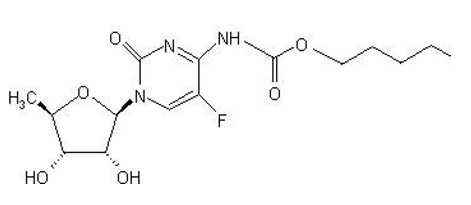
Capecitabine is a nucleoside metabolic inhibitor. The chemical name is 5'-deoxy-5-fluoro-N-[(pentyloxy) carbonyl]-cytidine and has a molecular formula of C 15H 22FN 3O 6and a molecular weight of 359.35. Capecitabine has the following structural formula:
Capecitabine is a white to off-white crystalline powder with an aqueous solubility of 26 mg/mL at 20°C.
Capecitabine USP, is supplied as biconvex, oblong film-coated tablets for oral use. Each light peach-colored tablet contains 150 mg capecitabine,USP and each peach-colored tablet contains 500 mg capecitabine USP. The inactive ingredients in Capecitabine Tablets, USP, include: anhydrous lactose, croscarmellose sodium, hydroxypropyl methylcellulose, microcrystalline cellulose, magnesium stearate and purified water. The peach or light peach film coating contains hydroxypropyl methylcellulose, talc, titanium dioxide, and synthetic yellow and red iron oxides.
5.5 Dehydration
Dehydration can occur with capecitabine. Patients with anorexia, asthenia, nausea, vomiting, or diarrhea may be at an increased risk of developing dehydration with capecitabine. Optimize hydration before starting capecitabine. Monitor hydration status and kidney function at baseline and as clinically indicated. Withhold capecitabine and then resume at same or reduced dose, or permanently discontinue, based on severity and occurrence [see Dosage and Administration (2.5)].
1.2 Breast Cancer
Capecitabine tablets are indicated for the:
- treatment of patients with advanced or metastatic breast cancer as a single agent if an anthracycline- or taxane-containing chemotherapy is not indicated.
- treatment of patients with advanced or metastatic breast cancer in combination with docetaxel after disease progression on prior anthracycline-containing chemotherapy.
8.4 Pediatric Use
The safety and effectiveness of Capecitabine in pediatric patients have not been established.
Safety and effectiveness were assessed, but not established in two single arm studies in 56 pediatric patients aged 3 months to <17 years with newly diagnosed gliomas. In both trials, pediatric patients received an investigational pediatric formulation of capecitabine concomitantly with and following completion of radiation therapy (total dose of 5580 cGy in 180 cGy fractions). The relative bioavailability of the investigational formulation to Capecitabine was similar.
The adverse reaction profile was consistent with that of adults, with the exception of laboratory abnormalities which occurred more commonly in pediatric patients. The most frequently reported laboratory abnormalities (per-patient incidence ≥ 40%) were increased ALT (75%), lymphocytopenia (73%), hypokalemia (68%), thrombocytopenia (57%), hypoalbuminemia (55%), neutropenia (50%), low hematocrit (50%), hypocalcemia (48%), hypophosphatemia (45%) and hyponatremia (45%).
8.5 Geriatric Use
Of 7938 patients with colorectal cancer who were treated with Capecitabine, 33% were older than 65 years. Of the 4536 patients with metastatic breast cancer who were treated with Capecitabine, 18% were older than 65 years.
Of 1951 patients with gastric, esophageal, or gastrointestinal junction cancer who were treated with Capecitabine, 26% were older than 65 years.
Of 364 patients with pancreatic cancer who received adjuvant treatment with Capecitabine, 47% were 65 years or older.
No overall differences in efficacy were observed comparing older versus younger patients with colorectal cancer, gastric, esophageal or gastrointestinal junction cancer, or pancreatic cancer using the approved recommended dosages and treatment regimens.
Older patients experience increased gastrointestinal toxicity due to Capecitabine compared to younger patients. Deaths from severe enterocolitis, diarrhea, and dehydration have been reported in elderly patients receiving weekly leucovorin and fluorouracil [see Drug Interactions (7.1)].
2.7 Administration
Round the recommended dosage for patients to the nearest 150 mg dose to provide whole Capecitabine tablets.
Swallow capecitabine tablets whole with water within 30 minutes after a meal. Do not chew, cut, or crush capecitabine tablets [see Warnings and Precautions (5.12)].
Take capecitabine tablets at the same time each day approximately 12 hours apart.
Do not take an additional dose after vomiting and continue with the next scheduled dose.
Do not take a missed dose and continue with the next scheduled dose.
capecitabine tablets is a hazardous drug. Follow applicable special handling and disposal procedures 1.
5.3 Cardiotoxicity
Cardiotoxicity can occur with capecitabine. Myocardial infarction/ischemia, angina, dysrhythmias, cardiac arrest, cardiac failure, sudden death, electrocardiographic changes, and cardiomyopathy have been reported with Capecitabine. These adverse reactions may be more common in patients with a prior history of coronary artery disease.
Withhold capecitabine for cardiotoxicity as appropriate [see Dosage and Administration (2.5)]. The safety of resumption of capecitabine in patients with cardiotoxicity that has resolved have not been established.
5.6 Renal Toxicity
Serious renal failure, sometimes fatal, can occur with capecitabine. Renal impairment or coadministration of capecitabine with other products known to cause renal toxicity may increase the risk of renal toxicity [see Drug Interactions (7.3)] .
Monitor renal function at baseline and as clinically indicated. Optimize hydration before starting capecitabine. Withhold capecitabine and then resume at same or reduced dose, or permanently discontinue, based on severity and occurrence [see Dosage and Administration (2.5)] .
4 Contraindications
Capecitabine is contraindicated in patients with history of severe hypersensitivity reaction to fluorouracil or capecitabine [see Adverse Reactions (6.1)] .
6 Adverse Reactions
The following clinically significant adverse reactions are described elsewhere in the labeling:
- Cardiotoxicity [see Warnings and Precautions (5.3)]
- Diarrhea [see Warnings and Precautions (5.4)]
- Dehydration [see Warnings and Precautions (5.5)]
- Renal Toxicity [see Warnings and Precautions (5.6)]
- Serious Skin Toxicities [see Warnings and Precautions (5.7)]
- Palmar-Plantar Erythrodysesthesia Syndrome [see Warnings and Precautions (5.8)]
- Myelosuppression [see Warnings and Precautions (5.9)]
- Hyperbilirubinemia [see Warnings and Precautions (5.10)]
7 Drug Interactions
- Allopurinol:Avoid concomitant use of allopurinol with capecitabine. ( 7.1)
- Leucovorin:Closely monitor for toxicities when capecitabine is coadministered with leucovorin. ( 7.1)
- CYP2C9 substrates:Closely monitor for adverse reactions when CYP2C9 substrates are coadministered with capecitabine. ( 7.2)
- Vitamin K antagonists: Monitor INR more frequently and dose adjust oral vitamin K antagonist as appropriate
- Phenytoin: Closely monitor phenytoin levels in patients taking capecitabine concomitantly with phenytoin and adjust the phenytoin dose as appropriate. ( 7.2)
- Nephrotoxic drugs: Closely monitor for signs of renal toxicity when capecitabine is used concomitantly with nephrotoxic drugs. ( 7.3)
5.9 Myelosuppression
Myelosuppression can occur with capecitabine.
In the 875 patients with metastatic breast or colorectal cancer who received capecitabine as a single agent, 3.2% had grade 3 or 4 neutropenia, 1.7% had grade 3 or 4 thrombocytopenia, and 2.4% had grade 3 or 4 anemia.
In the 251 patients with metastatic breast cancer who received capecitabine with docetaxel, 68% had grade 3 or 4 neutropenia, 2.8% had grade 3 or 4 thrombocytopenia, and 10% had grade 3 or 4 anemia.
Necrotizing enterocolitis (typhlitis) has been reported. Consider typhlitis in patients with fever, neutropenia and abdominal pain.
Monitor complete blood count at baseline and before each cycle. capecitabine is not recommended if baseline neutrophil count <1.5 × 10 9/L or platelet count <100 × 10 9/L. For grade 3 to 4 myelosuppression, withhold capecitabine and then resume at same or reduced dose, or permanently discontinue, based on occurrence [see Dosage and Administration (2.5)] .
8.6 Renal Impairment
The exposure of capecitabine and its inactive metabolites (5-DFUR and FBAL) increases in patients with CLcr <50 mL/min as determined by Cockcroft-Gault [see Clinical Pharmacology (12.3)] . Reduce the dosage for patients with CLcr of 30 to 50 mL/min [see Dosage and Administration (2.6)] . There is limited experience with Capecitabine in patients with CLcr <30 mL/min, and a dosage has not been established in those patients. If no treatment alternative exists, Capecitabine could be administered to such patients on an individual basis applying a reduced starting dose, close monitoring of a patient's clinical and biochemical data and dose modifications guided by observed adverse reactions.
1.1 Colorectal Cancer
Capecitabine tablets are indicated for the:
- adjuvant treatment of patients with Stage III colon cancer as a single agent or as a component of a combination chemotherapy regimen.
- perioperative treatment of adults with locally advanced rectal cancer as a component of chemoradiotherapy.
- treatment of patients with unresectable or metastatic colorectal cancer as a single agent or as a component of a combination chemotherapy regimen.
1.4 Pancreatic Cancer
Capecitabine Tablets is indicated for the adjuvant treatment of adults with pancreatic adenocarcinoma as a component of a combination chemotherapy regimen.
12.2 Pharmacodynamics
Population-based exposure-effect analyses demonstrated a positive association between AUC of fluorouracil and grade 3-4 hyperbilirubinemia.
12.3 Pharmacokinetics
The AUC of capecitabine and its metabolite 5'-DFCR increases proportionally over a dosage range of 500 mg/m 2/day to 3,500 mg/m 2/day (0.2 to 1.4 times the approved recommended dosage). The AUC of capecitabine's metabolites 5'-DFUR and fluorouracil increased greater than proportional to the dose. The interpatient variability in the C maxand AUC of fluorouracil was greater than 85%.
12.4 Pharmacogenomics
The DPYDgene encodes the enzyme DPD, which is responsible for the catabolism of >80% of fluorouracil. Approximately 3-5% of White populations have partial DPD deficiency and 0.2% of White populations have complete DPD deficiency, which may be due to certain genetic no function or decreased function variants in DPYDresulting in partial to complete or near complete absence of enzyme activity. DPD deficiency is estimated to be more prevalent in Black or African American populations compared to White populations. Insufficient information is available to estimate the prevalence of DPD deficiency in other populations.
Patients who are homozygous or compound heterozygous for no function DPYDvariants (i.e., carry two no function DPYDvariants) or are compound heterozygous for a no function DPYDvariant plus a decreased function DPYDvariant have complete DPD deficiency and are at increased risk for acute early-onset of toxicity and serious life-threatening, or fatal adverse reactions due to increased systemic exposure to Capecitabine. Partial DPD deficiency can result from the presence of either two decreased function DPYDvariants or one normal function plus either a decreased function or a no function DPYDvariant. Patients with partial DPD deficiency may also be at an increased risk for toxicity from Capecitabine.
Four DPYDvariants have been associated with impaired DPD activity in White populations, especially when present as homozygous or compound heterozygous variants: c.1905+1G>A ( DPYD*2A), c.1679T>G ( DPYD*13), c.2846A>T, and c.1129-5923C>G (Haplotype B3). DPYD*2A and DPYD*13 are no function variants, and c.2846A>T and c.1129-5923C>G are decreased function variants. The decreased function DPYDvariant c.557A>G is observed in individuals of African ancestry. This is not a complete listing of all DPYDvariants that may result in DPD deficiency [see Warnings and Precautions (5.2)].
7.3 Nephrotoxic Drugs
Due of the additive pharmacologic effect, concomitant use of Capecitabine with other drugs known to cause renal toxicity may increase the risk of renal toxicity [see Warnings and Precautions (5.6)]. Closely monitor for signs of renal toxicity when Capecitabine is used concomitantly with nephrotoxic drugs (e.g. platinum salts, irinotecan, methotrexate, intravenous bisphosphonates).
14.4 Pancreatic Cancer
The efficacy of Capecitabine for the adjuvant treatment of adults with pancreatic adenocarcinoma as a component of a combination chemotherapy regimen was derived from a study in the published literature. Capecitabine was evaluated in ESPAC-4 trial, a two-group, open-label, multicenter, randomized trial, where the major efficacy outcome measure was overall survival.
8.7 Hepatic Impairment
The exposure of capecitabine increases in patients with mild to moderate hepatic impairment. The effect of severe hepatic impairment on the safety and pharmacokinetics of Capecitabine is unknown [see Clinical Pharmacology (12.3)]. Monitor patients with hepatic impairment more frequently for adverse reactions.
1 Indications and Usage
Capecitabine tablets is a nucleoside metabolic inhibitor indicated for:
Colorectal Cancer
- adjuvant treatment of patients with Stage III colon cancer as a single agent or as a component of a combination chemotherapy regimen. ( 1.1)
- perioperative treatment of adults with locally advanced rectal cancer as a component of chemoradiotherapy. ( 1.1)
- treatment of patients with unresectable or metastatic colorectal cancer as a single agent or as a component of a combination chemotherapy regimen. ( 1.1)
Breast Cancer
- treatment of patients with advanced or metastatic breast cancer as a single agent if an anthracycline- or taxane-containing chemotherapy is not indicated. ( 1.2)
- treatment of patients with advanced or metastatic breast cancer in combination with docetaxel after disease progression on prior anthracycline-containing chemotherapy. ( 1.2)
Gastric, Esophageal, or Gastroesophageal Junction Cancer
- treatment of adults with unresectable or metastatic gastric, esophageal, or gastroesophageal junction cancer as a component of a combination chemotherapy regimen. ( 1.3)
- treatment of adults with HER2-overexpressing metastatic gastric or gastroesophageal junction adenocarcinoma who have not received prior treatment for metastatic disease as a component of a combination regimen. ( 1.3)
Pancreatic Cancer
- adjuvant treatment of adults with pancreatic adenocarcinoma as a component of a combination chemotherapy regimen. ( 1.4)
5.10 Hyperbilirubinemia
Hyperbilirubinemia can occur with capecitabine. In the 875 patients with metastatic breast or colorectal cancer who received capecitabine as a single agent, grade 3 hyperbilirubinemia occurred in 15% of patients and grade 4 hyperbilirubinemia occurred in 3.9%. Of the 566 patients who had hepatic metastases at baseline and the 309 patients without hepatic metastases at baseline, grade 3 or 4 hyperbilirubinemia occurred in 23% and 12%, respectively. Of these 167 patients with grade 3 or 4 hyperbilirubinemia, 19% had postbaseline increased alkaline phosphatase and 28% had postbaseline increased transaminases at any time (not necessarily concurrent). The majority of these patients with increased transaminases or alkaline phosphatase had liver metastases at baseline. In addition, 58% and 35% of the 167 patients with grade 3 or 4 hyperbilirubinemia had pre- and postbaseline increased alkaline phosphatase or transaminases (grades 1 to 4), respectively. Only 8% (n=13) and 3% (n=5) had grade 3 or 4 increased alkaline phosphatase or transaminases.
In the 596 patients who received capecitabine for metastatic colorectal cancer, the incidence of grade 3 or 4 hyperbilirubinemia was similar to that observed for the pooled population of patients with metastatic breast and colorectal cancer. The median time to onset for grade 3 or 4 hyperbilirubinemia was 64 days and median total bilirubin increased from 8 µm/L at baseline to 13 µm/L during treatment with capecitabine. Of the 136 patients with grade 3 or 4 hyperbilirubinemia, 49 patients had grade 3 or 4 hyperbilirubinemia as their last measured value, of which 46 had liver metastases at baseline.
In the 251 patients with metastatic breast cancer who received capecitabine with docetaxel, grade 3 hyperbilirubinemia occurred in 7% and grade 4 hyperbilirubinemia occurred in 2%.
Withhold capecitabine and then resume at a same or reduced dose, or permanently discontinue, based on occurrence [see Dosage and Administration (2.5)]. Patients with Grade 3-4 hyperbilirubinemia may resume treatment once the event is Grade 2 or less than three times the upper limit of normal, using the percent of current dose as shown in Table 1 [see Dosage and Administration (2.5)] .
12.1 Mechanism of Action
Capecitabine is metabolized to fluorouracil in vivo. Both normal and tumor cells metabolize fluorouracil to 5-fluoro-2'-deoxyuridine monophosphate (FdUMP) and 5-fluorouridine triphosphate (FUTP). These metabolites cause cell injury by two different mechanisms. First, FdUMP and the folate cofactor, N 5-10-methylenetetrahydrofolate, bind to thymidylate synthase (TS) to form a covalently bound ternary complex. This binding inhibits the formation of thymidylate from 2'-deoxyuridylate. Thymidylate is the necessary precursor of thymidine triphosphate, which is essential for the synthesis of DNA, so that a deficiency of this compound can inhibit cell division. Second, nuclear transcriptional enzymes can mistakenly incorporate FUTP in place of uridine triphosphate (UTP) during the synthesis of RNA. This metabolic error can interfere with RNA processing and protein synthesis.
5 Warnings and Precautions
- Serious Adverse Reactions from Dihydropyrimidine Dehydrogenase (DPD) Deficiency: Patients with certain homozygous or compound heterozygous variants in the DPYDgene are at increased risk for acute early-onset toxicity and serious, including fatal, adverse reactions due to capecitabine (e.g., mucositis, diarrhea, neutropenia, and neurotoxicity). Capecitabine is not recommended for use in patients known to have certain homozygous or compound heterozygous DPYDvariants that result in complete absence of DPD activity. Withhold or permanently discontinue based on clinical assessment. No capecitabine dose has been proven safe in patients with complete absence of DPD activity. ( 5.2)
- Cardiotoxicity: May be more common in patients with a prior history of coronary artery disease. Withhold capecitabine for cardiotoxicity as appropriate. The safety of resumption of capecitabine in patients with cardiotoxicity that has resolved has not been established. ( 2.5, 5.3)
- Diarrhea: Withhold capecitabine and then resume at same or reduced dose, or permanently discontinue, based on severity and occurrence. (2.5, 5.4)
- Dehydration: Optimize hydration before starting capecitabine. Monitor hydration status and kidney function at baseline and as clinically indicated. Withhold capecitabine and then resume at same or reduced dose, or permanently discontinue, based on severity and occurrence. ( 2.5, 5.5)
- Renal Toxicity: Monitor renal function at baseline and as clinically indicated. Optimize hydration before starting capecitabine. Withhold capecitabine and then resume at same or reduced dose, or permanently discontinue, based on severity and occurrence. ( 2.5, 5.6)
- Serious Skin Toxicities: Monitor for new or worsening serious skin reactions. Permanently discontinue capecitabine in patients who experience a severe cutaneous adverse reaction. ( 5.7)
- Palmar-Plantar Erythrodysesthesia Syndrome: Withhold capecitabine then resume at same or reduced dose, or permanently discontinue, based on severity and occurrence. ( 2.5, 5.8)
- Myelosuppression: Monitor complete blood count at baseline and before each cycle. Capecitabine is not recommended in patients with baseline neutrophil counts <1.5 × 10 9/L or platelet counts <100 × 10 9/L. For grade 3 or 4 myelosuppression, withhold capecitabine and then resume at same or reduced dose, or permanently discontinue, based on occurrence. ( 2.5, 5.9)
- Hyperbilirubinemia: Patients with Grade 3-4 hyperbilirubinemia may resume treatment once the event is Grade 2 or less (≤3 × ULN), using the percent of current dose as shown in column 3 of Table 1( 2.5, 5.10)
- Embryo-Fetal Toxicity: Can cause fetal harm. Advise patients of the potential risk to a fetus and to use effective contraception. ( 5.11, 8.1, 8.3)
5.11 Embryo Fetal Toxicity
Based on findings from animal reproduction studies and its mechanism of action, capecitabine can cause fetal harm when administered to a pregnant woman. Insufficient data is available on capecitabine use in pregnant women to evaluate a drug-associated risk. In animal reproduction studies, administration of capecitabine to pregnant animals during the period of organogenesis caused embryolethality and teratogenicity in mice and embryolethality in monkeys at 0.2 and 0.6 times the human exposure (AUC) in patients who received a dosage of 1,250 mg/m 2twice daily, respectively.
Advise pregnant women of the potential risk to a fetus. Advise females of reproductive potential to use effective contraception during treatment with capecitabine and for 6 months following the last dose. Advise males with female partners of reproductive potential to use effective contraception during treatment with capecitabine and for 3 months following the last dose [see Use in Specific Populations (8.1, 8.3)] .
2 Dosage and Administration
Adjuvant Treatment of Colon Cancer
- Single agent: 1,250 mg/m 2twice daily orally for the first 14 days of each 21-day cycle for a maximum of 8 cycles. ( 2.1) In combination with Oxaliplatin-Containing Regimens: 1,000 mg/m 2orally twice daily for the first 14 days of each 21-day cycle for a maximum of 8 cycles in combination with oxaliplatin 130 mg/m 2administered intravenously on day 1 of each cycle. ( 2.1)
Perioperative Treatment of Rectal Cancer
- With Concomitant Radiation Therapy: 825 mg/m 2orally twice daily ( 2.1)
- Without Radiation Therapy: 1,250 mg/m 2orally twice daily ( 2.1)
Unresectable or Metastatic Colorectal Cancer:
- Single agent: 1,250 mg/m 2twice daily orally for the first 14 days of each 21-day cycle until disease progression or unacceptable toxicity. ( 2.1)
- In Combination with Oxaliplatin: 1,000 mg/m 2orally twice daily for the first 14 days of each 21-day cycle until disease progression or unacceptable toxicity in combination with oxaliplatin 130 mg/m 2administered intravenously on day 1 of each cycle. ( 2.1)
Advanced or Metastatic Breast Cancer:
- Single agent: 1,000 mg/m 2or 1,250 mg/m 2twice daily orally for the first 14 days of each 21-day cycle until disease progression or unacceptable toxicity. ( 2.2)
- In combination with docetaxel: 1,000 mg/m 2or 1,250 mg/m 2orally twice daily for the first 14 days of a 21-day cycle, until disease progression or unacceptable toxicity in combination with docetaxel at 75 mg/m 2administered intravenously on day 1 of each cycle ( 2.2)
Unresectable or Metastatic Gastric, Esophageal, or Gastroesophageal Junction Cancer
- 625 mg/m
2orally twice daily on days 1 to 21 of each 21-day cycle for a maximum of 8 cycles in combination with platinum-containing chemotherapy. (
2.3)
OR - 850 mg/m 2or 1,000 mg/m 2orally twice daily for the first 14 days of each 21-day cycle until disease progression or unacceptable toxicity in combination with oxaliplatin 130 mg/m 2administered intravenously on day 1 of each cycle. ( 2.3)
HER2-overexpressing metastatic adenocarcinoma of the gastroesophageal junction or stomach
- 1,000 mg/m 2orally twice daily for the first 14 days of each 21-day cycle until disease progression or unacceptable toxicity in combination with cisplatin and trastuzumab. ( 2.3)
Pancreatic cancer
- 830 mg/m 2orally twice daily for the first 21 days of each 28-day cycle for maximum of 6 cycles in combination with gemcitabine 1,000 mg/m 2administered intravenously on days 1, 8, and 15 of each cycle. ( 2.4)
Refer to Sections 2.5 and 2.6 for information related to dosage modifications for adverse reactions and renal impairment ( 2.5and 2.6).
5.7 Serious Skin Toxicities
Severe cutaneous adverse reactions (SCARs), including Stevens-Johnson Syndrome and toxic epidermal necrolysis (TEN), which can be fatal, can occur with capecitabine [see Adverse Reactions (6.2)] .
Monitor for new or worsening serious skin reactions. Permanently discontinue capecitabine for severe cutaneous adverse reactions.
3 Dosage Forms and Strengths
Tablets, film-coated:
- Capecitabine Tablets 150 mg: light peach colored biconvex, oblong shaped film coated tablets, debossed with “C150” on one side and plain on the other side.
- Capecitabine Tablets 500 mg: Peach colored biconvex, oblong shaped film coated tablets, debossed with “C500” on one side and plain on the other side.
6.2 Postmarketing Experience
The following adverse reactions have been identified during post-approval use of Capecitabine. Because these reactions are reported voluntarily from a population of uncertain size, it is not always possible to reliably estimate their frequency or establish a causal relationship to drug exposure.
Eye:lacrimal duct stenosis, corneal disorders including keratitis
Hepatobiliary:hepatic failure
Immune System Disorders:angioedema
Nervous System: toxic leukoencephalopathy
Renal & Urinary:acute renal failure secondary to dehydration including fatal outcome
Skin & Subcutaneous Tissue:cutaneous lupus erythematosus, severe skin reactions such as Stevens-Johnson Syndrome and Toxic Epidermal Necrolysis (TEN), persistent or severe PPES can eventually lead to loss of fingerprints
8 Use in Specific Populations
6.1 Clinical Trials Experience
Because clinical trials are conducted under widely varying conditions, adverse reaction rates observed in the clinical trials of a drug cannot be directly compared to rates in the clinical trials of another drug and may not reflect the rates observed in practice.
17 Patient Counseling Information
Advise the patient to read the FDA-approved patient labeling (Patient Information).
16 How Supplied/storage and Handling
Capecitabine tablets are supplied as follows:
- Capecitabine Tablets 150 mg:Light peach colored, biconvex, oblong shaped film coated tablets, debossed with “C150” on one side and plain on other side; available in bottles of 60 tablets (NDC 82511-001-15), individually packaged in a carton.
- Capecitabine Tablets 500 mg:Peach colored biconvex, oblong shaped film-coated tablets, debossed with “C500” on one side and plain on the other side; available in bottles of 120 tablets (NDC 82511-002-50), individually packaged in a carton.
2.4 Recommended Dosage for Pancreatic Cancer
The recommended dosage of capecitabine tablets is 830 mg/m 2orally twice daily for the first 21 days of each 28-day cycle until disease progression, unacceptable toxicity, or for a maximum 6 cycles in combination with gemcitabine 1,000 mg/m 2administered intravenously on days 1, 8, and 15 of each cycle.
Refer to Prescribing Information for gemcitabine for additional dosing information as appropriate.
2.6 Dosage Modification for Renal Impairment
>Reduce the dose of capecitabine tablets by 25% for patients with creatinine clearance (CLcr) of 30 to 50 mL/min as determined by Cockcroft-Gault equation. A dosage has not been established in patients with severe renal impairment (CLcr <30 mL/min) [see Use in Specific Populations (8.6)] .
2.5 Dosage Modifications for Adverse Reactions
Monitor patients for adverse reactions and modify dosages of capecitabine tablets as described in Table 1. Do not replace missed doses of capecitabine tablets; instead resume capecitabine tablets with the next planned dosage.
When capecitabine tablets is administered with docetaxel, withhold capecitabine tablets and docetaxel until the requirements for resuming both capecitabine tablets and docetaxel are met. Refer to the Prescribing Information for docetaxel for additional dosing information as appropriate.
| Severity | Dosage Modification | Resume at Same or Reduced Dose
(Percent of Current Dose) |
|---|---|---|
| Grade 2 | ||
| 1st appearance | Withhold until resolved to grade 0-1. | 100% |
| 2nd appearance | 75% | |
| 3rd appearance | 50% | |
| 4th appearance | Permanently discontinue. | - |
| Grade 3 | ||
| 1st appearance | Withhold until resolved to grade 0-1. | 75% |
| 2nd appearance | 50% | |
| 3rd appearance | Permanently discontinue. | - |
| Grade 4 | ||
| 1st appearance | Permanently discontinue OR
Withhold until resolved to grade 0-1. |
50% |
5.8 Palmar Plantar Erythrodysesthesia Syndrome
Palmar-plantar erythrodysesthesia syndrome (PPES) can occur with capecitabine.
In patients with metastatic breast or colorectal cancer who received capecitabine as a single agent, the median time to onset of grades 1 to 3 PPES was 2.6 months (range: 11 days to 1 year).
Withhold capecitabine and then resume at same or reduced dose or permanently discontinue based on severity and occurrence [see Dosage and Administration (2.5)] .
8.3 Females and Males of Reproductive Potential
Capecitabine can cause fetal harm when administered to a pregnant woman [see Use in Specific Populations (8.1)] .
Principal Display Panel 150 Mg Tablet Bottle Carton
Capecitabine Tablets, USP 150 mg - NDC 82511-001-15 - 60 Tablets Carton Label
Capecitabine Tablets, USP 150 mg - NDC 82511-001-15 - 60 Tablets Container Label
Capecitabine Tablets, USP 500 mg - NDC 82511-002-50 - 120 Tablets Carton Label
Capecitabine Tablets, USP 500 mg - NDC 82511-002-50 - 120 Tablets Container Label
13.1 Carcinogenesis, Mutagenesis, Impairment of Fertility
Adequate studies investigating the carcinogenic potential of capecitabine have not been conducted. Capecitabine was not mutagenic in vitro to bacteria (Ames test) or mammalian cells (Chinese hamster V79/HPRT gene mutation assay). Capecitabine was clastogenic in vitro to human peripheral blood lymphocytes but not clastogenic in vivo to mouse bone marrow (micronucleus test). Fluorouracil causes mutations in bacteria and yeast. Fluorouracil also causes chromosomal abnormalities in the mouse micronucleus test in vivo.
In studies of fertility and general reproductive performance in female mice, oral capecitabine doses of 760 mg/kg/day (about 2,300 mg/m 2/day) disturbed estrus and consequently caused a decrease in fertility. In mice that became pregnant, no fetuses survived this dose. The disturbance in estrus was reversible. In males, this dose caused degenerative changes in the testes, including decreases in the number of spermatocytes and spermatids. In separate pharmacokinetic studies, this dose in mice produced 5'-DFUR AUC values about 0.7 times the corresponding values in patients administered the recommended daily dose.
1.3 Gastric, Esophageal, Or Gastroesophageal Junction Cancer
Capecitabine tablets are indicated for the:
- treatment of adults with unresectable or metastatic gastric, esophageal, or gastroesophageal junction cancer as a component of a combination chemotherapy regimen.
- treatment of adults with HER2-overexpressing metastatic gastric or gastroesophageal junction adenocarcinoma who have not received prior treatment for metastatic disease as a component of a combination regimen.
14.3 Gastric, Esophageal, Or Gastroesophageal Junction Cancer
The efficacy of Capecitabine for treatment of adults with unresectable or metastatic gastric, esophageal, or gastroesophageal junction cancer as a component of a combination chemotherapy regimen was derived from studies in the published literature. Capecitabine was evaluated in REAL-2, a randomized non-inferiority, 2×2 factorial trial, where the major efficacy outcome measure was overall survival, and an additional randomized trial conducted by the North Central Cancer Treatment Group, where the major efficacy outcome measure was objective response rate.
The efficacy of Capecitabine for the treatment of adults with HER2-overexpressing metastatic gastric or gastroesophageal junction adenocarcinoma who have not received prior treatment for metastatic disease as a component of a combination regimen was derived from studies in the published literature. Capecitabine was evaluated in the ToGA trial [NCT01041404], an open-label, multicenter, randomized trial where the primary efficacy measure was overall survival.
5.1 Increased Risk of Bleeding With Concomitant Use of Vitamin K Antagonists
Altered coagulation parameters and/or bleeding, including death, have been reported in patients taking capecitabine concomitantly with vitamin K antagonists, such as warfarin.
Clinically significant increases in PT and INR have been reported in patients who were on stable doses of oral vitamin K antagonists at the time capecitabine was introduced. These events occurred within several days and up to several months after initiating capecitabine and, in a few cases, within 1 month after stopping capecitabine. These events occurred in patients with and without liver metastases.
Monitor INR more frequently and adjust the dose of the vitamin K antagonist as appropriate [see Drug Interactions (7.1)].
Warning: Increased Risk of Bleeding With Concomitant Use of Vitamin K Antagonists
Altered coagulation parameters and/or bleeding, including death, have been reported in patients taking Capecitabine concomitantly with oral vitamin K antagonists, such as warfarin [see Warnings and Precautions (5.1), Drug Interactions (7.2)] .
Clinically significant increases in prothrombin time (PT) and international normalized ratio (INR) have been reported in patients who were on stable doses of a vitamin K antagonist at the time Capecitabine was introduced. These events occurred within several days and up to several months after initiating Capecitabine and, in a few cases, within 1 month after stopping Capecitabine. These events occurred in patients with and without liver metastases.
Monitor INR more frequently and adjust the dose of the vitamin K antagonist as appropriate [see Drug Interactions (7.2)] .
2.3 Recommended Dosage for Gastric, Esophageal, Or Gastroesophageal Junction Cancer
The recommended dosage of capecitabine tablets for unresectable or metastatic gastric, esophageal, or gastroesophageal junction cancer is:
- 625 mg/m
2orally twice daily on days 1 to 21 of each 21-day cycle for a maximum of 8 cycles in combination with platinum-containing chemotherapy.
OR - 850 mg/m 2or 1,000 mg/m 2orally twice daily for the first 14 days of each 21-day cycle until disease progression or unacceptable toxicity in combination with oxaliplatin 130 mg/m 2administered intravenously on day 1 of each cycle. Individualize the dose and dosing schedule of capecitabine tablets based on patient risk factors and adverse reactions.
The recommended dosage of capecitabine tablets for HER2-overexpressing metastatic gastric or gastroesophageal junction adenocarcinoma is 1,000 mg/m 2orally twice daily for the first 14 days of each 21-day cycle until disease progression or unacceptable toxicity in combination with cisplatin and trastuzumab.
Refer to the Prescribing Information for agents used in combination for additional dosing information as appropriate.
5.2 Serious Adverse Reactions From Dihydropyrimidine Dehydrogenase (dpd) Deficiency
Patients with certain homozygous or compound heterozygous variants in the DPYDgene known to result in complete or near complete absence of DPD activity (complete DPD deficiency) are at increased risk for acute early-onset toxicity and serious, including fatal, adverse reactions due to capecitabine (e.g., mucositis, diarrhea, neutropenia, and neurotoxicity). Patients with partial DPD activity (partial DPD deficiency) may also have increased risk of serious, including fatal, adverse reactions.
Capecitabine is not recommended for use in patients known to have certain homozygous or compound heterozygous DPYDvariants that result in complete DPD deficiency.
Withhold or permanently discontinue capecitabine based on clinical assessment of the onset, duration, and severity of the observed adverse reactions in patients with evidence of acute early-onset or unusually severe reactions, which may indicate complete DPD deficiency. No capecitabine dose has been proven safe for patients with complete DPD deficiency. There are insufficient data to recommend a specific dose in patients with partial DPD deficiency.
Consider testing for genetic variants of DPYDprior to initiating capecitabine to reduce the risk of serious adverse reactions if the patient's clinical status permits and based on clinical judgement [see Clinical Pharmacology (12.5)] . Serious adverse reactions may still occur even if no DPYDvariants are identified.
An FDA-authorized test for the detection of genetic variants of DPYDto identify patients at risk of serious adverse reactions due to increased systemic exposure to capecitabine is not currently available. Currently available tests used to identify DPYDvariants may vary in accuracy and design (e.g., which DPYDvariant(s) they identify).
5.12 Eye Irritation, Skin Rash and Other Adverse Reactions From Exposure to Crushed Tablets
In instances of exposure to crushed capecitabine tablets, the following adverse reactions have been reported: eye irritation and swelling, skin rash, diarrhea, paresthesia, headache, gastric irritation, vomiting and nausea. Advise patients not to cut or crush tablets.
If Capecitabine tablets must be cut or crushed, this should be done by a professional trained in safe handling of cytotoxic drugs using appropriate equipment and safety procedures [see Dosage and Administration (2.7)]. The safety and effectiveness have not been established for the administration of crushed capecitabine tablets.
Structured Label Content
Section 42229-5 (42229-5)
Adjuvant Treatment of Colon Cancer
Section 42230-3 (42230-3)
| This Patient Information has been approved by the U.S. Food and Drug Administration. | Revised: 09/2023 | |||
|
Patient Information
|
||||
|
What is the most important information I should know about Capecitabine Tablets? Capecitabine Tablets can cause serious side effects, including:
See " What are the possible side effects of Capecitabine Tablets?" for more information about side effects. |
||||
|
What is Capecitabine Tablets? Capecitabine Tablets is a prescription medicine used to treat:
It is not known if Capecitabine Tablets is safe and effective in children. |
||||
|
Do not take Capecitabine Tablets if you:
Talk to your healthcare provider before taking Capecitabine Tablets if you are not sure. |
||||
|
Before taking Capecitabine Tablets, tell your healthcare provider about all your medical conditions, including if you: See " What is the most important information I should know about Capecitabine Tablets?"
Tell your healthcare provider about all the medicines you take, including prescription and over-the-counter medicines, vitamins, and herbal supplements. Capecitabine Tablets may affect the way other medicines work, and other medicines may affect the way Capecitabine Tablets works. |
||||
|
How should I take Capecitabine Tablets?
|
||||
|
What are the possible side effects of Capecitabine Tablets? Capecitabine Tablets can cause serious side effects including:
|
||||
|
||||
|
||||
|
|
|
||
Your healthcare provider should talk with you about DPYD testing to look for DPD deficiency. |
||||
|
||||
|
|
|||
|
||||
|
|
|||
|
Do not chew, cut, or crush Capecitabine tablets. See
"
How should I take Capecitabine tablets
."
If for any reason your tablets must be cut or crushed, this must be done by your pharmacist or healthcare provider. |
||||
| Your healthcare provider may decide to decrease your dose, or temporarily or permanently stop Capecitabine Tablets if you have serious side effects with Capecitabine Tablets. | ||||
| The most common side effects in people with colon cancer who take Capecitabine Tablets alone to help prevent it from coming back include: hand and foot syndrome, diarrhea, and nausea. | ||||
| The most common side effects in people with metastatic colorectal carcinoma who take Capecitabine Tablets alone include: | ||||
|
|
|||
| The most common side effects in people with metastatic breast cancer who take Capecitabine Tablets in combination with docetaxel include: | ||||
|
|
|||
| The most common side effects in people with metastatic breast cancer who take Capecitabine Tablets alone include: | ||||
|
|
|||
| Severe allergic reactions can happen with Capecitabine Tablets. See " Do not take Capecitabine Tablets if you :" Stop taking Capecitabine Tablets and call your healthcare provider right away or go to an emergency room if you have any of the following symptoms of a severe allergic reaction to Capecitabine Tablets: | ||||
|
|
|
||
| Capecitabine Tablets may cause fertility problems in females and males. This may affect the ability to have a child. Talk to your healthcare provider if you have concerns about fertility. | ||||
| These are not all the possible side effects of Capecitabine Tablets. | ||||
| Call your doctor for medical advice about side effects. You may report side effects to FDA at 1-800-FDA-1088. | ||||
|
How should I store Capecitabine Tablets?
Keep Capecitabine Tablets and all medicines out of the reach of children. |
||||
|
General information about the safe and effective use of Capecitabine Tablets. Medicines are sometimes prescribed for purposes other than those listed in a Patient Information leaflet. Do not use Capecitabine Tablets for a condition for which it was not prescribed. Do not give Capecitabine Tablets to other people, even if they have the same symptoms you have. It may harm them. You can ask your pharmacist or healthcare provider for information about Capecitabine Tablets that is written for health professionals. |
||||
|
What are the ingredients in Capecitabine Tablets? Active ingredient:capecitabine Tablets Inactive ingredients:anhydrous lactose, croscarmellose sodium, hydroxypropyl methylcellulose, microcrystalline cellulose, magnesium stearate and purified water. The peach or light peach film coating contains hydroxypropyl methylcellulose, talc, titanium dioxide, and synthetic yellow and red iron oxides. Manufactured by:
For more information, please contact Teyro Labs Private Limited at 1800-726-4148 |
Section 43683-2 (43683-2)
| Boxed Warning | (12/2022) |
| Indications and Usage, Colorectal Cancer ( 1.1) | (12/2022) |
| Indications and Usage, Breast Cancer ( 1.2) | (12/2022) |
| Indications and Usage, Gastric, Esophageal, or Gastroesophageal Junction Cancer ( 1.3) | (12/2022) |
| Indications and Usage, Pancreatic Cancer ( 1.4) | (12/2022) |
| Dosage and Administration ( 2.1- 2.7) | (12/2022) |
| Contraindications ( 4) | (12/2022) |
| Warnings and Precautions ( 5.1- 5.12) | (12/2022) |
Section 44425-7 (44425-7)
Storage and Handling
Store at 20° to 25°C (68° to 77°F); excursions permitted to 15° to 30°C (59° to 86°F) [see USP Controlled Room Temperature]. KEEP TIGHTLY CLOSED.
Capecitabine is a hazardous drug. Follow applicable special handling and disposal procedures. 1
5.4 Diarrhea
Diarrhea, sometimes severe, can occur with capecitabine. In 875 patients with metastatic breast or colorectal cancer who received capecitabine as a single agent, the median time to first occurrence of grade 2 to 4 diarrhea was 34 days (range: 1 day to 1 year). The median duration of grade 3 to 4 diarrhea was 5 days.
Withhold capecitabine and then resume at same or reduced dose or permanently discontinue based on severity and occurrence [see Dosage and Administration (2.5)] .
10 Overdosage (10 OVERDOSAGE)
Administer uridine triacetate within 96 hours for management of Capecitabine overdose.
Although no clinical experience using dialysis as a treatment for Capecitabine overdose has been reported, dialysis may be of benefit in reducing circulating concentrations of 5'-DFUR, a low–molecular-weight metabolite of the parent compound.
15 References (15 REFERENCES)
1. "OSHA Hazardous Drugs." OSHA.
http://www.osha.gov/SLTC/hazardousdrugs/index.html.
11 Description (11 DESCRIPTION)
Capecitabine is a nucleoside metabolic inhibitor. The chemical name is 5'-deoxy-5-fluoro-N-[(pentyloxy) carbonyl]-cytidine and has a molecular formula of C 15H 22FN 3O 6and a molecular weight of 359.35. Capecitabine has the following structural formula:
Capecitabine is a white to off-white crystalline powder with an aqueous solubility of 26 mg/mL at 20°C.
Capecitabine USP, is supplied as biconvex, oblong film-coated tablets for oral use. Each light peach-colored tablet contains 150 mg capecitabine,USP and each peach-colored tablet contains 500 mg capecitabine USP. The inactive ingredients in Capecitabine Tablets, USP, include: anhydrous lactose, croscarmellose sodium, hydroxypropyl methylcellulose, microcrystalline cellulose, magnesium stearate and purified water. The peach or light peach film coating contains hydroxypropyl methylcellulose, talc, titanium dioxide, and synthetic yellow and red iron oxides.
5.5 Dehydration
Dehydration can occur with capecitabine. Patients with anorexia, asthenia, nausea, vomiting, or diarrhea may be at an increased risk of developing dehydration with capecitabine. Optimize hydration before starting capecitabine. Monitor hydration status and kidney function at baseline and as clinically indicated. Withhold capecitabine and then resume at same or reduced dose, or permanently discontinue, based on severity and occurrence [see Dosage and Administration (2.5)].
1.2 Breast Cancer
Capecitabine tablets are indicated for the:
- treatment of patients with advanced or metastatic breast cancer as a single agent if an anthracycline- or taxane-containing chemotherapy is not indicated.
- treatment of patients with advanced or metastatic breast cancer in combination with docetaxel after disease progression on prior anthracycline-containing chemotherapy.
8.4 Pediatric Use
The safety and effectiveness of Capecitabine in pediatric patients have not been established.
Safety and effectiveness were assessed, but not established in two single arm studies in 56 pediatric patients aged 3 months to <17 years with newly diagnosed gliomas. In both trials, pediatric patients received an investigational pediatric formulation of capecitabine concomitantly with and following completion of radiation therapy (total dose of 5580 cGy in 180 cGy fractions). The relative bioavailability of the investigational formulation to Capecitabine was similar.
The adverse reaction profile was consistent with that of adults, with the exception of laboratory abnormalities which occurred more commonly in pediatric patients. The most frequently reported laboratory abnormalities (per-patient incidence ≥ 40%) were increased ALT (75%), lymphocytopenia (73%), hypokalemia (68%), thrombocytopenia (57%), hypoalbuminemia (55%), neutropenia (50%), low hematocrit (50%), hypocalcemia (48%), hypophosphatemia (45%) and hyponatremia (45%).
8.5 Geriatric Use
Of 7938 patients with colorectal cancer who were treated with Capecitabine, 33% were older than 65 years. Of the 4536 patients with metastatic breast cancer who were treated with Capecitabine, 18% were older than 65 years.
Of 1951 patients with gastric, esophageal, or gastrointestinal junction cancer who were treated with Capecitabine, 26% were older than 65 years.
Of 364 patients with pancreatic cancer who received adjuvant treatment with Capecitabine, 47% were 65 years or older.
No overall differences in efficacy were observed comparing older versus younger patients with colorectal cancer, gastric, esophageal or gastrointestinal junction cancer, or pancreatic cancer using the approved recommended dosages and treatment regimens.
Older patients experience increased gastrointestinal toxicity due to Capecitabine compared to younger patients. Deaths from severe enterocolitis, diarrhea, and dehydration have been reported in elderly patients receiving weekly leucovorin and fluorouracil [see Drug Interactions (7.1)].
2.7 Administration
Round the recommended dosage for patients to the nearest 150 mg dose to provide whole Capecitabine tablets.
Swallow capecitabine tablets whole with water within 30 minutes after a meal. Do not chew, cut, or crush capecitabine tablets [see Warnings and Precautions (5.12)].
Take capecitabine tablets at the same time each day approximately 12 hours apart.
Do not take an additional dose after vomiting and continue with the next scheduled dose.
Do not take a missed dose and continue with the next scheduled dose.
capecitabine tablets is a hazardous drug. Follow applicable special handling and disposal procedures 1.
5.3 Cardiotoxicity
Cardiotoxicity can occur with capecitabine. Myocardial infarction/ischemia, angina, dysrhythmias, cardiac arrest, cardiac failure, sudden death, electrocardiographic changes, and cardiomyopathy have been reported with Capecitabine. These adverse reactions may be more common in patients with a prior history of coronary artery disease.
Withhold capecitabine for cardiotoxicity as appropriate [see Dosage and Administration (2.5)]. The safety of resumption of capecitabine in patients with cardiotoxicity that has resolved have not been established.
5.6 Renal Toxicity
Serious renal failure, sometimes fatal, can occur with capecitabine. Renal impairment or coadministration of capecitabine with other products known to cause renal toxicity may increase the risk of renal toxicity [see Drug Interactions (7.3)] .
Monitor renal function at baseline and as clinically indicated. Optimize hydration before starting capecitabine. Withhold capecitabine and then resume at same or reduced dose, or permanently discontinue, based on severity and occurrence [see Dosage and Administration (2.5)] .
4 Contraindications (4 CONTRAINDICATIONS)
Capecitabine is contraindicated in patients with history of severe hypersensitivity reaction to fluorouracil or capecitabine [see Adverse Reactions (6.1)] .
6 Adverse Reactions (6 ADVERSE REACTIONS)
The following clinically significant adverse reactions are described elsewhere in the labeling:
- Cardiotoxicity [see Warnings and Precautions (5.3)]
- Diarrhea [see Warnings and Precautions (5.4)]
- Dehydration [see Warnings and Precautions (5.5)]
- Renal Toxicity [see Warnings and Precautions (5.6)]
- Serious Skin Toxicities [see Warnings and Precautions (5.7)]
- Palmar-Plantar Erythrodysesthesia Syndrome [see Warnings and Precautions (5.8)]
- Myelosuppression [see Warnings and Precautions (5.9)]
- Hyperbilirubinemia [see Warnings and Precautions (5.10)]
7 Drug Interactions (7 DRUG INTERACTIONS)
- Allopurinol:Avoid concomitant use of allopurinol with capecitabine. ( 7.1)
- Leucovorin:Closely monitor for toxicities when capecitabine is coadministered with leucovorin. ( 7.1)
- CYP2C9 substrates:Closely monitor for adverse reactions when CYP2C9 substrates are coadministered with capecitabine. ( 7.2)
- Vitamin K antagonists: Monitor INR more frequently and dose adjust oral vitamin K antagonist as appropriate
- Phenytoin: Closely monitor phenytoin levels in patients taking capecitabine concomitantly with phenytoin and adjust the phenytoin dose as appropriate. ( 7.2)
- Nephrotoxic drugs: Closely monitor for signs of renal toxicity when capecitabine is used concomitantly with nephrotoxic drugs. ( 7.3)
5.9 Myelosuppression
Myelosuppression can occur with capecitabine.
In the 875 patients with metastatic breast or colorectal cancer who received capecitabine as a single agent, 3.2% had grade 3 or 4 neutropenia, 1.7% had grade 3 or 4 thrombocytopenia, and 2.4% had grade 3 or 4 anemia.
In the 251 patients with metastatic breast cancer who received capecitabine with docetaxel, 68% had grade 3 or 4 neutropenia, 2.8% had grade 3 or 4 thrombocytopenia, and 10% had grade 3 or 4 anemia.
Necrotizing enterocolitis (typhlitis) has been reported. Consider typhlitis in patients with fever, neutropenia and abdominal pain.
Monitor complete blood count at baseline and before each cycle. capecitabine is not recommended if baseline neutrophil count <1.5 × 10 9/L or platelet count <100 × 10 9/L. For grade 3 to 4 myelosuppression, withhold capecitabine and then resume at same or reduced dose, or permanently discontinue, based on occurrence [see Dosage and Administration (2.5)] .
8.6 Renal Impairment
The exposure of capecitabine and its inactive metabolites (5-DFUR and FBAL) increases in patients with CLcr <50 mL/min as determined by Cockcroft-Gault [see Clinical Pharmacology (12.3)] . Reduce the dosage for patients with CLcr of 30 to 50 mL/min [see Dosage and Administration (2.6)] . There is limited experience with Capecitabine in patients with CLcr <30 mL/min, and a dosage has not been established in those patients. If no treatment alternative exists, Capecitabine could be administered to such patients on an individual basis applying a reduced starting dose, close monitoring of a patient's clinical and biochemical data and dose modifications guided by observed adverse reactions.
1.1 Colorectal Cancer
Capecitabine tablets are indicated for the:
- adjuvant treatment of patients with Stage III colon cancer as a single agent or as a component of a combination chemotherapy regimen.
- perioperative treatment of adults with locally advanced rectal cancer as a component of chemoradiotherapy.
- treatment of patients with unresectable or metastatic colorectal cancer as a single agent or as a component of a combination chemotherapy regimen.
1.4 Pancreatic Cancer
Capecitabine Tablets is indicated for the adjuvant treatment of adults with pancreatic adenocarcinoma as a component of a combination chemotherapy regimen.
12.2 Pharmacodynamics
Population-based exposure-effect analyses demonstrated a positive association between AUC of fluorouracil and grade 3-4 hyperbilirubinemia.
12.3 Pharmacokinetics
The AUC of capecitabine and its metabolite 5'-DFCR increases proportionally over a dosage range of 500 mg/m 2/day to 3,500 mg/m 2/day (0.2 to 1.4 times the approved recommended dosage). The AUC of capecitabine's metabolites 5'-DFUR and fluorouracil increased greater than proportional to the dose. The interpatient variability in the C maxand AUC of fluorouracil was greater than 85%.
12.4 Pharmacogenomics
The DPYDgene encodes the enzyme DPD, which is responsible for the catabolism of >80% of fluorouracil. Approximately 3-5% of White populations have partial DPD deficiency and 0.2% of White populations have complete DPD deficiency, which may be due to certain genetic no function or decreased function variants in DPYDresulting in partial to complete or near complete absence of enzyme activity. DPD deficiency is estimated to be more prevalent in Black or African American populations compared to White populations. Insufficient information is available to estimate the prevalence of DPD deficiency in other populations.
Patients who are homozygous or compound heterozygous for no function DPYDvariants (i.e., carry two no function DPYDvariants) or are compound heterozygous for a no function DPYDvariant plus a decreased function DPYDvariant have complete DPD deficiency and are at increased risk for acute early-onset of toxicity and serious life-threatening, or fatal adverse reactions due to increased systemic exposure to Capecitabine. Partial DPD deficiency can result from the presence of either two decreased function DPYDvariants or one normal function plus either a decreased function or a no function DPYDvariant. Patients with partial DPD deficiency may also be at an increased risk for toxicity from Capecitabine.
Four DPYDvariants have been associated with impaired DPD activity in White populations, especially when present as homozygous or compound heterozygous variants: c.1905+1G>A ( DPYD*2A), c.1679T>G ( DPYD*13), c.2846A>T, and c.1129-5923C>G (Haplotype B3). DPYD*2A and DPYD*13 are no function variants, and c.2846A>T and c.1129-5923C>G are decreased function variants. The decreased function DPYDvariant c.557A>G is observed in individuals of African ancestry. This is not a complete listing of all DPYDvariants that may result in DPD deficiency [see Warnings and Precautions (5.2)].
7.3 Nephrotoxic Drugs
Due of the additive pharmacologic effect, concomitant use of Capecitabine with other drugs known to cause renal toxicity may increase the risk of renal toxicity [see Warnings and Precautions (5.6)]. Closely monitor for signs of renal toxicity when Capecitabine is used concomitantly with nephrotoxic drugs (e.g. platinum salts, irinotecan, methotrexate, intravenous bisphosphonates).
14.4 Pancreatic Cancer
The efficacy of Capecitabine for the adjuvant treatment of adults with pancreatic adenocarcinoma as a component of a combination chemotherapy regimen was derived from a study in the published literature. Capecitabine was evaluated in ESPAC-4 trial, a two-group, open-label, multicenter, randomized trial, where the major efficacy outcome measure was overall survival.
8.7 Hepatic Impairment
The exposure of capecitabine increases in patients with mild to moderate hepatic impairment. The effect of severe hepatic impairment on the safety and pharmacokinetics of Capecitabine is unknown [see Clinical Pharmacology (12.3)]. Monitor patients with hepatic impairment more frequently for adverse reactions.
1 Indications and Usage (1 INDICATIONS AND USAGE)
Capecitabine tablets is a nucleoside metabolic inhibitor indicated for:
Colorectal Cancer
- adjuvant treatment of patients with Stage III colon cancer as a single agent or as a component of a combination chemotherapy regimen. ( 1.1)
- perioperative treatment of adults with locally advanced rectal cancer as a component of chemoradiotherapy. ( 1.1)
- treatment of patients with unresectable or metastatic colorectal cancer as a single agent or as a component of a combination chemotherapy regimen. ( 1.1)
Breast Cancer
- treatment of patients with advanced or metastatic breast cancer as a single agent if an anthracycline- or taxane-containing chemotherapy is not indicated. ( 1.2)
- treatment of patients with advanced or metastatic breast cancer in combination with docetaxel after disease progression on prior anthracycline-containing chemotherapy. ( 1.2)
Gastric, Esophageal, or Gastroesophageal Junction Cancer
- treatment of adults with unresectable or metastatic gastric, esophageal, or gastroesophageal junction cancer as a component of a combination chemotherapy regimen. ( 1.3)
- treatment of adults with HER2-overexpressing metastatic gastric or gastroesophageal junction adenocarcinoma who have not received prior treatment for metastatic disease as a component of a combination regimen. ( 1.3)
Pancreatic Cancer
- adjuvant treatment of adults with pancreatic adenocarcinoma as a component of a combination chemotherapy regimen. ( 1.4)
5.10 Hyperbilirubinemia
Hyperbilirubinemia can occur with capecitabine. In the 875 patients with metastatic breast or colorectal cancer who received capecitabine as a single agent, grade 3 hyperbilirubinemia occurred in 15% of patients and grade 4 hyperbilirubinemia occurred in 3.9%. Of the 566 patients who had hepatic metastases at baseline and the 309 patients without hepatic metastases at baseline, grade 3 or 4 hyperbilirubinemia occurred in 23% and 12%, respectively. Of these 167 patients with grade 3 or 4 hyperbilirubinemia, 19% had postbaseline increased alkaline phosphatase and 28% had postbaseline increased transaminases at any time (not necessarily concurrent). The majority of these patients with increased transaminases or alkaline phosphatase had liver metastases at baseline. In addition, 58% and 35% of the 167 patients with grade 3 or 4 hyperbilirubinemia had pre- and postbaseline increased alkaline phosphatase or transaminases (grades 1 to 4), respectively. Only 8% (n=13) and 3% (n=5) had grade 3 or 4 increased alkaline phosphatase or transaminases.
In the 596 patients who received capecitabine for metastatic colorectal cancer, the incidence of grade 3 or 4 hyperbilirubinemia was similar to that observed for the pooled population of patients with metastatic breast and colorectal cancer. The median time to onset for grade 3 or 4 hyperbilirubinemia was 64 days and median total bilirubin increased from 8 µm/L at baseline to 13 µm/L during treatment with capecitabine. Of the 136 patients with grade 3 or 4 hyperbilirubinemia, 49 patients had grade 3 or 4 hyperbilirubinemia as their last measured value, of which 46 had liver metastases at baseline.
In the 251 patients with metastatic breast cancer who received capecitabine with docetaxel, grade 3 hyperbilirubinemia occurred in 7% and grade 4 hyperbilirubinemia occurred in 2%.
Withhold capecitabine and then resume at a same or reduced dose, or permanently discontinue, based on occurrence [see Dosage and Administration (2.5)]. Patients with Grade 3-4 hyperbilirubinemia may resume treatment once the event is Grade 2 or less than three times the upper limit of normal, using the percent of current dose as shown in Table 1 [see Dosage and Administration (2.5)] .
12.1 Mechanism of Action
Capecitabine is metabolized to fluorouracil in vivo. Both normal and tumor cells metabolize fluorouracil to 5-fluoro-2'-deoxyuridine monophosphate (FdUMP) and 5-fluorouridine triphosphate (FUTP). These metabolites cause cell injury by two different mechanisms. First, FdUMP and the folate cofactor, N 5-10-methylenetetrahydrofolate, bind to thymidylate synthase (TS) to form a covalently bound ternary complex. This binding inhibits the formation of thymidylate from 2'-deoxyuridylate. Thymidylate is the necessary precursor of thymidine triphosphate, which is essential for the synthesis of DNA, so that a deficiency of this compound can inhibit cell division. Second, nuclear transcriptional enzymes can mistakenly incorporate FUTP in place of uridine triphosphate (UTP) during the synthesis of RNA. This metabolic error can interfere with RNA processing and protein synthesis.
5 Warnings and Precautions (5 WARNINGS AND PRECAUTIONS)
- Serious Adverse Reactions from Dihydropyrimidine Dehydrogenase (DPD) Deficiency: Patients with certain homozygous or compound heterozygous variants in the DPYDgene are at increased risk for acute early-onset toxicity and serious, including fatal, adverse reactions due to capecitabine (e.g., mucositis, diarrhea, neutropenia, and neurotoxicity). Capecitabine is not recommended for use in patients known to have certain homozygous or compound heterozygous DPYDvariants that result in complete absence of DPD activity. Withhold or permanently discontinue based on clinical assessment. No capecitabine dose has been proven safe in patients with complete absence of DPD activity. ( 5.2)
- Cardiotoxicity: May be more common in patients with a prior history of coronary artery disease. Withhold capecitabine for cardiotoxicity as appropriate. The safety of resumption of capecitabine in patients with cardiotoxicity that has resolved has not been established. ( 2.5, 5.3)
- Diarrhea: Withhold capecitabine and then resume at same or reduced dose, or permanently discontinue, based on severity and occurrence. (2.5, 5.4)
- Dehydration: Optimize hydration before starting capecitabine. Monitor hydration status and kidney function at baseline and as clinically indicated. Withhold capecitabine and then resume at same or reduced dose, or permanently discontinue, based on severity and occurrence. ( 2.5, 5.5)
- Renal Toxicity: Monitor renal function at baseline and as clinically indicated. Optimize hydration before starting capecitabine. Withhold capecitabine and then resume at same or reduced dose, or permanently discontinue, based on severity and occurrence. ( 2.5, 5.6)
- Serious Skin Toxicities: Monitor for new or worsening serious skin reactions. Permanently discontinue capecitabine in patients who experience a severe cutaneous adverse reaction. ( 5.7)
- Palmar-Plantar Erythrodysesthesia Syndrome: Withhold capecitabine then resume at same or reduced dose, or permanently discontinue, based on severity and occurrence. ( 2.5, 5.8)
- Myelosuppression: Monitor complete blood count at baseline and before each cycle. Capecitabine is not recommended in patients with baseline neutrophil counts <1.5 × 10 9/L or platelet counts <100 × 10 9/L. For grade 3 or 4 myelosuppression, withhold capecitabine and then resume at same or reduced dose, or permanently discontinue, based on occurrence. ( 2.5, 5.9)
- Hyperbilirubinemia: Patients with Grade 3-4 hyperbilirubinemia may resume treatment once the event is Grade 2 or less (≤3 × ULN), using the percent of current dose as shown in column 3 of Table 1( 2.5, 5.10)
- Embryo-Fetal Toxicity: Can cause fetal harm. Advise patients of the potential risk to a fetus and to use effective contraception. ( 5.11, 8.1, 8.3)
5.11 Embryo Fetal Toxicity (5.11 Embryo-Fetal Toxicity)
Based on findings from animal reproduction studies and its mechanism of action, capecitabine can cause fetal harm when administered to a pregnant woman. Insufficient data is available on capecitabine use in pregnant women to evaluate a drug-associated risk. In animal reproduction studies, administration of capecitabine to pregnant animals during the period of organogenesis caused embryolethality and teratogenicity in mice and embryolethality in monkeys at 0.2 and 0.6 times the human exposure (AUC) in patients who received a dosage of 1,250 mg/m 2twice daily, respectively.
Advise pregnant women of the potential risk to a fetus. Advise females of reproductive potential to use effective contraception during treatment with capecitabine and for 6 months following the last dose. Advise males with female partners of reproductive potential to use effective contraception during treatment with capecitabine and for 3 months following the last dose [see Use in Specific Populations (8.1, 8.3)] .
2 Dosage and Administration (2 DOSAGE AND ADMINISTRATION)
Adjuvant Treatment of Colon Cancer
- Single agent: 1,250 mg/m 2twice daily orally for the first 14 days of each 21-day cycle for a maximum of 8 cycles. ( 2.1) In combination with Oxaliplatin-Containing Regimens: 1,000 mg/m 2orally twice daily for the first 14 days of each 21-day cycle for a maximum of 8 cycles in combination with oxaliplatin 130 mg/m 2administered intravenously on day 1 of each cycle. ( 2.1)
Perioperative Treatment of Rectal Cancer
- With Concomitant Radiation Therapy: 825 mg/m 2orally twice daily ( 2.1)
- Without Radiation Therapy: 1,250 mg/m 2orally twice daily ( 2.1)
Unresectable or Metastatic Colorectal Cancer:
- Single agent: 1,250 mg/m 2twice daily orally for the first 14 days of each 21-day cycle until disease progression or unacceptable toxicity. ( 2.1)
- In Combination with Oxaliplatin: 1,000 mg/m 2orally twice daily for the first 14 days of each 21-day cycle until disease progression or unacceptable toxicity in combination with oxaliplatin 130 mg/m 2administered intravenously on day 1 of each cycle. ( 2.1)
Advanced or Metastatic Breast Cancer:
- Single agent: 1,000 mg/m 2or 1,250 mg/m 2twice daily orally for the first 14 days of each 21-day cycle until disease progression or unacceptable toxicity. ( 2.2)
- In combination with docetaxel: 1,000 mg/m 2or 1,250 mg/m 2orally twice daily for the first 14 days of a 21-day cycle, until disease progression or unacceptable toxicity in combination with docetaxel at 75 mg/m 2administered intravenously on day 1 of each cycle ( 2.2)
Unresectable or Metastatic Gastric, Esophageal, or Gastroesophageal Junction Cancer
- 625 mg/m
2orally twice daily on days 1 to 21 of each 21-day cycle for a maximum of 8 cycles in combination with platinum-containing chemotherapy. (
2.3)
OR - 850 mg/m 2or 1,000 mg/m 2orally twice daily for the first 14 days of each 21-day cycle until disease progression or unacceptable toxicity in combination with oxaliplatin 130 mg/m 2administered intravenously on day 1 of each cycle. ( 2.3)
HER2-overexpressing metastatic adenocarcinoma of the gastroesophageal junction or stomach
- 1,000 mg/m 2orally twice daily for the first 14 days of each 21-day cycle until disease progression or unacceptable toxicity in combination with cisplatin and trastuzumab. ( 2.3)
Pancreatic cancer
- 830 mg/m 2orally twice daily for the first 21 days of each 28-day cycle for maximum of 6 cycles in combination with gemcitabine 1,000 mg/m 2administered intravenously on days 1, 8, and 15 of each cycle. ( 2.4)
Refer to Sections 2.5 and 2.6 for information related to dosage modifications for adverse reactions and renal impairment ( 2.5and 2.6).
5.7 Serious Skin Toxicities
Severe cutaneous adverse reactions (SCARs), including Stevens-Johnson Syndrome and toxic epidermal necrolysis (TEN), which can be fatal, can occur with capecitabine [see Adverse Reactions (6.2)] .
Monitor for new or worsening serious skin reactions. Permanently discontinue capecitabine for severe cutaneous adverse reactions.
3 Dosage Forms and Strengths (3 DOSAGE FORMS AND STRENGTHS)
Tablets, film-coated:
- Capecitabine Tablets 150 mg: light peach colored biconvex, oblong shaped film coated tablets, debossed with “C150” on one side and plain on the other side.
- Capecitabine Tablets 500 mg: Peach colored biconvex, oblong shaped film coated tablets, debossed with “C500” on one side and plain on the other side.
6.2 Postmarketing Experience
The following adverse reactions have been identified during post-approval use of Capecitabine. Because these reactions are reported voluntarily from a population of uncertain size, it is not always possible to reliably estimate their frequency or establish a causal relationship to drug exposure.
Eye:lacrimal duct stenosis, corneal disorders including keratitis
Hepatobiliary:hepatic failure
Immune System Disorders:angioedema
Nervous System: toxic leukoencephalopathy
Renal & Urinary:acute renal failure secondary to dehydration including fatal outcome
Skin & Subcutaneous Tissue:cutaneous lupus erythematosus, severe skin reactions such as Stevens-Johnson Syndrome and Toxic Epidermal Necrolysis (TEN), persistent or severe PPES can eventually lead to loss of fingerprints
8 Use in Specific Populations (8 USE IN SPECIFIC POPULATIONS)
6.1 Clinical Trials Experience
Because clinical trials are conducted under widely varying conditions, adverse reaction rates observed in the clinical trials of a drug cannot be directly compared to rates in the clinical trials of another drug and may not reflect the rates observed in practice.
17 Patient Counseling Information (17 PATIENT COUNSELING INFORMATION)
Advise the patient to read the FDA-approved patient labeling (Patient Information).
16 How Supplied/storage and Handling (16 HOW SUPPLIED/STORAGE AND HANDLING)
Capecitabine tablets are supplied as follows:
- Capecitabine Tablets 150 mg:Light peach colored, biconvex, oblong shaped film coated tablets, debossed with “C150” on one side and plain on other side; available in bottles of 60 tablets (NDC 82511-001-15), individually packaged in a carton.
- Capecitabine Tablets 500 mg:Peach colored biconvex, oblong shaped film-coated tablets, debossed with “C500” on one side and plain on the other side; available in bottles of 120 tablets (NDC 82511-002-50), individually packaged in a carton.
2.4 Recommended Dosage for Pancreatic Cancer
The recommended dosage of capecitabine tablets is 830 mg/m 2orally twice daily for the first 21 days of each 28-day cycle until disease progression, unacceptable toxicity, or for a maximum 6 cycles in combination with gemcitabine 1,000 mg/m 2administered intravenously on days 1, 8, and 15 of each cycle.
Refer to Prescribing Information for gemcitabine for additional dosing information as appropriate.
2.6 Dosage Modification for Renal Impairment (2.6 Dosage Modification For Renal Impairment)
>Reduce the dose of capecitabine tablets by 25% for patients with creatinine clearance (CLcr) of 30 to 50 mL/min as determined by Cockcroft-Gault equation. A dosage has not been established in patients with severe renal impairment (CLcr <30 mL/min) [see Use in Specific Populations (8.6)] .
2.5 Dosage Modifications for Adverse Reactions
Monitor patients for adverse reactions and modify dosages of capecitabine tablets as described in Table 1. Do not replace missed doses of capecitabine tablets; instead resume capecitabine tablets with the next planned dosage.
When capecitabine tablets is administered with docetaxel, withhold capecitabine tablets and docetaxel until the requirements for resuming both capecitabine tablets and docetaxel are met. Refer to the Prescribing Information for docetaxel for additional dosing information as appropriate.
| Severity | Dosage Modification | Resume at Same or Reduced Dose
(Percent of Current Dose) |
|---|---|---|
| Grade 2 | ||
| 1st appearance | Withhold until resolved to grade 0-1. | 100% |
| 2nd appearance | 75% | |
| 3rd appearance | 50% | |
| 4th appearance | Permanently discontinue. | - |
| Grade 3 | ||
| 1st appearance | Withhold until resolved to grade 0-1. | 75% |
| 2nd appearance | 50% | |
| 3rd appearance | Permanently discontinue. | - |
| Grade 4 | ||
| 1st appearance | Permanently discontinue OR
Withhold until resolved to grade 0-1. |
50% |
5.8 Palmar Plantar Erythrodysesthesia Syndrome (5.8 Palmar-Plantar Erythrodysesthesia Syndrome)
Palmar-plantar erythrodysesthesia syndrome (PPES) can occur with capecitabine.
In patients with metastatic breast or colorectal cancer who received capecitabine as a single agent, the median time to onset of grades 1 to 3 PPES was 2.6 months (range: 11 days to 1 year).
Withhold capecitabine and then resume at same or reduced dose or permanently discontinue based on severity and occurrence [see Dosage and Administration (2.5)] .
8.3 Females and Males of Reproductive Potential
Capecitabine can cause fetal harm when administered to a pregnant woman [see Use in Specific Populations (8.1)] .
Principal Display Panel 150 Mg Tablet Bottle Carton (PRINCIPAL DISPLAY PANEL - 150 mg Tablet Bottle Carton)
Capecitabine Tablets, USP 150 mg - NDC 82511-001-15 - 60 Tablets Carton Label
Capecitabine Tablets, USP 150 mg - NDC 82511-001-15 - 60 Tablets Container Label
Capecitabine Tablets, USP 500 mg - NDC 82511-002-50 - 120 Tablets Carton Label
Capecitabine Tablets, USP 500 mg - NDC 82511-002-50 - 120 Tablets Container Label
13.1 Carcinogenesis, Mutagenesis, Impairment of Fertility
Adequate studies investigating the carcinogenic potential of capecitabine have not been conducted. Capecitabine was not mutagenic in vitro to bacteria (Ames test) or mammalian cells (Chinese hamster V79/HPRT gene mutation assay). Capecitabine was clastogenic in vitro to human peripheral blood lymphocytes but not clastogenic in vivo to mouse bone marrow (micronucleus test). Fluorouracil causes mutations in bacteria and yeast. Fluorouracil also causes chromosomal abnormalities in the mouse micronucleus test in vivo.
In studies of fertility and general reproductive performance in female mice, oral capecitabine doses of 760 mg/kg/day (about 2,300 mg/m 2/day) disturbed estrus and consequently caused a decrease in fertility. In mice that became pregnant, no fetuses survived this dose. The disturbance in estrus was reversible. In males, this dose caused degenerative changes in the testes, including decreases in the number of spermatocytes and spermatids. In separate pharmacokinetic studies, this dose in mice produced 5'-DFUR AUC values about 0.7 times the corresponding values in patients administered the recommended daily dose.
1.3 Gastric, Esophageal, Or Gastroesophageal Junction Cancer (1.3 Gastric, Esophageal, or Gastroesophageal Junction Cancer)
Capecitabine tablets are indicated for the:
- treatment of adults with unresectable or metastatic gastric, esophageal, or gastroesophageal junction cancer as a component of a combination chemotherapy regimen.
- treatment of adults with HER2-overexpressing metastatic gastric or gastroesophageal junction adenocarcinoma who have not received prior treatment for metastatic disease as a component of a combination regimen.
14.3 Gastric, Esophageal, Or Gastroesophageal Junction Cancer (14.3 Gastric, Esophageal, or Gastroesophageal Junction Cancer)
The efficacy of Capecitabine for treatment of adults with unresectable or metastatic gastric, esophageal, or gastroesophageal junction cancer as a component of a combination chemotherapy regimen was derived from studies in the published literature. Capecitabine was evaluated in REAL-2, a randomized non-inferiority, 2×2 factorial trial, where the major efficacy outcome measure was overall survival, and an additional randomized trial conducted by the North Central Cancer Treatment Group, where the major efficacy outcome measure was objective response rate.
The efficacy of Capecitabine for the treatment of adults with HER2-overexpressing metastatic gastric or gastroesophageal junction adenocarcinoma who have not received prior treatment for metastatic disease as a component of a combination regimen was derived from studies in the published literature. Capecitabine was evaluated in the ToGA trial [NCT01041404], an open-label, multicenter, randomized trial where the primary efficacy measure was overall survival.
5.1 Increased Risk of Bleeding With Concomitant Use of Vitamin K Antagonists (5.1 Increased Risk of Bleeding with Concomitant Use of Vitamin K Antagonists)
Altered coagulation parameters and/or bleeding, including death, have been reported in patients taking capecitabine concomitantly with vitamin K antagonists, such as warfarin.
Clinically significant increases in PT and INR have been reported in patients who were on stable doses of oral vitamin K antagonists at the time capecitabine was introduced. These events occurred within several days and up to several months after initiating capecitabine and, in a few cases, within 1 month after stopping capecitabine. These events occurred in patients with and without liver metastases.
Monitor INR more frequently and adjust the dose of the vitamin K antagonist as appropriate [see Drug Interactions (7.1)].
Warning: Increased Risk of Bleeding With Concomitant Use of Vitamin K Antagonists (WARNING: INCREASED RISK OF BLEEDING WITH CONCOMITANT USE OF VITAMIN K ANTAGONISTS)
Altered coagulation parameters and/or bleeding, including death, have been reported in patients taking Capecitabine concomitantly with oral vitamin K antagonists, such as warfarin [see Warnings and Precautions (5.1), Drug Interactions (7.2)] .
Clinically significant increases in prothrombin time (PT) and international normalized ratio (INR) have been reported in patients who were on stable doses of a vitamin K antagonist at the time Capecitabine was introduced. These events occurred within several days and up to several months after initiating Capecitabine and, in a few cases, within 1 month after stopping Capecitabine. These events occurred in patients with and without liver metastases.
Monitor INR more frequently and adjust the dose of the vitamin K antagonist as appropriate [see Drug Interactions (7.2)] .
2.3 Recommended Dosage for Gastric, Esophageal, Or Gastroesophageal Junction Cancer (2.3 Recommended Dosage for Gastric, Esophageal, or Gastroesophageal Junction Cancer)
The recommended dosage of capecitabine tablets for unresectable or metastatic gastric, esophageal, or gastroesophageal junction cancer is:
- 625 mg/m
2orally twice daily on days 1 to 21 of each 21-day cycle for a maximum of 8 cycles in combination with platinum-containing chemotherapy.
OR - 850 mg/m 2or 1,000 mg/m 2orally twice daily for the first 14 days of each 21-day cycle until disease progression or unacceptable toxicity in combination with oxaliplatin 130 mg/m 2administered intravenously on day 1 of each cycle. Individualize the dose and dosing schedule of capecitabine tablets based on patient risk factors and adverse reactions.
The recommended dosage of capecitabine tablets for HER2-overexpressing metastatic gastric or gastroesophageal junction adenocarcinoma is 1,000 mg/m 2orally twice daily for the first 14 days of each 21-day cycle until disease progression or unacceptable toxicity in combination with cisplatin and trastuzumab.
Refer to the Prescribing Information for agents used in combination for additional dosing information as appropriate.
5.2 Serious Adverse Reactions From Dihydropyrimidine Dehydrogenase (dpd) Deficiency (5.2 Serious Adverse Reactions from Dihydropyrimidine Dehydrogenase (DPD) Deficiency)
Patients with certain homozygous or compound heterozygous variants in the DPYDgene known to result in complete or near complete absence of DPD activity (complete DPD deficiency) are at increased risk for acute early-onset toxicity and serious, including fatal, adverse reactions due to capecitabine (e.g., mucositis, diarrhea, neutropenia, and neurotoxicity). Patients with partial DPD activity (partial DPD deficiency) may also have increased risk of serious, including fatal, adverse reactions.
Capecitabine is not recommended for use in patients known to have certain homozygous or compound heterozygous DPYDvariants that result in complete DPD deficiency.
Withhold or permanently discontinue capecitabine based on clinical assessment of the onset, duration, and severity of the observed adverse reactions in patients with evidence of acute early-onset or unusually severe reactions, which may indicate complete DPD deficiency. No capecitabine dose has been proven safe for patients with complete DPD deficiency. There are insufficient data to recommend a specific dose in patients with partial DPD deficiency.
Consider testing for genetic variants of DPYDprior to initiating capecitabine to reduce the risk of serious adverse reactions if the patient's clinical status permits and based on clinical judgement [see Clinical Pharmacology (12.5)] . Serious adverse reactions may still occur even if no DPYDvariants are identified.
An FDA-authorized test for the detection of genetic variants of DPYDto identify patients at risk of serious adverse reactions due to increased systemic exposure to capecitabine is not currently available. Currently available tests used to identify DPYDvariants may vary in accuracy and design (e.g., which DPYDvariant(s) they identify).
5.12 Eye Irritation, Skin Rash and Other Adverse Reactions From Exposure to Crushed Tablets (5.12 Eye Irritation, Skin Rash and Other Adverse Reactions from Exposure to Crushed Tablets)
In instances of exposure to crushed capecitabine tablets, the following adverse reactions have been reported: eye irritation and swelling, skin rash, diarrhea, paresthesia, headache, gastric irritation, vomiting and nausea. Advise patients not to cut or crush tablets.
If Capecitabine tablets must be cut or crushed, this should be done by a professional trained in safe handling of cytotoxic drugs using appropriate equipment and safety procedures [see Dosage and Administration (2.7)]. The safety and effectiveness have not been established for the administration of crushed capecitabine tablets.
Advanced Ingredient Data
Raw Label Data
All Sections (JSON)
Additional Information
Back to search View SPL set listing Open on DailyMed ↗
Source: dailymed · Ingested: 2026-02-15T11:44:47.653410 · Updated: 2026-03-14T22:21:12.024926