metronidazole topical cream, 0.75%
0b6f6fbd-0292-4c48-a4ae-c24b5f0c8f74
34391-3
Human Prescription Drug Label
Drug Facts
Composition & Product
Identifiers & Packaging
Indications and Usage
Metronidazole topical cream is indicated for topical application in the treatment of inflammatory papules and pustules of rosacea.
Dosage and Administration
Apply and rub in a thin layer of metronidazole topical cream twice daily, morning and evening, to entire affected areas after washing. Areas to be treated should be washed with a mild cleanser before application. Patients may use cosmetics after application of metronidazole topical cream.
Contraindications
Metronidazole topical cream is contraindicated in individuals with a history of hypersensitivity to metronidazole, or other ingredients of the formulation.
Adverse Reactions
In controlled clinical trials, the total incidence of adverse reactions associated with the use of metronidazole topical cream was approximately 10%. Skin discomfort (burning and stinging) was the most frequently reported event followed by erythema, skin irritation, pruritus and worsening of rosacea. All individual events occurred in less than 3% of patients. The following additional adverse experiences have been reported with the topical use of metronidazole: dryness, transient redness, metallic taste, tingling or numbness of extremities and nausea. To report SUSPECTED ADVERSE REACTIONS, contact Aurobindo Pharma USA, Inc. at 1-866-850-2876 or FDA at 1-800-FDA-1088 or www.fda.gov/medwatch.
Drug Interactions
Oral metronidazole has been reported to potentiate the anticoagulant effect of warfarin and coumarin anticoagulants, resulting in a prolongation of prothrombin time. The effect of topical metronidazole on prothrombin time is not known.
How Supplied
Metronidazole Topical Cream, 0.75% is supplied in a: 45 g aluminum tube NDC 59651-770-46 Storage conditions : Store at 20° to 25°C (68° to 77°F); excursions permitted to 15° to 30°C (59° to 86°F) [See USP Controlled Room Temperature]. Distributed by: Aurobindo Pharma USA, Inc. 279 Princeton-Hightstown Road East Windsor, NJ 08520 Manufactured by: Aurobindo Pharma Limited Hyderabad-500 032, India Issued: March 2025
Description
FOR TOPICAL USE ONLY (NOT FOR OPHTHALMIC USE)
Medication Information
Indications and Usage
Metronidazole topical cream is indicated for topical application in the treatment of inflammatory papules and pustules of rosacea.
Dosage and Administration
Apply and rub in a thin layer of metronidazole topical cream twice daily, morning and evening, to entire affected areas after washing. Areas to be treated should be washed with a mild cleanser before application. Patients may use cosmetics after application of metronidazole topical cream.
Contraindications
Metronidazole topical cream is contraindicated in individuals with a history of hypersensitivity to metronidazole, or other ingredients of the formulation.
Adverse Reactions
In controlled clinical trials, the total incidence of adverse reactions associated with the use of metronidazole topical cream was approximately 10%. Skin discomfort (burning and stinging) was the most frequently reported event followed by erythema, skin irritation, pruritus and worsening of rosacea. All individual events occurred in less than 3% of patients. The following additional adverse experiences have been reported with the topical use of metronidazole: dryness, transient redness, metallic taste, tingling or numbness of extremities and nausea. To report SUSPECTED ADVERSE REACTIONS, contact Aurobindo Pharma USA, Inc. at 1-866-850-2876 or FDA at 1-800-FDA-1088 or www.fda.gov/medwatch.
Drug Interactions
Oral metronidazole has been reported to potentiate the anticoagulant effect of warfarin and coumarin anticoagulants, resulting in a prolongation of prothrombin time. The effect of topical metronidazole on prothrombin time is not known.
How Supplied
Metronidazole Topical Cream, 0.75% is supplied in a: 45 g aluminum tube NDC 59651-770-46 Storage conditions : Store at 20° to 25°C (68° to 77°F); excursions permitted to 15° to 30°C (59° to 86°F) [See USP Controlled Room Temperature]. Distributed by: Aurobindo Pharma USA, Inc. 279 Princeton-Hightstown Road East Windsor, NJ 08520 Manufactured by: Aurobindo Pharma Limited Hyderabad-500 032, India Issued: March 2025
Description
FOR TOPICAL USE ONLY (NOT FOR OPHTHALMIC USE)
Section 42229-5
FOR TOPICAL USE ONLY
(NOT FOR OPHTHALMIC USE)
General:
Topical metronidazole has been reported to cause tearing of the eyes. Therefore, contact with the eyes should be avoided. If a reaction suggesting local irritation occurs, patients should be directed to use the medication less frequently or discontinue use. Metronidazole is a nitroimidazole and should be used with care in patients with evidence of, or history of blood dyscrasia.
Pregnancy:
Teratogenic effects: There are no adequate and well-controlled studies with the use of metronidazole topical cream in pregnant women. Metronidazole crosses the placental barrier and enters the fetal circulation rapidly. No fetotoxicity was observed after oral metronidazole in rats or mice. However, because animal reproduction studies are not always predictive of human response and since oral metronidazole has been shown to be a carcinogen in some rodents, this drug should be used during pregnancy only if clearly needed.
Description:
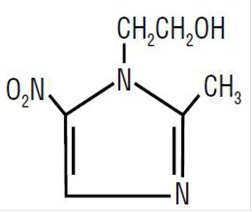
Metronidazole topical cream contains metronidazole, USP, at a concentration of 7.5 mg per gram (0.75%) in an emollient cream consisting of benzyl alcohol, emulsifying wax, glycerin, isopropyl palmitate, lactic acid and sodium hydroxide to adjust pH, purified water and sorbitol solution. Metronidazole is a member of the imidazole class of antibacterial agents and is classified therapeutically as an antiprotozoal and antibacterial agent. Chemically, metronidazole is 2-methyl-5-nitro-1 H-imidazole-1-ethanol. The molecular formula is C6H9N3O3 and molecular weight is 171.16. Metronidazole is represented by the following structural formula:
How Supplied:
Metronidazole Topical Cream, 0.75% is supplied in a:
45 g aluminum tube NDC 59651-770-46
Storage conditions: Store at 20° to 25°C (68° to 77°F); excursions permitted to 15° to 30°C (59° to 86°F) [See USP Controlled Room Temperature].
Distributed by:
Aurobindo Pharma USA, Inc.
279 Princeton-Hightstown Road
East Windsor, NJ 08520
Manufactured by:
Aurobindo Pharma Limited
Hyderabad-500 032, India
Issued: March 2025
Pediatric Use:
Safety and effectiveness in pediatric patients have not been established.
Nursing Mothers:
After oral administration, metronidazole is secreted in breast milk in concentrations similar to those found in the plasma. Even though blood levels are significantly lower with topically applied metronidazole than those achieved after oral administration of metronidazole, a decision should be made whether to discontinue nursing or to discontinue the drug, taking into account the importance of the drug to the mother.
Adverse Reactions:
In controlled clinical trials, the total incidence of adverse reactions associated with the use of metronidazole topical cream was approximately 10%. Skin discomfort (burning and stinging) was the most frequently reported event followed by erythema, skin irritation, pruritus and worsening of rosacea. All individual events occurred in less than 3% of patients.
The following additional adverse experiences have been reported with the topical use of metronidazole: dryness, transient redness, metallic taste, tingling or numbness of extremities and nausea.
To report SUSPECTED ADVERSE REACTIONS, contact Aurobindo Pharma USA, Inc. at 1-866-850-2876 or FDA at 1-800-FDA-1088 or www.fda.gov/medwatch.
Contraindications:
Metronidazole topical cream is contraindicated in individuals with a history of hypersensitivity to metronidazole, or other ingredients of the formulation.
Drug Interactions:
Oral metronidazole has been reported to potentiate the anticoagulant effect of warfarin and coumarin anticoagulants, resulting in a prolongation of prothrombin time. The effect of topical metronidazole on prothrombin time is not known.
Clinical Pharmacology:
The mechanisms by which metronidazole acts in the treatment of rosacea are unknown, but appear to include an anti-inflammatory effect.
Indications and Usage:
Metronidazole topical cream is indicated for topical application in the treatment of inflammatory papules and pustules of rosacea.
Information for Patients:
This medication is to be used as directed by the physician. It is for external use only. Avoid contact with the eyes.
Dosage and Administration:
Apply and rub in a thin layer of metronidazole topical cream twice daily, morning and evening, to entire affected areas after washing.
Areas to be treated should be washed with a mild cleanser before application. Patients may use cosmetics after application of metronidazole topical cream.
Carcinogenesis, Mutagenesis, Impairment of Fertility:
Metronidazole has shown evidence of carcinogenic activity in a number of studies involving chronic, oral administration in mice and rats but not in studies involving hamsters.
Metronidazole has shown evidence of mutagenic activity in several in vitro bacterial assay systems. In addition, a dose-response increase in the frequency of micronuclei was observed in mice after intraperitoneal injections and an increase in chromosome aberrations have been reported in patients with Crohn’s disease who were treated with 200 to 1200 mg/day of metronidazole for 1 to 24 months. However, no excess chromosomal aberrations in circulating human lymphocytes have been observed in patients treated for 8 months.
Package Label Principal Display Panel 45 G Tube Carton
NDC 59651-770-46
Rx only
Metronidazole Topical Cream
0.75%
FOR TOPICAL USE ONLY.
NOT FOR OPHTHALMIC USE.
AUROBINDO NET WT. 45 g
Package Label Principal Display Panel 45 G Tube Label
NDC 59651-770-46
Rx only
Metronidazole Topical Cream
0.75%
FOR TOPICAL USE ONLY.
NOT FOR OPHTHALMIC USE.
AUROBINDO NET WT. 45 g
Structured Label Content
Section 42229-5 (42229-5)
FOR TOPICAL USE ONLY
(NOT FOR OPHTHALMIC USE)
General:
Topical metronidazole has been reported to cause tearing of the eyes. Therefore, contact with the eyes should be avoided. If a reaction suggesting local irritation occurs, patients should be directed to use the medication less frequently or discontinue use. Metronidazole is a nitroimidazole and should be used with care in patients with evidence of, or history of blood dyscrasia.
Pregnancy:
Teratogenic effects: There are no adequate and well-controlled studies with the use of metronidazole topical cream in pregnant women. Metronidazole crosses the placental barrier and enters the fetal circulation rapidly. No fetotoxicity was observed after oral metronidazole in rats or mice. However, because animal reproduction studies are not always predictive of human response and since oral metronidazole has been shown to be a carcinogen in some rodents, this drug should be used during pregnancy only if clearly needed.
Description: (DESCRIPTION:)
Metronidazole topical cream contains metronidazole, USP, at a concentration of 7.5 mg per gram (0.75%) in an emollient cream consisting of benzyl alcohol, emulsifying wax, glycerin, isopropyl palmitate, lactic acid and sodium hydroxide to adjust pH, purified water and sorbitol solution. Metronidazole is a member of the imidazole class of antibacterial agents and is classified therapeutically as an antiprotozoal and antibacterial agent. Chemically, metronidazole is 2-methyl-5-nitro-1 H-imidazole-1-ethanol. The molecular formula is C6H9N3O3 and molecular weight is 171.16. Metronidazole is represented by the following structural formula:
How Supplied: (HOW SUPPLIED:)
Metronidazole Topical Cream, 0.75% is supplied in a:
45 g aluminum tube NDC 59651-770-46
Storage conditions: Store at 20° to 25°C (68° to 77°F); excursions permitted to 15° to 30°C (59° to 86°F) [See USP Controlled Room Temperature].
Distributed by:
Aurobindo Pharma USA, Inc.
279 Princeton-Hightstown Road
East Windsor, NJ 08520
Manufactured by:
Aurobindo Pharma Limited
Hyderabad-500 032, India
Issued: March 2025
Pediatric Use: (Pediatric use:)
Safety and effectiveness in pediatric patients have not been established.
Nursing Mothers: (Nursing mothers:)
After oral administration, metronidazole is secreted in breast milk in concentrations similar to those found in the plasma. Even though blood levels are significantly lower with topically applied metronidazole than those achieved after oral administration of metronidazole, a decision should be made whether to discontinue nursing or to discontinue the drug, taking into account the importance of the drug to the mother.
Adverse Reactions: (ADVERSE REACTIONS:)
In controlled clinical trials, the total incidence of adverse reactions associated with the use of metronidazole topical cream was approximately 10%. Skin discomfort (burning and stinging) was the most frequently reported event followed by erythema, skin irritation, pruritus and worsening of rosacea. All individual events occurred in less than 3% of patients.
The following additional adverse experiences have been reported with the topical use of metronidazole: dryness, transient redness, metallic taste, tingling or numbness of extremities and nausea.
To report SUSPECTED ADVERSE REACTIONS, contact Aurobindo Pharma USA, Inc. at 1-866-850-2876 or FDA at 1-800-FDA-1088 or www.fda.gov/medwatch.
Contraindications: (CONTRAINDICATIONS:)
Metronidazole topical cream is contraindicated in individuals with a history of hypersensitivity to metronidazole, or other ingredients of the formulation.
Drug Interactions:
Oral metronidazole has been reported to potentiate the anticoagulant effect of warfarin and coumarin anticoagulants, resulting in a prolongation of prothrombin time. The effect of topical metronidazole on prothrombin time is not known.
Clinical Pharmacology: (CLINICAL PHARMACOLOGY:)
The mechanisms by which metronidazole acts in the treatment of rosacea are unknown, but appear to include an anti-inflammatory effect.
Indications and Usage: (INDICATIONS AND USAGE:)
Metronidazole topical cream is indicated for topical application in the treatment of inflammatory papules and pustules of rosacea.
Information for Patients: (Information for patients:)
This medication is to be used as directed by the physician. It is for external use only. Avoid contact with the eyes.
Dosage and Administration: (DOSAGE AND ADMINISTRATION:)
Apply and rub in a thin layer of metronidazole topical cream twice daily, morning and evening, to entire affected areas after washing.
Areas to be treated should be washed with a mild cleanser before application. Patients may use cosmetics after application of metronidazole topical cream.
Carcinogenesis, Mutagenesis, Impairment of Fertility: (Carcinogenesis, mutagenesis, impairment of fertility:)
Metronidazole has shown evidence of carcinogenic activity in a number of studies involving chronic, oral administration in mice and rats but not in studies involving hamsters.
Metronidazole has shown evidence of mutagenic activity in several in vitro bacterial assay systems. In addition, a dose-response increase in the frequency of micronuclei was observed in mice after intraperitoneal injections and an increase in chromosome aberrations have been reported in patients with Crohn’s disease who were treated with 200 to 1200 mg/day of metronidazole for 1 to 24 months. However, no excess chromosomal aberrations in circulating human lymphocytes have been observed in patients treated for 8 months.
Package Label Principal Display Panel 45 G Tube Carton (PACKAGE LABEL-PRINCIPAL DISPLAY PANEL - 45 g Tube Carton)
NDC 59651-770-46
Rx only
Metronidazole Topical Cream
0.75%
FOR TOPICAL USE ONLY.
NOT FOR OPHTHALMIC USE.
AUROBINDO NET WT. 45 g
Package Label Principal Display Panel 45 G Tube Label (PACKAGE LABEL-PRINCIPAL DISPLAY PANEL - 45 g Tube Label)
NDC 59651-770-46
Rx only
Metronidazole Topical Cream
0.75%
FOR TOPICAL USE ONLY.
NOT FOR OPHTHALMIC USE.
AUROBINDO NET WT. 45 g
Advanced Ingredient Data
Raw Label Data
All Sections (JSON)
Additional Information
Back to search View SPL set listing Open on DailyMed ↗
Source: dailymed · Ingested: 2026-02-15T11:48:16.590909 · Updated: 2026-03-14T22:29:27.892649