Enjaymo
0a25363a-7781-d9f8-cb1c-be22987bf03b
34391-3
HUMAN PRESCRIPTION DRUG LABEL
Drug Facts
Composition & Product
Identifiers & Packaging
Indications and Usage
ENJAYMO is a classical complement inhibitor indicated for the treatment of hemolysis in adults with cold agglutinin disease (CAD). ( 1 )
Dosage and Administration
Vaccinate against encapsulated bacteria at least two weeks prior to treatment. ( 2.1 ) Weight-based dosage weekly for two weeks then every two weeks: For patients weighing 39 kg to less than 75 kg: 6,500 mg by intravenous infusion. ( 2.2 ) For patients weighing 75 kg or more: 7,500 mg by intravenous infusion. ( 2.2 ) See Full Prescribing Information for important preparation and administration instructions. ( 2.2 , 2.3 )
Contraindications
ENJAYMO is contraindicated in patients with known hypersensitivity to sutimlimab-jome or any of the inactive ingredients [see Warnings and Precautions (5.2) and Adverse Reactions (6.1) ] .
Warnings and Precautions
Serious Infections: Ensure patients are vaccinated against encapsulated bacteria. Monitor patients for early signs and symptoms of infections. ( 5.1 ) Infusion-Related Reactions: Monitor patients for infusion-related reactions, interrupt if reaction occurs, and institute appropriate medical management as needed. ( 5.2 ) Risk of Autoimmune Disease: Monitor patients for signs and symptoms and manage medically. ( 5.3 ) Recurrent Hemolysis After ENJAYMO Discontinuation: Monitor patients for signs and symptoms of hemolysis if treatment with ENJAYMO is interrupted. ( 5.4 )
Adverse Reactions
The following clinically significant adverse reactions are discussed in greater detail in other sections of the labeling: Serious Infections [see Warnings and Precautions (5.1) ] Infusion-Related Reactions [see Warnings and Precautions (5.2) ] Risk of Autoimmune Disease [see Warnings and Precautions (5.3) ] Recurrent Hemolysis After ENJAYMO Discontinuation [see Warnings and Precautions (5.4) ]
Description
Dosage and Administration ( 2.1 ) 02/2024 Warnings and Precautions ( 5.1 ) 02/2024
Medication Information
Warnings and Precautions
Serious Infections: Ensure patients are vaccinated against encapsulated bacteria. Monitor patients for early signs and symptoms of infections. ( 5.1 ) Infusion-Related Reactions: Monitor patients for infusion-related reactions, interrupt if reaction occurs, and institute appropriate medical management as needed. ( 5.2 ) Risk of Autoimmune Disease: Monitor patients for signs and symptoms and manage medically. ( 5.3 ) Recurrent Hemolysis After ENJAYMO Discontinuation: Monitor patients for signs and symptoms of hemolysis if treatment with ENJAYMO is interrupted. ( 5.4 )
Indications and Usage
ENJAYMO is a classical complement inhibitor indicated for the treatment of hemolysis in adults with cold agglutinin disease (CAD). ( 1 )
Dosage and Administration
Vaccinate against encapsulated bacteria at least two weeks prior to treatment. ( 2.1 ) Weight-based dosage weekly for two weeks then every two weeks: For patients weighing 39 kg to less than 75 kg: 6,500 mg by intravenous infusion. ( 2.2 ) For patients weighing 75 kg or more: 7,500 mg by intravenous infusion. ( 2.2 ) See Full Prescribing Information for important preparation and administration instructions. ( 2.2 , 2.3 )
Contraindications
ENJAYMO is contraindicated in patients with known hypersensitivity to sutimlimab-jome or any of the inactive ingredients [see Warnings and Precautions (5.2) and Adverse Reactions (6.1) ] .
Adverse Reactions
The following clinically significant adverse reactions are discussed in greater detail in other sections of the labeling: Serious Infections [see Warnings and Precautions (5.1) ] Infusion-Related Reactions [see Warnings and Precautions (5.2) ] Risk of Autoimmune Disease [see Warnings and Precautions (5.3) ] Recurrent Hemolysis After ENJAYMO Discontinuation [see Warnings and Precautions (5.4) ]
Description
Dosage and Administration ( 2.1 ) 02/2024 Warnings and Precautions ( 5.1 ) 02/2024
Section 42229-5
Cold Agglutinin Disease
ENJAYMO (sutimlimab-jome) is indicated for the treatment of hemolysis in adults with cold agglutinin disease (CAD).
Section 42231-1
| MEDICATION GUIDE ENJAYMO® (en-jaye-moe) (sutimlimab-jome) injection, for intravenous use |
|||||
|---|---|---|---|---|---|
| This Medication Guide has been approved by the U.S. Food and Drug Administration. | Revised:11/2024 | ||||
|
What is the most important information I should know about ENJAYMO? |
|||||
|
|||||
|
|
||||
| For more information about side effects, see "What are the possible side effects of ENJAYMO?" | |||||
| What is ENJAYMO? | |||||
| ENJAYMO is a prescription medicine used to treat the breakdown of red blood cells (hemolysis) in adults with cold agglutinin disease (CAD). It is not known if ENJAYMO is safe and effective in children. |
|||||
| Who should not receive ENJAYMO? | |||||
| Do not receive ENJAYMO if you are allergic to sutimlimab-jome or any of the ingredients in ENJAYMO. See the end of this Medication Guide for a complete list of ingredients in ENJAYMO. | |||||
| Before receiving ENJAYMO, tell your healthcare provider about all of your medical conditions, including if you: | |||||
|
|||||
|
Tell your healthcare provider about all the medicines you take, including prescription and over-the-counter medicines, vitamins, and herbal supplements. Know the medicines you take. Keep a list of them to show your healthcare provider and pharmacist when you get a new medicine. |
|||||
| How will I receive ENJAYMO? | |||||
|
|||||
|
|
||||
|
|||||
|
What are the possible side effects of ENJAYMO?
|
|||||
|
|
||||
|
|||||
| The most common side effects of ENJAYMO include: | |||||
|
|
||||
| These are not all the possible side effects of ENJAYMO. Call your doctor for medical advice about side effects. You may report side effects to FDA at 1-800-FDA-1088. |
|||||
| General information about the safe and effective use of ENJAYMO. | |||||
| Medicines are sometimes prescribed for purposes other than those listed in a Medication Guide. You can ask your pharmacist or healthcare provider for information about ENJAYMO that is written for health professionals. | |||||
| What are the ingredients in ENJAYMO? | |||||
| Active ingredient: sutimlimab-jome | |||||
| Inactive ingredients: polysorbate 80, sodium chloride, sodium phosphate dibasic heptahydrate, sodium phosphate monobasic monohydrate, and Water for Injection, USP. | |||||
| Manufactured by: Recordati Rare Diseases Inc., Bridgewater, NJ 08807 US License No. 1899 For more information, go to www.ENJAYMO.com or call 1-888-575-8344. ©2024 Recordati Rare Diseases Inc. All rights reserved. |
Section 44425-7
Storage and Handling
Store ENJAYMO vials refrigerated at 36°F to 46°F (2°C to 8°C) in the original carton to protect from light. Do not freeze. Do not shake.
Discard unused portion.
14.1 Cadenza
The efficacy of ENJAYMO was assessed in a placebo-controlled 6-month trial in 42 patients (CADENZA, NCT 03275454). Following the completion of the 6-month treatment period (Part A) in which 22 patients received ENJAYMO and 20 patients received placebo, 39 patients (19 patients on ENJAYMO and 20 patients on placebo) continued to receive ENJAYMO in a long-term safety and durability of response extension phase (Part B) for an additional 12 months following last patient out from Part A. The trial included a 9 week safety follow-up after the last dose of ENJAYMO. Patients with a confirmed diagnosis of CAD based on chronic hemolysis, polyspecific direct antiglobulin test (DAT), monospecific DAT specific for C3d, cold agglutinin titer ≥64 at 4°C, an IgG DAT ≤1+ and no history of transfusion within 6 months, or more than one blood transfusion in the 12 months prior to enrollment in the trial were administered 6.5 g or 7.5 g ENJAYMO (based on body weight) intravenously over approximately 60 minutes on Day 0, Day 7, and every 14 days thereafter; or placebo. Patients with cold agglutinin disease secondary to infection, rheumatologic disease, systemic lupus erythematosus, or overt hematologic malignancy were excluded, whereas patients with a history of or concomitant low-grade lymphoproliferative disease were not excluded.
Major baseline characteristics of the study population are summarized in Table 5.
| Parameter | Statistic | CADENZA | |
|---|---|---|---|
| Placebo | ENJAYMO | ||
| N=20 | N=22 | ||
| Age | Mean | 68.2 | 65.3 |
| Min, Max | 51, 83 | 46, 88 | |
| Sex | |||
| Male | n (%) | 4 (20.0) | 5 (22.7) |
| Female | 16 (80.0) | 17 (77.3) | |
| Body weight | Mean, Kg | 64.9 | 66.8 |
| Min, Max | 48, 95 | 39, 100 | |
| Hemoglobin | Mean, g/dL | 9.33 | 9.15 |
| Bilirubin (total) Placebo N=18 and ENJAYMO N= 20 in CADENZA, for bilirubin data excluding patients with either a positive or no available test result for Gilbert's syndrome.
|
µmol/L | 35.77 | 41.17 |
| (1.75 × ULN) | (2 × ULN) | ||
| LDH | U/L | 380.8 | 421.5 |
| History of transfusion | Mean number of transfusions (range) | ||
| Within last 6 months | 0 | 0 | |
| Within last 12 months | 0 | 0.14 (0, 1) | |
| FACIT ULN: Upper limit of normal, FACIT: Functional Assessment of Chronic Illness Therapy (FACIT-Fatigue is measured on a scale of 0 (worst fatigue) to 52 (no fatigue) -Fatigue scale |
Mean | 32.99 | 31.67 |
Efficacy was based on the proportion of patients who met the following criteria: an increase from baseline in Hgb level ≥1.5 g/dL at the treatment assessment time point (mean value from Weeks 23, 25, and 26), no blood transfusion from Week 5 through Week 26, and no treatment for CAD beyond what was permitted per protocol from Week 5 through Week 26. Efficacy was further assessed based on the effect of ENJAYMO on Hgb, laboratory measures of hemolysis including mean change from baseline in total bilirubin and LDH. Supportive efficacy data collected included transfusion usage after five weeks of treatment. In addition, mean change from baseline in symptoms and impacts of fatigue were assessed using a patient-reported outcome instrument, the FACIT-Fatigue (score range from 0 to 52 with higher scores indicating less fatigue).
The data from this study demonstrated a statistically significant treatment effect of ENJAYMO over placebo in terms of the rate of patients who met the efficacy criteria (responder) as well as improving symptoms and impacts of fatigue (FACIT-Fatigue). The responder rate difference between ENJAYMO and placebo was 58.78% (95% CI: 34.6% to 82.96%) with a p-value of 0.0004. At the treatment assessment timepoint (TAT), 16 of 22 patients on ENJAYMO (72.7%; 95% CI: 49.8% to 89.3%) and 3 of 20 patients on placebo (15.0%; 95% CI: 3.2% to 37.9%) met primary criteria. Efficacy of ENJAYMO in the inhibition of hemolysis in patients with CAD was demonstrated across multiple end points as described in the table below (see Table 6).
| Parameter | Statistic | Placebo N=20 |
ENJAYMO N=22 |
Treatment Effect |
|---|---|---|---|---|
| NC= Not calculated | ||||
|
Responder
A responder was defined as a patient with an increase from baseline in Hgb level ≥ 1.5 g/dL at the treatment assessment time point (mean value from Weeks 23, 25, and 26), no blood transfusion from Week 5 through Week 26, and no treatment for CAD beyond what was permitted per protocol from Week 5 through Week 26.
|
n (%) | 3 (15) | 16 (72.7) | 58.78 (34.6, 82.96) The Mantel-Haenszel stratum-weighted estimator of the rate difference with 95% CI was calculated using the Sato variance estimator. The stratification factors are baseline hemoglobin (< median vs ≥ median) and geographic region (Asia/Other, North America, and Europe)
|
| p-value: | <0.001 | |||
| Hemoglobin | Mean change from baseline (LS LS: Least Square, FACIT-Fatigue: Functional Assessment of Chronic Illness Therapy-Fatigue Scale Mean), g/dL |
0.09 | 2.66 | 2.56 |
| 95% CI of LS Mean | (1.75, 3.38) | |||
| p-value: | <0.001 | |||
| Patients with mean change from baseline of: greater than or equal to 1.5 g/dL |
n (%) | 3 (15) | 16 (72.7) | NC |
| Patients not receiving blood transfusion from Week 5 through Week 26 (transfusion avoidance) | n (%) | 16 (80) | 18 (81.8) | NC |
| Patients not receiving protocol-prohibited CAD medications from Week 5 through Week 26 Prohibited therapies included rituximab alone or in combination with cytotoxic agents
|
n (%) | 20 (100) | 19 (86.4) | NC |
| FACIT-Fatigue | Mean change from baseline (LS Mean) | 1.91 | 10.83 | 8.93 |
| 95% CI of LS Mean | (4, 13.85) | |||
| p-value: | <0.001 |
During Part A, an increase in mean hemoglobin level of 2.02 g/dL was observed in patients on ENJAYMO at Week 3; in the placebo group the mean hemoglobin level decreased by 0.31g/dL. At treatment assessment timepoint, a mean decrease in bilirubin of 1.29 mg/dL compared to baseline was reported in patients on ENJAYMO (n=17) versus 0.11 mg/dL on placebo (n=18). In the ENJAYMO group, bilirubin levels normalized in 88.2% (n=15) of patients compared to 22.2% (n=4) of patients in the placebo arm. At treatment assessment timepoint, a mean decrease in LDH of 150.83 U/L compared to baseline was reported in patients on ENJAYMO (n=19) versus an increase of 7.6 U/L on placebo (n=20). In the ENJAYMO group, LDH levels were < 1.5 × ULN in 94.7% (n=18) of patients compared to 70% (n=14) in the placebo arm.
In Part B, mean hemoglobin levels were maintained at >10.5 g/dL. Sustained normalization of mean bilirubin levels was also observed indicating a sustained decrease in hemolysis. Mean hemoglobin level of 11.58 g/dL (range: 6.90-15.30) and 1.01 mg/dL (range: 0.29–5.54) for bilirubin was observed at the last on-treatment visit.
After the last dose of ENJAYMO in the study, signs and symptoms of recurrent hemolysis were observed, nine weeks after the last dose in Part B; mean hemoglobin decreased by 2.41 g/dL (SE: 0.373) and mean bilirubin increased by 1.27 mg/dL (SE: 0.182) from the last available values during treatment.
14.2 Cardinal
The efficacy of ENJAYMO was assessed in an open-label, single-arm, 6-month trial in 24 patients (CARDINAL, NCT03347396). Following the completion of the 6-month treatment period (Part A), patients continued to receive ENJAYMO in a long-term safety and durability of response extension phase (Part B) for an additional 24 months following last patient out from Part A. The trial included a 9 week safety follow-up after the last dose of ENJAYMO.
Patients with a confirmed diagnosis of CAD based on chronic hemolysis, polyspecific direct antiglobulin test (DAT), monospecific DAT specific for C3d, cold agglutinin titer ≥64 at 4°C, and IgG DAT ≤1+ and a recent blood transfusion in the 6 months prior to enrollment were administered 6.5 g or 7.5 g ENJAYMO (based on body weight) intravenously over approximately 60 minutes on Day 0, Day 7, and every 14 days thereafter. Patients with cold agglutinin syndrome secondary to infection, rheumatologic disease, systemic lupus erythematosus, or overt hematologic malignancy were excluded, whereas patients with a history of or concomitant low-grade lymphoproliferative disease were not excluded. Major baseline characteristics of the trial population are summarized in Table 7.
| Parameter | Statistic | ENJAYMO N=24 |
|---|---|---|
| Age | Mean (SD) Range |
71.3 (8.2) 55 to 85 years |
| Sex | ||
| Female | n (%) | 15 (63) |
| Male | 9 (38) | |
| Body weight | Mean (SD) Range |
67.8 (15.8) 40 to 112 kg |
| Hemoglobin | Mean (SD), g/dL | 8.6 (1.16) |
| Bilirubin (total) N=21 for bilirubin data excluding patients with Gilbert's syndrome.
|
Mean (SD), mg/dL | 3.1 (1.41) (2.6 × ULN ULN: Upper limit of normal, LDH: Lactate dehydrogenase. ) |
| LDH | Mean (SD), U/L | 438 (484.60) |
| Blood transfusion | Median number of transfusions (range) | |
| Within last 6 months | 2.0 (1, 19) | |
| Within last 12 months | 2.0 (1, 23) |
Efficacy was based on the proportion of patients who met the following criteria: an increase from baseline in Hgb level ≥2 g/dL or a Hgb level ≥12 g/dL at the treatment assessment time point (mean value from Weeks 23, 25, and 26), no blood transfusion from Week 5 through Week 26, and no treatment for CAD beyond what was permitted per protocol from Week 5 through Week 26.
Efficacy of ENJAYMO in patients with CAD is described in Table 8.
| Parameter | Statistic | ENJAYMO N=24 |
|---|---|---|
|
Responder A responder was defined as a patient with an increase from baseline in Hgb level ≥2 g/dL or a Hgb level ≥12 g/dL at the treatment assessment time point (mean value from Weeks 23, 25, and 26), no blood transfusion from Week 5 through Week 26, and no treatment for CAD beyond what was permitted per protocol from Week 5 through Week 26.
|
n (%) | 13 (54) |
| Hemoglobin level ≥12 g/dL or Increase in Hemoglobin level of ≥2 g/dL |
n (%) | 15 (63) |
| Hemoglobin level ≥12 g/dL | n (%) | 9 (38) |
| Increase in Hemoglobin level of ≥2 g/dL | n (%) | 15 (63) |
| Patients not receiving RBC transfusion from Week 5 through Week 26 (transfusion avoidance) | n (%) | 17 (71) |
| Patients not receiving protocol-prohibited CAD medications Prohibited therapies included rituximab alone or in combination with cytotoxic agents. from Week 5 through Week 26 |
n (%) | 22 (92) |
In Part A, among 14 patients with baseline and follow-up bilirubin values, the mean was 3.23 mg/dL (2.7-fold ULN) at baseline and 0.91 mg/dL (0.8-fold ULN) at the treatment assessment time point. The least-squares (LS) mean change was reduction of -2.23 mg/dL (95% CI: -2.49 to -1.98). Among 17 patients with baseline and follow-up LDH values, the mean LDH was 424 U/L (1.7-fold ULN) at baseline and 301 U/L (1.2-fold ULN) at the follow-up time point. The least squared mean change in LDH at the treatment assessment time point was reduction of -126 (95% CI: -218 to -35).
In CARDINAL, an increase in mean hemoglobin level of 2.29 g/dL (SE: 0.308) was observed at Week 3 and 3.18 g/dL (SE: 0.476) at treatment assessment time point. The observed model mean change in hemoglobin level from baseline at treatment assessment time point was an improvement of 2.60 g/dL (95% CI: 0.74, 4.46).
In Part B, mean hemoglobin levels were maintained at >10 g/dL. Sustained normalization of mean bilirubin levels was also observed indicating a sustained decrease in hemolysis. Mean hemoglobin level of 12.23 g/dL (range: 9.20–14.40) and 0.96 mg/dL (range: 0.4–1.7) for bilirubin was observed at the last on-treatment visit.
After the last dose of ENJAYMO in the study, signs and symptoms of recurrent hemolysis were observed, nine weeks after the last dose in Part B; mean hemoglobin decreased by 2.28 g/dL (SE: 0.402) and mean bilirubin increased by 1.42 mg/dL (SE: 0.192) from the last available values during treatment.
11 Description
Sutimlimab-jome, a classical complement inhibitor, is a humanized monoclonal antibody expressed by recombinant in Chinese hamster ovary (CHO) cells and produced in vitro using standard mammalian cell culture methods. Sutimlimab-jome is composed of two heterodimers. Each heterodimer is composed of a heavy and a light polypeptide chain. Each heavy chain (H-chain) is composed of 445 amino acids and each light chain (L-chain) contains 216 amino acids. Sutimlimab-jome has a molecular weight of approximately 147 kDa.
ENJAYMO (sutimlimab-jome) injection is a sterile, clear to slightly opalescent, colorless to slightly yellow, preservative-free solution for intravenous use. Each single-dose vial contains 1,100 mg sutimlimab-jome at a concentration of 50 mg/mL with a pH of 6.1. Each mL contains 50 mg of sutimlimab-jome and also contains polysorbate 80 (0.2 mg), sodium chloride (8.18 mg), sodium phosphate dibasic heptahydrate (0.48 mg), sodium phosphate monobasic monohydrate (1.13 mg), and Water for Injection, USP.
8.4 Pediatric Use
Safety and effectiveness in pediatric patients have not been established.
8.5 Geriatric Use
Of the 66 patients with CAD in clinical studies of ENJAYMO, 65% were 65 years of age and over, including 27% who were 75 years of age and over. No overall differences in safety or effectiveness were observed between these patients and younger patients, and other reported clinical experience has not identified differences in responses between the elderly and younger patients, but greater sensitivity of some older individuals cannot be ruled out.
12.6 Immunogenicity
The observed incidence of anti-drug antibodies is highly dependent on the sensitivity and specificity of the assay. Differences in assay methods preclude meaningful comparisons of the incidence of anti-drug antibodies in the studies described below with the incidence of anti-drug antibodies in other studies, including those of sutimlimab-jome or of other sutimlimab products.
During the treatment period in CARDINAL and CADENZA, 8/66 (12%) ENJAYMO-treated patients developed anti-sutimlimab-jome antibodies (duration of exposure up to 177 weeks). There was no identified clinically significant effect of anti-drug antibodies on pharmacokinetics, pharmacodynamics, safety, or effectiveness of ENJAYMO over the treatment duration [see Clinical Studies (14)].
4 Contraindications
ENJAYMO is contraindicated in patients with known hypersensitivity to sutimlimab-jome or any of the inactive ingredients [see Warnings and Precautions (5.2) and Adverse Reactions (6.1)].
6 Adverse Reactions
The following clinically significant adverse reactions are discussed in greater detail in other sections of the labeling:
- Serious Infections [see Warnings and Precautions (5.1)]
- Infusion-Related Reactions [see Warnings and Precautions (5.2)]
- Risk of Autoimmune Disease [see Warnings and Precautions (5.3)]
- Recurrent Hemolysis After ENJAYMO Discontinuation [see Warnings and Precautions (5.4)]
12.2 Pharmacodynamics
Greater than 90% inhibition of CP was observed following a single sutimlimab-jome infusion and sustained in patients with CAD when sutimlimab-jome concentrations were greater than or equal to 100 mcg/mL. C4 levels returned to normal levels (0.2 g/L) in patients with CAD within one week following the first dose of sutimlimab-jome. Complete CP inhibition following initiation of sutimlimab-jome treatment led to inhibition of hemolysis as evidenced by normalization of bilirubin, decrease in LDH, increase in haptoglobin, and decrease in reticulocytes.
After the first treatment with sutimlimab-jome, near normalization of bilirubin associated with a greater than 1 g/dL increase in hemoglobin was observed, demonstrating the effect of CP inhibition. The extent and duration of the pharmacodynamic response in patients with CAD were exposure dependent for sutimlimab-jome.
12.3 Pharmacokinetics
Following administration of the approved weight-based recommended dosages, the exposure of sutimlimab-jome increases proportionally over a dosage range of 60 mg/kg to 100 mg/kg by intravenous infusion (0.3 to 1.5 times the maximum approved recommended dosage based on 75 kg body weight). Steady state was achieved by Week 7 after starting sutimlimab-jome treatment, with an accumulation ratio of less than 2.
1 Indications and Usage
ENJAYMO is a classical complement inhibitor indicated for the treatment of hemolysis in adults with cold agglutinin disease (CAD). (1)
12.1 Mechanism of Action
Sutimlimab-jome is an immunoglobulin G (IgG), subclass 4 (IgG4) monoclonal antibody (mAb) that inhibits the classical complement pathway (CP) and specifically binds to complement protein component 1, s subcomponent (C1s), a serine protease which cleaves C4. Sutimlimab-jome does not inhibit the lectin and alternative pathways. Inhibition of the classical complement pathway at the level of C1s prevents deposition of complement opsonins on the surface of RBCs, resulting in inhibition of hemolysis in patients with CAD.
5 Warnings and Precautions
- Serious Infections: Ensure patients are vaccinated against encapsulated bacteria. Monitor patients for early signs and symptoms of infections. (5.1)
- Infusion-Related Reactions: Monitor patients for infusion-related reactions, interrupt if reaction occurs, and institute appropriate medical management as needed. (5.2)
- Risk of Autoimmune Disease: Monitor patients for signs and symptoms and manage medically. (5.3)
- Recurrent Hemolysis After ENJAYMO Discontinuation: Monitor patients for signs and symptoms of hemolysis if treatment with ENJAYMO is interrupted. (5.4)
2 Dosage and Administration
3 Dosage Forms and Strengths
Injection: 1,100 mg/22 mL (50 mg/mL) as a clear to slightly opalescent, colorless to slightly yellow solution in a single-dose vial.
2.2 Recommended Dosage Regimen
The recommended dosage of ENJAYMO for patients with CAD is based on body weight. For patients weighing 39 kg to less than 75 kg, the recommended dose is 6,500 mg and for patients weighing 75 kg or more, the recommended dose is 7,500 mg. Administer ENJAYMO intravenously weekly for the first two weeks, with administration every two weeks thereafter. Administer ENJAYMO at the recommended dosage regimen time points, or within two days of these time points.
If a dose is missed, administer as soon as possible; thereafter, resume dosing every two weeks. If the duration after the last dose exceeds 17 days, administer ENJAYMO weekly for two weeks, with administration every two weeks thereafter.
5.2 Infusion Related Reactions
ENJAYMO is contraindicated in patients with known hypersensitivity to sutimlimab-jome or any of the inactive ingredients [see Contraindications (4)]. Administration of ENJAYMO may result in infusion-related reactions. In the two phase 3 studies, 19 of 66 (29%) patients treated with ENJAYMO experienced infusion-related reactions (e.g., shortness of breath, rapid heartbeat, nausea, flushing, headache, hypotension, chest discomfort, pruritus, rash, injection site reaction, and dizziness) were reported in patients from the two clinical studies. One patient permanently discontinued ENJAYMO due to an infusion-related reaction.
Monitor patients for infusion-related reactions and interrupt if a reaction occurs. Discontinue ENJAYMO infusion and institute appropriate supportive measures if signs of hypersensitivity reactions, such as cardiovascular instability or respiratory compromise, occur.
5.3 Risk of Autoimmune Disease
Based on its mechanism of action, ENJAYMO may potentially increase the risk for developing autoimmune diseases such as systemic lupus erythematosus (SLE). Development of systemic lupus erythematosus (SLE) has been associated with inherited classical complement deficiency. Patients with SLE or autoimmune disease with positive anti-nuclear antibody were excluded from clinical trials with ENJAYMO. In clinical trials, 3/66 (4.5%) patients developed a relapse or worsening of preexisting autoimmune disease. Monitor patients being treated with ENJAYMO for signs and symptoms and manage medically.
6.1 Clinical Trials Experience
Because clinical trials are conducted under widely varying conditions, adverse reaction rates observed in the clinical trials of a drug cannot be directly compared to rates in the clinical trials of another drug and may not reflect the rates observed in practice.
The safety of ENJAYMO in patients with a confirmed diagnosis of CAD was evaluated in a placebo-controlled study (CADENZA) in Part A (n=42) followed by an open-label single-arm study in Part B (n=39) and an open-label single-arm study (CARDINAL) (n=24) [see Clinical Studies (14)]. The median duration of treatment exposure to ENJAYMO was 104 weeks (patients randomized to ENJAYMO in CADENZA Part A) and 93 weeks (patients randomized to placebo in CADENZA Part A) and 143 weeks for CARDINAL.
17 Patient Counseling Information
Advise the patient to read the FDA-approved patient labeling (Medication Guide).
2.3 Preparation and Administration
ENJAYMO is for intravenous infusion only.
Each vial of ENJAYMO is intended for single dose only.
ENJAYMO can either be used as an undiluted or diluted preparation.
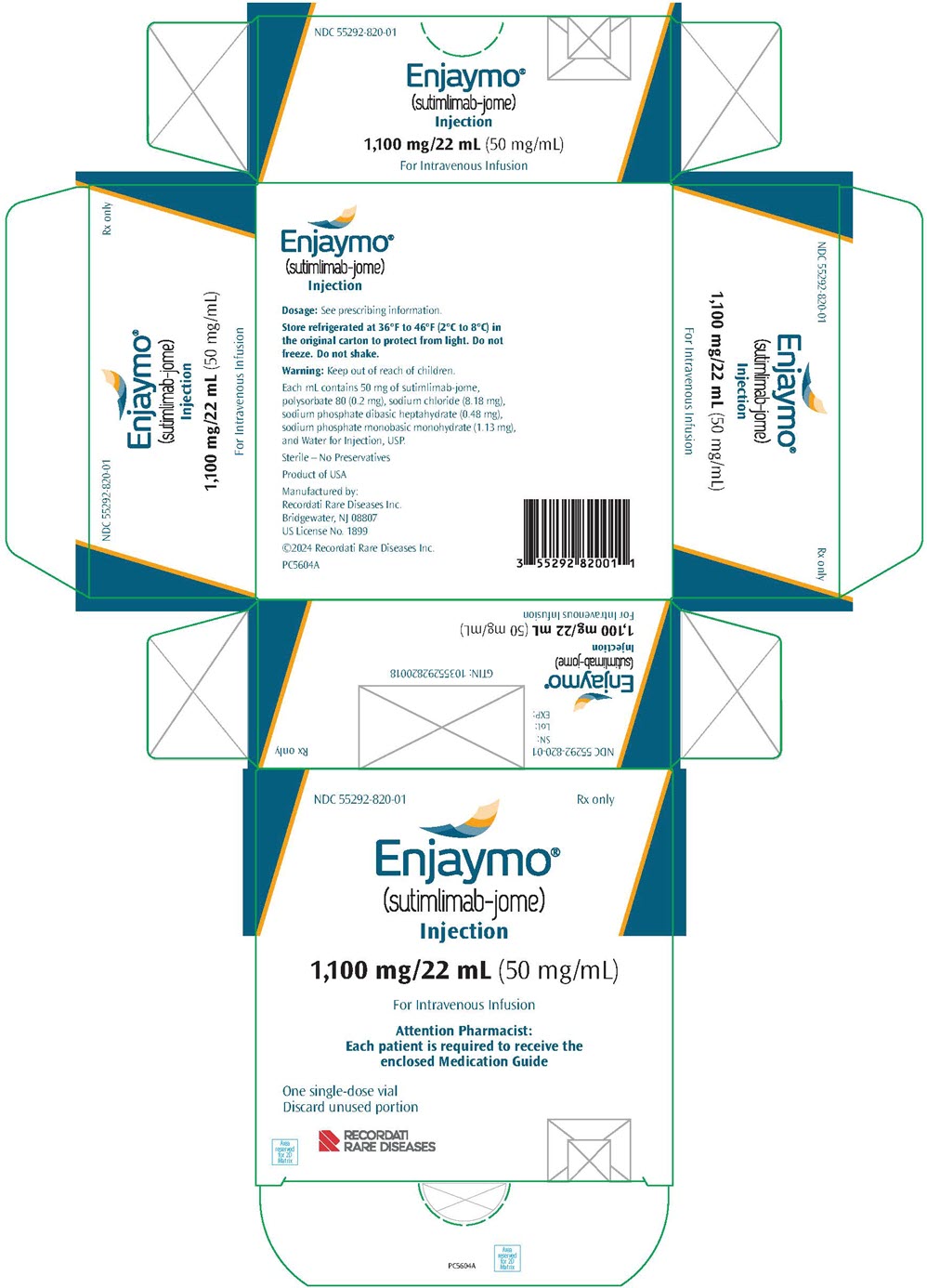
Principal Display Panel 1,100 Mg/22 Ml Vial Carton
NDC 55292-820-01
Rx only
Enjaymo®
(sutimlimab-jome)
Injection
1,100 mg/22 mL (50 mg/mL)
For Intravenous Infusion
Attention Pharmacist:
Each patient is required to receive the
enclosed Medication Guide
One single-dose vial
Discard unused portion
RECORDATI
RARE DISEASES
5.4 Recurrent Hemolysis After Enjaymo Discontinuation
If treatment with ENJAYMO is interrupted, closely monitor patients for signs and symptoms of recurrent hemolysis, e.g., elevated levels of total bilirubin or lactate dehydrogenase (LDH) accompanied by a decrease in hemoglobin, or reappearance of symptoms such as fatigue, dyspnea, palpitations, or hemoglobinuria. Consider restarting ENJAYMO if signs and symptoms of hemolysis occur after discontinuation.
13.1 Carcinogenesis, Mutagenesis, Impairment of Fertility
Carcinogenicity and mutagenicity studies have not been conducted with sutimlimab-jome.
Effects of sutimlimab-jome on male and female fertility have not been studied in animals. In repeat-dose studies in cynomolgus monkeys with sutimlimab-jome administered once-weekly at exposures 3 to 4 times the human exposures at the maximum recommended human doses of sutimlimab-jome, no effects on male or female reproductive tissues were observed.
2.1 Recommended Vaccinations for Encapsulated Bacterial Infections
Vaccinate patients against encapsulated bacteria, including Streptococcus pneumoniae and Neisseria meningitidis (serogroups A, C, W, Y and B), according to current Advisory Committee on Immunization Practices (ACIP) recommendations at least 2 weeks prior to initiation of ENJAYMO [see Warnings and Precautions (5.1)]. If urgent ENJAYMO therapy is indicated in a patient who is not up to date with vaccines for Streptococcus pneumoniae and Neisseria meningitidis administer these vaccines as soon as possible.
5.1 Serious Infections Including Those Caused By Encapsulated Bacteria
ENJAYMO, a proximal classical complement C1s inhibitor, increases a patient's susceptibility to serious infections including those caused by encapsulated bacteria e.g. Neisseria meningitidis (any serogroup, including non-groupable strains), Streptococcus pneumoniae, and Haemophilus influenzae type B.
Life-threatening and fatal infections with encapsulated bacteria have occurred in both vaccinated and unvaccinated patients treated with complement inhibitors.
Serious infections (bacterial and viral) were reported in 15% (10/66) of patients receiving ENJAYMO from the two phase 3 studies. These infections included urinary tract infection with sepsis, respiratory tract infection, pneumonia, otomastoiditis, and skin infections One patient (1.5%) died due to klebsiella pneumonia.
Complete or update vaccination against encapsulated bacteria at least 2 weeks prior to administration of the first dose of ENJAYMO, according to the most current ACIP recommendations for patients receiving a complement inhibitor. Revaccinate patients in accordance with ACIP recommendations considering the chronic duration of therapy with ENJAYMO. Note that, ACIP recommends an administration schedule in patients receiving complement inhibitors that differs from the administration schedule in the vaccine prescribing information. If urgent ENJAYMO therapy is indicated in a patient who is not up to date on their vaccines administer vaccine(s) as soon as possible.
Vaccination does not eliminate the risk of serious encapsulated bacterial infections, despite development of antibodies following vaccination. Closely monitor patients for early signs and symptoms of serious infection and evaluate patients immediately if an infection is suspected.
If ENJAYMO treatment is administered to patients with active systemic infections, monitor closely for signs and symptoms of worsening infection. Some infections may become rapidly life-threatening or fatal if not recognized and treated promptly. Inform patients of these signs and symptoms and steps to be taken to seek immediate medical care. Consider interruption of ENJAYMO treatment in patients who are undergoing treatment for serious infection. ENJAYMO has not been studied in patients with chronic systemic infections such as hepatitis B, hepatitis C, or HIV. Consider patients' immune status when initiating treatment with ENJAYMO.
Structured Label Content
Section 42229-5 (42229-5)
Cold Agglutinin Disease
ENJAYMO (sutimlimab-jome) is indicated for the treatment of hemolysis in adults with cold agglutinin disease (CAD).
Section 42231-1 (42231-1)
| MEDICATION GUIDE ENJAYMO® (en-jaye-moe) (sutimlimab-jome) injection, for intravenous use |
|||||
|---|---|---|---|---|---|
| This Medication Guide has been approved by the U.S. Food and Drug Administration. | Revised:11/2024 | ||||
|
What is the most important information I should know about ENJAYMO? |
|||||
|
|||||
|
|
||||
| For more information about side effects, see "What are the possible side effects of ENJAYMO?" | |||||
| What is ENJAYMO? | |||||
| ENJAYMO is a prescription medicine used to treat the breakdown of red blood cells (hemolysis) in adults with cold agglutinin disease (CAD). It is not known if ENJAYMO is safe and effective in children. |
|||||
| Who should not receive ENJAYMO? | |||||
| Do not receive ENJAYMO if you are allergic to sutimlimab-jome or any of the ingredients in ENJAYMO. See the end of this Medication Guide for a complete list of ingredients in ENJAYMO. | |||||
| Before receiving ENJAYMO, tell your healthcare provider about all of your medical conditions, including if you: | |||||
|
|||||
|
Tell your healthcare provider about all the medicines you take, including prescription and over-the-counter medicines, vitamins, and herbal supplements. Know the medicines you take. Keep a list of them to show your healthcare provider and pharmacist when you get a new medicine. |
|||||
| How will I receive ENJAYMO? | |||||
|
|||||
|
|
||||
|
|||||
|
What are the possible side effects of ENJAYMO?
|
|||||
|
|
||||
|
|||||
| The most common side effects of ENJAYMO include: | |||||
|
|
||||
| These are not all the possible side effects of ENJAYMO. Call your doctor for medical advice about side effects. You may report side effects to FDA at 1-800-FDA-1088. |
|||||
| General information about the safe and effective use of ENJAYMO. | |||||
| Medicines are sometimes prescribed for purposes other than those listed in a Medication Guide. You can ask your pharmacist or healthcare provider for information about ENJAYMO that is written for health professionals. | |||||
| What are the ingredients in ENJAYMO? | |||||
| Active ingredient: sutimlimab-jome | |||||
| Inactive ingredients: polysorbate 80, sodium chloride, sodium phosphate dibasic heptahydrate, sodium phosphate monobasic monohydrate, and Water for Injection, USP. | |||||
| Manufactured by: Recordati Rare Diseases Inc., Bridgewater, NJ 08807 US License No. 1899 For more information, go to www.ENJAYMO.com or call 1-888-575-8344. ©2024 Recordati Rare Diseases Inc. All rights reserved. |
Section 43683-2 (43683-2)
Section 44425-7 (44425-7)
Storage and Handling
Store ENJAYMO vials refrigerated at 36°F to 46°F (2°C to 8°C) in the original carton to protect from light. Do not freeze. Do not shake.
Discard unused portion.
14.1 Cadenza (14.1 CADENZA)
The efficacy of ENJAYMO was assessed in a placebo-controlled 6-month trial in 42 patients (CADENZA, NCT 03275454). Following the completion of the 6-month treatment period (Part A) in which 22 patients received ENJAYMO and 20 patients received placebo, 39 patients (19 patients on ENJAYMO and 20 patients on placebo) continued to receive ENJAYMO in a long-term safety and durability of response extension phase (Part B) for an additional 12 months following last patient out from Part A. The trial included a 9 week safety follow-up after the last dose of ENJAYMO. Patients with a confirmed diagnosis of CAD based on chronic hemolysis, polyspecific direct antiglobulin test (DAT), monospecific DAT specific for C3d, cold agglutinin titer ≥64 at 4°C, an IgG DAT ≤1+ and no history of transfusion within 6 months, or more than one blood transfusion in the 12 months prior to enrollment in the trial were administered 6.5 g or 7.5 g ENJAYMO (based on body weight) intravenously over approximately 60 minutes on Day 0, Day 7, and every 14 days thereafter; or placebo. Patients with cold agglutinin disease secondary to infection, rheumatologic disease, systemic lupus erythematosus, or overt hematologic malignancy were excluded, whereas patients with a history of or concomitant low-grade lymphoproliferative disease were not excluded.
Major baseline characteristics of the study population are summarized in Table 5.
| Parameter | Statistic | CADENZA | |
|---|---|---|---|
| Placebo | ENJAYMO | ||
| N=20 | N=22 | ||
| Age | Mean | 68.2 | 65.3 |
| Min, Max | 51, 83 | 46, 88 | |
| Sex | |||
| Male | n (%) | 4 (20.0) | 5 (22.7) |
| Female | 16 (80.0) | 17 (77.3) | |
| Body weight | Mean, Kg | 64.9 | 66.8 |
| Min, Max | 48, 95 | 39, 100 | |
| Hemoglobin | Mean, g/dL | 9.33 | 9.15 |
| Bilirubin (total) Placebo N=18 and ENJAYMO N= 20 in CADENZA, for bilirubin data excluding patients with either a positive or no available test result for Gilbert's syndrome.
|
µmol/L | 35.77 | 41.17 |
| (1.75 × ULN) | (2 × ULN) | ||
| LDH | U/L | 380.8 | 421.5 |
| History of transfusion | Mean number of transfusions (range) | ||
| Within last 6 months | 0 | 0 | |
| Within last 12 months | 0 | 0.14 (0, 1) | |
| FACIT ULN: Upper limit of normal, FACIT: Functional Assessment of Chronic Illness Therapy (FACIT-Fatigue is measured on a scale of 0 (worst fatigue) to 52 (no fatigue) -Fatigue scale |
Mean | 32.99 | 31.67 |
Efficacy was based on the proportion of patients who met the following criteria: an increase from baseline in Hgb level ≥1.5 g/dL at the treatment assessment time point (mean value from Weeks 23, 25, and 26), no blood transfusion from Week 5 through Week 26, and no treatment for CAD beyond what was permitted per protocol from Week 5 through Week 26. Efficacy was further assessed based on the effect of ENJAYMO on Hgb, laboratory measures of hemolysis including mean change from baseline in total bilirubin and LDH. Supportive efficacy data collected included transfusion usage after five weeks of treatment. In addition, mean change from baseline in symptoms and impacts of fatigue were assessed using a patient-reported outcome instrument, the FACIT-Fatigue (score range from 0 to 52 with higher scores indicating less fatigue).
The data from this study demonstrated a statistically significant treatment effect of ENJAYMO over placebo in terms of the rate of patients who met the efficacy criteria (responder) as well as improving symptoms and impacts of fatigue (FACIT-Fatigue). The responder rate difference between ENJAYMO and placebo was 58.78% (95% CI: 34.6% to 82.96%) with a p-value of 0.0004. At the treatment assessment timepoint (TAT), 16 of 22 patients on ENJAYMO (72.7%; 95% CI: 49.8% to 89.3%) and 3 of 20 patients on placebo (15.0%; 95% CI: 3.2% to 37.9%) met primary criteria. Efficacy of ENJAYMO in the inhibition of hemolysis in patients with CAD was demonstrated across multiple end points as described in the table below (see Table 6).
| Parameter | Statistic | Placebo N=20 |
ENJAYMO N=22 |
Treatment Effect |
|---|---|---|---|---|
| NC= Not calculated | ||||
|
Responder
A responder was defined as a patient with an increase from baseline in Hgb level ≥ 1.5 g/dL at the treatment assessment time point (mean value from Weeks 23, 25, and 26), no blood transfusion from Week 5 through Week 26, and no treatment for CAD beyond what was permitted per protocol from Week 5 through Week 26.
|
n (%) | 3 (15) | 16 (72.7) | 58.78 (34.6, 82.96) The Mantel-Haenszel stratum-weighted estimator of the rate difference with 95% CI was calculated using the Sato variance estimator. The stratification factors are baseline hemoglobin (< median vs ≥ median) and geographic region (Asia/Other, North America, and Europe)
|
| p-value: | <0.001 | |||
| Hemoglobin | Mean change from baseline (LS LS: Least Square, FACIT-Fatigue: Functional Assessment of Chronic Illness Therapy-Fatigue Scale Mean), g/dL |
0.09 | 2.66 | 2.56 |
| 95% CI of LS Mean | (1.75, 3.38) | |||
| p-value: | <0.001 | |||
| Patients with mean change from baseline of: greater than or equal to 1.5 g/dL |
n (%) | 3 (15) | 16 (72.7) | NC |
| Patients not receiving blood transfusion from Week 5 through Week 26 (transfusion avoidance) | n (%) | 16 (80) | 18 (81.8) | NC |
| Patients not receiving protocol-prohibited CAD medications from Week 5 through Week 26 Prohibited therapies included rituximab alone or in combination with cytotoxic agents
|
n (%) | 20 (100) | 19 (86.4) | NC |
| FACIT-Fatigue | Mean change from baseline (LS Mean) | 1.91 | 10.83 | 8.93 |
| 95% CI of LS Mean | (4, 13.85) | |||
| p-value: | <0.001 |
During Part A, an increase in mean hemoglobin level of 2.02 g/dL was observed in patients on ENJAYMO at Week 3; in the placebo group the mean hemoglobin level decreased by 0.31g/dL. At treatment assessment timepoint, a mean decrease in bilirubin of 1.29 mg/dL compared to baseline was reported in patients on ENJAYMO (n=17) versus 0.11 mg/dL on placebo (n=18). In the ENJAYMO group, bilirubin levels normalized in 88.2% (n=15) of patients compared to 22.2% (n=4) of patients in the placebo arm. At treatment assessment timepoint, a mean decrease in LDH of 150.83 U/L compared to baseline was reported in patients on ENJAYMO (n=19) versus an increase of 7.6 U/L on placebo (n=20). In the ENJAYMO group, LDH levels were < 1.5 × ULN in 94.7% (n=18) of patients compared to 70% (n=14) in the placebo arm.
In Part B, mean hemoglobin levels were maintained at >10.5 g/dL. Sustained normalization of mean bilirubin levels was also observed indicating a sustained decrease in hemolysis. Mean hemoglobin level of 11.58 g/dL (range: 6.90-15.30) and 1.01 mg/dL (range: 0.29–5.54) for bilirubin was observed at the last on-treatment visit.
After the last dose of ENJAYMO in the study, signs and symptoms of recurrent hemolysis were observed, nine weeks after the last dose in Part B; mean hemoglobin decreased by 2.41 g/dL (SE: 0.373) and mean bilirubin increased by 1.27 mg/dL (SE: 0.182) from the last available values during treatment.
14.2 Cardinal (14.2 CARDINAL)
The efficacy of ENJAYMO was assessed in an open-label, single-arm, 6-month trial in 24 patients (CARDINAL, NCT03347396). Following the completion of the 6-month treatment period (Part A), patients continued to receive ENJAYMO in a long-term safety and durability of response extension phase (Part B) for an additional 24 months following last patient out from Part A. The trial included a 9 week safety follow-up after the last dose of ENJAYMO.
Patients with a confirmed diagnosis of CAD based on chronic hemolysis, polyspecific direct antiglobulin test (DAT), monospecific DAT specific for C3d, cold agglutinin titer ≥64 at 4°C, and IgG DAT ≤1+ and a recent blood transfusion in the 6 months prior to enrollment were administered 6.5 g or 7.5 g ENJAYMO (based on body weight) intravenously over approximately 60 minutes on Day 0, Day 7, and every 14 days thereafter. Patients with cold agglutinin syndrome secondary to infection, rheumatologic disease, systemic lupus erythematosus, or overt hematologic malignancy were excluded, whereas patients with a history of or concomitant low-grade lymphoproliferative disease were not excluded. Major baseline characteristics of the trial population are summarized in Table 7.
| Parameter | Statistic | ENJAYMO N=24 |
|---|---|---|
| Age | Mean (SD) Range |
71.3 (8.2) 55 to 85 years |
| Sex | ||
| Female | n (%) | 15 (63) |
| Male | 9 (38) | |
| Body weight | Mean (SD) Range |
67.8 (15.8) 40 to 112 kg |
| Hemoglobin | Mean (SD), g/dL | 8.6 (1.16) |
| Bilirubin (total) N=21 for bilirubin data excluding patients with Gilbert's syndrome.
|
Mean (SD), mg/dL | 3.1 (1.41) (2.6 × ULN ULN: Upper limit of normal, LDH: Lactate dehydrogenase. ) |
| LDH | Mean (SD), U/L | 438 (484.60) |
| Blood transfusion | Median number of transfusions (range) | |
| Within last 6 months | 2.0 (1, 19) | |
| Within last 12 months | 2.0 (1, 23) |
Efficacy was based on the proportion of patients who met the following criteria: an increase from baseline in Hgb level ≥2 g/dL or a Hgb level ≥12 g/dL at the treatment assessment time point (mean value from Weeks 23, 25, and 26), no blood transfusion from Week 5 through Week 26, and no treatment for CAD beyond what was permitted per protocol from Week 5 through Week 26.
Efficacy of ENJAYMO in patients with CAD is described in Table 8.
| Parameter | Statistic | ENJAYMO N=24 |
|---|---|---|
|
Responder A responder was defined as a patient with an increase from baseline in Hgb level ≥2 g/dL or a Hgb level ≥12 g/dL at the treatment assessment time point (mean value from Weeks 23, 25, and 26), no blood transfusion from Week 5 through Week 26, and no treatment for CAD beyond what was permitted per protocol from Week 5 through Week 26.
|
n (%) | 13 (54) |
| Hemoglobin level ≥12 g/dL or Increase in Hemoglobin level of ≥2 g/dL |
n (%) | 15 (63) |
| Hemoglobin level ≥12 g/dL | n (%) | 9 (38) |
| Increase in Hemoglobin level of ≥2 g/dL | n (%) | 15 (63) |
| Patients not receiving RBC transfusion from Week 5 through Week 26 (transfusion avoidance) | n (%) | 17 (71) |
| Patients not receiving protocol-prohibited CAD medications Prohibited therapies included rituximab alone or in combination with cytotoxic agents. from Week 5 through Week 26 |
n (%) | 22 (92) |
In Part A, among 14 patients with baseline and follow-up bilirubin values, the mean was 3.23 mg/dL (2.7-fold ULN) at baseline and 0.91 mg/dL (0.8-fold ULN) at the treatment assessment time point. The least-squares (LS) mean change was reduction of -2.23 mg/dL (95% CI: -2.49 to -1.98). Among 17 patients with baseline and follow-up LDH values, the mean LDH was 424 U/L (1.7-fold ULN) at baseline and 301 U/L (1.2-fold ULN) at the follow-up time point. The least squared mean change in LDH at the treatment assessment time point was reduction of -126 (95% CI: -218 to -35).
In CARDINAL, an increase in mean hemoglobin level of 2.29 g/dL (SE: 0.308) was observed at Week 3 and 3.18 g/dL (SE: 0.476) at treatment assessment time point. The observed model mean change in hemoglobin level from baseline at treatment assessment time point was an improvement of 2.60 g/dL (95% CI: 0.74, 4.46).
In Part B, mean hemoglobin levels were maintained at >10 g/dL. Sustained normalization of mean bilirubin levels was also observed indicating a sustained decrease in hemolysis. Mean hemoglobin level of 12.23 g/dL (range: 9.20–14.40) and 0.96 mg/dL (range: 0.4–1.7) for bilirubin was observed at the last on-treatment visit.
After the last dose of ENJAYMO in the study, signs and symptoms of recurrent hemolysis were observed, nine weeks after the last dose in Part B; mean hemoglobin decreased by 2.28 g/dL (SE: 0.402) and mean bilirubin increased by 1.42 mg/dL (SE: 0.192) from the last available values during treatment.
11 Description (11 DESCRIPTION)
Sutimlimab-jome, a classical complement inhibitor, is a humanized monoclonal antibody expressed by recombinant in Chinese hamster ovary (CHO) cells and produced in vitro using standard mammalian cell culture methods. Sutimlimab-jome is composed of two heterodimers. Each heterodimer is composed of a heavy and a light polypeptide chain. Each heavy chain (H-chain) is composed of 445 amino acids and each light chain (L-chain) contains 216 amino acids. Sutimlimab-jome has a molecular weight of approximately 147 kDa.
ENJAYMO (sutimlimab-jome) injection is a sterile, clear to slightly opalescent, colorless to slightly yellow, preservative-free solution for intravenous use. Each single-dose vial contains 1,100 mg sutimlimab-jome at a concentration of 50 mg/mL with a pH of 6.1. Each mL contains 50 mg of sutimlimab-jome and also contains polysorbate 80 (0.2 mg), sodium chloride (8.18 mg), sodium phosphate dibasic heptahydrate (0.48 mg), sodium phosphate monobasic monohydrate (1.13 mg), and Water for Injection, USP.
8.4 Pediatric Use
Safety and effectiveness in pediatric patients have not been established.
8.5 Geriatric Use
Of the 66 patients with CAD in clinical studies of ENJAYMO, 65% were 65 years of age and over, including 27% who were 75 years of age and over. No overall differences in safety or effectiveness were observed between these patients and younger patients, and other reported clinical experience has not identified differences in responses between the elderly and younger patients, but greater sensitivity of some older individuals cannot be ruled out.
12.6 Immunogenicity
The observed incidence of anti-drug antibodies is highly dependent on the sensitivity and specificity of the assay. Differences in assay methods preclude meaningful comparisons of the incidence of anti-drug antibodies in the studies described below with the incidence of anti-drug antibodies in other studies, including those of sutimlimab-jome or of other sutimlimab products.
During the treatment period in CARDINAL and CADENZA, 8/66 (12%) ENJAYMO-treated patients developed anti-sutimlimab-jome antibodies (duration of exposure up to 177 weeks). There was no identified clinically significant effect of anti-drug antibodies on pharmacokinetics, pharmacodynamics, safety, or effectiveness of ENJAYMO over the treatment duration [see Clinical Studies (14)].
4 Contraindications (4 CONTRAINDICATIONS)
ENJAYMO is contraindicated in patients with known hypersensitivity to sutimlimab-jome or any of the inactive ingredients [see Warnings and Precautions (5.2) and Adverse Reactions (6.1)].
6 Adverse Reactions (6 ADVERSE REACTIONS)
The following clinically significant adverse reactions are discussed in greater detail in other sections of the labeling:
- Serious Infections [see Warnings and Precautions (5.1)]
- Infusion-Related Reactions [see Warnings and Precautions (5.2)]
- Risk of Autoimmune Disease [see Warnings and Precautions (5.3)]
- Recurrent Hemolysis After ENJAYMO Discontinuation [see Warnings and Precautions (5.4)]
12.2 Pharmacodynamics
Greater than 90% inhibition of CP was observed following a single sutimlimab-jome infusion and sustained in patients with CAD when sutimlimab-jome concentrations were greater than or equal to 100 mcg/mL. C4 levels returned to normal levels (0.2 g/L) in patients with CAD within one week following the first dose of sutimlimab-jome. Complete CP inhibition following initiation of sutimlimab-jome treatment led to inhibition of hemolysis as evidenced by normalization of bilirubin, decrease in LDH, increase in haptoglobin, and decrease in reticulocytes.
After the first treatment with sutimlimab-jome, near normalization of bilirubin associated with a greater than 1 g/dL increase in hemoglobin was observed, demonstrating the effect of CP inhibition. The extent and duration of the pharmacodynamic response in patients with CAD were exposure dependent for sutimlimab-jome.
12.3 Pharmacokinetics
Following administration of the approved weight-based recommended dosages, the exposure of sutimlimab-jome increases proportionally over a dosage range of 60 mg/kg to 100 mg/kg by intravenous infusion (0.3 to 1.5 times the maximum approved recommended dosage based on 75 kg body weight). Steady state was achieved by Week 7 after starting sutimlimab-jome treatment, with an accumulation ratio of less than 2.
1 Indications and Usage (1 INDICATIONS AND USAGE)
ENJAYMO is a classical complement inhibitor indicated for the treatment of hemolysis in adults with cold agglutinin disease (CAD). (1)
12.1 Mechanism of Action
Sutimlimab-jome is an immunoglobulin G (IgG), subclass 4 (IgG4) monoclonal antibody (mAb) that inhibits the classical complement pathway (CP) and specifically binds to complement protein component 1, s subcomponent (C1s), a serine protease which cleaves C4. Sutimlimab-jome does not inhibit the lectin and alternative pathways. Inhibition of the classical complement pathway at the level of C1s prevents deposition of complement opsonins on the surface of RBCs, resulting in inhibition of hemolysis in patients with CAD.
5 Warnings and Precautions (5 WARNINGS AND PRECAUTIONS)
- Serious Infections: Ensure patients are vaccinated against encapsulated bacteria. Monitor patients for early signs and symptoms of infections. (5.1)
- Infusion-Related Reactions: Monitor patients for infusion-related reactions, interrupt if reaction occurs, and institute appropriate medical management as needed. (5.2)
- Risk of Autoimmune Disease: Monitor patients for signs and symptoms and manage medically. (5.3)
- Recurrent Hemolysis After ENJAYMO Discontinuation: Monitor patients for signs and symptoms of hemolysis if treatment with ENJAYMO is interrupted. (5.4)
2 Dosage and Administration (2 DOSAGE AND ADMINISTRATION)
3 Dosage Forms and Strengths (3 DOSAGE FORMS AND STRENGTHS)
Injection: 1,100 mg/22 mL (50 mg/mL) as a clear to slightly opalescent, colorless to slightly yellow solution in a single-dose vial.
2.2 Recommended Dosage Regimen
The recommended dosage of ENJAYMO for patients with CAD is based on body weight. For patients weighing 39 kg to less than 75 kg, the recommended dose is 6,500 mg and for patients weighing 75 kg or more, the recommended dose is 7,500 mg. Administer ENJAYMO intravenously weekly for the first two weeks, with administration every two weeks thereafter. Administer ENJAYMO at the recommended dosage regimen time points, or within two days of these time points.
If a dose is missed, administer as soon as possible; thereafter, resume dosing every two weeks. If the duration after the last dose exceeds 17 days, administer ENJAYMO weekly for two weeks, with administration every two weeks thereafter.
5.2 Infusion Related Reactions (5.2 Infusion-Related Reactions)
ENJAYMO is contraindicated in patients with known hypersensitivity to sutimlimab-jome or any of the inactive ingredients [see Contraindications (4)]. Administration of ENJAYMO may result in infusion-related reactions. In the two phase 3 studies, 19 of 66 (29%) patients treated with ENJAYMO experienced infusion-related reactions (e.g., shortness of breath, rapid heartbeat, nausea, flushing, headache, hypotension, chest discomfort, pruritus, rash, injection site reaction, and dizziness) were reported in patients from the two clinical studies. One patient permanently discontinued ENJAYMO due to an infusion-related reaction.
Monitor patients for infusion-related reactions and interrupt if a reaction occurs. Discontinue ENJAYMO infusion and institute appropriate supportive measures if signs of hypersensitivity reactions, such as cardiovascular instability or respiratory compromise, occur.
5.3 Risk of Autoimmune Disease
Based on its mechanism of action, ENJAYMO may potentially increase the risk for developing autoimmune diseases such as systemic lupus erythematosus (SLE). Development of systemic lupus erythematosus (SLE) has been associated with inherited classical complement deficiency. Patients with SLE or autoimmune disease with positive anti-nuclear antibody were excluded from clinical trials with ENJAYMO. In clinical trials, 3/66 (4.5%) patients developed a relapse or worsening of preexisting autoimmune disease. Monitor patients being treated with ENJAYMO for signs and symptoms and manage medically.
6.1 Clinical Trials Experience
Because clinical trials are conducted under widely varying conditions, adverse reaction rates observed in the clinical trials of a drug cannot be directly compared to rates in the clinical trials of another drug and may not reflect the rates observed in practice.
The safety of ENJAYMO in patients with a confirmed diagnosis of CAD was evaluated in a placebo-controlled study (CADENZA) in Part A (n=42) followed by an open-label single-arm study in Part B (n=39) and an open-label single-arm study (CARDINAL) (n=24) [see Clinical Studies (14)]. The median duration of treatment exposure to ENJAYMO was 104 weeks (patients randomized to ENJAYMO in CADENZA Part A) and 93 weeks (patients randomized to placebo in CADENZA Part A) and 143 weeks for CARDINAL.
17 Patient Counseling Information (17 PATIENT COUNSELING INFORMATION)
Advise the patient to read the FDA-approved patient labeling (Medication Guide).
2.3 Preparation and Administration
ENJAYMO is for intravenous infusion only.
Each vial of ENJAYMO is intended for single dose only.
ENJAYMO can either be used as an undiluted or diluted preparation.
Principal Display Panel 1,100 Mg/22 Ml Vial Carton (PRINCIPAL DISPLAY PANEL - 1,100 mg/22 mL Vial Carton)
NDC 55292-820-01
Rx only
Enjaymo®
(sutimlimab-jome)
Injection
1,100 mg/22 mL (50 mg/mL)
For Intravenous Infusion
Attention Pharmacist:
Each patient is required to receive the
enclosed Medication Guide
One single-dose vial
Discard unused portion
RECORDATI
RARE DISEASES
5.4 Recurrent Hemolysis After Enjaymo Discontinuation (5.4 Recurrent Hemolysis After ENJAYMO Discontinuation)
If treatment with ENJAYMO is interrupted, closely monitor patients for signs and symptoms of recurrent hemolysis, e.g., elevated levels of total bilirubin or lactate dehydrogenase (LDH) accompanied by a decrease in hemoglobin, or reappearance of symptoms such as fatigue, dyspnea, palpitations, or hemoglobinuria. Consider restarting ENJAYMO if signs and symptoms of hemolysis occur after discontinuation.
13.1 Carcinogenesis, Mutagenesis, Impairment of Fertility
Carcinogenicity and mutagenicity studies have not been conducted with sutimlimab-jome.
Effects of sutimlimab-jome on male and female fertility have not been studied in animals. In repeat-dose studies in cynomolgus monkeys with sutimlimab-jome administered once-weekly at exposures 3 to 4 times the human exposures at the maximum recommended human doses of sutimlimab-jome, no effects on male or female reproductive tissues were observed.
2.1 Recommended Vaccinations for Encapsulated Bacterial Infections
Vaccinate patients against encapsulated bacteria, including Streptococcus pneumoniae and Neisseria meningitidis (serogroups A, C, W, Y and B), according to current Advisory Committee on Immunization Practices (ACIP) recommendations at least 2 weeks prior to initiation of ENJAYMO [see Warnings and Precautions (5.1)]. If urgent ENJAYMO therapy is indicated in a patient who is not up to date with vaccines for Streptococcus pneumoniae and Neisseria meningitidis administer these vaccines as soon as possible.
5.1 Serious Infections Including Those Caused By Encapsulated Bacteria (5.1 Serious Infections Including Those Caused by Encapsulated Bacteria)
ENJAYMO, a proximal classical complement C1s inhibitor, increases a patient's susceptibility to serious infections including those caused by encapsulated bacteria e.g. Neisseria meningitidis (any serogroup, including non-groupable strains), Streptococcus pneumoniae, and Haemophilus influenzae type B.
Life-threatening and fatal infections with encapsulated bacteria have occurred in both vaccinated and unvaccinated patients treated with complement inhibitors.
Serious infections (bacterial and viral) were reported in 15% (10/66) of patients receiving ENJAYMO from the two phase 3 studies. These infections included urinary tract infection with sepsis, respiratory tract infection, pneumonia, otomastoiditis, and skin infections One patient (1.5%) died due to klebsiella pneumonia.
Complete or update vaccination against encapsulated bacteria at least 2 weeks prior to administration of the first dose of ENJAYMO, according to the most current ACIP recommendations for patients receiving a complement inhibitor. Revaccinate patients in accordance with ACIP recommendations considering the chronic duration of therapy with ENJAYMO. Note that, ACIP recommends an administration schedule in patients receiving complement inhibitors that differs from the administration schedule in the vaccine prescribing information. If urgent ENJAYMO therapy is indicated in a patient who is not up to date on their vaccines administer vaccine(s) as soon as possible.
Vaccination does not eliminate the risk of serious encapsulated bacterial infections, despite development of antibodies following vaccination. Closely monitor patients for early signs and symptoms of serious infection and evaluate patients immediately if an infection is suspected.
If ENJAYMO treatment is administered to patients with active systemic infections, monitor closely for signs and symptoms of worsening infection. Some infections may become rapidly life-threatening or fatal if not recognized and treated promptly. Inform patients of these signs and symptoms and steps to be taken to seek immediate medical care. Consider interruption of ENJAYMO treatment in patients who are undergoing treatment for serious infection. ENJAYMO has not been studied in patients with chronic systemic infections such as hepatitis B, hepatitis C, or HIV. Consider patients' immune status when initiating treatment with ENJAYMO.
Advanced Ingredient Data
Raw Label Data
All Sections (JSON)
Additional Information
Back to search View SPL set listing Open on DailyMed ↗
Source: dailymed · Ingested: 2026-02-15T11:47:52.396745 · Updated: 2026-03-14T22:51:48.679170