Unloxcyt
06bdadd5-d2db-406f-a3f8-de47f48a52e3
34391-3
HUMAN PRESCRIPTION DRUG LABEL
Drug Facts
Composition & Product
Identifiers & Packaging
Indications and Usage
UNLOXCYT is indicated for the treatment of adults with metastatic cutaneous squamous cell carcinoma (mCSCC) or locally advanced CSCC (laCSCC) who are not candidates for curative surgery or curative radiation.
Dosage and Administration
The recommended dosage of UNLOXCYT is 1,200 mg as an intravenous infusion over 60 minutes every 3 weeks. ( 2.1 )
Contraindications
None.
Warnings and Precautions
Immune-Mediated Adverse Reactions ( 5.1 ) Immune-mediated adverse reactions can occur in any organ system or tissue, including the following: immune-mediated pneumonitis, immune-mediated colitis, immune-mediated hepatitis, immune-mediated endocrinopathies, immune-mediated dermatologic adverse reactions, immune-mediated nephritis and renal dysfunction, and solid organ transplant rejection. Monitor for early identification and management. Evaluate liver enzymes, creatinine, and thyroid function at baseline and periodically during treatment. Withhold or permanently discontinue UNLOXCYT based on the severity of reaction. ( 2.2 ) Infusion-Related Reactions: Interrupt, slow the rate of infusion, or permanently discontinue based on severity of reaction. ( 2.2 , 5.2 ) Complications of Allogeneic Hematopoietic Stem Cell Transplantation (HSCT): Fatal and other serious complications can occur in patients who receive allogeneic HSCT before or after being treated with a PD-1/PD-L1 blocking antibody. ( 5.3 ) Embryo-Fetal Toxicity: Can cause fetal harm. Advise females of reproductive potential of the potential risk to a fetus and to use effective contraception. ( 5.4 , 8.1 , 8.3 )
Adverse Reactions
UNLOXCYT is a monoclonal antibody that belongs to a class of drugs that bind to either the programmed death receptor-1 (PD-1) or PD-ligand 1 (PD-L1), blocking the PD-1/PD-L1 pathway, thereby removing inhibition of the immune response, potentially breaking peripheral tolerance and inducing immune-mediated adverse reactions. Important immune-mediated adverse reactions listed in WARNINGS AND PRECAUTIONS may not include all possible severe and fatal immune-mediated reactions. Immune-mediated adverse reactions, which can be severe or fatal, can occur in any organ system or tissue. Immune-mediated adverse reactions can occur at any time after starting a PD-1/PD-L1–blocking antibody. While immune-mediated adverse reactions usually manifest during treatment with PD-1/PD-L1–blocking antibodies, they can also manifest after discontinuation of PD-1/PD-L1–blocking antibodies. Immune-mediated adverse reactions affecting more than one body system can occur simultaneously. Early identification and management of immune-mediated adverse reactions are essential to ensure safe use of PD-1/PD-L1–blocking antibodies. Monitor closely for symptoms and signs that may be clinical manifestations of underlying immune-mediated adverse reactions. Evaluate liver enzymes, creatinine, and thyroid function tests at baseline and periodically during treatment. In cases of suspected immune-mediated adverse reactions, initiate appropriate workup to exclude alternative etiologies, including infection. Institute medical management promptly, including specialty consultation as appropriate. Withhold or permanently discontinue UNLOXCYT depending on severity [see Dosage and Administration (2.2) ] . In general, if UNLOXCYT requires interruption or discontinuation, administer systemic corticosteroids (1 to 2 mg/kg/day prednisone or equivalent) until improvement to Grade 1 or less. Upon improvement to Grade 1 or less, initiate corticosteroid taper and continue to taper over at least 1 month. Consider administration of other systemic immunosuppressants in patients whose immune-mediated adverse reaction is not controlled with corticosteroids. Toxicity management guidelines for adverse reactions that do not necessarily require systemic steroids (e.g., endocrinopathies, dermatologic reactions) are discussed below.
How Supplied
UNLOXCYT (cosibelimab-ipdl) injection is a clear to opalescent, colorless to yellow or slightly brown solution supplied in a carton containing one 300 mg/5 mL (60 mg/mL), single-dose vial (NDC 70095-130-01).
Storage and Handling
UNLOXCYT (cosibelimab-ipdl) injection is a clear to opalescent, colorless to yellow or slightly brown solution supplied in a carton containing one 300 mg/5 mL (60 mg/mL), single-dose vial (NDC 70095-130-01).
Description
UNLOXCYT is indicated for the treatment of adults with metastatic cutaneous squamous cell carcinoma (mCSCC) or locally advanced CSCC (laCSCC) who are not candidates for curative surgery or curative radiation.
Medication Information
Warnings and Precautions
Immune-Mediated Adverse Reactions ( 5.1 ) Immune-mediated adverse reactions can occur in any organ system or tissue, including the following: immune-mediated pneumonitis, immune-mediated colitis, immune-mediated hepatitis, immune-mediated endocrinopathies, immune-mediated dermatologic adverse reactions, immune-mediated nephritis and renal dysfunction, and solid organ transplant rejection. Monitor for early identification and management. Evaluate liver enzymes, creatinine, and thyroid function at baseline and periodically during treatment. Withhold or permanently discontinue UNLOXCYT based on the severity of reaction. ( 2.2 ) Infusion-Related Reactions: Interrupt, slow the rate of infusion, or permanently discontinue based on severity of reaction. ( 2.2 , 5.2 ) Complications of Allogeneic Hematopoietic Stem Cell Transplantation (HSCT): Fatal and other serious complications can occur in patients who receive allogeneic HSCT before or after being treated with a PD-1/PD-L1 blocking antibody. ( 5.3 ) Embryo-Fetal Toxicity: Can cause fetal harm. Advise females of reproductive potential of the potential risk to a fetus and to use effective contraception. ( 5.4 , 8.1 , 8.3 )
Indications and Usage
UNLOXCYT is indicated for the treatment of adults with metastatic cutaneous squamous cell carcinoma (mCSCC) or locally advanced CSCC (laCSCC) who are not candidates for curative surgery or curative radiation.
Dosage and Administration
The recommended dosage of UNLOXCYT is 1,200 mg as an intravenous infusion over 60 minutes every 3 weeks. ( 2.1 )
Contraindications
None.
Adverse Reactions
UNLOXCYT is a monoclonal antibody that belongs to a class of drugs that bind to either the programmed death receptor-1 (PD-1) or PD-ligand 1 (PD-L1), blocking the PD-1/PD-L1 pathway, thereby removing inhibition of the immune response, potentially breaking peripheral tolerance and inducing immune-mediated adverse reactions. Important immune-mediated adverse reactions listed in WARNINGS AND PRECAUTIONS may not include all possible severe and fatal immune-mediated reactions. Immune-mediated adverse reactions, which can be severe or fatal, can occur in any organ system or tissue. Immune-mediated adverse reactions can occur at any time after starting a PD-1/PD-L1–blocking antibody. While immune-mediated adverse reactions usually manifest during treatment with PD-1/PD-L1–blocking antibodies, they can also manifest after discontinuation of PD-1/PD-L1–blocking antibodies. Immune-mediated adverse reactions affecting more than one body system can occur simultaneously. Early identification and management of immune-mediated adverse reactions are essential to ensure safe use of PD-1/PD-L1–blocking antibodies. Monitor closely for symptoms and signs that may be clinical manifestations of underlying immune-mediated adverse reactions. Evaluate liver enzymes, creatinine, and thyroid function tests at baseline and periodically during treatment. In cases of suspected immune-mediated adverse reactions, initiate appropriate workup to exclude alternative etiologies, including infection. Institute medical management promptly, including specialty consultation as appropriate. Withhold or permanently discontinue UNLOXCYT depending on severity [see Dosage and Administration (2.2) ] . In general, if UNLOXCYT requires interruption or discontinuation, administer systemic corticosteroids (1 to 2 mg/kg/day prednisone or equivalent) until improvement to Grade 1 or less. Upon improvement to Grade 1 or less, initiate corticosteroid taper and continue to taper over at least 1 month. Consider administration of other systemic immunosuppressants in patients whose immune-mediated adverse reaction is not controlled with corticosteroids. Toxicity management guidelines for adverse reactions that do not necessarily require systemic steroids (e.g., endocrinopathies, dermatologic reactions) are discussed below.
Storage and Handling
UNLOXCYT (cosibelimab-ipdl) injection is a clear to opalescent, colorless to yellow or slightly brown solution supplied in a carton containing one 300 mg/5 mL (60 mg/mL), single-dose vial (NDC 70095-130-01).
How Supplied
UNLOXCYT (cosibelimab-ipdl) injection is a clear to opalescent, colorless to yellow or slightly brown solution supplied in a carton containing one 300 mg/5 mL (60 mg/mL), single-dose vial (NDC 70095-130-01).
Description
UNLOXCYT is indicated for the treatment of adults with metastatic cutaneous squamous cell carcinoma (mCSCC) or locally advanced CSCC (laCSCC) who are not candidates for curative surgery or curative radiation.
Section 42229-5
Preparation for Intravenous Infusion:
- Add 20 mL (1,200 mg) of UNLOXCYT to a 250 mL intravenous infusion bag containing 0.9% Sodium Chloride Injection. UNLOXCYT is compatible with an infusion bag made of polyolefin or polyvinyl chloride.
- Mix diluted solution by gentle inversion. Do not shake.
- Discard any unused portion left in the vial.
Section 42231-1
|
MEDICATION GUIDE UNLOXCYT (un-LOX-sit) (cosibelimab-ipdl) injection |
|
|
What is the most important information I should know about UNLOXCYT? UNLOXCYT is a medicine that may treat a type of skin cancer by working with your immune system. UNLOXCYT can cause your immune system to attack normal organs and tissues in any area of your body and can affect the way they work. These problems can sometimes become severe or life-threatening and can lead to death. You can have more than one of these problems at the same time. These problems may happen anytime during treatment or even after your treatment has ended. Call or see your healthcare provider right away if you develop any new or worsening signs or symptoms, including: Lung problems. |
|
|
|
|
Intestinal problems.
|
|
|
Liver problems. |
|
|
|
|
Hormone gland problems. |
|
|
|
|
Kidney problems: |
|
|
|
|
Skin problems. |
|
|
|
|
Problems can also happen in other organs and tissues. These are not all of the signs and symptoms of immune system problems that can happen with UNLOXCYT. Call or see your healthcare provider right way for any new or worsening signs or symptoms which may include: |
|
|
|
|
Infusion reactions that can sometimes be severe or life-threatening. Signs and symptoms of infusion reactions may include: |
|
|
|
|
Rejection of a transplanted organ. Your healthcare provider should tell you what signs and symptoms you should report and monitor you, depending on the type of organ transplant that you have had. Complications, including graft-versus-host disease (GVHD), in people who have received a bone marrow (stem cell) transplant that uses donor stem cells (allogeneic). These complications can be serious and can lead to death. These complications may happen if you underwent transplantation either before or after being treated with UNLOXCYT. Your healthcare provider will monitor you for these complications. Getting medical treatment right away may help keep these problems from becoming more serious. Your healthcare provider will check you for these problems during your treatment with UNLOXCYT. Your healthcare provider may treat you with corticosteroid or hormone replacement medicines. Your healthcare provider may also need to delay or completely stop treatment with UNLOXCYT if you have severe side effects. |
|
|
What is UNLOXCYT? UNLOXCYT is a prescription medicine used to treat adults with a type of skin cancer called cutaneous squamous cell carcinoma (CSCC). UNLOXCYT may be used to treat CSCC that has spread or cannot be cured by surgery or radiation. It is not known if UNLOXCYT is safe and effective in children. |
|
|
Before you receive UNLOXCYT, tell your healthcare provider about all your medical conditions, including if you:
Females who are able to become pregnant:
Tell your healthcare provider about all the medicines you take, including prescription and over-the-counter medicines, vitamins, and herbal supplements. |
|
|
How will I receive UNLOXCYT?
|
|
|
What are the possible side effects of UNLOXCYT? UNLOXCYT can cause serious side effects.
The most common side effects of UNLOXCYT include tiredness or weakness, muscle or bone pain, rash, diarrhea, low thyroid hormone levels (hypothyroidism), constipation, nausea, headache, itchy skin, swelling, infection, and urinary tract infection. These are not all the possible side effects of UNLOXCYT. Call your doctor for medical advice about side effects. You may report side effects to FDA at 1-800-FDA-1088. |
|
|
General Information about the safe and effective use of UNLOXCYT. Medicines are sometimes prescribed for purposes other than those listed in a Medication Guide. If you would like more information about UNLOXCYT, talk with your healthcare provider. You can ask your healthcare provider for information about UNLOXCYT that is written for healthcare professionals. |
|
|
What are the ingredients of UNLOXCYT? Active Ingredient: cosibelimab-ipdl Inactive ingredients: acetic acid, mannitol, polysorbate 80, sodium acetate, sodium chloride, and Water for Injection. Manufactured for: Checkpoint Therapeutics, Inc.,Waltham, MA 02453 U.S. License No. 2275, Product of Korea Distributed by: Sun Pharmaceutical Industries, Inc., Cranbury, NJ 08512 © 2025 Sun Pharmaceutical Industries, Inc. All rights reserved UNLOXCYT is a trademark of Checkpoint Therapeutics, Inc. |
Section 44425-7
Store in a refrigerator at 2°C to 8°C (36°F to 46°F) in original carton to protect from light.
Do not freeze or shake.
11. Description
Cosibelimab-ipdl is a human programmed death ligand-1 (PD-L1) blocking antibody. Cosibelimab-ipdl is a human IgG1 lambda monoclonal antibody. Cosibelimab-ipdl is produced in Chinese hamster ovary (CHO) cells and has a calculated molecular weight of approximately 147 kDa.
UNLOXCYT (cosibelimab-ipdl) injection for intravenous use is a sterile, preservative-free, clear to opalescent, colorless to yellow or slightly brown solution. It is supplied in single-dose vials.
Each vial contains 300 mg of UNLOXCYT in 5 mL of solution with a pH of 5.3. Each mL of solution contains 60 mg of cosibelimab-ipdl, acetic acid (0.24 mg), mannitol (37.35 mg), polysorbate 80 (1.1 mg), sodium acetate (1.31 mg), sodium chloride (4.09 mg), and Water for Injection, USP.
8.4. Pediatric Use
The safety and effectiveness of UNLOXCYT have not been established in pediatric patients.
8.5. Geriatric Use
Of the 141 patients treated with UNLOXCYT as a single agent, 21% (29) were younger than 65 years, 31% (44) were aged 65 through 75 years, and 48% (68) were 75 years or older. No overall differences in safety or effectiveness were observed between these patients and younger patients.
12.6 Immunogenicity
The observed incidence of anti-drug antibodies is highly dependent on the sensitivity and specificity of the assay. Differences in assay methods preclude meaningful comparisons of the incidence of anti-drug antibodies in the studies described below with the incidence of anti-drug antibodies in other studies, including those of UNLOXCYT or of other cosibelimab products.
Anti-drug antibody (ADA) and neutralizing antibody (nAb) responses were monitored throughout the treatment period where the benefit to risk ratio was assessed. ADAs were detected in 65/133 (49%) of patients treated with UNLOXCYT and nAbs were detected in 2/65 (3.0%) of the patients. UNLOXCYT-treated patients who developed anti-cosibelimab antibodies had reduced UNLOXCYT concentrations (20% lower compared to UNLOXCYT-treated subjects who did not develop anti-cosibelimab-ipdl antibodies).
There was no clinically significant effect of anti-cosibelimab-ipdl antibodies on the efficacy or safety of cosibelimab-ipdl.
4. Contraindications
None.
6. Adverse Reactions
The following clinically significant adverse reactions are described elsewhere in the labeling:
- Severe and fatal immune-mediated adverse reactions [see Warnings and Precautions (5.1) ]
- Infusion-related reactions [see Warnings and Precautions (5.2) ]
- Complications of Allogeneic HSCT [see Warnings and Precautions (5.3) ]
12.2. Pharmacodynamics
Cosibelimab-ipdl exposure-response relationships and the time course of pharmacodynamic responses have not been fully characterized.
12.3. Pharmacokinetics
Cosibelimab-ipdl pharmacokinetic parameters are presented as geometric mean (coefficient of variation) unless otherwise stated. At the recommended dosage, the cosibelimab-ipdl steady-state maximum plasma concentration (Cmax) is 492 µg/mL (24.3%) and area under curve (AUC) is 112000 µg*h/mL (39.6%). Cosibelimab-ipdl Cmax and AUC increased proportionally over the dose range of 800 mg to 1,200 mg following single dosing. Steady-state concentrations of cosibelimab-ipdl are reached by 12 weeks.
At 1,200 mg every 3 weeks, the mean cosibelimab-ipdl concentrations (coefficient of variation, CV%) at steady-state ranged between a minimum concentration of 120 µg/L (46.3%) and a maximum concentration of 453 µg/L (22.2%). Steady-state exposure was achieved after 84 days of treatment.
In patients with CSCC, cosibelimab-ipdl steady-state exposure at 1,200 mg every 3 weeks (the recommended dosage) was comparable to the exposure at 800 mg every 2 weeks.
2.1. Recommended Dosage
The recommended dosage of UNLOXCYT is 1,200 mg administered as an intravenous infusion over 60 minutes every 3 weeks until disease progression or unacceptable toxicity.
1. Indications and Usage
UNLOXCYT is indicated for the treatment of adults with metastatic cutaneous squamous cell carcinoma (mCSCC) or locally advanced CSCC (laCSCC) who are not candidates for curative surgery or curative radiation.
12.1. Mechanism of Action
PD-L1 may be expressed on tumor cells and tumor-infiltrating immune cells and can contribute to the inhibition of the anti-tumor immune response in the tumor microenvironment. Binding of PD-L1 to the PD-1 and B7.1 receptors found on T cells and antigen presenting cells suppresses cytotoxic T-cell activity, T-cell proliferation, and cytokine production. Cosibelimab-ipdl binds PD-L1 and blocks the interaction between PD-L1 and its receptors PD-1 and B7.1. This interaction releases the inhibitory effects of PD-L1 on the anti-tumor immune response. Cosibelimab-ipdl has also been shown to induce antibody-dependent cell-mediated cytotoxicity (ADCC) in vitro.
5.4. Embryo Fetal Toxicity
Based on its mechanism of action, UNLOXCYT can cause fetal harm when administered to a pregnant woman. Animal studies have demonstrated that inhibition of the PD-1/PD-L1 pathway can lead to increased risk of immune-mediated rejection of the developing fetus, resulting in fetal death. Advise pregnant women of the potential risk to a fetus. Advise females of reproductive potential to use effective contraception during treatment with UNLOXCYT and for 4 months after the last dose [see Use in Specific Populations (8.1, 8.3)].
5. Warnings and Precautions
- Immune-Mediated Adverse Reactions (5.1)
- Immune-mediated adverse reactions can occur in any organ system or tissue, including the following: immune-mediated pneumonitis, immune-mediated colitis, immune-mediated hepatitis, immune-mediated endocrinopathies, immune-mediated dermatologic adverse reactions, immune-mediated nephritis and renal dysfunction, and solid organ transplant rejection.
- Monitor for early identification and management. Evaluate liver enzymes, creatinine, and thyroid function at baseline and periodically during treatment.
- Withhold or permanently discontinue UNLOXCYT based on the severity of reaction. (2.2)
- Infusion-Related Reactions: Interrupt, slow the rate of infusion, or permanently discontinue based on severity of reaction. (2.2, 5.2)
- Complications of Allogeneic Hematopoietic Stem Cell Transplantation (HSCT): Fatal and other serious complications can occur in patients who receive allogeneic HSCT before or after being treated with a PD-1/PD-L1 blocking antibody. (5.3)
- Embryo-Fetal Toxicity: Can cause fetal harm. Advise females of reproductive potential of the potential risk to a fetus and to use effective contraception. (5.4, 8.1, 8.3)
2. Dosage and Administration
The recommended dosage of UNLOXCYT is 1,200 mg as an intravenous infusion over 60 minutes every 3 weeks. (2.1)
3. Dosage Forms and Strengths
Injection: 300 mg/5 mL (60 mg/mL), clear to opalescent, colorless to yellow or slightly brown solution in a single-dose vial.
8. Use in Specific Populations
Lactation: Advise not to breastfeed. (8.2)
5.2. Infusion Related Reactions
UNLOXCYT can cause severe or life-threatening infusion-related reactions. Infusion-related infusion reactions were reported in 11% (24/223) of patients, including Grade 2 in 5.8% (13/223) of patients receiving UNLOXCYT.
Monitor patients for signs and symptoms of infusion-related reactions. Interrupt or slow the rate of infusion or permanently discontinue UNLOXCYT based on severity of reaction [see Dosage and Administration (2.2)]. Consider premedication with an antipyretic and/or an antihistamine for patients who have had previous systemic reactions to infusions of therapeutic proteins.
6.1. Clinical Trials Experience
Because clinical trials are conducted under widely varying conditions, adverse reaction rates observed in the clinical trials of a drug cannot be directly compared with rates in the clinical trials of another drug and may not reflect the rates observed in practice.
The pooled safety population described in WARNINGS AND PRECAUTIONS reflects exposure to UNLOXCYT as a single agent in 223 patients in two open-label, single-arm, multicohort studies, including 141 patients with advanced CSCC and 82 patients with other solid tumors and hematologic malignancies. UNLOXCYT was administered intravenously at doses of 800 mg every 2 weeks (n=174), 1,200 mg every 3 weeks (n=35), or other doses (n=14). Among the 223 patients, 54% were exposed for ≥24 weeks and 17% were exposed for ≥72 weeks.
The safety of UNLOXCYT was evaluated in Study CK-301-101 in 141 patients with metastatic or locally advanced disease CSCC [see Clinical Studies (14)]. Patients received UNLOXCYT 800 mg every 2 weeks (n=115) or 1,200 mg every 3 weeks (n=26) as an intravenous infusion until disease progression or unacceptable toxicity. The median duration of exposure was 36 weeks (2 weeks to 3.7 years).
Serious adverse reactions occurred in 31% of advanced patients with CSCC who received UNLOXCYT. The most frequent serious adverse reactions (≥ 2% of patients) were sepsis (2.8%), pneumonia (2.8%) and pyrexia (2.1%).
Permanent discontinuation of UNLOXCYT due to an adverse reaction occurred in 8% of patients. Adverse reactions resulting in permanent discontinuation of UNLOXCYT were COVID-19, COVID-19 pneumonia, sepsis, ulcerative keratitis, tumor thrombosis, axillary pain, paresthesia, cholestasis, hepatic cytolysis, wound hemorrhage, neck pain, pemphigoid, and eye pain (1 patient each).
Dosage interruptions due to an adverse reaction occurred in 36% of patients who received UNLOXCYT. The adverse reaction that required dosage interruption in ≥ 2% of patients who received UNLOXCYT was COVID-19 (2%).
The most common (≥ 10%) adverse reactions were fatigue, musculoskeletal pain, rash, diarrhea, hypothyroidism, constipation, nausea, headache, pruritus, edema, localized infection, and urinary tract infection.
Table 2 and Table 3 summarize adverse reactions and laboratory abnormalities, respectively in CK-301-101.
| UNLOXCYT N = 141 % |
||
|---|---|---|
| System Organ Class Preferred Term |
All Grades % |
Grade 3 or 4 % |
| Toxicity was graded per National Cancer Institute Common Terminology Criteria for Adverse Events (NCI CTCAE) v.4.03 (or later version) | ||
| General disorders and administrative site conditions | ||
| Fatigue Represents a composite of multiple related terms
|
33 | 3 |
| Edema | 11 | 0 |
| Musculoskeletal and connective tissue disorders | ||
| Musculoskeletal pain | 25 | 3 |
| Skin and subcutaneous tissue disorders | ||
| Rash | 23 | 1 |
| Pruritus | 12 | 0 |
| Endocrine disorder | ||
| Hypothyroidism | 14 | 0 |
| Gastrointestinal disorders | ||
| Diarrhea | 14 | 0 |
| Nausea | 13 | 0 |
| Constipation | 13 | 0 |
| Nervous system disorders | ||
| Headache | 12 | 0 |
| Infections and infestations | ||
| Localized infection | 10 | 0.7 |
| Urinary tract infection | 10 | 0 |
| Laboratory Abnormality | UNLOXCYT (N = 141) |
|
|---|---|---|
| All Grades % The denominator used to calculate the rate varied from 122-140 based on the number of patients with a baseline value and at least one post-treatment value.
|
Grade 3 or 4 % |
|
| Toxicity graded per NCI CTCAE v5 | ||
| Hematology | ||
| Hemoglobin decreased | 45 | 4 |
| Lymphocytes decreased | 41 | 6 |
| Platelets decreased | 14 | 1 |
| Leukocytes decreased | 10 | 1 |
| Chemistry | ||
| Sodium decreased | 38 | 5 |
| Alkaline phosphatase increased | 26 | 1 |
| Alanine transferase increased | 25 | 4 |
| Lipase increased | 25 | 3 |
| Aspartate transaminase increased | 24 | 3 |
| Potassium increased | 23 | 3 |
| Calcium increased | 14 | 2 |
17. Patient Counseling Information
Advise the patient to read the FDA-approved patient labeling (Medication Guide).
2.3. Preparation and Administration
Visually inspect the vial for particulate matter and discoloration. UNLOXCYT is clear to opalescent, colorless to yellow or slightly brown. Discard the vial if visible particles are observed.
Do not shake the vial.
16. How Supplied/storage and Handling
UNLOXCYT (cosibelimab-ipdl) injection is a clear to opalescent, colorless to yellow or slightly brown solution supplied in a carton containing one 300 mg/5 mL (60 mg/mL), single-dose vial (NDC 70095-130-01).
5.3. Complications of Allogeneic Hsct
Fatal and other serious complications can occur in patients who receive allogeneic hematopoietic stem cell transplantation (HSCT) before or after being treated with a PD-1/PD-L1–blocking antibody. Transplant-related complications include hyperacute graft-versus-host disease (GVHD), acute GVHD, chronic GVHD, hepatic veno-occlusive disease after reduced intensity conditioning, and steroid-requiring febrile syndrome (without an identified infectious cause). These complications may occur despite intervening therapy between PD-1/PD-L1 blockade and allogeneic HSCT.
Follow patients closely for evidence of transplant-related complications and intervene promptly. Consider the benefit versus risks of treatment with a PD-1/PD-L1–blocking antibody prior to or after an allogeneic HSCT.
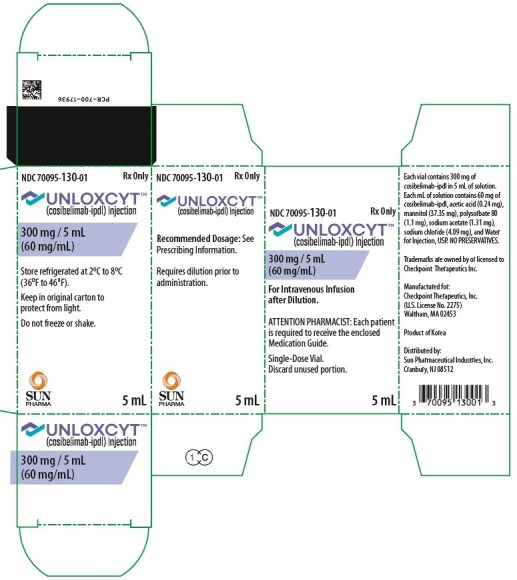
Principal Display Panel 5 Ml Vial Carton
NDC 70095-130-01
Rx Only
UNLOXCYT™
(cosibelimab-ipdl) Injection
300 mg / 5 mL
(60 mg/mL)
For Intravenous Infusion
after Dilution.
ATTENTION PHARMACIST: Each patient
is required to receive the enclosed
Medication Guide.
Single-Dose Vial.
Discard unused portion.
5 mL
13.2. Animal Toxicology And/or Pharmacology
In animal models, inhibition of PD-L1/PD-1 signaling increased the severity of some infections and enhanced inflammatory responses. Mycobacterium tuberculosis-infected PD-1 knockout mice exhibit markedly decreased survival compared with wild-type controls, which correlated with increased bacterial proliferation and inflammatory responses in these animals. PD-L1 and PD-1 knockout mice and mice receiving PD-L1–blocking antibody have also shown decreased survival following infection with lymphocytic choriomeningitis virus.
2.2. Dose Modifications for Adverse Reactions
No dose reductions of UNLOXCYT are recommended. In general, withhold UNLOXCYT for severe (Grade 3) immune-mediated adverse reactions. Permanently discontinue UNLOXCYT for life-threatening (Grade 4) immune-mediated adverse reactions, recurrent severe (Grade 3) immune-mediated reactions that require systemic immunosuppressive treatment, or an inability to reduce corticosteroid dose to a prednisone equivalent of 10 mg or less per day within 12 weeks of initiating steroids.
Dosage modifications for UNLOXCYT for adverse reactions that require management different from these general guidelines are summarized in Table 1.
| Adverse Reaction | Severity Based on National Cancer Institute Common Terminology Criteria for Adverse Events (CTCAE), Version 5.
|
UNLOXCYT Dosage Modifications |
|---|---|---|
| ALT = alanine aminotransferase; AST = aspartate aminotransferase; DRESS: drug rash with eosinophilia and systemic symptoms; SJS: Stevens-Johnson Syndrome; TEN: toxic epidermal necrolysis; ULN: upper limit of normal. | ||
| Immune-Mediated Adverse Reactions [see Warnings and Precautions (5.1)] | ||
| Pneumonitis | Grade 2 | Withhold Resume in patients with complete or partial resolution (Grade 0 to 1) after corticosteroid taper. Permanently discontinue if no complete or partial resolution within 12 weeks of initiating steroids or inability to reduce corticosteroid to a prednisone equivalent of 10 mg/day or less within 12 weeks of initiating steroids.
|
| Grade 3 or 4 | Permanently discontinue | |
| Colitis | Grade 2 or 3 | Withhold |
| Grade 4 | Permanently discontinue | |
| Hepatitis with no tumor involvement of the liver | AST or ALT increases to more than 3 and up to 8 times ULN or Total bilirubin increases to more than 1.5 and up to 3 times ULN |
Withhold |
| AST or ALT increases to more than 8 times ULN or Total bilirubin increases to more than 3 times ULN |
Permanently discontinue | |
| Hepatitis with tumor involvement of the liver If AST and ALT are less than or equal to ULN at baseline in patients with liver involvement, withhold or permanently discontinue UNLOXCYT based on recommendations for hepatitis with no tumor involvement of the liver.
|
Baseline AST or ALT is more than 1 and up to 3 times ULN and increases to more than 5 and up to 10 times ULN or Baseline AST or ALT is more than 3 and up to 5 times ULN and increases to more than 8 and up to 10 times ULN |
Withhold |
| AST or ALT increases to more than 10 times ULN or Total bilirubin increases to more than 3 times ULN |
Permanently discontinue | |
| Endocrinopathies Depending on clinical severity, consider withholding for Grade 2 endocrinopathy until symptom improvement with hormone replacement. Resume once acute symptoms have resolved.
|
Grade 3 or 4 | Withhold until clinically stable or permanently discontinue, depending on severity |
| Nephritis with renal dysfunction | Grade 2 or 3 increased blood creatinine | Withhold |
| Grade 4 increased blood creatinine | Permanently discontinue | |
| Exfoliative dermatologic conditions | Suspected SJS, TEN, or DRESS | Withhold |
| Confirmed SJS, TEN, or DRESS | Permanently discontinue | |
| Myocarditis | Grade 2, 3 or 4 | Permanently discontinue |
| Neurological toxicities | Grade 2 | Withhold |
| Grade 3 or 4 | Permanently discontinue | |
| Other Adverse Reactions | ||
| Infusion-related reactions [see Warnings and Precautions (5.2)] | Grade 1 or 2 | Interrupt or slow the rate of infusion |
| Grade 3 or 4 | Permanently discontinue |
14.1. Cutaneous Squamous Cell Carcinoma (cscc)
The efficacy of UNLOXCYT was evaluated in Study CK-301-101 (NCT03212404), a multicenter, multicohort, open-label study in patients with metastatic CSCC (mCSCC) or locally advanced CSCC (laCSCC) who were not candidates for curative surgery or curative radiation. Patients were excluded if they had the following: active or suspected autoimmune disease, allogeneic transplant within 6 months prior to treatment, prior treatment with anti–PD-1/PD-L1 blocking antibodies or other immune checkpoint inhibitor therapy, uncontrolled or significant cardiovascular disease, ECOG PS ≥ 2, or infection with HIV, hepatitis B or hepatitis C.
Patients received UNLOXCYT 800 mg every 2 weeks until disease progression or unacceptable toxicity. Tumor response assessments were performed every 8 weeks for the first 8 months and every 12 weeks thereafter.
The major efficacy outcomes were objective response rate (ORR) and duration of response (DOR) as assessed by an independent central review committee (ICR) according to Response Evaluation Criteria in Solid Tumors (RECIST) version 1.1. For patients with laCSCC with externally visible target lesions not assessable by radiologic imaging, ORR was determined by ICR assessments of digital photography (WHO criteria).
The efficacy population consisted of 109 patients. The median age was 75 years (range 37-95); 78% were ≥ 65 years; 72% were male; 85% were White; 6% were Asian; 1% were Black or African American; 7% were race unknown or missing; 34% had ECOG performance status of 0, and 66% had ECOG performance score of 1. Seven percent of patients received at least one prior anti-cancer systemic therapy, 66% of patients had prior surgery, and 69% of patients had prior radiotherapy. Efficacy results are summarized in Table 4.
|
Efficacy Endpoints |
mCSCC N = 78 |
laCSCC N = 31 |
|
Objective Response Rate (ORR) |
||
|
ORR, n (%) (95% CI) |
39 (50) (38, 62) |
17 (55) (36, 73) |
|
Complete response, n (%) |
10 (13) |
8 (26) |
|
Partial response, n (%) |
29 (37) |
9 (29) |
|
Duration of Response (DOR) a |
||
|
Number of responders |
N=39 |
N=17 |
|
Median DOR in monthsb (Range) |
NR (1.4+, 45.3+) |
NR (8.3, 31.3+) |
|
Responders with observed DOR ≥ 6 months, n (%)c |
33 (85) |
17 (100) |
|
Responders with observed DOR ≥ 12 months, n (%)c |
26 (67) |
15 (88) |
CI: confidence interval; NR: not reached; +: Denotes ongoing at last assessment.
a Median follow up time: mCSCC: 29.3 months; laCSCC: 24.1 months.
b Based on Kaplan-Meier estimate.
c The numerator includes the number of patients whose observed DOR reached at least the specified times of 6 or 12 months. Patients who did not have the opportunity to reach the specified timepoint were included in the denominator only.
8.3. Females and Males of Reproductive Potential
UNLOXCYT can cause fetal harm when administered to a pregnant woman [see Use in Specific Populations (8.1)].
5.1. Severe and Fatal Immune Mediated Adverse Reactions
UNLOXCYT is a monoclonal antibody that belongs to a class of drugs that bind to either the programmed death receptor-1 (PD-1) or PD-ligand 1 (PD-L1), blocking the PD-1/PD-L1 pathway, thereby removing inhibition of the immune response, potentially breaking peripheral tolerance and inducing immune-mediated adverse reactions. Important immune-mediated adverse reactions listed in WARNINGS AND PRECAUTIONS may not include all possible severe and fatal immune-mediated reactions.
Immune-mediated adverse reactions, which can be severe or fatal, can occur in any organ system or tissue. Immune-mediated adverse reactions can occur at any time after starting a PD-1/PD-L1–blocking antibody. While immune-mediated adverse reactions usually manifest during treatment with PD-1/PD-L1–blocking antibodies, they can also manifest after discontinuation of PD-1/PD-L1–blocking antibodies. Immune-mediated adverse reactions affecting more than one body system can occur simultaneously.
Early identification and management of immune-mediated adverse reactions are essential to ensure safe use of PD-1/PD-L1–blocking antibodies. Monitor closely for symptoms and signs that may be clinical manifestations of underlying immune-mediated adverse reactions. Evaluate liver enzymes, creatinine, and thyroid function tests at baseline and periodically during treatment. In cases of suspected immune-mediated adverse reactions, initiate appropriate workup to exclude alternative etiologies, including infection. Institute medical management promptly, including specialty consultation as appropriate.
Withhold or permanently discontinue UNLOXCYT depending on severity [see Dosage and Administration (2.2)]. In general, if UNLOXCYT requires interruption or discontinuation, administer systemic corticosteroids (1 to 2 mg/kg/day prednisone or equivalent) until improvement to Grade 1 or less. Upon improvement to Grade 1 or less, initiate corticosteroid taper and continue to taper over at least 1 month. Consider administration of other systemic immunosuppressants in patients whose immune-mediated adverse reaction is not controlled with corticosteroids.
Toxicity management guidelines for adverse reactions that do not necessarily require systemic steroids (e.g., endocrinopathies, dermatologic reactions) are discussed below.
13.1. Carcinogenesis, Mutagenesis, Impairment of Fertility
No studies have been performed to assess the potential of cosibelimab-ipdl for carcinogenicity or genotoxicity.
Fertility studies have not been conducted with cosibelimab-ipdl in animals. In 1- and 3-month repeat-dose toxicology studies in monkeys, there were no notable effects in the male and female reproductive organs up to the highest dose tested of 100 mg/kg/dose; however, many animals in these studies were not sexually mature.
Structured Label Content
Section 42229-5 (42229-5)
Preparation for Intravenous Infusion:
- Add 20 mL (1,200 mg) of UNLOXCYT to a 250 mL intravenous infusion bag containing 0.9% Sodium Chloride Injection. UNLOXCYT is compatible with an infusion bag made of polyolefin or polyvinyl chloride.
- Mix diluted solution by gentle inversion. Do not shake.
- Discard any unused portion left in the vial.
Section 42231-1 (42231-1)
|
MEDICATION GUIDE UNLOXCYT (un-LOX-sit) (cosibelimab-ipdl) injection |
|
|
What is the most important information I should know about UNLOXCYT? UNLOXCYT is a medicine that may treat a type of skin cancer by working with your immune system. UNLOXCYT can cause your immune system to attack normal organs and tissues in any area of your body and can affect the way they work. These problems can sometimes become severe or life-threatening and can lead to death. You can have more than one of these problems at the same time. These problems may happen anytime during treatment or even after your treatment has ended. Call or see your healthcare provider right away if you develop any new or worsening signs or symptoms, including: Lung problems. |
|
|
|
|
Intestinal problems.
|
|
|
Liver problems. |
|
|
|
|
Hormone gland problems. |
|
|
|
|
Kidney problems: |
|
|
|
|
Skin problems. |
|
|
|
|
Problems can also happen in other organs and tissues. These are not all of the signs and symptoms of immune system problems that can happen with UNLOXCYT. Call or see your healthcare provider right way for any new or worsening signs or symptoms which may include: |
|
|
|
|
Infusion reactions that can sometimes be severe or life-threatening. Signs and symptoms of infusion reactions may include: |
|
|
|
|
Rejection of a transplanted organ. Your healthcare provider should tell you what signs and symptoms you should report and monitor you, depending on the type of organ transplant that you have had. Complications, including graft-versus-host disease (GVHD), in people who have received a bone marrow (stem cell) transplant that uses donor stem cells (allogeneic). These complications can be serious and can lead to death. These complications may happen if you underwent transplantation either before or after being treated with UNLOXCYT. Your healthcare provider will monitor you for these complications. Getting medical treatment right away may help keep these problems from becoming more serious. Your healthcare provider will check you for these problems during your treatment with UNLOXCYT. Your healthcare provider may treat you with corticosteroid or hormone replacement medicines. Your healthcare provider may also need to delay or completely stop treatment with UNLOXCYT if you have severe side effects. |
|
|
What is UNLOXCYT? UNLOXCYT is a prescription medicine used to treat adults with a type of skin cancer called cutaneous squamous cell carcinoma (CSCC). UNLOXCYT may be used to treat CSCC that has spread or cannot be cured by surgery or radiation. It is not known if UNLOXCYT is safe and effective in children. |
|
|
Before you receive UNLOXCYT, tell your healthcare provider about all your medical conditions, including if you:
Females who are able to become pregnant:
Tell your healthcare provider about all the medicines you take, including prescription and over-the-counter medicines, vitamins, and herbal supplements. |
|
|
How will I receive UNLOXCYT?
|
|
|
What are the possible side effects of UNLOXCYT? UNLOXCYT can cause serious side effects.
The most common side effects of UNLOXCYT include tiredness or weakness, muscle or bone pain, rash, diarrhea, low thyroid hormone levels (hypothyroidism), constipation, nausea, headache, itchy skin, swelling, infection, and urinary tract infection. These are not all the possible side effects of UNLOXCYT. Call your doctor for medical advice about side effects. You may report side effects to FDA at 1-800-FDA-1088. |
|
|
General Information about the safe and effective use of UNLOXCYT. Medicines are sometimes prescribed for purposes other than those listed in a Medication Guide. If you would like more information about UNLOXCYT, talk with your healthcare provider. You can ask your healthcare provider for information about UNLOXCYT that is written for healthcare professionals. |
|
|
What are the ingredients of UNLOXCYT? Active Ingredient: cosibelimab-ipdl Inactive ingredients: acetic acid, mannitol, polysorbate 80, sodium acetate, sodium chloride, and Water for Injection. Manufactured for: Checkpoint Therapeutics, Inc.,Waltham, MA 02453 U.S. License No. 2275, Product of Korea Distributed by: Sun Pharmaceutical Industries, Inc., Cranbury, NJ 08512 © 2025 Sun Pharmaceutical Industries, Inc. All rights reserved UNLOXCYT is a trademark of Checkpoint Therapeutics, Inc. |
Section 44425-7 (44425-7)
Store in a refrigerator at 2°C to 8°C (36°F to 46°F) in original carton to protect from light.
Do not freeze or shake.
11. Description (11. DESCRIPTION)
Cosibelimab-ipdl is a human programmed death ligand-1 (PD-L1) blocking antibody. Cosibelimab-ipdl is a human IgG1 lambda monoclonal antibody. Cosibelimab-ipdl is produced in Chinese hamster ovary (CHO) cells and has a calculated molecular weight of approximately 147 kDa.
UNLOXCYT (cosibelimab-ipdl) injection for intravenous use is a sterile, preservative-free, clear to opalescent, colorless to yellow or slightly brown solution. It is supplied in single-dose vials.
Each vial contains 300 mg of UNLOXCYT in 5 mL of solution with a pH of 5.3. Each mL of solution contains 60 mg of cosibelimab-ipdl, acetic acid (0.24 mg), mannitol (37.35 mg), polysorbate 80 (1.1 mg), sodium acetate (1.31 mg), sodium chloride (4.09 mg), and Water for Injection, USP.
8.4. Pediatric Use
The safety and effectiveness of UNLOXCYT have not been established in pediatric patients.
8.5. Geriatric Use
Of the 141 patients treated with UNLOXCYT as a single agent, 21% (29) were younger than 65 years, 31% (44) were aged 65 through 75 years, and 48% (68) were 75 years or older. No overall differences in safety or effectiveness were observed between these patients and younger patients.
12.6 Immunogenicity
The observed incidence of anti-drug antibodies is highly dependent on the sensitivity and specificity of the assay. Differences in assay methods preclude meaningful comparisons of the incidence of anti-drug antibodies in the studies described below with the incidence of anti-drug antibodies in other studies, including those of UNLOXCYT or of other cosibelimab products.
Anti-drug antibody (ADA) and neutralizing antibody (nAb) responses were monitored throughout the treatment period where the benefit to risk ratio was assessed. ADAs were detected in 65/133 (49%) of patients treated with UNLOXCYT and nAbs were detected in 2/65 (3.0%) of the patients. UNLOXCYT-treated patients who developed anti-cosibelimab antibodies had reduced UNLOXCYT concentrations (20% lower compared to UNLOXCYT-treated subjects who did not develop anti-cosibelimab-ipdl antibodies).
There was no clinically significant effect of anti-cosibelimab-ipdl antibodies on the efficacy or safety of cosibelimab-ipdl.
4. Contraindications (4. CONTRAINDICATIONS)
None.
6. Adverse Reactions (6. ADVERSE REACTIONS)
The following clinically significant adverse reactions are described elsewhere in the labeling:
- Severe and fatal immune-mediated adverse reactions [see Warnings and Precautions (5.1) ]
- Infusion-related reactions [see Warnings and Precautions (5.2) ]
- Complications of Allogeneic HSCT [see Warnings and Precautions (5.3) ]
12.2. Pharmacodynamics
Cosibelimab-ipdl exposure-response relationships and the time course of pharmacodynamic responses have not been fully characterized.
12.3. Pharmacokinetics
Cosibelimab-ipdl pharmacokinetic parameters are presented as geometric mean (coefficient of variation) unless otherwise stated. At the recommended dosage, the cosibelimab-ipdl steady-state maximum plasma concentration (Cmax) is 492 µg/mL (24.3%) and area under curve (AUC) is 112000 µg*h/mL (39.6%). Cosibelimab-ipdl Cmax and AUC increased proportionally over the dose range of 800 mg to 1,200 mg following single dosing. Steady-state concentrations of cosibelimab-ipdl are reached by 12 weeks.
At 1,200 mg every 3 weeks, the mean cosibelimab-ipdl concentrations (coefficient of variation, CV%) at steady-state ranged between a minimum concentration of 120 µg/L (46.3%) and a maximum concentration of 453 µg/L (22.2%). Steady-state exposure was achieved after 84 days of treatment.
In patients with CSCC, cosibelimab-ipdl steady-state exposure at 1,200 mg every 3 weeks (the recommended dosage) was comparable to the exposure at 800 mg every 2 weeks.
2.1. Recommended Dosage
The recommended dosage of UNLOXCYT is 1,200 mg administered as an intravenous infusion over 60 minutes every 3 weeks until disease progression or unacceptable toxicity.
1. Indications and Usage (1. INDICATIONS AND USAGE)
UNLOXCYT is indicated for the treatment of adults with metastatic cutaneous squamous cell carcinoma (mCSCC) or locally advanced CSCC (laCSCC) who are not candidates for curative surgery or curative radiation.
12.1. Mechanism of Action
PD-L1 may be expressed on tumor cells and tumor-infiltrating immune cells and can contribute to the inhibition of the anti-tumor immune response in the tumor microenvironment. Binding of PD-L1 to the PD-1 and B7.1 receptors found on T cells and antigen presenting cells suppresses cytotoxic T-cell activity, T-cell proliferation, and cytokine production. Cosibelimab-ipdl binds PD-L1 and blocks the interaction between PD-L1 and its receptors PD-1 and B7.1. This interaction releases the inhibitory effects of PD-L1 on the anti-tumor immune response. Cosibelimab-ipdl has also been shown to induce antibody-dependent cell-mediated cytotoxicity (ADCC) in vitro.
5.4. Embryo Fetal Toxicity (5.4. Embryo-Fetal Toxicity)
Based on its mechanism of action, UNLOXCYT can cause fetal harm when administered to a pregnant woman. Animal studies have demonstrated that inhibition of the PD-1/PD-L1 pathway can lead to increased risk of immune-mediated rejection of the developing fetus, resulting in fetal death. Advise pregnant women of the potential risk to a fetus. Advise females of reproductive potential to use effective contraception during treatment with UNLOXCYT and for 4 months after the last dose [see Use in Specific Populations (8.1, 8.3)].
5. Warnings and Precautions (5. WARNINGS AND PRECAUTIONS)
- Immune-Mediated Adverse Reactions (5.1)
- Immune-mediated adverse reactions can occur in any organ system or tissue, including the following: immune-mediated pneumonitis, immune-mediated colitis, immune-mediated hepatitis, immune-mediated endocrinopathies, immune-mediated dermatologic adverse reactions, immune-mediated nephritis and renal dysfunction, and solid organ transplant rejection.
- Monitor for early identification and management. Evaluate liver enzymes, creatinine, and thyroid function at baseline and periodically during treatment.
- Withhold or permanently discontinue UNLOXCYT based on the severity of reaction. (2.2)
- Infusion-Related Reactions: Interrupt, slow the rate of infusion, or permanently discontinue based on severity of reaction. (2.2, 5.2)
- Complications of Allogeneic Hematopoietic Stem Cell Transplantation (HSCT): Fatal and other serious complications can occur in patients who receive allogeneic HSCT before or after being treated with a PD-1/PD-L1 blocking antibody. (5.3)
- Embryo-Fetal Toxicity: Can cause fetal harm. Advise females of reproductive potential of the potential risk to a fetus and to use effective contraception. (5.4, 8.1, 8.3)
2. Dosage and Administration (2. DOSAGE AND ADMINISTRATION)
The recommended dosage of UNLOXCYT is 1,200 mg as an intravenous infusion over 60 minutes every 3 weeks. (2.1)
3. Dosage Forms and Strengths (3. DOSAGE FORMS AND STRENGTHS)
Injection: 300 mg/5 mL (60 mg/mL), clear to opalescent, colorless to yellow or slightly brown solution in a single-dose vial.
8. Use in Specific Populations (8. USE IN SPECIFIC POPULATIONS)
Lactation: Advise not to breastfeed. (8.2)
5.2. Infusion Related Reactions (5.2. Infusion-Related Reactions)
UNLOXCYT can cause severe or life-threatening infusion-related reactions. Infusion-related infusion reactions were reported in 11% (24/223) of patients, including Grade 2 in 5.8% (13/223) of patients receiving UNLOXCYT.
Monitor patients for signs and symptoms of infusion-related reactions. Interrupt or slow the rate of infusion or permanently discontinue UNLOXCYT based on severity of reaction [see Dosage and Administration (2.2)]. Consider premedication with an antipyretic and/or an antihistamine for patients who have had previous systemic reactions to infusions of therapeutic proteins.
6.1. Clinical Trials Experience
Because clinical trials are conducted under widely varying conditions, adverse reaction rates observed in the clinical trials of a drug cannot be directly compared with rates in the clinical trials of another drug and may not reflect the rates observed in practice.
The pooled safety population described in WARNINGS AND PRECAUTIONS reflects exposure to UNLOXCYT as a single agent in 223 patients in two open-label, single-arm, multicohort studies, including 141 patients with advanced CSCC and 82 patients with other solid tumors and hematologic malignancies. UNLOXCYT was administered intravenously at doses of 800 mg every 2 weeks (n=174), 1,200 mg every 3 weeks (n=35), or other doses (n=14). Among the 223 patients, 54% were exposed for ≥24 weeks and 17% were exposed for ≥72 weeks.
The safety of UNLOXCYT was evaluated in Study CK-301-101 in 141 patients with metastatic or locally advanced disease CSCC [see Clinical Studies (14)]. Patients received UNLOXCYT 800 mg every 2 weeks (n=115) or 1,200 mg every 3 weeks (n=26) as an intravenous infusion until disease progression or unacceptable toxicity. The median duration of exposure was 36 weeks (2 weeks to 3.7 years).
Serious adverse reactions occurred in 31% of advanced patients with CSCC who received UNLOXCYT. The most frequent serious adverse reactions (≥ 2% of patients) were sepsis (2.8%), pneumonia (2.8%) and pyrexia (2.1%).
Permanent discontinuation of UNLOXCYT due to an adverse reaction occurred in 8% of patients. Adverse reactions resulting in permanent discontinuation of UNLOXCYT were COVID-19, COVID-19 pneumonia, sepsis, ulcerative keratitis, tumor thrombosis, axillary pain, paresthesia, cholestasis, hepatic cytolysis, wound hemorrhage, neck pain, pemphigoid, and eye pain (1 patient each).
Dosage interruptions due to an adverse reaction occurred in 36% of patients who received UNLOXCYT. The adverse reaction that required dosage interruption in ≥ 2% of patients who received UNLOXCYT was COVID-19 (2%).
The most common (≥ 10%) adverse reactions were fatigue, musculoskeletal pain, rash, diarrhea, hypothyroidism, constipation, nausea, headache, pruritus, edema, localized infection, and urinary tract infection.
Table 2 and Table 3 summarize adverse reactions and laboratory abnormalities, respectively in CK-301-101.
| UNLOXCYT N = 141 % |
||
|---|---|---|
| System Organ Class Preferred Term |
All Grades % |
Grade 3 or 4 % |
| Toxicity was graded per National Cancer Institute Common Terminology Criteria for Adverse Events (NCI CTCAE) v.4.03 (or later version) | ||
| General disorders and administrative site conditions | ||
| Fatigue Represents a composite of multiple related terms
|
33 | 3 |
| Edema | 11 | 0 |
| Musculoskeletal and connective tissue disorders | ||
| Musculoskeletal pain | 25 | 3 |
| Skin and subcutaneous tissue disorders | ||
| Rash | 23 | 1 |
| Pruritus | 12 | 0 |
| Endocrine disorder | ||
| Hypothyroidism | 14 | 0 |
| Gastrointestinal disorders | ||
| Diarrhea | 14 | 0 |
| Nausea | 13 | 0 |
| Constipation | 13 | 0 |
| Nervous system disorders | ||
| Headache | 12 | 0 |
| Infections and infestations | ||
| Localized infection | 10 | 0.7 |
| Urinary tract infection | 10 | 0 |
| Laboratory Abnormality | UNLOXCYT (N = 141) |
|
|---|---|---|
| All Grades % The denominator used to calculate the rate varied from 122-140 based on the number of patients with a baseline value and at least one post-treatment value.
|
Grade 3 or 4 % |
|
| Toxicity graded per NCI CTCAE v5 | ||
| Hematology | ||
| Hemoglobin decreased | 45 | 4 |
| Lymphocytes decreased | 41 | 6 |
| Platelets decreased | 14 | 1 |
| Leukocytes decreased | 10 | 1 |
| Chemistry | ||
| Sodium decreased | 38 | 5 |
| Alkaline phosphatase increased | 26 | 1 |
| Alanine transferase increased | 25 | 4 |
| Lipase increased | 25 | 3 |
| Aspartate transaminase increased | 24 | 3 |
| Potassium increased | 23 | 3 |
| Calcium increased | 14 | 2 |
17. Patient Counseling Information (17. PATIENT COUNSELING INFORMATION)
Advise the patient to read the FDA-approved patient labeling (Medication Guide).
2.3. Preparation and Administration
Visually inspect the vial for particulate matter and discoloration. UNLOXCYT is clear to opalescent, colorless to yellow or slightly brown. Discard the vial if visible particles are observed.
Do not shake the vial.
16. How Supplied/storage and Handling (16. HOW SUPPLIED/STORAGE AND HANDLING)
UNLOXCYT (cosibelimab-ipdl) injection is a clear to opalescent, colorless to yellow or slightly brown solution supplied in a carton containing one 300 mg/5 mL (60 mg/mL), single-dose vial (NDC 70095-130-01).
5.3. Complications of Allogeneic Hsct (5.3. Complications of Allogeneic HSCT)
Fatal and other serious complications can occur in patients who receive allogeneic hematopoietic stem cell transplantation (HSCT) before or after being treated with a PD-1/PD-L1–blocking antibody. Transplant-related complications include hyperacute graft-versus-host disease (GVHD), acute GVHD, chronic GVHD, hepatic veno-occlusive disease after reduced intensity conditioning, and steroid-requiring febrile syndrome (without an identified infectious cause). These complications may occur despite intervening therapy between PD-1/PD-L1 blockade and allogeneic HSCT.
Follow patients closely for evidence of transplant-related complications and intervene promptly. Consider the benefit versus risks of treatment with a PD-1/PD-L1–blocking antibody prior to or after an allogeneic HSCT.
Principal Display Panel 5 Ml Vial Carton (PRINCIPAL DISPLAY PANEL - 5 mL Vial Carton)
NDC 70095-130-01
Rx Only
UNLOXCYT™
(cosibelimab-ipdl) Injection
300 mg / 5 mL
(60 mg/mL)
For Intravenous Infusion
after Dilution.
ATTENTION PHARMACIST: Each patient
is required to receive the enclosed
Medication Guide.
Single-Dose Vial.
Discard unused portion.
5 mL
13.2. Animal Toxicology And/or Pharmacology (13.2. Animal Toxicology and/or Pharmacology)
In animal models, inhibition of PD-L1/PD-1 signaling increased the severity of some infections and enhanced inflammatory responses. Mycobacterium tuberculosis-infected PD-1 knockout mice exhibit markedly decreased survival compared with wild-type controls, which correlated with increased bacterial proliferation and inflammatory responses in these animals. PD-L1 and PD-1 knockout mice and mice receiving PD-L1–blocking antibody have also shown decreased survival following infection with lymphocytic choriomeningitis virus.
2.2. Dose Modifications for Adverse Reactions
No dose reductions of UNLOXCYT are recommended. In general, withhold UNLOXCYT for severe (Grade 3) immune-mediated adverse reactions. Permanently discontinue UNLOXCYT for life-threatening (Grade 4) immune-mediated adverse reactions, recurrent severe (Grade 3) immune-mediated reactions that require systemic immunosuppressive treatment, or an inability to reduce corticosteroid dose to a prednisone equivalent of 10 mg or less per day within 12 weeks of initiating steroids.
Dosage modifications for UNLOXCYT for adverse reactions that require management different from these general guidelines are summarized in Table 1.
| Adverse Reaction | Severity Based on National Cancer Institute Common Terminology Criteria for Adverse Events (CTCAE), Version 5.
|
UNLOXCYT Dosage Modifications |
|---|---|---|
| ALT = alanine aminotransferase; AST = aspartate aminotransferase; DRESS: drug rash with eosinophilia and systemic symptoms; SJS: Stevens-Johnson Syndrome; TEN: toxic epidermal necrolysis; ULN: upper limit of normal. | ||
| Immune-Mediated Adverse Reactions [see Warnings and Precautions (5.1)] | ||
| Pneumonitis | Grade 2 | Withhold Resume in patients with complete or partial resolution (Grade 0 to 1) after corticosteroid taper. Permanently discontinue if no complete or partial resolution within 12 weeks of initiating steroids or inability to reduce corticosteroid to a prednisone equivalent of 10 mg/day or less within 12 weeks of initiating steroids.
|
| Grade 3 or 4 | Permanently discontinue | |
| Colitis | Grade 2 or 3 | Withhold |
| Grade 4 | Permanently discontinue | |
| Hepatitis with no tumor involvement of the liver | AST or ALT increases to more than 3 and up to 8 times ULN or Total bilirubin increases to more than 1.5 and up to 3 times ULN |
Withhold |
| AST or ALT increases to more than 8 times ULN or Total bilirubin increases to more than 3 times ULN |
Permanently discontinue | |
| Hepatitis with tumor involvement of the liver If AST and ALT are less than or equal to ULN at baseline in patients with liver involvement, withhold or permanently discontinue UNLOXCYT based on recommendations for hepatitis with no tumor involvement of the liver.
|
Baseline AST or ALT is more than 1 and up to 3 times ULN and increases to more than 5 and up to 10 times ULN or Baseline AST or ALT is more than 3 and up to 5 times ULN and increases to more than 8 and up to 10 times ULN |
Withhold |
| AST or ALT increases to more than 10 times ULN or Total bilirubin increases to more than 3 times ULN |
Permanently discontinue | |
| Endocrinopathies Depending on clinical severity, consider withholding for Grade 2 endocrinopathy until symptom improvement with hormone replacement. Resume once acute symptoms have resolved.
|
Grade 3 or 4 | Withhold until clinically stable or permanently discontinue, depending on severity |
| Nephritis with renal dysfunction | Grade 2 or 3 increased blood creatinine | Withhold |
| Grade 4 increased blood creatinine | Permanently discontinue | |
| Exfoliative dermatologic conditions | Suspected SJS, TEN, or DRESS | Withhold |
| Confirmed SJS, TEN, or DRESS | Permanently discontinue | |
| Myocarditis | Grade 2, 3 or 4 | Permanently discontinue |
| Neurological toxicities | Grade 2 | Withhold |
| Grade 3 or 4 | Permanently discontinue | |
| Other Adverse Reactions | ||
| Infusion-related reactions [see Warnings and Precautions (5.2)] | Grade 1 or 2 | Interrupt or slow the rate of infusion |
| Grade 3 or 4 | Permanently discontinue |
14.1. Cutaneous Squamous Cell Carcinoma (cscc) (14.1. Cutaneous Squamous Cell Carcinoma (CSCC))
The efficacy of UNLOXCYT was evaluated in Study CK-301-101 (NCT03212404), a multicenter, multicohort, open-label study in patients with metastatic CSCC (mCSCC) or locally advanced CSCC (laCSCC) who were not candidates for curative surgery or curative radiation. Patients were excluded if they had the following: active or suspected autoimmune disease, allogeneic transplant within 6 months prior to treatment, prior treatment with anti–PD-1/PD-L1 blocking antibodies or other immune checkpoint inhibitor therapy, uncontrolled or significant cardiovascular disease, ECOG PS ≥ 2, or infection with HIV, hepatitis B or hepatitis C.
Patients received UNLOXCYT 800 mg every 2 weeks until disease progression or unacceptable toxicity. Tumor response assessments were performed every 8 weeks for the first 8 months and every 12 weeks thereafter.
The major efficacy outcomes were objective response rate (ORR) and duration of response (DOR) as assessed by an independent central review committee (ICR) according to Response Evaluation Criteria in Solid Tumors (RECIST) version 1.1. For patients with laCSCC with externally visible target lesions not assessable by radiologic imaging, ORR was determined by ICR assessments of digital photography (WHO criteria).
The efficacy population consisted of 109 patients. The median age was 75 years (range 37-95); 78% were ≥ 65 years; 72% were male; 85% were White; 6% were Asian; 1% were Black or African American; 7% were race unknown or missing; 34% had ECOG performance status of 0, and 66% had ECOG performance score of 1. Seven percent of patients received at least one prior anti-cancer systemic therapy, 66% of patients had prior surgery, and 69% of patients had prior radiotherapy. Efficacy results are summarized in Table 4.
|
Efficacy Endpoints |
mCSCC N = 78 |
laCSCC N = 31 |
|
Objective Response Rate (ORR) |
||
|
ORR, n (%) (95% CI) |
39 (50) (38, 62) |
17 (55) (36, 73) |
|
Complete response, n (%) |
10 (13) |
8 (26) |
|
Partial response, n (%) |
29 (37) |
9 (29) |
|
Duration of Response (DOR) a |
||
|
Number of responders |
N=39 |
N=17 |
|
Median DOR in monthsb (Range) |
NR (1.4+, 45.3+) |
NR (8.3, 31.3+) |
|
Responders with observed DOR ≥ 6 months, n (%)c |
33 (85) |
17 (100) |
|
Responders with observed DOR ≥ 12 months, n (%)c |
26 (67) |
15 (88) |
CI: confidence interval; NR: not reached; +: Denotes ongoing at last assessment.
a Median follow up time: mCSCC: 29.3 months; laCSCC: 24.1 months.
b Based on Kaplan-Meier estimate.
c The numerator includes the number of patients whose observed DOR reached at least the specified times of 6 or 12 months. Patients who did not have the opportunity to reach the specified timepoint were included in the denominator only.
8.3. Females and Males of Reproductive Potential
UNLOXCYT can cause fetal harm when administered to a pregnant woman [see Use in Specific Populations (8.1)].
5.1. Severe and Fatal Immune Mediated Adverse Reactions (5.1. Severe and Fatal Immune-Mediated Adverse Reactions)
UNLOXCYT is a monoclonal antibody that belongs to a class of drugs that bind to either the programmed death receptor-1 (PD-1) or PD-ligand 1 (PD-L1), blocking the PD-1/PD-L1 pathway, thereby removing inhibition of the immune response, potentially breaking peripheral tolerance and inducing immune-mediated adverse reactions. Important immune-mediated adverse reactions listed in WARNINGS AND PRECAUTIONS may not include all possible severe and fatal immune-mediated reactions.
Immune-mediated adverse reactions, which can be severe or fatal, can occur in any organ system or tissue. Immune-mediated adverse reactions can occur at any time after starting a PD-1/PD-L1–blocking antibody. While immune-mediated adverse reactions usually manifest during treatment with PD-1/PD-L1–blocking antibodies, they can also manifest after discontinuation of PD-1/PD-L1–blocking antibodies. Immune-mediated adverse reactions affecting more than one body system can occur simultaneously.
Early identification and management of immune-mediated adverse reactions are essential to ensure safe use of PD-1/PD-L1–blocking antibodies. Monitor closely for symptoms and signs that may be clinical manifestations of underlying immune-mediated adverse reactions. Evaluate liver enzymes, creatinine, and thyroid function tests at baseline and periodically during treatment. In cases of suspected immune-mediated adverse reactions, initiate appropriate workup to exclude alternative etiologies, including infection. Institute medical management promptly, including specialty consultation as appropriate.
Withhold or permanently discontinue UNLOXCYT depending on severity [see Dosage and Administration (2.2)]. In general, if UNLOXCYT requires interruption or discontinuation, administer systemic corticosteroids (1 to 2 mg/kg/day prednisone or equivalent) until improvement to Grade 1 or less. Upon improvement to Grade 1 or less, initiate corticosteroid taper and continue to taper over at least 1 month. Consider administration of other systemic immunosuppressants in patients whose immune-mediated adverse reaction is not controlled with corticosteroids.
Toxicity management guidelines for adverse reactions that do not necessarily require systemic steroids (e.g., endocrinopathies, dermatologic reactions) are discussed below.
13.1. Carcinogenesis, Mutagenesis, Impairment of Fertility
No studies have been performed to assess the potential of cosibelimab-ipdl for carcinogenicity or genotoxicity.
Fertility studies have not been conducted with cosibelimab-ipdl in animals. In 1- and 3-month repeat-dose toxicology studies in monkeys, there were no notable effects in the male and female reproductive organs up to the highest dose tested of 100 mg/kg/dose; however, many animals in these studies were not sexually mature.
Advanced Ingredient Data
Raw Label Data
All Sections (JSON)
Additional Information
Back to search View SPL set listing Open on DailyMed ↗
Source: dailymed · Ingested: 2026-02-15T11:50:54.816505 · Updated: 2026-03-14T22:38:50.551832