Everolimus Tablets/everolimus Tablets For Oral Suspension
01f7b5fb-be0d-4adf-acd2-6899018de966
34391-3
HUMAN PRESCRIPTION DRUG LABEL
Drug Facts
Composition & Product
Identifiers & Packaging
Indications and Usage
Everolimus tablets are a kinase inhibitor indicated for the treatment of: Postmenopausal women with advanced hormone receptor-positive, HER2-negative breast cancer in combination with exemestane after failure of treatment with letrozole or anastrozole. ( 1.1 ) Adults with progressive neuroendocrine tumors of pancreatic origin (PNET) and adults with progressive, well-differentiated, non-functional neuroendocrine tumors (NET) of gastrointestinal (GI) or lung origin that are unresectable, locally advanced or metastatic. Limitations of Use: Everolimus tablets are not indicated for the treatment of patients with functional carcinoid tumors. ( 1.2 ) Adults with advanced renal cell carcinoma (RCC) after failure of treatment with sunitinib or sorafenib. ( 1.3 ) Adults with renal angiomyolipoma and tuberous sclerosis complex (TSC), not requiring immediate surgery. ( 1.4 ) Everolimus tablets and everolimus tablets for oral suspension are kinase inhibitors indicated for the treatment of adult and pediatric patients aged 1 year and older with TSC who have subependymal giant cell astrocytoma (SEGA) that requires therapeutic intervention but cannot be curatively resected. ( 1.5 ) Everolimus tablets for oral suspension is a kinase inhibitor indicated for the adjunctive treatment of adult and pediatric patients aged 2 years and older with TSC-associated partial-onset seizures. ( 1.6 )
Dosage and Administration
Do not combine everolimus tablets and everolimus tablets for oral suspension to achieve the total daily dose. ( 2.1 ) Modify the dose for patients with hepatic impairment or for patients taking drugs that inhibit or induce P-glycoprotein (P-gp) and CYP3A4. ( 2.1 ) Breast Cancer: 10 mg orally once daily. ( 2.2 ) NET: 10 mg orally once daily. ( 2.3 ) RCC: 10 mg orally once daily. ( 2.4 ) TSC-Associated Renal Angiomyolipoma: 10 mg orally once daily. ( 2.5 ) TSC-Associated SEGA: 4.5 mg/m 2 orally once daily; adjust dose to attain trough concentrations of 5-15 ng/mL. ( 2.6 , 2.8 ) TSC-Associated Partial-Onset Seizures: 5 mg/ m 2 orally once daily; adjust dose to attain trough concentrations of 5-15 ng/mL. ( 2.7 , 2.8 )
Contraindications
Everolimus tablets/everolimus tablets for oral suspension are contraindicated in patients with clinically significant hypersensitivity to everolimus or to other rapamycin derivatives [see Warnings and Precautions (5.3) ].
Warnings and Precautions
Non-Infectious Pneumonitis: Monitor for clinical symptoms or radiological changes. Withhold or permanently discontinue based on severity. ( 2.9 , 5.1 ) Infections: Monitor for signs and symptoms of infection. Withhold or permanently discontinue based on severity. ( 2.9 , 5.2 ) Severe Hypersensitivity Reactions: Permanently discontinue for clinically significant hypersensitivity. ( 5.3 ) Angioedema: Patients taking concomitant angiotensin-converting-enzyme (ACE) inhibitors may be at increased risk for angioedema. Permanently discontinue for angioedema. ( 5.4 , 7.2 ) Stomatitis: Initiate dexamethasone alcohol-free mouthwash when starting treatment. ( 5.5 , 6.1 ) Renal Failure: Monitor renal function prior to treatment and periodically thereafter. ( 5.6 ) Risk of Impaired Wound Healing: Withhold for at least 1 week prior to elective surgery. Do not administer for at least 2 weeks following major surgery and until adequate wound healing. The safety of resumption of treatment after resolution of wound healing complications has not been established. ( 5.7 ) Geriatric Patients: Monitor and adjust dose for adverse reactions. ( 5.8 ) Metabolic Disorders: Monitor serum glucose and lipids prior to treatment and periodically thereafter. Withhold or permanently discontinue based on severity. ( 2.9 , 5.9 ) Myelosuppression: Monitor hematologic parameters prior to treatment and periodically thereafter. Withhold or permanently discontinue based on severity. ( 2.9 , 5.10 ) Risk of Infection or Reduced Immune Response with Vaccination: Avoid live vaccines and close contact with those who have received live vaccines. Complete recommended childhood vaccinations prior to starting treatment. ( 5.11 ) Radiation Sensitization and Radiation Recall: Severe radiation reactions may occur. ( 5.12 , 6.2 ) Embryo-Fetal Toxicity: Can cause fetal harm. Advise patients of reproductive potential of the potential risk to a fetus and to use effective contraception. ( 5.13 , 8.1 , 8.3 )
Adverse Reactions
Table 2 summarizes recommendations for dosage modifications of everolimus tablets/everolimus tablets for oral suspension for the management of adverse reactions. Table 2: Recommended Dosage Modifications for Everolimus Tablets/Everolimus Tablets for Oral Suspension for Adverse Reactions Adverse Reaction Severity Dosage Modification Non-infectious pneumonitis [see Warnings and Precautions (5.1) ] Grade 2 Withhold until improvement to Grade 0 or 1. Resume at 50% of previous dose; change to every other day dosing if the reduced dose is lower than the lowest available strength. Permanently discontinue if toxicity does not resolve or improve to Grade 1 within 4 weeks. Grade 3 Withhold until improvement to Grade 0 or 1. Resume at 50% of previous dose; change to every other day dosing if the reduced dose is lower than the lowest available strength. If toxicity recurs at Grade 3, permanently discontinue. Grade 4 Permanently discontinue. Stomatitis [see Warnings and Precautions (5.5) ] Grade 2 Withhold until improvement to Grade 0 or 1. Resume at same dose. If recurs at Grade 2, withhold until improvement to Grade 0 or 1. Resume at 50% of previous dose; change to every other day dosing if the reduced dose is lower than the lowest available strength. Grade 3 Withhold until improvement to Grade 0 or 1. Resume at 50% of previous dose; change to every other day dosing if the reduced dose is lower than the lowest available strength. Grade 4 Permanently discontinue. Metabolic events (e.g., hyperglycemia, dyslipidemia) [see Warnings and Precautions (5.9) ] Grade 3 Withhold until improvement to Grade 0, 1, or 2. Resume at 50% of previous dose; change to every other day dosing if the reduced dose is lower than the lowest available strength. Grade 4 Permanently discontinue. Other non-hematologic toxicities Grade 2 If toxicity becomes intolerable, withhold until improvement to Grade 0 or 1. Resume at same dose. If toxicity recurs at Grade 2, withhold until improvement to Grade 0 or 1. Resume at 50% of previous dose; change to every other day dosing if the reduced dose is lower than the lowest available strength. Grade 3 Withhold until improvement to Grade 0 or 1. Consider resuming at 50% of previous dose; change to every other day dosing if the reduced dose is lower than the lowest available strength. If recurs at Grade 3, permanently discontinue. Grade 4 Permanently discontinue. Thrombocytopenia [see Warnings and Precautions (5.10) ] Grade 2 Withhold until improvement to Grade 0 or 1. Resume at same dose. Grade 3 OR Grade 4 Withhold until improvement to Grade 0 or 1. Resume at 50% of previous dose; change to every other day dosing if the reduced dose is lower than the lowest available strength. Neutropenia [see Warnings and Precautions (5.10) ] Grade 3 Withhold until improvement to Grade 0, 1, or 2. Resume at same dose. Grade 4 Withhold until improvement to Grade 0, 1, or 2. Resume at 50% of previous dose; change to every other day dosing if the reduced dose is lower than the lowest available strength. Febrile neutropenia [see Warnings and Precautions (5.10) ] Grade 3 Withhold until improvement to Grade 0, 1, or 2, and no fever. Resume at 50% of previous dose; change to every other day dosing if the reduced dose is lower than the lowest available strength. Grade 4 Permanently discontinue.
Drug Interactions
P-gp and strong CYP3A4 inhibitors: Avoid concomitant use. ( 2.11 , 7.1 ) P-gp and moderate CYP3A4 inhibitors: Reduce the dose as recommended. ( 2.11 , 7.1 ) P-gp and strong CYP3A4 inducers: Increase the dose as recommended. ( 2.12 , 7.1 )
Patient Information
EVEROLIMUS (E-ver-OH-li-mus) TABLETS EVEROLIMUS (E-ver-OH-li-mus) TABLETS FOR ORAL SUSPENSION Read this Patient Information leaflet that comes with everolimus tablets or everolimus tablets for oral suspension before you start taking it and each time you get a refill. There may be new information. This information does not take the place of talking to your healthcare provider about your medical condition or treatment. What is the most important information I should know about everolimus tablets and everolimus tablets for oral suspension? Everolimus tablets and everolimus tablets for oral suspension can cause serious side effects, including: 1. You may develop lung or breathing problems . In some people lung or breathing problems may be severe and can lead to death. Tell your healthcare provider right away if you have any of these symptoms: New or worsening cough Shortness of breath Chest pain Difficulty breathing or wheezing 2. You may be more likely to develop an infection, such as pneumonia, or a bacterial, fungal or viral infection. Viral infections may include active hepatitis B in people who have had hepatitis B in the past (reactivation). In some people (including adults and children) these infections may be severe and can lead to death. You may need to be treated as soon as possible. Tell your healthcare provider right away if you have a temperature of 100.5°F or above, chills, or do not feel well. Symptoms of hepatitis B or infection may include the following: Fever Chills Skin rash Joint pain and swelling Tiredness Loss of appetite Nausea Pale stools or dark urine Yellowing of the skin Pain in the upper right side of the stomach 3. Severe allergic reactions. Call your healthcare provider or get medical help right away if you get signs and symptoms of a severe allergic reaction including: rash, itching, hives, flushing, trouble breathing or swallowing, chest pain or dizziness. 4. Possible increased risk for a type of allergic reaction called angioedema, in people who take an Angiotensin-Converting Enzyme (ACE) inhibitor medicine during treatment with everolimus tablets or everolimus tablets for oral suspension. Talk with your healthcare provider before taking everolimus tablets or everolimus tablets for oral suspension if you are not sure if you take an ACE inhibitor medicine. Get medical help right away if you have trouble breathing or develop swelling of your tongue, mouth, or throat during treatment with everolimus tablets or everolimus tablets for oral suspension. 5. Mouth ulcers and sores. Mouth ulcers and sores are common during treatment with everolimus tablets or everolimus tablets for oral suspension but can also be severe. When you start treatment with everolimus tablets or everolimus tablets for oral suspension, your healthcare provider may tell you to also start a prescription mouthwash to reduce the likelihood of getting mouth ulcers or sores and to reduce their severity. Follow your healthcare provider's instructions on how to use this prescription mouthwash. If you develop pain, discomfort, or open sores in your mouth, tell your healthcare provider. Your healthcare provider may tell you to restart this mouthwash or to use a special mouthwash or mouth gel that does not contain alcohol, peroxide, iodine, or thyme. 6. You may develop kidney failure . In some people this may be severe and can lead to death. Your healthcare provider should do tests to check your kidney function before and during your treatment with everolimus tablets or everolimus tablets for oral suspension. If you have any of the serious side effects listed above, you may need to stop taking everolimus tablets or everolimus tablets for oral suspension for a while or use a lower dose. Follow your healthcare provider's instructions. What are everolimus tablets? Everolimus tablets are a prescription medicine used to treat: advanced hormone receptor-positive, HER2-negative breast cancer, along with the medicine exemestane, in postmenopausal women who have already received certain other medicines for their cancer. adults with a type of pancreatic cancer known as pancreatic neuroendocrine tumor (PNET), that has progressed and cannot be treated with surgery. adults with a type of cancer known as neuroendocrine tumor (NET) of the stomach and intestine (gastrointestinal), or lung that has progressed and cannot be treated with surgery. Everolimus tablets are not for use in people with carcinoid tumors that actively produce hormones. adults with advanced kidney cancer (renal cell carcinoma or RCC) when certain other medicines have not worked. people with the following types of tumors that are seen with a genetic condition called tuberous sclerosis complex (TSC): adults with a kidney tumor called angiomyolipoma, when their kidney tumor does not require surgery right away. adults and children 1 year of age and older with a brain tumor called subependymal giant cell astrocytoma (SEGA) when the tumor cannot be removed completely by surgery. What are everolimus tablets for oral suspension? Everolimus tablets for oral suspension is a prescription medicine used to treat: adults and children 1 year of age and older with a genetic condition called tuberous sclerosis complex (TSC) who have a brain tumor called subependymal giant cell astrocytoma (SEGA) when the tumor cannot be removed completely by surgery. adults and children 2 years of age and older with a genetic condition called tuberous sclerosis complex (TSC) who have certain types of seizures (epilepsy), as an added treatment to other antiepileptic medicines. It is not known if everolimus tablets and everolimus tablets for oral suspension are safe and effective in children to treat: hormone receptor-positive, HER-2 negative breast cancer a type of cancer called neuroendocrine tumors (NET) kidney cancer (renal cell carcinoma) a kidney tumor called angiomyolipoma, that can happen in children with a genetic condition called tuberous sclerosis complex (TSC). Do not take everolimus tablets or everolimus tablets for oral suspension if you have had a severe allergic reaction to everolimus. Talk to your healthcare provider before taking this medicine if you are allergic to: a medicine that contains sirolimus a medicine that contains temsirolimus Ask your healthcare provider if you do not know. Before taking everolimus tablets or everolimus tablets for oral suspension, tell your healthcare provider about all of your medical conditions, including if you: Have or have had kidney problems Have or have had liver problems Have diabetes or high blood sugar Have high blood cholesterol levels Have any infections Previously had hepatitis B Are scheduled to receive any vaccinations. You should not receive a "live vaccine" or be around people who have recently received a "live vaccine" during your treatment with everolimus tablets or everolimus tablets for oral suspension. If you are not sure about the type of immunization or vaccine, ask your healthcare provider. For children with TSC and SEGA or certain types of seizures, work with your healthcare provider to complete the recommended childhood series of vaccines before your child starts treatment with everolimus tablets or everolimus tablets for oral suspension. Are pregnant, can become pregnant, or have a partner who can become pregnant. Everolimus tablets or everolimus tablets for oral suspension can cause harm to your unborn baby . Females who are able to become pregnant: Your healthcare provider will give you a pregnancy test before you start treatment with everolimus tablets or everolimus tablets for oral suspension. You should use effective birth control during treatment and for 8 weeks after your last dose of everolimus tablets or everolimus tablets for oral suspension. Males with a female partner, you should use effective birth control during treatment and for 4 weeks after your last dose of everolimus tablets or everolimus tablets for oral suspension. Talk to your healthcare provider about birth control methods that may be right for you during this time. If you become pregnant or think you are pregnant, tell your healthcare provider right away. Are breastfeeding or plan to breastfeed. It is not known if everolimus passes into your breast milk. Do not breastfeed during treatment and for 2 weeks after your last dose of everolimus tablets or everolimus tablets for oral suspension. Are planning to have surgery or if you have had a recent surgery. You should stop taking everolimus tablets or everolimus tablets for oral suspension at least 1 week before planned surgery. See " What are the possible side effects of everolimus tablets and everolimus tablets for oral suspension? " Have received radiation therapy or are planning to receive radiation therapy in the future. See " What are the possible side effects of everolimus tablets and everolimus tablets for oral suspension? " Tell your healthcare provider about all of the medicines you take, including prescription and over-the-counter medicines, vitamins, and herbal supplements . Everolimus tablets or everolimus tablets for oral suspension may affect the way other medicines work, and other medicines can affect how everolimus tablets or everolimus tablets for oral suspension tablets work. Taking everolimus tablets or everolimus tablets for oral suspension with other medicines can cause serious side effects. Know the medicines you take. Keep a list of them and show it to your healthcare provider and pharmacist when you get a new medicine. Especially tell your healthcare provider if you take: St. John's Wort (Hypericum perforatum) Medicine for: Fungal infections Bacterial infections Tuberculosis Seizures HIV-AIDS Heart conditions or high blood pressure Medicines that weaken your immune system (your body's ability to fight infections and other problems) Ask your healthcare provider or pharmacist if you are not sure if your medicine is one of those taken for the conditions listed above. If you are taking any medicines for the conditions listed above, your healthcare provider might need to prescribe a different medicine or your dose of everolimus tablets or everolimus tablets for oral suspension may need to be changed. You should also tell your healthcare provider before you start taking any new medicine. How should I take everolimus tablets or everolimus tablets for oral suspension? Your healthcare provider will prescribe the dose of everolimus tablets or everolimus tablets for oral suspension that is right for you. Take everolimus tablets or everolimus tablets for oral suspension exactly as your healthcare provider tells you to. Your healthcare provider may change your dose of everolimus tablets or everolimus tablets for oral suspension or tell you to temporarily interrupt dosing, if needed. Take only everolimus tablets or everolimus tablets for oral suspension. Do not mix everolimus tablets and everolimus tablets for oral suspension together. See instructions at the end of this patient information sheet to open blister pack. Take everolimus tablets or everolimus tablets for oral suspension 1 time each day at about the same time. Take everolimus tablets or everolimus tablets for oral suspension the same way each time, either with food or without food. If you take too much everolimus tablets or everolimus tablets for oral suspension, contact your healthcare provider or go to the nearest hospital emergency room right away. Take the pack of everolimus tablets or everolimus tablets for oral suspension with you. If you miss a dose of everolimus tablets or everolimus tablets for oral suspension, you may take it if it is less than 6 hours after the time you normally take it. If it is more than 6 hours after you normally take your everolimus tablets or everolimus tablets for oral suspension, skip the dose for that day. The next day, take everolimus tablets or everolimus tablets for oral suspension at your usual time. Do not take 2 doses to make up for a missed dose. If you are not sure about what to do, call your healthcare provider. You should have blood tests before you start everolimus tablets or everolimus tablets for oral suspension and as needed during your treatment. These will include tests to check your blood cell count, kidney and liver function, cholesterol, and blood sugar levels. If you take everolimus tablets or everolimus tablets for oral suspension to treat SEGA or everolimus tablets for oral suspension to treat certain types of seizures with TSC, you will also need to have blood tests regularly to measure how much medicine is in your blood. This will help your healthcare provider decide how much everolimus tablets or everolimus tablets for oral suspension you need to take. EVEROLIMUS TABLETS: Swallow everolimus tablets whole with a glass of water. Do not take any tablet that is broken or crushed. EVEROLIMUS TABLETS FOR ORAL SUSPENSION: If your healthcare provider prescribes everolimus tablets for oral suspension for you, see the " Instructions for Use " that comes with your medicine for instructions on how to prepare and take your dose. Each dose of everolimus tablets for oral suspension must be prepared as a suspension before it is given. Everolimus tablets for oral suspension can cause harm to an unborn baby. When possible, the suspension should be prepared by an adult who is not pregnant or planning to become pregnant. Wear gloves to avoid possible contact with everolimus when preparing suspensions of everolimus tablets for oral suspension for another person. What should I avoid while taking everolimus tablets or everolimus tablets for oral suspension? You should not drink grapefruit juice or eat grapefruit during your treatment with everolimus tablets or everolimus tablets for oral suspension. It may make the amount of everolimus tablets or everolimus tablets for oral suspension in your blood increase to a harmful level. What are the possible side effects of everolimus tablets or everolimus tablets for oral suspension? Everolimus tablets and everolimus tablets for oral suspension can cause serious side effects, including: See " What is the most important information I should know about everolimus tablets and everolimus tablets for oral suspension? " for more information. Risk of wound healing problems. Wounds may not heal properly during everolimus tablets and everolimus tablets for oral suspension treatment. Tell your healthcare provider if you plan to have any surgery before starting or during treatment with everolimus tablets and everolimus tablets for oral suspension. You should stop taking everolimus tablets and everolimus tablets for oral suspension at least 1 week before planned surgery. Your healthcare provider should tell you when you may start taking everolimus tablets and everolimus tablets for oral suspension again after surgery. Increased blood sugar and fat (cholesterol and triglyceride) levels in the blood. Your healthcare provider should do blood tests to check your fasting blood sugar, cholesterol, and triglyceride levels in the blood before you start and during treatment with everolimus tablets or everolimus tablets for oral suspension. Decreased blood cell counts. Everolimus tablets and everolimus tablets for oral suspension can cause you to have decreased red blood cells, white blood cells, and platelets. Your healthcare provider should do blood tests to check your blood cell counts before you start and during treatment with everolimus tablets or everolimus tablets for oral suspension. Worsening side effects from radiation treatment , that can sometimes be severe. Tell your healthcare provider if you have had or are planning to receive radiation therapy. The most common side effects of everolimus tablets in people with advanced hormone receptor-positive, HER2-negative breast cancer, advanced neuroendocrine tumors of the pancreas, stomach and intestine (gastrointestinal) or lung, and advanced kidney cancer include: Infections Rash Feeling weak or tired Diarrhea Swelling of arms, hands, feet, ankles, face, or other parts of the body Stomach-area (abdominal) pain Nausea Fever Cough Headache Decreased appetite The most common side effects of everolimus tablets and everolimus tablets for oral suspension in people who have SEGA, renal angiomyolipoma, or certain types of seizures with TSC include respiratory tract infections. Other side effects that may occur with everolimus tablets and everolimus tablets for oral suspension: Absence of menstrual periods (menstruation). You may miss 1 or more menstrual periods. Tell your healthcare provider if this happens. Everolimus tablets and everolimus tablets for oral suspension may affect fertility in females and may affect your ability to become pregnant. Talk to your healthcare provider if this is a concern for you. Everolimus tablets and everolimus tablets for oral suspension may affect fertility in males and may affect your ability to father a child. Talk to your healthcare provider if this is a concern for you. Tell your healthcare provider if you have any side effect that bothers you or does not go away. These are not all the possible side effects of everolimus tablets and everolimus tablets for oral suspension. For more information, ask your healthcare provider or pharmacist. Call your doctor for medical advice about side effects. You may report side effects to FDA at 1-800-FDA-1088. How should I store everolimus tablets or everolimus tablets for oral suspension ? Store everolimus tablets or everolimus tablets for oral suspension at room temperature, between 68°F to 77°F (20°C to 25°C). Keep everolimus tablets or everolimus tablets for oral suspension in the pack it comes in. Open the blister pack just before taking everolimus tablets or everolimus tablets for oral suspension. Keep everolimus tablets or everolimus tablets for oral suspension dry and away from light. Do not use everolimus tablets or everolimus tablets for oral suspension that are out of date or no longer needed. Keep everolimus tablets or everolimus tablets for oral suspension and all medicines out of the reach of children. General information about the safe and effective use of everolimus tablets and everolimus tablets for oral suspension. Medicines are sometimes prescribed for purposes other than those listed in a Patient Information leaflet. Do not use everolimus tablets or everolimus tablets for oral suspension for a condition for which it was not prescribed. Do not give everolimus tablets or everolimus tablets for oral suspension to other people, even if they have the same problem you have. It may harm them. This leaflet summarizes the most important information about everolimus tablets and everolimus tablets for oral suspension. If you would like more information, talk with your healthcare provider. You can ask your healthcare provider or pharmacist for information written for healthcare professionals. For more information call 1-800-367-3395 or go to www.breckenridgepharma.com. What are the ingredients in everolimus tablets? Active ingredient: everolimus. Inactive ingredients: anhydrous lactose, butylated hydroxytoluene, crospovidone, hypromellose, and magnesium stearate. What are the ingredients in everolimus tablets for oral suspension? Active ingredient: everolimus. Inactive ingredients: butylated hydroxytoluene, colloidal silicon dioxide, crospovidone, hypromellose, anhydrous lactose, magnesium stearate, mannitol, and microcrystalline cellulose. How should I open everolimus tablets or everolimus tablets for oral suspension child-resistant blister? EVEROLIMUS TABLETS Separate each unit of the blister individually through perforation and peel the lidding foil from "PEEL HERE" portion. Pull apart 1 of the blister units from the blister pack by tearing along the dotted lines (Perforations) until it is fully separated Peel the lidding foil from "PEEL HERE" portion. EVEROLIMUS TABLETS FOR ORAL SUSPENSION This tablet is for oral suspension only. TABLET MUST BE DISPERSED IN WATER. TABLET MUST NOT BE SWALLOWED WHOLE, CHEWED OR CRUSHED. REFER TO THE INSTRUCTIONS FOR USE FOR COMPLETE INSTRUCTIONS ON THE PREPARATION AND ADMINSTRATION OF EVEROLIMUS TABLETS FOR ORAL SUSPENSION. Use scissors to open the blister card along the dotted line and remove the prescribed number of everolimus tablets for oral suspension from the blister card. Manufactured by: NATCO PHARMA LIMITED Visakhapatnam - 531019 AP, India Distributed by: Breckenridge Pharmaceutical, Inc. Berkeley Heights, NJ 07922 The brands listed are the trademarks or register marks of their respective owners and are not trademarks or register marks of Breckenridge Pharmaceutical, Inc. This Patient Information has been approved by the U.S. Food and Drug Administration. Revised: 09/2025
Description
Everolimus tablets are a kinase inhibitor indicated for the treatment of: Postmenopausal women with advanced hormone receptor-positive, HER2-negative breast cancer in combination with exemestane after failure of treatment with letrozole or anastrozole. ( 1.1 ) Adults with progressive neuroendocrine tumors of pancreatic origin (PNET) and adults with progressive, well-differentiated, non-functional neuroendocrine tumors (NET) of gastrointestinal (GI) or lung origin that are unresectable, locally advanced or metastatic. Limitations of Use: Everolimus tablets are not indicated for the treatment of patients with functional carcinoid tumors. ( 1.2 ) Adults with advanced renal cell carcinoma (RCC) after failure of treatment with sunitinib or sorafenib. ( 1.3 ) Adults with renal angiomyolipoma and tuberous sclerosis complex (TSC), not requiring immediate surgery. ( 1.4 ) Everolimus tablets and everolimus tablets for oral suspension are kinase inhibitors indicated for the treatment of adult and pediatric patients aged 1 year and older with TSC who have subependymal giant cell astrocytoma (SEGA) that requires therapeutic intervention but cannot be curatively resected. ( 1.5 ) Everolimus tablets for oral suspension is a kinase inhibitor indicated for the adjunctive treatment of adult and pediatric patients aged 2 years and older with TSC-associated partial-onset seizures. ( 1.6 )
Medication Information
Warnings and Precautions
Non-Infectious Pneumonitis: Monitor for clinical symptoms or radiological changes. Withhold or permanently discontinue based on severity. ( 2.9 , 5.1 ) Infections: Monitor for signs and symptoms of infection. Withhold or permanently discontinue based on severity. ( 2.9 , 5.2 ) Severe Hypersensitivity Reactions: Permanently discontinue for clinically significant hypersensitivity. ( 5.3 ) Angioedema: Patients taking concomitant angiotensin-converting-enzyme (ACE) inhibitors may be at increased risk for angioedema. Permanently discontinue for angioedema. ( 5.4 , 7.2 ) Stomatitis: Initiate dexamethasone alcohol-free mouthwash when starting treatment. ( 5.5 , 6.1 ) Renal Failure: Monitor renal function prior to treatment and periodically thereafter. ( 5.6 ) Risk of Impaired Wound Healing: Withhold for at least 1 week prior to elective surgery. Do not administer for at least 2 weeks following major surgery and until adequate wound healing. The safety of resumption of treatment after resolution of wound healing complications has not been established. ( 5.7 ) Geriatric Patients: Monitor and adjust dose for adverse reactions. ( 5.8 ) Metabolic Disorders: Monitor serum glucose and lipids prior to treatment and periodically thereafter. Withhold or permanently discontinue based on severity. ( 2.9 , 5.9 ) Myelosuppression: Monitor hematologic parameters prior to treatment and periodically thereafter. Withhold or permanently discontinue based on severity. ( 2.9 , 5.10 ) Risk of Infection or Reduced Immune Response with Vaccination: Avoid live vaccines and close contact with those who have received live vaccines. Complete recommended childhood vaccinations prior to starting treatment. ( 5.11 ) Radiation Sensitization and Radiation Recall: Severe radiation reactions may occur. ( 5.12 , 6.2 ) Embryo-Fetal Toxicity: Can cause fetal harm. Advise patients of reproductive potential of the potential risk to a fetus and to use effective contraception. ( 5.13 , 8.1 , 8.3 )
Indications and Usage
Everolimus tablets are a kinase inhibitor indicated for the treatment of: Postmenopausal women with advanced hormone receptor-positive, HER2-negative breast cancer in combination with exemestane after failure of treatment with letrozole or anastrozole. ( 1.1 ) Adults with progressive neuroendocrine tumors of pancreatic origin (PNET) and adults with progressive, well-differentiated, non-functional neuroendocrine tumors (NET) of gastrointestinal (GI) or lung origin that are unresectable, locally advanced or metastatic. Limitations of Use: Everolimus tablets are not indicated for the treatment of patients with functional carcinoid tumors. ( 1.2 ) Adults with advanced renal cell carcinoma (RCC) after failure of treatment with sunitinib or sorafenib. ( 1.3 ) Adults with renal angiomyolipoma and tuberous sclerosis complex (TSC), not requiring immediate surgery. ( 1.4 ) Everolimus tablets and everolimus tablets for oral suspension are kinase inhibitors indicated for the treatment of adult and pediatric patients aged 1 year and older with TSC who have subependymal giant cell astrocytoma (SEGA) that requires therapeutic intervention but cannot be curatively resected. ( 1.5 ) Everolimus tablets for oral suspension is a kinase inhibitor indicated for the adjunctive treatment of adult and pediatric patients aged 2 years and older with TSC-associated partial-onset seizures. ( 1.6 )
Dosage and Administration
Do not combine everolimus tablets and everolimus tablets for oral suspension to achieve the total daily dose. ( 2.1 ) Modify the dose for patients with hepatic impairment or for patients taking drugs that inhibit or induce P-glycoprotein (P-gp) and CYP3A4. ( 2.1 ) Breast Cancer: 10 mg orally once daily. ( 2.2 ) NET: 10 mg orally once daily. ( 2.3 ) RCC: 10 mg orally once daily. ( 2.4 ) TSC-Associated Renal Angiomyolipoma: 10 mg orally once daily. ( 2.5 ) TSC-Associated SEGA: 4.5 mg/m 2 orally once daily; adjust dose to attain trough concentrations of 5-15 ng/mL. ( 2.6 , 2.8 ) TSC-Associated Partial-Onset Seizures: 5 mg/ m 2 orally once daily; adjust dose to attain trough concentrations of 5-15 ng/mL. ( 2.7 , 2.8 )
Contraindications
Everolimus tablets/everolimus tablets for oral suspension are contraindicated in patients with clinically significant hypersensitivity to everolimus or to other rapamycin derivatives [see Warnings and Precautions (5.3) ].
Adverse Reactions
Table 2 summarizes recommendations for dosage modifications of everolimus tablets/everolimus tablets for oral suspension for the management of adverse reactions. Table 2: Recommended Dosage Modifications for Everolimus Tablets/Everolimus Tablets for Oral Suspension for Adverse Reactions Adverse Reaction Severity Dosage Modification Non-infectious pneumonitis [see Warnings and Precautions (5.1) ] Grade 2 Withhold until improvement to Grade 0 or 1. Resume at 50% of previous dose; change to every other day dosing if the reduced dose is lower than the lowest available strength. Permanently discontinue if toxicity does not resolve or improve to Grade 1 within 4 weeks. Grade 3 Withhold until improvement to Grade 0 or 1. Resume at 50% of previous dose; change to every other day dosing if the reduced dose is lower than the lowest available strength. If toxicity recurs at Grade 3, permanently discontinue. Grade 4 Permanently discontinue. Stomatitis [see Warnings and Precautions (5.5) ] Grade 2 Withhold until improvement to Grade 0 or 1. Resume at same dose. If recurs at Grade 2, withhold until improvement to Grade 0 or 1. Resume at 50% of previous dose; change to every other day dosing if the reduced dose is lower than the lowest available strength. Grade 3 Withhold until improvement to Grade 0 or 1. Resume at 50% of previous dose; change to every other day dosing if the reduced dose is lower than the lowest available strength. Grade 4 Permanently discontinue. Metabolic events (e.g., hyperglycemia, dyslipidemia) [see Warnings and Precautions (5.9) ] Grade 3 Withhold until improvement to Grade 0, 1, or 2. Resume at 50% of previous dose; change to every other day dosing if the reduced dose is lower than the lowest available strength. Grade 4 Permanently discontinue. Other non-hematologic toxicities Grade 2 If toxicity becomes intolerable, withhold until improvement to Grade 0 or 1. Resume at same dose. If toxicity recurs at Grade 2, withhold until improvement to Grade 0 or 1. Resume at 50% of previous dose; change to every other day dosing if the reduced dose is lower than the lowest available strength. Grade 3 Withhold until improvement to Grade 0 or 1. Consider resuming at 50% of previous dose; change to every other day dosing if the reduced dose is lower than the lowest available strength. If recurs at Grade 3, permanently discontinue. Grade 4 Permanently discontinue. Thrombocytopenia [see Warnings and Precautions (5.10) ] Grade 2 Withhold until improvement to Grade 0 or 1. Resume at same dose. Grade 3 OR Grade 4 Withhold until improvement to Grade 0 or 1. Resume at 50% of previous dose; change to every other day dosing if the reduced dose is lower than the lowest available strength. Neutropenia [see Warnings and Precautions (5.10) ] Grade 3 Withhold until improvement to Grade 0, 1, or 2. Resume at same dose. Grade 4 Withhold until improvement to Grade 0, 1, or 2. Resume at 50% of previous dose; change to every other day dosing if the reduced dose is lower than the lowest available strength. Febrile neutropenia [see Warnings and Precautions (5.10) ] Grade 3 Withhold until improvement to Grade 0, 1, or 2, and no fever. Resume at 50% of previous dose; change to every other day dosing if the reduced dose is lower than the lowest available strength. Grade 4 Permanently discontinue.
Drug Interactions
P-gp and strong CYP3A4 inhibitors: Avoid concomitant use. ( 2.11 , 7.1 ) P-gp and moderate CYP3A4 inhibitors: Reduce the dose as recommended. ( 2.11 , 7.1 ) P-gp and strong CYP3A4 inducers: Increase the dose as recommended. ( 2.12 , 7.1 )
Patient Information
| EVEROLIMUS (E-ver-OH-li-mus) TABLETS | EVEROLIMUS (E-ver-OH-li-mus) TABLETS FOR ORAL SUSPENSION |
| Read this Patient Information leaflet that comes with everolimus tablets or everolimus tablets for oral suspension before you start taking it and each time you get a refill. There may be new information. This information does not take the place of talking to your healthcare provider about your medical condition or treatment. | |
| What is the most important information I should know about everolimus tablets and everolimus tablets for oral suspension? | |
| Everolimus tablets and everolimus tablets for oral suspension can cause serious side effects, including: | |
1. You may develop lung or breathing problems. In some people lung or breathing problems may be severe and can lead to death. Tell your healthcare provider right away if you have any of these symptoms:
|
|
| 2. You may be more likely to develop an infection, such as pneumonia, or a bacterial, fungal or viral infection. Viral infections may include active hepatitis B in people who have had hepatitis B in the past (reactivation). In some people (including adults and children) these infections may be severe and can lead to death. You may need to be treated as soon as possible. | |
| Tell your healthcare provider right away if you have a temperature of 100.5°F or above, chills, or do not feel well. Symptoms of hepatitis B or infection may include the following: | |
|
|
| 3. Severe allergic reactions. Call your healthcare provider or get medical help right away if you get signs and symptoms of a severe allergic reaction including: rash, itching, hives, flushing, trouble breathing or swallowing, chest pain or dizziness. | |
| 4. Possible increased risk for a type of allergic reaction called angioedema, in people who take an Angiotensin-Converting Enzyme (ACE) inhibitor medicine during treatment with everolimus tablets or everolimus tablets for oral suspension. Talk with your healthcare provider before taking everolimus tablets or everolimus tablets for oral suspension if you are not sure if you take an ACE inhibitor medicine. Get medical help right away if you have trouble breathing or develop swelling of your tongue, mouth, or throat during treatment with everolimus tablets or everolimus tablets for oral suspension. | |
| 5. Mouth ulcers and sores. Mouth ulcers and sores are common during treatment with everolimus tablets or everolimus tablets for oral suspension but can also be severe. When you start treatment with everolimus tablets or everolimus tablets for oral suspension, your healthcare provider may tell you to also start a prescription mouthwash to reduce the likelihood of getting mouth ulcers or sores and to reduce their severity. Follow your healthcare provider's instructions on how to use this prescription mouthwash. If you develop pain, discomfort, or open sores in your mouth, tell your healthcare provider. Your healthcare provider may tell you to restart this mouthwash or to use a special mouthwash or mouth gel that does not contain alcohol, peroxide, iodine, or thyme. | |
| 6. You may develop kidney failure. In some people this may be severe and can lead to death. Your healthcare provider should do tests to check your kidney function before and during your treatment with everolimus tablets or everolimus tablets for oral suspension. | |
| If you have any of the serious side effects listed above, you may need to stop taking everolimus tablets or everolimus tablets for oral suspension for a while or use a lower dose. Follow your healthcare provider's instructions. | |
| What are everolimus tablets? | |
Everolimus tablets are a prescription medicine used to treat:
|
|
Everolimus tablets are not for use in people with carcinoid tumors that actively produce hormones.
|
|
| What are everolimus tablets for oral suspension? | |
Everolimus tablets for oral suspension is a prescription medicine used to treat:
|
|
It is not known if everolimus tablets and everolimus tablets for oral suspension are safe and effective in children to treat:
|
|
| Do not take everolimus tablets or everolimus tablets for oral suspension if you have had a severe allergic reaction to everolimus. | |
Talk to your healthcare provider before taking this medicine if you are allergic to:
|
|
| Ask your healthcare provider if you do not know. | |
Before taking everolimus tablets or everolimus tablets for oral suspension, tell your healthcare provider about all of your medical conditions, including if you:
|
|
Females who are able to become pregnant:
|
|
| Males with a female partner, you should use effective birth control during treatment and for 4 weeks after your last dose of everolimus tablets or everolimus tablets for oral suspension. | |
Talk to your healthcare provider about birth control methods that may be right for you during this time. If you become pregnant or think you are pregnant, tell your healthcare provider right away.
|
|
| Tell your healthcare provider about all of the medicines you take, including prescription and over-the-counter medicines, vitamins, and herbal supplements. | |
| Everolimus tablets or everolimus tablets for oral suspension may affect the way other medicines work, and other medicines can affect how everolimus tablets or everolimus tablets for oral suspension tablets work. Taking everolimus tablets or everolimus tablets for oral suspension with other medicines can cause serious side effects. | |
Know the medicines you take. Keep a list of them and show it to your healthcare provider and pharmacist when you get a new medicine. Especially tell your healthcare provider if you take:
|
|
| Ask your healthcare provider or pharmacist if you are not sure if your medicine is one of those taken for the conditions listed above. If you are taking any medicines for the conditions listed above, your healthcare provider might need to prescribe a different medicine or your dose of everolimus tablets or everolimus tablets for oral suspension may need to be changed. You should also tell your healthcare provider before you start taking any new medicine. | |
How should I take everolimus tablets or everolimus tablets for oral suspension?
|
|
EVEROLIMUS TABLETS:
|
|
EVEROLIMUS TABLETS FOR ORAL SUSPENSION:
|
|
| What should I avoid while taking everolimus tablets or everolimus tablets for oral suspension? | |
| You should not drink grapefruit juice or eat grapefruit during your treatment with everolimus tablets or everolimus tablets for oral suspension. It may make the amount of everolimus tablets or everolimus tablets for oral suspension in your blood increase to a harmful level. | |
| What are the possible side effects of everolimus tablets or everolimus tablets for oral suspension? | |
Everolimus tablets and everolimus tablets for oral suspension can cause serious side effects, including:
|
|
| The most common side effects of everolimus tablets in people with advanced hormone receptor-positive, HER2-negative breast cancer, advanced neuroendocrine tumors of the pancreas, stomach and intestine (gastrointestinal) or lung, and advanced kidney cancer include: | |
|
|
| The most common side effects of everolimus tablets and everolimus tablets for oral suspension in people who have SEGA, renal angiomyolipoma, or certain types of seizures with TSC include respiratory tract infections. | |
Other side effects that may occur with everolimus tablets and everolimus tablets for oral suspension:
|
|
| Tell your healthcare provider if you have any side effect that bothers you or does not go away. | |
| These are not all the possible side effects of everolimus tablets and everolimus tablets for oral suspension. For more information, ask your healthcare provider or pharmacist. | |
| Call your doctor for medical advice about side effects. You may report side effects to FDA at 1-800-FDA-1088. | |
How should I store everolimus tablets or everolimus tablets for oral suspension?
|
|
| Keep everolimus tablets or everolimus tablets for oral suspension and all medicines out of the reach of children. | |
| General information about the safe and effective use of everolimus tablets and everolimus tablets for oral suspension. | |
| Medicines are sometimes prescribed for purposes other than those listed in a Patient Information leaflet. Do not use everolimus tablets or everolimus tablets for oral suspension for a condition for which it was not prescribed. Do not give everolimus tablets or everolimus tablets for oral suspension to other people, even if they have the same problem you have. It may harm them. This leaflet summarizes the most important information about everolimus tablets and everolimus tablets for oral suspension. If you would like more information, talk with your healthcare provider. You can ask your healthcare provider or pharmacist for information written for healthcare professionals. | |
| For more information call 1-800-367-3395 or go to www.breckenridgepharma.com. | |
| What are the ingredients in everolimus tablets? | |
| Active ingredient: everolimus. | |
| Inactive ingredients: anhydrous lactose, butylated hydroxytoluene, crospovidone, hypromellose, and magnesium stearate. | |
| What are the ingredients in everolimus tablets for oral suspension? | |
| Active ingredient: everolimus. | |
| Inactive ingredients: butylated hydroxytoluene, colloidal silicon dioxide, crospovidone, hypromellose, anhydrous lactose, magnesium stearate, mannitol, and microcrystalline cellulose. | |
| How should I open everolimus tablets or everolimus tablets for oral suspension child-resistant blister? | |
EVEROLIMUS TABLETS
|
|
| EVEROLIMUS TABLETS FOR ORAL SUSPENSION | |
| This tablet is for oral suspension only. | |
| TABLET MUST BE DISPERSED IN WATER. | |
| TABLET MUST NOT BE SWALLOWED WHOLE, CHEWED OR CRUSHED. | |
| REFER TO THE INSTRUCTIONS FOR USE FOR COMPLETE INSTRUCTIONS ON THE PREPARATION AND ADMINSTRATION OF EVEROLIMUS TABLETS FOR ORAL SUSPENSION. | |
|
|
|
| Manufactured by: NATCO PHARMA LIMITED Visakhapatnam - 531019 AP, India |
|
| Distributed by: Breckenridge Pharmaceutical, Inc. Berkeley Heights, NJ 07922 |
|
| The brands listed are the trademarks or register marks of their respective owners and are not trademarks or register marks of Breckenridge Pharmaceutical, Inc. | |
| This Patient Information has been approved by the U.S. Food and Drug Administration. | |
| Revised: 09/2025 |
Description
Everolimus tablets are a kinase inhibitor indicated for the treatment of: Postmenopausal women with advanced hormone receptor-positive, HER2-negative breast cancer in combination with exemestane after failure of treatment with letrozole or anastrozole. ( 1.1 ) Adults with progressive neuroendocrine tumors of pancreatic origin (PNET) and adults with progressive, well-differentiated, non-functional neuroendocrine tumors (NET) of gastrointestinal (GI) or lung origin that are unresectable, locally advanced or metastatic. Limitations of Use: Everolimus tablets are not indicated for the treatment of patients with functional carcinoid tumors. ( 1.2 ) Adults with advanced renal cell carcinoma (RCC) after failure of treatment with sunitinib or sorafenib. ( 1.3 ) Adults with renal angiomyolipoma and tuberous sclerosis complex (TSC), not requiring immediate surgery. ( 1.4 ) Everolimus tablets and everolimus tablets for oral suspension are kinase inhibitors indicated for the treatment of adult and pediatric patients aged 1 year and older with TSC who have subependymal giant cell astrocytoma (SEGA) that requires therapeutic intervention but cannot be curatively resected. ( 1.5 ) Everolimus tablets for oral suspension is a kinase inhibitor indicated for the adjunctive treatment of adult and pediatric patients aged 2 years and older with TSC-associated partial-onset seizures. ( 1.6 )
Section 42229-5
Limitations of Use: Everolimus tablets are not indicated for the treatment of patients with functional carcinoid tumors [see Clinical Studies (14.2)].
Section 44425-7
Store at 20°C to 25°C (68°F to 77°F); excursions permitted between 15°C and 30°C (59°F and 86°F). See USP Controlled Room Temperature.
Store in the original container, protect from light and moisture.
Follow special handling and disposal procedures for anti-cancer pharmaceuticals.1
15. References
1. OSHA Hazardous Drugs. OSHA. http://www.osha.gov/SLTC/hazardousdrugs/index.html.
5.2 Infections
Everolimus tablets/everolimus tablets for oral suspension have immunosuppressive properties and may predispose patients to bacterial, fungal, viral, or protozoal infections, including infections with opportunistic pathogens [see Adverse Reactions (6.1)]. Localized and systemic infections, including pneumonia, mycobacterial infections, other bacterial infections, invasive fungal infections (e.g., aspergillosis, candidiasis, or PJP), and viral infections (e.g., reactivation of hepatitis B virus) have occurred. Some of these infections have been severe (e.g., sepsis, septic shock, or resulting in multisystem organ failure) or fatal. The incidence of Grade 3 and 4 infections was up to 10% and up to 3%, respectively. The incidence of serious infections was reported at a higher frequency in patients < 6 years of age [see Use in Specific Populations (8.4)].
Complete treatment of preexisting invasive fungal infections prior to starting treatment. Monitor for signs and symptoms of infection. Withhold or permanently discontinue everolimus tablets/everolimus tablets for oral suspension based on severity of infection [see Dosage and Administration (2.9)].
Administer prophylaxis for PJP when concomitant use of corticosteroids or other immunosuppressive agents are required.
5.5 Stomatitis
Stomatitis, including mouth ulcers and oral mucositis, has occurred in patients treated with everolimus tablets/everolimus tablets for oral suspension at an incidence ranging from 44% to 78% across clinical trials. Grades 3-4 stomatitis was reported in 4% to 9% of patients [see Adverse Reactions (6.1)]. Stomatitis most often occurs within the first 8 weeks of treatment. When starting everolimus tablets/everolimus tablets for oral suspension, initiating dexamethasone alcohol-free oral solution as a swish and spit mouthwash reduces the incidence and severity of stomatitis [see Adverse Reactions (6.1)]. If stomatitis does occur, mouthwashes and/or other topical treatments are recommended. Avoid alcohol-, hydrogen peroxide-, iodine-, or thyme- containing products, as they may exacerbate the condition. Do not administer antifungal agents, unless fungal infection has been diagnosed.
11. Description
Everolimus Tablets and Everolimus Tablets for Oral Suspension are kinase inhibitors.
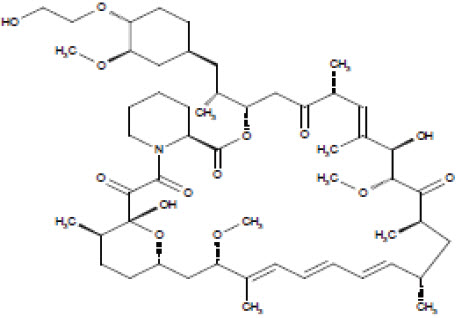
The chemical name of everolimus is (1R,9S,12S,15R,16E,18R,19R,21R,23S,24E,26E,28E,30S,32S,35R)-1,18-dihydroxy-12-{(1R)-2-[(1S,3R,4R)-4-(2-hydroxyethoxy)-3-methoxycyclohexyl]-1-methylethyl}-19,30-dimethoxy-15,17,21,23,29,35-hexamethyl-11,36-dioxa-4-aza-tricyclo[30.3.1.04,9]hexatriaconta-16,24,26,28-tetraene-2,3,10,14,20-pentaone. The molecular formula is C53H83NO14 and the molecular weight is 958.2 g/mol. The structural formula is:
Everolimus tablets for oral administration contain 2.5 mg, 5 mg, 7.5 mg, or 10 mg of everolimus and the following inactive ingredients: anhydrous lactose, butylated hydroxytoluene, crospovidone, hypromellose, and magnesium stearate.
Everolimus tablets for oral suspension for oral administration contains 2 mg, 3 mg, or 5 mg of everolimus and the following inactive ingredients: butylated hydroxytoluene, colloidal silicon dioxide, crospovidone, hypromellose, anhydrous lactose, magnesium stearate, mannitol, and microcrystalline cellulose.
5.6 Renal Failure
Cases of renal failure (including acute renal failure), some with a fatal outcome, have occurred in patients taking everolimus tablets. Elevations of serum creatinine and proteinuria have been reported in patients taking everolimus tablets/everolimus tablets for oral suspension [see Adverse Reactions (6.1)]. The incidence of Grade 3 and 4 elevations of serum creatinine was up to 2% and up to 1%, respectively. The incidence of Grade 3 and 4 proteinuria was up to 1% and up to 0.5%, respectively. Monitor renal function prior to starting everolimus tablets/everolimus tablets for oral suspension and annually thereafter. Monitor renal function at least every 6 months in patients who have additional risk factors for renal failure.
8.5 Geriatric Use
In BOLERO-2, 40% of patients with breast cancer treated with everolimus tablets were ≥ 65 years of age, while 15% were ≥ 75 years of age. No overall differences in effectiveness were observed between elderly and younger patients. The incidence of deaths due to any cause within 28 days of the last everolimus tablets dose was 6% in patients ≥ 65 years of age compared to 2% in patients < 65 years of age. Adverse reactions leading to permanent treatment discontinuation occurred in 33% of patients ≥ 65 years of age compared to 17% in patients < 65 years of age.
In RECORD-1, 41% of patients with renal cell carcinoma treated with everolimus tablets were ≥ 65 years of age, while 7% were ≥ 75 years of age. In RADIANT-3, 30% of patients with PNET treated with everolimus tablets were ≥ 65 years of age, while 7% were ≥ 75 years of age. No overall differences in safety or effectiveness were observed between elderly and younger patients.
4. Contraindications
Everolimus tablets/everolimus tablets for oral suspension are contraindicated in patients with clinically significant hypersensitivity to everolimus or to other rapamycin derivatives [see Warnings and Precautions (5.3)].
6. Adverse Reactions
The following serious adverse reactions are described elsewhere in the labeling:
- Non-Infectious Pneumonitis [see Warnings and Precautions (5.1)]
- Infections [see Warnings and Precautions (5.2)]
- Severe Hypersensitivity Reactions [see Warnings and Precautions (5.3)]
- Angioedema with Concomitant Use of ACE inhibitors [see Warnings and Precautions (5.4)]
- Stomatitis [see Warnings and Precautions (5.5)]
- Renal Failure [see Warnings and Precautions (5.6)]
- Impaired Wound Healing [see Warnings and Precautions (5.7)]
- Metabolic Disorders [see Warnings and Precautions (5.9)]
- Myelosuppression [see Warnings and Precautions (5.10)]
- Radiation Sensitization and Radiation Recall [see Warnings and Precautions (5.12)]
7. Drug Interactions
Instructions for Use
Everolimus (E-ver-OH-li-mus)
Tablets for Oral Suspension
Read these Instructions for Use for everolimus tablets for oral suspension before you start taking it and each time you get a refill. There may be new information. This information does not take the place of talking to your healthcare provider about your medical condition or treatment.
Important Information:
- Take everolimus tablets for oral suspension as a suspension only. Everolimus tablets for oral suspension is prepared as a suspension of undissolved medicine that is mixed with water, and then it is taken by mouth. Do not chew, crush, or swallow everolimus tablets for oral suspension whole.
- Everolimus tablets for oral suspension can cause harm to an unborn baby. When possible, the suspension should be prepared by an adult who is not pregnant or planning to become pregnant.
- Keep everolimus tablets for oral suspension and the prepared suspension out of the reach of children.
- Anyone who prepares suspensions of everolimus tablets for oral suspension for another person should wear gloves to avoid possible contact with the drug.
- Only use water with everolimus tablets for oral suspension to prepare the suspension. Do not prepare the suspension with juice or any other liquids.
- The suspension must be given right away. If you do not give the dose within 60 minutes after it has been prepared, throw away the dose and prepare a new dose of everolimus tablets for oral suspension.
- Before starting to prepare the suspension, collect all of the supplies that you will need to prepare and take the suspension. Do not use any of these supplies for purposes other than preparing and taking the everolimus tablets for oral suspension.
Supplies needed to prepare the suspension in an oral syringe:
- Blister card with everolimus tablets for oral suspension
- Scissors to open the blister card
- Disposable gloves (for one time use)
- 2 clean drinking glasses
- Approximately 30 mL of water
- 10 mL oral syringe (for one time use) (see Figure A)
- Paper towels
| Figure A |
Supplies needed to prepare the suspension in a small drinking glass:
- Blister card with everolimus tablets for oral suspension
- Scissors to open the blister card
- Disposable gloves (for one time use)
- 30 mL dose cup for measuring water (you can ask your pharmacist for this)
- 1 clean drinking glass (maximum size 100 mL)
- Water to prepare the suspension
- Spoon for stirring
- Paper towels
Preparing a dose of everolimus tablets for oral suspension using an oral syringe:
Step 1: Prepare a clean, flat work surface that is away from where you prepare and eat food. Place a clean paper towel on the work surface. Place the needed supplies on the paper towel.
Step 2: Wash and dry your hands well before preparing the medicine (see Figure B).
| Figure B |
Step 3: If preparing the everolimus tablets for oral suspension for another person, put on disposable gloves (see Figure C).
| Figure C |
Step 4: Take a 10 mL oral syringe and pull back on the plunger. Remove the plunger from the barrel of the syringe (see Figure D).
| Figure D |
Step 5: Use scissors to open the blister card along the dotted line (see Figure E) and remove the prescribed number of everolimus tablets for oral suspension from the blister card. Place them into the barrel of the oral syringe (see Figure F).
| Figure E |
| Figure F |
Doses of up to 10 mg can be prepared with the oral syringe. If your total prescribed dose is more than 10 mg, you will need to split the dose. Follow steps 4 through 17 for the first half of the dose. Then repeat steps 4 through 17 for the second half of the dose. Do not prepare a dose of more than 10 mg in one syringe. Ask your pharmacist or healthcare provider if you are not sure what to do.
Step 6: Re-insert the plunger into the barrel of the oral syringe (see Figure G) and push the plunger in until it comes into contact with the everolimus tablets for oral suspension (see Figure H).
| Figure G |
| Figure H |
Step 7: Fill a small drinking glass with about 30 mL of water. Insert the tip of the oral syringe into the water. Then slowly pull back on the plunger until the syringe is about half full of water and all the tablets are covered by water (see Figure I).
| Figure I |
Step 8: Hold the oral syringe with the tip pointing up. Pull back on the plunger to draw back about 4 mL of air (see Figure J).
| Figure J |
Step 9: Place the filled oral syringe in the clean, empty glass with the tip pointing up. Wait 3 minutes to allow everolimus tablets for oral suspension to break apart (see Figure K).
| Figure K |
Step 10: Slowly turn the oral syringe up and down five times just before giving the dose (see Figure L). Do not shake the syringe.
| Figure L |
Step 11: Hold the oral syringe in an upright position (with the tip up). Carefully remove most of the air by pushing up gently on the plunger (see Figure M).
| Figure M |
Step 12: Give the full contents of the oral syringe slowly and gently into the mouth right away, within 60 minutes of preparing it (see Figure N). Carefully remove the syringe from the mouth. Continue with steps 13 through 17 to make sure that the entire dose of medicine is given.
| Figure N |
Step 13: Insert the tip of the oral syringe into the drinking glass that is filled with water, and pull up about 5 mL of water by slowly pulling back on the plunger (see Figure O).
| Figure O |
Step 14: Hold the oral syringe with the tip pointing up and use the plunger to draw back about 4 mL of air (see Figure P).
| Figure P |
Step 15: With the tip of the syringe still pointing up, swirl the contents by gently rotating the syringe in a circular motion (see Figure Q).
| Figure Q |
Step 16: Hold the oral syringe in an upright position (with the tip up). Carefully remove most of the air by pushing up gently on the plunger (see Figure R).
| Figure R |
Step 17: Give the full contents of the oral syringe slowly and gently into the mouth by pushing on the plunger (see Figure S). Carefully remove the syringe from the mouth.
| Figure S |
If the total prescribed dose is more than 10 mg, repeat steps 4 through 17 to finish giving the dose.
Step 18: Throw away the oral syringe, paper towel, and used gloves in your household trash.
Step 19: Wash your hands.
Preparing a dose of everolimus tablets for oral suspension using a small drinking glass:
Step 1: Prepare a clean, flat work surface that is away from where you prepare and eat food. Place a clean paper towel on the work surface. Place the needed supplies on the paper towel.
Step 2: Wash and dry your hands before preparing the medicine (see Figure T).
| Figure T |
Step 3: If preparing the everolimus tablets for oral suspension for another person, put on disposable gloves (see Figure U).
| Figure U |
Step 4: Add about 25 mL of water to the 30 mL dose cup. The amount of water added does not need to be exact (see Figure V).
| Figure V |
Step 5: Pour the water from the dose cup into a small drinking glass (maximum size 100 mL) (see Figure W).
| Figure W |
Doses up to 10 mg can be prepared in the small drinking glass. If your total prescribed dose is more than 10 mg, you will need to split the dose.
Follow steps 4 through 10 for the first half of the dose. Then repeat steps 4 through 10 for the second half of the dose. Ask your pharmacist or healthcare provider if you are not sure what to do.
Step 6: Use scissors to open the blister card along the dotted line (see Figure X) and remove the prescribed number of everolimus tablets for oral suspension from the blister card.
| Figure X |
Step 7: Add the prescribed number of everolimus tablets for oral suspension into the water (see Figure Y).
| Figure Y |
Step 8: Wait 3 minutes to allow everolimus tablets for oral suspension to break apart (see Figure Z).
| Figure Z |
Step 9: Gently stir the contents of the glass with a spoon and place the spoon back on the paper towel (see Figure AA). Drink the full amount of the suspension right away, within 60 minutes of preparing it (see Figure BB).
| Figure AA |
| Figure BB |
Step 10: Refill the glass with the same amount of water (about 25 mL). Stir the contents with the same spoon and place the spoon back on the paper towel (see Figure CC). Drink the full amount right away so that you take any remaining medicine (see Figure DD).
| Figure CC |
| Figure DD |
If your total prescribed dose is more than 10 mg, repeat steps 4 through 10 to finish taking your dose.
Step 11: Wash the glass and the spoon thoroughly with water. Wipe the glass and spoon with a clean paper towel and store them in a dry and clean place until your next dose of everolimus tablets for oral suspension (see Figure EE).
| Figure EE |
Step 12: Throw away the used paper towel and gloves in your household trash.
Step 13: Wash your hands.
How should I store everolimus tablets for oral suspension?
- Store everolimus tablets for oral suspension at room temperature, between 68°F to 77°F (20°C to 25°C).
- Keep everolimus tablets for oral suspension in the pack it comes in.
- Open the blister pack just before taking everolimus tablets for oral suspension.
- Keep everolimus tablets for oral suspension dry and away from light.
- Do not use everolimus tablets for oral suspension that is out of date or no longer needed.
Keep everolimus tablets for oral suspension and all medicines out of the reach of children.
This Instructions for Use has been approved by the U.S. Food and Drug Administration.
Manufactured by:
Natco Pharma Limited
Visakhapatnam – 531019, India
Distributed by:
Breckenridge Pharmaceutical, Inc.
Berkeley Heights, NJ 07922
Revised: 02/2025
5.10 Myelosuppression
Anemia, lymphopenia, neutropenia, and thrombocytopenia have been reported in patients taking everolimus tablets/everolimus tablets for oral suspension. The incidence of these Grade 3 and 4 laboratory abnormalities was up to 16% and up to 2%, respectively [see Adverse Reactions (6.1)]. Monitor complete blood count (CBC) prior to starting everolimus tablets/everolimus tablets for oral suspension every 6 months for the first year of treatment and annually thereafter. Withhold or permanently discontinue everolimus tablets/everolimus tablets for oral suspension based on severity [see Dosage and Administration (2.9)].
5.8 Geriatric Patients
In the randomized hormone receptor-positive, HER2-negative breast cancer study (BOLERO-2), the incidence of deaths due to any cause within 28 days of the last everolimus tablets dose was 6% in patients ≥ 65 years of age compared to 2% in patients < 65 years of age. Adverse reactions leading to permanent treatment discontinuation occurred in 33% of patients ≥ 65 years of age compared to 17% in patients < 65 years of age. Careful monitoring and appropriate dose adjustments for adverse reactions are recommended [see Dosage and Administration (2.9), Use in Specific Populations (8.5)].
8.6 Hepatic Impairment
Everolimus tablets/everolimus tablets for oral suspension exposure may increase in patients with hepatic impairment [see Clinical Pharmacology (12.3)].
For patients with breast cancer, NET, RCC, and TSC-associated renal angiomyolipoma who have hepatic impairment, reduce the everolimus tablets dose as recommended [see Dosage and Administration (2.10)].
For patients with TSC-associated SEGA and TSC-associated partial-onset seizures who have severe hepatic impairment (Child-Pugh class C), reduce the starting dose of everolimus tablets/everolimus tablets for oral suspension as recommended and adjust the dose based on everolimus trough concentrations [see Dosage and Administration (2.8, 2.10)].
5.9 Metabolic Disorders
Hyperglycemia, hypercholesterolemia, and hypertriglyceridemia have been reported in patients taking everolimus tablets/everolimus tablets for oral suspension at an incidence up to 75%, 86%, and 73%, respectively. The incidence of these Grade 3 and 4 laboratory abnormalities was up to 15% and up to 0.4%, respectively [see Adverse Reactions (6.1)]. In non-diabetic patients, monitor fasting serum glucose prior to starting everolimus tablets/everolimus tablets for oral suspension and annually thereafter. In diabetic patients, monitor fasting serum glucose more frequently as clinically indicated. Monitor lipid profile prior to starting everolimus tablets/everolimus tablets for oral suspension and annually thereafter. When possible, achieve optimal glucose and lipid control prior to starting everolimus tablets/everolimus tablets for oral suspension. For Grade 3 to 4 metabolic events, withhold or permanently discontinue everolimus tablets/everolimus tablets for oral suspension based on severity [see Dosage and Administration (2.9)].
1. Indications and Usage
Everolimus tablets are a kinase inhibitor indicated for the treatment of:
- Postmenopausal women with advanced hormone receptor-positive, HER2-negative breast cancer in combination with exemestane after failure of treatment with letrozole or anastrozole. (1.1)
- Adults with progressive neuroendocrine tumors of pancreatic origin (PNET) and adults with progressive, well-differentiated, non-functional neuroendocrine tumors (NET) of gastrointestinal (GI) or lung origin that are unresectable, locally advanced or metastatic.
Limitations of Use: Everolimus tablets are not indicated for the treatment of patients with functional carcinoid tumors. (1.2)
- Adults with advanced renal cell carcinoma (RCC) after failure of treatment with sunitinib or sorafenib. (1.3)
- Adults with renal angiomyolipoma and tuberous sclerosis complex (TSC), not requiring immediate surgery. (1.4)
Everolimus tablets and everolimus tablets for oral suspension are kinase inhibitors indicated for the treatment of adult and pediatric patients aged 1 year and older with TSC who have subependymal giant cell astrocytoma (SEGA) that requires therapeutic intervention but cannot be curatively resected. (1.5)
Everolimus tablets for oral suspension is a kinase inhibitor indicated for the adjunctive treatment of adult and pediatric patients aged 2 years and older with TSC-associated partial-onset seizures. (1.6)
12.1 Mechanism of Action
Everolimus is an inhibitor of mammalian target of rapamycin (mTOR), a serine-threonine kinase, downstream of the PI3K/AKT pathway. The mTOR pathway is dysregulated in several human cancers and in tuberous sclerosis complex (TSC). Everolimus binds to an intracellular protein, FKBP-12, resulting in an inhibitory complex formation with mTOR complex 1 (mTORC1) and thus inhibition of mTOR kinase activity. Everolimus reduced the activity of S6 ribosomal protein kinase (S6K1) and eukaryotic initiation factor 4E-binding protein (4E-BP1), downstream effectors of mTOR, involved in protein synthesis. S6K1 is a substrate of mTORC1 and phosphorylates the activation domain 1 of the estrogen receptor which results in ligand-independent activation of the receptor. In addition, everolimus inhibited the expression of hypoxia-inducible factor (e.g., HIF-1) and reduced the expression of vascular endothelial growth factor (VEGF). Inhibition of mTOR by everolimus has been shown to reduce cell proliferation, angiogenesis, and glucose uptake in in vitro and/or in vivo studies.
Constitutive activation of the PI3K/Akt/mTOR pathway can contribute to endocrine resistance in breast cancer. In vitro studies show that estrogen-dependent and HER2+ breast cancer cells are sensitive to the inhibitory effects of everolimus, and that combination treatment with everolimus and Akt, HER2, or aromatase inhibitors enhances the anti-tumor activity of everolimus in a synergistic manner.
Two regulators of mTORC1 signaling are the oncogene suppressors tuberin-sclerosis complexes 1 and 2 (TSC1, TSC2). Loss or inactivation of either TSC1 or TSC2 leads to activation of downstream signaling. In TSC, a genetic disorder, inactivating mutations in either the TSC1 or the TSC2 gene lead to hamartoma formation throughout the body as well as seizures and epileptogenesis. Overactivation of mTOR results in neuronal dysplasia, aberrant axonogenesis and dendrite formation, increased excitatory synaptic currents, reduced myelination, and disruption of the cortical laminar structure causing abnormalities in neuronal development and function. Treatment with an mTOR inhibitor in animal models of mTOR dysregulation in the brain resulted in seizure suppression, prevention of the development of new-onset seizures, and prevention of premature death.
5.13 Embryo Fetal Toxicity
Based on animal studies and the mechanism of action, everolimus tablets/everolimus tablets for oral suspension can cause fetal harm when administered to a pregnant woman. In animal studies, everolimus caused embryo-fetal toxicities in rats when administered during the period of organogenesis at maternal exposures that were lower than human exposures at the clinical dose of 10 mg once daily. Advise pregnant women of the potential risk to a fetus. Advise female patients of reproductive potential to avoid becoming pregnant and to use effective contraception during treatment with everolimus tablets/everolimus tablets for oral suspension and for 8 weeks after the last dose. Advise male patients with female partners of reproductive potential to use effective contraception during treatment with everolimus tablets/everolimus tablets for oral suspension and for 4 weeks after the last dose [see Use in Specific Populations (8.1, 8.3)].
5. Warnings and Precautions
- Non-Infectious Pneumonitis: Monitor for clinical symptoms or radiological changes. Withhold or permanently discontinue based on severity. (2.9, 5.1)
- Infections: Monitor for signs and symptoms of infection. Withhold or permanently discontinue based on severity. (2.9, 5.2)
- Severe Hypersensitivity Reactions: Permanently discontinue for clinically significant hypersensitivity. (5.3)
- Angioedema: Patients taking concomitant angiotensin-converting-enzyme (ACE) inhibitors may be at increased risk for angioedema. Permanently discontinue for angioedema. (5.4, 7.2)
- Stomatitis: Initiate dexamethasone alcohol-free mouthwash when starting treatment. (5.5, 6.1)
- Renal Failure: Monitor renal function prior to treatment and periodically thereafter. (5.6)
- Risk of Impaired Wound Healing: Withhold for at least 1 week prior to elective surgery. Do not administer for at least 2 weeks following major surgery and until adequate wound healing. The safety of resumption of treatment after resolution of wound healing complications has not been established. (5.7)
- Geriatric Patients: Monitor and adjust dose for adverse reactions. (5.8)
- Metabolic Disorders: Monitor serum glucose and lipids prior to treatment and periodically thereafter. Withhold or permanently discontinue based on severity. (2.9, 5.9)
- Myelosuppression: Monitor hematologic parameters prior to treatment and periodically thereafter. Withhold or permanently discontinue based on severity. (2.9, 5.10)
- Risk of Infection or Reduced Immune Response with Vaccination: Avoid live vaccines and close contact with those who have received live vaccines. Complete recommended childhood vaccinations prior to starting treatment. (5.11)
- Radiation Sensitization and Radiation Recall: Severe radiation reactions may occur. (5.12, 6.2)
- Embryo-Fetal Toxicity: Can cause fetal harm. Advise patients of reproductive potential of the potential risk to a fetus and to use effective contraception. (5.13, 8.1, 8.3)
2. Dosage and Administration
Do not combine everolimus tablets and everolimus tablets for oral suspension to achieve the total daily dose. (2.1)
Modify the dose for patients with hepatic impairment or for patients taking drugs that inhibit or induce P-glycoprotein (P-gp) and CYP3A4. (2.1)
Breast Cancer:
- 10 mg orally once daily. (2.2)
NET:
- 10 mg orally once daily. (2.3)
RCC:
- 10 mg orally once daily. (2.4)
TSC-Associated Renal Angiomyolipoma:
- 10 mg orally once daily. (2.5)
TSC-Associated SEGA:
TSC-Associated Partial-Onset Seizures:
6.2 Postmarketing Experience
The following adverse reactions have been identified during postapproval use of everolimus tablets/everolimus tablets for oral suspension. Because these reactions are reported voluntarily from a population of uncertain size, it is not always possible to reliably estimate frequency or establish a causal relationship to drug exposure:
- Blood and lymphatic disorders: Thrombotic microangiopathy
- Cardiac: Cardiac failure with some cases reported with pulmonary hypertension (including pulmonary arterial hypertension) as a secondary event
- Gastrointestinal: Acute pancreatitis
- Hepatobiliary: Cholecystitis and cholelithiasis
- Infections: Sepsis and septic shock
- Nervous system: Reflex sympathetic dystrophy
- Vascular: Arterial thrombotic events, lymphedema
- Injury, poisoning and procedural complications: Radiation Sensitization and Radiation Recall
3. Dosage Forms and Strengths
1.3 Renal Cell Carcinoma (rcc)
Everolimus tablets are indicated for the treatment of adult patients with advanced RCC after failure of treatment with sunitinib or sorafenib.
5.1 Non Infectious Pneumonitis
Non-infectious pneumonitis is a class effect of rapamycin derivatives. Non-infectious pneumonitis was reported in up to 19% of patients treated with everolimus tablets/everolimus tablets for oral suspension in clinical trials, some cases were reported with pulmonary hypertension (including pulmonary arterial hypertension) as a secondary event. The incidence of Grade 3 and 4 non-infectious pneumonitis was up to 4% and up to 0.2%, respectively [see Adverse Reactions (6.1)]. Fatal outcomes have been observed.
Consider a diagnosis of non-infectious pneumonitis in patients presenting with non-specific respiratory signs and symptoms. Consider opportunistic infections, such as pneumocystis jiroveci pneumonia (PJP) in the differential diagnosis. Advise patients to report promptly any new or worsening respiratory symptoms.
Continue everolimus tablets/everolimus tablets for oral suspension without dose alteration in patients who develop radiological changes suggestive of non-infectious pneumonitis and have few or no symptoms. Imaging appears to overestimate the incidence of clinical pneumonitis.
For Grade 2 to 4 non-infectious pneumonitis, withhold or permanently discontinue everolimus tablets/everolimus tablets for oral suspension based on severity [see Dosage and Administration (2.9)]. Corticosteroids may be indicated until clinical symptoms resolve. Administer prophylaxis for PJP when concomitant use of corticosteroids or other immunosuppressive agents are required. The development of pneumonitis has been reported even at a reduced dose.
6.1 Clinical Trials Experience
Because clinical trials are conducted under widely varying conditions, the adverse reaction rates observed cannot be directly compared to rates in other trials and may not reflect the rates observed in clinical practice.
8. Use in Specific Populations
- For breast cancer, NET, RCC, or TSC-associated renal angiomyolipoma patients with hepatic impairment, reduce the dose. (2.10, 8.6)
- For patients with TSC-associated SEGA or TSC-associated partial-onset seizures and severe hepatic impairment, reduce the starting dose and adjust dose to attain target trough concentrations. (2.8, 2.10, 8.6)
1.2 Neuroendocrine Tumors (net)
Everolimus tablets are indicated for the treatment of adult patients with progressive neuroendocrine tumors of pancreatic origin (PNET) with unresectable, locally advanced or metastatic disease.
Everolimus tablets are indicated for the treatment of adult patients with progressive, well-differentiated, non-functional NET of gastrointestinal (GI) or lung origin with unresectable, locally advanced or metastatic disease.
14.3 Renal Cell Carcinoma (rcc)
An international, multi-center, randomized, double-blind trial (RECORD-1, NCT00410124) comparing everolimus tablets 10 mg once daily and placebo, both in conjunction with BSC, was conducted in patients with metastatic RCC whose disease had progressed despite prior treatment with sunitinib, sorafenib, or both sequentially. Prior therapy with bevacizumab, interleukin 2, or interferon-α was also permitted. Randomization was stratified according to prognostic score and prior anticancer therapy. The major efficacy outcome measure for the trial was PFS evaluated by RECIST, based on a blinded, independent, central radiologic review. After documented radiological progression, patients randomized to placebo could receive open-label everolimus tablets. Other outcome measures included OS.
In total, 416 patients were randomized 2:1 to receive everolimus tablets (n = 277) or placebo (n = 139). Demographics were well balanced between the arms (median age 61 years; 77% male, 88% White, 74% received prior sunitinib or sorafenib, and 26% received both sequentially).
Everolimus tablets were superior to placebo for PFS (Table 23 and Figure 4). The treatment effect was similar across prognostic scores and prior sorafenib and/or sunitinib. Final OS results yield a hazard ratio of 0.90 (95% CI: 0.71, 1.14), with no statistically significant difference between the arms. Planned cross-over from placebo due to disease progression to open-label everolimus tablets occurred in 80% of the 139 patients and may have confounded the OS benefit.
| Everolimus Tablets N = 277 |
Placebo N = 139 |
Hazard Ratio (95% CI) |
p-value Log-rank test stratified by prognostic score.
|
|
|---|---|---|---|---|
| Median Progression-free Survival (95% CI) | 4.9 months (4.0, 5.5) |
1.9 months (1.8, 1.9) |
0.33 (0.25, 0.43) |
< 0.0001 |
| Objective Response Rate | 2% | 0% | n/a Not applicable.
|
n/a |
Figure 4: Kaplan-Meier Curves for Progression-Free Survival in RCC in RECORD-1
2.1 Important Dosage Information
- Everolimus tablets and everolimus tablets for oral suspension are two different dosage forms. Select the recommended dosage form based on the indication [see Indications and Usage (1)]. Do not combine everolimus tablets and everolimus tablets for oral suspension to achieve the total dose.
- Modify the dosage for patients with hepatic impairment or for patients taking drugs that inhibit or induce P-glycoprotein (P-gp) and CYP3A4 [see Dosage and Administration (2.10, 2.11, 2.12)].
17. Patient Counseling Information
Advise the patient to read the FDA-approved patient labeling (Patient Information and Instructions for Use).
5.7 Risk of Impaired Wound Healing
Impaired wound healing can occur in patients who receive drugs that inhibit the VEGF signaling pathway. Therefore, everolimus tablets/everolimus tablets for oral suspension have the potential to adversely affect wound healing.
Withhold everolimus tablets/everolimus tablets for oral suspension for at least 1 week prior to elective surgery. Do not administer for at least 2 weeks following major surgery and until adequate wound healing. The safety of resumption of treatment upon resolution of wound healing complications has not been established.
2.13 Administration and Preparation
- Administer everolimus tablets/everolimus tablets for oral suspension at the same time each day.
- Administer everolimus tablets/everolimus tablets for oral suspension consistently either with or without food [see Clinical Pharmacology (12.3)].
- If a dose of everolimus tablets/everolimus tablets for oral suspension is missed, it can be administered up to 6 hours after the time it is normally administered. After more than 6 hours, the dose should be skipped for that day. The next day, everolimus tablets/everolimus tablets for oral suspension should be administered at its usual time. Double doses should not be administered to make up for the dose that was missed.
5.3 Severe Hypersensitivity Reactions
Hypersensitivity reactions to everolimus tablets/everolimus tablets for oral suspension have been observed and include anaphylaxis, dyspnea, flushing, chest pain, and angioedema (e.g., swelling of the airways or tongue, with or without respiratory impairment) [see Contraindications (4)]. The incidence of Grade 3 hypersensitivity reactions was up to 1%. Permanently discontinue everolimus tablets/everolimus tablets for oral suspension for the development of clinically significant hypersensitivity.
13.2 Animal Toxicology And/or Pharmacology
In juvenile rat toxicity studies, dose-related delayed attainment of developmental landmarks, including delayed eye-opening, delayed reproductive development in males and females and increased latency time during the learning and memory phases were observed at doses as low as 0.15 mg/kg/day.
2.9 Dosage Modifications for Adverse Reactions
Table 2 summarizes recommendations for dosage modifications of everolimus tablets/everolimus tablets for oral suspension for the management of adverse reactions.
| Adverse Reaction | Severity | Dosage Modification |
|---|---|---|
| Non-infectious pneumonitis [see Warnings and Precautions (5.1)] |
Grade 2 | Withhold until improvement to Grade 0 or 1. Resume at 50% of previous dose; change to every other day dosing if the reduced dose is lower than the lowest available strength. Permanently discontinue if toxicity does not resolve or improve to Grade 1 within 4 weeks. |
| Grade 3 | Withhold until improvement to Grade 0 or 1. Resume at 50% of previous dose; change to every other day dosing if the reduced dose is lower than the lowest available strength. If toxicity recurs at Grade 3, permanently discontinue. |
|
| Grade 4 | Permanently discontinue. | |
| Stomatitis [see Warnings and Precautions (5.5)] |
Grade 2 | Withhold until improvement to Grade 0 or 1. Resume at same dose. If recurs at Grade 2, withhold until improvement to Grade 0 or 1. Resume at 50% of previous dose; change to every other day dosing if the reduced dose is lower than the lowest available strength. |
| Grade 3 | Withhold until improvement to Grade 0 or 1. Resume at 50% of previous dose; change to every other day dosing if the reduced dose is lower than the lowest available strength. | |
| Grade 4 | Permanently discontinue. | |
| Metabolic events (e.g., hyperglycemia, dyslipidemia) [see Warnings and Precautions (5.9)] |
Grade 3 | Withhold until improvement to Grade 0, 1, or 2. Resume at 50% of previous dose; change to every other day dosing if the reduced dose is lower than the lowest available strength. |
| Grade 4 | Permanently discontinue. | |
| Other non-hematologic toxicities | Grade 2 | If toxicity becomes intolerable, withhold until improvement to Grade 0 or 1. Resume at same dose. If toxicity recurs at Grade 2, withhold until improvement to Grade 0 or 1. Resume at 50% of previous dose; change to every other day dosing if the reduced dose is lower than the lowest available strength. |
| Grade 3 | Withhold until improvement to Grade 0 or 1. Consider resuming at 50% of previous dose; change to every other day dosing if the reduced dose is lower than the lowest available strength. If recurs at Grade 3, permanently discontinue. |
|
| Grade 4 | Permanently discontinue. | |
| Thrombocytopenia [see Warnings and Precautions (5.10)] |
Grade 2 | Withhold until improvement to Grade 0 or 1. Resume at same dose. |
| Grade 3 OR Grade 4 |
Withhold until improvement to Grade 0 or 1. Resume at 50% of previous dose; change to every other day dosing if the reduced dose is lower than the lowest available strength. | |
| Neutropenia [see Warnings and Precautions (5.10)] |
Grade 3 | Withhold until improvement to Grade 0, 1, or 2. Resume at same dose. |
| Grade 4 | Withhold until improvement to Grade 0, 1, or 2. Resume at 50% of previous dose; change to every other day dosing if the reduced dose is lower than the lowest available strength. | |
| Febrile neutropenia [see Warnings and Precautions (5.10)] |
Grade 3 | Withhold until improvement to Grade 0, 1, or 2, and no fever. Resume at 50% of previous dose; change to every other day dosing if the reduced dose is lower than the lowest available strength. |
| Grade 4 | Permanently discontinue. |
2.10 Dosage Modifications for Hepatic Impairment
The recommended dosages of everolimus tablets/everolimus tablets for oral suspension for patients with hepatic impairment are described in Table 3 [see Use in Specific Populations (8.6)]:
| Indication | Dose Modification for Everolimus Tablets/Everolimus Tablets for Oral Suspension |
|---|---|
| Abbreviations: NET, Neuroendocrine Tumors; RCC, Renal Cell Carcinoma; SEGA, Subependymal Giant Cell Astrocytoma; TSC, Tuberous Sclerosis Complex. | |
| Breast Cancer, NET, RCC, and TSC- Associated Renal Angiomyolipoma |
|
| TSC-Associated SEGA and TSC-Associated Partial-Onset Seizures |
|
5.12 Radiation Sensitization and Radiation Recall
Radiation sensitization and recall, in some cases severe, involving cutaneous and visceral organs (including radiation esophagitis and pneumonitis) have been reported in patients treated with radiation prior to, during, or subsequent to everolimus tablets/everolimus tablets for oral suspension treatment [see Adverse Reactions (6.2)].
Monitor patients closely when everolimus tablets/everolimus tablets for oral suspension are administered during or sequentially with radiation treatment.
Principal Display Panel 2 Mg Tablet Bottle Label
NDC 51991-990-77
Everolimus Tablets
for Oral Suspension
2 mg per tablet
TABLETS MUST BE DISPERSED IN WATER.
TABLETS MUST NOT BE SWALLOWED
WHOLE, CHEWED OR CRUSHED
Rx Only
28 Tablets for Oral Suspension
breckenridge
A Towa
Company
Principal Display Panel 3 Mg Tablet Bottle Label
NDC 51991-991-77
Everolimus Tablets
for Oral Suspension
3 mg per tablet
TABLETS MUST BE DISPERSED IN WATER.
TABLETS MUST NOT BE SWALLOWED
WHOLE, CHEWED OR CRUSHED
Rx Only
28 Tablets for Oral Suspension
breckenridge
A Towa
Company
Principal Display Panel 5 Mg Tablet Bottle Label
NDC 51991-822-33
Everolimus Tablets
5 mg
Rx Only
30 Tablets
breckenridge
A Towa
Company
Principal Display Panel 10 Mg Tablet Bottle Label
NDC 51991-824-33
Everolimus Tablets
10 mg
Rx Only
30 Tablets
breckenridge
A Towa
Company
Principal Display Panel 2.5 Mg Tablet Bottle Label
NDC 51991-821-33
Everolimus Tablets
2.5 mg
Rx Only
30 Tablets
breckenridge
A Towa
Company
Principal Display Panel 7.5 Mg Tablet Bottle Label
NDC 51991-823-33
Everolimus Tablets
7.5 mg
Rx Only
30 Tablets
breckenridge
A Towa
Company
2.4 Recommended Dosage for Renal Cell Carcinoma (rcc)
The recommended dosage of everolimus tablets is 10 mg orally once daily until disease progression or unacceptable toxicity.
2.12 Dosage Modifications for P Gp and Cyp3a4 Inducers
- Avoid concomitant use of St. John's Wort (Hypericum perforatum).
- Increase the dose for patients taking everolimus tablets/everolimus tablets for oral suspension with a P-gp and strong CYP3A4 inducer as recommended in Table 5 [see Drug Interactions (7.1), Clinical Pharmacology (12.3)].
| Indication | Dose Modification for Everolimus Tablets/Everolimus Tablets for Oral Suspension |
|---|---|
| Breast Cancer, NET, RCC, and TSC-Associated Renal Angiomyolipoma |
|
| TSC-Associated SEGA and TSC-Associated Partial-Onset Seizures |
|
2.3 Recommended Dosage for Neuroendocrine Tumors (net)
The recommended dosage of everolimus tablets is 10 mg orally once daily until disease progression or unacceptable toxicity.
2.11 Dosage Modifications for P Gp and Cyp3a4 Inhibitors
- Avoid the concomitant use of P-gp and strong CYP3A4 inhibitors [see Drug Interactions (7.1)].
- Avoid ingesting grapefruit and grapefruit juice.
- Reduce the dose for patients taking everolimus tablets/everolimus tablets for oral suspension with a P-gp and moderate CYP3A4 inhibitor as recommended in Table 4 [see Drug Interactions (7.1), Clinical Pharmacology (12.3)].
| Indication | Dose Modification for Everolimus Tablets/Everolimus Tablets for Oral Suspension |
|---|---|
| Breast Cancer, NET, RCC, and TSC-Associated Renal Angiomyolipoma |
|
| TSC-Associated SEGA and TSC-Associated Partial-Onset Seizures |
|
13.1 Carcinogenesis, Mutagenesis, Impairment of Fertility
Administration of everolimus for up to 2 years did not indicate oncogenic potential in mice and rats up to the highest doses tested (0.9 mg/kg) corresponding, respectively to 3.9 and 0.2 times the estimated human exposure based on AUC at the recommended dose of everolimus tablets 10 mg orally once daily.
Everolimus was not genotoxic in a battery of in vitro assays (Ames mutation test in Salmonella, mutation test in L5178Y mouse lymphoma cells, and chromosome aberration assay in V79 Chinese hamster cells). Everolimus was not genotoxic in an in vivo mouse bone marrow micronucleus test at doses up to 500 mg/kg/day (1500 mg/m2/day, approximately 255-fold the recommended dose of everolimus tablets 10 mg orally once daily, and approximately 200-fold the median dose administered to patients with TSC-associated SEGA and TSC-associated partial-onset seizures, based on the BSA), administered as 2 doses, 24 hours apart.
Based on non-clinical findings, everolimus tablets/everolimus tablets for oral suspension may impair male fertility. In a 13-week male fertility study in rats, testicular morphology was affected at doses of 0.5 mg/kg and above. Sperm motility, sperm count, and plasma testosterone levels were diminished in rats treated with 5 mg/kg. The exposures at these doses (52 ng•hr/mL and 414 ng•hr/mL, respectively) were within the range of human exposure at the recommended dose of everolimus tablets 10 mg orally once daily (560 ng•hr/mL) and resulted in infertility in the rats at 5 mg/kg. Effects on male fertility occurred at AUC0-24h values 10% to 81% lower than human exposure at the recommended dose of everolimus tablets 10 mg orally once daily. After a 10-13 week non-treatment period, the fertility index increased from zero (infertility) to 60%.
Oral doses of everolimus in female rats at doses ≥ 0.1 mg/kg (approximately 4% the human exposure based on AUC at the recommended dose of everolimus tablets 10 mg orally once daily) resulted in increased incidence of pre-implantation loss, suggesting that the drug may reduce female fertility.
Principal Display Panel 2 Mg Tablet Blister Card Carton
NDC 51991-990-28
Rx Only
Everolimus Tablets for
Oral Suspension
2 mg per tablet
TABLETS MUST BE DISPERSED IN WATER.
TABLETS MUST NOT BE SWALLOWED WHOLE, CHEWED OR CRUSHED.
breckenridge
A Towa
Company
28 Tablets for Oral Suspension
(Carton contains 4 individual blister cards of 7 tablets)
Principal Display Panel 3 Mg Tablet Blister Card Carton
NDC 51991-991-28
Rx Only
Everolimus Tablets for
Oral Suspension
3 mg per tablet
TABLETS MUST BE DISPERSED IN WATER.
TABLETS MUST NOT BE SWALLOWED WHOLE, CHEWED OR CRUSHED.
breckenridge
A Towa
Company
28 Tablets for Oral Suspension
(Carton contains 4 individual blister cards of 7 tablets)
Principal Display Panel 5 Mg Tablet Blister Card Carton
NDC 51991-992-28
Rx Only
Everolimus Tablets for
Oral Suspension
5 mg per tablet
TABLETS MUST BE DISPERSED IN WATER.
TABLETS MUST NOT BE SWALLOWED WHOLE, CHEWED OR CRUSHED.
breckenridge
A Towa
Company
28 Tablets for Oral Suspension
(Carton contains 4 individual blister cards of 7 tablets)
1.1 Hormone Receptor Positive, Her2 Negative Breast Cancer
Everolimus tablets are indicated for the treatment of postmenopausal women with advanced hormone receptor-positive, HER2-negative breast cancer in combination with exemestane, after failure of treatment with letrozole or anastrozole.
14.1 Hormone Receptor Positive, Her2 Negative Breast Cancer
A randomized, double-blind, multicenter study (BOLERO-2, NCT00863655) of everolimus tablets in combination with exemestane vs. placebo in combination with exemestane was conducted in 724 postmenopausal women with estrogen receptor-positive, HER2-negative advanced breast cancer with recurrence or progression following prior therapy with letrozole or anastrozole. Randomization was stratified by documented sensitivity to prior hormonal therapy (yes vs. no) and by the presence of visceral metastasis (yes vs. no). Sensitivity to prior hormonal therapy was defined as either (1) documented clinical benefit (complete response [CR], partial response [PR], stable disease ≥ 24 weeks) to at least one prior hormonal therapy in the advanced setting or (2) at least 24 months of adjuvant hormonal therapy prior to recurrence. Patients were permitted to have received 0-1 prior lines of chemotherapy for advanced disease. The major efficacy outcome measure was progression-free survival (PFS) evaluated by RECIST (Response Evaluation Criteria in Solid Tumors), based on investigator (local radiology) assessment. Other outcome measures included overall survival (OS) and objective response rate (ORR).
Patients were randomized 2:1 to everolimus tablets 10 mg orally once daily in combination with exemestane 25 mg once daily (n = 485) or to placebo in combination with exemestane 25 mg orally once daily (n = 239). The two treatment groups were generally balanced with respect to baseline demographics and disease characteristics. Patients were not permitted to cross over to everolimus tablets at the time of disease progression.
The trial demonstrated a statistically significant improvement in PFS by investigator assessment (Table 20 and Figure 1). The results of the PFS analysis based on independent central radiological assessment were consistent with the investigator assessment. PFS results were also consistent across the subgroups of age, race, presence and extent of visceral metastases, and sensitivity to prior hormonal therapy.
ORR was higher in the everolimus tablets in combination with exemestane arm vs. the placebo in combination with exemestane arm (Table 20). There were 3 complete responses (0.6%) and 58 partial responses (12%) in the everolimus tablets arm. There were no complete responses and 4 partial responses (1.7%) in the placebo in combination with exemestane arm.
After a median follow-up of 39.3 months, there was no statistically significant difference in OS between the everolimus tablets in combination with exemestane arm and the placebo in combination with exemestane arm [HR 0.89 (95% CI: 0.73, 1.10)].
| Analysis | Everolimus Tablets with Exemestane N = 485 |
Placebo with Exemestane N = 239 |
Hazard Ratio | p-value |
|---|---|---|---|---|
| Median progression-free survival (months, 95% CI) | ||||
| Investigator radiological review | 7.8 (6.9, 8.5) |
3.2 (2.8, 4.1) |
0.45 Hazard ratio is obtained from the stratified Cox proportional-hazards model by sensitivity to prior hormonal therapy and presence of visceral metastasis.
(0.38, 0.54) |
< 0.0001 p-value is obtained from the one-sided log-rank test stratified by sensitivity to prior hormonal therapy and presence of visceral metastasis.
|
| Independent radiological review | 11.0 (9.7, 15.0) |
4.1 (2.9, 5.6) |
0.38
(0.3, 0.5) |
< 0.0001 |
| Best overall response (%, 95% CI) | ||||
| Objective response rate (ORR) Objective response rate = proportion of patients with CR or PR.
|
12.6% (9.8, 15.9) |
1.7% (0.5, 4.2) |
n/a Not applicable.
|
Figure 1: Kaplan-Meier Curves for Progression-Free Survival by Investigator Radiological Review in Hormone Receptor-Positive, HER-2 Negative Breast Cancer in BOLERO-2
5.11 Risk of Infection Or Reduced Immune Response With Vaccination
The safety of immunization with live vaccines during everolimus tablets/everolimus tablets for oral suspension therapy has not been studied. Due to the potential increased risk of infection, avoid the use of live vaccines and close contact with individuals who have received live vaccines during treatment with everolimus tablets/everolimus tablets for oral suspension. Due to the potential increased risk of infection or reduced immune response with vaccination, complete the recommended childhood series of vaccinations according to American Council on Immunization Practices (ACIP) guidelines prior to the start of therapy. An accelerated vaccination schedule may be appropriate.
1.4 Tuberous Sclerosis Complex (tsc) Associated Renal Angiomyolipoma
Everolimus tablets are indicated for the treatment of adult patients with renal angiomyolipoma and TSC, not requiring immediate surgery.
14.4 Tuberous Sclerosis Complex (tsc) Associated Renal Angiomyolipoma
A randomized (2:1), double-blind, placebo-controlled trial (EXIST-2, NCT00790400) of everolimus tablets was conducted in 118 patients with renal angiomyolipoma as a feature of TSC (n = 113) or sporadic lymphangioleiomyomatosis (n = 5). The key eligibility requirements for this trial were at least one angiomyolipoma of ≥ 3 cm in longest diameter on CT/MRI based on local radiology assessment, no immediate indication for surgery, and age ≥ 18 years. Patients received everolimus tablets 10 mg or matching placebo orally once daily until disease progression or unacceptable toxicity. CT or MRI scans for disease assessment were obtained at baseline, 12, 24, and 48 weeks and annually thereafter. Clinical and photographic assessment of skin lesions were conducted at baseline and every 12 weeks thereafter until treatment discontinuation. The major efficacy outcome measure was angiomyolipoma response rate based on independent central radiology review, which was defined as a ≥ 50% reduction in angiomyolipoma volume, absence of new angiomyolipoma lesion ≥ 1 cm, absence of kidney volume increase ≥ 20%, and no angiomyolipoma related bleeding of ≥ Grade 2. Key supportive efficacy outcome measures were time to angiomyolipoma progression and skin lesion response rate. The primary analyses of efficacy outcome measures were limited to the blinded treatment period and conducted 6 months after the last patient was randomized. The comparative angiomyolipoma response rate analysis was stratified by use of enzyme-inducing antiepileptic drugs (EIAEDs) at randomization (yes vs. no).
Of the 118 patients enrolled, 79 were randomized to everolimus tablets and 39 to placebo. The median age was 31 years (18 to 61 years), 34% were male, and 89% were White. At baseline, 17% of patients were receiving EIAEDs. On central radiology review at baseline, 92% of patients had at least 1 angiomyolipoma of ≥ 3 cm in longest diameter, 29% had angiomyolipomas ≥ 8 cm, 78% had bilateral angiomyolipomas, and 97% had skin lesions. The median values for the sum of all target renal angiomyolipoma lesions at baseline were 85 cm3 (9 to 1612 cm3) and 120 cm3 (3 to 4520 cm3) in the everolimus tablets and placebo arms, respectively. Forty-six (39%) patients had prior renal embolization or nephrectomy. The median duration of follow-up was 8.3 months (0.7 to 24.8 months) at the time of the primary analysis.
The renal angiomyolipoma response rate was statistically significantly higher in everolimus tablets-treated patients (Table 24). The median response duration was 5.3+ months (2.3+ to 19.6+ months).
There were 3 patients in the everolimus tablets arm and 8 patients in the placebo arm with documented angiomyolipoma progression by central radiologic review (defined as a ≥ 25% increase from nadir in the sum of angiomyolipoma target lesion volumes to a value greater than baseline, appearance of a new angiomyolipoma ≥ 1 cm in longest diameter, an increase in renal volume ≥ 20% from nadir for either kidney and to a value greater than baseline, or Grade ≥ 2 angiomyolipoma-related bleeding). The time to angiomyolipoma progression was statistically significantly longer in the everolimus tablets arm (HR 0.08 [95% CI: 0.02, 0.37]; p < 0.0001).
| Everolimus Tablets N=79 |
Placebo N=39 |
p-value | |
|---|---|---|---|
| Primary analysis | |||
|
Angiomyolipoma response rate Per independent central radiology review. – (%)
|
41.8 | 0 | < 0.0001 |
| 95% CI | (30.8, 53.4) | (0.0, 9.0) |
Skin lesion response rates were assessed by local investigators for 77 patients in the everolimus tablets arm and 37 patients in the placebo arm who presented with skin lesions at study entry. The skin lesion response rate was statistically significantly higher in the everolimus tablets arm (26% vs. 0, p = 0.0011); all skin lesion responses were partial responses, defined as visual improvement in 50% to 99% of all skin lesions durable for at least 8 weeks (Physician's Global Assessment of Clinical Condition).
Patients randomized to placebo were permitted to receive everolimus tablets at the time of angiomyolipoma progression or after the time of the primary analysis. After the primary analysis, patients treated with everolimus tablets underwent additional follow-up CT or MRI scans to assess tumor status until discontinuation of treatment or completion of 4 years of follow-up after the last patient was randomized. A total of 112 patients (79 randomized to everolimus tablets and 33 randomized to placebo) received at least one dose of everolimus tablets. The median duration of everolimus tablets treatment was 3.9 years (0.5 months to 5.3 years) and the median duration of follow-up was 3.9 years (0.9 months to 5.4 years). During the follow-up period after the primary analysis, 32 patients (in addition to the 33 patients identified at the time of the primary analysis) had an angiomyolipoma response based upon independent central radiology review. Among the 65 responders out of 112 patients, the median time to angiomyolipoma response was 2.9 months (2.6 to 33.8 months). Fourteen percent of the 112 patients treated with everolimus tablets had angiomyolipoma progression by the end of the follow-up period. No patient underwent a nephrectomy for angiomyolipoma progression and one patient underwent renal embolization while treated with everolimus tablets.
1.6 Tuberous Sclerosis Complex (tsc) Associated Partial Onset Seizures
Everolimus tablets for oral suspension are indicated for the adjunctive treatment of adult and pediatric patients aged 2 years and older with TSC-associated partial-onset seizures.
14.6 Tuberous Sclerosis Complex (tsc) Associated Partial Onset Seizures
The efficacy of everolimus tablets for oral suspension as an adjunctive anti-epileptic drug (AED) was evaluated in a randomized, double-blind, multicenter, placebo-controlled study conducted in patients with TSC-associated partial-onset seizures (EXIST-3, NCT01713946). Patients with a history of inadequate control of partial-onset seizures despite treatment with ≥ 2 sequential AED regimens were randomized to receive placebo or everolimus tablets for oral suspension once daily at a dose to achieve a low trough (LT) level (3-7 ng/mL) or a high trough (HT) level (9-15 ng/mL). Randomization was stratified by age group (1 to <6, 6 to < 12, 12 to <18, ≥ 18 years). The study consisted of 3 phases: an 8-week Baseline observation phase; an 18-week double-blind, placebo-controlled Core phase (6-week titration period and a 12-week maintenance period), and an Extension phase of ≥ 48 weeks. Patients were required to have a diagnosis of TSC per the modified Gomez criteria, and ≥ 16 partial-onset seizures during the Baseline phase while receiving a stable dose of 1 to 3 concomitant AEDs. The starting doses for everolimus tablets for oral suspension in the Core phase ranged from 3 to 6 mg/m2 orally once daily, depending on age, in patients not receiving concomitant CYP3A4/P-gp inducers and from 5 to 9 mg/m2 orally once daily, depending on age, in patients receiving concomitant CYP3A4/P-gp inducers. During the 6-week titration period, everolimus trough levels were assessed every 2 weeks and up to 3 dose adjustments were allowed to attempt to reach the targeted everolimus trough concentration range.
The major efficacy outcome measure was the percentage reduction in seizure frequency from the Baseline phase, during the maintenance period of the Core phase. Additional efficacy outcome measures included response rate, defined as at least a 50% reduction in seizure frequency from the Baseline phase during the maintenance period of the Core phase, and seizure freedom rate during the maintenance period of the Core phase.
A total of 366 patients were randomized to everolimus tablets for oral suspension LT (n = 117), everolimus tablets for oral suspension HT (n = 130) or placebo (n = 119). Median age was 10.1 years (2.2 to 56 years); 28% of patients were < 6 years, 31% were 6 to < 12 years, 22% were 12 to < 18 years, and 18% were ≥ 18 years). The majority were white (65%) and male (52%). The most common major features of TSC were cortical tubers (92%), hypomelanotic macules (84%), and subependymal nodules (83%). While 17% of the patients had SEGA, 42% had renal angiomyolipoma, and 9% had both SEGA and renal angiomyolipoma; no patients were receiving treatment with everolimus tablets or everolimus tablets for oral suspension for these manifestations of TSC. During the Baseline phase, 65% of patients had complex partial seizures, 52% had secondarily generalized seizures, 19% had simple partial seizures, and 2% had generalized onset seizures. The median seizure frequency per week during the Baseline phase was 9.4 for all patients and 47% of patients were receiving 3 AEDs during the Baseline phase. The efficacy results are summarized in Table 26.
| Everolimus tablets for oral suspension | Placebo | ||
|---|---|---|---|
| Target of 3-7 ng/mL N=117 |
Target of 9-15 ng/mL N=130 |
N=119 | |
| Seizures per week | |||
| Median at Baseline (Min, Max) | 8.6 (1.4, 192.9) | 9.5 (0.3, 218.4) | 10.5 (1.3, 231.7) |
| Median at Core phase If patient discontinued before starting the Maintenance period, then the Titration period is used. (Min, Max) |
6.8 (0.0, 193.5) | 4.9 (0.0, 133.7) | 8.5 (0.0, 217.7) |
|
Percentage reduction from Baseline to Core phase (Maintenance) |
|||
| Median | 29.3 | 39.6 | 14.9 |
| 95% CI 95% CI of the median based on bootstrap percentiles.
|
18.8, 41.9 | 35.0, 48.7 | 0.1, 21.7 |
| p-value p-values were for superiority vs. placebo, and obtained from rank ANCOVA with Baseline seizure frequency as covariate, stratified by age subgroup.
|
0.003 | < 0.001 | |
| Response rate | |||
| Responders, n (%) | 28.2 | 40 | 15.1 |
| 95% CI Exact 95% CI obtained using Clopper-Pearson method.
|
20.3, 37.3 | 31.5, 49.0 | 9.2, 22.8 |
7.2 Effects of Combination Use of Angiotensin Converting Enzyme (ace) Inhibitors
Patients taking concomitant ACE inhibitors with everolimus tablets/everolimus tablets for oral suspension may be at increased risk for angioedema. Avoid the concomitant use of ACE inhibitors with everolimus tablets/everolimus tablets for oral suspension [see Warnings and Precautions (5.4)].
2.2 Recommended Dosage for Hormone Receptor Positive, Her2 Negative Breast Cancer
The recommended dosage of everolimus tablets is 10 mg orally once daily until disease progression or unacceptable toxicity.
5.4 Angioedema With Concomitant Use of Angiotensin Converting Enzyme (ace) Inhibitors
Patients taking concomitant ACE inhibitors with everolimus tablets/everolimus tablets for oral suspension may be at increased risk for angioedema (e.g., swelling of the airways or tongue, with or without respiratory impairment). In a pooled analysis of randomized double-blind oncology clinical trials, the incidence of angioedema in patients taking everolimus tablets with an ACE inhibitor was 6.8% compared to 1.3% in the control arm with an ACE inhibitor. Permanently discontinue everolimus tablets/everolimus tablets for oral suspension for angioedema.
1.5 Tuberous Sclerosis Complex (tsc) Associated Subependymal Giant Cell Astrocytoma (sega)
Everolimus tablets and Everolimus tablets for oral suspension are indicated in adult and pediatric patients aged 1 year and older with TSC for the treatment of SEGA that requires therapeutic intervention but cannot be curatively resected.
2.5 Recommended Dosage for Tuberous Sclerosis Complex (tsc) Associated Renal Angiomyolipoma
The recommended dosage of everolimus tablets is 10 mg orally once daily until disease progression or unacceptable toxicity.
2.7 Recommended Dosage for Tuberous Sclerosis Complex (tsc) Associated Partial Onset Seizures
The recommended starting dosage of everolimus tablets for oral suspension is 5 mg/m2 orally once daily until disease progression or unacceptable toxicity [see Dosage and Administration (2.8)].
2.6 Recommended Dosage for Tuberous Sclerosis Complex (tsc) Associated Subependymal Giant Cell Astrocytoma (sega)
The recommended starting dosage of everolimus tablets/everolimus tablets for oral suspension is 4.5 mg/m2 orally once daily until disease progression or unacceptable toxicity [see Dosage and Administration (2.8)].
2.8 Therapeutic Drug Monitoring (tdm) and Dose Titration for Tuberous Sclerosis Complex (tsc) Associated Subependymal Giant Cell Astrocytoma (sega) and Tsc Associated Partial Onset Seizures
- Monitor everolimus whole blood trough concentrations at time points recommended in Table 1.
- Titrate the dose to attain trough concentrations of 5 ng/mL to 15 ng/mL.
- Adjust the dose using the following equation:
New dose
- When possible, use the same assay and laboratory for TDM throughout treatment.
| Event | When to Assess Trough Concentrations After Event |
|---|---|
| Abbreviation: P-gp, P-glycoprotein. | |
| Initiation of everolimus tablets/everolimus tablets for oral suspension | 1 to 2 weeks |
| Modification of everolimus tablets/everolimus tablets for oral suspension dose | 1 to 2 weeks |
| Switch between everolimus tablets/everolimus tablets for oral suspension | 1 to 2 weeks |
| Initiation or discontinuation of P-gp and moderate CYP3A4 inhibitor | 2 weeks |
| Initiation or discontinuation of P-gp and strong CYP3A4 inducer | 2 weeks |
| Change in hepatic function | 2 weeks |
| Stable dose with changing body surface area (BSA) | Every 3 to 6 months |
| Stable dose with stable BSA | Every 6 to 12 months |
Structured Label Content
Patient Information (PATIENT INFORMATION)
| EVEROLIMUS (E-ver-OH-li-mus) TABLETS | EVEROLIMUS (E-ver-OH-li-mus) TABLETS FOR ORAL SUSPENSION |
| Read this Patient Information leaflet that comes with everolimus tablets or everolimus tablets for oral suspension before you start taking it and each time you get a refill. There may be new information. This information does not take the place of talking to your healthcare provider about your medical condition or treatment. | |
| What is the most important information I should know about everolimus tablets and everolimus tablets for oral suspension? | |
| Everolimus tablets and everolimus tablets for oral suspension can cause serious side effects, including: | |
1. You may develop lung or breathing problems. In some people lung or breathing problems may be severe and can lead to death. Tell your healthcare provider right away if you have any of these symptoms:
|
|
| 2. You may be more likely to develop an infection, such as pneumonia, or a bacterial, fungal or viral infection. Viral infections may include active hepatitis B in people who have had hepatitis B in the past (reactivation). In some people (including adults and children) these infections may be severe and can lead to death. You may need to be treated as soon as possible. | |
| Tell your healthcare provider right away if you have a temperature of 100.5°F or above, chills, or do not feel well. Symptoms of hepatitis B or infection may include the following: | |
|
|
| 3. Severe allergic reactions. Call your healthcare provider or get medical help right away if you get signs and symptoms of a severe allergic reaction including: rash, itching, hives, flushing, trouble breathing or swallowing, chest pain or dizziness. | |
| 4. Possible increased risk for a type of allergic reaction called angioedema, in people who take an Angiotensin-Converting Enzyme (ACE) inhibitor medicine during treatment with everolimus tablets or everolimus tablets for oral suspension. Talk with your healthcare provider before taking everolimus tablets or everolimus tablets for oral suspension if you are not sure if you take an ACE inhibitor medicine. Get medical help right away if you have trouble breathing or develop swelling of your tongue, mouth, or throat during treatment with everolimus tablets or everolimus tablets for oral suspension. | |
| 5. Mouth ulcers and sores. Mouth ulcers and sores are common during treatment with everolimus tablets or everolimus tablets for oral suspension but can also be severe. When you start treatment with everolimus tablets or everolimus tablets for oral suspension, your healthcare provider may tell you to also start a prescription mouthwash to reduce the likelihood of getting mouth ulcers or sores and to reduce their severity. Follow your healthcare provider's instructions on how to use this prescription mouthwash. If you develop pain, discomfort, or open sores in your mouth, tell your healthcare provider. Your healthcare provider may tell you to restart this mouthwash or to use a special mouthwash or mouth gel that does not contain alcohol, peroxide, iodine, or thyme. | |
| 6. You may develop kidney failure. In some people this may be severe and can lead to death. Your healthcare provider should do tests to check your kidney function before and during your treatment with everolimus tablets or everolimus tablets for oral suspension. | |
| If you have any of the serious side effects listed above, you may need to stop taking everolimus tablets or everolimus tablets for oral suspension for a while or use a lower dose. Follow your healthcare provider's instructions. | |
| What are everolimus tablets? | |
Everolimus tablets are a prescription medicine used to treat:
|
|
Everolimus tablets are not for use in people with carcinoid tumors that actively produce hormones.
|
|
| What are everolimus tablets for oral suspension? | |
Everolimus tablets for oral suspension is a prescription medicine used to treat:
|
|
It is not known if everolimus tablets and everolimus tablets for oral suspension are safe and effective in children to treat:
|
|
| Do not take everolimus tablets or everolimus tablets for oral suspension if you have had a severe allergic reaction to everolimus. | |
Talk to your healthcare provider before taking this medicine if you are allergic to:
|
|
| Ask your healthcare provider if you do not know. | |
Before taking everolimus tablets or everolimus tablets for oral suspension, tell your healthcare provider about all of your medical conditions, including if you:
|
|
Females who are able to become pregnant:
|
|
| Males with a female partner, you should use effective birth control during treatment and for 4 weeks after your last dose of everolimus tablets or everolimus tablets for oral suspension. | |
Talk to your healthcare provider about birth control methods that may be right for you during this time. If you become pregnant or think you are pregnant, tell your healthcare provider right away.
|
|
| Tell your healthcare provider about all of the medicines you take, including prescription and over-the-counter medicines, vitamins, and herbal supplements. | |
| Everolimus tablets or everolimus tablets for oral suspension may affect the way other medicines work, and other medicines can affect how everolimus tablets or everolimus tablets for oral suspension tablets work. Taking everolimus tablets or everolimus tablets for oral suspension with other medicines can cause serious side effects. | |
Know the medicines you take. Keep a list of them and show it to your healthcare provider and pharmacist when you get a new medicine. Especially tell your healthcare provider if you take:
|
|
| Ask your healthcare provider or pharmacist if you are not sure if your medicine is one of those taken for the conditions listed above. If you are taking any medicines for the conditions listed above, your healthcare provider might need to prescribe a different medicine or your dose of everolimus tablets or everolimus tablets for oral suspension may need to be changed. You should also tell your healthcare provider before you start taking any new medicine. | |
How should I take everolimus tablets or everolimus tablets for oral suspension?
|
|
EVEROLIMUS TABLETS:
|
|
EVEROLIMUS TABLETS FOR ORAL SUSPENSION:
|
|
| What should I avoid while taking everolimus tablets or everolimus tablets for oral suspension? | |
| You should not drink grapefruit juice or eat grapefruit during your treatment with everolimus tablets or everolimus tablets for oral suspension. It may make the amount of everolimus tablets or everolimus tablets for oral suspension in your blood increase to a harmful level. | |
| What are the possible side effects of everolimus tablets or everolimus tablets for oral suspension? | |
Everolimus tablets and everolimus tablets for oral suspension can cause serious side effects, including:
|
|
| The most common side effects of everolimus tablets in people with advanced hormone receptor-positive, HER2-negative breast cancer, advanced neuroendocrine tumors of the pancreas, stomach and intestine (gastrointestinal) or lung, and advanced kidney cancer include: | |
|
|
| The most common side effects of everolimus tablets and everolimus tablets for oral suspension in people who have SEGA, renal angiomyolipoma, or certain types of seizures with TSC include respiratory tract infections. | |
Other side effects that may occur with everolimus tablets and everolimus tablets for oral suspension:
|
|
| Tell your healthcare provider if you have any side effect that bothers you or does not go away. | |
| These are not all the possible side effects of everolimus tablets and everolimus tablets for oral suspension. For more information, ask your healthcare provider or pharmacist. | |
| Call your doctor for medical advice about side effects. You may report side effects to FDA at 1-800-FDA-1088. | |
How should I store everolimus tablets or everolimus tablets for oral suspension?
|
|
| Keep everolimus tablets or everolimus tablets for oral suspension and all medicines out of the reach of children. | |
| General information about the safe and effective use of everolimus tablets and everolimus tablets for oral suspension. | |
| Medicines are sometimes prescribed for purposes other than those listed in a Patient Information leaflet. Do not use everolimus tablets or everolimus tablets for oral suspension for a condition for which it was not prescribed. Do not give everolimus tablets or everolimus tablets for oral suspension to other people, even if they have the same problem you have. It may harm them. This leaflet summarizes the most important information about everolimus tablets and everolimus tablets for oral suspension. If you would like more information, talk with your healthcare provider. You can ask your healthcare provider or pharmacist for information written for healthcare professionals. | |
| For more information call 1-800-367-3395 or go to www.breckenridgepharma.com. | |
| What are the ingredients in everolimus tablets? | |
| Active ingredient: everolimus. | |
| Inactive ingredients: anhydrous lactose, butylated hydroxytoluene, crospovidone, hypromellose, and magnesium stearate. | |
| What are the ingredients in everolimus tablets for oral suspension? | |
| Active ingredient: everolimus. | |
| Inactive ingredients: butylated hydroxytoluene, colloidal silicon dioxide, crospovidone, hypromellose, anhydrous lactose, magnesium stearate, mannitol, and microcrystalline cellulose. | |
| How should I open everolimus tablets or everolimus tablets for oral suspension child-resistant blister? | |
EVEROLIMUS TABLETS
|
|
| EVEROLIMUS TABLETS FOR ORAL SUSPENSION | |
| This tablet is for oral suspension only. | |
| TABLET MUST BE DISPERSED IN WATER. | |
| TABLET MUST NOT BE SWALLOWED WHOLE, CHEWED OR CRUSHED. | |
| REFER TO THE INSTRUCTIONS FOR USE FOR COMPLETE INSTRUCTIONS ON THE PREPARATION AND ADMINSTRATION OF EVEROLIMUS TABLETS FOR ORAL SUSPENSION. | |
|
|
|
| Manufactured by: NATCO PHARMA LIMITED Visakhapatnam - 531019 AP, India |
|
| Distributed by: Breckenridge Pharmaceutical, Inc. Berkeley Heights, NJ 07922 |
|
| The brands listed are the trademarks or register marks of their respective owners and are not trademarks or register marks of Breckenridge Pharmaceutical, Inc. | |
| This Patient Information has been approved by the U.S. Food and Drug Administration. | |
| Revised: 09/2025 |
Section 42229-5 (42229-5)
Limitations of Use: Everolimus tablets are not indicated for the treatment of patients with functional carcinoid tumors [see Clinical Studies (14.2)].
Section 44425-7 (44425-7)
Store at 20°C to 25°C (68°F to 77°F); excursions permitted between 15°C and 30°C (59°F and 86°F). See USP Controlled Room Temperature.
Store in the original container, protect from light and moisture.
Follow special handling and disposal procedures for anti-cancer pharmaceuticals.1
15. References (15. REFERENCES)
1. OSHA Hazardous Drugs. OSHA. http://www.osha.gov/SLTC/hazardousdrugs/index.html.
5.2 Infections
Everolimus tablets/everolimus tablets for oral suspension have immunosuppressive properties and may predispose patients to bacterial, fungal, viral, or protozoal infections, including infections with opportunistic pathogens [see Adverse Reactions (6.1)]. Localized and systemic infections, including pneumonia, mycobacterial infections, other bacterial infections, invasive fungal infections (e.g., aspergillosis, candidiasis, or PJP), and viral infections (e.g., reactivation of hepatitis B virus) have occurred. Some of these infections have been severe (e.g., sepsis, septic shock, or resulting in multisystem organ failure) or fatal. The incidence of Grade 3 and 4 infections was up to 10% and up to 3%, respectively. The incidence of serious infections was reported at a higher frequency in patients < 6 years of age [see Use in Specific Populations (8.4)].
Complete treatment of preexisting invasive fungal infections prior to starting treatment. Monitor for signs and symptoms of infection. Withhold or permanently discontinue everolimus tablets/everolimus tablets for oral suspension based on severity of infection [see Dosage and Administration (2.9)].
Administer prophylaxis for PJP when concomitant use of corticosteroids or other immunosuppressive agents are required.
5.5 Stomatitis
Stomatitis, including mouth ulcers and oral mucositis, has occurred in patients treated with everolimus tablets/everolimus tablets for oral suspension at an incidence ranging from 44% to 78% across clinical trials. Grades 3-4 stomatitis was reported in 4% to 9% of patients [see Adverse Reactions (6.1)]. Stomatitis most often occurs within the first 8 weeks of treatment. When starting everolimus tablets/everolimus tablets for oral suspension, initiating dexamethasone alcohol-free oral solution as a swish and spit mouthwash reduces the incidence and severity of stomatitis [see Adverse Reactions (6.1)]. If stomatitis does occur, mouthwashes and/or other topical treatments are recommended. Avoid alcohol-, hydrogen peroxide-, iodine-, or thyme- containing products, as they may exacerbate the condition. Do not administer antifungal agents, unless fungal infection has been diagnosed.
11. Description (11. DESCRIPTION)
Everolimus Tablets and Everolimus Tablets for Oral Suspension are kinase inhibitors.
The chemical name of everolimus is (1R,9S,12S,15R,16E,18R,19R,21R,23S,24E,26E,28E,30S,32S,35R)-1,18-dihydroxy-12-{(1R)-2-[(1S,3R,4R)-4-(2-hydroxyethoxy)-3-methoxycyclohexyl]-1-methylethyl}-19,30-dimethoxy-15,17,21,23,29,35-hexamethyl-11,36-dioxa-4-aza-tricyclo[30.3.1.04,9]hexatriaconta-16,24,26,28-tetraene-2,3,10,14,20-pentaone. The molecular formula is C53H83NO14 and the molecular weight is 958.2 g/mol. The structural formula is:
Everolimus tablets for oral administration contain 2.5 mg, 5 mg, 7.5 mg, or 10 mg of everolimus and the following inactive ingredients: anhydrous lactose, butylated hydroxytoluene, crospovidone, hypromellose, and magnesium stearate.
Everolimus tablets for oral suspension for oral administration contains 2 mg, 3 mg, or 5 mg of everolimus and the following inactive ingredients: butylated hydroxytoluene, colloidal silicon dioxide, crospovidone, hypromellose, anhydrous lactose, magnesium stearate, mannitol, and microcrystalline cellulose.
5.6 Renal Failure
Cases of renal failure (including acute renal failure), some with a fatal outcome, have occurred in patients taking everolimus tablets. Elevations of serum creatinine and proteinuria have been reported in patients taking everolimus tablets/everolimus tablets for oral suspension [see Adverse Reactions (6.1)]. The incidence of Grade 3 and 4 elevations of serum creatinine was up to 2% and up to 1%, respectively. The incidence of Grade 3 and 4 proteinuria was up to 1% and up to 0.5%, respectively. Monitor renal function prior to starting everolimus tablets/everolimus tablets for oral suspension and annually thereafter. Monitor renal function at least every 6 months in patients who have additional risk factors for renal failure.
8.5 Geriatric Use
In BOLERO-2, 40% of patients with breast cancer treated with everolimus tablets were ≥ 65 years of age, while 15% were ≥ 75 years of age. No overall differences in effectiveness were observed between elderly and younger patients. The incidence of deaths due to any cause within 28 days of the last everolimus tablets dose was 6% in patients ≥ 65 years of age compared to 2% in patients < 65 years of age. Adverse reactions leading to permanent treatment discontinuation occurred in 33% of patients ≥ 65 years of age compared to 17% in patients < 65 years of age.
In RECORD-1, 41% of patients with renal cell carcinoma treated with everolimus tablets were ≥ 65 years of age, while 7% were ≥ 75 years of age. In RADIANT-3, 30% of patients with PNET treated with everolimus tablets were ≥ 65 years of age, while 7% were ≥ 75 years of age. No overall differences in safety or effectiveness were observed between elderly and younger patients.
4. Contraindications (4. CONTRAINDICATIONS)
Everolimus tablets/everolimus tablets for oral suspension are contraindicated in patients with clinically significant hypersensitivity to everolimus or to other rapamycin derivatives [see Warnings and Precautions (5.3)].
6. Adverse Reactions (6. ADVERSE REACTIONS)
The following serious adverse reactions are described elsewhere in the labeling:
- Non-Infectious Pneumonitis [see Warnings and Precautions (5.1)]
- Infections [see Warnings and Precautions (5.2)]
- Severe Hypersensitivity Reactions [see Warnings and Precautions (5.3)]
- Angioedema with Concomitant Use of ACE inhibitors [see Warnings and Precautions (5.4)]
- Stomatitis [see Warnings and Precautions (5.5)]
- Renal Failure [see Warnings and Precautions (5.6)]
- Impaired Wound Healing [see Warnings and Precautions (5.7)]
- Metabolic Disorders [see Warnings and Precautions (5.9)]
- Myelosuppression [see Warnings and Precautions (5.10)]
- Radiation Sensitization and Radiation Recall [see Warnings and Precautions (5.12)]
7. Drug Interactions (7. DRUG INTERACTIONS)
Instructions for Use (Instructions For Use)
Everolimus (E-ver-OH-li-mus)
Tablets for Oral Suspension
Read these Instructions for Use for everolimus tablets for oral suspension before you start taking it and each time you get a refill. There may be new information. This information does not take the place of talking to your healthcare provider about your medical condition or treatment.
Important Information:
- Take everolimus tablets for oral suspension as a suspension only. Everolimus tablets for oral suspension is prepared as a suspension of undissolved medicine that is mixed with water, and then it is taken by mouth. Do not chew, crush, or swallow everolimus tablets for oral suspension whole.
- Everolimus tablets for oral suspension can cause harm to an unborn baby. When possible, the suspension should be prepared by an adult who is not pregnant or planning to become pregnant.
- Keep everolimus tablets for oral suspension and the prepared suspension out of the reach of children.
- Anyone who prepares suspensions of everolimus tablets for oral suspension for another person should wear gloves to avoid possible contact with the drug.
- Only use water with everolimus tablets for oral suspension to prepare the suspension. Do not prepare the suspension with juice or any other liquids.
- The suspension must be given right away. If you do not give the dose within 60 minutes after it has been prepared, throw away the dose and prepare a new dose of everolimus tablets for oral suspension.
- Before starting to prepare the suspension, collect all of the supplies that you will need to prepare and take the suspension. Do not use any of these supplies for purposes other than preparing and taking the everolimus tablets for oral suspension.
Supplies needed to prepare the suspension in an oral syringe:
- Blister card with everolimus tablets for oral suspension
- Scissors to open the blister card
- Disposable gloves (for one time use)
- 2 clean drinking glasses
- Approximately 30 mL of water
- 10 mL oral syringe (for one time use) (see Figure A)
- Paper towels
| Figure A |
Supplies needed to prepare the suspension in a small drinking glass:
- Blister card with everolimus tablets for oral suspension
- Scissors to open the blister card
- Disposable gloves (for one time use)
- 30 mL dose cup for measuring water (you can ask your pharmacist for this)
- 1 clean drinking glass (maximum size 100 mL)
- Water to prepare the suspension
- Spoon for stirring
- Paper towels
Preparing a dose of everolimus tablets for oral suspension using an oral syringe:
Step 1: Prepare a clean, flat work surface that is away from where you prepare and eat food. Place a clean paper towel on the work surface. Place the needed supplies on the paper towel.
Step 2: Wash and dry your hands well before preparing the medicine (see Figure B).
| Figure B |
Step 3: If preparing the everolimus tablets for oral suspension for another person, put on disposable gloves (see Figure C).
| Figure C |
Step 4: Take a 10 mL oral syringe and pull back on the plunger. Remove the plunger from the barrel of the syringe (see Figure D).
| Figure D |
Step 5: Use scissors to open the blister card along the dotted line (see Figure E) and remove the prescribed number of everolimus tablets for oral suspension from the blister card. Place them into the barrel of the oral syringe (see Figure F).
| Figure E |
| Figure F |
Doses of up to 10 mg can be prepared with the oral syringe. If your total prescribed dose is more than 10 mg, you will need to split the dose. Follow steps 4 through 17 for the first half of the dose. Then repeat steps 4 through 17 for the second half of the dose. Do not prepare a dose of more than 10 mg in one syringe. Ask your pharmacist or healthcare provider if you are not sure what to do.
Step 6: Re-insert the plunger into the barrel of the oral syringe (see Figure G) and push the plunger in until it comes into contact with the everolimus tablets for oral suspension (see Figure H).
| Figure G |
| Figure H |
Step 7: Fill a small drinking glass with about 30 mL of water. Insert the tip of the oral syringe into the water. Then slowly pull back on the plunger until the syringe is about half full of water and all the tablets are covered by water (see Figure I).
| Figure I |
Step 8: Hold the oral syringe with the tip pointing up. Pull back on the plunger to draw back about 4 mL of air (see Figure J).
| Figure J |
Step 9: Place the filled oral syringe in the clean, empty glass with the tip pointing up. Wait 3 minutes to allow everolimus tablets for oral suspension to break apart (see Figure K).
| Figure K |
Step 10: Slowly turn the oral syringe up and down five times just before giving the dose (see Figure L). Do not shake the syringe.
| Figure L |
Step 11: Hold the oral syringe in an upright position (with the tip up). Carefully remove most of the air by pushing up gently on the plunger (see Figure M).
| Figure M |
Step 12: Give the full contents of the oral syringe slowly and gently into the mouth right away, within 60 minutes of preparing it (see Figure N). Carefully remove the syringe from the mouth. Continue with steps 13 through 17 to make sure that the entire dose of medicine is given.
| Figure N |
Step 13: Insert the tip of the oral syringe into the drinking glass that is filled with water, and pull up about 5 mL of water by slowly pulling back on the plunger (see Figure O).
| Figure O |
Step 14: Hold the oral syringe with the tip pointing up and use the plunger to draw back about 4 mL of air (see Figure P).
| Figure P |
Step 15: With the tip of the syringe still pointing up, swirl the contents by gently rotating the syringe in a circular motion (see Figure Q).
| Figure Q |
Step 16: Hold the oral syringe in an upright position (with the tip up). Carefully remove most of the air by pushing up gently on the plunger (see Figure R).
| Figure R |
Step 17: Give the full contents of the oral syringe slowly and gently into the mouth by pushing on the plunger (see Figure S). Carefully remove the syringe from the mouth.
| Figure S |
If the total prescribed dose is more than 10 mg, repeat steps 4 through 17 to finish giving the dose.
Step 18: Throw away the oral syringe, paper towel, and used gloves in your household trash.
Step 19: Wash your hands.
Preparing a dose of everolimus tablets for oral suspension using a small drinking glass:
Step 1: Prepare a clean, flat work surface that is away from where you prepare and eat food. Place a clean paper towel on the work surface. Place the needed supplies on the paper towel.
Step 2: Wash and dry your hands before preparing the medicine (see Figure T).
| Figure T |
Step 3: If preparing the everolimus tablets for oral suspension for another person, put on disposable gloves (see Figure U).
| Figure U |
Step 4: Add about 25 mL of water to the 30 mL dose cup. The amount of water added does not need to be exact (see Figure V).
| Figure V |
Step 5: Pour the water from the dose cup into a small drinking glass (maximum size 100 mL) (see Figure W).
| Figure W |
Doses up to 10 mg can be prepared in the small drinking glass. If your total prescribed dose is more than 10 mg, you will need to split the dose.
Follow steps 4 through 10 for the first half of the dose. Then repeat steps 4 through 10 for the second half of the dose. Ask your pharmacist or healthcare provider if you are not sure what to do.
Step 6: Use scissors to open the blister card along the dotted line (see Figure X) and remove the prescribed number of everolimus tablets for oral suspension from the blister card.
| Figure X |
Step 7: Add the prescribed number of everolimus tablets for oral suspension into the water (see Figure Y).
| Figure Y |
Step 8: Wait 3 minutes to allow everolimus tablets for oral suspension to break apart (see Figure Z).
| Figure Z |
Step 9: Gently stir the contents of the glass with a spoon and place the spoon back on the paper towel (see Figure AA). Drink the full amount of the suspension right away, within 60 minutes of preparing it (see Figure BB).
| Figure AA |
| Figure BB |
Step 10: Refill the glass with the same amount of water (about 25 mL). Stir the contents with the same spoon and place the spoon back on the paper towel (see Figure CC). Drink the full amount right away so that you take any remaining medicine (see Figure DD).
| Figure CC |
| Figure DD |
If your total prescribed dose is more than 10 mg, repeat steps 4 through 10 to finish taking your dose.
Step 11: Wash the glass and the spoon thoroughly with water. Wipe the glass and spoon with a clean paper towel and store them in a dry and clean place until your next dose of everolimus tablets for oral suspension (see Figure EE).
| Figure EE |
Step 12: Throw away the used paper towel and gloves in your household trash.
Step 13: Wash your hands.
How should I store everolimus tablets for oral suspension?
- Store everolimus tablets for oral suspension at room temperature, between 68°F to 77°F (20°C to 25°C).
- Keep everolimus tablets for oral suspension in the pack it comes in.
- Open the blister pack just before taking everolimus tablets for oral suspension.
- Keep everolimus tablets for oral suspension dry and away from light.
- Do not use everolimus tablets for oral suspension that is out of date or no longer needed.
Keep everolimus tablets for oral suspension and all medicines out of the reach of children.
This Instructions for Use has been approved by the U.S. Food and Drug Administration.
Manufactured by:
Natco Pharma Limited
Visakhapatnam – 531019, India
Distributed by:
Breckenridge Pharmaceutical, Inc.
Berkeley Heights, NJ 07922
Revised: 02/2025
5.10 Myelosuppression
Anemia, lymphopenia, neutropenia, and thrombocytopenia have been reported in patients taking everolimus tablets/everolimus tablets for oral suspension. The incidence of these Grade 3 and 4 laboratory abnormalities was up to 16% and up to 2%, respectively [see Adverse Reactions (6.1)]. Monitor complete blood count (CBC) prior to starting everolimus tablets/everolimus tablets for oral suspension every 6 months for the first year of treatment and annually thereafter. Withhold or permanently discontinue everolimus tablets/everolimus tablets for oral suspension based on severity [see Dosage and Administration (2.9)].
5.8 Geriatric Patients
In the randomized hormone receptor-positive, HER2-negative breast cancer study (BOLERO-2), the incidence of deaths due to any cause within 28 days of the last everolimus tablets dose was 6% in patients ≥ 65 years of age compared to 2% in patients < 65 years of age. Adverse reactions leading to permanent treatment discontinuation occurred in 33% of patients ≥ 65 years of age compared to 17% in patients < 65 years of age. Careful monitoring and appropriate dose adjustments for adverse reactions are recommended [see Dosage and Administration (2.9), Use in Specific Populations (8.5)].
8.6 Hepatic Impairment
Everolimus tablets/everolimus tablets for oral suspension exposure may increase in patients with hepatic impairment [see Clinical Pharmacology (12.3)].
For patients with breast cancer, NET, RCC, and TSC-associated renal angiomyolipoma who have hepatic impairment, reduce the everolimus tablets dose as recommended [see Dosage and Administration (2.10)].
For patients with TSC-associated SEGA and TSC-associated partial-onset seizures who have severe hepatic impairment (Child-Pugh class C), reduce the starting dose of everolimus tablets/everolimus tablets for oral suspension as recommended and adjust the dose based on everolimus trough concentrations [see Dosage and Administration (2.8, 2.10)].
5.9 Metabolic Disorders
Hyperglycemia, hypercholesterolemia, and hypertriglyceridemia have been reported in patients taking everolimus tablets/everolimus tablets for oral suspension at an incidence up to 75%, 86%, and 73%, respectively. The incidence of these Grade 3 and 4 laboratory abnormalities was up to 15% and up to 0.4%, respectively [see Adverse Reactions (6.1)]. In non-diabetic patients, monitor fasting serum glucose prior to starting everolimus tablets/everolimus tablets for oral suspension and annually thereafter. In diabetic patients, monitor fasting serum glucose more frequently as clinically indicated. Monitor lipid profile prior to starting everolimus tablets/everolimus tablets for oral suspension and annually thereafter. When possible, achieve optimal glucose and lipid control prior to starting everolimus tablets/everolimus tablets for oral suspension. For Grade 3 to 4 metabolic events, withhold or permanently discontinue everolimus tablets/everolimus tablets for oral suspension based on severity [see Dosage and Administration (2.9)].
1. Indications and Usage (1. INDICATIONS AND USAGE)
Everolimus tablets are a kinase inhibitor indicated for the treatment of:
- Postmenopausal women with advanced hormone receptor-positive, HER2-negative breast cancer in combination with exemestane after failure of treatment with letrozole or anastrozole. (1.1)
- Adults with progressive neuroendocrine tumors of pancreatic origin (PNET) and adults with progressive, well-differentiated, non-functional neuroendocrine tumors (NET) of gastrointestinal (GI) or lung origin that are unresectable, locally advanced or metastatic.
Limitations of Use: Everolimus tablets are not indicated for the treatment of patients with functional carcinoid tumors. (1.2)
- Adults with advanced renal cell carcinoma (RCC) after failure of treatment with sunitinib or sorafenib. (1.3)
- Adults with renal angiomyolipoma and tuberous sclerosis complex (TSC), not requiring immediate surgery. (1.4)
Everolimus tablets and everolimus tablets for oral suspension are kinase inhibitors indicated for the treatment of adult and pediatric patients aged 1 year and older with TSC who have subependymal giant cell astrocytoma (SEGA) that requires therapeutic intervention but cannot be curatively resected. (1.5)
Everolimus tablets for oral suspension is a kinase inhibitor indicated for the adjunctive treatment of adult and pediatric patients aged 2 years and older with TSC-associated partial-onset seizures. (1.6)
12.1 Mechanism of Action
Everolimus is an inhibitor of mammalian target of rapamycin (mTOR), a serine-threonine kinase, downstream of the PI3K/AKT pathway. The mTOR pathway is dysregulated in several human cancers and in tuberous sclerosis complex (TSC). Everolimus binds to an intracellular protein, FKBP-12, resulting in an inhibitory complex formation with mTOR complex 1 (mTORC1) and thus inhibition of mTOR kinase activity. Everolimus reduced the activity of S6 ribosomal protein kinase (S6K1) and eukaryotic initiation factor 4E-binding protein (4E-BP1), downstream effectors of mTOR, involved in protein synthesis. S6K1 is a substrate of mTORC1 and phosphorylates the activation domain 1 of the estrogen receptor which results in ligand-independent activation of the receptor. In addition, everolimus inhibited the expression of hypoxia-inducible factor (e.g., HIF-1) and reduced the expression of vascular endothelial growth factor (VEGF). Inhibition of mTOR by everolimus has been shown to reduce cell proliferation, angiogenesis, and glucose uptake in in vitro and/or in vivo studies.
Constitutive activation of the PI3K/Akt/mTOR pathway can contribute to endocrine resistance in breast cancer. In vitro studies show that estrogen-dependent and HER2+ breast cancer cells are sensitive to the inhibitory effects of everolimus, and that combination treatment with everolimus and Akt, HER2, or aromatase inhibitors enhances the anti-tumor activity of everolimus in a synergistic manner.
Two regulators of mTORC1 signaling are the oncogene suppressors tuberin-sclerosis complexes 1 and 2 (TSC1, TSC2). Loss or inactivation of either TSC1 or TSC2 leads to activation of downstream signaling. In TSC, a genetic disorder, inactivating mutations in either the TSC1 or the TSC2 gene lead to hamartoma formation throughout the body as well as seizures and epileptogenesis. Overactivation of mTOR results in neuronal dysplasia, aberrant axonogenesis and dendrite formation, increased excitatory synaptic currents, reduced myelination, and disruption of the cortical laminar structure causing abnormalities in neuronal development and function. Treatment with an mTOR inhibitor in animal models of mTOR dysregulation in the brain resulted in seizure suppression, prevention of the development of new-onset seizures, and prevention of premature death.
5.13 Embryo Fetal Toxicity (5.13 Embryo-Fetal Toxicity)
Based on animal studies and the mechanism of action, everolimus tablets/everolimus tablets for oral suspension can cause fetal harm when administered to a pregnant woman. In animal studies, everolimus caused embryo-fetal toxicities in rats when administered during the period of organogenesis at maternal exposures that were lower than human exposures at the clinical dose of 10 mg once daily. Advise pregnant women of the potential risk to a fetus. Advise female patients of reproductive potential to avoid becoming pregnant and to use effective contraception during treatment with everolimus tablets/everolimus tablets for oral suspension and for 8 weeks after the last dose. Advise male patients with female partners of reproductive potential to use effective contraception during treatment with everolimus tablets/everolimus tablets for oral suspension and for 4 weeks after the last dose [see Use in Specific Populations (8.1, 8.3)].
5. Warnings and Precautions (5. WARNINGS AND PRECAUTIONS)
- Non-Infectious Pneumonitis: Monitor for clinical symptoms or radiological changes. Withhold or permanently discontinue based on severity. (2.9, 5.1)
- Infections: Monitor for signs and symptoms of infection. Withhold or permanently discontinue based on severity. (2.9, 5.2)
- Severe Hypersensitivity Reactions: Permanently discontinue for clinically significant hypersensitivity. (5.3)
- Angioedema: Patients taking concomitant angiotensin-converting-enzyme (ACE) inhibitors may be at increased risk for angioedema. Permanently discontinue for angioedema. (5.4, 7.2)
- Stomatitis: Initiate dexamethasone alcohol-free mouthwash when starting treatment. (5.5, 6.1)
- Renal Failure: Monitor renal function prior to treatment and periodically thereafter. (5.6)
- Risk of Impaired Wound Healing: Withhold for at least 1 week prior to elective surgery. Do not administer for at least 2 weeks following major surgery and until adequate wound healing. The safety of resumption of treatment after resolution of wound healing complications has not been established. (5.7)
- Geriatric Patients: Monitor and adjust dose for adverse reactions. (5.8)
- Metabolic Disorders: Monitor serum glucose and lipids prior to treatment and periodically thereafter. Withhold or permanently discontinue based on severity. (2.9, 5.9)
- Myelosuppression: Monitor hematologic parameters prior to treatment and periodically thereafter. Withhold or permanently discontinue based on severity. (2.9, 5.10)
- Risk of Infection or Reduced Immune Response with Vaccination: Avoid live vaccines and close contact with those who have received live vaccines. Complete recommended childhood vaccinations prior to starting treatment. (5.11)
- Radiation Sensitization and Radiation Recall: Severe radiation reactions may occur. (5.12, 6.2)
- Embryo-Fetal Toxicity: Can cause fetal harm. Advise patients of reproductive potential of the potential risk to a fetus and to use effective contraception. (5.13, 8.1, 8.3)
2. Dosage and Administration (2. DOSAGE AND ADMINISTRATION)
Do not combine everolimus tablets and everolimus tablets for oral suspension to achieve the total daily dose. (2.1)
Modify the dose for patients with hepatic impairment or for patients taking drugs that inhibit or induce P-glycoprotein (P-gp) and CYP3A4. (2.1)
Breast Cancer:
- 10 mg orally once daily. (2.2)
NET:
- 10 mg orally once daily. (2.3)
RCC:
- 10 mg orally once daily. (2.4)
TSC-Associated Renal Angiomyolipoma:
- 10 mg orally once daily. (2.5)
TSC-Associated SEGA:
TSC-Associated Partial-Onset Seizures:
6.2 Postmarketing Experience
The following adverse reactions have been identified during postapproval use of everolimus tablets/everolimus tablets for oral suspension. Because these reactions are reported voluntarily from a population of uncertain size, it is not always possible to reliably estimate frequency or establish a causal relationship to drug exposure:
- Blood and lymphatic disorders: Thrombotic microangiopathy
- Cardiac: Cardiac failure with some cases reported with pulmonary hypertension (including pulmonary arterial hypertension) as a secondary event
- Gastrointestinal: Acute pancreatitis
- Hepatobiliary: Cholecystitis and cholelithiasis
- Infections: Sepsis and septic shock
- Nervous system: Reflex sympathetic dystrophy
- Vascular: Arterial thrombotic events, lymphedema
- Injury, poisoning and procedural complications: Radiation Sensitization and Radiation Recall
3. Dosage Forms and Strengths (3. DOSAGE FORMS AND STRENGTHS)
1.3 Renal Cell Carcinoma (rcc) (1.3 Renal Cell Carcinoma (RCC))
Everolimus tablets are indicated for the treatment of adult patients with advanced RCC after failure of treatment with sunitinib or sorafenib.
5.1 Non Infectious Pneumonitis (5.1 Non-infectious Pneumonitis)
Non-infectious pneumonitis is a class effect of rapamycin derivatives. Non-infectious pneumonitis was reported in up to 19% of patients treated with everolimus tablets/everolimus tablets for oral suspension in clinical trials, some cases were reported with pulmonary hypertension (including pulmonary arterial hypertension) as a secondary event. The incidence of Grade 3 and 4 non-infectious pneumonitis was up to 4% and up to 0.2%, respectively [see Adverse Reactions (6.1)]. Fatal outcomes have been observed.
Consider a diagnosis of non-infectious pneumonitis in patients presenting with non-specific respiratory signs and symptoms. Consider opportunistic infections, such as pneumocystis jiroveci pneumonia (PJP) in the differential diagnosis. Advise patients to report promptly any new or worsening respiratory symptoms.
Continue everolimus tablets/everolimus tablets for oral suspension without dose alteration in patients who develop radiological changes suggestive of non-infectious pneumonitis and have few or no symptoms. Imaging appears to overestimate the incidence of clinical pneumonitis.
For Grade 2 to 4 non-infectious pneumonitis, withhold or permanently discontinue everolimus tablets/everolimus tablets for oral suspension based on severity [see Dosage and Administration (2.9)]. Corticosteroids may be indicated until clinical symptoms resolve. Administer prophylaxis for PJP when concomitant use of corticosteroids or other immunosuppressive agents are required. The development of pneumonitis has been reported even at a reduced dose.
6.1 Clinical Trials Experience
Because clinical trials are conducted under widely varying conditions, the adverse reaction rates observed cannot be directly compared to rates in other trials and may not reflect the rates observed in clinical practice.
8. Use in Specific Populations (8. USE IN SPECIFIC POPULATIONS)
- For breast cancer, NET, RCC, or TSC-associated renal angiomyolipoma patients with hepatic impairment, reduce the dose. (2.10, 8.6)
- For patients with TSC-associated SEGA or TSC-associated partial-onset seizures and severe hepatic impairment, reduce the starting dose and adjust dose to attain target trough concentrations. (2.8, 2.10, 8.6)
1.2 Neuroendocrine Tumors (net) (1.2 Neuroendocrine Tumors (NET))
Everolimus tablets are indicated for the treatment of adult patients with progressive neuroendocrine tumors of pancreatic origin (PNET) with unresectable, locally advanced or metastatic disease.
Everolimus tablets are indicated for the treatment of adult patients with progressive, well-differentiated, non-functional NET of gastrointestinal (GI) or lung origin with unresectable, locally advanced or metastatic disease.
14.3 Renal Cell Carcinoma (rcc) (14.3 Renal Cell Carcinoma (RCC))
An international, multi-center, randomized, double-blind trial (RECORD-1, NCT00410124) comparing everolimus tablets 10 mg once daily and placebo, both in conjunction with BSC, was conducted in patients with metastatic RCC whose disease had progressed despite prior treatment with sunitinib, sorafenib, or both sequentially. Prior therapy with bevacizumab, interleukin 2, or interferon-α was also permitted. Randomization was stratified according to prognostic score and prior anticancer therapy. The major efficacy outcome measure for the trial was PFS evaluated by RECIST, based on a blinded, independent, central radiologic review. After documented radiological progression, patients randomized to placebo could receive open-label everolimus tablets. Other outcome measures included OS.
In total, 416 patients were randomized 2:1 to receive everolimus tablets (n = 277) or placebo (n = 139). Demographics were well balanced between the arms (median age 61 years; 77% male, 88% White, 74% received prior sunitinib or sorafenib, and 26% received both sequentially).
Everolimus tablets were superior to placebo for PFS (Table 23 and Figure 4). The treatment effect was similar across prognostic scores and prior sorafenib and/or sunitinib. Final OS results yield a hazard ratio of 0.90 (95% CI: 0.71, 1.14), with no statistically significant difference between the arms. Planned cross-over from placebo due to disease progression to open-label everolimus tablets occurred in 80% of the 139 patients and may have confounded the OS benefit.
| Everolimus Tablets N = 277 |
Placebo N = 139 |
Hazard Ratio (95% CI) |
p-value Log-rank test stratified by prognostic score.
|
|
|---|---|---|---|---|
| Median Progression-free Survival (95% CI) | 4.9 months (4.0, 5.5) |
1.9 months (1.8, 1.9) |
0.33 (0.25, 0.43) |
< 0.0001 |
| Objective Response Rate | 2% | 0% | n/a Not applicable.
|
n/a |
Figure 4: Kaplan-Meier Curves for Progression-Free Survival in RCC in RECORD-1
2.1 Important Dosage Information
- Everolimus tablets and everolimus tablets for oral suspension are two different dosage forms. Select the recommended dosage form based on the indication [see Indications and Usage (1)]. Do not combine everolimus tablets and everolimus tablets for oral suspension to achieve the total dose.
- Modify the dosage for patients with hepatic impairment or for patients taking drugs that inhibit or induce P-glycoprotein (P-gp) and CYP3A4 [see Dosage and Administration (2.10, 2.11, 2.12)].
17. Patient Counseling Information (17. PATIENT COUNSELING INFORMATION)
Advise the patient to read the FDA-approved patient labeling (Patient Information and Instructions for Use).
5.7 Risk of Impaired Wound Healing
Impaired wound healing can occur in patients who receive drugs that inhibit the VEGF signaling pathway. Therefore, everolimus tablets/everolimus tablets for oral suspension have the potential to adversely affect wound healing.
Withhold everolimus tablets/everolimus tablets for oral suspension for at least 1 week prior to elective surgery. Do not administer for at least 2 weeks following major surgery and until adequate wound healing. The safety of resumption of treatment upon resolution of wound healing complications has not been established.
2.13 Administration and Preparation
- Administer everolimus tablets/everolimus tablets for oral suspension at the same time each day.
- Administer everolimus tablets/everolimus tablets for oral suspension consistently either with or without food [see Clinical Pharmacology (12.3)].
- If a dose of everolimus tablets/everolimus tablets for oral suspension is missed, it can be administered up to 6 hours after the time it is normally administered. After more than 6 hours, the dose should be skipped for that day. The next day, everolimus tablets/everolimus tablets for oral suspension should be administered at its usual time. Double doses should not be administered to make up for the dose that was missed.
5.3 Severe Hypersensitivity Reactions
Hypersensitivity reactions to everolimus tablets/everolimus tablets for oral suspension have been observed and include anaphylaxis, dyspnea, flushing, chest pain, and angioedema (e.g., swelling of the airways or tongue, with or without respiratory impairment) [see Contraindications (4)]. The incidence of Grade 3 hypersensitivity reactions was up to 1%. Permanently discontinue everolimus tablets/everolimus tablets for oral suspension for the development of clinically significant hypersensitivity.
13.2 Animal Toxicology And/or Pharmacology (13.2 Animal Toxicology and/or Pharmacology)
In juvenile rat toxicity studies, dose-related delayed attainment of developmental landmarks, including delayed eye-opening, delayed reproductive development in males and females and increased latency time during the learning and memory phases were observed at doses as low as 0.15 mg/kg/day.
2.9 Dosage Modifications for Adverse Reactions
Table 2 summarizes recommendations for dosage modifications of everolimus tablets/everolimus tablets for oral suspension for the management of adverse reactions.
| Adverse Reaction | Severity | Dosage Modification |
|---|---|---|
| Non-infectious pneumonitis [see Warnings and Precautions (5.1)] |
Grade 2 | Withhold until improvement to Grade 0 or 1. Resume at 50% of previous dose; change to every other day dosing if the reduced dose is lower than the lowest available strength. Permanently discontinue if toxicity does not resolve or improve to Grade 1 within 4 weeks. |
| Grade 3 | Withhold until improvement to Grade 0 or 1. Resume at 50% of previous dose; change to every other day dosing if the reduced dose is lower than the lowest available strength. If toxicity recurs at Grade 3, permanently discontinue. |
|
| Grade 4 | Permanently discontinue. | |
| Stomatitis [see Warnings and Precautions (5.5)] |
Grade 2 | Withhold until improvement to Grade 0 or 1. Resume at same dose. If recurs at Grade 2, withhold until improvement to Grade 0 or 1. Resume at 50% of previous dose; change to every other day dosing if the reduced dose is lower than the lowest available strength. |
| Grade 3 | Withhold until improvement to Grade 0 or 1. Resume at 50% of previous dose; change to every other day dosing if the reduced dose is lower than the lowest available strength. | |
| Grade 4 | Permanently discontinue. | |
| Metabolic events (e.g., hyperglycemia, dyslipidemia) [see Warnings and Precautions (5.9)] |
Grade 3 | Withhold until improvement to Grade 0, 1, or 2. Resume at 50% of previous dose; change to every other day dosing if the reduced dose is lower than the lowest available strength. |
| Grade 4 | Permanently discontinue. | |
| Other non-hematologic toxicities | Grade 2 | If toxicity becomes intolerable, withhold until improvement to Grade 0 or 1. Resume at same dose. If toxicity recurs at Grade 2, withhold until improvement to Grade 0 or 1. Resume at 50% of previous dose; change to every other day dosing if the reduced dose is lower than the lowest available strength. |
| Grade 3 | Withhold until improvement to Grade 0 or 1. Consider resuming at 50% of previous dose; change to every other day dosing if the reduced dose is lower than the lowest available strength. If recurs at Grade 3, permanently discontinue. |
|
| Grade 4 | Permanently discontinue. | |
| Thrombocytopenia [see Warnings and Precautions (5.10)] |
Grade 2 | Withhold until improvement to Grade 0 or 1. Resume at same dose. |
| Grade 3 OR Grade 4 |
Withhold until improvement to Grade 0 or 1. Resume at 50% of previous dose; change to every other day dosing if the reduced dose is lower than the lowest available strength. | |
| Neutropenia [see Warnings and Precautions (5.10)] |
Grade 3 | Withhold until improvement to Grade 0, 1, or 2. Resume at same dose. |
| Grade 4 | Withhold until improvement to Grade 0, 1, or 2. Resume at 50% of previous dose; change to every other day dosing if the reduced dose is lower than the lowest available strength. | |
| Febrile neutropenia [see Warnings and Precautions (5.10)] |
Grade 3 | Withhold until improvement to Grade 0, 1, or 2, and no fever. Resume at 50% of previous dose; change to every other day dosing if the reduced dose is lower than the lowest available strength. |
| Grade 4 | Permanently discontinue. |
2.10 Dosage Modifications for Hepatic Impairment
The recommended dosages of everolimus tablets/everolimus tablets for oral suspension for patients with hepatic impairment are described in Table 3 [see Use in Specific Populations (8.6)]:
| Indication | Dose Modification for Everolimus Tablets/Everolimus Tablets for Oral Suspension |
|---|---|
| Abbreviations: NET, Neuroendocrine Tumors; RCC, Renal Cell Carcinoma; SEGA, Subependymal Giant Cell Astrocytoma; TSC, Tuberous Sclerosis Complex. | |
| Breast Cancer, NET, RCC, and TSC- Associated Renal Angiomyolipoma |
|
| TSC-Associated SEGA and TSC-Associated Partial-Onset Seizures |
|
5.12 Radiation Sensitization and Radiation Recall
Radiation sensitization and recall, in some cases severe, involving cutaneous and visceral organs (including radiation esophagitis and pneumonitis) have been reported in patients treated with radiation prior to, during, or subsequent to everolimus tablets/everolimus tablets for oral suspension treatment [see Adverse Reactions (6.2)].
Monitor patients closely when everolimus tablets/everolimus tablets for oral suspension are administered during or sequentially with radiation treatment.
Principal Display Panel 2 Mg Tablet Bottle Label (PRINCIPAL DISPLAY PANEL - 2 mg Tablet Bottle Label)
NDC 51991-990-77
Everolimus Tablets
for Oral Suspension
2 mg per tablet
TABLETS MUST BE DISPERSED IN WATER.
TABLETS MUST NOT BE SWALLOWED
WHOLE, CHEWED OR CRUSHED
Rx Only
28 Tablets for Oral Suspension
breckenridge
A Towa
Company
Principal Display Panel 3 Mg Tablet Bottle Label (PRINCIPAL DISPLAY PANEL - 3 mg Tablet Bottle Label)
NDC 51991-991-77
Everolimus Tablets
for Oral Suspension
3 mg per tablet
TABLETS MUST BE DISPERSED IN WATER.
TABLETS MUST NOT BE SWALLOWED
WHOLE, CHEWED OR CRUSHED
Rx Only
28 Tablets for Oral Suspension
breckenridge
A Towa
Company
Principal Display Panel 5 Mg Tablet Bottle Label (PRINCIPAL DISPLAY PANEL - 5 mg Tablet Bottle Label)
NDC 51991-822-33
Everolimus Tablets
5 mg
Rx Only
30 Tablets
breckenridge
A Towa
Company
Principal Display Panel 10 Mg Tablet Bottle Label (PRINCIPAL DISPLAY PANEL - 10 mg Tablet Bottle Label)
NDC 51991-824-33
Everolimus Tablets
10 mg
Rx Only
30 Tablets
breckenridge
A Towa
Company
Principal Display Panel 2.5 Mg Tablet Bottle Label (PRINCIPAL DISPLAY PANEL - 2.5 mg Tablet Bottle Label)
NDC 51991-821-33
Everolimus Tablets
2.5 mg
Rx Only
30 Tablets
breckenridge
A Towa
Company
Principal Display Panel 7.5 Mg Tablet Bottle Label (PRINCIPAL DISPLAY PANEL - 7.5 mg Tablet Bottle Label)
NDC 51991-823-33
Everolimus Tablets
7.5 mg
Rx Only
30 Tablets
breckenridge
A Towa
Company
2.4 Recommended Dosage for Renal Cell Carcinoma (rcc) (2.4 Recommended Dosage for Renal Cell Carcinoma (RCC))
The recommended dosage of everolimus tablets is 10 mg orally once daily until disease progression or unacceptable toxicity.
2.12 Dosage Modifications for P Gp and Cyp3a4 Inducers (2.12 Dosage Modifications for P-gp and CYP3A4 Inducers)
- Avoid concomitant use of St. John's Wort (Hypericum perforatum).
- Increase the dose for patients taking everolimus tablets/everolimus tablets for oral suspension with a P-gp and strong CYP3A4 inducer as recommended in Table 5 [see Drug Interactions (7.1), Clinical Pharmacology (12.3)].
| Indication | Dose Modification for Everolimus Tablets/Everolimus Tablets for Oral Suspension |
|---|---|
| Breast Cancer, NET, RCC, and TSC-Associated Renal Angiomyolipoma |
|
| TSC-Associated SEGA and TSC-Associated Partial-Onset Seizures |
|
2.3 Recommended Dosage for Neuroendocrine Tumors (net) (2.3 Recommended Dosage for Neuroendocrine Tumors (NET))
The recommended dosage of everolimus tablets is 10 mg orally once daily until disease progression or unacceptable toxicity.
2.11 Dosage Modifications for P Gp and Cyp3a4 Inhibitors (2.11 Dosage Modifications for P-gp and CYP3A4 Inhibitors)
- Avoid the concomitant use of P-gp and strong CYP3A4 inhibitors [see Drug Interactions (7.1)].
- Avoid ingesting grapefruit and grapefruit juice.
- Reduce the dose for patients taking everolimus tablets/everolimus tablets for oral suspension with a P-gp and moderate CYP3A4 inhibitor as recommended in Table 4 [see Drug Interactions (7.1), Clinical Pharmacology (12.3)].
| Indication | Dose Modification for Everolimus Tablets/Everolimus Tablets for Oral Suspension |
|---|---|
| Breast Cancer, NET, RCC, and TSC-Associated Renal Angiomyolipoma |
|
| TSC-Associated SEGA and TSC-Associated Partial-Onset Seizures |
|
13.1 Carcinogenesis, Mutagenesis, Impairment of Fertility
Administration of everolimus for up to 2 years did not indicate oncogenic potential in mice and rats up to the highest doses tested (0.9 mg/kg) corresponding, respectively to 3.9 and 0.2 times the estimated human exposure based on AUC at the recommended dose of everolimus tablets 10 mg orally once daily.
Everolimus was not genotoxic in a battery of in vitro assays (Ames mutation test in Salmonella, mutation test in L5178Y mouse lymphoma cells, and chromosome aberration assay in V79 Chinese hamster cells). Everolimus was not genotoxic in an in vivo mouse bone marrow micronucleus test at doses up to 500 mg/kg/day (1500 mg/m2/day, approximately 255-fold the recommended dose of everolimus tablets 10 mg orally once daily, and approximately 200-fold the median dose administered to patients with TSC-associated SEGA and TSC-associated partial-onset seizures, based on the BSA), administered as 2 doses, 24 hours apart.
Based on non-clinical findings, everolimus tablets/everolimus tablets for oral suspension may impair male fertility. In a 13-week male fertility study in rats, testicular morphology was affected at doses of 0.5 mg/kg and above. Sperm motility, sperm count, and plasma testosterone levels were diminished in rats treated with 5 mg/kg. The exposures at these doses (52 ng•hr/mL and 414 ng•hr/mL, respectively) were within the range of human exposure at the recommended dose of everolimus tablets 10 mg orally once daily (560 ng•hr/mL) and resulted in infertility in the rats at 5 mg/kg. Effects on male fertility occurred at AUC0-24h values 10% to 81% lower than human exposure at the recommended dose of everolimus tablets 10 mg orally once daily. After a 10-13 week non-treatment period, the fertility index increased from zero (infertility) to 60%.
Oral doses of everolimus in female rats at doses ≥ 0.1 mg/kg (approximately 4% the human exposure based on AUC at the recommended dose of everolimus tablets 10 mg orally once daily) resulted in increased incidence of pre-implantation loss, suggesting that the drug may reduce female fertility.
Principal Display Panel 2 Mg Tablet Blister Card Carton (PRINCIPAL DISPLAY PANEL - 2 mg Tablet Blister Card Carton)
NDC 51991-990-28
Rx Only
Everolimus Tablets for
Oral Suspension
2 mg per tablet
TABLETS MUST BE DISPERSED IN WATER.
TABLETS MUST NOT BE SWALLOWED WHOLE, CHEWED OR CRUSHED.
breckenridge
A Towa
Company
28 Tablets for Oral Suspension
(Carton contains 4 individual blister cards of 7 tablets)
Principal Display Panel 3 Mg Tablet Blister Card Carton (PRINCIPAL DISPLAY PANEL - 3 mg Tablet Blister Card Carton)
NDC 51991-991-28
Rx Only
Everolimus Tablets for
Oral Suspension
3 mg per tablet
TABLETS MUST BE DISPERSED IN WATER.
TABLETS MUST NOT BE SWALLOWED WHOLE, CHEWED OR CRUSHED.
breckenridge
A Towa
Company
28 Tablets for Oral Suspension
(Carton contains 4 individual blister cards of 7 tablets)
Principal Display Panel 5 Mg Tablet Blister Card Carton (PRINCIPAL DISPLAY PANEL - 5 mg Tablet Blister Card Carton)
NDC 51991-992-28
Rx Only
Everolimus Tablets for
Oral Suspension
5 mg per tablet
TABLETS MUST BE DISPERSED IN WATER.
TABLETS MUST NOT BE SWALLOWED WHOLE, CHEWED OR CRUSHED.
breckenridge
A Towa
Company
28 Tablets for Oral Suspension
(Carton contains 4 individual blister cards of 7 tablets)
1.1 Hormone Receptor Positive, Her2 Negative Breast Cancer (1.1 Hormone Receptor-Positive, HER2-Negative Breast Cancer)
Everolimus tablets are indicated for the treatment of postmenopausal women with advanced hormone receptor-positive, HER2-negative breast cancer in combination with exemestane, after failure of treatment with letrozole or anastrozole.
14.1 Hormone Receptor Positive, Her2 Negative Breast Cancer (14.1 Hormone Receptor-Positive, HER2-Negative Breast Cancer)
A randomized, double-blind, multicenter study (BOLERO-2, NCT00863655) of everolimus tablets in combination with exemestane vs. placebo in combination with exemestane was conducted in 724 postmenopausal women with estrogen receptor-positive, HER2-negative advanced breast cancer with recurrence or progression following prior therapy with letrozole or anastrozole. Randomization was stratified by documented sensitivity to prior hormonal therapy (yes vs. no) and by the presence of visceral metastasis (yes vs. no). Sensitivity to prior hormonal therapy was defined as either (1) documented clinical benefit (complete response [CR], partial response [PR], stable disease ≥ 24 weeks) to at least one prior hormonal therapy in the advanced setting or (2) at least 24 months of adjuvant hormonal therapy prior to recurrence. Patients were permitted to have received 0-1 prior lines of chemotherapy for advanced disease. The major efficacy outcome measure was progression-free survival (PFS) evaluated by RECIST (Response Evaluation Criteria in Solid Tumors), based on investigator (local radiology) assessment. Other outcome measures included overall survival (OS) and objective response rate (ORR).
Patients were randomized 2:1 to everolimus tablets 10 mg orally once daily in combination with exemestane 25 mg once daily (n = 485) or to placebo in combination with exemestane 25 mg orally once daily (n = 239). The two treatment groups were generally balanced with respect to baseline demographics and disease characteristics. Patients were not permitted to cross over to everolimus tablets at the time of disease progression.
The trial demonstrated a statistically significant improvement in PFS by investigator assessment (Table 20 and Figure 1). The results of the PFS analysis based on independent central radiological assessment were consistent with the investigator assessment. PFS results were also consistent across the subgroups of age, race, presence and extent of visceral metastases, and sensitivity to prior hormonal therapy.
ORR was higher in the everolimus tablets in combination with exemestane arm vs. the placebo in combination with exemestane arm (Table 20). There were 3 complete responses (0.6%) and 58 partial responses (12%) in the everolimus tablets arm. There were no complete responses and 4 partial responses (1.7%) in the placebo in combination with exemestane arm.
After a median follow-up of 39.3 months, there was no statistically significant difference in OS between the everolimus tablets in combination with exemestane arm and the placebo in combination with exemestane arm [HR 0.89 (95% CI: 0.73, 1.10)].
| Analysis | Everolimus Tablets with Exemestane N = 485 |
Placebo with Exemestane N = 239 |
Hazard Ratio | p-value |
|---|---|---|---|---|
| Median progression-free survival (months, 95% CI) | ||||
| Investigator radiological review | 7.8 (6.9, 8.5) |
3.2 (2.8, 4.1) |
0.45 Hazard ratio is obtained from the stratified Cox proportional-hazards model by sensitivity to prior hormonal therapy and presence of visceral metastasis.
(0.38, 0.54) |
< 0.0001 p-value is obtained from the one-sided log-rank test stratified by sensitivity to prior hormonal therapy and presence of visceral metastasis.
|
| Independent radiological review | 11.0 (9.7, 15.0) |
4.1 (2.9, 5.6) |
0.38
(0.3, 0.5) |
< 0.0001 |
| Best overall response (%, 95% CI) | ||||
| Objective response rate (ORR) Objective response rate = proportion of patients with CR or PR.
|
12.6% (9.8, 15.9) |
1.7% (0.5, 4.2) |
n/a Not applicable.
|
Figure 1: Kaplan-Meier Curves for Progression-Free Survival by Investigator Radiological Review in Hormone Receptor-Positive, HER-2 Negative Breast Cancer in BOLERO-2
5.11 Risk of Infection Or Reduced Immune Response With Vaccination (5.11 Risk of Infection or Reduced Immune Response With Vaccination)
The safety of immunization with live vaccines during everolimus tablets/everolimus tablets for oral suspension therapy has not been studied. Due to the potential increased risk of infection, avoid the use of live vaccines and close contact with individuals who have received live vaccines during treatment with everolimus tablets/everolimus tablets for oral suspension. Due to the potential increased risk of infection or reduced immune response with vaccination, complete the recommended childhood series of vaccinations according to American Council on Immunization Practices (ACIP) guidelines prior to the start of therapy. An accelerated vaccination schedule may be appropriate.
1.4 Tuberous Sclerosis Complex (tsc) Associated Renal Angiomyolipoma (1.4 Tuberous Sclerosis Complex (TSC)-Associated Renal Angiomyolipoma)
Everolimus tablets are indicated for the treatment of adult patients with renal angiomyolipoma and TSC, not requiring immediate surgery.
14.4 Tuberous Sclerosis Complex (tsc) Associated Renal Angiomyolipoma (14.4 Tuberous Sclerosis Complex (TSC)-Associated Renal Angiomyolipoma)
A randomized (2:1), double-blind, placebo-controlled trial (EXIST-2, NCT00790400) of everolimus tablets was conducted in 118 patients with renal angiomyolipoma as a feature of TSC (n = 113) or sporadic lymphangioleiomyomatosis (n = 5). The key eligibility requirements for this trial were at least one angiomyolipoma of ≥ 3 cm in longest diameter on CT/MRI based on local radiology assessment, no immediate indication for surgery, and age ≥ 18 years. Patients received everolimus tablets 10 mg or matching placebo orally once daily until disease progression or unacceptable toxicity. CT or MRI scans for disease assessment were obtained at baseline, 12, 24, and 48 weeks and annually thereafter. Clinical and photographic assessment of skin lesions were conducted at baseline and every 12 weeks thereafter until treatment discontinuation. The major efficacy outcome measure was angiomyolipoma response rate based on independent central radiology review, which was defined as a ≥ 50% reduction in angiomyolipoma volume, absence of new angiomyolipoma lesion ≥ 1 cm, absence of kidney volume increase ≥ 20%, and no angiomyolipoma related bleeding of ≥ Grade 2. Key supportive efficacy outcome measures were time to angiomyolipoma progression and skin lesion response rate. The primary analyses of efficacy outcome measures were limited to the blinded treatment period and conducted 6 months after the last patient was randomized. The comparative angiomyolipoma response rate analysis was stratified by use of enzyme-inducing antiepileptic drugs (EIAEDs) at randomization (yes vs. no).
Of the 118 patients enrolled, 79 were randomized to everolimus tablets and 39 to placebo. The median age was 31 years (18 to 61 years), 34% were male, and 89% were White. At baseline, 17% of patients were receiving EIAEDs. On central radiology review at baseline, 92% of patients had at least 1 angiomyolipoma of ≥ 3 cm in longest diameter, 29% had angiomyolipomas ≥ 8 cm, 78% had bilateral angiomyolipomas, and 97% had skin lesions. The median values for the sum of all target renal angiomyolipoma lesions at baseline were 85 cm3 (9 to 1612 cm3) and 120 cm3 (3 to 4520 cm3) in the everolimus tablets and placebo arms, respectively. Forty-six (39%) patients had prior renal embolization or nephrectomy. The median duration of follow-up was 8.3 months (0.7 to 24.8 months) at the time of the primary analysis.
The renal angiomyolipoma response rate was statistically significantly higher in everolimus tablets-treated patients (Table 24). The median response duration was 5.3+ months (2.3+ to 19.6+ months).
There were 3 patients in the everolimus tablets arm and 8 patients in the placebo arm with documented angiomyolipoma progression by central radiologic review (defined as a ≥ 25% increase from nadir in the sum of angiomyolipoma target lesion volumes to a value greater than baseline, appearance of a new angiomyolipoma ≥ 1 cm in longest diameter, an increase in renal volume ≥ 20% from nadir for either kidney and to a value greater than baseline, or Grade ≥ 2 angiomyolipoma-related bleeding). The time to angiomyolipoma progression was statistically significantly longer in the everolimus tablets arm (HR 0.08 [95% CI: 0.02, 0.37]; p < 0.0001).
| Everolimus Tablets N=79 |
Placebo N=39 |
p-value | |
|---|---|---|---|
| Primary analysis | |||
|
Angiomyolipoma response rate Per independent central radiology review. – (%)
|
41.8 | 0 | < 0.0001 |
| 95% CI | (30.8, 53.4) | (0.0, 9.0) |
Skin lesion response rates were assessed by local investigators for 77 patients in the everolimus tablets arm and 37 patients in the placebo arm who presented with skin lesions at study entry. The skin lesion response rate was statistically significantly higher in the everolimus tablets arm (26% vs. 0, p = 0.0011); all skin lesion responses were partial responses, defined as visual improvement in 50% to 99% of all skin lesions durable for at least 8 weeks (Physician's Global Assessment of Clinical Condition).
Patients randomized to placebo were permitted to receive everolimus tablets at the time of angiomyolipoma progression or after the time of the primary analysis. After the primary analysis, patients treated with everolimus tablets underwent additional follow-up CT or MRI scans to assess tumor status until discontinuation of treatment or completion of 4 years of follow-up after the last patient was randomized. A total of 112 patients (79 randomized to everolimus tablets and 33 randomized to placebo) received at least one dose of everolimus tablets. The median duration of everolimus tablets treatment was 3.9 years (0.5 months to 5.3 years) and the median duration of follow-up was 3.9 years (0.9 months to 5.4 years). During the follow-up period after the primary analysis, 32 patients (in addition to the 33 patients identified at the time of the primary analysis) had an angiomyolipoma response based upon independent central radiology review. Among the 65 responders out of 112 patients, the median time to angiomyolipoma response was 2.9 months (2.6 to 33.8 months). Fourteen percent of the 112 patients treated with everolimus tablets had angiomyolipoma progression by the end of the follow-up period. No patient underwent a nephrectomy for angiomyolipoma progression and one patient underwent renal embolization while treated with everolimus tablets.
1.6 Tuberous Sclerosis Complex (tsc) Associated Partial Onset Seizures (1.6 Tuberous Sclerosis Complex (TSC)-Associated Partial-Onset Seizures)
Everolimus tablets for oral suspension are indicated for the adjunctive treatment of adult and pediatric patients aged 2 years and older with TSC-associated partial-onset seizures.
14.6 Tuberous Sclerosis Complex (tsc) Associated Partial Onset Seizures (14.6 Tuberous Sclerosis Complex (TSC)-Associated Partial-Onset Seizures)
The efficacy of everolimus tablets for oral suspension as an adjunctive anti-epileptic drug (AED) was evaluated in a randomized, double-blind, multicenter, placebo-controlled study conducted in patients with TSC-associated partial-onset seizures (EXIST-3, NCT01713946). Patients with a history of inadequate control of partial-onset seizures despite treatment with ≥ 2 sequential AED regimens were randomized to receive placebo or everolimus tablets for oral suspension once daily at a dose to achieve a low trough (LT) level (3-7 ng/mL) or a high trough (HT) level (9-15 ng/mL). Randomization was stratified by age group (1 to <6, 6 to < 12, 12 to <18, ≥ 18 years). The study consisted of 3 phases: an 8-week Baseline observation phase; an 18-week double-blind, placebo-controlled Core phase (6-week titration period and a 12-week maintenance period), and an Extension phase of ≥ 48 weeks. Patients were required to have a diagnosis of TSC per the modified Gomez criteria, and ≥ 16 partial-onset seizures during the Baseline phase while receiving a stable dose of 1 to 3 concomitant AEDs. The starting doses for everolimus tablets for oral suspension in the Core phase ranged from 3 to 6 mg/m2 orally once daily, depending on age, in patients not receiving concomitant CYP3A4/P-gp inducers and from 5 to 9 mg/m2 orally once daily, depending on age, in patients receiving concomitant CYP3A4/P-gp inducers. During the 6-week titration period, everolimus trough levels were assessed every 2 weeks and up to 3 dose adjustments were allowed to attempt to reach the targeted everolimus trough concentration range.
The major efficacy outcome measure was the percentage reduction in seizure frequency from the Baseline phase, during the maintenance period of the Core phase. Additional efficacy outcome measures included response rate, defined as at least a 50% reduction in seizure frequency from the Baseline phase during the maintenance period of the Core phase, and seizure freedom rate during the maintenance period of the Core phase.
A total of 366 patients were randomized to everolimus tablets for oral suspension LT (n = 117), everolimus tablets for oral suspension HT (n = 130) or placebo (n = 119). Median age was 10.1 years (2.2 to 56 years); 28% of patients were < 6 years, 31% were 6 to < 12 years, 22% were 12 to < 18 years, and 18% were ≥ 18 years). The majority were white (65%) and male (52%). The most common major features of TSC were cortical tubers (92%), hypomelanotic macules (84%), and subependymal nodules (83%). While 17% of the patients had SEGA, 42% had renal angiomyolipoma, and 9% had both SEGA and renal angiomyolipoma; no patients were receiving treatment with everolimus tablets or everolimus tablets for oral suspension for these manifestations of TSC. During the Baseline phase, 65% of patients had complex partial seizures, 52% had secondarily generalized seizures, 19% had simple partial seizures, and 2% had generalized onset seizures. The median seizure frequency per week during the Baseline phase was 9.4 for all patients and 47% of patients were receiving 3 AEDs during the Baseline phase. The efficacy results are summarized in Table 26.
| Everolimus tablets for oral suspension | Placebo | ||
|---|---|---|---|
| Target of 3-7 ng/mL N=117 |
Target of 9-15 ng/mL N=130 |
N=119 | |
| Seizures per week | |||
| Median at Baseline (Min, Max) | 8.6 (1.4, 192.9) | 9.5 (0.3, 218.4) | 10.5 (1.3, 231.7) |
| Median at Core phase If patient discontinued before starting the Maintenance period, then the Titration period is used. (Min, Max) |
6.8 (0.0, 193.5) | 4.9 (0.0, 133.7) | 8.5 (0.0, 217.7) |
|
Percentage reduction from Baseline to Core phase (Maintenance) |
|||
| Median | 29.3 | 39.6 | 14.9 |
| 95% CI 95% CI of the median based on bootstrap percentiles.
|
18.8, 41.9 | 35.0, 48.7 | 0.1, 21.7 |
| p-value p-values were for superiority vs. placebo, and obtained from rank ANCOVA with Baseline seizure frequency as covariate, stratified by age subgroup.
|
0.003 | < 0.001 | |
| Response rate | |||
| Responders, n (%) | 28.2 | 40 | 15.1 |
| 95% CI Exact 95% CI obtained using Clopper-Pearson method.
|
20.3, 37.3 | 31.5, 49.0 | 9.2, 22.8 |
7.2 Effects of Combination Use of Angiotensin Converting Enzyme (ace) Inhibitors (7.2 Effects of Combination Use of Angiotensin Converting Enzyme (ACE) Inhibitors)
Patients taking concomitant ACE inhibitors with everolimus tablets/everolimus tablets for oral suspension may be at increased risk for angioedema. Avoid the concomitant use of ACE inhibitors with everolimus tablets/everolimus tablets for oral suspension [see Warnings and Precautions (5.4)].
2.2 Recommended Dosage for Hormone Receptor Positive, Her2 Negative Breast Cancer (2.2 Recommended Dosage for Hormone Receptor-Positive, HER2-Negative Breast Cancer)
The recommended dosage of everolimus tablets is 10 mg orally once daily until disease progression or unacceptable toxicity.
5.4 Angioedema With Concomitant Use of Angiotensin Converting Enzyme (ace) Inhibitors (5.4 Angioedema With Concomitant Use of Angiotensin-Converting Enzyme (ACE) Inhibitors)
Patients taking concomitant ACE inhibitors with everolimus tablets/everolimus tablets for oral suspension may be at increased risk for angioedema (e.g., swelling of the airways or tongue, with or without respiratory impairment). In a pooled analysis of randomized double-blind oncology clinical trials, the incidence of angioedema in patients taking everolimus tablets with an ACE inhibitor was 6.8% compared to 1.3% in the control arm with an ACE inhibitor. Permanently discontinue everolimus tablets/everolimus tablets for oral suspension for angioedema.
1.5 Tuberous Sclerosis Complex (tsc) Associated Subependymal Giant Cell Astrocytoma (sega) (1.5 Tuberous Sclerosis Complex (TSC)-Associated Subependymal Giant Cell Astrocytoma (SEGA))
Everolimus tablets and Everolimus tablets for oral suspension are indicated in adult and pediatric patients aged 1 year and older with TSC for the treatment of SEGA that requires therapeutic intervention but cannot be curatively resected.
2.5 Recommended Dosage for Tuberous Sclerosis Complex (tsc) Associated Renal Angiomyolipoma (2.5 Recommended Dosage for Tuberous Sclerosis Complex (TSC)-Associated Renal Angiomyolipoma)
The recommended dosage of everolimus tablets is 10 mg orally once daily until disease progression or unacceptable toxicity.
2.7 Recommended Dosage for Tuberous Sclerosis Complex (tsc) Associated Partial Onset Seizures (2.7 Recommended Dosage for Tuberous Sclerosis Complex (TSC)-Associated Partial-Onset Seizures)
The recommended starting dosage of everolimus tablets for oral suspension is 5 mg/m2 orally once daily until disease progression or unacceptable toxicity [see Dosage and Administration (2.8)].
2.6 Recommended Dosage for Tuberous Sclerosis Complex (tsc) Associated Subependymal Giant Cell Astrocytoma (sega) (2.6 Recommended Dosage for Tuberous Sclerosis Complex (TSC)-Associated Subependymal Giant Cell Astrocytoma (SEGA))
The recommended starting dosage of everolimus tablets/everolimus tablets for oral suspension is 4.5 mg/m2 orally once daily until disease progression or unacceptable toxicity [see Dosage and Administration (2.8)].
2.8 Therapeutic Drug Monitoring (tdm) and Dose Titration for Tuberous Sclerosis Complex (tsc) Associated Subependymal Giant Cell Astrocytoma (sega) and Tsc Associated Partial Onset Seizures (2.8 Therapeutic Drug Monitoring (TDM) and Dose Titration for Tuberous Sclerosis Complex (TSC)-Associated Subependymal Giant Cell Astrocytoma (SEGA) and TSC-Associated Partial-Onset Seizures)
- Monitor everolimus whole blood trough concentrations at time points recommended in Table 1.
- Titrate the dose to attain trough concentrations of 5 ng/mL to 15 ng/mL.
- Adjust the dose using the following equation:
New dose
- When possible, use the same assay and laboratory for TDM throughout treatment.
| Event | When to Assess Trough Concentrations After Event |
|---|---|
| Abbreviation: P-gp, P-glycoprotein. | |
| Initiation of everolimus tablets/everolimus tablets for oral suspension | 1 to 2 weeks |
| Modification of everolimus tablets/everolimus tablets for oral suspension dose | 1 to 2 weeks |
| Switch between everolimus tablets/everolimus tablets for oral suspension | 1 to 2 weeks |
| Initiation or discontinuation of P-gp and moderate CYP3A4 inhibitor | 2 weeks |
| Initiation or discontinuation of P-gp and strong CYP3A4 inducer | 2 weeks |
| Change in hepatic function | 2 weeks |
| Stable dose with changing body surface area (BSA) | Every 3 to 6 months |
| Stable dose with stable BSA | Every 6 to 12 months |
Advanced Ingredient Data
Raw Label Data
All Sections (JSON)
Additional Information
Back to search View SPL set listing Open on DailyMed ↗
Source: dailymed · Ingested: 2026-02-15T11:49:52.433271 · Updated: 2026-03-14T22:35:02.001499