tropicamide ophthalmic solution, usp
0104ffe4-013d-4afa-996d-dcba4f08e93d
34391-3
HUMAN PRESCRIPTION DRUG LABEL
Drug Facts
Composition & Product
Identifiers & Packaging
Indications and Usage
For mydriasis and cycloplegia for diagnostic procedures.
Dosage and Administration
For refraction, instill one or two drops of 1% solution in the eye(s), repeated in five minutes. If patient is not seen within 20 to 30 minutes, an additional drop may be instilled to prolong mydriatic effect. For examination of fundus, instill one or two drops of 0.5% solution 15 or 20 minutes prior to examination. Individuals with heavily pigmented irides may require higher strength or more doses. Mydriasis will reverse spontaneously with time, typically in 4 to 8 hours. However, in some cases, complete recovery may take up to 24 hours. To report SUSPECTED ADVERSE REACTIONS, contact Sandoz Inc. at 1-800-525-8747 or FDA at 1-800-FDA-1088 or www.fda.gov/medwatch.
Contraindications
Contraindicated in persons showing hypersensitivity to any component of this preparation.
Adverse Reactions
Ocular: Transient stinging, blurred vision, photophobia and superficial punctate keratitis have been reported with the use of tropicamide. Increased intraocular pressure has been reported following the use of mydriatics. Non-Ocular: Dryness of the mouth, tachycardia, headache, allergic reactions, nausea, vomiting, pallor, central nervous system disturbances and muscle rigidity have been reported with the use of tropicamide. Psychotic reactions, behavioral disturbances, and vasomotor or cardio-respiratory collapse in children have been reported with the use of anticholinergic drugs.
How Supplied
3mL and 15mL in plastic dispensers. 1% - 3 mL: NDC 61314-355-01 1% - 15 mL: NDC 61314-355-02 STORAGE: Store at 8° to 27°C (46° to 80°F). Do not refrigerate or store at high temperatures. Keep container tightly closed. Revised: 11-2021
Description
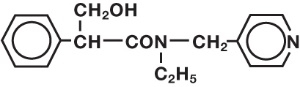
Tropicamide Ophthalmic Solution, USP is an anticholinergic prepared as a sterile topical ophthalmic solution in two strengths. The active ingredient is represented by the chemical structure: Established name: Tropicamide ophthalmic solution Chemical name: Benzeneacetamide, N -ethyl-α-(hydroxymethyl)- N -(4-pyridinylmethyl)-. Each mL contains: Active: tropicamide 1%. Preservative: benzalkonium chloride 0.01%. Inactives: sodium chloride, edetate disodium, hydrochloric acid and/or sodium hydroxide (to adjust pH), purified water. pH 4.0 - 5.8.
Medication Information
Warnings
For topical ophthalmic use only. Not for injection.
This preparation may cause CNS disturbances which may be dangerous in pediatric patients. The possibility of psychotic reactions and behavioral disturbances due to hypersensitivity to anticholinergic drugs should be considered.
Mydriatics may produce a transient elevation of intraocular pressure.
Remove contact lenses before using.
Indications and Usage
For mydriasis and cycloplegia for diagnostic procedures.
Dosage and Administration
For refraction, instill one or two drops of 1% solution in the eye(s), repeated in five minutes. If patient is not seen within 20 to 30 minutes, an additional drop may be instilled to prolong mydriatic effect. For examination of fundus, instill one or two drops of 0.5% solution 15 or 20 minutes prior to examination. Individuals with heavily pigmented irides may require higher strength or more doses. Mydriasis will reverse spontaneously with time, typically in 4 to 8 hours. However, in some cases, complete recovery may take up to 24 hours.
To report SUSPECTED ADVERSE REACTIONS, contact Sandoz Inc. at 1-800-525-8747 or FDA at 1-800-FDA-1088 or www.fda.gov/medwatch.
Contraindications
Contraindicated in persons showing hypersensitivity to any component of this preparation.
Adverse Reactions
Ocular: Transient stinging, blurred vision, photophobia and superficial punctate keratitis have been reported with the use of tropicamide. Increased intraocular pressure has been reported following the use of mydriatics.
Non-Ocular: Dryness of the mouth, tachycardia, headache, allergic reactions, nausea, vomiting, pallor, central nervous system disturbances and muscle rigidity have been reported with the use of tropicamide. Psychotic reactions, behavioral disturbances, and vasomotor or cardio-respiratory collapse in children have been reported with the use of anticholinergic drugs.
How Supplied
3mL and 15mL in plastic dispensers.
1% - 3 mL: NDC 61314-355-01
1% - 15 mL: NDC 61314-355-02
STORAGE: Store at 8° to 27°C (46° to 80°F). Do not refrigerate or store at high temperatures. Keep container tightly closed.
Revised: 11-2021
Description
Tropicamide Ophthalmic Solution, USP is an anticholinergic prepared as a sterile topical ophthalmic solution in two strengths. The active ingredient is represented by the chemical structure: Established name: Tropicamide ophthalmic solution Chemical name: Benzeneacetamide, N -ethyl-α-(hydroxymethyl)- N -(4-pyridinylmethyl)-. Each mL contains: Active: tropicamide 1%. Preservative: benzalkonium chloride 0.01%. Inactives: sodium chloride, edetate disodium, hydrochloric acid and/or sodium hydroxide (to adjust pH), purified water. pH 4.0 - 5.8.
Section 42229-5
300051858-1121
SANDOZ
Manufactured by
Alcon Laboratories, Inc.
Fort Worth, Texas 76134 for
Sandoz Inc.
Princeton, NJ 08540
Rx Only
Tropicamide Ophthalmic Solution, USP is an anticholinergic prepared as a sterile topical ophthalmic solution in two strengths. The active ingredient is represented by the chemical structure:
Established name: Tropicamide ophthalmic solution
Chemical name: Benzeneacetamide, N-ethyl-α-(hydroxymethyl)-N-(4-pyridinylmethyl)-.
Each mL contains: Active: tropicamide 1%. Preservative: benzalkonium chloride 0.01%. Inactives: sodium chloride, edetate disodium, hydrochloric acid and/or sodium hydroxide (to adjust pH), purified water. pH 4.0 - 5.8.
Precautions
General: The lacrimal sac should be compressed by digital pressure for two to three minutes after instillation to reduce excessive systemic absorption.
Information for Patients: Do not touch dropper tip to any surface, as this may contaminate the solution. Patient should be advised not to drive or engage in potentially hazardous activities while pupils are dilated. Patient may experience sensitivity to light and should protect eyes in bright illumination during dilation. Parents should be warned not to get this preparation in their child's mouth and to wash their own hands and the child's hands following administration.
Drug Interactions: Tropicamide may interfere with the antihypertensive action of carbachol, pilocarpine, or ophthalmic cholinesterase inhibitors.
Carcinogenesis, Mutagenesis, Impairment of Fertility: There have been no long-term studies done using tropicamide in animals to evaluate carcinogenic potential.
Pregnancy: Pregnancy Category C. Animal reproduction studies have not been conducted with tropicamide. It is also not known whether tropicamide can cause fetal harm when administered to a pregnant woman or can affect reproduction capacity. Tropicamide should be given to a pregnant woman only if clearly needed.
Nursing Mothers: It is not known whether this drug is excreted in human milk. Because many drugs are excreted in human milk, caution should be exercised when tropicamide is administered to a nursing woman.
Pediatric Use: Tropicamide may rarely cause CNS disturbances which may be dangerous in pediatric patients. Psychotic reactions, behavioral disturbances, and vasomotor or cardiorespiratory collapse in children have been reported with the use of anticholinergic drugs (See WARNINGS). Keep this and all medications out of the reach of children.
Geriatric Use: No overall differences in safety or effectiveness have been observed between elderly and younger patients.
Clinical Pharmacology
This anticholinergic preparation blocks the responses of the sphincter muscle of the iris and the ciliary muscle to cholinergic stimulation, dilating the pupil (mydriasis). The stronger preparation (1%) also paralyzes accommodation. This preparation acts in 15-30 minutes, and the duration of activity is approximately 3-8 hours. Complete recovery from mydriasis in some individuals may require 24 hours. The weaker strength may be useful in producing mydriasis with only slight cycloplegia. Heavily pigmented irides may require more doses than lightly pigmented irides.
Package/label Principal Display Panel
NDC 61314-355-01
Tropicamide
Ophthalmic
Solution, USP
1%
Rx only
STERILE
3 mL
SANDOZ A Novartis Division
Side Panel:
A Sterile Anticholinergic Agent
Usual Dosage: One or two drops topically in the eye(s). Read enclosed insert.
Precaution: Do not touch dropper tip to any surface, as this may contaminate the solution.
Storage: Store at 8° to 27°C (46° to 80°F). Do not refrigerate or store at high temperature. Keep container tightly closed.
Ingredients: Each mL contains: Active: tropicamide 1%. Preservative: benzalkonium chloride 0.01%. Inactives: sodium chloride, edetate disodium, hydrochloric acid and/or sodium hydroxide (to adjust pH), purified water. pH 4.0 - 5.8.
Keep out of the reach of children.
Manufactured by Alcon Laboratories, Inc.
Fort Worth, Texas 76134 for Sandoz Inc., Princeton, NJ 08540
Product of Japan
9017187-0620
Rev. 06/2020
Structured Label Content
Warnings (WARNINGS)
For topical ophthalmic use only. Not for injection.
This preparation may cause CNS disturbances which may be dangerous in pediatric patients. The possibility of psychotic reactions and behavioral disturbances due to hypersensitivity to anticholinergic drugs should be considered.
Mydriatics may produce a transient elevation of intraocular pressure.
Remove contact lenses before using.
Indications and Usage (INDICATIONS AND USAGE)
For mydriasis and cycloplegia for diagnostic procedures.
Dosage and Administration (DOSAGE AND ADMINISTRATION)
For refraction, instill one or two drops of 1% solution in the eye(s), repeated in five minutes. If patient is not seen within 20 to 30 minutes, an additional drop may be instilled to prolong mydriatic effect. For examination of fundus, instill one or two drops of 0.5% solution 15 or 20 minutes prior to examination. Individuals with heavily pigmented irides may require higher strength or more doses. Mydriasis will reverse spontaneously with time, typically in 4 to 8 hours. However, in some cases, complete recovery may take up to 24 hours.
To report SUSPECTED ADVERSE REACTIONS, contact Sandoz Inc. at 1-800-525-8747 or FDA at 1-800-FDA-1088 or www.fda.gov/medwatch.
Contraindications (CONTRAINDICATIONS)
Contraindicated in persons showing hypersensitivity to any component of this preparation.
Adverse Reactions (ADVERSE REACTIONS)
Ocular: Transient stinging, blurred vision, photophobia and superficial punctate keratitis have been reported with the use of tropicamide. Increased intraocular pressure has been reported following the use of mydriatics.
Non-Ocular: Dryness of the mouth, tachycardia, headache, allergic reactions, nausea, vomiting, pallor, central nervous system disturbances and muscle rigidity have been reported with the use of tropicamide. Psychotic reactions, behavioral disturbances, and vasomotor or cardio-respiratory collapse in children have been reported with the use of anticholinergic drugs.
How Supplied (HOW SUPPLIED)
3mL and 15mL in plastic dispensers.
1% - 3 mL: NDC 61314-355-01
1% - 15 mL: NDC 61314-355-02
STORAGE: Store at 8° to 27°C (46° to 80°F). Do not refrigerate or store at high temperatures. Keep container tightly closed.
Revised: 11-2021
Section 42229-5 (42229-5)
300051858-1121
SANDOZ
Manufactured by
Alcon Laboratories, Inc.
Fort Worth, Texas 76134 for
Sandoz Inc.
Princeton, NJ 08540
Rx Only
Tropicamide Ophthalmic Solution, USP is an anticholinergic prepared as a sterile topical ophthalmic solution in two strengths. The active ingredient is represented by the chemical structure:
Established name: Tropicamide ophthalmic solution
Chemical name: Benzeneacetamide, N-ethyl-α-(hydroxymethyl)-N-(4-pyridinylmethyl)-.
Each mL contains: Active: tropicamide 1%. Preservative: benzalkonium chloride 0.01%. Inactives: sodium chloride, edetate disodium, hydrochloric acid and/or sodium hydroxide (to adjust pH), purified water. pH 4.0 - 5.8.
Precautions (PRECAUTIONS)
General: The lacrimal sac should be compressed by digital pressure for two to three minutes after instillation to reduce excessive systemic absorption.
Information for Patients: Do not touch dropper tip to any surface, as this may contaminate the solution. Patient should be advised not to drive or engage in potentially hazardous activities while pupils are dilated. Patient may experience sensitivity to light and should protect eyes in bright illumination during dilation. Parents should be warned not to get this preparation in their child's mouth and to wash their own hands and the child's hands following administration.
Drug Interactions: Tropicamide may interfere with the antihypertensive action of carbachol, pilocarpine, or ophthalmic cholinesterase inhibitors.
Carcinogenesis, Mutagenesis, Impairment of Fertility: There have been no long-term studies done using tropicamide in animals to evaluate carcinogenic potential.
Pregnancy: Pregnancy Category C. Animal reproduction studies have not been conducted with tropicamide. It is also not known whether tropicamide can cause fetal harm when administered to a pregnant woman or can affect reproduction capacity. Tropicamide should be given to a pregnant woman only if clearly needed.
Nursing Mothers: It is not known whether this drug is excreted in human milk. Because many drugs are excreted in human milk, caution should be exercised when tropicamide is administered to a nursing woman.
Pediatric Use: Tropicamide may rarely cause CNS disturbances which may be dangerous in pediatric patients. Psychotic reactions, behavioral disturbances, and vasomotor or cardiorespiratory collapse in children have been reported with the use of anticholinergic drugs (See WARNINGS). Keep this and all medications out of the reach of children.
Geriatric Use: No overall differences in safety or effectiveness have been observed between elderly and younger patients.
Clinical Pharmacology (CLINICAL PHARMACOLOGY)
This anticholinergic preparation blocks the responses of the sphincter muscle of the iris and the ciliary muscle to cholinergic stimulation, dilating the pupil (mydriasis). The stronger preparation (1%) also paralyzes accommodation. This preparation acts in 15-30 minutes, and the duration of activity is approximately 3-8 hours. Complete recovery from mydriasis in some individuals may require 24 hours. The weaker strength may be useful in producing mydriasis with only slight cycloplegia. Heavily pigmented irides may require more doses than lightly pigmented irides.
Package/label Principal Display Panel (PACKAGE/LABEL PRINCIPAL DISPLAY PANEL)
NDC 61314-355-01
Tropicamide
Ophthalmic
Solution, USP
1%
Rx only
STERILE
3 mL
SANDOZ A Novartis Division
Side Panel:
A Sterile Anticholinergic Agent
Usual Dosage: One or two drops topically in the eye(s). Read enclosed insert.
Precaution: Do not touch dropper tip to any surface, as this may contaminate the solution.
Storage: Store at 8° to 27°C (46° to 80°F). Do not refrigerate or store at high temperature. Keep container tightly closed.
Ingredients: Each mL contains: Active: tropicamide 1%. Preservative: benzalkonium chloride 0.01%. Inactives: sodium chloride, edetate disodium, hydrochloric acid and/or sodium hydroxide (to adjust pH), purified water. pH 4.0 - 5.8.
Keep out of the reach of children.
Manufactured by Alcon Laboratories, Inc.
Fort Worth, Texas 76134 for Sandoz Inc., Princeton, NJ 08540
Product of Japan
9017187-0620
Rev. 06/2020
Advanced Ingredient Data
Raw Label Data
All Sections (JSON)
Additional Information
Back to search View SPL set listing Open on DailyMed ↗
Source: dailymed · Ingested: 2026-02-15T11:37:03.104769 · Updated: 2026-03-14T21:48:32.066159