Bkemv
002f9748-b0e8-4b6e-a38b-56930a839491
34391-3
HUMAN PRESCRIPTION DRUG LABEL
Drug Facts
Composition & Product
Identifiers & Packaging
Indications and Usage
BKEMV is a complement inhibitor indicated for: The treatment of patients with paroxysmal nocturnal hemoglobinuria (PNH) to reduce hemolysis. ( 1.1 ) The treatment of patients with atypical hemolytic uremic syndrome (aHUS) to inhibit complement-mediated thrombotic microangiopathy. ( 1.2 ) Limitation of Use BKEMV is not indicated for the treatment of patients with Shiga toxin E. coli related hemolytic uremic syndrome (STEC-HUS). The treatment of generalized myasthenia gravis (gMG) in adult patients who are anti-acetylcholine receptor (AChR) antibody positive. ( 1.3 )
Dosage and Administration
For intravenous infusion only; recommended dosage for: PNH: ( 2.2 ) aHUS and gMG in adults: ( 2.3 ) aHUS in pediatric patients: ( 2.4 )
Contraindications
BKEMV is contraindicated for initiation in patients with unresolved serious Neisseria meningitidis infection [ see Warnings and Precautions (5.1) ].
Warnings and Precautions
Use caution when administering BKEMV to patients with any other systemic infection. ( 5.3 ) Infusion-Related Reactions: Monitor patients during infusion, interrupt for reactions, and institute appropriate supportive measures. ( 5.6 )
Adverse Reactions
The following serious adverse reactions are discussed in greater detail in other sections of the labeling: Serious Meningococcal Infections [ see Warnings and Precautions (5.1) ] Other Infections [ see Warnings and Precautions (5.3) ] Monitoring Disease Manifestations after BKEMV Discontinuation [ see Warnings and Precautions (5.4) ] Thrombosis Prevention and Management [ see Warnings and Precautions (5.5) ] Infusion-Related Reactions [ see Warnings and Precautions (5.6) ]
How Supplied
BKEMV (eculizumab-aeeb) injection is a sterile, preservative-free, clear to opalescent, colorless to slightly yellow solution supplied as one 300 mg/30 mL (10 mg/mL) single-dose vial per carton (NDC 55513-180-01).
Storage and Handling
BKEMV (eculizumab-aeeb) injection is a sterile, preservative-free, clear to opalescent, colorless to slightly yellow solution supplied as one 300 mg/30 mL (10 mg/mL) single-dose vial per carton (NDC 55513-180-01).
Description
Eculizumab products, complement inhibitors, increase the risk of serious infections caused by Neisseria meningitidis [see Warnings and Precautions (5.1) ] . Life-threatening and fatal meningococcal infections have occurred in patients treated with complement inhibitors. These infections may become rapidly life-threatening or fatal if not recognized and treated early. Complete or update vaccination for meningococcal bacteria (for serogroups A, C, W, Y, and B) at least 2 weeks prior to the first dose of BKEMV, unless the risks of delaying therapy with BKEMV outweigh the risk of developing a serious infection. Comply with the most current Advisory Committee on Immunization Practices (ACIP) recommendations for vaccinations against meningococcal bacteria in patients receiving a complement inhibitor. See Warnings and Precautions (5.1) for additional guidance on the management of the risk of serious infections caused by meningococcal bacteria. Patients receiving eculizumab products are at increased risk for invasive disease caused by Neisseria meningitidis , even if they develop antibodies following vaccination. Monitor patients for early signs and symptoms of serious meningococcal infections and evaluate immediately if infection is suspected. Because of the risk of serious meningococcal infections, BKEMV is available only through a restricted program under a Risk Evaluation and Mitigation Strategy (REMS) called BKEMV REMS [ see Warnings and Precautions (5.2) ].
Medication Information
Warnings and Precautions
Use caution when administering BKEMV to patients with any other systemic infection. ( 5.3 ) Infusion-Related Reactions: Monitor patients during infusion, interrupt for reactions, and institute appropriate supportive measures. ( 5.6 )
Indications and Usage
BKEMV is a complement inhibitor indicated for: The treatment of patients with paroxysmal nocturnal hemoglobinuria (PNH) to reduce hemolysis. ( 1.1 ) The treatment of patients with atypical hemolytic uremic syndrome (aHUS) to inhibit complement-mediated thrombotic microangiopathy. ( 1.2 ) Limitation of Use BKEMV is not indicated for the treatment of patients with Shiga toxin E. coli related hemolytic uremic syndrome (STEC-HUS). The treatment of generalized myasthenia gravis (gMG) in adult patients who are anti-acetylcholine receptor (AChR) antibody positive. ( 1.3 )
Dosage and Administration
For intravenous infusion only; recommended dosage for: PNH: ( 2.2 ) aHUS and gMG in adults: ( 2.3 ) aHUS in pediatric patients: ( 2.4 )
Contraindications
BKEMV is contraindicated for initiation in patients with unresolved serious Neisseria meningitidis infection [ see Warnings and Precautions (5.1) ].
Adverse Reactions
The following serious adverse reactions are discussed in greater detail in other sections of the labeling: Serious Meningococcal Infections [ see Warnings and Precautions (5.1) ] Other Infections [ see Warnings and Precautions (5.3) ] Monitoring Disease Manifestations after BKEMV Discontinuation [ see Warnings and Precautions (5.4) ] Thrombosis Prevention and Management [ see Warnings and Precautions (5.5) ] Infusion-Related Reactions [ see Warnings and Precautions (5.6) ]
Storage and Handling
BKEMV (eculizumab-aeeb) injection is a sterile, preservative-free, clear to opalescent, colorless to slightly yellow solution supplied as one 300 mg/30 mL (10 mg/mL) single-dose vial per carton (NDC 55513-180-01).
How Supplied
BKEMV (eculizumab-aeeb) injection is a sterile, preservative-free, clear to opalescent, colorless to slightly yellow solution supplied as one 300 mg/30 mL (10 mg/mL) single-dose vial per carton (NDC 55513-180-01).
Description
Eculizumab products, complement inhibitors, increase the risk of serious infections caused by Neisseria meningitidis [see Warnings and Precautions (5.1) ] . Life-threatening and fatal meningococcal infections have occurred in patients treated with complement inhibitors. These infections may become rapidly life-threatening or fatal if not recognized and treated early. Complete or update vaccination for meningococcal bacteria (for serogroups A, C, W, Y, and B) at least 2 weeks prior to the first dose of BKEMV, unless the risks of delaying therapy with BKEMV outweigh the risk of developing a serious infection. Comply with the most current Advisory Committee on Immunization Practices (ACIP) recommendations for vaccinations against meningococcal bacteria in patients receiving a complement inhibitor. See Warnings and Precautions (5.1) for additional guidance on the management of the risk of serious infections caused by meningococcal bacteria. Patients receiving eculizumab products are at increased risk for invasive disease caused by Neisseria meningitidis , even if they develop antibodies following vaccination. Monitor patients for early signs and symptoms of serious meningococcal infections and evaluate immediately if infection is suspected. Because of the risk of serious meningococcal infections, BKEMV is available only through a restricted program under a Risk Evaluation and Mitigation Strategy (REMS) called BKEMV REMS [ see Warnings and Precautions (5.2) ].
Section 42229-5
Limitation of Use
BKEMV is not indicated for the treatment of patients with Shiga toxin E. coli related hemolytic uremic syndrome (STEC-HUS).
Section 42231-1
| This Medication Guide has been approved by the U.S. Food and Drug Administration. | Revised 11/2025 | |||||
|
MEDICATION GUIDE
BKEMV® (bee-KEM-vee) (eculizumab-aeeb) injection, for intravenous use |
||||||
|
What is the most important information I should know about BKEMV? |
||||||
|
||||||
|
|
|||||
| Your healthcare provider will give you a Patient Safety Card about the risk of serious meningococcal infection. Carry it with you at all times during treatment and for 3 months after your last dose of BKEMV. Your risk of meningococcal infection may continue for several weeks after your last dose of BKEMV. It is important to show this card to any healthcare provider who treats you. This will help them diagnose and treat you quickly. | ||||||
| BKEMV is only available through a program called the BKEMV Risk Evaluation and Mitigation Strategy (REMS). Before you can receive BKEMV, your healthcare provider must: | ||||||
|
||||||
BKEMV may also increase the risk of other types of serious infections caused by encapsulated bacteria, including Streptococcus pneumoniae, Haemophilus influenzae, and Neisseria gonorrhoeae
.
|
||||||
|
What is BKEMV?
BKEMV is a prescription medicine used to treat: |
||||||
|
||||||
|
Who should not receive BKEMV?
Do not receive BKEMV if you have a serious meningococcal infection when you are starting BKEMV treatment. |
||||||
Before you receive BKEMV, tell your healthcare provider about all of your medical conditions, including if you:
Know the medications you take and the vaccines you receive. Keep a list of them to show your healthcare provider and pharmacist when you get a new medicine. |
||||||
| How should I receive BKEMV? | ||||||
|
||||||
|
|
|
||||
|
||||||
|
|
|
|
|||
|
What are the possible side effects of BKEMV? BKEMV can cause serious side effects including: |
||||||
|
||||||
|
|
|||||
| If you have an infusion-related reaction to BKEMV, your healthcare provider may need to infuse BKEMV more slowly or stop BKEMV. See "How should I receive BKEMV?" | ||||||
| The most common side effects in people with PNH treated with BKEMV include: | ||||||
|
|
|||||
| The most common side effects in people with aHUS treated with BKEMV include: | ||||||
|
|
|
|
|||
The most common side effects in people with gMG treated with BKEMV include:
|
||||||
| Tell your healthcare provider about any side effect that bothers you or that does not go away. These are not all the possible side effects of BKEMV. For more information, ask your doctor or pharmacist. Call your doctor for medical advice about side effects. You may report side effects to FDA at 1-800-FDA-1088. |
||||||
|
General information about the safe and effective use of BKEMV.
Medicines are sometimes prescribed for purposes other than those listed in a Medication Guide. You can ask your pharmacist or healthcare provider for information about BKEMV that is written for health professionals. |
||||||
|
What are the ingredients in BKEMV?
Active ingredient: eculizumab-aeeb Inactive ingredients: sorbitol (E420), acetic acid, polysorbate 80 (vegetable origin), edetate disodium (EDTA), sodium hydroxide may be added to adjust pH, and Water for Injection, USP. |
||||||
| BKEMV® (eculizumab-aeeb) Manufactured by: Amgen Inc. One Amgen Center Drive Thousand Oaks, CA 91320-1799 U.S.A. U.S. License Number 1080 © 2024 – 2025 Amgen Inc. All rights reserved. 1xxxxxx v3 |
Section 44425-7
Store BKEMV vials refrigerated at 2°C to 8°C (36°F to 46°F) in the original carton to protect from light until time of use. BKEMV vials may be stored in the original carton at controlled room temperature [not more than 25°C (77°F)] for only a single period up to 7 days. Do not use beyond the expiration date stamped on the carton. Refer to Dosage and Administration (2) for information on the stability and storage of diluted solutions of BKEMV.
DO NOT FREEZE. DO NOT SHAKE.
11 Description
Eculizumab-aeeb, a complement inhibitor, is a recombinant humanized monoclonal IgG2/4κ antibody produced by Chinese Hamster Ovary (CHO) cell culture and purified by standard bioprocess technology. Eculizumab-aeeb contains human constant regions from human IgG2 sequences and human IgG4 sequences and murine complementarity-determining regions grafted onto the human framework light- and heavy-chain variable regions. Eculizumab-aeeb is composed of two 448 amino acid heavy chains and two 214 amino acid light chains and has a molecular weight of approximately 148 kDa.
BKEMV (eculizumab-aeeb) injection is a sterile, clear to opalescent, colorless to slightly yellow, preservative-free 10 mg/mL solution for intravenous infusion and is supplied in 30 mL single-dose vials. The product is formulated at pH 5.2 and each 30 mL vial contains 300 mg of eculizumab-aeeb, sorbitol (E420) (1500 mg), acetic acid (18.0 mg), polysorbate 80 (3.0 mg) (vegetable origin), edetate disodium (EDTA) (0.6 mg), sodium hydroxide may be added to adjust pH, and Water for Injection, USP.
5.2 Bkemv Rems
BKEMV is available only through a restricted program under a REMS called BKEMV REMS, because of the risk of serious meningococcal infections [see Warnings and Precautions (5.1)].
Notable requirements of the BKEMV REMS include the following:
- Prescribers must enroll in the REMS.
- Prescribers must counsel patients about the risk of serious meningococcal infection.
- Prescribers must provide the patients with the REMS educational materials.
- Prescribers must assess patient vaccination status for meningococcal vaccines (against serogroups A, C, W, Y and B) and vaccinate if needed according to current ACIP recommendations 2 weeks prior to the first dose of BKEMV.
- Prescribers must provide a prescription for antibacterial drug prophylaxis if treatment must be started urgently and the patient is not up to date with meningococcal vaccines according to current ACIP recommendations at least two weeks prior to the first dose of BKEMV.
- Healthcare settings and pharmacies that dispense BKEMV must be certified in the REMS and must verify prescribers are certified.
- Patients must receive counseling from the prescriber about the need to receive meningococcal vaccines per ACIP recommendations, the need to take antibiotics as directed by the prescriber, and the signs and symptoms of meningococcal infection.
- Patients must be instructed to carry the Patient Safety Card with them at all times during and for 3 months following treatment with BKEMV.
Further information is available at www.BKEMVREMS.com or 1-866-718-6927.
2.6 Preparation
Dilute BKEMV to a final admixture concentration of 5 mg/mL using the following steps:
- Withdraw the required amount of BKEMV from the vial into a sterile syringe.
- Transfer the recommended dose to an infusion bag.
- Dilute BKEMV to a final concentration of 5 mg/mL by adding the appropriate amount (equal volume of diluent to drug volume) of 0.9% Sodium Chloride Injection, USP; 0.45% Sodium Chloride Injection, USP; 5% Dextrose in Water Injection, USP; or Ringer's Injection, USP to the infusion bag.
The final admixed BKEMV 5 mg/mL infusion volume is 60 mL for 300 mg doses, 120 mL for 600 mg doses, 180 mL for 900 mg doses or 240 mL for 1,200 mg doses (Table 4).
| BKEMV Dose | Diluent Volume | Final Volume |
|---|---|---|
| 300 mg | 30 mL | 60 mL |
| 600 mg | 60 mL | 120 mL |
| 900 mg | 90 mL | 180 mL |
| 1,200 mg | 120 mL | 240 mL |
Gently invert the infusion bag containing the diluted BKEMV solution to ensure thorough mixing of the product and diluent. Discard any unused portion left in a vial, as the product contains no preservatives.
Prior to administration, the admixture should be allowed to adjust to room temperature [18°C to 25°C (64°F to 77°F)]. The admixture must not be heated in a microwave or with any heat source other than ambient air temperature.
Parenteral drug products should be inspected visually for particulate matter and discoloration prior to administration, whenever solution and container permit.
8.5 Geriatric Use
Fifty-one patients 65 years of age or older (15 with PNH, 4 with aHUS, 26 with gMG, and 6 with another indication) were treated with eculizumab in clinical trials in the approved indications. Although there were no apparent age-related differences observed in these studies, the number of patients aged 65 and over is not sufficient to determine whether they respond differently from younger patients.
2.7 Administration
Only administer as an intravenous infusion.
Do not administer as an intravenous push or bolus injection.
Administer the BKEMV admixture by intravenous infusion over 35 minutes in adults and 1 to 4 hours in pediatric patients via gravity feed, a syringe-type pump, or an infusion pump. Admixed solutions of BKEMV are stable for 64 hours at 2°C to 8°C (36°F to 46°F) or 24 hours at room temperature.
If an adverse reaction occurs during the administration of BKEMV, the infusion may be slowed or stopped at the discretion of the physician. If the infusion is slowed, the total infusion time should not exceed two hours in adults. Monitor the patient for at least one hour following completion of the infusion for signs or symptoms of an infusion-related reaction.
12.6 Immunogenicity
The observed incidence of anti-drug antibodies is highly dependent on the sensitivity and specificity of the assay. Differences in assay methods preclude meaningful comparisons of the incidence of anti-drug antibodies in the studies described below with the incidence of anti-drug antibodies in other studies, including those of eculizumab or of other eculizumab products.
The immunogenicity of eculizumab has been evaluated using two different immunoassays for the detection of anti-eculizumab antibodies: a direct enzyme-linked immunosorbent assay (ELISA) using the Fab fragment of eculizumab as target was used for the PNH indication; and an electro-chemiluminescence (ECL) bridging assay using the eculizumab whole molecule as target was used for the aHUS, and gMG indications, as well as for additional patients with PNH.
In the PNH population, antibodies to eculizumab were detected in 3/196 (2%) patients using the ELISA assay and in 5/161 (3%) patients using the ECL assay during the entire treatment period. In the aHUS population, antibodies to eculizumab were detected in 3/100 (3%) patients using the ECL assay during the entire treatment period. In the gMG population, none of the 62 adult patients had antibodies to eculizumab detected following the 26-week active treatment.
An ECL based neutralizing assay with a low sensitivity of 2 mcg/mL was performed to detect neutralizing antibodies for the 5 patients with PNH and the 3 patients with aHUS, with anti-eculizumab antibody positive samples using the ECL assay. Two of 161 patients with PNH (1.2%) and 1 of 100 patients with aHUS (1%) had low positive values for neutralizing antibodies.
No apparent correlation of antibody development to clinical response was observed
4 Contraindications
BKEMV is contraindicated for initiation in patients with unresolved serious Neisseria meningitidis infection [see Warnings and Precautions (5.1) ].
6 Adverse Reactions
The following serious adverse reactions are discussed in greater detail in other sections of the labeling:
- Serious Meningococcal Infections [see Warnings and Precautions (5.1) ]
- Other Infections [see Warnings and Precautions (5.3) ]
- Monitoring Disease Manifestations after BKEMV Discontinuation [see Warnings and Precautions (5.4) ]
- Thrombosis Prevention and Management [see Warnings and Precautions (5.5) ]
- Infusion-Related Reactions [see Warnings and Precautions (5.6) ]
5.3 Other Infections
Serious infections with Neisseria species (other than Neisseria meningitidis), including disseminated gonococcal infections, have been reported.
Eculizumab products block terminal complement activation; therefore, patients may have increased susceptibility to infections, especially with encapsulated bacteria, such as infections with Neisseria meningitidis but also Streptococcus pneumoniae, Haemophilus influenzae, and to a lesser extent, Neisseria gonorrhoeae. Additionally, Aspergillus infections have occurred in immunocompromised and neutropenic patients. Children treated with eculizumab products may be at increased risk of developing serious infections due to Streptococcus pneumoniae and Haemophilus influenzae type b (Hib). Administer vaccinations for the prevention of Streptococcus pneumoniae and Haemophilus influenzae type b (Hib) infections according to ACIP recommendations. Patients receiving eculizumab products are at increased risk for infections due to these organisms, even if they develop antibodies following vaccination.
12.2 Pharmacodynamics
In the placebo-controlled clinical study (PNH Study 1), eculizumab when administered as recommended reduced serum LDH levels from 2200 ± 1034 U/L (mean ± SD) at baseline to 700 ± 388 U/L by week one and maintained the effect through the end of the study at week 26 (327 ± 433 U/L) in patients with PNH. In the single arm clinical study (PNH Study 2), the effect was maintained through week 52 [see Clinical Studies (14) ].
In patients with PNH, aHUS, and gMG, free C5 concentrations of <0.5 mcg/mL was correlated with complete blockade of terminal complement activity.
12.3 Pharmacokinetics
Following intravenous maintenance doses of 900 mg once every 2 weeks in patients with PNH, the week 26 observed mean ± SD serum eculizumab maximum concentration (Cmax) was 194 ± 76 mcg/mL and the trough concentration (Ctrough) was 97 ± 60 mcg/mL. Following intravenous maintenance doses of 1,200 mg once every 2 weeks in patients with aHUS, the week 26 observed mean ± SD Ctrough was 242 ± 101 mcg/mL. Following intravenous maintenance doses of 1,200 mg once every 2 weeks in adult patients with gMG, the week 26 observed mean ± SD Cmax was 783 ± 288 mcg/mL and the Ctrough was 341 ± 172 mcg/mL.
Steady state was achieved 4 weeks after starting eculizumab treatment, with accumulation ratio of approximately 2-fold in all studied indications. Population pharmacokinetic analyses showed that eculizumab pharmacokinetics were dose-linear and time-independent over the 600 mg to 1,200 mg dose range, with inter-individual variability of 21% to 38%.
1 Indications and Usage
BKEMV is a complement inhibitor indicated for:
- The treatment of patients with paroxysmal nocturnal hemoglobinuria (PNH) to reduce hemolysis. (1.1)
- The treatment of patients with atypical hemolytic uremic syndrome (aHUS) to inhibit complement-mediated thrombotic microangiopathy. (1.2)
Limitation of Use
BKEMV is not indicated for the treatment of patients with Shiga toxin E. coli related hemolytic uremic syndrome (STEC-HUS). - The treatment of generalized myasthenia gravis (gMG) in adult patients who are anti-acetylcholine receptor (AChR) antibody positive. (1.3)
12.1 Mechanism of Action
Eculizumab-aeeb, the active ingredient in BKEMV, is a monoclonal antibody that specifically binds to the complement protein C5 with high affinity, thereby inhibiting its cleavage to C5a and C5b and preventing the generation of the terminal complement complex C5b-9.
Eculizumab products inhibit terminal complement-mediated intravascular hemolysis in PNH patients and complement-mediated thrombotic microangiopathy (TMA) in patients with aHUS.
The precise mechanism by which eculizumab exerts its therapeutic effect in gMG patients is unknown, but is presumed to involve reduction of terminal complement complex C5b-9 deposition at the neuromuscular junction.
5 Warnings and Precautions
2 Dosage and Administration
3 Dosage Forms and Strengths
Injection: 300 mg/30 mL (10 mg/mL) as a clear to opalescent and colorless to slightly yellow solution in a single-dose vial.
6.2 Postmarketing Experience
The following adverse reactions have been identified during post-approval use of eculizumab products. Because these reactions are reported voluntarily from a population of uncertain size, it is not always possible to reliably estimate their frequency or establish a causal relationship to eculizumab products exposure.
Adverse Reactions from Postmarketing Spontaneous Reports
- Fatal or serious infections: Neisseria gonorrhoeae, Neisseria meningitidis, Neisseria sicca/subflava, Neisseria spp unspecified.
- Cases of cholestatic or mixed pattern liver injury with increased serum liver enzymes and bilirubin levels have been reported in adult and pediatric patients with aHUS who were treated with eculizumab products. These events occurred within 3 to 27 days after starting treatment. The median time to resolution (or return to baseline) was approximately 3 weeks.
6.1 Clinical Trial Experience
Because clinical trials are conducted under widely varying conditions, adverse reaction rates observed in the clinical trials of a drug cannot be directly compared to rates in the clinical trials of another drug and may not reflect the rates observed in practice.
Meningococcal infections are the most important adverse reactions experienced by patients receiving eculizumab. In PNH clinical studies, two patients experienced meningococcal sepsis. Both patients had previously received a meningococcal vaccine. In clinical studies among patients without PNH, meningococcal meningitis occurred in one unvaccinated patient. Meningococcal sepsis occurred in one previously vaccinated patient enrolled in the retrospective aHUS study during the post-study follow-up period [see Warnings and Precautions (5.1) ].
5.6 Infusion Related Reactions
Administration of eculizumab products may result in infusion-related reactions, including anaphylaxis or other hypersensitivity reactions. In clinical trials, no patients experienced an infusion-related reaction which required discontinuation of eculizumab. Interrupt BKEMV infusion and institute appropriate supportive measures if signs of cardiovascular instability or respiratory compromise occur.
17 Patient Counseling Information
Advise the patients and/or caregivers to read the FDA-approved patient labeling (Medication Guide).
7.2 Neonatal Fc Receptor Blockers
Concomitant use of eculizumab products with neonatal Fc receptor (FcRn) blockers may lower systemic exposures and reduce effectiveness of eculizumab products. Closely monitor for reduced effectiveness of BKEMV.
16 How Supplied/storage and Handling
BKEMV (eculizumab-aeeb) injection is a sterile, preservative-free, clear to opalescent, colorless to slightly yellow solution supplied as one 300 mg/30 mL (10 mg/mL) single-dose vial per carton (NDC 55513-180-01).
5.1 Serious Meningococcal Infections
Eculizumab products, complement inhibitors, increase a patient's susceptibility to serious, life-threatening, or fatal infections caused by meningococcal bacteria (septicemia and/or meningitis) in any serogroup, including non-groupable strains. Life-threatening and fatal meningococcal infections have occurred in both vaccinated and unvaccinated patients treated with complement inhibitors. The initiation of BKEMV treatment is contraindicated in patients with unresolved serious Neisseria meningitidis infection.
Complete or update meningococcal vaccination (for serogroups A, C, W, Y and B) at least 2 weeks prior to administration of the first dose of BKEMV, according to current ACIP recommendations for patients receiving a complement inhibitor. Revaccinate patients in accordance with ACIP recommendations considering the duration of therapy with BKEMV. Note that ACIP recommends an administration schedule in patients receiving complement inhibitors that differs from the administration schedule in the vaccine prescribing information.
If urgent BKEMV therapy is indicated in a patient who is not up to date with meningococcal vaccines according to ACIP recommendations, provide the patient with antibacterial drug prophylaxis and administer meningococcal vaccines as soon as possible. Various durations and regimens of antibacterial drug prophylaxis have been considered, but the optimal durations and drug regimens for prophylaxis and their efficacy have not been studied in unvaccinated or vaccinated patients receiving complement inhibitors, including eculizumab products. The benefits and risks of treatment with BKEMV, as well as the benefits and risks of antibacterial drug prophylaxis in unvaccinated or vaccinated patients, must be considered against the known risks for serious infections caused by Neisseria meningitidis.
Vaccination does not eliminate the risk of serious meningococcal infections, despite development of antibodies following vaccination.
Closely monitor patients for early signs and symptoms of meningococcal infection and evaluate patients immediately if infection is suspected. Inform patients of these signs and symptoms and instruct patients to seek immediate medical care if these signs and symptoms occur. Promptly treat known infections. Meningococcal infection may become rapidly life-threatening or fatal if not recognized and treated early. Consider interruption of BKEMV in patients who are undergoing treatment for serious meningococcal infection, depending on the risks of interrupting treatment in the disease being treated.
BKEMV is available only through a restricted program under a REMS [see Warnings and Precautions (5.2)].
1.3 Generalized Myasthenia Gravis (gmg)
BKEMV is indicated for treatment of generalized myasthenia gravis (gMG) in adult patients who are anti-acetylcholine receptor (AChR) antibody positive.
14.3 Generalized Myasthenia Gravis (gmg)
The efficacy of eculizumab for the treatment of gMG was established in Study ECU-MG-301 (NCT01997229), a 26-week randomized, double-blind, parallel-group, placebo-controlled, multi-center trial that enrolled adult patients who met the following criteria at screening:
- Positive serologic test for anti-AChR antibodies,
- Myasthenia Gravis Foundation of America (MGFA) Clinical Classification Class II to IV,
- MG-Activities of Daily Living (MG-ADL) total score ≥ 6,
- Failed treatment over 1 year or more with 2 or more immunosuppressive therapies (ISTs) either in combination or as monotherapy, or failed at least 1 IST and required chronic plasmapheresis or plasma exchange (PE) or intravenous immunoglobulin (IVIg).
A total of 62 patients were randomized to receive eculizumab treatment and 63 were randomized to receive placebo. Baseline characteristics were similar between treatment groups, including age at diagnosis (38 years in each group), gender [66% female (eculizumab) versus 65% female (placebo)], and duration of gMG [9.9 (eculizumab) versus 9.2 (placebo) years]. Over 95% of patients in each group were receiving acetylcholinesterase (AChE) inhibitors, and 98% were receiving immunosuppressant therapies (ISTs). Approximately 50% of each group had been previously treated with at least 3 ISTs.
Eculizumab was administered according to the recommended dosage regimen [see Dosage and Administration (2.4)].
The primary efficacy endpoint for Study ECU-MG-301 was a comparison of the change from baseline between treatment groups in the Myasthenia Gravis-Specific Activities of Daily Living scale (MG-ADL) total score at Week 26. The MG-ADL is a categorical scale that assesses the impact on daily function of 8 signs or symptoms that are typically affected in gMG. Each item is assessed on a 4-point scale where a score of 0 represents normal function and a score of 3 represents loss of ability to perform that function (total score 0-24). A statistically significant difference favoring eculizumab was observed in the mean change from baseline to Week 26 in MG-ADL total scores [-4.2 points in the eculizumab-treated group compared with -2.3 points in the placebo-treated group (p = 0.006)].
A key secondary endpoint in Study ECU-MG-301 was the change from baseline in the Quantitative Myasthenia Gravis (QMG) total score at Week 26. The QMG is a 13-item categorical scale assessing muscle weakness. Each item is assessed on a 4-point scale where a score of 0 represents no weakness and a score of 3 represents severe weakness (total score 0-39). A statistically significant difference favoring eculizumab was observed in the mean change from baseline to Week 26 in QMG total scores [-4.6 points in the eculizumab-treated group compared with -1.6 points in the placebo-treated group (p = 0.001)].
The results of the analysis of the MG-ADL and QMG from Study ECU-MG-301 are shown in Table 21.
| Efficacy Endpoints | Eculizumab-LS Mean (N = 62) |
Placebo-LS Mean (N = 63) |
Eculizumab change relative to placebo – LS Mean Difference |
p-values |
|---|---|---|---|---|
| (SEM) | (SEM) | (95% CI) | ||
| SEM= Standard Error of the Mean; Eculizumab-LSMean = least square mean for the treatment group; Placebo-LSMean = least square mean for the placebo group; LSMean-Difference (95% CI) = Difference in least square mean with 95% confidence interval; p-values (testing the null hypothesis that there is no difference between the two treatment arms |
||||
| MG-ADL | −4.2 (0.49) | −2.3 (0.48) | −1.9 (-3.3, −0.6) | (0.006 in least square means at Week 26 using a repeated measure analysis; , 0.014in ranks at Week 26 using a worst rank analysis) ) |
| QMG | −4.6 (0.60) | −1.6 (0.59) | −3.0 (-4.6, −1.3) | (0.001, 0.005) |
In Study ECU-MG-301, a clinical response was defined in the MG-ADL total score as at least a 3-point improvement and in QMG total score as at least a 5-point improvement. The proportion of clinical responders at Week 26 with no rescue therapy was statistically significantly higher for eculizumab compared to placebo for both measures. For both endpoints, and also at higher response thresholds (≥ 4-, 5-, 6-, 7-, or 8-point improvement on MG-ADL, and ≥ 6-, 7-, 8-, 9-, or 10-point improvement on QMG), the proportion of clinical responders was consistently greater for eculizumab compared to placebo. Available data suggest that clinical response is usually achieved by 12 weeks of eculizumab treatment.
5.5 Thrombosis Prevention and Management
The effect of withdrawal of anticoagulant therapy during eculizumab products treatment has not been established. Therefore, treatment with eculizumab products should not alter anticoagulant management.
2.2 Recommended Dosage for Adults – Pnh
The recommended dosage of BKEMV for the treatment of PNH in patients 18 years of age and older is administered as an intravenous infusion [see Dosage and Administration (2.7)] as follows:
- 600 mg weekly for the first 4 weeks, followed by
- 900 mg for the fifth dose 1 week later, then
- 900 mg every 2 weeks thereafter.
Administer BKEMV at the recommended dosage regimen time points, or within two days of these time points [see Warnings and Precautions (5.4) ].
Warning: Serious Meningococcal Infections
Eculizumab products, complement inhibitors, increase the risk of serious infections caused by Neisseria meningitidis [see Warnings and Precautions (5.1)]. Life-threatening and fatal meningococcal infections have occurred in patients treated with complement inhibitors. These infections may become rapidly life-threatening or fatal if not recognized and treated early.
- Complete or update vaccination for meningococcal bacteria (for serogroups A, C, W, Y, and B) at least 2 weeks prior to the first dose of BKEMV, unless the risks of delaying therapy with BKEMV outweigh the risk of developing a serious infection. Comply with the most current Advisory Committee on Immunization Practices (ACIP) recommendations for vaccinations against meningococcal bacteria in patients receiving a complement inhibitor. See Warnings and Precautions (5.1) for additional guidance on the management of the risk of serious infections caused by meningococcal bacteria.
- Patients receiving eculizumab products are at increased risk for invasive disease caused by Neisseria meningitidis, even if they develop antibodies following vaccination. Monitor patients for early signs and symptoms of serious meningococcal infections and evaluate immediately if infection is suspected.
Because of the risk of serious meningococcal infections, BKEMV is available only through a restricted program under a Risk Evaluation and Mitigation Strategy (REMS) called BKEMV REMS [see Warnings and Precautions (5.2) ].
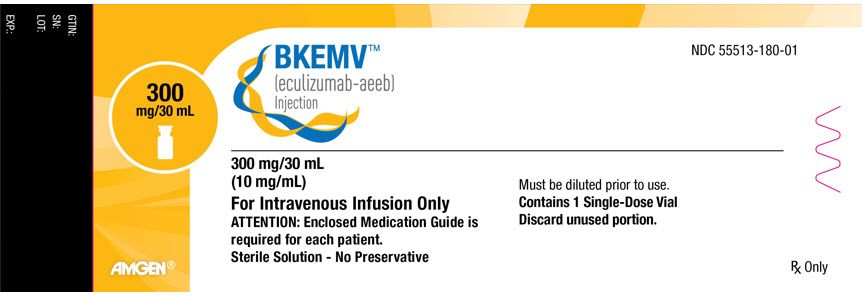
Principal Display Panel 30 Ml Vial Carton
300
mg/30 mL
BKEMV™
(eculizumab-aeeb)
Injection
NDC 55513-180-01
300 mg/30 mL
(10 mg/mL)
For Intravenous Infusion Only
ATTENTION: Enclosed Medication Guide is
required for each patient.
Sterile Solution - No Preservative
Must be diluted prior to use.
Contains 1 Single-Dose Vial
Discard unused portion.
AMGEN®
Rx Only
1.1 Paroxysmal Nocturnal Hemoglobinuria (pnh)
BKEMV is indicated for the treatment of patients with paroxysmal nocturnal hemoglobinuria (PNH) to reduce hemolysis.
1.2 Atypical Hemolytic Uremic Syndrome (ahus)
BKEMV is indicated for the treatment of patients with atypical hemolytic uremic syndrome (aHUS) to inhibit complement-mediated thrombotic microangiopathy.
14.1 Paroxysmal Nocturnal Hemoglobinuria (pnh)
The safety and efficacy of eculizumab in PNH patients with hemolysis were assessed in a randomized, double-blind, placebo-controlled 26-week study (PNH Study 1, NCT00122330); PNH patients were also treated with eculizumab in a single arm 52-week study (PNH Study 2, NCT00122304) and in a long-term extension study (E05-001, NCT00122317). Patients received meningococcal vaccination prior to receipt of eculizumab. In all studies, the dose of eculizumab was 600 mg study drug every 7 ± 2 days for 4 weeks, followed by 900 mg 7 ± 2 days later, then 900 mg every 14 ± 2 days for the study duration. Eculizumab was administered as an intravenous infusion over 25 - 45 minutes.
14.2 Atypical Hemolytic Uremic Syndrome (ahus)
Five single-arm studies [four prospective: C08-002A/B (NCT00844545 and NCT00844844), C08-003A/B (NCT00838513 and NCT00844428), C10-003 (NCT01193348), and C10-004 (NCT01194973); and one retrospective: C09-001r (NCT01770951)] evaluated the safety and efficacy of eculizumab for the treatment of aHUS. Patients with aHUS received meningococcal vaccination prior to receipt of eculizumab or received prophylactic treatment with antibiotics until 2 weeks after vaccination. In all studies, the dose of eculizumab in adult and adolescent patients was 900 mg every 7 ± 2 days for 4 weeks, followed by 1,200 mg 7 ± 2 days later, then 1,200 mg every 14 ± 2 days thereafter. The dosage regimen for pediatric patients weighing less than 40 kg enrolled in Study C09-001r and Study C10-003 was based on body weight [see Dosage and Administration (2.3) ]. Efficacy evaluations were based on thrombotic microangiopathy (TMA) endpoints.
Endpoints related to TMA included the following:
- platelet count change from baseline
- hematologic normalization (maintenance of normal platelet counts and LDH levels for at least four weeks)
- complete TMA response (hematologic normalization plus at least a 25% reduction in serum creatinine for a minimum of four weeks)
- TMA-event free status (absence for at least 12 weeks of a decrease in platelet count of >25% from baseline, plasma exchange or plasma infusion, and new dialysis requirement)
- Daily TMA intervention rate (defined as the number of plasma exchange or plasma infusion interventions and the number of new dialyses required per patient per day).
2.3 Recommended Dosage for Adults – Ahus and Gmg
The recommended dosage of BKEMV for the treatment of aHUS and gMG in patients 18 years of age and older is administered as an intravenous infusion [see Dosage and Administration (2.7)] as follows:
- 900 mg weekly for the first 4 weeks, followed by
- 1,200 mg for the fifth dose 1 week later, then
- 1,200 mg every 2 weeks thereafter.
2.4 Recommended Dosage for Pediatric Patients – Ahus
The recommended dosage of BKEMV for the treatment of aHUS in pediatric patients less than 18 years of age is administered as an intravenous infusion based upon body weight, according to the following schedule (Table 1):
| Patient Body Weight | Induction | Maintenance |
|---|---|---|
| 40 kg and over | 900 mg weekly for the first 4 weeks | 1,200 mg at week 5; then 1,200 mg every 2 weeks |
| 30 kg to less than 40 kg | 600 mg weekly for the first 2 weeks | 900 mg at week 3; then 900 mg every 2 weeks |
| 20 kg to less than 30 kg | 600 mg weekly for the first 2 weeks | 600 mg at week 3; then 600 mg every 2 weeks |
| 10 kg to less than 20 kg | 600 mg single dose at Week 1 | 300 mg at week 2; then 300 mg every 2 weeks |
| 5 kg to less than 10 kg | 300 mg single dose at Week 1 | 300 mg at week 2; then 300 mg every 3 weeks |
Administer BKEMV at the recommended dosage regimen time points, or within two days of these time points.
13.1 Carcinogenesis, Mutagenesis, Impairment of Fertility
Long-term animal carcinogenicity studies of eculizumab products have not been conducted.
Genotoxicity studies have not been conducted with eculizumab products.
Effects of eculizumab products upon fertility have not been studied in animals. Intravenous injections of male and female mice with a murine anti-C5 antibody at up to 4-8 times the equivalent of the clinical dose of eculizumab had no adverse effects on mating or fertility.
2.1 Recommended Vaccination and Prophylaxis for Meningococcal Infection
Vaccinate patients against meningococcal infection (serogroups A, C, W, Y and B) according to current ACIP recommendations at least 2 weeks prior to initiation of BKEMV [see Warnings and Precautions (5.1) ].
If urgent BKEMV therapy is indicated in a patient who is not up to date with meningococcal vaccines according to ACIP recommendations, provide the patient with antibacterial drug prophylaxis and administer these vaccines as soon as possible.
Healthcare providers who prescribe BKEMV must enroll in the BKEMV REMS [see Warnings and Precautions (5.2)].
7.1 Plasmapheresis, Plasma Exchange, Fresh Frozen Plasma Infusion Or Ivig
Concomitant use of eculizumab products with plasma exchange (PE), plasmapheresis (PP), fresh frozen plasma infusion (PE/PI), or in patients with gMG on concomitant IVIg treatment can reduce serum eculizumab product concentrations and requires a supplemental dose of BKEMV [see Dosage and Administration (2.5)].
2.5 Dose Adjustment in Case of Plasmapheresis, Plasma Exchange, Fresh Frozen Plasma Infusion Or Ivig
For adult and pediatric patients with aHUS, and adult patients with gMG, supplemental dosing of BKEMV is required in the setting of concomitant plasmapheresis or plasma exchange, or fresh frozen plasma infusion (PE/PI) (Table 2).
| Type of Plasma Intervention | Most Recent BKEMV Dose | Supplemental BKEMV Dose with Each Plasma Intervention | Timing of Supplemental BKEMV Dose |
|---|---|---|---|
| Plasmapheresis or plasma exchange | 300 mg | 300 mg per each plasmapheresis or plasma exchange session | Within 60 minutes after each plasmapheresis or plasma exchange |
| 600 mg or greater | 600 mg per each plasmapheresis or plasma exchange session | ||
| Fresh frozen plasma infusion | 300 mg or greater | 300 mg per infusion of fresh frozen plasma | 60 minutes prior to each infusion of fresh frozen plasma |
For patients with gMG, a supplemental dose of BKEMV is required in the setting of concomitant use of intravenous immunoglobulin (IVIg) treatment as described in Table 3.
| IVIg Frequency | Most Recent BKEMV Dose | Supplemental BKEMV Dose per IVIg Cycle | Timing of Supplemental BKEMV Dose |
|---|---|---|---|
| Acute rescue therapy | No supplemental BKEMV dose needed | ||
| Equal to or more frequent than every 4 weeks | 900 mg or more | 600 mg | At the same time as scheduled BKEMV dose |
| 600 mg or less | 300 mg | ||
| Less frequent than every 4 weeks | 900 mg or more | 600 mg | At the next scheduled BKEMV dose after the last IVIg cycle |
| 600 mg or less | 300 mg |
Structured Label Content
Section 42229-5 (42229-5)
Limitation of Use
BKEMV is not indicated for the treatment of patients with Shiga toxin E. coli related hemolytic uremic syndrome (STEC-HUS).
Section 42231-1 (42231-1)
| This Medication Guide has been approved by the U.S. Food and Drug Administration. | Revised 11/2025 | |||||
|
MEDICATION GUIDE
BKEMV® (bee-KEM-vee) (eculizumab-aeeb) injection, for intravenous use |
||||||
|
What is the most important information I should know about BKEMV? |
||||||
|
||||||
|
|
|||||
| Your healthcare provider will give you a Patient Safety Card about the risk of serious meningococcal infection. Carry it with you at all times during treatment and for 3 months after your last dose of BKEMV. Your risk of meningococcal infection may continue for several weeks after your last dose of BKEMV. It is important to show this card to any healthcare provider who treats you. This will help them diagnose and treat you quickly. | ||||||
| BKEMV is only available through a program called the BKEMV Risk Evaluation and Mitigation Strategy (REMS). Before you can receive BKEMV, your healthcare provider must: | ||||||
|
||||||
BKEMV may also increase the risk of other types of serious infections caused by encapsulated bacteria, including Streptococcus pneumoniae, Haemophilus influenzae, and Neisseria gonorrhoeae
.
|
||||||
|
What is BKEMV?
BKEMV is a prescription medicine used to treat: |
||||||
|
||||||
|
Who should not receive BKEMV?
Do not receive BKEMV if you have a serious meningococcal infection when you are starting BKEMV treatment. |
||||||
Before you receive BKEMV, tell your healthcare provider about all of your medical conditions, including if you:
Know the medications you take and the vaccines you receive. Keep a list of them to show your healthcare provider and pharmacist when you get a new medicine. |
||||||
| How should I receive BKEMV? | ||||||
|
||||||
|
|
|
||||
|
||||||
|
|
|
|
|||
|
What are the possible side effects of BKEMV? BKEMV can cause serious side effects including: |
||||||
|
||||||
|
|
|||||
| If you have an infusion-related reaction to BKEMV, your healthcare provider may need to infuse BKEMV more slowly or stop BKEMV. See "How should I receive BKEMV?" | ||||||
| The most common side effects in people with PNH treated with BKEMV include: | ||||||
|
|
|||||
| The most common side effects in people with aHUS treated with BKEMV include: | ||||||
|
|
|
|
|||
The most common side effects in people with gMG treated with BKEMV include:
|
||||||
| Tell your healthcare provider about any side effect that bothers you or that does not go away. These are not all the possible side effects of BKEMV. For more information, ask your doctor or pharmacist. Call your doctor for medical advice about side effects. You may report side effects to FDA at 1-800-FDA-1088. |
||||||
|
General information about the safe and effective use of BKEMV.
Medicines are sometimes prescribed for purposes other than those listed in a Medication Guide. You can ask your pharmacist or healthcare provider for information about BKEMV that is written for health professionals. |
||||||
|
What are the ingredients in BKEMV?
Active ingredient: eculizumab-aeeb Inactive ingredients: sorbitol (E420), acetic acid, polysorbate 80 (vegetable origin), edetate disodium (EDTA), sodium hydroxide may be added to adjust pH, and Water for Injection, USP. |
||||||
| BKEMV® (eculizumab-aeeb) Manufactured by: Amgen Inc. One Amgen Center Drive Thousand Oaks, CA 91320-1799 U.S.A. U.S. License Number 1080 © 2024 – 2025 Amgen Inc. All rights reserved. 1xxxxxx v3 |
Section 44425-7 (44425-7)
Store BKEMV vials refrigerated at 2°C to 8°C (36°F to 46°F) in the original carton to protect from light until time of use. BKEMV vials may be stored in the original carton at controlled room temperature [not more than 25°C (77°F)] for only a single period up to 7 days. Do not use beyond the expiration date stamped on the carton. Refer to Dosage and Administration (2) for information on the stability and storage of diluted solutions of BKEMV.
DO NOT FREEZE. DO NOT SHAKE.
11 Description (11 DESCRIPTION)
Eculizumab-aeeb, a complement inhibitor, is a recombinant humanized monoclonal IgG2/4κ antibody produced by Chinese Hamster Ovary (CHO) cell culture and purified by standard bioprocess technology. Eculizumab-aeeb contains human constant regions from human IgG2 sequences and human IgG4 sequences and murine complementarity-determining regions grafted onto the human framework light- and heavy-chain variable regions. Eculizumab-aeeb is composed of two 448 amino acid heavy chains and two 214 amino acid light chains and has a molecular weight of approximately 148 kDa.
BKEMV (eculizumab-aeeb) injection is a sterile, clear to opalescent, colorless to slightly yellow, preservative-free 10 mg/mL solution for intravenous infusion and is supplied in 30 mL single-dose vials. The product is formulated at pH 5.2 and each 30 mL vial contains 300 mg of eculizumab-aeeb, sorbitol (E420) (1500 mg), acetic acid (18.0 mg), polysorbate 80 (3.0 mg) (vegetable origin), edetate disodium (EDTA) (0.6 mg), sodium hydroxide may be added to adjust pH, and Water for Injection, USP.
5.2 Bkemv Rems (5.2 BKEMV REMS)
BKEMV is available only through a restricted program under a REMS called BKEMV REMS, because of the risk of serious meningococcal infections [see Warnings and Precautions (5.1)].
Notable requirements of the BKEMV REMS include the following:
- Prescribers must enroll in the REMS.
- Prescribers must counsel patients about the risk of serious meningococcal infection.
- Prescribers must provide the patients with the REMS educational materials.
- Prescribers must assess patient vaccination status for meningococcal vaccines (against serogroups A, C, W, Y and B) and vaccinate if needed according to current ACIP recommendations 2 weeks prior to the first dose of BKEMV.
- Prescribers must provide a prescription for antibacterial drug prophylaxis if treatment must be started urgently and the patient is not up to date with meningococcal vaccines according to current ACIP recommendations at least two weeks prior to the first dose of BKEMV.
- Healthcare settings and pharmacies that dispense BKEMV must be certified in the REMS and must verify prescribers are certified.
- Patients must receive counseling from the prescriber about the need to receive meningococcal vaccines per ACIP recommendations, the need to take antibiotics as directed by the prescriber, and the signs and symptoms of meningococcal infection.
- Patients must be instructed to carry the Patient Safety Card with them at all times during and for 3 months following treatment with BKEMV.
Further information is available at www.BKEMVREMS.com or 1-866-718-6927.
2.6 Preparation
Dilute BKEMV to a final admixture concentration of 5 mg/mL using the following steps:
- Withdraw the required amount of BKEMV from the vial into a sterile syringe.
- Transfer the recommended dose to an infusion bag.
- Dilute BKEMV to a final concentration of 5 mg/mL by adding the appropriate amount (equal volume of diluent to drug volume) of 0.9% Sodium Chloride Injection, USP; 0.45% Sodium Chloride Injection, USP; 5% Dextrose in Water Injection, USP; or Ringer's Injection, USP to the infusion bag.
The final admixed BKEMV 5 mg/mL infusion volume is 60 mL for 300 mg doses, 120 mL for 600 mg doses, 180 mL for 900 mg doses or 240 mL for 1,200 mg doses (Table 4).
| BKEMV Dose | Diluent Volume | Final Volume |
|---|---|---|
| 300 mg | 30 mL | 60 mL |
| 600 mg | 60 mL | 120 mL |
| 900 mg | 90 mL | 180 mL |
| 1,200 mg | 120 mL | 240 mL |
Gently invert the infusion bag containing the diluted BKEMV solution to ensure thorough mixing of the product and diluent. Discard any unused portion left in a vial, as the product contains no preservatives.
Prior to administration, the admixture should be allowed to adjust to room temperature [18°C to 25°C (64°F to 77°F)]. The admixture must not be heated in a microwave or with any heat source other than ambient air temperature.
Parenteral drug products should be inspected visually for particulate matter and discoloration prior to administration, whenever solution and container permit.
8.5 Geriatric Use
Fifty-one patients 65 years of age or older (15 with PNH, 4 with aHUS, 26 with gMG, and 6 with another indication) were treated with eculizumab in clinical trials in the approved indications. Although there were no apparent age-related differences observed in these studies, the number of patients aged 65 and over is not sufficient to determine whether they respond differently from younger patients.
2.7 Administration
Only administer as an intravenous infusion.
Do not administer as an intravenous push or bolus injection.
Administer the BKEMV admixture by intravenous infusion over 35 minutes in adults and 1 to 4 hours in pediatric patients via gravity feed, a syringe-type pump, or an infusion pump. Admixed solutions of BKEMV are stable for 64 hours at 2°C to 8°C (36°F to 46°F) or 24 hours at room temperature.
If an adverse reaction occurs during the administration of BKEMV, the infusion may be slowed or stopped at the discretion of the physician. If the infusion is slowed, the total infusion time should not exceed two hours in adults. Monitor the patient for at least one hour following completion of the infusion for signs or symptoms of an infusion-related reaction.
12.6 Immunogenicity
The observed incidence of anti-drug antibodies is highly dependent on the sensitivity and specificity of the assay. Differences in assay methods preclude meaningful comparisons of the incidence of anti-drug antibodies in the studies described below with the incidence of anti-drug antibodies in other studies, including those of eculizumab or of other eculizumab products.
The immunogenicity of eculizumab has been evaluated using two different immunoassays for the detection of anti-eculizumab antibodies: a direct enzyme-linked immunosorbent assay (ELISA) using the Fab fragment of eculizumab as target was used for the PNH indication; and an electro-chemiluminescence (ECL) bridging assay using the eculizumab whole molecule as target was used for the aHUS, and gMG indications, as well as for additional patients with PNH.
In the PNH population, antibodies to eculizumab were detected in 3/196 (2%) patients using the ELISA assay and in 5/161 (3%) patients using the ECL assay during the entire treatment period. In the aHUS population, antibodies to eculizumab were detected in 3/100 (3%) patients using the ECL assay during the entire treatment period. In the gMG population, none of the 62 adult patients had antibodies to eculizumab detected following the 26-week active treatment.
An ECL based neutralizing assay with a low sensitivity of 2 mcg/mL was performed to detect neutralizing antibodies for the 5 patients with PNH and the 3 patients with aHUS, with anti-eculizumab antibody positive samples using the ECL assay. Two of 161 patients with PNH (1.2%) and 1 of 100 patients with aHUS (1%) had low positive values for neutralizing antibodies.
No apparent correlation of antibody development to clinical response was observed
4 Contraindications (4 CONTRAINDICATIONS)
BKEMV is contraindicated for initiation in patients with unresolved serious Neisseria meningitidis infection [see Warnings and Precautions (5.1) ].
6 Adverse Reactions (6 ADVERSE REACTIONS)
The following serious adverse reactions are discussed in greater detail in other sections of the labeling:
- Serious Meningococcal Infections [see Warnings and Precautions (5.1) ]
- Other Infections [see Warnings and Precautions (5.3) ]
- Monitoring Disease Manifestations after BKEMV Discontinuation [see Warnings and Precautions (5.4) ]
- Thrombosis Prevention and Management [see Warnings and Precautions (5.5) ]
- Infusion-Related Reactions [see Warnings and Precautions (5.6) ]
5.3 Other Infections
Serious infections with Neisseria species (other than Neisseria meningitidis), including disseminated gonococcal infections, have been reported.
Eculizumab products block terminal complement activation; therefore, patients may have increased susceptibility to infections, especially with encapsulated bacteria, such as infections with Neisseria meningitidis but also Streptococcus pneumoniae, Haemophilus influenzae, and to a lesser extent, Neisseria gonorrhoeae. Additionally, Aspergillus infections have occurred in immunocompromised and neutropenic patients. Children treated with eculizumab products may be at increased risk of developing serious infections due to Streptococcus pneumoniae and Haemophilus influenzae type b (Hib). Administer vaccinations for the prevention of Streptococcus pneumoniae and Haemophilus influenzae type b (Hib) infections according to ACIP recommendations. Patients receiving eculizumab products are at increased risk for infections due to these organisms, even if they develop antibodies following vaccination.
12.2 Pharmacodynamics
In the placebo-controlled clinical study (PNH Study 1), eculizumab when administered as recommended reduced serum LDH levels from 2200 ± 1034 U/L (mean ± SD) at baseline to 700 ± 388 U/L by week one and maintained the effect through the end of the study at week 26 (327 ± 433 U/L) in patients with PNH. In the single arm clinical study (PNH Study 2), the effect was maintained through week 52 [see Clinical Studies (14) ].
In patients with PNH, aHUS, and gMG, free C5 concentrations of <0.5 mcg/mL was correlated with complete blockade of terminal complement activity.
12.3 Pharmacokinetics
Following intravenous maintenance doses of 900 mg once every 2 weeks in patients with PNH, the week 26 observed mean ± SD serum eculizumab maximum concentration (Cmax) was 194 ± 76 mcg/mL and the trough concentration (Ctrough) was 97 ± 60 mcg/mL. Following intravenous maintenance doses of 1,200 mg once every 2 weeks in patients with aHUS, the week 26 observed mean ± SD Ctrough was 242 ± 101 mcg/mL. Following intravenous maintenance doses of 1,200 mg once every 2 weeks in adult patients with gMG, the week 26 observed mean ± SD Cmax was 783 ± 288 mcg/mL and the Ctrough was 341 ± 172 mcg/mL.
Steady state was achieved 4 weeks after starting eculizumab treatment, with accumulation ratio of approximately 2-fold in all studied indications. Population pharmacokinetic analyses showed that eculizumab pharmacokinetics were dose-linear and time-independent over the 600 mg to 1,200 mg dose range, with inter-individual variability of 21% to 38%.
1 Indications and Usage (1 INDICATIONS AND USAGE)
BKEMV is a complement inhibitor indicated for:
- The treatment of patients with paroxysmal nocturnal hemoglobinuria (PNH) to reduce hemolysis. (1.1)
- The treatment of patients with atypical hemolytic uremic syndrome (aHUS) to inhibit complement-mediated thrombotic microangiopathy. (1.2)
Limitation of Use
BKEMV is not indicated for the treatment of patients with Shiga toxin E. coli related hemolytic uremic syndrome (STEC-HUS). - The treatment of generalized myasthenia gravis (gMG) in adult patients who are anti-acetylcholine receptor (AChR) antibody positive. (1.3)
12.1 Mechanism of Action
Eculizumab-aeeb, the active ingredient in BKEMV, is a monoclonal antibody that specifically binds to the complement protein C5 with high affinity, thereby inhibiting its cleavage to C5a and C5b and preventing the generation of the terminal complement complex C5b-9.
Eculizumab products inhibit terminal complement-mediated intravascular hemolysis in PNH patients and complement-mediated thrombotic microangiopathy (TMA) in patients with aHUS.
The precise mechanism by which eculizumab exerts its therapeutic effect in gMG patients is unknown, but is presumed to involve reduction of terminal complement complex C5b-9 deposition at the neuromuscular junction.
5 Warnings and Precautions (5 WARNINGS AND PRECAUTIONS)
2 Dosage and Administration (2 DOSAGE AND ADMINISTRATION)
3 Dosage Forms and Strengths (3 DOSAGE FORMS AND STRENGTHS)
Injection: 300 mg/30 mL (10 mg/mL) as a clear to opalescent and colorless to slightly yellow solution in a single-dose vial.
6.2 Postmarketing Experience
The following adverse reactions have been identified during post-approval use of eculizumab products. Because these reactions are reported voluntarily from a population of uncertain size, it is not always possible to reliably estimate their frequency or establish a causal relationship to eculizumab products exposure.
Adverse Reactions from Postmarketing Spontaneous Reports
- Fatal or serious infections: Neisseria gonorrhoeae, Neisseria meningitidis, Neisseria sicca/subflava, Neisseria spp unspecified.
- Cases of cholestatic or mixed pattern liver injury with increased serum liver enzymes and bilirubin levels have been reported in adult and pediatric patients with aHUS who were treated with eculizumab products. These events occurred within 3 to 27 days after starting treatment. The median time to resolution (or return to baseline) was approximately 3 weeks.
6.1 Clinical Trial Experience
Because clinical trials are conducted under widely varying conditions, adverse reaction rates observed in the clinical trials of a drug cannot be directly compared to rates in the clinical trials of another drug and may not reflect the rates observed in practice.
Meningococcal infections are the most important adverse reactions experienced by patients receiving eculizumab. In PNH clinical studies, two patients experienced meningococcal sepsis. Both patients had previously received a meningococcal vaccine. In clinical studies among patients without PNH, meningococcal meningitis occurred in one unvaccinated patient. Meningococcal sepsis occurred in one previously vaccinated patient enrolled in the retrospective aHUS study during the post-study follow-up period [see Warnings and Precautions (5.1) ].
5.6 Infusion Related Reactions (5.6 Infusion-Related Reactions)
Administration of eculizumab products may result in infusion-related reactions, including anaphylaxis or other hypersensitivity reactions. In clinical trials, no patients experienced an infusion-related reaction which required discontinuation of eculizumab. Interrupt BKEMV infusion and institute appropriate supportive measures if signs of cardiovascular instability or respiratory compromise occur.
17 Patient Counseling Information (17 PATIENT COUNSELING INFORMATION)
Advise the patients and/or caregivers to read the FDA-approved patient labeling (Medication Guide).
7.2 Neonatal Fc Receptor Blockers
Concomitant use of eculizumab products with neonatal Fc receptor (FcRn) blockers may lower systemic exposures and reduce effectiveness of eculizumab products. Closely monitor for reduced effectiveness of BKEMV.
16 How Supplied/storage and Handling (16 HOW SUPPLIED/STORAGE AND HANDLING)
BKEMV (eculizumab-aeeb) injection is a sterile, preservative-free, clear to opalescent, colorless to slightly yellow solution supplied as one 300 mg/30 mL (10 mg/mL) single-dose vial per carton (NDC 55513-180-01).
5.1 Serious Meningococcal Infections
Eculizumab products, complement inhibitors, increase a patient's susceptibility to serious, life-threatening, or fatal infections caused by meningococcal bacteria (septicemia and/or meningitis) in any serogroup, including non-groupable strains. Life-threatening and fatal meningococcal infections have occurred in both vaccinated and unvaccinated patients treated with complement inhibitors. The initiation of BKEMV treatment is contraindicated in patients with unresolved serious Neisseria meningitidis infection.
Complete or update meningococcal vaccination (for serogroups A, C, W, Y and B) at least 2 weeks prior to administration of the first dose of BKEMV, according to current ACIP recommendations for patients receiving a complement inhibitor. Revaccinate patients in accordance with ACIP recommendations considering the duration of therapy with BKEMV. Note that ACIP recommends an administration schedule in patients receiving complement inhibitors that differs from the administration schedule in the vaccine prescribing information.
If urgent BKEMV therapy is indicated in a patient who is not up to date with meningococcal vaccines according to ACIP recommendations, provide the patient with antibacterial drug prophylaxis and administer meningococcal vaccines as soon as possible. Various durations and regimens of antibacterial drug prophylaxis have been considered, but the optimal durations and drug regimens for prophylaxis and their efficacy have not been studied in unvaccinated or vaccinated patients receiving complement inhibitors, including eculizumab products. The benefits and risks of treatment with BKEMV, as well as the benefits and risks of antibacterial drug prophylaxis in unvaccinated or vaccinated patients, must be considered against the known risks for serious infections caused by Neisseria meningitidis.
Vaccination does not eliminate the risk of serious meningococcal infections, despite development of antibodies following vaccination.
Closely monitor patients for early signs and symptoms of meningococcal infection and evaluate patients immediately if infection is suspected. Inform patients of these signs and symptoms and instruct patients to seek immediate medical care if these signs and symptoms occur. Promptly treat known infections. Meningococcal infection may become rapidly life-threatening or fatal if not recognized and treated early. Consider interruption of BKEMV in patients who are undergoing treatment for serious meningococcal infection, depending on the risks of interrupting treatment in the disease being treated.
BKEMV is available only through a restricted program under a REMS [see Warnings and Precautions (5.2)].
1.3 Generalized Myasthenia Gravis (gmg) (1.3 Generalized Myasthenia Gravis (gMG))
BKEMV is indicated for treatment of generalized myasthenia gravis (gMG) in adult patients who are anti-acetylcholine receptor (AChR) antibody positive.
14.3 Generalized Myasthenia Gravis (gmg) (14.3 Generalized Myasthenia Gravis (gMG))
The efficacy of eculizumab for the treatment of gMG was established in Study ECU-MG-301 (NCT01997229), a 26-week randomized, double-blind, parallel-group, placebo-controlled, multi-center trial that enrolled adult patients who met the following criteria at screening:
- Positive serologic test for anti-AChR antibodies,
- Myasthenia Gravis Foundation of America (MGFA) Clinical Classification Class II to IV,
- MG-Activities of Daily Living (MG-ADL) total score ≥ 6,
- Failed treatment over 1 year or more with 2 or more immunosuppressive therapies (ISTs) either in combination or as monotherapy, or failed at least 1 IST and required chronic plasmapheresis or plasma exchange (PE) or intravenous immunoglobulin (IVIg).
A total of 62 patients were randomized to receive eculizumab treatment and 63 were randomized to receive placebo. Baseline characteristics were similar between treatment groups, including age at diagnosis (38 years in each group), gender [66% female (eculizumab) versus 65% female (placebo)], and duration of gMG [9.9 (eculizumab) versus 9.2 (placebo) years]. Over 95% of patients in each group were receiving acetylcholinesterase (AChE) inhibitors, and 98% were receiving immunosuppressant therapies (ISTs). Approximately 50% of each group had been previously treated with at least 3 ISTs.
Eculizumab was administered according to the recommended dosage regimen [see Dosage and Administration (2.4)].
The primary efficacy endpoint for Study ECU-MG-301 was a comparison of the change from baseline between treatment groups in the Myasthenia Gravis-Specific Activities of Daily Living scale (MG-ADL) total score at Week 26. The MG-ADL is a categorical scale that assesses the impact on daily function of 8 signs or symptoms that are typically affected in gMG. Each item is assessed on a 4-point scale where a score of 0 represents normal function and a score of 3 represents loss of ability to perform that function (total score 0-24). A statistically significant difference favoring eculizumab was observed in the mean change from baseline to Week 26 in MG-ADL total scores [-4.2 points in the eculizumab-treated group compared with -2.3 points in the placebo-treated group (p = 0.006)].
A key secondary endpoint in Study ECU-MG-301 was the change from baseline in the Quantitative Myasthenia Gravis (QMG) total score at Week 26. The QMG is a 13-item categorical scale assessing muscle weakness. Each item is assessed on a 4-point scale where a score of 0 represents no weakness and a score of 3 represents severe weakness (total score 0-39). A statistically significant difference favoring eculizumab was observed in the mean change from baseline to Week 26 in QMG total scores [-4.6 points in the eculizumab-treated group compared with -1.6 points in the placebo-treated group (p = 0.001)].
The results of the analysis of the MG-ADL and QMG from Study ECU-MG-301 are shown in Table 21.
| Efficacy Endpoints | Eculizumab-LS Mean (N = 62) |
Placebo-LS Mean (N = 63) |
Eculizumab change relative to placebo – LS Mean Difference |
p-values |
|---|---|---|---|---|
| (SEM) | (SEM) | (95% CI) | ||
| SEM= Standard Error of the Mean; Eculizumab-LSMean = least square mean for the treatment group; Placebo-LSMean = least square mean for the placebo group; LSMean-Difference (95% CI) = Difference in least square mean with 95% confidence interval; p-values (testing the null hypothesis that there is no difference between the two treatment arms |
||||
| MG-ADL | −4.2 (0.49) | −2.3 (0.48) | −1.9 (-3.3, −0.6) | (0.006 in least square means at Week 26 using a repeated measure analysis; , 0.014in ranks at Week 26 using a worst rank analysis) ) |
| QMG | −4.6 (0.60) | −1.6 (0.59) | −3.0 (-4.6, −1.3) | (0.001, 0.005) |
In Study ECU-MG-301, a clinical response was defined in the MG-ADL total score as at least a 3-point improvement and in QMG total score as at least a 5-point improvement. The proportion of clinical responders at Week 26 with no rescue therapy was statistically significantly higher for eculizumab compared to placebo for both measures. For both endpoints, and also at higher response thresholds (≥ 4-, 5-, 6-, 7-, or 8-point improvement on MG-ADL, and ≥ 6-, 7-, 8-, 9-, or 10-point improvement on QMG), the proportion of clinical responders was consistently greater for eculizumab compared to placebo. Available data suggest that clinical response is usually achieved by 12 weeks of eculizumab treatment.
5.5 Thrombosis Prevention and Management
The effect of withdrawal of anticoagulant therapy during eculizumab products treatment has not been established. Therefore, treatment with eculizumab products should not alter anticoagulant management.
2.2 Recommended Dosage for Adults – Pnh (2.2 Recommended Dosage for Adults – PNH)
The recommended dosage of BKEMV for the treatment of PNH in patients 18 years of age and older is administered as an intravenous infusion [see Dosage and Administration (2.7)] as follows:
- 600 mg weekly for the first 4 weeks, followed by
- 900 mg for the fifth dose 1 week later, then
- 900 mg every 2 weeks thereafter.
Administer BKEMV at the recommended dosage regimen time points, or within two days of these time points [see Warnings and Precautions (5.4) ].
Warning: Serious Meningococcal Infections (WARNING: SERIOUS MENINGOCOCCAL INFECTIONS)
Eculizumab products, complement inhibitors, increase the risk of serious infections caused by Neisseria meningitidis [see Warnings and Precautions (5.1)]. Life-threatening and fatal meningococcal infections have occurred in patients treated with complement inhibitors. These infections may become rapidly life-threatening or fatal if not recognized and treated early.
- Complete or update vaccination for meningococcal bacteria (for serogroups A, C, W, Y, and B) at least 2 weeks prior to the first dose of BKEMV, unless the risks of delaying therapy with BKEMV outweigh the risk of developing a serious infection. Comply with the most current Advisory Committee on Immunization Practices (ACIP) recommendations for vaccinations against meningococcal bacteria in patients receiving a complement inhibitor. See Warnings and Precautions (5.1) for additional guidance on the management of the risk of serious infections caused by meningococcal bacteria.
- Patients receiving eculizumab products are at increased risk for invasive disease caused by Neisseria meningitidis, even if they develop antibodies following vaccination. Monitor patients for early signs and symptoms of serious meningococcal infections and evaluate immediately if infection is suspected.
Because of the risk of serious meningococcal infections, BKEMV is available only through a restricted program under a Risk Evaluation and Mitigation Strategy (REMS) called BKEMV REMS [see Warnings and Precautions (5.2) ].
Principal Display Panel 30 Ml Vial Carton (PRINCIPAL DISPLAY PANEL - 30 mL Vial Carton)
300
mg/30 mL
BKEMV™
(eculizumab-aeeb)
Injection
NDC 55513-180-01
300 mg/30 mL
(10 mg/mL)
For Intravenous Infusion Only
ATTENTION: Enclosed Medication Guide is
required for each patient.
Sterile Solution - No Preservative
Must be diluted prior to use.
Contains 1 Single-Dose Vial
Discard unused portion.
AMGEN®
Rx Only
1.1 Paroxysmal Nocturnal Hemoglobinuria (pnh) (1.1 Paroxysmal Nocturnal Hemoglobinuria (PNH))
BKEMV is indicated for the treatment of patients with paroxysmal nocturnal hemoglobinuria (PNH) to reduce hemolysis.
1.2 Atypical Hemolytic Uremic Syndrome (ahus) (1.2 Atypical Hemolytic Uremic Syndrome (aHUS))
BKEMV is indicated for the treatment of patients with atypical hemolytic uremic syndrome (aHUS) to inhibit complement-mediated thrombotic microangiopathy.
14.1 Paroxysmal Nocturnal Hemoglobinuria (pnh) (14.1 Paroxysmal Nocturnal Hemoglobinuria (PNH))
The safety and efficacy of eculizumab in PNH patients with hemolysis were assessed in a randomized, double-blind, placebo-controlled 26-week study (PNH Study 1, NCT00122330); PNH patients were also treated with eculizumab in a single arm 52-week study (PNH Study 2, NCT00122304) and in a long-term extension study (E05-001, NCT00122317). Patients received meningococcal vaccination prior to receipt of eculizumab. In all studies, the dose of eculizumab was 600 mg study drug every 7 ± 2 days for 4 weeks, followed by 900 mg 7 ± 2 days later, then 900 mg every 14 ± 2 days for the study duration. Eculizumab was administered as an intravenous infusion over 25 - 45 minutes.
14.2 Atypical Hemolytic Uremic Syndrome (ahus) (14.2 Atypical Hemolytic Uremic Syndrome (aHUS))
Five single-arm studies [four prospective: C08-002A/B (NCT00844545 and NCT00844844), C08-003A/B (NCT00838513 and NCT00844428), C10-003 (NCT01193348), and C10-004 (NCT01194973); and one retrospective: C09-001r (NCT01770951)] evaluated the safety and efficacy of eculizumab for the treatment of aHUS. Patients with aHUS received meningococcal vaccination prior to receipt of eculizumab or received prophylactic treatment with antibiotics until 2 weeks after vaccination. In all studies, the dose of eculizumab in adult and adolescent patients was 900 mg every 7 ± 2 days for 4 weeks, followed by 1,200 mg 7 ± 2 days later, then 1,200 mg every 14 ± 2 days thereafter. The dosage regimen for pediatric patients weighing less than 40 kg enrolled in Study C09-001r and Study C10-003 was based on body weight [see Dosage and Administration (2.3) ]. Efficacy evaluations were based on thrombotic microangiopathy (TMA) endpoints.
Endpoints related to TMA included the following:
- platelet count change from baseline
- hematologic normalization (maintenance of normal platelet counts and LDH levels for at least four weeks)
- complete TMA response (hematologic normalization plus at least a 25% reduction in serum creatinine for a minimum of four weeks)
- TMA-event free status (absence for at least 12 weeks of a decrease in platelet count of >25% from baseline, plasma exchange or plasma infusion, and new dialysis requirement)
- Daily TMA intervention rate (defined as the number of plasma exchange or plasma infusion interventions and the number of new dialyses required per patient per day).
2.3 Recommended Dosage for Adults – Ahus and Gmg (2.3 Recommended Dosage for Adults – aHUS and gMG)
The recommended dosage of BKEMV for the treatment of aHUS and gMG in patients 18 years of age and older is administered as an intravenous infusion [see Dosage and Administration (2.7)] as follows:
- 900 mg weekly for the first 4 weeks, followed by
- 1,200 mg for the fifth dose 1 week later, then
- 1,200 mg every 2 weeks thereafter.
2.4 Recommended Dosage for Pediatric Patients – Ahus (2.4 Recommended Dosage for Pediatric Patients – aHUS)
The recommended dosage of BKEMV for the treatment of aHUS in pediatric patients less than 18 years of age is administered as an intravenous infusion based upon body weight, according to the following schedule (Table 1):
| Patient Body Weight | Induction | Maintenance |
|---|---|---|
| 40 kg and over | 900 mg weekly for the first 4 weeks | 1,200 mg at week 5; then 1,200 mg every 2 weeks |
| 30 kg to less than 40 kg | 600 mg weekly for the first 2 weeks | 900 mg at week 3; then 900 mg every 2 weeks |
| 20 kg to less than 30 kg | 600 mg weekly for the first 2 weeks | 600 mg at week 3; then 600 mg every 2 weeks |
| 10 kg to less than 20 kg | 600 mg single dose at Week 1 | 300 mg at week 2; then 300 mg every 2 weeks |
| 5 kg to less than 10 kg | 300 mg single dose at Week 1 | 300 mg at week 2; then 300 mg every 3 weeks |
Administer BKEMV at the recommended dosage regimen time points, or within two days of these time points.
13.1 Carcinogenesis, Mutagenesis, Impairment of Fertility
Long-term animal carcinogenicity studies of eculizumab products have not been conducted.
Genotoxicity studies have not been conducted with eculizumab products.
Effects of eculizumab products upon fertility have not been studied in animals. Intravenous injections of male and female mice with a murine anti-C5 antibody at up to 4-8 times the equivalent of the clinical dose of eculizumab had no adverse effects on mating or fertility.
2.1 Recommended Vaccination and Prophylaxis for Meningococcal Infection
Vaccinate patients against meningococcal infection (serogroups A, C, W, Y and B) according to current ACIP recommendations at least 2 weeks prior to initiation of BKEMV [see Warnings and Precautions (5.1) ].
If urgent BKEMV therapy is indicated in a patient who is not up to date with meningococcal vaccines according to ACIP recommendations, provide the patient with antibacterial drug prophylaxis and administer these vaccines as soon as possible.
Healthcare providers who prescribe BKEMV must enroll in the BKEMV REMS [see Warnings and Precautions (5.2)].
7.1 Plasmapheresis, Plasma Exchange, Fresh Frozen Plasma Infusion Or Ivig (7.1 Plasmapheresis, Plasma Exchange, Fresh Frozen Plasma Infusion or IVIg)
Concomitant use of eculizumab products with plasma exchange (PE), plasmapheresis (PP), fresh frozen plasma infusion (PE/PI), or in patients with gMG on concomitant IVIg treatment can reduce serum eculizumab product concentrations and requires a supplemental dose of BKEMV [see Dosage and Administration (2.5)].
2.5 Dose Adjustment in Case of Plasmapheresis, Plasma Exchange, Fresh Frozen Plasma Infusion Or Ivig (2.5 Dose Adjustment in Case of Plasmapheresis, Plasma Exchange, Fresh Frozen Plasma Infusion or IVIg)
For adult and pediatric patients with aHUS, and adult patients with gMG, supplemental dosing of BKEMV is required in the setting of concomitant plasmapheresis or plasma exchange, or fresh frozen plasma infusion (PE/PI) (Table 2).
| Type of Plasma Intervention | Most Recent BKEMV Dose | Supplemental BKEMV Dose with Each Plasma Intervention | Timing of Supplemental BKEMV Dose |
|---|---|---|---|
| Plasmapheresis or plasma exchange | 300 mg | 300 mg per each plasmapheresis or plasma exchange session | Within 60 minutes after each plasmapheresis or plasma exchange |
| 600 mg or greater | 600 mg per each plasmapheresis or plasma exchange session | ||
| Fresh frozen plasma infusion | 300 mg or greater | 300 mg per infusion of fresh frozen plasma | 60 minutes prior to each infusion of fresh frozen plasma |
For patients with gMG, a supplemental dose of BKEMV is required in the setting of concomitant use of intravenous immunoglobulin (IVIg) treatment as described in Table 3.
| IVIg Frequency | Most Recent BKEMV Dose | Supplemental BKEMV Dose per IVIg Cycle | Timing of Supplemental BKEMV Dose |
|---|---|---|---|
| Acute rescue therapy | No supplemental BKEMV dose needed | ||
| Equal to or more frequent than every 4 weeks | 900 mg or more | 600 mg | At the same time as scheduled BKEMV dose |
| 600 mg or less | 300 mg | ||
| Less frequent than every 4 weeks | 900 mg or more | 600 mg | At the next scheduled BKEMV dose after the last IVIg cycle |
| 600 mg or less | 300 mg |
Advanced Ingredient Data
Raw Label Data
All Sections (JSON)
Additional Information
Back to search View SPL set listing Open on DailyMed ↗
Source: dailymed · Ingested: 2026-02-15T11:45:55.973023 · Updated: 2026-03-14T22:38:43.060348